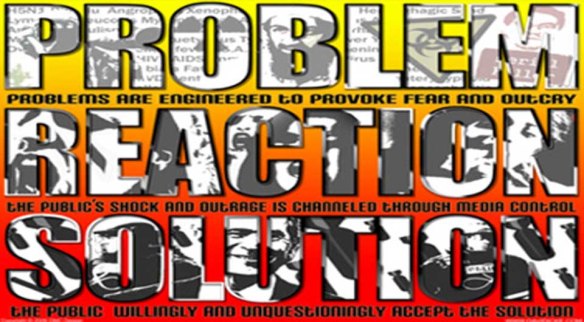
3 Questions You’re Never Supposed to Ask After a Terrorist Attack

By Isaac Davis

Source: Waking Times

In a world where defense budgets are astronomical and wars of occupation and destabilization never end, political leaders in the UK and in Europe want you accept street level terror as the new everyday normal. The attacks are unstoppable, they say, and the world must embrace this hopelessness with faith that the government is doing all it can to create a better, safer world. Run, hide, and call the authorities, for you are helpless in this reality, so they say. But who creates and sustains this reality?

Terrorism is defined as the use of violence in the pursuit of political aims, and as politicians respond to terrorism by holding news conferences, posing, grandstanding, eulogizing, weeping for the cameras, applauding first responders and proposing legislation, so many of the important questions which can help guide us out of such a gloomy future are going unasked and unanswered. And these questions are always the same for any of these attacks, be it the London attacks, Manchester, Orlando, the Boston marathon, 7/7 or 9/11.

Here are three things we should be always ask about when Islamic terror , all of which are fair questions for any of the major terror attacks happening in Western nations.

1. In what ways do Western governments contribute to the problem of Islamic terror?

The media wants you to believe that this type of terror is unrelated to government policies and actions, thus attempting to divorce them from the greater context of geopolitics and the decades long push toward globalist world government. But how do Western governments contribute to the problem of terrorism?

Do never-ending occupations of Middle Eastern conditions and the wrecking of stable nations contribute to terrorism? Does supplying arms and financial support to known terrorist organizations make attacks in Western nations more likely? Does bombing infrastructure, hospitals and civilians in foreign nations play a role? Does promoting and supporting the massive influx of Middle Eastern and African migrants into Western nations have an effect? Does permitting known radicals and others on terror watch lists to operate freely in the West make it more likely that events like the London Bridge attack will occur? Does preventing and punishing people for speaking out in defense of their own nations and customs contribute to the situation?

2. How does government benefit from the reaction to the problem?

Terror creates fear, insecurity, panic, uncertainty, chaos, anger, hate and irrationality, and none are more easily lorded over than those living in terror. Historically, governments make exceptional gains in power and authority when their citizens are psychologically abused.

3. What is the pre-packaged government solution to the problem?

In the case of the London Bridge attacks, the very next day, UK Prime Minister Theresa May called for government regulation of the internet, a demand which is now being echoed by wise politicians and pundits. But this measure was already being floated, it just a dramatic push for it to gain popularity.

Whether it is the Patriot Act, the pre-planned invasion of Afghanistan, calls to restrict the 2nd Amendment, greater government surveillance, increased spending on war and police state security measures, the detainment of innocent people or torture of detainees, the government always has a solution in place before an attack happens.

Final Thoughts

Accepting terror as the norm is absolutely unacceptable and must be totally rejected by people who wish to live in peace and prosperity, which will forever remain impossible while government is allowed to contribute and benefit from terror.

If a Fool Speaks the Truth, Does it Become Untrue? How to Not Be Divided

By Cassius Methyl

Source: The Mind Unleashed

When a fool speaks the truth, does it become untrue?

Of course not. The truth is the truth regardless of who says it, or how they sound. The truth remains what it is no matter who opposes it, advocates for it, or any other form of influence.

Most people unconsciously believe the opposite. It really boils down to people being unwilling to spend time or effort on forming a detailed opinion on a topic.

They take shortcuts in their reasoning and convince themselves that they can make a vague, brief assessment of the subject at hand, often by observing the behavior of those advocating for or opposing the subject. Based on how a figurehead of an idea or ideology looks or speaks, average people will form opinions and skip reasoning through what the person is saying.

People in power know this, and many suspect that people are placed as figureheads for ideas and movements, paid to look foolish and crazy to give the ideas they represent a bad name. It’s a common sense divide and conquer strategy against activists and thinkers.

Take Alex Jones for example. People seeking a better understanding of the world got into Infowars’ content several years ago, before they took a 180 degree turn toward supporting government. Now, the mainstream media uses Alex Jones as a tool to convince people who don’t care to look into things that deeply, that many true things are crazy nonsense.

One can observe the effectiveness of this strategy and conclude that it will be used as a tool many more times in the future, to make the truth look stupid and the hegemony’s plans look brilliant.

Create a culture that prioritizes appealing to authority over reasoning and critical thought, and create foolish, outlandish figureheads for the ideas that would destroy the system and restore people’s power: that’s how they win.

To not be divided and not develop false opinions, we have to not take shortcuts in our reasoning. We have to not develop any opinions about how the world works too quickly: we have to not just take anyone’s word for anything, but take a hard look at reality and really research before thinking we know something.

How can we actually foster a culture where people do that? That’s an impossible sounding task with the way things look now, but person by person, we can foster that culture for at least a small group of people who think this way. At least the people who care can create their own culture.

It will take a relaxed yet strong and persistent, humble attitude and a sharp sense of discernment to get us through the rest of this decade safely.

If you’d like more perspective on the history of activists being divided, lets take a look at some history with the Black Panthers as targets of the FBI’s COINTELPRO program in the 1960’s. Reading from Assata Shakur.com:

“By July 1969, the Black Panthers had become the primary focus of the program, and was ultimately the target of 233 of the total authorized “Black Nationalist” COINTELPRO actions.

Although the claimed purpose of the Bureau’s COINTELPRO tactics was to prevent violence, some of the FBI’s tactics against the BPP were clearly intended to foster violence, and many others could reasonably have been expected to cause violence. For example, the FBI’s efforts to “intensify the degree of animosity” between the BPP and the Blackstone Rangers, a Chicago street gang, included sending an anonymous letter to the gang’s leader falsely informing him that the the Chicago Panthers had “a hit out” on him.  The stated intent of the letter was to induce the Ranger leader to “take reprisals against” the Panther leadership.

Similarly, in Southern California, the FBI launched a covert effort to “create further dissension in the ranks of the BPP.”  This effort included mailing anonymous letters and caricatures to BPP members ridiculing the local and national BPP leadership for the express purpose of exacerbating an existing “gang war” between the BPP and an organization called the United Slaves (US). This “gang war” resulted in the killing of four BPP members by members of US and in numerous beatings and shootings.””

An Open Letter to People with ‘Mental Health’ Issues

Robert J. Burrowes

As ‘mental health’ issues gain more attention, sympathetic and
otherwise, in a wide variety of contexts and countries around the world,
the opportunity for inaccurate perceptions of what causes these issues,
and how to treat them, are likewise expanded.

So if you or someone you know is supposed to have a ‘mental illness’
such as anxiety, depression, schizophrenia, obsessive-compulsive
disorder (OCD), bipolar disorder, anorexia nervosa or post-traumatic
stress disorder (PTSD), I would like to give you the opportunity to
consider an explanation and a way forward that you are unlikely to have
come across.

My first suggestion is that you ignore any label that you have been
given. These labels are an inaccurate and unhelpful way of labeling the
appropriate, diverse and complex emotional responses that a normal human
being will have to emotionally disturbing events. It is inaccurate
because words such as these imply a ‘disorder’ that a normal individual
should not have in response to emotionally challenging events in their
life and it is unhelpful because the term suggests that many different
individuals are having the same (dysfunctional) response.

Human beings have a brilliantly diverse and complex array of emotions
and hence potential emotional responses as a result of the evolutionary
pressures that shaped the emergence of hominids over millions of years.
An extraordinary emotional capacity is one of the defining features of
our humanity and, I would argue, far more important than any other
feature such as our intellectual capacity.

Our emotions or, more simply, our feelings play the central role in
determining our behaviour in any given circumstance. Whatever we do, we
are responding to our feelings. If we are doing what we want to do, we
are doing what we feel like doing. If we are not doing what we feel like
doing, it is because our fear has been triggered sufficiently to
override feelings that would otherwise have us doing something more
functional and enjoyable. Regrettably, human ‘socialization’ (that is,
terrorization) plays heavily on our fear during childhood in order to
turn us into obedient slaves in the forms of student, worker/soldier and
citizen. And this happens irrespective of our level of intelligence. For
a full explanation, see ‘Why Violence?

Unfortunately, once our fear has been utilized to suppress our awareness
of how we genuinely feel and what we want to do – which is sometimes
euphemistically referred to as ’emotional regulation’ – we are no longer
able to access these feelings readily and we live our lives
unconsciously and powerlessly submitting to the will of those we fear
and the institutions they control. But the price for doing so is that
our lives are no longer our own.

As a unique individual who has experienced the ongoing violent trauma
virtually all of us experience during childhood you have found yourself
experiencing a level of emotional response that is very appropriate
given your experience but which is both exacerbated and complicated by
the sudden release of feelings that you had been suppressing since
childhood (and which you are probably being told are inappropriate now).

The fear you feel (probably labeled ‘anxiety’, ‘nervousness’ or
something else) in particular (and perhaps virtually all) contexts is
also triggering the monumental fear (of your parents, teachers,
religious figures and other adults) that you were scared into
suppressing as a child.

The anger you feel about how you were treated and/or what happened to
others (perhaps siblings) you know is merely the peak of the volcano of
anger that you have been keeping the lid on since childhood.

The sadness you feel about what has happened to you and perhaps others
you know is only the tip of the iceberg of sadness you have been
suppressing all of your life.

The guilt, shame, embarrassment… you feel, perhaps about those you let
down or for some other reason, is only the latest addition to the guilt
and other feelings you have been suppressing since childhood.

Do you think I am wrong? Then consider this. Were you ever allowed to
show your fear as a child (and to act on it)? Were you allowed to cry
freely and openly? Were you allowed to get angry (at being ‘done over’
or in defense of yourself)? As often as you needed? Or were you
endlessly admonished and, one way or another, terrorized into behaving
blandly (with ‘acceptable’ feelings like love and happiness tolerated in
particular doses and circumstances).

So if you want to deal powerfully with all of the emotional responses
that are causing your so-called ‘mental illness’, here is my suggestion.
Focus on feeling each and all of your feelings. If you wake from a
nightmare, deliberately and consciously focus on the imagery in the
nightmare while you feel just how terrified you are. Focus on this
feeling for as long as you can. It will be horrendous and will take
enormous courage. But, after a time, it will start to fade and you will
feel some relief. When your fear arises again, in any context, pay
conscious attention to it. You have been suppressing it all of your
life; it just wants to be heard and felt so that you can let it go
forever.

If you feel angry, instead of trying to suppress it, harming yourself or
harming someone else (perhaps, even, someone you love), express your
anger fully and completely but in a safe way. How? Here are some
suggestions but you will need to decide what will work best for you. Get
an axe and chop wood (thinking about utterly destroying who/what is
making you angry: parents, teachers, religious figures, politicians,
military officers…) until your anger has been vented. Or smash a bat or
racquet into a mattress or cushion. Or scream (into a pillow if noise is
an issue). Or punch a punching bag. If you feel angry you need to exert
enormous physical effort to adequately express it. This might require
several hours for any one session and you might need to do a great many
sessions. Remember, you need to work off a lifetime of anger! If you can
set up a safe space for your regular anger sessions, do so. Whatever you
do, however, don’t waste your time saying or writing ‘I feel angry…’.
And don’t waste a moment of your life in an ‘anger management’ course.
Anger, like all emotions, needs to be expressed, not ‘managed’ (that is,
suppressed).

Another reason why it is important that you express your anger as I have
just suggested is because you will often discover afterwards that you
are projecting your anger. Projection is another of the creative ways
that your mind can use to give you a lead back to some of your
suppressed feelings. Projection occurs, for example, when it feels like
you are angry with your spouse for something she/he has done but, once
you fully express the feelings, you realize that, in fact, while your
spouse did something that unintentionally triggered your anger, most of
the anger is actually about someone or something from your childhood.
You cannot discover the source of the projection without fully
expressing the feelings first. Many people who routinely abuse their
spouse and/or children are trapped in a projection which is why their
anger cannot lead to greater self-awareness. People often project their
fear and sadness too: phobias are the result of projected fear, for
example, while sad films enable some people to access their suppressed
sadness.

If you feel sad or anxious or ashamed or guilty or in pain or despairing
or obsessive or depressed or hopeless or compulsive or self-hating or
humiliated or anything else, just let yourself feel it, deeply. And let
it manifest in its own way: cry (if that is what happens when you feel
sad), shake (if that is what happens when you feel scared), feel guilty
or hopeless, feel horrible or …. Deliberately. Consciously. For as long
as it lasts or for as long as you are able to do at the time.

If you feel a sensation in your body, such as muscle tension or a pain
or a sense of contamination, focus on where you feel it and how it
feels. Eventually, after feeling the feelings from this sensation (which
might take very many sessions), you will discover why the sensation
originated and learn what it is trying to teach you.

If you feel suicidal it will often be because you are unconsciously
suppressing another shocking feeling that feels beyond your courage to
feel consciously, such as the feeling of self-hatred for something
shameful you have done, and suicide will seem the best way out. The
suicidal feeling might also arise out a sense of hopelessness or a
desire for release from enormous emotional and/or physical pain. Suicide
is an option that no-one should ever take from you, and I would never do
so, but I gently encourage you to focus on any suicidal feeling in the
belief that the underlying feeling – self-hatred, pain or something else
– will eventually be relieved and the urge to destroy yourself will pass
allowing you to keep traveling the journey of healing.

At this point, I should add that consciously focusing on feeling
physical pain (as a result of injuries or otherwise) is an important
element of any comprehensive healing strategy too.

As you have realized by now, this process of feeling isn’t necessarily
fun and my suggestion runs directly counter to our ‘feel good’ culture
which emphasizes ‘positive’ feelings while teaching you to suppress
‘negative’ ones. However, feeling your suppressed feelings will be,
ultimately, liberating and will progressively restore you to a life of
authenticity: a superior version of the life of dignity, honour and
courage that you once had (or should have had).

If new symptoms arise as you travel your healing journey and even if
these involve difficult feelings, it will usually be a sign that you are
making solid progress in uncovering the original sources of your
emotional ‘ill-health’. These symptoms, if any, simply provide another
opportunity for you to focus on how you feel. Take advantage of them
until they fade so that you learn what they are teaching you.

Another suggestion I have is to alter your diet to the consumption of
organically-grown, vegetarian whole (unprocessed) food so that your
brain gets the nutrition it needs to heal and function well. This also
means that you should discontinue using any drugs that are supposed to
suppress your awareness of your anxiety, depression, OCD, PTSD…
particularly given that psychiatric drugs might generate new symptoms,
worsen your existing symptoms and/or even cause brain damage. If you are
addicted (whether to psychiatric drugs, alcohol or illicit drugs), you
might consider consulting a natural health practitioner (such as a
homeopath or naturopath) who is familiar with assisting people to
withdraw from drugs and to detoxify their bodies, or consider buying the
Charlotte Gerson book ‘Healing the Gerson Way: Defeating Cancer and
other Chronic Diseases’ so that you can undertake Gerson Therapy at home to eliminate all of your physical drug addictions. Alternatively, you might consult the ‘Mad in America‘ website for other methods on how to safely and easily break your addictions.

In addition, I strongly encourage you to discontinue seeing all of those
psychiatrists, psychologists, psychotherapists, counsellors and doctors
(unless they qualify as specified below) who are more terrified of the
natural expression of your feelings than are you (and probably only
offer time-limited sessions). See ‘Defeating the Violence of
Psychiatry‘. You need to feel all of your feelings which have been an appropriate emotional
response to the terror of your childhood. It is feeling our feelings
that allows us to move on from violence and trauma to lead a meaningful
life. Evolution is not stupid even if many of its human products have,
indeed, been stupefied.

If you are lucky enough to know someone (relative, friend or
professional) who feels capable of listening to you while you talk about
violent/traumatic experiences (and thus enable your feelings to surface
more readily) and you trust them to do so, I encourage you to take
advantage of the listening. Ideally, this should happen on a daily basis
with each session lasting for as long as you need it.

Talk about your experiences (or don’t talk if you find this difficult)
but spend time focusing on how you feel about these experiences. Choose
an unpleasant memory from your past and focus on the feelings – sadness,
fear, anger, shame, guilt… – that arise as you talk and then think about
that memory. Keep replaying the memory as often as it feels productive
to do so, until the feelings attached to that memory have all been
felt/expressed and the memory is no longer difficult to contemplate. If
the feelings attached to a particular memory feel too horrible for you
to feel now, choose a memory with feelings that feel manageable and
tackle them first. The more horrible memories will wait until you feel
capable of feeling them because the courage you need to feel your worst
fears will gradually accumulate.

The listener should listen in silence (even if you are not speaking)
and, if capable of doing so, occasionally reflect any of your feelings
they can hear ‘beneath’ the words you are speaking; for example, ‘You
sound scared of your mother/father’ or ‘You sound angry that your
teacher forced you to do something against your will’. If the reflection
is accurate, keep focusing on how you feel by imagining what is bringing
up the feeling. If you feel like crying, then cry. If you need to get
angry, do so in the way that works for you (as mentioned above). And so
on. You are the only one who can interpret your feelings, nightmares,
dreams and other emotional experiences and you should ask any listener
to let you do so. Discourage any listener from reassuring or advising
you; deal with the reality of how you feel, finally, and discover your
own way forward. For more detail, see ‘Nisteling: The Art of Deep
Listening‘.

If you don’t know anyone who can listen without being triggered into
feelings of their own (because they are scared by what happened to
you/them) then you are better off listening to yourself. That means
having regular sessions, preferably on a daily basis, in a safe space
you have created when you allow yourself to deliberately focus on
traumatic experiences and to feel each and all of the feelings,
sometimes in combination, that arise when you do. It will sometimes mean
that you need to abandon what you are doing because something triggers a
sudden rush of feelings that demand your attention immediately. Not very
convenient I know, but neither were your traumatic experiences as a
child.

If you want more information about the process I have described above,
see Anita McKone ‘Fearless Psychology and Fearful Psychology: Principles
and Practice‘.

How long will it take? For many of you it will take a very long time,
perhaps several years of regular sessions. I would like to tell you
otherwise but you have been lied to far too often already – there are no
quick fixes to the emotional trauma you are suffering – and I won’t
insult you by doing so again. Having said ‘it will take a very long
time’, I will add that every individual has a unique healing journey
and, whatever the difficult feelings involved, each session of feeling
is a session of healing – which might reveal an important insight about
your life – and will take you one step closer to gaining a life free of
mental ill-health and full of emotional power.

In essence, it is vastly superior strategy to provide yourself with a
safe space in which your feelings can arise naturally so that you can
feel and express them, safely and completely, rather than endlessly try
to suppress them (but have them manifest ‘out of control’ anyway).

If you have a spouse or child who has been traumatized by your
behaviour, the information in this article is equally valid for them
too. In fact, it is useful information for any person because,
tragically, we were all terrorized during childhood.

Obviously, I haven’t dealt with every issue – like ‘How do I recover
from my emotional devastation when I need to work?’ or ‘How do I recover
emotionally if I have difficult physical injuries too?’ – so I am going
to have to trust you to work out answers to any unanswered questions. I
am just explaining how you can emotionally restore yourself.

Finally, if your life experience generally leaves you inclined to
believe that humans can do better than inflict mass violence on each
other in attempts to ‘resolve’ their conflicts, then you might consider
signing online ‘The People’s Charter to Create a Nonviolent World‘.

In conclusion, I want to summarize your options, which are the options
open to any human. You stand at the fork of two paths. The first path is
the one that takes you further along the journey that you are traveling,
offering you more of what you have now.

The second path, outlined above, offers you a long journey of difficult,
frightening and painful emotional healing – with regular periods of
relief and rewarding insights about your life – which will, if traveled,
lead you to a vastly superior version of your old life.

The third path, which will only open to you once you have traveled the
second path for a considerable time, will provide an encounter with ever
deeper layers of suppressed fear, sadness, pain, anger, shame, guilt,
anxiety, dread, humiliation, self-hatred … terror, fury … until its end
many years later (although your capacity to cope with such horror will
be steadily growing all of the time). At the end of this third path,
should you choose to travel it and once your final layer of suppressed
terror has been felt, you will become the person that evolution intended
you to be on the day you were born.


Biodata: Robert J. Burrowes has a lifetime commitment to understanding
and ending human violence. He has done extensive research since 1966 in
an effort to understand why human beings are violent and has been a
nonviolent activist since 1981. He is the author of ‘Why Violence?
His email address is flametree@riseup.net
and his website is at http://robertjburrowes.wordpress.com


Robert J. Burrowes
P.O. Box 68
Daylesford
Victoria 3460
Australia
Email: flametree@riseup.net

Websites:
Nonviolence Charter
Flame Tree Project to Save Life on Earth
‘Why Violence?’
Nonviolent Campaign Strategy
Nonviolent Defense/Liberation Strategy
Anita: Songs of Nonviolence
Robert Burrowes
Global Nonviolence Network

Life-Hacks of the Poor and Aimless

horrible-life-hacks-19

On negotiating the false idols of neoliberal self-care

By Laurie Penny

Source: The Baffler

Late capitalism is like your love life: it looks a lot less bleak through an Instagram filter. The slow collapse of the social contract is the backdrop for a modern mania for clean eating, healthy living, personal productivity, and “radical self-love”—the insistence that, in spite of all evidence to the contrary, we can achieve a meaningful existence by maintaining a positive outlook, following our bliss, and doing a few hamstring stretches as the planet burns. The more frightening the economic outlook and the more floodwaters rise, the more the public conversation is turning toward individual fulfillment as if in a desperate attempt to make us feel like we still have some control over our lives.

Coca-Cola encourages us to “choose happiness.” Politicians take time out from building careers in the debris of democracy to remind us of the importance of regular exercise. Lifestyle bloggers insist to hundreds of thousands of followers that freedom looks like a white woman practicing yoga alone on a beach. One such image (on the @selflovemantras Instagram) informs us that “the deeper the self love, the richer you are.” That’s a charming sentiment, but landlords are not currently collecting rent in self-love.

Can all this positive thinking be actively harmful? Carl Cederström and André Spicer, authors of The Wellness Syndrome, certainly think so, arguing that obsessive ritualization of self-care comes at the expense of collective engagement, collapsing every social problem into a personal quest for the good life. “Wellness,” they declare, “has become an ideology.”

There is an obvious political dimension to the claim that wellbeing, with the right attitude, can be produced spontaneously. Months after being elected leader of the most right-wing government in recent British history, yogurt-featured erstwhile PR man David Cameron launched an ill-fated “happiness agenda.” The scheme may have been better received if the former prime minister were not simultaneously engaged in decimating health care, welfare, and higher education—the very social structures that make life manageable for ordinary British people. As part of Cameron’s changes to the welfare system, unemployment was rebranded as a psychological disorder. According to a study in the Medical Humanities journal, in the teeth of the longest and deepest recession in living memory, the jobless were encouraged to treat their “psychological resistance” to work by way of obligatory courses that encouraged them to adopt a jollier attitude toward their own immiseration. They were harangued with motivational text messages telling them to “smile at life” and that “success is the only option.”

This mode of coercion has been adopted by employers, too, as Cederström and Spicer note. Zero-hour-contract laborers in an Amazon warehouse, “although they are in a precarious situation . . . are required to hide these feelings and project a confident, upbeat, employable self.” All of which begs the question: Who exactly are we being well for?

The well-being ideology is a symptom of a broader political disease. The rigors of both work and worklessness, the colonization of every public space by private money, the precarity of daily living, and the growing impossibility of building any sort of community maroon each of us in our lonely struggle to survive. We are supposed to believe that we can only work to improve our lives on that same individual level. Chris Maisano concludes that while “the appeal of individualistic and therapeutic approaches to the problems of our time is not difficult to apprehend . . . it is only through the creation of solidarities that rebuild confidence in our collective capacity to change the world that their grip can be broken.”

The isolating ideology of wellness works against this sort of social change in two important ways. First, it persuades all us that if we are sick, sad, and exhausted, the problem isn’t one of economics. There is no structural imbalance, according to this view—there is only individual maladaption, requiring an individual response. The lexis of abuse and gas-lighting is appropriate here: if you are miserable or angry because your life is a constant struggle against privation or prejudice, the problem is always and only with you. Society is not mad, or messed up: you are.

Secondly, it prevents us from even considering a broader, more collective reaction to the crises of work, poverty, and injustice. That’s the logic exposed by personal productivity gurus like Mark Fritz, who tells us, in The Truth About Getting Things Done, that:

The biggest barrier to achieving the success you have defined for your life is never anyone else or the circumstances you encounter. Your biggest barrier is almost always you. . . . Dr Maxwell Maltz, author of Psycho-Cybernetics [ETA: sounds legit to me!], put it best when he said, “Within you right now is the power to do things you never dreamed possible. This power becomes available to you as soon as you can change your beliefs.

This, of course, is a cyclopean lie—but it’s a seductive one nonetheless. It would be nice to believe that all it takes to change your life is to repeat some affirmations and buy a planner, just as it was once comforting for many of us to trust that the hardships of this plane of existence would be rewarded by an eternity of bliss in heaven. There is a reason that the rituals of well-being and self-care are followed with the precision of a cult (do this and you will be saved; do this and you will be safe): It is a practice of faith. It’s worth remembering that Marx’s description of religion as the opiate of the masses is often misinterpreted—opium, at the time when Marx was writing, was not just known as an addictive drug, but as a painkiller, a solace when the work of survival became unbearable.

With the language of self-care and well-being almost entirely colonized by the political right, it is not surprising that progressives, liberals, and left-wing groups have begun to fetishize a species of abject hopelessness. Positive thinking has become deeply unfashionable. The American punk kids I know describe it, disparagingly, as “posi.” The British ones, of course, describe it as “American.” Whatever you call it, it feels a lot like giving in.

In a scintillating essay at Open Democracy, activist Chloe King writes that

changing your attitude is not going to change or help to dismantle structural injustice and a failed and unsustainable economic model which serves only the elite rich of this world, and exploits the rest of us, particularly the working class and those living in poverty. As far as I am concerned positive thinking will fucking ruin your life. “Just think positive” is a precursor to “it gets better,” and the hard reality is it is only going to get much, much worse for our most vulnerable.

There is truth here. What is also true, however, is that the young people I know who are, in general, the very worst at taking basic care of themselves as individuals—the people whose problem is not that they don’t drink enough asparagus water, but that they don’t drink enough of anything that isn’t day-old wine from a foil bag—are those who went through the student and Occupy uprisings of 2010–2012 and experienced, briefly, what it meant to live a different sort of life. What it meant to be part of a community with common goals of which mutual aid and support were not the least. What it meant to experience that sudden, brief respite from individual striving and build a prefigurative society together. The lonely work of taking basic care of yourself as you wait for the world to change is a poor substitute. When you’re washed up and burned out from putting your body on the line to fight the state, it’s especially galling to be told to share a smile and eat more whole grains.

When modernity teaches us to loathe ourselves and then sells us quick fixes for despair, we can be forgiven for balking at the cash register. Anxious millennials now seem to have a choice between desperate narcissism and crushing misery. Which is better? The question is not rhetorical. On the one hand, Instagram happiness gurus make me want to drown myself in a kale smoothie. On the other, I’m sick and tired of seeing the most brilliant people I know, the fighters and artists and mad radical thinkers whose lives’ work might actually improve the world, treat themselves and each other in ludicrously awful ways with the excuse, implicit or explicit, that any other approach to life is counterrevolutionary.

Some of the left critique of self-care as a neoliberal conspiracy has to do with dismissing the work that women and queer people do to survive. “I have heard feminism be dismissed as a form of self-indulgence,” writes Professor Sara Ahmed of Goldsmiths, University of London. So have I. I’ve heard men on the left write off anti-sexist, anti-racist politics as hopelessly individualistic, whilst also refusing to do the basic work of self-care and mutual care that keeps hope alive and health possible, because that work is women’s work, undignified in comparison to watching your life fall apart while you wait for the revolution or for some girl to pick up the pieces, whichever comes first.

The left has a special talent for counterproductive, theory-enabled wallowing. “Neoliberalism sweeps up too much when all forms of self-care become symptoms of neo-liberalism,” writes Ahmed. “When feminist, queer, and anti-racist work that involves sharing our feelings, our hurt and grief, recognizing that power gets right to the bone, is called neo-liberalism, we have to hear what is not being heard. . . . A world against you can be experienced as your body turning against you. You might be worn down, worn out, by what you are required to take in.”

It is at this point that I confess to you that I’ve been doing yoga for two years and it’s changed my life to an extent that I almost resent. I have trained myself, through dedicated practice on and off the mat, to find enough inner strength not to burst out laughing when the instructor ends the class by declaring “let the light in me honor the light in you.” The instructor is a very nice person who smiles all the time like a drunk kindergarten teacher and could probably kill me with her abs alone, so I have refrained from informing her that the light in me is sometimes a government building on fire.

Downward-facing dog is not a radical position. Nonetheless, that particular asana is among a few small concessions I make to self-care while I wait for the end of patriarchy and the destruction of the money system. Overpriced charcoal health drinks aren’t good for liberating anything except your wallet and your colon in short succession, but walks in the park are free, so I occasionally go out in the sunshine and try to soak up a bit of Vitamin D without worrying about skin cancer, melting ice-caps, and millions of people drowning in Bangladesh. I no longer subsist entirely on chicken nuggets, cigarettes, and spite. I sometimes take a day off, because it became apparent that the revolution was not being driven any faster by my being sick and sad all the time. Late Capitalism is as good an excuse of any for not getting out of bed, but huddling under the covers worrying about Donald Trump is a very inefficient way of sticking it to the man.

The problem with self-love as we currently understand it is in our view of love itself, defined, too simply and too often, as an extraordinary feeling that we respond to with hearts and flowers and fantasy, ritual consumption and affectless passion. Modernity would have us mooning after ourselves like heartsick, slightly creepy teenagers, taking selfies and telling ourselves how special and perfect we are. This is not real self-love, no more than a catcaller loves the woman whose backside he’s loudly admiring in the street.

The harder, duller work of self-care is about the everyday, impossible effort of getting up and getting through your life in a world that would prefer you cowed and compliant. A world whose abusive logic wants you to see no structural problems, but only problems with yourself, or with those more marginalized and vulnerable than you are. Real love, the kind that soothes and lasts, is not a feeling, but a verb, an action. It’s about what you do for another person over the course of days and weeks and years, the work put in to care and cathexis. That’s the kind of love we’re terribly bad at giving ourselves, especially on the left.

The broader left could learn a great deal from the queer community, which has long taken the attitude that caring for oneself and one’s friends in a world of prejudice is not an optional part of the struggle—in many ways, it is the struggle. Writer and trans icon Kate Bornstein’s rule number one is “Do whatever it takes to make your life more worth living. Just don’t be mean.” It’s more than likely that one of the reasons that the trans and queer communities continue to make such gains in culture, despite a violent backlash, is the broad recognition that self-care, mutual aid, and gentle support can be tools of resistance, too. After the Orlando massacre, LGBTQ people across the world started posting selfies under the hashtag #queerselflove. In the midst of the horror, the public mourning, and the fear, queer people of all ages and backgrounds across the world engaged in some light-hearted celebration of ourselves, of one another.

The ideology of wellbeing may be exploitative, and the tendency of the left to fetishize despair is understandable, but it is not acceptable—and if we waste energy hating ourselves, nothing’s ever going to change. If hope is too hard to manage, the least we can do is take basic care of ourselves. On my greyest days, I remind myself of the words of the poet and activist Audre Lorde, who knew a thing or two about survival in an inhuman world, and wrote that self care “is not self-indulgence—it is self-preservation, and that is an act of political warfare.”

Manufactured Reality: Two Steps Forward, One Step Back

(Editor’s note: though this article was originally published in 2008 it remains sadly relevant. We’ve appended it with a more recent video from Truthstream Media which needs to be seen and shared.)

Source: Global Research

In order to force a new reality upon any targeted populace, the masters of the universe follow a simple strategy – they immediately make things twice as bad as they intend to keep them, only to take one step back after a short while, so that the new manufactured reality will be easier to accept.  This strategy holds constant from the manipulation of oil prices to the military strategy to rule the world by force.

In the terror war, nuclear terrorism has become the weapon of both first choice and last resort for American war planners.  It was more important to create the impression that nuclear war was imminent than it was to convince the world that we intended to use nuclear weapons as our ace in the hole.  The world had to be terrorized into believing that our insane cowboy president was about to unleash nuclear war upon the world, so that it could be held over the people’s heads.  The world had to be shocked and awed by American military supremacy into submitting to Bush’s demands.

America took two giant steps forward militarily, intending in the end to take one step back from the precipice of actual global thermonuclear war, to a more limited approach that only called for a limited use of “tactical” nukes.  A two-track approach to the war was undertaken; one path leading to immediate global nuclear war and another “democratic” approach, which put-off the use of nuclear weapons until some future action, in order to create unlimited opportunities for subversion where America’s full military might could be brought to bear upon more specific targets.  (Have they already been used?)  http://webwarper.net/ww/~av/www.redress.cc/global/dhalpin20080517

The threat that full-scale nuclear war in the center of the world’s primary energy basket was imminent created a global atmosphere of mortal fear and dread, while covert limited wars were simultaneously pursued.  This was intended to cow both the American people and the people in the targeted countries into submission to presidential dictates. The threat of general nuclear war was used to intimidate the targeted governments into “playing nice” diplomatically, while America interfered in their national affairs, introducing its revolutionary “democratic” form of politics, which included backing extremist groups.

Fear of US nuclear forces provided cover to American agitation in the Middle East region along the lines of “Operation Gladio,” which was used against our own allies in Europe.   In both operations, sympathetic right-wing leaders were found who could be bought, to be groomed by the CIA, to cultivate and organize local opposition groups.  From these agitated groups more violent radicals were found and hired to stage terrorist (“false flag”) attacks upon civilians and the governments, to be blamed upon their local opposition, which were usually actual patriot groups.

The second leg of the neoconservative war doctrine is the spreading of subversion under the cover of implanting democracy by force, and its companion, the spreading of force through democratic means.  Divisive political campaigns in targeted nations (including staged attacks by extremists) were engineered, to split the tribal societies into heavily-armed polarized factions waiting for retribution.

We have this apt description of this divisive American strategy from former Pakistani  ISI agent, turned human rights activist, Khalid Khawaja:

“Many of us call it a battle between East and West, between the Islamic and Judeo-Christian world, but it is neither of these. It is in fact the ruling regimes that want to dictate their will…

Ninety percent of people accept to be ruled, but there always remain some elements who refuse to succumb. They fight for freedom and resist till their last. However, in this conflict of two minorities – those who impose their will and those who resist it – the majority remains the sole victim. Yet people talk about Islam versus Christianity or Judaism. The basic theme remains the same. There is a group of people who want to impose their will, whether they happen to be Christian or Muslim, and there is a group of people who want to resist, and there is a silent majority which is trampled in between.”

http://www.atimes.com/atimes/South_Asia/GF22Df04.html

Mr. Khawaja continues to delve into the under-discussed cause of the whole war on terror:

“In Afghanistan’s case, a similar game was carried out on a massive scale when Muslim youths from all over the world were brought in by Pakistan and the US [to fight against the Soviets in the 1980s]. They were tools for the empires’ proxy war. The name of jihad was used…it is a question of a state imposing its will. The message is clear: if you are against us, we will kill you and your sympathizers. In this state terrorism, there is no exception, be it Christianity, Judaism, Islam, Pakistan, India, the US or Israel. All are the same.

When two elephants fight, it is the grass that gets crushed. When two elephants make love, it is again the grass that gets crushed. Whether states fight with each other or make friendships, it is only the tools who became victims.”

The same deception has been practiced in both Iraq and Afghanistan, to prolong both of those wars until the doctrine could be spread beyond them.  Both countries had been targeted for regime change, but nonetheless, even after the first regime was replaced, the doctrine of creating surrogate militias to promote democratic revolution was still developed in each one, targeting the new regimes.  In each country violent extremist groups, usually identified as “al Qaida related,” were put on the American payroll to fight against US troops and US installed governments.  The hiring and training of these “militia” mercenary groups falls within the recognized definition of treason, “levying war against [the United States].”

That destabilizing doctrine is now being exported into Iran from Iraq, Afghanistan and Pakistan, where beachheads have been established for a planned assault upon the entire neighborhood. These training centers are terrorist camps, plain and simple.  These are the American trained terrorists who will carry the limited warfare scenario into Iran under cover of the greater threat of nuclear terrorism.  The United States of America is the world’s number one supporter and exporter of terrorism; it always has been.

In order to carry out the Israeli-centric PNAC (Project for a New American Century) terror war plan that they have committed to, Bush and Cheney have doggedly undermined America’s national interests at home and all over the world.  America’s national interest has always been based on advancing liberty and human rights to the whole world, but now, under the neocon plan, these are rights that must be earned.  Bush was sent unto the world to turn reality upon its head.

On a rotating basis, America and Israel took turns slinging threats of nuclear annihilation and libelous invective at Iran and Syria, hyping the threats to intensify the notion that a nuclear attack was becoming imminent.  As Israel and America ramp-up the war-mongering against Iran and Syria, Israel sings out the threats first, then America will provide the chorus and hopefully the highly desired “money shot” afterwards.

As a final machination, to seal America and Israel’s position, the neocon doctrine unlocked the prohibition of the offensive use of nuclear weapons, even in civilian areas.  It is this new free use of nuclear weapon doctrine that is the icing on the cake for those who are plotting to seize the world under the threat of American nuclear terrorism.  Because it is now possible, it is easy to convince us all that our cowboy administration of religious zealots is about to commit an insane act, i.e., unleashing nuclear war to eliminate the possibility of a nuclear war.

Patriotic anti-government voices in this country and in the targeted countries, helped to create a strong public perception that nuclear war was imminent.  Antiwar voices of protest like mine sound a warning to alert the people to the crimes being planned that must be heard, but in so doing, we play into the government scheme by helping to hype the threat.  It is both necessary and natural that patriots arise to defend their nations in the face of American invasion or aggression.  We play a vital role in the planned drama, as it unfolds.  We have convinced the world that Bush and Cheney were insane enough to radiate the Middle Eastern oil fields, in order to steal the world’s oil.  We now may have to convince the world that the crazies themselves are the source of most of the terrorism which we fight.

It is pretty obvious that they really are that insane, but it should be even more obvious that their greedy masters don’t want their world destroyed, they only want to control it.  Why should they actually nuke Iran, if they can persuade the locals to overthrow the regime for us, causing less collateral damage (it would be difficult to operate the Middle East oil facilities, if they were all radioactive).  We have to convince the American people that Bush even though the little dictator is both stupid and insane, the real deciders are neither of those things.  It is their wills which will prevail, meaning that there are other less final, less costly ways to takeover the oil reserves and the pipeline routes.

We have to concentrate on stopping the secret war, without being blinded by the glare of nuclear terrorism.  Exposure of American sponsorship of world terrorism (some of the very “terrorism” we are fighting) must become our top priority.  Legal actions must be taken to stop the illegal support of terrorism upon civilians by our government.  Further legal actions must be taken to separate American foreign policy from Israel, in order to bring the terror war to an end.

Israel has been the primary source for most of the “intelligence” that launched the war on Iraq, the Iranian reactors and hypothetical nuclear weapons, as well as the alleged Syrian reactors.  America turned Israel’s evidence into grounds for waging war, even nuclear war.  They are behind the new push to find other Syrian nuclear facilities as well as the alleged Iranian warhead blueprint.

Israel is behind every military move against Iran that is being brought-up in the press.  It was the first to suggest taking out Iranian reactors, the first to recommend a naval blockade of Iran and an embargo on air flights between Iran and Syria and Lebanon.  American Zionist Congressional leaders gladly took up the torches lit by Israel, to create Israeli security at America’s expense.  A Congressional resolution is awaiting passage in the Senate, which demands that our government carry-out these acts of war, both the naval blockade and the air embargo, House Resolution 1194.

The American people must rise-up in outrage to the terrorists who rule over us and stop the planned escalation, as a first step to de-escalating the war.  It is time for us to take our own two steps forward, to force the aggressors to take one step back and begin to tear-down their manufactured reality.


Contact author: peter.chamberlin@yahoo.com

Related Video:

Truth or Delusion?

By Robert J. Burrowes

One inevitable outcome of the phenomenal violence we all suffer as
children is that most of us live in a state of delusion throughout our
lives. This makes it extraordinarily difficult for accurate information,
including vital information about the endangered state of our world and
how to respond appropriately, to penetrate the typical human mind.

‘Phenomenal violence?’ you might ask. ‘All of us?’ you wonder. Yes,
although, tragically, most of this violence goes unrecognised because it
is not usually identified as such. For most people, it is a
straightforward task to identify the ‘visible’ violence that they have
suffered and, perhaps, still suffer. However, virtually no-one is able
to identify the profoundly more damaging impact of the ‘invisible’ and
‘utterly invisible’ violence that is inflicted on us mercilessly from
the day we are born.

So what is this ‘invisible’ and ‘utterly invisible’ violence?

‘Invisible’ violence is the ‘little things’ that adults do to children
every day, partly because they are just ‘too busy’. For example, when
adults do not allow time to listen to, and value, a child’s thoughts and
feelings, the child learns to not listen to themSelf thus destroying
their internal communication system. When adults do not let a child say
what they want (or ignore them when they do), the child develops
communication and behavioural dysfunctionalities as they keep trying to
meet their own needs (which, as a basic survival strategy, they are
genetically programmed to do).

When adults blame, condemn, insult, mock, embarrass, shame, humiliate,
taunt, goad, guilt-trip, deceive, lie to, bribe, blackmail, moralize
with and/or judge a child, they both undermine their sense of Self-worth
and teach them to blame, condemn, insult, mock, embarrass, shame,
humiliate, taunt, goad, guilt-trip, deceive, lie, bribe, blackmail,
moralize and/or judge.

The fundamental outcome of being bombarded throughout their childhood by
this ‘invisible’ violence is that the child is utterly overwhelmed by
feelings of fear, pain, anger and sadness (among many others). However,
parents, teachers, religious figures and other adults also actively
interfere with the expression of these feelings and the behavioural
responses that are naturally generated by them and it is this ‘utterly
invisible’ violence that explains why the dysfunctional behavioural
outcomes actually occur.

For example, by ignoring a child when they express their feelings, by
comforting, reassuring or distracting a child when they express their
feelings, by laughing at or ridiculing their feelings, by terrorizing a
child into not expressing their feelings (e.g. by screaming at them when
they cry or get angry), and/or by violently controlling a behaviour that
is generated by their feelings (e.g. by hitting them, restraining them
or locking them into a room), the child has no choice but to
unconsciously suppress their awareness of these feelings.

However, once a child has been terrorized into suppressing their
awareness of their feelings (rather than being allowed to have their
feelings and to act on them) the child has also unconsciously suppressed
their awareness of the reality that caused these feelings. In brief,
this means that the child now lives in a state of delusion. And because
this state was caused by terrorizing the child, the child is unable to
perceive the series of delusions in which they now live.

Moreover, unless the child (or, later, adult) consciously feels their
fear and terror, it will be extraordinarily difficult for them to
perceive anything beyond the delusions that they acquired during
childhood. This is simply because the various elements of the child’s
delusional state (the ‘values’, beliefs, attitudes, prejudices, biases)
were the ones approved by the key adults – parents, teachers, religious
figures – in the child’s life.

Needless to say, living in a delusional state has many outcomes that are
disastrous for the individual, for society and for nature because the
individual will now behave on the basis of their delusions rather than
in response to an accurate assessment of all available information
through appropriate sensory, emotional, intellectual and conscientious
scrutiny. For a full explanation of this process, see ‘Why Violence?‘ and ‘Fearless Psychology and Fearful Psychology: Principles and Practice‘.

In essence then, the typical human being lives in a delusional state and
this state is held in place by enormous, but unconscious, terror: the
unfelt and hence unreleased childhood terror of being endlessly
threatened and punished (for not complying with parental or other adult
‘authority’ throughout childhood).

And if you have ever tried to persuade someone, by argument of an
intellectual nature, that a belief they hold is inaccurate and wondered
why you couldn’t get anywhere, it is because you have run into their
unconscious terror. And sheer terror beats the best argument in the
world ‘hands down’.

So when you listen to people like Donald Trump and Marine Le Pen, or
ponder those politicians and military generals who conduct endless wars,
or watch those people on the street protesting against Muslims and
refugees, or watch police beating up another indigenous or black person,
or hear someone else deny the climate science, remember that you are
witness to a person or people living in a terrified and delusional state
that prevents them from perceiving and responding intelligently to
reality. And that, in the case of political and corporate leaders, they
only have the support to do what they do because a great many other
delusional individuals (including voters and employees) enable them.

Equally importantly, however, it is also necessary to recognise that a
delusional state afflicts many of those we like to regard as ‘on our
side’. It is just that their delusions work differently, perhaps, for
example, by making them believe that only token ‘make it up as you go
along’ responses (rather than comprehensive strategies) are necessary if
we are to work our way out of the multifaceted crisis in which human
society now finds itself. This is why many ‘leaders’ of liberation
struggles as well as activist movements concerned with ending war(s) and
the climate catastrophe, for example, are so unable to articulate
appropriately visionary and functional strategies. But the problem
afflicts many other ‘progressive’ social movements as well, which limp
along making only occasional or marginal impact, if they have any impact
at all.

So what are we to do? Well, the most important thing you can do is to
never consciously participate in a delusion, whether your own or that of
anyone else. I say ‘consciously’ of course because unless you identify
the delusion, you will not be able to avoid participating in it. And
there are probably few humans in history who have avoided all of the
delusions their culture threw at them. If they did, they were probably
outcast or killed. Christ, Gandhi and King are reasonably good examples
of people in this latter category. But, historically speaking, many
activists have been killed for refusing to participate in elite-promoted
delusions. And many others have been marginalised, one way or another,
depending on the culture.

The value of not participating in a delusion, whether someone’s personal
delusion or a widespread social one, arises from the impact you have on
those around you: some of these people will have the courage to reflect
on your behaviour and reconsider their own.

If you believe you are relatively free of delusion and are committed to
taking serious steps to tackle one or more aspects of our multifaceted
global crisis, then you are welcome to consider making ‘My Promise to
Children‘,  and to consider participating in ‘The Flame Tree Project to Save Life on
Earth‘, signing the online pledge of ‘The People’s Charter to Create a Nonviolent World
and/or considering using the strategic framework on one or the other of these two websites for your campaign or liberation struggle: Nonviolent Campaign Strategy
and Nonviolent Defense/Liberation Strategy.

Living the truth on a daily basis is a tough road. And it will never
come without cost. But living in the comfort of delusion, rather than
taking action, is the path of cowards.


Biodata: Robert J. Burrowes has a lifetime commitment to understanding and ending human violence. He has done extensive research since 1966 in an effort to understand why human beings are violent and has been a nonviolent activist since 1981. He is the author of ‘Why Violence?‘ His email address is flametree@riseup.net and his website is at http://robertjburrowes.wordpress.com


Robert J. Burrowes
P.O. Box 68
Daylesford
Victoria 3460
Australia
Email: flametree@riseup.net

Websites:
Nonviolence Charter
Flame Tree Project to Save Life on Earth
‘Why Violence?’
Nonviolent Campaign Strategy
Nonviolent Defense/Liberation Strategy
Anita: Songs of Nonviolence
Robert Burrowes
Global Nonviolence Network

The Price of Resistance

Statues at the Museum of Myths and Traditions. (León)

By Chris Hedges

Source: OpEdNews.com

In the conflicts I covered as a reporter in Latin America, Africa, the Middle East and the Balkans, I encountered singular individuals of varying creeds, religions, races and nationalities who majestically rose up to defy the oppressor on behalf of the oppressed. Some of them are dead. Some of them are forgotten. Most of them are unknown.

These individuals, despite their vast cultural differences, had common traits–a profound commitment to the truth, incorruptibility, courage, a distrust of power, a hatred of violence and a deep empathy that was extended to people who were different from them, even to people defined by the dominant culture as the enemy. They are the most remarkable men and women I met in my 20 years as a foreign correspondent. And to this day I set my life by the standards they set.

You have heard of some, such as Vaclav Havel, whom I and other foreign reporters met most evenings, during the 1989 Velvet Revolution in Czechoslovakia, in the Magic Lantern Theatre in Prague. Others, no less great, you probably do not know, such as the Jesuit priest Ignacio Ellacuria, who was assassinated in El Salvador in 1989. And then there are those “ordinary” people, although, as the writer V.S. Pritchett said, no people are ordinary, who risked their lives in wartime to shelter and protect those of an opposing religion or ethnicity being persecuted and hunted. And to some of these “ordinary” people I owe my own life.

To resist radical evil is to endure a life that by the standards of the wider society is a failure. It is to defy injustice at the cost of your career, your reputation, your financial solvency and at times your life. It is to be a lifelong heretic. And, perhaps this is the most important point, it is to accept that the dominant culture, even the liberal elites, will push you to the margins and attempt to discredit not only what you do, but your character. When I returned to the newsroom at The New York Times after being booed off a commencement stage in 2003 for denouncing the invasion of Iraq and being publicly reprimanded by the paper for my stance against the war, reporters and editors I had known and worked with for 15 years lowered their heads or turned away when I was nearby. They did not want to be contaminated by the same career-killing contagion.

Ruling institutions–the state, the press, the church, the courts, academia–mouth the language of morality, but they serve the structures of power, no matter how venal, which provide them with money, status and authority. In times of national distress–one has only to look at Nazi Germany–all of these institutions, including the academy, are complicit through their silence or their active collaboration with radical evil. And our own institutions, which have surrendered to corporate power and the utopian ideology of neoliberalism, are no different. The lonely individuals who defy tyrannical power within these institutions, as we saw with the thousands of academics who were fired from their jobs and blacklisted during the McCarthy era, are purged and turned into pariahs.

All institutions, including the church, Paul Tillich once wrote, are inherently demonic. And a life dedicated to resistance has to accept that a relationship with any institution is often temporary, because sooner or later that institution is going to demand acts of silence or obedience your conscience will not allow you to make. To be a rebel is to reject what it means to succeed in a capitalist, consumer culture, especially the idea that we should always come first.

The theologian James H. Cone in his book “The Cross and the Lynching Tree” writes that for oppressed blacks the cross was a “paradoxical religious symbol because it inverts the world’s value system with the news that hope comes by way of defeat, that suffering and death do not have the last word, that the last shall be first and the first last.”

Cone continues: “That God could ‘make a way out of no way’ in Jesus’ cross was truly absurd to the intellect, yet profoundly real in the souls of black folk. Enslaved blacks who first heard the gospel message seized on the power of the cross. Christ crucified manifested God’s loving and liberating presence in the contradictions of black life–that transcendent presence in the lives of black Christians that empowered them to believe that ultimately, in God’s eschatological future, they would not be defeated by the ‘troubles of this world,’ no matter how great and painful their suffering. Believing this paradox, this absurd claim of faith, was only possible in humility and repentance. There was no place for the proud and the mighty, for people who think that God called them to rule over others. The cross was God’s critique of power–white power–with powerless love, snatching victory out of defeat.”

Reinhold Niebuhr labeled this capacity to defy the forces of repression “a sublime madness in the soul.” Niebuhr wrote that “nothing but madness will do battle with malignant power and ‘spiritual wickedness in high places.’ ” This sublime madness, as Niebuhr understood, is dangerous, but it is vital. Without it, “truth is obscured.” And Niebuhr also knew that traditional liberalism was a useless force in moments of extremity. Liberalism, Niebuhr said, “lacks the spirit of enthusiasm, not to say fanaticism, which is so necessary to move the world out of its beaten tracks. It is too intellectual and too little emotional to be an efficient force in history.”

The prophets in the Hebrew Bible had this sublime madness. The words of the Hebrew prophets, as Abraham Heschel wrote, were “a scream in the night. While the world is at ease and asleep, the prophet feels the blast from heaven.” The prophet, because he saw and faced an unpleasant reality, was, as Heschel wrote, “compelled to proclaim the very opposite of what his heart expected.”

This sublime madness is the essential quality for a life of resistance. It is the acceptance that when you stand with the oppressed you get treated like the oppressed. It is the acceptance that, although empirically all that we struggled to achieve during our lifetime may be worse, our struggle validates itself.

Daniel Berrigan told me that faith is the belief that the good draws to it the good. The Buddhists call this karma. But he said for us as Christians we did not know where it went. We trusted that it went somewhere. But we did not know where. We are called to do the good, or at least the good so far as we can determinate it, and then let it go.

As Hannah Arendt wrote in “The Origins of Totalitarianism,” the only morally reliable people are not those who say “this is wrong” or “this should not be done,” but those who say “I can’t.” They know that as Immanuel Kant wrote: “If justice perishes, human life on earth has lost its meaning.” And this means that, like Socrates, we must come to a place where it is better to suffer wrong than to do wrong. We must at once see and act, and given what it means to see, this will require the surmounting of despair, not by reason, but by faith.

I saw in the conflicts I covered the power of this faith, which lies outside any religious or philosophical creed. This faith is what Havel called in his great essay “The Power of the Powerless” living in truth. Living in truth exposes the corruption, lies and deceit of the state. It is a refusal to be a part of the charade.

“You do not become a ‘dissident’ just because you decide one day to take up this most unusual career,” Havel wrote. “You are thrown into it by your personal sense of responsibility, combined with a complex set of external circumstances. You are cast out of the existing structures and placed in a position of conflict with them. It begins as an attempt to do your work well, and ends with being branded an enemy of society. … The dissident does not operate in the realm of genuine power at all. He is not seeking power. He has no desire for office and does not gather votes. He does not attempt to charm the public. He offers nothing and promises nothing. He can offer, if anything, only his own skin–and he offers it solely because he has no other way of affirming the truth he stands for. His actions simply articulate his dignity as a citizen, regardless of the cost.”

The long, long road of sacrifice and suffering that led to the collapse of the communist regimes stretched back decades. Those who made change possible were those who had discarded all notions of the practical. They did not try to reform the Communist Party. They did not attempt to work within the system. They did not even know what, if anything, their tiny protests, ignored by the state-controlled media, would accomplish. But through it all they held fast to moral imperatives. They did so because these values were right and just. They expected no reward for their virtue; indeed they got none. They were marginalized and persecuted. And yet these poets, playwrights, actors, singers and writers finally triumphed over state and military power. They drew the good to the good. They triumphed because, however cowed and broken the masses around them appeared, their message of defiance did not go unheard. It did not go unseen. The steady drumbeat of rebellion constantly exposed the dead hand of authority and the rot of the state.

I stood with hundreds of thousands of rebellious Czechoslovakians in 1989 on a cold winter night in Prague’s Wenceslas Square as the singer Marta Kubisova approached the balcony of the Melantrich building. Kubisova had been banished from the airwaves in 1968 after the Soviet invasion for her anthem of defiance “Prayer for Marta.” Her entire catalog, including more than 200 singles, had been confiscated and destroyed by the state. She had disappeared from public view. Her voice that night suddenly flooded the square. Pressing around me were throngs of students, most of whom had not been born when she vanished. They began to sing the words of the anthem. There were tears running down their faces. It was then that I understood the power of rebellion. It was then that I knew that no act of rebellion, however futile it appears in the moment, is wasted. It was then that I knew that the communist regime was finished.

“The people will once again decide their own fate,” the crowd sang in unison with Kubisova. [Editor’s note: To see YouTube photographs of the 1989 revolution and hear Kubisova sing the song in a studio recording, click here.]

The walls of Prague were covered that chilly winter with posters depicting Jan Palach. Palach, a university student, set himself on fire in Wenceslas Square on Jan. 16, 1969, in the middle of the day to protest the crushing of the country’s democracy movement. He died of his burns three days later. The state swiftly attempted to erase his act from national memory. There was no mention of it on state media. A funeral march by university students was broken up by police. Palach’s gravesite, which became a shrine, saw the communist authorities exhume his body, cremate his remains and ship them to his mother with the provision that his ashes could not be placed in a cemetery. But it did not work. His defiance remained a rallying cry. His sacrifice spurred the students in the winter of 1989 to act. Prague’s Red Army Square, shortly after I left for Bucharest to cover the uprising in Romania, was renamed Palach Square. Ten thousand people went to the dedication.

We, like those who opposed the long night of communism, no longer have any mechanisms within the formal structures of power that will protect or advance our rights. We too have undergone a coup d’e’tat carried out not by the stone-faced leaders of a monolithic Communist Party but by the corporate state.

We may feel, in the face of the ruthless corporate destruction of our nation, our culture and our ecosystem, powerless and weak. But we are not. We have a power that terrifies the corporate state. Any act of rebellion, no matter how few people show up or how heavily it is censored, chips away at corporate power. Any act of rebellion keeps alive the embers for larger movements that follow us. It passes on another narrative. It will, as the state consumes itself, attract wider and wider numbers. Perhaps this will not happen in our lifetimes. But if we persist, we will keep this possibility alive. If we do not, it will die.

Dr. Rieux in Albert Camus’ novel “The Plague” is not driven by ideology. He is driven by empathy, the duty to minister to suffering, no matter the cost. Empathy, or what the Russian novelist Vasily Grossman called “simple human kindness,” becomes in all despotisms a subversive act. To act on this empathy–the empathy for human beings locked in cages less than an hour from us [here in Princeton], the empathy for undocumented mothers and fathers being torn from their children on the streets of our cities, the empathy for Muslims who are demonized and banned from our shores, fleeing the wars we created, the empathy for poor people of color gunned down by police in our streets, the empathy for girls and women trafficked into prostitution, the empathy for all those who suffer at the hands of a state intent on militarization and imposing a harsh cruelty on the vulnerable, the empathy for the earth that gives us life and that is being contaminated and pillaged for profit–becomes political and even dangerous.

Evil is real. But so is love. And in war–especially when the heavy shells landed on crowds in Sarajevo, sights so gruesome that to this day I cannot eat a piece of meat–you could feel, as frantic family members desperately sought out loved ones among the wounded and dead, the concentric circles of death and love, death and love, like rings from the blast of a cosmic furnace.

Flannery O’Connor recognized that a life of faith is a life of confrontation: “St. Cyril of Jerusalem, in instructing catechumens, wrote: ‘The dragon sits by the side of the road, watching those who pass. Beware lest he devour you. We go to the Father of Souls, but it is necessary to pass by the dragon.’ No matter what form the dragon may take, it is of this mysterious passage past him, or into his jaws, that stories of any depth will always be concerned to tell, and this being the case, it requires considerable courage at any time, in any country, not to turn away from the storyteller.”

Accept sorrow–for who cannot be profoundly sorrowful at the state of our nation, the world and our ecosystem–but know that in resistance there is a balm that leads to wisdom and, if not joy, a strange, transcendent happiness. Know that if we resist we keep hope alive.

“My faith has been tempered in Hell,” wrote Vasily Grossman in his masterpiece “Life and Fate.” “My faith has emerged from the flames of the crematoria, from the concrete of the gas chamber. I have seen that it is not man who is impotent in the struggle against evil, but the power of evil that is impotent in the struggle against man. The powerlessness of kindness, of senseless kindness, is the secret of its immortality. It can never be conquered. The more stupid, the more senseless, the more helpless it may seem, the vaster it is. Evil is impotent before it. The prophets, religious leaders, reformers, social and political leaders are impotent before it. This dumb, blind love is man’s meaning. Human history is not the battle of good struggling to overcome evil. It is a battle fought by a great evil struggling to crush a small kernel of human kindness. But if what is human in human beings has not been destroyed even now, then evil will never conquer.”

10 Life Lessons I Learned as a Psychiatric Nurse – and Patient

By Cortland Pfeffer

Source: Wake Up World

Over the past 25 years, I have been immersed in the mental health and addiction system as a patient, later as staff, as a Registered Nurse (RN), and eventually as a supervisor. My time in the mental health system officially began at age 17 when I was first hospitalized in a psychiatric unit. This preceded further hospitalizations, a number of treatment episodes for alcoholism/addiction, along with multiple stints of incarceration in jails. Eventually, through this experience, I was able to embrace recovery and ultimately gain employment at some of these same facilities in which I was treated.

Often I am asked about how I went from being a psychiatric patient and homeless drug addict to being a registered nurse and a supervisor at some of these facilities. While there is no magical answer to that question, there certainly have been some valuable life lessons learned along the way. These are 10 of the life lessons I have learned over time, which allowed me to continue on this journey.

1. If you are naturally different than the majority, you will be labeled.

It is our nature to want to try to fit in with the tribe. It can be lonely when you feel like you are different from other people. When you are not like the majority, others will notice this and try to get you to fit in to this box of normality. But defining “normal” is an impossible task. It is defined as conforming to a standard. However, this standard changes with different cultures and time periods. What was once normal, is now insane. Today we clearly live in an insane society – one in which we favor materialism over that of our fellow man; one in which there is more public uproar over a sporting event than the humanitarian crisis in Aleppo. To be “normal” in this type of society would actually make one insane. Yet, when you don’t follow the mold of a brainwashed culture you get labeled as different.

This can be quite destructive as Erich Fromm points out in his 1941 book “Escape from Freedom” as he highlights how people are drawn to authority as it is safer to go along with the pack than to think independently.

We go along with the societal norms for harmony, acceptance, and belonging – which are also innate human desires. Each human has a desire to feel a sense of community and purpose. However, when we go along with the group – even when it is violates our personal beliefs just for acceptance – it causes us to believe that something is wrong with us for thinking differently.

Solomon Asch tested human’s conformity in an experiment in 1951. Over the 12 critical trials approximately 75% of participants conformed at least once; and 25% of participants never conformed. In the control condition, the participants were asked to write down the correct match between the lines without sharing their answers with the group. The results showed that the participants were very accurate, giving the correct answers 98-percent of the time. This is one of many studies that show most people will go along with a crowd, even if it is not what they believe. So what happens if the tribe has decided that there is something “wrong” with you? Science will show that most of us will go along with that.

However this is a mistake. Take a look at the bell curve, which is used to show “normality distribution.” The bell curve is used in many areas of life and can be used here. In many bell curves, you see that 95-percent are within two deviations from the mean, or average. On the very end you will always see 5-percent of people. They are at the extreme end and do not fall inside the box of “normal.” It doesn’t make you bad to be outside the norm, and it also doesn’t make you crazy or sick. In fact, I would argue that those on the extreme ends are the ones that have changed the world.

For example, Mahatma Gandhi did not fit inside that box. The “norm” of his time was to accept the British imperialism in his home country of India. He saw the injustices and spent his life trying to free his people from oppression. He was imprisoned and survived many assassination attempts (although one finally killed him). Likewise, Martin Luther King Jr. also saw the injustices of African-Americans were facing in the United States and stood up to the oppression. They both went against the norms, were labeled, judged, and eventually lost their lives for speaking against the status quo. They both ended up dead, but years later we realized they were speaking the truth against an insane society.

Other people’s labels of you are just that — other people’s labels. It is out of fear and ignorance. Do not adapt to other people’s expectations. The world needs people of all sorts. We need diversity.

If you closely take a look at the criteria for someone who is gifted versus someone who has ADHD, Bipolar, Aspergers, and many other mental health diagnosis you will see that they are almost identical. So whether you are called bipolar or gifted doesn’t depend on you, but rather on the so-called expert assessing your life. It is all about perception and none of it matters. All that matters is that you are your most authentic and true version of yourself.

2. We as a society create mental health and addiction.

There have been numerous studies that have exposed the fact that trauma as a child leads to neural chemistry changes in your brain. Childhood trauma has been called the smoking of mental health. The same way smoking can cause or invoke many physical diseases, childhood trauma and maltreatment does the equivalent for mental health and addiction.

There are higher relapse rates for hypertension and heart disease than there are for addiction and mental health. However, we often treat the addict like they are a bad person or making bad choices. So we are taking someone who has been traumatized and often did not receive treatment for their trauma and we punish them by locking them up. This creates more shame, exasperating the trauma and causing the cycle to repeat itself. Additionally, the patient is not going to be readily willing to seek help in the first place due to the aforementioned shame.

What if we had a cancer drug that works 10-percent of the time and made people sicker? We would throw the drug away! However if a treatment center has a 10-percent success rate for addiction or mental health they’re considered successful. What other business could be 10-percent successful and would continue to exist?

The addiction and mental health industry continue to grow, despite this complete lack of success. There are extremely high rates of recidivism in these fields. Speaking from personal experience, more often than not the patients get sicker while in treatment.

The staff then blames this lack of success on the patient. They point fingers and say that the patient “was not ready” or that they have “poor insight.” The site that failed to provide adequate treatment blames the victim and takes no responsibility for their failure.

This system only continues because too many people are making too much money off keeping people sick. The staff tends to be undertrained, under-qualified, and lack any meaningful or diverse life experience. They are trained to believe that their patients are bad people that are making bad choices instead of a sick person who has been traumatized. This obviously results in receiving much different treatment.

Now there are some absolutely wonderful people in this field. That is a fact. However, in general there is an overall lack of humanity and compassion in the way this population has been treated. We are the most incarcerating society in the history of mankind and most of these prisoners are there for harmless drug offenses.  Due to this influx of incarcerations, we have created for-profit prisons which rely on mass incarcerations for profit. They set up contracts with governments to guarantee high occupancy rates and spend millions of dollars lobbying to congress to make tougher prison laws to ensure they stay profitable. In turn, members of congress then hold stock in these private prisons – meaning that the people that make the laws are making money off the laws they sign into action.

We are locking up people who have a disease to profit the rich. Punishment does not work for this disease – it never has and it never will. If it did work, we would not have a this astronomical recidivism rate in jails for drug offenses.

3. Be true to who you are.

We run from who we truly are because we are told to by our environment. We are told that it is not okay to be our true self from the time we are young and we begin to believe it to be true. We spend our whole lives living for other people and living based on other people’s expectations. We eventually lose ourselves and create a false persona (or false self) – This is what I refer to as “The Mask”.

The longer we wear the mask, the more we forget who we are underneath. We start to think that we are our masks – the character that we present to the world for acceptance. As this continues, we grow to dislike our mask because it is not our true self. This leads to depression, self-hate, or even suicidal ideation. We think we hate ourselves, but in reality we hate this false self that we have created. When we go against our own nature, it will always create depression.

If you have forgotten who you are, it’s easy to remember. You know the truth by how you feel. If you want to remember what that feeling is like, simply go do something that is pure, genuine, and has good intentions and see how that feels. If you can do something for somebody that can never repay you, you will remember this feeling – that is the feeling you are seeking.

Some of us may not even know who we really are because we’ve been wearing this mask for so long. In that case you get to explore and try new things. You get to discover who you truly are and what makes your soul feel alive. This can be viewed as an obstacle or an opportunity. You can now try everything – writing, dancing, singing, etc. – try anything you desire and you will find your true self in the process.

You will find out who you were, before the world told you who you were supposed to be.

This concept can be frightening, especially if we have become too accustomed to the mask. Some will do anything and everything to put the mask back on for safety, security, and possibly they are benefiting from pretending to be their false self. Although, in the long run it will create more inner dissent.

The world needs you to be you. Your true self fits into the world exactly how it should. When we go against this, we are robbing humanity of the gifts our true selves possess. Albert Einstein said, “great spirits have always encountered violent opposition from mediocre minds.”

It can be scary to finally be yourself. You will likely start feeling rejected and you will lose some people. But those are the people that you want to lose. You will also gain people in your lives – the ones that love the true you and not the false you.

This is a change that is painful and it causes most people to go back into their false self (ore put their mask back on). However, this is an essential struggle that you will encounter on your way. It will turn your world upside down and your relationships will change.  But as the old saying goes, “it is better to be hated for who you are than to be loved for who you are not.”

You are only doing a smidgen of what you are capable of doing by being your true self. You have no idea what you’re capable of until you embrace who you are and you will be blown away by the results.

4. Fear destroys us; and makes others money.

When we are not ourselves, then our lives are being lived and based on fear. When we are always afraid, it is from remembering pain or trauma. Just like any animal, when we are afraid we will hide. We live in a society in which many people benefit of us being afraid.

We are evolutionarily programmed to remember the negative experiences at a much higher rate, more clearly and more intensely, than positive experiences.

Many businesses profit off of our fear. The news gets higher ratings when they show fights, violence, and all the things that are wrong with the world. So that is what they show and that is what we see. They are not showing a true representation of the world, but a sample size that spreads fear and increases ratings. This is paid for by commercial advertisements that spend millions of dollars by spreading fear into your mind in an effort to buy their product. They will tell you might get bitten by a snake, so you need to buy a fence to keep the snakes out. They tell you to buy material items to fit into society or you will be left out and not included. When the fear does not go away, we continue to consume more. And it never goes away until we realize that we are being played.

“If tomorrow, women woke up and decided they really liked their bodies, just think how many industries would go out of business?” – Dr. Gail Dines

Our insane society has created these masks and then they profit off these masks they created. Then you are labeled as insane if you don’t want to wear your mask anymore. Because when we take off our masks, they lose business.

What goes into your brain will affect your subconscious mind. If you feed it with fear, it will seek fear. If you feed it with love, it will find love. The opposite of living in fear is living with love. Love is the antidote to fear.

When you live with love, you will be faced resistance from those still guided by fear. But remember, in the end, throughout history, every single time love always wins. There may be a time it seems this is not true. But it becomes a crucial point in your recovery when you decide to choose love over fear if you are going to succeed. Every person going through a true recovery will come to this stage and it is scary, it is lonely, and it is supposed to be. It takes immense strength to love when everything inside of you tells you to run away. Once you make it through this stage, you have reached a turning point and the mask begins to crumble.

5. Love, acceptance, and truly listening is far more powerful than any advice you can ever give someone.

We have all seen someone struggling and we want to fix it. Usually we want to fix it the way we would fix it for ourselves if we were in the same struggle. We tend to go in and tell people how to change. Although well-intentioned, when we do this, we begin to lose them. Everyone is different, and every recovery is different. Every mask is unique, and therefore every mask removal must be unique.

Relationships are the single most important thing to someone going through a recovery. You can have the cure for them, but if they do not trust you, they will not hear it. They do not care how much you know, until they know how much you care.

Accepting people for who they are and where they are at in their life will go further than any piece of advice you can ever give them. Giving someone love and a hug when everybody else is kicking them is what I call “psychological life support.”

I had two people that did this for me and they saved my life. Not those who criticized me and tried to force me into treatment. It was those who offered unconditional love and acceptance who kept me alive. Unconditional, meaning without conditions/judgments, but just loving them and accepting them in their entirety with no desire to change or point out their flaws. When I was ready to change, I went to the same people because I had gained their trust.

Relationships come first. If you cannot build a relationship, a trusting relationship, then you will only do damage. I believe many staff in this field are well-intentioned, however they make these problems much worse and the patients get much sicker simply because there is a lack of acceptance, love, and an overabundance of advice giving and fixing.

Trust me, if there was an easy-fix, the person would have already done so. In rushing to fix a person, you are sending the message that they are incompetent and could not think of this on their own. A broken person doesn’t need to be fixed, they need to be loved, then they are able to heal themselves.

When I say listening, I mean being present completely with that person. This means not checking your phone, not looking at the clock, and not even thinking about anything else. This is referred to as active listening. The ten people I think are the best in this field all do this. They make the person they are with feel like they are the most important person on earth in that moment. When the person can feel heard, the magic begins.

6. Embrace your struggles, they are gifts.

When I see a patient walking around a treatment center saying “everything is fine,” “everything is ok,” or “I’m doing great,” this becomes a giant red flag. You should be struggling. Muscles do not grow without struggle and the same goes for our soul.

Since we were young, we were trained to believe that admitting to a struggle is a sign of weakness, but in fact it is a great strength. We are all going through a struggle. We should be working on the thing that is the most difficult for us for optimum growth. The thing that you are most scared to do is probably the thing that is most essential to your recovery.

If you are in pain, if you are crying, if you are scared, then you are growing. If you are questioning why you are there, or why you are going through this, or questioning your own sanity, then you are growing. If you are angry, if you are tense, if you are isolating, then you are growing.

If there is no struggle, there is no growth. If there is no growth, there is no recovery.

Everything in my life in which I thought would be my demise, ended up being the very best things in the long run. We see a small portion of the big picture and act like that’s the reality, when it’s not. We must trust the process and trust in the bigger picture. Without the illusion, there would be no enlightenment.

There will come a time that you will think this is not worth it and feel like giving up. This means you are getting close to breaking through. We usually give up right before the miracle happens.

There is not one magical moment where you reach some mountaintop. It usually takes two steps forward, followed by one step back. It is a continuous, non-linear process. It is like a newborn baby deer trying to learn to walk. Their feet are wobbly and they fall down often. Falling down is not the issue, it is the learning process that makes you stronger and not having shame about the fall. It is about being around people that do not judge the fall.

The only way through the pain you have is to deal with it. There are many things we have hidden inside ourselves through the years because of fear and using the mask. Sometimes it may be for years, or decades, but all things eventually rise to the surface and all your pain is revealed. But that is the only way that it can be healed is for it to come to the surface. It cannot be healed when it is buried.

Let the storm come. After the storm comes the rainbow.

“Life isn’t about waiting for the storm to pass; it’s learning to dance in the rain.” – Vivian Greene

7. Our subconscious is what drives us.

We have two parts of our mind – the conscious and the subconscious. The conscious is all of which we are aware. The subconscious is the part that we are not aware, but all the millions of things we process daily and store away.

Our brain cannot tell if what is in our subconscious is true or not. It takes everything in as fact. It is like a hard drive that receives commands and stores everything as fact. It is built by other people and society – parents, siblings, teachers, television, pop culture, advertisements, etc. If we grow up being told that we are “bad,” our subconscious processes it to be true.

Everything is a perception and not reality. However, as different things start to play out in our conscious mind, then the subconscious files come to the surface to back it up as “evidence.” This creates stronger files in our subconscious mind. These files in our subconscious mind are what drives us; not what we are consciously aware.

As young children and even as adolescents, our brains are flooded with gray matter. This is the part of our brain that can be molded and create the person we are to become. This is what shapes the subconscious mind which will determine what drives us for a lifetime. If someone is told they are bad, lazy, incompetent, then they will be driven by this. If someone deals with pain, torture, trauma, and abandonment, they will be drive by this as well.

The good news is we can change the subconscious mind by implanting new messages. It is flexible, but it takes time, practice and patience.

Additionally, some of us will be more affected than others by these messages. Some people are naturally more sensitive, more prone to trauma,  and more prone to take things too personally.

We are all born with an innate temperament that lasts our entire lives. That would be like if a couple people were eating a pizza. One person takes a bite and it tastes lukewarm to them; but the other person burns their mouth and complains as to how hot it is. The others would not believe it to be true.  However when it comes to emotions, we can’t see anything, the scars or burns are invisible. So we are told that it is not real and our emotions are crazy, in which we believe to be true. This only further pushes our true selves down and creates more negative self-talk which creates files in the subconscious.

This leads to the most sensitive, warm, kind people in our society being invalidated and told they are “babies” for feeling and caring more than most. We tell them that they are not right when inside they are going through a trauma.

But if a young boy acts out in anger instead of crying, that is more acceptable in our society. That is one form of a mask that is created and is prevalent among young men. Then with this mask, and all masks, comes depression from not being your true self from going against nature.

That’s the inner voice, it is the subconscious.  It is strong but it may not even be true. The only way to combat this is to start telling yourself positive things (affirmations), surround yourself with positivity, changing your perceptions of the world (cognitive behavioral therapy), focus on the positive things in life (gratitude). This starts to build more positive files in your subconscious which drives you out of despair and into a positive direction.

We all are born pure, and with nothing but love in our hearts. This is often taken from some of us by a combination of temperament, environment, society, and trauma. We eventually believe that we are not good at our core. But we are. We can change our subconscious by what goes into our brain daily. This takes persistence and daily practice, and it is hard when we are used to thinking negatively about ourselves. However, this out of everything is probably the key to sustained long-term recovery- dealing with that inner voice and changing our thoughts.  It will seem foreign at first to say “I’m a good person.” If you are going to make it, you have to start doing on a daily basis. You can replace those files just like your body replaces every cell in the body every seven years. Soon those old files will be gone and the new positive files will be your subconscious.

8. Who you surround yourself with is one of the most important decisions you will make.

I have heard many wise people say that we are the average of the five people we spend the most time with. As I said above, that directly affects our subconscious and what we think of ourselves.

I remember years ago my oldest daughter enrolled in a private school. Everyone in the school was Catholic and she came home and believed in her inner core that the entire world was Catholic. She cried about it at night that she was different because she did not go up to get the fake bread at their ceremonies. Similarly, if you are around five people that smoke pot and you do not smoke pot, then you are the weirdo for not smoking pot. However, if you are with five people that do not smoke pot and you do, then you are considered strange for smoking pot.

At the end of the day, if you are around negativity — eg. those who consider you strange or different — it will eventually influence you.

Now some negativity can be good if you’re an overly positive person and turn a blind eye to all negativity because that is also unrealistic and can actually benefit the person. Also, being angry can help mobilize and motivate you to change. People who are totally happy and content at all times are never the ones that change the world – see Martin Luther King Jr. and Gandhi. It is those that are healthy discontents that create change.

On the flip side, if you only are surrounded by negativity it will suck the life out of you. Likewise if you are around a bunch of people who believe that you are a bad person, be that your family, friends, or relatives, then that’s going to creep right back into your subconscious and you creep right back into old patterns. Soon you believe that pattern as real.

You cannot do this alone. It took many others to help us put the mask on, and it will take others to help remove the mask as well. I came across five amazing people that helped change my life and save it.

Part of recovering is making the effort to be true to yourself. Once you can do this, you will find yourself in others. You start to see that all of life is a synchronicity. You will suddenly be around people who can help you and you have to be willing to accept help and make yourself vulnerable. If you cannot expose yourself and be vulnerable to these good people, then you will fall.

Vulnerability allows others to lift the mask.

You have to start all over sometimes; that may even mean leaving your family and lifelong friends. It is terrifying, but you will find new people that embrace your true self, whereas your friends and family have only got to know your mask and are not ready for your true self. You’ll find that people who you thought were close friends really were not; and people who you thought were not your friends actually were. You find out everybody’s true character when you go through this. It’s a gift in that way as well. Someone you may not have associated with five years ago, you’ll love them when you are your true self. This just means that the transformation is happening.

9. You must learn to truly love yourself or you will not make it.

I wrote earlier about being your true self and that is completely different from loving your true self. There is a reason we wear these masks and have these false selves. It is because we think that at our core, we are not OK. Then we start to be ourselves, but also seek to make changes. We have to 100-percent, truly, genuinely love our true self and embrace it or we will eventually slip back on our masks.

This is the often overlooked Steps Six and Seven of the 12-Steps. We are removing the parts of ourselves that are not true and keeping those that are. However, we get confused at this point because we feel that part of ourselves is flawed.

But, that is impossible! Every single person is perfect at their core. You do not have any flaws. That is a lie created by society. Every person is perfect and once you find your true self you will see this to be true.

Which is why, when you are finally being yourself you are likely going to be mocked, ridiculed, and teased. It begins to seem much easier to revert back to old ways (the mask). It is hard when you have run your whole life and been afraid. Then you start to be yourself and people start teasing you or pushing you away. You must realize that this has nothing to do with you and has everything to do with them. If somebody loves you that usually has more to do with them than you; and if somebody hates you that has more to do with them than you.

I remember when I had to have a psychological test done, I had to have my four closest people fill out a form and I figured it would all be the same answers that they gave. I got four completely different forms with four completely different sets of answers. Others love us based on their perception of us or they hate us based on their perception of us, none of this is reality – but it is reality to them.

What matters is what we think of ourselves. If we love ourselves, we will glow and other people will be drawn to us and some will be drawn away from us.

“The ego says, ‘Once everything falls into place, I’ll find peace.’ The spirit says, ‘Find your peace, and then everything will fall into place.’” – Marianne Williamson

10. Whatever you do, if you do it with love in your heart as your intention, you cannot go wrong.

The world is full of opinions. Everyone has the answers. You can’t do this, or you shouldn’t do that. People can show you evidence about why they are right and why you are wrong. Everyone will tell you how to handle your recovery and how to handle every situation in life. When we are listening to other people instead of our true selves, we are going against our own truth and against our own nature.

There is no right and wrong. We used to think smoking was okay for you and doctors advertised it. We used to think the world was flat. We used to think Columbus discovered America. There is no truth, there is only perception. You must do what your true inner self believes. Your mask is unique so your mask’s removal is going to be unique. The one thing that is common for all mask removals is connection and love. Science and studies have found out that we are breathing the same air that people breathed in and breathed out thousands of years ago. The air we breathe is composed of mainly nitrogen, gas, and oxygen gas. Very little is lost in space, and only occasionally is there a new source of carbon or oxygen introduced into this planet. So every breath you take has atoms that have been here for billions of years.

There was a computer program set up in various spots around the world. It would shoot off random numbers, there was no pattern ever seen for years. This is called a Random Number Generator. However when the September 11th attacks happened, or other moments that human consciousness became coherent, things changed. For instance, in the case of a severe tragedy in which all humans are thinking about similar things and having similar emotions, all the numbers become structured and organized. They show an unpredictable sequence of ones and zeroes. The odds of this happening by chance is one in a trillion. How is this possible?

Every single thing you can see around you — the rocks, the birds, and the trees — all are comprised of the same atoms. They are just expressed differently — yet intricately interconnected. Whatever you do and whatever decisions you make, if you do it with love as your motive and if your intentions are pure with love you cannot be wrong. So know your intentions and know your truth and embrace it. You were born with a light that others have tried to dim with a mask, let your light shine again and take your mask off. Humanity needs the gift that your true self possess.

Taking the Mask Off: Destroying the Stigmatic Barriers of Mental Health and Addiction Using a Spiritual Solution

Taking the Mask Off” is the new book by Cortland Pfeffer and Irwin Ozborne. Cortland Pfeffer spent years as a patient in psychiatric hospitals, treatment centers, and jails before becoming a registered nurse and working in the same facilities. Based on his experience, this story is told from both sides of the desk. It offers a unique and valuable perspective into mental health and addiction, revealing the problems with the psychiatric industry while also providing the solution – one that brings together science, spirituality, philosophy, and personal experience.

“Taking the Mask Off: Destroying the Stigmatic Barriers of Mental Health and Addiction Using a Spiritual Solution” is available on Amazon, and Balboa Press.