There is a new, mega-rich global elite consisting of a small number of billionaires and multibillionaires. Many of them made their money in the technology sector. Others play financial markets or inherit fortunes. They are wealthier and more powerful than some entire nation-states.
The British Ministry of Defence (MoD) says:
“Whilst there have always been differences between the wealthier, better educated and the less privileged, these differences appear likely to widen in the coming decades.”
The mega-rich deliberately order the world in ways that guarantee their wealth by institutionalising inequality. Occasionally, this is admitted. In 1997, a book published by the Royal Institute for International Affairs in the UK acknowledged:
“The present international order may not be the best of all possible worlds, but for one of the ‘fat cats of the West’ enjoying a privileged position in an international society that is structured and organised in ways which perpetuate those privileges, there are good reasons for not pursuing radical change.”
This is also true of internal policymaking. The third richest man in the world, Warren Buffett (worth over $80bn), confirmed this: “There’s been class warfare for the last 20 years, and my class has won.” This echoes his statement in 2006, just prior to the global financial crisis: “There’s class warfare all right… but it’s my class, the rich class, that’s making war, and we’re winning.” Around the same time, the liquidity firm Citigroup circulated an investor memo, stating: “Society and governments need to be amenable to disproportionately allow/encourage the few to retain that fatter profit share.” More recently, the UK MoD admitted: “In the coming decades, the very highest earners will almost certainly remain rich, entrenching the power of a small elite. Vested interests could reduce the prospect of economic reforms that would benefit the poorest.”
Consider the enormous concentration of wealth and power that results from this imbalance.
Ever-Increasing Power
Global and national inequality is staggering and getting worse. By 2011, a mere 147 – mainly US and European – corporations owned and controlled 40% of world trade and investment. Just four corporations influence the profitability and power of these 147: McGraw-Hill, which owns Standard & Poor’s ratings agency; Northwestern Mutual, owner of the indexer Russell Investments; the CME Group, which owns 90% of the Dow Jones market index; and Barclay’s bond fund index. Evaluative decisions by analysts at these firms affect the wealth and performance of each of the 147 giants.
That’s corporate wealth concentration. But what about wealth concentration among individuals?
There are 7.7 billion people in the world. Of those, just 2,153 are billionaires. According to Forbes, their combined wealth totals $8.7 trillion. The list of billionaires reflects where power is most concentrated: in the US. While China and Europe’s number of billionaires declined in the previous 12 months, the US and Brazil gained billionaires. The US is home to 607 billionaires or 0.000001% of the population. It is worth noting that President Donald Trump was a billionaire before he came to power. Trump has cut taxes for his fellow billionaires. As an indication of continued wealth concentration, consider the wealth disparity among the billionaire class itself. He Xiangjian, founder of the Midea Group, is the joint-50th richest person, worth over $19.8bn. Jeff Bezos, by comparison, the founder of Amazon, is the richest man in the world, worth over $131bn – more than six times He Xiangjian.
Part of the problem has been the US-led imposition of an economic dogma called “neoliberalism” (which is neither new nor liberal) on much of the rest of the world.
1) Financialisation, i.e., allowing investors to make money from money as opposed to tangible things;
2) Deregulating financial services;
3) Taking out government insurance policies so that working people bail out financial institutions;
4) Cutting taxes for the wealthy;
5) Privatising public services to reduce social mobility;
6) Imposing austerity to make markets more attractive to investors.
Neoliberalism has cut taxes for the super-rich, enabling them to hold onto their wealth at the expense of others. According to Oxfam, the average rate of personal income tax for the wealthy was 62% in 1970. In 2013, it was 38%. In the UK, the poorest 10% pay a higher proportion of their income in taxes than the richest 10%. Global GDP, i.e., how much money there is in the world, is $80 trillion. But, of this, $7.6 trillion is untaxed. In the decade since the financial crisis, the number of billionaires doubled. This reveals that the system rewards greed. In 2017, 43 people owned as much wealth as half the world’s poorest. In 2018, the number was 26.
To put all this into perspective, Jeff Bezos owns as much wealth as the poorest fifty countries. When it comes to more ‘developed’ nations, Bezos’s wealth equals the entire GDP of Hungary. Consider how Bezos makes his money. Amazon is a corporation that primarily advertises and delivers products. The innovation, design, and investment in and of those products is the work of others. Amazon treats “workers like robots” by spying on them, discouraging unions, offering insecure contracts, and encouraging long hours. Amazon is also notorious for paying little or no corporation tax. Amazon is an online retailer. The Internet was developed by the US Defense Department in the 1960s as ARPANET, with public money. The satellites that enable online transactions are first and foremost military hardware. Not only did Amazon take advantage of state-funded innovation, but it also rewards government investors by selling the CIA cloud technology and the Pentagon artificial intelligence.
Bezos is far from being the only one. Bill Gates’s Microsoft and the late Steve Jobs’s Apple, which became the first trillion-dollar company, also enjoy low taxes, technologies developed with government grants, and procurement contracts.
Consider also the immoral activities of other hi-tech nouvelle méga riche. Without making it clear to users, Facebook founder Mark Zuckerberg (worth $66bn) has made his money by selling personal data to insurers and advertisers. Scientists have used Facebook in social media experiments without the knowledge or consent of users in an effort to see how memes affect mood.
Other mega-rich, including the hedge fund manager Robert Mercer of Renaissance Technologies, used Facebook to market political candidates. Other tech billionaires include Google founders Larry Page and Sergey Brin. Google technology was funded by the CIA’s venture capital firm In-Q-Tel. Also relying on technologies developed by the Pentagon with workers’ tax dollars, the company cooperates with the National Security Agency to spy on citizens and it has even enabled US assassination programmes.
Consequences
How do the billionaires get away with it, and what are the social and political consequences? The examples below are from the US, but it should be noted that the US exports its mega-wealth model.
A study by Martin Gilens and Benjamin I. Page on plutocracy (government by the rich) notes that the rich buy political parties. Politicians draft and/or vote for laws that help the rich. The authors analysed 1,779 policy issues in the US and conclude that “average citizens and mass-based interest groups have little or no independent influence.” Unlike the public, “economic elites and organised groups representing business interests have substantial independent impacts on US government policy.” Other research into wealth inequality in the US finds that “[c]ertain policies, such as the decreased support for unions and tax cuts favouring the relatively well-off and corporations, have benefitted a small minority of the population at the expense of the majority and have thus contributed to widening income inequality.”
At the turn of the last century, 9% of American families owned 71% of the nation’s wealth. The elite of the day included familiar names: John D. Rockefeller (oil), J.P. Morgan (banking), W. Averell Harriman (industry), and so on. Things balanced out after the Second World War, with the majority of Americans becoming middle class. Gradually, state controls over the economy were removed, and the situation reverted to the inequality of bygone centuries.
Since the 1970s, the US middle class has been shrinking. Until recently, the middle classes of Asia grew, precisely because strong Asian economies (notably China, South Korea, and Singapore) either retained some state controls or refused to adopt the US neoliberal model.
Alan B. Krueger, a labour economist and key Obama advisor, explains that, “since the 1970s income has grown more for families at the top of the income distribution than in the middle, and it has shrunk for those at the bottom.” Between 1979 and 2007, the top 1% ((multi)millionaires and (multi)billionaires) enjoyed a 278% increase in their after-tax incomes. But 60% of Americans saw their incomes rise by just 40%, which when adjusted for rising living costs means stagnation. Krueger notes that during that period, $1.1 trillion of annual income was moved to the top 1%. “Put another way, the increase in the share of income going to the top 1% over this period exceeds the total amount of income that the entire bottom 40 percent of households receives.”
The exportation of this model means that Australia, Britain, and Canada became what the billionaire-dollar liquidity firm Citigroup calls “plutonomies,” economies in which the rich drive luxury goods markets such as jewellery, fashion, cruises, and sports cars: hence the recent entry of celebrity Kylie Jenner into the billionaire class. The Citigroup document also notes that in plutonomies the top 1% owns 40% as much wealth as the bottom 95%. No matter where you live, you can’t escape the institutional structures that create inequality.
The US military exists, in part, to maintain the unjust status quo. Yet, it acknowledges the dangers of dominance: “A global populace that is increasingly attuned and sensitive to disparities in economic resources and the diffusion of social influence,” thanks in part to the very technologies that enrich the rich, “will lead to further challenges to the status quo and lead to system rattling events,” like Brexit or the Yellow Vest protestors in France.
The mega-rich and international think tanks and forums they sponsor are beginning to reluctantly accept that their status quo political puppets might get voted out of office and give way to so-called far-left or far-right parties unless they address wealth inequality.
New Paradigms of Control
The question, then, is how to deal with the restless and disaffected majority while not radically altering the system and taking away the privileges of the elite. In 1961, US President John F Kennedy said: “If a free society cannot help the many who are poor, it cannot save the few who are rich.” In the 1980s, World Economic Forum founder Klaus Schwab said: “Economic globalisation has entered a critical phase. A mounting backlash against its effects… is threatening a very disruptive impact on economic activity and social stability in many countries… This can easily turn into revolt.” More recently, he said: “Today, we face a backlash against that system and the elites who are considered to be its unilateral beneficiaries.” Likewise, the billionaire Johann Rupert of Cartier jewellery (one of the many luxury services driving plutonomies) said: “We are destroying the middle classes at this stage and it will affect us.” Similarly, the British MoD discusses “[m]anagement of societal inequalities,” as opposed to the elimination of social inequality.
Many of the new elites make people redundant by automating the workplace. While Amazon still relies on human shelf-stackers and delivery drivers, it uses an increasing number of physical robots to stack shelves and algorithmic robots to assist online customers. Likewise, Facebook and Google’s content filters rely on heavy automation. This is creating precarious employment conditions. According to the Washington Post (which is owned by Bezos): “…the modern emerging workforce of tech, urbanised professionals, and ‘gig economy’ labourers all represent an entirely new political demographic.” Politicians then “focus more on education, research and entrepreneurship, and less on regulations and the priorities of labour unions.”
But there are many problems. For one thing, the financial services economy, which markets everything, has made “education” a form of unsustainable debt. The quality of US education is notoriously low by world standards, and many young people are “overqualified” for menial jobs, like delivering for Uber or stacking shelves in Amazon warehouses. The UK MoD acknowledges that, “Freelance work is… often low-paid, lacking the benefits and security of formal employment and, therefore, the growth of the gig economy could increase inequality.”
The crisis of what to do with a young, indebted, restless population automated out of steady work by – and competing with – algorithms and physical robots has been considered for at least 50 years.
Traditionally, ‘education’ meant brainwashing children to work in menial jobs for life in adulthood. But as the economy changes and employment becomes less stable, new methods of ‘education’ for re-skilling adults are required. In the late 1960s, future political advisor Zbigniew Brzezinski authored a book in which he advocated for lifelong learning as a way of re-skilling an aging population that finds its employment opportunities diminished, as small-to-medium-sized businesses get overtaken by tech giants. Around the same time, the British Labour Party (when it was a real labour party) introduced the Open University with the aim of providing lifelong learning. Likewise, in the 1980s, futurist Alvin Toffler envisaged an “electronic village” in which flexible working hours and lifelong learning would be required in a hi-tech economy.
To keep the poor from rioting while trapping them in a system that works for those who design it, today’s multibillionaire elites help to privatise public services and education by offering scholarships and infrastructure investments. In doing so, they train poor people to work for their system by developing others’ technology skills while hiding their own taxable wealth in charity foundations.
Howard G. Buffett is the son of Warren. While enjoying largely tax-free wealth that further impoverishes the global poor, the Buffetts, via Howard’s foundation, invest in dams and irrigation in the poorest nations of Africa. Bezos’s foundation awards scholarships for STEM courses (Science, Technology, Engineering, Mathematics). Zuckerberg’s foundation seeks “to find new ways to leverage technology, community-driven solutions, and collaboration to accelerate progress in Science, Education, and within our Justice & Opportunity work.”
Conclusion
By using free online services, we have allowed ourselves to be the products that tech giants sell to advertisers. By not organising to raise taxes on the mega-wealthy, we have underfunded our public services. By not keeping an eye on who’s funding what, we’ve allowed our political parties to hoover up donations from elites. By failing to understand the economy, we’ve allowed a new normal of instability and political uncertainty to flourish to the advantage of asset managers and hedge fund investors. As the US pursues global domination, this model will continue to be exported. It’s time to wake up.
A year ago, the idea that Covid-19 leaked from a lab in Wuhan – a short distance from the wet market that is usually claimed to be the source of the virus – was dismissed as a crackpot theory, supported only by Donald Trump, QAnon and hawks on the right looking to escalate tensions dangerously with China.
Now, after what has been effectively a year-long blackout of the lab-leak theory by the corporate media and the scientific establishment, President Joe Biden has announced an investigation to assess its credibility. And as a consequence, what was treated until a few weeks ago as an unhinged, rightwing conspiracy is suddenly being widely aired and seriously considered by liberals.
Every media outlet is running prominent stories wondering whether a pandemic that has killed so many people and destroyed the lives of so many more can be blamed on human hubris and meddling rather than on a natural cause.
For many years, scientists at labs like Wuhan’s have conducted Frankenstein-type experiments on viruses. They have modified naturally occurring infective agents – often found in animals such as bats – to try to predict the worst-case scenarios for how viruses, especially coronaviruses, might evolve. The claimed purpose has been to ensure humankind gets a head start on any new pandemic, preparing strategies and vaccines in advance to cope.
Viruses are known to have escaped from labs like Wuhan’s many times before, and leaked US cables show Washington was concerned about safety procedures and security at the Wuhan lab two years before the emergence of Covid-19. There are now reports, rejected by China, that several staff at Wuhan got sick in late 2019, shortly before Covid-19 exploded on to the world stage. Did a human-manipulated novel coronavirus escape from the lab and spread around the world?
No interest in truth
Here we get to the tricky bit. Because nobody in a position to answer that question appears to have any interest in finding out the truth – or at least, they have no interest in the rest of us learning the truth. Not China. Not US policy-makers. Not the World Health Organisation. And not the corporate media.
The only thing we can state with certainty is this: our understanding of the origins of Covid has been narratively managed over the past 15 months and is still being narratively managed. We are being told only what suits powerful political, scientific and commercial interests.
We now know that we were misdirected a year ago into believing that a lab leak was either fanciful nonsense or evidence of Sinophobia – when it was very obviously neither. And we should understand now, even though the story has switched 180 degrees, that we are still being misdirected. Nothing that the US administration or the corporate media have told us, or are now telling us, about the origins of the virus can be trusted.
No one in power truly wants to get to the bottom of this story. In fact, quite the reverse. Were we to truly understand its implications, this story might have the potential not only to hugely discredit western political, media and scientific elites but even to challenge the whole ideological basis on which their power rests.
Which is why what we are seeing is not an effort to grapple with the truth of the past year, but a desperate bid by those same elites to continue controlling our understanding of it. Western publics are being subjected to a continuous psy-op by their own officials.
Virus experiments
Last year, the safest story for the western political and scientific establishments to promote was the idea that a wild animal like a bat introduced Covid-19 to the human population. In other words, no one was to blame. The alternative was to hold China responsible for a lab leak, as Trump tried to do.
But there was a very good reason why most US policy-makers did not want to go down that latter path. And it had little to do with a concern either to refrain from conspiracy theories or to avoid provoking unnecessary tension with a nuclear-armed China.
Nicholas Wade, a former New York Times science writer, set out in May, in an in-depth investigation, why the case for a lab leak was scientifically strong, citing some of the world’s leading virologists.
But Wade also highlighted a much deeper problem for US elites: just before the first outbreak of Covid, the Wuhan lab was, it seems, cooperating with the US scientific establishment and WHO officials on its virus experiments – what is known, in scientific parlance, as “gain-of-function” research.
Gain-of-function experiments had been paused during the second Obama administration, precisely because of concerns about the danger of a human-engineered virus mutation escaping and creating a pandemic. But under Trump, US officials restarted the programme and were reportedly funding work at the Wuhan lab through a US-based medical organisation called the EcoHealth Alliance.
The US official who pushed this agenda hardest is reported to have been Dr Anthony Fauci – yes, the US President’s chief medical adviser and the official widely credited with curbing Trump’s reckless approach to the pandemic. If the lab leak theory is right, the pandemic’s saviour in the US might actually have been one of its chief instigators.
And to top it off, senior officials at the WHO have been implicated too, for being closely involved with gain-of-function research through groups like EcoHealth.
Colluding in deceit
This seems to be the real reason why the lab-leak theory was quashed so aggressively last year by western political, medical and media establishments without any effort to seriously assess the claims or investigate them. Not out of any sense of obligation towards the truth or concern about racist incitement against the Chinese. It was done out of naked self-interest.
If anyone doubts that, consider this: the WHO appointed Peter Daszak, the president of the EcoHealth Alliance, the very group that reportedly funded gain-of-function research at Wuhan on behalf of the US, to investigate the lab-leak theory and effectively become the WHO’s spokesman on the matter. To say that Daszak had a conflict of interest is to massively understate the problem.
He, of course, has loudly discounted any possibility of a leak and, perhaps not surprisingly, continues to direct the media’s attention to Wuhan’s wet market.
The extent to which major media are not only negligently failing to cover the story with any seriousness but are also actively continuing to collude in deceiving their audiences – and sweeping these egregious conflicts of interest under the carpet – is illustrated by this article published by the BBC at the weekend.
The BBC ostensibly weighs the two possible narratives about Covid’s origins. But it mentions none of Wade’s explosive findings, including the potential US role in funding gain-of-function research at Wuhan. Both Fauci and Daszak are cited as trusted and dispassionate commentators rather than as figures who have the most to lose from a serious investigation into what happened at the Wuhan lab.
Given this context, the events of the past 15 months look much more like a pre-emptive cover-up: a desire to stop the truth from ever emerging because, if a lab leak did occur, it would threaten the credibility of the very structures of authority on which the power of western elites rests.
Media blackout
So why, after the strenuously enforced blackout of the past year, are Biden, the corporate media and the scientific establishment suddenly going public with the possibility of a China lab leak?
The answer to that seems clear: because Nicholas Wade’s article, in particular, blew open the doors that had been kept tightly shut on the lab-leak hypothesis. Scientists who had formerly feared being associated with Trump or a “conspiracy theory” have belatedly spoken up. The cat is out of the bag.
Or as the Financial Times reported of the new official narrative, “the driving factor was a shift among scientists who had been wary of helping Trump before the election or angering influential scientists who had dismissed the theory”.
The journal Science recently upped the stakes by publishing a letter from 18 prominent scientists stating that the lab-leak and animal-origin theories were equally “viable” and that the WHO’s earlier investigation had not given “balanced consideration” to both – a polite way of suggesting that the WHO investigation was a fix.
And so we are now being subjected by the Biden administration to Plan B: damage limitation. The US President, the medical establishment and the corporate media are raising the possibility of a Wuhan lab leak, but are excluding all the evidence unearthed by Wade and others that would implicate Fauci and the US policy elite in such a leak, if it occurred. (Meanwhile, Fauci and his supporters have been preemptively muddying the waters by trying to redefine what constitutes gain-of-function.)
The growing clamour on social media, much of it provoked by Wade’s research, is one of the main reasons Biden and the media are being forced to address the lab-leak theory, having previously discounted it. And yet Wade’s revelations of US and WHO involvement in gain-of-function research, and of potential complicity in a lab leak and a subsequent cover-up are missing from almost all corporate media reporting.
Evasion tactic
Biden’s so-called investigation is intended to be cynically evasive. It makes the administration look serious about getting to the truth when it is nothing of the sort. It eases pressure on the corporate media that might otherwise be expected to dig out the truth themselves. The narrow focus on the lab leak theory displaces the wider story of potential US and WHO complicity in such a leak and overshadows efforts by outside critics to highlight that very point. And the inevitable delay while the investigation is carried out readily exploits Covid news fatigue as western publics start to emerge from under the pandemic’s shadow.
The Biden administration will hope the public’s interest rapidly wanes on this story so that the corporate media can let it drop off their radar. In any case, the investigation’s findings will most likely be inconclusive, to avoid a war of duelling narratives with China.
But even if the investigation is forced to point the finger at the Chinese, the Biden administration knows that the western corporate media will loyally report its accusations against China as fact – just as they loyally blacked out any consideration of a lab leak until they were forced to do so over the past few days.
Illusion of truth
The Wuhan story provides a chance to understand more deeply how elites wield their narrative power over us – to control what we think, or are even capable of thinking. They can twist any narrative to their advantage.
In the calculations of western elites, the truth is largely irrelevant. What is of utmost importance is maintaining the illusion of truth. It is vital to keep us believing that our leaders rule in our best interests; that the western system – despite all its flaws – is the best possible one for arranging our political and economic lives; and that we are on a steady, if sometimes rocky, path towards progress.
The job of sustaining the illusion of truth falls to the corporate media. It will be their role now to expose us to a potentially lengthy, certainly lively – but carefully ring-fenced and ultimately inconclusive – debate about whether Covid emerged naturally or leaked from the Wuhan lab.
The media’s task is to manage smoothly the transition from last year’s unquestionable certainty – that the pandemic had an animal origin – to a more hesitant, confusing picture that includes the possibility of a human, but very much Chinese, role in the virus’ emergence. It is to ensure we do not feel any cognitive dissonance as a theory we were assured was impossible by the experts only weeks ago suddenly becomes only too possible, even though nothing has materially changed in the meantime.
What is essential for the political, media and scientific establishments is that we do not ponder deeper questions:
How is it that the supposedly sceptical, disputatious, raucous media once again spoke mostly with a single and uncritical voice on such a vitally important matter – in this case, for more than a year on the origins of Covid?
Why was that media consensus broken not by a large, well-resourced media organisation, but by a lone, former science writer working independently and publishing in a relatively obscure science magazine?
Why did the many leading scientists who are now ready to question the imposed narrative of Covid’s animal origin remain silent for so long about the apparently equally credible hypothesis of a lab leak?
And most importantly, why should we believe that the political, media and scientific establishments have on this occasion any interest in telling us the truth, or in ensuring our welfare, after they have been shown to have repeatedly lied or stayed silent on even graver matters and over much longer periods, such as about the various ecological catastrophes that have been looming since the 1950s?
Class interests
Those questions, let alone the answers, will be avoided by anyone who needs to believe that our rulers are competent and moral and that they pursue the public good rather than their own individual, narrow, selfish interests – or those of their class or professional group.
Scientists defer slavishly to the scientific establishment because that same establishment oversees a system in which scientists are rewarded with research funding, employment opportunities and promotions. And because scientists have little incentive to question or expose their own professional community’s failings, or increase public scepticism towards science and scientists.
Similarly, journalists work for a handful of billionaire-owned media corporations that want to maintain the public’s faith in the “benevolence” of the power structures that reward billionaires for their supposed genius and ability to improve the lives of the rest of us. The corporate media has no interest in encouraging the public to question whether it can really operate as a neutral conduit that channels information to ordinary people rather than preserves a status quo that benefits a tiny wealth-elite.
And politicians have every reason to continue to persuade us that they represent our interests rather than the billionaire donors whose corporations and media outlets can so easily destroy their careers.
What we are dealing with here is a set of professional classes doing everything in their power to preserve their own interests and the interests of the system that rewards them. And that requires strenuous efforts on their part to make sure we do not understand that policy is driven chiefly by greed and a craving for status, not by the common good or by a concern for truth and transparency.
Which is why no meaningful lessons will be learnt about what really happened in Wuhan. Maintaining the illusion of truth will continue to take precedence over uncovering the truth. And for that reason we are doomed to keep making the same screw-ups. As the next pandemic will doubtless attest.
Last year, a government commission called for the US to adopt an AI-driven mass surveillance system far beyond that used in any other country in order to ensure American hegemony in artificial intelligence. Now, many of the “obstacles” they had cited as preventing its implementation are rapidly being removed under the guise of combating the coronavirus crisis.
Last year, a U.S. government body dedicated to examining how artificial intelligence can “address the national security and defense needs of the United States” discussed in detail the “structural” changes that the American economy and society must undergo in order to ensure a technological advantage over China, according to a recent document acquired through a FOIA request. This document suggests that the U.S. follow China’s lead and even surpass them in many aspects related to AI-driven technologies, particularly their use of mass surveillance. This perspective clearly clashes with the public rhetoric of prominent U.S. government officials and politicians on China, who have labeled the Chinese government’s technology investments and export of its surveillance systems and other technologies as a major “threat” to Americans’ “way of life.”
In addition, many of the steps for the implementation of such a program in the U.S., as laid out in this newly available document, are currently being promoted and implemented as part of the government’s response to the current coronavirus (Covid-19) crisis. This likely due to the fact that many members of this same body have considerable overlap with the taskforces and advisors currently guiding the government’s plans to “re-open the economy” and efforts to use technology to respond to the current crisis.
The FOIA document, obtained by the Electronic Privacy Information Center (EPIC), was produced by a little-known U.S. government organization called the National Security Commission on Artificial Intelligence (NSCAI). It was created by the 2018 National Defense Authorization Act (NDAA) and its official purpose is “to consider the methods and means necessary to advance the development of artificial intelligence (AI), machine learning, and associated technologies to comprehensively address the national security and defense needs of the United States.”
The NSCAI is a key part of the government’s response to what is often referred to as the coming “fourth industrial revolution,” which has been described as “a revolution characterized by discontinuous technological development in areas like artificial intelligence (AI), big data, fifth-generation telecommunications networking (5G), nanotechnology and biotechnology, robotics, the Internet of Things (IoT), and quantum computing.”
However, their main focus is ensuring that “the United States … maintain a technological advantage in artificial intelligence, machine learning, and other associated technologies related to national security and defense.” The vice-chair of NSCAI, Robert Work – former Deputy Secretary of Defense and senior fellow at the hawkish Center for a New American Security (CNAS), described the commission’s purpose as determining “how the U.S. national security apparatus should approach artificial intelligence, including a focus on how the government can work with industry to compete with China’s ‘civil-military fusion’ concept.”
The recently released NSCAI document is a May 2019 presentation entitled “Chinese Tech Landscape Overview.” Throughout the presentation, the NSCAI promotes the overhaul of the U.S. economy and way of life as necessary for allowing the U.S. to ensure it holds a considerable technological advantage over China, as losing this advantage is currently deemed a major “national security” issue by the U.S. national security apparatus. This concern about maintaining a technological advantage can be seen in several other U.S. military documents and think tank reports, several of whichhave warned that the U.S.’ technological advantage is quickly eroding.
The U.S. government and establishment media outlets often blame alleged Chinese espionage or the Chinese government’s more explicit partnershipswith private technology companies in support of their claim that the U.S. is losing this advantage over China. For instance, Chris Darby, the current CEO of the CIA’s In-Q-Tel, who is also on the NSCAI, told CBS News last year that China is the U.S.’ main competitor in terms of technology and that U.S. privacy laws were hampering the U.S.’ capacity to counter China in this regard, stating that:
“[D]ata is the new oil. And China is just awash with data. And they don’t have the same restraints that we do around collecting it and using it, because of the privacy difference between our countries. This notion that they have the largest labeled data set in the world is going to be a huge strength for them.”
In another example, Michael Dempsey – former acting Director of National Intelligence and currently a government-funded fellow at the Council on Foreign Relations – argued in The Hill that:
“It’s quite clear, though, that China is determined to erase our technological advantage, and is committing hundreds of billions of dollars to this effort. In particular, China is determined to be a world leader in such areas as artificial intelligence, high performance computing, and synthetic biology. These are the industries that will shape life on the planet and the military balance of power for the next several decades.”
In fact, the national security apparatus of the United States is so concerned about losing a technological edge over China that the Pentagon recently decided to join forces directly with the U.S. intelligence community in order “to get in front of Chinese advances in artificial intelligence.” This union resulted in the creation of the Joint Artificial Intelligence Center (JAIC), which ties together “the military’s efforts with those of the Intelligence Community, allowing them to combine efforts in a breakneck push to move government’s AI initiatives forward.” It also coordinates with other government agencies, industry, academics, and U.S. allies. Robert Work, who subsequently became the NSCAI vice-chair, said at the time that JAIC’s creation was a “welcome first step in response to Chinese, and to a lesser extent, Russian, plans to dominate these technologies.”
Similar concerns about “losing” technological advantage to China have also been voiced by the NSCAI chairman, Eric Schmidt, the former head of Alphabet – Google’s parent company, who argued in February in the New York Times that Silicon Valley could soon lose “the technology wars” to China if the U.S. government doesn’t take action. Thus, the three main groups represented within the NSCAI – the intelligence community, the Pentagon and Silicon Valley – all view China’s advancements in AI as a major national security threat (and in Silicon Valley’s case, threat to their bottom lines and market shares) that must be tackled quickly.
Targeting China’s “adoption advantage”
In the May 2019 “Chinese Tech Landscape Overview” presentation, the NSCAI discusses that, while the U.S. still leads in the “creation” stage of AI and related technologies, it lags behind China in the “adoption” stage due to “structural factors.” It says that “creation”, followed by “adoption” and “iteration” are the three phases of the “life cycle of new tech” and asserts that failing to dominate in the “adoption” stage will allow China to “leapfrog” the U.S. and dominate AI for the foreseeable future.
The presentation also argues that, in order to “leapfrog” competitors in emerging markets, what is needed is not “individual brilliance” but instead specific “structural conditions that exist within certain markets.” It cites several case studies where China is considered to be “leapfrogging” the U.S. due to major differences in these “structural factors.” Thus, the insinuation of the document (though not directly stated) is that the U.S. must alter the “structural factors” that are currently responsible for its lagging behind China in the “adoption” phase of AI-driven technologies.
Chief among the troublesome “structural factors” highlighted in this presentation are so-called “legacy systems” that are common in the U.S. but much less so in China. The NSCAI document states that examples of “legacy systems” include a financial system that still utilizes cash and card payments, individual car ownership and even receiving medical attention from a human doctor. It states that, while these “legacy systems” in the US are “good enough,” too many “good enough” systems “hinder the adoption of new things,” specifically AI-driven systems.
Another structural factor deemed by the NSCAI to be an obstacle to the U.S.’ ability to maintain a technological advantage over China is the “scale of the consumer market,” arguing that “extreme urban density = on-demand service adoption.” In other words, extreme urbanization results in more people using online or mobile-based “on-demand” services, ranging from ride-sharing to online shopping. It also cites the use of mass surveillance on China’s “huge population base” is an example of how China’s “scale of consumer market” advantage allowing “China to leap ahead” in the fields of related technologies, like facial recognition.
In addition to the alleged shortcomings of the U.S.’ “legacy systems” and lack of “extreme urban density,” the NSCAI also calls for more “explicit government support and involvement” as a means to speed up the adoption of these systems in the U.S. This includes the government lending its stores of data on civilians to train AI, specifically citing facial recognition databases, and mandating that cities be “re-architected around AVs [autonomous vehicles],” among others. Other examples given include the government investing large amounts of money in AI start-ups and adding tech behemoths to a national, public-private AI taskforce focused on smart city-implementation (among other things).
With regards to the latter, the document says “this level of public-private cooperation” in China is “outwardly embraced” by the parties involved, with this “serving as a stark contrast to the controversy around Silicon Valley selling to the U.S. government.” Examples of such controversy, from the NSCAI’s perspective, likely include Google employees petitioning to end the Google-Pentagon “Project Maven,” which uses Google’s AI software to analyze footage captured by drones. Google eventually chose not to renew its Maven contract as a result of the controversy, even though top Google executives viewed the project as a “golden opportunity” to collaborate more closely with the military and intelligence communities.
The document also defines another aspect of government support as the “clearing of regulatory barriers.” This term is used in the document specifically with respect to U.S. privacy laws, despite the fact that the U.S. national security state has long violated these laws with near complete impunity. However, the document seems to suggest that privacy laws in the U.S. should be altered so that what the U.S. government has done “in secret” with private citizen data can be done more openly and more extensively. The NSCAI document also discusses the removal of “regulatory barriers” in order to speed up the adoption of self-driving cars, even though autonomous driving technology has resulted in several deadlyand horrific car accidents and presents other safety concerns.
Also discussed is how China’s “adoption advantage” will “allow it to leapfrog the U.S.” in several new fields, including “AI medical diagnosis” and “smart cities.” It then asserts that “the future will be decided at the intersection of private enterprise and policy leaders between China and the U.S.” If this coordination over the global AI market does not occur, the document warns that “we [the U.S.] risk being left out of the discussions where norms around AI are set for the rest of our lifetimes.”
The presentation also dwells considerably on how “the main battleground [in technology] are not the domestic Chinese and US markets,” but what it refers to as the NBU (next billion users) markets, where it states that “Chinese players will aggressively challenge Silicon Valley.” In order to challenge them more successfully, the presentation argues that, “just like we [view] the market of teenagers as a harbinger for new trends, we should look at China.”
The document also expresses concerns about China exporting AI more extensively and intensively than the U.S., saying that China is “already crossing borders” by helping to build facial databases in Zimbabwe and selling image recognition and smart city systems to Malaysia. If allowed to become “the unambiguous leader in AI,” it says that “China could end up writing much of the rulebook of international norms around the deployment of AI” and that it would “broaden China’s sphere of influence amongst an international community that increasingly looks to the pragmatic authoritarianism of China and Singapore as an alternative to Western liberal democracy.”
What will replace the US’ “legacy systems”?
Given that the document makes it quite clear that “legacy systems” in the U.S. are impeding its ability to prevent China from “leapfrogging” ahead in AI and then dominating it for the foreseeable future, it is also important to examine what the document suggests should replace these “legacy systems” in the U.S.
As previously mentioned, one “legacy system” cited early on in the presentation is the main means of payment for most Americans, cash and credit/debit cards. The presentation asserts, in contrast to these “legacy systems” that the best and most advanced system is moving entirely to smartphone-based digital wallets.
It notes specifically the main mobile wallet provider in India, PayTM, is majority owned by Chinese companies. It quotes an article, which states that “a big break came [in 2016] when India canceled 86% of currency in circulation in an effort to cut corruption and bring more people into the tax net by forcing them to use less cash.” At the time, claims that India’s 2016 “currency reform” would be used as a stepping stone towards a cashless society were dismissed by some as “conspiracy theory.” However, last year, a committee convened by India’s central bank (and led by an Indian tech oligarch who also created India’s massive civilian biometric database) resulted in the Indian government’s “Cashless India” program.
Regarding India’s 2016 “currency reform,” the NSCAI document then asserts that “this would be unfathomable in the West. And unsurprisingly, when 86% of the cash got cancelled and nobody had a credit card, mobile wallets in India exploded, laying the groundwork for a far more advanced payments ecosystem in India than the US.” However, it has become increasingly less unfathomable in light of the current coronavirus crisis, which has seen efforts to reduce the amount of cash used because paper bills may carry the virus as well as efforts to introduce a Federal Reserve-backed “digital dollar.”
In addition, the NSCAI document from last May calls for the end of in-person shopping and promotes moving towards all shopping being performed online. It argues that “American companies have a lot to gain by adopting ideas from Chinese companies” by shifting towards exclusive e-commerce purchasing options. It states that only shopping online provides a “great experience” and also adds that “when buying online is literally the only way to get what you want, consumers go online.”
Another “legacy system” that the NSCAI seeks to overhaul is car ownership, as it promotes autonomous, or self-driving vehicles and further asserts that “fleet ownership > individual ownership.” It specifically points to a need for “a centralized ride-sharing network,” which it says “is needed to coordinate cars to achieve near 100% utilization rates.” However, it warns against ride-sharing networks that “need a human operator paired with each vehicle” and also asserts that “fleet ownership makes more sense” than individual car ownership. It also specifically calls for these fleets to not only be composed of self-driving cars, but electric cars and cites reports that China “has the world’s most aggressive electric vehicle goals….and seek[s] the lead in an emerging industry.”
The document states that China leads in ride-sharing today even though ride-sharing was pioneered first in the U.S. It asserts once again that the U.S. “legacy system” of individual car ownership and lack of “extreme urban density” are responsible for China’s dominance in this area. It also predicts that China will “achieve mass autonomous [vehicle] adoption before the U.S.,” largely because “the lack of mass car ownership [in China] leads to far more consumer receptiveness to AVs [autonomous vehicles].” It then notes that “earlier mass adoption leads to a virtuous cycle that allows Chinese core self-driving tech to accelerate beyond [its] Western counterparts.”
In addition to their vision for a future financial system and future self-driving transport system, the NSCAI has a similarly dystopian vision for surveillance. The document calls mass surveillance “one of the ‘first-and-best customers’ for AI” and “a killer application for deep learning.” It also states that “having streets carpeted with cameras is good infrastructure.”
It then discusses how “an entire generation of AI unicorn” companies are “collecting the bulk of their early revenue from government security contracts” and praises the use of AI in facilitating policing activities. For instance, it lauds reports that “police are making convictions based on phone calls monitored with iFlyTek’s voice-recognition technology” and that “police departments are using [AI] facial recognition tech to assist in everything from catching traffic law violators to resolving murder cases.”
On the point of facial recognition technology specifically, the NSCAI document asserts that China has “leapt ahead” of the US on facial recognition, even though “breakthroughs in using machine learning for image recognition initially occurred in the US.” It claims that China’s advantage in this instance is because they have government-implemented mass surveillance (“clearing of regulatory barriers”), enormous government-provided stores of data (“explicit government support”) combined with private sector databases on a huge population base (“scale of consumer market”). As a consequence of this, the NSCAI argues, China is also set to leap ahead of the U.S. in both image/facial recognition and biometrics.
The document also points to another glaring difference between the U.S. and its rival, stating that: “In the press and politics of America and Europe, Al is painted as something to be feared that is eroding privacy and stealing jobs. Conversely, China views it as both a tool for solving major macroeconomic challenges in order to sustain their economic miracle, and an opportunity to take technological leadership on the global stage.”
The NSCAI document also touches on the area of healthcare, calling for the implementation of a system that seems to be becoming reality thanks to the current coronavirus crisis. In discussing the use of AI in healthcare (almost a year before the current crisis began), it states that “China could lead the world in this sector” and “this could lead to them exporting their tech and setting international norms.” One reason for this is also that China has “far too few doctors for the population” and calls having enough doctors for in-person visits a “legacy system.” It also cited U.S. regulatory measures such as “HIPPA compliance and FDA approval” as obstacles that don’t constrain Chinese authorities.
More troubling, it argues that “the potential impact of government supplied data is even more significant in biology and healthcare,” and says it is likely that “the Chinese government [will] require every single citizen to have their DNA sequenced and stored in government databases, something nearly impossible to imagine in places as privacy conscious as the U.S. and Europe.” It continues by saying that “the Chinese apparatus is well-equipped to take advantage” and calls these civilian DNA databases a “logical next step.”
Who are the NSCAI?
Given the sweeping changes to the U.S. that the NSCAI promoted in this presentation last May, it becomes important to examine who makes up the commission and to consider their influence over U.S. policy on these matters, particularly during the current crisis. As previously mentioned, the chairman of the NSCAI is Eric Schmidt, the former head of Alphabet (Google’s parent company) who has also invested heavily in Israeli intelligence-linked tech companies including the controversial start-up “incubator” Team8. In addition, the committee’s vice-chair is Robert Work, is not only a former top Pentagon official, but is currently working with the think tank CNAS, which is run by John McCain’s long-time foreign policy adviser and Joe Biden’s former national security adviser.
Safra Catz, CEO of Oracle, with close ties to Trump’s top donor Sheldon Adelson
Steve Chien, supervisor of the Artificial Intelligence Group at Caltech’s Jet Propulsion Lab
Mignon Clyburn, Open Society Foundation fellow and former FCC commissioner
Chris Darby, CEO of In-Q-Tel (CIA’s venture capital arm)
Ken Ford, CEO of the Florida Institute for Human and Machine Cognition
Jose-Marie Griffiths, president of Dakota State University and former National Science Board member
Eric Horvitz, director of Microsoft Research Labs
Andy Jassy, CEO of Amazon Web Services (CIA contractor)
Gilman Louie, partner at Alsop Louie Partners and former CEO of In-Q-Tel
William Mark, director of SRI International and former Lockheed Martin director
Jason Matheny, director of the Center for Security and Emerging Technology, former Assistant director of National Intelligence and former director of IARPA (Intelligence Advanced Research Project Agency)
Katharina McFarland, consultant at Cypress International and former Assistant Secretary of Defense for Acquisition
Andrew Moore, head of Google Cloud AI
As can be seen in the list above, there is a considerable amount of overlap between the NSCAI and the companies currently advising the White House on “re-opening” the economy (Microsoft, Amazon, Google, Lockheed Martin, Oracle) and one NSCAI member, Oracle’s Safra Katz, is on the White House’s “economic revival” taskforce. Also, there is also overlap between the NSCAI and the companies that are intimately involved in the implementation of the “contact tracing” “coronavirus surveillance system,” a mass surveillance system promoted by the Jared Kushner-led, private-sector coronavirus task force. That surveillance system is set to be constructed by companies with deep ties to Google and the U.S. national security state, and both Google and Apple, who create the operating systems for the vast majority of smartphones used in the U.S., have said they will now build that surveillance system directly into their smartphone operating systems.
Also notable is the fact that In-Q-Tel and the U.S. intelligence community has considerable representation on the NSCAI and that they also boast close ties with Google, Palantir and other Silicon Valley giants, having been early investors in those companies. Both Google and Palantir, as well as Amazon (also on the NSCAI) are also major contractors for U.S. intelligence agencies. In-Q-Tel’s involvement on the NSCAI is also significant because they have been heavily promoting mass surveillance of consumer electronic devices for use in pandemics for the past several years. Much of that push has come from In-Q-Tel’s current Executive Vice President Tara O’Toole, who was previously the director of the Johns Hopkins Center for Health Security and also co-authored several controversial biowarfare/pandemic simulations, such as Dark Winter.
In addition, since at least January, the U.S. intelligence community and the Pentagon have been at the forefront of developing the U.S. government’s still-classified “9/11-style” response plans for the coronavirus crisis, alongside the National Security Council. Few news organizations have noted that these classified response plans, which are set to be triggered if and when the U.S. reaches a certain number of coronavirus cases, has been created largely by elements of the national security state (i.e. the NSC, Pentagon, and intelligence), as opposed to civilian agencies or those focused on public health issues.
Furthermore, it has been reported that the U.S. intelligence community as well as U.S. military intelligence knew by at least January (though recent reports have said as early as last November) that the coronavirus crisis would reach “pandemic proportions” by March. The American public were not warned, but elite members of the business and political classes were apparently informed, given the record numbers of CEO resignations in January and several high-profile insider trading allegations that preceded the current crisis by a matter of weeks.
Perhaps even more disconcerting is the added fact that the U.S. government not only participated in the eerily prescient pandemic simulation last October known as Event 201, it also led a series of pandemic response simulations last year. Crimson Contagion was a series of four simulations that involved 19 U.S. federal agencies, including intelligence and the military, as well as 12 different states and a host of private sector companies that simulated a devastating pandemic influenza outbreak that had originated in China. It was led by the current HHS Assistant Secretary for Preparedness and Response, Robert Kadlec, who is a former lobbyist for military and intelligence contractors and a Bush-era homeland security “bioterrorism” advisor.
In addition, both Kadlec and the Johns Hopkins Center for Health Security, which was intimately involved in Event 201, have direct ties to the controversial June 2001 biowarfare exercise “Dark Winter,” which predicted the 2001 anthrax attacks that transpired just months later in disturbing ways. Though efforts by media and government were made to blame the anthrax attacks on a foreign source, the anthrax was later found to have originated at a U.S. bioweapons lab and the FBI investigation into the case has been widely regarded as a cover-up, including by the FBI’s once-lead investigator on that case.
Given the above, it is worth asking if those who share the NSCAI’s vision saw the coronavirus pandemic early on as an opportunity to make the “structural changes” it had deemed essential to countering China’s lead in the mass adoption of AI-driven technologies, especially considering that many of the changes in the May 2019 document are now quickly taking place under the guise of combatting the coronavirus crisis.
The NSCAI’s vision takes shape
Though the May 2019 NSCAI document was authored nearly a year ago, the coronavirus crisis has resulted in the implementation of many of the changes and the removal of many of the “structural” obstacles that the commission argued needed to be drastically altered in order to ensure a technological advantage over China in the field of AI. The aforementioned move away from cash, which is taking place not just in the U.S. but internationally, is just one example of many.
For instance, earlier this week CNN reported that grocery stores are now considering banning in-person shopping and that the U.S. Department of Labor has recommended that retailers nationwide start “‘using a drive-through window or offering curbside pick-up’ to protect workers for exposure to coronavirus.” In addition, last week, the state of Florida approved an online-purchase plan for low income families using the Supplemental Nutrition Assistance Program (SNAP). Other reports have argued that social distancing inside grocery stores is ineffective and endangering people’s lives. As previously mentioned, the May 2019 NSCAI document argues that moving away from in-person shopping is necessary to mitigate China’s “adoption advantage” and also argued that “when buying online is literally the only way to get what you want, consumers go online.”
Reports have also argued that these changes in shopping will last far beyond coronavirus, such as an article by Business Insider entitled “The coronavirus pandemic is pushing more people online and will forever change how Americans shop for groceries, experts say.” Those cited in the piece argue that this shift away from in-person shopping will be “permanent” and also states that “More people are trying these services than otherwise would have without this catalyst and gives online players a greater chance to acquire and keep a new customer base.” A similar article in Yahoo! News argues that, thanks to the current crisis, “our dependence on online shopping will only rise because no one wants to catch a virus at a shop.”
In addition, the push towards the mass use of self-driving cars has also gotten a boost thanks to coronavirus, with driverless cars now making on-demand deliveries in California. Two companies, one Chinese-owned and the other backed by Japan’s SoftBank, have since been approved to have their self-driving cars used on California roads and that approval was expedited due to the coronavirus crisis. The CPO of Nuro Inc., the SoftBank-backed company, was quoted in Bloomberg as saying that “The Covid-19 pandemic has expedited the public need for contactless delivery services. Our R2 fleet is custom-designed to change the very nature of driving and the movement of goods by allowing people to remain safely at home while their groceries, medicines, and packages are brought to them.” Notably, the May 2019 NSCAI document references the inter-connected web of SoftBank-backed companies, particularly those backed by its largely Saudi-funded “Vision Fund,” as forming “the connective tissue for a global federation of tech companies” set to dominate AI.
California isn’t the only state to start using self-driving cars, as the Mayo Clinic of Florida is now also using them. “Using artificial intelligence enables us to protect staff from exposure to this contagious virus by using cutting-edge autonomous vehicle technology and frees up staff time that can be dedicated to direct treatment and care for patients,” Kent Thielen, M.D., CEO of Mayo Clinic in Florida stated in a recent press release cited by Mic.
Like the changes to in-person shopping in the age of coronavirus, other reports assert that self-driving vehicles are here to stay. One report published by Mashable is entitled “It took a coronavirus outbreak for self-driving cars to become more appealing,” and opens by stating “Suddenly, a future full of self-driving cars isn’t just a sci-fi pipe dream. What used to be considered a scary, uncertain technology for many Americans looks more like an effective tool to protect ourselves from a fast-spreading, infectious disease.” It further argues that this is hardly a “fleeting shift” in driving habits and one tech CEO cited in the piece, Anuja Sonalker of Steer Tech, claims that “There has been a distinct warming up to human-less, contactless technology. Humans are biohazards, machines are not.”
Another focus of the NSCAI presentation, AI medicine, has also seen its star rise in recent weeks. For instance, several reports have touted how AI-driven drug discovery platforms have been able to identify potential treatments for coronavirus. Microsoft, whose research lab director is on the NSCAI, recently put $20 million into its “AI for health” program to speed up the use of AI in analyzing coronavirus data. In addition, “telemedicine”– a form of remote medical care – has also becomewidely adopted due to the coronavirus crisis.
Several other AI-driven technologies have similarly become more widely adopted thanks to coronavirus, including the use of mass surveillance for “contact tracing” as well as facial recognition technology and biometrics. A recent Wall Street Journal report stated that the government is seriously considering both contact tracing via phone geolocation data and facial recognition technology in order to track those who might have coronavirus. In addition, private businesses – like grocery stores and restaurants – are using sensors and facial recognition to see how many people and which people are entering their stores.
As far as biometrics go, university researchers are now working to determine if “smartphones and biometric wearables already contain the data we need to know if we have become infected with the novel coronavirus.” Those efforts seek to detect coronavirus infections early by analyzing “sleep schedules, oxygen levels, activity levels and heart rate” based on smartphone apps like FitBit and smartwatches. In countries outside the U.S., biometric IDs are being touted as a way to track those who have and lack immunity to coronavirus.
In addition, one report in The Edge argued that the current crisis is changing what types of biometrics should be used, asserting that a shift towards thermal scanning and facial recognition is necessary:
“At this critical juncture of the crisis, any integrated facial recognition and thermal scanning solution must be implemented easily, rapidly and in a cost-effective manner. Workers returning to offices or factories must not have to scramble to learn a new process or fumble with declaration forms. They must feel safe and healthy for them to work productively. They just have to look at the camera and smile. Cameras and thermal scanners, supported by a cloud-based solution and the appropriate software protocols, will do the rest.”
Also benefiting from the coronavirus crisis is the concept of “smart cities,” with Forbes recently writing that “Smart cities can help us combat the coronavirus pandemic.” That article states that “Governments and local authorities are using smart city technology, sensors and data to trace the contacts of people infected with the coronavirus. At the same time, smart cities are also helping in efforts to determine whether social distancing rules are being followed.”
That article in Forbes also contains the following passage:
“…[T]he use of masses of connected sensors makes it clear that the coronavirus pandemic is–intentionally or not–being used as a testbed for new surveillance technologies that may threaten privacy and civil liberties. So aside from being a global health crisis, the coronavirus has effectively become an experiment in how to monitor and control people at scale.”
Another report in The Guardian states that “If one of the government takeaways from coronavirus is that ‘smart cities’ including Songdo or Shenzhen are safer cities from a public health perspective, then we can expect greater efforts to digitally capture and record our behaviour in urban areas – and fiercer debates over the power such surveillance hands to corporations and states.” There have also been reports that assert that typical cities are “woefully unprepared” to face pandemics compared to “smart cities.”
Yet, beyond many of the NSCAI’s specific concerns regarding mass AI adoption being conveniently resolved by the current crisis, there has also been a concerted effort to change the public’s perception of AI in general. As previously mentioned, the NSCAI had pointed out last year that:
“In the press and politics of America and Europe, Al is painted as something to be feared that is eroding privacy and stealing jobs. Conversely, China views it as both a tool for solving major macroeconomic challenges in order to sustain their economic miracle, and an opportunity to take technological leadership on the global stage.”
It is indeed striking how the coronavirus crisis has seemingly fulfilled the NSCAI’s entire wishlist and removed many of the obstacles to the mass adoption of AI technologies in the United States. Like major crises of the past, the national security state appears to be using the chaos and fear to promote and implement initiatives that would be normally rejected by Americans and, if history is any indicator, these new changes will remain long after the coronavirus crisis fades from the news cycle. It is essential that these so-called “solutions” be recognized for what they are and that we consider what type of world they will end up creating – an authoritarian technocracy. We ignore the rapid advance of these NSCAI-promoted initiatives and the phasing out of so-called “legacy systems” (and with them, many long-cherished freedoms) at our own peril.
Dr. Anthony Fauci, the top U.S. virus expert, acknowledged the risk of a pandemic from an accidental leak of a fortified virus but supported the research anyway, The Australian newspaper has reported.
Dr. Anthony Fauci, director of the U.S. National Institute of Allergy and Infectious Diseases, wrote in an academic paper nine years ago that he supported “gain-of-function” research on viruses despite admitting a “remote” possibility that such “important work” could lead to a global pandemic if such a fortified virus escaped from a lab, The Australian newspaper reported on Friday.
In October 2012, Fauci wrote a paper for the American Society for Microbiology, in which he said:
“In an unlikely but conceivable turn of events, what if that scientist becomes infected with the virus, which leads to an outbreak and ultimately triggers a pandemic? Many ask reasonable questions: given the possibility of such a scenario – however remote – should the initial experiments have been performed and/or published in the first place, and what were the processes involved in this decision?
Scientists working in this field might say – as indeed I have said – that the benefits of such experiments and the resulting knowledge outweigh the risks. It is more likely that a pandemic would occur in nature, and the need to stay ahead of such a threat is a primary reason for performing an experiment that might appear to be risky.”
The newspaper’s revelation comes as President Joe Biden announced this week an investigation into whether the coronavirus that causes Covid-19 leaked out of the Wuhan Institute of Virology (WIV)’s lab in Wuhan, China, where the pandemic first broke out.
Fauci, who had dismissed that possibility and insisted the virus had natural transmission from another species to humans, on May 11 reversed himself, saying at a conference that he was “not convinced” of the coronavirus’ natural origins and said authorities needed to learn “exactly what happened.”
Fauci has denied allegations that his NIH helped fund gain-of-function experiments at the Wuhan lab. He told a U.S. Senate hearing this month that the NIH “has not ever and does not now fund gain-of-function research in the WIV.” But The Australian reported: “Papers published as late as last year in American peer-reviewed academic journals that include WIV researchers – including its prominent virologist Shi Zhengli – disclose that work on coronaviruses had been funded by at least three NIH grants.”
Lifted the Ban
The newspaper also revealed that in December 2017 Fauci unilaterally reversed an Obama administration 2014 ban on such experiments precisely because of the danger that a leak could cause a pandemic. The Australian quoted former Trump administration officials as saying that no one at the Trump White House knew that Fauci had lifted Obama’s ban.
“It kind of just got rammed through,” one official told the newspaper. “I think there’s truth in the narrative that the (National Security Council) staff, the president, the White House chief-of-staff, those people were in the dark that he was switching back on the research.”
Gain-of-function research by manipulating, splicing and recombining viruses increases its lethality and contagiousness in the apparent attempt to help combat future viruses.
The Australian reported that prominent scientists oppose the research, including 200 researchers at the Cambridge Working Group who issued this warning in a 2014 letter:
“Accident risks with newly created ‘potential pandemic pathogens’ raise grave new concerns. Laboratory creation of highly transmissible, novel strains of dangerous viruses, especially but not limited to influenza, poses substantially increased risks.
An accidental infection in such a setting could trigger outbreaks that would be difficult or impossible to control. Historically, new strains of influenza, once they establish transmission in the human population, have infected a quarter or more of the world’s population within two years.”
Steven Salzberg, at the Johns Hopkins School of Medicine, wrote in 2015 that gains from the research were “minimal at best” and could “far more safely be obtained through other avenues of research.”
“I am very concerned that the continuing gain-of-function research on influenza viruses, and more recently on other viruses, presents extremely serious risks to the public health,” he wrote.
Acknowledging the Risks
In his academic paper, Fauci detailed the risks involved with gain-of-function research, particularly in labs with substandard safety measures.
“Within the research community, many have expressed concern that important research progress could come to a halt just because of the fear that someone, somewhere, might attempt to replicate these experiments sloppily. This is a valid concern.
“Putting aside the specter of bioterrorism for the moment, consider this hypothetical scenario: an important gain-of-function experiment involving a virus with serious pandemic potential is performed in a well-regulated, world-class laboratory by experienced investigators, but the information from the experiment is then used by another scientist who does not have the same training and facilities and is not subject to the same regulations.”
Fauci said virologists needed to respect “that there are genuine and legitimate concerns about this type of research, both domestically and globally.” He added:
“We cannot expect those who have these concerns to simply take us, the scientific community, at our word that the benefits of this work outweigh the risks, nor can we ignore their calls for greater transparency, their concerns about conflicts of interest, and their efforts to engage in a dialogue about whether these experiments should have been performed in the first place.
Those of us in the scientific community who believe in the merits of this work have the responsibility to address these concerns thoughtfully and respectfully.
Granted, the time it takes to engage in such a dialog could potentially delay or even immobilize the conduct of certain important experiments and the publication of valuable information that could move the field forward for the good of public health.
If we want to continue this important work, we collectively need to do a better job of articulating the scientific rationale for such experiments well before they are performed and provide discussion about the potential risk to public health, however remote.”
Among the evidence being looked at in the U.S. probe into a possible lab leak is a CIA finding, first reported in February from a State Dept. fact sheet by The Wall Street Journal, that three lab workers at the WIV became seriously ill with a flu-like disease and were hospitalized in November 2019.
In a book just recently published, I began with a chapter on “Why Government is Bad.” I first decided that this statement would be obvious to everyone. After all, look around: city, state, national, these governments are all obvious malfunctioning, inept, and largely corrupted operations that clearly are not solving the important problems of our lives today—health, education (higher and lower), housing, transportation, energy, agriculture, civic participation, popular culture—nor the crises that threaten our futures, including global overheating, more new diseases, rising oceans, species extermination, depleting forests…–but need I go on?
But then I realized that though this all seemed so obvious to me, most people live lives saturated with the propaganda that government is good, necessary for public order and social harmony and all that, and it has been with us as the foundation of our civilizations for centuries—and a lot of people, well really most people, believe that’s true. So I decided I had to lay out the reasons why government is wrong.
Start with what a government is. At a minimum, it is a system of control over the members of a political body—Max Weber said that it was “the monopoly of the legitimate use of physical force within a given territory”—that includes the power to levy and collect taxes and raise and maintain an army. You will notice the centrality of “control,” and its ancillary, “power.”
Now you can either like the idea of a large and usually distant body telling you what to do, how much money you can keep, whether you need to serve in its army, and such other limitations on your life as it may think of from time to time. Or feel that the fundamental values in a political society are, by contrast, individual liberty, familial integrity, and communal sovereignty, none of which are taken care of by government, nor even in the purview of government. If one values those, one knows or very quickly comes to see that government is wrong: by its nature it is in the business of control, the antithesis of liberty, it calculates in terms of populations, not families, it takes as its form the nation-state or empire, caring little about community. And its instrument is power, the power to create laws or edicts, to regulate, to tax, to raise armies, to declare war, to control the public in fact in any way that it sees fit or can get away with without resistance or rebellion.
But there is more: government by its nature tends to get bigger and stronger, to enlarge its scope, to expand its reach. The rulers of any government, if only to expand the welfare of all, need continually to increase taxes and expand bureaucracy, and sometimes, again in the interest of all, to conquer other lands and rule other people. Individual rulers may not hunger for more influence but they are at the head of a system—of princes and priests, of generals and bureaucrats, of satraps and underlords, of bankers and brokers—that does, with the result that inevitably the ruler oversees more power.
And more: government by nature seeks to centralize that power and diminish other nodes where power may be exerted. No matter what rules and constrictions may be devised—and the U.S. Founding Fathers, for example, devised many of them—they are insufficient to keep a central government, which accumulates wealth through taxes, from increasing its control over lesser forms of government and diminishing their purses and their powers; the more it is the piper, the more it calls the tune. One reason that governments love wars is that it enables them to draw increasing authority, and taxes, from smaller entities, making lords into commanders, states into counties, effectively nullifying whatever influence lesser bodies and offices may have had.
But even more: modern governments, those that have developed since the onset and adoption of mechanical technology and professionalism—let’s say from the beginning of the 20th century—have magnified the errors of systems of state control. They managed to generate two devastating world wars at the cost of millions of lives, to create systems of totalitarianism that cost 100 million more, to build welfare-warfare states of every description, and to create a world that is perpetually on the brink of a war that can annihilate us all.
So there is the indictment: government is a system of human organization that lessens individual liberty, nullifies family, and emaciates community, invariably working to enlarge its power at the expense of other organizations, and inevitably grows to threaten human lives. It does not matter what kinds of people are running it, what various combinations of checks and balances may be tried, whatever benefits it may be attempting to achieve, it cannot escape its inherent nature: if the Founding Fathers, among the brightest and most civic-minded cohorts ever assembled, could not devise a system to prevent increased authoritarianism and centralization, with three separate branches designed to restrain each other and a series of ten explicit limits on its reach, it may be said that no one could. As the anti-Federalists, learned men who had studied the character of governments throughout history, warned them at the time.
I leave you with the wisdom of one Arthur Arnould, a Frenchman, from the February 1896 edition of a publication called The Rebel, put out in Boston:
An individual eats some mushrooms and is poisoned by them. The doctor gives him an emetic and cures him. He goes to the cook and says to him:
—“The mushrooms in white sauce made me ill yesterday! Tomorrow you must prepare them with brown sauce.”
Our individual eats the mushrooms in brown sauce. Second poisoning, second visit of the doctor, and second cure by the emetic.
—“By Jove!” says he, to the cook, “I want no more mushrooms with brown or white sauce, to-morrow you must fry them.”
Third poisoning, with accompaniment of doctor and emetic.
—“This time,” cries our friend, “they shall not catch me again! . . . to-morrow you must preserve them in sugar.”
The preserved mushrooms poison him again.
But that man is an imbecile! you say. Why does he not throw away his mushrooms and stop eating them?
Be less severe, I beg you, because that imbecile is yourself, it is ourselves, it is all humanity.
Here are four to five thousand years that you try the State—that is to say Power, Authority, Government—in all kinds of sauces, that you make, unmake, cut, and pare down, constitutions of all patterns, and still the poisoning goes on. You have tried legitimate royalty, manufactured royalty, parliamentary royalty, republics unitary and centralized, and the only thing from which you suffer, the despotism, the dictature of the State, you have scrupulously respected and carefully preserved.
“Look at every path closely and deliberately, then ask yourself this crucial question, does this path have heart? If it does, then the path is good. If it doesn’t, then it is of no use.” ~Carlos Castaneda
The art of shadowing yourself is a ruthless form of self-overcoming made popular by the writings of Carlos Castaneda (he called it stalking the self), who was inspired by the Yacqui Shaman Don Juan.
The shadower needs four essential qualities: ruthlessness, cunning, patience, and humor. The fundamentals of the art of shadowing yourself are three-fold: shadowing the self, shadowing the world, and shadowing the unknown. Let’s break it down…
Shadowing the Self:
“Be melting snow. Wash yourself of yourself.” –Rumi
Shadowers are seekers. They are ruthless explorers. When shadowers shadow themselves, they are shadowing inner knowledge, sacred wisdom, and hidden information. They are in search of the golden shadow, where latent creativity is hidden beneath layer upon layer of cultural conditioning, religious indoctrination, and political brainwashing.
When a shadower shadows him/herself, he is a hunter mercilessly routing out codependence, weakness, and cowardice. He uses self-interrogation like Occam’s Razor, shaving away the superfluous, cutting away years and years of false knowledge, unlearning what was learned, un-washing the brainwash, and reconditioning the conditioning that came before.
A shadower audaciously digs a hole right into the center of his own comfort zone. He digs deep. He keeps digging, hungry for something more, for something he knows not what. He digs until there is nothing more than a snarling abyss, a soul-shattering existential darkness that presses in on him, that smashes his fragile ego into a million little pieces.
It is at the bottom of the abyss, deep in the throes of a Dark night of the soul, with his shattered ego reassembled into an individuated tool for further exploration, that the shadower discovers the diamond hidden in the rough of his soul: shadow’s gold.
Shadow’s gold is our sacred wound glowing like nothing else can glow. It is the accumulation of all the repressed pain, failure, setbacks, and loss experienced in a lifetime pressurized into a powerful force of darkness made conscious. It is our repressed shadow married with our inner light.
Having discovered the inner darkness of his soul’s abyss, the shadower takes his shadow’s gold and uses it to climb out of fearful codependence and into courageous independence. Now it’s time to use this newfound independence—this unity of abyss and summit, of shadow and light—to stretch his tiny comfort zone into the world.
Shadowing the World:
“The shamans say that being a medicine man begins by falling into the power of the demons. The one who pulls out of the dark place becomes the medicine man, and the one who stays in it is the sick person. You can take every psychological illness as an initiation. Even the worst things you fall into are an effort of initiation, for you are in something that belongs to you.” ~Marie-Louise von Franz
Now that the self has been thoroughly interrogated, shadow’s gold discovered, abyss and summit united, it’s time for the shadower to shadow the world. It’s time for the shadower to rise up out of the ashes of his codependence and break down the walls of his tiny comfort zone. It’s time to piece back together his shattered ego into an individuated ego. The shadower uses the knowledge of his individuation to take a leap of courage out of his comfort zone. He finally has the ears to hear the call to adventure. He is ready to take the next step into his hero’s journey.
But the world is dangerous. Living a life well-lived is full of risks. Adventure is at hand, yet when a shadower stretches his comfort zone, he understands that he is stretching into risky adventure. Hence the need for courage.
Shadowing the world is not for the faint of heart. It requires questioning all institutions to the Nth degree. It requires getting in the face of all so-called authorities. It requires ruthless civil disobedience that puts the powers that be in check. It requires David-like courage challenging any and all Goliath-like power structures. Sometimes, it even requires amoral agency to balance out the extremes of the overly moral goodie-two-shoes and immoral psychopaths of the world.
A shadower shadows the world with the same ruthlessness in which he shadowed himself, mercilessly interrogating everything the culture has taken for granted. He holds outdated world views against the hot iron of universal law and tosses out what cannot withstand the heat. He counts coup on power. He deflates egos and animates souls. He cuts the strings that once bound him to a profoundly sick society like a mere puppet and turns those strings into a lasso with which he lassos truth.
The shadower acts as a mirror to the world, revealing the shadows of others. People fear their own shadows and so they tend to fear the ruthless honesty of the shadower. They cringe. They balk. They reel inside the slow simmer of their own cognitive dissonance. Nevertheless, the shadower relentlessly injects wakefulness into an otherwise somnambulant world.
When a shadower shadows the world, he becomes the world. He stretches his tiny comfort zone into a mighty horizon, subsuming the world. And the shadow of the world is a mighty thing indeed. He is now ready for the difficult task of shadowing the unknown.
Shadowing the Unknown:
“The need for mystery is greater than the need for an answer.” ~Ken Kesey
When a shadower shadows the unknown, he goes Meta. He shadows the infinite. He shadows God. He cunningly interrogates mental paradigms. He lives between worlds, bridging gaps. To a shadower, the unknown is merely procrastinating knowledge just waiting to be known.
If, as Einstein said, “Imagination is more powerful than knowledge,” then the shadower turns the power of his imagination on the universe itself, flexing on Infinity, despite his own finitude.
It is in this sense that a shadower becomes a cosmic hero. Having risen up out of his codependent comfort zone, having leveraged a life well lived through shadow’s gold, having embraced the interconnectedness of all things through the union of summit and abyss, the shadower becomes an interdependent self-actualizer projecting the prism of his shadow’s glow into the Great Mystery. He has left behind the fear-based lifestyle and embraced a courage-based lifestyle that manifests the provident-based lifestyle of cosmic heroism.
Shadowing the unknown almost always leads to high art. Cathartic art. The kind of art that changes the world, full of myth and metaphor and existential leitmotifs. The kind of art that becomes the magic elixir that wakes up entire “tribes,” that animates an otherwise inanimate world. A shadower shadows the unknown in order to give birth to the sacred known.
Shadowing the unknown is the art of living life to the Nth degree. It’s inflicting oneself with a life well-lived through a courage of the most high, with a humor of the most high, with honor of the most high. It’s grabbing God by the throat and forcing him to cough up all his secrets, blasphemy be damned. It’s being ruthlessly determined to live life well, as a shining example to those living life ill.
Ultimately, shadowing the unknown is shadowing death. It’s being on the hunt for a good death that balances out a good life. As Castaneda said, “Death is the only wise advisor we have. Whenever you feel like everything is going wrong and you’re about to be annihilated, turn to your death and ask if that is so. Your death will tell you that you are wrong; that nothing matters outside its touch. Your death will tell you, “I haven’t touched you yet.”
Chapiteau-show may be the most untypically Russian film to come out in years. It neither resembles one of those spiritually drenched films about characters in the search for the meaning of life; nor is it close of becoming a naturalistic drama about crooked cops and suburban violence. Chapiteau-show is colorful, and chaotic; there are musical interludes, and dances; characters dress up, or go naked. Chapiteau-show is unorthodox. But despite its almost four-hour length, the film is remarkably straightforward. There are four stories entitled love, friendship, respect, and collaboration. Each of these stories is about a young man trying to find more of the category that gives his story a title, but they end up where they began. What they were looking for was an illusion. Each episode closes in the circus called Chapiteau-show, where the protagonists are invited to give a show, and meet again – in a sort of therapeutic ritual – to acknowledge that the world is made up of theatrical tricks, dreams, and fantasies.
In the first part – love – Aleksei (Aleksei Podolsky), a balded gamer, goes on vacation with the beautiful actress Vera (Vera Strokova). Having only met on the internet, they try to get to know each other, but it quickly turns out that they are too different to match. In the second episode – friendship – a deaf baker leaves his deaf friends behind to join a group of boy-scouts. He wants to prove to himself that he can also hang out with people that are not like him. But his new friends have a different idea of “friendship.” Some of them turn out to be lovers, so when his old friends swear true brotherhood he begs on his knees for them to accept him again. The third episode – respect – is about a son’s relationship with his father. The depressed son, Petr Nikolaevich, tries to impress his father by going on a venturous hiking trip with him. But he doesn’t make it all the way, breaking off the trip during a hunt in the woods. A producer is in the midst of the last episode – collaboration. Sergei wants to make money with so-called “ersatz-stars.” But his idea fails when he hires a carpenter to represent Victor Tsoy. In the end the carpenter is hired by the Chapiteau-show, and the producer left off without ideas, stars, or money.
Chapiteau-show shows how people are unable to significantly change the specific environment they live in. The irony of the film is that while in each of the four episode someone sets out to go on a road-trip to find a meaning in life, the only meaning presented to him at end of the trip is right where he left off. The film’s four variations have a clear message. It doesn’t matter who one wants to be. It is who you are that matters. The encounter with the young men’s desires and dreams shows them who they really are. The deaf baker is only forced to think about friendship when he sees how other people behave that also define themselves as friends. But instead of holding on to his dream or destroying the dream of others, he simply appreciates his own reality. It is this notion, that makes Loban’s film so unique. It may have parallel realities as a plot subject, but not as as moral suggestion.
I recently wrote an article on how birch trees, in Russian cinema, represents spiritual longing, the search for truth, peace and harmony. There is one scene that takes place in a birch tree forest in Loban’s film, too. It is when Petr, in the respect episode, decides to abandon his father and his wish to impress him. One could say that the choice of the birch tree forest for this particular scene is ironic. Whereas in most Russian films, like in Zvyagintsev’s The Return, or Federochenko’s Silent Souls, the trees underline the spiritual force of the characters dreams, Loban turns the signification around and makes his character’s dream die in the same setting. But the point is, in my opinion, not to provide an anti-metaphor, or to deconstruct the symbols of Loban’s cultural forefathers. Loban acknowledges the artistic meaning of the trees. He doesn’t deny that dreams for peace and harmony exist. Indeed, the motivation for Petr to impress his father is similar to the narrative of Zvygintsev’s The Return. This film is also about the relationship between two boys and their father, and a voyage the three make into wilderness. Even though Zvyagintsev’s film is far from reconciling, the film lacks Loban’s realism. It has a deep nostalgic feel to it. The distance between father and sons is like a lament, like a a betrayal. Unlike Chapiteau-show, The Return hangs onto the dreams of reconciliation. Even if it there is no space for real harmony in his film, there are the birch trees, and the equilibrium of nature to tell us that harmony is possible and that violence, hatred, and angst are opposed to it.
Dreams are part of reality, they may even shape reality, but the naked, commonplace, boring reality is different. Where one may think that Loban’s characters celebrate their dreams in the performances of the Chapiteau-show circus, they really celebrate their dream’s farewell. Loban follows this plea aesthetically. His film is full of pop-cultural and sophisticated references from Marylin Monroe to the Pirates of the Caribbean; from Levi-Strauss, and Goethe to Kubrik and Lynch. But these citations don’t have a chaotic postmodern feel. They simply show, on an artistic level, what the characters already told us. It is impossible to escape imitation; to be more beautiful, fancy, glorious, and glamorous is part of life. But there is no need to be nostalgic when life still turns out to be the boring, commonplace reality one tried to escape.


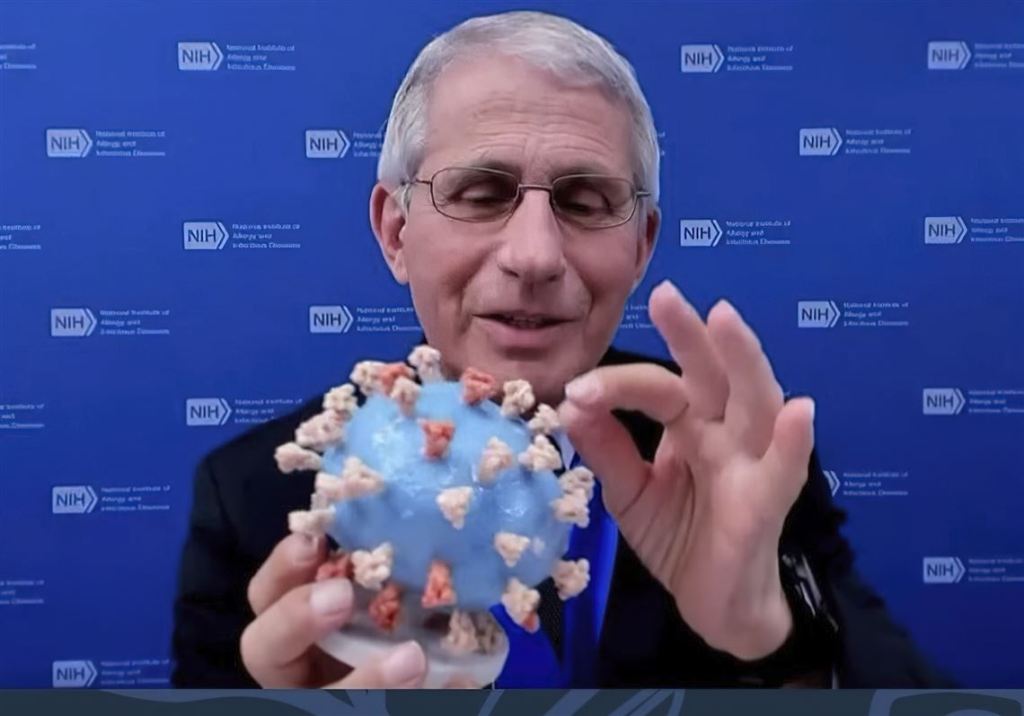
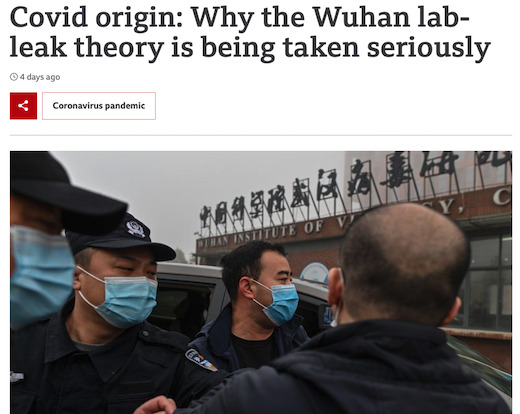






 After the Crash