Email Hacking Was ‘Pearl Harbor,’ Helsinki Presidency’s ‘New Low’: Welcome to the United States of Amnesia

By Jim Naureckas and Janine Jackson

Source: FAIR 

The media maelstrom around the Helsinki meeting between Donald Trump and Vladimir Putin obscures at least one point of view: that it’s possible to believe that Russia intervened in the 2016 election on behalf of Trump without thinking that this is remotely comparable to Pearl Harbor, as Politico (7/16/18) declared, or “the worst attack on America since 9/11,” as a Washington Postheadline (2/18/18) claimed earlier this year.

Not saying it doesn’t make it less true that both Russia and the United States frequently interfere in other countries’ elections—the US somewhat more frequently, according to a database of electoral interventions maintained by a political scientist at Carnegie Mellon. That’s a lot of Pearl Harbors.

In 1996, Time magazine published a cover story (7/15/96) headlined “Yanks to the Rescue: The Secret Story of How American Advisers Helped Yeltsin Win.” Russian President Boris Yeltsin, you may recall, embraced the idea pushed by Western advisors that what the Russian economy needed was “shock therapy,” a policy that resulted in the country losing about a third of its GDP. Yeltsin also created the model for the authoritarian post-Soviet Russia we have today, notably when he called out the military to shell the Russian parliament—just one of many examples that make clear that the difference between US and Russian electoral interference is not that “we” intervene on the side of democracy.

What justified concern there could be is undermined rather than served by airily ahistorical claims like that of a Washington Post op-ed by Garry Kasparov (7/17/18): “The Helsinki Summit Marks a New Low in the History of the US Presidency.” Suffice to say there are millions who disagree that Trump failing to acknowledge that he had Russian help in getting elected is worse than Bush Jr. invading Iraq, Reagan arming death squads in Central America, worse than Nixon bombing Cambodia, or Truman dropping atomic bombs on civilians, or FDR rounding up Japanese-Americans or, well,  worse than the deliberate separation of children from their families at the southern border. A conversation without that perspective is hardly worth having. Should we talk about electoral interference? Sure. But we don’t have to be led by media who are outraged at Moscow doing things that never bothered them when they were done by Washington—“It’s different cuz it’s us” is not really a moral principle—or whose concern about “foreign” interference in US elections is orders of magnitude greater than that around the interference represented by anti-black and anti-poor voter suppression, inaccessible polling places or partisan gerrymandering.

Unsouling From the Wilderness

By Kingsley L. Dennis

Source: Waking Times

“Crazy Horse dreamed and went into the world where there is nothing but the spirits of all things. That is the real world that is behind this one, and everything we see here is something like a shadow from that one.” ~Black Elk, Black Elk Speaks

“Modern man, I dutifully noted, is in search of a soul, and the age is an age of longing.” ~Theodore Roszak, Where the Wasteland Ends

Perhaps the reason some of us are feeling a sense of loss and longing is that we are, as Black Elk informs us, living in the shadow world. Our reality on this side may only be the fleeting ghosts of a place that is more real somewhere else. On this side we have broken our commitment to the earth and have unsouled ourselves from the wilderness. By the first century CE, the essayist Plutarch was asking, “Why is it that the gods are no longer speaking to us?”

For a long time now, we have been trying to create a new and different image of ourselves. It is an image where modern humanity is placed at the center of its own universe. We learn by observing, probing, experimenting, and finally dissecting and destroying the dynamic world we live within. From this, the modern mind started to develop a new reality for itself.

The collective reality in which we now reside does not take kindly to opposing perspectives. We have inherited an alienated consciousness that views the world as an outside entity – a world of objects that move in mechanical motion. This alienated consciousness has substituted the enchantment and mystery of living within a dynamic and animated world with a dream of the artificial, and ultimately the unreal. The modern landscape is now more scattered with administration than adventure. The central image of our modern age has been that of consumerism: the ability of the average person to buy the material goods they require in order to have a decent standard of living. A standard of living albeit promoted to us through our mainstream media and glamorous propaganda.

Only recently have some of us come to realize that consumerism has now become a contemporary form of crash therapy for unsatisfied people wanting to buy their way into happiness to escape from the very system they are simultaneously supporting. The easy acquisition of things has become more about trying to cover up anxiety as a substitute for contentment. Modern life, especially in the highly-developed West, is now rife with people parading their false selves in place of authenticity.

The modern history of the West has been about the removal of mystery, mind, and magic from the world around us. In the past there were realms of wilderness that existed outside of the social order, and each culture had these ‘wild zones’ where people danced with the little folk in the woods, undertook initiations in caves, circles, and hard-to-find corners. There were pagan rituals, crazy ecstasies, and unknown zones where primal energies were released. These were the places of wilderness, where dreamtime reigned, and clock-time was banned. And now these wild places are fewer and fewer as a new ‘reality order’ becomes the manifesto of the day. Now it is many of us who are feeling haunted. We have lost the presence of the ‘transcendent’ within our modern societies.

We must now recognize that something has happened – a break, a mutation, has occurred that has placed us in an ‘intermediate’ stage between eras. Modern life is being not so much rewritten as reconfigured. We are seeing odd things occurring in relation to time, speed, and distance. It’s as if right now the clock, and our sense of timing, is malfunctioning. This ahistorical period is out of time, until it resets itself. And here, the possibility of transcendence lingers like a phantasma.

We are in a time of carnivalesque distortion where ‘fast food’ is a parody of our normal food preparation and consumption; mediatized sport is a spectacle of its original form; and the music industry is one huge commercial carnival that mocks genuine creativity. In the pop music industry, the spectacle, the live show – the ‘carnival performance’ – is often more important than the actual merit of the song (even when the performer mimes, as they often do). We are in a different world right now – or at least a seemingly different reality.

In this new world of different relations, symbols, and meanings we have become unmoored from our harbors. We are talking about the fractal, the quantum, the molecular, the nano, the bots, artificial intelligence, and the singularity – yet we find we have no soulful connection with any of these terms or their significances. Perhaps we have entered a void-time.

The Sense of the Void

With human life having lost its reference to transcendence and the notion of the sacred, there is the ever-present danger that we may descend to a form of human morality that lacks any real meaning or higher principles. It is not hard to believe that a degree of inertia has crept into our modern societies. The result is that many of us may now be finding ourselves with a hollow space inside. This space becomes the perfect seedbed for the consuming desires, distractions, and attractions of modernity’s excesses. Within such an environment we wonder whether we may find ourselves waking up to a world where the dream is still dreaming itself and we can no longer distinguish what is real.

An age of the quantifiable has been ushered in and everyone, and everything, gets given a mark or a measurement. Ever since the industrial age brought in the points system – the marking scores – into mass education we’ve been carrying numbers around with us. Before then, students were known as apprentices and they spent time embedded in their discipline learning its skills. They either learnt great skills or they didn’t; now they get an 85, a 78, a 66, or a 45. Now all modern institutions think in numbers and our social status is quantified by such numbers, or grades, that allow us into other specialized zones – such as the members clubs, the elite institutions, or even into the ‘good credit’ rating books. The organic nature and capacity of a person has been stripped down to the quantifiable, and this measures the worth of an individual according to such grades. These associated numbers then follow the person around for the rest of their lives, influencing their careers, associations, and social freedoms. Society is now painting-by-numbers.

The mesmerizing void that is modern life tries to appease us with simulated pleasures. Through our unsouling from the greater transcendent wilderness we have become all too easily appeased by seeking inadequate answers to life’s meaning. By not seeking for the essential, we cannot hope to be anything other than temporary. Within the past century millions of people in developed parts of the world have distanced and divorced themselves from nature. We are negotiating how to adapt to a world structured within an increasingly artificial environment. The mutational shift is well underway, and new arrangements will need to be sought.

A potential lack of understanding can disconnect us from a world that is at the same time becoming increasingly connected. For thousands of years our ancestors lived alongside natural forces, learning from environmental cycles, and reading the world around them. This uncoupling from the wilderness is not only in favor of urban settings but eventually artificially constructed settings that will soon be made ‘smart.’ The profusion of what are called ‘mega-cities’ are set to implement ‘smart’ technologies which will be a combination of connected information and communication infrastructures.

A Moment of Reflection

We are, it is said, the most highly-developed and articulate species on planet Earth, and yet we live in a world of reflections. We are doomed never to be able to see directly our own faces. Our face, as well as our ‘true face’ as they say, is non-visible to us; and so we are guided by reflections and their appearances.

There is a short-story from Argentinean writer Jorge Luis Borges entitled ‘Fauna of Mirrors’ that tells of a time during the reign of the Yellow Emperor when the world of mirrors and the world of men were not, like today, cut off from one another.[i] Both kingdoms lived in harmony and each could come and go through the mirrors. Yet one night the mirror people invaded the earth and a mighty battle ensued until finally the magic arts of the Yellow Emperor prevailed. The mirror people were pushed back and imprisoned into their mirrors, and punished by being forced to repeat, as if in a dream, all the actions of the world of men. They were stripped of their power and their forms and reduced to mere reflections. A day will come, however, when the magic spell will be broken and little by little these reflections will awaken and will slowly differ from us. Then they will stop imitating the world of humans and eventually they will break through the glass once again to enter the earth.

They say that life imitates art far more than art imitates life. Upon reflection, every culture and society claim a portion of our private psyche as its own. With the narrowing of our sensibilities comes not only a much-diminished reality but also a contracted perspective whereby this condensed form of perception and visibility becomes as hyperreality to us. If it’s true that modern life has muffled the call of transcendental mystery, then it is equally true that it has made transcendence both a more needed and yet more difficult promise. The cry for the ‘death of the soul’ and the unsouling from the wilderness has helped to pave the slippery path toward a simplified hyperreality that is now stealing the show. Fasten seatbelts…

A Bardo Chat with: Aranyani, Hindu Goddess of the Forests 

Author (A): Hello Aranyani. Are you there?

Aranyani (Ai): (short pause) Hello…hello!

A: Hello Aranyani. How are you today?

Ai: Today? Why today? I don’t have days like you do.

A: Ah yes, sorry. I was thinking in my own terms of time. It’s a frequent trap!

Ai: That’s okay, we understand. Traps are there to break out of. I am good, thank you. I am well.

A: That is good to hear. I am glad to know you are well amidst all this disconnection going on right now.

Ai: Disconnection? I am gently strolling through my forests. There is no disconnection (another short pause). All is well here.

A: Sorry, I should have been more specific. I meant disconnection between us, humans, and the natural world. It seems that we’ve done a terrible job of respecting Nature and our environment.

Ai: Mmm, yes, that is so. I am not fond of strolling too near to your civilizations. But why do you call it a job? You see, already you show a wrong way to look at things. Your way of words shows how your mind thinks. Looking after the natural world, as you put it, is not a ‘job.’ It is a recognition of respect, or mutual interdependence, and of compassion and love.

A: Sorry again. I know that I use my words too loosely. It is the way we use phrases here.

Ai: Yes, I know how your species is. For one thing, you don’t listen at all very well. You consider yourselves as a separate species. My dear, nothing is separate. You see space between bodies and you label this as separation. You think and behave like children, and Nature is your forgiving mother.

A: I know, we’ve got a lot of things back-to-front. Would you care to explain more on this relationship?

Ai: (a soft sigh) Maybe a little. Everything communicates here, it always has. You don’t necessarily need a mouth or words or letters to communicate. It all communicates energetically, and you humans are also attuned to this. Every part was supposed to work together. You are strange in that you forgot how to properly listen. And now you build devices outside of yourselves to wrap around the earth – but you don’t need them. And there will be a time when you shall know this, and learn to communicate correctly, as you were always meant to – and not with your machine things. All of nature is alive, don’t you know that?

A: Yes, some of us do; but not enough, unfortunately.

Ai: You knew better before, a long time ago.

A: Yes, I have a feeling we did. Yet we now need to learn how to know in a different way.

Ai: Well….. (long pause)

A: Hello, are you there Aranyani?

Ai: Oh yes, sorry, I was dancing. I have a tune in my head. It’s been given to me from the trees.

A: Wonderful! I was saying that we need to learn how to know in a different way.

Ai: That’s not really how it is. Learning, knowing, and all these things – it’s all head stuff. You live too much in your heads. You always think you need to grab onto something – to know better, and the like. I would say you have to open up more, and to remember everything that was placed inside you. You are coming to a different place now…

A: Yes, thank you. And what do you mean by ‘coming to a different place’?

Ai: I mean you are not in your little tribal units anymore. You are now all over the earth. You grew and connected as you should, and now you are coming to a time when you can really be of help to the earth.

A: You mean as a global species?

Ai: (laughs) You and your fancy words. Yes, you are connecting more strongly with the body of Gaia now. Soon you will find your minds being changed for you. That should be fun!

A: Ah, and what do you mean by that?

Ai: (hums to herself) I don’t feel I should reveal too much just now. Not too many of you have realized that your minds are attuned to Gaia, your planet consciousness. Consciousness is not only those thoughts in your head, silly! (laughs). This is the true language, the natural language, and it is everywhere. This language flows through the trees, the plants, the animals, and through all of Gaia. There is a language that connects, and the humans are disconnected from this. Yes, that is the true disconnection. You talk about disconnect from Nature, but really it is disconnection from your shared language. You speak in tongues but only babble silly words.

A: Yes, true – we do babble a lot.

Ai: Babble, babble, yes you do! Like that story you tell yourselves. You call it the Tower of Babel, right?

A: Yes, that’s true. And it’s a perfect analogy. We tried to build a tower to our Creator and we ended up being divided in languages through our ignorance.

Ai: Yes, that’s it right there. You were disconnected through your ignorance.

A: Mm…yes (sighs)

Ai: Don’t worry, dear. You still have it all inside of you. Your connection to Origin and the universal language is still there. And you are not disconnected from us either. You are always with us, and you always have been.

A: Okay, sure. And thanks. But by being with you always are we not making the balance of Nature worse?

Ai: Oh, dear ones – it’s always about you, isn’t it!? Let me tell you that Nature is far more capable of taking care of herself than you are. Things change, yes. And you are making a mess and not clearing up your mess, like children. This is true too. Yet so many more things come to pass that are not in your hands – that is Nature. She is so far beyond your comprehension of her. You think of these separate things within Nature, like the trees and the forests, and the rivers. But you cannot yet see them as being all together as a wondrous Being. She is a Being far beyond your little minds. And she cares for you. Little children, wake up!

A: Yes, yes.

Ai: Be more joyful and love the things you have, and which surround you. The disconnection you speak of is less from Nature and more from yourselves (starts to sing)

A: That is so true – thank you.

Ai: I have to go now…byeee (voice fades into distance)

A: Yes, thank you Aranyani – bye!


About the Author

Kingsley L. Dennis is the author of The Phoenix Generation: A New Era of Connection, Compassion, and Consciousnessand The Sacred Revival: Magic, Mind & Meaning in a Technological Age, available at Amazon. Visit him on the web at http://www.kingsleydennis.com/.

References:

[i] See his short-story collection The Book of Imaginary Beings.

Saturday Matinee: Hukkle

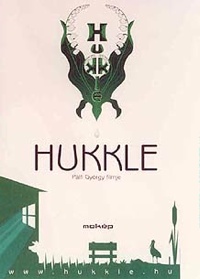
“Hukkle” (2002) is an experimental independent Hungarian film directed by György Pálfi and loosely based on an actual event. With nearly no dialogue, the film depicts seemingly mundane and disconnected scenes which gradually form a narrative related to a folksong sung at the end which includes the following lyrics which, translated into English, goes something like: “Who doesn’t love her husband cook him mandrake put paprika on it too he will be done by 8 o’clock. Who still loves her husband cook him good dinner… I will go to a place where birds don’t fly. I am alone like the crane like someone without a patron. My life is sad, my day is sorrow. I live under a sad star.”

How $21 Trillion in U.S. Tax Money Disappeared. “Full Scope Audit” of the Pentagon

Nicaragua Defeats The Not-So-Soft Coup

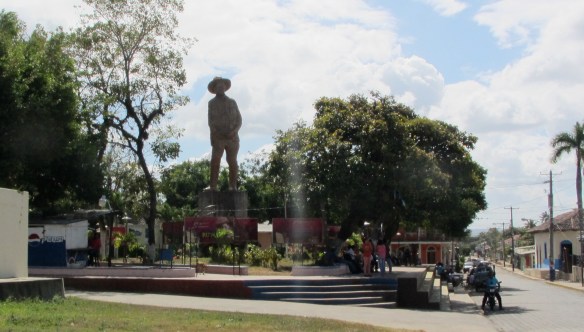
Statue of national hero Augusto Sandino at the central park of his hometown, Niquinohomo.

By Stephen Sefton

Source: Popular Resistance

The author, Stephen Sefton, is a writer from the Tortilla Con Sal Collective in Nicaragua. Sefton was the guest on Clearing The FOG Radio this week where we discussed What’s Really Happening In Nicaragua. The show examined the groups behind the violent coup that is occurring, and according to the report below, failing in Nicaragua. It also examines some of the many false stories about what is going on in Nicaragua, e.g. that the coup is nonviolent, that it is student-led, that Ortega is in league with the capitalist class, that the US is not behind the coup attempt. Sefton describes how reality has been turned on its head and reports in the US corporate media and the Nicaraguan media which is controlled by oligarchs and funded by the US National Endowment for Democracy. We hope Sefton is right that the coup is being defeated in time for the July 19th celebration of the 39th anniversary of their historic 1979 defeat of the Somoza dictatorship. KZ and MF

July 19 will be a massive celebration of the coup’s defeat and a categorical vindication of President Daniel Ortega’s Sandinista government’s efforts for peace in Nicaragua.

On July 19, hundreds of thousands of people from across Nicaragua will converge on the capital Managua to celebrate the 39th anniversary of their historic 1979 defeat of the Somoza dictatorship. The event takes place as the authorities continue to liberate communities blockaded by roadblocks operated by armed opposition activists whose not-so-soft coup attempt against the Sandinista government, begun on April 18, has failed. Ever since April 21, when President Daniel Ortega called for a process of National Dialogue to peacefully resolve opposition demands, Nicaragua’s political opposition and their allies have worked to sabotage talks for a negotiated solution. They have regularly staged extremely violent provocations falsely seeking to portray the government as being wholly responsible for the crisis and demanding President Ortega’s resignation.

Early in July, the opposition reneged on an agreement to dismantle the roadblocks their armed supporters have used since late April to try to destroy the country’s economy and intimidate the general population. On July 9, the government declared it would no longer permit the opposition to abuse the population’s basic rights to peace and security, stating: “Faced with the daily suffering imposed on Nicaragua’s families, who since April 18 have suffered violence from terrorists who have murdered, tortured and kidnapped hundreds of citizens, the same terrorists that have burned and destroyed hundreds of families’ homes, public buildings, small- and medium-sized businesses, such that the state is bound to act in accordance with the law to guarantee the right of its citizens to live in peace, with security and respect for the human rights enshrined in our political constitution, in the charters of international organizations and in human rights conventions.”

Opposition Violence

Subsequently, Nicaragua’s national police have worked with local communities around the country to clear the opposition roadblocks. In Jinotepe, they set free hundreds of trucks and their drivers held hostage by opposition gangs for over a month. In many places, it has been possible to negotiate agreements to remove the roadblocks peacefully. Elsewhere, the process has involved violence and casualties provoked by very well-armed activists and associated paid criminals resisting the authorities’ efforts to restore freedom of movement. On July 13 in Managua, two opposition activists were killed during the clearance of blockades in and around the National Autonomous University.

Elsewhere, on July 12, opposition activists from roadblocks operated by Francisca Ramirez and Medardo Mairena’s anti-Canal movement infiltrated an opposition peace march in the town of Morrito, on the eastern shore of Lake Nicaragua, on the highway to the Rio San Juan. They attacked a police post and the local municipal office, murdering four police officers and a primary school teacher, wounding four municipal workers and kidnapping nine police officers. Subsequently, that evening the police officers were set free, six of them with injuries.

Tortured & Murdered

In Masaya, opposition activists tortured, murdered and burned police officer Gabriel Vado Ruiz and would have done the same to another police officer, Rodrigo Barrios Flores, had he not escaped from his captors after enduring two days of torture and abuse. Although the extreme violence of the armed opposition activists has been responsible directly and indirectly for almost all the loss of life and injuries during the crisis, international news media and human rights organizations continue to falsely blame the government for virtually all the deaths and people injured. Amnesty International and fellow coup apologists such as Bianca Jagger and SOS Nicaragua, along with their allies in corporate media such as the Guardian, Telegraph, Washington Post, New York Times, Al Jazeera, CNN,  BBC, all cover up very serious human rights violations by the opposition activists during the failed attempted coup against Nicaragua’s legitimate government.

However, abundant audiovisual and photographic material exists providing irrefutable evidence of systematic human rights violations practiced by Nicaragua’s political opposition. From the the start, on April 18, the armed opposition offensive has manipulated legitimate peaceful protest so as to give cover to a very deliberate campaign of violence and deceit, promoting a climate of fear and casting blame on the government so as to create a psychosis of hatred, polarizing Nicaraguan society. The campaign’s objective is to make impossible a negotiated solution to the crisis provoked by the political opposition. Over the weekend of July 13-15, events in Nicaragua showed how refined the techniques of psychological warfare have become.

Misrepresenting & Exaggerating

The political opposition have used social media to misrepresent and exaggerate events, create incidents that never happened and obliterate their own criminal terrorist attacks. For example, the crisis in Nicaragua began with a fake ‘student massacre’ that never took place. Now Nicaragua’s opposition have faked attacks on a church in Managua, exaggerated casualties during the clearance of opposition thugs from the national university and covered up their own deliberate murders of police in Morrito and Masaya, as well as their gratuitous attacks on peaceful Sandinista demonstrators. In the national university, the opposition gangs also set fire to a classroom module and destroyed a preschool facility on the university campus.

Right from the start of the crisis, the opposition have expertly staged phony scenes of students taking cover from gunfire and used those images to justify their own savage attacks, like those in which they burned down pro-government Nuevo Radio Ya and CARUNA, the rural cooperatives’ savings and loan institution. Photographs show opposition journalists and photographers filming opposition activists pretending to be attacked, but despite the obvious fakery, those false stories get published uncritically in international corporate and alternative media. Nicaragua provides a textbook case study bearing out the work of analysts such as Cuba’s Randy Falcon, who has emphasized how new technologies exponentially multiply the digital reproduction of longstanding conventional propaganda motifs.

Propaganda Ploys

In Nicaragua, the government has in several cases negotiated agreements to clear armed opposition roadblocks, only to find that the opposition refuse to honor the agreements. The extremist political opposition are desperate to keep up their violence so as to sabotage efforts at National Dialogue and project the false image of a repressive government without popular support. Large demonstrations across the country supporting the government’s efforts for peace show exactly the reverse is true. Majority national opinion in Nicaragua is well aware of the opposition’s propaganda ploys and false claims.

Within Nicaragua, the opposition hardly bother to conceal their invention and artifice because their false political theater is staged almost entirely to impress overseas opinion. Their sinister cynical theater aims to set the scene for the Organization of American States to change its previously moderate position on Nicaragua and give the U.S. government an institutional pretext on which to intensify sanctions against Nicaragua’s government and its people. Even so, despite probable opposition attempts to sabotage it, July 19 will be a massive celebration of the coup’s defeat and a categorical vindication of President Daniel Ortega’s Sandinista government’s efforts for peace in Nicaragua.

Climb Down From the Summit of Hostile Propaganda

Public reactions to an open letter from academics, journalists and politicians asking for co-existence with Russia show many Americans don’t buy the media’s bellicose spin, as Norman Solomon explains.

By Norman Solomon

Source: Consortium News

Throughout the day before the summit in Helsinki, the lead story on the New York Times home page stayed the same: “Just by Meeting With Trump, Putin Comes Out Ahead.” The Sunday headline was in harmony with the tone of U.S. news coverage overall. As for media commentary, the Washington Post was in the dominant groove as it editorialized that Russia’s President Vladimir Putin is “an implacably hostile foreign adversary.”

Contempt for diplomacy with Russia is now extreme. Mainline U.S. journalists and top Democrats often bait President Trump in zero-sum terms. No doubt Hillary Clinton thought she was sending out an applause line in her tweet Sunday night: “Question for President Trump as he meets Putin: Do you know which team you play for?”

A bellicose stance toward Russia has become so routine and widespread that we might not give it a second thought — and that makes it all the more hazardous. After President George W. Bush declared “You’re either with us or against us,” many Americans gradually realized what was wrong with a Manichean view of the world. Such an outlook is even more dangerous today.

Since early 2017, the U.S. mass media have laid it on thick with the rough political equivalent of a painting technique known as chiaroscuro — “the use of strong contrasts between light and dark, usually bold contrasts affecting a whole composition,” in the words of Wikipedia. The Russiagate frenzy is largely about punching up contrasts between the United States (angelic and victimized) and Russia (sinister and victimizer).

Countless stories with selective facts are being told that way. But other selectively fact-based stories could also be told to portray the United States as a sinister victimizer and Russia as an angelic victim. Those governments and their conformist media outlets are relentless in telling it either way. As the great journalist I.F. Stone observed long ago, “All governments lie, and nothing they say should be believed.” In other words: don’t trust, verify.

Often the biggest lies involve what remains unsaid. For instance, U.S. media rarely mention such key matters as the promise-breaking huge expansion of NATO to Russia’s borders since the fall of the Berlin Wall, or the brazen U.S. intervention in Russia’s pivotal 1996 presidential election, or the U.S. government’s 2002 withdrawal from the Anti-Ballistic Missile Treaty, or the more than 800 U.S. military bases overseas — in contrast to Russia’s nine.

An Open Letter for Sanity

For human survival on this planet, an overarching truth appears in an open letter published last week by The Nation magazine: “No political advantage, real or imagined, could possibly compensate for the consequences if even a fraction of U.S. and Russian arsenals were to be utilized in a thermonuclear exchange. The tacit pretense that the worsening of U.S.-Russian relations does not worsen the odds of survival for the next generations is profoundly false.”

The initial 26 signers of the open letter — “Common Ground: For Secure Elections and True National Security” — included Pentagon Papers whistleblower Daniel Ellsberg, writer and feminist organizer Gloria Steinem, former UN ambassador Gov. Bill Richardson, political analyst Noam Chomsky, former covert CIA operations officer Valerie Plame, activist leader Rev. Dr. William Barber II, filmmaker Michael Moore, former Nixon White House counsel John Dean, Russia scholar Stephen F. Cohen, former U.S. ambassador to the USSR Jack F. Matlock Jr., Pulitzer Prize-winning writers Alice Walker and Viet Thanh Nguyen, The Nation editor Katrina vanden Heuvel, former senator Adlai Stevenson III, and former longtime House Armed Services Committee member Patricia Schroeder. (I was also one of the initial signers.)

Since its release five days ago, the open letter has gained support from a petition already signed by 30,000 people. The petition campaign aims to amplify the call for protecting the digital infrastructure of the electoral process that is now “vulnerable to would-be hackers based anywhere” — and for taking “concrete steps… to ease tensions between the nuclear superpowers.”

We need a major shift in the U.S. approach toward Russia. Clearly the needed shift won’t be initiated by the Republican or Democratic leaders in Congress; it must come from Americans who make their voices heard. The lives — and even existence — of future generations are at stake in the relationship between Washington and Moscow.

Many of the petition’s grassroots signers have posted comments along with their names. Here are a few of my favorites:

*  From Nevada: “We all share the same planet! We better learn how to do it safely or face the consequences of blowing ourselves up!”

*  From New Mexico: “The earth will not survive a nuclear war. The weapons we have today are able to cause much more destruction than those of previous eras. We must find a way to common ground.”

*  From Massachusetts: “It is imperative that we take steps to protect the sanctity of our elections and to prevent nuclear war anywhere on the earth.”

*  From Kentucky: “Secure elections are a fundamental part of a democratic system. But this could become meaningless in the event of thermonuclear war.”

*  From California: “There is only madness and hubris in talk of belligerence toward others, especially when we have such dangerous weapons and human error has almost led to our annihilation already more than once in the past half-century.”

Yet a wide array of media outlets, notably the “Russiagate”-obsessed network MSNBC, keeps egging on progressives to climb toward peaks of anti-Russian jingoism. The line of march is often in virtual lockstep with GOP hyper-hawks like Senators John McCain and Lindsey Graham. The incessant drumbeat is in sync with what Martin Luther King Jr. called “the madness of militarism.”

Meanwhile, as Dr. King said, “We still have a choice today: nonviolent co-existence or violent co-annihilation.


Norman Solomon is the coordinator of the online activist group RootsAction.org and the executive director of the Institute for Public Accuracy. He is the author of a dozen books including “War Made Easy: How Presidents and Pundits Keep Spinning Us to Death.”

What’s Wrong with the Economy: 9 Toxic Dynamics

By Charles Hugh Smith

Source: Of Two Minds

These nine dynamics are mutually reinforcing.

Beneath the surface signals of an eternally rising stock market and expanding GDP, we all sense something is deeply, systemically wrong with the U.S. economy. These nine structural dynamics generate secondary dynamics, all of which are toxic to social mobility, sustainable prosperity, accountability and democracy:

1. The financialization of the economy, which transformed services, credit, risk and labor into commodities that could be traded globally. Financialization generates enormously asymmetric returns: those with access to low-cost credit, global markets and expertise in finance collect the lion’s share of gains in income and wealth.

2. The technological transformation of the economy, which has placed a substantial scarcity premium on specific tech/managerial/communication skills and devalued ordinary labor and capital. As a result, the majority of gains in wealth and income flow to those with the scarce skills and forms of capital, leaving little for ordinary labor and capital.

3. The end of cheap fossil fuels. The fracking boom/bubble has obscured the long-term secular trend: the depletion of cheap-to-access and process oil. As many analysts have observed (Nate Hagens, Gail Tverberg, Richard Heinberg, Chris Martenson et al.), the global economy only grows if energy and credit are both cheap.

4. Globalization, which transformed the developing world into the environmental dumping ground of the wealthy nations and enabled the owners of capital to offshore waste and labor.

5. The destructive consequences of “growth at any cost” are piling up. “Growth” is the one constant of all existing political-economic systems, and none of the current Modes of Production (i.e. the structures that organize production, consumption, the economy and society) recognize that “growth” is not sustainable.

The first two dynamics drive three other dynamics that have hollowed out the productive economy:

6. The dominance of debt-funded speculation as the means of “getting ahead” as opposed to producing products and services of intrinsic value that serve the core needs of communities.

7. The economy’s gains in income and wealth are concentrated in the very top of the wealth-power pyramid: the top 5%–entrepreneurs, professionals and technocrats, etc., and within this class, most of the gains go to the top 1/10th of 1% –the existing owners of wealth, and financiers/speculators with access to cheap credit.

The net result is the bottom 95% have few opportunities to “get ahead” outside of gambling in the asset bubbles du jour: the stock and housing market. While the average middle class household may be able to borrow enough to speculate in the housing bubble, two factors limit the odds of success for ordinary investors/gamblers:

A. The gains in housing are concentrated in specific markets; outside these hot markets, gains are modest.

B. Asset bubbles eventually pop, leaving those still owning the assets with losses. The risks are thus intrinsic and high. The average investor/gambler lacks the experience needed to recognize the bubble has stopped expanding and exit the market before ll the other speculators rush for the narrowing exit.

8. The devaluation of ordinary labor and capital means the bottom 60% of the economy that lacks the requisite skills with a scarcity premium in the Emerging Economy have lost easy access to the ladder of social mobility.

9. The concentration of wealth and power in the hands of the self-serving few corrupts the economy and democracy. The U.S. economy is dominated by insider and elite rackets, skims, scams and cartels/quasi-monopolies, all of which corrupt the economy by creating perverse incentives for exploitation and gaming the system to benefit the few at the expense of the many.

This corruption in service of maximizing private/personal gains at the expense of the system itself also corrupts the mechanisms of governance, which are now little more than cloaking devices that protect insiders and elites from scrutiny and consequences.

The 20% above the bottom 60% may appear to have some access to social/economic mobility, but this is largely an artifact of the bubble economy since 2009. Once the bubble deflates, the illusion of social mobility for the “middle class” between the bottom 60% and the upper 20% vanishes.

The “upper middle class” between the bottom 80% and the top 5% is being squeezed by the over-production of elites, i.e. the over-abundance of those with college degrees and the relative scarcity of secure jobs within the top 5%. As a result, credential inflation is rampant, with Masters Degrees replacing Bachelors Degrees as the default for a white-collar job, and PhDs replacing Masters diplomas as the new default for positions that lack security and upward mobility.

In other words, the number of people who qualify for and desire a slot in the elite class (top 5%) far exceeds the number of slots available. As Peter Turchin has explained, this competition generates social disorder at the top of economic heap as the top 20% fight over the few positions open in the top 5%. The disgruntled, frustrated losers far outnumber the relatively few winners.

These nine dynamics are mutually reinforcing, meaning that each dynamic strengthens one or more of the others, reinforcing each other so the sum of the nine is far more powerful than a mere addition might suggest.

The New Aristocracy (the top 9.9%) (The Atlantic)