The Singular Pursuit of Comrade Bezos

By Malcolm Harris

Source: Medium

It was explicitly and deliberately a ratchet, designed to effect a one-way passage from scarcity to plenty by way of stepping up output each year, every year, year after year. Nothing else mattered: not profit, not the rate of industrial accidents, not the effect of the factories on the land or the air. The planned economy measured its success in terms of the amount of physical things it produced.

— Francis Spufford, Red Plenty

But isn’t a business’s goal to turn a profit? Not at Amazon, at least in the traditional sense. Jeff Bezos knows that operating cash flow gives the company the money it needs to invest in all the things that keep it ahead of its competitors, and recover from flops like the Fire Phone. Up and to the right.

— Recode, “Amazon’s Epic 20-Year Run as a Public Company, Explained in Five Charts


From a financial point of view, Amazon doesn’t behave much like a successful 21st-century company. Amazon has not bought back its own stock since 2012. Amazon has never offered its shareholders a dividend. Unlike its peers Google, Apple, and Facebook, Amazon does not hoard cash. It has only recently started to record small, predictable profits. Instead, whenever it has resources, Amazon invests in capacity, which results in growth at a ridiculous clip. When the company found itself with $13.8 billion lying around, it bought a grocery chain for $13.7 billion. As the Recode story referenced above summarizes in one of the graphs: “It took Amazon 18 years as a public company to catch Walmart in market cap, but only two more years to double it.” More than a profit-seeking corporation, Amazon is behaving like a planned economy.

If there is one story on Americans who grew up after the fall of the Berlin Wall know about planned economies, I’d wager it’s the one about Boris Yeltsin in a Texas supermarket.

In 1989, recently elected to the Supreme Soviet, Yeltsin came to America, in part to see Johnson Space Center in Houston. On an unscheduled jaunt, the Soviet delegation visited a local supermarket. Photos from the Houston Chronicle capture the day: Yeltsin, overcome by a display of Jell-O Pudding Pops; Yeltsin inspecting the onions; Yeltsin staring down a full display of shiny produce like a line of enemy soldiers. Planning could never master the countless variables that capitalism calculated using the tireless machine of self-interest. According to the story, the overflowing shelves filled Yeltsin with despair for the Soviet system, turned him into an economic reformer, and spelled the end for state socialism as a global force. We’re taught this lesson in public schools, along with Animal Farm: Planned economies do not work.

It’s almost 30 years later, but if Comrade Yeltsin had visited today’s most-advanced American grocery stores, he might not have felt so bad. Journalist Hayley Peterson summarized her findings in the title of her investigative piece, “‘Seeing Someone Cry at Work Is Becoming Normal’: Employees Say Whole Foods Is Using ‘Scorecards’ to Punish Them.” The scorecard in question measures compliance with the (Amazon subsidiary) Whole Foods OTS, or “on-the-shelf” inventory management. OTS is exhaustive, replacing a previously decentralized system with inch-by-inch centralized standards. Those standards include delivering food from trucks straight to the shelves, skipping the expense of stockrooms. This has resulted in produce displays that couldn’t bring down North Korea. Has Bezos stumbled into the problems with planning?

Although OTS was in play before Amazon purchased Whole Foods last August, stories about enforcement to tears fit with the Bezos ethos and reputation. Amazon is famous for pursuing growth and large-scale efficiencies, even when workers find the experiments torturous and when they don’t make a lot of sense to customers, either. If you receive a tiny item in a giant Amazon box, don’t worry. Your order is just one small piece in an efficiency jigsaw that’s too big and fast for any individual human to comprehend. If we view Amazon as a planned economy rather than just another market player, it all starts to make more sense: We’ll thank Jeff later, when the plan works. And indeed, with our dollars, we have.

In fact, to think of Amazon as a “market player” is a mischaracterization. The world’s biggest store doesn’t use suggested retail pricing; it sets its own. Book authors (to use a personal example) receive a distinctly lower royalty for Amazon sales because the site has the power to demand lower prices from publishers, who in turn pass on the tighter margins to writers. But for consumers, it works! Not only are books significantly cheaper on Amazon, the site also features a giant stock that can be shipped to you within two days, for free with Amazon Prime citizensh…er, membership. All 10 or so bookstores I frequented as a high school and college student have closed, yet our access to books has improved — at least as far as we seem to be able to measure. It’s hard to expect consumers to feel bad enough about that to change our behavior.


Although they attempt to grow in a single direction, planned economies always destroy as well as build. In the 1930s, the Soviet Union compelled the collectivization of kulaks, or prosperous peasants. Small farms were incorporated into a larger collective agricultural system. Depending on who you ask, dekulakization was literal genocide, comparable to the Holocaust, and/or it catapulted what had been a continent-sized expanse of peasants into a modern superpower. Amazon’s decimation of small businesses (bookstores in particular) is a similar sort of collectivization, purging small proprietors or driving them onto Amazon platforms. The process is decentralized and executed by the market rather than the state, but don’t get confused: Whether or not Bezos is banging on his desk, demanding the extermination of independent booksellers — though he probably is — these are top-down decisions to eliminate particular ways of life.

Now, with the purchase of Whole Foods, Bezos and Co. seem likely to apply the same pattern to food. Responding to reports that Amazon will begin offering free two-hour Whole Foods delivery for Prime customers, BuzzFeed’s Tom Gara tweeted, “Stuff like this suggests Amazon is going to remove every cent of profit from the grocery industry.” Free two-hour grocery delivery is ludicrously convenient, perhaps the most convenient thing Amazon has come up with yet. And why should we consumers pay for huge dividends to Kroger shareholders? Fuck ’em; if Bezos has the discipline to stick to the growth plan instead of stuffing shareholder pockets every quarter, then let him eat their lunch. Despite a business model based on eliminating competition, Amazon has avoided attention from antitrust authorities because prices are down. If consumers are better off, who cares if it’s a monopoly? American antitrust law doesn’t exist to protect kulaks, whether they’re selling books or groceries.

Amazon has succeeded in large part because of the company’s uncommon drive to invest in growth. And today, not only are other companies slow to spend, so are governments. Austerity politics and decades of privatization put Amazon in a place to take over state functions. If localities can’t or won’t invest in jobs, then Bezos can get them to forgo tax dollars (and dignity) to host HQ2. There’s no reason governments couldn’t offer on-demand cloud computing services as a public utility, but instead the feds pay Amazon Web Services to host their sites. And if the government outsources health care for its population to insurers who insist on making profits, well, stay tuned. There’s no near-term natural end to Amazon’s growth, and by next year the company’s annual revenue should surpass the GDP of Vietnam. I don’t see any reason why Amazon won’t start building its own cities in the near future.

America never had to find out whether capitalism could compete with the Soviets plus 21st-century technology. Regardless, the idea that market competition can better set prices than algorithms and planning is now passé. Our economists used to scoff at the Soviets’ market-distorting subsidies; now Uber subsidizes every ride. Compared to the capitalists who are making their money by stripping the copper wiring from the American economy, the Bezos plan is efficient. So, with the exception of small business owners and managers, why wouldn’t we want to turn an increasing amount of our life-world over to Amazon? I have little doubt the company could, from a consumer perspective, improve upon the current public-private mess that is Obamacare, for example. Between the patchwork quilt of public- and private-sector scammers that run America today and “up and to the right,” life in the Amazon with Lex Luthor doesn’t look so bad. At least he has a plan, unlike some people.

From the perspective of the average consumer, it’s hard to beat Amazon. The single-minded focus on efficiency and growth has worked, and delivery convenience is perhaps the one area of American life that has kept up with our past expectations for the future. However, we do not make the passage from cradle to grave as mere average consumers. Take a look at package delivery, for example: Amazon’s latest disruptive announcement is “Shipping with Amazon,” a challenge to the USPS, from which Amazon has been conniving preferential rates. As a government agency bound to serve everyone, the Postal Service has had to accept all sorts of inefficiencies, like free delivery for rural customers or subsidized media distribution to realize freedom of the press. Amazon, on the other hand, is a private company that doesn’t really have to do anything it doesn’t want to do. In aggregate, as average consumers, we should be cheering. Maybe we are. But as members of a national community, I hope we stop to ask if efficiency is all we want from our delivery infrastructure. Lowering costs as far as possible sounds good until you remember that one of those costs is labor. One of those costs is us.

Earlier this month, Amazon was awarded two patents for a wristband system that would track the movement of warehouse employees’ hands in real time. It’s easy to see how this is a gain in efficiency: If the company can optimize employee movements, everything can be done faster and cheaper. It’s also easy to see how, for those workers, this is a significant step down the path into a dystopian hellworld. Amazon is a notoriously brutal, draining place to work, even at the executive levels. The fear used to be that if Amazon could elbow out all its competitors with low prices, it would then jack them up, Martin Shkreli style. That’s not what happened. Instead, Amazon and other monopsonists have used their power to drive wages and the labor share of production down. If you follow the Bezos strategy all the way, it doesn’t end in fully automated luxury communism or even Wall-E. It ends in The Matrix, with workers swaddled in a pod of perfect convenience and perfect exploitation. Central planning in its capitalist form turns people into another cost to be reduced as low as possible.

Just because a plan is efficient doesn’t mean it’s good. Postal Service employees are unionized; they have higher wages, paths for advancement, job stability, negotiated grievance procedures, health benefits, vacation time, etc. Amazon delivery drivers are not and do not. That difference counts as efficiency when we measure by price, and that is, to my mind, a very good argument for not handing the world over to the king of efficiency. The question that remains is whether we have already been too far reduced, whether after being treated as consumers and costs, we might still have it in us to be more, because that’s what it will take to wrench society away from Bezos and from the people who have made him look like a reasonable alternative.

“An Enthusiastic Corporate Citizen”: David Cronenberg and the Dawn of Neoliberalism

(Editor’s note: In commemoration of director David Cronenberg’s 75th birthday we present this compelling and socially relevant analysis of his filmography.)

By Michael Grasso

Source: We Are the Mutants

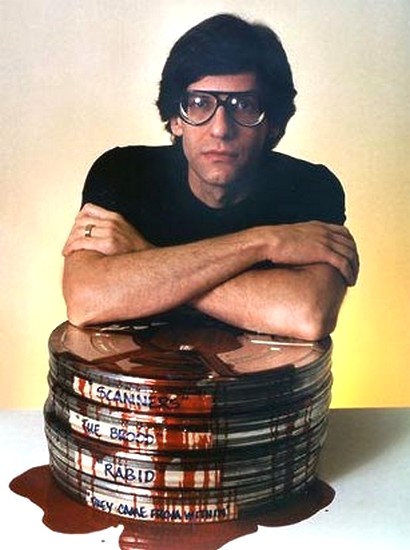
The cinematic corpus of David Cronenberg is probably best known for its expertly uncanny use of body horror, but looming almost as large in the writer-director’s various universes is the presence of faceless, all-powerful organizations. Like his rough contemporary Thomas Pynchon and the conspiracies that litter Pynchon’s early works—V. (1963), The Crying of Lot 49 (1966), and Gravity’s Rainbow (1973)—Cronenberg’s shadowy organizations offer fodder for paranoid conspiracy. These conspiracies operate under the cloak of beneficent academic institutes and, in his later work, corporations. The transition from institutes to corporations occurred during Cronenberg’s late ’70s and early ’80s output, specifically the trio of films The Brood (1979), Scanners (1981), and Videodrome (1983).

It is no coincidence that, at this particular time, international finance and prevailing political winds helped put the corporation in society’s driver’s seat. In Adam Curtis’s recent documentary film HyperNormalisation (2016), he notes how the default of the city of New York in 1975 opened the door for private investment and the finance industry to get their hands on municipal governance on a large scale for the first time, and how this creaked open the door for the Thatcher-Reagan privatization wave in the ’80s. These last few “hinge” years of the 1970s offered the last chance for a real alternative to the coming neoliberal revolution. Soon, all alternatives for governance in the name of the public good were destroyed. Corporatism tightened its grip on the Western polity.

Cronenberg’s early eerie organizations—the “Canadian Academy of Erotic Enquiry” from Stereo (1969) and the panoply of gruesome academic and cosmetic conspiracies in his Crimes of the Future (1970)—eventually yielded to corporations like Scanners‘ ConSec and Videodrome‘s Spectacular Optical. In these early works, Cronenberg’s mysterious organizations are headed by visionary (mad) geniuses. In 1975’s Shivers, experiments by a lone mad scientist infect an entire apartment building with parasites, which awaken dark impulses in the building’s residents and spread themselves through sexual violence. But as the decade went on, Cronenberg slowly backed away from utilizing the character of a singular scientific genius harboring a twisted vision of the future. Now, organizations sought to pull the strings from the shadows. The key transitional work in this chronology is the sometimes-underlooked The Brood from 1979.

In the film, Oliver Reed plays esteemed psychologist Dr. Hal Raglan, who has developed a method of exorcising deep-seated psychological issues using a technique called “psychoplasmics.” In intense one-on-one sessions reminiscent of psychodrama, Raglan is able to physically remove trauma from the human body in the form of ulcers, rashes, and, we eventually discover, cancer. In the ultimate reveal, it’s shown that Raglan has helped traumatized patient Nola Carveth (Samantha Eggar) to birth violent, deformed homunculi who go out into the world, psychically connected to her, in order to resolve her childhood abandonment issues and abuse with bloody murder. Raglan’s foundation, the Somafree Institute of Psychoplasmics (its name simultaneously evocative of Aldous Huxley’s perfect drug soma, and reminiscent of fringe psychological research like Wilhelm Reich’s orgone theory) inhabits a modernist chalet far outside the city of Toronto. Non-resident patients have to be bussed in. Raglan’s public reputation is that of an eccentric, but effective, therapist. At several points in the film we see the covers of Raglan’s presumably best-selling The Shape of Rage. (Curiously, a decade later, in 1990, a documentary titled Child of Rage would be released covering the controversial use of “attachment therapy.”)

As depicted in the film, Somafree is not a corporation. But the thematic threads surrounding Raglan and his Institute are based on real-life trends in the 1970s. In its practices and in the person of Raglan, Somafree resembles psycho-intensive institutes like Esalen, self-improvement organizations like Lifespring, and personalities like Werner Erhard. Erhard’s est movement used primal abuse to ostensibly create psychological breakthroughs, helping the “patient” become more assertive, more powerful, less prone to obeying impulses caused by their early traumas. There is also the real-life analogue to the psychological method that Raglan employs: psychodrama. In the 1970s, new methods of conflict resolution pioneered in places like Esalen were beginning to seep into the mainstream of North American society. These methods soon spread into the corporate world as a purported means of defusing tensions at work and making an office more productive. The “encounter group” soon became a punchline, but the principles behind the Age of Aquarius’s more touchy-feely psychodynamic methods soon became part of the warp and weft of corporate culture in the ’80s and well beyond.

Nola’s estranged husband Frank interviews a former Raglan patient, Jan Hartog, in an attempt to discredit Somafree so Frank can regain custody of his daughter. This patient bears the scars of Raglan’s work on him: a lymphatic cancer sprouting from his neck (an eerie foreshadowing of the coming of another mysterious lymphatic disorder that would soon break out all over North America). Hartog plans to sue; not to achieve victory in a courtroom, but to destroy Raglan’s reputation. It doesn’t matter if they win, Hartog says, because “They’ll just remember the slogan. Psychoplasmics can cause cancer.” The 1970s was full of an increased awareness of the carcinogens that surrounded us in the late-industrial West—cigarettes, sweeteners, food dyes, and pesticides—thanks in large part to the nascent environmental and consumer rights movements, which faced off against corporations using  weapons of negative publicity.

By the time we get to Scanners in 1981, we are fully invested in a world of shadowy corporate overlords. A huge multinational security firm, ConSec, tries to shepherd psychics called “scanners,” ostensibly to help them control their powers, but also to utilize and exploit their paranormal abilities. Protagonist Cameron Vale (Steven Lack) is apprehended off the streets, where, due to his psychic pain, he’s living as a derelict. We learn that scanners don’t “fit in” with society. When Vale is given the inhibitive drug ephemerol by ConSec’s head of scanner research, Dr. Paul Ruth (Patrick McGoohan), he is able to get himself together and is even given a new proto-yuppie wardrobe and mission by ConSec: eliminate rogue scanner Darryl Revok (Michael Ironside). But as Vale accepts his mission and new identity, he finds himself enlisted in ConSec’s private war against renegade scanners. When he runs into an emerging cell of scanners who are forming a powerful “group mind” in a New Age-like encounter session, assassins controlled by Revok murder most of the cell. “Everywhere you go, somebody dies,” one of the hive mind tells Vale, who is complicit with ConSec’s need to exert corporate control over scanners, including the use of violence as part of the corporate mission. Meanwhile, ConSec itself is riddled with moles working with Revok. Indeed, a chemical and pharmaceutical company called “Biocarbon Amalgamate,” founded by Dr. Ruth but now infiltrated by Revok, manufactures ephemerol in massive quantities. Scanners recontexualizes the Cold War espionage “wilderness of mirrors” in terms of corporate espionage for a new age of corporate domination. (It’s no coincidence that Cronenberg cast McGoohan, one of the Cold War’s most famous fictional spies, in the role of Dr. Ruth.)

ConSec’s corporate mission is revealed in a board meeting when the new head of security says, “We’re in the business of international security. We deal in weaponry and private armories.” This head of security also tells Dr. Ruth, “Let us leave the development of dolphins and freaks as weapons of espionage to others.” To the new breed of ConSec executive, fringe ’70s research is a thing of the past, despite its obvious power and relevance. The future is in fighting proxy wars, ensuring private security for the wealthy, and providing mercenary security forces. ConSec in this way is like many other private security firms that first emerged in the 1970s and ’80s. Begun as an outgrowth of post-colonial British military adventurism, the private military company soon became a way for ex-military officers to assure themselves a handsome post-service sinecure in a new era where hot wars were a thing of the past. “Brushfire wars” would continue to ensue, ensuring these companies an expanding portfolio, both in the waning years of the Cold War and in the 1990s and beyond. In fact, it’s interesting to note that many of the real-world military’s supposed psychic assets themselves got into private security after the U.S. Army shut down fringe science projects like Project STARGATE. Art imitates life imitates art.

Videodrome expands Cronenberg’s conspiratorial corporate, military, and espionage worldview into the rapidly exploding world of the media in the early ’80s. Leaps forward in technology, all of which are explicitly called out in Videodrome, litter the film’s visual landscape. Cable television, satellite transmissions (and the attendant hacking thereof), video cassette recorders, the rise of video pornography, virtual reality, postmodern media theory, and violence in entertainment all play essential roles in the film. Max Renn’s (James Woods) tiny Civic TV/Channel 83 (itself based on groundbreaking independent Toronto television station CityTV) is trying to survive as best it can in a world of massive international media players. Ever seeking the latest hit that will tap into the public’s unending hunger for sex and violence, his on-staff “satellite pirate” Harlan delivers the mysterious Videodrome transmission. Harlan is later revealed to be working with the Videodrome conspiracy, having intentionally exposed Max to the signal. In a memorable speech, Harlan nails Max’s amoral desire to sell sex and violence to his viewers: “This cesspool you call a television station, and your people who wallow around in it, and your viewers who watch you do it; you’re rotting us away from the inside.” When Renn is deep into his Videodrome-triggered hallucinations, he is offered corporate “help” much as Cameron Vale was. This time, his “savior” is Barry Convex, a representative of Spectacular Optical. In his video message to Max, he, like the ConSec executive before him, lays out Spectacular Optical’s corporate mission:

I’d like to invite you into the world of Spectacular Optical, an enthusiastic global corporate citizen. We make inexpensive glasses for the Third World… and missile guidance systems for NATO. We also make Videodrome, Max.

The final form of the military-industrial-entertainment complex is laid bare. Videodrome’s intent is to harden and make psychotic a North American television audience who’ve “become soft,” as Harlan puts it. Renn’s hallucinations are recorded, he is literally “reprogrammed” to kill Civic TV’s board (thanks to the memorable hallucinatory image of Convex sticking a VHS tape into Renn’s gut). Renn is then reprogrammed to retaliate and assassinate Convex by the much more ’70s-cult Cathode Ray Mission of “media prophet” Brian O’Blivion, whose postmodern, expressly McLuhanesque view of television’s place in the world allowed Videodrome to come into existence in the first place: “I had a brain tumor and I had visions. I believe the visions caused the tumor and not the reverse… when they removed the tumor, it was called Videodrome.” It’s also worth noting that O’Blivion tells us that Videodrome made him its first victim; postmodern criticism of the medium of television is no match for its violent, cancerous growth.

The deregulation of media in the U.S. in the Reagan years is common knowledge; rules around children’s television were especially eviscerated, which allowed for an explosion in violent, warlike cartoons based on popular toy lines, training a new generation for a lifetime of endless war. Combined with the aforementioned explosion of video technology, the laissez-faire environment shepherded by Reagan’s FCC allowed a new breed of cable television magnates to get rich and created a television and media landscape with a relatively friction-free relationship to government. By the time the first Gulf War broke out in 1991, war provided the cable news networks with surefire ratings and cable news provided the propaganda platform for the war effort, a mutually beneficial (and Cronenberg-esque) symbiosis that’s continued to metastasize through multiple subsequent wars in the Middle East. The world of Videodrome, the one Harlan evokes where America will no longer be soft in a world full of tough hombres, has finally come to fruition thanks in part to all of our enmeshment in the video arena—the video drome.

After Videodrome—in The Fly (1986), Dead Ringers (1988), and Crash (1996)—Cronenberg focuses less on sinister organizations and more on monomaniacal researchers, doctors, and fetishists who pursue their individual idiosyncratic agendas through the director’s trademark twisting mindscapes (and bodyscapes). With the exception of eXistenZ (1999), Cronenberg’s meditation on computer technology and gaming released amidst the first dot-com bubble, and his Occupy-influenced adaptation of Don DeLillo’s 2003 novel Cosmopolis (2012), he has retreated from a more overt suspicion of corporations and shadowy conspiracies. His warning about these invisible masters pulling the strings of society came during the time period when something could have been done about corporate hegemony. But now, the conspiracy operates in the open. We are now all of us the dumb, trusting Cronenberg protagonist, lulled into a false sense of security by a series of “enthusiastic corporate citizens.” Long live the new flesh.

Zucktown, USA

Facebook, Amazon, and Google are reviving the ill-fated “company towns” of the Gilded Age

By Julianne Tveten

Source: The Baffler

EARLIER THIS YEAR IN SILICON VALLEY, a phalanx of six-figure-earning Facebook engineers confronted Mark Zuckerberg about subsidizing their extortionate rents. Meanwhile, the contract laborers who serve them bacon kimchi dogs and duck confit found themselves cordoned off from the affordable housing market—where salaries approaching $74,000 qualify—and began converting their garages into homes. Still, if these events point to a dire situation, they’re but the latest stirrings of the hulking leviathan that is the region’s housing crisis—an issue that has peppered the headlines of news outlets great and small for nearly a decade.

Thanks in part to this accretion of bad press, Zuckerberg and his fellow cyborgian billionaires have sprung into action as property developers. In July, Facebook announced plans to create “Willow Campus,” an aggressively rectilinear, Rem Koolhaas-designed rebrand of a Menlo Park office complex it purchased in 2015. The expansion of its headquarters will boast fifteen hundred units of housing, 15 percent of which it claims will be “offered at below-market rates.” If that isn’t sufficiently microcosmic, the company promises to dedicate 125,000 square feet to commercial space, promising a grocery store, pharmacy, and the cryptically worded “additional community-facing retail.”

Equally if not more responsible for crafting California’s bloodsucking geometric crapscape is Google, whose newfangled parent company Alphabet has vowed to provide temporary housing, in the form of modular dwellings, for three hundred of its employees in its home city of Mountain View. For years, Google has been seeking to wrest control of the city from its government; last year, it gained over 370,000 square feet of office space along with the right to develop 1.4 million square feet in the North Bayshore neighborhood after vying with LinkedIn to furnish the territory with a new police station, road improvements, and college scholarships. (The modular homes will be constructed on a former NASA air base, which the company signed an agreement to lease for sixty years.)


We’re witnessing, in these schemes, a revival of the company town. An oft-recurring feature of the Western capitalist imaginary, the company town’s American variety dates back to the nineteenth century; railroad industrialist George Pullman’s eponymous city in Illinois provides one of the more illustrative examples. Pullman characterized his town, completed in 1884, as a lucrative, pro-business utopia filled with satisfied participants, employee and investor alike. Its veneer was indeed shiny: the amenities it promised—yards, indoor plumbing, gas, trash removal—were rare for industrial workers of the time, and its ultra-formal gardens and shopping center, which equipped them with a barbershop, dentist’s offices, a bank, and a slew of overpriced retail, offered a vanguard capitalist’s dabbling in luxury.

There was a catch: paternalistic and omnipresent capitalism. Immaculately manicured trees were merely curtains obscuring a panopticon, one that kept workers behaviorally economized. (White workers, that is—the town expressly excluded black people.) “[Pullman] wanted to create a company town where everybody would be . . . content with their place in the capitalist system,” Jane Eva Baxter explained to Paleofuture. Workers were forced to rent—with no option to buy—the uniform row houses that corralled them, and from which they worried over persistent inspection and imminent eviction. Their employers likewise controlled which books filled their libraries and which performances took place in their theaters, and a ban precluded them from congregating at saloons or holding town meetings unless sanctioned by the Pullman Company, lest they entertain the notion of unionizing.

The forced exchange not just of labor, but of personal autonomy, for the tenuous ability to buy bread or light one’s stove is, in a word, inhumane, and in three, cause for revolt. Pullman workers had organized several strikes throughout the 1880s, but none were so monumental as the one in 1894. In response to the prior year’s economic depression, Pullman opted to slash workers’ wages; rents, however, remained steadfastly fixed, enriching the company’s reported worth of $62 million while leaving workers with as little as two cents (after paying for housing costs). In partnership with the American Railway Union, four thousand Pullman workers, galvanized and desperate, withheld their labor, and legions of workers throughout the nation would soon join them. Yet the strike collapsed when the Cleveland administration, in a violent display of authoritarianism, deployed federal troops and imprisoned labor leaders. Not long after, by Illinois Supreme Court order, the town was forced to sell everything not used expressly for “industry.”

Still, Pullman’s fiasco didn’t discourage other magnates. In 1900, chocolatier Milton Hershey began construction on a factory complex near a collection of dairy farms in rural Pennsylvania, where he declared there’d be “no poverty, no nuisances, no evil”—a Delphic precursor to Google’s now infamous and defunct slogan, “Don’t be evil.” To attract workers, Hershey reclaimed many of Pullman’s gilded comforts: indoor plumbing, pristine lawns, central heating, garbage pickup, and eventually, the theaters and sports venues any company town worth its salt would host.

What was designed as a wholesome advertisement for the company quickly morphed into a miserly surveillance state. Hershey, who served as the town’s mayor, constable, and fire chief, patrolled neighborhoods to survey the maintenance of houses and hired private detectives to monitor employees’ after-hours alcohol consumption. While the town managed to stage a sort of idyllic capitalist performance for onlookers, by the 1930s its employees resented their binding environs and the Depression-era layoffs they endured from a company earning ten times its annual payroll in after-tax profits. A crippled attempt to unionize with the Congress of Industrial Organizations (CIO) bred a 1937 sit-down strike; days later, farmers and company cheerleaders armed with rocks and pitchforks bloodied and ejected the dissidents, destabilizing for good another corporate-civic lark. Hershey’s vast estate, however, remains unscathed to this day.


If Facebook and Google have begun to revive the company town, Amazon has already given it a futuristic luster. California’s inchoate company towns pale in comparison to their northern counterpart, which occupies 19 percent of Seattle’s office space and a farcical 8.1 million square feet. (Its CEO and founder, Jeff Bezos, has vowed to acquire four million more over the next five years, a muscular move meant to complement his midlife-crisis physique.) Touting its sponsorship of local engineering and sustainability programs, Amazon crows about such “investments” as its dog park, playing fields, art installations, and Buckyball-reminiscent domical gardens. Of course, with Bezos’s colonizing aspirations comes yet another bellicose rental market—the very conditions Facebook and Google claim to be combatting. When considered alongside its recent purchase of Whole Foods, Amazon’s dream of tethering its employees to their jobs—by way of homogenized cubes for rent and lightly discounted quinoa chips—is fast becoming a reality.

Like George Pullman and Milton Hershey, the tech industry’s elites take all prisoners in their respective campaigns to expand, absorb, and dominate. The tech company town, that most contemporary of neofeudalist wangles, is the next step in West Coast corporate behemoths’ quest to lure employees into a twenty-four-hour working existence—the totalizing successor to bottomless Indian food spreads, on-site bike-repair shops, and Frank Gehrized habitats. Its premise deviates not at all from that of its antecedents: a genial, painstakingly aestheticized service to workers, where beneficent corporate hands take the reins of the public good  for the well-being of the community. This time around, though, that community will be bridled with unionbusting and data-harvesting apparatuses sure to make even the most paranoid techno-tyrant salivate.

Certainly, the megalomaniacs who aim to populate municipal fixtures with registered-trademark logos will expect cities to genuflect at every turn. Bezos has exemplified this in Seattle, whose recent measure to “tax the rich” drove him to seek another location in which to build Amazon’s second headquarters. While residents of its hometown grapple with a commandeering leech that “suck[s] up our resources and refus[es] to participate in daily upkeep,” Amazon will soon attempt to prime another city to be sapped. Meanwhile, the smooth-faced metallic vampires of California have just begun to cosplay as frontiersmen, raring to follow Bezos’s lead. Drunk on glib TED Talk propagandizing, and accustomed to dismissing the civic inconveniences of corporate regulations and poor neighborhoods, our technosettlers feel little need to heed the lessons of the past when their chief interest is to monopolize the future. Taxing the techie billionaires is a start, but only when cities refuse to be their hosts will they cease to be their parasites.


Julianne Tveten writes about the technology industry’s relationship with socioeconomics and culture. Her work has appeared in Current Affairs, Hazlitt, In These Times, The Outline, and elsewhere.

Manufacturing Panic: Social Engineering, Domination and Control

By S.C. Hickman

Source: Techno Occulture

In the 21st century, the social engineering of dread and longing have evolved into a bio-political arena of terror and a psycho-political culture of internalized domination. The globally deployed technology of the spectacle transforms to a creative panic industry, the pacification of the self and the silencing of multitudes. With no visible alternatives to universal pancapitalism there seems to be no need for payoffs for the disenchanted, no necessity to bribe the dissenting segments of the population and no incentive to grant extension of freedoms.1

Instead of peddling hope and visions of mutually shared commonwealth, authority is maintained by the production of synthetic fear and the need to secure property against some other. Deimos and Phobos, the gods of panic, angst and terror dominate the omni-directional realm of geo-psychological strategies in an asymmetric world war against invisible enemies without qualities. Market concentrations benefit neo-feudal power structures that know how to use access to media, private security and intelligence services to advance their interests. Austerity, power, and impersonal anonymity interface with a world replete with vast global migrations, desperation, and panic victims who willingly comply and give up liberties for shared security. An Orwellian world of competing agencies, wars, famines, and pestilence drive the panic cities of current criminal elements to traffic in sex, drugs, and war.

Private oligarchic networks of finance and business cartels cultivate relations to governmental entities controlling state agencies and military units. Media narratives and public relations strategies transform synthetic fear into advantages that produce windfalls of power and profit. This theater of fear is a skillful interplay of compartmentalized information units, privatized command centers, loyal officials and gatekeepers as well as professional Special Forces. Technocommercial Black-Ops programs that infiltrate both governmental and public spheres through experimental use of technics and pharmakon in collusion with DARPA and other shadow or Deep State agencies across the globe provide a base infrastructure for a 21st century society of control. Productions of artificial angst call for scenarios of counter-terrorist theater rehearsals and paramilitary actors as well as the professional staging of scapegoats and dupes. The dark networks draw on privatized intelligence units, so called “asteroids”, business entities which provide cover for compartmentalized operations.2

Space was formerly known as heaven and manned space flight from earth could be understood as mechanical equivalent to an ascent to divinity. Johannes Kepler suspected paradise to be located on the moon and Konstantin Tsiolkowsky, the Russian pioneer of modern rocket science, saw manned space flight as a freeway to the supernatural. In his novel “Gravity’s Rainbow” Thomas Pynchon contemplates the ambiguous interrelations between sex, rockets and magic.

Jack Parsons, a key figure in American rocketry, lost his reputation and security clearance in obsessive pursuit of occult rituals and sexual mumbo-jumbo before he diffused into space in a lab explosion in 1952. A crater on the dark side of the moon is named in memory of Parsons, a tribute to the shady cofounder of the famed Jet Propulsion Laboratory (JPL). The 19th century spiritualist pseudoscience of a world of ghosts and occult belief in spirits, a complex adaptation to modernity, has morphed into 20th century sciences. From social theories and “optimization” of the workplace, from operations research to scientific communication and applied psychology, many genres of academic disciplines and the influence business are rooted in the twilight zone of the netherworlds.

When Norbert Wiener, who developed his work on cybernetics from ballistics research, writes that “Communication and control belong to the essence of man’s inner life, even as they belong to his life in society” he evokes the ancient art of assessing the human personality and exploiting motivations. Developed out of clandestine mind control programs in the 1960’s, the methodical application of Personality Assessment Systems became standard operating procedure in business and intelligence. Systems of discipline and control which took shape in the 19th century on the basis of earlier procedures have mutated into new and aggressive forms, beyond simplistic theories of state and sovereignty. In the past, the science of power branched into the twin vectors of political control and control of the self.

In the 21st century the technologies of material control and subjective internalization are in a process of converging. The traditional twin operations, with which the authorities aim to win the hearts and minds, the binding maneuvers of law enforcement and the dazzling illusionist control of the imagination, are transforming into each other. Not unlike werewolves using the powers of the moon for a violent metamorphosis, contemporary agencies of power turn into shape shifters and fluctuating modes of dominance. Star Wars technology shape-shifts into applications of creative industries, into the domain of desire, imagination and mediated lunacy.

Technologies of individualization bound to controllable identities and the global machinery of homogenization are superimposing to a double-bind of contemporary power structures. The renaissance heretic Giordano Bruno anticipates these developments in his visionary treatise “De Vinculis in Genere” – a general account of bonding – on operational phantasms and the libidinal manipulation of the human spirit. The disputatious philosopher of an infinite universe, beyond his unique investigation into the imaginary and the persuasion of masses and the individual, also challenged the ontological separation between the spheres of the heavens and the sublunary world of his time.

Today, in a technological marriage of heaven and earth, there is a full spectrum military entertainment fusion of global conflict management. A strategic analysis of the enforced colonization of space and mind will certainly provide a more comprehensive understanding of the parameters of life and death on planet Earth. The extraterrestrial highway in the United States, is near the zone 51, a top secret area of the American army. In this zone “black projects” subjected to the secrecy defense are carried out. In 1994 a Congressional subcommittee revealed that up to 500,000 Americans were endangered by secret defense related tests between 1940 and 1974. They included covert experiments with radioactive materials, mustard gas, LSD, and biological agents.3

Disneyland and the global media sightings of men on the moon are exemplary for the universal power of imagination management and the spectacle. Receptiveness for the spectacle is deeply embedded in human desires for excitement, stimulation, knowledge acquisition and the construction of self esteem. Largely based on the biocybernetic exploitation of human response mechanisms that influence emotion, excitement and thrill, the technological spectacle in its play with danger and disorientation is rooted in the biology of ancient neural patterns. But its arena has been dramatically extended through technology. The machinery of the spectacle generates affect by triggering failures of orientation and control. This can be loss of physical balance, a rollercoaster ride or cognitive dissonance. The intensity of affect is directly correlated with the depth of disorientation and the more that vital human response structures are touched, the deeper the effect. Contextual parameters of relatively secure environments allow appreciating these disorientations as hedonistic experiences instead of discomfort and panic. These mechanisms trigger delight and numinous experiences, moving and enthusing audiences.

Aldous Huxley once remarked that there are two kinds of propaganda— rational propaganda in favor of action that is consonant with the enlightened self-interest of those who make it and those to whom it is addressed, and non-rational propaganda that is not consonant with anybody’s enlightened self-interest, but is dictated by, and appeals to, passion. 4

In the years and decades ahead both invasive and non-invasive technologies will enslave the uneducated masses, luring them with technologies of delight or fear to do the bidding of the Oligarchs without little or any resistance since for the most part people will willingly give up there freedoms for comfort, security, and happiness. Of course not all will give into such notions, nor condone the power of persuasion through both extrinsic propaganda and public relations, nor intrinsically through technological pharmakon or invasive forms of implants or nanobots. But these resistant anti-bodies will like any virus be hunted down and annihilated in a society that will have become a unified fascist enclave, a mindless world of automated machines both inorganic and organic. For in the end there will be no barriers between them, only the merger and enhancement of their twined potentials. This is the dark truth-condition of our future… can we stop it?


  1. Konrad Becker, Hypno Politics, Hyper State Control, Law Entrainment and the Symbolic Order. Center for Cognitive Liberty (2015)
  2. Lofgren, Mike. The Deep State: The Fall of the Constitution and the Rise of a Shadow Government. Penguin Books (January 5, 2016); Englehardt, Tom. Shadow Government: Surveillance, Secret Wars, and a Global Security State in a Single-Superpower World. Haymarket Books (September 15, 2014)
  3. Valentine, Douglas. The CIA as Organized Crime: How Illegal Operations Corrupt America and the World. Clarity Press (December 31, 2016)
  4. Huxley, Aldous. Brave New World Revisited. Harper Perennial; Reprint edition (July 1, 2014)

Saturday Matinee: VR Short Double Feature

“Uncanny Valley” (2015, dir. Federico Heller) uses a documentary format and virtual reality scenarios to depict a frightening world in which damaged individuals rely on VR as a means to escape their depressing social reality while being used by the state.

“Hyper-Reality” (2016, dir. Keiichi Matsuda) depicts an average day in the life of a struggling precariat woman, that is, until she’s gang stalked by virtual and physical predators.

Oceania Forever: Rise of the Global Police State

1984-screenhillary-1024x576

By Patrick Henningsen

Source: Waking Times

Much has been written about the approaching Police State in alternative media. Commentary ranges from various warnings, to shock and outrage, and fear over an impending martial law takeover in North America and Western Europe. It’s hitting us from so many different angles, and yet the mainstream conversation continues to be woefully inadequate in both characterising the situation and offering a remedy.

In order to really understand the modern Police State, we need to explore some very profound and difficult questions. Many people who consider themselves aware think Western society has already reached the tipping point and the deteriorating situation is simply inevitable. If you feel like Winston Smith right about now you aren’t alone.

Prior to the mid 1990s, one might have described the militarisation of public law enforcement something of a creeping paradigm, but one that was still a long way off. Society explored many aspects of the Police State, both the physical and Orwellian psychological scenario, through literature and film. American science fiction writer Philip K. Dick penned some significant works like The Minority Report, and cinematic hits like Paul Verhoeven’s Robocop and Terry Gilliam’s Brazil also explored what this dystopic, future vision of fascist technocracy might look like. As it turned out, and far from fantasy, countless devices, systems and themes depicted in so many of these supposedly ‘fictional’ classics have since made their way into our day to day lives. The dark dream became real.

Unfortunately, as humanity’s freshmen class of the early 21st century, we can no longer afford the intellectual distance enjoyed by previous generations between life today and that blurry, far-off spectre of something that might arrive sometime at some point in the future.

Any modern globalised Police State requires a social engineering framework in order to provide its shape and scope of law enforcement. The latest social engineering blueprint for global technocratic management was unveiled at this year’s 70th United Nations General Assembly in New York City. Their ‘new’ agenda (newer than the old one) entitled, Agenda 2030,1 hopes to “transform our world for the better by 2030.” Author Michael Snyder from the blogEnd of The American Dream’ explains: “The entire planet is going to be committing to work toward 17 sustainable development goals and 169 specific sustainable development targets, and yet there has been almost a total media blackout about this…”2

Within its 17 ‘universal goals’, the actual Police State provision for Agenda 2030 can be found within Goal 11, which states how the new global government will, “Make cities and human settlements inclusive, safe, resilient and sustainable.” Translated in technocracy terms, this means more Big Brother tech, smart grid tracking and big data surveillance states.

The age of computerisation and database integration, along with advances in military and crowd control technology perfected overseas, have enabled a sharp advance toward the Police State. Trying to make sense of ‘it’ is a major challenge, to say the least. In its totality, the control system is both multifaceted and multilayered. It may have been possible to describe it, or even define it 20, 30, or 40 years ago, as Philip K. Dick and so many others did. Today, as society has already eclipsed the possible, we face a situation whereby the very thing we are trying to describe is woven through nearly every fabric of modern social, professional, family, religious and political life.

If you happen to live in one of the technocratic nations, you can’t opt out, nor can you fully repeal the advances already made by the control system. What other options are available?

Firstly, we have to try and understand, from an economic, cultural and political perspective at least, how this control system came to be.

What are its strongest areas? Can we reform those areas? Where is it still emerging? Cannot those areas be slowed down? What was the political climate that enabled it?

How to Build a Police State

When you observe a modern Police State, the first things you might notice will not necessarily be the batons, shield, helmets or MRAPs. Think Switzerland or Singapore. A modern Police State will be neat, clean and efficient. Retail zones will be shiny and feature all the top designer brands. Many of the people you see in public will be well-groomed, well-healed and beautiful, but often with only one political party and a strict public code.

Just like admirers of the modern Chinese State, Singapore’s proponents refer to the single party State as “a great argument for Authoritarianism.” Order and civility rule the day, so long as you don’t fall foul of the narrow perimeters set by the State.

What has been accomplished in Southeast Asia since 1965, and what is possible in previously ‘free’ countries like the US, UK and Australia, are two very different social and political evolutions. Still, the modern Police State is advancing globally and it’s being driven primarily by three factors: technology, for-profit industry, and an age-old obsession by the ruling class to manage the masses.

The first and easiest area to challenge is the physical realm of the control system. The most obvious of these are the gadgets and toys. They are easy to see. Look at your local police department and notice the difference between what officers looked like and what they wore in the 1970s, 1980s, 1990s and now in the 21st century. Notice the firearms and tasers, the ‘Bat-Belts’, and now the body cameras. Your average officer today looks like a cross between a soldier and an android. Dress them like robots and don’t be surprised when they act like machines (and it won’t be long until many of them are replaced by machines).

If you’ve ever attended a street protest or witnessed some civil unrest, then you’ll have noticed the high-tech body armour, the riot and ‘crowd suppression’ equipment.

My first intense experience where I felt the full force of the modern Police State was in 2009, at the G20 Protests in the City of London, England. It was early in the evening and approximately 4,000 demonstrators suddenly found themselves trapped at Bishopsgate. Several hundred police officers on foot and horseback had blocked all the entrances and egresses in and out of the main road. Even alleyways were manned by riot police. Then police began charging the crowds, and beating protesters with clubs. They alternated their ‘surge’ efforts, from different ends of the street, north to south, one brutal flurry after another. The worst part about it was there was no escape route away from the police. Many were beaten and trampled on that evening. It was as if police planners were playing a video game.

Finally, at around 9pm, after being forced to stand, surrounded by police in a ‘Kettle’ for nearly three hours, along with 500 other demonstrators and press, who spent most of that time pressed up against police shields and not knowing what would happen next – I realised this is an impersonal, disinterested and totally uncompromising machine. It does not care who you are, what your views and opinions are, or whether you were innocent or guilty. The lesson was simple: “next time, stay home.” The only detail this machine is concerned with is that you comply with orders, and if no orders are given, then the machine demands you stay where you are until the machine decides what to do with you. If you complain too much, or become emotional, or heaven forbid act out in any way, then the machine will move in to subdue and detain you. That is all there is to it.

Big Brother Reality

It’s well-known that Great Britain is home of the world’s largest and most sophisticated physical Police State, including tens of millions of closed circuit television (CCTV) cameras, covering every conceivable inch of habitable space, both indoors and outdoors. The CCTV phenomenon in Britain was fuelled by an obsession with cameras that became increasingly popular with both government and corporate technocrats in the 1980s and 1990s. The psychology behind the exponential proliferation in cameras was mainly a fairly crude bit of criminology which held that the cameras would somehow act as a deterrent to criminal behaviour, and thus subdue the feral population into a more docile state. Industry used this line too, as sales persons were deployed en masse with endless flip charts and statistical models that claimed CCTV cameras would prevent the UK’s spiralling social malaise.

The only problem is that more cameras don’t equal less crime. Canadian writer Cory Doctorow observed this reality back in 2011, explaining: “After all, that’s how we were sold on CCTV – not mere forensics after the fact, but deterrence. And although study after study has concluded that CCTVs don’t deter most crime (a famous San Francisco study showed that, at best, street crime shifted a few metres down the pavement when the CCTV went up), we’ve been told for years that we must all submit to being photographed all the time because it would keep the people around us from beating us, robbing us, burning our buildings and burglarising our homes.”3

The CCTV is only one single aspect of Big Brother. It turns out that the real value of the CCTV camera grid is not so much the monitoring of crime per se, as it is in mass applied behavioural psychology.

The Panopticon

The physical Police State could not exist without some philosophical underpinning. Before Orwell, there was Bentham…

In the mid 19th century Britain developed a new style of prison architecture known as the ‘Panopticon’ under the aegis of utilitarian philosopher Jeremy Bentham.4 The unique feature of this Panopticon concept was the transparent nature of each prisoner cell, visible to a central surveillance guard tower that could eye inmates at all times. The result of this psychological experiment, according to the pragmatic Benthamite philosophy, was to produce a regime of “self-policing” amongst the inmates, a kind of early behavioural conditioning. For technocrats and emerging utilitarian social managers of that era, this was seen as the most economic and efficient solution. Ultimately, this Benthamite concept is what underpinned phase one of the mass CCTV deployment throughout the UK. Sitting well above the security minions and the industry profiteers, elite scholars knew full well that CCTV cameras do not stop crime.

The real power of the Panopticon is in convincing the general population they are under constant surveillance. After that point, through a long-term process of nudging, diversions and scare tactics, the State gradually moulds the behaviour and thoughts of its subjects.

In order to keep citizens locked into this new conscious state of fear and trepidation, the State needs anenemy…

The Long War & ‘The Extremist’

One of the chief campaigns to nudge society towards a fully-functional Orwellian State is the War on Terror. Ever since September 11, 2001, the concept of an endless war against the ‘terrorists’ – a seemingly ubiquitous and constantly shape-shifting enemy – has been used to justify nearly every large new security expenditure and policy. Back in 2006, US President George W. Bush’s chief architect of the ‘long war’, Secretary of Defense Donald Rumsfeld, laid out the tea leaves for the next 100 years, stating: “It does not have to do with deployment of US military forces, necessarily. It has to do with the struggle that’s taking place within that faith between violent extremists – a small number of them, relatively – who are capable of going out and killing a great many people, as they’re doing, and the overwhelming majority of that religion that does not believe in violent extremism or terrorism.”5

In George Orwell’s classic novel 1984, Winston Smith also grappled with the State’s endless war. “Oceania was at war with Eurasia: therefore Oceania had always been at war with Eurasia.”

In Oceania, people eventually forgot what started the long war. The news was just one terrorist attack after another. They enemy was everywhere, but nowhere too. The population learned to acquiesce to the idea that war was the permanent state of affairs, and that questioning the provenance of this idea was futile.

“Winston could not definitely remember a time when his country had not been at war, but it was evident that there had been a fairly long interval of peace during his childhood, because one of his early memories was of an air raid, which appeared to take everyone by surprise. Perhaps it was the time when the atomic bomb had fallen on Colchester. He did not remember the raid itself.”

And so it was, in the early moments of the 21st century, Orwell’s dream suddenly became a waking reality. Social engineers are firm believers that if the Panopticon (married with the threat of an invisible enemy) can remain in place for a generation, then the State could fundamentally change a once free-thinking society into something noticeably different – a much more fearful and compliant populace.

The Social Media Panopticon

As terror scares and attacks become somewhat of a daily event in the West, identifying and quarantining the ‘extremist’ becomes a primary fetish of the Police State and its media arms. This is very much evident in how terrorists and ‘active shooters’ (dead or alive) are now profiled after the event. The mainstream media has integrated this into its work practice by crafting the post hoc guilty verdict of the accused, prior to a trial, with circumstantial or non sequitur accusations based on an individual’s “web history” that may have “radicalised” the suspect. In effect, the mainstream media’s function as an establishment propaganda arm results in trial by media – the bypassing of any trial by jury as the accused have already been implicitly or explicitly declared guilty by association or something as nebulous as “web history.”

Such incidents, as they are portrayed in the media for psychological conditioning purposes, are intended to cause the public mind to dismiss outdated notions of fair and due process and rule of law in favour of fiat corporate news and government “official” pronouncements. The net effect of this trend is that social media users, ie. the majority of the population, are adopting self-policing habits in their communications online. According to the principals of applied behavioural psychology, if you change the language people use, then eventually you change the way they think and act.

Like Bentham’s Panopticon, this new social media monitoring system works by utilising the digital web, which is arguably the most economic and efficient solution. The acceptance of self-policing and vague terms such as “radicalised” that are subject to the increasingly elastic definitions of the social engineering establishment.

This leads to one of the most profound questions one might ask in the wake of Edward Snowden’s NSA spying revelations: Knowing what we know now, are people more outspoken or are they more self-policing because of the Snowden leaks?

‘The Daily Shooter’

By extension, once the technocrat has regained some modicum of physical control, then the next domain to be conquered is the mind. In 1984, the technocracy was viewed through the eyes of the protagonist Winston Smith, who while remaining a physical prisoner of the Police State, could still retreat into his own mental state.

In our day, the expansion of the surveillance State and vast spying by the likes of the NSA and GCHQ are precisely intended to achieve this same effect, with the justification for such intrusions being an endless series of terror spectacles and lone wolf public shooting events. In the US, these mass shootings and terror scares are happening on an almost daily basis, hence, ‘The Daily Shooter’. Media coverage is both chaotic and relentless. As a result, the pubic are left stupefied and completely unable to challenge whatever narrative the government-media complex is selling at that time. The Police State marches forward.

A similar psychodrama also played out for 1984’s protagonist Winston Smith. As time progressed, however, maintaining some level of autonomy in one’s own thoughts became increasingly difficult for Winston. The final objective of the Police State, it seemed, was not only to fundamentally transform the way citizens act, but how they think too. The all-seeing and all-controlling “Big Brother” State was also the de facto social authority figure. The State’s law enforcement police force also became the “thought police.”

We see this same exact narrative playing out today as the State’s political figureheads continue in their mission to widen their definition of “extremism” along with other State-issued euphemisms used to describe citizens who should be regarded with suspicion.

Fall out of line and you might even be segregated or sent away to a special camp. Following the recent mass shooting in Chattanooga, Tennessee, retired US General and NATO Commander Wesley Clark proposed that any “disloyal Americans” should be sent to internment camps for the “duration of the conflict.” Notice the language: “for the duration of the conflict.” Indeed, it seems that Oceania is at war. He went even further, calling for the US government to identify people most likely to be “radicalised” so we can “cut this off at the beginning.”

“At the beginning?” Here, it seems Clark might be alluding to pre-crime, which will be powered by A.I…

Artificial Intelligence

Post-September 11, UK society was still hooked on their CCTV matrix, and with millions of cameras already in place and crime continuing to rise, security ‘experts’ and politicians simply doubled down on their previous wager, insisting that what the country really needed was more cameras. They believed that once a certain CCTV saturation was reached, by default they would somehow reached their twisted utopia.

It turned out that’s not humanly possible for security workers, most of whom are on a mere £7-10 (aud$14-20) per hour, to keep track, let alone analyse, a seemingly endless stream of footage. For the technocrat, the operative word here is ‘humanly’. Enter A.I…

Once again, advanced technology enters the narrative and supplies the solution to this previous insurmountable problem. The age of Artificial Intelligence, or A.I., is nearly upon us, and this next step in technological development is certain to radically change the entire concept of the Police State.

Laying down the framework an A.I. grid is not easy because the grid must be designed to cope with the application of A.I. As A.I.’s potential and practical applications have not yet been fully realised, designing the grid upon which it will be unleashed has been problematic up to this point. Sadly, society on the whole appears disinterested in questioning the social and unethical imperative currently driving the adoption of these new technologies.

At present, the big money is on the Smart Grid. Technocrats and their corporate partners are hoping to usher in their new surveillance grid under the auspices of ‘smart’ technologies. With A.I. in play, technocrats will be able to utilise the smart grid – which includes your mobile phone – to detect and track multiple targets over a wide area.6 Add facial recognition and data profiling to the mix and it’s a recipe for a full-on A.I. Smart Grid future. The ultimate hands-free, ‘surveillance selfie’ – compliments of Big Brother.

Just imagine, one day you’re simply walking down the street and pointing to something in the air. All of it is being captured on a 1.8 billion pixel video stream from the sky. They already know your identity and location with the phone in your pocket, and they already have your face logged and tracked.7

At this point we introduce Philip K. Dick’s concept of “pre-crime” whereby an A.I. system can predict an action you are likely to take.8 The system will then close the ‘Big Data’ loop by storing the video footage alongside your profile into a massive data ‘mash-up’. It will then compare with other potentially ‘suspicious’ activity in the area. Great Britain’s national police force, the Metropolitan Police, are already using a type of pre-crime software that British technocrats believe will somehow ‘revolutionalise’ modern policing in the 21st century.9

UK consumer advocate Pippa King explains how CCTV is already being phased out: “CCTV, closed circuit television, is not quite what is operating on our streets today. What we have now is IPTV, an internet protocol television network that can relay images to analytical software that uses algorithms to determine pre-crime area in real time.”

“Currently this AI looks at areas that may be targeted for crimes such as burglaries or joyriding,10 with the predicted hotspot information being sent direct to law enforcement smart phones in the field. This analytical software is being used in Glasgow, hailed as Britain’s first ‘smart city’,11 where the Israeli security firm NICE Systems are running the CCTV/IPTV network, analysing data from the 442 fixed HD surveillance cameras and 30 mobile units under a project called ‘Community Safety Glasgow’,12 whose primary objectives are described as ‘delivering Glasgow a more efficient traffic management system, identifying crime in the city and tracking individuals’.”13

This all can happen thanks to the US Defense Advanced Research Projects Agency’s (DARPA) latest creation – the ARGUS camera, Autonomous Real-Time Ground Ubiquitous Surveillance.14 According to its designers ARGUS, “melds together video from each of its 368 chips to create a 1.8 billion pixel video stream” all in real-time and archived. It’s just one of the many new toys used by the State to realise its Orwellian ambitions.

Who’s Paying For It All?

Aside from its ability to trample over the rights of law abiding citizens, the Police State has one other chief characteristic which may also be its Achilles heal: it’s bankrupting the State. Here’s how it works:

The gravy chain is endless, but only with the help of taxpayers’ money, along with a series of bribes and favours between politicians and corporates. If you have ‘friends’ in government administration, then you are more likely to cash in on any number of lucrative ‘domestic defense’ contracts.

Where you have constant crisis you also have constant business opportunity. In this dark paradigm, timing is everything. As US President Barack Obama’s sociopathic15 former chief of staff, now Mayor of Chicago, Rahm Emmanuel, once said:

“You never let a serious crisis go to waste. And what I mean by that it’s an opportunity to do things you think you could not do before.”

With that mantra in mind, in the wake of any shooting, terror scare, or crisis, industrial lobbyists and their elected political gophers will waste no time pushing for new federally-funded add-ons like training courses, workplace psychologists, regulators, specialist contractors, police cameras and other big-ticket items16 – anything to help “solve the crisis.” One such program in the US is known simply as the ‘1033’.

Joseph Lemieux writes:

“The 1033 program has flooded our local police forces with military equipment, and has turned them from Peace Officers, to a domestic army.”

“Officers stopped looking like officers, and more like soldiers all kitted out with fully automatic weapons, armoured vehicles, body armour, grenades launchers, night vision, and even bayonets! Besides the cost of liberty, how much has this domestic army cost you the tax payer?”17

In the US, no single entity embodies the Police State gravy train more than the Department of Homeland Security (DHS), where federal grants are used to bribe local law enforcement and absorb them into a larger framework of institutional dependency.

At over $200 billion per year, the DHS is now America’s most expensive federal agency. As any sane local law enforcement chief will tell you, once you smoke from the federal crack pipe, you’re hooked for life. Remember that each federal Police State agenda item has a lucrative contract attached to it. With each move central government makes, a large amount of money is also made (by someone).

By cutting off public money that is driving the runaway federal Police State in Western countries, the people have a chance to mitigate and potentially reform the current agenda.

If we hope to preserve what is left of our hard fought democracy, then now is the time to put it to the test. The alternative is unthinkable.


About the Author

Patrick Henningsen is an independent investigative reporter, editor, and journalist. A native of Omaha, Nebraska and a graduate of Cal Poly San Luis Obispo in California, he is currently based in London, England and is the managing editor of 21st Century Wire – News for the Waking Generation (www.21stCenturyWire.com) which covers exposés on intelligence, geopolitics, foreign policy, the war on terror, technology and Wall Street. Patrick is a regular commentator on Russia Today.

Footnotes:

  1. ‘Transforming our world: the 2030 Agenda for Sustainable Development’,https://sustainabledevelopment.un.org/post2015/transforming
    ourworld
  2. ‘The 2030 Agenda: This Month The UN Launches A Blueprint For A New World Order With The Help Of The Pope’ by Michael Snyder, 2 Sept 2015, http://endoftheamericandream.com/archives/the-2030-agenda-this-month-the-un-launches-a-blueprint-for-a-new-world-order-with-the-help-of-the-pope
  3. ‘Why CCTV has failed to deter criminals’ by Cory Doctorow, The Guardian, 17 August 2011
  4. www.ucl.ac.uk/Bentham-Project/who/panopticon
  5. www.sourcewatch.org/index.php/The_Long_War
  6. ‘Bilderberg 2015: Implementation of the A.I. Grid’ by Jay Dyer, 21st Century Wire (www.21stcenturywire.com), 14 June 2015
  7. ‘Britain Launches “Big Brother” System, Uploads One Third of Population to Facial Recognition Database’, 21st Century Wire, 3 Feb 2015
  8. ‘Already Underway: Smart A.I. Running Our Police and Cities’ by Pippa King, 21st Century Wire, 13 Mar 2015
  9. ‘British Police Roll Out New “Precrime” Software to Catch Would-Be Criminals’, 21st Century Wire, 13 Mar 2015
  10. ‘Pre-crime software recruited to track gang of thieves’ by Chris Baraniuk, New Scientist, 11 Mar 2015
  11. ‘Glasgow wins “smart city” government cash’, BBC News, www.bbc.com/news/technology-21180007
  12. www.saferglasgow.com
  13. ‘Already Underway: Smart A.I. Running Our Police and Cities’, op.cit.
  14. www.darpa.mil/program/autonomous-real-time-ground-ubiquitous-surveillance-infrared
  15. ‘The Two Sides of Rahm Emanuel: Sociopathic Political Hitman and Puppy Lover’ by Foster Kamer, 16 Aug 2009, gawker.com
  16. ‘Mayor de Blasio Announces Retraining of New York Police’ by Marc Santoradec, The New York Times,4 Dec 2014
  17. ‘How Much Money Have American Taxpayers Spent on Building a Domestic Police State?’ by Joseph Lemieux, 1 Dec 2014, http://theantimedia.org/taxpayers-police-state/

The above article appeared in New Dawn 153 (Nov-Dec 2015)

Fascism, American style

fascism1

By John W. Whitehead

Source: Intrepid Report

“If we define an American fascist as one who in case of conflict puts money and power ahead of human beings, then there are undoubtedly several million fascists in the United States.”―Henry A. Wallace, 33rd Vice President of the United States

This is an indictment of every politician who has ever sold us out for the sake of money and power, it is a condemnation of every politician who has ever lied to us in order to advance their careers, and it is a denunciation of every political shill who has sacrificed our freedoms on the altar of Corporate America.

They’re all fascists.

If Donald Trump is a fascist—as nearly half of Americans surveyed believe—then so is every other politician in office or running for office in America who has ever prioritized money and power over human beings.

Truly, apart from Trump’s virulently bombastic comments and his metaphorical willingness to spit in the wind in order to garner media coverage and notoriety, how is he any more of a fascist than Hillary Clinton and the millions she has amassed from the financial sector?

How is Trump any more of a fascist than Barack Obama, whose willingness to march in lockstep with the military industrial complex has resulted in endless wars, covert drone strikes that have killed hundreds of civilians abroad, and militarized police who have killed thousands of American citizens here at home?

How is Trump any more of a fascist than Congress, the majority of whom are millionaires and who are more inclined to do the bidding of their corporate sponsors and benefactors, all the while remaining deaf to their less affluent constituents?

For that matter, how is Trump any more of a fascist than the Supreme Court whose decisions in recent years have been characterized most often by an abject deference to government authority, military and corporate interests?

Writing for the New York Times in 1944, Vice President Henry A. Wallace noted that “American fascists are most easily recognized by their deliberate perversion of truth and fact. Their newspapers and propaganda carefully cultivate every fissure of disunity, every crack in the common front against fascism. They use every opportunity to impugn democracy. They use isolationism as a slogan to conceal their own selfish imperialism. They cultivate hate and distrust . . .”

As Wallace concluded, American fascists are not pro-Constitution:

They are patriotic in time of war because it is to their interest to be so, but in time of peace they follow power and the dollar wherever they may lead . . . They claim to be super-patriots, but they would destroy every liberty guaranteed by the Constitution. They demand free enterprise, but are the spokesmen for monopoly and vested interest. Their final objective toward which all their deceit is directed is to capture political power so that, using the power of the state and the power of the market simultaneously, they may keep the common man in eternal subjection.

We are being played for fools. Again.

The United States of America, that dream of what a democratic republic ought to be, has become the Fascist States of America. We have moved beyond the era of representative government and entered a new age. You can call it the age of authoritarianism. Or fascism. Or oligarchy. Or the American police state.

Whatever label you want to put on it, the end result is the same.

Driven by our fears, we have entered into a corporate-controlled, militaristic state where all citizens are suspects, security trumps freedom, and the U.S. government does not represent the majority of American citizens but instead is ruled by the rich and powerful.

Any semblance of constitutional government that we might still enjoy today is a mere shadow, a mockery of what the founders envisioned. Constitutional government today—much like the farcical circus that purports to be the presidential election—is a sham, a hoax, an elaborate ruse maintained by the powers-that-be to mollify us into believing that we still have a say in the workings of our government. We do not.

Shortly after World War II, historian William L. Shirer predicted that America may be the first country in which fascism comes to power through democratic elections.

Former presidential advisor Bertram Gross also warned that we would not recognize fascism when it took over:

Anyone looking for black shirts, mass parties, or men on horseback will miss the telltale clues of creeping fascism . . . In America, it would be supermodern and multi-ethnic—as American as Madison Avenue, executive luncheons, credit cards, and apple pie. It would be fascism with a smile. As a warning against its cosmetic facade, subtle manipulation, and velvet gloves, I call it friendly fascism. What scares me most is its subtle appeal.

They were both right.

However, what we failed to realize is that the fascist coup took place long ago. It was that subtle and that incremental.

We are now ruled by the velvet-gloved, technologically savvy, militarized iron fist of what Gross termed “friendly fascism” or fascism with a smile. Having studied Shirer and Gross, tracked the rise of fascism in past regimes, and assimilated the necessary ingredients for a fascist state, I can attest to the fact—as I document in my book Battlefield America: The War on the American People—that the parallels to modern America are impossible to ignore.

Under fascism, the government:

  • is managed by a powerful leader (even if he or she assumes office by way of the electoral process)
  • assumes it is not restrained in its power (this is authoritarianism, which eventually evolves into totalitarianism)
  • ostensibly operates under a capitalist system while being undergirded by an immense bureaucracy
  • emits powerful and continuing expressions of nationalism through its politicians
  • has an obsession with national security while constantly invoking terrifying internal and external enemies
  • establishes a domestic and invasive surveillance system and develops a paramilitary force that is not answerable to the citizenry
  • and its various agencies (federal, state, and local) develop an obsession with crime and punishment (this is overcriminalization)
  • becomes increasingly centralized while aligning closely with corporate powers to control all aspects of the country’s social, economic, military, and governmental structures
  • uses militarism as a center point of its economic and taxing structure
  • and is increasingly imperialistic in order to maintain the military-industrial corporate forces.

Compare that to America today where, as economist Jeffrey Tucker rightly observes, “every industry is regulated. Every profession is classified and organized. Every good or service is taxed. Endless debt accumulation is preserved. Immense doesn’t begin to describe the bureaucracy. Military preparedness never stops, and war with some evil foreign foe, remains a daily prospect.”

Fascism thrives by hiding behind the entertainment spectacle that is partisan politics. As Tucker points out, “It’s incorrect to call fascism either right wing or left wing. It is both and neither . . . fascism does not seek to overthrow institutions like commercial establishments, family, religious centers, and civic traditions. It seeks to control them . . . it preserves most of what people hold dear but promises to improve economic, social, and cultural life through unifying their operations under government control.”

In this way, American-style fascism is deceptively appealing.

It appears friendly.

The news media covers the entertainment and political trivia. The basic forms of government remain intact. The legislators remain in session. There are elections.

Consent of the governed, however, no longer applies. Actual control has finally passed to the oligarchic elite controlling the government behind the scenes.

Yet the most crucial ingredient for fascism to succeed in America is that the majority of the people would have to agree that it’s not only expedient but necessary for the government to assume greater powers in order to keep them safe and secure, whether it’s by militarizing the police, stripping them of basic constitutional rights, criminalizing virtually every form of behavior, or spying on their communications, movements and transactions.

Sound familiar?

When you really drill down to what the various presidential candidates believe about the issues that will impact the future of our freedoms long-term—war, surveillance, civil liberties—you’ll find that most of them support the government’s position, which, conveniently enough, profits the corporate sector.

This is not freedom.

It is despotism, which Gross refers to as “faceless oligarchs [who] sit at command posts of a corporate-government complex that has been slowly evolving over many decades.” Gross explains:

In efforts to enlarge their own powers and privileges, they are willing to have others suffer the intended or unintended consequences of their institutional or personal greed. For Americans, these consequences include chronic inflation, recurring recession, open and hidden unemployment, the poisoning of air, water, soil and bodies, and, more important, the subversion of our constitution. More broadly, consequences include widespread intervention in international politics through economic manipulation, covert action, or military invasion . . .

It is, in Gross’ words, “pretended patriots who desecrate the American flag by waving it while waiving the law”:

I see at present members of the Establishment or people on its fringes who, in the name of Americanism, betray the interests of most Americans by fomenting militarism, applauding rat-race individualism, protecting undeserved privilege, or stirring up nationalistic and ethnic hatreds.

It is, concludes Gross, Big Business and Big Government in bed together:

In this present, many highly intelligent people look with but one eye and see only one part of the emerging Leviathan. From the right, we are warned against the danger of state capitalism or state socialism, in which Big Business is dominated by Big Government. From the left, we hear that the future danger (or present reality) is monopoly capitalism, with finance capitalists dominating the state. I am prepared to offer a cheer and a half for each view; together, they make enough sense for a full three cheers.Big Business and Big Government have been learning how to live in bed together and despite arguments between them, enjoy the cohabitation. Who may be on top at any particular moment is a minor matter—and in any case can be determined only by those with privileged access to a well-positioned keyhole.

When the votes have all been counted, “we the people” will be the losers.

The joke will be on us. Whether we ever realize it not, the enemy is not across party lines, as they would have us believe. It has us surrounded on all sides.

Even so, we’re not yet defeated.

We could still overcome our oppressors if we cared enough to join forces and launch a militant nonviolent revolution—a people’s revolution that starts locally and trickles upwards—but that will take some doing.

It will mean turning our backs on the political jousting contests taking place on the national stage and rejecting their appointed jesters as false prophets. It will mean not allowing ourselves to be corralled like cattle and branded with political labels that have no meaning anymore. It will mean recognizing that all the evils that surround us today—endless wars, drone strikes, invasive surveillance, militarized police, poverty, asset forfeiture schemes, overcriminalization, etc.—were not of our making but came about as a way to control and profit from us.

It will mean “voting with our feet” through sustained, mass civil disobedience. As journalist Chris Hedges points out, “There were once radicals in America, people who held fast to moral imperatives. They fought for the oppressed because it was right, not because it was easy or practical. They were willing to accept the state persecution that comes with open defiance. They had the courage of their convictions. They were not afraid.”

Ultimately, it will mean refusing to be divided, one against each other, as Democrats versus Republicans, and instead uniting behind the only distinction that has ever mattered: “we the people” against tyranny.


Constitutional attorney and author John W. Whitehead is founder and president of The Rutherford Institute. His new book “The Freedom Wars” (TRI Press) is available online at www.amazon.com. Whitehead can be contacted at johnw@rutherford.org. Information about The Rutherford Institute is available at www.rutherford.org.