THE THRESHOLD OF EXHAUSTION: OUR TIME FOR REGATHERING & RECALIBRATION

By Kingsley L. Dennis

Source: Waking Times

Decades of expansionist practices and beliefs have brought us to a new threshold. It is not yet the threshold between human and spirit, as some would have preferred, but a threshold of exhaustion.

The modern age of post-industrialization has been feeding an acceleration cycle that is built upon continual expansion and consumption. These expansionist policies are mostly a result of the neo-capitalist thirst for ever increasing profits. And these ever-increasing returns have been predicated upon continuous wars, expanded trading (e.g. globalization), and the ongoing patterns of consumption. Modern world expansion has plundered and exhausted the world’s physical resources and has exploited the nervous system of humanity, bringing it to a psycho-fragility and biological burnout. The global brain is entering a state of dementia at the same time it is encountering competition from the automated global brain. This current human, and yet inhumane, thrust have brought the present generations to a threshold of exhaustion. We have saturated our limits of attention and are becoming quickly overwhelmed by the smallest of impacts. The human psyche is becoming over-sensitive to environmental stimuli that is now bombarding us from every media channel we can cram onto our devices. Humanity has forged a new environment for itself within the last century – and especially in the last decades – that pushes us further away from a natural context and towards an artificial, unnatural construct. Many people, or at least those within industrialized cultures, are now perceiving reality from within a bubble of stimulation. An overload of images, sounds, pixels, digitization, and the real-time ‘always on’ lifestyles that now wrap around us have created an unprecedented level of electromagnetic smog. We have slipped into an electronic ecosystem without being consciously aware of what was happening until we were already embedded deeply within it. This new electrocuted environment shifts humans from a state of self-perception into a mode of info-stimulation. Our minds and bodies are being re-tuned and recalibrated to exist within a state of permanent excitement.

Human life is now for many people an experience of hyper-expression. The human inner life is being pulled out of us and sprawled upon the external chaotic mediascape. No wonder we are witnessing so many cases of nervous system exhaustion. Our nervous systems are being exploited until the point of near explosion. The sad part here is that a medical industry has been established to cater to this by profit-centred chemicalization of our bodies and minds. It is no longer the jagged pill we should be cautious of but the plethora of smooth pills we are constantly offered that many people are only too willing to pop. The human nervous system (the body-mind) has reached a point of saturation: too much noise, too many nervous stimulations, too much vibrational dissonance: people are quite literally cracking up. There is a subtle state of traumatization that has entered as a low-level hum within our global vibration. Many people have become entrained into this hum. It is creating an underlying sense of anxiety, unease, uncertainty, and restless nervousness. Something is afoot. Many of us feel this, and yet cannot quite place it. There is a presence in the room – yet it is out of visible sight. A moment of regathering is now required.

A moment of regathering is necessary as individually and collectively we are becoming out-of-synch with our vibrational alignment. Technology has created some of this dissonance, although not all. Over the years, humanity has been given nudges to assist its re-alignment. But now, something stronger is required: ‘you have not been inclined to feel that nudge. Now, it has to be more so of a blow rather than a nudge.’[i] As a species we are not yet sufficiently unified, or connected, to be making the best use from technology. We can see this clearly from the behaviour we witness online and in social media. We are still too splintered for our technologies to be of most use to us. If we are not aligned, then there is the danger that any technologies we develop will create further dissonance and dysfunction. Humanity needs to respond to this situation, but by awareness and vibrational re-alignment, and not by taking itself further away from life: ‘it is never about ridding life of yourselves: sitting upon a hilltop void of self, void of world, no.’[ii] What we need is to strip it all away – to strip back our socially constructed lives into a way of living that is closer to the essential. We need to allow the expansive vibrational essence to flow through us: ‘allow this vibrational essence to flow through your being, birthing a new vibrational signature – a non-splintered one, a unified one.’[iii] Humanity needs to take off its bandages and to allow its wounds to heal. It is time to shift into a more harmonized species vibration; this is crucial now. A more aligned and vibrationally resonant humanity can emerge from this – ‘one consciousness at a time, one vibrational alignment at a time.’ And this is where human beings can be of purpose, both physically in their everyday lives and in alignment with the resonance of pure consciousness.

Human life is also about the expanding of our field of consciousness; to allow pure consciousness to manifest through the physical human being. The physical being is biologically encased, yet this does not mean that we should be encased in our limitations of consciousness. Humanity has already explored far and wide. We have gone deep into the oceans, far across the Earth, and high up into the atmosphere and into orbit. Yet if we don’t explore and reach ourselves first, then we shall have found nothing: ‘You can only ever but find yourselves. But if so coming from a splintered mind, you are finding everything else but yourselves.’[iv] It is time to unclose the closed; to reveal the unrevealed. How can we be going towards the “post-human” if we have not yet arrived at the fully human? By coming back to our essential selves, new pathways shall open up for us – a new resonance shall be gained. A new sight shall be revealed: ‘they will be new to the eyes that have not yet been open but old news to those that have been awake.’[v] The human is both within being and becoming – between stillness and movement. This is the flow of evolution and has always been so. Consciousness has always been in flow through humanity, yet it manifests in relation to the pathways that have been created. It is now time for new pathways to be established, so that pure consciousness can flow more abundantly. It is time now for a genuine human recalibration into a consciousness vibration – not into an artificial electro-smog vibration.

By recalibrating and re-wiring, then we are also dropping old patterns (patterning) and habits. As connections and patterns are internally shifted, so too will this affect our outer lives. To shift the outer, we must first shift the inner: ‘opening up for new pathways to be formed which are more of resonation to your being and to that of which is trying to manifest in form.’[vi] This is our moment for regathering and recalibration. It is the time for a readjustment and return to humanity’s home resonance. It is time for all of us to find The Way Back Home. We have been taught to be in a constant struggle of extremes; to be thrust between spurts of action and sudden, constant rest. In this way, we are actually flat-lining life: ‘You are straightening it out, and also it goes for the other end of constant rest. It has to be of resonance – of movement, of rest, of breath.’[vii] The energy is always there, available for us, only that it needs to be in resonance to the ‘mechanism or organism that is receiving such vibrations.’ And right now, the human organism requires some recalibration so that more expanded energy, consciousness, and awareness, can come forth through us. If a person is in dissonance, out of balance with themselves, rather than align with the energies of expanded consciousness they will more likely be sucked into the ecosystem of electro-energies. These energies are sub-nature. They are part of living existence, yet they are a lower form of life vibration. Electricity, said Rudolf Steiner, is light in a sub-material state. That is, it is a form of light that has fallen below the level of nature and has become what he termed ‘sub-nature.’ It is because of this that Steiner warned humankind to be cautious not to build cultures dependent or based on electricity. An electro-ecosystem will only serve to draw us away from our natural eco-system and into a lower vibrational state of sub-nature.

Modern living, as we can bear witness to, has de-sensitized many of us to natural energies of Nature. And the shift into increased digitization has only emphasized this. To attune ourselves to natural, vital life-forces we need to become closer to our natural environments. We need to spend more time outside, being in touch with the soil – to let our hands and feet be grounded by earthly energies. We shouldn’t be afraid of earthly dirt or the bacteria in the soil; not to be squeamish at the stains of bugs. What we need is an openness to a state of receptivity and rebalance. We have to make time for allowance – to allow ourselves to Be, to be present, and to be receptive to life’s vital forces. In this way, we can begin to overcome our collective de-sensitization and to allow the finer vibrational energies of the vital life-forces to flow through us into this beautiful world we have the privilege of experiencing.

By reaching the threshold of exhaustion, we can now take this opportunity to cross over into a different threshold – a threshold into a new phase where the human being merges with the vital life-forces of pure consciousness. A new phase is incoming. We only have to be balanced, stable, and in-synch for this new allowance.

Endnotes

All citations (listed below) were taken from the ABE communications as published in my previous book UNIFIED: Cosmos, Life, Purpose – Communicating with the Unified Source Field & How This Can Guide Our Lives and The Way Back Home: The ABE Conversations (Vol.1). The reference notes refer to Section 5 and the Question number.

[i] (S.5.Q11)

[ii] (S.5.Q11)

[iii] (S.5.Q11)

[iv] (S.5.Q14)

[v] (S.5.Q15)

[vi]  (S.5.Q19)

[vii] (S.5.Q23)

Opening image: Pedro Duran – http://piedrasenequilibrio.com/

The Christmas Baby Born in a Police State: Then and Now

By John W. Whitehead & Nisha Whitehead

Source: The Rutherford Institute

“When the song of the angels is stilled, when the star in the sky is gone, when the kings and princes are home, when the shepherds are back with their flocks, the work of Christmas begins: to find the lost, to heal the broken, to feed the hungry, to release the prisoner, to rebuild the nations, to bring peace among the people, to make music in the heart.” ― Howard Thurman

The Christmas story of a baby born in a manger is a familiar one.

The Roman Empire, a police state in its own right, had ordered that a census be conducted. Joseph and his pregnant wife Mary traveled to the little town of Bethlehem so that they could be counted. There being no room for the couple at any of the inns, they stayed in a stable (a barn), where Mary gave birth to a baby boy, Jesus. Warned that the government planned to kill the baby, Jesus’ family fled with him to Egypt until it was safe to return to their native land.

Yet what if Jesus had been born 2,000 years later?

What if, instead of being born into the Roman police state, Jesus had been born at this moment in time? What kind of reception would Jesus and his family be given? Would we recognize the Christ child’s humanity, let alone his divinity? Would we treat him any differently than he was treated by the Roman Empire? If his family were forced to flee violence in their native country and sought refuge and asylum within our borders, what sanctuary would we offer them?

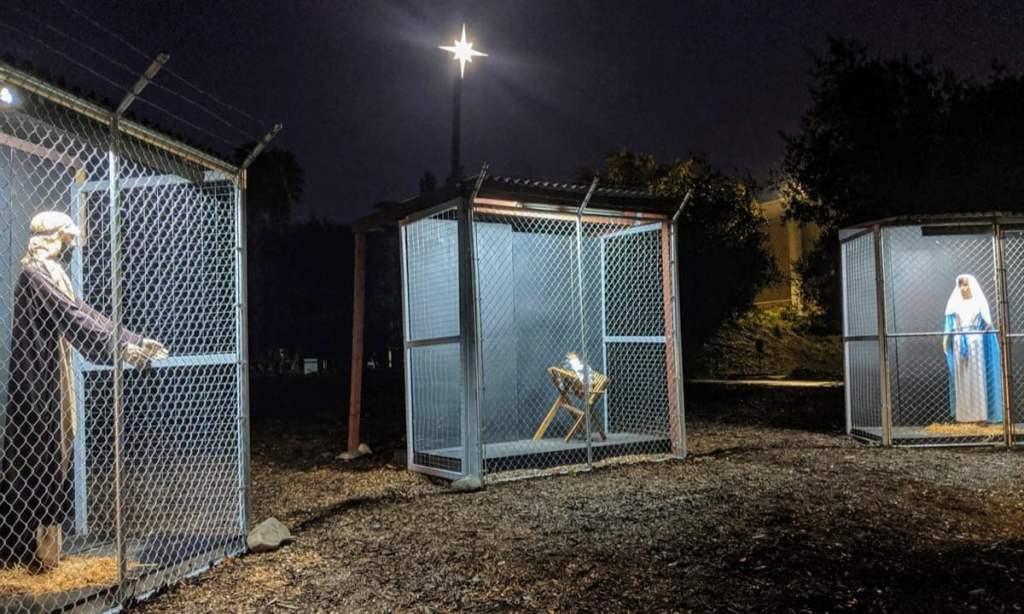
A singular number of churches across the country have asked those very questions in recent years, and their conclusions were depicted with unnerving accuracy by nativity scenes in which Jesus and his family are separated, segregated and caged in individual chain-link pens, topped by barbed wire fencing.

Those nativity scenes were a pointed attempt to remind the modern world that the narrative about the birth of Jesus is one that speaks on multiple fronts to a world that has allowed the life, teachings and crucifixion of Jesus to be drowned out by partisan politics, secularism, materialism and war, all driven by a manipulative shadow government called the Deep State.

The modern-day church has largely shied away from applying Jesus’ teachings to modern problems such as war, poverty, immigration, etc., but thankfully there have been individuals throughout history who ask themselves and the world: what would Jesus do?

What would Jesus—the baby born in Bethlehem who grew into an itinerant preacher and revolutionary activist, who not only died challenging the police state of his day (namely, the Roman Empire) but spent his adult life speaking truth to power, challenging the status quo of his day, and pushing back against the abuses of the Roman Empire—do about the injustices of our  modern age?

Dietrich Bonhoeffer asked himself what Jesus would have done about the horrors perpetrated by Hitler and his assassins. The answer: Bonhoeffer was executed by Hitler for attempting to undermine the tyranny at the heart of Nazi Germany.

Aleksandr Solzhenitsyn asked himself what Jesus would have done about the soul-destroying gulags and labor camps of the Soviet Union. The answer: Solzhenitsyn found his voice and used it to speak out about government oppression and brutality.

Martin Luther King Jr. asked himself what Jesus would have done about America’s warmongering. The answer: declaring “my conscience leaves me no other choice,” King risked widespread condemnation as well as his life when he publicly opposed the Vietnam War on moral and economic grounds.

Even now, despite the popularity of the phrase “What Would Jesus Do?” (WWJD) in Christian circles, there remains a disconnect in the modern church between the teachings of Christ and the suffering of what Jesus in Matthew 25 refers to as the “least of these.”

Yet this is not a theological gray area: Jesus was unequivocal about his views on many things, not the least of which was charity, compassion, war, tyranny and love.

After all, Jesus—the revered preacher, teacher, radical and prophet—was born into a police state not unlike the growing menace of the American police state. When he grew up, he had powerful, profound things to say, things that would change how we view people, alter government policies and change the world. “Blessed are the merciful,” “Blessed are the peacemakers,” and “Love your enemies” are just a few examples of his most profound and revolutionary teachings.

When confronted by those in authority, Jesus did not shy away from speaking truth to power. Indeed, his teachings undermined the political and religious establishment of his day. It cost him his life. He was eventually crucified as a warning to others not to challenge the powers-that-be.

Can you imagine what Jesus’ life would have been like if, instead of being born into the Roman police state, he had been born and raised in the American police state?

Consider the following if you will.

Had Jesus been born in the era of the America police state, rather than traveling to Bethlehem for a census, Jesus’ parents would have been mailed a 28-page American Community Survey, a mandatory government questionnaire documenting their habits, household inhabitants, work schedule, how many toilets are in your home, etc. The penalty for not responding to this invasive survey can go as high as $5,000.

Instead of being born in a manger, Jesus might have been born at home. Rather than wise men and shepherds bringing gifts, however, the baby’s parents might have been forced to ward off visits from state social workers intent on prosecuting them for the home birth. One couple in Washington had all three of their children removed after social services objected to the two youngest being birthed in an unassisted home delivery.

Had Jesus been born in a hospital, his blood and DNA would have been taken without his parents’ knowledge or consent and entered into a government biobank. While most states require newborn screening, a growing number are holding onto that genetic material long-term for research, analysis and purposes yet to be disclosed.

Then again, had Jesus’ parents been undocumented immigrants, they and the newborn baby might have been shuffled to a profit-driven, private prison for illegals where they first would have been separated from each other, the children detained in make-shift cages, and the parents eventually turned into cheap, forced laborers for corporations such as Starbucks, Microsoft, Walmart, and Victoria’s Secret. There’s quite a lot of money to be made from imprisoning immigrants, especially when taxpayers are footing the bill.

From the time he was old enough to attend school, Jesus would have been drilled in lessons of compliance and obedience to government authorities, while learning little about his own rights. Had he been daring enough to speak out against injustice while still in school, he might have found himself tasered or beaten by a school resource officer, or at the very least suspended under a school zero tolerance policy that punishes minor infractions as harshly as more serious offenses.

Had Jesus disappeared for a few hours let alone days as a 12-year-old, his parents would have been handcuffed, arrested and jailed for parental negligence. Parents across the country have been arrested for far less “offenses” such as allowing their children to walk to the park unaccompanied and play in their front yard alone.

Rather than disappearing from the history books from his early teenaged years to adulthood, Jesus’ movements and personal data—including his biometrics—would have been documented, tracked, monitored and filed by governmental agencies and corporations such as Google and Microsoft. Incredibly, 95 percent of school districts share their student records with outside companies that are contracted to manage data, which they then use to market products to us.

From the moment Jesus made contact with an “extremist” such as John the Baptist, he would have been flagged for surveillance because of his association with a prominent activist, peaceful or otherwise. Since 9/11, the FBI has actively carried out surveillance and intelligence-gathering operations on a broad range of activist groups, from animal rights groups to poverty relief, anti-war groups and other such “extremist” organizations.

Jesus’ anti-government views would certainly have resulted in him being labeled a domestic extremist. Law enforcement agencies are being trained to recognize signs of anti-government extremism during interactions with potential extremists who share a “belief in the approaching collapse of government and the economy.”

While traveling from community to community, Jesus might have been reported to government officials as “suspicious” under the Department of Homeland Security’s “See Something, Say Something” programs. Many states, including New York, are providing individuals with phone apps that allow them to take photos of suspicious activity and report them to their state Intelligence Center, where they are reviewed and forwarded to law-enforcement agencies.

Rather than being permitted to live as an itinerant preacher, Jesus might have found himself threatened with arrest for daring to live off the grid or sleeping outside. In fact, the number of cities that have resorted to criminalizing homelessness by enacting bans on camping, sleeping in vehicles, loitering and begging in public has doubled.

Viewed by the government as a dissident and a potential threat to its power, Jesus might have had government spies planted among his followers to monitor his activities, report on his movements, and entrap him into breaking the law. Such Judases today—called informants—often receive hefty paychecks from the government for their treachery.

Had Jesus used the internet to spread his radical message of peace and love, he might have found his blog posts infiltrated by government spies attempting to undermine his integrity, discredit him or plant incriminating information online about him. At the very least, he would have had his website hacked and his email monitored.

Had Jesus attempted to feed large crowds of people, he would have been threatened with arrest for violating various ordinances prohibiting the distribution of food without a permit. Florida officials arrested a 90-year-old man for feeding the homeless on a public beach.

Had Jesus spoken publicly about his 40 days in the desert and his conversations with the devil, he might have been labeled mentally ill and detained in a psych ward against his will for a mandatory involuntary psychiatric hold with no access to family or friends. One Virginia man was arrested, strip searched, handcuffed to a table, diagnosed as having “mental health issues,” and locked up for five days in a mental health facility against his will apparently because of his slurred speech and unsteady gait.

Without a doubt, had Jesus attempted to overturn tables in a Jewish temple and rage against the materialism of religious institutions, he would have been charged with a hate crime. Currently, 45 states and the federal government have hate crime laws on the books.

Had anyone reported Jesus to the police as being potentially dangerous, he might have found himself confronted—and killed—by police officers for whom any perceived act of non-compliance (a twitch, a question, a frown) can result in them shooting first and asking questions later.

Rather than having armed guards capture Jesus in a public place, government officials would have ordered that a SWAT team carry out a raid on Jesus and his followers, complete with flash-bang grenades and military equipment. There are upwards of 80,000 such SWAT team raids carried out every year, many on unsuspecting Americans who have no defense against such government invaders, even when such raids are done in error.

Instead of being detained by Roman guards, Jesus might have been made to “disappear” into a secret government detention center where he would have been interrogated, tortured and subjected to all manner of abuses. Chicago police have “disappeared” more than 7,000 people into a secret, off-the-books interrogation warehouse at Homan Square.

Charged with treason and labeled a domestic terrorist, Jesus might have been sentenced to a life-term in a private prison where he would have been forced to provide slave labor for corporations or put to death by way of the electric chair or a lethal mixture of drugs.

Indeed, as I make clear in my book Battlefield America: The War on the American People and in its fictional counterpart The Erik Blair Diaries, given the nature of government then and now, it is painfully evident that whether Jesus had been born in our modern age or his own, he still would have died at the hands of a police state.

Thus, as we draw near to Christmas with its celebration of miracles and promise of salvation, we would do well to remember that what happened in that manger on that starry night in Bethlehem is only the beginning of the story. That baby born in a police state grew up to be a man who did not turn away from the evils of his age but rather spoke out against it.

We must do no less.

THE ESTABLISHMENT OF MASS PSYCHOLOGY & FALSE SOLIDARITY

View of crowd covering ears

By Kingsley L. Dennis

Source: Waking Times

It is always necessary to critically question our assumptions and the information that informs our social behaviour. In this light, I intend to cast a glance over current social manifestations regarding how the pandemic has been redefining our social patterns and relations. I will also be examining these patterns from the perspectives of mass psychology, mental intoxication, and a reprogrammed solidarity. According to Prof. Mattias Desmet,[i] the four conditions that allow mass formation – popularly referred to as crowd psychology – to emerge are: a lack of social bonds; people experiencing life as meaningless or senseless; free-floating anxiety; and free-floating frustration and aggression. In recent years, going back decades, these conditions have been building up within our modern societies. As I mentioned in a previous essay,[ii] social anxiety and psychological suffering were already growing exponentially even before the pandemic outbreak of 2020. The foundations for establishing a mass psychology were existent in many, if not most, of our industrialized societies and cultures before the traumatic experience of the current pandemic. At such junctures of psychological vulnerability, a shift of attachment – that is, a transference of identification – can be achieved rapidly. What has likely occurred within the past 18 months has been a widescale process of reprogrammed solidarity.

Prof. Mattias Desmet believes the world has experienced a huge, global ritual that has established a new form (a recalibrated form) of social bonding. Desmet also states that this newly arrived mass psychology is a manner of compensation for many years of extreme individualism where people felt they needed to seek out new and different collective bonds of solidarity. This new solidarity frees people from their prior isolationism and atomization. It is a socially programmed and managed method of social re-gathering. And it is being accomplished on a worldwide scale. Also, it is being brought into being through a form of ritual. Rituals are not only for religious or sacred circumstances. By definition, a ritual is ‘a sequence of activities involving gestures, words, actions, or objects, performed according to a set sequence.’[iii] That is, they are a range of actions performed according to a prescribed order. And that ‘prescribed order’ can come through agreement or imposition – or a mixture of both. Participation in rituals also develop a degree of loyalty to the group/grouping through adherence to and the performing of acts that support the main narratives. These acts of obedience (behaviour sets) can be regarded as rituals, similar to how more familiar religious rituals are performed to denote loyalty to a specific religious faith. When social acts are performed through an emotional attachment of ritual, a form of ‘hypnotic allegiance’ is established that is then extremely hard to break away from. This can then lead to a form of misplaced ethics that can cause people to engage in acts of self-sacrifice in order to uphold what they have been led to believe is their ethical position. People caught up within the mass hypnosis are made to sincerely believe that the mainstream narratives are correct and that they are right to be following and supporting them – even when the evidence points to the contrary. In other words, such people strongly believe in the moral rightness of their position, and this gives them a more powerful sense of solidarity and justification. Similarly, during the Crusades each side felt they were doing ‘God’s work’ by engaging in mass slaughter. What we see here is a condition of misplaced ethics.

People swept up within a mass or crowd psychology tend to protect and maintain it whether consciously or unconsciously. This is why they are most likely to reject any contrary information when it is presented to them; or will reject even the chance for such information to be presented. This amounts to a state of mild induced hypnosis which has shifted from an external identification to a self-maintained state. That is, people engage in the process of their own induced hypnosis. This may sound implausible to some people, yet we need to observe the conditions that were present to allow such states of hypnosis. Part reason for this is that many of the people who accepted the slippage into the formation of a mass psychology were already experiencing psychological discontent. This could come from perceiving a lack of life purpose and meaning; a dislike of their jobs; general restlessness and anxiety; and similar issues related with their previous life status. In such cases, the way to break the hypnosis is not by trying to persuade such people to return to their ‘old normal’ ways, which they were not happy with previously, but by searching out ways to alleviate the source of their psychological discontent. And this suggests a radical transformation in our social and cultural systems and ways of living. Furthermore, it points to a shift away from increasing materialism, automation, and technological dependency into a path that celebrates more the beauty and meaning in being human.

Mass Hypnosis of Solidarity

Persons susceptible to mass psychology are less likely to be responsive or sensitive to rational argument and debate. It is because they did not fall into line with the main narrative through reasoning but rather through a form of ‘mental intoxication’ that triggered a transference of social bonding to the newly established mass solidarity. Such triggers are generally most effective when they are presented through emotional states – these are often based upon fear; (in)securities; and mortality. When such fear-related triggers are heightened and expanded through widescale media coverage, then most, if not all, alternative narratives are discredited, discarded, and ignored. When within such heightened emotional states, cognitive decisions become overruled by inter-personal circumstances. Importantly, the state-supported narrative (the new consensus) gives people an object to connect their anxiety with. They have a mental representation of what is the cause of their anxiety. Their previous condition of free-floating anxiety has now become anchored, and people feel they are then better able to control their frustrations. To take away their belief in the dominantly imposed narrative would confront the person with their initial unease and psychological discontent. For this reason, it is difficult to break or stop such collective psychological formations once they have been established. Once the psychological patterning and emotional identification has been constructed it is then difficult to deconstruct – a significant collective solidarity has been established that imprints the mass mind.

Another factor that strengthens the mass psychology is that the imposed mainstream narratives appear to speak in one collective voice. They are clearer in what they represent and appear to come from a place of unified agreement (i.e., all state actors and state-affiliated actors are showing public agreement). It is important that there is no public disagreement on the narratives. This sense of external clarity further strengthens the issue as a ritualistic act – a hypnotic formation. The other voices that speak out against the dominant imposed narratives are not regarded or seen as coherent because they speak in many, varied voices. This is usually because they come from many and varied sources that have liberty to say things in different ways. Yet this seeming lack of narrative coherency is weaker at confronting or opposing the hypnotic collective. Those people who remain uncertain and not yet fully decided are then more liable to choose the ‘crowd narrative’ because the mass storyline falsely appears as more solid. Those people caught within the mass programming believe themselves to be expressing their own opinions when in fact there has been a clever sleight-of-hand in that they have been provided with a set of pre-formed ‘opinion bundles’ that they can then put forward as their own. Such people are therefore not expressing personal opinions arrived at through individual critical questioning but rather conditioned ‘thought bundles’ provided through the programming techniques built into the establishment of the psychological collective mass. The mass hypnosis of solidarity comes with a pre-prepared collection of opinion sets for bulk dispersal. However entrenched this situation appears, there is always the possibility for counteracting the collective hypnosis.

Regathering our Unity

It is important that those people who see, perceive, and understand the contradictions and falsity in the mass narratives continue to speak out. Hypnosis can be lessened or weakened through continual exposure to rational information, even when that information opposes the narratives of the mass psychology.

The first step in countering the mass psychosis is to disconnect people’s anxiety from the ‘object’ that people were persuaded to transfer their identification to. This can be understandably difficult when the mainstream media is not at your availability but is working to maintain the hypnotic imprinting of the mass narratives. One way, however, that works to make this disconnect is by presenting a scenario – an ‘object threat’ – that may be greater than the one used in the original collective imprinting. For example, if people realized that the current ‘health crisis’ could lead to a condition of totalitarianism, then this realization could be sufficient to awaken people from their hypnosis as they still have the cognitive capacity to grasp that the social condition of totalitarianism is a graver threat than a biological agent with low mortality rate.

The real issues, and the one that creates a fertile ground for inducing a mass psychology in the first place, is the lack of social bonding in our societies and a perceived lack of meaning. This perceived lack of meaning and purpose in everyday life is what produces the feeling of ‘free-floating’ anxiety. The danger here is that a populace under the sway of mass psychology – mass induced hypnosis – is more likely to support or go along with a totalitarian regime that maintains this mass hypnosis. This was one of the reasons why Germany’s National Socialism (the Nazi regime) was so successful in its aims.

The people who were less susceptible to hypnosis of mass psychology tended to be those who disagreed with the ideology behind it or had more experience in using critical analysis of social phenomena, and/or were more aware of the processes of social conditioning and the uses of mainstream propaganda. They were much more capable of spotting from the onset how the narratives of the mass psychology were treating people as mere biological units to be moved around the board. The question that now needs to be asked is: how can those people who stand apart from the mass hypnosis be able to unify? Those who can speak out against the mass hypnosis need to connect together. And their advantage is that they are unified through an understanding whilst remaining diverse in their backgrounds, belief structures, identities, etc. Such people can find cohesion in perspectives whilst remaining as diverse and independent individuals. This diversity and individual independence bring greater strength than a collective mass that has been unified through the programming of a false solidarity.

It is important that those people with perceptive cognition recognize that a global ritual has been set into motion that has as its goal the ‘retraining’ of the populace into welcoming upon them a new civilizational model. The willing compliance to adopt this new model of order, at the local, regional, national and global level, will sever humanity from its own biological and constitutional roots. In order to move forward as human beings, we will likely need to reject certain materialistic futures offered to us. These offers will come with promises of comfort and convenience; yet they will hide an underbelly of human disconnect and the loss of the human spirit. If a deal is made with the devil, then we can be sure that our souls will be collected without delay. And the great truth that gives humanity its strength is that the human soul and spirit can never be taken without our willing compliance. In that, by denying them our willing compliance we strengthen our unity by default. The unity established through conscious awareness is always greater energetically than the perceived unity through unconscious programming. If the fewer are aware, and conscious of what is being attempted by the mass hypnosis, then this shall energetically give us a stronger unity. And the way to break the mass hypnosis is by aligning with a greater truth that shall gradually resynch and recalibrate the energetic vibration of the collective.

THE WAY OF THE MASTER: LIFE AS APPRENTICESHIP

By Gary Z McGee

Source: Waking Times

“It is the height of selfishness to merely consume what others create and to retreat into a shell of limited goals and immediate pleasures. Alienating yourself from your inclinations can only lead to pain and disappointment in the long run, and a sense that you have wasted something unique.” ~Robert Greene

How do you become a prime mover? How do you become more self-determined, more self-aware, more responsible for your lot in life? How do you become your own boss, fully volitional, fully responsible, fully engaged, with more creativity, more adaptability, and more courage? How do you become a master?

It begins with self-apprenticeship. You must create your own momentum. Don’t be afraid of becoming an autodidact. Read a lot. Connect the dots. Seek out the shoulders of giants, not just to learn, but to see further than they did. Seek help, expertise, guidance, and wisdom from others, but then you must take responsibility for your own improvement. Take a leap of courage out of faith. Create a scaffold of knowledge. Its foundation is curiosity. Stay curious. Be Curiosity. As Joseph Campbell said, “follow your bliss.”

Mobilize your mind:

“Those who cannot change their minds cannot change anything.” ~George Bernard Shaw

The immobilized mindset is a handicap. Living a full life requires movement. What does not move is dead. Let the mind move, let the mind flow, let the mind grow.

Don’t let your mind settle. A settled mind is a closed mind. A settled mind tricks you into believing that you have figured things out. It inadvertently sacrifices reason for anti-reason. It uses anti-reason to buttress itself against new knowledge.

Remember: knowledge is always your master. Don’t let your ego fool you. One does not master knowledge; one only learns it. The mind is simply too fallible, too inflexible, too imperfect to become a master of knowledge. True self-mastery is understanding that knowledge will always be your master.

Which is all the more reason to keep your mind active, fluid, flexible, and mobile. Don’t get comfortable. Take risks. Embrace change. It’s when you fight against change, when you deny it, repress it, ignore it, or rage against it that you suffer unnecessarily. When you embrace change, however, you’re in flow with it, dancing, flexible, and empowered, even when it hurts. Especially when it hurts. Because you know, pain is information. Pain is a teacher. Pain is a guide. Pain is merely procrastinating power. In the long run it will make you stronger.

The ability to loosen your mind, to alter your perspective, to reimagine imagination is one of the most amazing powers you have as a human being. Cultivate it through mindfulness. Activate it through No-mind. Avoid fixation. Avoid attachment. Avoid belief. Ponder what is absent to create a flexible open-mindedness that can persistently overcome itself.

As Jeremy Hammond said, “Your mind is programmable—and if you’re not programming it then someone else will program it for you.”

Embrace the almighty metaphor:

“As our eyes grow accustomed to sight, they armor themselves against wonder.” ~Leonard Cohen

Reality is a great mystery. Honor it. Let it continually fill you with awe. Don’t seek certainty. Just seek. Be with the curiosity. Be hunger. Be love. Be on the edge of your seat, flabbergasted and entranced, astounded and gobsmacked, dumbfounded and engaged, detached and aloof with the interconnectedness of all things.

Certainty is the creativity killer. Certainty murders mystery. Certainty cripples mastery. Avoid it at all costs. Being certain gets you nowhere but stuck in a box, closed off in a mental paradigm, stifled by a tiny comfort zone, or blocked by an inflexible boundary. It puts eye guards on when peripheral vision is needed.

Employ strategies of awe. Plant a maze in your mind and watch it grow into a labyrinth. Explore it. Transform your eyes into Over Eyes, your mind into No-mind, your soul into Soul Craft. Transform your life into a Hero’s Journey. Confront threshold guardians. And when your mind becomes fixed and settled, strategically plant a minefield in the mind field. Then sit back and enjoy the explosion, as your mind is blown into new ways of seeing the world.

Everything in life is Metaphor. From shapeshifting comes worldmaking. Life becomes art, and art becomes life. Forget genes. Forget memes. Carry mythemes and astonish the world.

Embolden what makes you unique:

“I would rather be a man of paradoxes than a man of prejudices.” ~Rousseau

Carl Jung stressed that an individual’s proper goal is wholeness, not perfection. You will never be perfect, but you will always be unique. Let notions of perfection roll off you like water off a duck’s back. Then double down on your uniqueness.

Real power is emboldened uniqueness. Uniqueness is true power. Everything else is moonshine. Everything else is smoke and mirrors. Focus on what makes you unique, what makes you come alive. Split the smoke. Shatter the mirrors. Let your authenticity boldly blast through it all.

You are a slice of Fate. You might be made up of the same ingredients as other slices of Fate, but your slice is arranged in a way that has never occurred before nor will it ever be repeated. You are a one-time phenomenon. You are beyond a force of Nature. You are a force of Fate. Use it. Fuel yourself with it. Be the tip of the spear and pierce through your life with purpose and meaning.

Becoming who you really are is shedding the skin of who you were conditioned to be by culture and then embracing the new skin of your reconditioning. It’s shaving away the superfluous and embracing the numinous.

When you are able to do this, you unleash your calling, your inner voice, your primal howl. This voice is intuitive, inquisitive, and hungry to be heard. If you listen intently, you will feel your own potential and your deepest longing to create and express your own uniqueness. This uniqueness is your life’s purpose. But it isn’t there for a reason. You must give it a reason to empower you.

Use probability to stay ahead of the curve:

“Consider nothing impossible, then treat possibilities as probabilities.” ~Charles Dickens

Truth or delusion is both a tripwire and a balancing wire. Either way you go, it is precarious. One man’s truth is another man’s delusion. Fortunately, there is validity and probability that you can use as a benchmark, as a way to measure what is more likely to be true.

A good rule of thumb, when faced with potential invalidity, is to ask: “Sure, it’s possible, but is it probable?” True mastery comes more from embracing and being fascinated by mystery and less from intellectualizing and labeling it. It’s more of a detached obliteration of “baskets” than a codependent clinging to them.

The key is to keep your eggs free of all baskets. Don’t settle on any single bedrock of thought. As Aristotle said, “It is the mark of an educated mind to be able to entertain a thought without accepting it.” Just flow through it all. Keep questioning. Keep swimming. Keep searching. Use probability as your Occam’s Razor.

Because nobody is off the hook for being wrong. The best we can do is get better at recognizing the hook for what it is so that we are less likely to get dragged away by it. By developing and practicing disciplined strategies for cutting the line and negotiating the hook before the Fisherman of Closemindedness can reel us into his Boat of Dogmatism.

Real mastery sharpens itself against probability. Keep using the sound tools of logic, reasoning, and probability. Keep deflating self-important seriousness into authentic sincerity. Have fun with it. Laugh at it. Play with it. Tease it. Dance with it. Reimagine it in ways that shock your soul into heightened awareness. Shoot yourself in the foot before someone else does, or before the passage of time deems your work outdated or uncouth.

Ever tried. Ever wrong. No matter. Try again. Be wrong again. Be wrong better. This will keep you ahead of the curve. It will keep you sharp against entropy. As it turns out, you are more likely to be right by admitting that you are more likely wrong than by declaring that you are absolutely right.

Allow healthy skepticism and an intimacy with probability to become your shifting bedrock, your foundational quicksand, your liberated measuring tool. This is the apprenticeship. When you are free to swim in the waters of uncertainty rather than remain chained to the pillars of certitude, you are more likely to achieve mastery.

Flattening the curve or flattening the global poor? How Covid lockdowns obliterate human rights and crush the most vulnerable

By Stavroula Pabst and Max Blumenthal

Source: The Grayzone

Marketed as life-saving public health measures, lockdowns triggered death and economic devastation on a global scale while doing little to slow the spread of Covid-19. Now, they’re back with a vengeance.

In October 2021, it seemed as though the lockdowns that still paralyzed societies from Australia to New Zealand and Singapore were coming to an end, as these countries threw in the “Zero-COVID” towel following a year and a half of rolling restrictions and closures.

But with COVID-19 cases rising in Europe, several countries are implementing lockdowns all over again, often with clearly punitive motivations. 

This November, Austria’s government announced that police would enforce a lockdown exclusively against unvaccinated citizens. Following days of massive protests, the policy was extended to everyone, with steep fines and even prison sentences to be imposed on those who refuse to comply, and a compulsory vaccination requirement tacked on for good measure.

Next door in Germany, where a new lockdown was announced this December for unvaccinated people, barring them from almost all public places except for pharmacies and supermarkets, Berlin is also weighing a vaccination mandate for all. One German constitutional lawyer has even proposed that refusers of the jab “be brought before the vaccinator by the police.”

Though statewide lockdowns have eased in Australia, the country is constructing internment camps for those who test positive for Covid, along with their Covid-negative “close contacts.” Harley Hodgson, an Australian held for 14 days in one such camp despite repeatedly testing negative for Covid, said of her experience: “You feel like you’re in prison. You feel like you’ve done something wrong. It’s inhumane what they’re doing.”

Initially marketed to the public as a means to “flatten the curve” and “slow the spread,” lockdowns now represent one of the most draconian aspects of the perverse New Normal that has metastasized amid an atmosphere of seemingly endless emergency. 

While much of the public accepted such restrictions during the early days of the pandemic, they are now met with increasing resistance by citizens around the world who have suffered from economic devastation, homelessness, suicidal ideation, social isolation, domestic violence, addiction and the cancellation of routine medical procedures as a result of lockdowns.  

The public health justification for these non-pharmaceutical interventions has not only been discredited in the eyes of millions across the globe, but by an array of scientific studies and data demonstrating that they likely caused more deaths than they prevented.

The lethal impact of lockdowns was particularly pernicious in the Global South, where hundreds of millions of the world’s most vulnerable people were driven into a cascading humanitarian crisis. As the World Food Program warned in 2020, “135 million people on earth are marching towards the brink of starvation” as a result of their economies shutting down to supposedly inhibit the spread of COVID-19.

In his book, The Covid Consensus, professor of African history at King’s College Toby Green chronicled the misery, migration outflow and mass death spawned by lockdowns imposed on populations from Africa to Latin America.

“Lockdowns were not a policy that made any sense in societies where many people live largely outside, and SARS-CoV-2 is a virus that circulates inside,” Green told The Grayzone. “Moreover, they made no sense in regions such as Africa where the population is much younger than in rich countries – they merely saw a massive shift of health burden from the global rich to the global young and poor.”

For most people on the planet, the economic and psychological harm experienced during the past 19 months was not the result of the pandemic per se, but of emergency-order restrictions governments imposed on them and justified as public health measures. In the Global North, such costly efforts did little more than delay the inevitable spread of COVID-19 while transferring wealth into the hands of Big Tech oligarchs who constitute the pandemic’s real “winners.” 

Though public health scholars and some officials warned that lockdowns would do possibly irreparable damage to the global economy while only deepening the public health crisis, the politics of the Trump era enabled supporters of harsh restrictions to caricature critics as dangerous right-wing extremists.

“Discussion of the inevitable harm of lockdowns has been almost totally forbidden by most of the mainstream media and academia, while the left followed the lead of the Democratic Party, doing all it could to marginalize any discussion of the collateral damage of these measures,” Christian Parenti, professor of economics at the City University of New York and author of several books about policing and mass surveillance, commented to The Grayzone. “Any questioning of lockdown measures was cast as right wing, even fascist. But mostly the left just ignored the emerging facts, particularly regarding the carnage caused in the Global South.”

One of the most outspoken among the public health scholars sounding the alarm about the social cost of sweeping restrictions was Dr. Jay Bhattacharya, a professor of medicine at  Stanford University. As a co-author of the Great Barrington Declaration, which advocated a strategy of focused protection instead of hard lockdown, Bhattacharya and his colleagues were subjected to social media censorship and mainstream media attacks.

“Lockdowns provided the illusion of control over a virus that was present in parts of the world and spreading far earlier than most officials believed,” Bhattacharya told The Grayzone. He added, “Much of the evidence that people have developed to argue that lockdowns work come from modelling studies that have proved incredibly inaccurate.” 

Indeed, the initial inspiration for locking down the UK and parts of the US derived from a bunk model of projected fatalities that has since been discredited. 

Lockdowns were inspired by bogus modelling by unqualified academics

On March 16, 2020, as the global consensus formed around implementing restrictions in some form, a professor from London’s Imperial College delivered a presentation to the British government that would prove pivotal. That academic, Neil Ferguson, introduced a model asserting that if the UK did not impose a harsh lockdown, 500,000 citizens would die of Covid-19 that year; and if it took only moderate steps to restrict public life, as Prime Minister Boris Johnson planned, 260,000 would die. 

In either case, Ferguson insisted, the national healthcare system would be overwhelmed and the economy irreparably damaged. Within a week, Johnson’s government accepted Ferguson’s fatalistic model and locked down hard. 

Around the same time, the Trump White House received a paper from Ferguson that envisioned a catastrophic death toll. His model predicted fatalities at a 25% higher rate than the CDC’s already stark projection: 2.2 million dead in the first year unless the US instituted lockdowns. 

“What had the biggest impact in the model is social distancing, small groups, not going in public in large groups,” Dr. Deborah Birx, a leader of Trump’s coronavirus task force, referring to the Imperial College projection. The New York Times reported on March 16, the day the Trump administration received Ferguson’s paper: “White House Takes New Line After Dire Report On Death Toll.”

While Ferguson’s modelling succeeded in inspiring harsh lockdowns, it ultimately brought him public embarrassment. First, the professor was caught breaking the quarantine he personally inspired to enjoy a tryst with his lover – a married woman who complained that the lockdown “strained” her relationship with the professor. Then, as time went on, it became clear that Ferguson’s models had exaggerated the Covid-19 fatality rate by a factor of at least four. 

“Yes, my prediction was off,” he admitted to the Times of London in August 2021. But by then, the damage was done.

This was not the first time Ferguson’s numbers had proven to be wildly off the mark. Back in 2001, Ferguson projected that as many as 50,000 could die from Mad Cow Disease. After a panicked government slaughter of some 6.5 million cattle, the mass death failed to come to fruition. (Only about 2,800 have died from Mad Cow in three decades). 

In 2005, Ferguson was at it again, predicting up to 200 million global deaths from the bird flu. In the end, only a few hundred people died. Then in 2009, Ferguson warned that 65,000 could die from the swine flu in the UK alone. But when the dust cleared, he and his team were off by a factor of over 1000

So why did governments across the Atlantic trust a serial exaggerator who appeared to have no formal training in epidemiology or computer modelling, and whose codes were buggier than a locust infestation

Before briefings from Ferguson, leaders from Whitehall to Washington were already in a panic over the onset of the novel coronavirus. A haze of reporting in early 2020 made the coronavirus appear more deadly than it turned out to be, with some reports suggesting the fatality rate could rise to as high as seven percent

Although it is now known that COVID-19 does not kill the vast majority of people it infects, with Infection Fatality Rates (IFR) of .15 percent overall and .05 percent for persons under 70, the confusion and uncertainty led many public health officials to act quickly. In reality, the coronavirus is a less lethal disease that spreads easily, making it harder to contain with human interventions.

Further, according to Toby Green of King’s College in London, British public health officials were easily seduced by the tech-centric presentation of academics like Ferguson.

“Let’s remember that in the UK, where Ferguson’s model first had its influence, Dominic Cummings, Boris Johnson’s advisor on Covid-19, had already written about the importance of a data-driven approach to policy,” Green explained. “Matt Hancock, the health minister, was also highly integrated into the tech sector through his family, which runs a tech business. So a computer-driven model [like Ferguson’s] was appealing.” 

Somehow, the technocrats placed in charge of Covid-19 policy across the Atlantic demonstrated little concern for how the lockdowns they suddenly imposed would impact the economic and social wellbeing of the citizens they were supposed to protect.

A bonanza for tech oligarchs, “the equivalent of smoking 15 cigarettes a day” for the less fortunate

In the United States, lockdowns and various rolling restrictions triggered an economic catastrophe for working and poor people across the country, pushing those already on the financial precipice over the brink.

In the US in 2020, 40 percent of people making under $40,000 annually lost work, and almost three million women were driven out of the workforce due to an inability to balance work and caregiving and virtual learning obligations for children who could no longer attend in-person school or daycare. Dozens of airlines failed, and at least 200,000 small-businesses were shuttered

Increased unemployment benefits and stimulus checks had a salutary effect on the economic well-being of average Americans, seeing personal savings rise 8 percent between 2019 and summer of 2021. But even if American poverty did not immediately surge, it may yet do so, now that stimulus checks, generous unemployment benefits, and the eviction moratorium have all been terminated by the administration of President Joe Biden. 

As lockdowns drove inequality in the US, millions skipped routine medical care such as childhood vaccinations and cancer screenings, because the Centers for Disease Control (CDC) recommended that hospitals suspend non-essential and elective procedures. In May 2021, almost ten million routine screenings were missed in the United States, while other preventative health visits declined on a mass scale due to elective procedure suspensions, which may also lead to worsening public health problems in the long-term.

Due to the CDC’s recommendations, 1.4 million medical workers lost their jobs in April 2020. One medical record company estimated that screening for breast, colorectal, and cervical cancers dropped by 80% to 90% during March and April of 2020 compared to the same months in 2019. Now, the US is struggling with a surge of cancers and other ailments that went undetected because of overzealous and overly broad lockdowns. 

While average Americans paid a heavy price for the restrictions, Big Tech oligarchs quickly emerged as the pandemic’s winners. In 2020, billionaires increased their wealth by 54 percent. In fact, the top 1% of U.S. households now officially control more money than the entire middle class, or the middle 60 percent of households by income, in the US. 

While the pandemic response has adversely affected working people and small businesses worldwide, lifting restrictions is in fact against major corporate interests: Amazon’s stock even fell seven percent in July as re-openings stalled pandemic-related online buying. 

As lockdowns took their psychological toll on the US population, opioid-related deaths surged to record levels – up 30% from the previous year across the country and up 40% in 10 states. The sharpest rise in deaths occurred in Black Americans, along with those aged 35 to 44. 

Lockdowns and excessive closures have also contributed to an international rise in domestic violence

Despair rose in a significant way with the crisis: according to the CDC, 25.5 percent of survey respondents aged 18-24 reported seriously considering suicide within the previous 30 days by the end of June 2020. The same study indicated adults were more than twice as likely to report considering suicide when compared to those surveyed before the onset of coronavirus.

Professor Stephen Reicher, a behavioral scientist who advised the UK government on Covid policy, commented: “The problem with lockdown is isolation; being cut off from people is bad for you psychologically and physically. It is the equivalent of smoking 15 cigarettes a day.”

The impact of restrictions on young people, adolescents and babies who are at very little risk of illness with serious COVID-19, with a one in 50,000 chance of hospitalization and a two in one million chance of death for children, cannot be overstated. Babies and young infants, after all, require regular socialization and interaction for healthy development. Many of them, however, were only able to visit their closest family members over the past year and a half. Ultimately, extended periods of social isolation or loneliness can negatively impact a young individual’s health even decades later.

The overall outlook for young people, as suggested by the 2020 CDC study referenced above, is and remains grim. In Las Vegas, Nevada, schools opened in December of 2020 after an unprecedented 18 adolescent suicides were recorded in the district since March of the same year. And in the state of Victoria, Australia, about 340 teenagers each week were hospitalized due to mental health emergencies as of August 2021.

For many among the urban laptop class, including a large swath of the hyper-online Western left which still clamors for national school closures and demands lockdowns in the face of a handful of new cases (while crudely painting critics of official Covid policy as Nazis), quarantine orders merely enforced an already sedentary lifestyle that revolves around Zoom meetings, ordered food and Amazon deliveries. The restrictions further eliminated tedious commutes to work while providing those able to work remotely with the satisfying sense that staying home was a bold act of social solidarity.  

Under this spectacular arrangement, which assumed individual behavior could slow down or contribute to the spread of a virus, isolation was framed as a moral choice that led many of those willingly confined to their homes to fear or vilify a working class that frequently provided them with vital services. And while non-pharmaceutical interventions have generally proven futile against COVID-19, the stentorian demands to socially distance and attendant shaming of those who fail to obey has done little more than generate hostility between friends, families, and communities.

“Lockdowns are a luxury of the rich,” Bhattacharya said, “and affect a certain class of people at the expense of others. A lockdown doesn’t mean all of society stops and we all sit in cages alone while we wait for the fires to go away. The poor and working class, many of them vulnerable and older, are asked to risk themselves, while another class of people stays at home protected.”

This was particularly true in the Global South, where class divisions are clearly drawn and most people live dangerously close to the poverty line.

Lockdowns drive debt, dependency and death across the Global South

The legacy of colonialism and imperialism has split the world economy into a “core” of wealthy economies and a periphery of poor economies that are largely dependent on exporting cheap raw materials and low-value added manufactured goods. When the wealthy core economies locked down in 2020, international trade contracted, triggering a violent economic whiplash in developing countries as their earnings from exports and tourism suddenly collapsed. 

As a result, developing country debt has risen from an average of about 40 percent of overall GDP to over 60 percent. Throughout 2020, developing economies were forced to pay out 194 billion to their creditors, even as their economies contracted dramatically. This forced poor countries to cut deeply into social spending to maintain debt servicing from institutions like the International Monetary Fund (IMF). 

Since the COVID-19 pandemic was declared, the IMF has doled out “Covid funds” to 85 countries around the world. An analysis by Oxfam found that 85% of the 107 loans provided to these countries require them to impose austerity until well into the future to pay them back. Now, devastating impacts on future health and social spending in poor countries is practically inevitable.

With surging unemployment, reduced incomes, and fewer social services, the populations of poor countries in the Global South have experienced massive increases in hunger.

As early as July 2020, the Associated Press reported that an additional 10,000 children were dying of hunger every month “due to the virus.” In fact, the deaths were the result of governments’ choice to lock down. Indeed, the coronavirus has had very little effect on the health of children, except indirectly through bad policy. Thus, millions of children across the Global South who were not hungry in 2019 are hungry today because of the lockdowns.

In all, about 2.37 billion people – or about 30 percent of the world population and 320 million more people than in the previous year – did not have access to adequate food at some point during 2020. 

As Nash Landesman reported for The Grayzone, extensive lockdowns with little social support by the US-backed government of Colombia led to mass unemployment, evictions, and widespread hunger throughout 2020, especially in working class neighborhoods of Bogotá, where residents placed red flags outside their homes to signal their sense of despair. 

Mexicans similarly protested lockdown measures, with one vendor affixing a sign to her stall reading: “Mexico is NOT Europe. If you don’t work, you don’t eat.”

And in Honduras, which has been ruled for over a decade by a corrupt US-backed government installed through a military coup, citizens facing food and water shortages due to lockdown took to the streets in protest in March 2020, encountering heavy police repression. The protests continued into September, with drivers blocking roads to demand compensation for wages lost during the forced quarantine. 

In India, meanwhile, where GDP shrank a record 7.3 percent from March 2020 to March 2021, a study of Uttar Pradesh state households found incomes contracting about 75 percent. Anthropologist Dr. Chandana Mathur of Maynooth University reported that the strict, yet poorly planned lockdowns in India kept millions of migrant workers away from income sources, forcing them into homes that were thousands of kilometers away from work or simply non-existent

Just two days before the March 2020 lockdown, many transportation services in India ground to a halt, stranding and starving thousands of people at a time when strict stay-at-home rules were declared. To enforce the orders, police brutally beat those considered insufficiently compliant. One estimate found that about 1,000 people died from March to July 2020 due to the displacement.

In fact, mass suffering was anticipated by some governments and experts when the restrictions began. In March 2020, a cost-benefit analysis by the Dutch government’s Ministry of Economic Affairs and Climate Policy concluded health damage from lockdown would be six times greater than the benefit. Similarly, a 2020 Actuarial Society of South Africa model posited that a lockdown in the country may lead to 29 times more deaths than the restrictions can prevent

And indeed, when lockdowns and other stringent interventions were applied in South Africa, many suffered enormously. Researchers estimate that 47 percent of South Africans ran out of money for food in April 2020. While rates of deprivation have decreased, estimates of hunger in the country remained steady at 17 percent of households throughout April and May 2021. 

South Africans also faced a decrease in overall life expectancy due to other restriction-perpetuated factors, such as an increase in HIV and tuberculosis related health issues thanks to treatment stoppages, outbreaks of other infectious diseases especially associated with malnutrition, poverty and suspension of relevant vaccination programs, and interruptions in maternal and infant care.

Despite such excessive restrictions in the country, which previously included a curfew, a ban on gatherings and even on alcohol sales, some estimates found that 80 percent of South Africans were still infected with COVID-19

A recently published study by researchers at the University of Johannesburg and the University of the Free State, COVID-19 in South Africa, found that “no changes in the shape of the [epidemiological] curve can be attributed to the introduction or easing of any regulation at [the current time].”

Instead of flattening the proverbial curve, restrictions induced economic and social deterioration which killed millions in the name of public health, while depriving an entire generation of the global poor of the right to education.

Lockdowns brutalized the world’s poor while depriving generations of education

For governments across the world, Covid provided an opportunity to pummel their most vulnerable residents, as well as those who dissented from the official order. As Amnesty International’s European bureau stated in a detailed but under-acknowledged June 2020 report, “The police enforcement of lockdowns disproportionately impacted poorer areas, which often have a higher proportion of residents from minority ethnic groups.” 

Among Amnesty’s most disturbing findings was that police searches of Black Britons rose by a full third in the first month of the pandemic; Roma populations across Eastern Europe were placed under militarized quarantines and cut off from food supplies, causing deprivation on a mass scale; homelessness surged across the continent, and refugees and minority residents were subjected to police brutality on a regular basis. 

Throughout 2020 in New York City, Black and Latino residents received a whopping 80% of police summonses for supposedly violating social distancing measures, leading civil rights groups including a local chapter of Black Lives Matter to complain that Covid restrictions were being exploited to bring back dreaded “stop and frisk” policies.

In Greece, such measures have been exploited to target refugees, migrants, and others living on the margins of society. Greek authorities have even fined refugees arriving by boat to Chios island 5000 euros each for not providing proof of negative coronavirus tests in late August 2021.

Many refugees that I, Stavroula, am personally acquainted with in Greece avoided spending time outside during the country’s six month lockdown from November 2020 to May 2021 out of fear of arrest and deportation. The lockdowns, which often confined people to a few miles from their home, and which imposed curfews as early as 6pm, required everyone to possess a government-issued identification and a text message or written note explaining their reason for being in public. 

Penalties for violating the restrictions could mean fines of 300 euros, about half a monthly salary in the country, which could financially ruin many Greeks. For those in the country without papers, not having the required documentation during an encounter with police could even lead to deportation. 

Across the globe, tens of thousands of people, mostly poor and working class, have been arrested for violating quarantine and been locked up in crowded unsanitary jails where Covid infections run rampant. 

In Washington DC’s municipal jail, 1500 inmates were held in de facto solitary confinement for over 400 days without basic services throughout 2020 and early 2021. Though most inmates had already contracted COVID-19, developing durable natural immunity to the virus, the lockdown was justified on the grounds of “slowing the spread.” 

“An overwhelming majority of the jail’s inmates are Black, and many have not yet been found guilty of the crimes for which they were arrested,” the Washington Post noted.

Similarly, St Louis city jail was the site of four prisoner uprisings since December 2020, with inmates forced into de facto solitary confinement for over a year with no trials. “People currently incarcerated…are tired of living in fear of COVID-19 and not being brought to trial,” one prisoner stated.

School-aged children and students around the world also suffered enormously under the weight of closures, particularly those in impoverished communities. In Uganda, citizens have spent large parts of the past two year under various forms of lockdown, with schools and recreation centers closed under orders of the US-backed leader Gen. Yoweri Museveni. 

“An entire generation of our children is being plunged into the bottomless abyss of illiteracy and ignorance. I saw a docile wasted generation of young defenseless victims of Gen. Museveni’s warped COVID-19 directives loitering about and dwindling in hopelessness,” wrote dissident Kakwenza Bashaija after a visit to eastern Uganda.

The New York Times reported this November that Uganda’s ongoing school closures have consigned the county’s youth to possibly lifelong poverty. With educational institutions still off limits, the Times wrote, “young women, abandoning hopes of going to school, are getting married and starting families instead. School buildings are being converted into businesses or health clinics. Teachers are quitting, and disillusioned students are taking menial jobs like selling fruit or mining for gold.”

Poor and working class youth across the United States experienced similar educational setbacks as closures forced them out of the classroom. In the state of Virginia, for example, math achievement scores in 2021 were down by over 40% for eighth graders in comparison to 2018-19. Less than half of Black students from third to sixth grade were able to pass reading tests, while the math scores of disabled youth declined precipitously. 

Glen Youngkin, a Republican who ran for governor in Virginia this year, highlighted these dismaying figures and slammed school closures in his closing campaign message. By capitalizing on the pent-up anger of parents in the state’s swing districts, Youngkin scored a surprise victory against a seasoned and well-funded opponent in a heavily Democratic state. 

Meanwhile, in the Democratic bastion of New Jersey, incumbent Governor Phil Murphy nearly lost to a lesser known Republican challenger who hammered him over his support for some of the most stringent lockdown measures in the country. Murphy was walloped in Atlantic County, home of the Atlantic City resort and casino city where lockdowns pushed one third of small businesses into permanent collapse. 

As the Biden administration considers new restrictions for US travelers, including placing the unvaccinated on a domestic no-fly list, the impact of lockdown policies has helped disrupt the international supply chain, driving inflation and shortages in suppliesgasoline, and even certain food items

With the US government collaborating desperately with major corporations and retailers to repair the existing supply bottlenecks, some in the media class have urged convenience-accustomed Americans to simply lower their expectations.

While these lockdowns were implemented to supposedly blunt the impact of a public health danger, mainstream media have generally avoided a discussion of how well they mitigated the perceived crisis or of the severe social and economic harm they did to working people. 

Despite the mass job loss, economic destruction, and increased hunger that non-pharmaceutical interventions have inflicted on the global population, the effectiveness of efforts such as lockdownscurfewsschool closures, and the constant PCR testing of healthy people are dubious at best.

Unpacking the misconception lockdowns work against COVID-19

Many credited lockdowns in ChinaGreeceVietnam, and Australia with early COVID successes, contributing to a widespread perception that lockdowns are vital to saving lives, and, therefore, a compassionate choice. Such reasoning has led governments internationally to proceed with lengthy closures of daily life.

According to Dr. Bhattacharya, these policies might be appropriate to halt the spread of a given virus depending on its profile and status. “There are diseases that are incredibly deadly, but not particularly infectious, where quarantining and sharp lockdowns locally can be quite effective,” Bhattacharya explained. “For instance, we limited the Ebola [virus] outbreaks in this way.”

Could COVID-19 have been addressed through sharp interventions as Ebola was? The answer depends in part on the properties of the virus, such as how deadly it is and how and how easily it spreads. Oftentimes, more lethal diseases spread less easily than their weaker counterparts, and that’s because the host will either die or know what they have and isolate themselves accordingly, thus halting transmission. Despite significantly higher fatality rates (25-90%, depending on the outbreak) in relation to COVID-19, Ebola is less infectious than other diseases and does not spread through the air: in fact, it typically dies within thirty seconds outside bodily fluids. 

In contrast, COVID-19 is a respiratory virus that likely spreads through aerosol transmission. Echoing the now-discredited modelling from the Imperial College of London, media coverage from early 2020 made the coronavirus appear more deadly than it turned out to be, with some reports suggesting the fatality rate could rise to as high as seven percent. In reality, the coronavirus is a less lethal disease that spreads easily, making it harder to contain with human interventions.

Because COVID-19 is a seasonal virus that tends to flourish in winter, much like the flu, early COVID “victors” like New Zealand and Australia were fortunate to get hit with it during their respective summers. They also are geographically isolated. The rest of the world was not so lucky.  

Drawing on studies of virus prevalence in California urban areas in March 2020, for example, Bhattacharya concluded it was “too late” for the coronavirus measures that state officials issued to help eliminate the virus, with about 3-4% of survey respondents reporting they already had COVID-19 antibodies.

Such numbers suggest that the virus was present much earlier in many parts of the world than originally believed, rendering subsequent preventive pandemic measures futile in eliminating or slowing the virus despite their stringency. In other words, based on the nature of its spread and its widespread establishment in many communities, the virus had already taken root in an irreversible way.

“You don’t get up to 2 to 4 percent disease spread [of COVID-19] unless you’ve had it spreading for a while,” Bhattacharya said in reference to the California seroprevalence study. “That means 96 percent of the population [at the time was] still susceptible to the virus, and far from endemic. But way too far gone to actually have hope that any lockdowns will stop the disease.”

Despite the tendency to resort to them when cases rise, the evidence of lockdowns’ effectiveness in inhibiting the spread of coronavirus is threadbare. 

Peru, which boasts the world’s highest COVID-19 death rate despite imposing hard lockdowns, was a case in point. Meanwhile, Greece locked down in November 2020 at around 2,500-3,000 cases daily, only to open again for tourism six months later with similar case numbers. Then there was Belarus, a country of over 9 million which did not lock down or introduce a mask mandate, and boasted one of Europe’s lowest COVID death rates all the way up to the Delta surge in Eastern Europe. 

The International Monetary Fund, or IMF, reportedly offered Belarusian President Aleksandr Lukashenko $940 million in COVID assistance on the condition that he imposed harsh pandemic restrictions. Lukashenko said he refused, proclaiming, “the IMF continues to demand from us quarantine measures, isolation, and a curfew. This is nonsense. We will not dance to anyone’s tune.”

By June 2021, only a minority of Belarusian citizens told pollsters they favored more COVID-19 restrictions.

Despite their widespread utilization as a non-pharmaceutical intervention against COVID-19, the shaky evidence for lockdowns does not end with anecdotes and country-specific strategies: dozens of academic and scientific studies call into question their efficacy or otherwise argue that the social, economic, and health related harms they pose significantly outweigh the risks. Their conclusions include the following (thread compiled by twitter user @the_brumby):

  • In Did Lockdown Work? An Economist’s Cross-Country Comparison, Aarhus University Economics Professor Christian Bjørnskov writes that after “[u]sing two indices from the Blavatnik Centre’s Covid 19 policy measures and comparing weekly mortality rates from 24 European countries in the first halves of 2017-2020, and addressing policy endogeneity in two different ways, I find no clear association between lockdown policies and mortality development.”
  • Medical researchers and doctors Rabail Chaudhry, MD, Justyna Bartoszko, MD and Sheila Riazi, MD (University of Toronto Department of Anesthesiology and Pain Medicine), George Dranitsaris, MD (University of Ioannina Department of Hematology) and Talha Mubashir, MD (previously University of Toronto Department of Anesthesiology and Pain Medicine, now at the University of Texas McGovern Medical School Department of Anesthesiology) write in A country level analysis measuring the impact of government actions, country preparedness and socioeconomic factors on COVID-19 mortality and related health outcomes that “government actions such as border closures, full lockdowns, and a high rate of COVID-19 testing were not associated with statistically significant reductions in the number of critical cases or overall mortality.”
  • In Stay-at-home policy is a case of exception fallacy: an internet-based ecological study, academics and researchers at Brazil-based institutions, including the Federal University of Rio Grande do Sul, R. F. Savaris, G. Pumi, J. Dalzochio & R. Kunst address early data favoring lockdowns and stay-at-home policies through an analysis of mathematical models and data from 87 regions worldwide. In “yielding 3,741 pairwise comparisons for linear regression analysis[they] were not able to explain if COVID-19 mortality is reduced by staying at home in ~ 98% of the comparisons.”
  • In Covid-19 Mortality: A Matter of Vulnerability Among Nations Facing Limited Margins of Adaptation, French medical researchers Quentin De Larochelambert, Andy Marc, Juliana Antero, Eric Le Bourg and University of Paris Professor of Physiology Jean-François Toussaint write that the “[s]tringency of the measures settled to fight pandemia, including lockdown, did not appear to be linked with death rate.” Instead, they conclude that nations with stagnating life expectancies and high rates of income and non-communicable disease —in other words, existing characteristics of a nation’s demographics— faced higher mortality rates regardless of government interventions.
  • And in Government mandated lockdowns do not reduce Covid-19 deaths: implications for evaluating the stringent New Zealand response, University of Waikato Economics Professor John Gibson concludes that “Lockdowns do not reduce Covid-19 deaths…[t]he apparent ineffectiveness of lockdowns suggests that New Zealand suffered large economic costs for little benefit in terms of lives saved.”

These dozens of studies are consistent with pre-COVID-19 pandemic literature emphasizing the ineffectiveness of non-pharmaceutical interventions like lockdowns. 

“Almost all [pre-pandemic planning guides before the coronavirus] emphasized respect for civil rights, disrupting societies as little as possible, protecting the vulnerable, and not spreading panic,” said Dr. Bhattacharya. “The lockdowns and the media narrative and the public health narrative of March 2020 violated all those principles.”

In a 2006 paper, Disease Mitigation Measures in the Control of Pandemic Influenza, academics at the Center for Biosecurity of the University of Pittsburgh Medical Center (now known as the John Hopkins Center for Health Security) in Baltimore, Maryland, wrote: “Experience has shown that communities faced with epidemics or other adverse events respond best and with the least anxiety when the normal social functioning of the community is least disrupted.”

Documents as recent as the 2019 World Health Organization (WHO) guide, Non-pharmaceutical public health measures for mitigating the risk and impact of epidemic and pandemic influenza, furthermore, state that the “evidence base on the effectiveness of [Non-Pharmaceutical Interventions] in community settings is limited, and the overall quality of evidence was very low for most interventions.”

While already-existing pandemic literature naturally could not make COVID-19 specific recommendations, a well-established understanding of the general ineffectiveness of non-pharmaceutical interventions for respiratory viruses largely went unheeded as media and government-driven fear gripped the population in early 2020. Everyday people paid and continue to pay the price.

“Making poor people a lot poorer” and shortening life spans

While they may not be effective at limiting the spread of coronavirus, lockdowns are effective at destroying the economy, people’s livelihoods, and perhaps the social fabric itself as individuals grow used to remaining distant from friends, coworkers, family and community.

And while income and education losses, extensive isolation, and other COVID-related disruptions are devastating in the short-term, they also can inflict long-term adverse impacts on the length and quality of life, even decades later. 

Childhood years are vital to shaping an adult’s overall well being, and adverse events that elicit extended stress responses throughout one’s youth can have significant impacts on lifespan, and risk of mental health issues and chronic physical health issues in the long term. 

Long-term unemployment, a common phenomenon during COVID-19, can also shorten life expectancy, with Daniel Sullivan and Till von Wachter concluding in 2009 that mortality rates are 50 to 100 percent higher for individuals the year after involuntary income loss, and 10 to 15 percent higher overall for the next 20 years of life. 

Consistent stress itself, certainly exacerbated by ongoing coronavirus restrictions, can also trigger or exacerbate long-term health problems. Highlighting such issues in detail in COVID-19: Rethinking the Lockdown Groupthink, University of Alberta Clinical Professor in the Department of Pediatrics Dr. Ari Joffe concluded that aggressive interventions such as lockdowns will cost society far more WELLBY, or Well-Being-Years, than foregoing them over time.

Generally, extreme restrictions hit marginalized populations and working class people the hardest, especially in places where many were employed informally, and must therefore leave their homes illegally to work during stay-at-home orders. Fines for breaking restrictions and curfews are often prohibitive, moreover, and fail to address that many people are inadequately housed and cannot consistently follow such rules. 

Even the WHO has appealed against lockdowns, acknowledging the strain lockdowns place on the disadvantaged. “We really do appeal to all world leaders, stop using lockdown as your primary method of control,” WHO COVID-19 envoy Dr. David Nabarro told British broadcaster Andrew Neil. “Lockdowns have just one consequence that you must never ever belittle, and that is making poor people an awful lot poorer.”

As the logic behind “stopping the spread” through indefinite lockdowns is questioned even by top public health authorities, the policy has reappeared with a vengeance in Europe, where it has been weaponized against non-compliant populations and to intimidate citizens into line with government policy. A winter of lockdowns, coercion and threats begins

The government of Austria triggered waves of national protest this November when it became the first in the world to announce a lockdown exclusively imposed on unvaccinated people. Just days before resigning, then-Austrian Chancellor Alexander Schallenberg said he aimed to establish a “threatening backdrop” for those who refused to take the jab, promising that “Christmas will be uncomfortable” for them.

Days later, Schallenberg extended the lockdown to all citizens, imposing fines of up to $1660 for anyone who violates the restriction, per violation, and announced a policy of compulsory vaccination for all. For those unable to pay fines for remaining unvaccinated, their refusal “can be converted into a prison sentence,” as The Guardian reported. Those who did not take the jab by December 12 would remain under lockdown, underscoring the punitive agenda behind the policy.

Slovakia followed Austria’s lead, imposing a lockdown on unvaccinated citizens on November 18 before it expanded the policy to the entire population. The next country to impose an unvaccinated-only lockdown is Germany, where public health officials blame a “pandemic of the unvaccinated” for the fourth wave of COVID-19 cases. “Probably by the end of this winter, as is sometimes cynically said, pretty much everyone in Germany will be vaccinated, cured or dead,” remarked German Minister of Health Jens Spahn.

However, in Portugal, which has run out of people to vaccinate due to the country’s near-total uptake, infections are also surging, prompting the government to declare a state of emergency and impose a new bevy of restrictions. And in Gibraltar, officially the most jabbed place on the planet, with a 99% vaccination rate, authorities cancelled official Christmas festivities following a surge of COVID-19 cases. The news confirmed a November 2021 study from the US CDC that found that vaccinated people are “no less infectious” than those who are unvaccinated.

Just as the failure of vaccines to prevent the spread of COVID-19 became apparent, international media began filling up with panicked headlines about a terrifying new variant. Labeled “Omicron” by the World Health Organization on November 26, 2021, the variant reportedly originated in southern Africa. The doctor who discovered the variant has said all cases tend to be mild so far. According to the government of Botswana, it arrived thanks to four fully vaccinated travelers

Among the first prominent public health pundits to hype the supposed danger of Omicron was Tom Peacock, a virologist from the Imperial College of London’s department of infectious diseases – a wing of the same Bill Gates-sponsored institution responsible for the discredited models that influenced the UK and US government’s first lockdowns by grossly overestimating the death toll from COVID-19.

Even before the threat from the so-called Omicron variant is known, the US and EU have enacted new restrictions which are certain to ravage the already weathered economies of southern Africa. On November 26, the Biden administration issued a ban on flights from South Africa, Botswana, Zimbabwe, Namibia, Lesotho, Eswatini, Mozambique, and Malawi. (At the time of publication, several of these countries have yet to register a single Omicron case).

“We are now entering a world where borders close for every variant,” Toby Green, author of The Covid Consensus, commented to The Grayzone. “It’s quite clear that Western governments and media don’t care at all about lives and livelihoods in poor countries. Tour guides, hotel porters, restaurateurs, those who depend on international conferences and study abroad visits – a large proportion of service industries in the Global South – will be devastated. And who benefits? Service industries in rich countries, where the profiteering of the last 20 months will get spent.”

For millions at the mercy of the new wave of restrictions, a dark winter has just begun.

Resisting the Gatekeepers of Hell: Gandhi, ‘Vaccine Passports’ and the Great Reset

By Robert J. Burrowes

In 1906, in response to the British Administration in the Transvaal, South Africa passing the Asiatic Law Amendment Act designed to enforce registration of the colony’s male Asian population, Mohandas K. Gandhi led a group of fellow satyagrahis (nonviolent activists) to defy the just-introduced ‘pass law’: they publicly burned their passes. In the seven year campaign that followed, thousands of Indians were jailed (including Gandhi himself) and activists were flogged or even shot for striking, refusing to register, burning their registration cards, or engaging in other forms of nonviolent resistance. Nevertheless, the campaign was eventually won.

More than 100 years later, citizens the world over (not just in one country or region) are already being required, or will be shortly, to carry a ‘pass’, this one ostensibly signifying vaccine status but, beyond this, to be used as part of a sequence of measures designed to track movements and control behaviours. Given its role in the package of measures launched as part of the World Economic Forum’s ‘Great Reset’, including those critical to implementation of the fourth industrial revolution along with the associated measures in relation to transhumanism, cyber polygon and eugenics, the ‘vaccine passport’ threatens an intrusion into the lives of citizens vastly more heinous than the passes the Transvaal government intended and to which Gandhi objected so strenuously.

Hence, national societies and the international community currently lurch rapidly towards a world in which individual identity, freedom, rights, privacy and even volition are destroyed as the Global Elite implements its long-standing plan to create a New World Order in which the very meaning of the word ‘human’ is under threat. Moreover, we have been promised that, by 2030, we will own nothing and we will be happy about it! See ‘You’ll own nothing, and you’ll be happy’.

So why isn’t everyone vigorously resisting the World Economic Forum’s ‘Great Reset’ and its related measures?

What Is Happening?

Misunderstanding what is happening around the world at the moment is understandable. Misrepresenting what is happening through misunderstanding it is also understandable.

However, it certainly makes it difficult to get the truth out there when blatant and persistent lying is being used by relevant international organizations (notably including the World Economic Forum, the United Nations and the World Health Organization), national governments, the pharmaceutical and medical industries, and the corporate media to terrorize people into believing that a ‘virus’ that has never been isolated and proven to exist – see ‘COVID-19: The virus does not exist – it is confirmed!’‘Statement On Virus Isolation (SOVI)’ and ‘No Record Found: FOIs reveal that health/science institutions around the world (137 and counting!) have no record of SARS-COV-2 isolation/purification, anywhere, ever – is killing substantial numbers of people and that we need several experimental gene-altering injections (that are, in fact, killing substantial numbers of people), for the rest to survive! See, for example, ‘The Truth about the Covid-19 Vaccine’‘A Final Warning to Humanity’‘COVID Shots to “Decimate World Population,” Warns Dr. Bhakdi’,  ‘Finally! Medical Proof the Covid Jab is “Murder”’ and ‘Abstract 10712: Mrna COVID Vaccines Dramatically Increase Endothelial Inflammatory Markers and ACS Risk as Measured by the PULS Cardiac Test: a Warning’.

As Joseph Goebbels, Nazi Minister of Propaganda from 1933 to 1945 noted: ‘If you tell a lie, tell a big one.’

Of course, on the surface it may appear that it is simply ignorance of the evidence and relevant data that has most people unaware of what is really happening. But this is only true in the most superficial sense.

After all, given the monumental nature of what has taken place over the past two years – with virtually everyone’s life profoundly upended, ostensibly because this was necessary to combat a ‘virus’ – claiming that people submitted to government direction out of ignorance and/or trust in the relevant authorities is to miss something fundamental.

People who are being deceived by the elite-driven narrative almost two years into this crisis are, in fact, terrified. This terror is invariably unconscious: that is, it is suppressed below conscious awareness. But it is the true explanation of why a narrative that is so fundamentally flawed, with extensive evidence available to those who seek it, continues to maintain its dominance over the truth.

So why are so many people so terrified of investigating what is really happening, and responding accordingly?

The Dysfunctional Psychology of Victims

Because each human being is unique, the individual is born with a powerful evolutionary gift: Self-will. This means that the individual has an incredible range of tools, including the capacity to apply sensory perception (sight, sound, touch…) to observe what is happening, the emotional capacity to feel what this means (is it satisfying, enjoyable, frightening, infuriating…), to consider evidence and think for themself about the significance of it, to compare and contrast it with relevant memories, to gauge it against one’s conscience and so on until an integrated sense of how to behave in response is formulated and then acted on.

If a person is doing this then we might describe them as ‘Self-aware’. And they are, truly, an individual.

However, in the name of ‘socialization’, parents terrorize children into obedient submission to those people identified as ‘authorities’ and this ranges from the parents themselves as well as teachers and religious figures in the child’s life to those institutions that will later play vital, if largely invisible, roles in profoundly shaping the adult life of every individual: international organizations, governments and corporations (including corporate medicine and the corporate media), as well as legal systems, all of which are controlled by the global elite.

As just one outcome of this terrorization – which I have elsewhere labeled, with comprehensive explanations, ‘visible’, ‘invisible’ and ‘utterly invisible’ violence: see ‘Why Violence?’ – the individual who can genuinely think and investigate for themselves, critique society in any meaningful way, engage emotionally with the ramifications of what they learn, and then act to resist injustice courageously and strategically is all too rare.

In fact, because of the experience of childhood terrorization, virtually all children are compelled to surrender the essence of these various capacities, and hence their Self-will, by a very young age. In these circumstances, the child becomes a malleable instrument, easily transformed into a victim who is now devoid of the capacity to look deeply within themselves to make sound judgments about what is taking place and to behave powerfully in response.

Instead, they simply obey the will of another: parent, teacher, religious figure, employer, corporate executive, political leader…. and act more out of habit than consideration. Given the endless violence (usually labeled ‘punishment’) that is inflicted to ensure that children are obedient to others, rather than allowed to follow their own self-will, it takes an extraordinary child to survive with even a semblance of the potential with which they were born.  As a result, most human behavior lacks consideration, conviction, courage and strategy, and is simply driven compulsively by the predominant fear in each context.

For elaboration of this explanation, see ‘The Disintegrated Mind: The Greatest Threat to Human Survival on Earth’‘The Psychology of Victimhood: Obama, Cameron, Netanyahu, Clinton, Kissinger’ and ‘Fearless Psychology and Fearful Psychology: Principles and Practice’.

A primary outcome of this childhood terrorization experience in materialist cultures is that the child learns to suppress their awareness of how they feel by using food and material items to distract themself. By doing this, the child rapidly loses their emerging self-awareness and learns to consume as the substitute for this awareness. Clearly, this has catastrophic consequences for the child, their society and for nature (although it is immensely profitable for elites and their agents whose Self-awareness is non-existent). For a fuller explanation, see ‘Love Denied: The Psychology of Materialism, Violence and War’.

In essence, a victim is utterly terrified and powerless. These feelings are unconscious to the victim, which is why they are incapable of intelligently seeking out and personally assessing evidence (such as that in relation to Covid-19 and how it is being used) and they simply submit without protest once told to obey.

An equally important outcome for the victim is that they have little, if any, capacity to see beyond themselves or their immediate concerns (which might include an activist preoccupation). They are incapable of perceiving and considering the wider ramifications of what is taking place – the ‘big picture’ – such as the impact on those millions of people who are experiencing mental health problems, sexual and/or other forms of violence, unemployment, poverty, homelessness, starvation or even being killed outright by official responses to the non-existent pandemic. Any sense of a ‘wider self’, of human solidarity beyond the most superficial kind, is incomprehensible to them.

Moreover, among those who can penetrate the elite-driven delusion in relation to the injectables, the most significant effort is dissipated in petitioning and lobbying governments as well as protesting against governments, as the elite intends. Of course, governments, elected or otherwise, are simply the tools the elite uses to control the various national populations (either by deluding most people into believing that they live in a ‘democracy’ or simply by subjecting them to dictatorship) so effort directed at governments is the equivalent of treating the puppet as the puppetmaster: virtually always, a complete waste of time, as the historical record demonstrates. See ‘Killing Democracy Once and for All: The Global Elite’s Coup d’état That Is Destroying Life as We Know It’.

Of course, it is this terrified submission to authority that the elite is relying on to compel the bulk of the human population to submit to the ‘death needle’, given its crucial role in implementing their depopulation agenda. See ‘Killing Off Humanity: How the Global Elite is using Eugenics and Transhumanism to Shape Our Future’.

However, for those left alive, the intention is to use their submission to turn them into transhuman slaves who are even more readily monitored and controlled. See ‘Beware the Transhumanists: How “Being Human” is being Re-engineered by the Elite’s Covid-19 Coup’.

Hence, as the global elite progressively implements its agenda to kill off a substantial proportion of the human population and turn the bulk of those left alive into transhuman slaves, it can rely on those who are submissively obedient to act as its agents against those who are not. And this is crucial for its agenda to be achieved.

Why?

Simply because, in the end, it is not just the technological measures at its disposal now or in the future that will enable the comprehensive surveillance and behavioural control they desire to be achieved. It is because the Global Elite can rely on those too terrified to critique what is happening, and to act powerfully in response, to monitor and try to control the behaviour of those around them. Whether by requiring businesses to have us wear masks, register QR codes, prove vaccine status, pay with plastic cards and not cash, and so on, governments are effectively using certain sections of the population to control the others. And, often, unwillingness to do so is neutralized by threat of financial penalty or imprisonment for non-compliance.

Even more deeply, governments are requiring members of families to discriminate against each other on the basis of vaccine status.

And this is how it has always been. Just ask the Nazis in Germany in World War II whose relative lack of technological means was no impediment to social control. Managing how people’s fear is projected is always the key, just as elite propaganda is used to project people’s fear to support deployment of the US/NATO war machine against an endless sequence of ‘enemies’.

Jews, ‘Gooks’, Muslims, a virus, unvaccinated… it doesn’t really matter what. Just identify where the fear is to be projected and use propaganda to focus it. There are plenty of unconsciously terrified people out there who won’t challenge the narrative.

Unfortunately, then, those around us, ranging from family members and friends to our employers and the businesses we visit, become the gatekeepers, effectively deciding who can visit whom, and who can or can’t go about their daily routine. Aldous Huxley and George Orwell would be impressed with how easily their dystopian visions have been realized.

And this will jump a giant notch upwards with the introduction of ‘vaccine passports’, far more intrusive and controlling than the ‘passes’ that Gandhi found so objectionable more than a century ago. Hence, ever more draconian measures by governments will ensure greater levels of submission by those who are terrified: The gatekeepers of hell.

So What Can We Do?

Fortunately, among those who are more courageous, there is considerable resistance already. However, we need to expand this and also get it onto a more strategic footing so that it functionally undermines the power of the Global Elite to conduct this coup. And don’t assume that the Global Elite will back off. It is criminally insane. See ‘The Global Elite is Insane Revisited’.

So, once again, our liberation strategy must thwart those key measures of their coup that would give them the control they want. This will not be easy because we must mobilize millions to act strategically. Mass mobilizations, like most of those that have been conducted so far, can have no impact against the Global Elite unless they are used to identify and inspire strategically-focused acts of nonviolent resistance that are ongoing.

For an integrated strategy to defeat the elite coup, see the ‘We Are Human, We Are Free’ campaign, which has 29 strategic goals for defeating the coup including meaningful engagement with police, military forces and mercenaries to assist them to understand and resist, rather than support, the elite agenda. If you want to read more detail, you can do so at Nonviolent Defense/Liberation Strategy.

But for a simpler presentation, see the ‘We Are Human, We Are Free’ 7 Days Campaign to Resist The Great Reset. One-page flyers in English, Finnish, French, German, Greek, Hungarian, Italian and Spanish, outlining essential nonviolent actions that we must undertake, can be downloaded from this link. Other languages are being added as they become available.

The Telegram group is here.

In addition, it will be invaluable if you make yourself increasingly self-reliant as the mechanisms that you have been seduced into becoming dependent upon are progressively and rapidly being taken away. See ‘The Flame Tree Project to Save Life on Earth’.

And if you have the chance to ‘talk’ to someone about what they think is going on, try listening! See ‘Nisteling: The Art of Deep Listening’.

Conclusion

We have a choice. We can choose to resist, strategically, now, while we can still make choices.

Or we can watch as homo sapiens continues to be decimated and those left alive lose those very qualities that define humanity.

There is no third option.

Gandhi and his fellow activists resisted passes far less intrusive more than a century ago. Are you going to resist these now?

Biodata: Robert J. Burrowes has a lifetime commitment to understanding and ending human violence. He has done extensive research since 1966 in an effort to understand why human beings are violent and has been a nonviolent activist since 1981. He is the author of ‘Why Violence?’ His email address is flametree@riseup.net and his website is here.

Related Video:

https://odysee.com/@dawnofpeace:5/EGN—The-Origin-Of-Violence—Robert-Burrowes:f

Biodata: Henna Maria Vermeulen is an activist, speaker, writer and practitioner of ancestral healing arts, which she learnt apprenticing with the Shipibo tribe in the Amazon rainforest. She is also a student of Natural Law and the Essene Way. In 2019 Henna founded Dawn of Peace, a creative community and peace organisation. Her activism focuses on educating people about the spiritual reality of life, human and animal rights, medical freedom and self-sovereignty. In 2021, Henna founded the international movement Police for Freedom – educating police and civilians about our natural rights in order to rehumanise our societies and restore trust between the security forces and the people.

HOW HYPNOTISTS (AND MASS MEDIA) HACK YOUR MIND TO CONTROL YOUR BEHAVIOR

By Dylan Charles

Source: Waking Times

I’m a committed advocate of freedom, personal liberty, pharmaceutical free health, bodily autonomy, and free-thinking, which, apparently, puts me at odds with the majority. As shocking as it is, these basic standards of a good life, which have governed humans for centuries, are suddenly being portrayed as selfish and even dangerous.

How does an individual come to view personal sovereignty as a detriment to themselves and to society, especially when that society is so obviously sick and dysfunctional? How does one come to see their own body as a threat to the world at large, and a playground for experimental science?

People ask me these questions all the time, and the best way to explain what’s happening is to look at how mind control, social engineering, propaganda, and hypnosis affect the mind and steer the individual away from individualistic and self-governing behavior. The hysteria so prevalent today only makes sense when you recognize that most people are truly not thinking for themselves, but are instead programmed to run scripts and programs that have been prepared for mass consumption.

By looking at how hypnotism works, for example, you can begin to understand what’s really happening today, and more importantly you can begin to understand how your own life is affected by the environment we’re in.

Here’s a look at how hypnosis (and mass media) hack your mind to control your behavior.

First of all, let’s acknowledge the power of hypnosis. Therapeutic hypnosis is widely used clinically for the management of pain, depression, anxiety, stress, phobias, and habit disorders, such as smoking.

Stage hypnotists are well-known for inducing some extraordinarily illogical and ridiculous behavior in their subjects. In a matter of minutes, an accomplished stage hypnotists can get complete strangers to do absurd things like believe their hands are glued together, forget their own name, lose the ability to drink water, to be unable to see a person or object right in front of their face, to jump up and yell something bizarre when they hear a code word, and on and on.

Hypnotism is real, and anyone is susceptible to it, in varying degrees. In the following clip, hypontist Keith Barry explains what it takes to hypnotize a person… any person. He explains that a subject needs to be intelligent, as a key requirement for hypnotism is the ability to focus on the imagery, speech and commands of the hypnotist. He gives us a simple exercise to show that certain people can be more or less susceptible to hypnosis.

YouTuber Derek Banas explains the process of how to hypnotize someone. Firstly, you must hold the belief that hypnosis is real and that it will work, then you must build a rapport with the subject, have them place their full attention on you, completely focusing at all levels on one thing. When their attention is completely focused, the subject is ready to be led into trance, which involves giving repeated simple commands and suggestions, until they are told to close their eyes and fully relax.

There are variations of this, including different techniques, although the process is essentially uniform.

You act with authority and confidence. You direct all of their attention on to one thing, You repeatedly tell the subject that they are being hypnotized. You lead them into trance with repetitive language and directives, while directing the movements of their eyes.

As the subject undergoes this process they are making a series of micro-agreements along the way, essentially giving the hypnotist deeper access to consent. The attention is focused along with repetitive and downwards inflecting suggestions while their eyes are trained on a specific object, like a swinging watch, for example. Doing this brings the subjects brainwaves closer and closer to an alpha state, the most hypnotic brainwave state.

The confidence and rapport of the hypnotist serves to bypass what is known as the critical factor, which is considered the gateway between the conscious and subconscious mind. It is believed that 95+% of our behavior is governed by the subconscious mind, and bypassing the critical factor moves the subject from analytical thinking toward emotional and unconscious thinking, forgoing logic and reason. Essentially, the subject’s nervous system is either overloaded, or made to completely relax, and high emotions such as lust or fear are the most effective emotional energies to bypass the critical factor. A hypnotist does this by presenting with authority and certainty, thereby giving the subject the freedom to relax into a subconscious or automatic mode of behavior.

The physical signs of hypnosis include dilated pupils, relaxed breathing, eyes wanting to close, skin flushes and other subtle physiological signs. When a person is deep in an alpha brainwave state, a hypnotic state, their conscious, rational mind is effectively switched off, and they become incredibly open to suggestion, making it possible to implant ideas and behaviors into them, which the subject will adopt without critical thinking.

Hypnotherapist Marc Marshall explains this in more detail and in the context of our global situation, discussing how the amygdala is also hijacked to bypass the critical factor, taking over a person’s fight or flight responses.

“Let me pull back the curtain a bit on how this process works and show you what has happened and is continuing to happen in this current emergency. Many of you have witnessed what hypnotists call an instant or shock induction. These are the dramatic inductions that many stage and street hypnotists use to induce a trance state (hypnosis) in their volunteers. It literally takes just a few seconds for this to happen. What the hypnotist typically does is cause a firing of that portion of the brain known as the amygdala. We literally hijack the amygdala which is responsible for the “fight/flight/freeze” mechanism of our bodies. It is in this split second of time, that the subconscious mind is looking for a program that will provide an appropriate response. Nancy Moyer, MD., describes it as When stress makes you feel strong anger, aggression, or fear, the fight-or-flight response is activated. … It happens when a situation causes your amygdala to hijack control of your response to stress. The amygdala disables the frontal lobes and activates the fight-or-flight response.” It is this most basic of instinctual responses that is responsible for our survival as a species. It is caused by the release of cortisol, a powerful stress hormone.

There are several extremely critical parts of this phenomena of amygdala hijack that are the essence of what I am seeing and which concerns me. As stated above, the amygdala disables the frontal lobe of our brains. The frontal lobe is the part of the brain that controls important cognitive skills in humans, such as emotional expression, problem solving, memory, language, judgment, and sexual behaviors. It is, in essence, the “control panel” of our personality and our ability to communicate. We lose our ability to make rational judgements, our stress increases and dramatic physical changes take place in our bodies. Most importantly, we become and remain highly suggestible in this highly aroused state. Our subconscious minds are seeking to find that “program” that will free us from this threat and we take that cue from the perceived leaders.” ~Marc Marshall

That’s a short synopsis of how a hypnotist brings someone into a suggestive trance, and here’s an excellent video of this process, and a demonstration of what a hypnotist can influence a person to unconsciously do.

The keys to the process of inducing hypnosis are the projection of confidence and authority, capturing the full attention of the subject, using repeated trance inducing language and repeated suggestions, bypassing the critical factor, and inducing an alpha brainwave trance.

Confidence, authority, repetition, suggestion and trance induction.

Now, back to how mass media uses this very skillset to induce mass hypnosis and generate widespread unconscious and controllable behavior.

Firstly, the primary medium for blasting non-stop cable news into your brain is TV. Television itself is well-known to rapidly induce alpha brain wave states in the viewer, bringing them into a hypnotic trance automatically, typically affecting the function of the frontal lobe within an astonishing 90 seconds, and bypassing critical thinking.

“If you’ve ever experienced a mind fog after watching television, you’re not alone.

The brain has four modes that it operates in, and four brain wave patterns. Delta is when you’re deep asleep, Theta is when you’re in light sleep, Alpha is awake but relaxed, it’s the mode of thinking that you are in when you’re in the most heightened state of suggestibility, and then there’s Beta, the highest functioning mode like when you’re reading a book or you’re having a very stimulating conversation.” ~Pseudology: The Art of Lying

This presentation explains this in greater detail.

Furthermore, the graphic design elements commonly used in news presentations serves the purpose of capturing one’s full attention and jarring the nervous system into an overloaded state. Think about the various moving parts and messages the screen at any given moment during a regular broadcast. While the anchor is speaking about one thing, you’ll see side-scrolling text at the bottom talking about an entirely different issue, with evolving background graphics, typically emphasizing the colors red and blue, which are subconsciously regarded as the colors of authority and trust.

Also, they commonly use swirling spheres and circles, graphics are used much in the same way that hypnotist uses a watch or a pen as a point of eye fixation to capture the full attention of the viewer.

Here’s a perfect example:

Now, if you look at marketing in general, it is a confidence game. That is, marketers will attempt to sell you anything at all while pretending it is the most amazing and life-changing thing ever. TV infomercials come to mind.

Mass media is a confidence game (con-game), meaning that the anchors, reporters, experts and pundits are adept at presenting any information with absolute and total confidence. Colin Powell did this when he showed up at the UN with a vial of white powder and told everyone in the room that Saddam Hussein was going to kill everyone. It’s difficult to disbelieve someone who presents with such confidence, and psychopaths are the best at this, and know to exploit their victims’ trust by over exaggerating confidence.

The top news anchors will never let their confidence down, and they’re marketed in such a way as to manufacture rapport with the audience. They’re seen in heart-warming town hall segments relating to the common man, out in nature celebrating life, and out on the town kissing babies. Here’s everyone’s favorite, Anderson Cooper, being portrayed as a humanitarian. Such a likable guy!

Finally there is the detail of suggesting and commanding the viewer to believe or to do certain things. In hypnosis, when the critical factor is bypassed, it allows access to the subconscious mind where what are known as ‘pillars of belief’ are implanted. Below the rational, critical thinking part of the mind is a deep sea of beliefs which govern most behavior. Once a subject is in an induced trance, the news repeats ideas, suggestions and beliefs, ad nauseam until the viewer basically becomes a parrot and information repeater. You see these people everywhere today.

Final Thoughts

More than ever before, those of you who believe in freedom, as I do, are called to gather your strength, sovereignty and power to stand up for these timeless moral values. It is of critical importance to recognize that the world has been deliberately lulled into a hypnotic state and fed beliefs and ideas about how things should be or how we should address crisis.

If you understand what is happening, and if you understand how all of this plays a role in shaping your own life, beliefs, and behaviors, you’r better equipped to take back control of your life.

Don’t Give Up on the Blessings of Freedom

By John W. Whitehead & Nisha Whitehead

Source: The Rutherford Institute

“All we are saying is give peace a chance.”—John Lennon

How do you give thanks for freedoms that are constantly being eroded?

How do you express gratitude for one’s safety when the perils posed by the American police state grow more treacherous by the day?

How do you come together as a nation in thanksgiving when the powers-that-be continue to polarize and divide us into warring factions?

Every year finds us struggling to reconcile our hope for a better, freer, more just world with the soul-sucking reality of a world in which greed, meanness and war continue to triumph.

Fifty years ago, John Lennon released “Imagine” and exhorted us to “Imagine all the people livin’ life in peace.” That same year, Lennon released “Happy Xmas (War Is Over)” as part of a major anti-war campaign. Lennon—a musical genius, anti-war activist, and a high-profile example of the lengths to which the Deep State will go to persecute those who dare to challenge its authority—made clear that the only way to achieve an end to hunger, violence, war, and tyranny is to want it badly enough and work towards it.

Fifty years later, we clearly don’t want those things badly enough.

Peace remains out of reach. Activists and whistleblowers continue to be prosecuted for challenging the government’s authority. Militarism is on the rise, all the while the governmental war machine continues to wreak havoc on innocent lives.

For those of us who joined with John Lennon to imagine a world of peace, it’s getting harder to reconcile that dream with the reality of the American police state. And those who do dare to speak up about government corruption (such as Julian Assange) are labeled dissidents, troublemakers, terrorists, lunatics, or mentally ill and tagged for surveillance, censorship or, worse, involuntary detention.

All the while, people still keep looking to the government to “fix” what’s wrong with this country. You’d think we’d have learned—after 20 years of heavy-handed government authoritarianism that started with the 9/11 attacks and has continued through to the present-day COVID-19 tyranny—that the only thing the government can be trusted to do is make things worse.

Now we find ourselves approaching that time of year when, as George Washington and Abraham Lincoln proclaimed, we’re supposed to give thanks as a nation and as individuals for our safety and our freedoms.

It’s not an easy undertaking.

Thinking good thoughts, being grateful, counting your blessings and adopting a glass-half-full mindset are fine and good, but that’s not enough. This world requires doers, men and women (and children) who will put those good thoughts into action.

Remember, evil prevails when good men and women do nothing.

Here’s what I suggest: this year, do yourselves a favor and turn off the talking heads, shut down the screen devices, tune out the politicians, take a deep breath, then do something to pay your blessings forward.

Refuse to remain silent. Take a stand. Speak up. Speak out. Recognize injustice. Don’t turn away from suffering.

Find something to be thankful for about the things and people in your community for which you might have the least tolerance or appreciation. Instead of just rattling off a list of things you’re thankful for that sound good, dig a little deeper and acknowledge the good in those you may have underappreciated or feared.

When it comes time to giving thanks for your good fortune, put your gratitude into action: pay your blessings forward with deeds that spread a little kindness, lighten someone’s burden, and brighten some dark corner.

Engage in acts of kindness. Smile more. Fight less. Build bridges. Refuse to let toxic politics define your relationships. Focus on the things that unite instead of that which divides.

Do your part to push back against the meanness of our culture with conscious compassion and humanity. Moods are contagious, the good and the bad. They can be passed from person to person. So can the actions associated with those moods, the good and the bad.

Be a hero, whether or not anyone ever notices.

Acts of benevolence, no matter how inconsequential they might seem, can spark a movement.

All it takes is one person to start a chain reaction.

For instance, a few years ago in Florida, a family of six—four adults and two young boys—were swept out to sea by a powerful rip current in Panama City Beach. There was no lifeguard on duty. The police were standing by, waiting for a rescue boat. And the few people who had tried to help ended up stranded, as well.

Those on shore grouped together and formed a human chain. What started with five volunteers grew to 15, then 80 people, some of whom couldn’t swim.

One by one, they linked hands and stretched as far as their chain would go. The strongest of the volunteers swam out beyond the chain and began passing the stranded victims of the rip current down the chain.

One by one, they rescued those in trouble and pulled each other in.

There’s a moral here for what needs to happen in this country if we only can band together and prevail against the riptides that threaten to overwhelm us.

As I make clear in my book Battlefield America: The War on the American People and in its fictional counterpart The Erik Blair Diaries, there may not be much we can do to avoid the dismal reality of the police state in the long term—not so long as the powers-that-be continue to call the shots and allow profit margins to take precedence over the needs of people—but in the short term, there are things we can all do right now to make this world (or at least our small corners of it) a little bit kinder, a lot less hostile and more just.

It’s never too late to start making things right in the world.

John Lennon tried to imagine a world in which we all lived in peace. He was a beautiful dreamer whose life ended with an assassin’s bullet on December 8, 1980.

Still, that doesn’t mean the dream has to die, too.

There’s something to be said for working to make that dream a reality. As Lennon reminded his listeners, “War is over, if you want it.”

The choice is ours, if we want it.