The Simulacra Democracy

By John Steppling

Source: CounterPunch

… a nation in which 87 percent of eighteen- to twenty-four year olds (according to a 2002 National Geographic Society/Roper Poll survey) cannot locate Iran or Iraq on a world map and 11 percent cannot locate the United States (!) is not merely “intellectually sluggish.” It would be more accurate to call it moronic, capable of being fooled into believing anything …”

— Morris Berman

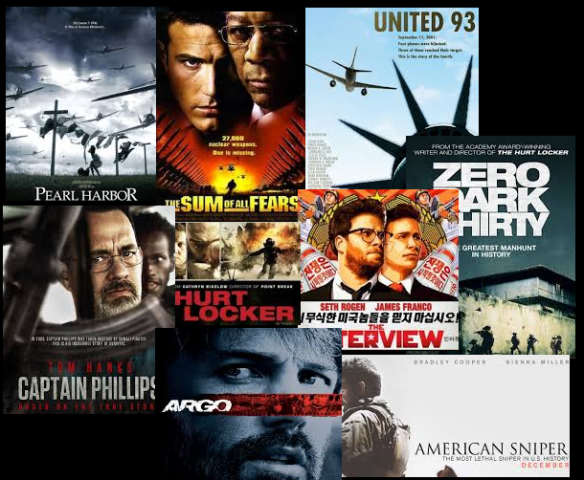
I cannot remember U.S. culture ever being quite so compromised by ruling class control. Hollywood turns out one jingoistic and militaristic and racist film and TV show after another. Corporate news is completely controlled by the same forces that run Hollywood. It is the complete capitulation of the liberal class to the interests of the increasingly fascistic U.S. elite. And this didn’t start with Donald Trump. Certainly in its current incarnation it goes back at least to Bill Clinton, and really it goes back to the end of World War Two. The ideological trajectory was formed under the Dulles brothers and military industrial complex — representing U.S. business interests and exhibiting a demand for global hegemony. But once the Soviet Union collapsed, the project was accelerated and intensified.

Another starting point might well be the 1960 Bay of Pigs fiasco, or the 1961 CIA (and MI6) assassination of Patrice Lumumba. Or Kennedy’s 1962 speech at American University calling for the end of Pax Americana. We know what happened to Kennedy soon after that. Pick any of these incidents. But it was the fall of the U.S.S.R. that signaled to the governing class, the proprietor class, that the last real obstacle to global domination had been removed. In the interim, one finds the Iran/Contra affair, and the invasion of Iraq. The real and the symbolic meaning of the Soviet Union is forgotten today, I think. Its meaning for the developing world, especially.

The next conscious trial balloon was Clinton’s attack on the former Yugoslavia. A test run for expanding NATO. And it worked. The propaganda machine has never been as successful as it was when it demonized the Serbs and Milosevic. Then came 9/11. And the well honed PR machine spewed an endless barrage of hyper-patriotic rhetoric and disinformation. American exceptionalism was given full credibility. And remember Colin Powell and his cartoon visual teaching aids at the UN? Nobody was going to argue. Certainly not the white liberal class. And Hollywood upped its game in churning out military fantasies. And in just churning out fantasies. A genre that lent itself to obvious neo-colonial messages. By 2007, when Barack Obama announces he will run for President, the master narrative for America was firmly entrenched. The biggest hit from Hollywood in this period is Avatar (2009), a neo-colonial fable that fit seamlessly with Obama’s reconquest of Africa.

Dan Glazebrook recently wrote:

The year 2009, two years before Gaddafi’s murder, was a pivotal one for US-African relations. First, because China surpassed the US as the continent’s largest trading partner; and second, because Gaddafi was elected President of the African Union. The significance of both for the decline of US influence on the continent could not be clearer. Whilst Gaddafi was spearheading attempts to unite Africa politically, committing serious amounts of Libyan oil wealth to make this dream a reality, China was quietly smashing the West’s monopoly over export markets and investment finance. Africa no longer had to go cap-in-hand to the IMF for loans, agreeing to whatever self-defeating terms were on offer, but could turn to China – or indeed Libya – for investment. And if the US threatened to cut them off from their markets, China would happily buy up whatever was on offer. Western economic domination of Africa was under threat as never before.

The US response was to increase base building, upgrade AFRICOM, and then murder Gadaffi. Hollywood hits from this period include The Hurt Locker and The Dark Knight. Meanwhile domestically Obama was giving the OK for militarizing of police departments across the country. On another front….Danny Haiphong wrote…

What isn’t discussed often enough is how Obama has worked tirelessly to protect and fulfill the interests of the corporate healthcare system. In 2009, he collaborated with the monopoly health insurance industry and its pharmaceutical counterparts to repress the demand for single payer healthcare. The conditions at the time appeared ripe for a single payer system. Popular discontent with Republican Party rule was at its highest point. A relatively organized movement for single payer care was represented by organizations such as Healthcare Now. The Democratic Party possessed a majority in both the House and Senate.

Obama came to power as Wall Street went into meltdown, 2008. But instead of hope and change we got almost 5 trillion dollars moving to the top 1% of the financial elite. Poverty increased every year under Obama, as did inequality. Social Network came out in 2010 and Wolf of Wall Street in 2013. Both were big hits. The message from Hollywood never changed. And part of that message is that wealth is its own justification and a symbol of virtue. Hollywood, and U.S. liberals just naturally gravitate toward the rich.

Obama attacked Afghanistan, Iraq, Syria, Libya, Sudan, Somalia, and Yemen. And it is perhaps that last venture that will prove to be his most significant. Arming, training, and coordinating the Saudi aggression (and now that has escalated to boots on the ground) against the helpless Yemen has resulted in the largest humanitarian catastrophe in five decades.

The U.S. now has all but formally criminalized dissent, especially if that dissent is aimed at Israel.

None of this is to create exact corollaries between political action and studio product. But rather that the overriding message of Hollywood in both film and TV is to validate U.S. exceptionalism. And to hedge criticism with faint token protest. But its not just Hollywood, its theatre and fiction and all the rest of the arts. The erasure of the working class is the most pronounced truth in American culture today. There are no Clifford Odets (a high school drop out) anymore; they have been replaced by a steady stream of well groomed compliant MFA grads. Mostly from elite and expensive schools. Hemingway and James Baldwin were not college grads, nor was Tennessee Williams, the son of a traveling shoe salesman. Even more recent authors such as Thomas Pynchon were college drop outs (to join the Navy), but the point is that today mass culture is carefully controlled. Dreiser was a college drop out, and Twain was a typesetters apprentice. Others like Faulkner, went to University, but also worked. In Faulkner’s case as a postman. Same profession as Henry Miller and Charles Bukowski. Stephen Crane and Hemingway worked as journalists, when that was an honorable profession.

The decision makers in mass culture are mostly firmly entrenched in the Democratic Party ethos (witness stuff like House of Cards, Madame Secretary, or Veep). If one only gets one’s news from MSNBC or FOX or CNN then one will take away mostly pure propaganda. Rachel Maddow has a career based on craven parroting of DNC approved talking points and conclusions. Bill Maher, whose show is on HBO, is of late pimping for war. Sunday news talk shows do not invite radical voices, not ever. Michael Parenti isn’t on those shows, nor  are Ajamu Baraka or Glen Ford Mike Whitney or Ed Curtin or Dan Glazebrook or Stephen Gowans. No, but there are plenty of retired generals and politicians. This is a media that exerts absolute control of message.

The loss of the working class, of class diversity, has been a far bigger blow to the health of the culture than anything else. One might argue that culture has always been, in the modern era, a province of the bourgeoisie, and that’s true. But there is still a rather pronounced change that has taken place. But Americans are discouraged from thinking in terms of class. They see individualism and identity. Get me more women directors they cry….which would give us more versions of Zero Dark Thirty, I guess. Gender equality matters, something every single socialist country in history has emphasized. Something Chavez saw fit to write into the Bolivarian constitution on day one. Chavez, who liberal avatar Bernie Sanders dismissed as a “dead communist dictator”. Chavez, who feminist avatar Hillary Clinton worked overtime to oust from power.

People are shocked…shocked I say…that US soldiers are killed in Niger. Darn that Donald Trump. When it is pointed out that it was Obama who sent troops there in his pivot to Africa, one is met with blank stares. The concern over U.S. soldiers dying is simply mind numbing in its hypocrisy and blinkered exceptionalism. I mean just count the numbers of dead civilians due to U.S. drone strikes from just one year. Pick any year you like.

Under Obama, the US African Command (AFRICOM) has penetrated every African country but Zimbabwe and Eritrea. AFRICOM has locked African nations into military subservience. In 2014, the US conducted 674 military operations in Africa . According to a recent Freedom of Information Act request by Intercept, the US currently has Special Forces deployed in more than twenty African nations.

Danny Haiphong

People are terrified today lest they be called conspiracy theorists. No single pejorative term has exercised such disproportionate power. There is a subterranean subject position associated with this, too. A masculine identity that connects with the presentation of those accepting of the official version of things. It is ‘no nonsense, mature, and sort of tough guy’ pose. Only weak and muddled (feminine you see!) would bother to question official narratives of…well, anything. It is staggering, really, why so few ask why is it OK to assassinate people without due process? Why is it whistleblowers, truth tellers, are being locked away and shunned? Why are there 900 plus US military bases around the world. Why, given the growing poverty in the U.S. do we need an updated nuclear arsenal that will cost trillions? In fact why is the defense budget over 4 billion a day? The liberal educated class seem not to ask such questions. Let alone ask is the U.S. arming takfiri jihadists in Syria? Most of what people call conspiracy is just perfectly reasonable skepticism. Given a history that includes COINTELPRO, Operation Northwoods, Gladio, MKUltra, and Operation AJAX. This is also relevant in terms of the coming war on *fake news*. An idea put forward by Obama and now in enthusiastic Orwellian operation by Facebook, YouTube, and Google. In the U.K. Theresa May proudly announces the government SHOULD control what one can see on the internet. Censorship is pitched as protection.

And then we come to NATO and Europe. Why does NATO even exist one might ask? I mean the USSR doesn’t exist anymore. Well, the answer has been under construction for a few years now, and that answer is the extraordinary anti Putin propaganda of the U.S. The “Russian Threat” is now an accepted trope in public discourse. Or the anti Iranian disinformation. In fact Iran is far more democratic and less a global threat (actually its NO global threat) than U.S. boon allies Israel and Saudi Arabia. Which brings us back to Yemen. The utter destruction of Yemen, poorest Arab country in the world, and now one with the largest Cholera outbreak in history, posed no threat to ANYONE. Certainly not to the United States. Are we to believe the House of Saud is worth supporting? They behead homosexuals and witches in Saudi Arabia. The leader of KSA is a 32 year old psychopath named Mohammed Bin Salman. Someone please explain the U.S. support for this country?

Or Venezuela. The U.S. has waged various campaigns against this sovereign nation for over a decade now. A democracy. But a disobedient one. Where is the outcry? When people are going on about Harvey Weinstein, a troglodyte movie producer that literally everyone knew was a serial abuser, I wonder that the women of Venezuela seem not to count. Or of Libya, or Haiti, or Puerto Rico, or hell, the women of Houston right now. Poor women. Ah, but that is class again. Now perhaps the Weinstein affair will yield good results and some form of collective protection and maybe even unionizing will take place to limit the power of rich white men. I doubt it, but maybe. Still, given that the liberal class today applaud the idea of making it OK for women to bomb defenseless villages in Afghanistan or Iraq or Yemen, just like men, and given that most of these horrified by Weinstein were and are solidly behind Hillary Clinton and the DNC, and laud adulation on figures like Maddie Albright, it seems hard to imagine.

David Rosen:

Sexual abuse and violence in the U.S. is as old as the country. America’s patriarchal culture long legitimized sexual abuse and violence toward women — and children — whether conducted at the workplace, at home, a nightclub or on a deserted street. During the nation’s earliest days, the custom of sexual abuse and violence was legitimized through the notion of “chastisement.” This was a feature of Anglo-American common law that recognized the husband as master of “his” household and, thus, permitted him to subject “his” wife to corporal punishment, including rape, so long as he did not inflict permanent injury upon her. Sexual abuse was institutionalized in the rape of African and later African-American female slaves. As the legal scholar Adrienne Davis notes, “U.S. slavery compelled enslaved black women to labor in three markets – productive, reproductive, and slavery – crucial to the political economy.”

One need only note the sexual violence that takes place in the U.S. military (See Kirby Dick’s The Invisible War). But that is not the military you see in this season’s TV shows such as SEAL Team or Valor or The Brave. The current Tom Cruise film American Made is a sort of comedy about Barry Seal who worked as a pilot for the CIA, and with various cartels in South America. Yeah, nothing funnier than squashing a socialist government like in Nicaragua. There is not a single Spanish speaking character who is not either a drunk, a sadist, or just incompetent. This stunningly racist revisionism was called “jaunty and bouncy” by the Hollywood Reporter.

The liberal class will always side with the status quo. Always. They do not care if the status quo is fascist. And its suits them much more to lay out bromides about male abuse of women, as long as this doesn’t mean having to untangle the complexity of women in unfamiliar non tourist visited nations like Yemen or Libya or Honduras. Just like the fact that U.S. domestic police departments murdered over a thousand black men in 2015. And continue to do so, along with increasing numbers of black women. That’s just not a jaunty bouncy story, I guess. Obama has never been comfortable talking about or to black people. He did manage to scold Colin Kaepernick recently though, about the pain he, Kaepernick, might be causing. The pain of white billionaire sports team owners I guess. The Uncle Tomism of what Glen Ford called black misleadership has never been greater. And that’s another crime we can lay, largely, at the feet of Barack Obama.

The U.S. House voted unanimously to sanction Iran and North Korea, an absurdity and a crime, and yet one that barely registered on the media Richter scale. What has Iran or North Korea ever done to hurt anyone in the United States? It is Saudi Arabia and Israel that fear a democratic nation like Iran and the influence they wield in the region. Iran is accused of fomenting instability but evidence is never given. Russia is said to control U.S. public opinion, but evidence is never given. The U.S. doesn’t even bother to really try and make claims about Venzeuela, because its just part of inherited wisdom that they are *bad*. Like Castro was bad, like Gadaffi, like Aristide, like anyone exhibiting independence. The world according to media entertainment is made up of bad guys and good guys. Mike Pompeo, head of the CIA, recently stated that his agency would become a “much more vicious agency” in fighting its enemies. Its actually hard to imagine what that might look like given CIA history. More vicious than rendition, drone killing and black site torture? Remember it was the U.S. and its School of the Americas that trained those death squads in Central America. Hollywood makes comedies about this.

In any event nobody in Hollywood complains. Just as none of the actresses assaulted by Weinstein (and countless others) said anything lest they lose career opportunities. Just as nobody complains about the racism and demonizing of Muslims or Serbs or North Koreans or Russians lest they not get the job. Coercion is silent and a given. It is also absolute. Most actors and directors simply don’t think about it, and most know little beyond what they hear on corporate news or read in the NYTimes. But I understand. People have to eat, have to feed their families. The real problem is that power is ever more consolidated. Distribution of films is monopolized. And for most Americans, foreign policy remains a giant black hole about which they know very little. Tell someone Milosovic was actually a good guy and they will laugh at you (this still happens on the left, too, rather depressingly). Tell them Russia is not threatening the U.S. or Europe, and they will laugh at you. Try to explain what Imperialism is and means, and you get that bored look of irritation. A good rule of thumb is if the U.S. targets a country or leader, then its worth questioning the western generated propagated propaganda in mainstream media about said country or leader (think Syria, Gadaffi, Aristide, Milosovic, Iran, North Korea). The U.S. does not go after countries who welcome western capital.

One of the things I’ve noticed about Hollywood film is the extraordinary amount of self pity from most characters. Self pity, entitlement, and sarcasm. The people who produce and make film and TV today, by and large, tacitly censor themselves. Some don’t have to, of course. But there is a general group think at work. And it extends to the way characters are written. The problems of affluent white people is the template here. Few examine the wider world, and mostly when they do it is seen as a world of threat and menace. An uncivilized place in need of guidance from the civilized white West (The Lost City of Z comes to mind, which made all the approved anti colonial notes while still creating a colonial narrative anyway.). But it is even more narrow than that. Everything resembles a studio; political discussions, even if they take place in outer space, resemble studio executives discussing opening weekend profits, or Neilson ratings. And since Hollywood itself ever more resembles Wall Street, or some corporate headquarters, that is increasingly what the world looks like. It is a profound loss of imagination. Westerns look and sound the same as melodramas set in Santa Monica or New York. Fantasy worlds resemble corporate headquarters or corporate motivational weekends. It is a world created by writers under thirty, largely, and certainly under forty. These are worlds created by people who themselves know very little of the world. They know even less about having to work for a living. The entire universe of film is absent any class awareness. History is simplified the better to appeal to a wider audience. Everything feels and sounds the same. And it is stultifying. There are films and TV from Europe, even from the U.K. that have merit, have heterogeneous sensibilities, but not from Hollywood. Like White House press conferences, the idea is to stay on message. Black characters sound white (or are given caricature *black* dialect and dialogue), brown characters sound white (or are given caricature barrio dialects), and Muslims sound dangerous and devious. Asians seem lifted from Fu Manchu serials or Charlie Chan. Strange when I hear people make fun of ethnic cliches from the 1940s, because it is really no different today (and check the recent TV incarnation of the venerable Star Trek franchise where the Klingon villains are very dark, live in dark spaceships and utter a guttural invented language all of which suggests something oddly racist and like nothing so much as colonial portraits of savages from darkest Africa).

Fixation on Trump’s crimes distracts from a system in which crime is a built-in factor. Clinton, Bush, Obama, and Trump. They are only the figureheads that carry water for the system. And the system is the property of the ruling class. People vote as if it crucially matters, and they vote for who they like. Not for policy because mostly they have no idea of policy. Trump is an obvious target, but that’s the problem in a sense. America didn’t become racist and violent overnight. The forces of social unrest have been building for decades. Trump was inevitable. His lack of basic literacy mirrors the nation he nominally heads, and his vulgarity mirrors the vulgarity of America, as does his misogyny and racism. The same advisors are in place and if Hillary had won, those openly fascist thugs applauding Trump would still be committing hate crimes. Has Trump empowered them? To a degree, yes. But an HRC win would likely have provided motivation of a different sort and the same violence would be taking place. You cannot sustain, as a country, this level of inequality. And as more super hurricanes descend on us, as the bio-sphere collapses, none of this may end up mattering. There is something disturbing, actually, about the relentless attacks on Trump. Its like beating up a special needs kid. Where was this hatred and outrage before? I mean Trump’s America, a term I hear a lot, is just America. We have over 2 million people in prison in the U.S. Far and away leaders in the world. Infant mortality however puts the U.S. between 26th and 51st, depending on who is counting. There is no Universal Heath Care, no union protection for workers, no maternity leave, no free education. What is there to feel so special about, exactly? Trump was very popular on his moronic reality TV show. I’m guessing more than few now outraged by this buffoonish reactionary watched that show. I mean it did last fifteen years I believe. Who did they think he was? There is nothing wrong with identifying the crimes of Trump’s administration. But there is something deeply wrong in not recognizing it as a continuation of prevailing policy. Yes, it is worse in many areas. The environment for one. But then again, 47% of the world’s pollution is caused by the military. And the U.S. has a military bigger than the next ten largest militaries in the world. And every president since the first  Bush has increased the military budget. The nightmare did not begin with the swearing in of Donald Trump. But nobody likes him. They liked Obama. And that is why he was able to do so much harm. Trump is dangerous not because of what he thinks (he mostly doesn’t) but because of his ignorance and weakness (and fear). And that weakness generated his welcoming hand to the Pentagon. Foreign policy is really in the hands of a man nicknamed ‘Mad Dog’. One cannot blame this catastrophic situation on one man. This is the creation of American history.
Our Bigoted Brains

Photo credit: Art Killing ApathyBigotry,

By Eleanor Goldfield

Source: Popular Resistance

If you’ve ever moved beyond small talk and vapid pleasantries in conversation then you’ve likely dealt with the infuriating occurrence of trying to convince someone of a fact they just don’t want to accept. Beyond just avoiding the information, they almost seem hardwired to reject your proof in a phenomenon that I like to call “fact fear.” I noticed a sharp rise in fact fear during the 2016 elections and levels continue to hover at disturbing heights today. So, what gives? Are we really in a new era of idiocy or are we just seeing our particularly vapid and anti-intellectual culture ping off the most base and stubborn aspects of the human psyche? Both, I think.

Daniel Patrick Moynihan famously said, “You are entitled to your own opinions but not your own facts.” But in the post-truth, anti-intellectual, “I read it in a blog post so it must be true” era, our opinions and beliefs run the ever-growing risk of being founded on complete bullshit. Filter bubbles (which we covered in Episode 132) and digital spheres protect us from ideas and facts outside our own personal shit heaps and only serve up the information we want to see – which is not always factually accurate. Our culture of quick “news” and a growing lack of intellectual curiosity drive us further into an echo chamber of our own ideas – facts and information be damned. In turn, a false but far from flimsy crust solidifies around our minds –- and the soft light of truth and knowledge can’t get in.

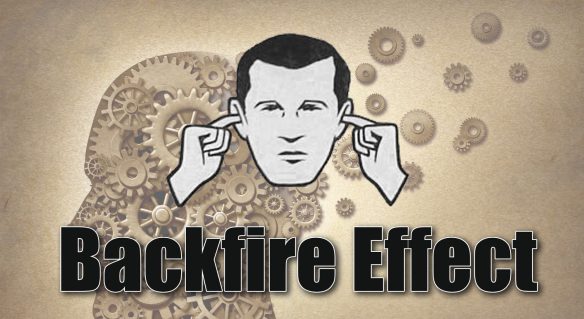
Our brains are wired to find comfort behind that crust. In what’s known as the backfire effect, our minds reject new information that clashes with our belief systems and opinions. As David McRaney, author of the books You Are Not So Smart and You Are Now Less Dumb explains it: “Once something is added to your collection of beliefs, you protect it from harm. You do this instinctively and unconsciously when confronted with attitude-inconsistent information. Just as confirmation bias shields you when you actively seek information, the backfire effect defends you when the information seeks you, when it blindsides you. Coming or going, you stick to your beliefs instead of questioning them. When someone tries to correct you, tries to dilute your misconceptions, it backfires and strengthens those misconceptions instead. Over time, the backfire effect makes you less skeptical of those things that allow you to continue seeing your beliefs and attitudes as true and proper.” In other words, that crust acts as a shield for facts that threaten your beliefs. And you’ve probably seen this in action online. Someone posts something like “climate change isn’t real” so you face palm and proceed to post ample proof that they’re wrong and that in fact, climate change is very real. The problem is that with each fact you post, the crust hardens – for both you AND the other person. Of course, it doesn’t help that you can find just as much if not more bullshit online than you can actual truth but much of it is actually tied to the inherent laziness of our brains. “The more difficult it becomes to process a series of statements, the less credit you give them overall…In experiments where two facts were placed side by side, subjects tended to rate statements as more likely to be true when those statements were presented in simple, legible type than when printed in a weird font with a difficult-to-read color pattern. Similarly, a barrage of counterarguments taking up a full page seems to be less persuasive to a naysayer than a single, simple, powerful statement.”

So does this mean that we should just stop pointing out when someone is wrong? That we should let all kinds of ridiculous notions from lizard people to “homeless people are dangerous” slide? Of course not. Rather, it means that if we want to educate and engage, if we want people to wake the fuck up then we have to consider how the human mind works – and how it doesn’t. Furthermore, our goal shouldn’t be to win an argument as if to suggest that as soon as we win the argument, justice is at hand. Indeed, if your goal is to simply be right, the religious zeal with which you defend your ideas will only turn you into the very monster you are trying to slay. Being right, in other words, is not the point. Progress is not a church. We are not looking for converts. Our aim should always be to engage and empower; to share our knowledge and embrace the knowledge of others. Seek and speak truth – then act on it. And do not think that because you found a nugget of information you hold moral superiority over those who don’t know it. Our minds are just as susceptible to that crust as anyone else’s. We are not special or better. Indeed, we must constantly question our opinions, compare them with facts and new information. By that I mean actual facts, not “alt facts” sourced from a single Google search or indeed even something from a “trusted” publication.

In an interview last March with Robert Scheer of Truthdig, author Joel Whitney discusses the 60 year history of fake news and how it was used in the Cold War era to sew distrust and hatred of all things “commie” and Russian. Major and well-trusted media outlets were a part of the propaganda ring and Whitney notes “that the fearful political atmosphere at the time led to “secrecy being used to preside over and rule over the free press — which we’re supposed to be the champions of.” “They drank the Kool-Aid and thought they were saving freedom,” Scheer agrees. The discussion underscores the need for analysis of Cold War-era media as a way to avoid propagandized journalism today. Scheer says, “I look at the current situation, where we don’t even have a good communist enemy, so we’re inventing Russia as a reborn communist power enemy.” “I call it superpolitics,” Whitney concludes, “where essentially there’s something that’s so evil and so frightening that we have to change how our democratic institutions work.” The latest red scare is but one example of how easy it is to mold minds when you use something like the hatred of Trump as a trigger. Blend some tried and true anti-Russia sentiment in there and you’ve got yourself a brand spanking new enemy – one that allows you to further mold those democratic institutions just as seamlessly as the minds you’ve now crusted and convinced. Russia aside, the same propaganda games go for mass media collusion on everything from fracking to the military industrial complex. For example, leaked email messages show that a writer from the LA times colluded with the CIA not only in terms of getting the CIA’s OK on forthcoming stories but actually offered to write stories for them that would put a positive spin on such issues as drone warfare, saying it would be quote “reassuring to the public” and a “good opportunity” for the CIA. Various other email messages show that the same was true for a list of other media outlets.

All this to say, if I may borrow a phrase: no investigation, no right to speak. Do your own research before you claim to know something. Incidentally this will also help steel you from the rumor mill AND infiltrators. Whether it’s taking someone to task on a rumor or engaging someone in discourse, be vigilant. Be vigilant in your drive, your actions, and be primarily vigilant in your own thinking. Release the flimsy beliefs that would just as soon sink you as keep you afloat. Arm yourself with knowledge and reach out to build and to engage, not to win a Facebook tiff. Consider the goal of engagement and empowerment rather than just being right. Consider the reaction you would have if someone came at you with a barrage of links followed by “read a fucking book, asshole!” You’d more than likely write them off as an unhinged asshole even if their information is solid. Try asking a question or perhaps as Ben Franklin suggested, ask them for a favor, something small that seeds trust, pinging off the human psychology that seeks appreciation and the feel of community. Push past political theory and get down to human connection – to start with. For instance, anarchists in several communities will often engage with would-be white supremacists via the common ground of distrust and disgust in the system. They’ll sit and talk; discuss the pitfalls of a system that’s left them behind and from there grow to a discourse on the roots of their discontent, i.e. not black people. In other words, knock on the door rather than trying to break down the wall. Because that wrought iron shit crust is stronger than steel.

Finally, keep in mind that this won’t always work and nor should it. We have to accept that in our grandiose imaginings of the revolution, many people will either be against us or sitting at home praying we all just shut up. But again, if you’re not looking for converts, if you’re engaging to empower, you’ll not only find more people willing to talk to you, you’ll also more than likely learn something in the process. You might even pick something up that’ll put a dent in your own mental crust.

Philip K. Dick and the Fake Humans

(Editor’s note: on this 36th anniversary of the passing of Philip K. Dick, it seems an appropriate time to note the relevance of his work to our current dystopia as Henry Farrell does in the following essay. Unfortunately the author is less astute regarding the ways in which the dystopias of Orwell and Huxley are equally relevant to our current milieu.)

By Henry Farrell

Source: Boston Review

This is not the dystopia we were promised. We are not learning to love Big Brother, who lives, if he lives at all, on a cluster of server farms, cooled by environmentally friendly technologies. Nor have we been lulled by Soma and subliminal brain programming into a hazy acquiescence to pervasive social hierarchies.

Dystopias tend toward fantasies of absolute control, in which the system sees all, knows all, and controls all. And our world is indeed one of ubiquitous surveillance. Phones and household devices produce trails of data, like particles in a cloud chamber, indicating our wants and behaviors to companies such as Facebook, Amazon, and Google. Yet the information thus produced is imperfect and classified by machine-learning algorithms that themselves make mistakes. The efforts of these businesses to manipulate our wants leads to further complexity. It is becoming ever harder for companies to distinguish the behavior which they want to analyze from their own and others’ manipulations.

This does not look like totalitarianism unless you squint very hard indeed. As the sociologist Kieran Healy has suggested, sweeping political critiques of new technology often bear a strong family resemblance to the arguments of Silicon Valley boosters. Both assume that the technology works as advertised, which is not necessarily true at all.

Standard utopias and standard dystopias are each perfect after their own particular fashion. We live somewhere queasier—a world in which technology is developing in ways that make it increasingly hard to distinguish human beings from artificial things. The world that the Internet and social media have created is less a system than an ecology, a proliferation of unexpected niches, and entities created and adapted to exploit them in deceptive ways. Vast commercial architectures are being colonized by quasi-autonomous parasites. Scammers have built algorithms to write fake books from scratch to sell on Amazon, compiling and modifying text from other books and online sources such as Wikipedia, to fool buyers or to take advantage of loopholes in Amazon’s compensation structure. Much of the world’s financial system is made out of bots—automated systems designed to continually probe markets for fleeting arbitrage opportunities. Less sophisticated programs plague online commerce systems such as eBay and Amazon, occasionally with extraordinary consequences, as when two warring bots bid the price of a biology book up to $23,698,655.93 (plus $3.99 shipping).

In other words, we live in Philip K. Dick’s future, not George Orwell’s or Aldous Huxley’s. Dick was no better a prophet of technology than any science fiction writer, and was arguably worse than most. His imagined worlds jam together odd bits of fifties’ and sixties’ California with rocket ships, drugs, and social speculation. Dick usually wrote in a hurry and for money, and sometimes under the influence of drugs or a recent and urgent personal religious revelation.

Still, what he captured with genius was the ontological unease of a world in which the human and the abhuman, the real and the fake, blur together. As Dick described his work (in the opening essay to his 1985 collection, I Hope I Shall Arrive Soon):

The two basic topics which fascinate me are “What is reality?” and “What constitutes the authentic human being?” Over the twenty-seven years in which I have published novels and stories I have investigated these two interrelated topics over and over again.

These obsessions had some of their roots in Dick’s complex and ever-evolving personal mythology (in which it was perfectly plausible that the “real” world was a fake, and that we were all living in Palestine sometime in the first century AD). Yet they were also based on a keen interest in the processes through which reality is socially constructed. Dick believed that we all live in a world where “spurious realities are manufactured by the media, by governments, by big corporations, by religious groups, political groups—and the electronic hardware exists by which to deliver these pseudo-worlds right into heads of the reader.” He argued:

the bombardment of pseudo-realities begins to produce inauthentic humans very quickly, spurious humans—as fake as the data pressing at them from all sides. My two topics are really one topic; they unite at this point. Fake realities will create fake humans. Or, fake humans will generate fake realities and then sell them to other humans, turning them, eventually, into forgeries of themselves. So we wind up with fake humans inventing fake realities and then peddling them to other fake humans.

In Dick’s books, the real and the unreal infect each other, so that it becomes increasingly impossible to tell the difference between them. The worlds of the dead and the living merge in Ubik (1969), the experiences of a disturbed child infect the world around him in Martian Time-Slip (1964), and consensual drug-based hallucinations become the vector for an invasive alien intelligence in The Three Stigmata of Palmer Eldritch (1965). Humans are impersonated by malign androids in Do Androids Dream of Electric Sheep? (1968) and “Second Variety” (1953); by aliens in “The Hanging Stranger” (1953) and “The Father-Thing” (1954); and by mutants in “The Golden Man” (1954).

This concern with unreal worlds and unreal people led to a consequent worry about an increasing difficulty of distinguishing between them. Factories pump out fake Americana in The Man in the High Castle (1962), mirroring the problem of living in a world that is not, in fact, the real one. Entrepreneurs build increasingly human-like androids in Do Androids Dream of Electric Sheep?, reasoning that if they do not, then their competitors will. Figuring out what is real and what is not is not easy. Scientific tools such as the famous Voight-Kampff test in Do Androids Dream of Electric Sheep? (and Blade Runner, Ridley Scott’s 1982 movie based loosely on it) do not work very well, leaving us with little more than hope in some mystical force—the I Ching, God in a spray can, a Martian water-witch—to guide us back toward the real.

We live in Dick’s world—but with little hope of divine intervention or invasion. The world where we communicate and interact at a distance is increasingly filled with algorithms that appear human, but are not—fake people generated by fake realities. When Ashley Madison, a dating site for people who want to cheat on their spouses, was hacked, it turned out that tens of thousands of the women on the site were fake “fembots” programmed to send millions of chatty messages to male customers, so as to delude them into thinking that they were surrounded by vast numbers of potential sexual partners.

These problems are only likely to get worse as the physical world and the world of information become increasingly interpenetrated in an Internet of (badly functioning) Things. Many of the aspects of Joe Chip’s future world in Ubik look horrendously dated to modern eyes: the archaic role of women, the assumption that nearly everyone smokes. Yet the door to Joe’s apartment—which argues with him and refuses to open because he has not paid it the obligatory tip—sounds ominously plausible. Someone, somewhere, is pitching this as a viable business plan to Y Combinator or the venture capitalists in Menlo Park.

This invasion of the real by the unreal has had consequences for politics. The hallucinatory realities in Dick’s worlds—the empathetic religion of Do Androids Dream of Electric Sheep?, the drug-produced worlds of The Three Stigmata of Palmer Eldritch, the quasi–Tibetan Buddhist death realm of Ubik—are usually experienced by many people, like the television shows of Dick’s America. But as network television has given way to the Internet, it has become easy for people to create their own idiosyncratic mix of sources. The imposed media consensus that Dick detested has shattered into a myriad of different realities, each with its own partially shared assumptions and facts. Sometimes this creates tragedy or near-tragedy. The deluded gunman who stormed into Washington, D.C.’s Comet Ping Pong pizzeria had been convinced by online conspiracy sites that it was the coordinating center for Hillary Clinton’s child–sex trafficking ring [likewise, the masses may have been convinced by mainstream media that a real child-sex trafficking ring never existed].

Such fractured worlds are more vulnerable to invasion by the non-human. Many Twitter accounts are bots, often with the names and stolen photographs of implausibly beautiful young women, looking to pitch this or that product (one recent academic study found that between 9 and 15 percent of all Twitter accounts are likely fake). Twitterbots vary in sophistication from automated accounts that do no more than retweet what other bots have said, to sophisticated algorithms deploying so-called “Sybil attacks,” creating fake identities in peer-to-peer networks to invade specific organizations or degrade particular kinds of conversation.

Twitter has failed to become a true mass medium, but remains extraordinarily important to politics, since it is where many politicians, journalists, and other elites turn to get their news. One research project suggests that around 20 percent of the measurable political discussion around the last presidential election came from bots. Humans appear to be no better at detecting bots than we are, in Dick’s novel, at detecting replicant androids: people are about as likely to retweet a bot’s message as the message of another human being. Most notoriously, the current U.S. president recently retweeted a flattering message that appears to have come from a bot densely connected to a network of other bots, which some believe to be controlled by the Russian government and used for propaganda purposes.

In his novels Dick was interested in seeing how people react when their reality starts to break down. A world in which the real commingles with the fake, so that no one can tell where the one ends and the other begins, is ripe for paranoia. The most toxic consequence of social media manipulation, whether by the Russian government or others, may have nothing to do with its success as propaganda. Instead, it is that it sows an existential distrust. People simply do not know what or who to believe anymore. Rumors that are spread by Twitterbots merge into other rumors about the ubiquity of Twitterbots, and whether this or that trend is being driven by malign algorithms rather than real human beings.

Such widespread falsehood is especially explosive when combined with our fragmented politics. Liberals’ favorite term for the right-wing propaganda machine, “fake news,” has been turned back on them by conservatives, who treat conventional news as propaganda, and hence ignore it. On the obverse, it may be easier for many people on the liberal left to blame Russian propaganda for the last presidential election than to accept that many voters had a very different understanding of America than they do.

Dick had other obsessions—most notably the politics of Richard Nixon and the Cold War. It is not hard to imagine him writing a novel combining an immature and predatory tycoon (half Arnie Kott, half Jory Miller) who becomes the president of the United States, secret Russian political manipulation, an invasion of empathy-free robotic intelligences masquerading as human beings, and a breakdown in our shared understanding of what is real and what is fake.

These different elements probably would not cohere particularly well, but as in Dick’s best novels, the whole might still work, somehow. Indeed, it is in the incongruities of Dick’s novels that salvation is to be found (even at his battiest, he retains a sense of humor). Obviously, it is less easy to see the joke when one is living through it. Dystopias may sometimes be grimly funny—but rarely from the inside.

Mueller’s Fraudulent Indictment

(Rex Features via AP Images)

The Internet Research Agency: clickbait farm or KGB plot?

By Justin Raimondo

Source: Antiwar.com

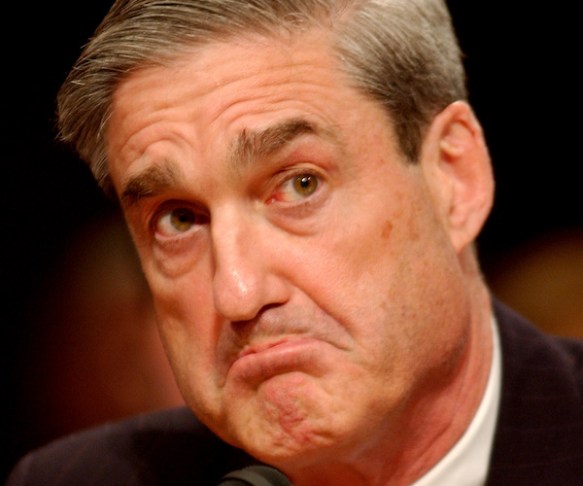
The indictment handed down by Robert Mueller against 13 Russians connected to the Internet Research Agency, a Russian-owned- and- operated clickbait farm, is the capstone of my case that we have indeed entered Bizarro World, an alternate universe where up is down, black is white and truth is a ridiculous falsehood.

Yes, I said clickbait farm – because that’s precisely what the Internet Research Agency (IRA) is: founded by Yevgeny Prigozhin, a former Russian chef who wanted to figure out a new way to make money, the IRA, as pointed out here, is a money-making operation. Mueller seems to acknowledge this when, in his laughable “indictment,” we read this:

“Defendants and their co-conspirators also used the accounts to receive money from real U.S. persons in exchange for posting promotions and advertisements on the ORGANIZATION-controlled social media pages. Defendants and their coconspirators typically charged certain US merchants and US social media sites between 25 and 50 US dollars per post for promotional content on their popular false US persona accounts, including Being Patriotic, Defend the 2nd, and Blacktivist.”

What kind of a propaganda/spy operation charges its coconspirators a fee?

The total Russian/IRA buy was $100,000, including $300 in Pennsylvania, $832 in Michigan, and $1979 in Wisconsin (mostly before the primary). Most of the “Russian” ads ran after the election, and they didn’t support any candidates: instead, they focused on “hot button” issues – precisely the sort of thing intended to attract visits and make money for the creators via ads.

This business model has been widely utilized by enterprising Macedonian teenagers and others out to make a quick buck, and it works quite effectively if you know what you’re doing. The IRA, like other clickbait operations, isn’t really about politics, although it deals with political subjects: it’s about making money for it owners. Period. As the Moon of Alabama blogger points out:

“There were, according to the indictment, eighty people working on the “translator project”. These controlled “hundreds” of sock-puppets online accounts each with a distinct “political” personality. Each of these sock-puppets had a large number of followers – in total several hundred-thousands. Now let’s assume that one to five promotional posts can be sold per day on each of the sock-puppets content stream. The scheme generates several thousand dollars per day ($25 per promo, hundreds of sock-puppets, 1-5 promos per day per sock-puppet). The costs for this were limited to the wages of up to eighty persons in Moscow, many of them temps, of which the highest paid received some $1,000 per month.”

All in all, a fairly profitable business – not a state-run “disinformation” project, but rather good old free enterprise.

Yes, I know that some of the IRA’s employees traveled to America for a week or two to do “research.” But what, exactly, does this mean? Does anybody have a record of where they stayed, or whom they associated with? There’s nothing about that in the indictment. In short, they could have come to America for the same reasons tens of thousands do every day of the week: to enjoy themselves as tourists. After all, what could they possibly learn in a week-long stay that could … sway a presidential election? I mean, what are we talking about here?

The weird-stupid aura hanging over this whole affair was underscored when CNN actually knocked on the door of some woman whom they accused of running a “Russian-sponsored” pro-Trump rally in Florida: the woman laughed in the “reporter’s” face and said she’d never spoken to a single Russian in her entire life. So how many Trump supporters will be visited not just by CNN but by the FBI in order to intimidate them in a similar manner?

What I want to know is this: what in the name of all that’s holy does Robert Mueller think he’s doing? Is he just plain ignorant of the internet and how it works – or is he mocking us? His “indictment” is nothing but a joke. And as for the hysterics proclaiming it shows that the Russians have launched the equivalent of the attack on Pearl Harbor – these people need to be heavily sedated. Three-thousand people died at Pearl Harbor: how many were killed by Prigozhin’s clickbait farm?

My recent cancer diagnosis has really focused my attention on an issue I had hardly considered before: spending time refuting nonsense is essentially a waste of my time. And at this point, it’s the kind of luxury I can no longer afford. If these are truly my last days on earth, I’d rather be writing about something substantial, and meaningful, thank you very much.

So I’ll just end with this: anyone who says they believe the Mueller narrative outlined in his laughable indictment is either clueless or is a cynic who will say anything. The “charges” detailed in this “indictment” – “Conspiracy to Defraud the United States” – are precisely what the authors of this disgraceful document are guilty of themselves.

Russia-gate is a hoax – I’ve told my readers that from the very beginning. This “indictment” underscores the extent of the hoax – and the contempt that the government officials and their journalist collaborators who thought this would bring down a President have for the American people. They expect us to swallow this fraud whole. Well, guess what – it’s not happening, folks. A child could see through this nonsense.

It’s high time to shut this fraud on the country down, and return Mueller to private life (where he can contemplate how badly he messed up not only this but also the anthrax investigation).

The media and the Mueller indictment: A conspiracy theory to end all conspiracy theories

By Patrick Martin

Source: WSWS.org

The announcement Friday by the US Department of Justice that a federal grand jury has returned criminal indictments against 13 Russian citizens and three Russian companies, charging illegal activities in the 2016 US presidential election, has become the occasion for a barrage of war propaganda in the American corporate media.

Leading the charge is the New York Times, which published a front-page “news” lead Sunday, authored by Peter Baker. The article was published online Saturday evening under the headline, “Trump’s Conspicuous Silence Leaves a Struggle Against Russia Without a Leader.” In the newspaper’s print edition, the “struggle” was upgraded to a “war … being fought on the American side without a commander in chief.”

The indictments, the Times argues, “underscored the broader conclusion by the American government that Russia is engaged in a virtual war against the United States through 21st-century tools of disinformation and propaganda.” It noted that only a few days ago, the Trump administration “formally blamed Russia for an expansive cyberattack last year called NotPetya and threatened unspecified ‘international consequences’.”

Given that the US government has just issued a series of strategy documents that, among other conclusions, suggest that a significant cyberattack on the United States could justify retaliation with nuclear weapons, the implications of the argument put forward on the front page of the Times are chilling: What cyberattack could be more significant than an effort to hijack the US presidential election? By the logic of the leading “newspaper of record,” the US government would be justified in responding militarily to an alleged Russian election operation.

What is propounded in the media coverage is a conspiracy theory to end all conspiracy theories. The New York Times, the Washington Post, and much of the media are espousing paranoid views that were once associated with the John Birch Society, which notoriously claimed that President Dwight Eisenhower was a card-carrying member of the Communist Party.

This supposed conspiracy is described in breathless terms in media accounts: “sophisticated,” “massive,” of “breathtaking” scope, one with “tentacles” that “reached deeply into American political life.” Even if one accepts the facts of the indictment as alleged—and that is hardly a legitimate assumption, given the capacity of the FBI and other intelligence agencies for fabrication—nothing in the indictment comes close to supporting what is being claimed by the Times and other media outlets.

The 37-page document details an alleged operation of individuals in Russia to establish false identities on social media platforms and use them to influence political discussion in the US during the election. Conspicuously absent is any indication of direct Russian government involvement in the operation, which was funded by a Russian multimillionaire. Nor is there any claim that the Trump campaign collaborated with the activities of the Russian operatives, or that these activities had any impact on the course of the election.

Only two Russians actually traveled to the United States, visiting several states for what is described in the indictment, with inadvertent humor, as “intelligence-gathering” on the US political scene. The total resources for the effort, under $15 million, could not pay for a serious campaign in a single major US state, let alone influence a presidential election on which billions of dollars were being expended by the Democrats and Republicans.

The claim that this half-baked operation played any significant role in the outcome of the election is an absurdity. There were ample reasons for tens of millions of Americans, particularly working people, to be hostile to the campaign of Hillary Clinton, the favorite of Wall Street and the Pentagon. She ran a campaign of complacency and entitlement promising nothing to those suffering after eight years of supposed “economic recovery” under the Obama administration. That a section of working people, in desperation, cast their votes for Trump only testifies to the reactionary blind alley of the corporate-controlled two-party system.

One fact in the indictment is of genuine significance: the operation began in April 2014. This was well before Donald Trump was on anyone’s campaign radar screen except perhaps his own, and only a month after the right-wing US-backed political coup in Ukraine, which mobilized fascist mobs in the streets of Kyiv to drive an elected pro-Russian president out of office and replace him with an American stooge.

The Ukraine operation was the culmination of a decades-long effort costing an estimated $5 billion, according to Assistant Secretary of State Victoria Nuland. In other words, the supposed Russian operation in the US election was, if anything, a pinprick response to the devastating US attack on Russian influence in Ukraine, a country with long historical and ethnic ties to Russia, and with a large minority of its population speaking Russian at home.

The primary purpose of the indictment was to provide the media with a flimsy basis for headlines screaming about a massive operation by Russia to undermine American democracy.

What is fueling this campaign? First, there is the effort to condition the population for war with Russia.

The Times and the Democratic Party are acting as the media and political spokesmen for a section of the US military-intelligence apparatus that objects to any turning away from the ferociously anti-Russian axis of US foreign policy established during the second term of the Obama administration.

The US military-intelligence apparatus is escalating its anti-Russian military provocations, most recently with an airstrike against Russian forces in Syria, apparently the most significant loss of life in a US-Russia conflict in history. The very fact that the Putin regime has downplayed the incident is an indication of its fears that this could become the spark for a much wider conflagration.

Second, there is the effort to present all social opposition within the United States as the product of Russian operations. The ruling class is terrified of the mounting social tensions within the United States. It is this fear that is motivating the extremely rapid moves to censor the Internet and suppress free speech.

The same issue of the Times that claims Russia is at war with the United States carried an attack on Facebook, headlined, “To Stir Discord in 2016, Russians Turned Most Often to Facebook.” According to the Times, Russia used the most widely used social media platform to foment political and social discontent in the United States. The implication: Facebook must implement even more aggressive censorship methods.

It would be fatally wrong to underestimate the right-wing character of the political conceptions being propounded by the Times and Democrats through the anti-Russian campaign. In the 20th century, only dictatorial regimes were able to get away with lying on the scale now being carried out by the advocates of the anti-Russia narrative. But Hitler’s “big lie” and Stalin’s doctoring of history are the political forerunners of the campaign being waged by the intelligence agents who work in the guise of “editors” and “journalists” at the Times.


Related Articles:

Goofy Indictments Divert Attention from Criminal Abuses at the FBI and DOJ

Mueller Indictment – The “Russian Influence” Is A Commercial Marketing Scheme

Corporate giant Unilever demands crackdown on oppositional Internet content

By Will Morrow

Source: WSWS.org

The drive to censor the Internet took another step this week with a public statement by Keith Weed, the chief marketing officer for the London-based multinational Unilever, threatening to withdraw advertising from social media platforms if they fail to suppress “toxic content.”

Weed reportedly told an annual leadership meeting of the Interactive Advertising Bureau in Palm Desert, California that the company “will not invest in platforms or environments” that “create divisions in society, and promote anger or hate.” He added, “We will prioritize investing only in responsible platforms that are committed to creating a positive impact in society.”

Excerpts of Weed’s remarks—the most explicit of their kind from a major corporate executive—were leaked to several media outlets, including the Wall Street Journal and the Guardian. They were immediately featured on NBC News and other major American news outlets on Sunday. The Journal’s report was accompanied by an interview with Weed.

The coordinated release was designed to escalate the propaganda offensive by the Democratic Party and US intelligence agencies, together with the corporate media, for Internet censorship. The fraudulent premise for this assault on freedom of speech, both in the US and across Europe, is the claim that political opposition and social tensions are the product not of poverty, inequality and policies of austerity and militarism, but of “fake news” spread by Russia through social media.

Weed’s statements preceded yesterday’s US Senate Select Committee on Intelligence hearing, which witnessed a series of hysterical denunciations of Russia by politicians and intelligence agents. The Democratic vice-chairman of the committee, Mark Warner of Virginia, declared that Russia “utilized our social media platforms to push and spread misinformation at an unprecedented scale.”

Facebook responded to Weed’s threats by declaring, “[W]e fully support Unilever’s commitments and are working closely with them.” The Journal stated that Unilever “has already held discussions” with Facebook, Google, Twitter, Snap and Amazon “to share ideas about what each can do to improve.”

Weed absurdly framed his demand for censorship, made on behalf of a multibillion-dollar global corporation, as the expression of popular anger over the supposed spread of “fake news.” He referred to research showing a decline in trust in social media and a “perceived lack of focus” in the form of “illegal, unethical and extremist behavior and material on” social media platforms. Speaking to the Wall Street Journal, he claimed to be articulating the concerns of consumers over “fake news” and “Russians influencing the US election.”

In reality, the intervention by Unilever—a consumer products behemoth with a market capitalization of $157 billion and annual revenues of $65 billion, more than the gross domestic product of many countries—only highlights the economic and political forces driving the censorship campaign: an alliance of the military/intelligence apparatus, giant technology firms and the corporate-financial oligarchy.

Unilever’s annual marketing outlays of nearly $9 billion place it in the top five companies in that category globally. It owns dozens of brands used by some 2.5 billion people around the world, including Dove soap, Rexona deodorant and food products Cornetto, Magnum and Lipton. Weed’s statements amount to a declaration that Unilever will use this economic power to filter what the world’s population can and cannot read online.

This is in line with a long and reactionary tradition. Large advertisers played a significant role in enforcing the McCarthyite witch hunt of socialist and left-wing figures in the US during the late 1940s and 1950s. General Motors, DuPont, Reynolds Tobacco and other major companies were backers of the notorious anticommunist periodical Counterattack, which published names of suspected communist sympathizers and forced the removal of targeted performers and critical content from programs they sponsored.

In one of many such cases, the blacklisted Jean Muir was dropped from the television show “The Aldrich Family” after General Foods, the program’s sponsor, told NBC it would not sponsor programs featuring “controversial persons.”

In another development, Susan Wojcicki, the CEO of YouTube (owned by Google’s parent company, Alphabet), told a Code Media conference in Los Angeles that Facebook “should get back to baby pictures and sharing.” The statement is a reference to Facebook’s announcement last month that it is deprioritizing news content on its News Feed in favor of “personal moments.” The change is one of a number of recent measures to prevent Facebook users from accessing news and analysis outside of officially sanctioned corporate outlets.

UK Home Secretary Amber Rudd on Tuesday released a government-developed application that uses machine-learning algorithms to automatically detect ISIS-related content in videos so that it can be censored.

The BBC wrote that the tool was seen by the government as a way to demonstrate that its “demand for a clampdown on extremist activity was not unreasonable.” Rudd stated, “The technology is there. There are tools out there that can do exactly what we’re asking for,” i.e., identifying and censoring video content. The new application will be provided free of charge to smaller video hosting companies, and the government will consider making its use legally mandatory.

The Washington Post, which along with the New York Times has been at the forefront of the censorship campaign, linked the UK government’s announcement to the intervention of Unilever, writing that it came “amid mounting pressure on social media companies to do more to remove extremist content from their platforms.”

Thought Police for the 21st Century

By Chris Hedges

Source: TruthDig

The abolition of net neutrality and the use of algorithms by Facebook, Google, YouTube and Twitter to divert readers and viewers from progressive, left-wing and anti-war sites, along with demonizing as foreign agents the journalists who expose the crimes of corporate capitalism and imperialism, have given the corporate state the power to destroy freedom of speech. Any state that accrues this kind of power will use it. And for that reason I traveled last week to Detroit to join David North, the chairperson of the international editorial board of the World Socialist Web Site, in a live-stream event calling for the formation of a broad front to block an escalating censorship while we still have a voice.

“The future of humanity is the struggle between humans that control machines and machines that control humans,” Julian Assange, the founder of WikiLeaks, said in a statement issued in support of the event. “Between the democratization of communication and usurpation of communication by artificial intelligence. While the Internet has brought about a revolution in people’s ability to educate themselves and others, the resulting democratic phenomena has shaken existing establishments to their core. Google, Facebook and their Chinese equivalents, who are socially, logistically and financially integrated with existing elites, have moved to re-establish discourse control. This is not simply a corrective action. Undetectable mass social influence powered by artificial intelligence is an existential threat to humanity. While still in its infancy, the trends are clear and of a geometric nature. The phenomena differs in traditional attempts to shape cultural and political phenomena by operating at scale, speed and increasingly at a subtlety that eclipses human capacities.”

In late April and early May the World Socialist Web Site, which identifies itself as a Trotskyite group that focuses on the crimes of capitalism, the plight of the working class and imperialism, began to see a steep decline in readership. The decline persisted into June. Search traffic to the World Socialist Web Site has been reduced by 75 percent overall. And the site is not alone. AlterNet’s search traffic is down 71 percent, Consortium News’ traffic is down 72 percent. And the situation appears to be growing worse.

The reductions coincided with the introduction of algorithms imposed by Google to fight “fake news.” Google said the algorithms are designed to elevate “more authoritative content” and marginalize “blatantly misleading, low quality, offensive or downright false information.” It soon became apparent, however, that in the name of combating “fake news,” Google, Facebook, YouTube and Twitter are censoring left-wing, progressive and anti-war sites. The 150 most popular search terms that brought readers to the World Socialist Web Site, including “socialism,” “Russian Revolution” and “inequality,” today elicit little or no traffic.

Monika Bickert, head of global policy management at Facebook, told the U.S. Senate Committee on Commerce, Science, and Transportation in a hearing Wednesday that Facebook employs a security team of 10,000—7,500 of whom “assess potentially violating content”—and that “by the end of 2018 we will more than double” it to over 20,000. Social media companies are intertwined with and often work for U.S. intelligence agencies. This army of censors is our Thought Police.

The group, Bickert said, includes “a dedicated counterterrorism team” of “former intelligence and law-enforcement officials and prosecutors who worked in the area of counterterrorism.” She testified that artificial intelligence automatically flags questionable content. Facebook, she said, does not “wait for these … bad actors to upload content to Facebook before placing it into our detection systems.” The “propaganda” that Facebook blocks, she said, “is content that we identify ourselves before anybody” else can see it. Facebook, she said, along with over a dozen other social media companies has created a blacklist of 50,000 “unique digital fingerprints” that can prevent content from being posted.

“We believe that a key part of combating extremism is preventing recruitment by disrupting the underlying ideologies that drive people to commit acts of violence,” she told the committee. “That’s why we support a variety of counterspeech efforts.”

“Counterspeech” is a word that could have been lifted from the pages of George Orwell’s dystopian novel “1984.”

Eric Schmidt, who is stepping down this month as the executive chairman of Google’s parent company, Alphabet, has acknowledged that Google is creating algorithms to “de-rank” Russian-based news websites RT and Sputnik from its Google News services, effectively blocking them. The U.S. Department of Justice forced RT America, on which I host a show, “On Contact,” that gives a voice to anti-imperialist and anti-capitalist voices, to register as a “foreign agent.” Google removed RT from its “preferred” channels on YouTube. Twitter has blocked the Russian news service agencies RT and Sputnik from advertising.

This censorship is global. The German government’s Network Enforcement Act fines social media companies for allegedly objectionable content. French President Emmanuel Macron has vowed to remove “fake news” from the internet. Facebook and Instagram erased the accounts of Ramzan Kadyrov, the dictator of the Chechen Republic, because he is on a U.S. sanctions list. Kadyrov is certainly repugnant, but this ban, as the American Civil Liberties Union points out, empowers the U.S. government to effectively censor content. Facebook, working with the Israeli government, has removed over 100 accounts of Palestinian activists. This is an ominous march to an Orwellian world of Thought Police, “Newspeak” and “thought-crime” or, as Facebook likes to call it, “de-ranking” and “counterspeech.”

The censorship, justified in the name of combating terrorism by blocking the content of extremist groups, is also designed to prevent a distressed public from accessing the language and ideas needed to understand corporate oppression, imperialism and socialism.

“Don’t you see that the whole aim of Newspeak is to narrow the range of thought?” Orwell wrote in “1984.” “In the end we shall make thought-crime literally impossible, because there will be no words in which to express it. Every concept that can ever be needed will be expressed by exactly one word, with its meaning rigidly defined and all its subsidiary meanings rubbed out and forgotten. … Every year fewer and fewer words, and the range of consciousness always a little smaller. …”

Corporate capitalism, and the ideology that justifies it—neoliberalism, the free market, globalization—no longer has any credibility. All of the utopian promises of globalization have been exposed as lies. Allowing banks and corporations to determine how we should order human society and govern ourselves did not spread global wealth, raise the living standards of workers or implant democracy across the globe. The ideology, preached in business schools and by pliant politicians, was a thin cover for the rapacious greed of the elites, elites who now control most of the world’s wealth.

The ruling elites know they are in trouble. The Republican and Democratic parties’ abject subservience to corporate power is transparent. The insurgencies in the two parties that saw Bernie Sanders nearly defeat the seemingly preordained Democratic nominee, Hillary Clinton, and the election of Donald Trump terrify the elites. The elites, by attacking critics and dissidents as foreign agents for Russia, are seeking to deflect attention from the cause of these insurgencies—massive social inequality. Critics of the corporate state and imperialism, already pushed to the margins, are now dangerous because the elites no longer have a viable counterargument. And so these dissidents must be silenced.

“What’s so specifically important about this is that in a period of growing political radicalization among young people, among workers, they start to look for oppositional information, they become interested in socialism, revolution, terms like ‘equality,’ those terms which previously would bring thousands of readers to the World Socialist Web Site, now were bringing no readers to the World Socialist Web Site,” North said. “In other words, they were setting up a quarantine between those who may be interested in our site and the WSWS. From being a bridge, Google was becoming a barrier, a guard preventing access to our site.”

The internet, with its ability to reach across international boundaries, is a potent tool for connecting workers across the earth who are fighting the same enemy—corporate capitalism. And control of the internet, the elites know, is vital to suppress information and consciousness.

“There is no national solution to the problems of American capitalism,” North said. “The effort of the United States is to overcome this through a policy of war. Because what, ultimately, is imperialism? The inability to solve the problems of the nation-state within national borders drives the policy of war and conquest. That is what is emerging. Under conditions of war, the threat of war, conditions of growing and immeasurable inequality, democracy cannot survive. The tendency now is the suppression of democracy. And just as there is no national solution for capitalism, there is no national solution for the working class.”

“War is not an expression of the strength of the system,” North said. “It is an expression of profound and deep crisis. Trotsky said in the Transitional Program: ‘The ruling elites toboggan with eyes closed toward catastrophe.’ In 1939, they went to war, as in 1914, aware of the potentially disastrous consequences. Certainly, in 1939, they knew what the consequences of war were: War brings revolution. But they could not see a way out. The global problems which exist can only be solved in one of two ways: the capitalist, imperialist solution is war and […] fascism. The working-class solution is socialist revolution. This is, I think, the alternative we’re confronted with. So, the question that has come up, in the broadest sense, [is] what is the answer to the problems we face? Building a revolutionary party.”

“There is going to be, and there is already unfolding, massive social struggles,” North said. “The question of social revolution is not utopian. It is a process that emerges objectively out of the contradictions of capitalism. I think the argument can be made—and I think we made this argument—that really, since 2008, we have been witnessing an acceleration of crisis. It has never been solved, and, indeed, the massive levels of social inequality are themselves not the expression of a healthy but [instead] a deeply diseased socioeconomic order. It is fueling, at every level, social opposition. Of course, the great problem, then, is overcoming the legacy of political confusion, produced, as a matter of fact, by the defeats and the betrayals of the 20th century: the betrayal of the Russian Revolution by Stalinism; the betrayals of the working class by social democracy; the subordination of the working class in the United States to the Democratic Party. These are the critical issues and lessons that have to be learned. The education of the working class in these issues, and the development of perspective, is the most critical point … the basic problem is not an absence of courage. It is not an absence of the desire to fight. It is an absence of understanding.”

“Socialist consciousness must be brought into the working class,” North said. “There is a working class. That working class is open now and receptive to revolutionary ideas. Our challenge is to create the conditions. The workers will not learn this in the universities. The Marxist movement, the Trotskyist movement, must provide the working class with the intellectual, cultural tools that it requires, so that it understands what must be done. It will provide the force, it will provide the determination, the emotional and passionate fuel of every revolutionary movement is present. But what it requires is understanding. And we will, and we are seeking to defend internet freedom because we want to make use of this medium, along with others, to create the conditions for this education and revival of revolutionary consciousness to take place.”


The Top 10 Outrageous Things About ISIS the Western Mainstream Media Ignores

By Robert Bridge

Source: Strategic Culture Foundation

Last week, the US said it was working to create “alternative government authorities” on Syrian territory. This latest move, aside from demonstrating once again that the US has no respect for Syria’s territorial integrity, indicates we may be seeing more from that group of mercenaries known as Islamic State.

Thus, it seems to be an appropriate time to reflect upon a set of very strange circumstances that led to the rise of this loathsome terrorist group. Here are the top 10 reasons, in no particular order, as to why we should be very suspicious about this group.

10. Convenient Timing

In late August 2013, the United States was on the verge of initiating a massive attack on the government of Syrian President Bashar Assad over a deadly chemical attack that had occurred in the town of Ghouta just days earlier. Although it would have made no sense for Assad to have resorted to such dirty tactics, Washington had found its casus belli. It should be noted that at this time the so-called Islamic State of Iraq and the Levant was largely unknown. That would change soon enough.

Meanwhile, a terrible thing happened on the way to this jolly little war. UK Prime Minister David Cameron suffered a stunning defeat in the House of Commons, voting down his effort to join the Americans in Syria. Apparently the British were America’s obedient poodle no longer.

The setback had an apparent sobering effect on Barack Obama, who suddenly – in a feigned nod to democratic procedure and all that – called for Congress to decide whether or not to use military force against Syrian. Tellingly, that vote never materialized.

What did materialize, however, and with alarming speed and viciousness, was a terrorist group that rose up like a phoenix from the ashes of Iraq known as Islamic State (ISIS)*, with evil designs to create an Islamic caliphate across a wide swath of Iraq and Syria.

In other words, the perfect casus belli for the US in Syria that would require no need for a vote from Congress.

9. Journalist Killings

As if to draw gratuitous attention to itself more than anything else, the Sunni terrorist group ISIS, under the leadership of one Abu Bakr al Baghdadi, began to grab world headlines not by its battlefield exploits, but by carrying out videotaped executions of Western journalists, as well as destroying cultural heritage sites. I still can’t help wondering: Why didn’t the group just let its fighting skills speak for itself? Why the apparent need for such outrageous publicity stunts? Was this compensation for something the group was desperately lacking?

In any case, starting in August 2014, almost one year to the day that Obama was forced to put the brakes on his Syrian attack, the beheadings began in earnest.

On August 19, US journalist James Foley, seen kneeling on the ground in some undetermined location next to his apparent executioner, ‘Jihadi John,’ reads out a short statement before being beheaded by his captor. However, Islamic State spared its audience the gore by not showing the moment of the actual beheading; the video only shows a head lying on a body following the purported act.

Even Western mainstream publications admitted that something didn’t seem quite right.

Under the headline, ‘Foley murder video may have been staged’ the Telegraph, a reputable British newspaper, interviewed forensic experts who called into question the moment in the video when Foley is allegedly being beheaded by his captor.

“After enhancements, the knife can be seen to be drawn across the upper neck at least six times, with no blood evidence to the point the picture fades to black,” the expert said.

Another expert who examined the video for the newspaper said: “I think it has been staged. My feeling is that the execution may have happened after the camera was stopped.”

Incredibly, every subsequent beheading video put out by Islamic State attracted the same amount of scepticism – not just from alternative websites, who were also noticing the many irregularities contained in the videos, but from mainstream media news sources.

Following the release of the video purported to show the beheading of Steve Sotloff, a journalist who worked with the Jerusalem Post, The Australian newspaper reported that “the apparent beheading on camera of a second US hostage by a man with a British accent was again staged, according to forensic analysis.”

Then there was the video of 21 Egyptian Coptic Christians, dressed in impeccably clean orange jumpsuits, being led along a Libyan beach by black-clad members of ISIS, all of whom appear to be members of some NBA basketball team.

Veryan Khan, editorial director of the Florida-based Terrorism Research & Analysis Consortium, told Fox News that “the speaker, “Jihad Joseph” is much larger than the sea in both the close up and wide shots, and his head is bizarrely out of proportion, meaning he was filmed indoors and the sea added behind him… In addition, the jihadists featured in the film look to be more than 7 feet tall, towering as much as two feet above their victims…”

In July 2015, yet another strange report emerged, CyberBerkut, a Ukrainian group of hackers, said it hacked John McCain’s laptop while he was on an official visit to Kiev around the first week of June 2015. In a report by TechWorm, what they purported to find was a fully staged production of an ISIS execution video, with an actor portraying an executioner who is holding a knife in preparation to behead the prisoner.

The authenticity of this video has not been independently verified.

None of this proves that the individuals in all of the ISIS beheading videos did not go on to meet some grisly fate. However, it seems worth noting that so many forensic experts have spoken out on the “staged” nature of these videos, and that the actual moment of execution during these film productions is never actually shown. Why would such a barbarous group of villains like ISIS need to script and censor their videos?

8. ISIS freedom of movement

Despite employing state-of-the-art fighter jets, like the F-16 Fighting Falcon and A-10 Warthog, the US campaign to destroy Islamic State was largely an exercise in utter futility. There is no other way to explain it. In June 2014, a convoy of hundreds of ISIS fighters drove through 200 km of the Syro-Arabian Desert in fresh-off-the-lot Toyota pickup trucks on the way to Syria. For any modern military, eliminating such a target would have been the equivalent of a lazy afternoon at the shooting range, or shooting fish in a barrel. The fact that these terrorists made it to Syria unmolested tells us everything we need to know about America’s real agenda.

“With state of the art jet fighter aircraft … it would have been – from a military standpoint – ‘a piece of cake’, a rapid and expedient surgical operation, which would have decimated the Islamic State convoys in a matter of hours,” Michel Chossudovsky wrote in Global Research.

“Instead what we have witnessed is an ongoing drawn out six months of relentless air raids and bombings, and the terrorist enemy is apparently still intact.”

“And we are led to believe that the Islamic State cannot be defeated by a powerful US led military coalition of 19 countries,” he added.

The only reasonable conclusion to make from all of this is that the air campaign was not designed to eliminate Islamic State.

7. SITE Security Group

In 2002, Rita Katz and Josh Devon founded Search for International Terrorist Entities Institute (SITE), which, according to its website, is “the world’s leading non-governmental counterterrorism organization specializing in tracking and analyzing online activity of the global extremist community.”

In 2006, in a New Yorker article entitled, “Private Jihad: How Rita Katz got into the spying business,” it was mentioned how SITE spoke directly with jihadists via various message boards:

“Katz has a testy relationship with the government, sometimes acting as a consultant and sometimes as an antagonist. About a year ago, a SITE staffer, under an alias, managed to join an exclusive jihadist message board that, among other things, served as a debarkation point for many would-be suicide bombers.

For months, the staffer pretended to be one of the jihadis, joining in chats and watching as other members posted the chilling messages known as “wills,” the final sign-offs before martyrdom. The staffer also passed along technical advice on how to keep the message board going.

When Katz called officials in Washington, she was reportedly met with resistance: ‘Oh, Rita, I’m not sure you should even be communicating with them—you might be providing material support!,” they told her.

In an interview with CNN, Katz admitted that her group was able to “beat [ISIS] with a release” of a video before it had even been disseminated.

In 2007, SITE came under fire for obtaining an alleged Bin Laden video a month prior to its formal release.

Some have raised questions as to how this small group is able to do what the government has not been able to: track ISIS and other terrorist groups with uncanny efficiency.

6. Toyota Trucks

Watching mainstream media reports detail the adventures of Islamic State as they speed carefree across wide-open desert, beards blowing in the wind, one would be forgiven for thinking they were watching a Toyota commercial.

The Times of Israel went so far as to ridicule the leaders of the West for expressing such fear over these militants in their Toyotas like hell raising teenagers speeding around the parking lot of McDonald’s on a Friday night to impress their friends.

“It’s almost unbelievable,” Avi Issacharoff wrote. “They used to say in the IDF that ‘the man in the tank will win,’ justifying the preference for armor over infantry. Now we hear that, from a US source no less, ‘the man in the Toyota’ will defeat the West.”

Somehow we are expected to believe that these shiny new trucks, along with over 2,000 Humvee vehicles, fell into the terrorists’ control by winning some battles in Iraq, like in Mosul and Palmyra. That absurd explanation falls very wide of the mark and needs far more inquiry.

5. Drone attack on Russia

On New Year’s Eve and on January 6, 2018, Russia’s Khmeimim Airbase in Syria was attacked. The first incident involved militants armed with mortars that resulted in the death of two Russian soldiers and damage to several aircraft. The second attack involved a swarm of 13 drones armed with bomblets, which Russian forces countered by means of electronic warfare and air-defense systems. Around half of the drones were electronically hijacked by Russian forces, while the others were shot down without incident. Nevertheless, the attack required a high level of expertise from a “technologically advanced country,” according to Russia.

The United States countered the claim, suggesting that such technology can be easily purchased. Pentagon spokesman Maj. Adrian Rankin-Galloway said the “devices and technologies can easily be obtained in the open market.”

Meanwhile, however, President Putin never mentioned Islamic State when he discussed the incident with the media.

“Those aircraft were only camouflaged – I want to emphasize this – to look like handicraft production. In fact, it is quite obvious that there were elements of high-tech nature there,” the Russian leader said.

So are we expected to believe that Islamic State terrorists were able to buy these UAV drones, or is it more realistic to believe, along with the Russians, that some outside major power was needed to provide the know-how?

4. Never attacked mainland Israel

In March 2016, the warriors of Islamic State picked up their pens in an effort to explain away a question that has been perplexing many observers: why don’t they ever attack Israel?

In the article, translated by a group called MEMRI, the group said it holds to the position that the Palestinian cause does not take precedence over any other jihadi struggle.

“If we look at the reality of the world today, we will find that it is completely ruled by polytheism and its laws, except for the regions where Allah made it possible for the Islamic State to establish the religion…. Therefore, jihad in Palestine is equal to jihad elsewhere,” the article said.

“The apostate [tyrants] who rule the lands of Islam are graver infidels than [the Jews], and war against them takes precedence over war against the original infidels,” the article said, as reported in the Times of Israel.

Whatever the case may be, this seems to be the first time in modern history that a radical jihadist group has had no reason to quarrel with Israel.

3. Oil Export Business

After Islamic State managed to make it across the vast desert between Iraq and Syria without attracting so much as a damaged fender, it managed to do the unthinkable: it set up a very lucrative oil-export business practically overnight in the north of the country. And this was not some small-time operation.

According to one estimate, the motley crew of mercenaries was generating profits of more than £320million a year from oil exports, or about 40,000 barrels of crude every single day.

Are we really expected to believe that a 19-member military organization led by the United States was powerless to put this rag-tag operation out of business?

The reason why the story is so utterly preposterous is that Russia, in a matter of several days, was able to do what this multinational outfit could not do in over a year. In mid-November 2015, Russia had announced that it had destroyed in a matter of days some 500 fuel trucks – and there is plenty of videotape of the Russian attacks for the naysayers who doubt the Kremlin’s claim.

According to Russian General Staff spokesman Colonel General Andrey Kartapolov: “In just the first few days, our aviation has destroyed 500 fuel tanker trucks, which greatly reduced illegal oil export capabilities of the militants and, accordingly, their income from oil smuggling.”

2. Islamic State’s Israeli medical plan

In March 2015, The Wall Street Journal reported a rather stunning revelation that Israel was treating “Al-Qaeda* fighters wounded in the Syria civil war.”

Since the outbreak of the Syrian civil war, Israel has provided medical assistance to nearly 2,000 Syrians.

The Wall Street Journal quoted “an Israeli military official” who said no questions were asked of the patients.

“We don’t ask who they are, we don’t do any screening,” the official said. “Once the treatment is done, we take them back to the border and they go on their way.”

Amos Yadlin, the former military intelligence chief, told the Journal that Hezbollah and Iran “are the major threat to Israel, much more than the radical Sunni Islamists, who are also an enemy.”

“Those Sunni elements who control some two-thirds to 90% of the border on the Golan aren’t attacking Israel. This gives you some basis to think that they understand who is their real enemy – maybe it isn’t Israel.”

The Jerusalem Post repeated a joke allegedly told by Syrian President Bashar Assad to Foreign Affairs, ‘How can you say that al-Qaida doesn’t have an air force? They have the Israeli air force…They are supporting the rebels in Syria. It is very clear.”

1. The Pentagon report that speak volumes

In May 2015, a declassified Pentagon document provided shocking evidence that the US-led campaign in Syria not only contributed directly to the rise of the Islamic State (IS), but that Washington was perfectly satisfied with such an outcome.

The US Defence Intelligence Agency (DIA) report, obtained by Judicial Watch, dated August 2012, states that the “major forces driving the insurgency in Syria” comprise “the Salafist, the Muslim Brotherhood, and AQI [al-Qaeda in Iraq].”

Furthermore, it states, these forces are being supported by a Western-led coalition – “The West, Gulf countries and Turkey support the opposition.”

It went on to predict that the takeover of Hasaka and Deir Ezzor would possibly create a militant Islamist political entity in eastern Syria:

“If the situation unravels there is the possibility of establishing a declared or undeclared Salafist Principality in eastern Syria (Hasak and Der Zor), and this is exactly what the supporting powers want, in order to isolate the Syrian regime, which is considered the strategic depth of the Shia expansion (Iraq and Iran).”

According to Nafeed Ahmez from Middle East Eye, “This extraordinary passage confirms that at least three years ago, the Pentagon anticipated the rise of a ‘Salafist Principality’ as a direct consequence of its Syria strategy – and that the ‘supporting powers’ behind the rebels ‘wanted’ this outcome ‘to isolate the Syrian regime,’ and weaken Shiite influence via Iraq and Iran.”

Let that sink in for a moment. The US-backed coalition, which seemed so inexplicably lacklustre in its fight against Islamic State, to the point where this group was actually able to open an oil export business, not to mention drive its Toyota trucks across wide-open desert unmolested, was more content to let a band of terrorists occupy Syria than the legitimate government in Damascus.

It seems safe to say, based on the findings of this incredible document, that such a rationale is exactly what guided Washington’s hand not only in Syria, but in other regime-change war zones, like Iraq and Libya. Democracy building was not the desired result in these fated places, but absolute chaos.

* Terrorist organization, banned in Russia by court order.