Silencing Voices for Peace

By W.J. Astore

Source: Bracing Views

The U.S. Mainstream Media Is Almost Always Pro-War

In the “liberal” New York Times today, I saw an article on “Putin’s forever war” that has the following short synopsis: “Vladimir Putin wants to lead Russians into a civilizational conflict with the West far larger than Ukraine. Will they follow him?”

Is this true?  Does Putin truly seek a “civilizational conflict” with the West?  One that’s “far larger” than the Ukraine war?  It doesn’t seem likely.  Russian forces have struggled in Ukraine.  Already embroiled in a destructive regional war that’s become somewhat of a quagmire, why would Putin seek to widen it?  Is Putin always the aggressor, the bad guy, and the West always the aggrieved party, the good guys, holding back a “red storm rising”?  I thought the West won the Cold War more than 30 years ago.

It’s remarkable how easy it is to get alarmist articles about Russia or China published in the U.S. mainstream media (MSM).  Wars and rumors of war dominate.  The West is always portrayed as the defender of democracy; other countries such as China and Russia are portrayed as threats to civilization and its “rules-based order.”  Strictly speaking, this is simplistic, one-sided, propaganda.

Back in 2017, I wrote about how difficult it is in the MSM to read honest accounts of war.  In the runup to the Iraq War in 2003, critical voices were actively suppressed and punished.  Back then, I focused my article on MSNBC, which like the New York Times is allegedly “liberal.”  At “liberal” newspapers and networks, shouldn’t America expect at least a few critical critiques of war narratives?  The answer here is “no,” as I wrote here:

Jesse Ventura, former governor of Minnesota (1999-2003), was a hot media commodity as the Bush/Cheney administration was preparing for its invasion of Iraq in 2003. Ventura, a U.S. Navy veteran who gained notoriety as a professional wrestler before he entered politics, was both popular and outspoken. MSNBC won the bidding war for his services in 2003, signing him to a lucrative three-year contract to create his own show – until, that is, the network learned he was against the Iraq war. Ventura’s show quickly went away, even as the network paid him for three years to do nothing.

I heard this revealing story from a new podcast, the TARFU Report, hosted by Matt Taibbi and Alex Pareene. By his own account, Jesse Ventura was bought off by the network, which back then was owned by General Electric, a major defense contractor that was due to make billions of dollars off the war.

Of course, Ventura was hardly the only war critic to run afoul of GE/NBC. Phil Donahue, the famous talk show host, saw his highly rated show cancelled when he gave dissenters and anti-war voices a fair hearing. Ashleigh Banfield, a reporter who covered the Iraq war, gave a speech in late April 2003 that criticized the antiseptic coverage of the war (extracts to follow below). For her perceptiveness and her honesty, she was reassigned and marginalized, demoted and silenced.

So much for freedom of speech, as well as the press.

As Phil Donahue said, his show “wasn’t good for business.” NBC didn’t want to lose ratings by being associated with “unpatriotic” elements when the other networks were waving the flag in support of the Iraq war. In sidelining Ventura and Donahue, NBC acted to squelch any serious dissent from the push for war, and punished Ashleigh Banfield in the immediate aftermath of the war for her honesty in criticizing the coverage shown (and constructed) by the mainstream media, coverage that was facilitated by the U.S. military and rubber-stamped by corporate ownership.

Speaking of Banfield’s critique, here are some excerpts from her speech on Iraq war coverage in April 2003. Note that her critique remains telling for all U.S. media war coverage since then:

That said, what didn’t you see [in U.S. media coverage of the Iraq war]? You didn’t see where those bullets landed. You didn’t see what happened when the mortar landed. A puff of smoke is not what a mortar looks like when it explodes, believe me. There are horrors that were completely left out of this war. So was this journalism or was this coverage? There is a grand difference between journalism and coverage, and getting access does not mean you’re getting the story, it just means you’re getting one more arm or leg of the story. And that’s what we got, and it was a glorious, wonderful picture that had a lot of people watching and a lot of advertisers excited about cable news. But it wasn’t journalism, because I’m not so sure that we in America are hesitant to do this again, to fight another war, because it looked like a glorious and courageous and so successful terrific endeavor, and we got rid of a horrible leader: We got rid of a dictator, we got rid of a monster, but we didn’t see what it took to do that.

With admirable honesty, Banfield spoke of the horrific face of war at Kansas State Univ. in 2003. Soon after her speech, she was demoted (Image courtesy of KSU)

I can’t tell you how bad the civilian casualties were. I saw a couple of pictures. I saw French television pictures, I saw a few things here and there, but to truly understand what war is all about you’ve got to be on both sides…

Some of the soldiers, according to our embeds had never seen a dead body throughout the entire three-week campaign. It was like Game Boy. I think that’s amazing in two different ways. It makes you a far more successful warrior because you can just barrel right along but it takes away a lot of what war is all about, which is what I mentioned earlier. The TV technology took that away too. We couldn’t see where the bullets landed. Nobody could see the horrors of this so that we seriously revisit the concept of warfare the next time we have to deal with it.

I think there were a lot of dissenting voices before this war about the horrors of war, but I’m very concerned about this three-week TV show and how it may have changed people’s opinions. It was very sanitized.

This TV show [Iraq invasion coverage] that we just gave you was extraordinarily entertaining, and I really hope that the legacy that it leaves behind is not one that shows war as glorious, because there’s nothing more dangerous than a democracy that thinks this is a glorious thing to do.

War is ugly and it’s dangerous, and in this world the way we are discussed on the Arab street, it feeds and fuels their hatred and their desire to kill themselves to take out Americans. It’s a dangerous thing to propagate…

I’m hoping that I will have a future in news in cable, but not the way some cable news operators wrap themselves in the American flag and patriotism and go after a certain target demographic, which is very lucrative. You can already see the effects, you can already see the big hires on other networks, right wing hires to chase after this effect, and you can already see that flag waving in the corners of those cable news stations where they have exciting American music to go along with their war coverage.

Nothing has changed since Banfield’s powerful critique. Indeed, the networks have only hired more retired generals and admirals to give “unbiased” coverage of America’s military actions. And reporters and “journalists” like Brian Williams have learned too. Recall how Williams cheered the “beautiful” U.S. Tomahawk cruise missiles as they were launched against Syria earlier this year [2017].

It’s not just that U.S. media coverage actively suppresses dissent of America’s wars: it passively does so as well, which is arguably more insidious. Any young journalist with smarts recognizes the way to get ahead is to be a cheerleader for U.S. military action, a stenographer to the powerful. Being a critic leads to getting fired (like Donahue); demoted and exiled (like Banfield); and, in Ventura’s case, if you can’t be fired or demoted or otherwise punished, you can simply be denied air time.

When you consider that billions and billions of dollars are at stake, whether in weapons sales or in advertising revenue tied to ratings, none of this is that surprising. What’s surprising is that so few Americans know about how pro-authority and uncritical U.S. media coverage of war and its makers is. If anything, the narrative is often that the U.S. media is too critical of the military to the detriment of the generals. Talk about false narratives and alternative facts!

America’s greed-wars persist for many reasons, but certainly a big one is the lack of critical voices in the mainstream media. Today’s journalists, thinking about their career prospects and their salaries (and who is ultimately their boss at corporate HQ), learn to censor themselves, assuming they have any radical thoughts to begin with. Some, like Brian Williams, even learn how to stop worrying and love the beautiful bombs.

[After I wrote this in 2017, I added this comment at the site.]

One thing that troubles me is the mindset that criticism of America’s wars undermines the troops. That it could even be a form of betrayal. This mindset is very dangerous. It not only protects the decisions and actions of those at the highest levels of the military and government. It acts to prolong wars and to endanger the lives of the troops (and of their “enemies” as well).

During the Iraq war, I recall instances of U.S. troops speaking clearly and frankly against the war. Their voices were heard, yet their advice was not taken. Instead, generals like David Petraeus were trotted out to assure the American people that the war was being won, even if the gains were characterized by weasel words like “fragile” and “reversible.” And so those gains have proved — even so, Petraeus remains in demand, and is still trotted out, now in mufti, to explain how we must stay the course and continue to defer to the military.

There’s a powerful book to be written here, and it should focus in part on the silencing or marginalization of anti-war voices (even those that wear or wore the uniform), even as pro-war elements are given the main stage as the voices of probity and sanity.

Resolution for 2022: Dare to Build Your Own Opinions and Then Defend Them!

By Alfred De Zayas

Source: CounterPunch

– Sapere aude!, Horace

Anyone who has followed the political culture in the US, Canada, UK, EU over the past twenty years must have realized that a war on epistemology, on truth, on semantics is going on.  We witness the hijacking of concepts like democracy, freedom, peace, patriotism, human rights — and their instrumentalization for domestic and geopolitical purposes.  We observe a process of language destruction not unlike what Orwell foresaw in his sadly visionary book 1984.  “Newspeak” is not the future, it is now, hic et nunc. We recognize it in the jargon of political correctness, the language and practice of the “cancel culture”.

The military-industrial-financial complex in the US, Canada, UK, EU is hell bent on full spectrum cognitive control and inundates the population with plausible “narratives” based on fake news, fake history, fake law, fake diplomacy and fake democracy. We are literally swimming in an ocean of lies – but, remarkably, most people are not conscious of the fact that they are systematically manipulated by governments, corporate media, compliant think tanks and universities. The power of “political correctness” surrounds us in direct and subliminal ways. Most accept it as the “new normal”, as long as they continue having Hollywood entertainment and lots of sports on television. The classical panem et circensis (Juvenal).

A particularly worrisome phenomenon is the gradual emergence of a “human rights industry” that systematically subverts and weaponizes human rights.  The holistic approach to civil, political, economic, social and cultural rights advocated by Eleanor Roosevelt has been quietly denatured, dismantled, discarded.  We see how the “industry” transforms the individual and collective entitlement to assistance, protection, respect and solidarity — based on our common human dignity  — into a hostile arsenal to target competitors and political adversaries.

In the stockpile of weaponized human rights, the technique of “naming and shaming” has become a sort of ubiquitous Kalashnikov. Yet, experience shows that naming and shaming fails to alleviate the suffering of victims and only satisfies the strategic aims of certain governments, non-governmental organizations and of a burgeoning clique of human rights operatives in government, academia and even in international organizations.  Allegations of real and putative human rights violations have proven politically very useful to destabilize rivals, denouncing and demonizing them.  To this end the deliberate use of double-standards, the maximation of human rights violations by a targeted country and the negation or suppression of evidence of violations by our own governments or by our allies, prepares the population to accept patently unjust and illegal actions to prepare “regime change” elsewhere.  Precisely this kind of indoctrination of the population through evidence-free allegations and hyperbole paves the way to barbarism e.g.  the aggression against Iraq in 2003 and against Libya in 2011, to name only two emblematic examples.

The Iraq invasion, which UN Secretary General Kofi Annan repeatedly called an “illegal war” found the support of a “coalition of the willing” – 43 States that turned their backs on the UN Charter and on international law, with the support of many university pundits and the corporate media.  One could affirm without fear of contradiction that the Iraq war constituted an international revolt, an assault on the international order established under the UN Charter and a negation of the Nuremberg Principles.

The Iraq war was preceded by a public relations and disinformation scheme of “naming and shaming”, a concerted campaign about the non-existent weapons of mass destruction, about the extraordinary criminality of Saddam Hussein, who a few years earlier had done the Pentagon’s bidding in the US proxy war against Iran.  Barely eight years later, in 2011, alleged human rights violations were again invoked to denounce Muammar al-Gaddafi for the sole purpose of destabilizing Libya, imposing undemocratic “regime change” and facilitating the looting of Libya’s natural resources.  This occurred in flagrant violation of the customary international law principle of non-intervention in the internal affairs of sovereign States, also contained in treaties and stipulated in the 1986 Judgment of the International Court of Justice in the Military and Paramilitary Activities in and against Nicaragua case[1].

Many rapporteurs of the UN Human Rights Council, European Commission and Inter-American commission also make use of “naming and shaming”, a  strategy that rests on the false premise that the “namer” somehow possesses moral authority and that the “named” will recognize this moral superiority and act accordingly. Theoretically this could function if the “namer” were to practice “naming and shaming” uniformly, in a non-selective manner. Alas, the technique frequently backfires, because the “namer” has many skeletons in the closet and engages in blatant double-standards. Such intellectual dishonesty usually stiffens the resistance of the “named” party, who will be even less inclined to take any measures to remedy the alleged violations.

Another technique of norm-warfare is what is termed “lawfare”, whereby the apparatus of the administration of justice, both civil and criminal, is complicit in the subversion of the rule of law.  We witness how domestic and international criminal law are instrumentalized to demonize certain persons and not others. A self-respecting judge would not betray the profession by playing this kind of game — but some do – as we have seen in the US, UK, Sweden and Ecuador in the Julian Assange case.  The book by UN Rapporteur on Torture Professor Nils Melzer (Switzerland), originally published in German and now being released in English translation (by the author himself) The Trial of Julian Assange  (Verso, New York 2022)[2]  reveals the breakdown of the rule of law in the US, UK, Sweden and Ecuador – a tour de force, far more serious than Emile Zola’s J’accuse in 1898 during the Dreyfus Affaire in France. Instead of safeguarding the ethos of the rule of law, these political judges corrupt it (remember Roland Freisler in Hitler’s infamous Volksgerichtshof!) thus undermining the credibility of the entire system. Quis custodiet ipsos custodes (Juvenal).  This is a crucial question of constitutional law.  Who will guard over the guardians? The corruption of the rule of law by those courts that engage in “lawfare” is far more serious than many will admit, because it is precisely the administration of justice that must be the gatekeeper of truth and equity, the defender of the weak and most vulnerable.  The deliberate corruption of the administration of justice to target political or economic rivals leaves us powerless against tyranny.

Under certain conditions, “naming and shaming” as we know it from politicians, rapporteurs and the media, raise issues of additionalviolations of human rights and the rule of law, contravening Arts. 6, 7, 9, 10, 14, 17, 18, 19 and 26 of the International Covenant on Civil and Political Rights, and could reach the threshold of what is termed “hate speech” under Art. 20 ICCPR.

Experience shows that “naming and shaming” is an ineffective instrument of change. States and ngo’s would do well to revisit Matthew VII, 3-5 and replace the obsolete “naming and shaming” technique by good faith proposals and constructive recommendations, accompanied by the offer of advisory services and technical assistance so as to concretely help the victims on the ground. Sowing honesty and friendship is necessary if we expect to reap cooperation and progress in human rights terms. What is most needed today is mature diplomacy, result-oriented negotiations, a culture of dialogue and mediation, instead of a petulant culture of posturing, grandstanding, intransigence and holier-than-thou pretence.

The arsenal of weaponized human rights also includes non-conventional wars such as economic wars and sanctions regimes, ostensibly justified because of the alleged human rights violations of the targeted State. The result is that, far from helping the victims, entire populations are held hostage –victims not only of violations by their own governments, but also of “collective punishment” by the sanctioning State(s). This can entail crimes against humanity under article 7 of the Statute of the International Criminal Court, when as a consequence food security is impacted, medicines and medical equipment are rendered scarce or are available only at exorbitant prices. Demonstrably, economic sanctions kill[3]. It is particularly disgraceful how several non-governmental organizations including  Amnesty International and Human Rights Watch have preferred to focus on real and alleged violations of civil and political rights by Venezuela’s Nicolas Maduro and forgotten the fundamental human rights of the Venezuelan people and the fact that tens of thousands of Venezuelans have already perished as a direct result of illegal unilateral coercive measures and financial blockades, as we know from independent reports, including the 2019 report “Collective Punishment” by Professor Jeffrey Sachs (Colombia) and Mark Weisbrot (Center for Economic and Policy Research)[4] .

Another grotesque example of weaponization of human rights principles is reflected in UN Security Council Resolution 1973 concerning humanitarian assistance to the Libyan population. This resolution was promptly hijacked by NATO to wage an all-out war on Libya, leading to the assassination of Libya’s head of State, Muammar Gadaffi in 2011. Ten years later the country is still in civil war and chaos, but the natural resources are safely in the hands of Western economic interests. More recently, in February 2019, USAID and the National Endowment for Democracy organized  “humanitarian assistance” for Venezuela and placed an impostor with no constitutional legitimacy, the pretender Juan Guaidó, as the leader who would bring this humanitarian assistance to Venezuela. The operation failed. This was followed by a real coup d’état attempt in April 2019, which again failed, and yet another attempt in May 2020, the Operation Gideon, which similarly failed.  The violations by the US and accomplices of fundamental norms of international law – and common decency – were breathtaking.  And yet, the New York Times, Washington Post, CNN, Fox, etc. whitewashed these operations and sided with the putschists – invoking “principles” such as “democracy”, “humanitarian intervention” and “responsibility to protect”.  Hypocrisy had indeed come a long way.

Yet another form of weaponizing values is the grotesque undermining of peace and human rights by Committees that award such prizes.  A notorious disgrace is the undermining of the last will and testament of Alfred Nobel, who genuinely wanted to promote peace and human rights.  If one regards the laureates over the past years, we realize that most of them do not come within the testamentary purpose.  These days the laureates are not genuine pacifists like Henri Dunant or Bertha von Suttner.  They are chosen for purely political purposes – not to advance peace and dialogue, but to denounce certain governments (in 2021 the Philippines and Russia) and to promote a geopolitical model over another.  This is totally against the letter and spirit the Nobel Peace Prize. The best book on the subject is by the Norwegian lawyer Fredrik Heffermehl, The Nobel Peace Prize – What Nobel really wanted.

And let us not forget the politicization and weaponization of sports.  We are being manipulated into thinking that boycotting the Beijing Olympics is a good and honourable thing.  It is not.  It is an oxymoron, a public relations stunt.

What can we average citizens do?  First and foremost we must know the facts.  And because the corporate media lies to us, we must pro-actively get the information.  Thanks to the internet, it is still possible to access information that we do not get in the New York Times (“all the news that’s fit to print”), Washington Post, CNN and Fox.  We must demand transparency and accountability from our democratically elected leaders, when instead of formulating constructive solutions to problems they engage in confrontational politics.  We must demand that our elected officials learn the habits of collaboration and compromise, enable true competition by guaranteeing a level playing field for everyone, both domestically and internationally. Our politicians, the media and the university pundits should embrace a new paradigm:  competition in solidarity.  I incorporate these thoughts into my 25 Principles of International Order,presented to the UN Human Rights Council in 2018.[5]

Here our New Year’s Resolutions:

1. Sapere aude (Horace). Get the facts and act thereon.

2. Pushback against the hybrid war being waged by governments and the media. Demand truth from the government and the private sector. Only on the basis of correct information can the citizen exercise his democratic rights.

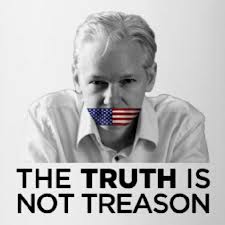
3. Pushback against the war being waged against whistleblowers, true human rights defenders. Demand the immediate release of Julian Assange. Recognize the contribution of Edward Snowden to the survival of true American values.

4. Pushback against Orwellian newspeak and “political correctness”. Refuse to retreat into self-censorship.

5. Pushback against the military-industrial-financial complex

In 2022 let us  commit to listen more to others, practice self-criticism and intellectual honesty, stop instrumentalizing values for short-term political gain.

Let us reject the weaponization of everything.

Notes.

[1] https://www.icj-cij.org/en/case/70/judgments

[2] https://www.transcend.org/tms/2021/11/the-trial-of-julian-assange-a-book-by-nils-melzer/

[3] https://undocs.org/A/HRC/39/47/Add.1

[4] https://cepr.net/report/economic-sanctions-as-collective-punishment-the-case-of-venezuela/

[5] https://www.claritypress.com/product/building-a-just-world-order/

Don’t Give Up on the Blessings of Freedom

By John W. Whitehead & Nisha Whitehead

Source: The Rutherford Institute

“All we are saying is give peace a chance.”—John Lennon

How do you give thanks for freedoms that are constantly being eroded?

How do you express gratitude for one’s safety when the perils posed by the American police state grow more treacherous by the day?

How do you come together as a nation in thanksgiving when the powers-that-be continue to polarize and divide us into warring factions?

Every year finds us struggling to reconcile our hope for a better, freer, more just world with the soul-sucking reality of a world in which greed, meanness and war continue to triumph.

Fifty years ago, John Lennon released “Imagine” and exhorted us to “Imagine all the people livin’ life in peace.” That same year, Lennon released “Happy Xmas (War Is Over)” as part of a major anti-war campaign. Lennon—a musical genius, anti-war activist, and a high-profile example of the lengths to which the Deep State will go to persecute those who dare to challenge its authority—made clear that the only way to achieve an end to hunger, violence, war, and tyranny is to want it badly enough and work towards it.

Fifty years later, we clearly don’t want those things badly enough.

Peace remains out of reach. Activists and whistleblowers continue to be prosecuted for challenging the government’s authority. Militarism is on the rise, all the while the governmental war machine continues to wreak havoc on innocent lives.

For those of us who joined with John Lennon to imagine a world of peace, it’s getting harder to reconcile that dream with the reality of the American police state. And those who do dare to speak up about government corruption (such as Julian Assange) are labeled dissidents, troublemakers, terrorists, lunatics, or mentally ill and tagged for surveillance, censorship or, worse, involuntary detention.

All the while, people still keep looking to the government to “fix” what’s wrong with this country. You’d think we’d have learned—after 20 years of heavy-handed government authoritarianism that started with the 9/11 attacks and has continued through to the present-day COVID-19 tyranny—that the only thing the government can be trusted to do is make things worse.

Now we find ourselves approaching that time of year when, as George Washington and Abraham Lincoln proclaimed, we’re supposed to give thanks as a nation and as individuals for our safety and our freedoms.

It’s not an easy undertaking.

Thinking good thoughts, being grateful, counting your blessings and adopting a glass-half-full mindset are fine and good, but that’s not enough. This world requires doers, men and women (and children) who will put those good thoughts into action.

Remember, evil prevails when good men and women do nothing.

Here’s what I suggest: this year, do yourselves a favor and turn off the talking heads, shut down the screen devices, tune out the politicians, take a deep breath, then do something to pay your blessings forward.

Refuse to remain silent. Take a stand. Speak up. Speak out. Recognize injustice. Don’t turn away from suffering.

Find something to be thankful for about the things and people in your community for which you might have the least tolerance or appreciation. Instead of just rattling off a list of things you’re thankful for that sound good, dig a little deeper and acknowledge the good in those you may have underappreciated or feared.

When it comes time to giving thanks for your good fortune, put your gratitude into action: pay your blessings forward with deeds that spread a little kindness, lighten someone’s burden, and brighten some dark corner.

Engage in acts of kindness. Smile more. Fight less. Build bridges. Refuse to let toxic politics define your relationships. Focus on the things that unite instead of that which divides.

Do your part to push back against the meanness of our culture with conscious compassion and humanity. Moods are contagious, the good and the bad. They can be passed from person to person. So can the actions associated with those moods, the good and the bad.

Be a hero, whether or not anyone ever notices.

Acts of benevolence, no matter how inconsequential they might seem, can spark a movement.

All it takes is one person to start a chain reaction.

For instance, a few years ago in Florida, a family of six—four adults and two young boys—were swept out to sea by a powerful rip current in Panama City Beach. There was no lifeguard on duty. The police were standing by, waiting for a rescue boat. And the few people who had tried to help ended up stranded, as well.

Those on shore grouped together and formed a human chain. What started with five volunteers grew to 15, then 80 people, some of whom couldn’t swim.

One by one, they linked hands and stretched as far as their chain would go. The strongest of the volunteers swam out beyond the chain and began passing the stranded victims of the rip current down the chain.

One by one, they rescued those in trouble and pulled each other in.

There’s a moral here for what needs to happen in this country if we only can band together and prevail against the riptides that threaten to overwhelm us.

As I make clear in my book Battlefield America: The War on the American People and in its fictional counterpart The Erik Blair Diaries, there may not be much we can do to avoid the dismal reality of the police state in the long term—not so long as the powers-that-be continue to call the shots and allow profit margins to take precedence over the needs of people—but in the short term, there are things we can all do right now to make this world (or at least our small corners of it) a little bit kinder, a lot less hostile and more just.

It’s never too late to start making things right in the world.

John Lennon tried to imagine a world in which we all lived in peace. He was a beautiful dreamer whose life ended with an assassin’s bullet on December 8, 1980.

Still, that doesn’t mean the dream has to die, too.

There’s something to be said for working to make that dream a reality. As Lennon reminded his listeners, “War is over, if you want it.”

The choice is ours, if we want it.

Killing Democracy in America

By William J. Astore

Source: Strategic Culture Foundation

The phrase “thinking about the unthinkable” has always been associated with the unthinkable cataclysm of a nuclear war, and rightly so. Lately, though, I’ve been pondering another kind of unthinkable scenario, nearly as nightmarish (at least for a democracy) as a thermonuclear Armageddon, but one that’s been rolling out in far slower motion: that America’s war on terror never ends because it’s far more convenient for America’s leaders to keep it going — until, that is, it tears apart anything we ever imagined as democracy.

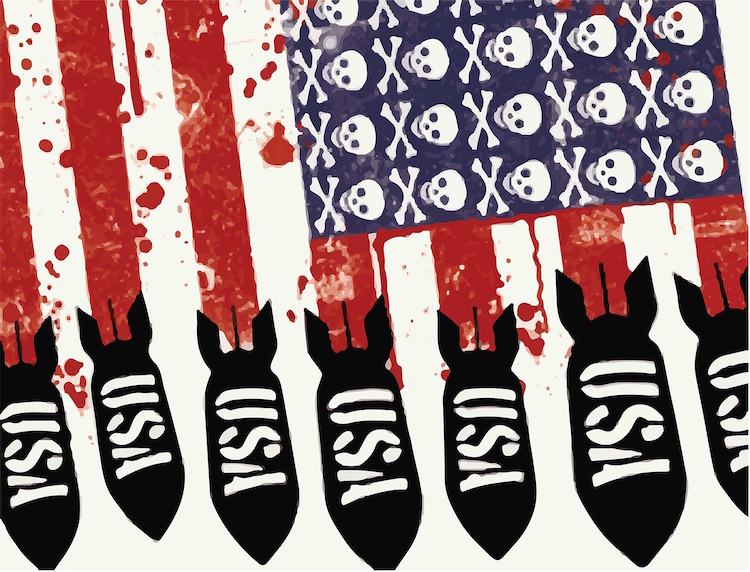
I fear that it either can’t or won’t end because, as Martin Luther King, Jr., pointed out in 1967 during the Vietnam War, the United States remains the world’s greatest purveyor of violence — and nothing in this century, the one he didn’t live to see, has faintly proved him wrong. Considered another way, Washington should be classified as the planet’s most committed arsonist, regularly setting or fanning the flames of fires globally from Libya to Iraq, Somalia to Afghanistan, Syria to — dare I say it — in some quite imaginable future Iran, even as our leaders invariably boast of having the world’s greatest firefighters (also known as the U.S. military).

Scenarios of perpetual war haunt my thoughts. For a healthy democracy, there should be few things more unthinkable than never-ending conflict, that steady drip-drip of death and destruction that drives militarism, reinforces authoritarianism, and facilitates disaster capitalism. In 1795, James Madison warned Americans that war of that sort would presage the slow death of freedom and representative government. His prediction seems all too relevant in a world in which, year after year, this country continues to engage in needless wars that have nothing to do with national defense.

You Wage War Long, You Wage It Wrong

To cite one example of needless war from the last century, consider America’s horrendous years of fighting in Vietnam and a critical lesson drawn firsthand from that conflict by reporter Jonathan Schell. “In Vietnam,” he noted, “I learned about the capacity of the human mind to build a model of experience that screens out even very dramatic and obvious realities.” As a young journalist covering the war, Schell saw that the U.S. was losing, even as its military was destroying startlingly large areas of South Vietnam in the name of saving it from communism. Yet America’s leaders, the “best and brightest” of the era, almost to a man refused to see that all of what passed for realism in their world, when it came to that war, was nothing short of a first-class lie.

Why? Because believing is seeing and they desperately wanted to believe that they were the good guys, as well as the most powerful guys on the planet. America was winning, it practically went without saying, because it had to be. They were infected by their own version of an all-American victory culture, blinded by a sense of this country’s obvious destiny: to be the most exceptional and exceptionally triumphant nation on this planet.

As it happened, it was far more difficult for grunts on the ground to deny the reality of what was happening — that they were fighting and dying in a senseless war. As a result, especially after the shock of the enemy’s Tet Offensive early in 1968, escalating protests within the military (and among veterans at home) together with massive antiwar demonstrations finally helped put the brakes on that war. Not before, however, more than 58,000 American troops died, along with millions of Vietnamese, Cambodians, and Laotians.

In the end, the war in Indochina was arguably too costly, messy, and futile to continue. But never underestimate the military-industrial complex, especially when it comes to editing or denying reality, while being eternally over-funded for that very reality. It’s a trait the complex has shared with politicians of both parties. Don’t forget, for instance, the way President Ronald Reagan reedited that disastrous conflict into a “noble cause” in the 1980s. And give him credit! That was no small thing to sell to an American public that had already lived through such a war. By the way, tell me something about that Reaganesque moment doesn’t sound vaguely familiar almost four decades later when our very own “wartime president” long ago declared victory in the “war” on Covid-19, even as the death toll from that virus approaches 150,000 in the homeland.

In the meantime, the military-industrial complex has mastered the long con of the no-win forever war in a genuinely impressive fashion. Consider the war in Afghanistan. In 2021 it will enter its third decade without an end in sight. Even when President Trump makes noises about withdrawing troops from that country, Congress approves an amendment to another massive, record-setting military budget with broad bipartisan support that effectively obstructs any efforts to do so (while the Pentagon continues to bargain Trump down on the subject).

The Vietnam War, which was destroying the U.S. military, finally ended in an ignominious withdrawal. Almost two decades later, after the 2001 invasion, the war in Afghanistan can now be — the dream of the Vietnam era — fought in a “limited” fashion, at least from the point of view of Congress, the Pentagon, and most Americans (who ignore it), even if not the Afghans. The number of American troops being killed is, at this point, acceptably low, almost imperceptible in fact (even if not to Americans who have lost loved ones over there).

More and more, the U.S. military is relying on air power, unmanned drones, mercenaries, local militias, paramilitaries, and private contractors. Minimizing American casualties is an effective way of minimizing negative media coverage here; so, too, are efforts by the Trump administration to classify nearly everything related to that war while denying or downplaying “collateral damage” — that is, dead civilians — from it.

Their efforts boil down to a harsh truth: America just plain lies about its forever wars, so that it can keep on killing in lands far from home.

When we as Americans refuse to take in the destruction we cause, we come to passively accept the belief system of the ruling class that what’s still bizarrely called “defense” is a “must have” and that we collectively must spend significantly more than a trillion dollars a year on the Pentagon, the Department of Homeland Security, and a sprawling network of intelligence agencies, all justified as necessary defenders of America’s freedom. Rarely does the public put much thought into the dangers inherent in a sprawling “defense” network that increasingly invades and dominates our lives.

Meanwhile, it’s clear that low-cost wars, at least in terms of U.S. troops killed and wounded in action, can essentially be prolonged indefinitely, even when they never result in anything faintly like victory or fulfill any faintly useful American goal. The Afghan War remains the case in point. “Progress” is a concept that only ever fits the enemy — the Taliban continues to gain ground — yet, in these years, figures like retired general and former CIA director David Petraeus have continued to call for a “generational” commitment of troops and resources there, akin to U.S. support for South Korea.

Who says the Pentagon leadership learned nothing from Vietnam? They learned how to wage open-ended wars basically forever, which has proved useful indeed when it comes to justifying and sustaining epic military budgets and the political authority that goes with them. But here’s the thing: in a democracy, if you wage war long, you wage it wrong. Athens and the historian Thucydides learned this the hard way in the struggle against Sparta more than two millennia ago. Why do we insist on forgetting such an obvious lesson?

“We Have Met the Enemy and He Is Us”

World War II was arguably the last war Americans truly had to fight. My Uncle Freddie was in the Army and stationed at Pearl Harbor when it was attacked on December 7, 1941. The country then came together and won a global conflict (with lots of help) in 44 months, emerging as the planetary superpower to boot. Now, that superpower is very much on the wane, as Donald Trump recognized in running successfully as a declinist candidate for president in 2016. (Make America Great Again!) And yet, though he ran against this country’s forever wars and is now president, we’re approaching the third decade of a war on terror that has yielded little, spread radical Islamic terror outfits across an expanse of the planet, and still seemingly has no end.

“Great nations do not fight endless wars,” Trump himself claimed only last year. Yet that’s exactly what this country has been doing, regardless of which party ruled the roost in Washington. And here’s where, to give him credit, Trump actually had a certain insight. America is no longer great precisely because of the endless wars we wage and all the largely hidden but associated costs that go with them, including the recently much publicized militarization of the police here at home. Yet, in promising to make America great again, President Trump has failed to end those wars, even as he’s fed the military-industrial complex with even greater piles of cash.

There’s a twisted logic to all this. As the leading purveyor of violence and terror, with its leaders committed to fighting Islamic terrorism across the planet until the phenomenon is vanquished, the U.S. inevitably becomes its own opponent, conducting a perpetual war on itself. Of course, in the process, Afghans, Iraqis, Libyans, Syrians, Somalis, and Yemenis, among other peoples on this embattled planet of ours, pay big time, but Americans pay, too. (Have you even noticed that high-speed railroad that’s unbuilt, that dam in increasing disrepair, those bridges that need fixing, while money continues to pour into the national security state?) As the cartoon possum Pogo once so classically said, “We have met the enemy and he is us.”

Early in the Iraq War, General Petraeus asked a question that was relevant indeed: “Tell me how this [war] ends.” The answer, obvious to so many who had protested in the global streets over the invasion to come in 2003, was “not well.” Today, another answer should be obvious: never, if the Pentagon and America’s political and national security elite have anything to do with it. In thermodynamics class, I learned that a perpetual motion machine is impossible to create due to entropy. The Pentagon never took that in and has instead been hard at work proving that a perpetual military machine is possible… until, that is, the empire it feeds off of collapses and takes us with it.

America’s Military Complex as a Cytokine Storm

In the era of Covid-19, as cases and deaths from the pandemic continue to soar in America, it’s astonishing that military spending is also soaring to record levels despite a medical emergency and a major recession.

The reality is that, in the summer of 2020, America faces two deadly viruses. The first is Covid-19. With hard work and some luck, scientists may be able to mass-produce an effective vaccine for it, perhaps by as early as next spring. In the meantime, scientists do have a sense of how to control it, contain it, even neutralize it, as countries from South Korea and New Zealand to Denmark have shown, even if some Americans, encouraged by our president, insist on throwing all caution to the winds in the name of living free. The second virus, however, could prove even more difficult to control, contain, and neutralize: forever war, a pandemic that U.S. military forces, with their global strike missions, continue to spread across the globe.

Sadly, it’s a reasonable bet that in the long run, even with Donald Trump as president, America has a better chance of defeating Covid-19 than the virus of forever war. At least, the first is generally seen as a serious threat (even if not by a president blind to anything but his chances for reelection); the second is, however, still largely seen as evidence of our strength and exceptionalism. Indeed, Americans tend to imagine “our” military not as a dangerous virus but as a set of benevolent antibodies, defending us from global evildoers.

When it comes to America’s many wars, perhaps there’s something to be learned from the way certain people’s immune systems respond to Covid-19. In some cases, the virus sparks an exaggerated immune response that drives the body into a severe inflammatory state known as a cytokine storm. That “storm” can lead to multiple organ failure followed by death, yet it occurs in the cause of defending the body from a viral attack.

In a similar fashion, America’s exaggerated response to 19 hijackers on 9/11 and then to perceived threats around the globe, especially the nebulous threat of terror, has led to an analogous (if little noticed) cytokine storm in the American system. Military (and militarized police) antibodies have been sapping our resources, inflaming our body politic, and slowly strangling the vital organs of democracy. Left unchecked, this “storm” of inflammatory militarism will be the death of democracy in America.

To put this country right, what’s needed is not only an effective vaccine for Covid-19 but a way to control the “antibodies” produced by America’s forever wars abroad and, as the years have gone by, at home — and the ways they’ve attacked and inflamed the collective U.S. political, social, and economic body. Only when we find ways to vaccinate ourselves against the destructive violence of those wars, whether on foreign streets or our own, can we begin to heal as a democratic society.

To survive, the human body needs a healthy immune system, so when it goes haywire, becomes wildly inflamed, and ends up attacking and degrading our vital organs, we’re in trouble deep. It’s a reasonable guess that, in analogous terms, American democracy is already on a ventilator and beginning to feel the effects of multiple organ failure.

Unlike a human patient, doctors can’t put our democracy into a medically induced coma. But collectively we should be working to suppress our overactive immune system before it kills us. In other words, it’s truly time to defund that military machine of ours, as well as the militarized version of the police, and rethink how actual threats can be neutralized without turning every response into an endless war.

So many years later, it’s time to think the unthinkable. For the U.S. government that means — gasp! — peace. Such a peace would start with imperial retrenchment (bring our troops home!), much reduced military (and police) budgets, and complete withdrawal from Afghanistan and any other place associated with that “generational” war on terror. The alternative is a cytokine storm that will, in the end, tear us apart from within.


Charlie Chaplin and Truly Modern Times

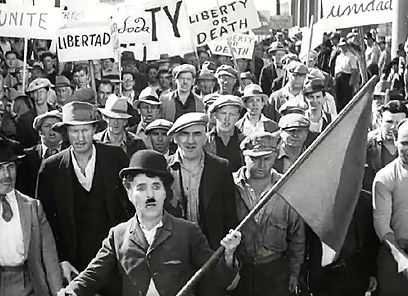
Still of Charlie Chaplin [b. April 16, 1889] from “Modern Times”

By Daniel Warner

Source: CounterPunch

Acrobat, musician, composer, clown, mime, movie star, director and producer, Academy Award winner for lifetime achievement, but still driven from the United States for his backing of the Soviet Union, Charlie Chaplin should need little introduction, except perhaps for Millennials and other late alphabet generations. He was the global star in the crossover from silent films to talkies, making an astonishing $10,000 a week during the Depression, with $150,000 in signing bonuses. Knighted by the Queen, Charlot was universally loved and admired.

But is he relevant today beyond his reputation as a comic icon?

During a recent visit to the magnificent Manoir de Ban near Lausanne, Switzerland, which was his home from 1952 until his death in 1977 and now houses a museum in his honor, I was impressed how his films were political, and how they speak to today’s human rights agenda.

In 1954 Chaplin was awarded the International Peace Prize by the World Peace Council for his outstanding contribution to the cause of peace and friendship among nations. Who can forget his mocking of Hitler in The Dictator when he spins a globe and dances with the world at his fingertips?)

Two examples from his classics show how his films relate to human rights:

The 1921 production The Kid is the story of an unwed, down-and-out mother who abandons her child because she cannot afford to look after him. She places him in an expensive car with a note to the owner to take care of him. After some intrigue, a tramp, Charlie Chaplin, finds the boy and raises and loves him like his own, cementing the idea of the kindness of the fellow impoverished. The tramp and the kid work together against the moneyed class; the kid breaking windows and the tramp repairing them.

The kid is eventually taken away from the tramp by the authorities – border police separating children from their loved ones on the U.S. southern border? – to be returned to his mother. In the end, the kid, the tramp and the mother are re-united.

The Kid was chosen to be preserved in the Library of Congress’s National Film Registry in 2011. It was praised as “an artful melding of touching drama, social commentary and inventive comedy.” The social commentary is what today we would call human rights: the right to a decent life for the mother when she is poor; the right for the mother to have minimum support to raise her boy and not to have to abandon him; the right of the tramp to have a decent wage for his job so he would be able to live properly without having to use illegal means to earn a living; the right to have proper housing for the tramp and the kid; the right to have affordable medical care; the right for the boy to stay with the tramp instead of being sent to an orphanage.

All of these we would call basic social, economic and cultural rights. They are at the heart of Chaplin’s advocacy; they are what make the film so endearing and why we are so relieved when the tramp, kid and mother unite at the end to live happily together. According to Chaplin, and The Kid, there is justice in this world. The good guys overcome injustices and the cruel indifference of the rich with their expensive cars (a foreboding of the 1%?). Although the mother became a rich actress, she takes in the tramp to form a supportive family for the kid, re-uniting him with her son (without the son’s losing the support of the foster father who had raised him, a win-win situation that no family judge could have better decided).

And how does Modern Times, Chaplin’s critique of industrialization, relate to human rights and our modern times of numeric technology? The tramp in Modern Times is a factory worker slaving away on mechanical assembly line. Is this different from today’s information workers tied to their computer screens, forced to work at accelerated speeds as the information flow gets faster and faster, like the quickening assembly line? The hero suffers a nervous breakdown after which he is unemployed, again suffering from having no unemployment insurance or other benefits to carry him over. He is mistakenly arrested with no legal recourse but wishes to stay in jail since he has had no vocational training and is living better in jail than in the street.

The remainder of the film deals with his romance with a fellow hobo who is fleeing punishment because she stole a single loaf of bread (proportional justice?). The film recounts the couple’s various adventures to escape poverty and the desperation of those with no guaranteed income, no right to food or right to housing. Whenever authorities are presented, they are unsympathetic. The poor have no recourse to representation and are left to their own devices to survive. The police – the authorities – are constantly trying to arrest the downtrodden who must seek refuge outside the authoritative system. There is no hope for them within the system; they are left to their own devices in a world with no guaranteed rights.

There is little justice in Modern Times in terms of a happy ending where the heroes overcome injustices. At the end, there is only the love between Chaplin and Ellen. But in the film, as in The Kid, struggles of the underclass represent all the injustices that the 99% of the world today must endure. While economic inequality continues to grow, Chaplin’s films have an important lesson of the struggles of the disenfranchised if one can view the horrors of industrialization and the Depression in our modern context. When 26 individuals are worth as much as 50% of the world’s population, Chaplin’s comic/tragic hero is a pertinent reminder of what it means to live in poverty.

The Manoir de Ban is a beautiful domaine with a lovely park and spectacular view of Lake Geneva. Chaplin died a very rich man. His vision of and advocacy for the poor should remain his greatest legacy. A visit to his museum is a reminder of the schism between the haves and have nots and how a talented, rich genius was able to give such a profound representation of all those who couldn’t afford to live in Vevey and to have the human rights he and many of us enjoy.


Ending Violence, Exploitation, Ecological Destruction and War: Creating a Culture of Peace

By Robert J. Burrowes

The date 11 November is well known and commemorated in many parts of the world because it marks the Armistice ending World War I – ‘the Great War’ – in 1918.

In the evocative words used by Kurt Vonnegut Jr., an atheist humanist, in his novel Breakfast of Champions, the day is remembered thus:

‘When I was a boy … all the people of all the nations which fought in the First World War were silent during the eleventh minute of the eleventh hour of Armistice Day, which was the eleventh day of the eleventh month. It was at that minute in nineteen-hundred and eighteen, that millions upon millions of human beings stopped butchering one another. I have talked to old men who were on battlefields at that minute. They have told me in one way or another that the sudden silence was the Voice of God. So we still have among us some men who can remember when God spoke clearly to mankind.’

And what, exactly, did God (by whatever name: Allah, Krishna, Yahweh…) or the Gods say? we might ask. Well even those who profess little more than scant knowledge of religious texts that purport to represent the word of God might suggest that s/he simply breathed a (silent) sigh of relief that the insanity of mass warfare had ended. For now at least.

For those of us concerned with the struggle to create cultures of peace or, even, a world culture of peace, there are some fundamental questions to consider including the classic question discussed by two of humanity’s greats – Albert Einstein and Sigmund Freud – when they tackled the question Why War?’

Of course, as many people now understand it, peace entails far more than simply a state without military (including terrorist) violence and war. Beyond these forms of violence, many exponents of peace seek the end of other dimensions of what I call ‘visible’ violence, including:

  1. Direct violence that goes beyond military violence, such as ‘biological violence’ (that is, violence against the body) in the family home and as a result of violent crime as well as ‘physical violence’ (that is, constraints on movement). See ‘Violence, Peace, and Peace Research’.
  2. Institutional violence: socially endorsed violence including that inflicted by parents, teachers, police, legal and prison systems – see ‘Punishment is Violent and Counterproductive’ and ‘The Rule of Law: Unjust and Violent’ – and which now manifests in a myriad other forms with the emergence of the surveillance state that spies on and gathers endless data on individuals to build substantial personal profiles on each – linking many personal records including those related to health and financial matters with political activities and consumption patterns – in violation of any basic understanding of, or commitment to, human rights in their many political, economic, social, cultural and other forms.
  3. Structural violence which Mohandas K. Gandhi originally identified when making his observation that ‘exploitation is violence’ and Professor Johan Galtung – see ‘A Structural Theory of Imperialism’ and ‘Violence, Peace, and Peace Research’ – later elaborated as violence built into structures, such as capitalism and imperialism, that deprive some people of the opportunities to live full and meaningful lives and manifest, for example, as poverty, homelessness and the economic exploitation of people who live in Africa, Asia and Central/South America. And
  4. Ecological violence: those activities ranging from destruction of the climate and rainforests to the killing of insects and wildlife that constitute destruction of the biosphere.

Of course, these categories are not mutually exclusive but they serve to illustrate categories of violence not always recognized as such.

Apart from these forms of ‘visible’ violence Professor Johan Galtung also identified the importance of psychological violence – ‘lies, brainwashing, indoctrination of various kinds, threats, etc. that serve to decrease mental potentialities’ see ‘Violence, Peace, and Peace Research’ – and coined the term ‘cultural violence’ to describe ‘those aspects of culture, the symbolic sphere of our existence – exemplified by religion and ideology, language and art, empirical science and formal science (logic, mathematics) – that can be used to justify or legitimize direct or structural violence’. See ‘Cultural Violence’.

Beyond these and other categories of violence – including patriarchy and racism as specific manifestations of violence that are, arguably, simultaneously direct, structural and cultural – which stand between humanity and a culture of peace, there are two other categories of violence which I will argue it is necessary to end before we can make profound inroads in ending those mentioned above.

These two categories – which I have labeled ‘invisible’ violence and ‘utterly invisible’ violence – describe vitally important categories of violence which human adults inflict on children. Moreover, complemented by the ‘visible’ violence that adults inflict on children, it is this ‘invisible’ and ‘utterly invisible’ violence which destroys the unique human individual who was created during a nine-month gestation period and turns them into a ‘socially constructed delusional identity’ who submissively fulfils the extraordinarily limited expectations of their particular adult world and, with only rare exceptions, willingly participates in many if not all of the other forms of violence that torment our world and certainly includes inflicting invisible and utterly invisible violence on their own children. Which is why the cycle of violence goes on.

Why is this?

Because society is preoccupied with producing submissively obedient students, workers, soldiers, citizens (that is, taxpayers and voters) and consumers. Hence, the last thing society wants is powerful individuals who are each capable of searching their conscience, feeling their emotional response to events, thinking critically and behaving strategically in response. For that reason our parenting and education models use a ruthless combination of visible, ‘invisible’ and ‘utterly invisible’ violence to ensure that our children become terrified, self-hating and powerless individuals like virtually all of the adults around them.

How does this happen? What is this ‘invisible’ and ‘utterly invisible’ violence?

Perpetrators of violence learn their craft in childhood. If you inflict violence on a child, they learn to inflict violence on others. The political leaders who decide to wage war, the military leaders who plan and conduct it, as well as the soldiers, sailors and aircraft personnel who fight war each suffered violence as a child. The terrorist suffered violence as a child. The man who inflicts violence on his partner suffered violence as a child. The corporate executive who exploits working class people and/or those who live in Africa, Asia or Central/South America suffered violence as a child. The racist or religious bigot suffered violence as a child. The individual who perpetrates violence in the home, in the schoolyard or on the street suffered violence as a child. The individual who overconsumes, or even consumes certain products, and/or otherwise destroys the biosphere, suffered violence as a child.

If we want to end violence in all of its manifestations and create a culture of peace, locally and globally, then we must finally end our longest and greatest war: the adult war on children. And here is an additional incentive: if we do not tackle the fundamental cause of violence, then our combined and unrelenting efforts to tackle all of its other symptoms must ultimately fail. And extinction at our own hand is inevitable.

How can I claim that violence against children is the fundamental cause of all other violence? Consider this. There is universal acceptance that behaviour is shaped by childhood experience. If it was not, we would not put such effort into education and other efforts to socialize children to ‘fit into’ their society. And this is why many psychologists have argued that exposure to war toys and violent video games shapes attitudes and behaviours in relation to violence.

But it is far more complex than this and, strange though it may seem, it is not just the ‘visible’ violence (such as hitting, screaming at and sexually abusing) that we normally label ‘violence’ that causes the main damage, although this is extremely damaging. The largest component of damage arises from the ‘invisible’ and ‘utterly invisible’ violence that we adults unconsciously inflict on children during the ordinary course of the day. Tragically, the bulk of this violence occurs in the family home and at school. See ‘Why Violence?’ and ‘Fearless Psychology and Fearful Psychology: Principles and Practice’.

So what is ‘invisible’ violence? It is the ‘little things’ we do every day, partly because we are just ‘too busy’. For example, when we do not allow time to listen to, and value, a child’s thoughts and feelings, the child learns to not listen to themSelf thus destroying their internal communication system. When we do not let a child say what they want (or ignore them when they do), the child develops communication and behavioral dysfunctionalities as they keep trying to meet their own needs (which, as a basic survival strategy, they are genetically programmed to do).

When we blame, condemn, insult, mock, embarrass, shame, humiliate, taunt, goad, guilt-trip, deceive, lie to, bribe, blackmail, moralize with and/or judge a child, we both undermine their sense of Self-worth and teach them to blame, condemn, insult, mock, embarrass, shame, humiliate, taunt, goad, guilt-trip, deceive, lie, bribe, blackmail, moralize and/or judge.

The fundamental outcome of being bombarded throughout their childhood by this ‘invisible’ violence is that the child is utterly overwhelmed by feelings of fear, pain, anger and sadness (among many others). However, mothers, fathers, teachers, religious figures and other adults also actively interfere with the expression of these feelings and the behavioral responses that are naturally generated by them and it is this ‘utterly invisible’ violence that explains why the dysfunctional behavioral outcomes actually occur.

For example, by ignoring a child when they express their feelings, by comforting, reassuring or distracting a child when they express their feelings, by laughing at or ridiculing their feelings, by terrorizing a child into not expressing their feelings (for example, by screaming at them when they cry or get angry), and/or by violently controlling a behavior that is generated by their feelings (for example, by hitting them, restraining them or locking them into a room), the child has no choice but to unconsciously suppress their awareness of these feelings.

However, once a child has been terrorized into suppressing their awareness of their feelings (rather than being allowed to have their feelings and to act on them) the child has also unconsciously suppressed their awareness of the reality that caused these feelings. This has many outcomes that are disastrous for the individual, for society and for nature because the individual will now easily suppress their awareness of the feelings that would tell them how to act most functionally in any given circumstance and they will progressively acquire a phenomenal variety of dysfunctional behaviors, including some that are violent towards themself, others and/or the Earth.

From the above, it should also now be apparent that punishment should never be used. ‘Punishment’, of course, is one of the words we use to obscure our awareness of the fact that we are using violence. Violence, even when we label it ‘punishment’, scares children and adults alike and cannot elicit a functional behavioural response. See ‘Punishment is Violent and Counterproductive’.

If someone behaves dysfunctionally, they need to be listened to, deeply, so that they can start to become consciously aware of the feelings (which will always include fear and, often, terror) that drove the dysfunctional behaviour in the first place. They then need to feel and express these feelings (including any anger) in a safe way. Only then will behavioural change in the direction of functionality be possible. See ‘Nisteling: The Art of Deep Listening’.

‘But these adult behaviors you have described don’t seem that bad. Can the outcome be as disastrous as you claim?’ you might ask. The problem is that there are hundreds of these ‘ordinary’, everyday behaviors that destroy the Selfhood of the child. It is ‘death by a thousand cuts’ and most children simply do not survive as Self-aware individuals. And why do we do this? As mentioned above, we do it so that each child will fit into our model of ‘the perfect citizen’: that is, obedient and hardworking student, reliable and pliant employee/soldier, and submissive law-abiding citizen (that is, one who pays their taxes and votes and/or lobbies politicians).

Moreover, once we destroy the Selfhood of a child, it has many flow-on effects. For example, once you terrorize a child into accepting certain information about themself, other people or the state of the world, the child becomes unconsciously fearful of dealing with new information, especially if this information is contradictory to what they have been terrorized into believing. As a result, the child will unconsciously dismiss new information out of hand.

In short, the child has been terrorized in such a way that they are no longer capable of learning (or their learning capacity is seriously diminished by excluding any information that is not a simple extension of what they already ‘know’). If you imagine any of the bigots you know, you are imagining someone who is utterly terrified. But it’s not just the bigots; virtually all people are affected in this manner making them incapable of responding adequately to new (or even important) information. This is one explanation why some people are ‘climate deniers’, most people do nothing in response to the climate catastrophe and even those people who do take action usually do so ineffectively. See ‘The Global Climate Movement is Failing: Why?’

But the same can be said for those working to end war – see ‘The War to End War 100 Years On: An Evaluation and Reorientation of our Resistance to War’ – end the nuclear weapons race or engage in other struggles, including liberation struggles, that are vital parts of the global struggle to create a culture of peace. See ‘Why Activists Fail’.

To briefly reiterate this vital point (that each child has been terrorized in such a way that they are no longer capable of learning or their learning capacity is seriously diminished): The multifaceted violence inflicted throughout childhood and adolescence ensures that the adult who emerges is suppressing awareness of an enormous amount of fear, pain, sadness and anger (among many other feelings) and must live in delusion to remain unaware of these suppressed feelings. This ensures that, as part of their delusion, the individual develops a strong sense that what they are doing already is functional and working (no matter how dysfunctional and ineffective it may actually be) while unconsciously suppressing awareness of any evidence that contradicts their delusion. They do this because, unconsciously, people learn to identify obedience with ‘functional and working’ (because they do not get punished for being obedient). See Why Violence?, Fearless Psychology and Fearful Psychology: Principles and Practice, ‘Do We Want School or Education?’ and ‘Love Denied: The Psychology of Materialism, Violence and War’.

As an aside, if you want to read more evidence of humanity’s ‘love’ for our children and get a clearer sense of just how deeply violence is buried in human society, see ‘Humanity’s “Dirty Little Secret”: Starving, Enslaving, Raping, Torturing and Killing our Children’.

Just one horrific outcome of this violence against children is that our planet is run by a global elite that is completely insane. See ‘The Global Elite is Insane Revisited’. And this elite plays a key role in driving many of the more obvious manifestations of violence in our world.

Responding to Violence Strategically to Create a World Culture of Peace

However we define the many positive elements of a culture of peace – which will presumably include an inclusive philosophy of society, a cooperative set of social relations, nonviolent methods for dealing with conflict and sustainable patterns of matter-energy use while allowing universal human access to the resources necessary to maintain health and well-being, opportunities for meaningful political and economic engagement as well as cultural opportunities in art, literature and music among its many other forms, while engaging sustainably with the biosphere to enhance life-opportunities for all other species – this culture of peace can only be achieved if we respond strategically to the violence in our world.

And this means that we must address the fundamental cause of human violence because this drives violence in each and all of its other dimensions. For those adults powerful enough to do this, there is an explanation in ‘Putting Feelings First’. And for those adults committed to facilitating children’s efforts to realize their potential and become self-aware (rather than delusional), see ‘My Promise to Children’.

Creating a culture of peace, therefore, relies fundamentally on understanding the critical role of suppressed feelings (emotions) in shaping deep culture and generating conflicts, including violent conflicts, and then taking action that addresses this cause.

This includes the need to understand and deal effectively with those emotions that are being acted out dysfunctionally and/or being projected – see ‘The Psychology of Projection in Conflict’ – in a particular context, which is standard human behaviour in many situations. See ‘Nisteling: The Art of Deep Listening’. Otherwise, that most fundamental of emotions – fear – will continue to drive most cultural predispositions and conflicts in all contexts and make genuine resolution of conflicts virtually impossible. This is because it is only if people are not afraid that discussions about ideas in relation to making culture evolve as we plan (rather than unconsciously or as elites direct) and to resolve conflict nonviolently, become easily possible.

Fundamentally, our parenting and education models fail utterly to produce people of conscience, people who are emotionally functional, people who are capable of critical analysis, people who care and people who can plan and respond to violence strategically. As Professor Galtung noted just recently, ‘While we are busy exploring whether there is intelligent life on other planets, we might spend more time – and intelligence – exploring whether there is [intelligent life] on ours.’ See ‘United States vs Moby Dick’. The problem is that once we terrorize a child, the terrified adult who emerges from childhood behaves as guided by their (unconscious) fear, not by any intelligence they may possess. Again, this is routinely illustrated by the failure of even those who self-label as ‘activists’ to think, plan and act strategically. See ‘Why Activists Fail’.

Of course, we do not need to work on ending violence against children in isolation. We can campaign to end other manifestations of violence – such as war, nuclear weapons and power, economic exploitation, ecological violence in its many forms including geoengineering and the deployment of 5G, violence against women and indigenous peoples, occupations and dictatorships – at the same time. See Nonviolent Campaign Strategy and Nonviolent Defense/Liberation Strategy.

But if we work to end the many manifestations of violence while failing to address the fundamental cause then, ultimately, we must fail, even if we elongate our timeframe a little. See ‘Human Extinction by 2026? A Last Ditch Strategy to Fight for Human Survival’.

If you are also interested in working locally to reduce your consumption and become more self-reliant, in order to reduce your ecological violence, consider participating in The Flame Tree Project to Save Life on Earth.

Alternatively, if you want something simpler, consider committing to:

The Earth Pledge

Out of love for the Earth and all of its creatures, and my respect for their needs, from this day onwards I pledge that:

  1. I will listen deeply to children (see explanation above)
  2. I will not travel by plane
  3. I will not travel by car
  4. I will not eat meat and fish
  5. I will only eat organically/biodynamically grown food
  6. I will minimize the amount of fresh water I use, including by minimizing my ownership and use of electronic devices
  7. I will not buy rainforest timber
  8. I will not buy or use single-use plastic, such as bags, bottles, containers, cups and straws
  9. I will not use banks, superannuation (pension) funds or insurance companies that provide any service to corporations involved in fossil fuels, nuclear power and/or weapons
  10. I will not accept employment from, or invest in, any organization that supports or participates in the exploitation of fellow human beings or profits from killing and/or destruction of the biosphere
  11. I will not get news from the corporate media (mainstream newspapers, television, radio, Google, Facebook, Twitter…)
  12. I will make the effort to learn a skill, such as food gardening or sewing, that makes me more self-reliant
  13. I will gently encourage my family and friends to consider signing this pledge.

And you might wish to join the worldwide movement of people working to end all violence by signing the online pledge of The Peoples Charter to Create a Nonviolent World.

Conclusion

The foundation of our violent world is the unending visible, invisible and utterly invisible violence that human adults inflict on our children. For that reason, it does not matter what superstructure we build on top of this foundation. Whether we use capitalism (and ‘democracy’), socialism or any other political-economic-social model, tack on a New Green Deal or a Just Transition, while the violent foundation on which society is built – violence against children – remains unaddressed, a culture of peace cannot be created.

So we need to raise children in a culture that does not involve terrorizing them so that they end up perceiving violence as the primary way to address conflict because they are too scared to simply perceive the power of, and use, principled nonviolent options.

Hence, until our parenting and teaching models are radically altered, a culture of peace will remain an impossible dream. And human extinction in the near term is inevitable.


Biodata: Robert J. Burrowes has a lifetime commitment to understanding and ending human violence. He has done extensive research since 1966 in an effort to understand why human beings are violent and has been a nonviolent activist since 1981. He is the author of Why Violence? His email address is flametree@riseup.net and his website is here.

 

The Struggle for Peace in Afghanistan: Is Community Engagement the Key?

By Robert J. Burrowes

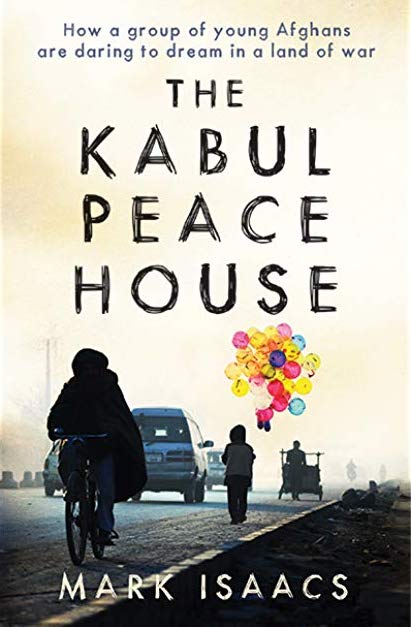
I have just read a superb book by Mark Isaacs, an Australian who has documented several years of effort by a group of incredibly committed young people in Afghanistan to build peace in that war-torn country the only way it can be built: by learning, living and sharing peace.

The book, titled The Kabul Peace House: How a Group of Young Afghans are Daring to Dream in a Land of War, records in considerable detail the struggle, both internal and external, to generate a peaceful future in Afghanistan. Some might consider this vision naive, others courageous, but few would doubt the simple reality: it is slow, daunting, incredibly difficult, often saddening, frightening, infuriating or painful, sometimes uplifting or hilarious and, just occasionally, utterly rewarding.

This is a human story written by a person who knows how to listen and to observe. And because the subject is about a group of ordinary Afghans and their mentor doing their best in the struggle to end one of the longest wars in human history, it is a story that is well worth reading.

This story is embedded in a combination of (brief) historical background on Afghanistan’s longstanding and central role in imperial geopolitics (including during ‘The Great Game’ of the 19th century) and more recent history on the progressive modernity of Afghanistan prior to the Soviet invasion in 1979 which was followed by an ongoing and multifaceted war in which the United States has played the most damaging role since its invasion of the country in 2001. But the background also includes a description of the ethnic diversity throughout the country, the role of religion and gender relations (and the challenges these social parameters present), as well as commentary on the social, economic and political regression as a result of the war’s many adverse impacts. So the book weaves a lot of strands into a compelling story of nonviolent resistance and regeneration against almost overwhelming odds.

However, that is not all. Given that all of the Afghans in this visionary community have each been traumatized by their unique experience of war, the book doesn’t shy away from describing the challenges this presents both to them personally and to the community, including its mentor and even some of the community’s many international visitors.

Most of the community members – whether Pashtun, Hazara, Uzbek, Turkmen, Tajik, Sayyid, Pashai… – have suffered serious loss during the war, especially those members who have had family and other relatives killed, or worse. Worse? you might ask. What is worse than death? Well, after reading this book, you will better understand that the context and the manner of death mean a great deal psychologically. None of the victims of this war died peacefully in their sleep after long and meaningful lives and this is just one part of the psychological trauma suffered by so many in this particular community but also in wider Afghan society.

So what does this community in Kabul do? Well, throughout its evolution and many manifestations, the community has done many things including run a variety of projects intended to foster understanding, cooperation and learning: nurture mutual respect among the diversity of people that constitute its membership, teach some of its members to read and write and facilitate learning opportunities in other contexts, teach the meaning and practice of nonviolence, give street kids the chance to learn skills that will make them employable, make duvets to give to people who go cold in Afghanistan’s freezing winters, teach and practice permaculture, organize protests against the war (including by flying kites instead of drones), and generally working to create a world that is green, equal and nonviolent.

If you think this sounds all good and straightforward, given slowly spreading acceptance of such ideas elsewhere (in some circles at least), then you might have underestimated their radical nature in a society in which ideas about nonviolence, equality and sustainability have, for the most part, not been previously encountered and have certainly not taken root. Isaacs records the observations of the group’s mentor on these subjects: ‘Over the years I have seen how the volunteers have changed within their personal lives, even if it means distancing themselves from the traditions of their own family…. But on a public level it’s much slower.’

This is understandable. As Isaacs notes, even in ordinary conversation and group discussions, ‘the weight of resistance, the taboos and the self-censorship’ made an impact on him. In a culture in which, in 2015, a woman in her twenties was stoned, her body run over by a car and then dumped in a river and set on fire because a mullah falsely accused her of burning the Quran, there is a long way to go.

One of the things that I found most compelling about the book is the occasional ‘biography’ of one of the community’s main characters. Given pseudonyms to avoid possible adverse repercussions, these stories provide real insight into the lives of certain community members and their struggle to leave home (in some cases), to join the community, to find their place within it and gain acceptance by the other members.

Some, like Hojar, are more outspoken and this, for a woman, is unusual in itself. Hojar is deeply aware of the gender inequality and violence against women in Afghanistan and will talk about it. This inspires other women, like Tara, who have not experienced this outspokenness before.

But Hojar’s life had started differently, in the mountains where, as a teenager, she was getting up at 3am to start baking bread for her four snoring brothers before milking the goats and sheep. ‘I am not a woman’, she thought, ‘I am a slave’. Fortunately and unusually, Hojar’s parents supported her desire to not marry at 13 or 15, but to continue her education and follow her dreams. It’s a long, painful, terrifying and fascinating journey but Hojar ended up in this novel community experiment in Kabul where her now college-educated talent was highly valued and put to wonderful use. She has my utmost admiration.

Unlike Hojar, other community members, like Horse, originally a shepherd in the mountains, are more circumspect on gender equality and other issues. But this doesn’t mean that Horse is not active, at times playing roles in the networking team, the accounts team and, particularly, as coordinator of the food cooperative which provided monthly gifts of food to the impoverished families of one hundred children who studied at the community’s street kids school. If you think raising donations to pay for this food was easy, particularly given the community decision to avoid the international aid sector to try to encourage Afghans to help their fellow Afghans, when more than half of the population lived below the poverty line and unemployment was at 40%, you will find it compelling to read how the teenaged Horse struggled with the monumental range of challenges he faced in that particular role. He has my admiration too.

Insaan, a doctor who mentors the community, provides a compelling story as well. Originally from another country, in 2002 a consultation with a patient at his successful medical practice inspired him to depart some time later. After spending more than two years in Pakistan, working with refugees from Afghanistan, he went to Afghanistan in 2004 to work for an international NGO in public health education in its central mountainous region.

His ongoing experience in this role, however, taught him that every problem the villagers faced had its origins in the war. And this underpinned his gradual transformation from health professional to peace activist. He discovered Thoreau, Gandhi and King, among others, and ‘became convinced of the power of love’. By 2008, Insaan had initiated his first multi-ethnic live-in community (although he did not live in it himself) in the mountains but in 2011, when his house was deliberately burned down, he departed for Kabul determined to restart the peace work he had begun in the mountains.

Starting with three young people who accompanied him from the mountains, the first manifestation of a live-in peace community in Kabul was soon underway. Endlessly paying attention, trying to provide guidance, reconcile those in conflict, and even withstanding threats of violence, Insaan’s love has undoubtedly been the glue that has held the growing and evolving community together. But not without cost. At times, Insaan has struggled, emotionally and otherwise, to survive in this perpetual war zone as the key figure holding this loving experiment together. He is a truly remarkable human being.

And it is because of the trauma that he and each of the other community members has suffered, that I hope that, in future, they can somehow dedicate time to their own personal, emotional healing. See ‘Putting Feelings First’ and ‘Nisteling: The Art of Deep Listening’. There is no better investment for any human being than to spend time consciously focusing on feeling the fear, pain, anger and sadness that we are taught and terrorized into suppressing during childhood (so that we become the obedient slaves that our society wants). Given the extraordinary violence that the people of Afghanistan have suffered and are still suffering, the value of making this investment would be even greater.

Anyway, if you want to read an account of the deeply personal human costs of war, and what one community is doing about it, read this book. It isn’t all pretty but, somehow, this remarkable community, through all of its manifestations over many years, its successes and failures, manages to inspire one with the sense that while those insane humans who spend their time planning, justifying, fighting and profiting from wars against people in other countries, those people on the receiving end of their violence are capable of visioning a better tomorrow and working to achieve it. No matter how difficult or how long it takes. Moreover, we can help too. See Nonviolent Campaign Strategy.

So allow yourself to be inspired by a group of young people, each of whom has lived their entire life in a country at war both with itself and with foreign countries, but has refused to submit to the predominant delusion that violence is the way out.


Biodata: Robert J. Burrowes has a lifetime commitment to understanding and ending human violence. He has done extensive research since 1966 in an effort to understand why human beings are violent and has been a nonviolent activist since 1981. He is the author of Why Violence? His email address is flametree@riseup.net and his website is here.