America’s Dystopian Future

By

Source: CounterPunch

Imagine a privatized America where rugged individualism reigns supreme within a vast network of corporate America, Inc., similar to 19th century wild west lifestyle, no social security, no Medicare, no Medicaid, no public law enforcement as individuals stand their own ground. Read all about it in Scott Erickson’s History of the Decline and Fall of America (Azaria Press, 2018).

Erickson’s newly released semi-fictional satire of American history and subsequent decline into deepening pits of despair is a sure-fire treasure trove of Americana, at its best. It’s a page-turner par excellence, rich in accurate textured American history and jam-packed with imagery of a dystopian future that is simply unavoidable based upon America’s character and development over the past two centuries. The dye was cast long before onset of dystopian existence.

The History of the Decline and Fall of America highlights and exposes inherent limitations of democratic capitalism whilst explaining in full living color a future American dystopia that is fully expected based upon America’s beginnings from the time of Captain John Smith at historic Jamestown (1607). The history lesson therein is superb, not missing a beat of what shaped America up to the final tipping point of neoliberal dogma and beyond into a deep dark world order.

This beautifully written and conceived historical fiction is a witty tour de force of America past, present, and future, weaving together all of the historical elements into one coherent story from the widely accepted version of American “business success ” of the early period, but over time wistfully morphing into abject failure!

That process of failure, the root causes, is what intrigues, for example, “Americans were not only inventing a country but inventing what it meant to be an American.” Indeed, America came into being as a brand new experiment in capitalistic democracy. Within that quest for a new way forward, inclusive of equality and fraternity amongst equals, Erickson discovers and reveals unique American traits that belie that mission, leading to a neoliberal/privatization hellhole that goes horribly wrong.

That fascinating pathway is explained via enchanting quips, for example, de Tocqueville’s remarkably astute comment: “ I know of no country, indeed, where the move of money has taken a stronger hold on the affections of men.” This one isolated statement from the 1830s tells a tale of American character molded by artificiality of wealth creation simply for the sake of possessing it. America’s pursuit of happiness was the “pursuit of affluence” and remained its dominant trait for the “remaining 200-plus years of American history.”

Indeed, those predominant American character traits are flushed-out and analyzed in the context of eventual failure, of a dystopian world order emanating out of America’s clumsy experimentation with empire-building and constantly striving for the pot at the end of the rainbow, meaning economic growth above all else. It was a frontier spirit that fed into elusive goals of preeminence: “The frontier resulted in Americans being doers rather than thinkers….”

Real scenes of real American cocksuredness, as well as the clumsiness associated with raw ignorance, come to life, e.g., during the presidential race between Ike and Adlai Stevenson in 1954: “A revealing incident occurred while Stevenson was campaigning for president. A citizen shouted to Stevenson that he ‘had the vote of every thinking person.’Stevenson replied, ‘That’s not enough. We need a majority!”
This is excellent history, comparable to a textbook, as well as a peek into the future shaped via trends rooted throughout Americana. Erickson’s lessons in American history are genuine and accurate, which gives the book depth and a powerful sense of significance well beyond similar treatises that try to lay the challenging groundwork leading to how a nation turns sour into a dystopian society.

He weaves the path of Manifest Destiny all the way from 1840s to the planting of the American flag on the surface of the moon. Until the 1970s when American pre-eminence tipped downward, humiliated in Vietnam in what future generations came to know as The Vietnam Syndrome,” the psychological attempt to live with the unacceptable reality that it was possible for America to not win.

Not only was America no longer a winner in war, its “unparalleled level of affluence… began to decline.” The 1970s marked the high point, forever downward into a bottomless septic tank, a cloaca of messy foul shit earmarking America’s final destiny, third world status within a realm of excessive, pretense of wealth glistening behind spiked electronic gates.

The signs of decline were easy to spot by the early-mid 2000s: “… the situation had declined dramatically. According to statistics from 2015, among industrialized nations, America was notable for having the highest poverty rate, the lowest score on the UN index of ‘material well-being of children,’ the highest health care expenditures, the highest infant mortality rate, the highest prevalence of mental health problems, the highest obesity rate, the highest consumption of antidepressants per capita, the highest homicide rate, and the largest prison population per capita. By international standards, the rural counties of southern West Virginia and eastern Kentucky qualified as developing countries, as did large sections of American cities such as Detroit, Cleveland, Gary, and many others.” (Pg. 112)

Thereafter, America’s youth no longer embraced the long-standing belief that they would have more than their parents. No, they knew it would be less and less. America entered a “permanent recession” cycle.
By the late 2030s American experienced a series of extreme crises. A number of cities declared bankruptcy. Houston, America’s 4th largest city goes bankrupt. Cleveland goes bankrupt. The head of the Federal Reserve quits and becomes a banjo player in a bluegrass group. America’s banking system collapses under the weight of fishy loans and massive crazed derivatives all permitted by increasingly hands-off regulations. The brutal hand of libertarianism smears a once proud republic.

Regular citizens, entire families carry torches surrounding Wall Street in protest of loss savings, ATMs not functioning, banks closed. An economic death spiral unleashed. The Save America Act followed, consisting of pure right wing neoliberal fix-its to save corporate America, to save Wall Street, turning to America, Inc. as the only answer to all that ails.

And, as the financial markets unravel in the face of nationwide bankruptcies, the government convincingly informs the public: “We need to defy the Constitution in order to preserve it… Americans were so thoroughly confused about the relationship between government and economics that most of them thought that the terms democracy, free-enterprise, and capitalism were the same thing.” (Pg. 165)

As time progresses, America’s Labor Day is changed to Management Day, and the Catholic Church is permitted to re-name the Statue of Liberty as “Our Lady of Perpetual Economic Growth.” America the nation turns into America, Inc. It is the only way the establishment knows to drive the country out of its doldrums. As such, The Star Spangled Banner is changed to The Free Market Ramble.

Privatization of the entire country in harmony with massive tax cuts alongside elimination of Social Security, Medicare, Medicaid, public education, law enforcement, postal service, and maintenance of roads and infrastructure, thereafter, people take care of themselves from birth to the death, alone with family backing. Self-directed medical care becomes a beacon of survival of the fittest of the fittest. Those that participated as y0ungsters in Boy/Girl Scouts have a leg up in a society that increasingly places emphasis on rugged individualism. However, the many, many weaklings stumble in rows after rows of slimy gutters.

In the end, and similar to America’s 2008-09 financial collapse, which was only a warm up for much bigger things to come: “The decisive trigger, the one that pushed America beyond the point of no return, was the total collapse of the economy. It had been something of a miracle that the doomed economy had not collapsed long before. Toward the end it had been sustained by little more than momentum, since according to all economic indicators it should not have been functioning at all. The economic system based on infinite growth had reached the point where it could grow no more. American banks could not pay off previous debt by making further loans to generate more money. The pyramid scheme was over… An eerie calm descended upon all those involved in economics and finance.”

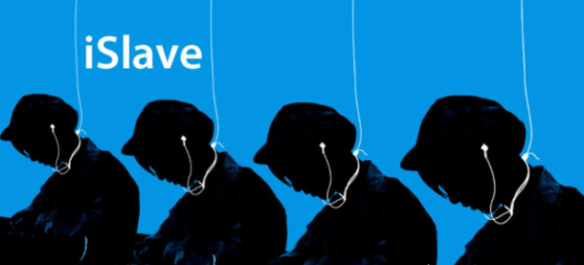
Agrochemicals and Institutional Corruption: Pleading with the Slave Master Will Not Set You Free

By Colin Todhunter

Source: CounterPunch

Environmental campaigner Dr Rosemary Mason has just written to President of the European Commission Jean-Claude Juncker, Vice President of the European Commission Frans Timmermans and Health Commissioner Vytenis Andruikaitis. As set out below, she asks these top officials some very pertinent questions about the EU’s collusion with the agrochemical corporations.

1) In authorising glyphosate on behalf of the Glyphosate Task Force led by Monsanto, why did President Juncker fail to state the European Chemicals Agency’ (ECHA) risk assessment in full?

2) Why did the EU collude with corporations that made nerve gases in WW2 for chemical warfare and for use in the Nazi concentration camps? These firms continued to use similar chemicals in agriculture to poison ‘pests’, beneficial insects, birds and people.

3) Could it be that is it is because biocides regulations in the EU are merely designed to make corporations money and are ultimately controlled by the agrochemical industry?

4) Why did Monsanto, the European Food Safety Authority (EFSA), the ECHA and the industry-funded UK Science Media Centre suppress the paper by Gilles-Eric Seralini of the two-year rat feeding study of GM crops and Roundup that produced organ damage and tumours at four months?

5) Do the commissioners know that Cancer Research UK was hijacked by the Agrochemical Industry in 2010 with the full knowledge of the UK government? Michael Pragnell, former Chairman of Cancer Research UK (CRUK), was founder of Syngenta and former chairman of industry lobby group CropLife International. The CRUK website says that there is no convincing evidence that pesticides cause cancer. Instead, CRUK links cancer to life style choices and individual behaviour and blames alcohol use, obesity and smoking.

6) Why did the EU regulators and David Cameron, on behalf of the British government, ignore the Letter from America in 2014 from nearly 60 million citizens, warning you not to authorise GM crops and Roundup because of their toxicity to human health and the environment?

7) Where have all the insects and birds gone as a result of intensive chemical agriculture? The UK, Germany, France, Denmark and Canada are rapidly losing biodiversity. US farmland growing GM Roundup Ready crops has become a biological desert.

8) Did Monsanto and President Juncker conceal the ECHA harmonised classification of glyphosate as “toxic to aquatic life with long-lasting effects” because it would explain the accelerating deterioration of coral in the Great Barrier Reef?

Mason concludes her letter by reiterating the damning advisory opinion of the International Monsanto Tribunal delivered in 2017. She also sent the commissioners a recent letter signed by 23 prominent organisations criticising the EU’s decision to renew the license for glyphosate and outlining Monsanto’s undue influence over decision making.

Along with her letter, Mason sent a 22-page document containing detailed information on:

* The European Commission’s flawed renewal of the license for glyphosate

* The causes of decline in coral cover on the Great Barrier Reef

* European legislation existing for the benefit of the agrochemical industry

* Contamination by glyphosate and neonicotinoid insecticides causing dramatic declines in insects and birds

* Glyphosate being present everywhere

* The International Monsanto Tribunal and various alarming reports on pesticides, their use and impacts

To date, there has been no response from the commissioners to Mason.

In 2003, the World Wide Fund for Nature (UK) concluded that every person it tested across the UK was contaminated by a cocktail of highly toxic chemicals, which were banned from use during the 1970s. Over the years, Mason has cited a range of sources to show the harmful impact of pesticides and that the amount and range of pesticide residues on British food is increasing annually. She also notes a massive rise in the use of glyphosate between 2012 and 2014 alone.

In her many detailed documents and letters (which contains her own views on all the questions she poses above to the commissioners) she has sent to officials over the years, Mason offers sufficient evidence to show that the financial and political clout of a group of powerful agrochemical/agribusiness corporations ensure that its interests are privileged ahead of public health and the environment to the detriment of both. Mason has gone to great lengths to describe the political links between industry and various government departments, regulatory agencies and key committees that have effectively ensured that ‘business as usual’ prevails.

The corporations which promote industrial agriculture and the agrochemicals Mason campaigns against have embedded themselves deeply within the policy-making machinery at both national and international levels. From the flawed narrative that industrial agriculture is necessary to feed the world to providing lavish research grants and the capture of important policy-making institutions, global agribusiness has secured a bogus ‘thick legitimacy’ within policymakers’ mindsets and mainstream discourse.

By referring to the Monsanto Tribunal, Mason implies that governments, individuals and civil groups that collude with corporations to facilitate ecocide and human rights abuses resulting from the actions of global agribusiness corporations should be hauled into court. Perhaps it is only when officials and company executives are given lengthy jail sentences for destroying health and the environment that some change will begin to happen.

From Rachel Carson onward, the attempt to roll back the power of these corporations and their massively funded lobby groups has had limited success. Some 34,000 agrochemicals remain on the market in the US, many of which are there due to weak regulatory standards or outright fraud, and from Argentina to Indonesia, the devastating impact of the industrial chemical-dependent model of food and agriculture on health and the environment has been documented by various reports and writers at length.

What is worrying is that these corporations are being facilitated by the World Bank’s ‘enabling the business of agriculture’, duplicitous trade deals like the US-India Knowledge Initiative on Agriculture, the Gates Foundation’s ‘opening up’ of African agriculture and the bypassing of democratic procedures at sovereign state levels to impose seed monopolies and proprietary inputs on farmers and to incorporate them into a global supply chain dominated by these powerful companies.

For the reasons set out in my previous piece, pleading with public officials to roll back the actions and influence of agrochemical/agribusiness corporations may have no more impact than appealing to a slave master to set you free.

Ultimately, the solution relies on people coming together to challenge a system of neoliberal capitalism that by design facilitates the institutionalised corruption that we see along with the destruction of self-sufficiency and traditional food systems. At the same time, alternatives must be promoted based on localisation, the principles of a politically-oriented model of agroecology (outlined here, here and here) and a food system that serves the public good not private greed.


Colin Todhunter is an extensively published independent writer and former social policy researcher based in the UK and India.

Mass Deception and the Prelude to World War

By Colin Todhunter

Source: Defend Democracy Press

In Libya, NATO bombed a path to Tripoli to help its proxy forces on the ground oust Gaddafi. Tens of thousands lost their lives and that country’s social fabric and infrastructure now lies in ruins. Gaddafi was murdered and his plans to assert African independence and undermine Western (not least French) hegemony on that continent have been rendered obsolete.

In Syria, the US, Turkey, France, Britain, Saudi Arabia and Qatar have been helping to arm militants. The Daily Telegraph’s March 2013 article “US and Europe in ‘major airlift of arms to Syrian rebels through Zagreb’” reported that 3,000 tons of weapons dating back to the former Yugoslavia had been sent in 75 planeloads from Zagreb airport to the rebels. The New York Times March 2013 article “Arms Airlift to Syria Rebels Expands, With CIA Aid” stated that Arab governments and Turkey had sharply increased their military aid to Syria’s opposition fighters. This aid included more than 160 military cargo flights.

Sold under the notion of a spontaneous democratic uprising against a tyrannical political leader, Syria is little more than an illegal war for capital, empire and energy. The West and its allies have been instrumental in organising the war as elaborated by Tim Anderson in his book ‘The Dirty War on Syria’.

Over the last 15 years or so, politicians and the media have been manipulating popular sentiment to get an increasingly war-fatigued Western public to support ongoing wars under the notion of protecting civilians or a bogus ‘war on terror’. They spin a yarn about securing women’s rights or a war on terror in Afghanistan, removing despots from power in Iraq, Libya or Syria or protecting human life, while then going on to attack or help destabilise countries, resulting in the loss of hundreds of thousands of civilian lives.

Emotive language designed to instill fear about potential terror attacks in Europe or myths about humanitarianism intervention are used as a pretext to wage imperialist wars in mineral-rich countries and geostrategically important regions.

Part of the battle for the public’s hearts and minds is to keep people confused. They must be convinced to regard these wars and conflicts as a disconnected array of events and not as the planned machinations of empire. The ongoing disinformation narrative about Russian aggression is part of the strategy. Ultimately, Russia (and China) is the real and increasingly imminent target: Moscow has stood in the way of the West’s plans in Syria and both Russia and China are undermining the role of the dollar in international trade, a lynchpin of US power.

The countries of the West are effectively heading for war with Russia but relatively few among the public seem to know or even care. Many are oblivious to the slaughter that has already been inflicted on populations with the help of their taxes and governments in far-away lands. With the reckless neoconservative warmonger John Bolton now part of the Trump administration, it seems we could be hurtling towards major war much faster than previously thought.

Most of the public remains blissfully ignorant of the psy-ops being directed at them through the corporate media. Given recent events in the UK and the ramping up of anti-Russia rhetoric, if ordinary members of the public think that Theresa May or Boris Johnson ultimately have their best interests at heart, they should think again. The major transnational corporations based on Wall Street and in the City of London are the ones setting Anglo-US policy agendas often via the Brookings Institute, Council on Foreign Relations, International Crisis Group, Chatham House, etc.

The owners of these companies, the capitalist class, have off-shored millions of jobs as well as their personal and company tax liabilities to boost their profits and have bankrupted economies. We see the results in terms of austerity, unemployment, powerlessness, privatization, deregulation, banker control of economies, corporate control of food and seeds, the stripping away of civil liberties, increased mass surveillance and wars to grab mineral resources and ensure US dollar hegemony. These are the interests the politicians serve.

It’s the ability to maximise profit by shifting capital around the world that matters to this class, whether on the back of distorted free trade agreements, which open the gates for plunder, or through coercion and militarism, which merely tear them down.

Whether it is the structural violence of neoliberal economic policies or actual military violence, the welfare of ordinary folk around the world does not enter the equation. In an imposed oil-thirsty, war-driven system of globalised capitalism and over-consumption that is wholly unnecessary and is stripping the planet bare, the bottom line is that ordinary folk – whether workers in the West, farmers in India or civilians displaced en masse in war zones like Syria – must be bent according to the will of Western capital.

We should not be fooled by made-for-media outpourings of morality about good and evil that are designed to create fear, outrage and support for more militarism and resource-grab wars. The shaping of public opinion is a multi-million-dollar industry.

Take for instance the mass harvesting of Facebook data by Cambridge Analytica to shape the outcomes of the US election and the Brexit campaign. According to journalist Liam O’Hare, its parent company Strategic Communications Laboratories (SCL) has conducted ‘behavioural change’ programmes in over 60 countries and its clients have included the British Military of Defence, the US State Department and NATO. According to O’Hare, the use of the media to fool the public is one of SCL’s key selling points.

Among its activities in Europe have been campaigns targeting Russia. The company has “sweeping links” with Anglo-American political and military interests. In the UK, the interests of the governing Conservative Party and military-intelligence players are brought together via SCL: board members include “an array of Lords, Tory donors, ex-British army officers and defense contractors.”

O’Hare says it is clear is that all SCL’s activities have been inextricably linked to its Cambridge Analytica arm. He states:

“International deception and meddling is the name of the game for SCL. We finally have the most concrete evidence yet of shadowy actors using dirty tricks in order to rig elections. But these operators aren’t operating from Moscow… they are British, Eton educated, headquartered in the City of London and have close ties to Her Majesty’s government”

So, what are we to make of the current anti-Russia propaganda we witness regarding the nerve agent incident in Salisbury and the failure of the British government to provide evidence to demonstrate Russian culpability? The relentless accusations by Theresa May and Boris Johnson that have been parroted across the corporate media in the West indicate that the manipulation of public perception is everything and facts count for little. It is alarming given what is at stake – the escalation of conflict between the West and a major nuclear power.

Welcome to the world of mass deception à la Edward Bernays and Josef Goebbels.

US social commentator Walter Lippmann once said that ‘responsible men’ make decisions and have to be protected from the ‘bewildered herd’ – the public. He added that the public should be subdued, obedient and distracted from what is really happening. Screaming patriotic slogans and fearing for their lives, they should be admiring with awe leaders who save them from destruction.

Although the West’s political leaders are manipulating, subduing and distracting the public in true Lippmannesque style, they aren’t ‘saving’ anyone from anything: their reckless actions towards Russia could lead towards a war that could wipe out all life on the planet.


* Colin Todhunter is a frequent contributor to Global Research and Asia-Pacific Research.

“An Enthusiastic Corporate Citizen”: David Cronenberg and the Dawn of Neoliberalism

(Editor’s note: In commemoration of director David Cronenberg’s 75th birthday we present this compelling and socially relevant analysis of his filmography.)

By Michael Grasso

Source: We Are the Mutants

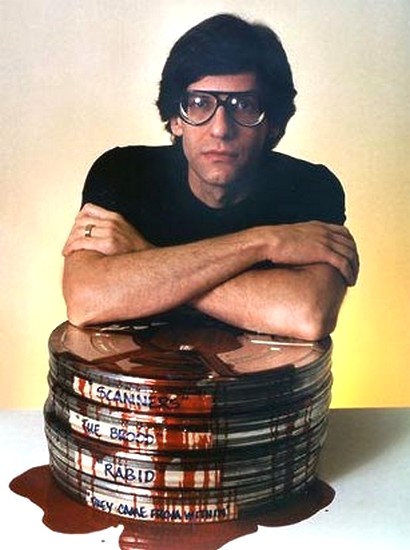
The cinematic corpus of David Cronenberg is probably best known for its expertly uncanny use of body horror, but looming almost as large in the writer-director’s various universes is the presence of faceless, all-powerful organizations. Like his rough contemporary Thomas Pynchon and the conspiracies that litter Pynchon’s early works—V. (1963), The Crying of Lot 49 (1966), and Gravity’s Rainbow (1973)—Cronenberg’s shadowy organizations offer fodder for paranoid conspiracy. These conspiracies operate under the cloak of beneficent academic institutes and, in his later work, corporations. The transition from institutes to corporations occurred during Cronenberg’s late ’70s and early ’80s output, specifically the trio of films The Brood (1979), Scanners (1981), and Videodrome (1983).

It is no coincidence that, at this particular time, international finance and prevailing political winds helped put the corporation in society’s driver’s seat. In Adam Curtis’s recent documentary film HyperNormalisation (2016), he notes how the default of the city of New York in 1975 opened the door for private investment and the finance industry to get their hands on municipal governance on a large scale for the first time, and how this creaked open the door for the Thatcher-Reagan privatization wave in the ’80s. These last few “hinge” years of the 1970s offered the last chance for a real alternative to the coming neoliberal revolution. Soon, all alternatives for governance in the name of the public good were destroyed. Corporatism tightened its grip on the Western polity.

Cronenberg’s early eerie organizations—the “Canadian Academy of Erotic Enquiry” from Stereo (1969) and the panoply of gruesome academic and cosmetic conspiracies in his Crimes of the Future (1970)—eventually yielded to corporations like Scanners‘ ConSec and Videodrome‘s Spectacular Optical. In these early works, Cronenberg’s mysterious organizations are headed by visionary (mad) geniuses. In 1975’s Shivers, experiments by a lone mad scientist infect an entire apartment building with parasites, which awaken dark impulses in the building’s residents and spread themselves through sexual violence. But as the decade went on, Cronenberg slowly backed away from utilizing the character of a singular scientific genius harboring a twisted vision of the future. Now, organizations sought to pull the strings from the shadows. The key transitional work in this chronology is the sometimes-underlooked The Brood from 1979.

In the film, Oliver Reed plays esteemed psychologist Dr. Hal Raglan, who has developed a method of exorcising deep-seated psychological issues using a technique called “psychoplasmics.” In intense one-on-one sessions reminiscent of psychodrama, Raglan is able to physically remove trauma from the human body in the form of ulcers, rashes, and, we eventually discover, cancer. In the ultimate reveal, it’s shown that Raglan has helped traumatized patient Nola Carveth (Samantha Eggar) to birth violent, deformed homunculi who go out into the world, psychically connected to her, in order to resolve her childhood abandonment issues and abuse with bloody murder. Raglan’s foundation, the Somafree Institute of Psychoplasmics (its name simultaneously evocative of Aldous Huxley’s perfect drug soma, and reminiscent of fringe psychological research like Wilhelm Reich’s orgone theory) inhabits a modernist chalet far outside the city of Toronto. Non-resident patients have to be bussed in. Raglan’s public reputation is that of an eccentric, but effective, therapist. At several points in the film we see the covers of Raglan’s presumably best-selling The Shape of Rage. (Curiously, a decade later, in 1990, a documentary titled Child of Rage would be released covering the controversial use of “attachment therapy.”)

As depicted in the film, Somafree is not a corporation. But the thematic threads surrounding Raglan and his Institute are based on real-life trends in the 1970s. In its practices and in the person of Raglan, Somafree resembles psycho-intensive institutes like Esalen, self-improvement organizations like Lifespring, and personalities like Werner Erhard. Erhard’s est movement used primal abuse to ostensibly create psychological breakthroughs, helping the “patient” become more assertive, more powerful, less prone to obeying impulses caused by their early traumas. There is also the real-life analogue to the psychological method that Raglan employs: psychodrama. In the 1970s, new methods of conflict resolution pioneered in places like Esalen were beginning to seep into the mainstream of North American society. These methods soon spread into the corporate world as a purported means of defusing tensions at work and making an office more productive. The “encounter group” soon became a punchline, but the principles behind the Age of Aquarius’s more touchy-feely psychodynamic methods soon became part of the warp and weft of corporate culture in the ’80s and well beyond.

Nola’s estranged husband Frank interviews a former Raglan patient, Jan Hartog, in an attempt to discredit Somafree so Frank can regain custody of his daughter. This patient bears the scars of Raglan’s work on him: a lymphatic cancer sprouting from his neck (an eerie foreshadowing of the coming of another mysterious lymphatic disorder that would soon break out all over North America). Hartog plans to sue; not to achieve victory in a courtroom, but to destroy Raglan’s reputation. It doesn’t matter if they win, Hartog says, because “They’ll just remember the slogan. Psychoplasmics can cause cancer.” The 1970s was full of an increased awareness of the carcinogens that surrounded us in the late-industrial West—cigarettes, sweeteners, food dyes, and pesticides—thanks in large part to the nascent environmental and consumer rights movements, which faced off against corporations using  weapons of negative publicity.

By the time we get to Scanners in 1981, we are fully invested in a world of shadowy corporate overlords. A huge multinational security firm, ConSec, tries to shepherd psychics called “scanners,” ostensibly to help them control their powers, but also to utilize and exploit their paranormal abilities. Protagonist Cameron Vale (Steven Lack) is apprehended off the streets, where, due to his psychic pain, he’s living as a derelict. We learn that scanners don’t “fit in” with society. When Vale is given the inhibitive drug ephemerol by ConSec’s head of scanner research, Dr. Paul Ruth (Patrick McGoohan), he is able to get himself together and is even given a new proto-yuppie wardrobe and mission by ConSec: eliminate rogue scanner Darryl Revok (Michael Ironside). But as Vale accepts his mission and new identity, he finds himself enlisted in ConSec’s private war against renegade scanners. When he runs into an emerging cell of scanners who are forming a powerful “group mind” in a New Age-like encounter session, assassins controlled by Revok murder most of the cell. “Everywhere you go, somebody dies,” one of the hive mind tells Vale, who is complicit with ConSec’s need to exert corporate control over scanners, including the use of violence as part of the corporate mission. Meanwhile, ConSec itself is riddled with moles working with Revok. Indeed, a chemical and pharmaceutical company called “Biocarbon Amalgamate,” founded by Dr. Ruth but now infiltrated by Revok, manufactures ephemerol in massive quantities. Scanners recontexualizes the Cold War espionage “wilderness of mirrors” in terms of corporate espionage for a new age of corporate domination. (It’s no coincidence that Cronenberg cast McGoohan, one of the Cold War’s most famous fictional spies, in the role of Dr. Ruth.)

ConSec’s corporate mission is revealed in a board meeting when the new head of security says, “We’re in the business of international security. We deal in weaponry and private armories.” This head of security also tells Dr. Ruth, “Let us leave the development of dolphins and freaks as weapons of espionage to others.” To the new breed of ConSec executive, fringe ’70s research is a thing of the past, despite its obvious power and relevance. The future is in fighting proxy wars, ensuring private security for the wealthy, and providing mercenary security forces. ConSec in this way is like many other private security firms that first emerged in the 1970s and ’80s. Begun as an outgrowth of post-colonial British military adventurism, the private military company soon became a way for ex-military officers to assure themselves a handsome post-service sinecure in a new era where hot wars were a thing of the past. “Brushfire wars” would continue to ensue, ensuring these companies an expanding portfolio, both in the waning years of the Cold War and in the 1990s and beyond. In fact, it’s interesting to note that many of the real-world military’s supposed psychic assets themselves got into private security after the U.S. Army shut down fringe science projects like Project STARGATE. Art imitates life imitates art.

Videodrome expands Cronenberg’s conspiratorial corporate, military, and espionage worldview into the rapidly exploding world of the media in the early ’80s. Leaps forward in technology, all of which are explicitly called out in Videodrome, litter the film’s visual landscape. Cable television, satellite transmissions (and the attendant hacking thereof), video cassette recorders, the rise of video pornography, virtual reality, postmodern media theory, and violence in entertainment all play essential roles in the film. Max Renn’s (James Woods) tiny Civic TV/Channel 83 (itself based on groundbreaking independent Toronto television station CityTV) is trying to survive as best it can in a world of massive international media players. Ever seeking the latest hit that will tap into the public’s unending hunger for sex and violence, his on-staff “satellite pirate” Harlan delivers the mysterious Videodrome transmission. Harlan is later revealed to be working with the Videodrome conspiracy, having intentionally exposed Max to the signal. In a memorable speech, Harlan nails Max’s amoral desire to sell sex and violence to his viewers: “This cesspool you call a television station, and your people who wallow around in it, and your viewers who watch you do it; you’re rotting us away from the inside.” When Renn is deep into his Videodrome-triggered hallucinations, he is offered corporate “help” much as Cameron Vale was. This time, his “savior” is Barry Convex, a representative of Spectacular Optical. In his video message to Max, he, like the ConSec executive before him, lays out Spectacular Optical’s corporate mission:

I’d like to invite you into the world of Spectacular Optical, an enthusiastic global corporate citizen. We make inexpensive glasses for the Third World… and missile guidance systems for NATO. We also make Videodrome, Max.

The final form of the military-industrial-entertainment complex is laid bare. Videodrome’s intent is to harden and make psychotic a North American television audience who’ve “become soft,” as Harlan puts it. Renn’s hallucinations are recorded, he is literally “reprogrammed” to kill Civic TV’s board (thanks to the memorable hallucinatory image of Convex sticking a VHS tape into Renn’s gut). Renn is then reprogrammed to retaliate and assassinate Convex by the much more ’70s-cult Cathode Ray Mission of “media prophet” Brian O’Blivion, whose postmodern, expressly McLuhanesque view of television’s place in the world allowed Videodrome to come into existence in the first place: “I had a brain tumor and I had visions. I believe the visions caused the tumor and not the reverse… when they removed the tumor, it was called Videodrome.” It’s also worth noting that O’Blivion tells us that Videodrome made him its first victim; postmodern criticism of the medium of television is no match for its violent, cancerous growth.

The deregulation of media in the U.S. in the Reagan years is common knowledge; rules around children’s television were especially eviscerated, which allowed for an explosion in violent, warlike cartoons based on popular toy lines, training a new generation for a lifetime of endless war. Combined with the aforementioned explosion of video technology, the laissez-faire environment shepherded by Reagan’s FCC allowed a new breed of cable television magnates to get rich and created a television and media landscape with a relatively friction-free relationship to government. By the time the first Gulf War broke out in 1991, war provided the cable news networks with surefire ratings and cable news provided the propaganda platform for the war effort, a mutually beneficial (and Cronenberg-esque) symbiosis that’s continued to metastasize through multiple subsequent wars in the Middle East. The world of Videodrome, the one Harlan evokes where America will no longer be soft in a world full of tough hombres, has finally come to fruition thanks in part to all of our enmeshment in the video arena—the video drome.

After Videodrome—in The Fly (1986), Dead Ringers (1988), and Crash (1996)—Cronenberg focuses less on sinister organizations and more on monomaniacal researchers, doctors, and fetishists who pursue their individual idiosyncratic agendas through the director’s trademark twisting mindscapes (and bodyscapes). With the exception of eXistenZ (1999), Cronenberg’s meditation on computer technology and gaming released amidst the first dot-com bubble, and his Occupy-influenced adaptation of Don DeLillo’s 2003 novel Cosmopolis (2012), he has retreated from a more overt suspicion of corporations and shadowy conspiracies. His warning about these invisible masters pulling the strings of society came during the time period when something could have been done about corporate hegemony. But now, the conspiracy operates in the open. We are now all of us the dumb, trusting Cronenberg protagonist, lulled into a false sense of security by a series of “enthusiastic corporate citizens.” Long live the new flesh.

America’s Enemies, Who’s On the List?

Prospects and Perspectives

By Prof. James Petras

Source: Global Research

For almost 2 decades, the US pursued a list of ‘enemy countries’ to confront, attack, weaken and overthrow. 

This imperial quest to overthrow ‘enemy countries’ operated at various levels of intensity, depending on two considerations:  the level of priority and the degree of vulnerability for a ‘regime change’ operation.

The criteria for determining an ‘enemy country’ and its place on the list of priority targets in the US quest for greater global dominance, as well as its vulnerability to a ‘successfully’ regime change will be the focus of this essay.

We will conclude by discussing the realistic perspectives of future imperial options.

Prioritizing US Adversaries

Imperial strategists consider military, economic and political criteria in identifying high priority adversaries.

The following are high on the US ‘enemy list’:

1) Russia, because of its military power, is a nuclear counterweight to US global domination.  It has a huge, well-equipped armed force with a European, Asian and Middle East presence.  Its global oil and gas resources shield it from US economic blackmail and its growing geo-political alliances limit US expansion.

2) China, because of its global economic power and the growing scope of its trade, investment and technological networks.  China’s growing defensive military capability, particularly with regard to protecting its interests in the South China Sea serve to counter US domination in Asia.

3) North Korea, because of its nuclear and ballistic missile capability, its fierce independent foreign policies and its strategic geo-political location, is seen as a threat to the US military bases in Asia and Washington’s regional allies and proxies.

4) Venezuela, because of its oil resources and socio-political policies, challenge the US centered neo-liberal model in Latin America.

5) Iran, because of its oil resources, political independence and geo-political alliances in the Middle East, challenge US, Israeli and Saudi Arabia domination of the region and present an independent alternative.

6) Syria, because of its strategic position in the Middle East, its secular nationalist ruling party and its alliances with Iran, Palestine, Iraq and Russia, is a counterweight to US-Israeli plans to balkanize the Middle East into warring ethno-tribal states.

US  Middle-level Adversaries :

1)  Cuba, because of its independent foreign policies and its alternative socio-economic system stands in contrast to the US-centered neo-liberal regimes in the Caribbean, Central and South America.

2) Lebanon, because of its strategic location on the Mediterranean and the coalition government’s power sharing arrangement with the political party, Hezbollah, which is increasingly influential in Lebanese civil society in part because of its militia’s proven capacity to protect Lebanese national sovereignty by expelling the invading Israeli army and helping to defeat the ISIS/al Queda mercenaries in neighboring Syria.

3) Yemen, because of its independent, nationalist Houthi-led movement opposed to the Saudi-imposed puppet government as well as its relations with Iran.

Low Level Adversaries

1) Bolivia, because of its independent foreign policy, support for the Chavista government in Venezuela and advocacy of a mixed economy;  mining wealth and  defense of indigenous people’s territorial claims.

2) Nicaragua, because of its independent foreign policy and criticism of US aggression toward Cuba and Venezuela.

US hostility to high priority adversaries is expressed through economic sanctions military encirclement, provocations and intense propaganda wars toward North Korea, Russia, Venezuela, Iran and Syria.

Because of China’s powerful global market linkages, the US has applied few sanctions.  Instead, the US relies on military encirclement, separatist provocations and intense hostile propaganda when dealing with China.

Priority Adversaries, Low Vulnerability and Unreal Expectations

With the exception of Venezuela, Washington’s ‘high priority targets’ have limited strategic vulnerabilities. Venezuela is the most vulnerable because of its high dependence on oil revenues with its major refineries located in the US, and its high levels of indebtedness, verging on default.   In addition, there are the domestic opposition groups, all acting as US clients and Caracas’ growing isolation within Latin America due to orchestrated hostility by important US clients, Argentina, Brazil, Colombia and Mexico.

Iran is far less vulnerable: It is a strong strategic regional military power linked to neighboring countries and similar religious-nationalist movements.  Despite its dependence on oil exports, Iran has developed alternative markets, like China, free from US blackmail and is relatively safe from US or EU initiated creditor attacks.

North Korea, despite the crippling economic sanctions imposed on its regime and civilian population, has ‘the bomb’ as a deterrent to a US military attack and has shown no reluctance to defend itself.  Unlike Venezuela, neither Iran nor North Korea face significant internal attacks from US-funded or armed domestic opposition.

Russia has full military capacity – nuclear weapons, ICBM and a huge, well-trained armed force – to deter any direct US military threat.  Moscow is politically vulnerable to US-backed propaganda, opposition political parties and Western-funded NGO’s.  Russian oligarch-billionaires, linked to London and Wall Street, exercise some pressure against independent economic initiatives.

To a limited degree, US sanctions exploited Russia’s earlier dependence on Western markets, butsince the imposition of draconian sanctions by the Obama regime, Moscow has effectively counteredWashington’s offensive by diversifying its markets to Asia and strengthening domestic self-reliance in its agriculture, industry and high technology.

China has a world-class economy and is on course to become the world’s economic leader.  Feeble threats to ‘sanction’ China have merely exposed Washington’s weakness rather intimidating Beijing.  China has countered US military provocations and threats by expanding its economic market power, increasing its strategic military capacity and shedding dependence on the dollar.

Washington’s high priority targets are not vulnerable to frontal attack: They retain or are increasing their domestic cohesion and economic networks, while upgrading their military capacity to impose completely unacceptable costs on the US for any direct assault.

As a result, the US leaders are forced to rely on incremental, peripheral and proxy attacks with limited results against its high priority adversaries.

Washington will tighten sanctions on North Korea and Venezuela, with dubious prospects of success in the former and a possible pyrrhic victory in the case of Caracas. Iran and Russia can easily overcome proxy interventions.  US allies, like Saudi Arabia and Israel, can badger, propagandize and rail the Persians, but their fears that an out-and-out war against Iran, could quickly destroy Riyadh and Tel Aviv forces them to work in tandem to induce the corrupt US political establishment to push for war over the objections of a war-weary US military and population. Saudi and Israelis can bomb and starve the populations of Yemen and Gaza, which lack any capacity to reply in kind, but Teheran is another matter.

The politicians and propagandists in Washington can blather about Russia’s interference in the US’s corrupt electoral theater and scuttle moves to improve diplomatic ties, but they cannot counter Russia’s growing influence in the Middle East and its expanding trade with Asia, especially China.

In summary, at the global level, the US ‘priority’ targets are unattainable and invulnerable.  In the midst of the on-going inter-elite dogfight within the US, it may be too much to hope for the emergence of any rational policymakers in Washington who could rethink strategic priorities and calibrate policies of mutual accommodation to fit in with global realities.

Medium and Low Priorities, Vulnerabilities and Expectations

Washington can intervene and perhaps inflict severe damage on middle and low priority countries.  However, there are several drawbacks to a full-scale attack.

Yemen, Cuba, Lebanon, Bolivia and Syria are not nations capable of shaping global political and economic alignments.  The most the US can secure in these vulnerable countries are destructive regime changes with massive loss of life, infrastructure and millions of desperate refugees . . . but at great political cost, with prolonged instability and with severe economic losses.

Yemen

The US can push for a total Saudi Royal victory over the starving, cholera-stricken people of Yemen.  But who benefits?  Saudi Arabia is in the midst of a palace upheaval and has no ability to exercise hegemony, despite hundreds of billions of  dollars of US/NATO arms, trainers and bases.  Colonial occupations are costly and yield few, if any, economic benefits, especially from a poor, geographically isolated devastated nation like Yemen.

Cuba

Cuba has a powerful highly professional military backed by a million-member militia.  They are capable of prolonged resistance and can count on international support.  A US invasion of Cuba would require a prolonged occupation and heavy losses.  Decades of economic sanctions haven’t worked and their re-imposition by Trump have not affected the key tourist growth sectors.

President Trump’s ‘symbolic hostility’ does not cut any ice with the major US agro-business groups, which saw Cuba as a market. Over half of the so-called ‘overseas Cubans’ now oppose direct US intervention.

US-funded NGOs can provide some marginal propaganda points but they cannot reverse popular support for Cuba’s mixed ‘socialized’ economy, its excellent public education and health care and its independent foreign policy.

Lebanon

A joint US-Saudi economic blockade and Israeli bombs can destabilize Lebanon.  However, a full-scale prolonged Israeli invasion will cost Jewish lives and foment domestic unrest.  Hezbollah has missiles to counter Israeli bombs.  The Saudi economic blockade will radicalize Lebanese nationalists, especially among the Shia and the Christian populations.  The Washington’s ‘invasion’ of Libya, which did not lose a single US soldier, demonstrates that destructive invasions result in long-term, continent-wide chaos.

A US-Israeli-Saudi war would totally destroy Lebanon but it will destabilize the region and exacerbate conflicts in neighboring countries – Syria, Iran and possibly Iraq.  And Europe will be flooded with millions more desperate refugees.

Syria

The US-Saudi proxy war in Syria suffered serious defeats and the loss of political assets.  Russia gained influence, bases and allies.  Syria retained its sovereignty and forged a battle-hardened national armed force.  Washington can sanction Syria, grab some bases in a few phony ‘Kurdish enclaves’ but it will not advance beyond a stalemate and will be widely viewed as an occupying invader.

Syria is vulnerable and continues to be a middle-range target on the US enemy list but it offers few prospects of advancing US imperial power, beyond some limited ties with an unstable Kurd enclave, susceptible to internecine warfare, and risking major Turkish retaliation.

Bolivia and Nicaragua

Bolivia and Nicaragua are minor irritants on the US enemy list. US regional policymakers recognize that neither country exercises global or even regional power.  Moreover, both regimes rejected radical politics in practice and co-exist with powerful and influential local oligarchs and international MNC’s linked to the US.

Their foreign policy critiques, which are mostly for domestic consumption, are neutralized by the near total US influence in the OAS and the major neo-liberal regimes in Latin America.  It appears that the US will accommodate these marginalized rhetorical adversaries rather than risk provoking any revival of radical nationalist or socialist mass movements erupting in La Paz or Managua.

Conclusion

A brief examination of Washington’s ‘list of enemies’ reveals that the limited chances of success even among vulnerable targets.  Clearly, in this evolving world power configuration, US money and markets will not alter the power equation.

US allies, like Saudi Arabia, spend enormous amounts of money attacking a devastated nation, but they destroy markets while losing wars.  Powerful adversaries, like China, Russia and Iran, are not vulnerable and offer the Pentagon few prospects of military conquest in the foreseeable future.

Sanctions, or economic wars have failed to subdue adversaries in North Korea, Russia, Cuba and Iran.  The ‘enemy list’ has cost the US prestige, money and markets – a very peculiar imperialist balance sheet.  Russia now exceeds the US in wheat production and exports.  Gone are the days when US agro-exports dominated world trade including trade with Moscow.

Enemy lists are easy to compose, but effective policies are difficult to implement against rivals with dynamic economies and powerful military preparedness.

The US would regain some of its credibility if it operated within the contexts of global realities and pursued a win-win agenda instead of remaining a consistent loser in a zero-sum game.

Rational leaders could negotiate reciprocal trade agreements with China, which would develop high tech, finance and agro-commercial ties with manufacturers and services.  Rational leaders could develop joint Middle East economic and peace agreements, recognizing the reality of a Russian-Iranian-Lebanese Hezbollah and Syrian alliance.

As it stands, Washington’s ‘enemy list’ continues to be composed and imposed by its own irrational leaders, pro-Israel maniacs and Russophobes in the Democratic Party – with no acknowledgement of current realities.

For Americans, the list of domestic enemies is long and well known, what we lack is a civilian political leadership to replace these serial mis-leaders.

A False Agenda for Humanity

By Julian Rose

Source: Waking Times

Humanity has, for millennia, been led down the road of an entirely false agenda. So much so, that every aspect of society is almost the precise reverse of what it should be.

Just a glimmer of awareness reveals that the true potential of the majority of mankind remains locked away, unable to exert any influence on the course of events on our planet.

Given the scale of this imprisonment, it becomes apparent that the world has been moving on a trajectory invented and directed by a false intelligence, whose interests are diametrically opposed to the intelligence of natural planetary consciousness.

I use the word ‘intelligence’ because its hard to find the right word to describe that which is very clever, but lacks the ability to feel love or compassion; and is often ruthless without ever showing emotion. Intelligence should have a more human ring to it, but the word has been hijacked by the spying networks: the CIA, FBI, MI5 for example, all call themselves ‘intelligence agencies’. Not exactly warm-blooded institutions!

Within the hierarchies of banks, corporations, the military, governments, the media and various global trading organizations, one will find a plethora of quasi-humans in line to get their hands onto the levers of the central control system. The top-down pyramid which steers the daily agenda for millions of mortals caught-up in the 9 to 5 treadmill. Yet, those climbing the employment ladder within these same institutions, more often than not lack any awareness of what is going on above their heads.

We should consider the following question: at exactly what point within this typical corporate pyramid, does the ordinary mortal metamorphose into the ranks of the subhuman control master? Which floor serves as the subtle switch-point where the 9 to 5 worker ‘just doing a job’ shifts into a dedicated trainee in the art of ‘power over the people’ management?

I am not proposing to answer this, as it is a largely hypothetical question; but I suggest that the process whereby the false agenda for humanity is able to be maintained, year in year out, relies heavily on the unquestioning cooperation of those who, at some point, change their identity – or have their identity changed – from just ordinary workers to corporate clones. In other words those who see the world entirely through the lens of the corporation they work for.

The renowned social psychiatrist/psychologist Dr Erich Fromm, in his last major thesis ‘The Anatomy of Human Destructiveness’ traces the decline of the sentient human at the hands of a ‘corporate intelligence’ which is specifically designed to dehumanize those climbing up its ranks. So that by the time they reach the top, such people have become robotic, in virtually every action they undertake.

Here lies the mechanism whereby the human becomes less than human; the less than human becomes inhuman; and the inhuman becomes a biological robotic clone and proponent of Transhumanist Artificial Intelligence – which takes the false agenda for humanity ever nearer to its ultimate goal.

Perhaps not ultimate, but far enough to ensure that humanity as we know it, is superseded by another form of ‘intelligence’ that has nothing to do with nature or the exigence expressed in natural human emotions of love, joy, pain and sorrow.

Cyborgian artificial intelligence is just that: artificial. Art put in reverse so as to eliminate the godly, the beautiful, the spontaneous – all that which gives expression to what it really means to be human.

But consider the fact that it is people suffering these type of symptoms who are in the driving seat of world affairs; running governments, banks and technocratic institutions like the European Union. The mentality is that of a corporate trained control freak – and the greater the power on hand, the greater the ego fueled top-down control manipulation becomes.

The structural design of the neoliberal/neoconservative capitalist Leviathon is not an accident. It is a deliberate formula for the entrapment of mankind. One which puts into reverse – and thereby completely distorts – the true hierarchical themes of nature and the cosmos. In just the same way as Hitler inverted and reversed the design of the original swastika, an ancient peace symbol from Southern India, into a twisted symbol of war.

The symbols that adorn all top-end corporate chains and industries, follow this same pattern. They are nearly all based upon ancient archetypal forms. Forms that symbolized man’s desire to give expression to the powers of nature, as well as the cosmic influences that were mythologized into gods and pantheistic forces of power and influence. Symbols that expressed higher aspirations of bygone civilisations.

The big-chiefs of corporate globalization adorn their high-rise totems and plush office suites with the very same symbols, but what do they stand for now?

Quite simply, a crassly materialistic paradigm which has usurped the nature gods of old; declaring itself the new ‘supreme force’ to which mankind must go on its knees in unquestionoing obeisance.

And, as we know, the majority of mankind has been complicit in fulfilling this role, ensuring a self-inflicted avenue of slavery and passive acceptance of the role assigned by the prevailing status quo.

Indeed, there appears to be no end to the butchery and bullying in the cause of keeping the Leviathan rolling forward. The US military – backed by its European ‘allies’ – ranges the planet in support of the ceaseless profligate mining of valuable minerals, to make the fuels that fill the tanks of Big Pharma, Big Agro, Big Army and Big Business. While the public, rather than rising up against mammon, appear to be paralyzed by the spectacle, unable to imagine anything less destructively domineering that might take its place.

I used the words “appear to be” because there is, of course, another emergent energy that tells another story. That breaks through the deception that man is nothing more than a psychopathetic instrument in the hands of all dominant, aggressive and less than human oppressors.

It is not just ‘any’ other energy. It is the long-buried – and steadily more volcanic – energy of liberated spirit. A revivified spirit which is finding its way back into the arteries of an ever-growing number of ex hostages of the status quo, as well as new arrivals on this planet.

Everyday this spirit is gaining further momentum and a stronger equilibrium. Cracks in the false agenda are widening; the confidence of its perpetrators is wavering; the old power base is leaking.

Chinks of light glitter amongst the darkness; the sense of an upwardly rising change is in the air, counteracting the stench of stagnation and decline.

What is this?

We ‘the people’ have arrived at a critical point in this apocalyptic epoch, finding out that we are possessed of power we never knew we had; starting to believe in a Self we never knew we cradled; hearing a voice we never could hear before. Finding in each other, sources of mutual support, not just a shackled fellow prisoner.

As this process grows, so the false agenda is further revealed for what it is, and its chief perpetrators are exposed ever more clearly for what they are. The seemingly inexorable drive towards a cybernetic future, or one populated and run by gender-bent, micro-chipped mock-humans, is being infiltrated by warm-blooded, nature loving true humans. Trees are being planted where concrete was once the only landscape.

We are learning that where our thoughts go – energy follows. And that if these thoughts are full of creativity and life, so will our lives also be. We are learning that we can take charge of our destinies after all. That, at any moment, we could dispense with the false reality of the top down centralized command system, and be free to start our own version of reality. One informed by our love of Truth – a determination to act on this truth – and a growing aspiration to Be rather than to have.


Julian Rose is an early pioneer of UK organic farming, a writer, actor and international activist.

The Stomach-churning Violence of Monsanto, Bayer and the Agrochemical Oligopoly

By Colin Todhunter

Source: RINF

As humans, we have evolved with the natural environment over millennia. We have learned what to eat and what not to eat, what to grow and how to grow it and our diets have developed accordingly. We have hunted, gathered, planted and harvested. Our overall survival as a species has been based on gradual, emerging relationships with the seasons, insects, soil, animals, trees and seeds. And out of these relationships, we have seen the development of communities whose rituals and bonds have a deep connection with food production and the natural environment.

However, over the last couple generations, agriculture and food production has changed more than it had done over previous millennia. These changes have involved massive social upheaval as communities and traditions have been uprooted and have entailed modifying what we eat, how we grow our food and what we apply to it. All of this has been driven by geopolitical concerns and powerful commercial interests with their proprietary chemicals and patented seeds. The process of neoliberal globalisation is accelerating the process as farmers are encouraged to produce for global supply chains dominated by transnational agribusiness.

Certain crops are now genetically engineered, the range of crops we grow has become less diverse, synthetic biocides have been poured on crops and soil and our bodies have been subjected to a chemical bombardment. We have arrived at a point where we have lost touch with our deep-rooted microbiological and social connection with nature and have developed an arrogance that has placed ‘man’ above the environment and all other species. One of the consequences is that we have paid an enormous price in terms of the consequent social, environmental and health-related devastation.

Despite the promise and potential of science, it has too often in modern society become a tool of vested interests, an ideology wrapped in the vestiges of authority and the ‘superstition’ that its corporate-appointed priesthood should not be challenged nor questioned. Instead of liberating humankind, it has now too often become a tool of deception in the hands of companies like Monsanto, Bayer and Syngenta which make up the oligopoly that controls what is an increasingly globalised system of modern food and agriculture.

These corporations have successfully instituted the notion that the mass application of biocides, monocropping and industrial agriculture are necessary and desirable. They are not. However, these companies have used their science and propaganda to project certainty in order to hide the fact that they have no real idea what their products and practices are doing to human health or the environment (and in cases when they do know, they do their best to cover it up or hide behind the notion of ‘commercial confidentiality‘).

Based on their limited, tainted studies and co-opted version of science, they say with certainty that, for example, genetically engineered food and glyphosate are ‘safe’. And when inconvenient truths do emerge, they will mobilise their massive lobbying resources to evade regulations, they will seek to hide the dangers of their products or they will set out to destroy scientists whose findings challenge their commercial bottom line.

Soil microbiologists are still trying to fully comprehend soil microbes and how they function as anintegrated network in relation to plants. The agrochemical sector has little idea of how their biocides have affected soils. It merely churns out public relations spin that their inputs are harmless for soil, plants and human health. Such claims are not based on proper, in-depth, long-term studies. They are based on a don’t look, don’t find approach or a manipulation of standards and procedures that ensure their products make it on to the commercial market and stay there. The devastating impacts on soil are increasingly clear to see.

And what are these biocides doing to us as humans? Numerous studies have linked the increase in pesticide us with spiralling rates of ill health. Kat Carrol of the National Health Federation is concerned about the impacts on human gut bacteria that play a big role in how organs function and our neurological health. The gut microbiome can contain up to six pounds of bacteria and is what Carroll calls ‘human soil’. She says that with their agrochemicals and food additives, powerful companies are attacking this ‘soil’ and with it the sanctity of the human body.

And her concerns seem valid. Many important neurotransmitters are located in the gut. Aside from affecting the functioning of major organs, these transmitters affect our moods and thinking. Feed gut bacteria a cocktail of biocides and is it any surprise that many diseases are increasing?

For instance, findings published in the journal ‘Translational Psychiatry’ provide strong evidence that gut bacteria can have a direct physical impact on the brain. Alterations in the composition of the gut microbiome have been implicated in a wide range of neurological and psychiatric conditions, including autism, chronic pain, depression, and Parkinson’s Disease.

Environmental campaigner Dr Rosemary Mason has written extensively on the impacts of agrochemicals (especially glyphosate) on humans, not least during child and adolescent development. In her numerous documents and papers, she cites a plethora of data and studies that link the use of agrochemicals with various diseases and ailments. She has also noted the impact of these chemicals on the human gut microbiome.

Writing in The Guardian, Mo Costandi discusses the importance of gut bacteria and their balance. In adolescence the brain undergoes a protracted period of heightened neural plasticity, during which large numbers of synapses are eliminated in the prefrontal cortex and a wave of ‘myelination’ sweeps across this part of the brain. These processes refine the circuitry in the prefrontal cortex and increase its connectivity to other brain regions. Myelination is also critical for normal, everyday functioning of the brain. Myelin increases a nerve fibre’s conduction velocity by up to a hundred times, and so when it breaks down, the consequences can be devastating.

Other recent work shows that gut microbes control the maturation and function of microglia, the immune cells that eliminate unwanted synapses in the brain; age-related changes to gut microbe composition might regulate myelination and synaptic pruning in adolescence and could, therefore, contribute to cognitive development. Upset those changes, and, As Mason argues, there are going to be serious implications for children and adolescents. Mason places glyphosate at the core of the ailments and disorders currently affecting young people in Wales and the UK in general.

Yet we are still being subjected to an unregulated cocktail of agrochemicals which end up interacting with each other in the gut. Regulatory agencies and governments appear to work hand in glove with the agrochemical sector.

Carol Van Strum has released documents indicating collusion between the manufacturers of dangerous chemicals and regulatory bodies. Evaggelos Vallianatos has highlighted the massive fraud surrounding the regulation of biocides and the wide scale corruption at laboratories that were supposed to test these chemicals for safety. Many of these substances were not subjected to what was deemed proper testing in the first place yet they remain on the market. Shiv Chopra has also highlighted how various dangerous products were allowed on the commercial market and into the food chain due to collusion between these companies and public officials.

Powerful transnational corporations are using humanity as their collective guinea pig. But those who question them or their corporate science are automatically labelled anti-science and accused of committing crimes against humanity because they are preventing their products from being commercialised ‘to help the poor or hungry’. Such attacks on critics by company mouthpieces who masquerade as public officials, independent scientists or independent journalists are mere spin. They are, moreover, based on the sheer hypocrisy that these companies (owned and controlled by elite interests) have humanity’s and the environment’s best interests at heart.

Many of these companies have historically profited from violence. Unfortunately, that character of persists. They directly profit on the back of militarism, whether as a result of the US-backed ‘regime change’ in Ukraine or the US invasion of Iraq. They also believe they can cajole (poison) nature by means of chemicals and bully governments and attack critics, while rolling out propaganda campaigns for public consumption.

Whether it involves neocolonialism and the destruction of indigenous practices and cultures under the guise of ‘development’, the impoverishment of farmers in India, the twisting and writing of national and international laws, the destruction of rural communities, the globalisation of bad food and illness, the deleterious impacts on health and soil, the hollowing out of public institutions and the range of human rights abuses we saw documented during The Monsanto Tribunal, what we are witnessing is structural violence in many forms.

Pesticides are in fact “a global human rights concern” and are in no way vital to ensuring food security. Ultimately, what we see is ignorance, arrogance and corruption masquerading as certainty and science.

“… when we wound the planet grievously by excavating its treasures – the gold, mineral and oil, destroy its ability to breathe by converting forests into urban wastelands, poison its waters with toxic wastes and exterminate other living organisms – we are in fact doing all this to our own bodies… all other species are to be enslaved or driven to extinction if need be in the interests of human ‘progress’… we are part of the same web of life –where every difference we construct artificially between ‘them’ and ‘us’ adds only one more brick to the tombstone of humankind itself.” – from ‘Micobes of the World Unite!’ By Satya Sager

Gaius Publius: Defining Neoliberalism

By Yves Smith

Source: Naked Capitalism

For years I’ve been using the term “neoliberalism” (or sometimes neo-liberalism*) and I’m always uncomfortable, since it sounds so academic. So I usually add one-phrase definitions and move on. For example, this from a recent piece on Puerto Rico:

If neoliberalism is the belief that the proper role of government is to enrich the rich — in Democratic circles they call it “wealth creation” to hide the recipients; Republicans are much more blatant — then the “shock doctrine” is its action plan.

That’s sounds pretty blunt, but it’s a true statement, even among academics. See this great interview (start at about 6:15) with Professor Philip Miroski of the University of Notre Dame on how modern neoliberals have come to see the role of government in society. It’s weedy but excellent.

I want to offer our readers a better description of neoliberalism though, yet not get into too many weeds. So consider these excerpts from a longer Guardian essay by the British writer George Monbiot. (My thanks to Naked Capitalism commenter nonclassical for the link and the idea for this piece.)

Neoliberalism — The Invisible Water the West Is Swimming In

We’ll start with Monbiot’s brief intro, just to set the scope of the problem:

Imagine if the people of the Soviet Union had never heard of communism. The ideology that dominates our lives has, for most of us, no name. Mention it in conversation and you’ll be rewarded with a shrug. Even if your listeners have heard the term before, they will struggle to define it. Neoliberalism: do you know what it is?

Ask people to define “neoliberalism,” even if they’ve heard of it, and almost no one can. Yet the comparison of our governing ideology to that of the Soviet Union’s is a good one — like “communism,” or the Soviet Union’s version of it, neoliberalism defines and controls almost everything our government does, no matter which party is in office.

The Birth of Neoliberalism

What is neoliberalism and where did it come from? Monbiot writes:

The term neoliberalism was coined at a meeting in Paris in 1938. Among the delegates were two men who came to define the ideology, Ludwig von Mises and Friedrich Hayek. Both exiles from Austria, they saw social democracy, exemplified by Franklin Roosevelt’s New Deal and the gradual development of Britain’s welfare state, as manifestations of a collectivism that occupied the same spectrum as nazism and communism.

Neoliberalism is an explicit reaction to Franklin Roosevelt and the welfare state, which by a quirk of history was called “liberalism” at the time, even though, in the nineteenth century, “liberalism” had roughly the same meaning that “neoliberalism” has today. In other words, “FDR liberalism” is in many ways the opposite of classical “liberalism,” which meant “liberty (freedom) from government,” and a quirk of history has confused these terms.

Back to Monbiot and Hayek:

In The Road to Serfdom, published in 1944, Hayek argued that government planning, by crushing individualism, would lead inexorably to totalitarian control. Like Mises’s book Bureaucracy, The Road to Serfdom was widely read. It came to the attention of some very wealthy people, who saw in the philosophy an opportunity to free themselves from regulation and tax. When, in 1947, Hayek founded the first organisation that would spread the doctrine of neoliberalism – the Mont Pelerin Society – it was supported financially by millionaires and their foundations.

With their help, he began to create what Daniel Stedman Jones describes in Masters of the Universe as “a kind of neoliberal international” [a term modeled on “the Communist International]: a transatlantic network of academics, businessmen, journalists and activists. The movement’s rich backers funded a series of thinktanks which would refine and promote the ideology. Among them were the American Enterprise Institute, the Heritage Foundation, the Cato Institute, the Institute of Economic Affairs, the Centre for Policy Studies and the Adam Smith Institute. They also financed academic positions and departments, particularly at the universities of Chicago and Virginia.

As it evolved, neoliberalism became more strident. Hayek’s view that governments should regulate competition to prevent monopolies from forming gave way – among American apostles such as Milton Friedman – to the belief that monopoly power could be seen as a reward for efficiency.

Note the mention of Milton Friedman above. Neoliberalism is a bipartisan ideology, not just a Clintonist-Obamist one.

Democrats, Republicans and Neoliberalism

As Monbiot explains, for a while neoliberalism “lost its name” and was more or less a fringe ideology in a world still dominated by the ideas of John Maynard Keynes and Keynesian economics. When neoliberalism later came back strong in the Republican Party, it wasn’t called “neoliberalism” but “Milton Friedman free market conservativism,” or something similar.

Only when Bill Clinton and his Democratic Party allies adopted it in the 1980s did the term “neoliberal” re-emerge in public discourse.

[I]n the 1970s, when Keynesian policies began to fall apart and economic crises struck on both sides of the Atlantic, neoliberal ideas began to enter the mainstream. As Friedman remarked, “when the time came that you had to change … there was an alternative ready there to be picked up”. With the help of sympathetic journalists and political advisers, elements of neoliberalism, especially its prescriptions for monetary policy, were adopted by Jimmy Carter’s administration in the US and Jim Callaghan’s government in Britain.

After Margaret Thatcher and Ronald Reagan took power, the rest of the package soon followed: massive tax cuts for the rich, the crushing of trade unions, deregulation, privatisation, outsourcing and competition in public services. Through the IMF, the World Bank, the Maastricht treaty and the World Trade Organisation, neoliberal policies were imposed – often without democratic consent – on much of the world. Most remarkable was its adoption among parties that once belonged to the left: Labour and the Democrats, for example. [emphasis added]

Note the role of Jimmy Carter and start of deregulation in the late 1970s. For that reason, many consider Jimmy Carter to be the “proto-neoliberal,” both for the nation and the Democratic Party.

Neoliberalism — “Just Deserts” for Predators and Prey

What makes “neoliberalism” or “free market conservatism” such a radical — and destructive — ideology? It reduces all human activity to economic competition. It creates and glorifies, in other words, a world of predators and prey, a world like the one we live in as today:

Neoliberalism sees competition as the defining characteristic of human relations. It redefines citizens as consumers, whose democratic choices are best exercised by buying and selling, a process that rewards merit and punishes inefficiency. It maintains that “the market” delivers benefits that could never be achieved by planning.

In a world where competition is right and good, a world in which the “market” is the defining metaphor for human activity, all social ties are broken, the individual is an atom left to survive as an individual only, the strongest relentlessly consume the weakest — and that’s as it should be. (It’s easy to imagine how the apex predators of our social order would be attracted to this, and insist on it with force.

Thus the bipartisan world we live in today. Under a neoliberal regime, everyone gets what they deserve. Big fish deserve their meal. Little fish deserve their death. And government sets the table for the feast.

The Role of Government in a Neoliberal World

Since for neoliberals, the “market” is the source of all that is good in human interaction, non-interference in “the market” is rule one for government.

Over time that has changed, however, as winners have grown more successful and their control of government more absolute. The proper role of government in today’s neoliberal regime is not merely to allow the market to operate for the benefit of wealth-holders; it’s to make sure the market operates for the benefit of wealth-holders.

In other words, the role of government is to intervene in the market on behalf of wealth-holders, or, as I put it more colloquially, to proactively enrich the rich. The interview with Professor Mirowski, as I noted above, makes that same point, but from an academic standpoint.

From this it should be also clear that until we free ourselves of rule by neoliberals and the pain and misery they create, we’ll always be victims to the predatory giants — the very very wealthy and the corporations they use as power-extenders — those, in other words, who want merely to own everything else in the world.

This means we need to free ourselves from neoliberals in both parties, not just the ones in current seats of power. But that idea seems to have been excised from most discussions these days. Fair warning though. If the Age of Trump ends with the Restoration of Mainstream Democrats, we’ll have won almost nothing at all.

____________

* I sometimes spell “neo-liberalism” with the hyphen to suggest the following connection: Neo-liberalism is “new liberalism,” and has the same relationship to FDR liberalism as New Labour has to Labour — the two are exactly opposite.