Charlie Brooker’s insightful year-end recaps puts others (from mainstream media) to shame, and they only get funnier as each year gets worse.

Charlie Brooker’s insightful year-end recaps puts others (from mainstream media) to shame, and they only get funnier as each year gets worse.
By Ulson Gunnar
Source: New Eastern Outlook
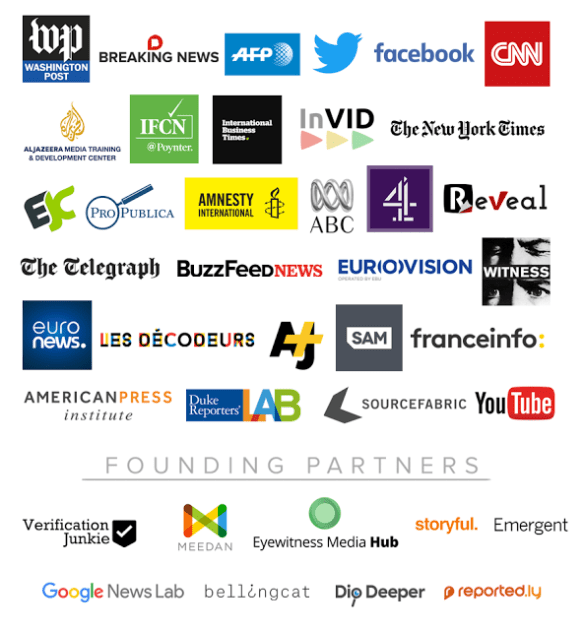
In a surreal and stunning example of 21st century propaganda and censorship, Google has cobbled together a coalition it is calling “First Draft” to tackle what it calls “misinformation online.”
First Draft’s “founding partners” include News Corporation’s (parent company of Fox News) Storyful and NATO think tank Atlantic Council’s “Bellingcat” blog, headed by formally unemployed social worker Eliot Higgins who now fashions himself as a weapons expert and geopolitical analyst despite no formal training, practical real-world experience or track record of honest, unbiased reporting. In fact, between News Corporation and Bellingcat alone, Google’s First Draft appears to be itself a paragon of, and nexus for “misinformation online.”
Google’s Glaring Conflicts of Interest
Google too, having for years now worked closely with the US State Department, faces its own conflicts of interest in “social newsgathering and verification.” In fact, Google has admittedly been involved in engineering intentional deceptions aimed specifically to skew public perception, including doctoring its maps and Google Earth in real-time amid conflicts in favor of US-backed militant groups and through the development of applications designed to psychologically target the Syrian government into capitulating before US-backed militant groups.
The UK Independent in its article, “Google planned to help Syrian rebels bring down Assad regime, leaked Hillary Clinton emails claim,” would report that:
An interactive tool created by Google was designed to encourage Syrian rebels and help bring down the Assad regime, Hillary Clinton’s leaked emails have reportedly revealed.
By tracking and mapping defections within the Syrian leadership, it was reportedly designed to encourage more people to defect and ‘give confidence’ to the rebel opposition.
The article would continue:
The email detailing Google’s defection tracker purportedly came from Jared Cohen, a Clinton advisor until 2010 and now-President of Jigsaw, formerly known as Google Ideas, the company’s New York-based policy think tank.
In a July 2012 email to members of Clinton’s team, which the WikiLeaks release alleges was later forwarded to the Secretary of State herself, Cohen reportedly said: “My team is planning to launch a tool on Sunday that will publicly track and map the defections in Syria and which parts of the government they are coming from.”
Cohen would conclude:
“Our logic behind this is that while many people are tracking the atrocities, nobody is visually representing and mapping the defections, which we believe are important in encouraging more to defect and giving confidence to the opposition.”
Can Google then be relied upon to sort out “misinformation online” if it itself is directly involved in manipulating public perception to achieve US foreign policy objectives? To impartial observers, the answer is clearly “no.”
First Draft would publish on its website a post titled, “Social networks unite with global newsrooms to take action against misinformation online,” adding further details behind the alleged rationale of the coalition. It would state:
Today, news breaks online. Today, the first images to emerge from a breaking news event have been captured by an eyewitness. Today, injustices that may never have been reported become global news stories because a bystander reached for their smartphone. Today, malicious hoaxes and fake news reports are published in increasingly convincing and sophisticated ways.
We live in a time when trust and truth are issues that all newsrooms, and increasingly the social platforms themselves, are facing. In July, the Guardian’s Editor-in-Chief Katharine Viner wrote about the ways technology is disrupting the truth, explaining “in the news feed on your phone, all stories look the same – whether they come from a credible source or not.” Filtering out false information can be hard. Even if news organisations only share fact-checked and verified stories, everyone is a publisher and a potential source.
The members that constitute the First Draft coalition, however, have enjoyed an uncontested monopoly for decades in determining just what the “truth” actually is, as well as a monopoly over propagating things the global public now know for a fact were “untruths.” Again, we see another case of the proverbial fox guarding the hen house.
The Liars Who Lied About WMDs in Iraq Will Protect Us from Liars Online?
Indeed, many of the organizations that constitute First Draft’s coalition played a pivotal role in perhaps the most destructive and costly lie of the 21st century (to date), that involving alleged “weapons of mass destruction” or “WMDs” in Iraq, serving as the pretext for the 2003 US-led invasion of Iraq.
According to some estimates, up to a million perished in the initial invasion and subsequent occupation. More conservative estimates are still in the hundreds of thousands.
Undoubtedly, the invasion, justified by lies propagated across the entirety of US and European media, helped trigger a predictable chain of catastrophes that have left the Middle East to this day in conflict and ruination. These same US and European media organizations, the same ones now signing their names to First Draft, also helped justify the continued presence of US troops in Iraq for years after the invasion, up to and including today.
And the same names signed on to First Draft are also the same names who helped sell the disastrous intervention in Libya and who are now attempting to sell yet another direct Western military intervention in Syria.
And it is perhaps the lack of success these same names are having in selling this most recent potential intervention in Syria that has precipitated First Draft’s creation in the first place.
There is a burgeoning alternative media composed of individual independent journalists, analysts and commentators both biased and impartial, both professional and amateur, competing directly with and overcoming the West’s longstanding monopoly over international public perception. There is also the emergence of professional and competitive national media organizations across the developing world who are taking increasingly large shares of both the West’s media monopoly and its monopoly over the public’s trust.
It is clear that First Draft has no intention of protecting the truth as none among its membership have done so until now individually, but rather in collectively protecting what the special interests behind these organizations want the global public to believe is the truth. First Draft is a desperate measure taken by Western special interests to reassert the West’s dominance over global public perception by leveraging the widely used social media platforms it controls, including Facebook and Twitter, as well as IT giant Google and its large range of services and applications.
In the end, all that First Draft is likely to accomplish is convincing the developing world of the necessity of creating domestic alternatives to Facebook, Google and Twitter, as well as to continue expanding their own domestic media organizations to better represent their respective national interests upon the global stage and to dilute the dangerous and destructive media monopoly the West has enjoyed and abused for decades.
Until the members of First Draft can cite a lie told by their competitors that is as destructive and as costly as their own lies preceding and underpinning the invasion and occupation of Iraq or the more recent destruction of Libya, their efforts appear more as a means of further deflecting away from the truth, not defending it.

By Michael Garfield
Source: Reality Sandwich
Erik Davis is the author of TechGnosis: Myth, Magic, & Mysticism in the Age of Information (recently reissued by North Atlantic Books with a new afterword). An investigation into how our transcendental urges play out in the realm of high technology, it is a rare treat – both an exemplary work of scholarship and also a delightful read – a florid, fun, and virtuosic play of language. Even more impressive is that in our metamorphic times, this book has aged considerably well. TechGnosis is in ways more relevant today than it was in the rosy dawn of 1998, before The Matrix and the iPhone, Facebook, and Edward Snowden. We’re living in the future. Read this book and learn the territory.
Over a glitchy Google Hangout (you can watch both parts on YouTube), Erik and I discussed our culture’s highest hopes and darkest dreams for our collective future, and how they’ve both become more complicated since the turn of the Millennium.
If you imagine browser windows as a kind of portal in between dimensions – if you wonder when the apes and whales will open social media accounts – if you believe that we can find a way to surf the turbulence of our connected century with grace and humor – then read on…
(Thanks to Terra Celeste and Ivan Marko for transcribing this! This is about one-third of the full conversation. You can also read the transcript in its raw entirety here.)
Erik: I apologize for our developing-world level of internet connectivity. Here in San Francisco! That’s right, folks, you heard it right: I live in the city of San Francisco, the absolute white hot center of the technological creative mutation, and yet my internet’s kind of crappy.
Michael: Well, you know, San Francisco was where Skynet was headquartered in the last Terminator film, so it may just be that your home is becoming ever-more inimical to human existence.
Erik: And the Federation, too! In a way those were the two models, right? On the one hand, you have the Federation from Star Trek, where it’s a liberal, UN, kind of globalist model – we’re no longer fighting nation states, we’re still human beings, we have desires, we get to drink tea and explore the universe. That sounds pretty cool from a humanist point of view, and yet on the other side we have Skynet, which is of course a whole other ball of wax. In a way, isn’t that it? It’s the struggle between the Federation and Skynet.
Michael: It’s funny, ‘cause most of what I wanted to talk to you about today was about how your book -– which is a brilliant piece of writing – has aged since 1998. The new volume includes a new afterword from the 2004 edition, as well as a new afterword from the 2015 edition. One of the things that you discuss is the way that the expectation that we had of boundary dissolution and transcendence at the turn of the millennium has become more complex. Now, it’s more of just a general shifting and metamorphosis of the construction of new boundaries. And so, like in the most recent Star Trek films and Terminator films, we now have good Terminators that believe they are people and are willing to donate their heart to the dying members of the human resistance. You know, the actual human heart that these Terminators possess, in order spoof human security systems. And then, in the latest Star Trek film, the threat comes from within the Federation, from a black box military program. Our culture seems to be getting more and more comfortable with these liminal zones and these ethical complexities. Less naïve with respect to that kind of simple dyadic distinction.
Erik: Techgnosis first came out in ’98. I talk a lot about gnosticism in the book and about these ancient Christian heresies about the spark in us that can escape from this prison that’s run by evil demons who are fabricating reality. That ancient model of mysticism and theology just fits like a hand and glove in our digital era. And then the Matrix films come along and I was like, “Oh my God, so beautiful.” It was just a perfect expression, and I wrote about that in the afterword for the 2004 edition. Nowadays a lot of the topics that I wrote about are even more available and perceivable through popular culture because popular culture has gotten weirder, more full of occultism, more intense, even as, in some ways, it’s become more ordinary. A lot of these sort of topics were very fringe in the ’80s or even the ’90s, in the sense that you had to kinda dig for occultism, for Satanism, for people who believed that they were channeling deities. All this stuff was part of a subculture, an outsider culture. Whether we believed it or not doesn’t matter. In a way, it’s not that there are necessarily more people who believe in these things. It’s just that they’re more available, because of the way that popular culture introduces these ideas. We become fans of shows. Fantasy and science fiction have become the norm.
Michael: I’m sure you remember when James Cameron’s Avatar came out, and the Avatar world immediately took off within the LARPing community. And so you started to see this foreshadowing of a new dysphrenia, a psychological disorder of the possible fragmentation of worldspaces that we seem kind of doomed to experience with the advent of the true landing of virtual reality. These people were so just morose and desperate because they became so immersed in the Pandora world that they couldn’t readjust to their life as human beings. It’s sort of akin to my generation’s wave of acid burnouts, maybe. As we invest more and more of ourselves into this increasingly popular and available and sexy because it’s not just animated by our religious impulses, but it’s actively being advertised, and commercialized and sold to us. We’re really being encouraged to throw ourselves into these alternative worldspaces. And then there isn’t a landing pad for when we get back. So I feel like one of the lasting lessons of your book, one of the reasons that I feel its resonance remains, is because it allows a person to integrate those experiences. In a way, it functions as a manual for understanding our drives and the larger emotional matrix in which we play with new freedoms to explore occult realities.
Erik: That’s very well said, actually, because in conventional society, even very recently, these things have largely been shuttered out. My generation grew up in the shadow of the hippies, and those things were around, but they were very much part of the counterculture. They were either mocked or ignored in the New York Times reality, which is still kind of a good symbol for consensus reality. I’m not even sure if we have a consensus reality anymore, or if it’s not some crazy topological knot, but in the old days, it had a little bit more stability to it, and you would never see these things acknowledged. Or if they were, they were pathologized – it was crazy, it was absurd, it was narcissistic and navel-gazing. This was true for a whole range of things – meditation, esotericism, UFOs, psychedelics, the whole range of extraordinary experience that people wanted to seek and experience.
As someone who basically keeps my feet on the ground, I’m largely skeptical in temperament. I’m very anthropological in my approach, which means I like to go into environments and participate as I observe, that classic stance of participant-observation. And what’s come from that is a realization that you can plunge very deeply into very interesting, rich otherworlds that are full of magic and enchantment and bizarre synchronicities and wonderful downloads, but at the same time you can also trust the ability to return to the body, to the ordinary, to the conditions of human experience in an everyday way, and that those don’t have to be in conflict so much.
I think that these experiences are not only really valuable, but they’re absolutely necessary to understand what’s actually happening. Whether people acknowledge it or not, a lot of the time we are driven by desires to be in dreamworlds, to achieve unusual-states-of-consciousness, to find them inside ourselves and see the way that they’re driving us. There’s a strong kind of rationalist technologized way of thinking about experience that’s very pervasive now, that’s actually carried like a philosophical virus through the widespread notions of tweaking and controlling your experience, of making yourself more efficient or powerful. So for me it’s really important to keep portals open to the unknown, to the mystery, to the bizarre, because it’s precisely in those encounters that we see beyond the rationalistic frame, which often is, in my opinion, benighted. Instead, we can adopt a more open-ended, but not necessarily mystical, attitude to the whole range of otherworldly experiences.
Michael: There’s a through-line here in one of the last chapters of Coming into Being: Artifacts and Texts in the Evolution of Consciousness by William Irwin Thompson, someone whom I know that has inspired us both immensely. That books last chapter a chapter is about how the Ramayana tells how humans and animals allied to expel the demons from what we now take as take as mundane, everyday reality. Bill Thompson’s view was that the Electrical Imaginary descending back into our networked global civilization is opening a portal, and that the screen is literally a shamanic window through which these spirits are granted fresh access to our world. And then in your latest afterword you talk about how the irony of these ultra-hyper-realist-skeptic-atheist-revenge-of-the-enlightenment types is that you can’t actually create a complete model of the mundane world. You can’t perfectly map the enlightened cosmos without getting into all of the weird stuff, the out-of-body experiences, the UFO abductions. These things have to be explained in order to cast out all of the shadows, but the naïve attempt to cast them out is really just an invocation. It’s like the topological knot you mentioned earlier, where merely addressing them makes them a more vivid part of our reality.
Erik: Absolutely. I think that that’s part of the deeper logic behind the renaissance of psychedelics. In many ways, “psychedelics” as a topic is a key site in understanding how modern technological scientific people recover, rediscover, and repackage, if you will, these kinds of liminal states and otherworldly encounters, with their potential sources of meaning and spiritual experiences. I also think that one of the reasons we have seen such an incredible renaissance emerge so quickly is because it was an inevitable part of scientific logic. Science has to take the brain seriously, it has to take the experiences in the brain seriously. Psychedelics are clearly physical, material agents that produce somewhat regular phenomenological effects. We have to understand that if we’re going to understand the brain. Any reasonable scientist is going to say that. And, whoa, lo and behold, it actually seems to do some good. So the genie is out of the bottle, and the genie doesn’t mean that we’re going to return to some kind of mystical worldview. I don’t believe we are. I think we’re in a state of tremendous mixing, of a multidimensional view where we have to learn how to move between different kinds of frameworks, including occult and animist frameworks, including mystical or religious frameworks, but also including secular, critical, analytic frameworks – scientific in that classic sense as well. How to do that I don’t know. But I do know that it’s a multidimensional field and I think that that’s why we see this turn towards the very multidimensional psychedelics.
Michael: Yeah, definitely. That is, in the sense of the original articulation of TechGnosis. You’ve got that chapter, “The Path is a Network”. There is something about the way the network allows for this manifold, multifaceted appraisal of reality, that really breeds and encourages and nourishes multiperspectivism. And so, in a way, I think the inherently psychedelic nature of our age, and what’s become really just like much more imminently and vividly obvious and easy to spot about the mainstream culture in general, is that we don’t all agree. It’s a much deeper revelation of the same kind of cultural relativism that we started to experience through the global interchange and commerce a couple hundred years ago, but now it’s to the point where culture has splintered to such an extraordinary degree due to the fact that everyone at the dinner table is occupying their own iPhone reality portal, that the main yoga of at least the first half of the twentieth century seems to be the psychedelic yoga, of being able to take our ontological conclusions lightly, and to be able to juggle them and to adopt them when they’re appropriate but to treat them with the kind of middle-way balance of skepticism and sympathy that you have modeled for your readers.
Erik: Yeah, that’s a really important thing for me. Also, itIt also plays an important role in a lot of the stuff that we haven’t been talking about, which is the dark side of the tale. Probably my proudest thing about TechGnosis is that it first came out in 1998, so the book was written during the first internet bubble. This was the time when a truly millennialist set of ideas were held by many people working in technology, the new rules of the economy of abundance. That kind of utopian thinking.was partly legitimately believed. I knew a lot of these people, I was kinda part of that world, of people who were imagining the potential of virtual reality, of new kinds of political formations, people drawn together in new forms of community, etc. At the same time those ideas were also ruthlessly exploited by capitalist forces, which created essentially a kind of ponzi scheme of IPOs. And so, the sense that something new and different was actually happening was simultaneously exploited.
When I was writing TechGnosis, it would have been easy for someone to write a much more happy, fluffy vision of the connections between spirituality and technology. “Here we are, just around the corner, just about to break through!” But for me, that sense of transformation was always accompanied by a shadow. If you open the portal and you accept the existence of these half-fantastic beings, there are demons there as well. In our future visions now we feel the presence apocalyptic energies. There’s the sense of mass breakdown, of ecological collapse, or the rise of a fascist surveillance state. On some intimate level we know that every time we’re using a device we’re moving through a shadow realm where we don’t know what sorts of agents – entities, algorithms, human beings – are perceiving and making meaning out of our operations. That is an unnerving, uncanny situation, and it’s one that we have to live with.
We have to acknowledge that we do have these fears and terrors, and apocalyptic presumptions inside of us, inside our imaginations, inside our hearts, inside our stories, inside our cultural traditions. And so we have to be very careful about where and how we mix the apocalyptic templates that we carry in our imaginations with the actual real conditions that we find ourselves in. It’s very tricky, but I suspect it takes that same sort of balance of skepticism and sympathy into the shadow realm as well as the utopian, or at least poetic possibility. And in a lot of ways I feel that’s where we’re at. That’s part of why I do what I do, is to try to kind of map that ginger, open, but questioning space, because it seems like one of the places to try to navigate these very difficult issues.
Michael: So many people worship the idea of the return to nature, or Terence McKenna’s idea of an archaic revival, this sort of forward-escape atavism where we go all the way around and end up back where we started, transformed. But we’re also naïve to the lived reality of not being on the top of the food chain, and that’s absolutely part of this that comes back, it can’t be divorced from the rest of it. We long for the community of the tribal life that we left behind, for the openness, the permeability of the self that we experience. The last experiment of civilization was profoundly dissociative, isolated, and lonely, and as consequence, we have a totally pathological relationship to the natural world. But in restoring that, in the humility of science recognizing its ultimate ignorance, we move back into an age where we’re no longer able to kid ourselves quite so successfully about the dragons that we have swept under the map. They’re still there, and they’re in a way even more alive for us now.
In your interview with Vice, you said a god is just a fiction that everyone believes in. So in a way – and this is kind of Information Warfare 101 – even if the NSA did not have supercomputers inside that Utah data complex, the fact that they built it, and that it can be observed on Google Maps, holds this profound power over the human imagination, and so we’re all having to catch up really quickly to these magical concepts. Even if they’re not clothed in the language and trappings of magical traditions, we’re being reacquainted with the power of the symbol and the power of ritual, and the sway that an idea has over the population when it becomes harder and harder to verify things beyond the shadow of a doubt.
Erik: You could call it conspiracy thinking, although that gets defined in all sorts of ways, some of which I think are themselves forms of mind-gaming. Either way, we’re in a realm of mind-games, where perception is reality, and where the crafting of perception takes place on multiple levels through multiple agendas. Multiple agents are crafting reality in a more and more overt way, even as we’re technically learning to craft subjective experience more and more. Here we’re getting into the edge of Virtual Reality 2.0. I think that, again, familiarity with these occult or even animist liminal zones will help us navigate through the jungle that we’re in. I mean, I can totally understand why people want to drop out of this thing. Like, fully drop out – whether into criminal underworlds, into darknet trafficking, or whether they go off the grid, or try to monkey-wrench the show. Those desires makes a lot of sense to me. It’s not who I am, it’s not where I am, but I can resonate with that. So, as long as I’m still participating in this network world that we’re sharing, that we’re fabricating, that the machines are fabricating, that we’re sharing with the machines, we have to develop that kind of light step.
You also mentioned a sense of the larger ecological framework that we’re in. As we look at what’s happening with technology, as we try to understand what’s happening with communication and human civilization, it’s impossible to extricate it from this larger ecological condition of crisis and no-going-back. It really feels like what we’re being asked to do, ethically and imaginatively, is to extend our ability to sympathize, to engage with, and even just to leave a space open for that which is outside of us, outside of the human frame, outside of the human story. That Outside may be technology, in the sense of the algorithmic intelligences that are already beginning to swamp our world, as well as the complex institutions and networks that are distributing these things. But that Outside also supports a more ecological and even cosmic view. We’re on a planet, the planet’s changing rapidly, spinning in space. All of those larger views, I think, are what we’re called upon to connect with.
I think one of my greater fears or concerns – I mean, I have so many, but just talking specifically about technology, and how people use it – is that it’s very easy to stay within a kind of human narcissistic world through media, especially social media, and the internet. I see people putting their energy into virtual or technological information circuitry, getting absorbed into a mass-cybernetic web of media, with its transmission of human stories and human perceptions and human egos and identification and projection. The whole game is so absorbing, so seductive, so fascinating, so enervating, that it can drown out our ability to wrestle with the non-human – whether it’s technology, geology, animals, capital flows. We need to become better post-humans, not narcissistic post-humans seeking our pleasure buttons, figuring out the best way to design some kind of crazy experience. That’s great, it’s part of the whole picture, but we have to also really think about what does it mean to live in a profoundly interwoven cosmos that necessarily draws us out of our narrow human egoic frame.
Michael: I totally agree. So, in light of that, I’m really fascinated by what you might have to say on recent developments on the interspecies internet – have you heard much about this? There was a TED talk about it a year or two ago.
Erik: I think I know what you mean. Why don’t you set it up?
Michael: A couple of years ago, Vint Cerf, Peter Gabriel, and a couple other people – dolphin researchers, bonobo researchers, and technologists – came forward at a TED conference to launch the idea that we can get into the sensorium of other animals and understand the way they experience things well enough to create computer interfaces for them that perform something like “Babel Fish” or Google Translate, so that we can communicate – whether it’s through music, symbols, or something else – with some of these other animals that we know have high intelligence and a sense of self.
I was really excited about being a part of this in some way, just throwing my bid into this process, and then I started thinking about how it got more complex. Because, what’s really going on here is that we can scarcely recognize a world beyond ourselves without immediately attempting to colonize it with our technological bid for control. To reference George Dvorsky of io9, there’s something really beautiful in his fascination with animal uplift, and his vision of our ethical responsibility to involve non-human species in the fate of the planet – which is currently being decided by human parliamentary action. The dolphins should get a vote. The gorillas should get a vote. And the only way that they can get a vote is to involve them in the technological infrastructure that we’re creating that is allows us the hope and the opportunity for that Star Trek world government. At the same time, it enfolds them into our own personal and transpersonal nightmare that we just discussed, and ultimately they may not want to participate in our uniquely human breed of insanity.
Erik: Yeah, that’s very well put. You know, we keep stumbling onto this Faustian bargain. It increasingly seems to describe these kinds of situations. There are people who believe that we can design a good enough system where, even despite its flaws, we’re drawing in others to decisions about the best and most ethical thing to do. And at the same time you’re going to have people who are just, like, gagging in their throats. It’s like, after all of the violence we have exerted on the animal world, to do this is the final, most nihilistic violence – to draw them into this madness! And you could have the same discussion about the desire to colonize planets. How could we not get excited about the idea of human beings on Mars or even robots landing on asteroids? It’s just totally fascinating and wonderful, and yet it’s pretty easy to see what that would look like as an industry, and the kinds of problems that would arise in the way that seems stitched into the nature of human beings. Sometime you can almost be Christian about it. It’s a kind of original sin, a way of, like, always fighting and competing and outmaneuvering and exploiting and trying to create elites. All these things that civilization has been doing since the get-go, since we stepped outside of the Paleolithic life and made a pact with writing and social organization, with pyramidical structures. It’s an old, old, old pact, and it’s deeply religious. Our religion is fundamentally bound up with the mythology of the state.
And so, where I stumble now is…where is the state? Is it everywhere? Is it nowhere? Are we at a point where that whole relationship is shifting? Is it worth extending hope into these things, or is it reasonable to say, “Look, we just keep doing the same horrible thing over and over again, so let’s just tear it down.”
Getting back to the specific question about animals, though. I really buy that radical democratic notion in a lot of ways. Turning to the Outside, whether it’s animals or elements of technology or geological forces, is part of what democracy means. Part of the constitution in Ecuador recognizes the rights of nature. Not just nature, but “Pachamama” – and, as people who are interested in medicine work and indigenous worldviews know, Pachamama is a goddess. It’s a way of understanding and relating to the fecund, beneficent giving quality of the earth, in a spiritual light, or a personhood light, or an animist light, whatever you want to call it. And that’s part of the constitution, part of a legal document. The thinking behind that document is, “Look, it’s just extending the idea of rights, which is a modern construct. The notion of inalienable rights emerges at a certain point in Western history, it gets installed into governmental and legal forms. Initially it’s just for white men with property, then it’s just for men, then women get it, then people of color, whatever – you have this spreading of the notion of rights, so that now we are called upon to spread it into the environment as well.” Very tricky, very complicated, very confusing. What does it mean, to give nature a voice? Is “nature”, or Pachamama, even the right word? And at the same time, that seems like a very vital and significant mutation in the operating system of the state. You’ve got to factor in these others, even though exactly how that happens is so difficult to understand. So again, here we go! Plunging into the Faustian bargain!
Michael: It’s very much related to a book that I feel stands in a fun balance with yours. It came out this last year by Christian Schwägerl. It’s called The Anthropocene, and if you haven’t read it I highly recommend the read (editor’s note: Shwägerl has a number of excerpts published on Reality Sandwich). It ignores the mystical dimensions of things. Schwägerl lives in Berlin, and he’s very much operating from a secular, European Union, modern global ecological sensibility. But the whole idea of his book is that the last remaining wild places are, in a sense, artifacts, because they only exist due to the determination of the human hand to preserve them. That there is no real wilderness anymore on our planet, at least in the natural world. Everything is indoors, and we have to find a way to first recognize that the so-called “Human Age” is actually tilting us into this much more profound, complex, and difficult relationship with the non-human world.
But we do have to find a way to express that world in our own language and our own systems – for example, by honoring what he calls “ecosystem services” in our economy, not factoring out that the water cycle, the carbon cycle, and all of these supporting systems that have an order of magnitude greater economic value than anything we’re trading on the stock market. They must be preserved at literally all costs. But he is ethically divided by the question, “Do we have to talk about the rainforest in terms of its monetary value in order to save it?”
Erik: That’s the crux. I’m glad you brought up this topic of wilderness, because I think it’s a good way to reflect on one of the problems we face. On the one hand, we have the wild – what the wild represents, what it means to be wild, what it means to stumble across the wild in your life, We are talking the unknown, the mystery, the chaos, a kind of Dionysian encounter, an intensity that takes you beyond reason, whether it’s experienced in a natural environment or in your head, or in the city. There’s something about wildness that’s profound to human beings. It has a lot to do with what people seek when they’re spiritual seekers, when they’re religious, when they are plumbing the depths. When people question the autonomy or imperial demands of reason, it’s often in the name of some kind of wild – whether it’s the sacred or the archaic or the nonhuman.
At the same time, you can sit down and go, “But this whole idea of wilderness, of natural wilderness, well, it’s a construct, it’s part of the European imagination, and that imagination is over. It’s not doing anyone any good anymore.” Some very serious environmentalists will argue that ideas of wilderness or even “nature” are actually in the way. The argument is that the religious and spiritual ideas about nature that were such an important part of twentieth century environmentalism actually get in the way of the process of introducing these non-human factors into the system in a way that would actually force the system to recognize and negotiate with them, rather than pretending in this abstract, insidious way that they don’t exist. And I don’t know what to do with that tension between these two “wildernesses”. All I know is that it’s incredibly vital in whatever way that we keep a portal open to the wild.
In that sense I’m very different than rationalist people who think we just need to introduce everything into the system – that it has to be drawn into the logic of capital, it has to be commodified, it has to be seen. That the way to deal with pollution is to create carbon debt and to introduce it into the financial system. But that solution is a house of cards. I have a slightly, perhaps darker view that whatever tumult lies ahead, whatever sorts of forms of chaos we confront, whether they’re through a highly developed technological society that manages to keep things going, or whether society is forced to reorganize in the face of a major hiccups and breakdowns, whatever the thing is, the more that we are actually able to handle the wild, the chaos, the unknown, the mystery, the others, the whispers on the edge of our vision, the better we’ll be able to actually navigate that situation on an individual and a cultural level. There is a problem with the rational, reasonable, incorporate-everything logic, with its call to squeeze everything for its monetary value, to quantify everything, to quantify the self. All of that may be fine and well, but only as long as it keeps a space open for those kinds of encounters, for that kind of imagination, for that kind of risk and vulnerability.
But that’s often what doesn’t happen. So, in a way, my work, not just in TechGnosis, but in all the writing and conversations that I’ve done and continue to do is about riding these edges. I just want to keep those portals open, to keep the spaces open, so that people don’t feel like they have to be fools in order to engage these broader ways of seeing the world. That’s why it’s really important to keep those portals, those edges open.
Read more by Erik Davis here.
Read more by Michael Garfield here.
By Gustavo Tanaka
Source: Medium
A few months ago, I freed myself from society, I’ve released myself from attachments I had and fear that locked me to the system. And since then, I started seeing the world from a different perspective. The perspective that everything is changing and most of us have not even realized that.
Why is the world changing? In this post I’ll list the reasons that take me to believe this.
1 — No one can stand the employment model anymore.
Each one is reaching its own limit. People that work in big corporations can’t handle their jobs. The lack of purpose starts to knock the door of each one as a desperate scream coming from the heart.
People want to escape. They want to leave everything behind. Look how many people trying to become entrepreneurs, how many people going on sabbaticals, how many people depressed in their jobs, how many people in burnout.
2- The entrepreneurship model is also changing
A few years ago, with the explosion of the startups, thousands of entrepreneurs, ran to their garages to create their billion dollar ideas. The glory was to get funded by an investor. Investor’s money in hand was just like winning the World Cup.
But what happens after you get funded?
You become an employee again. You have people that are not aligned with your dream, that don’t give a damn to the purpose and everything turns into money. The financial return starts to be the main driver.
Many people are suffering with this. Brilliant startups start to fall because the model of chasing money never ends.
We need a new model of entrepreneurship.
And there is already many good people doing this.
3- The rise of collaboration
Many people have already realized that makes no sense to go alone. Many people awake to this crazy mentality of “going on your own”.
Stop, take a step back and think. Isn’t it an absurd, we, 7 billion people living in the same planet get so separated from each other? What sense does it make, you and the thousands (or millions) of people living in the same city turn your back to each other? Every time I think of that I get kind of depressed.
But fortunately, things are changing. All the movements of sharing and collaborative economy are pointing towards this direction. The rise of collaboration, sharing, helping, giving a hand, getting united.
It is beautiful. It brings tears to my eyes.
4- We are finally starting to understand what the internet is
Internet is an incredibly spectacular thing and only now, after so many years we are understanding it’s power. With internet, the world opens, the barriers fall, separation ends, union starts, collaboration explodes, help emerges.
Some nations made revolution with the internet, such as the Arab Spring. In Brazil we are just starting to use better this magnificent tool.
Internet is taking down mass control. There is no more television, no more few newspapers showing the news they want us to read. You can go after whatever you want, you relate to whoever you want. You can explore whatever you want, whenever you want.
With internet, the small starts to get a voice. The anonymous become known. The world gets united. And the system may fall.
5- The fall of exaggerated consumption
For many years, we have been manipulated, stimulated to consume as maniacs. To buy everything that was launched in the market. To have the newest car, the latest iphone, the best brands, lots of clothes, lots of shoes, lots of lots, lots of everything.
But many people have already understood that it makes no sense at all. Movements such as the lowsumerism, slow life, slow food, start to show us that we have organized ourselves in the most absurd possible way.
Each time less people using cars, less people buying a lot, each time more people trading clothes, donating, buying old things, sharing goods, sharing cars, apartments, offices.
We need nothing of what they told us we needed.
And this consciousness can break any corporation that depends on exaggerated consumption.
6- Healthy and organic eating
We were so crazy that we accepted eating any kind of garbage. It only needed to taste good, that was ok.
We were so disconnected, that the guys started to add poison in our food and we didn’t say anything.
But then some guys started to wake up and give strength to movements of healthy eating and organic consumption.
And this is going to be huge.
But what does it have to do with economy and work? Everything!
The production of food is the basis of our society. Food industry is one of the most important in the world. If consciousness changes, our eating habits also change, and consumption changes, and then the big corporations must follow these changes.
The small farmer is starting to have strength again. Also people who are planting their own food.
And that changes the whole economy.
7 — The awakening of spirituality
How many friends do you have that practice yoga? What about meditation?
How many used to do it 10 years ago?
Spirituality for many years was a thing of the esoteric people. Of those weird people from mysticism.
But fortunately, this is also changing. We got to the limit of our rationality. We could see that only with the rational mind we cannot understand everything that happens here. There is something more happening and I know you want to understand.
You want to understand how things work in here. How life operates, what happens after death, what is this energy thing that people talk so much, what is quantum physics, how can thoughts become things and create our reality, what are coincidences and synchronicities, why meditation works, how is it possible to cure with the hands and what about these alternative therapies that medicine does not approve, but work?
Companies are promoting meditation to their employees. Schools teaching meditation to kids.
8 — Unschooling movements
Who created this teaching model? Who chose the classes you have to take? Who chose the lessons we learn in history classes? Why didn’t they teach us the truth about other ancient civilizations?
Why should the kids obey rules? Why should they watch everything in silence? Why should they wear uniform?
Take a test to prove that you learned?
We created a model that forms followers of the system. That prepare people to be ordinary human beings.
But fortunately there are many people working to change that. Movements like unschooling, hackschooling, homeschooling.
Maybe you have never thought of this and you are chocked with the points I’m listing here.
But all these things are happening.
Silently, people are awakening and realizing how crazy it is to live in this society.
Look at all these movements and try to think everything is normal.
I don’t think it is.
There is something extraordinary happening.
— — — — — — — — — — — — — — — — — — — — — — — — — — — — —
Gustavo Tanaka — Brazilian author and entrepreneur, trying to create with my friends a new model, a new system and maybe helping to create a new economy.

By Luther Blissett and J. F. Sebastian of Arkesoul
A few years ago, Neal Stephenson wrote a widely-shared article called Innovation Starvation for the World Policy Institute. He began the piece lamenting our inability to fulfill the hopes and dreams of mid-20th century mainstream American society. Looking back at the majority of sci-fi visions of the era, it’s clear many thought we’d be living in a utopian golden age and exploring other planets by now. In reality, the speed of technological innovation has seemingly declined compared to the first half of the 20th century which saw the creation of cars, airplanes, electronic computers, etc. Stephenson also mentions the Deepwater Horizon oil spill and Fukushima disasters as examples of how we’ve collectively lost our ability to “execute on the big stuff”.
Stephenson’s explanation for this predicament is two-fold; outdated bureaucratic structures which discourage risk-taking and innovation, and the failure of cultural creatives to provide “big visions” which dispute the notion that we have all the technology we’ll ever need. While there’s much to be said about archaic, inefficient (and corrupt) bureaucracies, there’s also a compelling argument invoked over the cultural importance of storytelling and art and how best to utilize it. One of the solutions offered by Stephenson, in this regard, is Project Hieroglyph which he describes as “an effort to produce an anthology of new SF that will be in some ways a conscious throwback to the practical techno-optimism of the Golden Age.”
While Project Hieroglyph may be a noble endeavor, one could argue that it’s based on a flawed premise. The role of science fiction has never been just about supplying grand visions for a better future, but to make sense of the present. There seems to be an assumption that the optimistic Golden Age had a causal relationship with a perceived technological golden age when it may have simply been a reflection of it— just as dystopian sci-fi reflects and strongly resonates with the world today. Stephenson may be correct in his view that much SF today is written in a “generally darker, more skeptical and ambiguous tone”, but this more nuanced perspective does not necessarily signify the belief that “we have all the technology we’ll ever need”. Rather, it reflects decades of collective experience and knowledge of unforeseen and cumulative effects of technologies. Nor does such fiction focus only on destructive effects of technology, as large a component of the narrative it may be simply because it makes for better drama and the subtext is often intended as a critique rather than celebration. For example, the archetypal hacker protagonists of technocratic cyberpunk dystopias employ technology for more positive ends (though some question whether good SF, as in speculative fiction, needs to involve new technology at all).
A particularly positive function for dystopian sci-fi is its use as rhetorical shorthand. It’s increasingly common in public discourse on major issues of the day to invoke dystopian references. Disastrous social effects of peak oil or post-collapse are often characterized as Mad Max scenarios. Various negative aspects of genetic modification and pharmaceutical development conjure Brave New World. Anxiety over out-of-control AI and resultant devaluing of human life brings to mind films as varied as Blade Runner, The Matrix and Terminator films. The expanding police/surveillance state is reminiscent of 1984 and numerous classics which have followed in its footsteps including V for Vendetta and Brazil. General fears of duplicitous, psychopathic power elites and social manipulation have elevated They Live from relatively obscure b-movie to cult classic. The entry of the term “zombie apocalypse” into the popular lexicon may in part stem from fear (and uncomfortable recognition) of images of viral social disintegration and martial law-enforced containment efforts depicted throughout various media. The burgeoning omnipotence of multinational corporations and hackers in Mr. Robot may have been the stuff of cyberpunk dystopias such as Neuromancer and Max Headroom 30 years ago, yet, it still has much to contribute to the public discourse as contemporary drama. Such visions may not prevent (or have not prevented) the scenarios they warn us of but have provided a vocabulary and framework for understanding such problems, and who’s to say how much worse it could be had such cautionary memes never existed?
The prophetic nature of storytelling, inasmuch as it derives from the minds of authors, artists and commentators that coexist with tensions and contexts particular to their epochs, resonate with the oughts, ifs, and whats inherent to our daily lives. As it were, the cautionary element of narrative is a natural product of the human mind, and the premium of what involves sharing our mental reserves to the world. To creatively dwelve and concoct problems and solutions from experience, is an axiom analogous to that of the categorical imperative—purely, and in abstract terms of what rationality involves. Yet, often times, we find material that is in favor of cultural malaise; of all things pathological in our society, such as censorship, conformity, bureaucracy, authoritarianism, militarism, and capital marketing; things which underpin issues that, if left untouched, can engulf the real brilliance of our spirit.
Stephenson fails to see this point. SF, as any form of intelligent culture, denounces and opposes systems of oppression, and even shows us the how, when, and why—the frameworks, the makings of apparent utopias into dystopias. Dystopian storytelling can serve the efforts of downtrodden creators with utopian ideals as effectively as utopian stories can reframe a societal trajectory led by beneficiaries of real world dystopia (though it may be experienced as utopia for a privileged few). SF does not only conjure visions of better futures. They lend us vocabularies and syntaxes to understand, and impede the fallenness of a confused, and ever increasingly isolated humanity. They are languages that pervade our interiorities, and that allow the exterior to change.
At the core, SF is prophecy through reasoned extrapolation and artistic intuition. This is what SF stands for when properly aligned with the subjectivities of the oppressed, and not with the voices of oppression: true testaments of a space and a time; visions of the future that carefully partake in not committing the mistakes of the past; and tools for our personal and collective flourishing.
by Edward Curtin
Source: Intrepid Report
Today everything has become a spectacle, including writing. My title probably caught your eye, as it was intended. But now I would like to tell you a personal story about a man whose brilliant work foreshadowed and dissected the issues of my title before it existed. In this he was prophetic, and it is why his work is so important. He always insisted that true artists were able to uncover society’s conflicts before they emerged consciously. Though a psychologist by profession, he was in this sense an artist as well.
His name, Rollo May, has disappeared from public discourse in this era of biological psychology and psychiatry. This great American thinker and writer was the man who introduced existential psychology to the United States. And though he died twenty-one years ago, his prescient voice begs to be heard in our current conditions.
From his first important book in 1950—The Meaning of Anxiety—he examined key underlying issues that have plagued this country ever since: the worship of technology as a death cult; the loss of a genuine sense of self; sex obsessions leading to lovelessness and impotence; and violence yoked to a lack of compassion.
In book after book, he reiterated one of his central themes: that full passionate life is only possible when one refuses to block off from consciousness the frightful emotions of anxiety, guilt, and despair. In this, his life’s work ran against the grain of the emerging zeitgeist of happy pills, mood stabilizers, and the happiness industry. “After despair,” he wrote, “the one thing left is possibility.” For possibility (Latin, posse, to be able) means power, and true power only comes to those who dare to be weak and freely embrace their personal destinies and the truth of their political and cultural conditions. I think it is not an exaggeration to say that we are presently living in an era of despair, and to embrace that reality is a hard but necessary pill to swallow. May is a wonderful guide.
While topical, in many ways his message is timeless as well. But I would like to tell you about some things I learned from him years ago that speak to our current condition. And it seems fitting that I should begin these thoughts on a day when a prominent, mainstream website has published an article arguing that humans should be able to marry robots and the day of those blissful conjugal ties is in our not too distant future. So I will proceed with those lovely words ringing in my mind: “I now pronounce you robot and wife.”
It was during the closing years of the Cold War when he and I sat down for a long conversation about his thought. Cold War rhetoric and nuclear saber rattling dominated the news and a strong anti-nuclear movement was astir. I had been deeply impressed with May’s paradoxical thinking ever since I had read his award-winning Love and Will in 1969, a year in which I had been forced out of a college teaching position for “heretical” thinking and opposition to the Vietnam war. In his work, which was not openly political, I nevertheless found a voice of deep wisdom and prophetic power. He seemed to be unearthing hidden springs of the madness sweeping the country, and in so doing also addressing the future, and, of course, me. I was feeling particularly vulnerable, yet paradoxically intensely strong, as I had recently declared myself a conscientious objector from war and the Marine Corps. It was a time like today when death and destruction were in the air, and, as Yeats puts it: “Things fall apart; the center cannot hold/Mere anarchy is loosed upon the world/The blood-dimmed tide is loosed, and everywhere/The ceremony of innocence is drowned/The best lack all conviction, while the worst/Are full of passionate intensity.”
The first thing I noticed about May the day we met was that he seemed painfully vulnerable, as though he had so opened himself to existence that the slightest breeze could blow him away. Yet when he began talking I sensed a fierceness, as well, as I recalled a favorite quote of his from Beethoven: “I will seize fate by the throat.”
So I asked him, “In reading your works one of the things that strikes me is the vitality you draw from an awareness of death. Most people would call this morbid and depressing, and yet it seems to bring you joy. I wonder how this began for you?”
“Well,” he answered without hesitation but in his ruminative way, “I’ve had some long bouts with killing illnesses. I had tuberculosis for five or six years. I had malaria fever when I was in Greece. And I’ve had several other bouts with death. If most people would call the consciousness of death depressive, I think they are the ones who have the—what I would call—masochistic or neurotic viewpoint. All through human history mortality has been faced directly and out of it, and this especially true for the ancient Greeks, they got the sense of the value of life from the fact that we are mortal. Now our age is afraid of death and we repress it and we think the only wise thing is to think about living, which strikes me as itself very sick. It’s because we’ve wedded ourselves to technology, and technology is really a study of death. You say ‘vitality.’ You can’t speak of technology as having vitality. Vitality is the human beings contribution and he ought to use technology to make his life richer. But we have become identified with it.”
Presto! Back to the present/future! As if on cue, a refutation of May’s dismissal of machines having life walks in my door. I see the mailman deliver our mail, so I get up and fetch it. An invitation has arrived for a public lecture at the college where I teach—a lecture by the futurist Ray Kurzweil, the man of “Singularity” fame, the prognosticator of the day he says is coming when artificial intelligence will surpass human intelligence and human biology will disappear into the machine. Ray has a plan to never die, so he takes 130 plus supplements a day to keep himself alive until he is able to upload his consciousness onto a hard drive and become one with the machine for a happy immortality as bits of information. Sounds like a great hereafter. And Ray has a backup plan in case the pills don’t do the trick and keep him going until he impregnates the machine; he’ll be fresh frozen at the Alcor Life Extension Foundation where he expects to be defrosted like a frozen burrito in no more than fifty years.
May said to me, “I’m very much against the quantitative views of human life. You could live exceptionally as Pascal did and die in your middle forties. As Kierkegaard did also. The length of life I don’t think is relevant. The idea that we are going to prolong life for two hundred years seems to me to be the most misplaced goal in the whole technological, crazy scheme.”
It looks like Rollo had a point: the worship of technology as a death cult. He could see it then, and today it is carrying us to our doom unless we change course. “More and more,” he wrote, “the question is being asked whether society as a whole is psychotic, and the pause after the question is a sign that the answer could be yes as well as no.” There was, he then felt, a fear of psychosis on a very broad scale, and at the heart of this fear is a loss of faith in the reality of the self, as well as a widespread feeling that one can never be sure anything is real. This sense of unreality has increased exponentially since then, and the issue of self-identity has become a hall of mirrors in our reality-media funhouse. “As in a Kafka novel, everything is waiting for us, but we ourselves do not appear.” But what does appear today, as then, but in a slightly different guise, and grows larger and larger as people’s faith in themselves grows smaller and smaller and their sense of impotence increases, is the possibility of nuclear warfare and world destruction—a new cold war started by the United States by encircling Russia and setting Ukraine ablaze. The ultimate technological death cult is, of course, nuclear weapons .
May made the connections. Like the great sociologist C. Wright Mills, he knew that our destinies are personal and social, and to deny one is to deny the other. By being existential he meant understanding the individual, not as an atomized self, but as a person-in-the world. Mills called it the sociological imagination; May preferred the term paradoxical. But they were on the same page. One’s sense of self—self-identity—is rooted social and historical conditions.
Starting with Man’s Search for Himself in the 1950s and continuing until his death in 1994, May repeatedly explored the reasons why there was an increasing loss of a genuine sense of self resulting in widespread identity confusion and a growing apathy linked to a lack of compassion. He clearly described the anxiety and loneliness that ate at so many people who “not only do not know what they want; they often do not have any clear idea of what they feel.” Feeling only empty and bored and lacking a real sense of self, they conform to hollow cultural values and mores while consuming the goods and services that a consumer culture offers to fill them up. Consuming, they are consumed. This powerless dependency, rooted in a lack of self-identity and the need to be liked, leads to painful anxiety, despair, and powerlessness resulting in acquiescence to social ills. This is today’s selfie/media culture in a nutshell, what Christopher Lasch once called the culture of narcissism.
I obviously couldn’t ask him when we talked, but I can imagine his response to today’s trends of people marrying robots, selfie photos, Facebook, avatars and second lives in cyberspace, the growth of pornography, sex with machines, the sexual saturation of culture, electronic warfare, drone killings, etc.—a bemused laugh and a comment suggesting the tragedy of it all. In Love and Will he wrote that “the contemporary paradoxes in sex and love have one thing in common, namely the banalization of sex and love. By anesthetizing feeling in order to perform better, by employing sex as a tool to prove prowess and identity, by using sensuality to hide sensitivity, we have emasculated sex and left it vapid and empty. The banalization of sex is well-aided and abetted by our mass communication. . . . They oversimplify love and sex, treating the topic like a combination and learning to play tennis and buying life insurance. In this process, we have robbed sex of its power by sidestepping eros (the creative life force); and we have ended by dehumanizing both.” He predicted that this technical approach to sex would lead to sex obsessions, lovelessness, and increased sexual impotence. And here we are—Viagra, big butts, enhanced this and enhanced that—all in the service of sexual satisfaction produced by the cult of technique and devoid of passion.
“Shooting” yourself with a phone camera, sex with a robot or a machine, and killing with drones—this is life today. We have become separated from our humanity by our machines. We worship our images and in so doing can’t grasp the death and destruction caused by our drones and foreign wars. Others don’t exist in this solipsistic culture. May saw it coming and explained why. He saw that violence was yoked to a lack of compassion and that this lack of compassion (to suffer with others) was connected to our flight from death and emotions we consider negative. He saw this form of thinking as an effort to control life that was self-defeating and could only lead to more violence.
“Paradoxical thinking,” he told me, “seems to me to be the only kind that gets to the root of human existence. I don’t think analytical thinking does. It leaves out too much. You remember Heraclitus. I think he’s quite right that we always think in terms of positive/negative. We think like electricity, thus both the negative and positive pole and the oscillation back and forth, and human thinking is a play with opposites.”
Since he has written so much about the breakdown of our traditional myths and symbols, I asked him if there was any one word or symbol that he thought encompassed the body of his work.
After a long pause, he said, “No, I think that’s impossible for any person who writes to say. I think you could say it much better than I could because we’re so much in it. All I know is that I think paradoxically.” And without pause or any word from me, he continued. “Well, if you wanted to push me, I would say that what I think is the basic, well, the basic symbol of my life, I would say that it is compassion. That’s what matters most to me. I grew up in a rather difficult family, quite difficult. I did not have a good childhood. I was quite lonely as a child. And I did suffer a good deal.”
Out of this childhood pain, he learned early to be a therapist for his family, and felt that these experiences gave him an acute sensitivity to others’ feelings. In his memoir Paulus, about his friend, Paul Tillich, the great Protestant theologian, he wrote words that could equally apply to himself: “Someone has to mediate, to make a connection through his own life between opposites.” For out of his wounds, May has created a powerful body of writings, and out of a torn self, a paradox of wholeness.
For us today, in the era of apathy, depression, and indifference to the suffering and deaths of “others” everywhere, May’s work begs to be resurrected. He urges us to care again, and to let our care and compassion lead us to act to stop the violence that we are taught to ignore. Don’t look away, I can hear him say, face fully all dimensions of the human experience, the negative and positive; remember that despair and joy are linked to the possibility of freedom; reject the cult of death that hides within technological obsessiveness; and remember that love brings the intimation of our mortality but also our greatest joys and passions.
And if he were still sitting across from me—and you—today, he’d probably also say with a grin, “Above all, don’t marry a robot.”
Edward Curtin is a sociologist and writer who teaches at Massachusetts College of Liberal Arts and has published widely.
By Jay Weidner
Source: ZenGardner.com
The mythology of our modern, high-tech culture teaches us that the last frontier for humanity is outer space. Somehow, according to this emerging mythos, the fragile human body is supposed to be able to survive the rigors of travel in outer space over vast distances. The writers of science fiction and Star Trek-style television shows would have us believe that human beings can somehow endure through every kind of radiation and danger to successfully colonize other planets and solar systems.
But this notion is probably never going to happen. As this age ends and the next age begins humanity will lose its interest in conquering space. The last 6000 years have been spent conquering the space around us.
The last frontier of humanity is not the conquering of outer space, of other planets and solar systems. As we approach the end of this era we will realize that the last frontier is time.
Space is defined by the three dimensional reality that surrounds us. It is height, width and depth. We humans possess the most spectacular array of physical and mental abilities ever devised in creation to navigate these three dimensions. These abilities have enabled us to conquer our three-dimensional world.
Now at this critical juncture in history we discover that we have completely conquered the planet’s biosphere. People are living in the coldest environments imaginable and in the hottest tropical jungles. There are few mysteries left concerning the outer physical reality of our planet. Due to oil and cheap energy, we have been able to travel to any place on Earth. As this age of oil ends there will be only one mystery left for us to ponder.
This final mystery is the mystery of time.
Let’s take a look at our perception of time. Much of the way we experience the present moment depends on our experience of time past. The events of the past are distilled and repainted in our memories until their very reality loses its solidity. If we let them cook long enough, images of past events take on a dream like quality. Through this process, our remembrances frequently slide into a fantasy disconnected from anything tangible.
How often have we encountered someone who remembers an incident in a completely opposite manner from the way we remember it? Our minds appear to be constantly rewriting history to make it more agreeable to our present day wishes. Incidents in the past that are disturbing or frightening are frequently glossed over in our memory until they disappear only to be replaced by a memory that is more easily digested by consciousness.
Our view of the future works in a similar but opposite texture. Whereas the past begins to become a dream within our memories, the future is the dream that has not yet arrived. When someone is successful in the material world we like to say that they have “lived their dreams”. This cliché reveals an intrinsic understanding that present and future reality is created from the dream state of the past.
This idea dovetails with the central belief of the Aborigines of Australia. The essential teaching from that tradition is that everything in our world begins in the Dreamtime. From their ancient perspective, every thought, every action emerges from a larger metaphysical landscape that surrounds and pervades our material world. They call this larger reality the Dreamtime. According to this tradition, each living thing first begins in the Dreamtime. After it has become fully developed in the Dreamtime it then concretizes and becomes a part of our three dimensional reality.
This process is recursive in that our future dreams are frequently constructed from the archetypes of ancient dreams. So the past and the future, the material world and the dream world work together to create not only everything that we see, feel and hear but all that we have manifested as human beings. If one looks beyond the veil of linear time, one can easily see that there is a certain control mechanism over this peculiar process. Because reality is so dependent on the dream world, it is possible to shift reality by simply shifting the dream.
Motivational speakers, politicians, television script writers, preachers and many others understand this fundamental concept and use it to re-script reality in their favor. The last thing that they want you to discover is that you have the innate ability to take control of your dreams. They much prefer that you dream their dream, live in their past and help build their future.
Just think about the nature of the media these days. Over the past century, finding new and ever more invasive means of manipulating thoughts, desires and actions have been at the forefront of the research conducted by “psychic engineers”; the advertising agencies, spin doctors, pollsters, pharmaceutical companies, and secret government agencies of our world.
Through the constant barrage of images projected by the media, through the manipulation of food, and the polluting of the atmosphere, much of humanity has become lulled into a hypnotic state and their Dreamtime is occupied with nightmares. This has led us to today, to the present moment, in which our planet and our species are in a state of crisis. To transmute this crisis, this very critical situation in time, we must learn to step outside of linear time and enter the Dreamtime, that subtle realm in which everything becomes possible.
As the word Dreamtime aptly describes, there is little difference between the dream and the time. This very moment will become a dream soon in your memory. Also you are creating the future that is racing towards you – right now.
The dream world, time and four-dimensional space are all the same thing. The fourth dimensional world, often referred to as ‘time’ by physicists, surrounds and permeates our three dimensional reality. Everything that we are is shaped and formed within this topological manifold that flows into and out of our existence. As the stream of time passes we have the ability to alter it’s course. Each moment of our lives offers us the chance to change the course of our dreams and the dreams of those we love.
Understanding this landscape, the ragged mountains and mossy valleys of the wilderness of time, is the frontier that awaits us. When we finally colonize this land and understand its many intricacies and nuances, we will realize that any future is possible. We will no longer need to be slaves to systems that require us to live in someone else’s dream. The powers of the dark sorcerers that rule our world will be overthrown and a new Dreamtime will be created. When we discover how to navigate the river of time, when the topological map of time is finally understood by us, all of the certain dangers that await us will vanish in the blink of an eye during REM sleep.
We are at the crossroads now. There is a choice. One road leads to a mechanistic, toxic, polluted, fascist nightmare from which we may never recover. The other road leads to a revitalized world where we live our dreams in freedom, prosperity and love.
One of the main aims of many ancient spiritual traditions is to provide us with the means to create a conscious break with the almost dictatorial dreams of our past. This is the essence of the teachings of the Buddha for instance. We are slaves to the dreams that we were born into, slaves to a past of which we had nothing to do. Many of these ancient spiritual traditions teach us how to break with the mental slavery that has burdened us for so long.
Humans frequently hurt themselves and others around them defending the imprinted dreams of their past and creating belief systems that make it all right to hurt and destroy people who come from a different past, a different dreamtime.
The way to stop this recurring cycle is to find our way towards a detachment from the heated beliefs and ego-inspired histories and cultures that we were born into. This is not to say that we should reject our traditions. Only that true liberation of ourselves can only begin when we detach ourselves from ingrained spiritual and cultural habits.
Right now we are trapped by time. And this means that we are trapped in a Dreamtime from which escape is nearly impossible. But as long as there is a chance, as long as the odds are not one hundred percent against us – and they are not – we should attempt to make this leap.
If we change the dream we can change the world and ourselves.
The spiritual emergence that is happening right now across the world is the realization that there is only one kind of time. There is no past and there is no future.
There is only NOW.
And we can change the NOW at any time that we like.
For more about the Shasta movie, go to ShastaMovie.com
Jay Weidner’s websites – JayWeidner.comGaiamTV.com
Jay Weidner’s DVDs
Jay Weidner’s book:
“The Mysteries of the Great Cross of Hendaye: Alchemy and the End of Time”
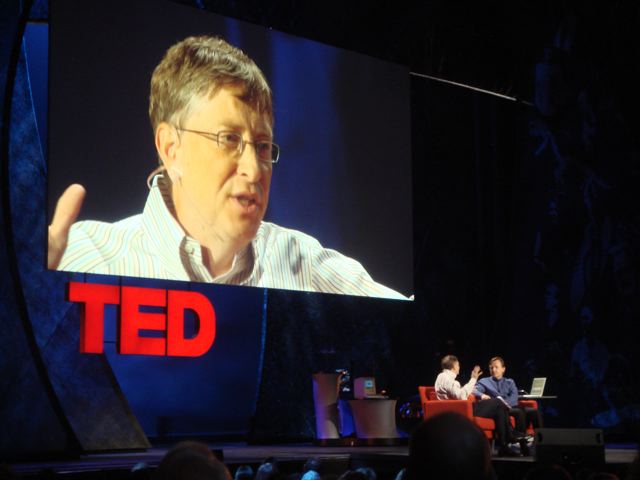
Though it was released late last year, I just recently found this provocative speech from Benjamin Bratton which addresses problems of the TED talks format ironically delivered as a TED talk (hat tip to 21st Century Wire).
Many of the issues brought up by Bratton have previously been addressed through satire in various Onion Talks.
Despite its problems, in defense of TED it is to their credit that they allowed a forum for an anti-TED presentation. There have also been a few thought provoking TED talks that I felt did not fall into the trap of over-simplification and yet conveyed ideas elegantly and efficiently. Unfortunately, some of those have been censored for ideological reasons, including this must-see talk by Nick Hanauer about economic inequality:
INDIAN COUNTRY NEWS
"It is the duty of every man, as far as his ability extends, to detect and expose delusion and error"..Thomas Paine
Human in Algorithms
From the Roof Top
I See This
blog of the post capitalist transition.. Read or download the novel here + latest relevant posts
अध्ययन-अनुसन्धानको सार
 After the Crash