NYT Propaganda War on Syria

By Stephen Lendman

Source: StephenLendman.com

On major issues mattering most, especially geopolitical ones, the NYT is a lying machine, a propaganda machine, an anti-truth telling operation, a virtual state-sponsored ministry of deception, masquerading as real news, information and opinion.

Whenever the US wages preemptive wars of aggression on nonbelligerent states threatening no one, or in their run-up, the Times cheerleads high crimes of war and against humanity instead of denouncing them.

It consistently and repeatedly blames victims of US aggression for high crimes committed against them — Syria one of numerous examples of its abandonment of journalism the way it should be for disinformation, Big Lies and fake news.

The Times falsely accused Syrian forces of attacking hospitals numerous times, a Pentagon terror-bombing specialty it ignores.

An earlier report turned truth on its head, claiming Syrian President “Assad attacks medical facilities to break the will of the people — and to destroy evidence of his war crimes” — a bald-faced Big Lie.

The Times calls US aggression on Syria “civil war.” There’s nothing remotely “civil” about it. US-supported cutthroat killer jihadists are referred to as “rebels.”

Most of their fighters are imported from scores of foreign countries, including Western ones — armed, funded and directed by the US and its imperial partners.

In its latest edition, the Times reported on what it called “a journey through shattered Syria” — ignoring mass slaughter, vast destruction, and widespread human misery caused by US-led aggression, along with using ISIS and other terrorists as proxy foot soldiers.

What’s vital to report, the Times consistently suppresses, substituting managed new misinformation and disinformation instead.

Why Assad’s government granted permission to the Times lying machine to visit the war-torn country was unexplained.

In the Damascus countryside, “there were few young men,” it reported.

Most youths are likely involved in defending their country against US-led aggression and jihadists it supports — what the self-styled newspaper of record suppresses.

Instead it claimed they “died in the war, (were) thrown in prison or scattered far beyond Syria’s borders.”

Many indeed died at the hands of US-supported jihadists or Pentagon terror-bombing. Claiming they were thrown in prison is a bald-faced Big Lie, a Times specialty about the war and all others the US wages.

Three Times propagandists visited Syria to see the devastation firsthand. Saying “infrastructure needs rebuilding” failed to explain its destruction by Pentagon-led terror-bombing and attacks by US-supported jihadists.

The Times lied claiming Assad “presided over the destruction.” It complained about not getting permission “to roam freely,” expressed angst as well that most Syrians met and spoken to expressed support for Assad.

In June 2014, he was overwhelmingly reelected president with an 89% majority — independent international monitors calling the process open, free and fair.

The Times and other Western media falsely claimed otherwise. Syrians want no one else leading them. They’re clearly hostile to the US, other Western, and Israeli interests.

The Jewish state is responsible for terror-bombing the country hundreds of times by its own admission — on the phony pretext of combatting an Iranian threat that doesn’t exist.

Syria and its people are struggling for the country’s soul, victimized by US-led aggression.

War in its 9th year continues with no end of it in prospect because both extremist right wings of the US war party oppose restoration of peace and stability to the country.

Instead of reporting accurately on what’s gone on and continues endlessly, including illegal US occupation of northern and southern Syrian territory — the Times falsely blames Assad for US high crimes committed against the country and its people.

NPR Mocks Cancer Survivor in Drumbeat of Syria Propaganda

Asma al-Assad, First Lady of Syria (from released Syrian Presidency Facebook page)

By Rick Sterling

Source: Dissident Voice

It may be a new low in propaganda. National Public Radio (NPR) used the news that Syrian First Lady Asma al-Assad had overcome breast cancer to mock her and continue the information war against Syria. They interviewed a Human Rights Watch staffer named Lama Fakih who is an American from Michigan now based in Beirut.

Do you believe Ms. Fakih in Beirut or do you believe people who live in Syria who say we are being lied to?  Lilly Martin is such a person. Although she is American from Fresno California, Lilly has lived in Syria for nearly 25 years. She is married to a Syrian and has two Syrian sons.  Dr. Nabil Antaki is another such person. He is a medical doctor in Aleppo, fluent in English and French as well as his native Arabic.

While NPR snorts about Asma al-Assad “sporting a chic blonde pixie cut”, Lilly Martin points out that she was recently bald while fighting for her life.

While Ms. Fakir in Beirut says that there is “quite a lot of anger” because Asma al-Assad has conquered cancer, Dr. Antaki says that Syrians are happy at the news.  Asma al-Assad is First Lady, mother to three children, and known for her compassion. Lilly Martin says that even while she battled cancer Mrs. al-Assad continued her charitable work.

While Ms. Fakih says that the “Assad government has been systematically targeting medical facilities and medical personnel”,  Dr. Antaki, who has remained in Aleppo throughout the conflict, says this is not true. While there are many western accusations that the Syrian government attacks hospitals, the evidence is remarkably thin.  One of the most highly publicized cases was regarding “Al Quds Hospital” in east Aleppo. In April 2016 there was a media blitz about this hospital having been destroyed by the Syrian Army. Following  the departure of the “rebels”, it was discovered that “Al Quds Hospital” was an unmarked portion of an apartment building, that it had NOT been bombed and was the LEAST damaged building in the area. It was determined that the nearby Nusra (Al Qaeda) headquarters and ammunition depot was the Syrian army target.  Accusations that “Al Quds Hospital” was bombed were false. It was a media stunt.

Ms. Fakih says that “Syrians have not been able to benefit from medical care in Syria since the beginning of the uprising in 2012”.   Lilly Martin simply says “This is factually untrue. The Syrian system of national hospitals, free services to the public, are in every area of Syria and have run continuously throughout the war.”  Dr. Antaki is an example; he is one of THOUSANDS of doctors working at HUNDREDS of hospitals throughout Syria. But you would never know it from NPR or Ms. Fakih.

It is true that there have been disruption and damage to many hospitals, as demonstrated in this jihadi assault on Al Kindi Hospital.  These are the “rebels” supported by Ms. Fakih and Human Rights Watch. They effectively supported them in east Aleppo until they were expelled from the city. Now Ms. Fakih and HRW are supporting the “rebels” in their last redoubt in Idlib.  There are countless videos demonstrating the cruelty and fanaticism of the “rebels”.  For example, the aftermath of the above assault on Kindi Hospital and the execution of the Syrian soldiers who defended the hospital.  Those who are cheerleading for the “rebels” and trying to prevent the Syrians reclaiming Idlib should look at the execution video to see what they are supporting.

The West has provided weapons and other support to the “rebels”. In parallel, there has been a campaign to whitewash the “rebels” and demonize the Syrian government.  On top of this, the USA has imposed crushing sanctions on Syria which make it difficult or impossible to get critical medicines and replacement parts for western medical equipment. Dr. Antaki says it took him 1.5 years to obtain a replacement part for a Japanese medical instrument.  I had my own experience with the draconian and inhumane sanctions. It took one year and endless hassle to send hearing aid batteries to help a deaf child in Syria.

This is one among hundreds of Syria “regime change” propaganda pieces broadcast on NPR. Behind a facade of authority and objectivity, there is bias and misinformation along with crocodile tears.  As Lilly Martin says, “While the Syrian government medical system has tried to meet all the needs of Syrian civilians during 8 years of armed conflict, still there are numerous cases where the needs were not met and Syrians have suffered, and that blame must be shouldered by every person who held a gun against Syria and their foreign supporters who have succeeded in bringing the Syrian people into the depths of destruction and despair.”

As to Asma al-Assad and her integrity, it is best to listen and judge for yourself.  At about 5:30 of the interview she speaks of the families of 100 thousand Syrian martyrs who died defending their country. “On a personal level, I am humbled by their determination, by their resilience, and by their love of Syria. They are my biggest source of strength and hope for the future.”

The sneers, misinformation, unverified accusations and de facto defense of Nusra/Al Qaeda by NPR and Lama Fakih stand in stark contrast.

Protecting Information Space from Facebook’s Tyranny

By Gunnar Olson

Source: Land Destroyer

The recent attack aimed at New Eastern Outlook (NEO) and several of its authors once again exposes the infinite hypocrisy of US and European interests including across their media and among their supposed human rights advocates.

It also exposes the severe threat that exists to the national security of nations around the globe who lack control over platforms including social media used by their citizens to exchange information.

This lack of control over a nation’s information space is quickly becoming as dangerous as being unable to control and protect a nation’s physical space/territory.

Facebook’s Tyranny  

NEO and at least one of its contributors had their Facebook and Twitter accounts deleted and were accused of “coordinated inauthentic behavior,” according to Facebook’s “newsroom.”

Their statement reads:

In the past week, we removed multiple Pages, Groups and accounts that were involved in coordinated inauthentic behavior on Facebook and Instagram.

It also reads:

We removed 12 Facebook accounts and 10 Facebook Pages for engaging in coordinated inauthentic behavior that originated in Thailand and focused primarily on Thailand and the US. The people behind this small network used fake accounts to create fictitious personas and run Pages, increase engagement, disseminate content, and also to drive people to off-platform blogs posing as news outlets. They also frequently shared divisive narratives and comments on topics including Thai politics, geopolitical issues like US-China relations, protests in Hong Kong, and criticism of democracy activists in Thailand. Although the people behind this activity attempted to conceal their identities, our review found that some of this activity was linked to an individual based in Thailand associated with New Eastern Outlook, a Russian government-funded journal based in Moscow.

In this single statement, Facebook reveals about itself that it, and it alone, decides what is and isn’t a “news outlet.”

Apparently the blogs the deleted Facebook pages linked to were “not” news outlets, though no criteria was provided by Facebook nor any evidence presented that these links did not meet whatever criteria Facebook used.

While Facebook claims that it did not delete the accounts based on their content, they contradicted themselves by clearly referring to the content in their statement as “divisive narratives and comments” which clearly challenged narratives and comments established by Western media organizations.

The statement first accuses the pages of “coordinated inauthentic behavior,” but then admits they were only able to link the pages to a single individual in Thailand. How does a single person “coordinate” with themselves? Again, Facebook doesn’t explain.

Finally, Facebook reveals that any association at all with Russia is apparently grounds for deletion despite nothing of the sort being included in their terms of service nor any specific explanation of this apparent policy made in their statement. New Eastern Outlook is indeed a Russian journal.

Other governments, especially the United States, fund journals and media platforms not only in the United States, but around the globe. Facebook and Twitter, for example, have not deleted the accounts of the virtual army of such journals and platforms funded by the US government funded and directed via the National Endowment for Democracy (NED).

NED-funded operations often operate well outside of the United States, while NEO is based in Russia’s capital, Moscow. NED-funded operations often don’t disclose their funding or affiliations.

Ironically, the accounts Facebook deleted in Thailand were proficient at exposing this funding to the public.

The bottom line here is that Facebook is a massive social media platform. It is also clearly very abusive, maintaining strict but arbitrary control over content on its networks, detached even from their own stated terms of service. It is a form of control that ultimately and clearly works in favor of special interests in Washington and against anyone Washington declares a villain.

Facebook would be bad enough as just a massive US social media platform, but the real problem arises considering its global reach.

Looking at Information Space as we do Physical Space 

A nation’s information space is a lot like its physical space (or territory). The people of a nation operate in it, conduct commerce, exchange information, report news, and carry out a growing number of other economically, socially and politically important activities there. It is not entirely unlike a nation’s physical space where people conduct these same sort of activities.

A nation’s physical space would never be surrendered to a foreign government or corporation to control and decide who can and cannot use it and how it is used. But this is precisely what many nations around the globe have done regarding their information space.

Facebook is essentially that; a foreign corporation controlling a nation’s information space rather than its physical space. Facebook does this in many nations around the globe, deciding who can and cannot use that information space and how that information space is used.

A US corporation just decided that a Thailand-based writer associated with a political journal in Moscow is not allowed to operate in Thailand’s information space. It made that decision for Thailand. It admits in its statement that it worked, not with the Thai government or Thai law enforcement, but with “local civil society organizations,” almost certainly referring to US NED and corporate foundation-funded organizations like Human Rights Watch. Again, this is a clear violation of Thailand’s sovereignty, however minor this particular case may have been.

If it is not a legal violation of Thai sovereignty and an intrusion into their internal affairs impacting people living within their borders, it was certainly a violation and intrusion in principle.

Protecting Information Space

Nations like China and Russia understand the importance of information space.

Both nations also understand the critical importance of protecting it. Both nations have created and ensured the monopoly of their own versions of Facebook as well as other social media platforms. They also have their own versions of “Google” as well as platforms hosting blogs, videos, e-commerce and other essential services that make up a nation’s modern information space.

There is room for debate regarding how this control over Chinese and Russian information space is managed by their respective governments, but it is a debate the people of China and Russia are able to have, however restrictive it may or may not be, with people, organizations, corporations and governments within their own country, not with an untouchable Silicon Valley CEO thousands of miles away.

China and Russia created these alternatives and exercises control over their information space almost as vigorously as they defend their physical territory, understanding that their sovereignty depends as much on keeping foreign influence from dominating that space as it does keeping invading forces from crossing their border.

Smaller nations like Thailand, the subject of Facebook’s most recent “removal” campaign would benefit greatly from creating their own alternatives to Facebook, alternatives created, administered, and serving their interests rather than Silicon Valley’s or Washington’s.

Thais, for instance, cannot have any meaningful debate regarding Facebook’s policies, terms of service or their apparently arbitrary decision made independently of both since ultimately Facebook is a foreign corporation that does not answer to either the Thai people or the Thai government.

For China and Russia, both nations adept at exporting arms to smaller nations affording them the ability to defend their physical territory, an opportunity exists to export the means for these smaller nations to likewise defend their information space.

By aiding these nations in pushing out abusive monopolies like Facebook, Beijing and Moscow will also benefit by watering down US control over global information space and the news and points of view US tech corporations “allow,” and providing more space for the sort criticism and scrutiny NEO and its authors were engaged in right before Facebook removed them.

What happened to individual empowerment in the internet age?

By Kurt Cobb

Source: Resilience

Apple Computer’s 1984 Superbowl commercial—one of the most iconic television commercials ever made—announced two things: the introduction of the Macintosh computer and that this computer could in some fashion allow each of us to escape a future of tyranny and social control prophesied in George Orwell’s dystopian novel 1984.

The computer age and the coming of the internet have certainly moved more power into the hands of the individual, giving him and her access to social and professional connections around the world, information on every conceivable topic, and awareness of events in real-time or near real-time across the globe. The possibilities of the combined computational power of the modern computer and the connectivity of those computers across the globe are still being explored and expanded every day.

So, how is individual empowerment faring? Not so well. It turns out that practically every device, piece of software and internet platform not only holds the promise of enhancing the individual’s power but also can be weaponized to undermine it.

We somehow forget that for every thing and every person we can look up on the internet, those things and people can look back. Naturally, we can try to protect ourselves with antivirus programs and firewalls. But as with any arms race, there is a never-ending back-and-forth struggle to create better tools and strategies for snooping on and disrupting computers and their networks and simultaneously to build defenses against the newest methods of attack and surveillance.

But I am less concerned with this battle than I am with the voluntary things we do that undermine all the individual empowerment that was supposed to come our way.

The single most important power humans have is their ability to pay attention. It’s our focus that allows us to do not only our daily tasks but also to perform progressively better at tasks we choose. Now the most important thing to know about our attention is that it is a limited resource. There are only so many hours in a day and only so many of those when we are not sleeping and only so many of those when we can pay attention to something outside our basic needs of eating, getting a livelihood, staying safe.

I have noticed a distinct generational divide between those who have grown up with cellphones and computers and those who purchased their first cellphone and personal computer after age 30 when their daily habits and outlook were already well-cemented. Those who joined the computer, internet and cellphone age as adults tend to see these devices and networks as tools for accomplishing certain tasks they had previously accomplished some other way such as keeping a calendar, holding meetings and writing and sharing documents.

Those who grew up in the age of the computer, cellphone and internet view these technologies as portals to experience. The most important things that are happening in their lives, social, cultural, and economic, are happening online and via cellphone. Experiences mediated through electronic means have become primary and more important than direct immediate experience.

I am most struck by this when I walk the streets and see person after person listening to something coming from their cellphones as they walk, run or bicycle. People can listen to whatever they like as far as I’m concerned. But it occurs to me that they cannot simultaneously pay careful attention to the world right in front of them AND to whatever they are listening to.

It reminds me of the quote attributed to then California gubernatorial candidate Ronald Reagan about the cutting of the state’s redwood forest: “If you’ve seen one redwood, you’ve seen them all.” That’s not exactly what he said, but his opponent captured Reagan’s view all too well.

In any case, we now have a segment of the population which apparently believes that there is little to notice in any environment and for whom the physical world is just a concept and not at all the endlessly complex, differentiated, nuanced and ever-changing place that I experience.

Today, we have virtual reality to entertain us, complete with virtual reality goggles. Does it not occur to those putting on the goggles that they are limiting their reality rather than expanding it? That they are limiting it to what the creators of that particular virtual reality wish to convey? And, all this is undertaken when the reality that is right in front of them in their homes, workplaces, and outdoors has barely been explored or understood.

Every modern communications device, cellphone, computer and virtual reality machine gives us a highly edited version of the world, one designed especially to meet the goals of those who created the devices. The primary goals are making money and controlling our behavior in order to get us to pay more attention (so our attention can be sold to advertisers) and/or to get us to make additional purchases.

The addictive quality of these technologies has been well-documented. But it is in the nature of the addict to believe that he or she is being nourished by the very things to which he or she is addicted. And, that is the most devilish trick of modern networks: the idea that our futures and very well-being will be enhanced—when, in fact, our autonomy is simply being dissipated as we give our attention to things which sap our own power and health and enslave us to marketing and programming executives who themselves are caught up in a system that does not value individual autonomy in the least.

There are, of course, the myriad ways in which individual empowerment has backfired and put us into far more danger than ever before. The ability of a small group of hackers to tap into critical networks which service power generating stations and water and sewer plants is a rising concern. Especially concerning are nuclear power plants.

Miniaturization technology is making it possible to put more and more destructive power in smaller and smaller packages. Combine that with the ready availability of drones and you get a lethal combination.

The rise of designer viruses, though not yet open to those without sophisticated laboratories, threatens an unstoppable epidemic.

Empowering the individual sounds great when you say it. But it helps to be specific about what kind of power you want the individual to have and how that power might be used in nefarious ways or simply dissipated by absorbing a person’s attention in ways that undermine that empowerment.

The centers of official power—economic and political elites, corporations, and the government security apparatus of police, intelligence agencies, militaries—are all petrified at the vast destructive power flowing to the hands of individuals and small groups. And, they are equally petrified at the individual economic, political and social empowerment available to the individual through the very technologies these elites have unleashed.

The first threat they use as an excuse for blanket surveillance, preventive detention and secret prisons. The second threat they hope will be dissipated by the myriad distractions that the commercial interests which now largely control the internet provide to the public.

Why is the New York Times still trying to sweep the Epstein case under the rug?

By Patrick Martin

Source: WSWS.org

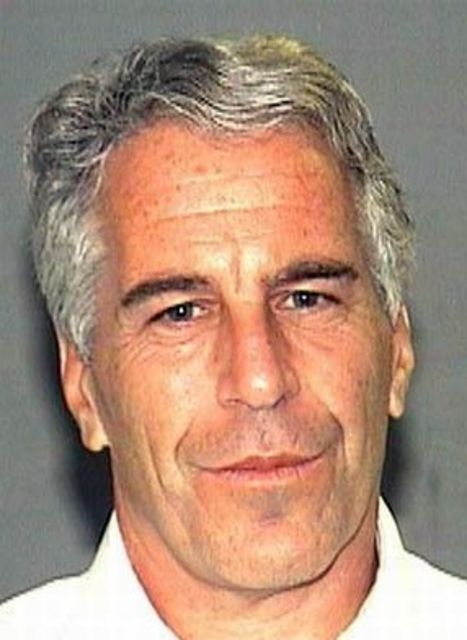
A prominent article published in the Washington Post Thursday exposes the systematic violation of prison rules governing the detention of multimillionaire sex trafficker Jeffrey Epstein during the period immediately preceding his death on August 10.

Reporter Devlin Barrett writes: “At least eight Bureau of Prisons staffers knew that strict instructions had been given not to leave multimillionaire sex offender Jeffrey Epstein alone in his cell, yet the order was apparently ignored in the 24 hours leading up to his death, according to people familiar with the matter.”

His report continues: “The fact that so many prison officials were aware of the directive—not just low-level correctional officers, but supervisors and managers—has alarmed investigators assessing what so far appears to be a stunning failure to follow instructions, these people said.”

This language is quite extraordinary, suggesting that Post reporters have reason to believe that the security failure has no legitimate explanation, and may have been the result of concerted action to leave Epstein exposed and vulnerable.

The report continues, “Investigators suspect that at least some of these individuals also knew Epstein had been left alone in a cell before he died, and they are working to determine the extent of such knowledge …”

In other words, numerous prison officials, including some in authority, were aware that Epstein—on suicide watch from July 23 to July 29—was alone in a cell, in violation of rules governing at-risk prisoners. (Other press accounts claim that his cellmate was granted bail on Friday, August 9, and released from custody, leaving Epstein by himself.)

Epstein was found dead in his cell the following morning, at 6:30 a.m. on Saturday, August 10. During that night, the two guards assigned to check in on him every 30 minutes did not do so. Both were said to have been asleep for some or all of that night, rather than standing watch.

The two guards reportedly falsified the logs to show that they had checked on Epstein as required, but these logs were contradicted by video evidence from a surveillance camera monitoring the hallway outside his cell.

Investigators from the FBI and the inspector-general of the Department of Justice have taken possession of the videotapes, but have released no information about what they show, including whether there were any unauthorized visitors to Epstein’s cell the night he died.

The Post report suggests misconduct on a scale so staggering that it leaves little doubt that Epstein was either murdered or allowed to commit suicide, with the former far more likely. It defies belief that so many Bureau of Prisons employees, including managers and supervisors, could have each independently decided to ignore the rules for handling the most notorious prisoner then in federal custody.

Epstein had been arrested July 6 at Teterboro Airport in New Jersey, and was being held on sex-trafficking charges that carried a possible sentence of 45 years in prison. The nature of the charges, combined with his vast wealth and his connections in high places—including to Donald Trump, Bill Clinton, Prince Andrew of England, and Saudi Crown Prince Mohammed bin Salman—ensured maximum television and tabloid publicity for the case.

Many powerful people feared exposure if Epstein were brought to trial, and there is ample evidence that he was preparing an aggressive and highly publicized defense rather than attempting a plea bargain that would have swept the case under the rug. Epstein was meeting with his lawyers for as many as 12 hours a day, and they have described his demeanor as anything but downcast or suicidal. (Epstein denied that he had attempted suicide July 23, claiming he was the victim of an assault by a cellmate).

Under these circumstances, the real question is why the bulk of the American media, spearheaded by the New York Times, has chosen to swallow the claim of “suicide” and denounced any questioning of the official verdict as a “conspiracy theory.” Epstein was killed in downtown Manhattan, only a few miles from Times Square. But most of the reports exposing new evidence in the case have come in the pages of the Washington Post, while the Times has published lengthy reports—such as a front-page account in its edition of Sunday, August 19—which could be summed up as “nothing to see here, move along please.”

It is worth recalling that when Epstein was first arrested, the Times editorialized against making a political issue out of his kid-glove treatment during his first sex-crimes prosecution in 2008. The editorial urged congressional Democrats to stay away from Epstein, although the US Attorney who had recommended a token 13-month sentence in 2008—with six days out of seven on work-release to run his financial empire—was Alex Acosta, chosen by Trump as his secretary of labor.

While the Times warned Democrats that they would be making a martyr of Acosta by examining his conduct in the Epstein case, Acosta was actually forced to resign only a week after the publication of the editorial. Far from fearing that targeting Acosta was too ambitious, the Times editorial board seems rather to have feared that Epstein, followed by Acosta, would become the first two dominoes in a chain that would implicate others perhaps too close for comfort.


Related Articles:

Why is the media dismissing questions about Jeffrey Epstein’s death as “conspiracy theories”?
[13 August 2019]

The case of Jeffrey Epstein and the depravity of America’s financial elite
[13 July 2019]

Media Just Can’t Stop Presenting Horrifying Stories as ‘Uplifting’ Perseverance Porn

By Alan Macleod

Source: FAIR.org

“THIS IS AWESOME!” That’s how Fox 5 DC described its story (5/28/19) about Logan Moore of Cedartown, GA, a disabled two-year-old whose parents were unable to afford to buy him a walker, so employees at Home Depot fashioned one together themselves for him.

“No… it’s not awesome at all. It’s a painful indictment of the state of healthcare in America,” reads the first comment under this tweet by Fox 5 DC (5/28/19).

The story closely resembles another recent CNN report (4/1/19): “A Two-Year-Old Couldn’t Walk on His Own. So a High School Robotics Team Built Him a Customized Toy Car.” That piece noted how Minnesotan toddler Cillian Jackson couldn’t walk due to a genetic condition, and how his parents couldn’t afford treatment. It described the ingenuity of the school children who built him a car, and Cillian’s new found freedom, but did not explore why a baby with a disability had been abandoned by US society.

The clear implication in these stories was that those children would have been left permanently unable to move if not for the help of underpaid employees or the kindness of other children. How many disabled American children with poor parents were not so lucky? The articles did not ask. Instead, they were presented as “uplifting” human interest pieces.

Cillian’s story is part of CNN’s Good Stuff series, which asks its readers:

Want more inspiring, positive news? Sign up for The Good Stuff, a newsletter for the good in life. It will brighten your inbox every Saturday morning.

Unfortunately, these stories are part of a popular trend of unintentionally horrifying “uplifting” news, which we at FAIR have catalogued before (FAIR.org, 8/3/17; 3/25/19), where out-of-touch corporate media give us supposedly charming, wholesome and positive news that actually, upon even minimal retrospection, reveals the dire conditions of late capitalism so many Americans now live under, and makes you feel worse after reading it.

A lot of these stories involve mothers and the extremely difficult circumstances of raising children in the US while poor. CNN’s “feel good” story (8/24/18) about a teacher sitting in a car with her student’s baby so the new mom could attend a job fair raised far more questions than it asked (which was zero). Why is there so little public childcare in the US? Should a new mother really need to immediately find a job so badly? Is this good for infants’ development?

On a similar subject, Good Morning America (7/17/18) describes the “trendy” new baby-shower gift of donating your pregnant co-worker your days off to give her maternity leave. Every country in the world except the US and Papua New Guinea guarantees paid maternity leave, meaning the trend is unlikely to catch on abroad.

Donated maternity leave is a “trendy” gift you don’t need—unless you live in the United States or Papua New Guinea (Good Morning America, 7/17/18).

Many outlets (CBS, 5/20/16; Huffington Post, 8/6/16; People, 4/11/16) cheerfully reported on how one man did at least 15 years of backbreaking labor as a night shift janitor at Boston College so his children could attend for free. But none even mentioned that if he lived in nearly any country in Western Europe, this wouldn’t have been necessary, as university there is free or virtually free to attend.

In fact, rather than discussing ballooning tuition costs, Yahoo! (11/15/17) used the story to take jabs at disloyal millennials:

Millennials move from job to job in order to climb the ladder…. For baby boomers and other generations…loyalty and dedication to a single company or career drove, and still drives, much of their working lives.

Any of these stories could have been used to explore the pressing social and economic realities of being poor in the United States, and having to work for things considered fundamental rights in other countries. But instead they are presented as uplifting features, something only possible if we unquestionably accept the political and economic system.

Kids Do the Darndest Things

Many of what Think Progress (8/2/18) labels “feel-good feel-bad stories” involve children doing things they wouldn’t have to in any reasonable society. CBS invites us to enjoy an account of a boy selling his Xbox computer to help his (single) mom (4/2/19), and another repairing his town’s ravaged roads himself (4/12/19). The Hill (6/10/19), meanwhile, describes a nine-year-old saving his pocket money to pay off his school friends’ “lunch debts.”

“Hardships were never an excuse for Moseley,” CNN (5/22/19) reports—as they are, implicitly, for homeless teens who aren’t offered millions in scholarships.

NBC (5/22/19) likewise shared the story of homeless Tennessee teen Tupac Moseley graduating high school as a valedictorian and earning many college scholarships, something that was widely reported (BBC, 5/22/19; Newsweek, 5/21/19; Business Insider, 5/21/19). NBC matter-of-factly noted that after his father died, Moseley’s family’s home was foreclosed and they were on the streets, accepting this situation without comment. This was still among the most critical of the reports, however, as many did not even describe why a child in the richest society in history became homeless. CNN’s report (5/22/19), for example, did not explain the background circumstances, let alone comment on them, and frames the story with the sentence, “Hardships were never an excuse for Moseley.”

This sentence is telling: To corporate media, even the trauma of losing a parent and being forced onto the streets is merely an excuse, not a cause for poor grades. The implication is that poor housing, a lack of an adequate safety net, underfunded schools and a decimated public education system are simply excuses from bellyaching lazy people as to why they did not attend the private Boston University (at over $54,000 per year tuition), like the article’s author did.

“No excuses” is a common phrase in “perseverance porn” stories. For example, Today (2/20/17) used it in the headline of a story about a Texas man who is forced to walk 15 miles to work every day. It reveals the ultimate bootstrap ideology of the media, where societal factors are irrelevant and everyone is where they are on merit.

Thus Moseley’s story is effectively weaponized by CNN against anyone who would question the system. Terrible work conditions? No excuses! Homeless? Stop complaining!

In case you thought homeless children were something of an aberration in America, CNN (7/2/19) also recently ran a story about how over 100 homeless children graduated high school in New York City this year alone—again without comment on what this says about US society.

Another reprehensible story treated as heroic by media was that of a Michigan mother who had to quit her job to look after her terminally ill son, who died of leukemia. She could not afford a headstone, so his best friend, 12-year-old Kaleb Klakulak, worked many jobs to attempt to pay for one. Many media outlets (e.g., Associated Press, 12/8/18; Fox News, 12/9/18; NBC Chicago, 12/12/18) celebrated Kaleb’s spirit, but none asked why children are  performing hard, outdoor labor through a Michigan winter so other children can have adequate burials. Such reporting implicitly normalizes this situation, and the system that allows it to happen.

“Sweet” Stories

A common media trope is presenting kids selling lemonade as cute,  sweet stories, no matter how horrifying or depressing the reason, including to pay off school lunch debts (Yahoo! News, 5/21/19; MSN, 5/22/19), or to raise money for their baby brother’s medical treatment (New York Post, 5/28/18; CBS, 5/29/18) or their mother’s chemotherapy (KTSM El Paso, 8/4/18).

Such stories (CBS, 5/29/18) rarely if ever ask why a baby with a life-threatening illness is forced to rely on his nine-year-old brother’s selling lemonade to pay for treatment.

Or how about the story of a New Mexico girl selling lemonade trying to fund her mother’s kidney transplant? People magazine (5/9/18) applauded her resolve, and local radio described it as “heartwarming” that she had raised over $1,000. The massive problem is a kidney transplant in America can cost over $400,000. To anyone with a heart, what this story actually represents is the desperate struggle of a child trying in vain to save her dying mother. Worse still is the fact that if she lived in Sweden, Spain or Saskatchewan, she would be given a kidney free of charge and without question.

Any of the numerous other outlets (ABC, 4/30/18; Good Morning America, 5/1/18; Albuquerque Journal, 4/30/18) that picked it up could have used the story to discuss the dysfunctional healthcare system that is the leading cause of bankruptcy in the country, while producing some of the worst health outcomes in the developed world, or to scrutinize how corporate healthcare gouges the sickest and most vulnerable Americans, including children. Surely the most basic function of government should be to prevent its citizens from needlessly dying? Not if you wholly accept the tenets of neoliberalism, where education, housing and healthcare are not basic, inalienable human rights, but commodities to be bought and sold and bargained for on the market.

To be clear, while we can admire the never-say-die attitude of those in tough conditions, this is no substitute for guaranteed public programs to help those in dire need. The problem with perseverance porn is not the brave subjects of the articles, but the lack of any journalistic scrutiny examining the failings of society that placed them in such desperate circumstances to begin with.

What these articles highlight so clearly is not only the grim, inhuman and unnecessary conditions so many Americans are forced to live under, but the degree to which mainstream corporate journalists have completely internalized them as unremarkable, inevitable facts of life, rather than the consequences of decades of neoliberal policies that have robbed Americans of dignity and basic human rights. Because corporate media wholly accept and promote neoliberal, free-market doctrine, they are unable to see how what they see as “awesome” is actually a manifestation of late-capitalist dystopia.

Mass Media Delusions

By Dmitry, Orlov

Source: Club Orlov

For anyone who lives in the West (the US, the EU and its various adjuncts such as Australia, New Zealand) and wants to know what really goes on in the world, a major hindrance is the powerful filter imposed on reality by Western mass media. It uses two methods to prevent reality from leaking through to the public, one active, one passive.

The passive method uses omission and obfuscation: certain events and facts are simply not reported. Some are willfully suppressed, others carefully underemphasized, yet others are presented in a context designed to disguise their significance. For example, anybody attentive enough could have easily ascertained that Robert Mueller is senile and in no way shape or form was ever capable of running any sort of investigation or writing a report. And yet this salient fact was not reported at all; that’s willful suppression.

But now that Mueller has provided six hours of congressional testimony to prove this fact before anyone who cared to watch, outright suppression has become impossible and context substitution has come into play: those who draw attention to Mueller’s obvious senility are accused of being right-wing extremists. But how can a readily observable medical fact be dismissed as political bias? How could he have failed to recall important details from a report he supposedly wrote (or at least read)? Mind you, I am just using the Mueller disaster as a handy example. As I have explained many times, it doesn’t matter who is president and the entire ridiculous witch-hunt is an instance of fiddling while Rome burns.

The active method is to label all those who try to circumvent their filter as “conspiracy theorists”—a derogatory term that is easy to apply, although making it stick is rather tricky. It is easy to fall into the trap by insisting on a certain version of events without being in possession of specific physical proof. But it is equally easy to act as an independent collector and connoisseur of conspiracy theories (which are popular because they are interesting) in which case your accusers must be on par with you in their depth of knowledge of conspiracies or else be ready to forfeit their position as preeminent authorities on all things conspiratorial.

If none of the major Western news outlets reported a certain salient fact that can be readily exposed and attested by multiple sources by some people who, each one separately, do a bit of research, then how are these people conspiring, and how is that a theory? It can perhaps be argued that there is indeed a conspiracy—on the part of the major Western news outlets—to suppress this salient fact. That would indeed be a theory, but a difficult one to prove, and so why would anyone care to argue this point? Why not just let the salient fact speak for itself?

In short, the trick for avoiding the label of “conspiracy theorist” when reporting an unreported or underreported fact is to always couch it in the form of a question—“Here’s some evidence of something quite important, but Western mass media has failed to cover it; why?”—and leave Western mass media with the burden of proof that they didn’t conspire to suppress the coverage. Of course, no mass media outlet would ever accept such a challenge. Alternative responses include stony silence and, when that tactic starts looking ridiculous, resorting to ad hominem attacks and name-calling. But that leads to an inevitable loss of face because it automatically reduces to the childish game of “I know you are, but what am I?” As, for instance, in “Is refusing to report on Mueller’s obvious senility a sign of political extremism?”

Western mass media malfeasance doesn’t stop at suppression of facts; there is also its massive failing to provide any sort of meaningful analysis, or even to form rather obvious conjectures that we can then consider on their merits. For example, I might wildly conjecture that Robert Mueller was chosen as a senile stooge behind whose back Hillary Clinton’s political operatives conspired to unseat Donald Trump by a combination of falsified and coerced evidence, entrapment and various other forms of prosecutorial misconduct.

Again, I don’t have a dog in this race because I believe the US is in the process of flushing itself down the same golden toilet no matter who is its president. I have no particular love of “Donny, Putin’s man in Washington” (that’s a joke; Russians find it hilarious), but I do enjoy the comedic elements of watching this “Art of the Deal” president fail to close a single deal with anyone. In any case, I am perfectly happy to wait until the truth of the matter comes out. Sure, maybe it was Putin’s clever plan to make Americans spend four years beating each other up over an orange-haired buffoon who, as ordered by Putin, has been working tirelessly to wreck the relationship between the US and China and to ease China into an alliance with Russia, and also to wreck the relationship between the US and Europe, leaving a weakened and faltering US stranded all alone on the wrong side of the planet, but that’s just a conspiracy theory, isn’t it?


Internet Free Speech All But Dead

Unelected, unnamed censors are operating across the Internet to suppress “unapproved” content.

By Philip Giraldi

Source: OpEdNews.com

The Internet was originally promoted as a completely free and uncensored mechanism for people everywhere to exchange views and communicate, but it has been observed by many users that that is not really true anymore. Both governments and the service providers have developed a taste for controlling the product, with President Barack Obama once considering a “kill switch” that would turn off the Internet completely in the event of a “national emergency.”

President Donald Trump has also had a lot to say about fake news and is reported to be supporting limiting protections relating to the Internet. In May, a “net neutrality” bill that would have prevented service providers from manipulating Internet traffic passed in the House of Representatives, but it is reported to be “dead on arrival” in the Senate, so it will never be enacted.

Social networking sites have voluntarily employed technical fixes that restrict some content and have also hired “reviewers” who look for objectionable material and remove it. Pending European legislation, meanwhile, might require Internet search engines to eliminate access to many unacceptable old posts. YouTube has already been engaged in deleting existing old material and is working with biased “partners” like the Anti-Defamation League (ADL) to set up guidelines to restrict future content. Many users of Facebook will have already undoubtedly noted that some contacts have been blocked temporarily (or even permanently) and denied access to the site.

Google now automatically disables or limits searches for material that it deems to be undesirable. If Google does not approve of something it will either not appear in search results or it will be very low on the list. And what does come up will likely favor content that derives from those who pay Google to promote their products or services. Information that originates with competitors will either be very low in the search results or even blocked. Google is consequently hardly an unbiased source of information.

In May 2017 Facebook announced that it would be hiring 3,000 new censors, and my own experience of social networking censorship soon followed. I had posted an article entitled “Charlottesville Requiem” that I had written for a website. At the end of the first day, the site managers noticed that, while the article had clearly attracted a substantial Facebook readership, the “likes” for the piece were not showing up on the screen counter, i.e., were not being tabulated. It was also impossible to share the piece on Facebook, as the button to do so had been removed.

The “likes” on sites like Facebook, Yahoo! news comments, YouTube, and Google are important because they automatically determine how the piece is distributed throughout the site. If there are a lot of likes, the piece goes to the top when a search is made or when someone opens the page. Articles similarly can be sent to Coventry if they receive a lot of dislikes or negative marks, so the approvals or disapprovals can be very important in determining what kind of audience is reached or what a search will reveal.

In my case, after one day my page reverted to normal, the “likes” reappeared, and readers were again able to share the article. But it was clear that someone had been managing what I had posted, apparently because there had been disapproval of my content based on what must have been a political judgment.

A couple of days later, I learned of another example of a similar incident. The Ron Paul Institute (RPI) website posts much of its material on YouTube (owned by Google) on a site where there had been advertising that kicked back to RPI a small percentage of the money earned. Suddenly, without explanation, both the ads and rebate were eliminated after a “manual review” determined the content to be “unsuitable for all advertisers.” This was a judgment rendered apparently due to disapproval of what the institute does and says. The ability to comment on and link from the pieces was also turned off.

Dissident British former diplomat Craig Murray also noted in April 2018 the secretive manipulation of his articles that are posted on Facebook, observing that his “site’s visitor numbers [were] currently around one-third normal levels, stuck at around 20,000 unique visitors per day. The cause [was] not hard to find. Normally over half of our visitors arrive via Facebook. These last few days, virtually nothing has come from Facebook. What is especially pernicious is that Facebook deliberately imposes this censorship in a secretive way.

The primary mechanism when a block is imposed by Facebook is that my posts to Facebook are simply not sent into the timelines of the large majority of people who are friends or who follow. I am left to believe the post has been shared with them, but in fact it has only been shown to a tiny number. Then, if you are one of the few recipients and do see the post and share it, it will show to you on your timeline as shared, but in fact the vast majority of your own friends will also not receive it. Facebook is not doing what it is telling you it is doing — it shows you it is shared — and Facebook is deliberately concealing that fact from you. Twitter has a similar system known as ‘shadow banning.’ Again, it is secretive and the victim is not informed.”

More recently, pressure to censor Internet social networking and information sites has increased, coming both from government and from various interested constituencies. In late May, Facebook founder and CEO Mark Zuckerberg met with French President Emmanuel Macron to discuss how to eliminate “hate speech” on the Internet. The two men agreed that the United States Internet model, in spite of already being heavily manipulated, is too laissez faire, and expressed an interest in exploring the French system where it is considered acceptable to ban unacceptable points of view. Zuckerberg suggested that it might serve as a good model for the entire European Union. France is reportedly considering legislation that establishes a regulator with power to fine Internet companies up to 4% of their global revenue, which can in some cases be an enormous sum, if they do not curb hateful expressions.

So unelected, unnamed censors are operating all around the Internet to control the content, which I suppose should surprise no one, and the interference will only get worse as both governments and service providers are willing to do what it takes to eliminate views that they find unacceptable — which, curiously enough, leads one to consider how “Russia-gate” came about and the current hysteria being generated in the conventional media and also online against both Venezuela and Iran. How much of the anger is essentially fake, being manipulated or even fabricated by large companies that earn mega billions of dollars by offering under false pretenses a heavily managed product that largely does what the government wants? Banning hate speech will be, unfortunately, only the first step in eliminating any and all criticisms of the status quo.