What globalism did was to transfer the US economy to China

By Paul Craig Roberts

Source: Intrepid Report

The main problem with the US economy is that globalism has been deconstructing it. The offshoring of US jobs has reduced US manufacturing and industrial capability and associated innovation, research, development, supply chains, consumer purchasing power, and tax base of state and local governments. Corporations have increased short-term profits at the expense of these long-term costs. In effect, the US economy is being moved out of the First World into the Third World.

Tariffs are not a solution. The Trump administration says that the tariffs are paid by China, but unless Apple, Nike, Levi, and all of the offshoring companies got an exemption from the tariffs, the tariffs fall on the offshored production of US firms that are sold to US consumers. The tariffs will either reduce the profits of the US firms or be paid by US purchasers of the products in higher prices. The tariffs will hurt China only by reducing Chinese employment in the production of US goods for US markets.

The financial media is full of dire predictions of the consequences of a US/China “trade war.” There is no trade war. A trade war is when countries try to protect their industries by placing tariff barriers on the import of cheaper products from foreign countries. But half or more of the imports from China are imports from US companies. Trump’s tariffs, or a large part of them, fall on US corporations or US consumers.

One has to wonder that there is not a single economist anywhere in the Trump administration, the Federal Reserve, or anywhere else in Washington capable of comprehending the situation and conveying an understanding to President Trump.

One consequence of Washington’s universal economic ignorance is that the financial media has concocted the story that “Trump’s tariffs” are not only driving Americans into recession but also the entire world. Somehow tariffs on Apple computers and iPhones, Nike footwear, and Levi jeans are sending the world into recession or worse. This is an extraordinary economic conclusion, but the capacity for thought has pretty much disappeared in the United States.

In the financial media the question is: Will the Trump tariffs cause a US/world recession that costs Trump his reelection? This is a very stupid question. The US has been in a recession for two or more decades as its manufacturing/industrial/engineering capability has been transferred abroad. The US recession has been very good for the Asian part of the world. Indeed, China owes its faster than expected rise as a world power to the transfer of American jobs, capital, technology, and business know-how to China simply in order that US shareholders could receive capital gains and US executives could receive bonus pay for producing them by lowering labor costs.

Apparently, neoliberal economists, an oxymoron, cannot comprehend that if US corporations produce the goods and services offshore that they market to Americans, it is the offshore locations that benefit from the economic activity.

Offshore production started in earnest with the Soviet collapse as India and China opened their economies to the West. Globalism means that US corporations can make more money by abandoning their American work force. But what is true for the individual company is not true for the aggregate. Why? The answer is that when many corporations move their production for US markets offshore, Americans, unemployed or employed in lower paying jobs, lose the power to purchase the offshored goods.

I have reported for years that US jobs are no longer middle-class jobs. The jobs have been declining for years in terms of value-added and pay. With this decline, aggregate demand declines. We have proof of this in the fact that for years US corporations have been using their profits not for investment in new plant and equipment, but to buy back their own shares. Any economist worthy of the name should instantly recognize that when corporations repurchase their shares rather than invest, they see no demand for increased output. Therefore, they loot their corporations for bonuses, decapitalizing the companies in the process. There is perfect knowledge that this is what is going on, and it is totally inconsistent with a growing economy.

As is the labor force participation rate. Normally, economic growth results in a rising labor force participation rate as people enter the work force to take advantage of the jobs. But throughout the alleged economic boom, the participation rate has been falling, because there are no jobs to be had.

In the 21st century, the US has been decapitalized and living standards have declined. For a while the process was kept going by the expansion of debt, but consumer income has not kept place and consumer debt expansion has reached its limits.

The Fed/Treasury “plunge protection team” can keep the stock market up by purchasing S&P futures. The Fed can pump out more money to drive up financial asset prices. But the money doesn’t drive up production, because the jobs and the economic activity that jobs represent have been sent abroad. What globalism did was to transfer the US economy to China.

Real statistical analysis, as contrasted with the official propaganda, shows that the happy picture of a booming economy is an illusion created by statistical deception. Inflation is undermeasured, so when nominal GDP is deflated, the result is to count higher prices as an increase in real output, that is, inflation becomes real economic growth. Unemployment is not counted. If you have not searched for a job in the past 4 weeks, you are officially not a part of the work force and your unemployment is not counted. The way the government counts unemployment is so extraordinary that I am surpised the US does not have a zero rate of unemployment.

How does a country recover when it has given its economy away to a foreign country that it now demonizes as an enemy? What better example is there of a ruling class that is totally incompetent than one that gives its economy bound and gagged to an enemy so that its corporate friends can pocket short-term riches?

We can’t blame this on Trump. He inherited the problem, and he has no advisers who can help him understand the problem and find a solution. No such advisers exist among neoliberal economists. I can only think of four economists who could help Trump, and one of them is a Russian.

The conclusion is that the United States is locked on a path that leads directly to the Third World of 60 years ago. President Trump is helpless to do anything about it.

The ‘Hidden Mechanisms’ That Help Those Born Rich to Excel in Elite Jobs

When two sociologists interviewed highly paid architects, TV producers, actors, and accountants, they encountered work cultures that favor the already affluent.

By Joe Pinsker

Source: The Atlantic

Over the past five years, the sociologists Daniel Laurison and Sam Friedman have uncovered a striking, consistent pattern in data about England’s workforce: Not only are people born into working-class families far less likely than those born wealthy to get an elite job—but they also, on average, earn 16 percent less in the same fields of work.

Laurison and Friedman dug further into the data, but statistical analyses could only get them so far. So they immersed themselves in the cultures of modern workplaces, speaking with workers—around 175 in all—in four prestigious professional settings: a TV-broadcasting company, a multinational accounting firm, an architecture firm, and the world of self-employed actors.

The result of this research is Laurison and Friedman’s new book, The Class Ceiling: Why It Pays to Be Privileged, which shows how the customs of elite workplaces can favor those who grew up wealthier. The authors describe a series of “hidden mechanisms”—such as unwritten codes of office behavior and informal systems of professional advancement—that benefit the already affluent while disadvantaging those with working-class backgrounds.

In January, shortly before the book’s U.K. release, I interviewed Laurison, a professor at Swarthmore College, who told me that while England’s class politics do differ from those of the U.S., his and Friedman’s findings about “money, connections, and culture” broadly apply to Americans as well. This conversation has been edited for length and clarity.

Joe Pinsker: In the book, you write about a financial cushion available to certain college graduates that you refer to as “the bank of mom and dad.” How does this work, and what are its consequences for who gets a chance at certain jobs?

Daniel Laurison: I think the image that we have—or the ideology, if you want to be political about it—is once you’re 18 or so, you make your own way and your class origin is not an important part of how your career goes from there. But what my co-author Sam and I found was, that’s not at all true.

In the book, we talked about people pursuing acting, which is a very contingent, hard path to pursue. Most people, when they start, aren’t making most of their money from acting, and so people who are able to rely on their parents to help them are much more able to pursue acting fully, because they don’t have to worry about maintaining a regular, full-time job just to eat and live.

That’s the starkest example in the book, but there are lots of other ways that having money from your parents can make a difference in your career. In the U.K., if you work in London, you’re likely to earn a lot more, and you’re more likely to be at the center of your field. And living in London is very expensive. So a lot of people who are living in London got some help from their parents to make a down payment on a house or some help with the rent, which was the case in fields other than acting, too. And the other place I think parents’ help makes a big difference is in who can take unpaid or very low-paid internships, which are the entry points for lots of high-status, high-paid careers.

Pinsker: And once people get these sorts of jobs, you write about the importance of “sponsorship”—basically, when some senior employee informally takes someone younger under their wing and helps them advance through the company. What did you notice about how those systems of sponsorship worked?

Laurison: I think that a lot of people, on some level what they think they’re doing when they sponsor young co-workers is spotting talent—they called it “talent-mapping” in the accounting firm we studied. But a lot of people we talked to were also able to reflect and say, “Part of why I was excited about that person, probably, is because they reminded me of a younger version of myself.” The word we use in sociology is homophily—people like people who are like themselves.

One of the big ideas of the book, for me, is it’s really hard for any given individual in any given situation to fully parse what’s actual talent or intelligence or merit, and what’s, Gosh, that person reminds me of me, or I feel an affinity for them because we can talk about skiing or our trips to the Bahamas. Part of it is also that what your criteria are for a good worker often comes from what you think makes you a good worker.

Pinsker: In the workplaces you studied, who tended to lose out in these systems of sponsorship?

Laurison: In three of the four fields we studied, it was poor and working-class people, and also women and people of color. There are lots of axes along which homophily can cloud senior people’s judgment about who’s meritorious.

Pinsker: You also talk a lot about the unwritten codes of behavior that can shape who advances and who doesn’t at certain workplaces. What’s an example of how that played out?

Laurison: Probably the best example of this is the television-production firm we studied. The name that we gave to the culture there was “studied informality”—nobody wore suits and ties, nobody even wore standard business casual. People were wearing sneakers and all kinds of casual, fashionable clothes. There was a sort of “right” way to do it and a “wrong” way to do it: A number of people talked about this one man—who was black and from a working-class background—who just stood out. He worked there for a while and eventually left. He wore tracksuits, and the ways he chose to be casual and fashionable were not the ways that everybody else did.

There were all kinds of things, like who puts their feet up on the table and when they do it, when they swear—things that don’t seem like what you might expect from a place full of high-prestige, powerful television producers. But that was in some ways, I think, more off-putting and harder to navigate for some of our working-class respondents than hearing “just wear a suit and tie every day” might have been. The rules weren’t obvious, but everybody else seemed to know them.

Pinsker: And trying to figure that out comes at an emotional and psychological cost, no?

Laurison: For a lot of people from poor and working-class or lower-middle-class backgrounds, being in these environments felt like you had to put on a performance all day. They didn’t feel at home and comfortable in their work environment—even people who had been quite successful, who had gotten toward the top of their occupations.

Part of that is because folks are comfortable in the culture, the class, the location, the people who they grew up with. And working in an occupation or professional culture that is radically different in some ways than what your family knows and does is challenging. But one way to address this is to change workplace cultures to be closer to what poor and working-class people—and women, racial and ethnic minorities, and other historically excluded groups—bring rather than just trying to teach those “others” how to adapt.

Pinsker: In the book, it was jarring to see over and over how invisible all of these processes tend to be, and how this obscures the way that people actually get and then excel in elite jobs. Some people you talked to clearly downplayed the help they’d gotten—what do you think was behind that?

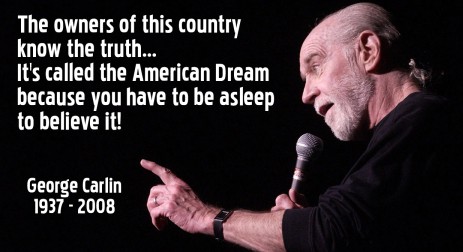
Laurison: In both the U.S. and the U.K., there’s a really strong, widely shared implicit belief—in the U.S., it’s the American dream—that success and worth are nearly identical, that if you are really rich, you must be really smart and hardworking, and if you are poor, you must have messed up in some really big way. People want to believe that they got where they are because they’re smart and talented. And that’s often true to some extent, but it’s also true that there’s any number of people who are probably equally smart and talented who are not in their positions, because of the barriers that are erected. It’s hard to sit with the idea that maybe somebody else deserves to be where they are more than they do, and I think almost everybody wants to be able to tell a story of making it on their own.

A lot of the book is about the barriers that exist, but you can take that argument too far. I wouldn’t say that most of the really successful people we interviewed were bad at their jobs. But I think, for a lot of people, examining the ways that privileges you have are unearned is the same thing as saying “You are bad” or “You don’t deserve anything,” because we’ve got this deep connection between ideas of worth and ideas of success.

Pinsker: Having finished a research project like this, what do you think needs to change about the way these workplaces function? Do you think there are things that companies could do better?

Laurison: On one level, as long as access to education and jobs is unequal in terms of race, in terms of class, you’re not going to have equal representation of all the parts of society in many prestigious or exclusive occupations. So in a way, it’s about much bigger questions than a single company can deal with.

At the same time, I think there really are things that companies can do. You can affirmatively try to hire the people who don’t look like the people who are already there in terms of their race, gender, class origin, and other statuses. And you can try to think about what expectations or cultures at your firm are not really about the outcomes your firm needs to pay the most attention to.

To give an example from my own work, I know that in colleges and universities, students from poor and working-class backgrounds are much less likely to feel comfortable going to office hours than everybody else. So I require everybody, of any class background, to come talk to me, in an effort to make office hours open to everybody. I think there are analogies in other fields—there are unwritten rules where we can figure out what the norms are and then be explicit about them.

But still, there’s this larger question of how much inequality there is in the first place. If it wasn’t possible for somebody to make 10 times, 15 times what someone else does at the same organization, then it would matter a lot less how far people got in different organizations in terms of their earnings. And the broader context of the book is that part of what legitimizes big inequalities is the belief that outcomes are meritocratic.

Retconning History

By CH

Source: The Hipcrime Vocab

“He who controls the past, controls the future; and he who controls the present, controls the past.”–George Orwell

“The mistake of judging the men of other periods by the morality of our own day has its parallel in the mistake of supposing that every wheel and bolt in the modern social machine had its counterpart in more rudimentary societies…”–H.S. Maine

“The past is a foreign country; they do things differently there.” –L.P. Hartley

I’ve often referred to the “Flintstonization of history”—a concept I borrowed from the book Sex at Dawn. It’s the tendency to project our present-day circumstances onto the past, assuming that people basically thought and acted much as we do. But when we do that, we bring our “modern” sensibilities and worldview along with us. And those have been decisively shaped by the time and culture in which we live.

Today I’d like to introduce a related concept–the retconning of history.

Looking back, that’s been the theme of a lot of my writing over the past year. I’ve looked at a lot of history which challenges and overturns the conventional narrative that our present-day circumstances and social organization are basically the same as past societies, except with better technology and a few more creature comforts (i.e. the past, but with cell phones). Or that they are the way things have always been, and that there are no alternatives.

Now, most of you probably know what retconning is. It is short for the phrase “retroactive continuity”. In order to make a narrative coherent, the authors “rewrite” (or simply ignore) what has occurred in previous episodes or iterations of a long-running franchise in order to maintain continuity with the ongoing “new” narrative arc and characters. The phrase originated with comic books, and is typically used in reference to films, television shows, books, video games, etc.

From there, the word has passed into common parlance. Normally, retcon is still used in the context of a work of fiction. However, I’ve seen the word spread beyond just talking about movies and TV shows to the world in general. When people say retcon now, they are usually referring to an attempt to “rewrite” past events by deliberately distorting them or altering the record after the fact. That is, “[people] tell themselves a different story about what happened in prior events in order to maintain consistency with their current circumstances.” That story may include a blatant distortion of facts and a general disregard for reality. Much of this is derived from our current political situation. A politician may suddenly reverse their position, and then declare that what came before didn’t happen (“fake news”), or simply ignore it altogether if it doesn’t fit with the narrative “spin” of the political parties.

At it’s heart, it is an attempt to “erase” or “rewrite” the past for the sake of present circumstances. As one of it’s earliest descriptions had it“retroactive continuity ultimately means that history flows fundamentally from the future into the past.”

What’s any of this got to do with history? It strikes me that much of what we learn about history are attempts to “retcon” the past.

What do I mean by this? It seems that history often adopts a “modern” point of view to explain past events. In this narrative, we were always heading to exactly where we are: globalized free-market corporate monopoly capitalism.This is done to depict our present circumstances not as deliberately engineered, or contingent on any historical circumstances, or political choices, but rather as something “natural” and just an expression of unchanging human nature. With this retconning, we are unable to think of different ways of organizing things, because those ways—even in the very recent past—have been retconned out of history. Even things in recent living memory—such as not going into debt for an education, or being able to afford a single family house on 25 percent of your income—are retconned to make it so that they never happened.

Here are just a few of the major retcons I have discovered over the past year or so:

1. Economists tend to depict all of human history as heading towards “free and open” markets, if only government would only just “get out of the way” and drop all restrictions and regulations on merchant princes and wealthy oligarchs. That is, globalized corporate free trade is “natural” (as is currency), and collective governance is “artificial” and unnecessary. Our “natural instinct” is to “truck, barter and exchange” declared Adam Smith. John Locke argued that the reason governments came to exist was to protect and secure private property, and that they should do little else besides this.

Of course, all of this is false. For example, an attempt at retconning history was engaged in by economists Santhi Hejeebu and Deirdre McCloskey (of ‘bourgois virtues’fame) attempting to refute some of Karl Polanyi’s book The Great Transformation. As political economist Mark Blyth countered, citing the works of Polanyi and Albert Hirschmann:

“While gain-seeking has indeed existed throughout history…the historical oddity was that gain-seeking became equated with market transactions only relatively recently. This was a qualitative and not a quantitative change; otherwise Incas, Mayans, Romans, and contemporary Britons were/are all living in societies that were more or less similar in their economic structure, despite the differences in, for example, the presence of slaves.”

“Painting the history of all hitherto existing societies as the history of capitalism in vitro probably obscures more economic history than it illuminates…capitalism did not simply evolve, it was argued for. It was propagandized by Scottish enlightenment intellectuals, English liberals, and French physiocrats long “before its triumph”. And it was as much a project of governance; limiting the state; constructing the commodified individual; building a singular notion of economically based self-interest, as much as it was one of creating wealth…”
“Capitalism was created, it did not just ‘happen’, and labeling all hitherto existing societies as ‘almost capitalism’ hardly erases the distinctions between historical periods and economic systems. The fact the ‘we’ today accept Smith far more readily than ‘we’ accept Polanyi speaks directly to the power of ideas rather than the discovery of facts…”

The great transformation in understanding Polanyi: Reply to Hejeebu and Mccloskey(Critical Review)

As Polanyi himself summed it up: “Laissez-faire was planned, planning was not”. From The Great Transformation:

Indeed, on the evidence available it would be rash to assert that local markets ever developed from individual acts of barter.

Obscure as the beginnings of local markets are, this much can be asserted: that from the start this institution was surrounded by a number of safeguards designed to protect the prevailing economic organization of society from interference on the part of market practices. The peace of the market was secured at the price of rituals and ceremonies which restricted its scope while ensuring its ability to function within the given narrow limits. The most significant result of markets—the birth of towns and urban civilization—was, in effect, the outcome of a paradoxical development. Towns, insofar as they sprang from markets, were not only the protectors of those markets, but also the means of preventing them from expanding into the countryside and thus encroaching on the prevailing economic organization of society…
Such a permanent severance of local trade and long-distance trade within the organization of the town must come as another shock to the evolutionist, with whom things always seem so easily to grow into one another. And yet this peculiar fact forms the key to the social history of urban life in Western Europe…Internal trade in Western Europe was actually created by the intervention of the state.

Right up to the time of the Commercial Revolution what may appear to us as national trade was not national, but municipal…The trade map of Europe in this period should rightly show only towns, and leave blank the countryside—it might as well have not existed as far as organized trade was concerned. So-called nations were merely political units, and very loose ones at that, consisting economically of innumerable smaller and bigger self sufficing households and insignificant local markets in the villages. Trade was limited to organized townships which carried it on either locally, as neighborhood trade, or as long-distance trade—the two were strictly separated, and neither was allowed to infiltrate into the countryside indiscriminately…neither long-distance trade nor local trade was the parent of the internal trade of modern times—thus apparently leaving no alternative but to turn for an explanation to the deus ex machina of state intervention…

This retconning has been particularly egregious by the debunked “Austrian economic school” which was expressly created to overturn history and rewrite it for the benefit of capitalists and the wealthy. Michael Hudson, an economist who probably knows more about ancient economic organization than anyone since Polanyi, writes:

…Karl Polanyi[‘s] doctrine was designed to rescue economics from [the Austrian] school, which makes up a fake history of how economics and civilization originated.

One of the first Austrian’s [sic] was Carl Menger in the 1870s. His “individualistic” theory about the origins of money – without any role played by temples, palaces or other public institutions – still governs Austrian economics. Just as Margaret Thatcher said, “There’s no such thing as society,” the Austrians developed a picture of the economy without any positive role for government. It was as if money were created by producers and merchants bartering their output. This is a travesty of history.

All ancient money was issued by temples or public mints so as to guarantee standards of purity and weight. You can read Biblical and Babylonian denunciation of merchants using false weights and measures so see why money had to be public. The major trading areas were agora spaces in front of temples, which kept the official weights and measures. And much exchange was between the community’s families and the public institutions.

Most important, money was brought into being not for trade (which was conducted mainly on credit), but for paying debts. And most debts were owed to the temples and palaces for pubic services or tribute. But to the Austrians, the idea was that anything the government does to protect labor, consumers and society from rentiers and grabbers is deadweight overhead.

Above all, they opposed governments creating their own money, e.g. as the United States did with its greenbacks in the Civil War. They wanted to privatize money creation in the hands of commercial banks, so that they could receive interest on their privilege of credit creation and also to determine the allocation of resources.

Rewriting Economic Thought (Michael Hudson)

So we see that in this case that there is a very specific political agenda behind the retconning of history. It’s pressed in economic textbooks and expressly designed to promote a libertarian point of view. Much of retconning history does serve a political agenda that benefits a select group of people.

Trying to analyze all premodern economies as though they were just proto-capitalists lead to all sorts of errors, as Branko Milanovich points out in a recent post:

“The equilibrium (normal) price in a feudal economy, or in a guild system where capital is not allowed to move between the branches will be different from equilibrium prices in a capitalist economy with the free movement of capital. To many economists this is still not obvious. They use today’s capitalist categories for the Roman Empire where wage labor was (to quote Moses Finley) ‘spasmodic, casual and marginal’.”

Marx for me (and hopefully for others too) (globalinequality)

2. The individual has always been the basic unit of social organization. People have always thought of themselves primarily as citizens of territorial nation-states (British, German, French, Canadian, etc.) with well-defined borders. The neolocal monogamous nuclear family is the only natural and logical form of human social organization.

None of these statements are true, of course. Such arrangements are very contingent upon time and place and culture, and often very recent. For most of human history, the nation-state did not exist. There is nothing “natural” about it–it was created from above by oligarchic elites, just like the One Big Market. They are artificial creations.

And while families are, indeed, “natural,” the form they take varies widely. Most families were extended, and consisted of many generations living either on the same land or under the same roof, together with agnatic relations. Who was or was not considered a part of the family had to do with kinship structures, typically encoded into the language and culture.

Extended kinship networks were the primordial form of human social organization (as Lewis Henry Moran discovered). Religion, too, played a significant role, especially ancestor worship, collective rituals, and food-sharing meals and feasts (even bonobos do it).

This was the conclusion made by Henry Sumner Maine by studying ancient legal structures and comparing to them to surviving village communities in India, Java, North America, and elsewhere. He writes, “We have the strongest reason for thinking that property once belonged not to individuals nor even to isolated families, but to larger societies composed on the patriarchal model.” Concerning private property, he concludes,

“…[P]rivate property, in the shape in which we know it, was chiefly formed by the gradual disentanglement of the separate rights of individuals from the blended rights of a community. Our studies…seemed to show us the Family expanding into the Agnatic group of kinsmen, then the Agnatic group dissolving into separate households; lastly the household supplanted by the individual; and it is now suggested that each step in the change corresponds to an analogous alteration in the nature of Ownership.”

“…if it be true that far the most important passage in the history of Private Property is its gradual elimination from the co-ownership of kinsmen, then the great point of inquiry…what were the motives which originally prompted men to hold together in the family union? To such a question, Jurisprudence, unassisted by other sciences, is not competent to give a reply. The fact can only be noted.” (p. 159)

This is why Marxists argued that “primitive communism” was the original form of property ownership, i.e. socialism. Historically, this is correct. The problem was that this was predicated upon extended kinship networks and not large, industrial, nation states, composed of strangers. That is, primitive communism does not scale, which is why market economies came to supplant them over time.

Regarding the “lone individual” posited by Classical Liberals as the primordial atomic unit of society, this, too, is ahistorical. Like the primitive barter economy, anthropology has failed to turn it up anywhere it has looked for it:

It is here that archaic law renders us one of the greatest of its services, and fills up a gap which otherwise could have only been bridged by conjecture. It is full, in all its provinces, of the clearest indications that society in primitive times was not what it is assumed to be at present, a collection of *individuals*. In fact, and in the view of the men who composed it, it was an *aggregation of families*. The contrast may be most forcibly expressed by saying that the *unit* of an ancient society was the Family, or a modern society the individual. We must be prepared to find in ancient law all the consequences of this difference.

[Archaic Law] is so framed as to be adjusted to a system of small independent corporations. It is therefore scanty, because it is supplemented by the despotic commands of the heads of households. It is ceremonious, because the transactions to which it pays regard resemble international concerns much more than the quick play of intercourse between individuals.

Above all…it takes a view of *life* wholly unlike any which appears in developed jurisprudence. Corporations never die, and accordingly primitive law considers the entities with which it deals, i.e. the patriarchal or family groups, as perpetual and inditinguishable…
Ancient Law pp. 134-135

Surveying continental Europe and much of the colonial world, French scholar Emile de Lavaleye came to the same conclusion:

Originally the clan, or village, is the collective body owning the soil ; later on, it is the family, which has all the characteristics of a perpetual corporation. The father of the family is merely the administrator of the patrimony: when he dies, he is replaced by another administrator. There is no place for the testament, nor even for individual succession…Such was also the law everywhere where these communities have existed; and, probably, every nation has passed through the system.

The point of all this, of course, is not to advocate a rewind to the past. Rather, it is to show us that social forms change over time; and what may adaptive in one context (say, Fordism), will not work in another (say, an information economy). Lavaleye points this out himself:

“…the object of this book is not to advocate a return to the primitive agrarian community; but to establish historically the natural right of property as proclaimed by philosophers, as well as to show that ownership has assumed very various forms, and is consequently susceptible of progressive reform.”

3. Everyone before the Industrial Revolution was miserable, sick, and hungry all the time, irrespective of time and place. Life was, as Hobbes argued, “nasty, brutish and short” throughout prehistory before the last hundred years or so. We’ve doubled the human lifespan—a thirty year-old man was considered “old” just a few generations ago.

I’ve written so much disproving this idea that it’s not worth reiterating here. But here is yet another item that shows us that life in the past was not as horrible as it is commonly depicted by the evangelists of the Progress Gospel:

Medieval peasant food was frigging delicious (BoingBoing)

This Reddit Ask Historians question: Was there ever a civilization that had proper nutrition prior to modern society? begs the question. Its very formulation assumes that everyone was malnourished—a product of such retconning. Here are some good answers:

According to my history professor at Dalhousie University, Cynthia Neville (one of the top scholars in early medieval Scottish history), the Scots in medieval times had an incredibly healthy diet compared to many other parts of Europe at the time.

Wheat doesn’t grow well so far north, but hardier grains like oats and barley do quite well, and provide much better staple foodstock, along with many native vegetable varieties. Also, because cows weren’t as viable (except for the wealthiest lowland nobles), they lived on sheep’s milk and goat milk, which are much easier on the human digestive system. Much of their proteins came from seafood, which, as we know today, are loaded with omega fatty acids and essential vitamins.

There was a bit more to it, but that’s about all I can recall off the top of my head from her classes. This is one of the reasons why the Scots had a reputation for being taller and stronger, because their diets and hardy lifestyles kept them fit and healthy.

And:

When the Romans invaded Gaul, they noticed the Gauls were more than a foot taller, on average, than the Romans. This was due to better nutrition. Many prehistoric people’s had great nutrition. They were defeated by “civilized” people’s who had the advantages of greater numbers and organization. The same was true of the Indians of Massachusetts, when the Pilgrims arrived.

Not all prehistoric people had good nutrition, and not so people’s proliferate societies had bad nutrition. The Norse (Vikings) were dairy farmers and fishermen, and had excellent nutrition, like the Scotch, in medieval times.

4. People need “jobs” in order to feel valuable, or else they will go crazy. That is, we need to find a willing buyer for our labor, or we will feel like a useless burden on society. Furthermore, working forty hours a week is something we’ve just always done since forever. We would all be bored otherwise.

Of course, “jobs” are very recent invention. Most people in the past did not have formalized “jobs”—wage-labor was actually seen as a kind of slavery for much of ancient history. Yet today we’re told that jobs are an absolute necessity to feel “meaningful” and to have any kind of social outlet in today’s society.

Moreover, even when wages were paid, it was for a specific task and a specific duration (say, bringing in the harvest), not selling precisely 40 hours a week of your time to the highest bidder. Modern jobs are more of a babysitting operation than anything else. Of course people in earlier times had occupations and professions—farmers, craftsmen, warriors, artisans, clerks, priests, and so on. One of the biggest challenges capitalism faced was overcoming the previous work/leisure patterns and “disciplining” workers. Ryan Cooper sums up the very novelty of these ‘eternal’ notions:

The idea that work is a bedrock of society, that absolutely everyone who is not too old, too young, or disabled must have a job, was not handed down on tablets from Mount Sinai. It is the result of a historical development, one which may not continue forever. On the contrary, based on current trends, it is already breaking down.

The history of nearly universal labor participation is only about a century and a half old. Back in the early days of capitalism, demand for labor was so strong that all the ancient arrangements of society and family were shredded to accommodate it. Marx’s Capital famously described how women and very young children were press-ganged into the textile mills and coal mines, how the nighttime was colonized for additional shifts, and how capitalists fought to extend the working day to the very limits of human endurance (and often beyond).

The resulting misery, abuse, and wretchedness were so staggering, and the resulting class conflicts so intense, that various hard-won reforms were instituted: the eight-hour day, the weekend, the abolition of child labor, and so forth.

But this process of drawing more people into the labor force peaked in the late 1990s, when women finally finished joining the labor force (after having been forced out to make room for returning veterans after World War II). The valorization of work as the source of all that is good in life is to a great degree the result of the need to legitimate capital’s voracious demand for labor.

America is running out of jobs. It’s time for a universal basic income (The Week)

And here’s investigative journalist Yasha Levine recounting part of capitalism that have been retconned out of existence, citing the underappreciated work of economist Michael Perelman:

One thing that the historical record makes obviously clear is that Adam Smith and his laissez-faire buddies were a bunch of closet-case statists, who needed brutal government policies to whip the English peasantry into a good capitalistic workforce willing to accept wage slavery.

Francis Hutcheson, from whom Adam Smith learned all about the virtue of natural liberty, wrote: ”it is the one great design of civil laws to strengthen by political sanctions the several laws of nature. … The populace needs to be taught, and engaged by laws, into the best methods of managing their own affairs and exercising mechanic art.”

Yep, despite what you might have learned, the transition to a capitalistic society did not happen naturally or smoothly. See, English peasants didn’t want to give up their rural communal lifestyle, leave their land and go work for below-subsistence wages in shitty, dangerous factories being set up by a new, rich class of landowning capitalists. And for good reason, too. Using Adam Smith’s own estimates of factory wages being paid at the time in Scotland, a factory-peasant would have to toil for more than three days to buy a pair of commercially produced shoes. Or they could make their own traditional brogues using their own leather in a matter of hours, and spend the rest of the time getting wasted on ale. It’s really not much of a choice, is it?

But in order for capitalism to work, capitalists needed a pool of cheap, surplus labor. So what to do? Call in the National Guard!

Faced with a peasantry that didn’t feel like playing the role of slave, philosophers, economists, politicians, moralists and leading business figures began advocating for government action. Over time, they enacted a series of laws and measures designed to push peasants out of the old and into the new by destroying their traditional means of self-support.

“The brutal acts associated with the process of stripping the majority of the people of the means of producing for themselves might seem far removed from the laissez-faire reputation of classical political economy,” writes Perelman. “In reality, the dispossession of the majority of small-scale producers and the construction of laissez-faire are closely connected, so much so that Marx, or at least his translators, labeled this expropriation of the masses as “primitive accumulation.”

Yasha Levine: Recovered Economic History – “Everyone But an Idiot Knows That The Lower Classes Must Be Kept Poor, or They Will Never Be Industrious” (Naked Capitalism)

Indeed, average non-agricultural workers had much more autonomy and leisure time in the past, according to Perelman:

A medieval peasant had plenty of things to worry about, but the year-round control of daily life was not one of them. Perelman points out that in pre-capitalist societies, people toiled relatively few hours over the course of a year compared to what Americans work now. They labored like dogs during the harvest, but there was ample free time during the off-seasons. Holidays were abundant – as many as 200 per year. It was Karl Marx, in his Theory of Alienation, who saw that modern industrial production under capitalist conditions would rob workers of control of their lives as they lost control of their work. Unlike the blacksmith or the shoemaker who owned his shop, decided on his own working conditions, shaped his product, and had a say in how his goods were bartered or sold, the modern worker would have little autonomy. His relationships with the people at work would become impersonal and hollow.

Clearly, the technological wonders of our capitalist system have not released human beings from the burden of work. They have brought us more work. They have not brought most of us more freedom, but less.

Fifty Shades of Capitalism: Pain and Bondage in the American Workplace (Naked Capitalism)

Yet now we’re told that we need “jobs” to have any sort of meaning? Really?? WTF??? The vast majority of human existence has occurred outside of formalized wage work, as anthropologist James Suzman points out. Yet society will fall apart if we don’t submit ourselves to worker ‘discipline’ and scientific management? I don’t buy it. Whom does this narrative benefit, anyway?

See also this post from Reddit: What did an average day look like in medieval Europe?And this: Myths about the Medieval Times? Lots of good debunking in that last one.

In addition, laborers who recalled the previous autonomous lifeways–as late as the eighteenth century–were much more resistant to the constraints and insults of corporate capitalism. Now that the past has been retconned, we no longer even remember those past ways of being. Why is there no longer any resistance to the crushing or workers? Why do we not resist, even celebrate, the fortunes of today’s robber barons, unlike our forefathers? American resistance to our ruling elites has vanished. A lot of it has to do with the retconning of history, as this review of the Steve Fraser’s excellent book The Age of Acquiescence makes clear:

The fight against slavery had loosened the tongues of capitalism’s critics, forging a radical critique of the market’s capacity for barbarism. With bonded labor now illegal, the target pivoted to factory “wage slavery.” This comparison sounds strange to contemporary ears, but as Fraser reminds us, for European peasants and artisans, as well as American homesteaders, the idea of selling one’s labor for money was profoundly alien.

This is key to Fraser’s thesis. What ­fueled the resistance to the first Gilded Age, he argues, was the fact that many Americans had a recent memory of a different kind of economic system, whether in America or back in Europe. Many at the forefront of the resistance were actively fighting to protect a way of life, whether it was the family farm that was being lost to predatory creditors or small-scale artisanal businesses being wiped out by industrial capitalism. Having known something different from their grim present, they were capable of imagining — and fighting for — a radically better future.

It is this imaginative capacity that is missing from our second Gilded Age, a theme to which Fraser returns again and again in the latter half of the book. The latest inequality chasm has opened up at a time when there is no popular memory — in the United States, at least — of another kind of economic system. Whereas the activists and agitators of the first Gilded Age straddled two worlds, we find ourselves fully within capitalism’s matrix. So while we can demand slight improvements to our current conditions, we have a great deal of trouble believing in something else entirely.

A similar point is made in this review of the book in the London Review of Books:

Resistance to capitalism, it appeared, could look back as well as forwards; it was rooted not only in utopian visions of the future but also in concrete experience of the present and past, in older ways of being in the world, depending on family, craft, community, faith – all of which were threatened with dissolution (as Marx and Engels said) in ‘the icy waters of egotistical calculation’. Radical critiques of capitalism might well arise from conservative commitment to pre-capitalist ways of life, or memories of that life.

This wasn’t only an American pattern. E.P. Thompson, in The Making of the English Working Class (1963), rescued the Luddites and other artisans from ‘the enormous condescension of posterity’ by showing that their apparently reactionary attachments to custom and tradition created the leading edge of working-class consciousness. Soon American historians were making similar discoveries.
The Thompsonian history of the working class revealed a common pattern on both sides of the Atlantic: as workers became less grounded in traditional ways, their critique of capitalism tended to soften.

The Long Con (The London Review of Books)

5. New technology and innovation increases leisure time.The Industrial Revolution was accomplished purely by technological advances with no dislocation or bloodshed, and it made everyone better off with no government intervention whatsoever.

If there’s one consistent trend in technology, it’s this – new technology increases the amount of work! Greater leisure has only and ever been delivered due to worker insurrection and deliberate organization, and not by the “invisible hand” of the Market. Furthermore, entire generations were sacrificed and written out of the historical narrative to make the Industrial Revolution seem like a harmless win-win. As this commenter to Slashdot writes:

“Luddites weren’t just angry conservatives (literal, not political) trying to maintain some mythical “way of life”, it was a movement stated due to massive unemployment brought on by innovation in the textile industry. It became a generic insult because we’re so far removed from their (very real) suffering.”

There was [sic] close to 80 years of unemployment following the industrial revolution that is seldom talked about (if you took history in high school or college you got maybe a paragraph at best). This is because text book historians like to keep an upbeat tone and because school boards are often staffed by economically conservative (political now) who don’t want anyone speaking ill of capitalism. Go find a book called “A People’s History of the United States” if you want a sense for how screwed up American history actually is.”

https://hardware.slashdot.org/story/19/01/04/180226/robots-are-taking-some-jobs-but-not-all-world-bank

Or, just read this post: The US Government Has Always Been a Tool of Greedy Corporations (Vice)

5. Ancient people were uniformly ruled over by evil despots (i.e. ‘Oriental Despotism’). The “West” was all about freedom, justice, and democracy compared to the yoke of despotism the rest of the world lived under in primitive places such as Asia, Africa and the Americas.

As we’ve seen, Classical civilization–from the ancient Greeks to the Romans–was the most slave-driven economy in history to that point (only to be surpassed in the ‘Western’ colonial Americas). While that slavery decayed due to the dissolution of the Roman Empire, subsequent serfdom could hardly be considered freedom. By contrast, not all “primitive” societies were anywhere near as despotic as Western Europe and Imperial China were. That was a retconning of history to depict Western European civilization as “enlightened” in opposition to the ignorant “heathens.” For example, here is an excerpt from the book The Story of Manual Labor:

At no time in the history of ancient Mexico do we find that heartless oppression of the poor by the rich, that lack of humanity toward the wage-worker, that blackens the annals of so many European peoples. Luxury existed in the court of the Montezumas, it is true, but to support that luxury the poorer classes were not plunged into poverty and degradation. They were a simple people, and their needs were small and easily satisfied. Living in a tropical climate, upon a soil that repaid a thousandfold the slightest effort of the farmer; surrounded by forests full of game and rivers teeming with edible fish, the Mexican lived a life of comfort that to the Saxon churl or French bourgeoise of the same day would have seemed idyllic.

The Story of Manual Labor (Archive.org)

There are countless other examples, from long car commutes, to 20+ years of formalized schooling and expensive post-graduate degrees required for a job (or any formalized education at all), but I think you get the point.

As Chris Hedges poignantly writes in his latest book, America: the Farewell Tour:

If we do not know our history and our culture, if we accept the history and culture manufactured for us by the elites, we will never free ourselves from the forces of oppression. The recovery of memory and culture in the 1960s by radical movements terrified the elites. It gave people an understanding of their own power and agency. It articulated and celebrated the struggles of working men and women and the oppressed rather than the mythical beneficence of the powerful. It exposed the exploitation and mendacity of the ruling class. And that is why corporatists spent billions to crush and marginalize these movements and their histories in schools, culture, the press, and in our systems of entertainment.

Not only does the people have no precise consciousness of its own historical identity,” Gramsci lamented under fascism, “it is not even conscious of the historical identity or the exact limits of its adversary.

If we do not know our history we have no point of comparison. We cannot name the forces that control us or see the long continuity of capitalist oppression and resistance… p. 17

Anyway, here’s to a happy (or at least, tolerable) 2019, and I hope you all stick around and continue reading and commenting. Thanks!

Your Life Is Not Limited To One Path

By Joe Martino

Source: Collective Evolution

It is no secret that life can sometimes feel like a limited paved road laid out before us that we feel the need to stick to. Look at how we are brought up. Most of the time we come into the world and begin gaining our perceptions from those closest to us –our parents. As time goes on we find ourselves in school. Throughout that time we also begin watching what others do around us, what we see on TV and in movies.

What is happening is we are observing and creating an idea of how life should be; the best way to play the game. But what is ‘best?’

How many times have we heard “That’s not the best decision” or “That’s not the best decision for the whole family.” When you look at either statement you realize that “best” is subjective. What the “best” is to one person may not be the “best” to another. Even further, both of the perceptions of “best” are created from whatever belief systems each have created in their own lives. This is the key factor to realize.

We Get Trapped in Belief Systems

In either case, both scenarios have one thing in common, a belief system of what the “best” choice or decision is. When we create a belief system like this, we limit how we view things. We no longer feel what is “best,” but instead we analyze and define “best” based on a story; often a story from the past, based on entirely different times than the present moment.

Let’s take the example of a child coming out of high school today.  9 times out of 10, that child will be told, and may even believe, that the “best” decision they can make for their life is to continue their education at university or college. It does not matter that they do not know what they want to study, or that the education system will potentially cost them $100,000+, many will state that is best -and even have pride about it.

Next, they would be told to get a job so they can buy a house, as owning and buying a house is a smart decision. Should this child begin their life based on these belief systems, more often than not they will take this idea of what is “BEST” throughout the rest of their life. They will judge their decisions by this, express emotions based on this, develop self-esteem based on this and so forth. From then on, every decision they make will be based on this belief system handed down and taught to them.

Even getting specific, what to study in school, what type of job to get, what type of car to buy, how to spend and save money, what type of house to buy and so on. What is really happening with all of this? We are defining the ideal life or what’s “best” and then we limit our life to a small scope of how things should be.

The Deep Truth

Here is the absolute truth, ready? None of it has any real truth to it. It’s just all a belief system. Perception, ideas! But we often live by this and it becomes so real in our minds that we become stuck thinking this is the way to do it. Then when depression and anxiety follow, as we may believe we are stuck, we forget to look back on the belief system that is often caging us and our reality into a small tight space we often don’t deeply resonate with.

Look at our world. We often all chase the same thing, the same stuff because that is what we have been sold as the ideal life. Each area of the world has its own version of this. Who’s life are you really living? Whose dreams are you chasing and carrying out? We take on these beliefs and we begin to sacrifice ourselves, our health, and our soul desires so we can carry out someone else’s idea of “best” that we grabbed onto.

Back to the child from the example above. Now they have grown into a young man or woman and are in a job they don’t truly like. But it pays the bills and lives up to the idea of “best” that has been given to them. Most of the time, people around them will all reinforce that their decisions are the “best” because they have all been sold on the same belief system. “You have to make sacrifices, you have to work really hard to have a good life!” is what we are told. But who says what is “good?” Even when that grown up child is expressing their sadness or frustration for the reality they are in, we continue to reinforce it to protect the idea of ‘the best.’

We take this entirely expansive creative individual playing in an expansive playground called Earth and we confine them to this tiny little narrow path of what the “best” is. Instead of spending their life being able to make any choice they choose, they stay limited to what they have been sold as the “best” even if they don’t truly love it.

Even Deeper

Then you have the even deeper part, we then look upon and judge others when they make “the wrong decisions.” Look at how we view those who change their minds about what they want to play with all the time. What do we say about those people? “They need to make up their mind and get their life on track.” What track? There is a track? Says who? “They didn’t make a smart decision with their money or their house so they are going to pay for it later.” Who says some decisions are better than others? Is it not an experience either way?

You are the creator of your life and reality. You can choose to play and create whatever type of life you choose. And guess what? If you make a decision and start creating a particular life then you realize you want to create something new, you are free to do this!

No matter what story we tell ourselves like: “it’s too late, I can’t change this now, it’s too costly” etc. know that these are all egoic illusions. You are never limited to whatever life you have created even if you have been doing it for 30 years. Remember to ask yourself: the life you are chasing, the goals you have set, who’s goals are they really? Where did you first hear of them? Are they from your heart? Or are they what you have been sold?

Look inside yourself at what YOU TRULY want and how you wish to express yourself and create. Start there, and create from that space. You will see very quickly that you can create anything you choose.

Remember, there is no right or wrong path here. It’s about looking back on what we choose, where we are at and saying “Is this where I want to be? Am I feeling peace? Expressing my deepest self? Am I inspired about where I am at?” and if you aren’t, you create a new path and see how that feels. Follow how you FEEL, not what you seek as right or wrong. Our life reflects our state of consciousness.

American Society Would Collapse If It Weren’t for These 8 Myths

By Lee Camp

Source: TruthDig

Our society should’ve collapsed by now. You know that, right?

No society should function with this level of inequality (with the possible exception of one of those prison planets in a “Star Wars” movie). Sixty-three percent of Americans can’t afford a $500 emergency. Yet Amazon head Jeff Bezos is now worth a record $141 billion. He could literally end world hunger for multiple years and still have more money left over than he could ever spend on himself.

Worldwide, one in 10 people only make $2 a day. Do you know how long it would take one of those people to make the same amount as Jeff Bezos has? 193 million years. (If they only buy single-ply toilet paper.) Put simply, you cannot comprehend the level of inequality in our current world or even just our nation.

So … shouldn’t there be riots in the streets every day? Shouldn’t it all be collapsing? Look outside. The streets aren’t on fire. No one is running naked and screaming (usually). Does it look like everyone’s going to work at gunpoint? No. We’re all choosing to continue on like this.

Why?

Well, it comes down to the myths we’ve been sold. Myths that are ingrained in our social programming from birth, deeply entrenched, like an impacted wisdom tooth. These myths are accepted and basically never questioned.

I’m going to cover eight of them. There are more than eight. There are probably hundreds. But I’m going to cover eight because (A) no one reads a column titled “Hundreds of Myths of American Society,” (B) these are the most important ones and (C) we all have other shit to do.

Myth No. 8—We have a democracy.

If you think we still have a democracy or a democratic republic, ask yourself this: When was the last time Congress did something that the people of America supported that did not align with corporate interests? … You probably can’t do it. It’s like trying to think of something that rhymes with “orange.” You feel like an answer exists but then slowly realize it doesn’t. Even the Carter Center and former President Jimmy Carter believe that America has been transformed into an oligarchy: A small, corrupt elite control the country with almost no input from the people. The rulers need the myth that we’re a democracy to give us the illusion of control.

Myth No. 7—We have an accountable and legitimate voting system.

Gerrymandering, voter purging, data mining, broken exit polling, push polling, superdelegates, electoral votes, black-box machines, voter ID suppression, provisional ballots, super PACs, dark money, third parties banished from the debates and two corporate parties that stand for the same goddamn pile of fetid crap!

What part of this sounds like a legitimate election system?

No, we have what a large Harvard study called the worst election system in the Western world. Have you ever seen where a parent has a toddler in a car seat, and the toddler has a tiny, brightly colored toy steering wheel so he can feel like he’s driving the car? That’s what our election system is—a toy steering wheel. Not connected to anything. We all sit here like infants, excitedly shouting, “I’m steeeeering!”

And I know it’s counterintuitive, but that’s why you have to vote. We have to vote in such numbers that we beat out what’s stolen through our ridiculous rigged system.

Myth No. 6—We have an independent media that keeps the rulers accountable.

Our media outlets are funded by weapons contractors, big pharma, big banks, big oil and big, fat hard-on pills. (Sorry to go hard on hard-on pills, but we can’t get anything resembling hard news because it’s funded by dicks.) The corporate media’s jobs are to rally for war, cheer for Wall Street and froth at the mouth for consumerism. It’s their mission to actually fortify belief in the myths I’m telling you about right now. Anybody who steps outside that paradigm is treated like they’re standing on a playground wearing nothing but a trench coat.

Myth No. 5—We have an independent judiciary.

The criminal justice system has become a weapon wielded by the corporate state. This is how bankers can foreclose on millions of homes illegally and see no jail time, but activists often serve jail time for nonviolent civil disobedience. Chris Hedges recently noted, “The most basic constitutional rights … have been erased for many. … Our judicial system, as Ralph Nader has pointed out, has legalized secret law, secret courts, secret evidence, secret budgets and secret prisons in the name of national security.”

If you’re not part of the monied class, you’re pressured into releasing what few rights you have left. According to The New York Times, “97 percent of federal cases and 94 percent of state cases end in plea bargains, with defendants pleading guilty in exchange for a lesser sentence.”

That’s the name of the game. Pressure people of color and poor people to just take the plea deal because they don’t have a million dollars to spend on a lawyer. (At least not one who doesn’t advertise on beer coasters.)

Myth No. 4—The police are here to protect you. They’re your friends.

That’s funny. I don’t recall my friend pressuring me into sex to get out of a speeding ticket. (Which is essentially still legal in 32 states.)

The police in our country are primarily designed to do two things: protect the property of the rich and perpetrate the completely immoral war on drugs—which by definition is a war on our own people.

We lock up more people than any other country on earth. Meaning the land of the free is the largest prison state in the world. So all these droopy-faced politicians and rabid-talking heads telling you how awful China is on human rights or Iran or North Korea—none of them match the numbers of people locked up right here under Lady Liberty’s skirt.

Myth No. 3—Buying will make you happy.

This myth is put forward mainly by the floods of advertising we take in but also by our social engineering. Most of us feel a tenacious emptiness, an alienation deep down behind our surface emotions (for a while I thought it was gas). That uneasiness is because most of us are flushing away our lives at jobs we hate before going home to seclusion boxes called houses or apartments. We then flip on the TV to watch reality shows about people who have it worse than we do (which we all find hilarious).

If we’re lucky, we’ll make enough money during the week to afford enough beer on the weekend to help it all make sense. (I find it takes at least four beers for everything to add up.) But that doesn’t truly bring us fulfillment. So what now? Well, the ads say buying will do it. Try to smother the depression and desperation under a blanket of flat-screen TVs, purses and Jet Skis. Nowdoes your life have meaning? No? Well, maybe you have to drive that Jet Ski a little faster! Crank it up until your bathing suit flies off and you’ll feel alive!

The dark truth is that we have to believe the myth that consuming is the answer or else we won’t keep running around the wheel. And if we aren’t running around the wheel, then we start thinking, start asking questions. Those questions are not good for the ruling elite, who enjoy a society based on the daily exploitation of 99 percent of us.

Myth No. 2—If you work hard, things will get better.

According to Deloitte’s Shift Index survey: “80% of people are dissatisfied with their jobs” and “[t]he average person spends 90,000 hours at work over their lifetime.” That’s about one-seventh of your life—and most of it is during your most productive years.

Ask yourself what we’re working for. To make money? For what? Almost none of us are doing jobs for survival anymore. Once upon a time, jobs boiled down to:

I plant the food—>I eat the food—>If I don’t plant food = I die.

But nowadays, if you work at a café—will someone die if they don’t get their super-caf-mocha-frap-almond-piss-latte? I kinda doubt they’ll keel over from a blueberry scone deficiency.

If you work at Macy’s, will customers perish if they don’t get those boxer briefs with the sweat-absorbent-ass fabric? I doubt it. And if they do die from that, then their problems were far greater than you could’ve known. So that means we’re all working to make other people rich because we have a society in which we have to work. Technological advancements can do most everything that truly must get done.

So if we wanted to, we could get rid of most work and have tens of thousands of more hours to enjoy our lives. But we’re not doing that at all. And no one’s allowed to ask these questions—not on your mainstream airwaves at least. Even a half-step like universal basic income is barely discussed because it doesn’t compute with our cultural programming.

Scientists say it’s quite possible artificial intelligence will take away all human jobs in 120 years. I think they know that will happen because bots will take the jobs and then realize that 80 percent of them don’t need to be done! The bots will take over and then say, “Stop it. … Stop spending a seventh of your life folding shirts at Banana Republic.”

One day, we will build monuments to the bot that told us to enjoy our lives and … leave the shirts wrinkly.

And this leads me to the largest myth of our American society.

Myth No. 1—You are free.

And I’m not talking about the millions locked up in our prisons. I’m talking about you and me. If you think you’re free, try running around with your nipples out, ladies. Guys, take a dump on the street and see how free you are.

I understand there are certain restrictions on freedom we actually desire to have in our society—maybe you’re not crazy about everyone leaving a Stanley Steamer in the middle of your walk to work. But a lot of our lack of freedom is not something you would vote for if given the chance.

Try building a fire in a parking lot to keep warm in the winter.

Try sleeping in your car for more than a few hours without being harassed by police.

Try maintaining your privacy for a week without a single email, web search or location data set collected by the NSA and the telecoms.

Try signing up for the military because you need college money and then one day just walking off the base, going, “Yeah, I was bored. Thought I would just not do this anymore.”

Try explaining to Kentucky Fried Chicken that while you don’t have the green pieces of paper they want in exchange for the mashed potatoes, you do have some pictures you’ve drawn on a napkin to give them instead.

Try running for president as a third-party candidate. (Jill Stein was shackled and chained to a chair by police during one of the debates.)

Try using the restroom at Starbucks without buying something … while black.

We are less free than a dog on a leash. We live in one of the hardest-working, most unequal societies on the planet with more billionaires than ever.

Meanwhile, Americans supply 94 percent of the paid blood used worldwide. And it’s almost exclusively coming from very poor people. This abusive vampire system is literally sucking the blood from the poor. Does that sound like a free decision they made? Or does that sound like something people do after immense economic force crushes down around them? (One could argue that sperm donation takes a little less convincing.)

Point is, in order to enforce this illogical, immoral system, the corrupt rulers—most of the time—don’t need guns and tear gas to keep the exploitation mechanisms humming along. All they need are some good, solid bullshit myths for us all to buy into, hook, line and sinker. Some fairy tales for adults.

It’s time to wake up.


If you think this column is important, please share it. Also, check out Lee Camp’s weekly TV show “Redacted Tonight” and weekly podcast “Common Censored.”

Fuck Work

 tumblr_mkr6eleomu1qiyurho1_r2_500

Economists believe in full employment. Americans think that work builds character. But what if jobs aren’t working anymore?

By James Livingston

Source: aeon

Work means everything to us Americans. For centuries – since, say, 1650 – we’ve believed that it builds character (punctuality, initiative, honesty, self-discipline, and so forth). We’ve also believed that the market in labour, where we go to find work, has been relatively efficient in allocating opportunities and incomes. And we’ve believed that, even if it sucks, a job gives meaning, purpose and structure to our everyday lives – at any rate, we’re pretty sure that it gets us out of bed, pays the bills, makes us feel responsible, and keeps us away from daytime TV.

These beliefs are no longer plausible. In fact, they’ve become ridiculous, because there’s not enough work to go around, and what there is of it won’t pay the bills – unless of course you’ve landed a job as a drug dealer or a Wall Street banker, becoming a gangster either way.

These days, everybody from Left to Right – from the economist Dean Baker to the social scientist Arthur C Brooks, from Bernie Sanders to Donald Trump – addresses this breakdown of the labour market by advocating ‘full employment’, as if having a job is self-evidently a good thing, no matter how dangerous, demanding or demeaning it is. But ‘full employment’ is not the way to restore our faith in hard work, or in playing by the rules, or in whatever else sounds good. The official unemployment rate in the United States is already below 6 per cent, which is pretty close to what economists used to call ‘full employment’, but income inequality hasn’t changed a bit. Shitty jobs for everyone won’t solve any social problems we now face.

Don’t take my word for it, look at the numbers. Already a fourth of the adults actually employed in the US are paid wages lower than would lift them above the official poverty line – and so a fifth of American children live in poverty. Almost half of employed adults in this country are eligible for food stamps (most of those who are eligible don’t apply). The market in labour has broken down, along with most others.

Those jobs that disappeared in the Great Recession just aren’t coming back, regardless of what the unemployment rate tells you – the net gain in jobs since 2000 still stands at zero – and if they do return from the dead, they’ll be zombies, those contingent, part-time or minimum-wage jobs where the bosses shuffle your shift from week to week: welcome to Wal-Mart, where food stamps are a benefit.

And don’t tell me that raising the minimum wage to $15 an hour solves the problem. No one can doubt the moral significance of the movement. But at this rate of pay, you pass the official poverty line only after working 29 hours a week. The current federal minimum wage is $7.25. Working a 40-hour week, you would have to make $10 an hour to reach the official poverty line. What, exactly, is the point of earning a paycheck that isn’t a living wage, except to prove that you have a work ethic?

But, wait, isn’t our present dilemma just a passing phase of the business cycle? What about the job market of the future? Haven’t the doomsayers, those damn Malthusians, always been proved wrong by rising productivity, new fields of enterprise, new economic opportunities? Well, yeah – until now, these times. The measurable trends of the past half-century, and the plausible projections for the next half-century, are just too empirically grounded to dismiss as dismal science or ideological hokum. They look like the data on climate change – you can deny them if you like, but you’ll sound like a moron when you do.

For example, the Oxford economists who study employment trends tell us that almost half of existing jobs, including those involving ‘non-routine cognitive tasks’ – you know, like thinking – are at risk of death by computerisation within 20 years. They’re elaborating on conclusions reached by two MIT economists in the book Race Against the Machine (2011). Meanwhile, the Silicon Valley types who give TED talks have started speaking of ‘surplus humans’ as a result of the same process – cybernated production. Rise of the Robots, a new book that cites these very sources, is social science, not science fiction.

So this Great Recession of ours – don’t kid yourself, it ain’t over – is a moral crisis as well as an economic catastrophe. You might even say it’s a spiritual impasse, because it makes us ask what social scaffolding other than work will permit the construction of character – or whether character itself is something we must aspire to. But that is why it’s also an intellectual opportunity: it forces us to imagine a world in which the job no longer builds our character, determines our incomes or dominates our daily lives.

In short, it lets us say: enough already. Fuck work.

Certainly this crisis makes us ask: what comes after work? What would you do without your job as the external discipline that organises your waking life – as the social imperative that gets you up and on your way to the factory, the office, the store, the warehouse, the restaurant, wherever you work and, no matter how much you hate it, keeps you coming back? What would you do if you didn’t have to work to receive an income?

And what would society and civilisation be like if we didn’t have to ‘earn’ a living – if leisure was not our choice but our lot? Would we hang out at the local Starbucks, laptops open? Or volunteer to teach children in less-developed places, such as Mississippi? Or smoke weed and watch reality TV all day?

I’m not proposing a fancy thought experiment here. By now these are practical questions because there aren’t enough jobs. So it’s time we asked even more practical questions. How do you make a living without a job – can you receive income without working for it? Is it possible, to begin with and then, the hard part, is it ethical? If you were raised to believe that work is the index of your value to society – as most of us were – would it feel like cheating to get something for nothing?

We already have some provisional answers because we’re all on the dole, more or less. The fastest growing component of household income since 1959 has been ‘transfer payments’ from government. By the turn of the 21st century, 20 per cent of all household income came from this source – from what is otherwise known as welfare or ‘entitlements’. Without this income supplement, half of the adults with full-time jobs would live below the poverty line, and most working Americans would be eligible for food stamps.

But are these transfer payments and ‘entitlements’ affordable, in either economic or moral terms? By continuing and enlarging them, do we subsidise sloth, or do we enrich a debate on the rudiments of the good life?

Transfer payments or ‘entitlements’, not to mention Wall Street bonuses (talk about getting something for nothing) have taught us how to detach the receipt of income from the production of goods, but now, in plain view of the end of work, the lesson needs rethinking. No matter how you calculate the federal budget, we can afford to be our brother’s keeper. The real question is not whether but how we choose to be.

I know what you’re thinking – we can’t afford this! But yeah, we can, very easily. We raise the arbitrary lid on the Social Security contribution, which now stands at $127,200, and we raise taxes on corporate income, reversing the Reagan Revolution. These two steps solve a fake fiscal problem and create an economic surplus where we now can measure a moral deficit.

Of course, you will say – along with every economist from Dean Baker to Greg Mankiw, Left to Right – that raising taxes on corporate income is a disincentive to investment and thus job creation. Or that it will drive corporations overseas, where taxes are lower.

But in fact raising taxes on corporate income can’t have these effects.

Let’s work backward. Corporations have been ‘multinational’ for quite some time. In the 1970s and ’80s, before Ronald Reagan’s signature tax cuts took effect, approximately 60 per cent of manufactured imported goods were produced offshore, overseas, by US companies. That percentage has risen since then, but not by much.

Chinese workers aren’t the problem – the homeless, aimless idiocy of corporate accounting is. That is why the Citizens United decision of 2010 applying freedom of speech regulations to campaign spending is hilarious. Money isn’t speech, any more than noise is. The Supreme Court has conjured a living being, a new person, from the remains of the common law, creating a real world more frightening than its cinematic equivalent: say, Frankenstein, Blade Runner or, more recently, Transformers.

But the bottom line is this. Most jobs aren’t created by private, corporate investment, so raising taxes on corporate income won’t affect employment. You heard me right. Since the 1920s, economic growth has happened even though net private investment has atrophied. What does that mean? It means that profits are pointless except as a way of announcing to your stockholders (and hostile takeover specialists) that your company is a going concern, a thriving business. You don’t need profits to ‘reinvest’, to finance the expansion of your company’s workforce or output, as the recent history of Apple and most other corporations has amply demonstrated.

So investment decisions by CEOs have only a marginal effect on employment. Taxing the profits of corporations to finance a welfare state that permits us to love our neighbours and to be our brothers’ keeper is not an economic problem. It’s something else – it’s an intellectual issue, a moral conundrum.

When we place our faith in hard work, we’re wishing for the creation of character; but we’re also hoping, or expecting, that the labour market will allocate incomes fairly and rationally. And there’s the rub, they do go together. Character can be created on the job only when we can see that there’s an intelligible, justifiable relation between past effort, learned skills and present reward. When I see that your income is completely out of proportion to your production of real value, of durable goods the rest of us can use and appreciate (and by ‘durable’ I don’t mean just material things), I begin to doubt that character is a consequence of hard work.

When I see, for example, that you’re making millions by laundering drug-cartel money (HSBC), or pushing bad paper on mutual fund managers (AIG, Bear Stearns, Morgan Stanley, Citibank), or preying on low-income borrowers (Bank of America), or buying votes in Congress (all of the above) – just business as usual on Wall Street – while I’m barely making ends meet from the earnings of my full-time job, I realise that my participation in the labour market is irrational. I know that building my character through work is stupid because crime pays. I might as well become a gangster like you.

That’s why an economic crisis such as the Great Recession is also a moral problem, a spiritual impasse – and an intellectual opportunity. We’ve placed so many bets on the social, cultural and ethical import of work that when the labour market fails, as it so spectacularly has, we’re at a loss to explain what happened, or to orient ourselves to a different set of meanings for work and for markets.

And by ‘we’ I mean pretty much all of us, Left to Right, because everybody wants to put Americans back to work, one way or another – ‘full employment’ is the goal of Right-wing politicians no less than Left-wing economists. The differences between them are over means, not ends, and those ends include intangibles such as the acquisition of character.

Which is to say that everybody has doubled down on the benefits of work just as it reaches a vanishing point. Securing ‘full employment’ has become a bipartisan goal at the very moment it has become both impossible and unnecessary. Sort of like securing slavery in the 1850s or segregation in the 1950s.

Why?

Because work means everything to us inhabitants of modern market societies – regardless of whether it still produces solid character and allocates incomes rationally, and quite apart from the need to make a living. It’s been the medium of most of our thinking about the good life since Plato correlated craftsmanship and the possibility of ideas as such. It’s been our way of defying death, by making and repairing the durable things, the significant things we know will last beyond our allotted time on earth because they teach us, as we make or repair them, that the world beyond us – the world before and after us – has its own reality principles.

Think about the scope of this idea. Work has been a way of demonstrating differences between males and females, for example by merging the meanings of fatherhood and ‘breadwinner’, and then, more recently, prying them apart. Since the 17th century, masculinity and femininity have been defined – not necessarily achieved – by their places in a moral economy, as working men who got paid wages for their production of value on the job, or as working women who got paid nothing for their production and maintenance of families. Of course, these definitions are now changing, as the meaning of ‘family’ changes, along with profound and parallel changes in the labour market – the entry of women is just one of those – and in attitudes toward sexuality.

When work disappears, the genders produced by the labour market are blurred. When socially necessary labour declines, what we once called women’s work – education, healthcare, service – becomes our basic industry, not a ‘tertiary’ dimension of the measurable economy. The labour of love, caring for one another and learning how to be our brother’s keeper – socially beneficial labour – becomes not merely possible but eminently necessary, and not just within families, where affection is routinely available. No, I mean out there, in the wide, wide world.

Work has also been the American way of producing ‘racial capitalism’, as the historians now call it, by means of slave labour, convict labour, sharecropping, then segregated labour markets – in other words, a ‘free enterprise system’ built on the ruins of black bodies, an economic edifice animated, saturated and determined by racism. There never was a free market in labour in these united states. Like every other market, it was always hedged by lawful, systematic discrimination against black folk. You might even say that this hedged market produced the still-deployed stereotypes of African-American laziness, by excluding black workers from remunerative employment, confining them to the ghettos of the eight-hour day.

And yet, and yet. Though work has often entailed subjugation, obedience and hierarchy (see above), it’s also where many of us, probably most of us, have consistently expressed our deepest human desire, to be free of externally imposed authority or obligation, to be self-sufficient. We have defined ourselves for centuries by what we do, by what we produce.

But by now we must know that this definition of ourselves entails the principle of productivity – from each according to his abilities, to each according to his creation of real value through work – and commits us to the inane idea that we’re worth only as much as the labour market can register, as a price. By now we must also know that this principle plots a certain course to endless growth and its faithful attendant, environmental degradation.

Until now, the principle of productivity has functioned as the reality principle that made the American Dream seem plausible. ‘Work hard, play by the rules, get ahead’, or, ‘You get what you pay for, you make your own way, you rightly receive what you’ve honestly earned’ – such homilies and exhortations used to make sense of the world. At any rate they didn’t sound delusional. By now they do.

Adherence to the principle of productivity therefore threatens public health as well as the planet (actually, these are the same thing). By committing us to what is impossible, it makes for madness. The Nobel Prize-winning economist Angus Deaton said something like this when he explained anomalous mortality rates among white people in the Bible Belt by claiming that they’ve ‘lost the narrative of their lives’ – by suggesting that they’ve lost faith in the American Dream. For them, the work ethic is a death sentence because they can’t live by it.

So the impending end of work raises the most fundamental questions about what it means to be human. To begin with, what purposes could we choose if the job – economic necessity – didn’t consume most of our waking hours and creative energies? What evident yet unknown possibilities would then appear? How would human nature itself change as the ancient, aristocratic privilege of leisure becomes the birthright of human beings as such?

Sigmund Freud insisted that love and work were the essential ingredients of healthy human being. Of course he was right. But can love survive the end of work as the willing partner of the good life? Can we let people get something for nothing and still treat them as our brothers and sisters – as members of a beloved community? Can you imagine the moment when you’ve just met an attractive stranger at a party, or you’re online looking for someone, anyone, but you don’t ask: ‘So, what do you do?’

We won’t have any answers until we acknowledge that work now means everything to us – and that hereafter it can’t.

Will Robots Take Your Job?

Walmart Robots

By Nick Srnicek and Alex Williams

Source: ROAR

In recent months, a range of studies has warned of an imminent job apocalypse. The most famous of these—a study from Oxford—suggests that up to 47 percent of US jobs are at high-risk of automation over the next two decades. Its methodology—assessing likely developments in technology, and matching them up to the tasks typically deployed in jobs—has been replicated since then for a number of other countries. One study finds that 54 percent of EU jobs are likely automatable, while the chief economist of the Bank of England has argued that 45 percent of UK jobs are similarly under threat.

This is not simply a rich-country problem, either: low-income economies look set to be hit even harder by automation. As low-skill, low-wage and routine jobs have been outsourced from rich capitalist countries to poorer economies, these jobs are also highly susceptible to automation. Research by Citi suggests that for India 69 percent of jobs are at risk, for China 77 percent, and for Ethiopia a full 85 percent of current jobs. It would seem that we are on the verge of a mass job extinction.

Nothing New?

For many economists however, there is nothing to worry about. If we look at the history of technology and the labor market, past experiences would suggest that automation has not caused mass unemployment. Automation has always changed the labor market. Indeed, one of the primary characteristics of the capitalist mode of production has been to revolutionize the means of production—to really subsume the labor process and reorganize it in ways that more efficiently generate value. The mechanization of agriculture is an early example, as is the use of the cotton gin and spinning jenny. With Fordism, the assembly line turned complex manufacturing jobs into a series of simple and efficient tasks. And with the era of lean production, we have had the computerized management of long commodity chains turn the production process into a more and more heavily automated system.

In every case, we have not seen mass unemployment. Instead we have seen some jobs disappear, while others have been created to replace not only the lost jobs but also the new jobs necessary for a growing population. The only times we see massive unemployment tend to be the result of cyclical factors, as in the Great Depression, rather than some secular trend towards higher unemployment resulting from automation. On the basis of these considerations, most economists believe that the future of work will likely be the same as the past: some jobs will disappear, but others will be created to replace them.

In typical economist fashion, however, these thoughts neglect the broader social context of earlier historical periods. Capitalism may not have seen a massive upsurge in unemployment, but this is not a necessary outcome. Rather, it was dependent upon unique circumstances of earlier moments—circumstances that are missing today. In the earliest periods of automation, there was a major effort by the labor movement to reduce the working week. It was a successful project that reduced the week from around 60 hours at the turn of the century, down to 40 hours during the 1930s, and very nearly even down to 30 hours. In this context, it was no surprise that Keynes would famously extrapolate to a future where we all worked 15 hours. He was simply looking at the existing labor movement. With reduced work per person, however, this meant that the remaining work would be spread around more evenly. The impact of technology at that time was therefore heavily muted by a 33 percent reduction in the amount of work per person.

Today, by contrast, we have no such movement pushing for a reduced working week, and the effects of automation are likely to be much more serious. Similar issues hold for the postwar era. With most Western economies left in ruins, and massive American support for the revitalization of these economies, the postwar era saw incredibly high levels of economic growth. With the further addition of full employment policies, this period also saw incredibly high levels of job growth and a compact between trade unions and capital to maintain a sufficient amount of good jobs. This led to healthy wage growth and, subsequently, healthy growth in aggregate demand to stimulate the economy and keep jobs coming. Moreover, this was a period where nearly 50 percent of the potential labor force was constrained to the household.

Under these unique circumstances, it is no wonder that capitalism was able to create enough jobs even as automation continued to transform for the labor process. Today, we have sluggish economic growth, no commitments to full employment (even as we have commitments to harsh welfare policies), stagnant wage growth, and a major influx of women into the labor force. The context for a wave of automation is drastically different from the way it was before.

Likewise, the types of technology that are being developed and potentially introduced into the labor process are significantly different from earlier technologies. Whereas earlier waves of automation affected what economists call “routine work” (work that can be laid out in a series of explicit steps), today’s technology is beginning to affect non-routine work. The difference is between a factory job on an assembly line and driving a car in the chaotic atmosphere of the modern urban environment. Research from economists like David Autor and Maarten Goos shows that the decline of routine jobs in the past 40 years has played a significant role in increased job polarization and rising inequality. While these jobs are gone, and highly unlikely to come back, the next wave of automation will affect the remaining sphere of human labor. An entire range of low-wage jobs are now potentially automatable, involving both physical and mental labor.

Given that it is quite likely that new technologies will have a larger impact on the labor market than earlier waves of technological change, what is likely to happen? Will robots take your job? While one side of the debate warns of imminent apocalypse and the other yawns from the historical repetition, both tend to neglect the political economy of automation—particularly the role of labor. Put simply, if the labor movement is strong, we are likely to see more automation; if the labor movement is weak, we are likely to see less automation.

Workers Fight Back

In the first scenario, a strong labor movement is able to push for higher and higher wages (particularly relative to globally stagnant productivity growth). But the rising cost of labor means that machines become relatively cheap in comparison. We can already see this in China, where real wages have been surging for more than 10 years, thereby making Chinese labor increasingly less cheap. The result is that China has become the world’s biggest investor in industrial robots, and numerous companies—most famously Foxconn—have all stated their intentions to move towards increasingly automated factories.

This is the archetype of a highly automated world, but in order to be achievable under capitalism it requires that the power of labor be strong, given that the relative costs of labor and machines are key determinants for investment. What then happens under these circumstances? Do we get mass unemployment as robots take all the jobs? The simple answer is no. Rather than mass decimation of jobs, most workers who have their jobs automated end up moving into new sectors.

In the advanced capitalist economies this has been happening over the past 40 years, as workers move from routine jobs to non-routine jobs. As we saw earlier, the next wave of automation is different, and therefore its effects on the labor market are also different. Some job sectors are likely to take heavy hits under this scenario. Jobs in retail and transport, for instance, will likely be heavily affected. In the UK, there are currently 3 million retail workers, but estimates by the British Retail Consortium suggest this may decrease by a million over the next decade. In the US, there are 3.4 million cashiers alone—nearly all of whose work could be automated. The transport sector is similarly large, with 3.7 million truck drivers in the US, most of whose jobs could be incrementally automated as self-driving trucks become viable on public roads. Large numbers of workers in such sectors are likely to be pushed out of their jobs if mass automation takes place.

Where will they go? The story that Silicon Valley likes to tell us is that we will all become freelance programmers and software developers and that we should all learn how to code to succeed in their future utopia. Unfortunately they seem to have bought into their own hype and missed the facts. In the US, 1.8 percent of all jobs require knowledge of programming. This compares to the agricultural sector, which creates about 1.5 percent of all American jobs, and to the manufacturing sector, which employs 8.1 percent of workers in this deindustrialized country. Perhaps programming will grow? The facts here are little better. The Bureau of Labor Statistics (BLS) projects that by 2024 jobs involving programming will be responsible for a tiny 2.2 percent of the jobs available. If we look at the IT sector as a whole, according to Citi, it is expected to take up less than 3 percent of all jobs.

What about the people needed to take care of the robots? Will we see a massive surge in jobs here? Presently, robot technicians and engineers take up less than 0.1 percent of the job market—by 2024, this will dwindle even further. We will not see a major increase in jobs taking care of robots or in jobs involving coding, despite Silicon Valley’s best efforts to remake the world in its image.

This continues a long trend of new industries being very poor job creators. We all know about how few employees worked at Instagram and WhatsApp when they were sold for billions to Facebook. But the low levels of employment are a widespread sectoral problem. Research from Oxford has found that in the US, only 0.5 percent of the labor force moved into new industries (like streaming sites, web design and e-commerce) during the 2000s. The future of work does not look like a bunch of programmers or YouTubers.

In fact, the fastest growing job sectors are not for jobs that require high levels of education at all. The belief that we will all become high-skilled and well-paid workers is ideological mystification at its purest. The fastest growing job sector, by far, is the healthcare industry. In the US, the BLS estimates this sector to create 3.8 million new jobs between 2014 and 2024. This will increase its share of employment from 12 percent to 13.6 percent, making it the biggest employing sector in the country. The jobs of “healthcare support” and “healthcare practitioner” alone will contribute 2.3 million jobs—or 25 percent of all new jobs expected to be created.

There are two main reasons for why this sector will be such a magnet for workers forced out of other sectors. In the first place, the demographics of high-income economies all point towards a significantly growing elderly population. Fewer births and longer lives (typically with chronic conditions rather than infectious diseases) will put more and more pressure on our societies to take care of elderly, and force more and more people into care work. Yet this sector is not amenable to automation; it is one of the last bastions of human-centric skills like creativity, knowledge of social context and flexibility. This means the demand for labor is unlikely to decrease in this sector, as productivity remains low, skills remain human-centric, and demographics make it grow.

In the end, under the scenario of a strong labor movement, we are likely to see wages rise, which will cause automation to rapidly proceed in certain sectors, while workers are forced to struggle for jobs in a low-paying healthcare sector. The result is the continued elimination of middle-wage jobs and the increased polarization of the labor market as more and more are pushed into the low-wage sectors. On top of this, a highly educated generation that was promised secure and well-paying jobs will be forced to find lower-skilled jobs, putting downward pressure on wages—generating a “reserve army of the employed”, as Robert Brenner has put it.

Workers Fall Back

Yet what happens if the labor movement remains weak? Here we have an entirely different future of work awaiting us. In this case, we end up with stagnant wages, and workers remain relatively cheap compared to investment in new equipment. The consequences of this are low levels of business investment, and subsequently, low levels of productivity growth. Absent any economic reason to invest in automation, businesses fail to increase the productivity of the labor process. Perhaps unexpectedly, under this scenario we should expect high levels of employment as businesses seek to maximize the use of cheap labor rather than investing in new technology.

This is more than a hypothetical scenario, as it rather accurately describes the situation in the UK today. Since the 2008 crisis, real wages have stagnated and even fallen. Real average weekly earnings have started to rise since 2014, but even after eight years they have yet to return to their pre-crisis levels. This has meant that businesses have had incentives to hire cheap workers rather than invest in machines—and the low levels of investment in the UK bear this out. Since the crisis, the UK has seen long periods of decline in business investment—the most recent being a 0.4 percent decline between Q12015 and Q12016. The result of low levels of investment has been virtually zero growth in productivity: from 2008 to 2015, growth in output per worker has averaged 0.1 percent per year. Almost all of the UK’s recent growth has come from throwing more bodies into the economic machine, rather than improving the efficiency of the economy. Even relative to slow productivity growth across the world, the UK is particularly struggling.

With cheap wages, low investment and low productivity, we see that companies have instead been hiring workers. Indeed, employment levels in the UK have reached the highest levels on record—74.2 percent as of May 2016. Likewise, unemployment is low at 5.1 percent, especially when compared to their neighbors in Europe who average nearly double that level. So, somewhat surprisingly, an environment with a weak labor movement leads here to high levels of employment.

What is the quality of these jobs, however? We have already seen that wages have been stagnant, and that two-thirds of net job creation since 2008 has been in self-employed jobs. Yet there has also been a major increase in zero-hour contracts (employment situations that do not guarantee any hours to workers). Estimates are that up to 5 percent of the labor force is in such situations, with over 1.7 million zero-hour contracts out. Full-time employment is down as well: as a percentage of all jobs, its pre-crisis levels of 65 percent have been cut to 63 percent and refused to budge even as the economy grows (slowly). The percentage of involuntary part-time workers—those who would prefer a full-time job but cannot find one—more than doubled after the crisis, and has barely begun to recover since.

Likewise with temporary employees: involuntary temporary workers as a percentage of all temporary workers rose from below 25 percent to over 40 percent during the crisis, only partly recovering to around 35 percent today. There is a vast number of workers who would prefer to work in more permanent and full-time jobs, but who can no longer find them. The UK is increasingly becoming a low-wage and precarious labor market—or, in the Tories’ view, a competitive and flexible labor market. This, we would argue, is the future that obtains with a weak labor movement: low levels of automation, perhaps, but at the expense of wages (and aggregate demand), permanent jobs and full-time work. We may not get a fully automated future, but the alternative looks just as problematic.

These are therefore the two poles of possibility for the future of work. On the one hand, a highly automated world where workers are pushed out of much low-wage non-routine work and into lower-wage care work. On the other hand, a world where humans beat robots but only through lower wages and more precarious work. In either case, we need to build up the social systems that will enable people to survive and flourish in the midst of these significant changes. We need to explore ideas like a Universal Basic Income, we need to foster investment in automation that could eliminate the worst jobs in society, and we need to recover that initial desire of the labor movement for a shorter working week.

We must reclaim the right to be lazy—which is neither a demand to be lazy nor a belief in the natural laziness of humanity, but rather the right to refuse domination by a boss, by a manager, or by a capitalist. Will robots take our jobs? We can only hope so.

Note: All uncited figures either come directly from, or are based on authors’ calculations of, data from the Bureau of Labor Statistics, O*NET and the Office for National Statistics.

Stop Pretending the Rich Care About You

meryl-streep-poses-with-the-iron-lady-billboard-pic-getty-567547143

By Dr. Bones

Source: The Conjure House

One of the terrible things about being a lone bastion of bomb-throwing, fire-starting, up-against-the-wall-fascist-killing type of Anarchism is you have to mingle and jive with the enemy. Like a Seminole off the reservation and walking into the Hard Rock Casino for the first time your nerves and mind are almost assaulted by the sheer idiocy of what we call modern living. I speak of course of the fake empathy held by rich “left” liberals and their kin.

Take for instance the Meryl Streep acceptance speech, widely being lauded as…well, nobody really seems to say what it is besides some rich lady getting up on stage and talking about somebody she doesn’t like. Everywhere I look online the words “heroic” are being used, how the speech was “everything.”

Why?

Because some Hollywood actress who supported a widely acknowledged War Criminal feels salty that her personal team of bourgeoisie didn’t win an election? Because she “bravely” stood up at a catered event in a dress that cost more than you or I make in a month to tell other rich people how “persecuted” they were?

I heard the speech, actually sat down and watched it. No where is she saying that the United States is some fascist superpower, that we’ve fucked up the world and Donald Trump is set to make it even worse; she’s merely upset it’s not bombing the ever-living shit out of Syria with silk gloves on.

These people are not your goddamn comrades, they are not far away intellectuals that only need to read “the bread book” to figure out where they’ve gone wrong. These are the same people who RALLIED around a woman that called Black children “super-predators” for godsake!

These creatures, these slimy denizens of far off nooks and crannies filled with champagne and $100,000 fundraisers are absolutely wedded to the same system that produced Donald Trump in the first place. They are not looking to rock the boat, they are not feeling sorry for foreign-born people and outsiders when they declare anything not on TV as “fake news” from spooky ole’ Russia and casually muse how many megatons it might take to wipe Moscow off the fucking map.

How about that speech to a bunch of bankers where Hillary makes clear her support for a no-fly zone over Syria would end up turning its people into hamburger meat?

“They’re getting more sophisticated thanks to Russian imports. To have a no-fly zone you have to take out all of the air defense, many of which are located in populated areas.  So our missiles, even if they are standoff missiles so we’re not putting our pilots at risk—you’re going to kill a lot of Syrians.”

Where was the concern for foreign lives then?

Hollywood “care” for the most “at risk” is merely an act, a feigned empathy that is designed to make you forget that when push comes to shove they will make sure their money in tax-free offshore accounts stays safe rather than fund homeless shelters or soup kitchens.

They are as deceitful and treacherous as their cousins on the Right are stupid and violent. They are the Athenian merchants hailing their own empire while criticizing the growth of Sparta.

“Disrespect invites disrespect. Violence incites violence,” says Meryl, clutching her pearls amid other American aristocrats whose lives depend on the ongoing exploitation of millions. I looked twice to see if the fucking Romanovs or Marie Antoinette had possessed the woman but alas, she was spirit free. She is so out of touch she seems bewildered that anybody might disagree or even dislike the esteemed patricians she’s speaking to.

From where exactly does Meryl think the rage of the Red States comes from, their desire for change at any cost? Could it be the strip-mining of American manufacturing?

“The story changed dramatically in 2000. Since then, the U.S. has shed 5 million manufacturing jobs, a fact opponents of free trade mention often…

Since the 1960s, manufacturing has always paid substantially more than the minimum wage. Even today, the manufacturing jobs that remain average $20.17 an hour. That’s nearly three times the federal minimum wage.”

The fall in American standards of living?

“Today the average worker makes $8.50/hour — more than 57% less than in 1970. And since the average wage directly determines the standard of living of our society, we can see that the average standard of living in the U.S. has plummeted by over 57% over a span of 40 years.”

The obscene growth in CEO profits while Millennials earn less than their parents did?

“U.S. CEOs of major companies earned 20 times more than a typical worker in 1965; this ratio grew to 29.9-to-1 in 1978 and 58.7-to-1 by 1989, and then it surged in the 1990s to hit 376.1-to-1 by the end of the 1990s recovery in 2000. The fall in the stock market after 2000 reduced CEO stock-related pay (e.g., options) and caused CEO compensation to tumble until 2002 and 2003. CEO compensation recovered to a level of 345.3 times worker pay by 2007, almost back to its 2000 level. The financial crisis in 2008 and accompanying stock market decline reduced CEO compensation after 2007–2008, as discussed above, and the CEO-to-worker compensation ratio fell in tandem. By 2014, the stock market had recouped all of the value it lost following the financial crisis. Similarly, CEO compensation had grown from its 2009 low, and the CEO-to-worker compensation ratio in 2014 had recovered to 303.4-to-1, a rise of 107.6 since 2009.

“Single young people are getting poorer compared to the average population even those with dependent children, with stagnating disposable income and onerous living costs pressing down on prosperity.

New data accessed by the Guardian reveals that singletons aged 25 to 29 in eight rich countries – the US, UK, Australia, Canada, Spain, Italy, France and Germany – have become poorer over the last 20 years compared with the average population, and unattached young adults are finding it harder than ever to set up on their own.”

All facts conveniently left out of Meryl’s hard-hitting critique. The Left abandoned the working class for 50 years in favor of upper-middle class kids in college who spent more time dying their hair than reading Marx or even Stirner. NAFTA, a hellish neo-liberal agreement that looted Mexico to fatten the profits of American corporations, was drawn up not by some scary Republican tyrant but the “cool” Democrat and blowjob-aficionado Bill Clinton.

“During NAFTA, Mexico has had the slowest rate of economic growth than [with] any other previous economic strategy since the 1930s. From 1994 to 2013, Mexico’s gross domestic product per capita has grown at a paltry rate of 0.89 percent per year.” Additionally, “During NAFTA, Mexico’s economy grew much slower than almost every Latin American country. So to say that NAFTA has benefited the Mexican economy is also a myth. It has boosted trade and investment, but this has not translated into meaningful growth that generates jobs. One of the problems that NAFTA has generated is basically an exporting economy for transnational corporations, not for the Mexican industry per se.”

It turns out that not only did NAFTA, “flood Mexico with imported corn and cheap grains from the United States,” but “it also destroyed Mexico’s own industries,” according to Perez-Rocha.”

Where THE FUCK was Hollywood for that? For Libya? For Fast and Furious? For literally any of the ongoing despicable behavior this godforsaken Imperium has exported to millions of innocent human beings across the globe for the last eight fucking years?

Meryl Streep, and the millions of well-to-do liberals like her, want to live in a world where every McDonald’s is turned into a Panera, where every Wal-Mart blossoms into a Target. Sure you still work there, and you have no organizing rights and your pay is shitty, BUT at least your owners give money to gay charities and recycle!

Hooray ethical consumption! Never mind the suicide nets around those factories, did you know for every shirt you buy we’ll give $5 to help feed silverback gorillas? I mean, we don’t know how it works, and we can’t really say HOW we feed them but…but you can feel good about the shirt!

These people are only allies in the sense that they discredit our other enemies. Anybody that wants to shit on Donald Trump has my blessing but to pretend that they actually desire anything close to an increase in economic quality is a farce.

They are merely rich people that don’t want to feel guilty about being rich.

Don’t worry Meryl, as the US economy continues to take a shit and standards of living race to the bottom, more and more of us will be more than happy to help you overcome your feelings of guilt.

By seizing and redistributing the excesses that vex you so.


Gonzo journalism at no cost is my gift to you. Want to help keep me from starving to death or buy me a beer? Do me a favor and make a donation of any size and I’ll promise not to haunt you when I die.