Saturday Matinee: Bamboozled

By Brian Eggert

Source: Deep Focus Review

Spike Lee’s Bamboozled begs the question: When does artistic representation stop being a creative force and become something destructive? Released in 2000 to divisive assessments from both critics and audiences, the film raises questions through Lee’s flashpoint narrative and many-layered extratextuality. It concerns the history and lasting presence of negative African American stereotypes in mainstream entertainment; at the same time, and perhaps to more penetrating effect, it explores how negative representations in the media, even when they have an ironic or satirical objective, corrode cultural identities. To illustrate the infamous history of Black performers forced into demeaning roles, and the damaging outcome of entertainers who employ those images as commentary without due consideration of their intellectual and social ramifications, Lee dreamt up a transgressive film in which a provocative new television variety show, called Mantan: The New Millennium Minstrel Show, seeks to expose the most disdainful of Black stereotypes by featuring performers of color in minstrel makeup. It’s a show that employs grotesque caricatures in outrageous comic routines and dance numbers by tap artist Savion Glover, in effect hoodwinking its audience into applauding racist imagery. When the idea backfires and becomes a nationwide pop-culture phenomenon, the complicity of the creators and their audience comes into question—but so does Lee’s choice of using this imagery to make his point. Therein lies the problem that Lee wields and underscores in his meta-infused discussion. His film is designed to confront the viewer with the history and continued appearance of racial stereotypes in television and cinema, serving as an awakening and exorcism of these images. Whether it is successful has been a matter of some debate. Even so, Bamboozled supplies a necessary discussion about how African Americans are often depicted in television and cinema, and a maddening, deliriously made reminder of the dehumanizing consequences of the mainstream entertainment industry.  

Bamboozled is satire wrapped in irony, with more satire piled on for good measure. Sifting through the influx of fast-paced stimuli, the director’s self-referential and self-critical humor, and the packed layers of commentary proved to be an understandable challenge for many. This is not an easy film to reconcile, if such a thing is even possible. Some critics, notably Roger Ebert, found the image alone of blackface so offensive that, despite it being used in a satiric format, he wrote in his review that he “had a struggle” to see beyond the image itself to find the satirical purpose underneath. “To ridicule something, you have to show it,” Ebert wrote. “And if what you’re attacking is a potent enough image, the image retains its negative power no matter what you want to say about it.” Critics other than Ebert called Lee’s approach to the material “unfocused” and “heavy-handed” and deemed it an “intriguing failure”—remarks that have accompanied many a Spike Lee joint. The message of the film, although interpreted as a commentary on race in the media, was often misunderstood. Writing in the New York Observer, Andrew Sarris missed the sweeping commentary and speculated, “If Mr. Lee meant to bring back blackface entertainment as a metaphor for the current Black performers he finds obnoxious, he has miscalculated.” Often seen as messy and full of thrilling contradictions, a rare few have judged Bamboozled to be one of Lee’s very best and most thought-provoking pictures. Among the few positive notices, The New York Times critic Stephen Holden wrote, “Its shelf life may not be long, nor will it probably be a big hit, since the laughter it provokes is the kind that makes you squirm.” Holden was right about his latter two claims, anyway—Bamboozled grossed only $2.2 million on a budget of $10 million for New Line Cinema. 

It would not be the first nor last time Lee took the history of representation of people of color, and to a larger extent, mainstream white entertainment, to task. In 1980, during his first year at New York University film school, Lee made a short film called “The Answer,” about a struggling African American screenwriter who takes on a fifty-million-dollar remake of D.W. Griffith’s The Birth of a Nation (1915). However, the writer soon comes to his senses and backs out of the project, only to have crosses burned on his lawn by the Klu Klux Klan. Lee’s 20-minute film contains clips from The Birth of a Nation and generally calls out Griffith’s work for its racism. The faculty at NYU was not amused or impressed by Lee’s first effort, and some of them sought to have Lee removed from the program for his aggressive rejection of the film canon—as The Birth of a Nation is studied by some film historians and filmmakers as a monument of formal breakthroughs and techniques that other directors have learned from and borrowed. In an interview for The New Yorker, Lee told journalist John Colpatino, “They taught that D.W. Griffith is the father of cinema […] They talk about all the ‘innovations’—which he did. But they never really talked about the implications of Birth of a Nation, never really talked about how that film was used as a recruiting tool for the KKK.” Lee would later call out this fact in his thrilling 2018 procedural, BlacKkKlansman

In a similar setup to “The Answer,” Bamboozled follows Pierre Delacroix (Damon Wayans), a Harvard graduate with a forced, inflected accent of superiority with which, in traditional film noir fashion (specifically Sunset Boulevard, 1950), he narrates the tale of his own demise. The sole Black television writer for cable network CNS, Delacroix has been reprimanded—by his white boss Dunwitty (Michael Rapaport), who says “I’m blacker than you”—for writing material that is “too white.” Delacroix is tasked with creating a new show that represents the racier side of race. In retaliation, Delacroix dreams up Mantan: The New Millennium Minstrel Show. Along with his assistant Sloan (Jada Pinkett Smith), he hires two homeless street performers, Manray (Savion Glover, from Bring in ‘Da Noise, Bring in ‘Da Funk) and Womack (Tommy Davidson), as his stars. Delacroix renames them “Mantan” and “Sleep-and-Eat,” after Black vaudevillian actors Mantan Moreland and Willie Best, and insists that the show’s all-Black cast perform in burnt cork blackface—the method used by original minstrel performers. Aside from Manray’s tap dancing, Delacroix arranges for Mantan to feature a litany of racist images and caricatures, including pickaninnies, Aunt Jemimas, Sambos, mammies, coons, and watermelon patches. After a lengthy and amusing audition process, Delacroix declares, “I don’t want to have anything to do with anything black for at least a week”—a remark that stands as a testament to his self-abasement. Despite some initial objections, Manray and Womack just want to perform, content notwithstanding. And anyway, Delacroix feels assured that no one in their right mind would approve such an over-the-top racist and politically incorrect program. 

But in hoping to make a point about how the white public only wants to see Black people portrayed as buffoons and racist stereotypes, and by extension continue the dehumanizing process of slavery in another form of commodification, Delacroix’s hypothesis ironically proves true when, instead of rejecting Mantan, CNS executives, critics, and audiences soon embrace the show. When it’s picked up, Delacroix can say nothing except, “There must be some mistake.” In fact, Dunwitty, along with his blond-haired, Swedish-born director Jukka Laks (Jani Blom), insists on injecting “funnier” material—comedy even more offensive than Delacroix conceived. A gaggle of white writers who embrace Black stereotypes all too much carry the material even further. Before long, Mantan has top ratings and race-unspecific live audiences who show their affection for their favorite show by wearing blackface. As the creator of “the newest sensation across the nation,” Delacroix’s fame is boundless, yet he cannot control his “Frankenstein’s monster” creation. Not unlike Max Bialystock in The Producers (1967)—the Jewish stage producer whose intended failure, the Nazi-themed musical Springtime for Hitler, becomes a sensation—Delacroix’s guaranteed failure becomes a hit at considerable personal expense. However, after visiting his father, a standup comedian named Junebug (Paul Mooney), who drinks too much and lives from paycheck to paycheck, Delacroix resolves to embrace the success of his show over his father’s alternative example. He even enjoys the spoils of his efforts most opportunistically, accepting awards for his writing and becoming what he calls “Hollywood’s favorite Negro.”

With Delacroix’s love of success and gradual defense of his show, he begins to discount the power of negative African American stereotypes as modes of strengthening a white supremacist worldview. He adopts a “just go with it” attitude and concerns himself more with the humor and sensationalism of the show, detaching himself from the social implications. Sloan argues that he cannot afford to deceive himself into ignoring their history as if it doesn’t matter, as it’s a form of soul-crushing self-hatred. But Delacroix dismisses the significance of racialized slavery, which he claims ended “400 years ago,” as insignificant in the modern world. “We need to stop thinking that way, stop crying over ‘the white man this, the white man that.” He adds, “This is the new millennium, and we must join in.” Sloan refuses to forget, soberly reminding Delacroix, Manray, and Womack about the history of such imagery. Later in the film, after the show becomes a hit, Sloan gives Delacroix a toy from the turn of the twentieth century called a “Jolly Nigger Bank” to remind him “of a time in our history in this country when [people of color] were considered inferior, subhuman, and we should never forget that.” Sloan wants Delacroix—who is so filled with self-hatred, so disgusted with his own identity as a Black man that he has changed his name from Peerless Dothan to the more “white-sounding” name—to look at the toy and ask, “Whose puppet are you?”

Sloan is Delacroix’s conscience and, therefore, the moral center of Bamboozled. She’s suspicious of Mantan from the start, and she questions any representation that could become a form of minstrelsy or contain racist overtones. Lee’s greater argument in the film is how blackness itself has become a pop-culture gimmick and warns of the dangers of falling prey to this sales pitch. Consider Sloan’s critical attitude toward her brother (Mos Def), a rapper nicknamed Big Blak Afrika, and his Black-obsessed radical outfit called the Mau Maus, named after the anticolonial uprising in Kenya that lasted from 1952 to 1960. The group dons entirely black clothing and produces a new album called “The Black Album,” but they also support detrimental stereotypes by drinking 64 oz. malt liquor called “Da Bomb” and wearing “Timmy Hillnigger” fashions—two products which Lee’s film presents in faux commercials that demonstrate a modern form of stereotyping evident in advertising and media. Lee argues that the popularization of African Americans in culture has resulted in “blackness” having a new set of cultural signifiers, which is another, somehow socially acceptable form of racism. Saying “I’m black” no longer refers to race or color for characters in the film; blackness becomes less a cultural identity than a pop-culture phenomenon. When the Mau Maus are shot down by the police in the third act of the film, the sole white member remains standing, shouting in desperation, “Why didn’t you shoot me too? I’m black!” Elsewhere, Dunwitty claims to have more experience with blackness than Delacroix: “I got a Black wife and three bi-racial children,” he asserts, defending his overt cultural appropriation. As for Dunwitty’s liberal use of the N-word, he will not apologize, in spite of “what that prick Spike Lee” said in his highly publicized debate over Quentin Tarantino’s use of the word in his films. 

As a satire, Bamboozled exists in the same realm as Elia Kazan’s A Face in the Crowd (1957) and Sidney Lumet’s Network (1976), each about an unbelievable cultural phenomenon that sweeps through America like a plague. The ignorant masses embrace the sensation, whereas a few characters in each picture see the harmful extent of what they have done. In Bamboozled, Womack, who went along with Mantan to get off the street and earn some money, finally leaves the show: “It’s the same bullshit,” he says, “Just done over.” When Manray too realizes the extent of what he’s done by “This buck dancing, this blackface shit,” he makes his way to the stage free of blackface and announces, “Cousins, I want you to go to your window, yell out, scream with all the life you can muster up inside your bruised and battered and assaulted bodies, ‘I’m sick and tired of niggers and I’m not gonna take it anymore!’” This clear nod to Peter Finch’s pronouncement in Network, “I’m mad as hell, and I’m not going to take this anymore!” implies that minstrelsy allows the audience to take pleasure in white-comforting racial stereotypes, which by extension assumes the inferiority of another race of human beings and denies their equal share of humanity. But it’s also this moment where Bamboozled forgoes sending up these images and routines and transforms itself into a powerful melodrama.

Lee brings his film to a fitting, tragic conclusion. Could Bamboozled end any other way? Confronted by his part on the show and his role in its cultural degradation, Manray quits, only to be kidnapped by the Mau Maus and executed on the internet in retaliation. The authorities then corner the Mau Maus and kill, among the others, Big Blak Afrika. Shaken by Manray and her brother’s death, Sloan confronts Delacroix in his apartment, where she finds him at his lowest and most guilt-ridden, donning blackface in an act of shame and self-destruction. She accuses Delacroix and his show of causing all this death and cultural anarchy, and she shoots him in the stomach—an action for which he immediately forgives by telling her “It’s okay,” as if he now recognizes that he must die. Lee’s rather classical approach here, harkening back to film noir again, punishes the wicked for their misdeeds in perpetuating racist stereotypes. The ruthless violence with which he excises the film’s evildoers who have contributed to demeaning minstrel imagery is grandiose and arguably excessive, but nothing about Bamboozled is anything less than heightened, and in this context, the punishment fits the crime. As Delacroix dies, Sloan puts on a videotape with a procession of footage, racist images from American cultural history. In the punishing three-minute montage that follows, the videotape shows images from Griffith’s The Birth of a NationThe Jazz Singer (1927), Gone with the Wind (1939), Holiday Inn (1942), Ub Iwerks’ cartoon “Little Black Sambo” (1935), the Merrie Melodies short “All This and Rabbit Stew” (1941), and the sitcom Amos ‘n Andy (1951-1953). The list goes on and on, and Lee sets it against a nightmarish laugh track to accentuate its horror with appalling irony. 

As the montage comes to a close, Lee returns to Delacroix’s noirish voiceover for a final, oblique statement that underlines the persistence of Black performers conforming to negative racial stereotypes in American entertainment: “As I bled to death, as my very life oozed out of me, all I could think of was something that the great Negro James Baldwin had written: ‘People pay for what they do, and still more for what they have allowed themselves to become, and they pay for it very simply by the lives they lead.’ Maybe Baldwin was right, maybe he was wrong. But as my father often told me, always keep ‘em laughing.” With that, Lee returns to an image of Manray in his Mantan garb, an unsettling close-up of his face, dappled with beads of sweat atop the corked-up blackface makeup, holding an exaggerated through-the-pain smile. Manray takes one pose after another as an off-screen crowd cheers, and Lee holds the shot for an unbearably long time. And in doing so, he asks the viewer to think about the roles people of color, such as Hattie McDaniel or Eddie Anderson, were forced to play historically, whereas today, Black entertainers have more choice in the matter. Lee told Allison Samuels in Newsweek, “Nowadays we don’t have to do this stuff.” But Lee’s argument with Bamboozled is that such stereotypes remain prevalent in American entertainment because, in part, too few Black performers have learned from past examples, but worse, the trends in entertainment remain a mere sample of the larger problems within American society.

By conforming to pop-culture demands, Delacroix convinces himself to carry on harmful traditions by distancing himself from his own race and refusing to acknowledge the power of the imagery he resolved to employ, even for satirical and comic purposes. It’s the very thing that has sparked Lee’s criticism of similar real-life television shows, including Keenen Ivory Wayans’ Emmy-winning In Living Color, a sketch-comedy and variety show that aired on Fox between 1990 and 1994. The show gave a start to comedians and performers like Jamie Foxx, David Alan Grier, Jim Carrey, and Jennifer Lopez, but it also employed negative stereotypes for the sake of comedy, sometimes using motifs that originated in minstrelsy. Lee has been vocal about his critiques of In Living Color, a show he references in Bamboozled. He also hired the program’s former cast members, Wayans and Davidson, in conspicuous roles that at once atone for and magnify the show’s occasionally problematic representations. Wayans, in particular, has had a complex if bankable career playing sometimes troubling stereotypes, evidenced in the feature films Mo’ Money (1992), Blankman (1994), and Major Payne (1995). The connections between In Living Color and Mantan may not be one-to-one, but they have a similar effect on their viewers, encouraging a racially diverse mainstream audience to laugh at harmful imagery. Lee’s film incites his audience to question our willingness to laugh at such material and, instead, think about the cultural consequences of that laughter. 

Lee’s commentary would prove not only reflective but prescient. A more recent example that follows In Living Color’s legacy was the oft-scandalous Chappelle’s Show (2003-2006), Comedy Central’s sketch-comedy hit whose journey through American pop-culture mirrored Bamboozled. The show famously ended at its height after star Dave Chappelle left the production, questioning if his show was making fun of stereotypes or reinforcing them. The catalyst for Chappelle leaving the show came as he filmed a sketch for the third season in November 2004, about “magic pixies that embody stereotypes about the races.” In the sketch, Chappelle plays a Black pixie and wears blackface, and he tries to convince people of color to behave in a stereotypical manner. But as Chappelle told Time magazine interviewer Christopher John Farley, when a white crew member laughed, he began to question whether he started reinforcing stereotypes instead of lampooning them, and his crisis of conscience led to Chappelle leaving the show. In the cases of both Delacroix and Chappelle, when they embrace their respective shows’ racist material, they forget that such damaging imagery of African Americans exists and conveniently ignore that fact for the sake of humor and entertainment. Anything to “feed the idiot box,” as Delacroix reminds himself. Harsher critics of Bamboozled might argue that Lee engages in the same irresponsible form of representation in his film; however, Bamboozled is not a pure comedy for the masses. It recycles what is appealing about minstrel shows—such as the talent required to carry out “coon” routines, as they’re referred to—and through them represents and opens up a discussion about their dangers in the film’s violent third act.

Lee’s maximalist aesthetic on the film—replete with jagged editing by Sam Pollard that switches freely amid cinematographer Ellen Kuras’ multiple cameras—aligns with his subject matter in its disorienting effect. Bamboozled was shot fast almost entirely on consumer-grade digital cameras, in a period before digital was the industry standard, and then later converted to 35mm for a grainy and dreary-looking outcome. The Mantan show sequences were filmed on Super-16mm film stock to contrast the gritty everyday scenes shot on digital and accentuate the performers’ cork-black and “fire engine red” makeup. Lee and Kuras steeped the film set with multiple cheap cameras for maximum coverage, which in turn reduced the production’s costs. The approach is most evident through Pollard’s kinetic editing, a style that often repeats a particular moment two or three times for emphasis. Extreme low angles, conversely muted and color-saturated palettes, and a pointedly digital look give the entire film the suspicious quality of home-movie reality. And yet, the exaggerated situations and performances (most expressly Wayans and Rapaport), present a juxtaposition that forces the viewer to think about Bamboozled as a reflection of how African Americans in entertainment and advertising are portrayed. All the while, the forlorn music by Terence Blanchard, in one of his very best scores for Lee, imbues the material with weighty implications far removed from satire alone.

However challenging and outlandish Bamboozled may have seemed in 2000, it’s not such a fantasy today—certainly not after life imitated Lee’s art to such an extreme with Chappelle’s Show. Perhaps this is why critics and scholars have kept returning to the film over the years and discovering, through its many layers, the brilliant complexity of Lee’s film. Admittedly, I was uncomfortable, exhausted, and skeptical about the film upon first seeing it, but gradually, I came to recognize how much of Bamboozled proved true in the ensuing years, and along with repeated viewings, I have recognized that much of what Lee discusses in the film continues to play out in our entertainment and society today. One need not look further than the Rachel Dolezal incident in 2015, when the NAACP leader at the Spokane branch turned out to be a white woman posing as African American. And critic Ashley Clark wrote in his book about the film, Facing Blackness, that Bamboozled was “effectively howling with hallows laughter at the utopian notion of a ‘post-racial society’ eight years before the concept gained traction with the election of President Barack Obama.” Whether it’s entertainment we consume or our response to public figures, Lee’s film leads to bigger questions about appropriation—and about what scholar Michael Rogin, writing in Cineaste, called minstrelsy’s “white form of appropriative access to imagined black experience”—which resonates in ways that many American audiences could not recognize in their society or predict for their future at the time of Bamboozled’s release. 

Then again, maybe we should have anticipated that Lee was ahead of the curve. Lee’s approach had already been thoroughly demonstrated by the time Bamboozled was unleashed into theaters. With School Daze (1988), Do the Right Thing(1989), Malcolm X (1992), and other films, Lee draws historical parallels by using images from the past that relate to our present, reminding us that the roots of history are sometimes right under our feet. It’s a method he employed on BlacKkKlansmanas well—in a screenplay that finally earned Lee an Oscar—by drawing comparisons between the KKK in The Birth of a Nation, the KKK in Colorado Springs in the 1970s, and the 2017 Unite the Right rally in Charlottesville. Similarly with Bamboozled, Lee investigates history to call out how television and cinema rarely have a place for African Americans outside of stereotypes, negative or otherwise—even in Oscar-winning roles for actors of color, from Octavia Spencer’s sassy maid in the white-savior feel-good drama The Help(2011) to Lupita Nyong’o’s role as a slave in Steve McQueen’s 12 Years a Slave(2013). Nevertheless, Lee knows that the issues and dynamics concerning race in America are complex and multifaceted, that they demand investigation and debate. And he knew that his appropriately-named film would be met with confusion, anger, misunderstanding, and frustration—but that’s the point, evidenced by his use of a clip of Denzel Washington’s performance in Malcolm X and his line, “You’ve been hoodwinked. You’ve been had. You’ve been took. You’ve been led astray. Led amok. You’ve been bamboozled.” 

Bamboozled’s passionate and provocative look at the stereotypes faced by African Americans has prompted responses ranging from outrage to laughter, empathy to sadness, anger to acknowledgment. Though a controversial choice, Lee allows his audience to experience first-hand the dangerously entertaining appeal and humor derived from minstrel acts, and through it, he demands that his audience reflects on the consequences of such representations. Just as Delacroix intended for Mantan, Lee wants to offend; he argues that if you aren’t offended or questioning the material, there’s something very wrong. Lee told Cineaste in a 2001 interview, “I want people to think about the power of images, not just in terms of race, but how imagery is used and what sort of social impact it has […] I want them to see how film and television have historically, from the birth of both mediums, produced and perpetuated distorted images. Film and television started out that way, and here we are, at the dawn of a new century and a lot of that madness is still with us.” Although no certainty or universality will ever be reached about what representations should be considered appropriate or how far is going too far, the discussion is crucial to understanding our feelings on the subject. Even if Lee’s only intent with Bamboozled was to ignite fiery discourse about race and representation in entertainment, his film remains a rousing achievement as both art and a social prompt.

____________________

Watch Bamboozled on Hoopla here: https://www.hoopladigital.com/title/16138885
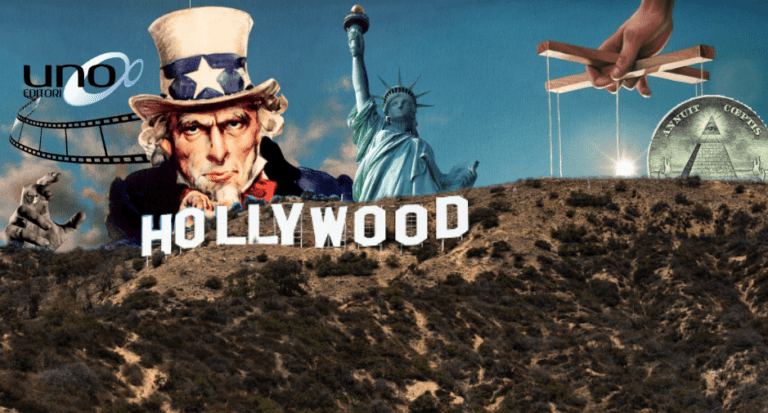
Hollywood and it’s Useful Idiots: Propaganda for the War in Ukraine, Big Pharma, and Every Other Globalist Agenda

By Timothy Alexander Guzman

Source: Silent Crow News

Alistair Cooke, a British-born writer who became a BBC film critic early in his career who worked mainly in the United States as a journalist, television personality, radio broadcaster had expressed his honest point of view on Hollywood’s film industry when he said that “I believe that Hollywood is the most effective and disastrous propaganda factory there has ever been in the history of human beings.” Since World War II, Hollywood has been one of the main instruments of propaganda for globalist agendas. It began with US President, Franklin D. Roosevelt who established the US Office of War Information (OWI) from June 1942 until September 1945 whose job was to regulate newspapers, radio broadcasts, Hollywood films and all other forms of media in order to propagandize the public in an effort to gain support for America’s involvement in the war. The OWI launched a global propaganda campaign that oversaw revisions in collaboration with Hollywood producers, and at times, even rejected film scripts that portrayed the US as a negative force on the world stage.  The OWI’s main job was to reject any film that had anti-war material.  There was also the Bureau of Motion Pictures (BMP) which was a division under the OWI that worked with Hollywood executives to decide which movies could benefit the war effort, for example, it authorized several films that had anti-Japanese propaganda, sort of like todays anti-Russia propaganda you find in many Hollywood films. However, over the last 20 years or so, Hollywood propaganda has even become even worse with the help of its Hollywood celebrities who have become mouthpieces for globalist agendas, so let’s call them for what they really are, ‘Useful Idiots.’

It’s amazing that for the last couple of decades many Hollywood celebrities have become self-described experts and spokespeople for US wars, Big Pharma, climate change and other globalist agendas.  Hollywood celebrities act and sing for a living, wear expensive name-brand clothing, and in some cases exploit their children to be part of the new woke culture. The so-called “Hollywood activists” such as George Clooney, U2 lead singer Bono, and the rest of them are phony as they can be. However, in all fairness, there are a handful of celebrities who do not, in any way fall into that category including Mel Gibson who is outspoken critic on Jewish power in Hollywood, comedian and actor George Carlin (R.I.P.), Marlon Brando, John Lennon (R.I.P.) and a handful of others.  When it comes to Israeli occupation and genocide against the Palestinians, Javier Bardem, Penelope Cruz, singer-songwriter and composer Roger Waters, Natalie Portman, and actress Vanessa Redgrave come to mind. In 1978, Vanessa Redgrave won an Oscar for best supporting actress in the film ‘Julia’ gave an acceptance speech at the 50th Academy Awards which she denounced Israel’s war against the Palestinians.  Redgrave said that “a small bunch of Zionist hoodlums whose behavior is an insult to the stature of Jews all over the world.”  The British actress had claimed in the past that far-right Jewish Defense League targeted her for producing the 1977 documentary ‘The Palestinian’. 

Most Hollywood celebrities who toe the line will do and say anything to remain relevant in the film and television industries, so they also follow the mainstream media narratives or listen to their Hollywood bosses, or maybe they are just dumbed-down individuals, just ask outspoken actor and comedian Ricky Gervais who had an iconic opening monologue in the Golden Globe awards ceremony in 2020 that will be remembered for the ages:

So, if you do win an award tonight, don’t use it as a platform to make a political speech. You’re in no position to lecture the public about anything. You know nothing about the real world. Most of you spent less time in school than Greta Thunberg.

So if you win, come up, accept your little award, thank your agent, and your God and fuck off, OK? It’s already three hours long. Right, let’s do the first award

Sean Penn and Ben Stiller: War against Russia

Although talented, two of the most idiotic actors in Hollywood when it comes to the war in Ukraine is Sean Penn and Ben Stiller.  Last month, Sean Penn recently visited and lent Ukrainian President Volodymyr Zelensky his Oscar while Zelensky awarded Penn the Order of Merit honor because he is “doing everything to help us gather international support” according to Reuters.  The article ‘Sean Penn visits Ukraine’s Zelensky, loans him an Oscar’ stated that “Hollywood actor and director Sean Penn, sanctioned by Russia for criticizing its war in Ukraine, loaned his Oscar statuette to Ukrainian President Volodymyr Zelenskiy during a visit to Kyiv on Tuesday.” 

The other actor is Ben Stiller who played an idiotic model in Zoolander and many other films called Zelensky his hero.  According to NBC News ‘Ben Stiller meets with Zelenskyy in Kyiv, tells Ukrainian leader ‘You’re my hero’ said that “The comedy star praised the Ukrainian president — himself a former comedian and actor — as a hero during the meeting, telling him: “You’re amazing” and that “It’s a great honor for me,” Stiller, who was appointed a UNHCR goodwill ambassador in July 2018, said in video capturing the meeting. “It’s really wonderful, you’re my hero. You’re amazing.”  So Stiller jumps on the Zelensky bandwagon just like most of his Hollywood friends to help the Western narrative that the war in Ukraine is about “freedom and democracy.”

But I want to go back to Sean Penn and his incredible hypocrisy when it comes to US wars and regime change.  In 2011, US President Barack Obama and Hillary Clinton gave US forces and NATO the greenlight to remove Libyan President, Muammar Gaddafi from power which destroyed Libya in the process.  Here is the interview with Sean Penn on CNN on his claim that it was all Gaddafi’s fault:

Obviously, the war on Libya was run by the Democratic Party so for Penn it was justified.  Now here is Sean Penn questioning the Bush Administration on WMDs in Iraq on December 15th, 2002.  The war on Iraq was basically a Republican Party affair under the Bush neocons:

Sean Penn’s hypocrisy is clearly staggering. He is a total propagandist for the US war machine.  Although Sean Penn has supported Venezuela’s revolution and other causes such as the Haiti’s earthquake in 2010 where he founded the J/P Haitian Relief Organization which operated a 55,000 person tent camp for victims of the earthquake, he is still a mouthpiece for the Democratic party and any regime change operation they deem necessary, so it is fair to say that both, Sean Penn and Ben Stiller are useful idiots.

Celebrities who Proudly Received their Covid-19 Vaccines

I am not going to get into the global lockdown and the dangers of the Covid-19 vaccine and the ridiculous enforcement of wearing facemasks or social distancing rules, so here are what several celebrities have posted on Instagram and twitter after they received their shots :

Lady Gaga:

“Double vaxed + boosted…don’t 4get to still wear a mask this sh*ts contagious ,

America Ferrara:

“Boosted for the holidays!  Thankful for the miracle of science and medicine allowing me to be with my loved ones safely this year 

Amber Heard:

 “Did someone say ‘vaccine queen’?! ” 

Sean Penn (No Surprise here!):

“I’m a lucky man. Lucky to work alongside the ⁦@LAFD & our great frontline @CoreResponse staff, our partners at Carbon Health, USC, & Curative Lab,” he tweeted. “We test & vaccinate thousands per day. We need your support to get more people lucky. Text CORE to 707070 to donate.”

*Note: Sean Penn was interviewed by Yahoo Entertainment and said that “My deep belief personally, is that these [vaccines are] no different than having everybody being able to drive 100 miles an hour in a car” he continued “This is one of those things that should be mandatory. That we all get with the exception — the very few exceptions — for those people who, for whatever medical condition, might offset it, but I do think that vaccines need to be mandatory, and I do think that business — all businesses, the movie business, all businesses — need to take the lead and to be not so timid in dealing with their collective bargaining agreement partners.”

Arnold Schwarzenegger:

 “All right, I just got my vaccine, and I would recommend it to anyone and everyone, come with me if you want to live.”

Despite all the evidence that the Covid-19 vaccines are dangerous and that wearing a facemask or social distancing does not work which brings me to the conclusion that these Hollywood celebrities are either brainwashed by the mainstream media, or they are just following the lies of Anthony Fauci who was elevated to celebrity status during the Covid-19 “pandemic”.  These people are not role models, they are just following what the medical establishment has prescribed to the public.  They are propagandizing the public to take Covid-19 killer shots which demonstrates that no one should listen to these people. Once you inject the MRNA technology into your body, its forever, its permanent and you cannot detox to get rid of it.  So in other words, don’t listen to these fools.

The Truth about Hollywood

There is no doubt that Hollywood has produced good films in the past but the Hollywood of today should focus on producing better movies and TV shows because most of their films are made only for propaganda purposes. In fact, many films today have no originality, better yet, there should be an alternative Hollywood that produces films without any form of propaganda that are worth watching. They can produce films that tells us real stories from around the world, like stories that come out of the Palestinian struggle or what is happening in certain parts of Africa as in the Hollywood movie ‘Blood Diamond’ with Leonardo DiCaprio and Djimon Hounsou that tells the story about the Diamond industry and its effects on the African people. Instead they produce propaganda films based on the US Military fighting for democracy or numerous films based on the Jewish Holocaust. When was the last time you saw a film based on the genocide of a Native American tribe on the North American continent?

However, Hollywood is pretty good at producing movies that offend different nationalities and cultures.  As we all know who really runs Hollywood, one documentary that shows some of the most offensive films based on the Muslim world is called ‘Reel Bad Arabs: How Hollywood Vilifies a People’ by Dr. Jack Shaheen. 

Hollywood and their useful idiot celebrities are propagandists who support the war in Ukraine, the Covid-19 vaccines and other globalist agendas including the concept of eating bugs as recommended by the World Economic Forum.  The bottom line is that Hollywood and their useful idiot celebrities are a bunch of clowns that should not be taken seriously, so why do people around the world idolize these people in the first place is beyond me.

Perpetual Tyranny: Endless Wars Are the Enemy of Freedom

By John W. Whitehead & Nisha Whitehead

Source: The Rutherford Institute

“Of all the enemies to public liberty war is, perhaps, the most to be dreaded because it comprises and develops the germ of every other. War is the parent of armies; from these proceed debts and taxes… known instruments for bringing the many under the domination of the few.… No nation could preserve its freedom in the midst of continual warfare.” — James Madison

War is the enemy of freedom.

As long as America’s politicians continue to involve us in wars that bankrupt the nation, jeopardize our servicemen and women, increase the chances of terrorism and blowback domestically, and push the nation that much closer to eventual collapse, “we the people” will find ourselves in a perpetual state of tyranny.

It’s time for the U.S. government to stop policing the globe.

This latest crisis—America’s part in the showdown between Russia and the Ukraine—has conveniently followed on the heels of a long line of other crises, manufactured or otherwise, which have occurred like clockwork in order to keep Americans distracted, deluded, amused, and insulated from the government’s steady encroachments on our freedoms.

And so it continues in its Orwellian fashion.

Two years after COVID-19 shifted the world into a state of global authoritarianism, just as the people’s tolerance for heavy-handed mandates seems to have finally worn thin, we are being prepped for the next distraction and the next drain on our economy.

Yet policing the globe and waging endless wars abroad isn’t making America—or the rest of the world—any safer, it’s certainly not making America great again, and it’s undeniably digging the U.S. deeper into debt.

Indeed, even if we were to put an end to all of the government’s military meddling and bring all of the troops home today, it would take decades to pay down the price of these wars and get the government’s creditors off our backs.

War has become a huge money-making venture, and the U.S. government, with its vast military empire, is one of its best buyers and sellers.

What most Americans—brainwashed into believing that patriotism means supporting the war machine—fail to recognize is that these ongoing wars have little to do with keeping the country safe and everything to do with propping up a military industrial complex that continues to dominate, dictate and shape almost every aspect of our lives.

Consider: We are a military culture engaged in continuous warfare. We have been a nation at war for most of our existence. We are a nation that makes a living from killing through defense contracts, weapons manufacturing and endless wars.

We are also being fed a steady diet of violence through our entertainment, news and politics.

All of the military equipment featured in blockbuster movies is provided—at taxpayer expense—in exchange for carefully placed promotional spots.

Back when I was a boy growing up in the 1950s, almost every classic sci fi movie ended with the heroic American military saving the day, whether it was battle tanks in Invaders from Mars (1953) or military roadblocks in Invasion of the Body Snatchers (1956).

What I didn’t know then as a schoolboy was the extent to which the Pentagon was paying to be cast as America’s savior. By the time my own kids were growing up, it was Jerry Bruckheimer’s blockbuster film Top Guncreated with Pentagon assistance and equipment—that boosted civic pride in the military.

Now it’s my grandkids’ turn to be awed and overwhelmed by child-focused military propaganda. Don’t even get me started on the war propaganda churned out by the toymakers. Even reality TV shows have gotten in on the gig, with the Pentagon’s entertainment office helping to sell war to the American public.

It’s estimated that U.S. military intelligence agencies (including the NSA) have influenced over 1,800 movies and TV shows.

And then there are the growing number of video games, a number of which are engineered by or created for the military, which have accustomed players to interactive war play through military simulations and first-person shooter scenarios.

This is how you acclimate a population to war.

This is how you cultivate loyalty to a war machine.

This is how, to borrow from the subtitle to the 1964 film Dr. Strangelove, you teach a nation to “stop worrying and love the bomb.”

As journalist David Sirota writes for Salon, “[C]ollusion between the military and Hollywood – including allowing Pentagon officials to line edit scripts—is once again on the rise, with new television programs and movies slated to celebrate the Navy SEALs….major Hollywood directors remain more than happy to ideologically slant their films in precisely the pro-war, pro-militarist direction that the Pentagon demands in exchange for taxpayer-subsidized access to military hardware.”

Why is the Pentagon (and the CIA and the government at large) so focused on using Hollywood as a propaganda machine?

To those who profit from war, it is—as Sirota recognizes—“a ‘product’ to be sold via pop culture products that sanitize war and, in the process, boost recruitment numbers….At a time when more and more Americans are questioning the fundamental tenets of militarism (i.e., budget-busting defense expenditures, never-ending wars/occupations, etc.), military officials are desperate to turn the public opinion tide back in a pro-militarist direction — and they know pop culture is the most effective tool to achieve that goal.”

The media, eager to score higher ratings, has been equally complicit in making (real) war more palatable to the public by packaging it as TV friendly.

This is what professor Roger Stahl refers to as the representation of a “clean war”: a war “without victims, without bodies, and without suffering”:

“‘Dehumanize destruction’ by extracting all human imagery from target areas … The language used to describe the clean war is as antiseptic as the pictures. Bombings are ‘air strikes.’ A future bombsite is a ‘target of opportunity.’ Unarmed areas are ‘soft targets.’ Civilians are ‘collateral damage.’ Destruction is always ‘surgical.’ By and large, the clean war wiped the humanity of civilians from the screen … Create conditions by which war appears short, abstract, sanitized and even aesthetically beautiful. Minimize any sense of death: of soldiers or civilians.”

This is how you sell war to a populace that may have grown weary of endless wars: sanitize the war coverage of anything graphic or discomfiting (present a clean war), gloss over the actual numbers of soldiers and civilians killed (human cost), cast the business of killing humans in a more abstract, palatable fashion (such as a hunt), demonize one’s opponents, and make the weapons of war a source of wonder and delight.

“This obsession with weapons of war has a name: technofetishism,” explains Stahl. “Weapons appear to take on a magical aura. They become centerpieces in a cult of worship.”

“Apart from gazing at the majesty of these bombs, we were also invited to step inside these high-tech machines and take them for a spin,” said Stahl. “Or if we have the means, we can purchase one of the military vehicles on the consumer market. Not only are we invited to fantasize about being in the driver’s seat, we are routinely invited to peer through the crosshairs too. These repeated modes of imaging war cultivate new modes of perception, new relationships to the tools of state violence. In other words, we become accustomed to ‘seeing’ through the machines of war.”

In order to sell war, you have to feed the public’s appetite for entertainment.

Not satisfied with peddling its war propaganda through Hollywood, reality TV shows and embedded journalists whose reports came across as glorified promotional ads for the military, the Pentagon has also turned to sports to further advance its agenda, “tying the symbols of sports with the symbols of war.”

The military has been firmly entrenched in the nation’s sports spectacles ever since, having co-opted football, basketball, even NASCAR.

This is how you sustain the nation’s appetite for war.

No wonder entertainment violence is the hottest selling ticket at the box office. As professor Henry Giroux points out, “Popular culture not only trades in violence as entertainment, but also it delivers violence to a society addicted to a pleasure principle steeped in graphic and extreme images of human suffering, mayhem and torture.”

No wonder the government continues to whet the nation’s appetite for violence and war through paid propaganda programs (seeded throughout sports entertainment, Hollywood blockbusters and video games)—what Stahl refers to as “militainment“—that glorify the military and serve as recruiting tools for America’s expanding military empire.

No wonder Americans from a very young age are being groomed to enlist as foot soldiers—even virtual ones—in America’s Army (coincidentally, that’s also the name of a first person shooter video game produced by the military). Explorer Scouts, for example, are one of the most popular recruiting tools for the military and its civilian counterparts (law enforcement, Border Patrol, and the FBI).

No wonder the United States is the number one consumer, exporter and perpetrator of violence and violent weapons in the world. Seriously, America spends more money on war than the combined military budgets of China, Russia, the United Kingdom, Japan, France, Saudi Arabia, India, Germany, Italy and Brazil. America polices the globe, with 800 military bases and troops stationed in 160 countries. Moreover, the war hawks have turned the American homeland into a quasi-battlefield with military gear, weapons and tactics. In turn, domestic police forces have become roving extensions of the military—a standing army.

We are dealing with a sophisticated, far-reaching war machine that has woven itself into the very fabric of this nation.

Clearly, our national priorities are in desperate need of an overhaul.

Eventually, all military empires fall and fail by spreading themselves too thin and spending themselves to death.

It happened in Rome: at the height of its power, even the mighty Roman Empire could not stare down a collapsing economy and a burgeoning military. Prolonged periods of war and false economic prosperity largely led to its demise.

It’s happening again.

The American Empire—with its endless wars waged by U.S. military servicepeople who have been reduced to little more than guns for hire: outsourced, stretched too thin, and deployed to far-flung places to police the globe—is approaching a breaking point.

The government is destabilizing the economy, destroying the national infrastructure through neglect and a lack of resources, and turning taxpayer dollars into blood money with its endless wars, drone strikes and mounting death tolls.

This is exactly the scenario President Dwight D. Eisenhower warned against when he cautioned the citizenry not to let the profit-driven war machine endanger our liberties or democratic processes. Eisenhower, who served as Supreme Commander of the Allied forces in Europe during World War II, was alarmed by the rise of the profit-driven war machine that, in order to perpetuate itself, would have to keep waging war.

Yet as Eisenhower recognized, the consequences of allowing the military-industrial complex to wage war, exhaust our resources and dictate our national priorities are beyond grave:

Every gun that is made, every warship launched, every rocket fired signifies, in the final sense, a theft from those who hunger and are not fed, those who are cold and are not clothed. This world in arms is not spending money alone. It is spending the sweat of its laborers, the genius of its scientists, the hopes of its children. The cost of one modern heavy bomber is this: a modern brick school in more than 30 cities. It is two electric power plants, each serving a town of 60,000 population. It is two fine, fully equipped hospitals. It is some 50 miles of concrete highway. We pay for a single fighter with a half million bushels of wheat. We pay for a single destroyer with new homes that could have housed more than 8,000 people. This, I repeat, is the best way of life to be found on the road the world has been taking. This is not a way of life at all, in any true sense. Under the cloud of threatening war, it is humanity hanging from a cross of iron.

We failed to heed Eisenhower’s warning.

The illicit merger of the armaments industry and the government that Eisenhower warned against has come to represent perhaps the greatest threat to the nation today.

What we have is a confluence of factors and influences that go beyond mere comparisons to Rome. It is a union of Orwell’s 1984 with its shadowy, totalitarian government—i.e., fascism, the union of government and corporate powers—and a total surveillance state with a military empire extended throughout the world.

As I make clear in my book Battlefield America: The War on the American People and in its fictional counterpart The Erik Blair Diaries, this is how tyranny rises and freedom falls.

The growth of and reliance on militarism as the solution for our problems both domestically and abroad bodes ill for the constitutional principles which form the basis of the American experiment in freedom.

As author Aldous Huxley warned: “Liberty cannot flourish in a country that is permanently on a war footing, or even a near-war footing. Permanent crisis justifies permanent control of everybody and everything by the agencies of the central government.”

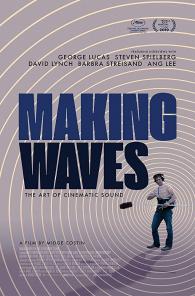
Saturday Matinee: Making Waves

Film Review: ‘Making Waves: The Art of Cinematic Sound’

A lively movie-love documentary looks at the history of sound design in Hollywood, as innovated by artists of technology like Walter Murch.

By Owen Gleiberman

Source: Variety

Among the pivotal and juicy nuggets of film history recounted in “Making Waves: The Art of Cinematic Sound,” Midge Costin’s wonkishly engaging movie-love documentary, there’s one that speaks volumes about the foundation of the New Hollywood.

It’s 1967, and George Lucas, who is three years away from making his first film, is on the set of “Finian’s Rainbow,” the clomping warhorse of a Hollywood musical that his buddy and fellow film-school brat Francis Ford Coppola has been hired to direct. Coppola, who already dreams of making his own more personal film, asks Lucas if he knows a good sound designer; Lucas tips him off to his USC colleague Walter Murch. Coppola and Murch then team up to make “The Rain People,” a road odyssey they literally shoot across the country, with Murch using the new Nagra Portable Audio Recorder. That’s when these filmmakers have their aha moment. “If we can make a film out of a shoe store in Nebraska,” realizes Murch, “then why do we have to be in Hollywood?” At that point the three head up to San Francisco to form American Zoetrope.

The New Hollywood kicked into high gear in 1969, and it was a revolution in countless ways. Yet when you think back to so many of its classics — “Mean Streets” and “Dog Day Afternoon,” “McCabe and Mrs. Miller” and “The French Connection” — the fact that they were shot on locations that became the films’ realities was central to their aesthetic. It was the new world of aural recording that made that possible. As much as anything, the ’70s film revolution was a sound revolution.

This hit home to me when “Making Waves” dissected the sequence in Robert Altman’s “Nashville” where Ronee Blakley’s Barbara Jean arrives at an airport that’s a mad swirl of scrambling civilians, random traffic, baton twirlers marching in formation, with the film’s main characters sprinkled throughout the jamboree. “Nashville” is my favorite movie, and I have a burnt-in visual impression of that sequence — but watching it in “Making Waves,” you realize that apart from several master shots, the images aren’t as packed and teeming as you might think. What’s packed and teeming is the soundtrack, a layered experiential hubbub that goes beyond even Altman’s famous “overlapping dialogue,” since most of what we’re hearing in this sequence isn’t dialogue. It’s the airplanes, the marching band, the nattering newscaster, all woven into something close to life.

“Making Waves” is about the evolution of film technology, yet the key to its appeal is that it revels in the holistic, aesthetic side of technology: not just buttons and dials and gizmos, but technology as an expression of something human. As lovingly directed by Midge Costin, a veteran sound editor, the film explores landmark moments in movie sound, like the fact that contemporary sound design really began with “King Kong” (1933), which pioneered effects that are still in use today, or that it was Barbra Streisand’s insistence on making the 1976 version of “A Star Is Born” an enveloping experience that pushed movie theaters into using stereophonic systems (she also spent four months and an additional $1 million on the film’s sound editing, unheard of at the time), or the fact that Ben Burtt devoted the better part of a year to coming up with the right modified animal sounds for the voice of Chewbacca (but would you have guessed that the bluster of the fighter jets in “Top Gun” was also modified animal sounds?), or that on “Apocalypse Now” there were half a dozen sound editors, each in charge of a different element (choppers, munitions, the boat), to forge a total symphonic effect.

Or take “The Godfather.” “The Rain People” turned out to be a disaster for Coppola, to the point that Warner Bros. claimed the money they’d given him to make the film was a personal loan. They wanted it back (it was the equivalent of $3 million today), which bankrupted Zoetrope and put Lucas’s career on hold. That’s one reason Coppola took on what Murch calls “this sleazy gangster film that 12 other directors had turned down.”

Murch, once again, was Coppola’s sound designer, and though “The Godfather” is a profoundly realistic film, in the famous scene where Michael Corleone kills Sollozzo in the Italian restaurant, the hit is preceded by a close-up of Michael’s face accompanied by a slow-building electronic din that sounds like the expressionistic version of a screeching subway train. “What you’re listening to,” says Murch, “are Michael’s neurons clashing against each other.” I’ve seen “The Godfather” a dozen times, but when that moment happens I’m so in the moment that I have never consciously heard that sound.

“Making Waves” presents Walter Murch as the grand architect of the Hollywood sound revolution — though the film doesn’t shortchange the extraordinary achievements of Ben Burtt, recruited out of USC by George Lucas to do “Star Wars,” or Gary Rydstrom, who became the sound guru of Pixar. (His first achievement: making those lamps in John Lasseter’s minute-and-a-half 1986 showpiece short “Luxo Jr.” “speak.”) The film also recognizes Orson Welles as the supreme cinema magician who first grasped, based on his radio experience, that sound was the art of illusion: creating an aural landscape to fill the spaces a camera could only show you. (It was the sound in “Citizen Kane” that let you feel those spaces.) The film salutes the directors who worked hand in glove with their sound wizards, notably David Lean and Alfred Hitchcock, Lucas and Spielberg, as well as Kubrick, Altman, and David Lynch.

But it’s Murch’s story that’s the archetype. Born in 1943, he recorded sounds off the radio as a boy, splicing and re-arranging them — and then, in 1953, when he first encountered music concrète from France, he felt like he was part of a movement. The works of John Cage were an influence, revealing a kind of sonic ideology in which anything you could hear became “music.” So were the Beatles, whether it was the future-shock distortion of “Tomorrow Never Knows” or the hipster music concrète of “Revolution 9.”

As a teenager, Murch soaked up Bergman and Kurosawa (both of whom cast spells with sound), and he then moved to Paris and connected with the New Wave, but at USC he returned to his tape-manipulating roots; he fused the mind of a scientist and the heart of an artist. Murch became a collector of sounds, and then a symphonist, forging a new kind of immersion in “Apocalypse Now.” Ben Burtt collected sounds, too, and one of the revelations of “Making Waves” is that many of the movie sounds we think of as futuristic, like the gun blasts in “Star Wars,” are things that were painstakingly culled from this world. (In their paradigm-shifting space opera, Lucas and Burtt actually cut against the eerie synthesized future sounds in films like the 1953 “The War of the Worlds.”)

“Making Waves” is a brisk 94 minutes, the last half hour of which is a quick-study primer on the categories of movie sound. The film is quite educational. I confess I had no idea that a “Foley” refers to a highly specific sound that’s crafted and post-synched — and that the term was named after Jack Foley, the sound editor who was ordered to make the armies of “Spartacus,” with their clanking armor, sound more realistic, and did so by employing such advanced technological devices as jingling car keys. In the years since “The Matrix,” anything has seemed possible. “These days,” observes David Lynch, “there’s so many tools to manipulate a sound that now, if you can think it you can do it.” That said, I wish “Making Waves” focused a little less on movies defined by their visionary action sequences: “Star Wars,” “Apocalypse Now,” “Saving Private Ryan,” “The Matrix.” I get that each of those films were game-changers, but if anything the movie teaches you to hear the expressive magic in the quietest of sounds — to know that when you’re listening to a movie, there’s always more than meets the ear.

Watch Making Waves on Hoopla here: https://www.hoopladigital.com/title/12896425

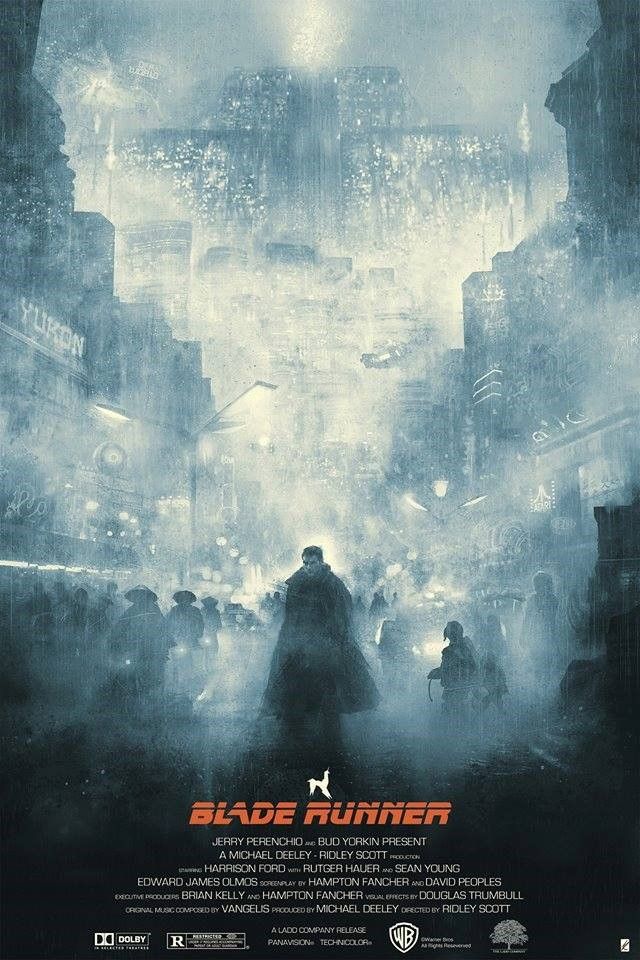
Tears in Rain: ‘Blade Runner’ and Philip K. Dick’s Legacy in Film

Blade Runner, and the work of Philip K. Dick, continues to find its way into our cinemas and minds. How did the visions of a paranoid loner become the most relevant science fiction of our time?

By Sean Bell

Source: PopMatters

You are an unusual man, Mr. Asher,” the cop beside him said. “Crazy or not, whatever it is that has gone wrong with you, you are one of a kind.”– Philip K. Dick, Flow My Tears, The Policeman Said.
“I’ve seen things you people wouldn’t believe…”
— Roy Batty, Blade Runner.

Los Angeles, 2019. The script simply reads: “Ext. Hades – Dusk”. Chemical flame bursts into the perpetual, post-nuclear Los Angeles gloom from skyscraping smokestacks, rising out of an industrial landscape Hieronymus Bosch might have envisaged. Flying cars flit through the darkness like fireflies. The camera moves slowly over impossible architecture with the immensity and decaying grandeur of ancient Egypt; a phantasmagorical megalopolis strung with necklaces of neon. The music rises.

The last war is over and nobody won. The Earth is living on borrowed time. Science has destroyed all boundaries between the real and unreal except those we choose to impose. Policemen are murderers, androids are lovers, nobody can be trusted, and everybody dies. Welcome back to the world of Blade Runner. Every time we return, it becomes more recognisable. Perhaps we never left.

Santa Ana, 1981. By now, Philip K. Dick — author, religious visionary and possible schizophrenic, who once said “You would have to kill me and prop me up in the seat of my car with a smile painted on my face to get me to go near Hollywood” — has read and approved the shooting script for Blade Runner by Hampton Fancher and David Peoples, as well as viewed a test reel of the movie’s groundbreaking special effects. In an effusive letter to Jeff Walker, the man in charge of the film’s marketing. Dick makes his prophetic opinion clear.

“Let me sum it up this way,” he wrote. “Science fiction has slowly and ineluctably settled into a monotonous death: it has become inbred, derivative, stale. Suddenly you people come in, some of the greatest talents currently in existence, and now we have a new life, a new start. As for my own role in the BLADE RUNNER project, I can only say that I did not know that a work of mine or a set of ideas of mine could be escalated into such stunning dimensions. My life and creative work are justified and completed by BLADE RUNNER… It will prove invincible.” (‘Letter to Jeff Walker regarding Blade Runner on Philip K Dick.com)

Dick, with a writer’s knack, chose the right words. Blade Runner has survived everything that could be thrown at it, including its initial critical reception, successive unsatisfactory edits, and dilution by both the science fiction genre and the film industry, which would plagiarise its vision with varying degrees of shamelessness for the next three decades. Yet nothing has been able to replicate its unique synthesis of elements, melding equal parts noir, action, romance, cyberpunk, dystopia and a meditation on what it means to be human. Whether praised or disparaged, ignored or overexposed, it has seen off all critics and challengers. Blade Runner‘s invincibility endures.

Unfortunately, the inimitable artistic fortitude of Ridley Scott‘s best work also allowed Hollywood to practice its favourite hobby of missing the point. The novels (or rather, in the film industry netherworld, ‘properties’) of Philip K. Dick — a writer largely unappreciated in his own lifetime who, at his lowest, claimed he he could not afford the late fee for a library book and infamously sustained himself on horse meat from a local pet store — have become highly prized and sought-after by studios eager to import intelligent ideas, rather than go through the hassle of conceiving their own. In the (twisted) spirit of Dick’s short story “We Can Remember It For You Wholesale“, no need for originality, we can develop it for you wholesale.

Question the nature of identity with Colin Farrell’s Douglas Quaid /Hauser as he flees the futuristic gunfire in the remake of Len Wiseman’s Total Recall (2012, an adaptation of an adaptation, as it were). Consider the limitations of free will with Tom Cruise’s Chief John Anderton (a well-known fan of unstable science fiction writers) in Steven Spielberg’s Minority Report (2012) while wondering how short he really is. Watch Jon Woo’s Paycheck (2003) and wonder how much Ben Affleck is actually being paid to appear in this piece of shit.

The names change, but the formula remains the same. Each summer, there must be blockbusters, and to fill the gaps in between the explosions with the barest bones of a Phil Dick story is, to the studio mindset, to buy instant, ready-made philosophical depth and artistic worth. Just add CGI!

Improbably, with 11 films based on his work and more in the pipeline, Dick has become the most adapted science fiction author in cinema history… And I’m not sure that’s a good thing.

“It’s a film about whether or not you can have a meaningful relationship with your toaster.” — Harrison Ford on Blade Runner in an interview with The Washington Post, 11 September 1992

That Scott is a director second only to George Lucas in his determination to tinker with a bygone masterwork until it meets his ultimate, exacting satisfaction (at last count, there are seven different versions of Blade Runner floating around the ether, finally culminating in Scott’s so-called ‘final cut’ in 2007), when a startling new interpretation of the film appeared online this June to wild acclaim, he had nothing to do with it. Instead, it was the work of the artist Anders Ramsell, who painstakingly recreated every frame of the movie’s opening 13 minutes with 3,285 gorgeous, haunting, impressionistic watercolours.

Dick, with a writer’s knack, chose the right words. Blade Runner has survived everything that could be thrown at it, including its initial critical reception, successive unsatisfactory edits, and dilution by both the science fiction genre and the film industry, which would plagiarise its vision with varying degrees of shamelessness for the next three decades. Yet nothing has been able to replicate its unique synthesis of elements, melding equal parts noir, action, romance, cyberpunk, dystopia and a meditation on what it means to be human. Whether praised or disparaged, ignored or overexposed, it has seen off all critics and challengers. Blade Runner‘s invincibility endures.

Unfortunately, the inimitable artistic fortitude of Ridley Scott‘s best work also allowed Hollywood to practice its favourite hobby of missing the point. The novels (or rather, in the film industry netherworld, ‘properties’) of Philip K. Dick — a writer largely unappreciated in his own lifetime who, at his lowest, claimed he he could not afford the late fee for a library book and infamously sustained himself on horse meat from a local pet store — have become highly prized and sought-after by studios eager to import intelligent ideas, rather than go through the hassle of conceiving their own. In the (twisted) spirit of Dick’s short story “We Can Remember It For You Wholesale“, no need for originality, we can develop it for you wholesale.

Question the nature of identity with Colin Farrell’s Douglas Quaid /Hauser as he flees the futuristic gunfire in the remake of Len Wiseman’s Total Recall (2012, an adaptation of an adaptation, as it were). Consider the limitations of free will with Tom Cruise’s Chief John Anderton (a well-known fan of unstable science fiction writers) in Steven Spielberg’s Minority Report (2012) while wondering how short he really is. Watch Jon Woo’s Paycheck (2003) and wonder how much Ben Affleck is actually being paid to appear in this piece of shit.

The names change, but the formula remains the same. Each summer, there must be blockbusters, and to fill the gaps in between the explosions with the barest bones of a Phil Dick story is, to the studio mindset, to buy instant, ready-made philosophical depth and artistic worth. Just add CGI!

Improbably, with 11 films based on his work and more in the pipeline, Dick has become the most adapted science fiction author in cinema history… And I’m not sure that’s a good thing.

“It’s a film about whether or not you can have a meaningful relationship with your toaster.” — Harrison Ford on Blade Runner in an interview with The Washington Post, 11 September 1992

That Scott is a director second only to George Lucas in his determination to tinker with a bygone masterwork until it meets his ultimate, exacting satisfaction (at last count, there are seven different versions of Blade Runner floating around the ether, finally culminating in Scott’s so-called ‘final cut’ in 2007), when a startling new interpretation of the film appeared online this June to wild acclaim, he had nothing to do with it. Instead, it was the work of the artist Anders Ramsell, who painstakingly recreated every frame of the movie’s opening 13 minutes with 3,285 gorgeous, haunting, impressionistic watercolours.

The painting technique employed to create this effect is known as aquarelle, which also acts as a sly commentary on Blade Runner‘s repeatedly-rejiggered legacy: because of its transparency, with aquarelle nothing can be painted over — once a mistake has been made, it has to be lived with. But as I watched what Ramsell called his ‘paraphrase’ of the movie, the familiar scenes and faces and voices emerging from the flickering, sensuous wash of colour, it seemed all the more appropriate. Other than Derek Jarman’s Caravaggio, I can think of no other film that so looks like a painting without paint — a piece of art that evokes other art, and yet remains entirely itself.

This is all a long way of saying that Blade Runner is beautiful, in almost every way possible. This has, ridiculously, sometimes been described as being to its detriment: Roger Ebert, one of the film’s more famous naysayers, wrote in a contemporary review in the Chicago Sun-Times that “It looks fabulous… but it is thin in its human story,” (11 September 1992) an oddly myopic remark to make about a parable on the nature of humanity. True, Blade Runner has an embarrassment of style, but never at the expense of substance, much like the best examples of the Cinema du look movement, which was just emerging in French cinema at the time of Blade Runner‘s release. Indeed, in appearance and atmosphere, Blade Runner is so distinct that it changed the aesthetic of science fiction, and new subgenres have since been invented simply to describe it — ‘future noir’, coined by the critic and filmmaker Paul M. Sammon, being the most enduring.

To those who have yet to experience the film, I wonder what to say that has not been said elsewhere. Based on Philip K. Dick’s 1968 novel Do Androids Dream of Electric Sheep?, Blade Runner somehow manages to be simultaneously the truest adaptation of Dick’s work yet produced — in spirit, if not plot — and also the freest in its interpretation of the material.

The central premise remains in both book and film; Rick Deckard (Harrison Ford), halfway between policeman and bounty hunter, makes his living by tracking and killing androids that are almost entirely indistinguishable from humans, living amongst us under false identities. The supposed test for distinguishing real from unreal humans is that of empathy, but as Deckard methodically adds to his ‘artificial’ bodycount, he begins to question who is really the unemotional machine.

Blade Runner dumps much of the novel’s narrative furniture — Scott justified this to Dick by saying: “You know you’re so dense, mate, that by page 32, there’s about 17 storylines” — in a way that, in almost any other adaptation, would be considered sacrilege. Most noticeably, in the novel, Deckard is trapped in a barely functional marriage, while in the movie, Harrison Ford’s laconic protagonist is the classic bachelor gumshoe.

Also prominent in the book are ‘Mercerism’, the religion based around its followers’ empathy for a man whom others were throwing rocks at, and the ‘Mood Organ’, the household device which stimulates any mood the user wishes to experience, and which much of the population now depends on in order to face another bleak, post-apocalyptic day — two tragicomic creations typical of Dick, but too wry to fit with the Blade Runner‘s overall tone. Despite such changes, Dick’s reading of the screenplay convinced him that this film could express his ideas in a way he had not thought possible.

The production could hardly be called smooth. Even before its release, troubling rumours had begun circulating, and as Paul M Sammon wrote ,”by the time BR (Blade Runner) officially completed principle photography in July on 1981, the gossip has become more specific — BR‘s workload had been horrendous, its shooting conditions miserable, and its director, difficult. Moreover, the whispers went, BR’s moneymen were unhappy, its leading man had clashed with his director, and the crew had been near revolt.” Some of these stories were indeed true, but one should bear in mind that movie moneymen are nearly always unhappy, and Harrison Ford will always be the man who told George Lucas that “you can type this shit, but you sure as hell can’t say it.”

Paranoia Runs Through Blade Runner Like a Knife Edge

When Blade Runner was first released, the reviews ran from lukewarm to underwhelmed to baffled, a fact that many critics have been doing their best to forget in the intervening years, polishing the film’s legend in a frantic effort to make up for missing the boat first time round. Considered today, in our gleaming plastic future of bad credit and worse politics, where we are reliant not on humanised robots but dehumanising gadgets, and where much of the movie’s retro-futurism appears as quaint as it does prescient, what is left to say about Blade Runner?

Should I recite the plaudits that have become ritualistic? Should I point out the Roy Batty’s (Rutger Hauer) ‘tears in rain’ monologue is among the most moving and eloquent ever written or performed? Or that Vangelis revolutionised jazz, electronic music and film scoring simultaneously in one of the best soundtracks ever composed? Is it really necessary to highlight the acting of all involved; Harrison Ford as one of the best soulful detectives to grace noir of any kind, an understated and heartbreaking Sean Young (as Rachael), a dangerous but innocent Daryl Hannah (as Pris), or Rutger Hauer’s mixture of the psychotic and the Shakespearean? Do I need to praise the costumes, the set design, or the script which balances so many themes, so many hidden or implied meanings, with such grace and economy?

Well, yes. You want a criticism of Blade Runner? I would’ve liked more of Edward James Olmos’ Gaff. He’s cool. I also want Deckard’s coat.

But we need to be reminded of these things, every now and again, as each new generation discovers the film afresh, and especially when the next logical question becomes: how did Blade Runner get it so right, more so than any other adaptation of Dick’s work since? What did it understand that they did not? To try and answer that, we have to go back to the source.

“Phil acknowledged that his talk sometimes sounded like “religious nonsense & occult nonsense” — but somewhere in it all was the truth. And he would never find it. God himself had assured him of that.” — Lawrence Sutin, Divine Invasions: A Life of Philip K. Dick.

In 2000, at the one and only Disinfo Con — a friendly gathering of millennial deviants concerning all things ‘counterculture’ — Grant Morrison, a writer who could arguably be counted as one of Dick’s prodigious bastard literary offspring, opened his keynote speech marvelling at the fact he spent his youth reading Robert Anton Wilson and now, all these years later, “we’re standing here, we’re talking about this shit and it’s real.”

Fans of Philip K. Dick have been feeling like that since at least the ’70s, when the dark realities on the other side of the Drug Revolution and the true possibilities of an all-powerful Nixonian surveillance state were becoming painfully apparent. Then as now, we use Dick’s paranoia to express our own.

Dick once commented that, with the making of Blade Runner, what had once been a private world that only he inhabited was now open to all; they would live in its murky depths, just as he did every day. At first, one might think that a paranoid and delusional visionary — and I use the word in its most literal sense — would want nothing more than for others to see and experience what he does. But perhaps Dick didn’t want anyone in his world. Maybe he didn’t think his world should be suffered by anyone else.

The fantastic, tortured mind of Philip K. Dick has been discussed, analysed and treated like an object of supreme curiosity since his death in 1982 (a few months shy of Blade Runner‘s release) and before. He had eked out an impoverished existence writing science fiction since the ’50s, when it was less a genre than a ghetto, and could only make a living by producing at a furious pace which he fuelled with huge amounts of amphetamines, at one point producing 12 novels over the course of two years.

But Dick was ever a seeker of truth, which made him, strangely, something of an oddity in science fiction. Within these novels, beneath the aliens and spaceships, moon colonies and interstellar wars, was arguably the best satire being done in science fiction on American life outside of Kurt Vonnegut‘s oeuvre, the philosophical undertones and untrammelled, often gothic imagination of which called to mind Jorge Luis Borges more than Isaac Asimov. The uniting thread that runs through his work — and, eventually, his life — is the notion that reality, as we know it, is fundamentally untrustworthy.

As the ’60s wore on, Dick’s involvement with the drug culture increased, adding a psychedelic aspect to both his ever-evolving philosophy and his ever-present paranoia. In 1971, Dick experienced a defining moment: his home was broken into, his safe blown open, and many of his personal papers burglerized. He never discovered who was responsible, though he had many suspects — local drug addicts, Black Panthers, the police, the FBI, the Soviets, or any of these, pretending to be one of the others.

The effect it left on Dick was to give him proof, unexplained and terrifying, that his paranoia was somehow justified. There had been comfort in simply telling himself he was crazy. But after years of grappling with his mental health, someone, it seemed, truly was out to get him.

“I mean,” he told the Aquarian magazine in a 1974 interview, “it’s a very frightening thing when the head of a police department tells you that you better leave the county because you have enemies, and you don’t know who these enemies are or why you’ve incurred their wrath.”

When one is peripherally aware of one’s own tenuous psychological condition (which we must be, we tell ourselves, if we have any hope of overcoming it), the uninitiated cannot imagine the sheer anguish, the self-doubt, the fear that follows when you know you cannot trust your own mind, and you cannot trust anyone to help you. The luckiest paranoids are also egotists, or better yet, megalomaniacs; they face the lurking forces of imagined persecution with a defiant roar or a knowing smirk.

Dick, on the other hand, was a sensitive, fragile, frightened soul, as well as a possible undiagnosed schizophrenic. His subsequent religious experiences — a series of hallucinations in which a beam of pink light connected him with a “transcendentally rational mind” — may have been his brain’s attempt to soothe his paranoia, or merely the next stage of his mental instability. In either case, as always, it provided inspiration for another novel.

Critics and biographers often talk about Dick’s paranoia and delusions like they were shocking fashion statements or extreme political opinions — just another interesting aspect to the bizarro image of a literary titan. What they don’t say, although the evidence is all around us, is that Dick’s paranoia is ours, as well. Ours may not have such colourful outlets or dramatic results, but we shall always carry our paranoia with us. It cannot be blotted out. There will forever be dark fears lurking in the deeper pools of our mind about our untrustworthy friends, co-workers, policemen, criminals, the FBI, the CIA, the Communists, the aliens, or God himself… and beyond. Existence will always be open to question, forever taunting us with its uncertainty. We can’t trust reality, but we have to live there.

This paranoia runs through Blade Runner like a knife edge. You cannot trust others, or yourself. You cannot trust your memories, your past, or your future. The entire world may be against you, even if it doesn’t appear to be. Then again, you don’t have to like it.

The heroes and villains of Blade Runner do not like, or accept, the oppression of the paranoid worldview. Deckard fights a series of seemingly impossible battles, even against what he thought was true, and finds romance where it should be impossible. Roy Batty, the leader of the renegade replicants, fights against death itself, seeking to extend and outlive his designer-mandated expiration date. The inhuman fights to become human, so humans must prove their humanity. This is the message at Blade Runner‘s core, and it has never been replicated.

Near the end of Dick’s 1976 novel Radio Free Albemuth, the protagonist, an author surrogate for Dick who also writes pulp science fiction, is faced by a gloating representative of the government conspiracy that the writer has become entangled with, who coolly informs him they will continue to put out books under his name — lurid trash scattered with a few of the author’s trademark concepts to keep it recognisable for his fans, but encoded with non-too-subtle propaganda messages designed to keep its readers afraid and unenlightened.

At our most cynical, it’s sometimes difficult not to think of Hollywood the same way: trading on Dick’s name and style and core ideas, but discarding the message and the mind behind them.

Authors often have to face a string of misfires and misinterpretations before their work gets the cinematic treatment it deserves; Dick, on the other hand, got a masterpiece on the first go. And it remains ours to enjoy: Blade Runner, as Dick wrote, is invincible.

Maybe it’s finally time for Hollywood to leave the legacy of Philip K. Dick at the local bookstore, where it belongs.

“What matters to me is the writing, the act of manufacturing the novel, because while I am doing it, at that particular moment, I am in the world I am writing about. It is real to me, completely and utterly. Then, when I’m finished, and I have to stop, withdraw from that world forever — that destroys me… I promise myself: I will never write another novel. I will never again imagine people from whom I will eventually be cut off. I tell myself this… and, secretly and cautiously, I begin another book.” — Philip K. Dick, “Notes Made Late At Night By A Weary SF Writer”, 1968.

Saturday Matinee: Out of Shadows

Source: OutofShadows.org

The Out Of Shadows documentary lifts the mask on how the mainstream media & Hollywood manipulate & control the masses by spreading propaganda throughout their content. Our goal is to wake up the general public by shedding light on how we all have been lied to & brainwashed by a hidden enemy with a sinister agenda.

This project is the result of two years of blood, sweat and tears by a team of woke professionals. It’s been independently produced and funded and is available on many different platforms for FREE for anyone to watch. Patriots made this documentary with the sole purpose of getting the truth out there. If you like the documentary, please share this video.

Freedom Rider: Hollywood Propaganda Attack on Venezuela

By Margaret Kimberly

Source: Black Agenda Report

The US is starving and killing Venezuelans in real life and, for your family’s viewing pleasure, on television screens.

“Imperialism is quite bipartisan and liberal Hollywood never saw propaganda it didn’t want to hype.”

“The military intervention of #Venezuela, put ‘on the table’ by @realDonaldTrump and his gang of fanatic supremacists, is supported by the gringo propaganda machine. Here is a fragment of their ‘cultural offerings.’”— Ernesto Villegas, Venezuela Minister of Culture

Americans are loathe to think of themselves as being propagandized.  The idea is inconsistent with notions of exceptional goodness and superiority that are constantly evoked in this country. But government propaganda does not work in a vacuum. It is bolstered by the corporate media and that includes the entertainment industry.

The latest in the story of fictitious CIA agent Jack Ryan is a case in point. The Ryan character appeared in five different feature films before moving to the small screen via Amazon Prime Video. The new season premieres in November and in this latest incarnation Ryan fights to prevent a nuclear armed Venezuela .

The upside down presentation is typical of the perversion of truth so prevalent in the United State. This country is the only one to have used nuclear weapons and still possesses more than any other. It is the United States that recently withdrew unilaterally from decades old nuclear agreements with Russia. Yet Hollywood has woven a tale of Russia, the country which wanted to keep the non-proliferation agreements, as a villain giving nuclear weapons to Venezuela.

“Government propaganda is bolstered by the entertainment industry.”

Venezuela is the victim of United States aggression in reality and now on the screen. The doctrine of “maximum pressure” has killed 40,000 Venezuelans through sanctions that have deprived that nation of food and medical care. That proof of U.S. aggression is known only to those who access independent media sources. The corporate media, even those who are allegedly liberal, parrot Donald Trump administration talking points, even if they otherwise deride the president and his team. Imperialism is quite bipartisan and liberal Hollywood never saw propaganda it didn’t want to hype.

Of course liberals who are usually overcome by Trump derangement syndrome are happy to go along with aggression schemes. Very few Democrats have expressed opposition to the anti-Venezuelan plots hatched by Trump. There is indeed foreign policy collusion but it doesn’t exist in a relationship with a foreign government. The determination to support American hegemony is an important part of the elite consensus.

That obvious truth is also disappeared and is not to be discussed in what passes for polite and “serious” company. According to myth, America is a classless, post-racial meritocracy and accepting of every political viewpoint. Of course it is anything but. The hierarchies are rigid and tenaciously defended.

“The corporate media, even those who are allegedly liberal, parrot Donald Trump administration talking points.”

Propaganda delivered via popular entertainment plays a particularly insidious role in this process. The goal is to change minds and ensure support for any act the government should choose to make. If this particular iteration of the Jack Ryan story isn’t challenged then no act or aggression will be challenged either.Media imagery is very powerful, that is why governments work so closely with corporate media to present their narratives.

Mace Neufeld  created the Jack Ryan film franchise. In 2014 he received a lifetime achievement award from the Israeli Film Festival. Curiously, the event wasn’t held in Israel at all. Instead Beverly Hills was the venue. Neufeld’s co-honoree was Arnon Milchan, a former Mossad operative who parlayed that career into producing hit films such as Twelve Years a Slave.

Israel isn’t alone in this regard. The CIA and the Pentagon both have film liaison offices . Movie credits often end with thanks to the department of defense. That always means that the plot line is approved by the military and the surveillance state.

“Movie credits often end with thanks to the department of defense.”

This grotesque lying on a mass scale cannot be ignored. The propagandists know that repetition plays a huge role in the process of indoctrination. For years Venezuela has been used as a bogeyman to convince people in this country to act against their own interests. “Socialism doesn’t work, just look at Venezuela,” is a statement made to end discussion of free health care or college education or housing or anything else that people need and want. After the 100th New York Times article which says nothing about the U.S. attack but points out that Venezuelans are hungry, the job has been done. Venezuela is now so thoroughly demonized that only a small number of people will come to its defense or even question their government’s policy against that nation.

“Venezuela is now so thoroughly demonized that only a small number of people will come to its defense.”

In 2002 and 2003 the president, the corporate media, and members of Congress all claimed that Iraq possessed chemical weapons. They wanted to make a case for war and they succeeded. Nearly 20 years later there has been no explanation or apology from the guilty parties. The same people claimed that Syria had chemical weapons and advocated for a larger war there. It isn’t hard to believe that a lie about chemicals or nukes in Venezuela could be used to do the same thing if that is what the establishment desired.

Entertainment isn’t harmless. That is why the ruling clique work together to ensure that they all stay on message. They haven’t spent millions of dollars honing the false message that Venezuela is a failed state with evil leadership for no reason. Venezuela’s culture minister, Ernesto Villegas, hits the nail squarely on the head when he describes this latest insult as “crass war propaganda masquerading as entertainment.”  If the U.S. should take military action or continue its regime change efforts, the plot will have succeeded. A few well informed people will speak out but the masses will either support an atrocity or ignore any horror that their leadership cares to visit upon the Venezuelan people. Washington and Hollywood are still working hand in hand.


Margaret Kimberley’s Freedom Rider column appears weekly in BAR, and is widely reprinted elsewhere. She maintains a frequently updated blog as well at http://freedomrider.blogspot.com . Ms. Kimberley lives in New York City, and can be reached via e-Mail at Margaret.Kimberley(at)BlackAgendaReport.com.

Invisible Architecture III: The Psychogeography of Hyperspace

By Rococo Modem Basilisk

Source: Modern Mythology

Ordinarily, when we discuss psychogeography, we operate at the scale of a city: we discuss how people are drawn through a walkable space, at a speed in which they can be affected by each piece of passing scenery and make a detour to examine it. But, at the same time the Lettrists were wandering Paris and laying the groundwork for Disneyland in the micro-scale, at the macro-scale holes were being punched through the fabric of the United States in the form of highways.

Habitual migration patterns break the close association between culture and geography. There’s a psychogeographic wormhole between Fairfield County, CT and south Florida, and used to be one between there and upstate NY. If you live in Fairfield County (or certain parts of NYC) you’re liable to be culturally closer to some parts of south Florida than to many points in-between, not because of natural rock formations or bodies of water, but because highways have made it possible to pass through the middle without interacting with it.

Areas of transience — the hyperspace of psychogeography — are not ‘non-places’ with ‘non-culture’. They have a uniquely warped kind of culture, in the same way tourist-dependent places do. Some people spend large amounts of their lives there: long-haul truckers, jet-setting businessmen, touring bands or comedians or authors. The attempt at producing a consistent experience across geography produces an experience that can only exist in hyperspace.

Our own psychogeographic hyperspace is not as psychedelic as the one in Cordwainer Smith’s A Game of Rat and Dragon, but it is stranger, in a Ligottian way.

Why do they have ice machines? Why do they have pools? Why are airplanes and airports trapped in a perpetual 1963 idea of what luxury looks like? Path dependence has made the culture of our hyperspace deeply strange: there are low upper limits on quality of manufacture and high lower limits on quality of service, and the assumed transitory state of most inhabitants means bonds cannot be formed.

When new ideas are integrated here at all, they slot into existing structures — structures that don’t exist outside, in the world that is normal for most of us. Wifi passwords come with the keycard; a robot kiosk in front of the check-in desk prints tickets, as the clerk who formerly printed tickets watches.

These liminal spaces are only forgettable for people who have destinations. They’re also populated by residents, or commuters from geographically — nearby places, who fill the service jobs. What’s it like to have a diner with no regulars? This situation is capitalism-optimized. If you are a resident of psychogeographic hyperspace — nomadic or not — you are dog-fooding the experience that Rand thought was natural to man: separation of orbits, mediated by impersonal monetary transactions. It looks like endless beige hotels with broken ice machines.

What are the attributes of this Randian New Man who lives as hyperspace nomad? Sleep deprivation, boredom, and a dependence on stimulants. Gas stations in hyperspace cater to truckers, abnormally large DVD and pornography selections and every variety of pick-me-up not yet banned. Airports, whose nomads are of a higher caste and have less private space or scheduling freedom, focus more on overpriced convenience food, mediocre reading material, and headphones, and pillows. A Cinnabon could not survive outside of hyperspace, even if it grew up in the shallows of the shopping mall, but in this ecosystem, sheltered from competitors and provided with a steady stream of easy prey, it thrives.

The culture of hyperspace is not a psychogeography, except in a fairly minor sense: everywhere is the same, or tries to be. The few deviations, like Denver International Airport, are notable because deviation is so rare. There is an international internet radio station specifically for airports, and I have heard it play the same playlist in three states. (It never played Brian Eno.) However, like the hyperspace of fiction, it is a strange world that fills the gaps as we jump from one point to another without travelling in-between.

Transit systems are not the only holes in psychogeography. Communications systems also create them. Just as the prevalence of snowbirds and Adirondack cottages make it possible for small segments of northern New York and southern Florida to influence Manhattan finance and vice versa, arbitrary decisions or early-mover advantages gave Los Angeles cultural power over film, Cleveland cultural power over radio, and Atlanta cultural power over podcasting.

Communications technologies have their own hyperspace-cultures, although the geographic centralization of the big players has a larger impact on how they manifest than in the case of hotels. Twitter is the internet equivalent of a trucker-optimized gas station, and caters to journalists — the long-haul truckers of the information landscape. Facebook is the internet equivalent of a Holiday Inn: a premium-mediocre imitation of homeyness that is endearing in its complete failure to be convincing but ultimately irritating if you try to stay too long. (Facebook’s ice machine is always broken, and always loud.) The film industry is a bit like any airport: perpetually stuck in a cheap imitation of an imagined luxurious past, adapting poorly to the cosmopolitanism produced by globalization while profiting through its monopoly on the means of that globalization.

The culture of any hyperspace, because the means of association are limited to the Randian, will be corporate in its manifestation: customer service, marketing, selection, returns, free coupons as a means of apology. It differs from non-hyperspace because these are the only forms of communication truly available. This diner has no regulars with whom the waitress can be frank, only strangers perpetually passing through. It can get away with being shallow and having nothing under its surface, because only very rarely will someone stay long enough to peel it back.