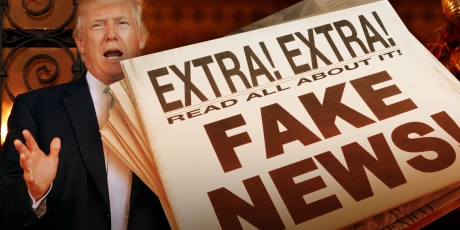
Thirteen Russians and a Ham Sandwich

By Charles Hugh Smith

Source: Kunstler.com

Remember that one from 1996? Funny, that was the American mainstream media bragging, after the fact, about our own meddling in another nation’s election.

WASHINGTON — A team of American political strategists who helped [California] Gov. Pete Wilson with his abortive presidential bid earlier this year said this week that they served as Russian President Boris N. Yeltsin’s secret campaign weapon in his comeback win over a Communist challenge.

—The Los Angeles Times, July 9, 1996

The beauty in Robert Mueller’s indictment of thirteen Russian Facebook trolls is that they’ll never face trial, so Mr. Mueller will never have to prove his case. In the new misrule of law made popular by the #Me Too movement, accusations suffice to convict the target of an investigation. Kind of sounds like going medieval to me, but that’s how we roll now in the Land of the Free.

Readers know, of course, that I’m not a Trump supporter, that I regard him as a national embarrassment, but I’m much more disturbed by the mindless hysteria ginned up Washington’s permanent bureaucracy in collusion with half a dozen major newspapers and cable news networks, who have run a psy-ops campaign to shove the country into a war mentality.

The New York Times published a doozy of a lead story on Saturday, the day after the indictments were announced. The headline said: Trump’s Conspicuous Silence Leaves a Struggle Against Russia Without a Leader. Dean Baquet and his editorial board are apparently seeking an American Napoleon who will mount a white horse and take our legions into Moscow to teach these rascals a lesson — or something like that.

I’m surely not the only one to notice how this hysteria is designed to distract the public attention from the documented misconduct among FBI, CIA, NSA, State Department officials and the leaders of the #Resistance itself: the Democratic National Committee, its nominee in the 2016 election, HRC, and Barack Obama’s White House inner circle. You would think that at least some of this mischief would have come to Robert Mueller’s attention, since the paper trail of evidence is as broad and cluttered as the DC Beltway itself. It actually looks like the greatest act of bureaucratic ass-covering inn US history.

Of course, Deputy Attorney General Rod Rosenstein was quick to qualify the announced indictments by saying that Russian trolling on Facebook had no effect on the 2016 election, and that the Trump campaign was not implicated in it. Maybe the indictments were just a table-setter for something more potent to come out of Mueller’s office. But what if it’s not. What if this is all he has to show for a year and a half of the most scrupulous delving into this “narrative?”

Meanwhile, the damage done among America’s former thinking class essentially leaves this polity like the Scarecrow in The Wizard of Oz: without a brain. I doubt they will be satisfied by Mueller’s indictment of the thirteen Russian trolls. Rather, it may tempt them to even more violent hysterics and greater acts of lawlessness. The only thing that will stop this nonsense is Big Trouble in the financial system — which the news media and most of the public are ignoring at their peril. It is coming at us good and hard and it will feel like a two-by-four to nation’s skull when it gets here.

The Top 10 Outrageous Things About ISIS the Western Mainstream Media Ignores

By Robert Bridge

Source: Strategic Culture Foundation

Last week, the US said it was working to create “alternative government authorities” on Syrian territory. This latest move, aside from demonstrating once again that the US has no respect for Syria’s territorial integrity, indicates we may be seeing more from that group of mercenaries known as Islamic State.

Thus, it seems to be an appropriate time to reflect upon a set of very strange circumstances that led to the rise of this loathsome terrorist group. Here are the top 10 reasons, in no particular order, as to why we should be very suspicious about this group.

10. Convenient Timing

In late August 2013, the United States was on the verge of initiating a massive attack on the government of Syrian President Bashar Assad over a deadly chemical attack that had occurred in the town of Ghouta just days earlier. Although it would have made no sense for Assad to have resorted to such dirty tactics, Washington had found its casus belli. It should be noted that at this time the so-called Islamic State of Iraq and the Levant was largely unknown. That would change soon enough.

Meanwhile, a terrible thing happened on the way to this jolly little war. UK Prime Minister David Cameron suffered a stunning defeat in the House of Commons, voting down his effort to join the Americans in Syria. Apparently the British were America’s obedient poodle no longer.

The setback had an apparent sobering effect on Barack Obama, who suddenly – in a feigned nod to democratic procedure and all that – called for Congress to decide whether or not to use military force against Syrian. Tellingly, that vote never materialized.

What did materialize, however, and with alarming speed and viciousness, was a terrorist group that rose up like a phoenix from the ashes of Iraq known as Islamic State (ISIS)*, with evil designs to create an Islamic caliphate across a wide swath of Iraq and Syria.

In other words, the perfect casus belli for the US in Syria that would require no need for a vote from Congress.

9. Journalist Killings

As if to draw gratuitous attention to itself more than anything else, the Sunni terrorist group ISIS, under the leadership of one Abu Bakr al Baghdadi, began to grab world headlines not by its battlefield exploits, but by carrying out videotaped executions of Western journalists, as well as destroying cultural heritage sites. I still can’t help wondering: Why didn’t the group just let its fighting skills speak for itself? Why the apparent need for such outrageous publicity stunts? Was this compensation for something the group was desperately lacking?

In any case, starting in August 2014, almost one year to the day that Obama was forced to put the brakes on his Syrian attack, the beheadings began in earnest.

On August 19, US journalist James Foley, seen kneeling on the ground in some undetermined location next to his apparent executioner, ‘Jihadi John,’ reads out a short statement before being beheaded by his captor. However, Islamic State spared its audience the gore by not showing the moment of the actual beheading; the video only shows a head lying on a body following the purported act.

Even Western mainstream publications admitted that something didn’t seem quite right.

Under the headline, ‘Foley murder video may have been staged’ the Telegraph, a reputable British newspaper, interviewed forensic experts who called into question the moment in the video when Foley is allegedly being beheaded by his captor.

“After enhancements, the knife can be seen to be drawn across the upper neck at least six times, with no blood evidence to the point the picture fades to black,” the expert said.

Another expert who examined the video for the newspaper said: “I think it has been staged. My feeling is that the execution may have happened after the camera was stopped.”

Incredibly, every subsequent beheading video put out by Islamic State attracted the same amount of scepticism – not just from alternative websites, who were also noticing the many irregularities contained in the videos, but from mainstream media news sources.

Following the release of the video purported to show the beheading of Steve Sotloff, a journalist who worked with the Jerusalem Post, The Australian newspaper reported that “the apparent beheading on camera of a second US hostage by a man with a British accent was again staged, according to forensic analysis.”

Then there was the video of 21 Egyptian Coptic Christians, dressed in impeccably clean orange jumpsuits, being led along a Libyan beach by black-clad members of ISIS, all of whom appear to be members of some NBA basketball team.

Veryan Khan, editorial director of the Florida-based Terrorism Research & Analysis Consortium, told Fox News that “the speaker, “Jihad Joseph” is much larger than the sea in both the close up and wide shots, and his head is bizarrely out of proportion, meaning he was filmed indoors and the sea added behind him… In addition, the jihadists featured in the film look to be more than 7 feet tall, towering as much as two feet above their victims…”

In July 2015, yet another strange report emerged, CyberBerkut, a Ukrainian group of hackers, said it hacked John McCain’s laptop while he was on an official visit to Kiev around the first week of June 2015. In a report by TechWorm, what they purported to find was a fully staged production of an ISIS execution video, with an actor portraying an executioner who is holding a knife in preparation to behead the prisoner.

The authenticity of this video has not been independently verified.

None of this proves that the individuals in all of the ISIS beheading videos did not go on to meet some grisly fate. However, it seems worth noting that so many forensic experts have spoken out on the “staged” nature of these videos, and that the actual moment of execution during these film productions is never actually shown. Why would such a barbarous group of villains like ISIS need to script and censor their videos?

8. ISIS freedom of movement

Despite employing state-of-the-art fighter jets, like the F-16 Fighting Falcon and A-10 Warthog, the US campaign to destroy Islamic State was largely an exercise in utter futility. There is no other way to explain it. In June 2014, a convoy of hundreds of ISIS fighters drove through 200 km of the Syro-Arabian Desert in fresh-off-the-lot Toyota pickup trucks on the way to Syria. For any modern military, eliminating such a target would have been the equivalent of a lazy afternoon at the shooting range, or shooting fish in a barrel. The fact that these terrorists made it to Syria unmolested tells us everything we need to know about America’s real agenda.

“With state of the art jet fighter aircraft … it would have been – from a military standpoint – ‘a piece of cake’, a rapid and expedient surgical operation, which would have decimated the Islamic State convoys in a matter of hours,” Michel Chossudovsky wrote in Global Research.

“Instead what we have witnessed is an ongoing drawn out six months of relentless air raids and bombings, and the terrorist enemy is apparently still intact.”

“And we are led to believe that the Islamic State cannot be defeated by a powerful US led military coalition of 19 countries,” he added.

The only reasonable conclusion to make from all of this is that the air campaign was not designed to eliminate Islamic State.

7. SITE Security Group

In 2002, Rita Katz and Josh Devon founded Search for International Terrorist Entities Institute (SITE), which, according to its website, is “the world’s leading non-governmental counterterrorism organization specializing in tracking and analyzing online activity of the global extremist community.”

In 2006, in a New Yorker article entitled, “Private Jihad: How Rita Katz got into the spying business,” it was mentioned how SITE spoke directly with jihadists via various message boards:

“Katz has a testy relationship with the government, sometimes acting as a consultant and sometimes as an antagonist. About a year ago, a SITE staffer, under an alias, managed to join an exclusive jihadist message board that, among other things, served as a debarkation point for many would-be suicide bombers.

For months, the staffer pretended to be one of the jihadis, joining in chats and watching as other members posted the chilling messages known as “wills,” the final sign-offs before martyrdom. The staffer also passed along technical advice on how to keep the message board going.

When Katz called officials in Washington, she was reportedly met with resistance: ‘Oh, Rita, I’m not sure you should even be communicating with them—you might be providing material support!,” they told her.

In an interview with CNN, Katz admitted that her group was able to “beat [ISIS] with a release” of a video before it had even been disseminated.

In 2007, SITE came under fire for obtaining an alleged Bin Laden video a month prior to its formal release.

Some have raised questions as to how this small group is able to do what the government has not been able to: track ISIS and other terrorist groups with uncanny efficiency.

6. Toyota Trucks

Watching mainstream media reports detail the adventures of Islamic State as they speed carefree across wide-open desert, beards blowing in the wind, one would be forgiven for thinking they were watching a Toyota commercial.

The Times of Israel went so far as to ridicule the leaders of the West for expressing such fear over these militants in their Toyotas like hell raising teenagers speeding around the parking lot of McDonald’s on a Friday night to impress their friends.

“It’s almost unbelievable,” Avi Issacharoff wrote. “They used to say in the IDF that ‘the man in the tank will win,’ justifying the preference for armor over infantry. Now we hear that, from a US source no less, ‘the man in the Toyota’ will defeat the West.”

Somehow we are expected to believe that these shiny new trucks, along with over 2,000 Humvee vehicles, fell into the terrorists’ control by winning some battles in Iraq, like in Mosul and Palmyra. That absurd explanation falls very wide of the mark and needs far more inquiry.

5. Drone attack on Russia

On New Year’s Eve and on January 6, 2018, Russia’s Khmeimim Airbase in Syria was attacked. The first incident involved militants armed with mortars that resulted in the death of two Russian soldiers and damage to several aircraft. The second attack involved a swarm of 13 drones armed with bomblets, which Russian forces countered by means of electronic warfare and air-defense systems. Around half of the drones were electronically hijacked by Russian forces, while the others were shot down without incident. Nevertheless, the attack required a high level of expertise from a “technologically advanced country,” according to Russia.

The United States countered the claim, suggesting that such technology can be easily purchased. Pentagon spokesman Maj. Adrian Rankin-Galloway said the “devices and technologies can easily be obtained in the open market.”

Meanwhile, however, President Putin never mentioned Islamic State when he discussed the incident with the media.

“Those aircraft were only camouflaged – I want to emphasize this – to look like handicraft production. In fact, it is quite obvious that there were elements of high-tech nature there,” the Russian leader said.

So are we expected to believe that Islamic State terrorists were able to buy these UAV drones, or is it more realistic to believe, along with the Russians, that some outside major power was needed to provide the know-how?

4. Never attacked mainland Israel

In March 2016, the warriors of Islamic State picked up their pens in an effort to explain away a question that has been perplexing many observers: why don’t they ever attack Israel?

In the article, translated by a group called MEMRI, the group said it holds to the position that the Palestinian cause does not take precedence over any other jihadi struggle.

“If we look at the reality of the world today, we will find that it is completely ruled by polytheism and its laws, except for the regions where Allah made it possible for the Islamic State to establish the religion…. Therefore, jihad in Palestine is equal to jihad elsewhere,” the article said.

“The apostate [tyrants] who rule the lands of Islam are graver infidels than [the Jews], and war against them takes precedence over war against the original infidels,” the article said, as reported in the Times of Israel.

Whatever the case may be, this seems to be the first time in modern history that a radical jihadist group has had no reason to quarrel with Israel.

3. Oil Export Business

After Islamic State managed to make it across the vast desert between Iraq and Syria without attracting so much as a damaged fender, it managed to do the unthinkable: it set up a very lucrative oil-export business practically overnight in the north of the country. And this was not some small-time operation.

According to one estimate, the motley crew of mercenaries was generating profits of more than £320million a year from oil exports, or about 40,000 barrels of crude every single day.

Are we really expected to believe that a 19-member military organization led by the United States was powerless to put this rag-tag operation out of business?

The reason why the story is so utterly preposterous is that Russia, in a matter of several days, was able to do what this multinational outfit could not do in over a year. In mid-November 2015, Russia had announced that it had destroyed in a matter of days some 500 fuel trucks – and there is plenty of videotape of the Russian attacks for the naysayers who doubt the Kremlin’s claim.

According to Russian General Staff spokesman Colonel General Andrey Kartapolov: “In just the first few days, our aviation has destroyed 500 fuel tanker trucks, which greatly reduced illegal oil export capabilities of the militants and, accordingly, their income from oil smuggling.”

2. Islamic State’s Israeli medical plan

In March 2015, The Wall Street Journal reported a rather stunning revelation that Israel was treating “Al-Qaeda* fighters wounded in the Syria civil war.”

Since the outbreak of the Syrian civil war, Israel has provided medical assistance to nearly 2,000 Syrians.

The Wall Street Journal quoted “an Israeli military official” who said no questions were asked of the patients.

“We don’t ask who they are, we don’t do any screening,” the official said. “Once the treatment is done, we take them back to the border and they go on their way.”

Amos Yadlin, the former military intelligence chief, told the Journal that Hezbollah and Iran “are the major threat to Israel, much more than the radical Sunni Islamists, who are also an enemy.”

“Those Sunni elements who control some two-thirds to 90% of the border on the Golan aren’t attacking Israel. This gives you some basis to think that they understand who is their real enemy – maybe it isn’t Israel.”

The Jerusalem Post repeated a joke allegedly told by Syrian President Bashar Assad to Foreign Affairs, ‘How can you say that al-Qaida doesn’t have an air force? They have the Israeli air force…They are supporting the rebels in Syria. It is very clear.”

1. The Pentagon report that speak volumes

In May 2015, a declassified Pentagon document provided shocking evidence that the US-led campaign in Syria not only contributed directly to the rise of the Islamic State (IS), but that Washington was perfectly satisfied with such an outcome.

The US Defence Intelligence Agency (DIA) report, obtained by Judicial Watch, dated August 2012, states that the “major forces driving the insurgency in Syria” comprise “the Salafist, the Muslim Brotherhood, and AQI [al-Qaeda in Iraq].”

Furthermore, it states, these forces are being supported by a Western-led coalition – “The West, Gulf countries and Turkey support the opposition.”

It went on to predict that the takeover of Hasaka and Deir Ezzor would possibly create a militant Islamist political entity in eastern Syria:

“If the situation unravels there is the possibility of establishing a declared or undeclared Salafist Principality in eastern Syria (Hasak and Der Zor), and this is exactly what the supporting powers want, in order to isolate the Syrian regime, which is considered the strategic depth of the Shia expansion (Iraq and Iran).”

According to Nafeed Ahmez from Middle East Eye, “This extraordinary passage confirms that at least three years ago, the Pentagon anticipated the rise of a ‘Salafist Principality’ as a direct consequence of its Syria strategy – and that the ‘supporting powers’ behind the rebels ‘wanted’ this outcome ‘to isolate the Syrian regime,’ and weaken Shiite influence via Iraq and Iran.”

Let that sink in for a moment. The US-backed coalition, which seemed so inexplicably lacklustre in its fight against Islamic State, to the point where this group was actually able to open an oil export business, not to mention drive its Toyota trucks across wide-open desert unmolested, was more content to let a band of terrorists occupy Syria than the legitimate government in Damascus.

It seems safe to say, based on the findings of this incredible document, that such a rationale is exactly what guided Washington’s hand not only in Syria, but in other regime-change war zones, like Iraq and Libya. Democracy building was not the desired result in these fated places, but absolute chaos.

* Terrorist organization, banned in Russia by court order.

The truth about « fake news »

While NATO was busy setting up a vast network with which to accuse Russia of perpetuating propaganda from the Soviet era, Washington was suddenly swamped by a wave of hysteria. In an attempt to discredit the new US President, the dominant media accuse him of talking rubbish – in response, the President accuses them of propagating fake news. This cacophony is amplified by the swift development of the social media, which had once been intended for use as weapons of the State Department against nationalist regimes, but which today are popular forums used to combat abuse by all kinds of elites – with Washington at the top of the list.

By Thierry Meyssan

Source: Voltaire Network

As soon as the announcement of his surprise election was made public, and even before he had access to the White House, the immense majority of US and NATO media began screaming about the negligence and insanity of President Trump. Battle was joined between the media class and the new President, with each side accusing the other of propagating fake news.

Almost everywhere in the NATO countries – and only in these countries – political representatives began denouncing fake news. This was intended to reveal the supposed influence of Russian propaganda within the « Western democracies ». The State which has been the most seriously impacted by this campaign is France, whose President Emmanuel Macron recently announced the drafting of a law specifically aimed at fighting these « attacks on democracy », but only during « an electoral period ».

The fact that the English expression fake news is maintained in all the languages of the NATO countries attests to the Anglo-Saxon origin of the problem, when in fact the phrase designates a phenomenon as old as the world – false information.

At the origin of the campaign against « fake news » – NATO

In 2009, at the NATO summit in Strasbourg-Kehl, President Obama announçed his intention of creating an Alliance « Strategic Communication » service [1]. It took six years to implement, using elements of the 77th Brigade of the British Land Army and the 361st Civil Affairs Brigade of the United States Land Army (based in Germany and Italy).

At first, their mission was to counter communications accusing the US deep state of having itself organised the attacks of 9/11, then those accusing the Anglo-Saxons of having planned the « Arab Springs » and the war against Syria — such communications were termed « conspiracy theories ». However, the situation evolved rapidly in such a way as to convince the populations of the Alliance that Russia was continuing to apply propaganda from the Soviet era – and thus that NATO was still useful.

Finally, in April 2015, the European Union created a « Work Group for Strategic Communications – East » (East StratCom Task Force). Every week, this group addresses a report on Russian propaganda to thousands of journalists. For example, its last edition (dated 11 January 2018) accuses Sputnik of pretending that the Copenhagen zoo feeds its predators with abandoned household pets. Lord help us, the « democracies » are under attack ! Clearly, it is difficult for these specialists to find meaningful examples of Russian interference. In August of the same year, NATO inaugurated its « Centre for Strategic Communication » in Riga (Latvia). The following year, the US State Department created a Global Engagement Center which works on the same principles.

How Facebook, Hillary Clinton’s pet obsession, turned against her

In 2009, Secretary of State Hillary Clinton, at the instigation of Jared Cohen (leading member of the Policy Planning Staff ), persuaded herself that it was possible to overthrow the Islamic Republic of Iran by manipulating the social media. This theory did not have the desired affect. However, two years later, in 2011, the same Jared Cohen — since become the the CEO of Google Ideas — managed to mobilise the youth of Cairo. Although the « revolution » of Tahrir Square had not swayed the opinion of the Egyptian people, the myth of the extension of the American way of life via Facebook was born. As a result, the State Department sponsored a number of associations and assemblies to promote Facebook.

However, the US Presidential election of 2016 was a shock. An outsider, real estate promoter Donald Trump, eliminated all his rivals one by one, including Hillary Clinton, and was swept into the White House, having benefited from the advice of Facebook. For the first time, the dream of the Muse of professional politicians became reality, but worked against her. Overnight, Facebook was demonised by the dominant Press.

It became evident on this occasion that it is possible to artificially create crowd movements with the social media, but that after a few days, media users regain their senses. This is the constant fact for all systems of information manipulation — they are fleeting. The only form of lie which makes it possible to create long-term behaviour patterns supposes that one has forced the citizens into a form of minor engagement, in other words, that one has brainwashed them [2].

Indeed, Facebook understood this very well, creating its « Politics & Government Outreach Program » and handing it over to the care of Katie Harbath. It was intended to create collective emotions in favour of one client or another, but does not seek to organise lasting campaigns [3]. This is why President Macron proposes to legislate the social media only during electoral periods. He was himself elected thanks to a brief disorder created jointly by a weekly newspaper and Facebook against his rival François Fillon — an operation orchestrated by Jean-Pierre Jouyet [4]. Furthermore, Emmanuel Macron’s fear that next time the social media may be used against him fits with NATO’s desire to demonstrate the continuity of USSR-Russia propaganda. As an example of manipulation, Macron therefore cites an interview with Sputnik concerning his private life and the publishing of an allegation concerning a foreign bank account.

The Christopher Steele Report

During the US Presidential campaign, Hillary Clinton’s team ordered an inquiry on Donald Trump from an ex-agent of the British Secret Services, Christopher Steele. Ex-chief of MI6’s « Russia House », he was known for his scandalous and always unverifiable allegations. After having accused Vladimir Putin, without proof, of having commanded the poisoning of Alexander Litvinenko by Polonium 210, he accused him of having caught Donald Trump in a sex trap and blackmailing him. The Steele Report was then discretely handed to various journalists, politicians and master spies, and finally published [5].

This is the source of the hypothesis according to which, seeking to get his puppet elected and hamper the election of Hillary Clinton, the lord of the Kremlin had ordered « his » media to buy publicity on Facebook and spread lies about the ex-Secretary of State – a hypothesis which may be supported by a conversation between the Australian ambassador in London with one of Donald trump’s advisors [6]. It doesn’t matter that Russia Today and Sputnik only spent a total of a few thousand dollars for publicity which rarely concerned Mrs. Clinton, the US ruling class is persuaded that they turned back the popular tide in favour of the Democrat candidate and her 1.2 billion dollar campaign. In Washington, people persist in believing that technological inventions can be used to manipulate the human race.

It is no longer a question of noting that Donald Trump and his partisans ran their campaign on Facebook because the totality of the written and audiovisual Press was hostile to them, but pretending that Facebook was manipulated by Russia in order to prevent the election of the Muse of Washington.

The legal privilege of Google, Facebook and Twitter

By seeking to prove the interference of Moscow, the US Press underlined the exorbitant privilege enjoyed by Google, Facebook and Twitter — these three companies are not considered responsible for their content. From the point of view of US law, they are no more than transporters of information (common carrier).

The experiments carried out by Facebook, which demonstrated the possibility of creating collective emotions on one hand, and the legal non-responsibility of this company on the other, attest to an anomaly in the system.

Particularly since the privilege enjoyed by Google, Facebook and Twitter is clearly undue. Indeed, these three companies act in at least two different ways to modify the content they transport. First of all, they unilaterally censor certain messages, either via the direct intervention of their personnel, or mechanically, via hidden algorithms. Then they promote their vision of the truth to the detriment of other points of view (fact-checking).

For example, in 2012, Qatar ordered from Google Ideas, already directed by Jared Cohen, the creation of software which would make it possible to follow the progression of defections in the Syrian Arab Army. The point was to show that Syria was indeed a dictatorship, and that the people were beginning to revolt. But it very quickly became clear that this vision of affairs was false. The number of soldiers who defected never rose above 25,000 in an army of 450,000 men. This is why, after having promoted the software, Google discretely retired it.

Conversely, for seven years, Google promoted articles which relayed communiqués from the Syrian Observatory for Human Rights (SOHD). Day after day, they gave the exact count of the number of victims in both camps. Of course, these figures are imaginary – it is impossible for anyone to count them. Never, in a time of war, has a state been able to determine, on a daily basis, the number of soldiers killed in combat and the civilians killed behind the lines. And yet, in the United Kingdom, the SOHD claims to know what the people who live there, in Syria, cannot know.

Far from being just the common carriers, Google, Facebook and Twitter are the forgers of the information they transport, and as such, they ought to be counted legally responsible for their content.

The rules of the freedom of expression

Let’s imagine that the efforts of NATO and those of President Macron against Russia in terms of audiovisual Internet traffic meet with failure. It is nonetheless necessary to enter these new medias into general law.

The principles which regulate the freedom of expression are only legitimate if they are identical for all citizens and for all media. This is not the case today. While the general law applies, there is no specific rule concerning denial or the right to reply for the messages on Internet and the social media.

As always in the history of information, the old medias attempt to sabotage the new. Thus I remember the violent editorial that the French daily Le Monde dedicated in 2002 to my work on the Internet concerning the responsibility for the attacks of 9/11. What shocked the newspaper just as much as my conclusions was that the Voltaire Network was free from the financial obligations of which it felt prisoner [7]. This is the same corporatist attitude that it demonstrates again, fifteen years later, with its service, Le Decodex. Rather than developing a critique of the articles or videos of the new medias, Le Monde proposes to note the reliability of its rival Internet sites. Of course, only the sites issued by their paper colleagues find grace in their eyes, all the others are judged less trustworthy.

To shore up the campaign against the social media, the Fondation Jean-Jaures (that is to say the foundation of the Socialist Party linked to the National Endowment for Democracy) has published an imaginary poll [8]. With a display of numbers, it aims to demonstrate that unsophisticated people – the working classes and the partisans of the National Front – are gullible. It claims that 79 % of French people believe in one conspiracy theory or another. As proof of their naïveté, it points out that 9 % of them are convinced that the Earth is flat.

However, neither myself nor any of my French friends consulted by Internet have ever met any of our compatriots who believe that the Earth is flat. The figure is obviously invented and discredits the entire study. As it happens, although it is linked to the Socialist Party, the Fondation Jean-Jaures still has Gerard Collomb as its general secretary – Collomb has since become President Macron’s Minister for the Interior. This same foundation had already published, two years ago, a study aimed at discrediting the political opponents of the system that it already qualified as « conspiracy theorists » [9].


Translation
Pete Kimberley


‘New World Order’ is falling apart

By Wayne Madsen

Source: Intrepid Report

One of the more welcomed outcomes of the paring back of the U.S. State Department bureaucracy is the elimination of scores of “status quo enthusiasts.” Since the end of World War II, the State Department’s ranks have been populated by foreign service officers and career diplomats who have championed the international status quo.

These minions of Foggy Bottom received encouragement for their protective stance on post-World War II and the Cold War in President George H. W. Bush’s speech on September 11, 1990, which was titled, “Toward a New World Order.” Under the “new world order,” regional and global security concerns would supplant democratic independence movements. The immediate effect of this “order” was brutal crackdowns on secession in the periphery of the former Soviet Union, including Abkhazia, South Ossetia, Nagorno-Karabakh, Transnistria, as well as in Somalia, the Kurdish regions of Iraq and Turkey, East Timor, Sudan, and Ethiopia. However, in Yugoslavia, which the United States and European Union wanted to see dissolved, secessionists in seven constituent states were encouraged to secede from the federation. That resulted in the bloodiest military conflicts in Europe since World War II.

Leaders of secessionist groups visiting Washington were traditionally shunned by the State Department. These hapless would-be presidents and prime ministers would be lucky to meet with a low-ranking State Department employee. However, if their independence movements were championed by the Central Intelligence Agency, they would get red carpet treatment. Such was the case with Secretary of State Madeleine Albright’s favorite Balkans “toy boy,” Hashim Thaci, the leader of the terrorist Kosovo Liberation Army and now president of the Republic of Kosovo, which was carved out of Serbia but is still unrecognized by many of the world’s most important nations, including China and Russia.

Today, one of the most-commonly seen words in State Department Country Desk reports is “secession.” In the past, State Department senior bureaucrats would be raising this development with the secretary of state as a major threat to U.S. interests. The CIA would then be instructed to remedy the situation by providing intelligence support to the countries where secessionist activity was a rising problem. “Support” would range from intelligence assistance to full-blown military aid.

As the United States recedes from the “world’s only superpower” status, to the chagrin of neoconservatives who are pouring into the Donald Trump administration in order to right the capsizing ship-of-state, secessionist activity is seen from the streets of Catalonia, which recently re-elected a pro-independence parliament, to virtual city-states in Mexico, which are increasingly going it alone to offset the breakdown in federal security and law enforcement support.

In the secessionist-minded Republika Srpska, a restive constituent region of the Bosnia-Herzegovina federation, Serbian nationalists have held a banned “statehood” celebration in the regional capital of Banja Luka. Srpska President Milorad Dodik demanded more autonomy for his region, declaring there were two Serbian states, Serbia and Republika Srpska. Present at the banned event were Serbian Defense Minister Aleksandar Vulin, Interior Minister Nebojsa Stefanovic, and former Serbian President Tomislav Nikolic. Joining them was Anatoly Bibilov, the president of the breakaway Republic of the Republic of South Ossetia–the State of Alania in the Caucasus region.

To the consternation of Eurocrats in Brussels and in the Balkans, also in attendance was Aleksandar Karadjordjevic and his wife, the heirs presumptive to the throne of the former Yugoslavia, and Johann Gudenus, the chairman of the Austrian Freedom Party (FPO), which makes up half of the governing coalition of Austria. Dodik awarded a Republika Srpska medal to Austrian Vice-Chancellor Hans Christian Strache, the leader of the FPO faction in the Austrian government. In the past, such an international outpouring of support for a secessionist-minded republic would have resulted in a flurry of diplomatic protests and démarches from the State Department.

After a recent election returned a coalition of pro-independence Catalonian parties to a majority of 70 seats in the Catalonian 135-seat parliament, the neofascist Madrid government of Mariano Rajoy has been put into a quandary. The Catalonian parliament has re-elected former Catalonian President Carles Puigdemont, who was removed by Rajoy after an October 1, 2017, referendum that favored independence. Puigdemont, who is in self-exile in Belgium, where he has the support of the powerful Flemish pro-independence party, faces arrest by the Madrid regime if he returns to Catalonia. The thuggish reaction by the Rajoy regime has engendered sympathy for the Catalonian cause in other secessionist-minded regions of Spain, including the Basque region, Valencia, and Galicia, and around the world.

The case of Catalonia has resulted in popular blowback against Spain from other parts of Europe, including Scotland, which is demanding a second referendum on independence upon Britain’s exit from the European Union. Support for continued membership in the EU has also increased demands for independence from Wales and Northern Ireland in the United Kingdom.

Taking a cue from the Madrid government, Nigerian authorities recently arrested Cameroonian Anglophone secessionist movement leader Sessekou Julius Ayuk Tabe, along with some of his aides, in the Nigerian capital of Abuja. The arrests came after Cameroon accused Nigeria of harboring supporters of the breakaway region of Ambazonia on the Nigerian side of the border. French-speaking Cameroon considers the English-speaking secessionist movement to be a “terrorist” organization, the usual appellation assigned by Third World dictatorships to pro-democracy groups and movements.

The newly-inaugurated president of Somaliland, Muse Bihi Abdi, was received with full diplomatic honors on his first trip abroad to neighboring Djibouti. What makes this newsworthy is that no country has formally recognized Somaliland’s self-declared independence from Somalia, even though the country has been independent for 19 years. Somaliland, which has its own currency and issues its own passports, maintains an effective government as compared to that of Somalia’s. In the past, Djibouti’s full honors for the Somaliland president would have resulted in a curt diplomatic note from the U.S. embassy in Djibouti for extending de facto recognition of Somaliland. There is now a scramble for military and political influence in the Horn of Africa by the United States, China, France, Turkey, Germany, Russia, Japan, Britain, the United Arab Emirates, Iran, Saudi Arabia, Egypt, and Qatar.

The UAE sees Somaliland and a restored independent South Yemen as in its national interests, hence, the oil-rich federation is establishing de facto bases in Somaliland’s port of Berbera, the Yemeni island of Socotra in the Gulf of Aden, and two key Yemeni islands in the Red Sea: Perim and Kamaran. In the past, the United States, which always wanted Socotra for its own military use, merely because it was once a Soviet intelligence base, would have threatened Yemen and the UAE with reprisals. However, Yemen is a failed state and the UAE is now overshadowing American influence in the Red Sea/Gulf of Aden region.

In Mexico, the town of Tancítaro, which lies deep within the drug cartel-controlled state of Michoacán, has decided to establish a de facto city-state. The “avocado capital of the world” is now governed by a “junta,” which is backed by wealthy avocado growers who have hired their own security force to contend with the narco-gangs. Similar quasi-city states have been established in Monterrey, where local businesses have taken over security duties from corrupt police, and Ciudad Nezahualcóуotl (or “Neza”), outside of Mexico City, where the local leftist administration has established its control over the local police, monitoring their every activity for corruption or human rights abuses.

The Algerian government has decided, after years of opposition, to acceding to some of the demands of the minority Berber Kabylie Independence Movement. Amazigh, the Berber language, is now an official language of Algeria. Algeria now celebrates January 12 as Yennayer, the Amazigh New Year. An Amazigh language academy is now planned in Algeria. In the past, the U.S. State Department, influenced by U.S. oil and gas firms active in southern Algeria, would have been aghast at concessions by the Algerian government to Berber nationalists. In what worries Spain, Amazigh is now the third most widely spoken language in Catalonia, after Spanish and Catalan. The Catalans and Amazigh share common ancient roots that have manifested themselves in modern cooperation to advance their statehood goals.

In India, some “scheduled tribals,” the name assigned by the government to indigenous tribal groups, are examining historical documents between British colonial officials and their own past leaders and are discovering they have every right to independence from India. Indian police recently arrested for “sedition” the 83-year-old Ramo Birua, from a village in Jharkhand state, because he called for the raising of the flag of an independent Kolhan state. Birua and his followers cited the rule imposed in 1837 by the British Agent for Kolhan region, Sir Thomas Wilkinson. The “Wilkinson Rule” stipulated that the existing civil and criminal laws of tribal states would be recognized by the British authorities. India’s independence did nothing to change the Wilkinson Rule, thus, “scheduled tribes” across India have a legal right to go their own way. In the case of Mr. Birua, he claims his tribe’s right to sovereignty is ensured by British Queen Elizabeth II, as the heir to Queen Victoria, the British monarch whose royal imprimatur was conferred upon the Wilkinson Rule.

Even within the United States, there is talk of “autonomy” by states from federal intrusions. Colorado is prepared to fight the Trump administration’s stated crack down on marijuana sales. In Colorado and other states that have legalized marijuana, Democratic and Republican officials are prepared to fight the Drug Enforcement Administration in any moves against their legalized medical and recreational marijuana industries. The same applies to federal authority to conduct offshore oil exploration and drilling. California, which has also declared its independence from Trump’s withdrawal from the Paris Climate Accord, is standing opposed to drilling in its Pacific waters. Florida successfully persuaded Trump to exempt it from the drilling order, however, Virginia, North Carolina, and other states are seeking similar exemptions. Other matters that are driving states’ rights rebellions against Washington are in the areas of immigration, federal land use, engine emissions standards, voting rights, health care, and public education. Puerto Rico and the U.S. Virgin Islands, abandoned by Washington after repeated hurricane disasters, are subtly re-evaluating their previous opposition to independence.

The demise of neo-colonialist busybody diplomats at the State Department has ushered a “global spring,” where both active and long-dormant independence movements are seeing glimmers of hope for their own nation-states.

The Public Are All Alone: Understanding How the Enemy of Your Enemy Is Not Your Friend

By Eric Zuesse

Source: Strategic Culture Foundation

In political matters, the public are taught to believe that some political Party is ‘good’, and that the others are “bad”; but the reality in recent times, at least in the United States, has instead been that both Parties are rotten to the core (as will be clear from the linked documentation provided here).

Belief in this myth (that the opposition between Parties is between ‘good’ ‘friend’ versus ‘bad’ ‘enemy’) is based upon the common adage that “The enemy of my enemy is my friend.” One side is believed, and ones that contradict it are disbelieved — considered to be lying, distorting: bad. But, maybe, both (or all) Parties are deceiving; maybe all of them are enemies of the public, but just in different ways; maybe each of them is trying to control the country in the interests of (and so to obtain the most financial support from) the aristocracy, while all of them are actually against the public.

Can it really be false that “The enemy of my enemy is my friend?” Not only can be, but often is. And no one is able to vote intelligently without recognizing this fundamental political fact.

It’s true between entire nations, too — not only within nations.

For example: Hitler and Stalin were enemies of each other, but neither of them was a friend of America (except that Stalin did more than anyone else to defeat Hitler, and thereby saved the world, though the U.S. — far less a factor than the U.S.S.R. was in defeating Hitler — still refuses to acknowledge the fact that Stalin did more than anyone else did to prevent the entire world’s becoming dictatorships; so, whatever democracy exists today, is a result of that dictator, Stalin, even more than it’s a result of either FDR or Churchill).

What about internally, then?

Hillary Clinton and Donald Trump became enemies of each other, but neither of them had ever really been a friend of the American public: both of them were instead liars who would, and did, do everything they could to grab control (on the aristocracy’s behalf, who financed their respective campaigns) over what is supposed to be our Government, in a democracy. That’s just a sad fact about reality, which both of America’s political Parties deny (because they both need those voters, not merely those mega-donations; they need the public to believe that the Party cares about them).

Most of the American public have been successfully deceived by the ‘news’media, and by the ‘history’-books (likewise published by agents for the aristocracy), to believe that the U.S. Government serves the public-interest, and not the interest of the centi-millionaires and especially billionaires, who finance political campaigns. But it’s no truer than it’s true that the enemy of your enemy is necessarily your friend: both enemies of each other can be your enemies, too. The difference here is that the enmity between the aristocracy and the public is basically intrinsic, whereas the enmities between (Republican versus Democratic, or any other divisions between) aristocrats, are basically personal — these are matters of business, instead of matters of state. They are, in a sense, different business-plans — competing business-plans. But they are all assisting the aristocracy, to control the public, so as to advance the interests of the aristocracy. They’re all competing for the aristocracy’s support, and deceiving for the public’s support. Two blatant recent examples displaying this were America’s invasion in 2003 that destroyed Iraq, and America’s invasion in 2011 that destroyed Libya. Did either of those invasions advance the interests of the American public? But the owners of Lockheed Martin and other ‘defense’ contractors blossomed after 9/11. In fact: U.S. arms-exports are at record highs.

The now-proven reality in America is that the U.S. Government really does represent those billionaires and centi-millionaires, and not the public. It’s a now-proven reality, that the U.S. isn’t a democracy but a dictatorship — albeit, a two-Party one, with a real competition between billionaire and centi-millionaire Republicans on the one hand, versus billionaire and centi-millionaire Democrats on the other. But all billionaires and centi-millionaires are takers (that’s how they came to be super-rich, even the ones who didn’t inherit it from their parents), who (notwithstanding any ‘charity’ they may establish to avoid taxes while extending their control) receive from the public far more than they give to the public; and, so, there is actually an intrinsic class-war — not at all like Karl Marx famously said, between the bourgeoisie (including small-business owners) versus the proletariat (including some centi-millionaires and billionaires who became super-wealthy from being movie-stars or athletic stars and who don’t necessarily actually control any business at all, and so they’re “proletariats”), but instead between the aristocracy versus the public: the ancient and permanent class-conflict. It’s the entire aristocracy-of-wealth (which is maybe half of the nation’s wealth) that’s arrayed against the public (the poorer 99+% of the people). (In fact, Marx — the promoter of the view that the bourgeoisie are the public’s enemies — had aristocratic sponsors, and he would have remained obscure and died poor, if he had instead blamed the aristocracy, not “the bourgeoisie” — which is mainly the middle class — as being the exploiting-class. Marx, too, was an agent of aristocracy. He succeeded and became famous because he had aristocratic sponsors. Otherwise, his name would have simply been forgotten.)

Anyway, the American public are now alone. No Government represents our interests. It’s now been proven that America’s Government doesn’t represent us; and it’s not even the business of any other Government in the world to represent us; so, no foreign government does, either. No Government represents us.

In order to understand any aristocracy, one must understand what gives rise to almost all wars, because almost all wars throughout history have been between contending aristocracies — between the aristocracies of different nations. Each aristocracy needs to be able to fool its national public, to believe that they’re fighting against the foreign public, when, in fact, they’re fighting against the foreign aristocracy, and they’re fighting for the home-nation’s aristocracy — they are, almost always, fighting for one aristocracy, against another aristocracy. Any public who would know that this is the reality, would just as soon commit a democratic revolution, against the local aristocracy, as go to war for the local one, against the foreign ones. This is the reason why, in every dictatorship, the local centi-millionaires and billionaires buy up all of the ‘news’media that inform, or (on essential matters) misinform, their audiences about international relations, and about who did what to whom and why. They hire only ‘reporters’ who comply with whatever deceptions the owners feel to be necessary, in order to be able to attract sponsorships from other aristocrats’ corporations and ‘charities’. But, the aristocrats themselves are actually all in this together, because their mutually shared enemy is the public. Without deceiving the public about essential matters, no national news-medium would be able to attract the sponsorships it needs in order to grow, or even to survive.

The public thinks it’s fighting an international war, when, in fact, they’re fighting for the local aristocracy (and its allied aristocracies), against foreign aristocracies (and their allied aristocracies). This has been true since the dawn of human civilization. Only the weapons are bigger now, and the alliances (in the World Wars) are now global. (But, of course, if there is another World War, then all of human civilization will immediately end, and not long thereafter, all human and most other forms of life will also end.)

An excellent example of the real class-war, and of its international nature, is James Bamford’s 3 April 2012 masterful and pioneering article in Wired, “Shady Companies With Ties to Israel Wiretap the U.S. for the NSA”. He documented that even very high-up people in America’s NSA were kept out of the loop when joint U.S.-and-Israeli intelligence-agencies and private corporations were creating the present 1984-ish, “Big Brother” reality, in (at least) those countries (but, actually, the Sauds, and probably a few others, were also on the inside — the aristocracies not merely of those two countries, U.S. and Israel, are in the alliance).

The “Deep State” isn’t merely one nation’s aristocracy and its agents; it is basically a form of actually international gang-warfare. That’s what got us into invading and destroying Iraq 2003, Libya 2011, Syria 2012-, Ukraine (by coup 2014), and so many other nations. It wasn’t done in order to serve the American public’s interests. That’s just the standard lie — and it keeps going on, and on. Maybe until we invade Russia.

The Pentagon’s New Wonder Weapons for World Dominion

Or Buck Rogers in the 21st Century

By Alfred McCoy

Source: The Unz Review

[This piece has been adapted and expanded from Alfred W. McCoy’s new book, In the Shadows of the American Century: The Rise and Decline of U.S. Global Power.]

Not quite a century ago, on January 7, 1929, newspaper readers across America were captivated by a brand-new comic strip, Buck Rogers in the 25th Century. It offered the country its first images of space-age death rays, atomic explosions, and inter-planetary travel.

“I was twenty years old,” World War I veteran Anthony “Buck” Rogers told readers in the very first strip, “surveying the lower levels of an abandoned mine near Pittsburgh… when suddenly… gas knocked me out. But I didn’t die. The peculiar gas… preserved me in suspended animation. Finally, another shifting of strata admitted fresh air and I revived.”

Staggering out of that mine, he finds himself in the 25th century surrounded by flying warriors shooting ray guns at each other. A Mongol spaceship overhead promptly spots him on its “television view plate” and fires its “disintegrator ray” at him. He’s saved from certain death by a flying woman warrior named Wilma who explains to him how this all came to be.

“Many years ago,” she says, “the Mongol Reds from the Gobi Desert conquered Asia from their great airships held aloft by gravity Repellor Rays. They destroyed Europe, then turned toward peace-loving America.” As their disintegrator beams boiled the oceans, annihilated the U.S. Navy, and demolished Washington, D.C. in just three hours, “government ceased to exist, and mobs, reduced to savagery, fought their way out of the cities to scatter and hide in the country. It was the death of a nation.” While the Mongols rebuilt 15 cities as centers of “super scientific magnificence” under their evil emperor, Americans led “hunted lives in the forests” until their “undying flame of freedom” led them to recapture “lost science” and “once more strike for freedom.”

After a year of such cartoons filled with the worst of early-twentieth-century Asian stereotypes, just as Wilma is clinging to the airship of the Mongol Viceroy as it speeds across the Pacific , a mysterious metallic orb appears high in the sky and fires death rays, sending the Mongol ship “hissing into the sea.” With her anti-gravity “inertron” belt, the intrepid Wilma dives safely into the waves only to have a giant metal arm shoot out from the mysterious orb and pull her on board to reveal — “Horrors! What strange beings!” — Martians!

With that strip, Buck Rogers in the 25th Century moved from Earth-bound combat against racialized Asians into space wars against monsters from other planets that, over the next 70 years, would take the strip into comic books, radio broadcasts, feature films, television serials, video games, and the country’s collective conscious. It would offer defining visions of space warfare for generations of Americans.

Back in the 21st Century

Now imagine us back in the 21st century. It’s 2030 and an American “triple canopy” of pervasive surveillance systems and armed drones already fills the heavens from the lower stratosphere to the exo-atmosphere. It can deliver its weaponry anywhere on the planet with staggering speed, knock out enemy satellite communications at a moment’s notice, or follow individuals biometrically for great distances. It’s a wonder of the modern age. Along with the country’s advanced cyberwar capacity, it’s also the most sophisticated military information system ever created and an insurance policy for global dominion deep into the twenty-first century.

That is, in fact, the future as the Pentagon imagines it and it’s actually under development, even though most Americans know little or nothing about it. They are still operating in another age, as was Mitt Romney during the 2012 presidential debates when he complained that “our Navy is smaller now than at any time since 1917.”

With words of withering mockery, President Obama shot back: “Well, Governor, we also have fewer horses and bayonets, because the nature of our military’s changed… the question is not a game of Battleship, where we’re counting ships. It’s what are our capabilities.” Obama then offered just a hint of what those capabilities might be: “We need to be thinking about cyber security. We need to be talking about space.”

Indeed, working in secrecy, the Obama administration was presiding over a revolution in defense planning, moving the nation far beyond bayonets and battleships to cyberwarfare and the future full-scale weaponization of space. From stratosphere to exosphere, the Pentagon is now producing an armada of fantastical new aerospace weapons worthy of Buck Rogers.

In 2009, building on advances in digital surveillance under the Bush administration, Obama launched the U.S. Cyber Command. Its headquarters were set up inside the National Security Agency (NSA) at Fort Meade, Maryland, and a cyberwar center staffed by 7,000 Air Force employees was established at Lackland Air Base in Texas. Two years later, the Pentagon moved beyond conventional combat on air, land, or sea to declare cyberspace both an offensive and defensive “operational domain.” In August, despite his wide-ranging attempt to purge the government of anything connected to Barack Obama’s “legacy,” President Trump implemented his predecessor’s long-delayed plan to separate that cyber command from the NSA in a bid to “strengthen our cyberspace operations.”

And what is all this technology being prepared for? In study after study, the intelligence community, the Pentagon, and related think tanks have been unanimous in identifying the main threat to future U.S. global hegemony as a rival power with an expanding economy, a strengthening military, and global ambitions: China, the home of those denizens of the Gobi Desert who would, in that old Buck Rogers fable, destroy Washington four centuries from now. Given that America’s economic preeminence is fading fast, breakthroughs in “information warfare” might indeed prove Washington’s best bet for extending its global hegemony further into this century — but don’t count on it, given the history of techno-weaponry in past wars.

Techno-Triumph in Vietnam

Ever since the Pentagon with its 17 miles of corridors was completed in 1943, that massive bureaucratic maze has presided over a creative fusion of science and industry that President Dwight Eisenhower would dub “the military-industrial complex” in his farewell address to the nation in 1961. “We can no longer risk emergency improvisation of national defense,” he told the American people. “We have been compelled to create a permanent armaments industry of vast proportions” sustained by a “technological revolution” that is “complex and costly.” As part of his own contribution to that complex, Eisenhower had overseen the creation of both the National Aeronautics and Space Administration, or NASA, and a “high-risk, high-gain” research unit called the Advanced Research Projects Agency, or ARPA, that later added the word “Defense” to its name and became DARPA.

For 70 years, this close alliance between the Pentagon and major defense contractors has produced an unbroken succession of “wonder weapons” that at least theoretically gave it a critical edge in all major military domains. Even when defeated or fought to a draw, as in Vietnam, Iraq, and Afghanistan, the Pentagon’s research matrix has demonstrated a recurring resilience that could turn disaster into further technological advance.

The Vietnam War, for example, was a thoroughgoing tactical failure, yet it would also prove a technological triumph for the military-industrial complex. Although most Americans remember only the Army’s soul-destroying ground combat in the villages of South Vietnam, the Air Force fought the biggest air war in military history there and, while it too failed dismally and destructively, it turned out to be a crucial testing ground for a revolution in robotic weaponry.

To stop truck convoys that the North Vietnamese were sending through southern Laos into South Vietnam, the Pentagon’s techno-wizards combined a network of sensors, computers, and aircraft in a coordinated electronic bombing campaign that, from 1968 to 1973, dropped more than a million tons of munitions — equal to the total tonnage for the whole Korean War — in that limited area. At a cost of $800 million a year, Operation Igloo White laced that narrow mountain corridor with 20,000 acoustic, seismic, and thermal sensors that sent signals to four EC-121 communications aircraft circling ceaselessly overhead.

At a U.S. air base just across the Mekong River in Thailand, Task Force Alpha deployed two powerful IBM 360/65 mainframe computers, equipped with history’s first visual display monitors, to translate all those sensor signals into “an illuminated line of light” and so launch jet fighters over the Ho Chi Minh Trail where computers discharged laser-guided bombs automatically. Bristling with antennae and filled with the latest computers, its massive concrete bunker seemed, at the time, a futuristic marvel to a visiting Pentagon official who spoke rapturously about “being swept up in the beauty and majesty of the Task Force Alpha temple.”

However, after more than 100,000 North Vietnamese troops with tanks, trucks, and artillery somehow moved through that sensor field undetected for a massive offensive in 1972, the Air Force had to admit that its $6 billion “electronic battlefield” was an unqualified failure. Yet that same bombing campaign would prove to be the first crude step toward a future electronic battlefield for unmanned robotic warfare.

In the pressure cooker of history’s largest air war, the Air Force also transformed an old weapon, the “Firebee” target drone, into a new technology that would rise to significance three decades later. By 1972, the Air Force could send an “SC/TV” drone, equipped with a camera in its nose, up to 2,400 miles across communist China or North Vietnam while controlling it via a low-resolution television image. The Air Force also made aviation history by test firing the first missile from one of those drones.

The air war in Vietnam was also an impetus for the development of the Pentagon’s global telecommunications satellite system, another important first. After the Initial Defense Satellite Communications System launched seven orbital satellites in 1966, ground terminals in Vietnam started transmitting high-resolution aerial surveillance photos to Washington — something NASA called a “revolutionary development.” Those images proved so useful that the Pentagon quickly launched an additional 21 satellites and soon had the first system that could communicate from anywhere on the globe. Today, according to an Air Force website, the third phase of that system provides secure command, control, and communications for “the Army’s ground mobile forces, the Air Force’s airborne terminals, Navy ships at sea, the White House Communications Agency, the State Department, and special users” like the CIA and NSA.

At great cost, the Vietnam War marked a watershed in Washington’s global information architecture. Turning defeat into innovation, the Air Force had developed the key components — satellite communications, remote sensing, computer-triggered bombing, and unmanned aircraft — that would merge 40 years later into a new system of robotic warfare.

The War on Terror

Facing another set of defeats in Afghanistan and Iraq, the twenty-first-century Pentagon again accelerated the development of new military technologies. After six years of failing counterinsurgency campaigns in both countries, the Pentagon discovered the power of biometric identification and electronic surveillance to help pacify sprawling urban areas. And when President Obama later conducted his troop “surge” in Afghanistan, that country became a frontier for testing and perfecting drone warfare.

Launched as an experimental aircraft in 1994, the Predator drone was deployed in the Balkans that very year for photo-reconnaissance. In 2000, it was adapted for real-time surveillance under the CIA’s Operation Afghan Eyes. It would be armed with the tank-killing Hellfire missile for the agency’s first lethal strike in Kandahar, Afghanistan, in October 2001. Seven years later, the Air Force introduced the larger MQ-9 “Reaper” drone with a flying range of 1,150 miles when fully loaded with Hellfire missiles and GBU-30 bombs, allowing it to strike targets almost anywhere in Europe, Africa, or Asia. To fulfill its expanding mission as Washington’s global assassin, the Air Force plans to have 346 Reapers in service by 2021, including 80 for the CIA.

Between 2004 and 2010, total flying time for all unmanned aerial vehicles rose sharply from just 71 hours to 250,000 hours. By 2011, there were already 7,000 drones in a growing U.S. armada of unmanned aircraft. So central had they become to its military power that the Pentagon was planning to spend $40 billion to expand their numbers by 35% over the following decade. To service all this growth, the Air Force was training 350 drone pilots, more than all its bomber and fighter pilots combined.

Miniature or monstrous, hand-held or runway-launched, drones were becoming so commonplace and so critical for so many military missions that they emerged from the war on terror as one of America’s wonder weapons for preserving its global power. Yet the striking innovations in drone warfare are, in the long run, likely to be overshadowed by stunning aerospace advances in the stratosphere and exosphere.

The Pentagon’s Triple Canopy

As in Vietnam, despite bitter reverses on the ground in Iraq and Afghanistan, Washington’s recent wars have been catalysts for the fusion of aerospace, cyberspace, and artificial intelligence into a new military regime of robotic warfare.

To effect this technological transformation, starting in 2009 the Pentagon planned to spend $55 billion annually to develop robotics for a data-dense interface of space, cyberspace, and terrestrial battle space. Through an annual allocation for new technologies reaching $18 billion in 2016, the Pentagon had, according to the New York Times, “put artificial intelligence at the center of its strategy to maintain the United States’ position as the world’s dominant military power,” exemplified by future drones that will be capable of identifying and eliminating enemy targets without recourse to human overseers. By 2025, the United States will likely deploy advanced aerospace and cyberwarfare to envelop the planet in a robotic matrix theoretically capable of blinding entire armies or atomizing an individual insurgent.

During 15 years of nearly limitless military budgets for the war on terror, DARPA has spent billions of dollars trying to develop new weapons systems worthy of Buck Rogers that usually die on the drawing board or end in spectacular crashes. Through this astronomically costly process of trial and error, Pentagon planners seem to have come to the slow realization that established systems, particularly drones and satellites, could in combination create an effective aerospace architecture.

Within a decade, the Pentagon apparently hopes to patrol the entire planet ceaselessly via a triple-canopy aerospace shield that would reach from sky to space and be secured by an armada of drones with lethal missiles and Argus-eyed sensors, monitored through an electronic matrix and controlled by robotic systems. It’s even possible to take you on a tour of the super-secret realm where future space wars will be fought, if the Pentagon’s dreams become reality, by exploring both DARPA websites and those of its various defense contractors.

Drones in the Lower Stratosphere

At the bottom tier of this emerging aerospace shield in the lower stratosphere (about 30,000 to 60,000 feet high), the Pentagon is working with defense contractors to develop high-altitude drones that will replace manned aircraft. To supersede the manned U-2 surveillance aircraft, for instance, the Pentagon has been preparing a projected armada of 99 Global Hawk drones at a mind-boggling cost of $223 million each, seven times the price of the current Reaper model. Its extended 116-foot wingspan (bigger than that of a Boeing 737) is geared to operating at 60,000 feet. Each Global Hawk is equipped with high-resolution cameras, advanced electronic sensors, and efficient engines for a continuous 32-hour flight, which means that it can potentially survey up to 40,000 square miles of the planet’s surface daily. With its enormous bandwidth needed to bounce a torrent of audio-visual data between satellites and ground stations, however, the Global Hawk, like other long-distance drones in America’s armada, may prove vulnerable to a hostile hack attack in some future conflict.

The sophistication, and limitations, of this developing aerospace technology were exposed in December 2011 when an advanced RQ-170 Sentinel drone suddenly landed in Iran, whose officials then released photos of its dart-shaped, 65-foot wingspan meant for flights up to 50,000 feet. Under a highly classified “black” contract, Lockheed Martin had built 20 of these espionage drones at a cost of about $200 million with radar-evading stealth and advanced optics that were meant to provide “surveillance support to forward-deployed combat forces.”

So what was this super-secret drone doing in hostile Iran? By simply jamming its GPS navigation system, whose signals are notoriously susceptible to hacking, Iranian engineers took control of the drone and landed it at a local base of theirs with the same elevation as its home field in neighboring Afghanistan. Although Washington first denied the capture, the event sent shock waves down the Pentagon’s endless corridors.

In the aftermath of this debacle, the Defense Department worked with one of its top contractors, Northrop Grumman, to accelerate development of its super-stealth RQ-180 drone with an enormous 130-foot wingspan, an extended range of 1,200 miles, and 24 hours of flying time. Its record cost, $300 million a plane, could be thought of as inaugurating a new era of lavishly expensive war-fighting drones.

Simultaneously, the Navy’s dart-shaped X-47B surveillance and strike drone has proven capable both of in-flight refueling and of carrying up to 4,000 pounds of bombs or missiles. Three years after it passed its most crucial test by a joy-stick landing on the deck of an aircraft carrier, the USS George H.W. Bush in July 2013, the Navy announced that this experimental drone would enter service sometime after 2020 as the “MQ-25 Stingray” aircraft.

Dominating the Upper Stratosphere

To dominate the higher altitudes of the upper stratosphere (about 70,000 to 160,000 feet), the Pentagon has pushed its contractors to the technological edge, spending billions of dollars on experimentation with fanciful, futuristic aircraft.

For more than 20 years, DARPA pursued the dream of a globe-girding armada of solar-powered drones that could fly ceaselessly at 90,000 feet and would serve as the equivalent of low-flying satellites, that is, as platforms for surveillance intercepts or signals transmission. With an arching 250-foot wingspan covered with ultra-light solar panels, the “Helios” drone achieved a world-record altitude of 98,000 feet in 2001 before breaking up in a spectacular crash two years later. Nonetheless, DARPA launched the ambitious “Vulture” project in 2008 to build solar-powered aircraft with hugewingspans of 300 to 500 feet capable of ceaseless flight at 90,000 feet for five years at a time. After DARPA abandoned the project as impractical in 2012, Google and Facebook took over the technology with the goal of building future platforms for their customers’ Internet connections.

Since 2003, both DARPA and the Air Force have struggled to shatter the barrier for suborbital speeds by developing the dart-shaped Falcon Hypersonic Cruise Vehicle. Flying at an altitude of 100,000 feet, it was expected to “deliver 12,000 pounds of payload at a distance of 9,000 nautical miles from the continental United States in less than two hours.” Although the first test launches in 2010 and 2011 crashed in midflight, they did briefly reach an amazing 13,000 miles per hour, 22 times the speed of sound.

As often happens, failure produced progress. In the wake of the Falcon’s crashes, DARPA has applied its hypersonics to develop a missile capable of penetrating China’s air-defenses at an altitude of 70,000 feet and a speed of Mach 5 (about 3,300 miles per hour).

Simultaneously, Lockheed’s secret “Skunk Works” experimental unit is using the hypersonic technology to develop the SR-72 unmanned surveillance aircraft as a successor to its SR-71 Blackbird, the world’s fastest manned aircraft. When operational by 2030, the SR-72 is supposed to fly at about 4,500 mph, double the speed of its manned predecessor, with an extreme stealth fuselage making it undetectable as it crosses any continent in an hour at 80,000 feet scooping up electronic intelligence.

Space Wars in the Exosphere

In the exosphere, 200 miles above Earth, the age of space warfare dawned in April 2010 when the Defense Department launched the robotic X-37B spacecraft, just 29 feet long, into orbit for a seven-month mission. By removing pilots and their costly life-support systems, the Air Force’s secretive Rapid Capabilities Office had created a miniaturized, militarized space drone with thrusters to elude missile attacks and a cargo bay for possible air-to-air missiles. By the time the second X-37B prototype landed in June 2012, its flawless 15-month flight had established the viability of “robotically controlled reusable spacecraft.”

In the exosphere where these space drones will someday roam, orbital satellites will be the prime targets in any future world war. The vulnerability of U.S. satellite systems became obvious in 2007 when China used a ground-to-air missile to shoot down one of its own satellites in orbit 500 miles above the Earth. A year later, the Pentagon accomplished the same feat, firing an SM-3 missile from a Navy cruiser to score a direct hit on a U.S. satellite 150 miles high.

Unsuccessful in developing an advanced F-6 satellite, despite spending over $200 million in an attempt to split the module into more resilient microwave-linked components, the Pentagon has opted instead to upgrade its more conventional single-module satellites, such as the Navy’s five interconnected Mobile User Objective Systems (MUOS) satellites. These were launched between 2013 and 2016 into geostationary orbits for communications with aircraft, ships, and motorized infantry.

Reflecting its role as a player in the preparation for future and futuristic wars, the Joint Functional Component Command for Space, established in 2006, operates the Space Surveillance Network. To prevent a high-altitude attack on America, this worldwide system of radar and telescopes in 29 remote locations like Ascension Island and Kwajalein Atoll makes about 400,000 observations daily, monitoring every object in the skies.

The Future of Wonder Weapons

By the mid-2020s, if the military’s dreams are realized, the Pentagon’s triple-canopy shield should be able to atomize a single “terrorist” with a missile strike or, with equal ease, blind an entire army by knocking out all of its ground communications, avionics, and naval navigation. It’s a system that, were it to work as imagined, just might allow the United States a diplomatic veto of global lethality, an equalizer for any further loss of international influence.

But as in Vietnam, where aerospace wonders could not prevent a searing defeat, history offers some harsh lessons when it comes to technology trumping insurgencies, no less the fusion of forces (diplomatic, economic, and military) whose sum is geopolitical power. After all, the Third Reich failed to win World War II even though it had amazingly advanced “wonder weapons,” including the devastating V-2 missile, the unstoppable Me-262 jet fighter, and the ship-killing Hs-293 guided missile.

Washington’s dogged reliance on and faith in military technology to maintain its hegemony will certainly guarantee endless combat operations with uncertain outcomes in the forever war against terrorists along the ragged edge of Asia and Africa and incessant future low-level aggression in space and cyberspace. Someday, it may even lead to armed conflict with rivals China and Russia.

Whether the Pentagon’s robotic weapon systems will offer the U.S. an extended lease on global hegemony or prove a fantasy plucked from the frames of a Buck Rogers comic book, only the future can tell. Whether, in that moment to come, America will play the role of the indomitable Buck Rogers or the Martians he eventually defeated is another question worth asking. One thing is likely, however: that future is coming far more quickly and possibly far more painfully than any of us might imagine.

The End of Empire

The brutality abroad is matched by a growing brutality at home.

By

The American empire is coming to an end. The U.S. economy is being drained by wars in the Middle East and vast military expansion around the globe. It is burdened by growing deficits, along with the devastating effects of deindustrialization and global trade agreements. Our democracy has been captured and destroyed by corporations that steadily demand more tax cuts, more deregulation and impunity from prosecution for massive acts of financial fraud, all the while looting trillions from the U.S. treasury in the form of bailouts. The nation has lost the power and respect needed to induce allies in Europe, Latin America, Asia and Africa to do its bidding. Add to this the mounting destruction caused by climate change and you have a recipe for an emerging dystopia. Overseeing this descent at the highest levels of the federal and state governments is a motley collection of imbeciles, con artists, thieves, opportunists and warmongering generals. And to be clear, I am speaking about Democrats, too.

The empire will limp along, steadily losing influence until the dollar is dropped as the world’s reserve currency, plunging the United States into a crippling depression and instantly forcing a massive contraction of its military machine.

Short of a sudden and widespread popular revolt, which does not seem likely, the death spiral appears unstoppable, meaning the United States as we know it will no longer exist within a decade or, at most, two. The global vacuum we leave behind will be filled by China, already establishing itself as an economic and military juggernaut, or perhaps there will be a multipolar world carved up among Russia, China, India, Brazil, Turkey, South Africa and a few other states. Or maybe the void will be filled, as the historian Alfred W. McCoy writes in his book “In the Shadows of the American Century: The Rise and Decline of US Global Power,” by “a coalition of transnational corporations, multilateral military forces like NATO, and an international financial leadership self-selected at Davos and Bilderberg” that will “forge a supranational nexus to supersede any nation or empire.”

Under every measurement, from financial growth and infrastructure investment to advanced technology, including supercomputers, space weaponry and cyberwarfare, we are being rapidly overtaken by the Chinese. “In April 2015 the U.S. Department of Agriculture suggested that the American economy would grow by nearly 50 percent over the next 15 years, while China’s would triple and come close to surpassing America’s in 2030,” McCoy noted. China became the world’s second largest economy in 2010, the same year it became the world’s leading manufacturing nation, pushing aside a United States that had dominated the world’s manufacturing for a century. The Department of Defense issued a sober report titled “At Our Own Peril: DoD Risk Assessment in a Post-Primacy World.” It found that the U.S. military “no longer enjoys an unassailable position versus state competitors,” and “it no longer can … automatically generate consistent and sustained local military superiority at range.” McCoy predicts the collapse will come by 2030.

Empires in decay embrace an almost willful suicide. Blinded by their hubris and unable to face the reality of their diminishing power, they retreat into a fantasy world where hard and unpleasant facts no longer intrude. They replace diplomacy, multilateralism and politics with unilateral threats and the blunt instrument of war.

This collective self-delusion saw the United States make the greatest strategic blunder in its history, one that sounded the death knell of the empire—the invasion of Afghanistan and Iraq. The architects of the war in the George W. Bush White House, and the array of useful idiots in the press and academia who were cheerleaders for it, knew very little about the countries being invaded, were stunningly naive about the effects of industrial warfare and were blindsided by the ferocious blowback. They stated, and probably believed, that Saddam Hussein had weapons of mass destruction, although they had no valid evidence to support this claim. They insisted that democracy would be implanted in Baghdad and spread across the Middle East. They assured the public that U.S. troops would be greeted by grateful Iraqis and Afghans as liberators. They promised that oil revenues would cover the cost of reconstruction. They insisted that the bold and quick military strike—“shock and awe”—would restore American hegemony in the region and dominance in the world. It did the opposite. As Zbigniew Brzezinski noted, this “unilateral war of choice against Iraq precipitated a widespread delegitimation of U.S. foreign policy.”

Historians of empire call these military fiascos, a feature of all late empires, examples of “micro-militarism.” The Athenians engaged in micro-militarism when during the Peloponnesian War (431-404 B.C.) they invaded Sicily, suffering the loss of 200 ships and thousands of soldiers and triggering revolts throughout the empire. Britain did so in 1956 when it attacked Egypt in a dispute over the nationalization of the Suez Canal and then quickly had to withdraw in humiliation, empowering a string of Arab nationalist leaders such as Egypt’s Gamal Abdel Nasser and dooming British rule over the nation’s few remaining colonies. Neither of these empires recovered.

“While rising empires are often judicious, even rational in their application of armed force for conquest and control of overseas dominions, fading empires are inclined to ill-considered displays of power, dreaming of bold military masterstrokes that would somehow recoup lost prestige and power,” McCoy writes. “Often irrational even from an imperial point of view, these micromilitary operations can yield hemorrhaging expenditures or humiliating defeats that only accelerate the process already under way.”

Empires need more than force to dominate other nations. They need a mystique. This mystique—a mask for imperial plunder, repression and exploitation—seduces some native elites, who become willing to do the bidding of the imperial power or at least remain passive. And it provides a patina of civility and even nobility to justify to those at home the costs in blood and money needed to maintain empire. The parliamentary system of government that Britain replicated in appearance in the colonies, and the introduction of British sports such as polo, cricket and horse racing, along with elaborately uniformed viceroys and the pageantry of royalty, were buttressed by what the colonialists said was the invincibility of their navy and army. England was able to hold its empire together from 1815 to 1914 before being forced into a steady retreat. America’s high-blown rhetoric about democracy, liberty and equality, along with basketball, baseball and Hollywood, as well as our own deification of the military, entranced and cowed much of the globe in the wake of World War II. Behind the scenes, of course, the CIA used its bag of dirty tricks to orchestrate coups, fix elections and carry out assassinations, black propaganda campaigns, bribery, blackmail, intimidation and torture. But none of this works anymore.

The loss of the mystique is crippling. It makes it hard to find pliant surrogates to administer the empire, as we have seen in Iraq and Afghanistan. The photographs of physical abuse and sexual humiliation imposed on Arab prisoners at Abu Ghraib inflamed the Muslim world and fed al-Qaida and later Islamic State with new recruits. The assassination of Osama bin Laden and a host of other jihadist leaders, including the U.S. citizen Anwar al-Awlaki, openly mocked the concept of the rule of law. The hundreds of thousands of dead and millions of refugees fleeing our debacles in the Middle East, along with the near-constant threat from militarized aerial drones, exposed us as state terrorists. We have exercised in the Middle East the U.S. military’s penchant for widespread atrocities, indiscriminate violence, lies and blundering miscalculations, actions that led to our defeat in Vietnam.

The brutality abroad is matched by a growing brutality at home. Militarized police gun down mostly unarmed, poor people of color and fill a system of penitentiaries and jails that hold a staggering 25 percent of the world’s prisoners although Americans represent only 5 percent of global population. Many of our cities are in ruins. Our public transportation system is a shambles. Our educational system is in steep decline and being privatized. Opioid addiction, suicide, mass shootings, depression and morbid obesity plague a population that has fallen into profound despair. The deep disillusionment and anger that led to Donald Trump’s election—a reaction to the corporate coup d’état and the poverty afflicting at least half of the country—have destroyed the myth of a functioning democracy. Presidential tweets and rhetoric celebrate hate, racism and bigotry and taunt the weak and the vulnerable. The president in an address before the United Nations threatened to obliterate another nation in an act of genocide. We are worldwide objects of ridicule and hatred. The foreboding for the future is expressed in the rash of dystopian films, motion pictures that no longer perpetuate American virtue and exceptionalism or the myth of human progress.

“The demise of the United States as the preeminent global power could come far more quickly than anyone imagines,” McCoy writes. “Despite the aura of omnipotence empires often project, most are surprisingly fragile, lacking the inherent strength of even a modest nation-state. Indeed, a glance at their history should remind us that the greatest of them are susceptible to collapse from diverse causes, with fiscal pressures usually a prime factor. For the better part of two centuries, the security and prosperity of the homeland has been the main objective for most stable states, making foreign or imperial adventures an expendable option, usually allocated no more than 5 percent of the domestic budget. Without the financing that arises almost organically inside a sovereign nation, empires are famously predatory in their relentless hunt for plunder or profit—witness the Atlantic slave trade, Belgium’s rubber lust in the Congo, British India’s opium commerce, the Third Reich’s rape of Europe, or the Soviet exploitation of Eastern Europe.”

When revenues shrink or collapse, McCoy points out, “empires become brittle.”

“So delicate is their ecology of power that, when things start to go truly wrong, empires regularly unravel with unholy speed: just a year for Portugal, two years for the Soviet Union, eight years for France, eleven years for the Ottomans, seventeen for Great Britain, and, in all likelihood, just twenty-seven years for the United States, counting from the crucial year 2003 [when the U.S. invaded Iraq],” he writes.

Many of the estimated 69 empires that have existed throughout history lacked competent leadership in their decline, having ceded power to monstrosities such as the Roman emperors Caligula and Nero. In the United States, the reins of authority may be in the grasp of the first in a line of depraved demagogues.

“For the majority of Americans, the 2020s will likely be remembered as a demoralizing decade of rising prices, stagnant wages, and fading international competitiveness,” McCoy writes. The loss of the dollar as the global reserve currency will see the U.S. unable to pay for its huge deficits by selling Treasury bonds, which will be drastically devalued at that point. There will be a massive rise in the cost of imports. Unemployment will explode. Domestic clashes over what McCoy calls “insubstantial issues” will fuel a dangerous hypernationalism that could morph into an American fascism.

A discredited elite, suspicious and even paranoid in an age of decline, will see enemies everywhere. The array of instruments created for global dominance—wholesale surveillance, the evisceration of civil liberties, sophisticated torture techniques, militarized police, the massive prison system, the thousands of militarized drones and satellites—will be employed in the homeland. The empire will collapse and the nation will consume itself within our lifetimes if we do not wrest power from those who rule the corporate state.

Plagues

By

Source: AntiWar.com

One indicator of human development is the number of people who die from preventable diseases and epidemics.

For example, the plague, as “Black Death” one of the horrors of the Middle Ages, is extinct in Europe, but still occasionally occurs worldwide – in “underdeveloped” regions, of course. Insufficient hygienic conditions are the first prerequisite for the occurrence and spread of this disease. After all, at least there are effective drugs to treat it.

Smallpox was a very dangerous disease. This epidemic also claimed millions of lives, especially in areas where there was no immunity in the population. The American Indians are to be mentioned here, who were particularly numerous victims of smallpox.

Smallpox is my favorite disease, firstly because it has been eradicated – “only an eradicated epidemic is a good epidemic” – and secondly because I myself have been engaged in eradicating it, working in the Smallpox Eradication Program, the only successful project worldwide carried out by the World Health Organization in the 1970s. With our well-designed approach we quickly could bring even major outbreaks of this epidemic under control.

Cholera is a particularly serious disease. Cholera can spread practically unhindered if there is no clean drinking water and water is contaminated by contaminated waste water. Cholera, dysentery and typhus indicate a lack of clean drinking water and are life-threatening for malnourished people, primarily for children and the elderly.

Perhaps you remember the 500,000 children in Iraq who were killed by the sanctions imposed on Iraq after the Gulf War – yes, those who according to US Secretary of State Madeleine Albright were “worth the price”?

I deliberately and intentionally write “were killed” and not “have died”, have “lost their lives” or as can be heard in the mendacious media in this country/in the West, if at all. A report by UNICEF has been slammed in the Security Council by the United States of America and the United Kingdom. In my opinion a mass murder has been carried out on a huge scale, with the greatest unscrupulousness and with the cooperation and agreement of the Western community, including the United Nations, this pathetic bureaucratic Moloch with its low life existence under the whip of the US State Department.

In Washington and London they certainly know that poor hygiene conditions promote the spread of epidemics. Well, what does this mean for the rulers and commanders of the most aggressive rogue states of our time?

They let destroy power stations, drinking water systems and sewage treatment plants by their own and by the war planes of their respective “coalitions”.

And then?

Then they impose sanctions to block and prevent the necessary materials for repairs being brought into the country. Or prevent food or medicine from being brought into the country, or whatever evil the criminal brains in these command centers will devise to damage and harass people who do not obey. Sooner or later, the desired effect will appear, which can only be described as planned mass murder. This has happened in recent years in Afghanistan, Iraq, Libya, Syria and most recently in Yemen. Gaza can be counted as one of the places where this “policy” has also been practiced for years, interrupted only by further bombing of residential buildings and infrastructure. The fact that the Western media hardly ever report about these gigantic crimes against humanity makes these “free media” accomplices in the style of Nazi media.

The terrorist superpower, the United States of America, apparently is not mainly interested in conquering these countries – it is enough for them to have them rendered helpless and defenseless, at least not being able to stand in the way of the aggressive ambitions of those striving for world domination. It easily can be found out on any world map where they are heading to.

Many millions of people killed, crippled and displaced will have to continue to be worth the “prize” that the aspirations of the terrorist superpower and their criminal “community” will require, at least in case things are developing according to their intentions.

As already mentioned the management of preventable diseases is a benchmark for the development of mankind.

If certain states cause the death and unspeakable suffering of countless people with tremendous effort, this is directly directed against the development and the interests of humanity. The fight against such parasitic states and their criminal aspirations is justified in every respect.

The fact, that a terrorist superpower and its terrorist appendage are granted civilizing, cultural or even humanitarian competence in spite of their manifest crimes against peace and against humanity is obviously an outstanding feature – symptom – of a society whose spiritual state is situated deeply in the realm of pathology.

Obviously, we are dealing with an epidemic here, too. A plague that affects people’s brains. Just as cholera bacteria attack the organism by programming its functions to self-destruction.

Guess if there is an “immune system”, too? That can prevent mankind being led into self-destruction?

You may assume that there is one and that you too can be a potential/potent part of this immune system.

As always in such cases it starts at a small scale. The chances of a movement growing against the current madness, that ultimately will prevail, are intact. Mankind at first glance may not appear getting constantly smarter, but on closer inspection it becomes clear that this inevitably must be the case. I would be surprised if the organism of mankind will not, in the foreseeable future, discard the elements that cynically endanger and trample underfoot the fate of mankind as a whole out of selfish interests. So far we have made it anyway…


Klaus Madersbacher is editor of www.antikrieg.com, an antiwar website in German with mainly articles from antiwar.com which he translates into German.