Two for Tuesday
Reply

By By John & Nisha Whitehead
Source: The Rutherford Institute
“Man is born free but everywhere is in chains.”—Jean-Jacques Rousseau
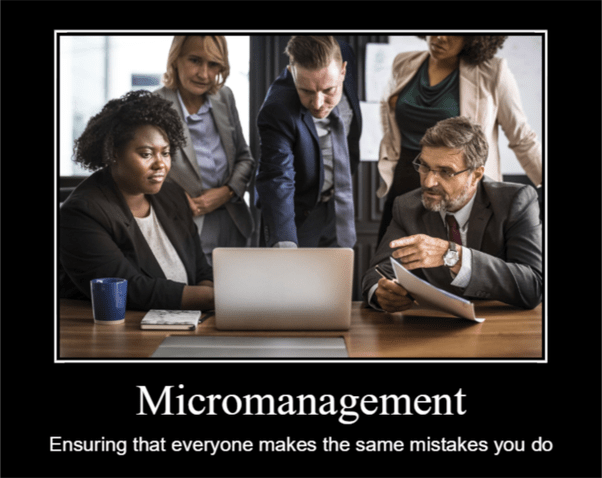
Authoritarian control freaks out to micromanage our lives have become the new normal or, to be more accurate, the new abnormal when it comes to how the government relates to the citizenry.
This overbearing despotism, which pre-dates the COVID-19 hysteria, is the very definition of a Nanny State, where government representatives (those elected and appointed to work for us) adopt the authoritarian notion that the government knows best and therefore must control, regulate and dictate almost everything about the citizenry’s public, private and professional lives.
Indeed, it’s a dangerous time for anyone who still clings to the idea that freedom means the right to think for yourself and act responsibly according to your best judgment.
This tug-of-war for control and sovereignty over our selves impacts almost every aspect of our lives, whether you’re talking about decisions relating to our health, our homes, how we raise our children, what we consume, what we drive, what we wear, how we spend our money, how we protect ourselves and our loved ones, and even who we associate with and what we think.
As Liz Wolfe writes for Reason, “Little things that make people’s lives better, tastier, and less tedious are being cracked down on by big government types in federal and state governments.”
You can’t even buy a stove, a dishwasher, a showerhead, a leaf blower, or a lightbulb anymore without running afoul of the Nanny State.
In this way, under the guise of pseudo-benevolence, the government has meted out this bureaucratic tyranny in such a way as to nullify the inalienable rights of the individual and limit our choices to those few that the government deems safe enough.
Yet limited choice is no choice at all. Likewise, regulated freedom is no freedom at all.
Indeed, as a study by the Cato Institute concludes, for the average American, freedom has declined generally over the past 20 years. As researchers William Ruger and Jason Sorens explain, “We ground our conception of freedom on an individual rights framework. In our view, individuals should be allowed to dispose of their lives, liberties, and property as they see fit, so long as they do not infringe on the rights of others.”
The overt signs of the despotism exercised by the increasingly authoritarian regime that passes itself off as the United States government (and its corporate partners in crime) are all around us: censorship, criminalizing, shadow banning and de-platforming of individuals who express ideas that are politically incorrect or unpopular; warrantless surveillance of Americans’ movements and communications; SWAT team raids of Americans’ homes; shootings of unarmed citizens by police; harsh punishments meted out to schoolchildren in the name of zero tolerance; community-wide lockdowns and health mandates that strip Americans of their freedom of movement and bodily integrity; armed drones taking to the skies domestically; endless wars; out-of-control spending; militarized police; roadside strip searches; privatized prisons with a profit incentive for jailing Americans; fusion centers that spy on, collect and disseminate data on Americans’ private transactions; and militarized agencies with stockpiles of ammunition, to name some of the most appalling.
Yet as egregious as these incursions on our rights may be, it’s the endless, petty tyrannies—the heavy-handed, punitive-laden dictates inflicted by a self-righteous, Big-Brother-Knows-Best bureaucracy on an overtaxed, overregulated, and underrepresented populace—that illustrate so clearly the degree to which “we the people” are viewed as incapable of common sense, moral judgment, fairness, and intelligence, not to mention lacking a basic understanding of how to stay alive, raise a family, or be part of a functioning community.
When the dictates of petty bureaucrats carry greater weight than the individual rights of the citizenry, we’re in trouble, folks.
Federal and state governments have used the law as a bludgeon to litigate, legislate and micromanage our lives through overregulation and overcriminalization.
This is what happens when bureaucrats run the show, and the rule of law becomes little more than a cattle prod for forcing the citizenry to march in lockstep with the government.
Overregulation is just the other side of the coin to overcriminalization, that phenomenon in which everything is rendered illegal, and everyone becomes a lawbreaker.
You don’t have to look far to find abundant examples of Nanny State laws that infantilize individuals and strip them of their ability to decide things for themselves. Back in 2012, then-New York Mayor Michael Bloomberg infamously proposed a ban on the sale of sodas and large sugary drinks in order to guard against obesity. Other localities enacted bans on texting while jaywalking, wearing saggy pants, having too much mud on your car, smoking outdoors, storing trash in your car, improperly sorting your trash, cursing within earshot of others, or screeching your tires.
Yet while there are endless ways for the Nanny State to micromanage our lives, things become truly ominous when the government adopts mechanisms enabling it to monitor us for violations in order to enforce its many laws.
Nanny State, meet the all-seeing, all-knowing Surveillance State and its sidekick, the muscle-flexing Police State.
You see, in an age of overcriminalization—when the law is wielded like a hammer to force compliance to the government’s dictates whatever they might be—you don’t have to do anything “wrong” to be fined, arrested or subjected to raids and seizures and surveillance.
You just have to refuse to march in lockstep with the government.
As policy analyst Michael Van Beek warns, the problem with overcriminalization is that there are so many laws at the federal, state and local levels—that we can’t possibly know them all.
“It’s also impossible to enforce all these laws. Instead, law enforcement officials must choose which ones are important and which are not. The result is that they pick the laws Americans really must follow, because they’re the ones deciding which laws really matter,” concludes Van Beek. “Federal, state and local regulations — rules created by unelected government bureaucrats — carry the same force of law and can turn you into a criminal if you violate any one of them… if we violate these rules, we could be prosecuted as criminals. No matter how antiquated or ridiculous, they still carry the full force of the law. By letting so many of these sit around, just waiting to be used against us, we increase the power of law enforcement, which has lots of options to charge people with legal and regulatory violations.”
This is the police state’s superpower: empowered by the Nanny State, it has been vested with the authority to make our lives a bureaucratic hell.
Indeed, if you were unnerved by the rapid deterioration of privacy under the Surveillance State, prepare to be terrified by the surveillance matrix that will be ushered in by the Nanny State working in tandem with the Police State.
The government’s response to COVID-19 saddled us with a Nanny State inclined to use its draconian pandemic powers to protect us from ourselves.
The groundwork laid with COVID-19 is a prologue to what will become the police state’s conquest of a new, relatively uncharted, frontier: inner space, specifically, the inner workings (genetic, biological, biometric, mental, emotional) of the human race.
Consider how many more ways the government could “protect us” from ourselves under the guise of public health and safety.
For instance, under the guise of public health and safety, the government could use mental health care as a pretext for targeting and locking up dissidents, activists and anyone unfortunate enough to be placed on a government watch list.
When combined with advances in mass surveillance technologies, artificial intelligence-powered programs that can track people by their biometrics and behavior, mental health sensor data (tracked by wearable data and monitored by government agencies such as HARPA), threat assessments, behavioral sensing warnings, precrime initiatives, red flag gun laws, and mental health first-aid programs aimed at training gatekeepers to identify who might pose a threat to public safety, these preemptive mental health programs could well signal a tipping point in the government’s efforts to penalize those engaging in so-called “thought crimes.”
This is how it begins.
On a daily basis, Americans are already relinquishing (in many cases, voluntarily) the most intimate details of who we are—their biological makeup, our genetic blueprints, and our biometrics (facial characteristics and structure, fingerprints, iris scans, etc.)—in order to navigate an increasingly technologically-enabled world.
Having conditioned the population to the idea that being part of society is a privilege and not a right, such access could easily be predicated on social credit scores, the worthiness of one’s political views, or the extent to which one is willing to comply with the government’s dictates, no matter what they might be.
COVID-19 with its talk of mass testing, screening checkpoints, contact tracing, immunity passports, and snitch tip lines for reporting “rule breakers” to the authorities was a preview of what’s to come.
We should all be leery and afraid.
At a time when the government has a growing list—shared with fusion centers and law enforcement agencies—of ideologies, behaviors, affiliations and other characteristics that could flag someone as suspicious and result in their being labeled potential enemies of the state, it won’t take much for any of us to be considered outlaws or terrorists.
After all, the government likes to use the words “anti-government,” “extremist” and “terrorist” interchangeably. The Department of Homeland Security broadly defines extremists as individuals “that are mainly antigovernment, rejecting federal authority in favor of state or local authority, or rejecting government authority entirely.”
At some point, being an individualist will be considered as dangerous as being a terrorist.
When anything goes when it’s done in the name of national security, crime fighting and terrorism, “we the people” have little to no protection against SWAT team raids, domestic surveillance, police shootings of unarmed citizens, indefinite detentions, and the like, whether or not you’ve done anything wrong.
In an age of overcriminalization, you’re already a criminal.
All the government needs is proof of your law-breaking. They’ll get it, too.
Whether it’s through the use of surveillance software such as ShadowDragon that allows police to watch people’s social media activity, or technology that uses a home’s WiFi router and smart appliances to allow those on the outside to “see” throughout your home, it’s just a matter of time.
As I make clear in my book Battlefield America: The War on the American People and in its fictional counterpart The Erik Blair Diaries, it’s no longer a question of whether the government will lock up Americans for defying one of its numerous mandates but when.

By Edward Curtin
Source: Behind the Curtain
Because there is so much personal anguish, unhappiness, and human mental and physical suffering in the world, many people often wonder how they might personally change to find happiness, contentment, or some elusive something. Or even how to change other people, as if that arrogant illusion could ever work.
This question of significant personal change is usually couched within the context of narrow psychological analyses. This is very common and is a habit of mind that grows stronger over the years. People are reduced to their family upbringings and their personal relationships, while the social history they have lived through is dismissed as irrelevant.
The United States is very much a psychological society. Sociological and historical analyses are considered insignificant to people’s identities. It’s as if economics, politics, culture, and propaganda are beside the point.
Yes, it is often admitted that circumstances, such as illness, death, divorce, unemployment, etc. affect people, but such circumstances are not considered central to who people are and whom they become. These matters are rarely seen contextually, nor are connections made. They are considered inessentials despite the fact that they are always connected to larger social issues – that biography and history are intertwined.
In writing about what he termed the sociological imagination, C. Wright Mills put it clearly when he described it as “the idea that the individual can understand his own experience and gauge his own fate only by locating himself within his period, that he can know his own chances in life only by becoming aware of those of all individuals in his circumstances. In many ways it is a terrible lesson; in many ways a magnificent one.”
Without learning it, one cannot know who one is or whom one might become if one chose to change and were not just blown by the winds of fate.
We now live in a digital world where the uncanny nature of information pick up sticks is the big game. Uncanny because most people cannot grasp its mysterious power over their minds.
What was true in 1953 when Ray Bradbury penned the following words in Fahrenheit 451, is exponentially truer today:
Cram them full of non-combustible data, chock them so damn full of ‘facts’ that they feel stuffed, but absolutely ‘brilliant’ with information. Then they’ll feel they’re thinking, they’ll get a sense of motion without moving. . . . Don’t give them any slippery stuff like philosophy or sociology to tie things up with. That way lies melancholy.
That it is all noise, all signal – no silence. That it prevents deep reflection but creates the habit of mental befuddlement that is consonant with the mental derangement of the mainstream media’s 24/7 news reports.
When almost everything you hear is a lie of one sort or another, it becomes barely possible to keep your wits about you.
These bits of bait are scattered all over the mind’s floor, tossed by an unknown player, the unnameable one who comes in the night to play with us. Their colors flood the mind, dazzle and razzle the eye. It is screen time in fantasy-land.
This summer’s two hit movies – “Oppenheimer” and “Barbie” – while seemingly opposites, are two sides of this same counterfeit coin. Spectacles in The Society of the Spectacle as Guy Debord put it:
The spectacle is a social relation between people that is mediated by an accumulation of images that serve to alienate us from a genuinely lived life. The image is thus an historical mutation of the form of commodity fetishism.
“Oppenheimer,” while concentrating on the man J. Robert Oppenheimer who is called “the father of the atomic bomb,” omits the diabolic bombings of Hiroshima and Nagasaki as if there were no innocent victims, while “Barbie” plays the coy game of satirizing the doll that celebrates women as sex objects while advertising its same sex doll status. It’s just great “fun.” Colorful salt water taffy for a summer hoot. “Little Boy” meets sexy sister in the land of dreams where existential crises lead to expanded consciousness. Yes, Hollywood is the Dream Factory.
There is so much to attend to, multi-colored tidbits begging to be touched carefully, to grab our full consideration as we delicately lift them into the air of our minds. So many flavors. Call it mass attention disorder order or paranoia (beside the mind) or digital dementia. The names don’t matter, for it is a real condition and it is widespread and spreading madly. Everyone knows it but represses the truth that the country has become a comic book travesty sliding into quicksand while bringing the world down with it.
“Oppenheimer” plays while a mumbling and bumbling U.S. President Biden pushes the world toward nuclear annihilation with Russia over Ukraine.
“Barbie” struts on her stilettos while men receive guidance from the CDC on “chest feeding” and millions of young people are not sure what sex they are.
What’s up?
It’s all noise, all signal – no silence.
The instinct of self-defense has disappeared. “Not to see many things, not to hear many things, not to permit many things to come close,” this, Nietzsche told us, is the instinct of self-defense. But we have let all our defenses down because of the Internet, cell phones, and the digital revolution. We have turned on, tuned in, and dropped into computerized cells whose flickering bars note signal strength but not mental bondage. Not the long loneliness of distant signals barely heard, but “Cause” what Rodriquez sings for us:
Cause my heart’s become a crooked hotel full of rumours
But it’s I who pays the rent for these fingered-face out-of-tuners
and I make 16 solid half hour friendships every evening
It’s all noise, all signal – no silence.
I recently had the arduous task of reviewing nearly fifty years of a writer’s personal journals. The thing that stood out to me was the repetitive nature of his comments and analyses of people he knew and the relationships he had. His political, literary, and historical comments were insightful, and his keen observations into the decades long diminution of the belief in existential freedom captured well the growing domination of today’s deterministic ethos with its biological emphasis and its underlying hopeless nihilism. But it was also very clear that the people he wrote about were little different after forty to fifty years. Their situations changed but they did not – fundamentally. They were encased in long-standing carapaces that protected them from change and choices that would force them to metamorphosize or undergo profound metanoias. Most of them saw no connection between their personal lives and world events, nor did they seem to grasp what William James, in writing about habits, said, “if we suffer the wandering of our attention, presently it will wander all the time. Attention and effort are … but two names for the same psychic fact.”
The notebooks, of course, were one man’s observations. But they seemed to me to capture something about people generally. In the notes I took, I summarized this by the words “social addiction,” a habit of living and thinking that has resulted in vast numbers of people locked in their cells, confused, totally bamboozled, and in despair. This condition is now widely recognized, even by the most unreflective people, for it is felt in the gut as a dazed death-in-life, a treading of water waiting for the next disaster, the next bad joke passing for serious attention. It is impossible to fail to recognize, if not admit, that the United States has become a crazy country, mad and deluded in the worst ways and leading the world to perdition on a fool’s dream of dominance and delusions.
The psychoanalyst Allen Wheelis, an intriguing writer who questioned his own profession, put it well in his 1973 book How People Change:
Often we do not choose, but drift into those modes which eventually define us. Circumstances push and we yield. We did not choose to be what we have become, but gradually, imperceptibly, became what we are by drifting into the doing of those things we now characteristically do. Freedom is not an objective attribute of life; alternatives without awareness yield no leeway… Nothing guarantees freedom. It may never be achieved, or having been achieved, may be lost. Alternatives go unnoticed; foreseeable consequences are not foreseen; we may not know what we have been, what we are, or what we are becoming. We are the bearers of consciousness but of not very much, may proceed through a whole life without awareness of that which would have meant the most, the freedom which has to be noticed to be real. Freedom is the awareness of alternatives and of the ability to choose. It is contingent upon consciousness, and so may be gained or lost, extended or diminished.
He correctly warned that insight does not necessarily lead to change. It may help initiate it, but in the end the belief in freedom and the power of the will is necessary. This has become harder in a society that has embraced biological determinism as a result of decades of propaganda. Freedom has become a slogan only. We have generally become determined to be determined.
To realize that one has choices is necessary and that not to decide is to decide. Decisions (from Latin de = off and caedere = to cut) are hard, for they involve deaths, the elimination of alternatives, the facing of one own’s death(s) with courage and hope. The loss of illusions. This too has become more difficult in a country that has jettisoned so much of the deep human spirituality that still animates many people around the world whom the U.S. government considers enemies.
Such decisions also involve the intellectual honesty to seek out alternative voices to one’s fixed opinions on a host of public issues that affect everyone’s lives.
To recognize that who we are and who we become intersect with world events, war, politics, the foreign policies of one’s country, economics, culture, etc.; that they cannot be divorced from the people we say we are. That none of us are islands but part of the main, but when that main becomes corporate dominated mainstream news pumped into our eyes and ears day and night from little machines, we are in big trouble.
To not turn away from what the former CIA analyst Ray McGovern calls this propaganda machine – the Military-Industrial-Congressional-Intelligence-Media-Academic-Think Tank Complex (MICIMATT) – is a choice by default and one of bad faith in which one hides the truth from oneself while knowing one is doing so.
To not seek truth outside this complex is to deny one’s freedom and to determine not to change even when it is apodictic that things are falling apart and all innocence is being drowned in a sea of lies.
It’s all noise, all signal – no silence.
Change begins with desire, at the personal and public level. It takes courage to face the ways we have all been wrong, missed opportunities, shrunk back, lied, refused to consider alternatives. Everyone senses that the U.S. is proceeding down a perilous road now. Everything is out of joint, the country heading for hell.
I recently read an article by Timothy Denevi about the late writer Joan Didion who, together with her husband John Gregory Dunne, was at the Royal Hawaiian Hotel in Honolulu in June 1968 when Senator Robert F. Kennedy, who was assassinated in Los Angeles a few days previously, had died. The thing that struck me in the article was what Didion described as the sickening indifference of so many vacationers to the news about RFK’s death and funeral. Because television reception was sketchy in Hawaii, Didion and Dunne, not Kennedy supporters, were only able to watch a three-hour ABC taped special on June 8 that covered the assassination, funeral, and train ride of the body to Arlington Cemetery as millions of regular people kept vigil along the tracks. A television had been set up on a large veranda where guests could watch this taped show. But few vacationers were interested; the opposite, actually. It angered them that this terrible national tragedy was intruding into their vacations. They walked away. It seemed to Didion and Dunne that something deep and dark was symbolized by their selfish indifference. As a result, Didion suffered an attack of vertigo and nausea and was prescribed antidepressants after psychiatric evaluation. She felt the 1960s “snapping” as she too snapped.
I think those feelings of vertigo and nausea are felt by many people today. Rightly so. The U.S.A. is snapping. It is no longer possible to remain a normal person in dark times like these, no matter how powerfully that urge tempts us. Things have gone too far on so many fronts from the Covid scam with all its attendant deaths and injuries to the U.S. war against Russia with its increasing nuclear risks, to name only two of scores of disasters. One could say Didion was a bit late, that the snapping began in Dallas, Texas on November 22, 1963 when President Kennedy was assassinated by the CIA. As Billie Joel sings, “J.F.K. blown away, what more do I have to say?” And why was he assassinated? Because he changed dramatically in the last year of his life to embrace the role of peacemaker despite knowing that by doing so he was accepting the real risk that he would be killed. He was courage and will personified, an exceptional example of radical change for the sake of the world.
So I come back to my ostensible subject: Do people change?
The short answer is: Rarely. Many play at it while playing dumb.
Yet is does happen, but only by some mixture of miracle and freedom, in an instant or with the passing of time where meaning and mystery can only exist. Where we exist. “If there is a plurality of times, or if time is cyclic,” the English writer John Berger muses, “then prophecy and destiny can coexist with freedom of choice.” Time always tells.
The last entry in the writer’s notebooks that I reviewed was this:
I read that Kris Kristofferson, whose music I love, has said that he would like the first three lines of Leonard Cohen’s “Bird on a Wire” on his tombstone:
Like a bird on the wire
Like a drunk in a midnight choir
I have tried in my way to be free
It seemed apposite.

By John & Nisha Whitehead
Source: The Rutherford Institute
“If all that Americans want is security, they can go to prison. They’ll have enough to eat, a bed and a roof over their heads. But if an American wants to preserve his dignity and his equality as a human being, he must not bow his neck to any dictatorial government.”— President Dwight D. Eisenhower
The government wants us to bow down to its dictates.
It wants us to buy into the fantasy that we are living the dream, when in fact, we are trapped in an endless nightmare of servitude and oppression.
Indeed, with every passing day, life in the American Police State increasingly resembles life in the dystopian television series The Prisoner.
First broadcast 55 years ago in the U.S., The Prisoner—described as “James Bond meets George Orwell filtered through Franz Kafka”—confronted societal themes that are still relevant today: the rise of a police state, the loss of freedom, round-the-clock surveillance, the corruption of government, totalitarianism, weaponization, group think, mass marketing, and the tendency of human beings to meekly accept their lot in life as prisoners in a prison of their own making.
Perhaps the best visual debate ever on individuality and freedom, The Prisoner centers around a British secret agent who abruptly resigns only to find himself imprisoned in a virtual prison disguised as a seaside paradise with parks and green fields, recreational activities and even a butler.
While luxurious, the Village’s inhabitants have no true freedom, they cannot leave the Village, they are under constant surveillance, all of their movements tracked by militarized drones, and stripped of their individuality so that they are identified only by numbers.
“I am not a number. I am a free man,” is the mantra chanted in each episode of The Prisoner, which was largely written and directed by Patrick McGoohan, who also played the title role of Number Six, the imprisoned government agent.
Throughout the series, Number Six is subjected to interrogation tactics, torture, hallucinogenic drugs, identity theft, mind control, dream manipulation, and various forms of social indoctrination and physical coercion in order to “persuade” him to comply, give up, give in and subjugate himself to the will of the powers-that-be.
Number Six refuses to comply.
In every episode, Number Six resists the Village’s indoctrination methods, struggles to maintain his own identity, and attempts to escape his captors. “I will not make any deals with you,” he pointedly remarks to Number Two, the Village administrator a.k.a. prison warden. “I’ve resigned. I will not be pushed, filed, stamped, indexed, debriefed or numbered. My life is my own.”
Yet no matter how far Number Six manages to get in his efforts to escape, it’s never far enough.
Watched by surveillance cameras and other devices, Number Six’s attempts to escape are continuously thwarted by ominous white balloon-like spheres known as “rovers.”
Still, he refuses to give up.
“Unlike me,” he says to his fellow prisoners, “many of you have accepted the situation of your imprisonment, and will die here like rotten cabbages.”
Number Six’s escapes become a surreal exercise in futility, each episode an unfunny, unsettling Groundhog’s Day that builds to the same frustrating denouement: there is no escape.
As journalist Scott Thill concludes for Wired, “Rebellion always comes at a price. During the acclaimed run of The Prisoner, Number Six is tortured, battered and even body-snatched: In the episode ‘Do Not Forsake Me Oh My Darling,’ his mind is transplanted to another man’s body. Number Six repeatedly escapes The Village only to be returned to it in the end, trapped like an animal, overcome by a restless energy he cannot expend, and betrayed by nearly everyone around him.”
The series is a chilling lesson about how difficult it is to gain one’s freedom in a society in which prison walls are disguised within the seemingly benevolent trappings of technological and scientific progress, national security and the need to guard against terrorists, pandemics, civil unrest, etc.
As Thill noted, “The Prisoner was an allegory of the individual, aiming to find peace and freedom in a dystopia masquerading as a utopia.”
The Prisoner’s Village is also an apt allegory for the American Police State, which is rapidly transitioning into a full-fledged Surveillance State: it gives the illusion of freedom while functioning all the while like a prison: controlled, watchful, inflexible, punitive, deadly and inescapable.
The American Surveillance State, much like The Prisoner’s Village, is a metaphorical panopticon, a circular prison in which the inmates are monitored by a single watchman situated in a central tower. Because the inmates cannot see the watchman, they are unable to tell whether or not they are being watched at any given time and must proceed under the assumption that they are always being watched.
Eighteenth century social theorist Jeremy Bentham envisioned the panopticon prison to be a cheaper and more effective means of “obtaining power of mind over mind, in a quantity hitherto without example.”
Bentham’s panopticon, in which the prisoners are used as a source of cheap, menial labor, has become a model for the modern surveillance state in which the populace is constantly being watched, controlled and managed by the powers-that-be while funding its existence.
Nowhere to run and nowhere to hide: this is the mantra of the architects of the Surveillance State and their corporate collaborators.
Government eyes are watching you.
They see your every move: what you read, how much you spend, where you go, with whom you interact, when you wake up in the morning, what you’re watching on television and reading on the internet.
Every move you make is being monitored, mined for data, crunched, and tabulated in order to amass a profile of who you are, what makes you tick, and how best to control you when and if it becomes necessary to bring you in line.
When the government sees all and knows all and has an abundance of laws to render even the most seemingly upstanding citizen a criminal and lawbreaker, then the old adage that you’ve got nothing to worry about if you’ve got nothing to hide no longer applies.
Apart from the obvious dangers posed by a government that feels justified and empowered to spy on its people and use its ever-expanding arsenal of weapons and technology to monitor and control them, we’re approaching a time in which we will be forced to choose between bowing down in obedience to the dictates of the government—i.e., the law, or whatever a government official deems the law to be—and maintaining our individuality, integrity and independence.
When people talk about privacy, they mistakenly assume it protects only that which is hidden behind a wall or under one’s clothing. The courts have fostered this misunderstanding with their constantly shifting delineation of what constitutes an “expectation of privacy.” And technology has furthered muddied the waters.
However, privacy is so much more than what you do or say behind locked doors. It is a way of living one’s life firm in the belief that you are the master of your life, and barring any immediate danger to another person (which is far different from the carefully crafted threats to national security the government uses to justify its actions), it’s no one’s business what you read, what you say, where you go, whom you spend your time with, and how you spend your money.
Unfortunately, George Orwell’s 1984—where “you had to live—did live, from habit that became instinct—in the assumption that every sound you made was overheard, and, except in darkness, every movement scrutinized”—has now become our reality.
We now find ourselves in the unenviable position of being monitored, managed, corralled and controlled by technologies that answer to government and corporate rulers.
Consider that on any given day, the average American going about his daily business will be monitored, surveilled, spied on and tracked in more than 20 different ways, by both government and corporate eyes and ears.
A byproduct of this new age in which we live, whether you’re walking through a store, driving your car, checking email, or talking to friends and family on the phone, you can be sure that some government agency is listening in and tracking your behavior.
This doesn’t even begin to touch on the corporate trackers that monitor your purchases, web browsing, Facebook posts and other activities taking place in the cyber sphere.
Stingray devices mounted on police cars to warrantlessly track cell phones, Doppler radar devices that can detect human breathing and movement within in a home, license plate readers that can record up to 1800 license plates per minute, sidewalk and “public space” cameras coupled with facial recognition and behavior-sensing technology that lay the groundwork for police “pre-crime” programs, police body cameras that turn police officers into roving surveillance cameras, the internet of things: all of these technologies (and more) add up to a society in which there’s little room for indiscretions, imperfections, or acts of independence—especially not when the government can listen in on your phone calls, read your emails, monitor your driving habits, track your movements, scrutinize your purchases and peer through the walls of your home.
As French philosopher Michel Foucault concluded in his 1975 book Discipline and Punish, “Visibility is a trap.”
This is the electronic concentration camp—the panopticon prison—the Village—in which we are now caged.
It is a prison from which there will be no escape. Certainly not if the government and its corporate allies have anything to say about it.
As Glenn Greenwald notes:
“The way things are supposed to work is that we’re supposed to know virtually everything about what [government officials] do: that’s why they’re called public servants. They’re supposed to know virtually nothing about what we do: that’s why we’re called private individuals. This dynamic – the hallmark of a healthy and free society – has been radically reversed. Now, they know everything about what we do, and are constantly building systems to know more. Meanwhile, we know less and less about what they do, as they build walls of secrecy behind which they function. That’s the imbalance that needs to come to an end. No democracy can be healthy and functional if the most consequential acts of those who wield political power are completely unknown to those to whom they are supposed to be accountable.”
None of this will change, no matter which party controls Congress or the White House, because despite all of the work being done to help us buy into the fantasy that things will change if we just elect the right candidate, we’ll still be prisoners of the Village.
So how do you escape? For starters, resist the urge to conform to a group mind and the tyranny of mob-think as controlled by the Deep State.
Think for yourself. Be an individual.
As McGoohan commented in 1968, “At this moment individuals are being drained of their personalities and being brainwashed into slaves… As long as people feel something, that’s the great thing. It’s when they are walking around not thinking and not feeling, that’s tough. When you get a mob like that, you can turn them into the sort of gang that Hitler had.”
You want to be free? Remove the blindfold that blinds you to the Deep State’s con game, stop doping yourself with government propaganda, and break free of the political chokehold that has got you marching in lockstep with tyrants and dictators.
As I make clear in my book Battlefield America: The War on the American People and in its fictional counterpart The Erik Blair Diaries, until you come to terms with the fact that the government is the problem (no matter which party dominates), you’ll never stop being prisoners.
By John & Nisha Whitehead
Source: The Rutherford Institute
How do you trust a government that continuously sidesteps the Constitution and undermines our rights? You can’t.
When you consider all the ways “we the people” are being bullied, beaten, bamboozled, targeted, tracked, repressed, robbed, impoverished, imprisoned and killed by the government, one can only conclude that you shouldn’t trust the government with your privacy, your property, your life, or your freedoms.
Consider for yourself.
Don’t trust the government with your privacy, digital or otherwise. In the two decades since 9/11, the military-security industrial complex has operated under a permanent state of emergency that, in turn, has given rise to a digital prison that grows more confining and inescapable by the day. Wall-to wall surveillance, monitored by AI software and fed to a growing network of fusion centers, render the twin concepts of privacy and anonymity almost void. By conspiring with corporations, the Department of Homeland Security “fueled a massive influx of money into surveillance and policing in our cities, under a banner of emergency response and counterterrorism.” For instance, all across the country, police are installing Flock Safety license plate readers as part of a public-private partnership program between police and the surveillance industry. These cameras, which upload data in real time to fusion crime centers, signal a turning point in the transition from a police state to a police-driven surveillance state.
Don’t trust the government with your property. In yet another effort to legitimize warrantless searches, police are employing “hit-and-hold” tactics in which police enter a home, carry out an initial sweep of the property, handcuff the occupants, then wait for official search warrants to be secured and applied retroactively. In the meantime, police have managed to bypass the Fourth Amendment. The rationale, to prevent possible destruction of evidence, is the same one used to deadly effect with no-knock raids. If government agents can invade your home, break down your doors, kill your dog, damage your furnishings and terrorize your family, your property is no longer private and secure—it belongs to the government. Hard-working Americans are having their bank accounts, homes, cars electronics and cash seized by police under the assumption that they have allegedly been associated with some criminal scheme.
Don’t trust the government with your finances. The U.S. government—and that includes the current administration—is spending money it doesn’t have on programs it can’t afford, and “we the taxpayers” are being forced to foot the bill for the government’s fiscal insanity. The national debt is $31.3 trillion and growing, and we’re paying more than $300 billion in interest every year on that public debt, yet there seems to be no end in sight when it comes to the government’s fiscal insanity. According to Forbes, Congress has raised, extended or revised the definition of the debt limit 78 times since 1960 in order to allow the government to essentially fund its existence with a credit card.
Don’t trust the government with your health. For all intents and purposes, “we the people” have become lab rats in the government’s secret experiments, which include MKULTRA and the U.S. military’s secret race-based testing of mustard gas on more than 60,000 enlisted men. Indeed, you don’t have to dig very deep or go very back in the nation’s history to uncover numerous cases in which the government deliberately conducted secret experiments on an unsuspecting populace—citizens and noncitizens alike—making healthy people sick by spraying them with chemicals, injecting them with infectious diseases and exposing them to airborne toxins. Unfortunately, the public has become so easily distracted by the political spectacle out of Washington, DC, that they are altogether oblivious to the grisly experiments, barbaric behavior and inhumane conditions that have become synonymous with the U.S. government, which has meted out untold horrors against humans and animals alike.
Don’t trust the government with your life: At a time when growing numbers of unarmed people have been shot and killed for just standing a certain way, or moving a certain way, or holding something—anything—that police could misinterpret to be a gun, or igniting some trigger-centric fear in a police officer’s mind that has nothing to do with an actual threat to their safety, even the most benign encounters with police can have fatal consequences. The number of Americans killed by police continues to grow, with the majority of those killed as a result of police encounters having been suspected of a non-violent offense or no crime at all, or during a traffic violation. According a report by Mapping Police Violence, police killed more people in 2022 than any other year within the past decade. In 98% of those killings, police were not charged with a crime.
Don’t trust the government with your freedoms. For years now, the government has been playing a cat-and-mouse game with the American people, letting us enjoy just enough freedom to think we are free but not enough to actually allow us to live as a free people. Freedom no longer means what it once did. This holds true whether you’re talking about the right to criticize the government in word or deed, the right to be free from government surveillance, the right to not have your person or your property subjected to warrantless searches by government agents, the right to due process, the right to be safe from militarized police invading your home, the right to be innocent until proven guilty and every other right that once reinforced the founders’ belief that this would be “a government of the people, by the people and for the people.” On paper, we may be technically free, but in reality, we are only as free as a government official may allow.
Whatever else it may be—a danger, a menace, a threat—the U.S. government is certainly not looking out for our best interests, nor is it in any way a friend to freedom.
Remember the purpose of a good government is to protect the lives and liberties of its people.
Unfortunately, what we have been saddled with is, in almost every regard, the exact opposite of an institution dedicated to protecting the lives and liberties of its people.
As I make clear in my book Battlefield America: The War on the American People and in its fictional counterpart The Erik Blair Diaries, “we the people” should have learned early on that a government that repeatedly lies, cheats, steals, spies, kills, maims, enslaves, breaks the laws, overreaches its authority, and abuses its power at almost every turn can’t be trusted.
Constitutional attorney and author John W. Whitehead is founder and president of The Rutherford Institute. His most recent books are the best-selling Battlefield America: The War on the American People, the award-winning A Government of Wolves: The Emerging American Police State, and a debut dystopian fiction novel, The Erik Blair Diaries. Whitehead can be contacted at staff@rutherford.org. Nisha Whitehead is the Executive Director of The Rutherford Institute. Information about The Rutherford Institute is available at www.rutherford.org.
By Dylan Charles
Source: Waking Times
In a society this controlling, it’s no wonder so many people can’t let go of their grip on false realities, and pressure others to conform to their point of view. In my work as a self-mastery coach I help people see what false realities they’ve made for themselves, and help them let go of their grip on useless beliefs. ~Dylan Charles
“It is no measure of health to be well adjusted to a profoundly sick society.” ~J. Krishnamurti
Society is directed by a never-ending mainstream narrative which is always evolving, and always reaching new dramatic peaks in sensationalism and hype. They fill your mind with topics they select, they keep your attention on these topics, and they invite and encourage you to argue amongst each other about these topics. In this way our collective attention is permanently commandeered, preventing us from diving too deeply into matters which have more than a superficial impact on day-today life.
Free-thinking is the ability and willingness to explore of ideas and areas of the mind which are yet undiscovered or are off-limits. It is a vanishing art that is deliberately being stamped out by a control system which demands conformity, acquiescence and obedience of body, mind, and spirit.
For your consideration, here are three questions you’re not supposed to ask about life in our profoundly sick society.
Pretty much the entire world is in financial debt, an insidious form of slavery which enables the exploitation of human beings and of all things in nature. It’s maddening when you think about it. The United States alone supposedly owes some $20 trillion, while the world at large owes a shocking $215 trillion?
But to whom, precisely?
Money is just a medium of exchange which facilitates transactions between people. In and of itself it has no intrinsic value as we could just as easily use sea shells instead of dollar bills and still be able to get things done. But today’s money is the property of private third-parties who rent it out to national governments, who then use the labor of their citizens as collateral against these loans. This is a highly refined form of slavery, which has already put future unborn generations of human beings in debt.
But who, exactly does the human race owe? Who are our debt-slave masters?
Ownership means having the explicit right to use, control and dispose of something in the manner of your choosing. The one thing you are born with that you take with you to your death is your own body, but do you own it? If not you, then who does own your body?
If this question were already settled in our society then there wouldn’t be ever-increasing pressure on those who choose to refuse vaccines. Children battling cancer and other serious illnesses wouldn’t be forced to take chemo and radiation under penalty of law and under threat of being taken from their parents. Water wouldn’t be fluoridated without our consent. Natural medicines wouldn’t be outlawed under threat of fines and prison time.
We are rapidly approaching a time when people will be required by law to take psychotropic medications as citizens were in Aldous Huxley’s dystopian classic, Brave New World.
Do you own your body, or does it belong to the state?
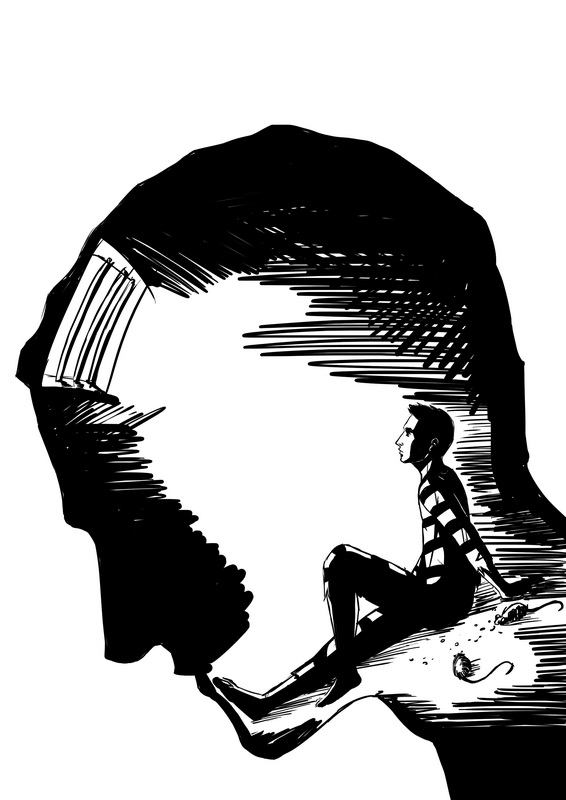
The most effective prisons are not material, but are constructed inside the mind. Perception, opinion and understanding are all dynamic concepts, not at all static. These can all change in the blink of an eye just because a new idea or experience resonates with you in a special way. Our evolution depends on our ability to expand the frontiers of what’s possible, and when the mind is held in confinement by an entrenched system and powerful cultural paradigm, progress, even happiness, is stunted.
In this societal trap you are given free rein to debase your consciousness and your spirit with alcohol, dangerous drugs, pharmaceuticals, television, pornography, theatrical violence, and then some, yet many natural medicines which elevate consciousness and provide a window into the soul are illegal.
“This is the way freedom is hijacked—not all at once, out in the open, but stealthily, little by little, behind closed doors, and with our own agreement. How will we be able to resist when so many of us have already willingly handed over the keys to our own consciousness to the state and accepted without protest that it is OK to be told what we may and may not do, what we may and may not explore, even what we may and may not experience, with this most precious, sapient, unique, and individual part of ourselves?
If we are willing to accept that then we can be persuaded to accept anything.” ~Graham Hancock
By W.J. Astore
Source: Bracing Views
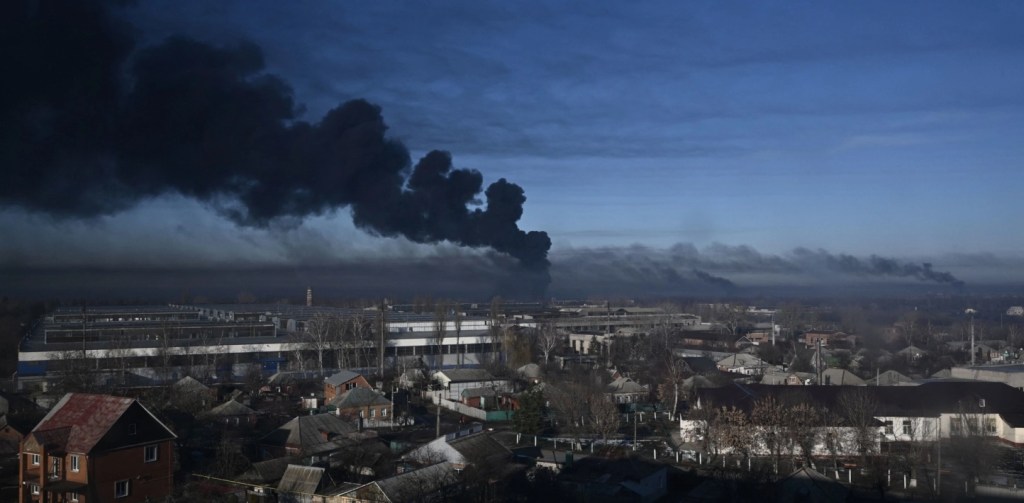
Reports that Ukraine is launching modified drones to strike airbases deep in Russia highlight the unpredictability and escalatory nature of wars. Ukraine is no longer content at defending itself against Russian aggression; Russia itself must be made a target, which will likely provoke harsher Russian counterattacks. Meanwhile, the U.S. Congress continues to authorize billions in military aid to Ukraine, which is pitched as defending democracy and freedom.
War is many things but it is rarely democratic. Indeed, as James Madison warned, war is inherently anti-democratic. It strengthens authoritarian forces and contributes to abuses of power and corruption. As the Russia-Ukraine War goes on, with no clear resolution in sight, Ukraine suffers more even as the chances of escalation rise.
James Madison warned that no nation can preserve its freedom in the midst of continual warfare
What’s needed now is resolute diplomacy — a committed effort to end the war by all parties involved, obviously Russia and Ukraine but also the U.S. and NATO. The longer this disastrous war lasts, the more unpredictable it will become, the more atrocious it will prove, and the more likely ordinary Ukrainians and Russians will suffer and die, whether at various battlefronts or on the homefront.
Negotiation is not weakness nor is it appeasement. Negotiation is sensible, rational, and life-affirming. But there’s little reason for Ukraine to negotiate when it’s enjoying a blank check of support from the U.S. and NATO.
Meanwhile, as Ukraine continues striking deep into Russia, one wonders to what extent the U.S. military and intelligence agencies are involved. Did the U.S. provide technology? Targeting information? Intelligence? Or is Ukraine doing this entirely on its own, a scenario that is less than comforting?
I sure hope the U.S. and Russia are talking. In the confusion and chaos of war, how is Russia to know for sure that an attack on one of their strategic air bases is coming from Ukraine and not from NATO territory? Even if it’s clearly coming from Ukraine, if these attacks are enabled or approved by the U.S./NATO, will the Russians see them as an act of war? Will they respond militarily, creating even more escalatory pressure?
Bizarrely, Ukraine’s defensive war against Russia has been sold as America’s “good” war, a chance to weaken Russia and Putin in the cause of defending Ukrainian “democracy.” But as Ukraine’s tactics turn more offensive, and as the Ukrainian government likely becomes more authoritarian due to the pressures of war, how wise is it for the United States to continue to send massive amounts of military aid there while discouraging diplomacy?
Policies that end in prolonging the Russia-Ukraine War in the name of teaching Putin a lesson and eroding his power may teach us all a lesson in how war is not just anti-democratic. War runs to extremes, and only fools believe they can control it in a way that is conducive to liberty and freedom and justice.
By Kingsley L. Dennis
Source: Waking Times
‘What people of the fifth post-Atlantean epoch must learn to recognise is the fully conscious struggle against the evil rising up in the evolution of humanity.’ ~Rudolf Steiner, 18 November 1917
According to Austrian metaphysician Rudolf Steiner, the task of humanity in this epoch is to comprehend the relation of good and evil; especially, the human choice between good and evil, and the challenge of evil to make humanity more aware of spirit-consciousness. In our present age, we are to experience the negative counterforces in order to move through to greater development. Steiner stated that the ‘forces of evil’ exist in the world so that humanity might, at the appropriate time, break through into a ‘life of the spirit.’[1]
The presence of the counterforces gives humanity an opportunity to gain insight into the human condition, as well as the life conditions in this earthly domain. By having some understanding of the intention of opposing forces, a person is better prepared for continuing their own journey. That is, we each can learn from our encounters with negating forces; we can take these encounters as an opportunity to connect more strongly with our own force of will. In the words of philosopher Sergei O. Prokofieff:
In addition to working intensely on oneself, especially with regard to eradicating falsehood of any kind and all aspects of fear, together with all overt and secret inclinations towards materialism – something different is required, namely, a working together of human beings in the social realm that is based on spiritual principles.[2]
In advocating the coming together of spiritually minded people, it is not our responsibility to be concerned with those who Steiner called the ‘soulless’ ones. Rather than being pulled into the influence of such people (with their lower vibrational energies), it is more beneficial for a person to transform their immediate environment into a more harmonious energy. Another way of saying this is that the presence of negativity is to be transmuted into that which is not negative or counterproductive. This is akin to an alchemical procedure.
The 21st century is a transformatory epoch, where we shall have to face our shadows and deal with them. Without this acknowledgement, and cleansing, we will be dominated by the forces of stagnation. Later, when this catharsis or ‘cleansing’ has been achieved, we may collectively move into a stage of transmutation where the negative is transmuted into constructive forces. The spirit of our times, therefore, is one of transmutation and transformation. And until counterforces are transmuted, there is no real or lasting transformation. This ‘transmutation of the negative/shadow’ is the leitmotif of our epoch, and it cannot be done without passing through ‘the valley of the shadow of death;’[3] experiencing and, above all, understanding both the forces of negation and those of development. As author Terry Broadman writes:
In saying that, we immediately meet a paradox, because we need to recognise that without the resistance posed to our development by these counterforces, there would be no human freedom possible and therefore, ultimately no possibility for love either. No great drama, especially the great drama of the story of mankind, is possible without the challenge from forces of darkness within us.[4]
By casting light upon those forces that oppose human freedom, we may also see that, somewhat paradoxically, it is these same forces that make freedom possible. And yet, we need to gain this realization so we can know what we are up against.
Entropic counterforces attempt to control and manage human thinking and cultural narratives through arid materialism – the forces of limitation, indifference, rational logic, and consumption, for example. Such arid forces seek to constrain and contain human thinking by limiting it to the physical domain. That is, by negation and denial of the metaphysical background to life; a worldview that recognises no spirit-consciousness or genuine inspiration from beyond the material realm. It can be said that such counter-evolutionary forces wish to ensure that humanity remains at the level of the ‘lower ego;’ that is, our base level ‘everyday’ selves, ruled by passions, possessions, promises, and pseudo-truths. We have already seen how modern life is rife with the self-centred materialist concerned only for their physical pleasures and gains.
This is the false-polished underbelly of a capitalist-fed globalist agenda. This is the sphere where the tightly controlled culture industry provides ultimate dissonance through glamour-distraction. Cacophonous music, jarring rhythms, and discordant lyrics appeal to the basest impulses within the tranced modern listener. It is little wonder then that there is resistance to those people who wish to develop their inner senses and modes of perception. The everyday environment is not conducive to the development of spirit-consciousness. And yet, it is the role of awakened individuals to assist the unconscious in becoming conscious.
Entropic forces can be regarded as forces of hindrance. For various reasons, they have not fulfilled their developmental potentials; they have faltered in their path, and thus ‘fallen by the wayside.’ And as wayside creatures, they hinder and disrupt all other wanderers and walkers upon the path. It can be said that they belong to our realm but are no longer upon our developmental path. Such counterforces are not creative; that is, they are not a creative principle in the universe, and so they need to make use of – or usurp – existing impulses to be able to act in the physical world. Such forces operate by distorting, and demonising, other processes and/or vessels in order to function.
We need to be aware of those beliefs, idealisms, organizations, groupings, etc, that show a deliberate antipathy and hostility towards aspects of spirit-consciousness and the metaphysical. These may be collective, and/or concealed, forces aiming to divert humanity’s path of growth. The materialistic route is a caricature of what now needs to be the human being’s present state. Total materialization, including the digital-virtual domains (such as the Metaverse) represent a paralysis of growth in spirit-consciousness. A total materialization of human consciousness is taking place across the world and is especially dominant within the technologically advanced nations.
Modern life has been turned upon itself to become a parody. Nothing can be taken at face value for the outer expressions have become corrupted. Pseudo-truths are the caricature of relative truths; deep fakes are the travesty of genuine selves; and the lines between knowing and unknowing have been deliberately smeared. The outer life, on its own, exists as a tarnished kingdom. The only thing to do is to extract oneself from this polluting sphere and to re-wire one’s alignments, attachments, and allegiances. In previous epochs, the human being’s inner authority was undermined by subjugating it to exterior bodies of authority – such as institutionalized religions.
When the masses moved out of illiteracy and became educated enough to read, research, and learn for themselves, the exterior forms of authority shifted from the sacred to the secular. Secular institutions came to regulate social norms, thinking patterns, and modes of accepted behaviour. In present times, as conscious awareness and perceptive understanding expands rapidly, the exterior bodies of authority are attempting to gain leverage by gaining interior access to our bodies and minds – what I have referred to as the new forms of biopower. These interventions into the physical integrity of the human being have serious consequences for the natural expression of spirit-consciousness. If the human vessel is unbalanced, or bio-chemically – or even genetically – interfered with, then the incarnated spirit-consciousness will have trouble in manifesting within the physical.
This intervention can be taken to the extreme through advancements in the biological-genetic sciences. The process of human cloning is a further step in this domain. If a physical body is cloned, then it is basically manufactured – it has not been brought into life through an organic birthing process (regardless of how the fertilized egg was delivered into the female body). In a metaphysical sense, it can be said that the physical body is not capable of receiving spirit-consciousness for it is not vibrationally aligned. It is an empty vessel, in a spiritual sense. From this, it may be inferred that other entities or forces could inhabit such a physical vessel. Why is human science increasingly moving towards the automation, the techno-hybrid, the slicing and dicing with DNA and human genetics? In this, there is a shift toward splintering the human being from its metaphysical origins and from the domain of spirit. If anything, this is the definition of evil – the isolation of the physical from its metaphysical source.
The counter-developmental forces are acting against the human mind (psyche), the heart (emotions), and the body (will). These three aspects can be related to imagination, inspiration, and intuition. And these three aspects have been targets for manipulation for quite some time. In our current age, the imagination is targeted through the media, video games, propaganda, digital life, and augmented reality, for example. The faculties of inspiration are being distorted through a controlled culture-industry (music, literature, art). And the intuition is deadened through a weakening of the human will as well as interventions and violations against the physical body. All these forces aim to press down upon the human being in a way that increases its immersion in materiality whilst bringing forth more animalistic, or primitive drives. How much more difficult it is for spirit-consciousness to come into a life experience, only to find that everything is subordinated to a material perspective – a world that is almost oblivious to the reality of the spirit.
The more a person comes under the powers of this world, under the laws set within this materiality, the less a person can act from an inner place of personal and spiritual will. A human being can no longer truly become their essential self if they are wholly invested in a consensus reality that is averse to metaphysical truths. As Christ famously stated: ‘My Kingdom is not of this world.’ (John 18:36) Although not of this world, it must work in this world. Our point of interaction – participation and action – are within this world, yet our foundation does not originate from within this world. And this combination, this merger, is what creates a strength to be in this world and not to be worn down by it.
The expression of spirit-consciousness is a fusion – and the human being is the vessel (the receptor as well as the carrier). Being the carrier for that which is also beyond the physical means also that the person needs to strengthen their interior world – their inner environment. A fully exteriorized person is too much attached with events and influences of the material world, and this can become a hindrance. There needs to be enough capacity within each person to exercise internal creative imaginations so that received inspirations have a vessel, a protected space, in which to gestate before outward expression. A ‘new world’ can come into being, yet it must come through the human being and not to be forced upon it. This is why it is said that a new world is birthed rather than built. The outer actions may be that of building, yet the initial impulses are birthed from within. It is in this way that metaphysical influences can enter into the domain of the physical – through receptive individuals.
The act of transmuting counteractive forces into constructive ones requires that humanity shifts from a place of outward dominance, under the sway of external influences, and into spaces of inward receptivity to inspirational impulses. In this, it can be said that the transformative process is one of the unconscious becoming conscious.
INDIAN COUNTRY NEWS
"It is the duty of every man, as far as his ability extends, to detect and expose delusion and error"..Thomas Paine
Human in Algorithms
From the Roof Top
I See This
blog of the post capitalist transition.. Read or download the novel here + latest relevant posts
अध्ययन-अनुसन्धानको सार
 After the Crash