From Press Room Raids to Indictments, Anything Goes When the Government Piles On

By John & Nisha Whitehead

Source: The Rutherford Institute

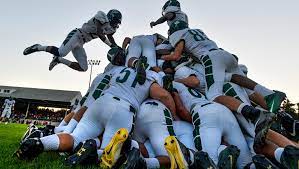
“When players are piled on top of each other after a mad scramble for a loose ball, it’s a free-for-all. There are no rules. Anything goes. That’s because there’s nobody in the pile to monitor what’s going on.”—Mike Thomas, sports editor

What is playing out before our eyes right now should be familiar to any fan of football: it’s called the pile on, a brutal, frenzied, desperate play to seize control and gain power while crushing the opposition.

In this particular analogy, “we the people” are trapped at the bottom of that pile, buried under a mountain of bread-and-circus distractions, economic worries, environmental disasters, power plays, power grabs, police raidsindictments and circus politics.

The Maui wildfires. The Trump indictments. Hunter Biden’s legal troubles. The looming 2024 presidential election. The Ukraine-Russia conflict.

In the midst of this pile on of woes, worries and semi-manufactured crises falling with sledgehammer-like frequency, monopolizing the media narrative and eclipsing all other news, it’s difficult to stay focused on what’s really going on, and yet something is brewing.

Pay attention.

Caught up in the partisan boxing match that is politics today, it’s easy to lose sight of what’s real.

The indictments against Trump, the investigation of Hunter Biden, and the chatter of the political classes aren’t real; they are more sound and fury, signifying nothing in the end.

As Aldous Huxley observed in Brave New World Revisited:

“Non-stop distractions of the most fascinating nature are deliberately used as instruments of policy, for the purpose of preventing people from paying too much attention to the realities of the social and political situation… Only the vigilant can maintain their liberties, and only those who are constantly and intelligently on the spot can hope to govern themselves effectively by democratic procedures.”

So what is real?

What’s real is the $5,000 fine and five-year jail sentence that could be levied against anyone found driving an illegal immigrant in their car in the state of Florida.

What’s real are the hi-tech policing tools such as robotic dogs equipped with all manner of weaponry and surveillance technology that are rewriting the ground rules when it comes to privacy and security.

What’s real is the North Carolina pastor who was fined $60,000 for ministering to the homeless on church property without a permit.

What’s real is the revelation that Boston officials created and sent police a watch list of the mayor’s most vocal critics, not unlike the government’s own growing databases for anti-government dissidents.

What’s real is what happened in Marion, Kansas, on Fri., Aug. 11, 2023, when police raided the office of the Marion County Record, blowing past the constitutional safeguards intended to safeguard the freedom of the press.

Are you starting to get the picture yet?

The manufactured media spectacles, piled on one after another, have a very real purpose, which is to distract us from the government’s constant encroachments on our freedoms.

In the larger scheme of things, these individual incidents—the police raid of a small-town newspaper, a state ban on who gets to be inside your car, an outrageous fine for feeding the destitute, a politician’s use of an enemies list to silence critics—might easily go unremarked, yet they are all part of the police state’s tendency to pile on: pile on the distractions, pile on the retribution, pile on the show of force in order to completely eviscerate anything that even remotely resembles opposition.

The police state has embarked on a ruthless, take-no-prisoners, all-out assault on anyone who even questions its authority, let alone challenges its chokehold on power.

“We the people”—the proverbial nails to the police state’s heavy-handed tactics—will be hammered into compliance, intimidated into subservience, and terrorized into silence.

It doesn’t matter which party dominates in Congress or the White House: all of us are in danger from these fear-inducing, mind-altering, soul-destroying, smash-your-face-in tactics.

In this way, anarchy is being loosed upon the nation.

Day after day, the government’s crimes against the citizenry grow more egregious, more treacherous and more tragic. And day after day, the prison walls holding the American people captive become ever more inescapable.

The upcoming election and its aftermath will undoubtedly keep the citizenry divided and at each other’s throats, so busy fighting each other that they never manage to present a unified front against tyranny in any form.

Yet the winner has already been decided.

As American satirist H.L. Mencken predicted almost a century ago:

“All the odds are on the man who is, intrinsically, the most devious and mediocre — the man who can most adeptly disperse the notion that his mind is a virtual vacuum. The Presidency tends, year by year, to go to such men. As democracy is perfected, the office of president represents, more and more closely, the inner soul of the people. On some great and glorious day the plain folks of the land will reach their heart’s desire at last and the White House will be adorned by a downright moron.”

In other words, as I make clear in my book Battlefield America: The War on the American People and in its fictional counterpart The Erik Blair Diaries, nothing will change.

You cannot have a republican form of government—nor a democratic one, for that matter—when the government views itself as superior to the citizenry, when it no longer operates for the benefit of the people, when the people are no longer able to peacefully reform their government, when government officials cease to act like public servants, when elected officials no longer represent the will of the people, when the government routinely violates the rights of the people and perpetrates more violence against the citizenry than the criminal class, when government spending is unaccountable and unaccounted for, when the judiciary act as courts of order rather than justice, and when the government is no longer bound by the laws of the Constitution.

Technocensorship: The Government’s War on So-Called Dangerous Ideas

By John & Nisha Whitehead

Source: The Rutherford Institute

“There is more than one way to burn a book. And the world is full of people running about with lit matches.”—Ray Bradbury

What we are witnessing is the modern-day equivalent of book burning which involves doing away with dangerous ideas—legitimate or not—and the people who espouse them. Seventy years after Ray Bradbury’s novel Fahrenheit 451 depicted a fictional world in which books are burned in order to suppress dissenting ideas, while televised entertainment is used to anesthetize the populace and render them easily pacified, distracted and controlled, we find ourselves navigating an eerily similar reality.

Welcome to the age of technocensorship.

On paper—under the First Amendment, at least—we are technically free to speak.

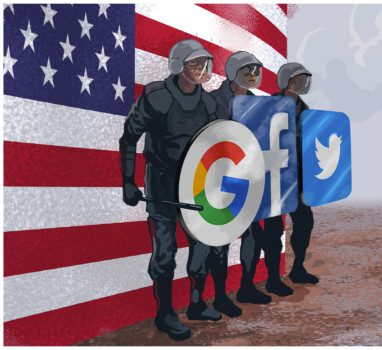
In reality, however, we are now only as free to speak as a government official—or corporate entities such as Facebook, Google or YouTube—may allow.

Case in point: internal documents released by the House Judiciary Select Subcommittee on Weaponization of the Federal Government confirmed what we have long suspected: that the government has been working in tandem with social media companies to censor speech.

By “censor,” we’re referring to concerted efforts by the government to muzzle, silence and altogether eradicate any speech that runs afoul of the government’s own approved narrative.

This is political correctness taken to its most chilling and oppressive extreme.

The revelations that Facebook worked in concert with the Biden administration to censor content related to COVID-19, including humorous jokes, credible information and so-called disinformation, followed on the heels of a ruling by a federal court in Louisiana that prohibits executive branch officials from communicating with social media companies about controversial content in their online forums.

Likening the government’s heavy-handed attempts to pressure social media companies to suppress content critical of COVID vaccines or the election to “an almost dystopian scenario,” Judge Terry Doughty warned that “the United States Government seems to have assumed a role similar to an Orwellian ‘Ministry of Truth.’

This is the very definition of technofascism.

Clothed in tyrannical self-righteousness, technofascism is powered by technological behemoths (both corporate and governmental) working in tandem to achieve a common goal.

The government is not protecting us from “dangerous” disinformation campaigns. It is laying the groundwork to insulate us from “dangerous” ideas that might cause us to think for ourselves and, in so doing, challenge the power elite’s stranglehold over our lives.

Thus far, the tech giants have been able to sidestep the First Amendment by virtue of their non-governmental status, but it’s a dubious distinction at best when they are marching in lockstep with the government’s dictates.

As Philip Hamburger and Jenin Younes write for The Wall Street Journal: “The First Amendment prohibits the government from ‘abridging the freedom of speech.’ Supreme Court doctrine makes clear that government can’t constitutionally evade the amendment by working through private companies.”

Nothing good can come from allowing the government to sidestep the Constitution.

The steady, pervasive censorship creep that is being inflicted on us by corporate tech giants with the blessing of the powers-that-be threatens to bring about a restructuring of reality straight out of Orwell’s 1984, where the Ministry of Truth polices speech and ensures that facts conform to whatever version of reality the government propagandists embrace.

Orwell intended 1984 as a warning. Instead, it is being used as a dystopian instruction manual for socially engineering a populace that is compliant, conformist and obedient to Big Brother.

This is the slippery slope that leads to the end of free speech as we once knew it.

In a world increasingly automated and filtered through the lens of artificial intelligence, we are finding ourselves at the mercy of inflexible algorithms that dictate the boundaries of our liberties.

Once artificial intelligence becomes a fully integrated part of the government bureaucracy, there will be little recourse: we will all be subject to the intransigent judgments of techno-rulers.

This is how it starts.

First, the censors went after so-called extremists spouting so-called “hate speech.”

Then they went after so-called extremists spouting so-called “disinformation” about stolen elections, the Holocaust, and Hunter Biden.

By the time so-called extremists found themselves in the crosshairs for spouting so-called “misinformation” about the COVID-19 pandemic and vaccines, the censors had developed a system and strategy for silencing the nonconformists.

Eventually, depending on how the government and its corporate allies define what constitutes “extremism, “we the people” might all be considered guilty of some thought crime or other.

Whatever we tolerate now—whatever we turn a blind eye to—whatever we rationalize when it is inflicted on others, whether in the name of securing racial justice or defending democracy or combatting fascism, will eventually come back to imprison us, one and all.

Watch and learn.

We should all be alarmed when any individual or group—prominent or not—is censored, silenced and made to disappear from Facebook, Twitter, YouTube and Instagram for voicing ideas that are deemed politically incorrect, hateful, dangerous or conspiratorial.

Given what we know about the government’s tendency to define its own reality and attach its own labels to behavior and speech that challenges its authority, this should be cause for alarm across the entire political spectrum.

Here’s the point: you don’t have to like or agree with anyone who has been muzzled or made to disappear online because of their views, but to ignore the long-term ramifications of such censorship is dangerously naïve, because whatever powers you allow the government and its corporate operatives to claim now will eventually be used against you by tyrants of your own making.

As Glenn Greenwald writes for The Intercept:

The glaring fallacy that always lies at the heart of pro-censorship sentiments is the gullible, delusional belief that censorship powers will be deployed only to suppress views one dislikes, but never one’s own views… Facebook is not some benevolent, kind, compassionate parent or a subversive, radical actor who is going to police our discourse in order to protect the weak and marginalized or serve as a noble check on mischief by the powerful. They are almost always going to do exactly the opposite: protect the powerful from those who seek to undermine elite institutions and reject their orthodoxies. Tech giants, like all corporations, are required by law to have one overriding objective: maximizing shareholder value. They are always going to use their power to appease those they perceive wield the greatest political and economic power.

Be warned: it’s a slippery slope from censoring so-called illegitimate ideas to silencing truth.

Eventually, as George Orwell predicted, telling the truth will become a revolutionary act.

If the government can control speech, it can control thought and, in turn, it can control the minds of the citizenry.

It’s happening already.

With every passing day, we’re being moved further down the road towards a totalitarian society characterized by government censorship, violence, corruption, hypocrisy and intolerance, all packaged for our supposed benefit in the Orwellian doublespeak of national security, tolerance and so-called “government speech.”

Little by little, Americans are being conditioned to accept routine incursions on their freedoms.

This is how oppression becomes systemic, what is referred to as creeping normality, or a death by a thousand cuts.

It’s a concept invoked by Pulitzer Prize-winning scientist Jared Diamond to describe how major changes, if implemented slowly in small stages over time, can be accepted as normal without the shock and resistance that might greet a sudden upheaval.

Diamond’s concerns related to Easter Island’s now-vanished civilization and the societal decline and environmental degradation that contributed to it, but it’s a powerful analogy for the steady erosion of our freedoms and decline of our country right under our noses.

As Diamond explains, “In just a few centuries, the people of Easter Island wiped out their forest, drove their plants and animals to extinction, and saw their complex society spiral into chaos and cannibalism… Why didn’t they look around, realize what they were doing, and stop before it was too late? What were they thinking when they cut down the last palm tree?”

His answer: “I suspect that the disaster happened not with a bang but with a whimper.”

Much like America’s own colonists, Easter Island’s early colonists discovered a new world—“a pristine paradise”—teeming with life. Yet almost 2000 years after its first settlers arrived, Easter Island was reduced to a barren graveyard by a populace so focused on their immediate needs that they failed to preserve paradise for future generations.

The same could be said of the America today: it, too, is being reduced to a barren graveyard by a populace so focused on their immediate needs that they are failing to preserve freedom for future generations.

In Easter Island’s case, as Diamond speculates:

The forest…vanished slowly, over decades. Perhaps war interrupted the moving teams; perhaps by the time the carvers had finished their work, the last rope snapped. In the meantime, any islander who tried to warn about the dangers of progressive deforestation would have been overridden by vested interests of carvers, bureaucrats, and chiefs, whose jobs depended on continued deforestation… The changes in forest cover from year to year would have been hard to detect… Only older people, recollecting their childhoods decades earlier, could have recognized a difference. Gradually trees became fewer, smaller, and less important. By the time the last fruit-bearing adult palm tree was cut, palms had long since ceased to be of economic significance. That left only smaller and smaller palm saplings to clear each year, along with other bushes and treelets. No one would have noticed the felling of the last small palm.

Sound painfully familiar yet?

We’ve already torn down the rich forest of liberties established by our founders. It has vanished slowly, over the decades. The erosion of our freedoms has happened so incrementally, no one seems to have noticed. Only the older generations, remembering what true freedom was like, recognize the difference. Gradually, the freedoms enjoyed by the citizenry have become fewer, smaller and less important. By the time the last freedom falls, no one will know the difference.

This is how tyranny rises and freedom falls: with a thousand cuts, each one justified or ignored or shrugged over as inconsequential enough by itself to bother, but they add up.

Each cut, each attempt to undermine our freedoms, each loss of some critical right—to think freely, to assemble, to speak without fear of being shamed or censored, to raise our children as we see fit, to worship or not worship as our conscience dictates, to eat what we want and love who we want, to live as we want—they add up to an immeasurable failure on the part of each and every one of us to stop the descent down that slippery slope.

As I make clear in my book Battlefield America: The War on the American People and in its fictional counterpart The Erik Blair Diaries, we are on that downward slope now.

Conspirators for the Constitution: When Anti-Government Speech Becomes Sedition

By John & Nisha Whitehead

Source: The Rutherford Institute

“In a time of deceit telling the truth is a revolutionary act.”— George Orwell

Let’s be clear about one thing: seditious conspiracy isn’t a real crime to anyone but the U.S. government.

To be convicted of seditious conspiracy, the charge levied against Stewart Rhodes who was sentenced to 18 years in prison for being the driving force behind the January 6 Capitol riots, one doesn’t have to engage in violence against the government, vandalize government property, or even trespass on property that the government has declared off-limits to the general public.

To be convicted of seditious conspiracy, one need only foment a revolution.

This is not about whether Rhodes deserves such a hefty sentence.

This is about the long-term ramifications of empowering the government to wage war on individuals whose political ideas and expression challenge the government’s power, reveal the government’s corruption, expose the government’s lies, and encourage the citizenry to push back against the government’s many injustices.

This is about criminalizing political expression in thoughts, words and deeds.

This is about how the government has used the events of Jan. 6 in order to justify further power grabs and acquire more authoritarian emergency powers.    

This was never about so-called threats to democracy.

In fact, the history of this nation is populated by individuals whose rhetoric was aimed at fomenting civil unrest and revolution.

Indeed, by the government’s own definition, America’s founders were seditious conspirators based on the heavily charged rhetoric they used to birth the nation.

Thomas Jefferson, Thomas Paine, Marquis De Lafayette, and John Adams would certainly have been charged for suggesting that Americans should not only take up arms but be prepared to protect their liberties and defend themselves against the government should it violate their rights.

“What country can preserve its liberties if their rulers are not warned from time to time that their people preserve the spirit of resistance. Let them take arms,” declared Jefferson. He also concluded that “the tree of liberty must be refreshed from time to time with the blood of patriots and tyrants.”

“It is the duty of the patriot to protect his country from its government,” insisted Paine.

“When the government violates the people’s rights,” Lafayette warned, “insurrection is, for the people and for each portion of the people, the most sacred of the rights and the most indispensable of duties.”

Adams cautioned, “A settled plan to deprive the people of all the benefits, blessings and ends of the contract, to subvert the fundamentals of the constitution, to deprive them of all share in making and executing laws, will justify a revolution.”

Had America’s founders feared revolutionary words and ideas, there would have been no First Amendment, which protects the right to political expression, even if that expression is anti-government.

No matter what one’s political persuasion might be, every American has a First Amendment right to protest government programs or policies with which they might disagree.

The right to disagree with and speak out against the government is the quintessential freedom.

Every individual has a right to speak truth to power—and foment change—using every nonviolent means available.

Unfortunately, the government is increasingly losing its tolerance for anyone whose political views could be perceived as critical or “anti-government.”

All of us are in danger.

In recent years, the government has used the phrase “domestic terrorist” interchangeably with “anti-government,” “extremist” and “terrorist” to describe anyone who might fall somewhere on a very broad spectrum of viewpoints that could be considered “dangerous.”

The ramifications are so far-reaching as to render almost every American with an opinion about the government or who knows someone with an opinion about the government an extremist in word, deed, thought or by association.

You see, the government doesn’t care if you or someone you know has a legitimate grievance. It doesn’t care if your criticisms are well-founded. And it certainly doesn’t care if you have a First Amendment right to speak truth to power.

What the government cares about is whether what you’re thinking or speaking or sharing or consuming as information has the potential to challenge its stranglehold on power.

Why else would the FBI, CIA, NSA and other government agencies be investing in corporate surveillance technologies that can mine constitutionally protected speech on social media platforms such as Facebook, Twitter and Instagram?

Why else would the Biden Administration be likening those who share “false or misleading narratives and conspiracy theories, and other forms of mis- dis- and mal-information” to terrorists?

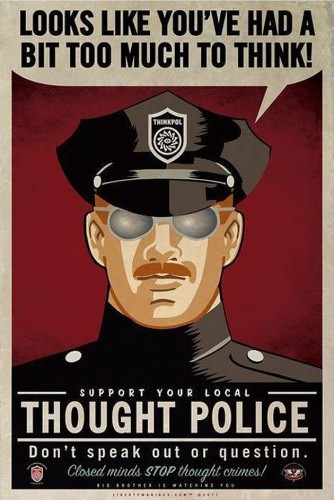
Why else would the government be waging war against those who engage in thought crimes?

Get ready for the next phase of the government’s war on thought crimes and truth-tellers.

For years now, the government has used all of the weapons in its vast arsenal—surveillance, threat assessments, fusion centers, pre-crime programs, hate crime laws, militarized police, lockdowns, martial law, etc.—to target potential enemies of the state based on their ideologies, behaviors, affiliations and other characteristics that might be deemed suspicious or dangerous.

For instance, if you believe in and exercise your rights under the Constitution (namely, your right to speak freely, worship freely, associate with like-minded individuals who share your political views, criticize the government, own a weapon, demand a warrant before being questioned or searched, or any other activity viewed as potentially anti-government, racist, bigoted, anarchic or sovereign), you could be at the top of the government’s terrorism watch list.

Moreover, as a New York Times editorial warns, you may be an anti-government extremist (a.k.a. domestic terrorist) in the eyes of the police if you are afraid that the government is plotting to confiscate your firearms, if you believe the economy is about to collapse and the government will soon declare martial law, or if you display an unusual number of political and/or ideological bumper stickers on your car.

According to one FBI report, you might also be classified as a domestic terrorism threat if you espouse conspiracy theories, especially if you “attempt to explain events or circumstances as the result of a group of actors working in secret to benefit themselves at the expense of others” and are “usually at odds with official or prevailing explanations of events.”

In other words, if you dare to subscribe to any views that are contrary to the government’s, you may well be suspected of being a domestic terrorist and treated accordingly.

There’s a whole spectrum of behaviors ranging from thought crimes and hate speech to whistleblowing that qualifies for persecution (and prosecution) by the Deep State.

Simply liking or sharing this article on Facebook, retweeting it on Twitter, or merely reading it or any other articles related to government wrongdoing, surveillance, police misconduct or civil liberties might be enough to get you categorized as a particular kind of person with particular kinds of interests that reflect a particular kind of mindset that might just lead you to engage in a particular kinds of activities and, therefore, puts you in the crosshairs of a government investigation as a potential troublemaker a.k.a. domestic extremist.

Chances are, as the Washington Post reports, you have already been assigned a color-coded threat score—green, yellow or red—so police are forewarned about your potential inclination to be a troublemaker depending on whether you’ve had a career in the military, posted a comment perceived as threatening on Facebook, suffer from a particular medical condition, or know someone who knows someone who might have committed a crime.

In other words, you might already be flagged as potentially anti-government in a government database somewhere—Main Core, for example—that identifies and tracks individuals who aren’t inclined to march in lockstep to the police state’s dictates.

As The Intercept reported, the FBI, CIA, NSA and other government agencies have increasingly invested in corporate surveillance technologies that can mine constitutionally protected speech on social media platforms such as Facebook, Twitter and Instagram in order to identify potential extremists and predict who might engage in future acts of anti-government behavior.

Where many Americans go wrong is in naively assuming that you have to be doing something illegal or harmful in order to be flagged and targeted for some form of intervention or detention.

In fact, all you need to do these days to end up on a government watch list or be subjected to heightened scrutiny is use certain trigger words (like cloud, pork and pirates), surf the internet, communicate using a cell phone, limp or stutterdrive a car, stay at a hotel, attend a political rally, express yourself on social mediaappear mentally ill, serve in the militarydisagree with a law enforcement officialcall in sick to work, purchase materials at a hardware store, take flying or boating lessons, appear suspicious, appear confused or nervous, fidget or whistle or smell bad, be seen in public waving a toy gun or anything remotely resembling a gun (such as a water nozzle or a remote control or a walking cane), stare at a police officer, question government authority, or appear to be pro-gun or pro-freedom.

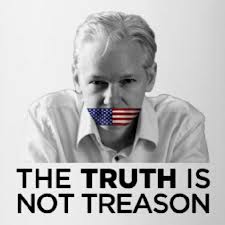
And then at the other end of the spectrum there are those such as Julian Assange and Chelsea Manning, for example, who blow the whistle on government misconduct that is within the public’s right to know.

In true Orwellian fashion, the government would have us believe that it is Assange and Manning who are the real criminals for daring to expose the war machine’s seedy underbelly.

Since his April 2019 arrest, Assange has been locked up in a maximum-security British prison—in solitary confinement for up to 23 hours a day—pending extradition to the U.S., where if convicted, he could be sentenced to 175 years in prison.

This is how the police state deals with those who challenge its chokehold on power.

This is also why the government fears a citizenry that thinks for itself: because a citizenry that thinks for itself is a citizenry that is informed, engaged and prepared to hold the government accountable to abiding by the rule of law, which translates to government transparency and accountability.

After all, we’re citizens, not subjects.

For those who don’t fully understand the distinction between the two and why transparency is so vital to a healthy constitutional government, Manning explains it well:

When freedom of information and transparency are stifled, then bad decisions are often made and heartbreaking tragedies occur – too often on a breathtaking scale that can leave societies wondering: how did this happen? … I believe that when the public lacks even the most fundamental access to what its governments and militaries are doing in their names, then they cease to be involved in the act of citizenship. There is a bright distinction between citizens, who have rights and privileges protected by the state, and subjects, who are under the complete control and authority of the state.

This is why the First Amendment is so critical. It gives the citizenry the right to speak freely, protest peacefully, expose government wrongdoing, and criticize the government without fear of arrest, isolation or any of the other punishments that have been meted out to whistleblowers such as Edwards Snowden, Assange and Manning.

The challenge is holding the government accountable to obeying the law.

A little over 50 years ago, the U.S. Supreme Court ruled 6-3 in United States v. Washington Post Co. to block the Nixon Administration’s attempts to use claims of national security to prevent The Washington Post and The New York Times from publishing secret Pentagon papers on how America went to war in Vietnam.

As Justice William O. Douglas remarked on the ruling, “The press was protected so that it could bare the secrets of government and inform the people. Only a free and unrestrained press can effectively expose deception in government. And paramount among the responsibilities of a free press is the duty to prevent any part of the government from deceiving the people and sending them off to distant lands to die of foreign fevers and foreign shot and shell.”

Fast forward to the present day, and we’re witnessing yet another showdown, this time between Assange and the Deep State, which pits the people’s right to know about government misconduct against the might of the military industrial complex.

Yet this isn’t merely about whether whistleblowers and journalists are part of a protected class under the Constitution. It’s a debate over how long “we the people” will remain a protected class under the Constitution.

Following the current trajectory, it won’t be long before anyone who believes in holding the government accountable is labeled an “extremist,” relegated to an underclass that doesn’t fit in, watched all the time, and rounded up when the government deems it necessary.

We’re almost at that point now.

Eventually, as I point out in my book Battlefield America: The War on the American People and in its fictional counterpart The Erik Blair Diaries, we will all be seditious conspirators in the eyes of the government.

We would do better to be conspirators for the Constitution starting right now.

The War on Free Speech Is Really a War on the Right to Criticize the Government

By John & Nisha Whitehead

Source: The Rutherford Institute

Since when have we Americans been expected to bow submissively to authority and speak with awe and reverence to those who represent us? The constitutional theory is that we the people are the sovereigns, the state and federal officials only our agents. We who have the final word can speak softly or angrily. We can seek to challenge and annoy, as we need not stay docile and quiet.”— Justice William O. Douglas

Absolutely, there is a war on free speech.

To be more accurate, however, the war on free speech is really a war on the right to criticize the government.

Although the right to speak out against government wrongdoing is the quintessential freedom, every day in this country, those who dare to speak their truth to the powers-that-be find themselves censored, silenced or fired.

Indeed, those who run the government don’t take kindly to individuals who speak truth to power.

In fact, the government has become increasingly intolerant of speech that challenges its power, reveals its corruption, exposes its lies, and encourages the citizenry to push back against the government’s many injustices.

This is nothing new, nor is it unique to any particular presidential administration.

For instance, as part of its campaign to eradicate so-called “disinformation,” the Biden Administration likened those who share “false or misleading narratives and conspiracy theories, and other forms of mis- dis- and mal-information” to terrorists. This government salvo against consumers and spreaders of “mis- dis- and mal-information” widens the net to potentially include anyone who is exposed to ideas that run counter to the official government narrative.

In his first few years in office, President Trump declared the media to be “the enemy of the people,” suggested that protesting should be illegal, and that NFL players who kneel in protest during the national anthem “shouldn’t be in the country.”

Then again, Trump was not alone in his presidential disregard for the rights of the citizenry, especially as it pertains to the right of the people to criticize those in power.

President Obama signed into law anti-protest legislation that makes it easier for the government to criminalize protest activities (10 years in prison for protesting anywhere in the vicinity of a Secret Service agent). The Obama Administration also waged a war on whistleblowers, which The Washington Post described as “the most aggressive I’ve seen since the Nixon administration,” and “spied on reporters by monitoring their phone records.”

Part of the Patriot Act signed into law by President George W. Bush made it a crime for an American citizen to engage in peaceful, lawful activity on behalf of any group designated by the government as a terrorist organization. Under this provision, even filing an amicus brief on behalf of an organization the government has labeled as terrorist would constitute breaking the law.

President Franklin D. Roosevelt authorized the FBI to censor all news and control communications in and out of the country in the wake of the attack on Pearl Harbor. Roosevelt also signed into law the Smith Act, which made it a crime to advocate by way of speech for the overthrow of the U.S. government by force or violence.

President Woodrow Wilson signed into law the Espionage and Sedition Acts, which made it illegal to criticize the government’s war efforts.

President Abraham Lincoln seized telegraph lines, censored mail and newspaper dispatches, and shut down members of the press who criticized his administration.

In 1798, during the presidency of John Adams, Congress passed the Alien and Sedition Acts, which made it a crime to “write, print, utter or publish … any false, scandalous, and malicious” statements against the government, Congress or president of the United States.

Clearly, the government has been undermining our free speech rights for quite a while now.

Good, bad or ugly, it’s all free speech unless as defined by the government it falls into one of the following categories: obscenity, fighting words, defamation (including libel and slander), child pornography, perjury, blackmail, incitement to imminent lawless action, true threats, and solicitations to commit crimes.

This idea of “dangerous” speech, on the other hand, is peculiarly authoritarian in nature. What it amounts to is speech that the government fears could challenge its chokehold on power.

The kinds of speech the government considers dangerous enough to red flag and subject to censorship, surveillance, investigation, prosecution and outright elimination include: hate speech, bullying speech, intolerant speech, conspiratorial speech, treasonous speech, threatening speech, incendiary speech, inflammatory speech, radical speech, anti-government speech, right-wing speech, left-wing speech, extremist speech, politically incorrect speech, etc.

Conduct your own experiment into the government’s tolerance of speech that challenges its authority, and see for yourself.

Stand on a street corner—or in a courtroom, at a city council meeting or on a university campus—and recite some of the rhetoric used by the likes of Thomas Jefferson, Patrick Henry, John Adams and Thomas Paine without referencing them as the authors.

For that matter, just try reciting the Declaration of Independence, which rejects tyranny, establishes Americans as sovereign beings, recognizes God (not the government) as the Supreme power, portrays the government as evil, and provides a detailed laundry list of abuses that are as relevant today as they were 240-plus years ago.

My guess is that you won’t last long before you get thrown out, shut up, threatened with arrest or at the very least accused of being a radical, a troublemaker, a sovereign citizen, a conspiratorialist or an extremist.

Try suggesting, as Thomas Jefferson and Benjamin Franklin did, that Americans should not only take up arms but be prepared to shed blood in order to protect their liberties, and you might find yourself placed on a terrorist watch list and vulnerable to being rounded up by government agents.

“What country can preserve its liberties if their rulers are not warned from time to time that their people preserve the spirit of resistance. Let them take arms,” declared Jefferson. He also concluded that “the tree of liberty must be refreshed from time to time with the blood of patriots and tyrants.” Observed Franklin: “Democracy is two wolves and a lamb voting on what to have for lunch. Liberty is a well-armed lamb contesting the vote!”

Better yet, try suggesting as Thomas Paine, Marquis De Lafayette, John Adams and Patrick Henry did that Americans should, if necessary, defend themselves against the government if it violates their rights, and you will be labeled a domestic extremist.

“It is the duty of the patriot to protect his country from its government,” insisted Paine. “When the government violates the people’s rights,” Lafayette warned, “insurrection is, for the people and for each portion of the people, the most sacred of the rights and the most indispensable of duties.” Adams cautioned, “A settled plan to deprive the people of all the benefits, blessings and ends of the contract, to subvert the fundamentals of the constitution, to deprive them of all share in making and executing laws, will justify a revolution.” And who could forget Patrick Henry with his ultimatum: “Give me liberty or give me death!”

Then again, perhaps you don’t need to test the limits of free speech for yourself.

One such test is playing out before our very eyes on the national stage led by those who seem to believe that only individuals who agree with the government are entitled to the protections of the First Amendment.

To the contrary, James Madison, the father of the Constitution, was very clear about the fact that the First Amendment was established to protect the minority against the majority.

I’ll take that one step further: the First Amendment was intended to protect the citizenry from the government’s tendency to censor, silence and control what people say and think.

Having lost our tolerance for free speech in its most provocative, irritating and offensive forms, the American people have become easy prey for a police state where only government speech is allowed.

You see, the powers-that-be understand that if the government can control speech, it controls thought and, in turn, it can control the minds of the citizenry.

This is how freedom rises or falls.

Americans of all stripes would do well to remember that those who question the motives of government provide a necessary counterpoint to those who would blindly follow where politicians choose to lead.

We don’t have to agree with every criticism of the government, but we must defend the rights of all individuals to speak freely without fear of punishment or threat of banishment.

Never forget: what the architects of the police state want are submissive, compliant, cooperative, obedient, meek citizens who don’t talk back, don’t challenge government authority, don’t speak out against government misconduct, and don’t step out of line.

What the First Amendment protects—and a healthy constitutional republic requires—are citizens who routinely exercise their right to speak truth to power.

Tolerance for dissent is vital if we are to survive as a free nation.

While there are all kinds of labels being put on so-called “unacceptable” speech today, the real message being conveyed by those in power is that Americans don’t have a right to express themselves if what they are saying is unpopular, controversial or at odds with what the government determines to be acceptable.

By suppressing free speech, the government is contributing to a growing underclass of Americans who are being told that they can’t take part in American public life unless they “fit in.”

Mind you, it won’t be long before anyone who believes in holding the government accountable to respecting our rights and abiding by the rule of law is labeled an “extremist,” is relegated to an underclass that doesn’t fit in, must be watched all the time, and is rounded up when the government deems it necessary.

It doesn’t matter how much money you make, what politics you subscribe to, or what God you worship: as I make clear in my book Battlefield America: The War on the American People and in its fictional counterpart The Erik Blair Diaries, we are all potential suspects, terrorists and lawbreakers in the eyes of the government.

Substack: Dead Man Walking

The crowning propaganda achievement of the next phase of authoritarian eradication of free speech is the theatrical takedown of Jack Teixeira.

By Kurt Nimmo

Source: Kurt Nimmo Substack

Substack’s days are numbered. The email newsletter platform is increasingly under attack, most recently by the ADL. The organization wrote on April 3 that Substack “continues to attract extremists and conspiracy theorists who routinely use the site to profit from spreading antisemitism, misinformation, disinformation and hate speech.”

The latest salvo by ADL against the First Amendment dovetails with a congressional push to further erode liberty with its draconian RESTRICT Act. There are a number of tweets that encapsulate the latest threat to liberty, but Substack no longer allows tweet embeds, thanks to an absurd ego-colliding tiff between Substack CEO Chris Best and Twitter boss, Elon Musk.

The RESTRICT Act is dressed up as a response to Tik Tok and China. Contrary to this propaganda, it will be used primarily to sanitize the internet and squash (and criminalize) all speech diverting from USG narratives.

“The Restrict Act Completes the Overthrow of the US Constitution,” writes Paul Craig Roberts. “The purpose is to silence all dissent from official explanations. Truth is criminalized. Propaganda and lies will reign supreme and unchallenged. The Matrix will be complete.”

Connor O’Keeffe writes for the Mises Institute,

With its vague language, the bill gives the government much leeway in defining what qualifies as illegal information. We’ve already seen government officials and their friends in media conflate antiestablishment arguments with foreign disinformation. They’ve even falsely labelled accurate news stories as foreign disinformation. It’s not hard to see these same people using the powers granted to them by the RESTRICT Act to criminalize certain dissenting views under the guise of counterintelligence.

The crowning propaganda achievement of the next phase of authoritarian control over free speech is the theatrical SWAT takedown of 21-year-old patsy Jack Teixeira, a low-level National Guard airman that, according to The Washington Post, somehow managed to get his hands on highly classified CIA and DOD documents. This is highly improbable, but then a blindsided American public is routinely fed improbable lies, exaggerations, and omissions by the USG and its corporate propaganda media.

CNN describes the event as a “carefully choreographed arrest,” and I’d agree with that assessment, although not as a result of the “Biden administration’s scramble” to contain sensitive leaks. The theatrical takedown of Mr. Teixeira is a propaganda event designed to bolster further eradication of dissent and grease the skids for the passage of RESTRICT.

The Washington Post has a documented history of working with the CIA to disseminate propaganda, so when we learn that the newspaper “wrote about the presence of problematic content on Substack, noting its use by spreaders of false information,” according to the ADL, we know for certain Substack will be brought to heel. (For more on the CIA’s takeover of the media, see The CIA and the Press: When the Washington Post Ran the CIA’s Propaganda Network, by Jeffrey St. Clair and Alexander Cockburn).

Add to this the Digital Services Act. It is “the EU’s latest incoming tech rulebook requiring them to stamp out illegal content on their platforms… including social media giants like Facebook, Instagram, TikTok and Twitter. These include quickly taking down flagged illegal content, including hate speech,” Politico reported last October. The corporate propaganda conduit conflated “hate speech” (that is, speech contrary to the narratives of the state) with “child pornography and terrorist videos.”

According to Slate, the Digital Services Act (DSA),

while written to protect EU residents, will almost certainly lead social media firms to change their moderation policies worldwide. Thus, with the DSA, the EU will effectively be doing what the First Amendment ostensibly prohibits our own government from doing: regulating the editorial judgments made by social media platforms on which Americans communicate with each other.

The jaws of the authoritarian vice are tightening. In the near future, the ability to express your opinion will be terminated if it runs counter to official government narratives. All avenues of expression are to be tightly monitored, moderated and censored at the behest of the state.

“The Biden administration is looking at expanding how it monitors social media sites and chatrooms after U.S. intelligence agencies failed to spot classified Pentagon documents circulating online for weeks,” NBC News reported on April 12. “The administration is now looking at expanding the universe of online sites that intelligence agencies and law enforcement authorities track.”

Undoubtedly, this will include Substack, one of the last remaining platforms where free speech is permissible without the heavy-handed interference of the state, and the narrowly focused and highly politicized censorship agenda of the ADL and other anti-First Amendment organizations.

The Loss Of Free Speech Was Predictable And Preventable

By Patrick Wood

Source: Technocracy News & Trends

As technology has disrupted key elements of society, Technocrats have taken advantage of the chaos to not only implement their own agenda but also to erect barriers to competition or resistance. If this had been recognized early enough, it could have been easily blocked. Now, the mere barriers have hardened into fortresses.⁃ TN Editor

The First Amendment is at a critical juncture. Recent congressional hearings on the Twitter Files brought the matter into full public view. Freedom of speech and of the press are hanging by a precarious thread. Do we want a future in which information flows freely, or one in which an information elite controls those flows “for our own good?” The choices we make over the next few years will determine which of those futures we get.

It’s tragic that we have let the problem reach this dangerous state. What heightens the tragedy, however, is that the war against America’s most cherished freedoms was predictable and preventable. If those of us who value freedom want to win, we’re going to need a strategy grounded in a clear understanding of what’s happening and why.

The Twitter Files story is shocking. Allegations that big tech and social media manipulate information have been around for as long as we’ve had tech and social media companies. Allegations of bias among the mainstream media are even older. In recent years, however, both the allegations and the supporting evidence have ratcheted upward to unprecedented levels.

When Elon Musk acquired Twitter, he opened his company’s internal archives to scrutiny. He assembled a team of journalists with a curious pedigree: registered Democrats with a distaste for Donald Trump and his supporters, whose track records skewed considerably left of center, and whose recent work has demonstrated deep concern about the politicization of journalism.

Musk gave them unfettered access. They found a deep, broad, and disturbing pattern of collaboration between big government and big tech designed to promote “official stories” on multiple issues, throttle competing theories and arguments, and sanction those who dared to question government propaganda.

When two of those journalists – Matt Taibbi and Michael Shellenberger – testified before Congress, their Democratic inquisitors sought to belittle their credentials, question their motives, and tar them as part of some Republican-funded, far-right conspiracy. The still-left-leaning journalists are trying to absorb their shock at the depths to which the formerly civil-libertarian left has fallen.

Far from shocking, however, that fall was predictable – and predicted. In 2001, amidst the public disgust with tech companies following the collapse of the dotcom bubble, I set out to make sense of life during the transition from the late industrial age to the early information age. I analyzed what I called the first four front-page stories of the information age: the dotcom bubble, the Microsoft antitrust trial, the rise of open-source software, and the Napster-driven wars over digital music. Contrary to popular opinion of the time, I believed that these stories were far from distinct. I saw them as four manifestations of a single underlying phenomenon. My goal was to understand that phenomenon.

I found it. It appeared most clearly in the digital music arena, but it ran through all four stories – and through much that has happened since. It appears just as clearly in today’s war on free speech. It involves an entirely predictable pattern of opportunity, action, and reaction.

The starting point is digitization and quantification. The Internet changed the economics of information. Throughout human history, information was scarce, hard to acquire, and expensive to process. Skilled professionals – spies, scholars, lawyers, accountants, clerics, doctors – could command a premium for their knowledge. When the Internet went public, anything that could be digitized and quantified suddenly flowed freely. Information was there for the asking. The premium shifted to filtering – the ability to discard unwanted information and arrange what remained.

Economic shifts generate massive opportunities for creative, entrepreneurial people and bring glorious benefits to millions of consumers. The Internet was no exception in this regard, and neither was the predictable backlash against it. Anything that benefits new businesses and empowers consumers is a warning shot across the bow of powerful incumbents who’d grown accustomed to serving those consumers in a predictable, profitable, manner.

In the music industry, anything that let individual consumers share digital music files reduced the revenues, profits, power, and control of record labels. Pre-digitization, these powerful incumbents determined what music got recorded and how it was packaged, distributed, presented, and priced. It was a comfortable business model that gave us the music industry “as we knew it.” The Internet undermined it entirely.

Powerful incumbents never fade quietly into the night when challenged. They fight, using whatever weapons they can muster. In our society, the most effective ways to undermine new technological and economic opportunities tend to lie in law, regulation, and public policy. The record labels fought – largely successfully – to apply and reinterpret existing laws and to change laws in ways favorable to their interests.

There’s the pattern: Technology creates opportunities. New businesses exploit those opportunities. Consumers benefit. Powerful incumbents fear their loss of control. Threatened incumbents seek allies in government. Government changes laws and regulations to protect incumbent interests. Media campaigns “educate” the public on the merits of the new policies. The new laws ensure that the next wave of technological change runs largely through the powerful incumbents, rather than against them.

By 2003, I had distilled this pattern, showed numerous ways that it had already unfolded, predicted that it would soon hit parts of our economy and our lives far more significant than the music industry, and suggested some ways that we might prepare ourselves for the coming battles.

It took another two years to get my analysis published. It went largely unnoticed. Twelve years later, then-Senator Ben Sasse described the ways that this pattern had forever disrupted the dynamics of employment. This, too, went largely unnoticed.

Today, we see that disruptive pattern threatening the most basic of our civil liberties. Its manifestation in the arenas of speech, propaganda, and censorship is clear. Consider how each step in the process I identified above has played out here:

Technology creates opportunities. The Internet opened entirely new vistas for the creation and exchange of ideas, information, theories, opinions, propaganda, and outright lies.

New businesses exploit those opportunities. The companies founded since 1995 that created and control the world’s most important conduits for information have joined the ranks of history’s most powerful entities.

Consumers benefit. The centrality of these communication systems to our lives (for better or for worse) proves that they confer real value.

Powerful incumbents fear their loss of control. The twin political shocks of 2016 – Brexit and Donald Trump – highlighted the extent to which official channels had lost control of the narrative. With the entirety of elite media, government, big business, and the intelligentsia aligned behind Remain and Hillary, the newly empowered masses understood – for the first time – that there were viable alternatives to the official story.

Threatened incumbents seek allies in government. A coalition of elite forces assembled quickly, laser-focused on stomping out the populist threat. Masses empowered to conduct their own analyses, draw their own conclusions, and share their opinions among themselves threatened the stability of the power structure “as we know it.”

Government changes laws and regulations to protect incumbent interests. Prior to Musk’s Twitter, the entirety of Silicon Valley committed itself to “protecting” the public from “disinformation,” roughly defined as anything that threatened to undermine an official, sanctioned narrative. Allies throughout the administrative state, Congress, and the Biden White House are working to embed those “protections” in law.

Media campaigns “educate” the public on the merits of the new policies. The same mainstream media that vilified Napster, Grokster, and Peer-to-Peer (P2P) file sharing is now working to turn public opinion against the evil purveyors of alleged “disinformation.”

Will the information age be an era of informed, empowered citizens – or an era of a dominant, information-controlling elite? Stay tuned. That’s the question we need to answer.

Saturday Matinee: The Wobblies

Classic Film Review: One of the Great Labor Documentaries is restored — “The Wobblies (1979)

By Roger Moore

Source: Movie Nation

“The One Big Union,” they called it, an organization that would represent every worker laboring for “The Man.” Unlike the “skilled labor” guilds of the earlier American Federation of Labor, it would take in everyone, including the the extreme exertion “unskilled” jobs — farm labor, lumberjacks, longshoremen and miners. It would be a union whose work actions and strikes were meant to not just exercise some control over their work days, their wages and their safety It would struggle to gain outright ownership of the industries where the workers toiled.

The One Big Union would rattle “ownership” in America’s rapacious “gilded age” and threaten capitalism itself if it succeeded.

“The Wobblies” is a classic labor documentary from 1979, a film that gets back to the core meaning of the film genre — “to document,” to have history recounted by those who actually lived it. Filmmakers Deborah Shaffer and Stewart Bird interviewed the dying out members and eyewitnesses to the actions and struggles of the Industrial Workers of the World, “The Wobblies,” and let these old men and women speak of the idealism, desperation and determination that drove America’s most radical labor movement, which came to life in 1905 and then disappeared, after 20 years of strife, scapegoating and bloody attacks from America’s defenders of the status quo.

The newly-restored film is a reminder of the varied styles and formats of documentaries before PBS an Ken Burns codified and formalized these films into academics and “experts” and actors reading letters or performing speeches of the figures represented.

What that looks and sounds like is a tapestry of testimonials, on and off camera, recreating an era of child labor and the murderously callous reign of America’s first oligarchs — Rockefeller and Ford, Carnegie and J.P. Morgan.

“I can hire one half of the working class to kill the other half,” financier Jay Gould sneered.

And so he could. In an era where workplace safety was deemed an unnecessary bother, when giant lumber companies could strip America’s forests with a remote workforce they could underfeed and house under deplorable conditions, when mining disasters were a simple “cost of doing business” worth no one’s attention, when hired cops and militia could be relied on to mow down longshoremen striking for an eight hour day, capitalists and capitalism were literally killing much of America, and getting anybody to care was a near impossible struggle.

“The Wobblies” uses archival silent films, still photographs, posters and performed recitations to recreate the labor ferment that boiled over from the late 1800s into the early 20th century. Interviews then hammer home what the Wobblies — their nickname may have come from Asian workers’ inability to say “I.W.W.” — represented, an impatience with the pace of reform and change.

“Work, good wages and respect” was their credo, witnesses recount.

“Free speech” battles erupted as the right to organize and protest was assaulted from Minot, North Dakota and Butte, Montana to Everett, Washington and Lawrence, Massachusetts, site of an early Wobbly unionizing success.

A hostile press and a political system bent towards the whims of the celebrated robber barons, who would quickly call for and receive lethal assistance in attacking and imprisoning labor organizers and shooting strikers was what the Wobblies were up against.

“Shakedowns” from railroaders hired to transport farm workers and lumbermen from site to work site via boxcar were common, abuse on the job and across industries was common. The Wobblies vowed that they wouldn’t just take a punch waiting for a passive public and blind-eyed government to act. They’d punch back.

The lack of experts interviewed here leaves the film with an implicit, sympathetic bias, but also deprives it of academically underscored proof of the context all this struggle took place in. World War I and the first “Red Scare,” the birth of the Soviet Union,” took place just as as the Wobblies were on the rise. A refusal to condemn or support the war, or to call off strikes during the conflict, added to heated pushback, attacks and image tarring by the press and government.

The “bomb throwers” label slapped on every labor movement since the Haymarket Square Riot was unjustly attached to the Wobblies from their birth and on into the age of animated film.

Clips from Ford-sponsored silent cinema cartoons depicting IWW organizers as rats and even an early Walt Disney (he hated unions) effort, “Alice’s Egg Plant” remind us how quick conservatives were to tie labor to the brand new boogeyman — communism — and smear workers’ rights organizations with that.

“The Wobblies” is a bracing, enthusiastic film, with many an old Wobbly recalling mottos, chants and even songs.

One remembrance ends with words he recalled his sympathetic father passing on to him. A worthy cause with worthy goals, the old Wobbly remembers his old man saying. “But it’s just a dream. It’ll never happen.”

Watch The Wobblies on Kanopy here: https://www.kanopy.com/en/product/12764581

Punching Down: How the “anti-disinformation” movement worked with Big Tech to protect Big Pharma

By Paul D. Thacker

Source: The Disinformation Chonicle

The COVID-19 pandemic saw the greatest acceleration of online censorship in the short history of the internet. In response, the field dedicated to upholding human rights online—the digital rights movement—remained near silent to this massive government and corporate over-reach. Worse, digital rights activists sometimes even collaborated with censors in the name of protecting the public from “disinformation.”

I’ve spent more than 20 years in digital rights, freedom of expression and open technology communities, and co-founded an organisation dedicated to these ideas: EngageMedia. Over the 17 years I ran Engage Media, we built a team that stretched across 10 countries, from India to Australia—one of the biggest digital rights organisations in the Asia-Pacific, hosting hundreds of workshops and large events, and leading multiple international networks. In short, I’m not a newbie or outsider in this field.

But during the pandemic, I watched the digital rights movement lose its voice as champions of online freedom of expression. Instead, they began to echo the positions of governments and companies with far from stellar records on human rights and corporate integrity. This recasting of governments and corporations as allies, rather than institutions to be held to account, has perverted the mission of digital rights and harmed public health.

The Digital Rights Movement

Digital Rights is an umbrella term that captures multiple concepts from “internet freedom” to “open technology” to “digital public policy.” Over the past several decades, it has become a major force in advocating for online rights and freedoms. Hundreds of universities, institutes, and non-profit organizations work in this arena on every corner of the planet. Whilst I know of no exact calculations, funding for the field is surely in the hundreds of millions of dollars annually—sourced from a mix of liberal foundations, governments, and Big Tech itself.

Core to this fundamentally left-leaning field was anti-censorship and a libertarian ethos. If the movement has a founding document, it is the 1996 Declaration of the Independence of Cyberspace, which begins:

Governments of the Industrial World, you weary giants of flesh and steel, I come from Cyberspace, the new home of Mind. On behalf of the future, I ask you of the past to leave us alone. You are not welcome among us. You have no sovereignty where we gather.

We have no elected government, nor are we likely to have one, so I address you with no greater authority than that with which liberty itself always speaks. I declare the global social space we are building to be naturally independent of the tyrannies you seek to impose on us. You have no moral right to rule us nor do you possess any methods of enforcement we have true reason to fear.

Left-libertarianism and techno-utopianism dominated Internet culture in the 90s and 2000s, yet withered rapidly in the Trump era, as it was unable to move quickly enough to address issues of online discrimination and harassment. In response, a new wing took root that was less hippy, more helicopter parent.

Internet parentalism, with its emphasis on safety over freedom, addressed concerns about the dark side of the Internet, but it did so with top-down regulation and control. And just as the former left-libertarianism created an imperfect system, so has the current left-parentalism. This became quite clear during the pandemic. During COVID, general skepticism of authority was replaced by respect for authority. Once suspect governments and businesses were now to be shielded from critique.

Content moderation is key to the new left-parentalism, and the pandemic radically accelerated and solidified a new digital authoritarianism. It is worth revisiting Hillary Clinton’s seminal 2010 “internet freedom” speech, to see how far thinking has shifted:

Now, all societies recognise that free expression has its limits. We do not tolerate those who incite others to violence… And hate speech that targets individuals on the basis of their race, religion, ethnicity, gender, or sexual orientation is reprehensible… But these challenges must not become an excuse for governments to systematically violate the rights and privacy of those who use the internet for peaceful political purposes.

How different content moderation is today, where comments deemed “offensive” might be censored. In those days liberals even thought about balancing safety and freedom when dealing with terrorists, yet this was not the case with COVID. With Musk now taking over Twitter, the Internet-parentalism wing may be on its back-foot but it has made headway in altering culture, so much so that supporting the left-libertarian approach (or the 2010 Clintonian position) is now considered “right-wing.”

New Zealand Prime minister Jacinda Arden personifies the progressive authoritarian shift. In her recent UN speech she compared “disinformation” to “weapons of war,” expressing a deep frustration with those who stray from the “consensus” and emphasising strong government control for “disinformation.” The Arden approach is now the default setting in the digital rights field where government and corporate censorship have replaced debate and persuasion as the answer to “wrong” ideas. For example, Ardern gave the opening speech at the 2022 RightsCon, the biggest digital rights conference on the calendar (EngageMedia co-hosted the 2015 edition).

That government determines truth to protect citizens is a boom to authoritarians everywhere – from the Philippines, to Ethiopia, to Russia—while also limiting government and corporate accountability. To be clear, both Clinton’s and Ardern’s policy served the needs of power. The difference is that Clinton was largely in step with the previous 200 years of liberal theory, while Arden returns society to levels of government authority and control that people have struggled to overcome for centuries.

Growth and change of “anti-disinformation”

Disinformation was already an established sector prior to the pandemic. But it focused on top level malfeasance: for example, Myanmar military social media accounts promoting violence against the Rohingya or former Philippine President Duterte’s use of bots to attack dissidents. Advocacy took a mostly Clintonian approach to counter such state power—minimising overt censorship, while educating the public and notifying Big Tech of egregious incidents of disinformation (mostly by government).

The Trump election and Cambridge Analytica scandal changed these rules as many blamed social media greed and wilful ignorance for the election loss. Claims of Russian disinformation compounded these problems. Big Tech’s alleged lack of action put it at odds with its core, liberal constituencies. Anger and disillusionment allowed the speech control wing of the digital rights movement to ascend, shifting the movement’s mission from watching the powerful to policing the fringe.

Newer disinformation initiatives also sought to rebuild trust in Big Media, legacy organisations whose legitimacy crumbled for a variety of reasons: from supporting the Iraq war, to failing to predict Trump and Brexit. To recapture authority, elites made themselves the adults who discern the truth, as the rest of society cannot be trusted make competent decisions.

Anti-disinformation amid the pandemic

I went into the pandemic with a wide variety of doubts, but was among the majority in supporting government restrictions, though never on access to information. Banning discussion of a possible lab accident at the pandemic’s beginning triggered me to reevaluate. My own Australian government and the former CDC Director Robert Redfield both considered the lab-leak a plausible reason for how the pandemic started. Meanwhile, leading anti-disinformation organisations labelled it a conspiracy theory, and suggested that journalists not amplify it.

After the lab leak theory became mainstream, I saw no reconsideration of facts among the anti-disinformation and digital rights sectors, as any straying meant being called far-right. Unfortunately, silence only shields the powerful, and civil liberties and human rights groups went AWOL on their duties, or even swapped sides. Witness the ACLU advocating for the violation of bodily autonomy and in favour of widespread vaccine mandates.

The digital rights field seem oblivious to how much information is now controlled. Despite all the changes during COVID, the 2022 iteration of RightsCon had no sessions on the pandemic and disinformation. The digital rights community has also ignored news of the White House directing Twitter to deplatform journalists, and of Harvard and Stanford Professors suing the White House for social media related free speech violations.

Other few key examples of how pandemic censorship protected the powerful:

Questioning of lockdowns was once banned, yet it is now widely acknowledged that lockdowns resulted in serious harm including delays in childhood learning, lack of early treatment for serious illness, a rise in domestic abuse, as well as inflation and a massive transfer of wealth to the rich.

Across the board social media sought to disallow information that is “inconsistent with health authorities’ guidance”. But authorities are not all-knowing and this policy blew away previously held norms around open scientific debate and went against the crowd-sourcing ethos of progressives.


Why the conformity?

Some level of conformity is to be expected; however, it reached uncanny levels during the pandemic. Public relations campaigns hid how information controls have worked, as many aren’t even aware of policies and repeated “fact check” failures. PR campaigns also succeeded in associating those seeking to limit pandemic controls as being right-wing and therefore selfish, or worse, racist and misogynist—even as vaccine hesitancy was highest among communities of colour.

Second, the “anti-disinformation” and digital rights field maintains rigorous class solidarity and is overwhelmingly upper-middle and middle class. The upper and middle classes have a higher trust in institutions because they run those institutions and those institutions have worked for them. The field is also the ultimate laptop class, along with others working in tech. Work from home and other lockdown policies benefited them, even as it harmed others.

Third, digital rights melted into the “follow the science” movement. Populism dented the prestige of the expert and professional managerial class, while COVID energized their authority with “science” and gave them back power. Questioning “the science” and acknowledging mistakes means re-diminishing that power.

Finally, Big Tech has compromised the field with tens of millions of dollars (possibly hundreds) annually, yet this funding bias is rarely discussed. Imagine if Shell, BP, and ExxonMobil were core funders of the climate change movement. Added to this financial influence is a revolving door between Big Tech and those meant to hold it to account

Moving forward

Allegations of “disinformation” have become a tool to delegitimize opposition to orthodoxy and power, and have been weaponised to shield government and Big Pharma from scrutiny. Just as criticism of the automobile industry in the 60s and 70s led to improved car safety, today’s public fora must hold the powerful to account.

By aligning with Big Tech and Big Pharma, the “anti-disinformation” and digital rights sectors have neglected their responsibilities, and have come to serve power rather than people, contributing to a broader chilling effect.

To improve digital rights, we must:

  • Ensure funders, non-profits, journalists, and media organisations more clearly stand up for free speech and invite dissenting views;
  • Remain courageous while suffering the slings and arrows of nasty online criticism. And support those who speak out;
  • Highlight bullying that closes down conversation and benefits institutional interests;
  • Generate greater public awareness of government and corporate manipulation on social media;
  • Refuse Big Tech and Big Pharma funding for work that is meant to keep these same industries accountable;
  • Create more watchers to watch the “anti-disinformation” watchers;
  • Develop alternative media platforms so the conversation can’t be so easily controlled;
  • ·Ensure regulation that protects free speech;
  • Break up Big Tech and Big Media to limit government and corporate control of public discourse and increase diversity of opinion.

Pandemic information controls and restrictions on free speech had real world consequences that contributed to poorer, not better, public health outcomes. By neglecting to address corporate and government pandemic censorship, the digital rights movement failed in its core mission of securing online freedom of expression.