Saturday Matinee: The Wobblies

Classic Film Review: One of the Great Labor Documentaries is restored — “The Wobblies (1979)

By Roger Moore

Source: Movie Nation

“The One Big Union,” they called it, an organization that would represent every worker laboring for “The Man.” Unlike the “skilled labor” guilds of the earlier American Federation of Labor, it would take in everyone, including the the extreme exertion “unskilled” jobs — farm labor, lumberjacks, longshoremen and miners. It would be a union whose work actions and strikes were meant to not just exercise some control over their work days, their wages and their safety It would struggle to gain outright ownership of the industries where the workers toiled.

The One Big Union would rattle “ownership” in America’s rapacious “gilded age” and threaten capitalism itself if it succeeded.

“The Wobblies” is a classic labor documentary from 1979, a film that gets back to the core meaning of the film genre — “to document,” to have history recounted by those who actually lived it. Filmmakers Deborah Shaffer and Stewart Bird interviewed the dying out members and eyewitnesses to the actions and struggles of the Industrial Workers of the World, “The Wobblies,” and let these old men and women speak of the idealism, desperation and determination that drove America’s most radical labor movement, which came to life in 1905 and then disappeared, after 20 years of strife, scapegoating and bloody attacks from America’s defenders of the status quo.

The newly-restored film is a reminder of the varied styles and formats of documentaries before PBS an Ken Burns codified and formalized these films into academics and “experts” and actors reading letters or performing speeches of the figures represented.

What that looks and sounds like is a tapestry of testimonials, on and off camera, recreating an era of child labor and the murderously callous reign of America’s first oligarchs — Rockefeller and Ford, Carnegie and J.P. Morgan.

“I can hire one half of the working class to kill the other half,” financier Jay Gould sneered.

And so he could. In an era where workplace safety was deemed an unnecessary bother, when giant lumber companies could strip America’s forests with a remote workforce they could underfeed and house under deplorable conditions, when mining disasters were a simple “cost of doing business” worth no one’s attention, when hired cops and militia could be relied on to mow down longshoremen striking for an eight hour day, capitalists and capitalism were literally killing much of America, and getting anybody to care was a near impossible struggle.

“The Wobblies” uses archival silent films, still photographs, posters and performed recitations to recreate the labor ferment that boiled over from the late 1800s into the early 20th century. Interviews then hammer home what the Wobblies — their nickname may have come from Asian workers’ inability to say “I.W.W.” — represented, an impatience with the pace of reform and change.

“Work, good wages and respect” was their credo, witnesses recount.

“Free speech” battles erupted as the right to organize and protest was assaulted from Minot, North Dakota and Butte, Montana to Everett, Washington and Lawrence, Massachusetts, site of an early Wobbly unionizing success.

A hostile press and a political system bent towards the whims of the celebrated robber barons, who would quickly call for and receive lethal assistance in attacking and imprisoning labor organizers and shooting strikers was what the Wobblies were up against.

“Shakedowns” from railroaders hired to transport farm workers and lumbermen from site to work site via boxcar were common, abuse on the job and across industries was common. The Wobblies vowed that they wouldn’t just take a punch waiting for a passive public and blind-eyed government to act. They’d punch back.

The lack of experts interviewed here leaves the film with an implicit, sympathetic bias, but also deprives it of academically underscored proof of the context all this struggle took place in. World War I and the first “Red Scare,” the birth of the Soviet Union,” took place just as as the Wobblies were on the rise. A refusal to condemn or support the war, or to call off strikes during the conflict, added to heated pushback, attacks and image tarring by the press and government.

The “bomb throwers” label slapped on every labor movement since the Haymarket Square Riot was unjustly attached to the Wobblies from their birth and on into the age of animated film.

Clips from Ford-sponsored silent cinema cartoons depicting IWW organizers as rats and even an early Walt Disney (he hated unions) effort, “Alice’s Egg Plant” remind us how quick conservatives were to tie labor to the brand new boogeyman — communism — and smear workers’ rights organizations with that.

“The Wobblies” is a bracing, enthusiastic film, with many an old Wobbly recalling mottos, chants and even songs.

One remembrance ends with words he recalled his sympathetic father passing on to him. A worthy cause with worthy goals, the old Wobbly remembers his old man saying. “But it’s just a dream. It’ll never happen.”

Watch The Wobblies on Kanopy here: https://www.kanopy.com/en/product/12764581

Saturday Matinee: Hero – The Extraordinary Life of Mr. Ulric Cross

Hero – the extraordinary life and times of Ulric Cross

By Stephen Spark

Source: Soca News

Hero has landed. Frances-Anne Solomon’s film about the life of Ulric Cross – eight years in the making ‑ has finally reached London, though only for a few screenings. If the audience reaction at the premiere at Brixton’s Ritzy cinema was anything to go by, this film, like its subject, is destined for great things.

In conventional terms, Cross was indeed a hero. He was born in Belmont, Trinidad, and after school and some inconsequential jobs, he joined the Royal Air Force when war broke out. He became a navigator for an RAF pathfinder squadron, flying low-level missions over enemy territory to mark targets for the bombers to hit. This was not a job guaranteed to increase your life expectancy, and his near-suicidal decision to fly 80 missions without a break as Cross did was something that even he couldn’t really explain. He was, famously, the most-decorated Caribbean serviceman, gaining both a DFC and DSO for his cool-headed courage.

Like many West Indian servicemen and women, he learnt that an exemplary war record counted for little when it came to finding a peacetime job in ‘civvy street’. Despite training as a lawyer, he ended up at the BBC, but the plug was pulled on him when his interviews were deemed “too political”. And at this point the story really begins.

The title ‘hero’ is a little misleading, for his war service was only one aspect of his life and, according to Solomon, among family and friends “no one saw him as a hero”. Instead, what we have is a film about a heroic life. Cross played an important part in the African independence and pan-Africanist movements in Ghana, Cameroon and Tanzania, along with fellow Trinidadians George Padmore and C L R James. The film highlights how exciting, uncertain, energising and downright dangerous it was to be an intelligent, idealistic champion of Black empowerment and unity in Africa.

It would be impossible in anything less than a full-length dissertation to do justice to all the intersecting themes Hero contains. After the screening, almost everyone this reviewer spoke to said they needed to see it multiple times.

Hero is intellectually and emotionally absorbing, and visually exciting. Solomon has made extensive use of archive footage and melded it seamlessly with newly shot elements. At the post-film Q&A session, Solomon said that she used and adapted archive footage because the budget was too tight to allow the big set-piece scenes to be shot. It’s a restriction she turned to great advantage, as it’s resulted in a film that looks distinctive and stylish, combining newsreel immediacy with feature film gloss.

Nickolai Salcedo is mesmerising and entirely believable as Ulric Cross, and there’s a fine chemistry with Pippa Nixon as his wife, Ann – clearly a strong character in her own right. Peter Williams deserves a mention for his portrayal of the plausible, but deceptive, ‘Pony’ Macfarlane, while Fraser James brings a restless energy to the fascinating and enigmatic George Padmore.

In short: thoroughly recommended – go and see it as soon as you can.

Watch Hero on Hoopla here: https://www.hoopladigital.com/title/15317967

Saturday Matinee: Time Warp Vol 1-3

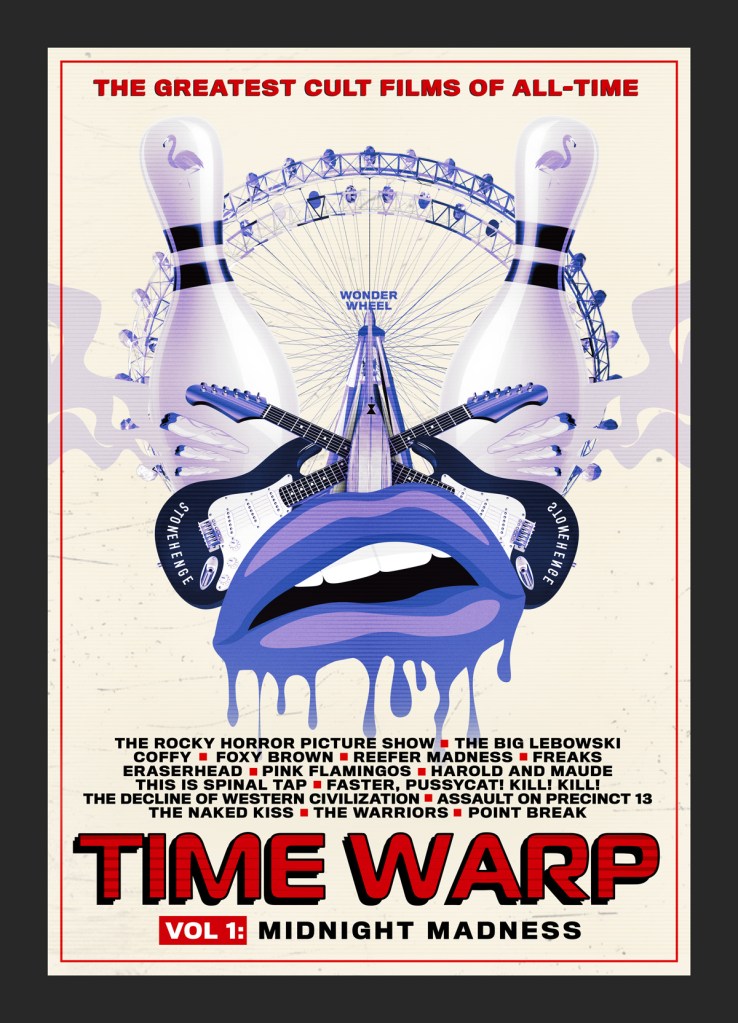
Documentary Review — “Time Warp: The Greatest Cult Films of All Time”

By Roger Moore

Source: Movie Nation

Ask a hundred film buffs what their favorite cult film is, and you’ll get 500 answers.

Because nobody wants to limit that pick to the obvious — “The Rocky Horror Picture Show,” “Harold & Maude,” “Eraserhead” — to admit how many times they’ve watched “The Evil Dead,” or to interrupt their latest trip to Lebowski Fest to give the question more serious thought.

So it’s no wonder that Quiver and director Danny Wolf couldn’t limit themselves to a single documentary, rounding up stars, directors, academics and critics to swoon over and deconstruct their favorites.

“Time Warp: The Greatest Cult Films of All Time” is a three-part mini-series, covering everything from “Freaks” to “The Warriors,” “Spinal Tap” to “Valley Girl.”

There are lots of opinions about the definition of a “cult” film, taking into account its “edge,” forbidden fruit “danger,” rejection by the mass movie audience (many were bonafide “flops” that found their audience over decades) and that ineffable “something” that makes you want to call your best friend and yell, “Friend, you have GOT to see this.”

I think John Cleese comes the closest to getting that definition right.

A cult film, Our Lord J.C. (of “Monty Python and the Holy Grail”) says, is one “that you think is much better than it is.”

“The Rocky Horror Picture Show (1975)” is celebrated as the greatest cult film of them all, a movie that opened to little notice, but which “never ever left the cinema,” as Patricia Quinn, one of several members of the cast speaking here, declares. Fans and critics and cult director John Waters (“Pink Flamingos”) talk of its impact on the culture, putting a “transvestite transexual” on screens where isolated, closeted fans could see someone that might be closer to their own sexuality than anything mainstream Hollywood was putting out.

Tod Browning’s still alarming “differently-abled” thriller “Freaks” (1932) is titled “the scariest movie ever made” by the likes of comic writer Bruce Vilanch and others.

Pam Grier talks of her glory days in Blaxploitation cinema like “Foxy Brown” and “Coffy.”

Gary Busey goes hyperbolic over “Point Break,” which has gained stature via a growing online fandom.

“Harold & Maude,” “The Decline of Western Civilization” punk documentaries, the films of the cleavage-cultist Russ Meyers and the down and dirty noir classics of Sam Fuller (“The Naked Kiss”), John Carpenter’s “Assault on Precinct 13” — a lot of ground is covered just in “Volume One: Midnight Madness.”

Everybody here is an enthusiast, and director Danny Wolf got Jeff Bridges and John Turturro to talk about “The Big Lebowski,” Rob Reiner and several others to speak about “Spinal Tap” and David Patrick Kelly to reminisce of the glory that was and remains “The Warriors.”

Those big names missing (Tim Curry, Keanu, Kathryn Bigelow, Tarantino, David Lynch, seen only in a ’70s interview) are barely missed.

Not all of it works. The conceit of having a “panel” consisting of directors Joe Dante (“Gremlins”) and John Waters, actress Ileana Douglas (?) and comic and actor Kevin Pollack (!?) could have left the hosting to Waters — the real authority, the Cult King.

There’s a whole subgenre of “revolting cult films” that aren’t so labeled but show up here. “Eraserhead” and any of the early warped Waters movies could turn your stomach.

Later installments will dwell on everything from masterpieces like “A Clockwork Orange” and “Blade Runner” to the obscure “Liquid Sky,” bonafide hits (no “cult” to them) like “Fast Times at Ridgemont High” to the zombie genre — “Living Dead” movies no longer having any cult appeal.

What, no “Stunt Man?” Well, they got to “Show Girls.” That’ll have to do.

But that’s the fun of it all, the arguments it starts. Because what really defines this sub-category of cinema is movies that have taken on a life of their own, taken over by fans.

And if the fans prefer “The Warriors” (popular, enduring, classic) to “Streets of Fire” (a lot more “cultish” for my money), they’re the arbiters.

“Time Warp,” in three installments, shows up via VOD and digital streaming, April 21 (ep. 1), May 19 (ep. 2) and June 23 (ep. 3).

Tune in. All the cool kids will be there.

Watch the Time Warp trilogy on Kanopy here:

Vol 1 – https://www.kanopy.com/en/product/11188290

Vol 2 – https://www.kanopy.com/en/product/11188292

Vol 3 – https://www.kanopy.com/en/product/11188294

FILMMAKER REVEALS THE TRUTH ABOUT SUBLIMINAL MESSAGES

By Dylan Charles

Source: Waking Times

We’re all being conditioned to think and believe certain things without any rational explanation through subliminal messaging in advertising, music, film, television, political propaganda, and military psychological operations.

Considering the definition of the word subliminal – ‘existing or functioning below the threshold of consciousness’ – it is easy to downplay the power of this brainwashing technique because most people are not consciously aware that it is happening, yet, it is affecting their lives. Once you realize that subliminal messaging is real and start to pay attention, it becomes much easier to recognize the we are, indeed, all being conditioned to behave a certain way, to want certain things, and to believe in ideas, without being able to rationally explain why.

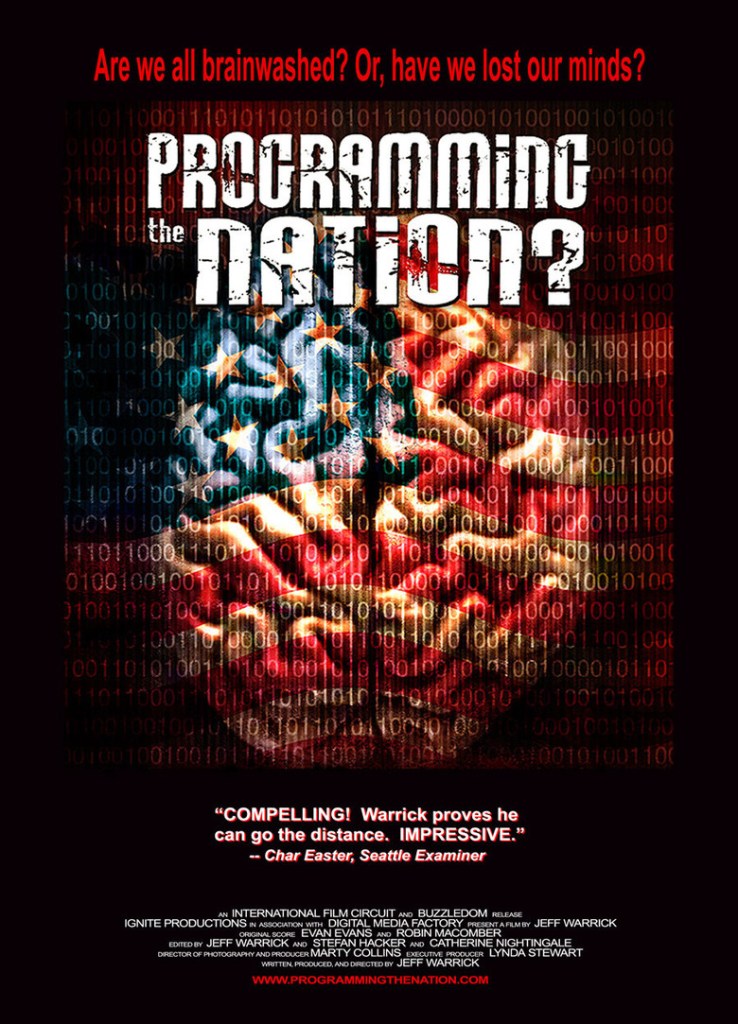
Below is a short video in which Jeff Warrick, the director of Programming the Nation (2011), offers his take on the truth about subliminal messaging. Warrick shares a few examples of messages embedded within ads, which are not likely to be seen consciously, but are admitted into the subconscious mind.

A common response to this type of revealing information is skepticism and disbelief that sexual innuendos or random words embedded in pictures or film will not impact a person’s willingness to buy a product.

Although it is a common assumption that sex sells because for most people it is associated with feelings of pleasure, excitement, enjoyment or even love, subliminal messaging is about much more than helping advertisers sell more product. These messages are designed to have an impact on general consumer behavior and affect people’s life patterns, thus molding society as a whole, creating and captivating more and more receptive consumers.

When bombarded with subliminal messaging, the mind is likely to trigger emotions, memories or feelings, without a person’s conscious recognition of why they feel a certain way. A person may not consciously realize why they start to become more attracted to certain behaviors, lifestyles or products, but they are more likely to succumb to the attraction.

“..subliminal ads are used as a technique not only to increase sales but is also used to divert youth and involve them in such type of behaviour which is only hazardous to the consumer.” ~ (Impact of Subliminal Messaging in TV Advertisements on Consumer Behaviour – A Case Study of Youth in Kashmir Province of J&K, Blue Ocean Research Journalssource)

Are subliminal messages contributing to a variety of economic, social, and political problems currently present in our culture, such as over-competitiveness, low self-esteem, obesity, over-consumption and debt? There are many examples that support this idea and demonstrate that subliminal messaging, over time, can have a powerful impact.

Take, for instance, advertising to women. If you look at any variety of ads that are targeted at women ages 18-35, an overwhelming majority will personify that women and girls should be thin, wear lots of makeup, style their hair in certain ways, and, of course, look very sexy. It almost appears as though it is the advertisers’ job to make young women feel bad about themselves.

See the following example of women in advertising in the video below:

Other examples are films such as the Rambo series of the 1980’s and the more resent American Sniper, which glorify mindless military self-sacrifice, torture and violence. They romanticize obedience to authority and unquestioning loyalty to a war-mongering government.

“‘American Sniper’ lionizes the most despicable aspects of U.S. society—the gun culture, the blind adoration of the military, the belief that we have an innate right as a “Christian” nation to exterminate the “lesser breeds” of the earth, a grotesque hypermasculinity that banishes compassion and pity, a denial of inconvenient facts and historical truth, and a belittling of critical thinking and artistic expression.” – Chris Hedges

Below is the complete documentary by Jeff Warrick, Programming the Nation, that offers a full history behind subliminal message. In the film, Warrick examines if subliminal messaging and other subconscious techniques have conditioned the United States public to become one of the highest consuming nations in the world, accounting for about 25 percent use of the worlds natural resources even though its populace makes up less than 5 percent of the global population.

Saturday Matinee: Theaters of War


A documentary about the U.S. military’s editorial control over thousands of Hollywood’s films and television programs.

Source: Media Education Foundation

If you’ve seen Top Gun or Transformers, you may have wondered: Does all of that military machinery on screen come with strings attached? Does the military actually get a crack at the script? Theaters of War digs deep into a vast new trove of recently released internal government documents to bring the answers to these questions into sharp focus. Traveling across America, filmmaker and media scholar Roger Stahl engages an array of other researchers, bewildered veterans, PR insiders, and industry producers willing to talk. In unsettling and riveting detail, he discovers how the military and CIA have pushed official narratives while systematically scrubbing scripts of war crimes, corruption, racism, sexual assault, coups, assassinations, and torture. From The Longest Day to Lone SurvivorIron Man to Iron Chef, and James Bond to Jack Ryan, Theaters of War uncovers an alternative “cinematic universe” that stands as one of the great Pentagon PR coups of our time. As these activities gain new public scrutiny, new questions arise: How have they managed to fly under the radar for so long? And where do we go from here?

Watch Theaters of War on Kanopy here: https://www.kanopy.com/en/product/12327337

Saturday Matinee: Prescription Thugs

By Zach Hollwedel

Source: Under the Radar

In 2008, Chris Bell’s Bigger, Stronger, Faster* plunged into the (un)surprisingly rampant reality of athletic doping. Never a fly-on-the-wall documentarian, Bell organically infuses himself into his films, rendering them particularly potent. In the case of his fascinating 2008 exposé, Bell turned his lens on American bodybuilders’ use of steroids, with a particular focus on his own brother, Mike. Mike “Mad Dog” Bell was an aspiring WWE wrestler who, while struggling to achieve the stardom he so fully desired, took to using performance and muscle enhancers.

Now, seven years later, Chris Bell returns with a natural follow-up. Prescription Thugs examines the fallout of another substance abuse problem all too common in, though far from exclusive to professional sports. Perpetually banged and bruised in the ring, Mike Bell took to prescription drugs as a means of curing—or at least numbing—his ailing body. He was by no means alone. Chris Bell and his co-directors, Josh Alexander and Greg Young, interview a number of athletes whose dependency upon over the counter medications got the better of them.

Immensely relatable and genuine as the face of the film, Bell sheds tremendous light on America’s dependence on prescription medication, an addiction which he indicates was largely born in the Reagan years. Given his brother’s history—and, it turns out, his own—Bell approaches the problem from an extremely personal angle, and the honesty pays off in spades. We feel for Bell and his friends and family, as they break down—or defend—their perilous reliance upon pill popping. One of the most extreme cases is Matt “Horshu” Wiese, who at the acme of his addiction, was taking upwards of 90 pills a day. Horshu admits that part of his regimen included two Viagra each morning, “just in case.” Through interviews with his burly subjects—and also with homemakers and students, who inadvertently and unintentionally got hooked—Bell reveals how easily one pill can lead to two, can lead to ten or more. The genesis of the addiction often comes in the form of the “just ask your doctor” Rx ads that inundate television these days. Big pharma colludes to sell medication for virtually any and every imaginable symptom (some of which they basically fabricate), and when side effects present previously unfelt problems, they develop a secondary drug for those. So on and so forth, until consumers are hooked to a habit Bell reveals to be little different from a legalized form of heroin in some cases.

With Prescription Thugs, Bell again proves a consistent, affable filmmaker well versed in investigative filmmaking with a penchant for the personal.

www.prescriptionthugs.com

Watch Prescription Thugs on Kanopy here: https://www.kanopy.com/en/product/582224

Saturday Matinee: Dark Clouds Over Elberton

Source: Vimeo

In 1979, a mysterious stranger appeared in the remote town of Elberton, Georgia. The man introduced himself as R.C. Christian, but admitted this was not his real name. He claimed to represent a small group of loyal Americans who wanted to erect a monument they hoped would inspire “the Age of Reason.”

The monument was named the Georgia Guidestones, and since its completion has spawned a host of conspiracy theories about who or what was behind it. Written on the great granite stones are ten commands or “guides” that were intended to provide wisdom for mankind. But the first of them calls for a reduction of the world population to a mere 500 million. In order to achieve this, billions of people would have to die. Many have wondered: is the monument designed to inspire wisdom? Or to launch a global genocide?

Researchers have wondered for decades about the identity of R.C. Christian and the purpose of his mysterious structure. Was he part of a globalist group? Was he working with the United Nations? After a five year investigation, this powerful documentary presents groundbreaking information, and dares to solve the mystery of who R.C. Christian really was.

This film is a must see for those who wish to learn more about the globalist use of environmentalism towards the cause of population control.

An ADULLAM FILMS Production
Written & Directed by Christian J. Pinto
Produced by Christian J. Pinto, Dr. Mike Bennett
ADULLAMFILMS.com

Bonus Short

Saturday Matinee: Lo and Behold

Lo and Behold, Reveries of the Connected World

A bold and multidimensional documentary about the glories and the drawbacks of the Internet.

By Frederic and Mary Ann Brussat

Source: Spirituality & Practice

Werner Herzog is an inimitable documentary filmmaker whose curiosity, wonder and awe for the mysteries and eccentricities of our world is unbounded. One of the hallmarks of his work is his unmistakable voice-overs (with a distinctive German accent) which serve as the narrative threads holding the materials together. Here are five of his most recent documentaries which illustrate the diversity of themes that interest him:

  • Cave of Forgotten Dreams: A 3-D tour of the Chauvet Cave which houses art that is 30,000 years old.
  • Encounters at the End of the World: A visually stunning documentary about the scientists, dreamers, adventurers, philosophers, and creatures of Antarctica.
  • Grizzly Man: A mesmerizing documentary about a young man obsessed with grizzly bears in the Alaskan wilderness.
  • Into the Abyss: A daring examination of capital punishment filled with small and humble human touches.
  • Wheel of Time: An exotic look at a Buddhist ritual held in Bodh Gay, India, and Graz, Austria in 2002 that attracted thousands of pilgrims.

In Lo and Behold, Reveries of the Connected World, Herzog tackles the complex, controversial, and mysterious Internet. He refers to this technological tool as “one of the greatest revolutions” in human history. This bold and multidimensional film is divided into 10 chapters:

  • The Early Days
  • The Glory of the Net
  • The Dark Side
  • Life without the Net
  • The End of the Net
  • Earthly Invaders
  • Internet on Mars
  • Artificial Intelligence
  • The Internet of Me
  • The Future

Here you will discover a breadth of material that ranges from the very serious to the extremely quirky and odd. Herzog begins with a terse history of the Internet’s beginnings at U.C.L.A. during the 1960s. Leonard Kleinrock, a professor of computer science, takes us into the “holy room” where the first Internet computer remains. He recalls his feelings when a message was transmitted from this computer to the Stanford Research Institute on October 29, 1969. Programmers were on the phone confirming that the login was happening. Stanford replied that they had received the “L” and the “o.” Then its computer crashed. So the first Internet message was “Lo.” This documentary chronicles what happened beyond that.

Danny Hillis, another scientist, reminisces about a time when all the users of this technology could be identified in one directory. Now, he states, the global directory would be 72 miles thick. Another statistic which stands out is: “Today, about 3.2 billion people use the internet around the world.” Herzog chimes in that CDs containing a single day’s worth of global data would stretch “to Mars and back.”

Here are some observations made in interviews with computer and robot specialists, hackers, technicians, programmers, gamers, and professors.

  • Elon Musk, the entrepreneur behind Telsa, is now interested in colonizing Mars; he also reflects on cyberwarfare or other earth catastrophes.
  • Kevin Mitnick, a legendary hacker, reveals the mayhem and the mischief that can take place by those who can get into large computer systems; cyberwarfare now puts smaller states on the same level as larger ones.
  • Joydeep Biswas, an engineer who has put together a robotic soccer team, shows how they work together and even reveals his favorite robot player.
  • Sebastian Thrun, an online-learning pioneer, notes that self-driving cars can all learn from the collective experiences of other cars and their mistakes, unlike human drivers.

Also included is an account of abusive cyber behavior ending with a mother calling the Internet “a work of the Devil” after pictures of her dead child were widely circulated online. Herzog talks with several persons who are sensitive to electromagnetic waves and get radiation sickness; they now live in an isolated area totally off the grid. A segment on video-game addicts reveals that many of them have completely stopped being present to the real world; some have developed blood clots in their legs after sitting so long at their computers. Astronomers explain that a large solar flare, which has not happened in many years, could disrupt Internet communication worldwide, affecting all the food supply, water and other systems supporting modern life.

In a telling scene, we see a group of Buddhist monks standing in front of a city skyline and the question is posed, “Have the monks stopped meditating?” We see that they are not bowing their heads in prayer or meditation. All of them are totally focused on their cell phones. Herzog quotes a startling statistic: There will be 31 billion devices connected to the Internet by 2020.

A famous New Yorker cartoon by Peter Steiner shows two dogs by a computer. The caption reads: “On the Internet, nobody knows you’re a dog.” It’s good for a laugh, and it’s also a reminder that Internet technology is raising many spiritual questions. Who are you? Where do you really live? And who are your companions? Don’t miss this thought-provoking documentary!