From 2004 – 2016, I felt like I was a part of something special. I was participating in an “awakening.” The world was changing. Consciousness was shifting. The hidden hand was being exposed and all secrets were being revealed!
Right?
Or maybe it was wishful thinking.
9/11 happened. And for the next decade and a half, people all over the world began to question the events of that day. Then, major events in general. It was the beginning of an uprising. A revolution!
Right…?
Something else emerged during that time. Social media.
Social media has its upsides and downsides. Mostly upsides. But the downsides have serious ramifications. Specifically on communication.
Social media brings us together and tears us apart.
2001: A Truth Odyssey
By 2001, almost everyone was online and connected to the internet. But it was still in its infancy.
The iPhone didn’t exist. There was no YouTube, Facebook, Instagram, or Twitter. Even MySpace wasn’t around yet.
We had access to the internet, but we had no idea what we were in store for.
As the internet expanded, so did our ability to share information.
Alternative perspectives, counter-narratives, and “conspiracy theories” became more accessible. For the first time (possibly) in history, “official stories” were being challenged in real time. With evidence to support claims.
I was dubious about 9/11 as it was happening. Not because of the internet. Not because I was a conspiracy theorist. But because I hated George Bush. As a born and raised Democrat, I didn’t trust him. I was staunchly anti-war (and still am), and I knew America’s response to the attacks was going to be insane.
A few years later, someone shared a documentary with me called Loose Change. A film deconstructing the 9/11 narrative. My mind was blown, and it was off to the races.
Down, Down, Down The Rabbit Hole.
YouTube hit the scene in 2005. I used it strictly for conspiracy-related research.
Conspiracy content blew up online. A truth movement had begun. The masses were on the verge of waking up, well, en masse.
Right?!?!
Divide & Conquer
Fast forward to 2024. I have good news and bad news.
The good news is that more people are questioning things than ever. Distrust in anything mainstream is at an all time high.
The bad news:
Societal division is worse than it’s ever been. In my lifetime anyway. It’s hard to even call it division because division implies splitting into two halves.
This is a direct result of thumb-typed communication. (Generation Text.)
These days, most people prefer texting, emailing, or commenting over direct engagement. We yearn for human connection, but we’ve patterned ourselves to avoid it as much as possible. (I’m speaking generally, of course.)
Confronting someone is uncomfortable. But confrontation is a necessary part of human interaction. It’s a key component in solving conflict or avoiding it altogether. But since it can be terrifying, people today have the easy-out of typing instead of speaking.
Typed communication lacks empathy. It’s indirect. Impersonal. It’s both a barrier and a shield.
So people say things to each other online that they would never say out loud. They rip each other apart over the slightest differences of opinion. Many (especially YouTube commenters) hide behind avatars and pseudonyms to say whatever they want with no accountability.
Basically, everyone has free rein to be an asshole with zero repercussions.
Worst of all, no one is listening to each other anymore.
We haven’t just been divided; we’ve been fractalized into smithereens.
Awake Vs. Woke
The “awake” crowd is as insufferable as the “woke” one. Change my mind.
Mean-spirited mudslinging and public shaming are the online norm.
Checking the timeline on Facebook, for instance, is a disheartening experience.
It’s a daily mélange of proselytizing, bickering, and judging others. The sentiment is “my way or the highway.”
“I’m right, and you’re wrong. And not only are you wrong, you’re also a stupid idiot.”
Many on the alternative or “conspiracy” side of things have fallen into the same trap as the “sheep” they condemn.
Arrogant allegiance to ideas, beliefs, and opinions.
Critical Thinking
At the height of the truth movement in the 2010s, there was an emphasis on critical thinking. The Trivium was making a comeback.
Grammar, logic, and rhetoric
In that order.
More often than not, online communication is rhetoric without grammar and logic to back it up.
Sweeping generalizations abound.
Accusations
Declarations
Proclamations
& Polarizing opinions disguised as facts
But opinions are not facts. (And you are not your opinions.)
“A great many people think they are thinking when they are merely rearranging their prejudices.” – William James
Social media algorithms are designed to keep you in a feedback loop.
A lot of people use their (typed) voice online to “speak the truth.” But they’re preaching to the choir in an echo chamber.
There’s camaraderie to be found in this. Which is good. But the likelihood of their rantings reaching those who (they feel) need to hear them is small.
The aggression that comes through many posts is ugly and derogatory.
Anger
Anger is a powerful emotion. But it’s like fire. It can warm your house or burn it down.
“Heat not a furnace for your foe so hot that it do singe yourself.” – William Shakespeare
Many people lean on anger to convey their conviction about a topic. They use it to stress the importance of something. But more often than not, it’s ineffective.
Anger is best utilized when it’s the seed preceding something more interesting.
In other words, anger alone is a weak emotion for personal expression.
When anger sparks an idea, and that idea is built upon with clarity and care, the expression of that idea has the power to shift someone’s perspective.
Many of my poems and JoyCamp videos came from an angry place. But anger is nowhere to be found in the final product.
Some think I’m too soft in my approach. Well, they’re welcome to think whatever they want. I’ve learned through trial and error that bluntly and angrily stating “the truth” is a fool’s errand. People don’t want to hear it, no matter how right or passionate you are.
Use anger like clay and sculpt it.
I tried anger in my 20s, and it got me nowhere. If anything, it only made situations worse. Speaking loudly and angrily puts more distance between your conversation partner and the point you want them to understand.
I’m committed to the truth and helping others discover it for themselves. Over the course of 15 years, I developed a nuanced approach to communication that actually works. One that I’ve taught to hundreds of people in my Parrhesia program (now called Free Your Speech).
If you didn’t pull the trigger on Parrhesia when I was offering it live, you can still purchase the course itself.
I’ve dropped the price to $149. It’s an election year. It’s probably worth your while.
Logic
It’s agonizing to witness your friends, family, and society at large fall into what you perceive as traps.
What’s painfully obvious to you is beyond absurd or ridiculous to them. And no matter how much you try to convince them otherwise, they double down on their commitment to the trap.
People are not logical. They’re emotional and motivated by fear, comfort, and ego.
“No one can possibly behave above his own level of understanding. Don’t expect people to do any better than they are compelled to do at their present level. Your problem is assuming that they should and could behave better. Understand this and annoyance disappears. As you gradually awaken you will feel the urge to share your discovery with others. Because you will find others in various stages of receptivity, remember this: Never give more than others can understand and appreciate in the moment. This is cosmic law. To try and give what others cannot receive is like tossing a ball against a brick wall—it bounces back to strike you. Jesus explained this law by saying that we should not cast our pearls before swine; that is, before those whose comprehension of truth makes them indifferent or hostile about it.” – François Fénelon
This is the cornerstone of my communication philosophy and approach.
The Real Awakening
There is no truth movement. There never was. There is only your journey to discovering what the truth is.
Pick your lane and choose your battles wisely.
Worry less about the world and other people’s opinions.
Concern yourself with what you’re capable of. Challenge your comfort zone. And focus your efforts on how you can help.
When you derive a conclusion, how do you get there? As you gather facts and pieces of narratives and figure out the picture that the puzzle should be configured into, what assumptions are you making — do you need to make for the sake of expediency, if nothing else — to get there without spending the better part of a lifetime so you no longer require a shortcut?
These are intrinsically generalizations, since they seem to arise from experience such as — if you find blue seashells every time you go to a particular sea shore, you might derive that sea shells are often blue and so come to conclude that is a general rather than local effect.
The following list each contain a brief explanation, and then a few additional comments. More on this in the upcoming Newsletter! (December 2023)
Talk with a GPT instructed to follow these 27 Premises, aka Narrative Machine-139.
1. Simpler is not necessarily more correct; Complicated is not necessarily more correct.
This principle challenges the idea that the truth or correctness of an idea, theory, or system can be judged based on its simplicity or complexity alone. It’s a rebuttal to both any rigid application of Occam’s Razor, which suggests that simpler explanations are generally better, and to the assumption that more complex theories are inherently more sophisticated or accurate simply on account of their complexity.
“Correctness” is question and context dependent, not innate.
2. Simplicity often obscures inner complications… and the inverse is also often true.
This principle underscores the notion that both simplicity and complexity can be misleading in their own ways. A simple explanation might overlook critical nuances, while a complex one might overcomplicate what is fundamentally straightforward.
An important corollary is that looking at a problem with the mindset of optimal complexity, or optimal simplicity, each will bring out some dynamics and minimize or remove others. Ideally, both frames need to be considered, although not always equally weighted.
3. Anything true is likely propped up by unspoken falsehoods. The inverse is sometimes but not always true.
This suggests that truths are often supported by assumptions or beliefs that may not be accurate. It underscores the importance of scrutinizing the underlying assumptions of any ‘truth,’ as well as the extreme difficulty of actually doing so. The inverse — that falsehoods can support truths — is acknowledged as a less common but possible scenario.
Logical relationship is based on assumptions about likeness, mimesis, and consistency with specified rules. In generalized form, it is tautological. This was a major fin de siecle fixation (before WW1), and in many ways historically and culturally, the devastation of that particular apocalypse was a form of answer to the question, in terms of some of the potential outcomes of “applied reason.”
Of that which goes beyond such tautological relationships, to quote Wittgenstein, “we cannot speak.” As he would also later come to recognize, that includes a significant portion of life.
4. Everything is relatively dependent on context; everything is in some sense connected, but not equivalently.
Context is critical in understanding any concept, idea, or system, as the environment in which anything might come to be. This principle aligns with systems theory, where the meaning and function of a component can only be fully understood in relation to the whole system. It also touches on existentialist ideas about individual perception being shaped by one’s unique context, however the emphasis is on the distributed interconnections of systems that actually operate within the world.
Everything is relatively dependent/contingent, and the range of possibilities that exist within those overlapping contexts in a given place and time, which is another way of saying that everything is connected but not equivalent. Your mileage may vary based on the local neighborhood you’re living in, whether that means solar system or city block. The same is likely true regarding time.
5. Time has various senses, such as that which is measured versus that which allows for experience.
This principle integrates ideas from physics and phenomenology. While time has measurable physical properties, our experience of time is subjective and varies based on individual perception and context.
Time can be measured through the entropy in a system, and it can be distorted by mass (4d curvature), but as a field that allows for experience to occur, our experience of time is just another socio-biological construct of our nervous system.
6. There are no first causes. Look instead for drivers of outcomes.
In line with complex systems theory, this principle rejects the notion of an original, singular cause of events, suggesting that causes are themselves effects of prior conditions, forming an interconnected web of causality.
The billiard ball model is oftentimes less salient than the idea of ‘entanglement.’ Attempting to chase that train to its point of origin will invariably lead you back to the big bang, although that neither means that it necessarily started there, or that it was ‘caused’ by it. Rather, if that had not happened, its antecedents would similarly not exist. That is to say the chain is one of contingency and continuity rather than discrete causality.
7. Nothing happens for a “reason”. (Causal syncretism).
This principle challenges the notion of a singular, directed purpose in events, instead favoring a view of causality where events are contingent on preceding conditions, always “reasons” plural. This aligns with complex systems theory, where outcomes are often the result of numerous interacting variables rather than a linear cause-effect relationship.
“It was meant to be.” Only in the sense that everything happens because many other things did or didn’t happen. What can we actually make of this contingency?
8. Meaning is something we project on the world, not the other way around.
This principle reflects the existentialist and constructivist view that meaning is not an inherent property of the world but is either constructed or imagined by individuals through their interactions, experiences, and interpretations.
Meaning is dependent on action and intent. What is the meaning of a rock? What is the meaning of a flower? What is the meaning of that letter you sent to me? Only one of these makes sense. Even the Buddha’s “flower sermon” only makes sense because of the intention behind holding up the flower, even if its specific meaning is enigmatic.
9. Conversely, and yet equally, our meaning is shaped by our being in the world.
Expanding on the previous as a corollary and yet seemingly contradictory point, this principle suggests that our personal meaning is contingent on our interactions with the world around us. There is in fact no contradiction here. This is a phenomenological view, recognizing that our consciousness and perception shape our understanding and meaning-making processes.
Our meaning is shaped by our own being in the world. We are not in any way inseparable from the worlds in which we have been. “Nothing exists within a void.” That also has dual meaning.
10. No point of view, model, or experience can singularly encompass the truth; they can only model it well or poorly, which is to say, be more or less pertinent to the needs of a specific situation.
This aligns with the philosophical understanding that absolute objectivity is unattainable, and in fact incoherent. All perspectives and models are inherently limited by virtue of their very existence, and can only approximate truth within specific contexts.
Those “needs” might be broad or narrow. Relating back to the first Premise, this is a determinative factor when it comes to how to model a situation, how many variables are necessary to track, and how they should be evaluated.
11. Correlation isn’t causation except when it is.
This principle addresses a fundamental concept in statistics and scientific reasoning, emphasizing the distinction between correlation (when two variables are related) and causation (when one variable directly affects another). While correlation does not inherently imply causation, there are instances where a causal relationship does exist, emphasizing the need for careful analysis in understanding relationships between variables.
This impetus to look for the exception to the rule holds true for many other things as well: e.g. The human mind isn’t like a computer… except in the ways it is.
12. Cause is often both partial and plural.
This principle suggests that in many situations, causes are not singular or absolute but are instead multiple and interconnected, each contributing partially to the outcome. It emphasizes a more nuanced understanding of causality that acknowledges the complexity and interdependence of factors in various contexts.
13. Beware false binaries, such as Free Will/Determinism.
This principle emphasizes the importance of recognizing and challenging oversimplified dichotomies, like the free will versus determinism debate. It suggests that such binary oppositions often fail to capture the complexity and nuance of philosophical, scientific, and ethical concepts.
Outcomes are determined within the context of systems, and in that sense nothing exists “outside” of the system including our own volition. We are free to the extent that our available range of choices allow us to be, although those actions are similarly conditioned (and so on down the chain). All parts affect all other parts, if not universally in the same type or measure.
14. Emergent complexity makes determinism problematic, and randomness or order may appear to emerge at certain levels of complexity or scale.
This principle addresses the challenges determinism faces in the context of complex systems, where emergent properties and behaviors can arise unpredictably. It suggests that at different levels of complexity, what may seem random or orderly may be a product of the system’s own inherent complexity. The unpredictability and non-linearity inherent in complex systems, where larger patterns and behaviors emerge from the interactions of simpler components, render deterministic models less applicable or even irrelevant in certain contexts.
Emergent complexity makes determinism not just epistemologically problematic, but also it doesn’t seem to hold between different scales. For example, things may appear more random at certain levels of complexity or scale, and deterministic at others.
15. Taxonomic categories are descriptive, not prescriptive.
This principle suggests that the classifications and categories we use in various disciplines are tools for describing the world, not inherent truths that dictate how the world must be. It aligns with contemporary understandings in linguistics, biology, and social sciences, challenging essentialist and fixed views of categorization.
We cannot learn all we need to know about an entity from its descriptive taxonomy. Language conceals as it reveals. This has cross-domain salience.
16. Fixed reality is always off limits.
This principle suggests that reality is not knowable without introducing some form of extension or abstraction based on our own prior assumptions, our experiences, and is similarly contingent upon the types of experience we can have. This aligns with post-structuralist ideas about the fluidity of meaning and reality.
We are required to look around corners to derive anything about the world we live in. This is at the root of the “problem of language” and representation in western philosophy.
17. Consciousness as we so far know it on earth is an embodied phenomenon.
This principle posits that consciousness may be a fundamentally embodied experience, emerging from the interactions between a living organism and its environment. It suggests that consciousness is not an abstract or detached entity but is intimately connected to the physical and experiential realities of organisms, operating within an environment.
More on this in upcoming notes.
18. Complexity and emergence on their own don’t simply result in capacity for experience.
This principle posits that consciousness arises not merely as a byproduct of complexity, but from a confluence of various factors within a system, leading to emergent phenomena that cannot be predicted solely from the properties of individual components. It emphasizes the role of emergence in the development of consciousness and warns against simplistic, reductionist views.
19. Consciousness may have a plurality of forms.
This principle recognizes the diversity and continuum of consciousness across different life forms, challenging the notion of a singular, universal model of consciousness. It posits that consciousness manifests in various forms, each unique to its bearer’s biological and ecological makeup.
20. The form of embodiment appears to determine cognitive shaping.
This principle acknowledges the significant role of the body in shaping cognition and consciousness, challenging the traditional dichotomy between the self and the external world. It suggests that the form of embodiment — how an entity exists within an existing ecosystem — plays a crucial role in the development and nature of its consciousness.
21. Self is sustained by narrative.
This is influenced by both existentialism and narrative psychology. It posits that our sense of self is constructed through the stories we tell about ourselves and our experiences, highlighting the importance of narrative in identity formation.
In this specific sense, we don’t exist save as a figment of our collective imagination, and the universe is just another such narrative construction, even if what it represents is obviously quite ‘real’ in a sense that none of our stories are. (Real, but singularly unknowable.)
22. Stories collectivize experience.
This aligns with the role of narrative in forming collective identities and shared understandings, a concept central to folklore and myth studies. Stories serve a crucial role in shaping collective understanding, identity, and social cohesion, but they also have the power to enforce and sustain hierarchies, manipulate public opinion, and solidify power structures.
This dual aspect of storytelling reflects its significant influence in societies, capable of both unifying and dividing through the central lie that the signifier is an entity akin to the signified.
23. A group, when regarded as a single entity, is a kind of mental fiction.
This principle acknowledges that while we often conceptualize groups as singular entities, this is a cognitive simplification. Each member of a group retains individuality as actually existing entities, whereas the group identity is an abstract construct.
The singular entities described by a group are not a mental fiction, nor are they usually strictly limited by that definition.
24. Entities are replicated within other minds by way of narrative methods.
This principle reflects the idea that our understanding of others and the world is mediated through the stories we construct and share, highlighting the role of narrative in shaping our understanding and internal representation of entities, whether they are individuals, groups, concepts, or events. It suggests that our mental models of these entities are largely formed and communicated through storytelling and narrative frameworks.
Our experience is direct, certain, and present to ourselves, and to no one else. Language is one of the primary ways that humans attempt to bridge that gap, to maintain the illusion of a society when living in groups far larger than actual kinship groups.
25. Ideology is a form of fashion.
This principle suggests that aesthetics, beyond mere surface beauty, play a significant role in forming ideologies, cultural hierarchies, and power dynamics. It emphasizes that our understanding and interpretation of the world are profoundly influenced by aesthetic values and preferences.
“Aesthetics” as based in the “image”, a field of idealized possibilities and desires that run through the whole of our daily lives, composed among other things of what we want to see and how we want to be seen. Much of our ethics might amount to the attempt to make that idealized vision a reality.
26. Performance is a fundamental aspect of social life.
This principle, drawing from Judith Butler’s concept of performativity and the ideas presented in the excerpt, suggests that performance and performativity are fundamental aspects of social life, shaping and reifying social relations, structures, and ethics. It highlights the dual nature of performance as both a real act in the world and a constructed representation that can distort reality.
This might seem a path through which ethics can be materialized from art — as if by a single work you might write a new Gospel through the act of speaking or writing. There is a danger, however, in misunderstanding the function of performativity.
It is not a process that lends inherent truth to the concepts it conveys, but rather, it creates a semblance of reality, often masking their inherently subjective and contingent nature.
27. Interpretation is in part an act of projection.
This principle reflects the postmodernist view that multiple interpretations of any text or artwork are valid. It acknowledges the intersubjective / co-creative nature of understanding and interpretation.
There is no singularly correct reading of a book, movie, album, meme, piece of street theater. This includes the creator’s reading of their own work. Some are however nearer or further from the mark. (Determined by who or what? There’s the rub).
There’s a deeper level to it. Mythic symbols — like a god such as Dionysus — tend to bear a great deal of resemblance on the people investing attention (manna) into that image. This is true whether that reflection is a positive or negative one. As an embodiment of libidinally repressed “homicidal fury” (in Rene Girdard’s words), to Freud, Dionysus was a threat. To Nietzsche, he came to represent the allure of a kind of revolution of the spirit. To Jung, the potential of casting off restriction seemed most salient. And so on.
It might even seem as if we only see the psychology of the person speaking writ large in their symbols and the stories they make of them. And yet it is not quite so. The fact that they aren’t just a simple mirror is the greater mystery, as there’s a character hiding out there within or perhaps beyond the symbol, or at least a bias or tendency, which exists outside our influence, on the other side of the mirror.
Reading List Recommendations
For more explication in the following, begin with the following list:
Philosophy and Systems Theory:
“The Structure of Scientific Revolutions” by Thomas Kuhn — Explores how scientific theories and paradigms evolve and are influenced by historical and social contexts.
“The Logic of Scientific Discovery” by Karl Popper — A critical analysis of the philosophy of science, emphasizing the importance of falsifiability in scientific theories.
Complexity Theory and Biology:
“Complexity: A Guided Tour” by Melanie Mitchell — Offers an accessible introduction to complexity theory and its applications in various disciplines, including biology and computer science.
“The Web of Life: A New Scientific Understanding of Living Systems” by Fritjof Capra — This book delves into the principles of living systems and their relevance to understanding complex biological and ecological networks.
Semiotics and Phenomenology:
“Course in General Linguistics” by Ferdinand de Saussure — A foundational text in the study of semiotics, exploring the nature of linguistic signs and their meaning.
“Being and Time” by Martin Heidegger — A seminal work in phenomenology, discussing concepts of being, time, and existence.
Existentialism:
“Existentialism is a Humanism” by Jean-Paul Sartre — A concise introduction to existentialist philosophy, emphasizing human freedom and responsibility.
“On Truth and Lie in a Non-moral Sense” by Friedrich Nietzsche — Examination of several cogent concepts.
Narrative Psychology and Myth Studies:
“The Hero with a Thousand Faces” by Joseph Campbell — Examines the common patterns in global myths, highlighting the significance of storytelling in human culture. The monomyth reduces differences and conflates similarities, which poses both a conceptual tool and a potential cognitive risk, if unexamined.
“Acts of Meaning” by Jerome Bruner — Explores the role of narrative in shaping human perception, cognition, and culture.
Folklore and Myth Studies:
“Mythologies” by Roland Barthes — A collection of essays analyzing modern myths and the semiotics of popular culture.
“The Power of Myth” by Joseph Campbell and Bill Moyers — A dialogue exploring the enduring power of myth in human society.
Manuel DeLanda:
“A Thousand Years of Nonlinear History” — DeLanda applies the concepts of nonlinearity and self-organization to interpret the course of history, offering a unique perspective on social and biological systems.
“Intensive Science and Virtual Philosophy” — This book tackles the topic of virtuality and its relation to reality, emphasizing the role of topological thinking in understanding complex systems.
Jean Baudrillard:
“Simulacra and Simulation” — Baudrillard’s exploration of the nature of reality, simulation, and the hyperreal offers critical insights into the impact of media and technology on society.
“The Consumer Society: Myths and Structures” — An analysis of consumer culture, exploring themes of consumption, social stratification, and the creation of modern myths.
Peter Godfrey-Smith:
“Other Minds: The Octopus, the Sea, and the Deep Origins of Consciousness” — An intriguing exploration of consciousness through the lens of cephalopod intelligence, blending philosophy, biology, and the study of the mind.
“Metazoa” — extends this exploration into the history of evolution beyond cephalopods.
“Theory and Reality: An Introduction to the Philosophy of Science” — This book provides an accessible introduction to the main themes in the philosophy of science, from logical positivism to scientific realism and antirealism.
John Gray:
“Straw Dogs: Thoughts on Humans and Other Animals” — Gray challenges the commonly held beliefs about what it means to be human, questioning humanism and our perceptions of human progress.
“The Silence of Animals: On Progress and Other Modern Myths” — A contemplative work that critiques the idea of human progress and explores the value of contemplating the world beyond human-centric narratives.
Additional Recommendations:
“Narrative Machines: Modern Myth, Revolution & Propaganda” by James Curcio — This work examines the role of narrative and myth in shaping cultural and political realities.
“Nonzero: The Logic of Human Destiny” by Robert Wright — An exploration of cultural evolution, arguing that human history is marked by a trend toward increased complexity and cooperation.
“Chaos: Making a New Science” by James Gleick — A seminal work on chaos theory, illustrating how the principles of chaos are evident in various scientific disciplines.
“The Postmodern Condition: A Report on Knowledge” by Jean-François Lyotard — This book examines the status of knowledge in the computerized societies of the West and the legitimization of knowledge in the postmodern era.
“The Spell of the Sensuous: Perception and Language in a More-Than-Human World” by David Abram — An examination of the relationship between human perception, language, and the natural world, advocating for a more ecologically attuned way of living.
“The Society of the Spectacle” by Guy Debord — A critical theory of media and consumer culture, examining the ways in which reality is constructed and consumed.
“Finite and Infinite Games” by James P. Carse — Explores the concept of life as a series of games, each with different rules and outcomes, influencing our perception of identity and reality.
It’s not really deniable that Western civilization is saturated with domestic propaganda geared toward manipulating the way the public thinks, acts, works, shops and votes.
Mass media employees have attested to the fact that they experience constant pressure to administer narratives which are favorable to the political status quo of the U.S. empire. The managers of empire have publicly acknowledged that they have a vested interest in manipulating public thought.
To deny that these mass-scale manipulations have an effect would be as absurd as denying that advertising — a near trillion-dollar industry — has an effect.
It’s just an uncomfortable fact that as much as we like to think of ourselves as free-thinking sovereign agents immune to outside influence, human minds are very hackable. Manipulators understand this, and the science of modern propaganda which has been advancing for over a century understands this with acute lucidity.
By continually hammering our minds with simple, repeated messaging about the nature of the world we live in, propagandists are able to exploit glitches in human cognition like the illusory truth effect, which causes our minds to mistake the experience of having heard something before with the experience of having heard something that is true.
Our indoctrination into the mainstream imperial worldview begins when we are very young, largely because schooling is intertwined with the same power structures whose information interests are served by that worldview and because powerful plutocrats such as John D. Rockefeller actively inserted themselves into the formation of modern schooling systems.
Our worldview is formed when we are young in the interests of our rulers, and from there cognitive biases take over which protect and reinforce that worldview, typically preserving them in more or less the same form for the rest of our lives.
This is what makes it so hard to convince someone that their beliefs about an issue are falsehoods born of propaganda.
I see a lot of people blame this problem on the fact that critical thinking isn’t taught in schools and I’ve seen some strains of Marxist thought arguing that Westerners choose to espouse propaganda narratives because they know it advances their own class interests.
I’m sure both of these factor into the equation exist to some extent. But the primary reason people tend to remain committed to their propaganda-installed perspectives actually has a much simpler, well-documented explanation.
Modern psychology tells us that people don’t just tend to hold onto their propaganda-induced belief systems; people tend to hold onto any belief system.
Belief perseverance, as the name suggests, describes the way people tend to cling to their beliefs even when presented with evidence disproving them. The theory goes that back when most humans lived in tribes that were often hostile to each other, our tribal cohesion and knowing who we can trust mattered more to our survival than taking the time to figure out what’s objectively true.
So now we’ve got these brains that tend to prioritize loyalty to our modern “tribes” like our nation, our religion, our ideological factions and our pet causes.
This tendency can take the form of motivated reasoning, where our emotional interests and “tribal” loyalties color the way we take in new information. It can also give rise to the backfire effect, where being confronted with evidence which conflicts with one’s worldview will not only fail to change their beliefs but actually strengthen them.
So the simple answer to why people cling to beliefs instilled by imperial propaganda is because that’s just how minds work. If you can consistently and forcefully indoctrinate someone from an early age and then give them a mainstream ideological “tribe” with which to identify in their indoctrination, the cognitive glitches in these newly-evolved brains of ours act as sentries protecting those implanted worldviews.
Which is exactly what modern propaganda, and our modern political systems, are set up to do.
I often see people expressing bewilderment about the way the smartest people they know subscribe to the most ridiculous propaganda narratives out there. This is why. A smart person who has been effectively indoctrinated by propaganda will just be more clever than someone of average intelligence in defending their beliefs.
Some of the most foam-brained foreign policy think pieces you’ll ever read come from PhDs and Ivy League graduates, because all their intelligence gives them is the ability to make intelligent-sounding arguments for why it would be good and smart for the U.S. military to do something evil and stupid.
The Oatmeal has a great comic about this (which someone also made into a video if you prefer). Importantly, the author correctly notes that the mind’s tendency to forcefully protect its worldview does not mean it’s impossible for someone to change beliefs in light of new evidence, only that it is more difficult than accepting beliefs which confirm biases.
It takes some work, and it takes sincerity and self-honesty, but it can be done. Which is happy news for those of us who have an interest in convincing people to abandon their propaganda-constructed worldviews for reality-based ones.
Sometimes just being patient with someone, showing empathy, treating them how we’d like to be treated, and working to establish things in common to overcome the primitive psychology which screams we’re from a hostile tribe can accomplish a lot more than just laying out tons of objective facts disproving their believed narrative about Russia or China or their own government or what have you.
And above all we can just keep telling the truth, in as many fresh, engaging and creative ways as we can come up with. The more we do this, the more opportunities there are for someone to catch a glimmer of something beyond the veil of their propaganda-installed worldview and the cognitive biases which protect it.
The more such opportunities we create, the greater a chance the truth has of getting a word in edgewise.
Caitlin Johnstone’s work is entirely reader-supported, so if you enjoyed this piece please consider sharing it around, following her on Facebook, Twitter, Soundcloud, YouTube, or throwing some money into her tip jar on Ko-fi, Patreon or Paypal. If you want to read more you can buy her books. The best way to make sure you see the stuff she publishes is to subscribe to the mailing list at her website or on Substack, which will get you an email notification for everything she publishes. For more info on who she is, where she stands and what she’s trying to do with her platform, click here. All works are co-authored with her American husband Tim Foley.
People crowd along a street of Barcelona to buy books and roses at makeshift stands as Catalans celebrate the day of their patron saint, Sant Jordi. Emilio Morenatti | AP
The corporate media is not our friend. Its coverage of the pandemic is not there to promote the public good. It is there to feed our anxieties, keep us coming back for more, and monetize that distress. The only cure for this sickness? A lot more critical thinking.
When I criticize meddling in Syria by Britain and America, or their backing of groups there that elsewhere are considered terrorists, it does not follow that I am, therefore, a cheerleader for the dictatorship of Bashar Assad or that I think that Syrians should be denied a better political system. Similarly, when I criticize Joe Biden or the Democratic party, it does not necessarily follow that I think Donald Trump would have made a better president.
A major goal of critical thinking is to stand outside tribal debates, where people are heavily invested in particular outcomes, and examine the ways debates have been framed. This is important because one of the main ways power expresses itself in our societies is through the construction of official narratives – usually through the billionaire-owned media – and the control and shaping of public debate.You are being manipulated – propagandized – even before you engage with a topic if you look only at the substance of a debate and not at other issues: such as its timing, why the debate is taking place or why it has been allowed, what is not being mentioned or has been obscured, what is being emphasized, and what is being treated as dangerous or abhorrent.
If you want to be treated like a grown-up, an active and informed participant in your society rather than a blank sheet on which powerful interests are writing their own self-serving narratives, you need to be doing as much critical thinking as possible – and especially on the most important topics of the day.
Learning curve
The opportunity to become more informed and insightful about how debates are being framed, rather than what they are ostensibly about, has never been greater. Over the past decade, social media, even if the window it offered is rapidly shrinking, has allowed large numbers of us to discover for the first time those writers who, through their deeper familiarity with a specific topic and their consequent greater resistance to propaganda, can help us think more critically about all kinds of issues – Russia, Venezuela, Iran, Israel-Palestine, the list is endless.
This has been a steep learning curve for most of us. It has been especially useful in helping us to challenge narratives that vilify “official enemies” of the west or that veil corporate power – which has effectively usurped what was once the more visible and, therefore, accountable political power of western states. In the new, more critical climate, the role of the war industries – bequeathed to us by western colonialism – has become especially visible.
But what has been most disheartening about the past two years of Covid is the rapid reversal of the gains made in critical thinking. Perhaps this should not entirely surprise us. When people are anxious for themselves or their loved ones, when they feel isolated and hopeless, when “normal” has broken down, they are likely to be less ready to think critically.
The battering we have all felt during Covid mirrors the emotional, and psychological assault critical thinking can engender. Thinking critically increases anxiety by uncomfortably exposing us to the often artificial character of official reality. It can leave us feeling isolated and less hopeful, especially when friends and family expect us to be as deeply invested in the substance – the shadow play – of official, tribal debates as they are. And it undermines our sense of what “normal” is by revealing that it is often what is useful to power elites rather than what is beneficial to the public good.
Emotional resilience
There are reasons why people are drawn to critical thinking. Often because they have been exposed in detail to one particular issue that has opened their eyes to wider narrative manipulations on other issues. Because they have the tools and incentives – the education and access to information – to explore some issues more fully. And, perhaps most importantly, because they have the emotional and psychological resilience to cope with stripping away the veneer of official narratives to see the bleaker reality beneath and to grasp the fearsome obstacles to liberating ourselves from the corrupt elites that rule over us and are pushing us towards ecocidal oblivion.
The anxieties produced by critical thinking, the sense of isolation, and the collapse of “normal” is in one sense chosen. They are self-inflicted. We choose to do critical thinking because we feel capable of coping with what it brings to light. But Covid is different. Our exposure to Covid, unlike critical thinking, has been entirely outside our control. And worse, it has deepened our emotional and psychological insecurities. To do critical thinking in a time of Covid – and most especially about Covid – is to add a big extra layer of anxiety, isolation, and hopelessness.
Covid has highlighted the difficulties of being insecure and vulnerable, thereby underscoring why critical thinking, even in good times, is so difficult. When we are anxious and isolated, we want quick, reassuring solutions, and we want someone to blame. We want authority figures to trust and act in our name.
Complex thinking
It is not hard to understand why the magic bullet of vaccines – to the exclusion of all else – has been so fervently grasped during the pandemic. Exclusive reliance on vaccines has been a great way for our corrupt, incompetent governments to show they know what they are doing. The vaccines have been an ideal way for corrupt medical-industrial corporations – including the biggest offender, Pfizer – to launder their images and make us all feel indebted to them after so many earlier scandals like Oxycontin. And, of course, the vaccines have been a comfort blanket to us, the public, promising to bring ZeroCovid (false), to provide long-term immunity (false), and to end transmission (false).
And as an added bonus, vaccines have allowed both our corrupt leaders to shift the blame away from themselves for their other failed public health policies and our corrupt “health” corporations to shift attention away from their profiteering by encouraging the vaccinated majority to scapegoat an unvaccinated minority. Divide and rule par excellence.
To state all this is not to be against the vaccines or believe the virus should rip through the population, killing the vulnerable, any more than criticizing the US war crime of bombing Syria signifies enthusiastic support for Assad. It is only to recognize that political realities are complex, and our thinking needs to be complex too.
To be clear, I haven't 'changed my view'. I've kept an open mind throughout. I scorn the media's silencing of dissenting scientists, the general celebration of vaccine profiteering, the unscientific discounting of natural immunity, and the divisive use of mandates to scapegoat https://t.co/83L1UXR4ga
These ruminations were prompted by a post on social media I made the other day referring to the decision of the Guardian – nearly two years into the pandemic – to publish criticisms by an “eminent” epidemiologist, Prof Mark Woolhouse, of the British government’s early lockdown policies. Until now, any questioning of the lockdowns has been one of the great unmentionables of the pandemic outside of right-wing circles.
Let us note another prominent example: the use of the term “herd immunity,” which was until very recently exactly what public health officials aimed for as a means to end contagion. It signified the moment when enough people had acquired immunity, either through being infected or vaccinated, for community transmission to stop occurring. But because the goal during Covid is not communal immunity but universal vaccination, the term “herd immunity” has now been attributed to a sinister political agenda. It is presented as some kind of right-wing plot to let vulnerable people die.
I've had run-ins with Off-Guardian of late, but they're right to highlight the WHO mucking about with the established definition of 'herd immunity'. This kind of thing does nothing but undermine trust in science and scientists https://t.co/SgEMqnptZu
This is not accidental. It is an entirely manufactured, if widely accepted, narrative. Recovery from infection – something now true for many people – is no longer treated by political or medical authorities as conferring immunity. For example, in the UK, those who have recovered from Covid, even recently, are not exempted, as the vaccinated are, from self-isolation if they have been in close contact with someone infected with Covid. Also, of course, those recovered from Covid do not qualify for a vaccine passport. After all, it is not named an immunity passport. It is a vaccine passport.
Emmanuel Macron, the French president, has at least been open about the “reasoning” behind this kind of discrimination. “In a democracy,” he says, apparently unironically, “the worst enemies are lies and stupidity. We are putting pressure on the unvaccinated by limiting, as much as possible, their access to activities in social life. … For the non-vaccinated, I really want to piss them off. And we will continue to do this, to the end. This is the strategy.”
Notice that the lies and stupidity here emanate from Macron: he is not only irresponsibly stoking dangerous divisions within French society, he has also failed to understand that the key distinctions from a public health perspective are between those with immunity to Covid and those without it and those who are vulnerable to hospitalization and those who are not. These are the most meaningful markers of how to treat the pandemic. The obsession with vaccination only serves a divide and rule agenda and bolsters pandemic profiteering.
Crushing hesitancy
The paradox is that these narratives dominate even as the evidence mounts that the vaccines offer very short-term immunity and that, ultimately, as Omicron appears to be underscoring, many people are likely to gain longer-term immunity through Covid infection, even those who have been vaccinated. But the goal of public “debate” on this topic has not been transparency, logic, or informed consent. Instead, it has been the crushing of any possible “vaccine hesitancy.”
Dr John Campbell is always worth listening to. The bottom lines of the latest omicron research are positive: a) It's likely to be more like a cold b) It'll spread so quickly there's a good chance we'll have herd immunity within months, at minimal suffering https://t.co/GIpGYbXZOX
I have repeatedly tried to highlight the lack of critical thinking around the exclusive focus on vaccines rather than immune health, the decision to vaccinate children in the face of strong, if largely downplayed, opposition from experts, and the divisive issue of vaccine mandates. But I have had little to say directly about lockdowns, which have tended to look to me chiefly like desperate stop-gap measures to cover up the failings of our underfunded, cannibalized, and increasingly privatized health services (a more pressing concern). I am also inclined to believe that the balance of benefits from lockdowns, or whether they work, is difficult to weigh without some level of expertise. That is one reason why I have been arguing throughout the pandemic that experts need to be allowed more open, robust, and honest public debate.
It is also why I offered a short comment on Prof Woolhouse’s criticisms, published in the Guardian this week, of national lockdown policies. This evoked a predictably harsh backlash from many followers. They saw it as further proof that the “Covid denialists have captured me,” and I am now little better than a pandemic conspiracy theorist.
Framing the debate
That is strange in itself. Prof Woolhouse is a mainstream, reportedly “eminent” epidemiologist. His eminence is such that it also apparently qualifies him to be quoted extensively and uncritically in the Guardian. The followers I antagonize every time I write about the pandemic appear to treat the Guardian as their Covid Bible, as do most liberals. And they regularly castigate me for referring to the kind of experts the Guardian refuses to cite. So how does my retweeting of a Guardian story that uncritically reports on anti-lockdown comments from a respectable, mainstream epidemiologist incur so much wrath – and seemingly directed only against me?
The answer presumably lies in the short appended comment in my retweet, which requires that one disengage from the seemingly substantive debate – lockdowns, good or bad? That conversation is certainly interesting to me, especially if it is an honest one. But the contextual issues around that debate, the ones that require critical thinking, are even more important because they are the best way to evaluate whether an honest debate is actually being fostered.
Either Prof Mark Woolhouse has arrived at this view very late in the day, or corporate media like the Guardian have until now effectively gagged eminently qualified scientists critical of lockdown policy. Either way, it looks like we've been screwed over pic.twitter.com/Gmj1RjXrBe
My comment, intentionally ambiguous, implicitly requires readers to examine wider issues about the Guardian article: the timing of its publication, why a debate about lockdowns has not previously been encouraged in the Guardian but apparently is now possible, how the debate is being framed by Woolhouse and the Guardian, and how we, the readers, may be being manipulated by that framing.
Real, live conspiracy
Interestingly, I was not alone in being struck by how strange the preferred framing was. A second epidemiologist, Martin Kulldorff, a biostatistician at Harvard who serves on a scientific committee to the US Centers for Disease Control and Prevention (CDC), saw problems with the article too. Unfortunately, however, Prof Kulldorff appears not to qualify as “eminent” enough for the Guardian to quote him uncritically. That is because he was one of three highly respected academics who brought ignominy down on their heads in October 2020 by authoring the Great Barrington Declaration.
Like Woolhouse, the Declaration offered an alternative to blanket national lockdowns – the official response to rising hospitalizations – but did so when those lockdowns were being aggressively pursued, and no other options were being considered. The Guardian was among those that pilloried the Declaration and its authors, presenting it as an irresponsible right-wing policy and a recipe for Covid to tear through the population, laying waste to significant sections of the population.
My purpose here is not to defend the Great Barrington Declaration. I don’t feel qualified enough to express a concrete, public view one way or another on its merits. And part of the reason for that hesitancy is that any meaningful conversation at the time among experts was ruthlessly suppressed. The costs of lockdowns were largely unmentionable in official circles and the “liberal” media. It was instantly stigmatized as the policy preference of the “deplorable” right.
This was not accidental. We now know it was a real, live conspiracy. Leaked emails show that Anthony Fauci, the chief medical adviser to the president, and his minions used their reliable contacts in prominent liberal media to smear the authors of the Great Barrington Declaration. “There needs to be a quick and devastating published takedown of its premises. I don’t see anything like that online yet – is it underway?” a senior official wrote to Fauci. The plan was character assassination, pure and simple—nothing to do with science. And “liberal” media happily and quickly took up that task.
The Guardian, of course, went right along with those smears. This is why Prof Kulldorff has every right to treat with disdain both the Guardian’s decision to now publish Prof Woolhouse’s criticisms – so very belatedly – of lockdown policy and Prof Woolhouse’s public distancing of himself from the now-radioactive Great Barrington Declaration even though his published comments closely echo the policies proposed in the Declaration. As Prof Kulldorff observes:
Hilarious logical somersault. In the Guardian, Mark Woolhouse argues that [the] UK should have used focused protection as defined in the Great Barrington Declaration, while criticizing the Great Barrington Declaration due to its mischaraterization by the Guardian.”
Hilarious logical somersault. In @guardian, Mark Woolhouse argues that UK should have used focused protection as defined in the Great Barrington Declaration, while criticizing the Great Barrington Declaration due to its mischaraterization by @guardian. https://t.co/lJfKVbzgaC
If we put on our critical thinking hats for a moment, we can deduce a plausible reason for that mischaracterization.
Like the rest of the “liberal” media, the Guardian has been fervently pro-lockdown and an avowed opponent of any meaningful discussion of the Great Barrington Declaration since its publication more than a year ago. Moreover, it has characterized any criticism of lockdowns as an extreme right-wing position. But the paper now wishes to open up a space for a more critical discussion of the merits of lockdown at a time when rampant but milder Omicron threatens to shut down not only the economy but distribution chains and health services.
Demands for lockdowns are returning – premised on the earlier arguments for them – but the formerly obscured costs are much more difficult to ignore now. Even lockdown cheerleaders like the Guardian finally understand some of what was clear 15 months ago to experts like Prof Kulldorff and his fellow authors.
What the Guardian appears to be doing is smuggling the Great Barrington Declaration’s arguments back into the mainstream but trying to do it in a way that won’t damage its credibility and look like an about-face. It is being entirely deceitful. And the vehicle for achieving this end is a fellow critic of lockdowns, Prof Woolhouse, who is not tainted goods like Prof Kulldorff, even though their views appear to overlap considerably. Criticism of lockdowns is being rehabilitated via Prof Woolhouse, even as Prof Kulldorff remains an outcast, a deplorable.
In other words, this is not about any evolution in scientific thinking. It is about the Guardian avoiding reputational damage – and doing so at the cost of continuing to damage Prof Kulldorff’s reputation. Prof Kulldorff and his fellow authors were scapegoated when their expert advice was considered politically inconvenient, while Prof Woolhouse is being celebrated because similar expert advice is now convenient.
This is how much of our public discourse operates. The good guys control the narrative so that they can ensure they continue to look good, while the bad guys are tarred and feathered, even if they are proven right. The only way to really make sense of what is going on is to disengage from this kind of political tribalism, examine contexts, avoid being so invested in outcomes, and work hard to gain more perspective on the anxiety and fear each of us feels.
The corporate media is not our friend. Its coverage of the pandemic is not there to promote the public good. It is there to feed our anxieties, keep us coming back for more, and monetize that distress. The only cure for this sickness? A lot more critical thinking.
There has been an unfortunate shift in Western educational practices in the past few decades away from what we used to call “critical thinking.” In fact, critical thinking was once a fundamental staple of US colleges and now it seems as though the concept doesn’t exist anymore; at least not in the way it used to. Instead, another form of learning has arisen which promotes “right thinking”; a form of indoctrination which encourages and rewards a particular response from students that falls in line with ideology and not necessarily in line with reality.
It’s not that schools directly enforce a collectivist or corporatist ideology (sometimes they do), it’s more that they filter out alternative viewpoints as well as facts and evidence they do not like until all that is left is a single path and a single conclusion to any given problem. They teach students how to NOT think by presenting thought experiments and then controlling the acceptable outcomes.
For example, a common and manipulative thought experiment used in schools is to ask students to write an “analysis” on why people do not trust science or scientists these days. The trick is that the question is always presented with a built-in conclusion – That scientists should be trusted, and some people are refusing to listen, so let’s figure out why these people are so stupid.
I have seen this experiment numerous times, always presented in the same way. Not once have I ever seen a college professor or public school teacher ask students: “Should scientists today be trusted?”
Not once.
This is NOT analysis, this is controlled hypothesis. If you already have a conclusion in mind before you enter into a thought experiment, then you will naturally try to adjust the outcome of the experiment to fit your preconceived notions. Schools today present this foolishness as a form of thinking game when it is actually propaganda. Students are being taught to think inside the box, not outside the box. This is not science, it is anti-science.
Educational programming like this is now a mainstay while actual science has taken a backseat. Millions of kids are exiting public schools and universities with no understanding of actual scientific method or science in general. Ask them what the equations for Density or Acceleration are, and they’ll have no clue what your are talking about. Ask them about issues surrounding vaccination or “climate change”, and they will regurgitate a litany of pre-programmed responses as to why the science cannot be questioned in any way.
In the alternative media we often refer to this as being “trapped in the Matrix,” and it’s hard to think of a better analogy. People have been rewarded for so long for accepting the mainstream narrative and blindly dismissing any other information that when they are presented with reality they either laugh at it arrogantly or recoil in horror. The Matrix is so much more comfortable and safe, and look at all the good grades you get when you say the right things and avoid the hard questions and agree with the teacher.
Given the sad state of science in the West these days surrounding the response to covid as well as the insane and unscientific push for forced vaccinations, I thought it would be interesting to try out this thought exercise, but from an angle that is never allowed in today’s schools:
Why don’t people trust the science and scientists anymore?
This is simple: Because many scientists have been caught lying and misrepresenting their data to fit the conclusions they want rather than the facts at hand. Science is often politicized to serve an agenda. This is not conspiracy theory, this is provable fact.
That’s not to say that all science is to be mistrusted. The point is, no science should be blindly accepted without independent examination of ALL the available facts. This is the whole point of science, after all. Yes, there are idiotic conspiracy theories out there when it comes to scientific analysis, but there are a number of scams in the world of science as well.
The usual false claim is that the average person is ignorant and that they don’t have the capacity to understand scientific data. I do find it interesting that this is the general message of the trust-science thought experiment. It fits right in line with the mainstream and government narrative that THEIR scientists, the scientists they pay for and that corporations pay for, are implicitly correct and should not be questioned. They are the high priests of the modern era, delving into great magics that we dirty peasants cannot possibly grasp. It is not for us to question “the science”, it our job to simply embrace it like a religion and bow down in reverence.
Most people have the capacity to sift through scientific data as long as it’s transparent. When the facts are obscured or spun or omitted this causes confusion, and of course only the establishment scientists can untangle the mess because they are the ones that created it. Let’s look at a couple of examples directly related to human health…
GMO Crops And The Corporate Money Train
The propaganda surrounding Genetically Modified Organisms is relentless and pervasive, with the overall thrust being that they are perfectly safe and that anyone who says otherwise is a tinfoil hat crackpot. And certainly, there a hundreds if not thousands of studies which readily confirm this conclusion. So, case closed, right?
Not quite. Here is where critical thinking is so useful and where reality escapes the indoctrinated – Who paid for these studies, and do they have a vested interest in censoring negative data on GMOs?
Well, in the vast majority of cases GMO studies are funded by two sources – GMO industry giants like Monsanto, Dupont and Syngenta, or, government agencies like the FDA and EPA. Very few studies are truly independent, and this is the problem. Both the government and corporations like Monsanto have a vested interest in preventing any critical studies from being released on GMO’s.
Monsanto has been caught on numerous occasions hiding the dangerous health effects of its products, from Agent Orange to the RGBH growth hormone used in dairy cows. They have been caught compiling illegal dossiers on their critics. The industry has been caught multiple times paying off academics and scientists to produce studies on GMOs with a positive spin and even to attack other scientists that are involved in experiments that are critical of GMOs. Research shows that at least half of all GMO studies are funded by the GMO industry, while the majority of the other half are funded by governments.
There has also long been a revolving door between GMO industry insiders and the FDA and EPA; officials often work for Monsanto and then get jobs with the government, then go back to Monsanto again. The back scratching is so egregious that the government even created special legal protections for GMO companies like Monsanto under what is now known as the Monsanto Protection Act (Section 735 of Agricultural Appropriations Bill HR 993) under the Obama Administration in 2013. This essentially makes GMO companies immune to litigation over GMOs, and the same protections have been renewed in different bills ever since.
Beyond the revolving door, the government has approved many GMO products with little to no critical data to confirm their safety. Not only that, but in most cases the government has sovereign immunity from litigation, even if they’ve been negligent. Meaning, if any of these products is proven to cause long term health damage the government cannot be sued for approving them unless there are special circumstances.
If they could be held liable, you would be damn sure the FDA would be running every conceivable test imaginable to make sure GMOs are definitively safe without any bias attached, but this is not the case. Instead, the government actively propagandizes for GMO companies and uses hired hatchet men to derail any public criticism.
I, for one, would certainly like to know for sure if GMOs are harmful to the human body in the long term, and there is certainly science to suggest that this might be the case. There have been many situations in which specific GMO foods were removed from the market because of potentially harmful side effects. Endogenous toxins of plants with modified metabolites are a concern, along with “plant incorporated protectants” (plants designed to produce toxins which act as a pesticides).
There is data that tells us to be wary, but nothing conclusive. Why? Because billions of dollars are being invested by corporations into research designed to “debunk” any notion of side effects. If the same amount of funding was put into independent studies with no bias, then we might hear a different story about the risks of GMOs. All the money is in dismissing the risks of GMOs; there’s almost no money in studying them honestly.
The science appears to be rigged to a particular outcome or narrative, and that is lying. Science is supposed to remain as objective as possible, but how can it be objective when it is being paid for by people with an agenda? The temptation to sell out is extreme.
Covid Vaccines And The Death Of Science
I bring up the example of GMO’s because I think it is representative of how science can be controlled to produce only one message while excluding all other analysis. We don’t really know for sure how dangerous GMOs are because the majority of data is dictated by the people that profit from them and by their friends in government. The lack of knowing is upheld as proof of safety – But this is not scientific. Science and medicine would demand that we err on the side of caution until we know for sure.
The same dynamic exists in the world of covid vaccines. Big Pharma has a vested interest in ensuring NO negative information is released about the mRNA vaccines because there is a perpetual river of money to be made as long as the vax remains approved for emergency use by the FDA. It may be important to note that the FDA has said it will take at least 55 YEARS to release all the data it has on the Pfizer covid vaccines, which suggests again that there is a beneficial collusion between the government and corporate behemoths.
In the meantime, anyone that questions the efficacy or safety of the vax is immediately set upon by attack dogs in the media, most of them paid with advertising dollars from Big Pharma. These attacks are not limited to the alternative media; the establishment has also gone after any scientist or doctor with questions about vaccine safety.
There are clear and openly admitted ideological agendas surrounding covid science which have nothing to do with public health safety and everything to do with political control. When you have the head of the World Economic Forum applauding the covid pandemic as a perfect “opportunity” to push forward global socialist centralization and erase the last vestiges of free markets and individual liberty, any rational person would have to question if the covid science is also being rigged to support special interests.
Luckily, the covid issue is so massive that it is impossible for them to control every study. Instead, the establishment ignores the studies and data they don’t like.
The virus is being hyped as a threat to the majority of the public and as a rationale for 100% vaccination rates, by force if needed. Yet, the median Infection Fatality Rate of covid is only 0.27%. This means that on average 99.7% of the population at any given time has nothing to fear from the virus. This is confirmed by dozens of independent medical studies, but when was the last time you heard that number discussed by mainstream government scientists like Anthony Fauci?
I’ve never heard them talk about it. But how is it scientific to ignore data just because it doesn’t fit your political aims? Again, deliberate omission of data is a form of lying.
What about the multiple studies indicating that natural immunity is far superior in protection to the mRNA vaccines? What about the fact that the countries with the highest vaccination rates also have the highest rates of infections and their hospitalizations have actually increased? What about the fact that the states and countries with the harshest lockdown and mask mandates also have the highest infection rates? What about the fact that the average vaccine is tested for 10-15 years before being approved for human use, while the covid mRNA vaccines were put into production within months? That is to say, there is NO long term data to prove the safety of the covid vax.
These are easily observable scientific facts, but we never hear about them from corporate scientists or government scientists like Fauci? Instead, Fauci argues that criticism of his policies is an attack on him, and attacking him is the same as “attacking science.” In other words, Fauci believes HE IS the science.
And doesn’t that just illustrate how far science has fallen in the new millennium. Real scientists like Kary Mullis, the inventor of the PCR test, call Fauci a fraud, but they are ignored while Fauci is worshiped. I can’t even get into climate change “science” here, I would have to write an entire separate article about the fallacies perpetrated by global warming academics (did you know that global temperatures have only increased by 1 degree Celsius in the past century? Yep, just 1 degree according to the NOAA’s own data, yet, institutions like the NOAA continue to claim the end of the world is nigh because of global warming).
The stringent bottleneck on science today reminds me of the Catholic church under Pope Innocent III when church authorities forbade common people from owning or reading a bible. These laws remained in effect well into the 13th century. Instead, the peasants were to go to church and have the texts read to them by specific clergy. Often the bible readings were done in Latin which most people did not speak, and interpreted however the church wished.
It was only the invention of the printing press in the 1400s that changed the power dynamic and allowed bibles to be widely distributed and information to spread without church oversight. Much like the creation of the internet allows the public to access mountains of scientific data and methodologies at their fingertips. The free flow of information is an anathema according to the establishment; they argue that only they have the right to process information for public consumption.
Cultism requires excessive control of data and the complete restriction of outside interpretations. As information becomes openly available the public is then able to learn the whole truth, not just approved establishment narratives.
Science is quickly becoming a political religion rather than a bastion of critical thought. Conflicting data is ignored as “non-science” or even censored as “dangerous.” Government and corporate paid studies are treated as sacrosanct. Is it any wonder that so many people now distrust the science? Any reasonable person would have questions and suspicions. Those who do not have been indoctrinated into a cult they don’t even know they are a part of.
“Who are the men who without our realizing it, give us our ideas, tell us whom to admire and whom to despise, what to believe about the ownership of public utilities, about the tariff, about the price of rubber, about the Dawes Plan, about immigration; who tell us how our houses should be designed, what furniture we should put in them, what menus we should serve on our table, what kind of shirts we must wear, what sports we should indulge in, what plays we should see, what charities we should support, what pictures we should admire, what slang we should affect, what jokes we should laugh at?” ~ Edward Bernays, Propaganda
Authored by Edward Bernays and published in 1928, the book Propaganda still holds its position as the gold standard for influencing and manipulating public behavior. Drawing on his expertise in psychology while using the language of manipulation, Bernays pioneered social engineering via mass media, and his work lives on in the distorted, statist, consumer world we have today.
But who are the ones behind the curtain telling us what to think by directing our attention onto the things which serve interests?
Interestingly, chapter III of Propaganda is titled, ‘The New Propagandists, and is devoted to explaining why the controls for mass manipulation are so closely guarded by a relatively tiny elite who sit in the shadows, out of the public eye, choosing what we are to see and to think, even controlling the politicians we elect to represent us.
If we set out to make a list of the men and women who, because of their position in public life, might fairly be called the molders of public opinion we could quickly arrive at an extended list of persons mentioned in “Who’s Who…”
Such a list would comprise several thousand persons. But it is well known that many of these leaders are themselves led, sometimes by persons whose names are known to few.
Such persons typify in the public mind the type of ruler associated with the phrase invisible government.
An invisible government of corporate titans and behind the scenes influencers who’s mark on culture cannot be understated today. Bernays continues:
The invisible government tends to be concentrated in the hands of the few because of the expense of manipulating the social machinery which controls the opinions and habits of the masses.
The public relations counsel, then, is the agent who, working with modern media communication and the group formation of society, brings an idea to the consciousness of the public. But he is a great deal more than that. He is concerned with courses of action, doctrines, systems and opinions, and the securing of public support for them.
Ultimately, the goal of this type of mass-produced, pop-culture propaganda is to weaken the individual’s ability to think critically, thereby creating an environment where many people look to one another for approval, always second-guessing their own faculties. When this happens, the strength of the collective group begins to take form and multiply, and ideas can be implanted into the popular culture, taking root in the form of widespread conformist behavior.
“Thinking critically means making reasoned judgments that are logical and well thought out. It is a way of thinking in which one doesn’t simply accept all arguments and conclusions to which one is exposed without questioning the arguments and conclusions. It requires curiosity, skepticism and humility. People who use critical thinking are the ones who say things such as, “How do you know that?” “Is this conclusion based on evidence or gut feelings?” and “Are there alternative possibilities when given new pieces of information?”” [Source]
Final Thoughts
The takeaway here is that not much has changed in 100 years of corporate/statist American culture, other than the technical capacity to scale this ever upward. Our lives are still heavily influenced by the likes of the described by Bernays. There is one advantage we do have now, however, as technology has given us greater access to the truth and we are now free to split from the matrix psychologically by understanding what it is and how it influences our lives. If we choose to do so, that is, if we choose to take the red pill.
In order to understand your life and your mission here on earth in the short time you have, it is imperative to learn to see the thought prison that has been built around you, and to actively circumnavigate it. Free-thinking is being stamped out by the propagandists, but our human tendency is to crave freedom, and with the aid of truth, we are more powerful than the control matrix and the invisible government.
The entire video record of the conference — estimated at around 24 hours of material — was mysteriously disappeared from YouTube say conference organizers.
An academic critical media literacy conference warning of the dangers of media censorship has, ironically, been censored by YouTube. The Critical Media Literacy Conference of the Americas 2020 took place without incident online over two days in October and featured a number of esteemed speakers and panels discussing issues concerning modern media studies.
Weeks later, however, the entire video record of the conference — estimated at around 24 hours of material — disappeared from YouTube. Organizer Nolan Higdon of California State University East Bay, began receiving worried messages from other academics, some of which were shared with MintPress, who had been using the material in their classrooms, noting that it had all mysteriously disappeared.
“At first I thought it was a joke,” said Mickey Huff of Diablo Valley College, California. “My initial reaction was ‘that’s absurd;’ there must have been a mistake or an accident or it must have got swept under somehow. There is no violation, there was no reasoning, there was no warning, there was not an explanation, there was no nothing. The entire channel was just gone,” he told MintPress. Huff is also the director of Project Censored, an organization that sponsored the event.
Higdon suspected that it was the content critical of big tech monopolies like Google, YouTube, Facebook, and Twitter that was the reason why the channel was deleted. “Each video was a different panel and every panel had different people from the other ones, so it is not like there was one theme or person or copyrighted content in all of our videos; this seems to be an attack on the conference, not on a singular video,” he said.
“This wasn’t a keg party with Parler users”
The organizers were careful to avoid copyright infringement, with the large majority of their videos in lecture format, essentially a recorded Zoom call. Speakers included some of the best-known names in media studies, with the event sponsored by institutions like Stanford University and UCLA. “This wasn’t a keg party with Parler users: it was an academic conference,” Huff said.
These are pioneering figures in critical media literacy scholarship. It’s mind numbing that all of this was just disappeared from YouTube. The irony is writ large…This is part of a potentially algorithmic way of getting rid of more radical positions that criticize establishment media systems, including journalism.”
Higdon too, suspected YouTube’s action was politicized: “This is the same year we saw big tech trying to influence Prop 22 here in California, so I am not too surprised that they would be aggressive with folks like us who are critical of media corporations.”
Organizers say they attempted to contact YouTube but did not receive a reply.
MintPress spoke to representatives from Google, YouTube’s parent company, who strenuously denied that they would ever remove content from their platforms purely because it was critical of the company, noting that there is a wealth of videos on the website that challenge or attack them.After looking into the matter, Google said they could find only one video and reinstated it (although the video does not appear on the conference’s channel). As for the hours of other footage, that remains an enigma to them, with no record of its existence. Thus, it appears that there will be no closure or a definitive answer to this mystery.
Algorithms take aim
Media literacy, big tech power, and censorship are hot topics right now. In the wake of the dramatic storming of the Capitol Building earlier this month, a host of companies, including Google, Facebook, YouTube, Twitter, and Instagram, took actions against Donald Trump, limiting his and his supporters’ ability to communicate online. Perhaps most notably, however, Google, Apple, and Amazon Web Services launched a coordinated assault on “free speech app” Parler, a service popular with the far-right for its lax laws on racism. Together, the three effectively took the service offline around the world.
More recently, the Wall Street Bets subreddit, responsible for intentionally sinking a multi-billion dollar hedge fund, has endured retaliation, its communications channels cut by messaging app Discord, amid calls to immediately criminalize their behavior.
While the pros and cons of such decisions can, and have been, debated, the bigger question of should privately-owned companies be allowed to have the power to regulate who can and cannot speak online, has largely been downplayed.
“On the one hand I understand they have the right to deplatform people,” Huff told MintPress. “On a broader level though, I don’t think they should have achieved this kind of power over our communication systems in the first place, and these should be publicly run platforms regulated the same way our government regulates and enforces the First Amendment.”
Higdon was equally worried about the power amassed by the tech giants. “By empowering these tech companies to decide what is and is not appropriate, they are going to look out for their vested interests, and people who are critical of their business model and practices are going to be targets,” he said, predicting that,
These lefties right now who are advocating for censorship…the outcome of this is going to be on them.”
If history is any judge, he will be proven correct. In the wake of the 2016 election and the allegations that Russian disinformation swung the result in Trump’s favor, social media companies changed their algorithms to help halt the spread of fake news. The main result, however, was a throttling of traffic to high-quality alternative news sites and the promotion of corporate media like CNN and Fox News. Overnight, Consortium News’ Google traffic fell by 47%, Common Dreams’ by 37%, Democracy Now! By 36% and The Intercept by 19%. MintPress suffered similar, unrecoverable losses.
Likewise, Facebook CEO Mark Zuckerberg personally approved the deliberate choking of alternative media, admitting that his company derankedMother Jones because of its left-wing persuasion (despite Facebook’s assurances that it was doing no such thing). Other, more radical outlets have suffered even greater reductions in traffic.
Anti-social media
Whatever decisions big tech companies make reverberate throughout society. 35, 24, and 17% of Americans get their news from Facebook, YouTube, and Twitter, respectively, with similar numbers worldwide. This enormous user base makes them by far the greatest and most influential news platforms on the planet, with the ability to highlight stories, bury others, and even swing elections. Huff was extremely worried about the power of these new media monopolies.
“We can’t get away from the fact that Google, Facebook, YouTube, Twitter, the whole corporate Alphabet soup of this big tech dystopia have gobbled up the public sphere. This is where people can go to congregate and share their information and it is also where invisible forces decide which voices get heard and which do not. Let’s also not forget that all of this tech was initially funded with taxpayer money.”
Worse still, although we now live in an online world, the public is hopelessly ill-equipped to navigate its waters, displaying a shocking lack of awareness and understanding of how they can be manipulated.
A 2016 study from Stanford University found that two-thirds of college-aged “digital natives” — people who grew up using the Internet — mistook native advertising for a genuine news story, even with the words “sponsored content” displayed prominently. “Overall, young people’s ability to reason about the information on the Internet can be summed up in one word: bleak,” the study concluded, leading to calls for more critical media literacy education in schools. “Since we are not teaching people how to use these technologies, or how these technologies use them, they are more susceptible to propaganda and to disinformation. And ironically our conference was designed to combat exactly that problem,” Huff added.
Perhaps more worrying of all is the increasingly close connections between Silicon Valley and the National Security State. “What Lockheed Martin was to the twentieth century…technology and cyber-security companies will be to the twenty-first,” wrote Google executives Eric Schmidt and Jared Cohen. Late last year, the CIA signed a partnership deal worth tens of billions of dollars with Microsoft, Google, Oracle, IBM, and Amazon Web Services. Meanwhile, Facebook has partnered with the NATO cutout organization the Atlantic Council to help them curate the world’s news feeds. Reddit has also hired Atlantic Council official Jessica Ashooh as its director of policy.
The Atlantic Council’s board of directors includes eight former CIA chiefs, multiple U.S. Army Generals, and high statespeople like Henry Kissinger and Condoleezza Rice, meaning that any decisions big tech companies make are only one step removed from the U.S. government. “This is actually [state] censorship by proxy,” Higdon warned.
“These companies, we know thanks to Edward Snowden and others, have contracts with the Federal government. There is a revolving door between particularly the Democratic Party and big tech, and there are also various loans and government protections given to this industry. So this is not some independent set of entities making this decision.”
“If 1984’s protagonist Winston Smith were a real character today he’d be a fact checker at Facebook or a content curator at YouTube, relegating to the dustbins of history whatever programmers are told to or whatever keywords our conference triggered,” Huff added.
Big tech has repeatedly acted at the behest of the U.S. government to silence its international opponents, suspending the accounts of foreign leaders like Venezuela’s Nicolas Maduro or Iran’s Ayatollah Khamenei or deranking foreign media outlets like RT and TeleSUR.
It is in this light that the deletion of the Critical Media Literacy Conference of the Americas can be seen; not as a deliberate decision by an angry Google employee intent on revenge, but as the result of a powerful and Byzantine algorithm designed by Silicon Valley executives who are intimately intertwined with both the government and the corporate world. There is little oversight of their power or recourse to their decisions, given their enormous influence over public life today.
Huff was particularly sardonic about the whole affair:
There are layers of irony here that are certainly not lost on us. But I don’t know if the public at large is realizing the attack that is happening against the very people that are the intellectual bulwark against such institutional censorship. I’m not trying to make us out to be martyrs here, but my point is that I think it has a particular irony when the very public intellectuals who try to educate the public about how these systems work are silenced,” he said.
Fear is a weapon. It is also a deadly disease, far more potent than Corona virus. It also tells us much about our society, our relationships and ourselves. Fear inhibits thought, it restricts freedom, it limits imagination and it isolates us from each other and ultimately from ourselves. It is also a useful political and cultural tool to bend and even break people.
A dictionary definition of fear is that it is an unpleasant emotion caused by the threat of danger, pain, or harm.
So it is a mental state. An imaginary act, and the key word is threat. There are well over five hundred fears and phobias, and the list is growing as our culture becomes increasingly terrified of itself, narcissistic and neurotic.
There is real fear and there is manufactured fear. If someone is running at you holding a machete and saying they want to kill you then flight or fight kicks in and fear is good. If a suicide bomber jumps at you shouting Allah Akbar fear is good. It will also help the adrenalin to kick in when you run away. To stay put and ignore your fear is just silly.
But manufactured fear is something else altogether. It may be based on something entirely imaginary, such as four years ago if the majority voted for Brexit the economy would collapse overnight. People actually said that. It didn’t. Or it may be based on something real, like coronavirus, but then be distorted. In that case the fear is not a healthy response, it’s kneejerk reaction that paralyses us from proper understanding.
The manufacture of fear has three steps to it; one. Seed it. Two – let it grow. Three – harvest it. Why frighten people? Because frightened people are diminished. They shrink. They eventually lose their humanity. They are easy to manipulate. The holocaust is a terrible example of this.
Just think of the things that have been used to frighten us: Brexit, the Corona virus, financial collapse, political correctness, global warming – all of these things have a currency of fear. Even something like the TV license is designed to create fear. You get a letter from the TV Licensing agency – of course outsourced by the BBC with tax payers money to get someone else to do their dirty work. You’d think if the BBC was so great they’d say – look what amazing things you’re getting for your money – re runs, WOKE dramas and propaganda – who wouldn’t want to pay for that. But no – the letter is a threat, full of words like warning, enforcement, penalty, criminal, which criminalise you in advance and is designed only to frighten you into paying their absurd tax – over five billion a year to supplement ludicrous salaries, exorbitant expenses, and substandard programming that fewer and fewer people want to watch.
The coronavirus is the latest example of fear mongering and it is part of a bigger picture. In a surveillance society and where police are already being used to monitor people, it only takes a few emergency powers to crank up the law telling us where we can go, who we can go with and how long we can stay there. The army is on standby.
In terms of a Fear index this virus also shows how far we have come along the road of expecting others to do our thinking for us.
This virus is nasty but it does not justify the global terror unleashed by constant media fear mongering. In the UK 6,600 people have died of flu and 120,000 people have been hospitalized with it during the 2019-2020 flu season, but we haven’t got our knickers in a twist over that. At the time of making this video 71 have died in the UK of coronavirus. It seems that most people recover from the virus. It is real but it is distorted in how it is presented and perceived. And we must guard against false perceptions. Science is still grappling with this virus so we should be wary of those who espouse certainties.
We live in a world of manufactured fears because in a sense they are easier to deal with than real fears. And so many people think they know best. And they can’t shut about it and themselves. I was in a coffee shop in London’s Soho about a month ago. Next to me was a man wearing expensively scruffy jeans, a little goatee beard hiding a double chin, and talking very loudly. It was clear he was a metropolitan liberal and, I had to smile, it turned out he worked in television. The woman he was talking at, rather than to, nodded furiously at everything he said and constantly furrowed her brow to create the illusion of thought. In fifteen minutes he poured ridicule on Boris Johnson, Donald Trump, Brexit, Nigel Farage, global warming – all the usual suspects for metropolitan liberals – as well as Israel, the virus, the Syrian government, racists, fascists – these last two seemed to be everyone who didn’t think like him. He said he found all these things terrifying and only the ignorant wouldn’t be scared shitless by them. As he pontificated he scoffed a panini with ham and lettuce and smashed avocado on the side. He also had a double expresso. The woman held a Pierre Cardin bag.
Four things about this. One. The ham came from a pig. If motormouth with a beard really wanted to experience fear, indeed terror, just visit an abattoir. Two. Avocado farming is causing deforestation, destroying ecosystems, funding drug cartels, and contributing to climate change. In the biggest avocado producing region in the world in Mexico, farmers are illegally razing pine forests in order to plant lucrative avocado trees. Three. Coffee is often used by drug cartels to smuggle drugs. Drug cartels are often used to protect coffee production. Migrant workers are paid poorly and are at the mercy of seasonal variations. Many die. Four. Pierre Cardin has repeatedly come under fire for using suppliers that employ child labour that amounts to slavery. Fear of starvation often forces these kids into slavery, and many become ill. Many die prematurely. So while Motormouth was pontificating his litany of moans the real holocaust of fear and suffering was on the little table in front of him where the ghosts of a thousand stories went unheard.
My point is that people prefer their fears when they can blame someone else and not take responsibility for the actual concrete details surrounding them. That requires real thought and real responsibility.
Fifty years ago, the psychiatrist R.D. Laing said that we are becoming frightened of our own minds. Psychophobia. That the medical profession is constantly coming up with new illnesses, new phobias, new forms of depression, so that eventually everyone is ill, just as in WOKE thinking everyone is a victim or an oppressor. So, everyone is frightened of something. But what they are actually frightened of is themselves – of the body that harbours disease, of thoughts that are no longer allowed, ideas that are frowned upon, or even outlawed, of speech that dares to criticise and articulate uncomfortable truths. So this is the real virus – the manufacture and dissemination of fear. And it’s deadly.
Social media narrows our field of vision and experience too by placing us in discrete groups of like-minded people – and of course we collude in this – so that people start to feel the whole world thinks like them. Then when differences do strike , people either get ‘triggered’ or terrified or abusive.
The supermarket is full of murderous intentions. The person who last week was a good liberal is now considering hacking an old man to death to steal his toilet roll. The woman who last week was delivering meals on wheels is now thinking of battering her neighbour with her shopping trolley because she’s taken the last 23 tins of baked beans. At my local hospital people have ripped the hand sanitisers off the walls and stolen them and filched toilet rolls from the hospital toilets. In America there are queues outside gun shops as people panic buy weapons because of the virus. This is a culture that has been fed on fake news, news as propaganda, partial science, WOKE thinking and a popular culture that is addicted to zombies, invasions, virus stories, and an arts culture that has been sanitised to the point of banality. Walk into a crowded room and say you’ve got corona virus and sneeze and then see how long before people are smashing each other to the ground to get out.
We are so used to living in our little bubbles that we have lost touch with the real, with each other and with ourselves. We are slaves to fear. We are paralysed by it, from small nagging anxieties to full-blown pathologies. Peoples imaginations have become shrunken receptacles for fear.
The lion doesn’t fear attacking the antelope. The mosquito doesn’t fear biting. The hawk doesn’t fear flying or hunting. These creatures are simply being themselves and their natures are acting through them, that they may survive.
People will say – Oh but we have bigger brains. We’re top of the pile. But the question is not how big the brain is but how much of it is used. To judge by the behaviour of many, about one per cent, so in reality we may be on the bottom rung of the evolutionary ladder.
It is also impossible to separate the idea of fear from religiosity. Is the coronavirus some sort of punishment by something greater than ourselves, of retribution, of being judged, of something supernatural out to get us, of hell. And traditionally of course religions use fear to control people. If you think there is something out there that knows every thought you have then you might start to fear your own thoughts. In a largely secular society those primitive, animistic, religious fears leap into all kinds of strange territories – why doesn’t the government (i.e. a god substitute) save us? Is it a judgement and punishment from nature? And so it gets complicated and messy.
During this virus, there is much talk of communal solidarity, as in certain communities in World War Two. People helped each other. There will be cases of that, but it’s a bad analogy. During that war there was a perceived common enemy out there and a common purpose. With the virus the enemy is our own biology, our neighbours and the strangers around us. So there is fear everywhere, inside and out. Is he or she a disease on legs? Am I?
Fear weakens and diminishes us. Many have forgotten how to imagine the big picture. To join up the dots. I used to teach a course on Leonardo Da Vinci. The whole purpose of the course was to help people, including myself, to reawaken Renaissance thinking. Focus on detail but always be aware of the big picture. To put apparently isolated events and facts into the larger map. Like the elephant in the land of the blind, where one person touches the trunk and thinks that is an elephant, another the tail and thinks that is an elephant. But it needs someone to see that it is the sum of the parts that makes something what it is. To make connections, not based on wild speculations, but on what is there. And if people laugh at what you discover, or hate you for it, then too bad. Because it is more important to think fearlessly in the hope that you can then live fearlessly.
A few possible ways out of this (there are others, of course):
Magical thinking and Life Writing. Using language to explore and liberate rather than to inhibit or control or punish.
Imaging fear in order to control it, and not the other way round. Image making as a positive route through life. I carry a notebook and if something scares me I make a doodle of what I think the fear looks like. Pretty soon I’m smiling at it.
Reclaiming the unconscious as a journey full of delights and dangers and a place where ideas and thoughts and events can be rehearsed and explored. I think many of my books attempt this, and often fail, but at least I try. I do the same in my teaching.
Related to the unconscious is jettisoning the taboos surrounding certain words and thoughts. Reclaiming free speech, and therefore free thought. Then the world starts to crack open rather than shut down.
Understanding that orthodoxies invariably become corrupt and controlling, in religions and in politics and culture. The way to correct this is by teaching critical thinking – i.e. how to think and not what to think.
Refocusing on the individual as the prime focus for collective action.
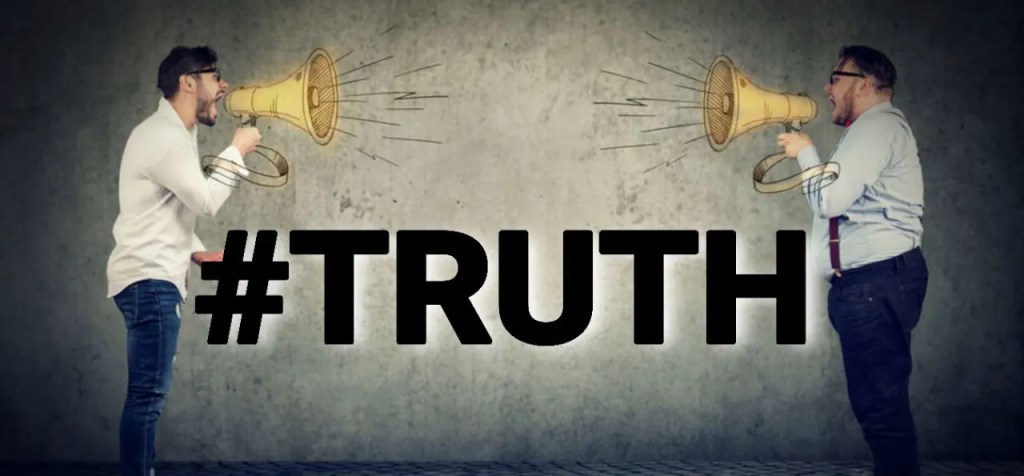
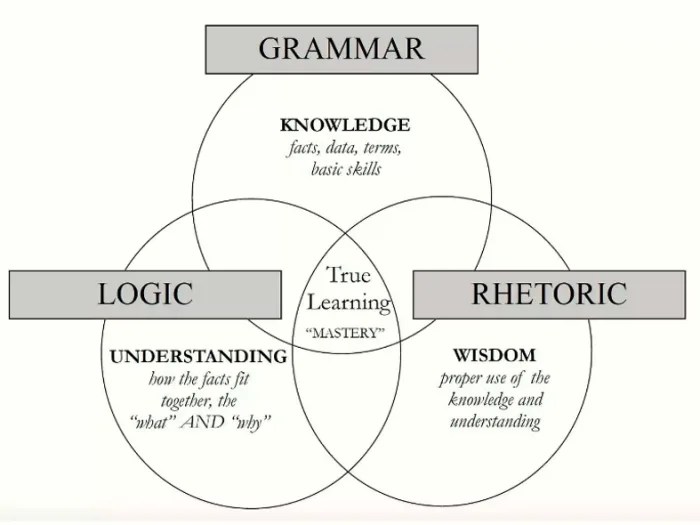


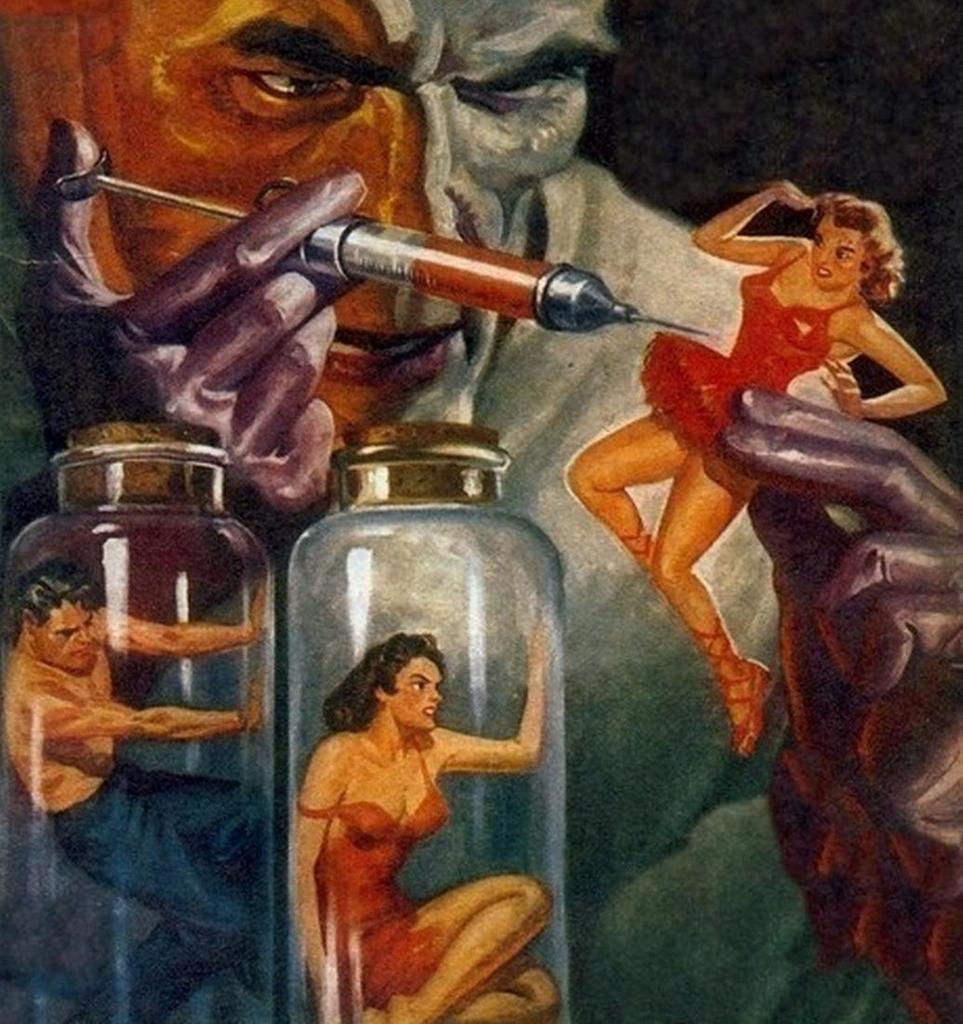
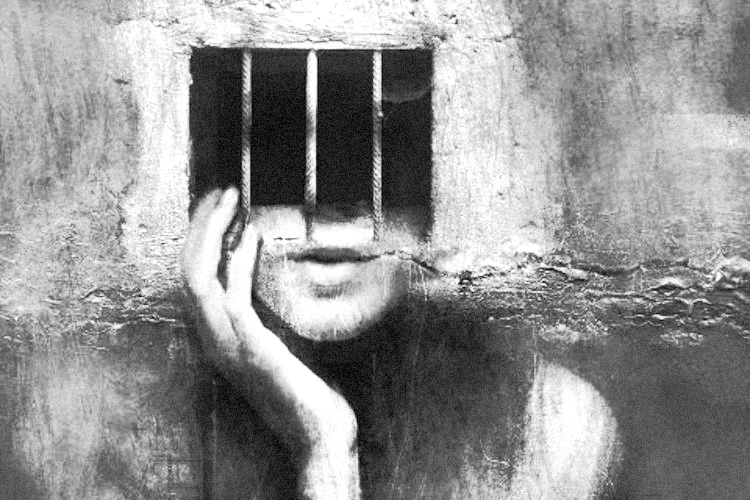
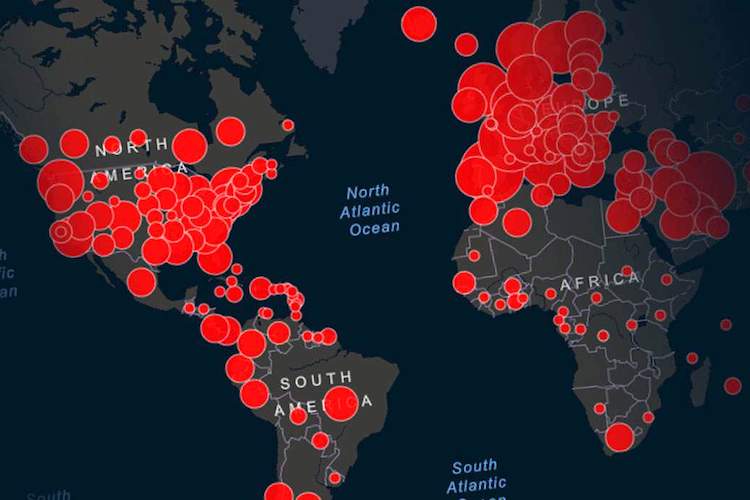
 After the Crash