The Mad Violence of Casino Capitalism

AmericanRoulette

By

Source: Counterpunch

American society is morally bankrupt and politically broken, and its vision of the future appears utterly dystopian. As the United States descends into the dark abyss of an updated form of totalitarianism, the unimaginable has become imaginable in that it has become possible not only to foresee the death of the essential principles of constitutional democracy, but also the birth of what Hannah Arendt once called the horror of dark times. The politics of terror, a culture of fear, and the spectacle of violence dominate America’s cultural apparatuses and legitimate the ongoing militarization of public life and American society.

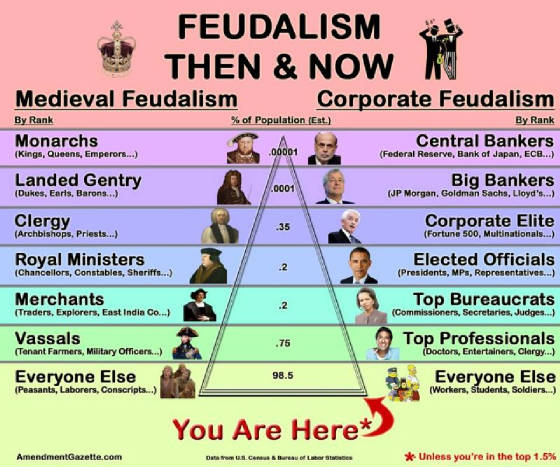
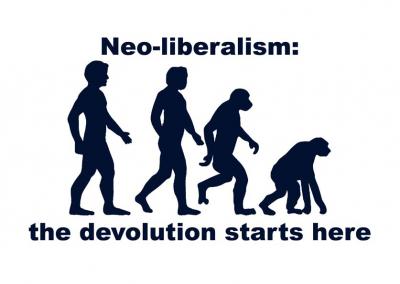
Unchecked corporate power and a massive commodification, infantilization, and depoliticization of the polity have become the totalitarian benchmarks defining American society. In part, this is due to the emergence of a brutal modern-day capitalism, or what some might call neoliberalism. This form of neoliberal capitalism is a particularly savage, cruel, and exploitative regime of oppression in which not only are the social contract, civil liberties and the commons under siege, but also the very notion of the political, if not the planet itself. The dystopian moment facing the United States, if not most of the globe, can be summed up in Fred Jameson’s contention “that it is easier to imagine the end of the world than to imagine the end of capitalism.” He goes on to say that “We can now revise that and witness the attempt to imagine capitalism by way of imagining the end of the world.”1

One way of understanding Jameson’s comment is through the ideological and affective spaces in which the neoliberal subject is produced and market-driven ideologies are normalized. Capitalism has made a virtue out of self-interest and the pursuit of material wealth and in doing so has created a culture of shattered dreams and a landscape filled with “Broken highways, bankrupt cities, collapsing bridges, failed schools, the unemployed, the underpaid and the uninsured: all suggest a collective failure of will. These shortcomings are so endemic that we no longer know how to talk about what is wrong, much less set about repairing it.”[i]

Yet, there is a growing recognition that casino capitalism is driven by a kind of mad violence and form of self-sabotage and that if it does not come to an end what we will experience in all probability is the destruction of human life and the planet itself. Certainly, more recent scientific reports on the threat of ecological disaster from researchers at the University of Washington, NASA, and the Intergovernmental Panel on Climate Change reinforce this dystopian possibility.2 The undermining of public trust and public values has now given way to a market-driven discourse that produces a society that has lost any sense of democratic vision and social purpose and in doing so resorts to state terrorism, the criminalization of social problems, and culture of cruelty. Institutions that were once defined to protect and enhance human life now function largely to punish and maim.

As Michael Yates points out throughout this book, capitalism is devoid of any sense of social responsibility and is driven by an unchecked desire to accumulate capital at all costs. As power becomes global and politics remains local, ruling elites no longer make political concessions to workers or any other group that they either exploit or consider disposable.

Security and crisis have become the new passwords for imposing a culture of fear and for imposing what Giorgio Agamben has called a permanent state of exception and a technology of government repression.[ii] A constant appeal to a state of crisis becomes the new normal for arming the police, curtailing civil liberties, expanding the punishing state, criminalizing everyday behavior, and supressing dissent. Fear now drives the major narratives that define the United States and give rise to dominant forms of power free from any sense of moral and political conviction, if not accountability.

In the midst of this dystopian nightmare, there is the deepening abyss of inequality, one that not only separates the rich from the poor, but also increasingly relegates the middle and working classes to the ranks of the precariat. Concentrations of wealth and income generate power for the financial elite and unchecked misery for most people, a fear/insecurity industry, and a growing number of social pathologies.

Michael Yates in The Great Inequality provides a road map for both understanding the registers that produce inequality as well as the magnitude of the problems it poses across a range of commanding spheres extending from health care and the political realm to the environment and education. At the same time, he exposes the myths that buttress the ideology of inequality. These include an unchecked belief in boundless economic growth, the notion that inequality is chosen freely by individuals in the market place, and the assumption that consumption is the road to happiness. Unlike a range of recent books on inequality, Yates goes beyond exposing the mechanisms that drive inequality and the panoply of commanding institutions that support it. He also provides a number of strategies that challenge the deep concentrations of wealth and power while delivering a number of formative proposals that are crucial for nurturing a radical imagination and the social movements necessary to struggle for a society that no longer equates capitalism with democracy.

As Yates makes clear throughout this book, money now engulfs everything in this new age of disposability. Moreover, when coupled with a weakening of movements to counter the generated power of capitalists, the result has been a startling increase in the influence of predatory capitalism, along with inequities in wealth, income, power, and opportunity. Such power breeds more than anti-democratic tendencies, it also imposes constraints, rules, and prohibitions on the 99 percent whose choices are increasingly limited to merely trying to survive. Capitalists are no longer willing to compromise and have expanded their use of power to dominate economic, political, and social life. For Yates, it is all the more crucial to understand how power works under the reign of global capitalism in order to grasp the magnitude of inequality, the myriad of factors that produce it, and what might be done to change it.

Accompanying the rise of a savage form of capitalism and the ever-expanding security state is the emergence of new technologies and spaces of control. One consequence is that labor power is increasing produced by machines and robotic technologies which serve to create “a large pool of more or less unemployed people.” Moreover, as new technologies produce massive pools of unused labor, it also is being used as a repressive tool for collecting “unlimited biometric and genetic information of all of its citizens.”[iii]

The ongoing attack on the working class is matched by new measures of repression and surveillance. This new weaponized face of capitalism is particularly ominous given the rise of the punishing state and the transformation of the United States from a democracy in progress to a fully developed authoritarian society.   Every act of protest is now tainted, labeled by the government and mainstream media as either treasonous or viewed as a potential act of terrorism. For example, animal rights activists are put on the terrorist list. Whistleblowers such as Edward Snowden are painted as traitors. Members of the Black Lives Matter movement are put under surveillance,[iv] all electronic communication is now subject to government spying, and academics who criticize government policy are denied tenure or worse.

Under neoliberalism, public space is increasingly converted into private space undermining those sphere necessary for developing a viable sense of social responsibility, while also serving to transform citizenship into mostly an act of consumption. Under such circumstances, the notion of crisis is used both to legitimate a system of economic terrorism as well as to accentuate an increasing process of depoliticization. Within this fog of market induced paralysis, language is subject to the laws of capitalism, reduced to a commodity, and subject to the “tyranny of the moment….emaciated, impoverished, vulgarized and squeezed out of the meanings it was resumed to carry.”[v]

As the latest stage of predatory capitalism, neoliberalism is part of a broader economic and political project of restoring class power and consolidating the rapid concentration of capital, particularly financial capital.[vi] As a political project it includes “the deregulation of finance, privatization of public services, elimination and curtailment of social welfare programs, open attacks on unions, and routine violations of labor laws.”[vii] As an ideology, it casts all dimensions of life in terms of market rationality, construes profit making as the arbiter and essence of democracy, consuming as the only operable form of citizenship, and upholds the irrational belief that the market can both solve all problems and serve as a model for structuring all social relations. As a mode of governance, it produces identities, subjects, and ways of life driven by a survival-of-the fittest-ethic, grounded in the idea of the free, possessive individual, and committed to the right of ruling groups and institutions to exercise power removed from matters of ethics and social costs. As a policy and political project, it is wedded to the privatization of public services, the dismantling of the connection of private issues and public problems, the selling off of state functions, liberalization of trade in goods and capital investment, the eradication of government regulation of financial institutions and corporations, the destruction of the welfare state and unions, and the endless marketization and commodification of society.

Nothing engenders the wrath of conservatives more than the existence of the government providing a universal safety net, especially one that works, such as either Medicare or Social Security. As Yates points out, government is viewed by capitalists as an institution that gets in the way of capital. One result is a weakening of social programs and provisions. As Paul Krugman observes regarding the ongoing conservative attacks on Medicare, “The real reason conservatives want to do away with Medicare has always been political: It’s the very idea of the government providing a universal safety net that they hate, and they hate it even more when such programs are successful.”[viii] In opposition to Krugman and other liberal economists, Michael Yates argues rightly in this book that the issue is not simply preserving Medicare but eliminating the predatory system that disavows equality of wealth, power, opportunity, and health care for everyone.

Neoliberalism has put an enormous effort into creating a commanding cultural apparatus and public pedagogy in which individuals can only view themselves as consumers, embrace freedom as the right to participate in the market, and supplant issues of social responsibility for an unchecked embrace of individualism and the belief that all social relation be judged according to how they further one’s individual needs and self-interests. Matters of mutual caring, respect, and compassion for the other have given way to the limiting orbits of privatization and unrestrained self-interest, just as it is has become increasingly difficult to translate private troubles into larger social, economic, and political considerations. One consequence is that it has become more difficult for people to debate and question neoliberal hegemony and the widespread misery it produces for young people, the poor, middle class, workers, and other segments of society– now considered disposable under neoliberal regimes which are governed by a survival-of-the fittest ethos, largely imposed by the ruling economic and political elite. Unable to make their voices heard and lacking any viable representation in the process makes clear the degree to which the American public, in particular, are suffering under a democratic deficit producing a profound dissatisfaction that does not always translate into an understanding of how neoliberal capitalism has destroyed democracy or what it might mean to understand and challenge its diverse apparatuses of persuasion and power. Clearly, the surge of popularity behind the presidential candidacy of a buffoon such as Donald Trump testifies to both a deep seated desire for change and the forms it can take when emotion replaces reason and any viable analysis of capitalism and its effects seem to be absent from a popular sensibility.

What Michael Yates makes clear in this incisive book on inequality is that democratic values, commitments, integrity, and struggles are under assault from a wide range of sites in an age of intensified violence and disposability. Throughout the book he weaves a set of narratives and critiques in which he lays bare the anti-democratic tendencies that are on display in a growing age of lawlessness and disposability. He not only makes clear that inequality is not good for the economy, social bonds, the environment, politics, and democracy, Yates also argues that capitalism in the current historical moment is marked by an age that thrives on racism, xenophobia, the purported existence of an alleged culture of criminality, and a massive system of inequality that affects all aspects of society. Worth repeating is that at the center of this book, unlike so many others tackling inequality, is an attempt to map a number of modalities that give shape and purpose to widespread disparities in wealth and income, including the underlying forces behind inequality, how it works to secure class power, how it undermines almost every viable foundation needed for a sustainable democracy, and what it might mean to develop a plan of action to produce the radical imagination and corresponding modes of agency and practice that can think and act outside of the reformist politics of capitalism.

Unlike so many other economists such as Paul Krugman and Joseph Stiglitz who address the issue of inequality, Yates refuses the argument that the system is simply out of whack and can be fixed. Nor does he believe that capitalism can be described only in terms of economic structures. Capitalism is both a symbolic pathological economy that produces particular dispositions, values, and identities as well as oppressive institutional apparatuses and economic structures. Yates goes even further arguing that capitalism is not only about authoritarian ideologies and structures, it is also about the crisis of ideas, agency, and the failure of people to react to the suffering of others and to the conditions of their own oppression. Neoliberal capitalism has no language for human suffering, moral evaluation, and social responsibility. Instead, it creates a survival-of-the fittest ethos buttressed by a discourse that is morally insensitive, sadistic, cannibalistic, and displays a hatred of those whose labor cannot be exploited, do not buy into the consumerist ethic, or are considered other by virtue of their race, class, and ethnicity. Neoliberalism is the discourse of shadow games, committed to highlighting corporate power and making invisible the suffering of others, all the while leaving those considered disposable in the dark to fend for themselves.

Yates makes visible not only the economic constraints that bear down on the poor and disposable in the neoliberal age of precarity, he also narrates the voices, conditions, hardships and suffering workers have to endure in a variety of occupations ranging from automobile workers and cruise ship workers to those who work in restaurants and as harvester on farms. He provides a number of invaluable statistics that chart the injuries of class and race under capitalism but rather than tell a story with only statistics and mind boggling data, he also provides stories that give flesh to the statistics that mark a new historical conjuncture and a wide range of hardships that render work for most people hell and produce what has been called the hidden injuries of class. Much of what he writes is informed by a decade long research trip across the United States in which he attempted to see first-hand what the effects of capitalism have been on peoples’ lives, the environment, work, unions, and other crucial spheres that inform everyday life. His keen eye is particularly riveting as he describes his teaming up with Cesar Chavez and the United Farm Workers in the 1970s and his growing disappointment with a union that increasingly betrayed its own principles.

For Yates, the capitalist system is corrupt, malicious, and needs to be replaced. Capitalism leaves no room for the language of justice, the social, or, for that matter, democracy itself. In fact, one of its major attributes is to hide its effects of power, racial injustice, militarized state violence, domestic terrorism, and new forms of disposability, especially regarding those marginalized by class and race. The grotesque inequalities produced by capitalism are too powerful, deeply rooted in the social and economic fabric, and unamenable to liberal reforms.  Class disparities constitute a machinery of social death, a kind of zombie-like machine that drains life out of most of the population poisoning both existing and future generations.

The politics of disposability has gone mainstream as more and more individuals and groups are now considered surplus and vulnerable, consigned to zones of abandonment, surveillance, and incarceration. At one level, the expansive politics of disposability can be seen in the rising numbers of homeless, the growing army of debt-ridden students, the increasingly harsh treatment of immigrants, the racism that fuels the school-to-prison pipeline, and the growing attack on public servants. On another level, the politics of disposability has produced a culture of lawlessness and cruelty evident by the increasing rollback of voting rights, the war waged against women’s reproductive rights, laws that discriminate against gays, the rise of the surveillance state, and the growing militarization of local police forces. Yates argues convincingly that there is a desperate need for a new language for politics, solidarity, shared responsibilities, and democracy itself. Yates sees in the now largely departed Occupy Movement an example of a movement that used a new discourse and set of slogans to highlight inequality, make class inequities visible, and to showcase the workings of power in the hands of the financial elite. For Yates, Occupy provided a strategy that can be and is being emulated by a number of groups, especially those emerging in the black community in opposition to police violence. Such a strategy begins by asking what a real democracy looks like and how does it compare to the current society in which we live. One precondition for individual and social agency is that the horizons for change must transcend the parameters of the existing society, and the future must be configured in such a way as to not mimic the present.

What is remarkable about The Great Inequality is that Yates does not simply provide a critique of capitalism in its old and new forms, he also provides a discourse of possibility developed around a number of suggested policies and practices designed to not reform capitalism but to abolish it. This is a book that follows in the manner of Dr. Martin Luther King’s call to break the silence. In it Yates functions as a moral witness in reporting on the hardships and suffering produced by grotesque forms of inequality. As such, he reveals the dark threats that capitalism in its ruthlessly updated versions poses to the planet. Yet, his narrative is never far from either hope or a sense that there is a larger public for whom his testimony matters and that such a public is capable of collective resistance. The Great Inequality also serves to enliven the ethical imagination, and speak out for those populations now considered outcast and voiceless. Yates provides a furious reading of inequality and the larger structure of capitalism. In doing so he exhibits a keen and incisive intellect along with a welcomed sense of righteous fury.

Notes.

[i] Tony Judt, Ill Fares the Land, (New York, N.Y.: The Penguin Press, 2010), p. 12.

[ii] Giorgio Agamben, “The Security State and a theory of destituent power,” Philosophers for Change, (February 25, 2014). Online:

The security state and a theory of destituent power

[iii] Ibid., Agamben, “The Security State and a theory of destituent power,”

[iv] George Joseph, “Exclusive: feds regularly monitored black lives matter since ferguson,” Intercept (July 24, 2015). Online: https://firstlook.org/theintercept/2015/07/24/documents-show-department-homeland-security-monitoring-black-lives-matter-since-ferguson/; Deirdre Fulton, “Exposed: Big Brother Targets Black Lives:Government spying can be an ‘effective way to chill protest movements,’ warns Center for Constitutional Rights,” CommonDreams (July 24, 2015). Online: http://www.commondreams.org/news/2015/07/24/exposed-big-brother-targets-black-lives

[v] Zygmunt Bauman and Leonidas Donskis, Moral Blindness: The loss of Sensitivity in Liquid Modernity, (Cambridge, UK: Polity Press, 2013), p. 46.

[vi] I have taken up the issue of neoliberalism extensively in Henry A. Giroux, Against the Terror of Neoliberalism (Boulder: Paradigm, 2008) . See also, David Harvey, A Brief History of Neoliberalism (New York: Oxford University Press, 2007); Manfred B. Steger and Ravi K. Roy, Neoliberalism: A Very Short Introduction (New York: Oxford University Press, 2010); Gerad Dumenil and Dominique Levy, The Crisis of Neoliberalism (Cambridge: Harvard University Press, 2011). Henry A. Giroux, Twilight of the Social (Boulder: Paradigm, 2013); Henry A. Giroux, and in Against the Violence of Organized Forgetting: Beyond America’s Disimagination Machine (San Francisco: City Lights, 2014);

Wendy Brown, Undoing the Demos: Neoliberalism’s Stealth Revolution (Cambridge: Zone Books 2015).

[vii] Michael D. Yates, “Occupy Wall Street and the Significance of Political Slogans,” Counterpunch, (February 27, 2013). Online:http://www.counterpunch.org/2013/02/27/occupy-wall-street-and-the-significance-of-political-slogans/

[viii] Paul Krugman, “Zombies Against Medicare,” New York Times (July 27, 2015). Online: http://www.nytimes.com/2015/07/27/opinion/zombies-against-medicare.html?_r=0

This essay is excerpted from the introduction to The Great Inequality by Michael D. Yates.

Henry A. Giroux currently holds the McMaster University Chair for Scholarship in the Public Interest in the English and Cultural Studies Department and a Distinguished Visiting Professorship at Ryerson University. His most recent books are America’s Education Deficit and the War on Youth (Monthly Review Press, 2013) and Neoliberalism’s War on Higher Education (Haymarket Press, 2014). His web site is www.henryagiroux.com.

The US economy has not recovered and will not recover

6a00d83451d87169e2014e8c142d89970d

By Paul Craig Roberts

Source: Intrepid Report

The US economy died when middle class jobs were offshored and when the financial system was deregulated.

Jobs offshoring benefitted Wall Street, corporate executives, and shareholders, because lower labor and compliance costs resulted in higher profits. These profits flowed through to shareholders in the form of capital gains and to executives in the form of “performance bonuses.” Wall Street benefitted from the bull market generated by higher profits.

However, jobs offshoring also offshored US GDP and consumer purchasing power. Despite promises of a “New Economy” and better jobs, the replacement jobs have been increasingly part-time, lowly-paid jobs in domestic services, such as retail clerks, waitresses and bartenders.

The offshoring of US manufacturing and professional service jobs to Asia stopped the growth of consumer demand in the US, decimated the middle class, and left insufficient employment for college graduates to be able to service their student loans. The ladders of upward mobility that had made the United States an “opportunity society” were taken down in the interest of higher short-term profits.

Without growth in consumer incomes to drive the economy, the Federal Reserve under Alan Greenspan substituted the growth in consumer debt to take the place of the missing growth in consumer income. Under the Greenspan regime, Americans’ stagnant and declining incomes were augmented with the ability to spend on credit. One source of this credit was the rise in housing prices that the Federal Reserve’s low interest rate policy made possible. Consumers could refinance their now higher-valued home at lower interest rates and take out the “equity” and spend it.

The debt expansion, tied heavily to housing mortgages, came to a halt when the fraud perpetrated by a deregulated financial system crashed the real estate and stock markets. The bailout of the guilty imposed further costs on the very people that the guilty had victimized.

Under Fed Chairman Bernanke, the economy was kept going with Quantitative Easing, a massive increase in the money supply in order to bail out the “banks too big to fail.” Liquidity supplied by the Federal Reserve found its way into stock and bond prices and made those invested in these financial instruments richer. Corporate executives helped to boost the stock market by using the companies’ profits and by taking out loans in order to buy back the companies’ stocks, thus further expanding debt.

Those few benefitting from inflated financial asset prices produced by Quantitative Easing and buy-backs are a much smaller percentage of the population than was affected by the Greenspan consumer credit expansion. A relatively few rich people are an insufficient number to drive the economy.

The Federal Reserve’s zero interest rate policy was designed to support the balance sheets of the mega-banks and denied Americans interest income on their savings. This policy decreased the incomes of retirees and forced the elderly to reduce their consumption and/or draw down their savings more rapidly, leaving no safety net for heirs.

Using the smoke and mirrors of under-reported inflation and unemployment, the US government kept alive the appearance of economic recovery. Foreigners fooled by the deception continue to support the US dollar by holding US financial instruments.

The official inflation measures were “reformed” during the Clinton era in order to dramatically understate inflation. The measures do this in two ways. One way is to discard from the weighted basket of goods that comprises the inflation index those goods whose price rises. In their place, inferior lower-priced goods are substituted.

For example, if the price of New York strip steak rises, round steak is substituted in its place. The former official inflation index measured the cost of a constant standard of living. The “reformed” index measures the cost of a falling standard of living.

The other way the “reformed” measure of inflation understates the cost of living is to discard price rises as “quality improvements.” It is true that quality improvements can result in higher prices. However, it is still a price rise for the consumer as the former product is no longer available. Moreover, not all price rises are quality improvements; yet many prices rises that are not can be misinterpreted as “quality improvements.”

These two “reforms” resulted in no reported inflation and a halt to cost-of-living adjustments for Social Security recipients. The fall in Social Security real incomes also negatively impacted aggregate consumer demand.

The rigged understatement of inflation deceived people into believing that the US economy was in recovery. The lower the measure of inflation, the higher is real GDP when nominal GDP is deflated by the inflation measure. By understating inflation, the US government has overstated GDP growth.

What I have written is easily ascertained and proven; yet the financial press does not question the propaganda that sustains the psychology that the US economy is sound. This carefully cultivated psychology keeps the rest of the world invested in dollars, thus sustaining the House of Cards.

John Maynard Keynes understood that the Great Depression was the product of an insufficiency of consumer demand to take off the shelves the goods produced by industry. The post-WW II macroeconomic policy focused on maintaining the adequacy of aggregate demand in order to avoid high unemployment. The supply-side policy of President Reagan successfully corrected a defect in Keynesian macroeconomic policy and kept the US economy functioning without the “stagflation” from worsening “Philips Curve” trade-offs between inflation and employment. In the 21st century, jobs offshoring has depleted consumer demand’s ability to maintain US full employment.

The unemployment measure that the presstitute press reports is meaningless as it counts no discouraged workers, and discouraged workers are a huge part of American unemployment. The reported unemployment rate is about 5%, which is the U-3 measure that does not count as unemployed workers who are too discouraged to continue searching for jobs.

The US government has a second official unemployment measure, U-6, that counts workers discouraged for less than one-year. This official rate of unemployment is 10%.

When long term (more than one year) discouraged workers are included in the measure of unemployment, as once was done, the US unemployment rate is 23%. (See John Williams, shadowstats.com)

Fiscal and monetary stimulus can pull the unemployed back to work if jobs for them still exist domestically. But if the jobs have been sent offshore, monetary and fiscal policy cannot work.

What jobs offshoring does is to give away US GDP to the countries to which US corporations move the jobs. In other words, with the jobs go American careers, consumer purchasing power and the tax base of state, local, and federal governments. There are only a few American winners, and they are the shareholders of the companies that offshored the jobs and the executives of the companies who receive multi-million dollar “performance bonuses” for raising profits by lowering labor costs. And, of course, the economists, who get grants, speaking engagements, and corporate board memberships for shilling for the offshoring policy that worsens the distribution of income and wealth. An economy run for a few only benefits the few, and the few, no matter how large their incomes, cannot consume enough to keep the economy growing.

In the 21st century US economic policy has destroyed the ability of real aggregate demand in the US to increase. Economists will deny this, because they are shills for globalism and jobs offshoring. They misrepresent jobs offshoring as free trade and, as in their ideology, free trade benefits everyone, claim that America is benefitting from jobs offshoring. Yet, they cannot show any evidence whatsoever of these alleged benefits. (See my book, The Failure of Laissez Faire Capitalism and Economic Dissolution of the West.)

As an economist, it is a mystery to me how any economist can think that a population that does not produce the larger part of the goods that it consumes can afford to purchase the goods that it consumes. Where does the income come from to pay for imports when imports are swollen by the products of offshored production?

We were told that the income would come from better-paid replacement jobs provided by the “New Economy,” but neither the payroll jobs reports nor the US Labor Department’s projections of future jobs show any sign of this mythical “New Economy.”

There is no “New Economy.” The “New Economy” is like the neoconservatives promise that the Iraq war would be a six-week “cake walk” paid for by Iraqi oil revenues, not a $3 trillion dollar expense to American taxpayers (according to Joseph Stiglitz and Linda Bilmes) and a war that has lasted the entirety of the 21st century to date, and is getting more dangerous.

The American “New Economy” is the American Third World economy in which the only jobs created are low productivity, low paid nontradable domestic service jobs incapable of producing export earnings with which to pay for the goods and services produced offshore for US consumption.

The massive debt arising from Washington’s endless wars for neoconservative hegemony now threaten Social Security and the entirety of the social safety net. The presstitute media are blaming not the policy that has devastated Americans, but, instead, the Americans who have been devastated by the policy.

Earlier this month I posted readers’ reports on the dismal job situation in Ohio, Southern Illinois, and Texas. In the March issue of Chronicles, Wayne Allensworth describes America’s declining rural towns and once great industrial cities as consequences of “globalizing capitalism.” A thin layer of very rich people rule over those “who have been left behind”—a shrinking middle class and a growing underclass. According to a poll last autumn, 53 percent of Americans say that they feel like strangers in their own country.

Most certainly these Americans have no political representation. As Republicans and Democrats work to raise the retirement age in order to reduce Social Security outlays, Princeton University experts report that the mortality rates for the white working class are rising. The US government will not be happy until no one lives long enough to collect Social Security.

The United States government has abandoned everyone except the rich.

In the opening sentence of this article, I said that the two murderers of the American economy were jobs offshoring and financial deregulation. Deregulation greatly enhanced the ability of the large banks to financialize the economy. Financialization is the diversion of income streams into debt service. When debt service absorbs a large amount of the available income, the economy experiences debt deflation. The service of debt leaves too little income for purchases of goods and services and prices fall.

Michael Hudson, whom I recently wrote about, is the expert on financialization. His book, Killing the Host, which I recommended to you, tells the complete story. Briefly, financialization is the process by which creditors capitalize an economy’s economic surplus into interest payments to themselves. Perhaps an example would be a corporation that goes into debt in order to buy back its shares. The corporation achieves a temporary boost in its share prices at the cost of years of interest payments that drain the corporation of profits and deflate its share price.

Michael Hudson stresses the conversion of the rental value of real estate into mortgage payments. He emphasizes that classical economists wanted to base taxation not on production, but on economic rent. Economic rent is value due to location or to a monopoly position. For example, beachfront property has a higher price because of location. The difference in value between beachfront and non-beachfront property is economic rent, not a produced value. An unregulated monopoly can charge a price for a service that is higher than the price that would bring that service unto the market.

The proposal to tax economic rent does not mean taxing you on the rent that you pay your landlord or taxing your landlord on the rent that you pay him such that he ceases to provide the housing. By economic rent Hudson means, for example, the rise in land values due to public infrastructure projects such as roads and subway systems. The rise in the value of land opened by a new road and housing and in commercial space along a new subway line is not due to any action of the property owners. This rise in value could be taxed in order to pay for the project instead of taxing the income of the population in general. Instead, the rise in land values raises appraisals and the amount that creditors are willing to lend on the property. New purchasers and existing owners can borrow more on the property, and the larger mortgages divert the increased land valuation into interest payments to creditors. Lenders end up as the major beneficiaries of public projects that raise real estate prices.

Similarly, unless the economy is financialized to such an extent that mortgage debt can no longer be serviced, when central banks lower interest rates property values rise, and this rise can be capitalized into a larger mortgage.

Another example would be property tax reductions and legislation such as California’s Proposition 13 that freeze in whole or part the property tax base. The rise in real estate values that escape taxation are capitalized into larger mortgages. New buyers do not benefit. The beneficiaries are the lenders who capture the rise in real estate prices in interest payments.

Taxing economic rent would prevent the financial system from capitalizing the rent into debt instruments that pay interest to the financial sector. Considering the amount of rents available to be taxed, taxing rents would free production from income and sales taxation, thus lowering consumer prices and freeing labor and productive capital from taxation.

With so much of land rent already capitalized into debt instruments shifting the tax burden to economic rent would be challenging. Nevertheless, Hudson’s analysis shows that financialization, not wage suppression, is the main instrument of exploitation and takes place via the financial system’s conversion of income streams into interest payments on debt.

I remember when mortgage service was restricted to one-quarter of household income. Today mortgage service can eat up half of household income. This extraordinary growth crowds out the production of goods and services as less of household income is available for other purchases.

Michael Hudson and I bring a total indictment of the neoliberal economics profession, “junk economists” as Hudson calls them.

Financial turmoil and increasing risks of a severe worldwide economic recession in 2016-17

images

By Rodrigue Tremblay

Source: Dissident Voice

“May you live in interesting times.”—Popular curse, purported to be a translation of a traditional Chinese curse

“The sources of deflation are not a mystery. Deflation is in almost all cases a side effect of a collapse of aggregate demand—a drop in spending so severe that producers must cut prices on an ongoing basis in order to find buyers. Likewise, the economic effects of a deflationary episode, for the most part, are similar to those of any other sharp decline in aggregate spending—namely, recession, rising unemployment, and financial stress.”—Ben S. Bernanke (1953- ), on November 21, 2002

“I’m about to repeat what I said at this time last year and the year before . . . Sooner or later a crash is coming and it may be terrific. The vicious circle will get in full swing and the result will be a serious business depression. There may be a stampede for selling which will exceed anything that the Stock Exchange has ever witnessed. Wise are those investors who now get out of debt.”—Roger Babson (1875-1967), on September 5, 1929

The onset of 2016 has been most chaotic for global financial markets with, so far, a severe stock market correction. As a matter of fact, the first month of 2016 has witnessed the most severe drop in financial stocks ever, with the MSCI All-Country World Stock Index, which measures major developed and emerging stock markets, dropping more than 20 percent, as compared to early 2015. For sure, there will be oversold rallies in the coming weeks and months, but one can expect more trouble ahead.

Many commentators are saying that the epicentre of this unfolding financial and economic crisis is in China, with the Shanghai Composite Index beginning to plummet at the beginning of the year. In my view, reality is more complex and even though China’s financial and economic problems are contributing to the collapse in commodity prices, the epicenter of the crisis is still in Washington D.C.

That is because the current unfolding crisis is essentially a continuation of the 2007-08 financial crisis which has been temporarily suspended and pushed into the future by the U.S. central bank, the Fed, with its aggressive and unorthodox monetary policy of multiple rounds of quantitative easing (QE), i.e., buying huge quantities of financial assets from commercial mega-banks and other institutions, including mortgage-backed securities, with newly created money. As a consequence, the Fed’s balance sheet went from a little more than one trillion dollars in 2008 to some four and a half trillion dollars when the quantitative easing program was ended in October 2014. Other central banks have followed the Fed example, especially the central bank of Japan and the European central bank, which also adopted quantitative easing policies in monetizing large amounts of financial assets.

Why did the Bernanke Fed adopt such an aggressive monetary policy in 2008? Essentially for three reasons: First, the lame-duck Bush administration in 2008 was clueless about what to do with the financial crisis that had started with the de facto failure of Bear Stearns in the spring of 2008 and of Merrill Lynch in early September 2008, culminating on September 15, 2008, with the failure of the large global investment bank of Lehman Brothers. So the U.S. central bank felt that it had to step in. In fact, it financed the merger of the two first failed mega-banks with the JPMorgan Chase bank and the Bank of America respectively. (For different reasons, it did not intervene in the same way when the Lehman Brothers bank failed.)

Secondly, bankers who have a huge influence in the way the Fed is managed did not want the U.S. government to nationalize the American mega-banks in financial difficulties, as it had done in 1989 when the George H.W. Bush administration established the government-owned Resolution Trust Corporation (RTC) to take over some 747 insolvent savings and loans thrift banks.

Thirdly, the Bernanke Fed was very worried that the 2007-08 banking crisis would lead to a Japanese-style deflation that would wreak havoc with an overleveraged economy. The hope was to avoid a devastating debt-deflation economic depression like the one suffered in the 1930s.

By injecting so much liquidity in the system, the Bernanke Fed created a gigantic financial bubble in stocks and bonds, even though the real economy has grown at a somewhat languishing 2 percent growth rate. Stock prices went into the stratosphere while interest rates fell as bond prices rose. Last December 16, the Fed announced officially that it will no longer blow into the financial balloons and that it was raising short-term interest rates for the first time since the financial crisis, setting the target range for the federal funds rate to between 1/4 to 1/2 percent. This was a signal that the financial party was over. And what’s more, this means that the stock market and the bond market will once again go in different directions, as a reflection of the state of the real economy, no matter what the Fed does.

Since 2008, the U.S. Fed has painted itself into a financial corner from which I personally felt it would be difficult to extricate itself. Indeed, it would be extremely difficult to correct the financial bubbles it has created—as an unintended consequence of salvaging the mega-banks in creating trillions of free money—without damaging the real economy of production and employment. If global stock markets collapse and if price deflation accelerates, making it more difficult to service the debt of consumers, corporations, and government alike, a repeat on a larger scale of what has happened in Japan over the last twenty-five years can be feared. This, at the very least, could lead to a global economic recession in 2016-17. If we go back in history, it could also be a repeat of the 1937-38 crash and recession, eight years after the crash and financial crisis of 1929-32.

One thing can be made clear: The creation of the Fed in 1913, as a semi-public American central bank, has not prevented the occurrence of financial crises. It has, however, been a boon to large banks because it has served as an instrument to socialize their losses.

Stay tuned.


Dr. Rodrigue Tremblay is an international economist and author, whose last two books are The Code for Global Ethics, Prometheus Books, 2010; and The New American Empire, Infinity Publishing, 2003. He can be reached at: rodrigue.tremblay@yahoo.com.


Leviathan and Behemoth

images

By Chris Shaw

Source: Center for a Stateless Society

Introduction

The capitalist economy has gone through another shock, and the potential for another, larger one is on the horizon. While it’s seemingly in its death throes, capitalism continues to fuel growth. Under such a system we have seen a vast improvement in general living standards across the globe, despite rigged markets and the omnipresent power of the state. However, who is this growth for? While absolute poverty has been rolled back, and in many Western nations completely eliminated, we still see a large, indebted underclass, a Global South regularly sold out to the interests of capital and a system of vast wealth that only seems accessible to a privileged few. Economists may say that if we look at BRIC countries we see an equalisation of wealth and growth with the West, but these BRIC markets are used as cogs in a hegemonic state-corporate machine. Third World entrepreneurship isn’t encouraged, but rather sidelined for corporate dominance. This is a system that needs to end. The debt economy, big government, the corporate-state partnership and modern globalisation all need to end. In their place we need truly free markets, where cooperation and exchange are paramount and aren’t controlled by corporate or government interests.

Our neoliberal society is composed of corporate hegemony backed by state power. By corporate hegemony I mean the power modern capital has over governance. This isn’t just found within corporations, but within guild-like occupational boards (Lawyers and Doctors and their licencing requirements) and corporate trade unions that support the maintenance of wage labour at the expense of worker independence from the structure of capital. Any markets we see are rigged in favour of corporate interests. The major monopolies of government control make sure that markets are a tool of big business and the ability of workers to break free from this paradigm is limited if not impossible. The entry barriers to markets, the restrictions on self-employment and the continued lobbying of government for patronage and favourable legislation leads to a corrupt, crony system that relies on the indenture of the poor in favour of employers and business.

There are many libertarians who unfortunately see this system as just and fair. They see sweatshop labour as an excellent solution to Third World poverty. The idea of growth is given religious prescience, without realising cultural antecedents and the importance of community within the realm of the individual. They don’t understand the power dynamics at play, and the continued collusion of corporate and state interests. They fail to see the monopolisation of social institutions and the commodification of culture and life. The destruction of livelihoods all in the name of GDP growth. This is not a free market, but rather capitalism at work. To move away from this we need to understand that free, or freed, markets are economic organisations free from coercive control, where the individual and community are the key players and profit is not reliant on its exploitative features, but rather the ability to meet real demand.

We need to look at the current capitalist system from the anarchist perspective that I put forward in this paper. Modern capitalism is a state-based system, reliant on enforced hierarchies and the provision of false choice. Real choice would confer power on individuals and communities, while under today’s system real choice is in the hands of bureaucrats and corporate oligarchies. Chartier’s definitions of capitalism, “capitalism: an economic system that features a symbiotic relationship between big business and government”[1] and “capitalism: rule—of workplaces, society, and (if there is one) the state—by capitalists (that is, by a relatively small number of people who control investable wealth and the means of production)”[2] shines light on this conception. Rather than capitalism being a system of free markets as posited by some libertarians (Block, Mises, Hayek, etc.) it is instead a system reliant on big government and its institutions and the control of said institutions via capital.

The vulgar libertarians who view the capitalist economy as some form of free market do not understand the forms of power present. If a worker wants to start a collectively-owned business, can he? Not without huge capital requirements and regulatory hoops to jump through. How about setting up a mutual credit system with a different currency? Well there are legal tender laws that in the United State are enforced with more brutality than the punishments given for heinous crimes[3]. When talking of free markets, we need to understand that freedom is only relative to where the power lies. If it lies with the state and its subsidiaries, then freedom is conferred on large employers and corporate unions whom receive forms of state funding and favourable regulation. If it lay with individuals and communities, we would most likely see a move away from one-size-fits-all regulation, the processes of commodification through rentierism and arbitrary entry barriers.

The Regulatory Apparatus

The regulatory apparatuses found within the economy also benefit the capitalist structure. While generally seen as a bulwark against corporate power, the regulations found in an economy create entry barriers to markets and a form of implicit subsidy to big business, as these businesses rent-seek government for more regulation, allowing for a monopoly within particular economic sectors. We can see in the banking, energy, manufacturing and retail sectors that this is the case. Childs noted this in relation to the development of monopoly power in American business during the late 19th and early 20th centuries. He states “this, then, was the basic context of big business; these were the problems that it faced. How did it react? Almost unanimously, it turned to the power of the state to get what it could not get by voluntary means”[4]. In particular Childs saw this occurring in the rail industry in America during the late 19th century. Massive competition had begun in the rail industry, which massively sunk profits for established companies and encouraged many start ups and smaller competitors. As large rail companies weren’t competitive enough in this environment, they came to rely on government intervention, where regulatory boards were created staffed mostly by executives from the large rail companies.

This is what regulation is really about. It isn’t a way of protecting the hapless consumer from the ravages of a free market, but is rather a tool of corporate power that forms entry barriers and enforces particular dichotomies of ownership and organisation in an economy. Capitalism becomes a system of patronage, where corporations gain favour due to their money and power, which itself comes from the state in the first place. As Paul notes “the rich are more than happy to secure for themselves a share of the loot – for example, in the form of subsidised low-interest loans…bailouts when their risky loans go sour, or regulatory schemes that hurt their smaller competitors”[5]. Rifkin shows a similar process, describing how “the critical industries that made up the infrastructure…banded together in a mega lobby to ensure…financial underwriting, as well as industry-friendly codes, regulations, and standards to ensure market success”[6].

The regulatory apparatuses also have the effect of distorting economies of scale, decoupling supply from demand and favouring largesse in business and ownership models. Thus we see the development of high overhead costs which restrict market entry to best capitalised of entrepreneurs. By limiting competition, we see perverse operations occurring that favour the interests of business over the worker and consumer. Thus things like planned obsolescence, guaranteed markets and a continuation of private gain and socialised loss. As had been noted by Childs, private cartels were difficult to maintain. Even the rail trusts, themselves built in contrived, government-produced markets, were ravaged by competition from smaller rail providers[7] that favoured more local economies of scale. So these corporations looked to the government, who enshrined their demands into acts and legislation which created cartels that were much more easily enforced. We just need to look where wage laws, licensure laws and planning/zoning laws are coming from and who lobbies for them. Invariably its dome by corporations and their lobbying arms. We also forms of legal privilege, as in the case of limited liability and corporate personhood, which are really only accessible with very high capital costs and a developed shareholder clientele. These systems are purely artificial, and whether they would work voluntarily is not the question. Rather it is, if they are efficient, why do they need the government to provide these privileges and apparatuses. The answer is simple, they aren’t efficient.

Even when there are laws supposedly to ameliorate the effects of marketisation, as in the case of welfare and government-provided services, they are usually built on the back of resilient communities who developed their own systems, and usually end up allowing employers to pay subpar wages and benefits and lessen the strength of community relations. It builds layers onto a poor foundation. Or to put it another way, the corporate-state nexus is putting a cinderblock on toothpicks. Bureaucrats don’t fully understand the problem with this but realise it is unstable. So to stabilise it, they put more toothpicks under the cinderblock, thinking it will stabilise. However, the system is inherently unstable and propping it up denies the inevitable.

This assurance of market success shows that under a truly free market they wouldn’t exist, or if they did it would be on a much smaller scale. The regulatory web is just another power dynamic that allows for capture and control. To describe this as a free market is laughable. These processes are completely involuntary, reliant on extortion through taxation and allow for the redistribution of wealth from the poor and middle class to the rich and privileged.

The Money Monopoly

While regulation, which “far from coming against the wishes of the regulated interests, was openly welcomed by them in nearly every case”[8], is an important part of the corporate state, the original four legal monopolies (as identified by Tucker), money, land, tariffs and patents, allowed for the development of rent-seeking corporations. These four monopolies, or as I see them structural monopolies as they create the structure of the socio-economic paradigm, are fundamentals of capitalism.

The money monopoly allows for the restriction of credit and the development of debt-based models that destroy stores of value and make individuals slaves to the desires of governments and banks through modern forms of debt peonage. As Dowd notes, over the 20th century “the US dollar has lost almost 85 per cent of its purchasing power even by official government statistics; for its part, sterling has lost 98 per cent of its value over the last century”[9]. The restriction of credit coupled with the inflationary tendencies of modern fiat currencies mean the poorest are effectively forced into wage labour, as they rely on pitiable increases in nominal wages and are unable to gain any real credit for self-employment or collective worker-owned enterprises. What happens is a redistribution of wealth from the poorest to the richest. Long shows that “inflationary monetary policies on the part of central banks also tend to benefit those businesses that receive the inflated money first in the form of loans and investments, when they are still facing the old, lower prices”[10]. The pre-inflation money allows investors and banks to capitalise on new production and investment while the poorer elements of a society receive minimal benefits as the inflationary course makes its run, with prices rising and wages following later.

This also leads to massive levels of debt found currently throughout the globe, as credit instruments are used to make up for stagnant wages that can’t afford increasing land prices and subsequently rent prices, as well as an increase in the price of consumer goods that are a significant chunk of working people’s wages. The process of rent extraction via high interest rates follows from this, as “the money monopoly also includes entry barriers against cooperative banks and prohibitions against private issuance of banknotes, by which access to finance capital is restricted and interest rates are kept artificially high”[11]. Carson notes further that the elimination of controlled interest rates would lead to “significant numbers (of workers) retiring in their forties or fifties, cutting back to part-time, or starting businesses; with jobs competing for workers, the effect on bargaining power would be revolutionary”[12]. The current banking system leads to the necessitation of wage labour through restricted credit dissemination and debt-based forms of finance.

The Land Monopoly

The land monopoly is another lynchpin of capitalism. Most modern land is either nationalised or corporatised through state structures, leading to massive land centralisation and the process of land expropriation that is visible in much of the Third World. Alternative land arrangements, such as those organised by tribes and local networks, are swallowed up in this process. Many commons regimes that have existed for centuries are being eliminated in favour of the interests of capital. This process of enclosure of common lands began at “the end of the Medieval Age, when royal and feudal landowners began to enclose common lands, especially in Tudor England and Trastamara Spain. Through legal and political manoeuvres, wealthy landowners marked and hedged off sections of the commons for their own profits, impoverishing many villagers and ultimately destroying their communitarian way of life”[13]. The enclosures have continued into the 20th century, where “common lands have suffered a third, global wave of commodification and enclosure, ‘land grabbing’ spurred by the dominant neoliberal doctrine and competition for non-renewable natural resources and supported now by the evolutionary theory of land rights”[14]. The modern enclosures of land occur most noticeably in Africa and South America. We see the elimination of common land owned by native tribes and the raping of natural resources. The Niger Delta and its oil reserves show this acutely, with oil spills being common and almost no compensation to the farmers and workers who rely on the Delta for their livelihoods.

In effect this is a process of neo-colonialism pushed through via the Washington Consensus that is epitomised in international groups like the IMF and WTO. The plight of Bangladeshi workers is caused by this problem of neocolonial practices. In Bangladesh “wealthy and influential people have encroached on public lands…, often with help of officials in land-administration and management departments”[15] which has led to a result of “Many of the rural poor in Bangladesh are landless, have only small plots of land, are depending on tenancy, or sharecropping”[16]. What follows is a continuation of the development of a landless mass of cheap labour as a result of the nationalisation and corporatisation of land.

Then there are planning and zoning laws and property laws which act as a form of implicit land nationalisation in many Western countries. Among their many effects, they artificially inflate land prices, which has a knock on effect of making housing unaffordable and making the purchase of land extremely difficult for small businesses. This further encourages the process of rentierism and indebtedness as individuals have to get out mortgages or rent accommodation, and individuals looking to start a business are priced out, thus favouring large corporations. If you want to self-build a home or business, it becomes impossible. Instead a series of state-favoured land developers are able to land bank and rent out at extortionate rates. They aren’t subject to competition and making new land isn’t possible, so you create a system of patronage and favouritism, simply adding to the enforced necessitation of wage labour.

These processes of land appropriation lead to the development of land speculation via government-favoured industries, creating artificially high land prices which price out small businesses, community groups and anyone who isn’t able seek rent from the state. This speculation also fuels boom-bust cycles, with much of the credit used by investors and businesses being put into the easy investments of land and housing. This creates economic bubbles through the wide diffusion of mortgages and an increase in house and infrastructure building that isn’t necessarily needed. In London, we see this playing out with high-price apartments and high-rises that don’t address the needs of the wider population and are fueled, at least partially, via QE-induced credit. The development of a rentier society occurs. With land prices held artificially high, rich landowners are able to rent out their properties at high prices, creating economic precarity and stimulating the larger wage labour monopoly that is caused by a combination of this monopoly and the money monopoly.

The Larger Wage Labour Monopoly

As previously mentioned, credit is restricted thus funding options are limited for workers. Add to this high land prices, and the ability to buy a house or develop a business are severely restricted, developing the large pool of wage labour seen today. This obviously favours large-scale employers such as corporations who are able develop to their current size due to this wage labour monopoly. It leads to a means of surplus value, or rent, extraction. As Solow notes “one important reason for the failure of real wages to keep up with productivity is that the division of rent in industry has been shifting against the labor side for several decades”[17].

Alongside the two monopolies, the increase in precarious wage labour is compounded by the restriction of collective action and the development of monopolist unions that complement the centralised economic actors. The legislation governing strikes and the ability to make a union add to this problem, making it difficult for freelance workers to unionise and stopping the development of radical trade unions and company unions. Thatcher’s trade union reforms in the UK created such a problem as the majority of private sector unions are part of the corporate system of economic centralisation. The final nail in the coffin is the minimum wage. This creates a wage ceiling and simply allows corporations to price smaller competitors out of the market while subsequently limiting the hours and benefits workers receive. As most minimum wages aren’t enough to live on, many workers rely on debt-based credit which pushes individuals further into wage labour, creating debt-led wage slavery and maintaining a massive, centralising economic monopoly on the choice of workers.

As Solow explains, in the US “in the past 10 years productivity has increased 12.3 percent in the non-farm business sector of our economy while real compensation of labor has increased by only 5.1 percent”[18]. So what we see is a form of surplus value extraction, whereby the excess product of labour is captured by the interests of capital and removed from the compensation of labour. This can’t simply be explained away by using the marginalist critique. The value of a product is at least partially informed by its labour input. Marshall’s analysis shows that “price was determined, at any given time, by the balance between the demand and supply that actually existed at that moment. As the time factor came into play…price approached closer and closer to cost”[19] thus showing that the equilibrium of supply to demand moves from subjective criteria of value toward the input of labour in that value. Again looking at Solow’s productivity figures, the compensation of labour isn’t in proportion to production.

Hodgskin’s idea of a market artificially privileged with rents, profits and interest becomes a reality in the modern context. The increase in freelancing and labour market individuation means the expropriation of rent and the limitation of choice, particularly as unions are simply a representation of the corporate interest, particularly since the Wagner Act in America and the trade union reforms in Britain. The individualisation of labour serves to increase these artificial privileges, meaning can be paid less and thus become more reliant on debt instruments such as mortgages and credit cards to simply earn a living and have a roof over their head. This system is even more acute in the Global South, with the restriction of choice via the structural monopolies being almost explicitly enforced via the government as land in enclosed and regulations used to restrict microeconomic activity that doesn’t serve the interests of global value chains. Their human capital is monopolised, wages restricted, collective action completely banned and working conditions extremely poor. The main profit garnered from this is simply the mark-up created by internal tariffs and intellectual property (to be discussed later in this paper), which limits domestic market production and serves only the interests of capital and big business, as both the workers and consumers are given low wages and higher prices respectively.

What happens then is the construction of a monopsony situation in wages and labour, where the product of labour isn’t adequately paid, becoming widespread due to companies paying below this level. This is compounded by wage laws favoured by corporate interests, and an inability for the worker to capture this value through collective bargaining or through the means of owning one’s productive capacities due to market entry barriers that restrict self-employment and worker or community ownership. It constrains the real choice of workers and puts the power dynamics upon employers and bureaucrats.

Tariffs

The next two monopolies that Tucker highlighted further the centralisation of economic power toward corporations. Tariffs are simply a form of direct state intervention to favour domestic industry over foreign competitors. There are arguments favourable to this position, such as those by List and Chang. However, there is a significant time limit on the ability of tariffs to produce any sort of growth (usually artificially induced by state policies), and eventually many of the protected industries become bloated and begin to rely on further government subsidy.

The use of tariffs today is much more limited than it was during the mercantile years of the 17th and 18th centuries. However, one area where tariffs are still largely used is modern agriculture in the West, particularly the US and the EU. The Farm Bill in the US creates price distortions within food markets that favours large agribusiness over small, family farms. As Reitzig explains “the farm bill perpetuates the myth of cheap food. It subsidizes Big Ag so that BA can sell its food to the market cheap and you find it at the grocery store for less than you’d pay for it from your local farmer”[20]. However as “it costs the small local farmer about the same to produce the same food as the Big Ag farmer”[21], all the Farm Bill does is redistribute tax money toward large agricultural firms. The economies of scale thus get changed, with farmers forced into retail sector bulk sell offs that are increasingly inefficient and perpetuate the agricultural tariffs and subsidies.

There also forms of internal tariffs that protect large industry through direct subsidisation. For example “between 1973 and 2003, the US government paid out $74 billion in energy subsidies to promote R&D in fossil fuels and nuclear power”[22]. This was despite these companies having huge profit margins, which shows the actual profitability of these industries. They are reliant on institutions of theft to simply develop critical infrastructure as a result of their internal unproductiveness and their falling foul of the economic calculation problem. It creates a system of perverse incentives as these firms aren’t induced to work and develop in smarter, cleaner ways and instead produce the same limited output. This is corporatism at its finest, with government purposefully favouring large firms over small firms, and thus encouraging wasteful practices. Returning to farming, the EU holds similar policies, which in many ways restrict crop diversification and mean that certain farmers are favoured over others. This leads to artificially low prices which allows for retail monopolisation due to farmers being unable to sell their own product due to EU regulations which create this system. It is a continuation of the obstinate incentives that leads to overproduction, false demand and the entrenchment of economic disadvantages and inefficiencies.

Patents

Patents act in a similar way. They privilege large businesses in rigged markets and allow for centralisation and monopolisation. “The patent privilege has been used on a massive scale to promote concentration of capital, erect entry barriers, and maintain a monopoly of advanced technology in the hands of western corporations. It is hard even to imagine how much more decentralized the economy would be without it”[23]. Patents act to lock up innovation in a legal quagmire. It puts new technology into the hands of capital, limiting its distribution and creating a rentier system, where the privilege to use new technology and even knowledge is commodified by large corporations in collusion with the state.

This inability to access new technologies and knowledge creates a form of entry barrier, with smaller competitors being unable to afford this access. Most modern tech companies (Google, Apple, Microsoft) are in effect monopolists of knowledge and technology, limiting its accessibility and collecting the rent they charge on these products. Their market position becomes entrenched with restrictive data laws and copyrights that mean the passage of information is blocked by virtual, artificial toll gates that wouldn’t exist if not for coercive legislation.

Then there is the direct government subsidisation of research and development (R&D) spending that allows for large companies to reap “monopoly profits from technology it didn’t spend a penny to develop”[24]. Modern tech companies then are not only monopolists of patented of knowledge but also rentiers of technology they had no real part in developing. So while small inventors and start ups toil away trying to create a product that can only be sold on a rigged market, large firms benefit purely because of their power and the revolving door of government benefaction. Similar processes occur in military-based R&D spending, where corporations are given large grants and procurement contracts to develop military hardware and weaponry that on a freed market would not even necessarily be required by any customer or business. As Chomsky notes, in the US “the Pentagon system has long been the country’s biggest welfare program, transferring massive public funds to high-tech industry on the pretext of defense and security”[25]. These companies’ profits and growth are not then created in a market mechanism of competition and demand-led supply, but rather in a bubble of government-led protection, where they ride on the coattails of stolen innovation and forms of theft AKA patents and taxation respectively. “If they had to face the market, they’d be out selling rags or something, but they need a nanny state, a powerful nanny state to pour money into their pockets”[26].

Further, this process of patenting becomes a pure form of commodification as they remove products and ideas from their cultural origins. For example, the Human Genome Diversity Project used DNA from certain indigenous tribes in Central and South America. Some of this DNA was patented, and thus removed from the culture it came from without any sort of compensation by the HGDP and the beneficiaries of this knowledge. Biocolonialism and biopiracy are the best terms for this occurrence. By extracting culturally sensitive information and knowledge, a process of commodification occurs, and the whole concept of property, that of the sovereign ownership of the individual or collective, becomes redundant. Further the innovative capacities that supposedly come from intellectual property are limited if not completely negative. In fact the information that was patented was found to be 30% less innovative than the information released for full public use[27].

This analysis is backed by evidence from Scherer, who showed “a survey of 91 companies in which only seven ‘accorded high significance to patent protection as a factor in their R & D investments.’ Most of them described patents as “the least important of considerations.’ Most companies considered their chief motivation in R & D decisions to be ‘the necessity of remaining competitive, the desire for efficient production, and the desire to expand and diversify their sales”[28]. Thus patents and intellectual property “eliminate ‘the competitive spur for further research’ because incremental innovation based on others’ patents is prohibited, and because the holder can ‘rest on his laurels for the entire period of the patent.’ with no fear of a competitor improving his invention”[29].

Transport Subsidies

The fifth monopoly, transport subsidies, is one that has been identified by Carson. As Carson describes, “spending on transportation and communications networks from general revenues, rather than from taxes and user fees, allows big business to ‘externalize its costs’ on the public, and conceal its true operating expenses”[30]. These transportation subsidies allow for the development of large business operations, particularly in the retail and manufacturing sectors. By subsidising the movement of goods by heavy duty vehicles, it means they are given a state-based competitive advantage against smaller, local competitors.

Companies like Wal-Mart and Tesco are able to price their goods artificially cheaply as a result of not adding the transportation costs. Many of these companies actively lobbied for such infrastructure projects. When the interstate system was being built, it “had both an immediate stimulus effect on the industries that participated…oil companies, general contractors, cement manufacturers, steel companies…were among the dozens of industries involved in the building of the great interstate highway system”[31] showing the degree of corporate-state cooperation. It was because these infrastructure projects benefitted their products and models that they lobbied for them.

Of course Carson’s view of this quite US-centric. In much of Europe, particularly the UK, we see other regulations that create a very different kind of transport subsidy. While these nations do subsidise transport via taxation to pay for roads rather than using user fees or road pricing, they also have high fuel duties and regulation on forms of transport, such as regulations on truck design and usage. The fuel duties act as a subsidy in the sense that they destroy small transport firms and simply monopolise the transport industry as only larger companies can afford the higher prices. The forms of regulation mentioned mean that innovation into new vehicle design and competition between firms is limited and simply continues the dominance of particular transport and production companies that aren’t subject to market competition. Thus what we see are two different types of transport subsidies that both act to continue the current economic paradigm.

These subsidies serve to amplify economies of scale, creating national and international markets largely in the control of corporate interests. These large markets create systems of disequilibrium, with monopoly interests being able to develop oligopoly markets from which rents can be extracted. A modern example of this is the creation of HS2 in the UK. It serves as a vanity project for political and bureaucratic elites, who can gain well-paying jobs as political advisors and construction directors. It also allows for the continuation of the North-South divide, with large London-centric firms sucking out talent from the North and Midlands, at little expense to themselves. As Wellings describes it, it’s an example of externalised costs and internalised benefits, with vested interests serving to gain[32]. Economies of scale are created artificially, with competition in local markets suffering due to a project only favourable to London-based businesses. Local economies of scale, which are more natural and more open to individual considerations and supply and demand, are priced out by government intervention. Local transport projects, like roads linking market towns and local rail infrastructure, are ignored due to a lack of political prestige for politicians and their donors and lobbyists.

Road and rail subsidised by the state leads to the current economies of scale that favour large, centralised business entities. It also prices out and discourages private infrastructure projects that could actually make an economic difference by increasing competition and lowering prices, while maintaining local economies of scale which benefit large swathes of areas that currently don’t benefit from the subsidised corporate model. These three monopolies further the wage labour monopoly, by erecting entry barriers against small business and self-employment and by creating feudalistic patent regimes and transport systems that create favourable economies of scale. National markets serve larger companies and hierarchical organisation, and international markets continue to serve and enlarge this. It pushes real costs onto the consumer/taxpayer, and further creates illegitimate profits taken from oligopoly markets.

The Corporate Infrastructure

This wage labour monopoly, with the five structural monopolies feeding it, is the basis of the modern corporate dominated economy. As a result, modern corporations act as oppressive actors on the world stage, using wage slaves and forms of indebtedness to develop the massive growth seen in the 20th and 21st centuries. As Carson states “in a very real sense, every subsidy and privilege described above is a form of slavery. Slavery, simply put, is the use of coercion to live off of someone else’s labor. For example, consider the worker who pays $300 a month for a drug under patent, that would cost $30 in a free market. If he is paid $15 an hour, the eighteen hours he works every month to pay the difference are slavery. Every hour worked to pay usury on a credit card or mortgage is slavery. The hours worked to pay unnecessary distribution and marketing costs (comprising half of retail prices), because of subsidies to economic centralization, is slavery. Every additional hour someone works to meet his basic needs, because the state tilts the field in favor of the bosses and forces him to sell his labor for less than it is worth, is slavery”[33].

Then there is the system of incentives created by this corporate-state monopoly. Infrastructures are developed that maintain the inefficiencies. Rifkin’s analysis of a series of Industrial Revolutions shows this to be the case. The Second Industrial Revolution, the current economic system we live in according to Rifkin, is reliant on state-invested infrastructure and subsidisation[34]. The subsidisation of natural capital is one example of this. Roberts shows that “the total unpriced natural capital consumed by the more than 1,000 “global primary production and primary processing region-sectors” amounts to $7.3 trillion a year — 13 percent of 2009 global GDP”[35]. The term natural capital is obviously a broad, all-encompassing term. The specifics are those of the production of pollutants that is subsidised by specific tax breaks and forms of limited liability. These follow from elements of the land monopoly which means pollution becomes an externalised cost upon taxpayers, furthering the inefficiencies of a particular economic paradigm, which Rifkin calls the Second Industrial Revolution but what I would call capitalism.

The maintenance of this system means most companies that are reliant on fossil fuels and the energy and transport infrastructures that follow from them have no incentive to divest into new market ventures, but instead have an interest in resource and capital accumulation. It creates ‘revolving door’ government, where lobbyists persist in convincing policy makers for subsidies here and tax breaks there all the while relying on the rent extraction they gain from state intervention.

This process within resource extraction and energy use is more widely seen in the general production processes of capitalism. The levels of overproduction and continued consumption are fed by the structural monopolies, as well as justifying the wage labour monopoly. To fund the levels of consumption needed to continue production means people are put into a paradigm of working longer to buy more things to enjoy. Its paradoxical as you spend more time at work, thus limiting the amount of time you have to actually enjoy consumer goods. Further, as goods become more expensive due to increasing cost mark-ups and inflationary policies, and housing prices and rents go up due to land speculation and monopoly ownership, more people become reliant on debt instruments to fund their everyday lives and their increasing consumer spending. This has created a precipitous debt bubble as Steve Keen’s work has shown. It has also meant that much of the current growth seen since the Great Recession has been on the back of consumer spending, as Blanchflower has documented.

Incentives are created which lead to increasing, unnatural growth and increasing levels of debt. In particular, levels of corporate debt have skyrocketed during the recession of 2008. This is due to systemic overproduction and waste that has developed due to mass production systems used by most multinationals. The structural subsidies create this system where large production facilities with forms of guaranteed profit are needed for massive market areas, usually on a national or international level. Carson has pointed out that modern markets are hardly an example of spontaneous order and aren’t reliant on supply and demand[36]. Rather the system is reliant on a system of planning, with codified relations between suppliers and distributors and systems of guaranteed consumption through external market control in the form of internal sales tariffs and the financialisation of the economy.

Internal sales tariffs limit what stores/areas products can be sold in, and are only viable as a result of intellectual property regimes that allow for increased costs and a further disconnect between production and consumption. Financialisation on the other hand simply maintains the production systems as well as processes of commodification. It makes corporate debt a commodity, and puts value into meaningless products, which allows for more accumulation and overproduction as business isn’t rewarded for genuine wealth production and creation, which comes from artificial processes, but is rewarded rather by debt financialisation, unsustainable growth in bureaucracy and the continued expropriation of surplus value, or human capital. This also represents a commodification process, as the social relation of debt, as identified by Graeber and Martin, is put into an economistic context, with debt serving the purposes of profit and capital. The debt relationship, that’s shaped by community relations and gift-giving and receiving[37], is taken as a value of capital. And this debt is allowed to build up and shape other economic activity. Consumer purchase after consumer purchase represents this. It is encouraged, and when it slows the government takes over and funds through quantitative easing programs, allowing for the construction of bigger, more complex bubbles. It shows that corporation and government are two sides of the same coin.

We have to remember that as much as governments, corporations are just as likely to be effected by the knowledge problem. To get around, every relationship and process is effectively planned. Business to business relations, as seen in distribution and supply chains, are maintained for decades by large manufacturers so as to continue guaranteed buyers of their products. In other cases, the supply and warehousing operations are subsumed by the manufacturer, owning every process from production to sale. Global value chains are an outgrowth of this hierarchalised control and planning, with much of their success being guaranteed by government. It is dictatorial governments in the Global South (who usually have the backing of the US government and its interests) that ban collective action among labourers through extraordinarily harsh measures, it is trade agreements with their backing by Western governments that maintain artificial property rights such as patents and it is government that externalises the cost of global transportation of these goods onto the taxpayer, thus distorting economies of scale to favour the large corporations and forms of state-corporate economic planning. In other the words, the commodification and Sovietisation of the economy.

Culture Under Capitalism

A paradigm that enforces this economic hierarchy is created, where life is work and your main identity is around the soul-crushing job you inhabit. Social relations are commodified and local economic activity is strangled. The whole idea of community in the 21st century is being replaced by a centralised state and economic activity that has no interest in that community, but is inward looking, determining profit margins rather building strong societal relations. The ability to escape this paradigm is extremely limited by the coercive hand of the state. It restricts collective organising, eliminates common and private property and develops extremely insufficient systems of economic organisation.

What we’ve seen is the disembedding of markets from their cultural and social origins[38]. Relations of debt and consumption, which were as much in political institutions and based around social relations, have been expropriated by capital. Thus instead of markets forming one of many different idea of economic organisation of which it could complement, we see the neoliberal discourse of praising markets and even seeing marketisation in what have been social relations up to this day. Thus public services such as health and energy are wrapped in discourses of competition and corporate ownership. However, markets aren’t actually like this. If we look to genuinely free markets, which are few and far between, we don’t see large production and corporate ownership. Instead we see markets crafted around local institutions and genuine demand for certain goods and services. Ownership is much more decentralised. However, due to government-based price and scale distortions, culture and its institutions are brought into the marketised economy, creating the marketised society.

 It leads to the development of modern consumerism, creating warped identities based around products. It kills culture and intelligence in favour of an advertised individual. Carson shows that “mass production divorces production from consumption. The rate of production is driven by the imperative of keeping the machines running at full capacity so as to minimize unit costs, rather than by customer orders. So in addition to contractual control of inputs, mass-production industry faces the imperative of guaranteeing consumption of its output by managing the consumer”[39]. The consumer is separated from the producer. Mass production means a consumer culture. Rather than supply meeting demand, demand is made to compensate for oversupply. It also creates forms of consumer inequality that mean Third World workers have almost no access to the products they help produce. The development of domestic markets in consumer goods is massively restricted via patents and tariffs.

Within the Western world there is similar consumer inequality, with a creation of an underclass who desire consumer goods that their limited wages can hardly afford. Bauman’s analysis of the London Riots in 2011 saw an element of this consumer yearning, with products like high-end trainers and flat-screen TVs being taken. Bauman notes that “from cradle to coffin we are trained and drilled to treat shops as pharmacies filled with drugs to cure or at least mitigate all illnesses and afflictions of our lives and lives in common. Shops and shopping acquire thereby a fully and truly eschatological dimension”[40]. The cultural backwater caused by modern consumerism creates a form of stigmatisation and symbol status, with haves and have nots developing into distinct classes in a consumer culture. As Bauman states “for defective consumers, those contemporary have-nots, non-shopping is the jarring and festering stigma of a life un-fulfilled — and of own nonentity and good-for-nothingness. Not just the absence of pleasure: absence of human dignity. Of life meaning”[41].

The processes of commodification amplify this systemic crisis. The divorcing of production from consumption leads to the most atomistic forms of individualism. It becomes a process of overconsumption and hoarding, without any appreciation of the product development. Cultural and societal obligations and considerations get uprooted by what is wanted and what can be bought. It puts value squarely into the hands of capital, with the determination of worth being decided in social hierarchies that follow from the enforced economic hierarchies of modern capitalism. It is a symptom of the false choice of employment or death, of work creating one’s value in life and of a market shaped not by workers, communities and cultures but by the interests capital and the state that props it up.

Conclusion

This system is massively unsustainable, and becomes more and more reliant on tax revenues to make it profitable. The price system becomes distorted, encouraging the mass production that “leads to ever-increasing demands on state services”[42]. This then shows the inefficiency of large corporations. They are as much subject to the economic calculation problem as the state. Their reliance on the theft of individual income via the taxation system means in anarchist society they are completely unviable. As a system of economic organisation “capitalism could not have survived at any point in its history without state intervention. Coercive state measures at every step have denied workers access to capital, forced them to sell their labor in a buyer’s market, and protected the centers of economic power from the dangers of the free market”[43].

In systems of anarchy, there would be an end to corporate dominance due to their inability to seek state rent and thus collapsing in their inefficiencies. As noted by Carson, there were two paths that could have been taken to organise industry and the economy. The one that was followed was “centralized production using expensive, product-specific machinery in large batches on a supply-push basis”[44]. However a better system was possible. One of “decentralized production for local markets, integrating general-purpose machinery into craft production and governed on a demand-pull basis with short production runs and frequent shifts between product lines”[45]. This would have required localised industry, networked communities and what Rifkin calls lateral, distributional, collaborative markets. Workers would be independent of capital, and have an ability to take back their surplus value. It would involve voluntary governance structures and self-organised communities. It would be an end to the corporate-state nexus.

By having this centralised system, we open the floodgates to the continuation of boom-bust cycles through monopoly government control. Since the delinking of production from consumption, there has been a development of mass production and the apparatuses that prop it up. Marx noted this particular phenomenon, with “the birth of large-scale industry this true proportion had to come to an end, and production is inevitably compelled to pass in continuous succession through vicissitudes of prosperity, depression, crisis, stagnation, renewed prosperity, and so on”[46]. This process in the end favours the capitalists. It destroys real value in an economy and allows for more government involvement. Further, it leads to capital accumulation through government subsidisation and the monopoly position many modern corporations hold within their respective markets.

It’s a process of artificial wealth accumulation and creation, backed by the five monopolies previously mentioned. High land prices, restrictive credit access and the use of interest rates to effectively distort the value of currency, the use of market entry barriers through regulations and patents and the use of transport subsidies all favour the main monopoly, that of wage labour. Because of the diminishing returns that many of these companies are finding, they are becoming increasingly reliant on the extraction of surplus value from their workers. As mentioned earlier, wage laws allow them to eliminate smaller competitors and the development of varied, precarious work contracts mean a diversification of their workforce, which allows them to reduce hours paid and thus reduce their labour costs. However, the compensation of a worker’s product isn’t necessarily met. Thus the accruing of capital simply means the extraction of rent from workers, which is enforced by the limitation of worker’s to pool their labour value and capital and develop their own industry in a truly free market.

Government is the glue which holds capitalism together. Without it, the economies of scale, the appropriation and centralisation of land and the distortion of inputs and outputs would be impossible. Without a central bank, the destructive tax of inflation wouldn’t be feasible in a competitive currency market. The redistribution of wealth and malinvestment couldn’t occur on the same scale as markets would act as a corrective against these activities. The use of tariffs and patents to lock up technology and create artificial wealth couldn’t happen without the state’s coercive power. Economic organisation is a fluid concept, that changes from place to place and people to people. What is right for one community or tribe is not what is necessarily right for another. A freed market would reflect this, as it would embed markets in pre-existing cultural/social structures and stop the developments of commodification and neo-colonialism that persist presently. This is a world free of state-action and corporate control. This is anarchism.

Bibliography

Bauman, Z. (2011). The London Riots – On Consumerism Coming Home To Roost. Available: http://www.socialeurope.eu/2011/08/the-london-riots-on-consumerism-coming-home-to-roost/. Last accessed 21st Sep 2015.

Carson, K (2007). Studies in Mutualist Political Economy. United States: BookSurge.

Carson, K. (2010). The Distorting Effects of Transportation Subsidies. Available: http://fee.org/freeman/the-distorting-effects-of-transportation-subsidies/. Last accessed 15th Sep 2015.

Carson, K (2010). The Homebrew Industrial Revolution. United States: BookSurge.

Carson, K. (2002). The Iron Fist Behind the Invisible Hand. Available: http://www.mutualist.org/id4.html. Last accessed 25th Sep 2015.

Chartier, G. (2010). Advocates of Freed Markets Should Embrace “Anti-Capitalism”. Available: http://c4ss.org/wp-content/uploads/2010/01/chartier.anticapitalism.pdf. Last accessed 14th Sep 2015.

Childs, R. (1971). Big Business and the Rise of American Statism. Available: http://praxeology.net/RC-BRS.htm. Last accessed 16th Sep 2015.

de Ugarte, D. (2015). Biomedical patents reduce innovation by 30%. Available: http://blog.p2pfoundation.net/biomedical-patents-reduce-innovation-by-30/2015/09/09. Last accessed 16th Sep 2015.

Dowd, K (2014). New Private Monies. London: Institute of Economic Affairs.

Long, R. (2008). Corporations versus the Market; or, Whip Conflation Now. Available: http://www.cato-unbound.org/2008/11/10/roderick-t-long/corporations-versus-market-or-whip-conflation-now. Last accessed 15th Sep 2015.

Martin, F (2013). Money: The Unauthorised Biography. London: Bodley Head.

Paul, R (2007). The Revolution: A Manifesto. 2nd ed. United States: Grand Central Publishing.

Polanyi, K (2002). The Great Transformation. 2nd ed. Boston: Beacon Press.

Reitzig, L. (2014). Farm Bill 2014 or “The Destruction of Small Family Farms”. Available: http://nourishingliberty.com/farm-bill-2014-just-how-bad-is-it/. Last accessed 21st Sep 2015.

Richman, S. (2013). Bangladeshi Workers Need Freed Markets. Available: http://fff.org/explore-freedom/article/bangladesh-needs-freed-markets/. Last accessed 16th Sep 2015.

Rifkin, J (2011). The Third Industrial Revolution. New York: Palgrave MacMillan.

Roberts, D. (2013). None of the world’s top industries would be profitable if they paid for the natural capital they use. Available: http://grist.org/business-technology/none-of-the-worlds-top-industries-would-be-profitable-if-they-paid-for-the-natural-capital-they-use/. Last accessed 16th Sep 2015.

Shorr, I. (1996). On US Military Budgets. Available: http://www.chomsky.info/interviews/19960211.htm. Last accessed 25th Sep 2015.

Solow, R. (2015). The Future of Work. Available: http://www.psmag.com/business-economics/the-future-of-work-why-wages-arent-keeping-up. Last accessed 16th Sep 2015.

StopHS2. (2013). “Classic Example” of Vested Interests. [Online Video]. 18 November. Available from: https://www.youtube.com/watch?v=r94VP3USOuE. [Accessed: 31 October 2015].

Vivero Pol, J. (2015). Transition towards a food commons regime. Available: http://poseidon01.ssrn.com/delivery.php?ID=9851100240740070870950101221090931190350100270460840350111130010740820980970930810660540551030481120240140671180910151151060840400590600730100851021250261111. Last accessed 15th Sep 2015.

Notes:

[1] Chartier, G. 2010, 1

[2] Chartier, G. 2010, 2

[3] Dowd, K. 2014

[4] Childs, R. 1971

[5] Paul, R. 2009, 70

[6] Rifkin, J. 2011, 134

[7] Childs, R. 1971

[8] Childs, R. 1971

[9] Dowd, K. 2014, 85-86

[10] Long, R. 2008

[11] Carson, K. 2002

[12] Carson, K. 2002

[13] Vivero Pol, L. 2015, 9

[14] Vivero Pol, L. 2015, 9

[15] Richman, S. 2013

[16] Richman, S. 2013

[17] Solow, R. 2015

[18] Solow, R. 2015

[19] Carson, K. 2007, 50

[20] Reitzig, L. 2014

[21] Reitzig, L. 2014

[22] Rifkin, J. 2011, 134

[23] Carson, K. 2002

[24] Carson, K. 2002

[25] Shorr, I. 1996

[26] Shorr, I. 1996

[27] de Ugarte, D. 2015

[28] Carson, K. 2002

[29] Carson, K. 2002

[30] Carson, K. 2002

[31] Rifkin, J. 2011, 134

[32] Wellings, R. https://www.youtube.com/watch?v=r94VP3USOuE

[33] Carson, K. 2002

[34] Rifkin, J. 2011

[35] Roberts, D. 2013

[36] Carson, K. 2010

[37] Martin, F. 2013

[38] Polanyi, K. 2002

[39] Carson, K. 2010, 50

[40] Bauman, Z. 2011

[41] Bauman, Z. 2011

[42] Carson, K. 2010, 111

[43] Carson, K. 2002

[44] Carson, K. 2010

[45] Carson, K. 2010

[46] Carson, K. 2010, 256

An Introduction to Technofeudalism Ascending

feudalism-then-and-now-hierarchy.jpg.w560h467

By SARTRE

Source: BATR.org

The future of the planetary Reign of Terror has never been clearer. The pattern for global governance has been set into motion and operates under a model that has been used throughout much of history. The modern day version of command and control can be effectively described as Technofeudalism. The purpose of this introduction is to provide an outline of the arguments used by Steven Yates, Ph.D. The link to this significant treatise is provided below. In addition News With Views maintains an extensive archives of Dr. Yates’ work. Invest the time to read the entire essay for a full understanding of the linkage behind Technofeudalis and the course for top down dominance.

Technofeudalism Ascending comprises nine sections. Dr. Yates provides the following preface.

My book Four Cardinal Errors (2011) introduced the idea of technofeudalism. Though a bit of a mouthful, this is the best term for the political economy towards which an intergenerational superelite has been directing as much of the world as possible for at least a century. This existence of this group, I argue, is the foremost political-economic reality of our times.

Their goal, I argued in Four Cardinal Errors, is to institute corporate controlled global governance: de facto world government, managed for private profit and for control over national governments and populations. Technofeudalism is the resulting political economy. While preserving some of the vocabulary and outward features of market capitalism, technofeudalism has almost nothing to do with free markets, or free enterprise, as generally understood. It is about instituting whatever policies, instigating whatever wars, bringing about whatever revolutions, and causing whatever levels of misery are deemed necessary for enforced mass compliance. Its tools include both neoliberal and neoconservative ideology, artificial scarcity, education reduced to job training, and fear induction through constant pontificating about “terrorism” amidst random and often-depraved acts of violence, reducing as many as possible to a status of permanently cash-strapped, mentally paralyzed subjects — living amidst the most advanced technology in human history, but equivalent to serfs (“owned” as de facto property by “their” governments, employers, etc., as in medieval feudal systems of old). Hence, the term technofeudalism.

Introduction:  Why Technofeudalism? (Technofeudalism is the best term for a kind of political economy that has been coming together very gradually for much of the past century, but accelerating in recent decades: it is technologically advanced but populations are controlled by various means and, in effect, made into serfs who are tied to whatever work they can find and to government programs. Technofeudalism is driven by those I call the superelite—a group of globalist-minded extended families whose primary motivation is wealth and power. It illustrates the primary problem of practical political philosophy and strategy: how to contain that minority in our midst that is drawn to power.)

  1. The End of History? (The collapse of the Soviet Union seemed to leave the world at a major turning point; Communism was dead, the combination of market capitalism and liberal democracy seemed to be catching on everywhere, and the U.S. was the sole superpower. It seemed conceivable that it really was, as Francis Fukuyama described, the end of history.)
  1. The Neoliberal Illusion.  (Things began to unravel almost at once, as trade deals such as NAFTA began to put an end to the largest financially independent middle class in history. Neoliberal ideology proved to have a dark side, as wealth began to be redistributed upward and millions of people ended up out of work.)
  1. Precariatization and the Destruction of the American Mind.  (Higher education faced multiple crises: rising radical left “scholarship” in the humanities, a rising corporate or business mindset in expanding administrations, the collapse of the academic job market creating conditions where control was possible, and the impoverishing of faculty via adjunctification, one species of the creation of a precariat — workers in an environment of part-time, temporary, and short term work. Liberal arts learning itself came under assault, as the thinking skills it provides threaten a political economy of power, domination, precarity, and corruption.)
  1. The Empire of Corruption.  (Ensuing decades have seen rising corruption and financial manipulation which eventually caused the 2008 meltdown and have brought about a steadily lowering of the standard of living in the U.S. Supreme Court decisions such as Citizens United ensure a bought-and-paid-for political class, and articles now appear in refereed journals indicating that the U.S. is now a plutocratic oligarchy.)
  1. The Global Corporatist Leviathan.  (If the present political system is plutocratic oligarchy, the correct term for the present economy is corporatism, with technofeudalism its broader political-economic-technocratic instrument. Poor education ensures a systematic confusion between capitalism and corporatism. Under corporatism, corporations are in the driver’s seat behind governments, as we can see from their latest effort to dominate a section of the world’s economy: the Trans-Pacific Partnership.)
  1. The New Serfdom.  (You are living in a feudal system when there is one set of rules for those with power and another set of rules for those without power, with only token representation. Technofeudalism emerges in that its subjects are technologically advanced serfs — surrounded by technology but tied to low-wage work or to a government-based support system.)
  1. “What Can We Do?”  (You can educate yourself on issues ranging from the possibilities of expatriation to that of peoples separating politically from empires, which may become possible as a very severe downturn, worse than the Great Recession — a Greater Depression — is almost certainly inevitable.)
  1. Preparing for the Greater Depression.  (The world is on the verge of having to face the realities of financialization that will bring on the Greater Depression. You can prepare by building proper skills now. It is conceivable that the global superelite is planning on a Greater Depression. You should prepare anyway.)
  1. Grounds for Hope: Real Sustainability and the Cycles of History.  (Technofeudalism will prove unsustainable. It may be put in place, but its structure and the mindset that gave rise to it will cause it to decay and eventually disintegrate. We have come this way before, as empires have risen and fallen before. This provides hope, in that with the collapse of the technofeudalist state, separation and the building of a world of small states will become possible — again if we begin to prepare now.)

This summary outline attempts to persuade the compelling case to review the entire critique. Filling in the connections and relationships to achieve the eternal objective of worldwide ascendancy in an age of technological supremacy, means that the return to a feudal society becomes the undeniable 21th century danger.

Technofeudalism is based upon herding marginal and unneeded humans into ghettos of subsistent serfdom existence. The technocrats who administer the process of dehumanization become the executioners of civilization. Utopia for the select, built on the misery of the masses is a future not worth living. This fact is exactly the objective of the globalist. Destroying resistance through marginalizing survival rules a feudal society. However, building the achievement of a renaissance culture is based upon the liberation of the human spirit and decentralization of authority.

The global elites depend on acquiesce of the masses to accept and adopt the tyrannical systems and indoctrination methods propagated by the technocratic matrix. Liberty is despised by authoritarians. Technofeudalism is the enemy of all human beings. Once armed with the knowledge of this threat, what will be the response of the populace targeted for slavery or extinction?


The Dying Americans

1365203033_2628_auschwitz

By Chad Hill

Source: The Hipcrime Vocab

I’ve often used the term “the final solution for the working class,” in reference to the current American policy towards its vast intercoastal peasantry who, for reasons of circumstance or inclination, do not subject themselves to the decade or so of wildly expensive education that qualifies them for the remaining jobs on offer. It may be a reflection of my readership that I haven’t received any pushback. As someone who is in that same working class, I can clearly see what is happening around me, and I’m not alone. David J. Blacker, in his book, The Falling Rate of Learning and the Neoliberal Endgame, also broached the subject of eliminationism, going so far as to study the German holocaust literature of the 1930’s which calmly and rationally discussed how to deal with the problem of getting rid of the millions of excess people whom the elites determined were “undesirable” in the brave new world they were creating.

After last week, it’s hard to argue that this is hyperbole. The news that America’s white working class between the ages of 45-65 has dramatically falling life expectancy, alone against nearly the entire world, received a surprising (to me) bit of coverage. When I first read it, I assumed it would be just another footnote story that I would write about here, but would be ignored everywhere else. But it received a surprising amount of coverage: even Paul Krugman wrote about it. I suspect a large part of that was due to the fact that it was research by the most recent economics “Nobel” laureate Angus Deaton and his wife, so it was harder to ignore than if it had been from some unknown researcher.

Often times you hear about a “dieoff” due to our situation. I think this study confirms beyond a doubt that the dieoff is already happening. Yet, consider that, before this study became popularized, you would have never heard about it in the mainstream press. Still doubt the collapse is real?

It’s not people dying in the streets, though, unlike some of the more feverish TEOTWAKI peak oil predictions. From the research, elevated levels of suicide and drug abuse are the prime culprits. It’s the million little deaths that go unnoticed in the obituary columns of decaying communities all across this formerly prosperous nation. Someone overdosed in a back alley. Or a meth lab exploded. Or maybe they were killed in a car accident, or decapitated while driving their motorcycle too fast. Or they were shot by police. Or they are dying of liver failure by age 40. Or, increasingly, they are ground down slowly by the many chronic diseases such as diabetes that are symptomatic of the chronic stress and horrid (yet highly profitable) junk food diet of most Americans. It’s a dieoff all right, but it’s never framed as such. You can see it all around you: the overcrowded jails filled with unemployed people, the overcrowded hospitals filled with sick, obese people, the folks standing on the medians and freeway offramps with cardboard signs and living their cars, all while the media just goes on reporting about spectator sports and celebrity gossip as though nothing bad is happening. Ignorance really is bliss.

The obvious analogy here is Russia after the fall of the Soviet Union, as many people writing about the study have pointed out: The Dying Russians (New York Review of Books). But there was no “collapse” of the United States. Or was there? Instead, we’re told by the media and politicians that everything in every way is getting better and better for everyone. Just look at the latest iPhone! Television screens are huge! Even the very poor have indoor plumbing! And you can Google anything you like, so what are you complaining about, loser?

Everything is famed as personal failure, thus the dieoff is just a million stories of individual failure with no overall pattern. Nothing to see here, more along. Study and “work hard” (whatever that means), and you’ll be okay. Certainly that fear is behind the epidemic of overwork, presenteeism and grinding hours of unpaid overtime Americans are putting in at work in the hope of not being next. It’s like being the model prisoner in a concentration camp, though. Ask the turkeys this month if being a good turkey had any effect on their ultimate fate. The Parable of the Happy Turkey (Global Guerrillas)

Up until now, Americans have been happy turkeys. Thus, they cannot comprehend what is happening to them. In America it is taken for granted that the ultimate locus of control is on the individual, and that there is no such thing as society. That belief has been heavily promoted over the past thirty years, along with the “create your own reality” and other assorted positive thinking nonsense (thanks Oprah!), and I think we can see why.

And since we see this always as personal failure and are not allowed to see it as systemic failure, the poor and formerly middle classes take it out on themselves instead of the system. After all, America is the land of opportunity; if you don’t “make it’ (whatever that means), you have no one to blame but yourself! Of course it is not true; the musical chairs job market and winner-take-all economy means that only a tiny number of people even have a shot at the middle class anymore, and a lot of that is due to geography, pre-existing social connections and luck.

They don’t have to kill you if they can get you to kill yourself.

And although framed as a tragedy, I wonder if to some extent this behavior on the part of working class males is a logical response to living in the kind of society that the United States has become. In a society that has no use for them anymore and where they have no sense of purpose and no hope for the future, it seems like suicide is a rational response. After a certain age, you realize that you have been sorted to the “losers” pile. If you live in the vast suburban flatland of Middle America, you likely live in a decrepit house somewhere in the anonymous miasma of strip-mall suburbia, buy disposable plastic crap made in China from baleful fluorescent-lit Dollar Stores, drive an older model pickup truck or SUV with a bad muffler and bad brakes over potholed streets and under rusty bridges, while all the jobs around you aside from the hospital and the university (which are mainly female-staffed) are minimum wage, dead-end jobs where you have to smile and wear a uniform. You realize you’re never going to meet the girl of your dreams since hypergamy is still baked into female mating choice, despite what some feminists claim. You realize you will never get that that great job that will allow you to be upwardly mobile and live in relative ease and comfort, and life is a bitter, hard struggle relieved only by the occasional joint and video games. Or you’re divorced and paying child support to your former wife who’s managed to keep herself presentable enough to hook up with one of the few remaining alpha-males, and half your income goes to support the kids you never see. Or your deadbeat loser children have been working multiple McJobs and living in the basement for years with no hope of even affording a one-bedroom apartment, and between them and the wife you never speak to anymore, you can’t even get into your own damn bathroom. You realize that, like most Americans, you will never afford to retire and will have to work your boring, dead-end job under your asshole supervisor until you literally drop dead. So why wait?

I mean, who wouldn’t kill themselves or anesthetize themselves with drugs and booze in an environment like this?

I once read an online commenter say that the rich are the beta testers for the lifestyles we will all be living in the future (and thus no restraints must be put on their wealth accumulation if we are to experience that future). But that commenter had it wrong. Rather, it is the poor–those living on less than a few dollars a day; those who live in ghettos marred by gangs and drug abuse; those with their heat, water, and streetlights turned off, who are the beta testers for the lifestyles that most of us will be “enjoying” in the near future. As William Gibson said, the future is already here, just not evenly distributed.

Given the above, I can’t help but think of the “Rat Park” experiment. Rats in a cage, when given  a choice between water and drugs, would overdose themselves to death on the drugs, neglecting even basic self-maintenance. But a cage is a boring, repetitive, stressful environment for a rat, so you might expect the animals to anesthetize themselves with whatever was on offer. But rats living in an environment specifically designed to be pleasant and give the rats what they needed to thrive did not overdose themselves to death; they preferred healthier behaviors instead. It’s worth noting that most of the drugs we use today have been known for hundreds or even thousands of years, but were not abused by the native peoples who discovered them. That is reserved for modern, “advanced” societies. The Rat Park experiment (io9)

I once wrote that if you wanted to intentionally design a social environment to drive a primate insane, you would develop something pretty much identical to modern-day America (advertising, chronic stress, inequality, separation from nature and each other, boring, repetitive work, constant surveillance, and on and on…). It’s pretty obvious how Rat Park parallels life in twenty-first century America with its ubiquitous television, concentration-camp schools complete with metal detectors, freeways and cul-de-sacs and landscapes of Applebees™ and Walmarts; along with a steady diet of Pizza Hut and Taco Bell. It’s hardly an environment designed for human flourishing, is it? Rather, it is designed to maximize “economic growth” at all costs. The results of that experiment are as plain to see as they are predictable.

Most people who are still relatively comfortable are content to write off the people who are living in deprived circumstances among them right now, especially in the United States where so many of those poor are African-American. But more and more, whites are experiencing what they had previously dismissed as “black problems” due to their racist attitudes: the hopelessness and despair, the unemployment, the sociological pathologies; the drug abuse, divorces, domestic violence, youth gangs and so on. It’s not race, it’s environment, as Rat Park showed. Given a certain environment, an animal–any animal–will behave a certain way. Its totally predictable. We know this, but why do we pretend it is not true? Instead we reliably chalk it all up to “the Cult of Personal Failure.”

But this leads to an even larger question, one that gets to the heart of our modern predicament. We have to ask ourselves, what kind of society are we creating where so many people see death as preferable to living in such a society? In what kind of a society do people see life as so miserable that they prefer to kill themsleves, either slowly or immediately?  That is, why is this the end result of hundreds of years of supposed “progress?”

Fundamentally, how do you feel about this society? Do you feel good about this society? Do you feel good about the school-to-prison pipeline? Do you feel good that there are more prisoners than small yeoman farmers? Do you feel good that it is a felony to show us how our food is produced? Do you feel good about students mortgaging their future for jobs that won’t exist by the time the bill comes due? Do you feel good about hospitals treating chronic diseases taking the place of farming and making things as basis of the America’s rural economies? Do you feel good about police armed with body armor and and tear gas? Do you feel good about wall-to-wall advertising preying on our weakness and insecurities? Do you feel good about the atmosphere of incessant adversarial competition against everyone else for the shrinking pool of jobs on offer which pay enough to afford rent?

If so, why?

This puts a crimp on the Panglossian “everything in every way is getting better for everyone,” rhetoric that you hear so often in the media. What I find amusing is that this rhetoric used to come from the Left–that the welfare state would eliminate poverty, racism, that everything was under control and circles of cooperation would get larger and larger, and so on. But now, I mostly hear the Panglossian rhetoric coming primarily from the Right, whose preferred God is the unregulated “free” market. It’s in the Right-wing propaganda now that I constantly hear how wonderful everything is, and that those who are complaining are either delusional misfits or just jealous. Here is a prime example from the Right-wing National Review:

Good news abroad, and good news at home: In 1990, there were 2,245 murders in New York City. That number has fallen by 85 percent. Murders are down, often dramatically, in cities across the country. The overall rate of violent crime has fallen by about half in recent decades. U.S. manufacturing output per worker trebled from 1975 to 2005, and our total manufacturing output continues to climb. Despite the no-knowthings [sic] who go around complaining that “we don’t make things here anymore,” the United States continues to make the very best of almost everything and, thanks to our relatively free-trading ways, to consume the best of everything, too. General-price inflation, the bane of the U.S. economy for some decades, is hardly to be seen. Flexible and effective institutions helped ensure that we weathered one of the worst financial crises of modern times with surprisingly little disruption in the wider economy. Despite politicians who would usurp our rights, our courts keep reliably saying that the First Amendment and the Second Amendment pretty much mean what they say. I just filled up my car for $1.78 a gallon.

 The world isn’t ending.

The world is healthier, wealthier, and less hungry mainly because of the efforts of millions of unknown investors, entrepreneurs, farmers, workers, bankers, etc., all working without any central coordinating authority….There is much left to do: We have unsustainable fiscal situations in the Western welfare states, irreconcilable Islamist fanatics originating in points east but spread around the world, environmental challenges, and that tenth of the human race that still needs lifting out of hardcore poverty. But we have achieved a remarkable thing in that unless we mess things up really badly, in 50 years we’ll be having to explain to our grandchildren what a famine was, how it came to be that millions of people died every year for want of clean water — and they will look at us incredulously, wondering what it must have been like to live in the caveman times of the early 21st century.

Liberal Democracy and Free Markets, Take a Bow (National Review) Or better yet, strap on flight suit and hang up a “Mission Accomplished” banner.

Yes, for the folks on the Right, it truly is a Golden Age. There are a few flaws in the ointment like those pesky welfare states and all that but, hey, gas is cheap! Can’t you just feel the bright, shiny future ahead? Here’s a another sampling from The Wall Street Journal:

The trajectory of the world doesn’t justify this pessimism. People are living longer on every continent. They’re doing less arduous, backbreaking work. Natural disasters are killing fewer people. Fewer crops are failing. Some 100,000 people are being lifted out of poverty every day, according to World Bank data.

Life is also getting better in the U.S., on multiple measures, but the survey found that 55% of Americans think the “rich get richer” and the “poor get poorer” under capitalism. Sixty-five percent agree that most big businesses have “dodged taxes, damaged the environment or bought special favors from politicians,” and 58% want restrictions on the import of manufactured goods.

Has the World Lost Faith in Capitalism? (WSJ) Silly people, how dare they “lose faith!” Once we stamp out every last vestige of “socialism” we can restore that faith.

So what’s going on here? Listening to the Right, one gets the appearance that things have never been better, and that people are just totally irrational and determined to complain no matter how good they have it, despite voluminous scientific literature portraying optimism bias as the default cognitive condition for most people.

I think it stems from two areas – the Neoliberal experiment has clearly been an unmitigated disaster, so the literature constantly has to portray a rosy picture for those still living in the elite ideological bubble by cherry-picking data: Cheer – Inequality is Falling Globally!! (and similar nonsense) (Pieria). It’s much like the “happy peasant” literature that prevailed on the eve of the French Revolution and during early Industrialism to convince upper-class readers that their efforts were actually for the good of all, not just themselves; it’s just that the feckless peasants were too short-sighted to realize it. The elites, for some reason, have a need to believe, despite all the evidence to the contrary, that the free-market fundamentalism they subscribe to is making everyone–not just them–better off. Perhaps it is a remedy for cognitive dissonance and a guilty conscience.

The second agenda might be to cover up the agenda of eliminationism referred to above.
Going back to the original topic, it’s fairly clear that getting rid of the lower classes is, as The Joker put it in The Dark Knight, “all part of the plan.”

Now that might seem a bit paranoid, but consider this – the governors of many states are withdrawing basic social protections for their poorest citizens, and actually paying for the priviliege! Here’ Kevin Drum:

…the states that refuse to expand Medicaid are denying health care to the needy and paying about $2 billion for the privilege. Try to comprehend the kind of people who do this. 

The residents of every state pay taxes to fund Obamacare, whether they like it or not. Residents of the states that refuse to expand Medicaid are paying about $50 billion in Obamacare taxes each year, and about $20 billion of that is for Medicaid expansion. Instead of flowing back into their states, this money is going straight to Washington DC, never to be seen again. So they’re willing to let $20 billion go down a black hole and pay $2 billion extra in order to prevent Obamacare from helping the needy. It’s hard to fathom, isn’t it?

Red States Spent $2 Billion in 2015 to Screw the Poor (Mother Jones)

Last week, McClatchy documented the unnecessary pain being inflicted on red state residents by their elected Republican representatives…Roughly 260 million Americans (roughly 85 percent) already have health insurance provided by their employers, the government or through individual policies they purchased. In places like Oregon, Colorado, New York, California and other, mostly Democratic states, governors and state legislators accepted the expansion of Medicaid to provide free health insurance for those earning up to 138 percent of the federal poverty (FPL). For those earning between 138 and 400 percent of the FPL, the Affordable Care Act’s subsidies will help them purchase insurance in the private market. But in the states where Republicans said “no” to the expansion of Medicaid, the picture is much different. As the AP explained the coverage gap:

Nearly 2 in 3 uninsured people who would qualify for health coverage under an expansion of Medicaid live in states which won’t broaden the program or have not yet decided on expansion.

The resulting Republican body count is staggering. Thanks to the GOP’s rejection of Medicaid expansion, 1.3 million people in Texas, 1 million in Florida, 534,000 in Georgia and 267,000 in Missouri will be ensnared in the coverage gap.

Health Insurance “Coverage Gap” Coming To A Red State Near You (Crooks and Liars)

That’s right, Republican governors are blowing a hole in their budget just to remove social protections for the poor. Often times, “unaffordability” is cited as a justification, but clearly this is not at work here. It’s pure ideology. But what is that ideology? Here’s more detail:

American conservatives for the past several decades have shown a remarkable hostility to poor people in our country. The recent effort to slash the SNAP food stamp program in the House; the astounding refusal of 26 Republican governors to expand Medicaid coverage in their states — depriving millions of poor people from access to Medicaid health coverage; and the general legislative indifference to a rising poverty rate in the United States — all this suggests something beyond ideology or neglect.

The indifference to low-income and uninsured people in their states of conservative governors and legislators in Texas, Florida, and other states is almost incomprehensible. Here is a piece in Bustle that reviews some of the facts about expanding Medicaid coverage:

In total, 26 states have rejected the expansion, including the state of Mississippi, which has the highest rate of uninsured poor people in the country. Sixty-eight percent of uninsured single mothers live in the states that rejected the expansion, as do 60 percent of the nation’s uninsured working poor.

These attitudes and legislative efforts didn’t begin yesterday. They extend back at least to the Reagan administration in the early 1980s…

Most shameful, many would feel, is the attempt to reduce food assistance in a time of rising poverty and deprivation. It’s hard to see how a government or party could justify taking food assistance away from hungry adults and children, especially in a time of rising poverty. And yet this is precisely the effort we have witnessed in the past several months in revisions to the farm bill in the House of Representatives. In a recent post Dave Johnson debunks the myths and falsehoods underlying conservative attacks on the food stamp program in the House revision of the farm bill.

This tenor of our politics indicates an overt hostility and animus towards poor people. How is it possible to explain this part of contemporary politics on the right? What can account for this persistent and unblinking hostility towards poor people?

Why a war on poor people? (Understanding Society)

Let’s restate this to be clear to make sure the point is not lost: these states are willing to lose money in order to make sure their poor die quicker. Clear enough? And we’re not even talking about things like the outright cold-blooded murder of the homeless by police, the breaking up of homeless encampments, the mass incarceration, and return of debtors’ prisons, and so on. It’s expensive to be poor in  America. We do everything by the Matthew Effect from jobs to education, and wonder why class mobility is nonexistent. Yet we’re still told that everyone wants to be an American, that it’s the land of opportunity, and that things have literally never been better.

Thrown in jail for being poor: the booming for-profit probation industry (Guardian)

Much of the well-funded efforts of plutocrats and their allies has been to repeal the Affordable Care Act (which was designed by Right-wing think tanks), not to reform it or replace it with something more effective, but to return to the predatory status quo ante. Now, businessmen may be greedy, short-sighted and sociopathic, but they are not stupid. They surely know that the American System is wildly more expensive than any other place on earth, but they are willing to lose billions of dollars in profit just to make sure people don’t get health care! Think about that. A European friend said to me once that he didn’t understand why American businesses seemed to want sick, insecure employees who either don’t have access to health care, or are worried about going broke trying to pay for it. It seemed totally irrational to him. But it’s only irrational if you don’t understand the underlying ideology of eliminationism. Some societies actually want to kill off their own people, as Nazi Germany and other tragic examples have shown.

And it’s of a piece with the withdrawal of mass education that Blacker documents in his book. The elites are disinvesting from society in every way because they just don’t need us anymore. And their propaganda mills are dedicated to making sure the blame is squarely placed on individuals so that we will internalize learned helplessness which has prevented any effective resistance. Or their mills are insisting that it’s just not happening, and everybody is really better off, as we saw above, except for a few churlish losers who have no one to blame but themselves (and are probably looking for a handout).

Who turned my blue state red? (NYT). A great explanation of America’s crab mentality.

I’ve featured the analogy of horses that some economists use before. Human beings may have found other jobs (which is debatable), but the population of horses just went down in line with the work that was available for them to do. I think it’s obvious that this is a good analogy for what’s happening.

…Similarly, one could just as easily have said, a century ago, that: “Fundamental economic principles will continue to operate. Scarcities will still be with us…. Most horses will still have useful tasks to perform, even in an economy where the capacities of power sources and automation have increased considerably…”

Yet demand for the labor of horses today is vastly less than it was a century ago, even though horses are extremely strong, fast, capable and intelligent animals. “Peak horse” in the U.S. came in the 1910s, I believe. After that there was no economic incentive to keep the horse population of America from declining sharply, as at the margin the horse was not worth its feed and care. And in a marginal-cost pricing world, in which humans are no longer the only plausible source of Turing-level cybernetic control mechanisms, what will happen to those who do not own property should the same come to be true, at the margin, of the human? What would “peak human” look like? Or–a related but somewhat different possibility–even “peak male”?

Technological Progress Anxiety: Thinking About “Peak Horse” and the Possibility of “Peak Human” (Brad DeLong)

Off to the glue factory with the middle class, then. As long as it’s kept diffuse enough, it will never be picked up on; “Work Makes You Free” hangs in the air over our heads instead of over the entry gates. Perhaps we should just inscribe it on the Gateway Arch.

So, all told, the self-destructive habits of the middle-aged white poor are hardly irrational. Rather, it seems to be to be the most rational response to the type of world we’ve created. The only question is, why do so many of us apparently want to stay on this path?

Full Text of TPP Released to Public… And It’s Horrible

TPP-protest-sign-from-Petrovich-lawn1-e1384352291139

‘We now have concrete evidence that the Trans-Pacific Partnership threatens our families, our communities, and our environment.’

By Jon Queally

Source: Commondreams

It’s a disaster for people, the planet, democracy, and the future of the global economy.

That was the immediate assessment of informed critics as world governments, including the United States, on Thursday morning made the full text of the controversial Trans Pacific Partnership Agreement (TPP) available to the public for the first time.

Though a tightly held secret throughout the years-long negotiating process, publication of the entire text (available online here) confirms the deal’s many woeful inadequacies which had been gleaned from leaked drafts and public statements by those privy to its contents.

“The TPP is a disaster for jobs, and environment and our democracy. It is the latest stage in the corporate capture of our society,” said Nick Dearden, executive director of Global Justice Now, in response to the full text.

The enormous so-called “free trade” deal between 12 Pacific Rim nations, he continued, “has less to do with selling more goods, than with rewriting the rules of the global economy is favor of big business. Like the North American Free Trade Agreement (NAFTA), 20 years ago, it will be very good for the very richest, and a disaster for everything and everyone else. NAFTA entrenched inequality and caused massive job losses in the USA, and TPP is turbo-charged NAFTA.”

Based on its initial assessment of the text, Sierra Club said—just as predicted—the TPP would threaten the health of communities, the environment, and global climate.

“We now have concrete evidence,” said Michael Brune, the group’s executive director, “that the Trans-Pacific Partnership threatens our families, our communities, and our environment. It’s no surprise that the deal is rife with polluter giveaways that would undermine decades of environmental progress, threaten our climate, and fail to adequately protect wildlife because big polluters helped write the deal.”

Now parked for all to see and review on the website of the U.S. Trade Representative, the deal itself is over 2,000 pages long, broken into 30 separate chapters and various indexes and appendixes.

Released one month after the final deal was secured at a final negotiating meeting in Atlanta, Georgia, the publication of the text in the U.S. begins a 90-day review period before Congress.

The good news, said Dearden, is that the TPP can still be stopped and that civil society groups in all of the countries involved will use the coming weeks and months to mobilize against its passage. “We’ll be doing all we can to support the huge swathe of trade unions, campaigners, activists and consumer groups  in all those countries fighting TPP in the coming months.”

In the U.S., said Brune, environmental groups like his will be marching and lobbying alongside allies from labor and economic justice groups to make sure lawmakers vote the deal down. “Congress must stand up for American jobs, clean air and water, and a healthy climate by rejecting the toxic Trans-Pacific Partnership.”

Neoliberalism Is Changing Our World Without Our Even Noticing

neo_liberalism_devolution_via_permanentculturenow.com_

Wendy Brown charts the ‘stealth revolution’ that’s transforming every aspect of society — and now has democracy in its sights.

By Hans Rollmann

Source: PopMatters

‘Neoliberalism’ is a much confused and maligned term these days. Progressive activists deploy it derisively as a general sort of derogatory label; learned professors write articles on the topic without really saying anything more penetrating. It’s as over-used an idiom as globalization (or as capitalism and socialism were 70 years ago). Even Anti-Flag take up the subject in their 2012 track “The Neoliberal Anthem”: “Strap in and watch the world decay!” they proclaim. Blunt, but not inaccurate.

Yet for all its confounded usages, what exactly does it signify?

In a 2013 review essay in the Los Angeles Review of Books that is more useful – if less straightforward – than Anti-Flag, Michael W. Clune described neoliberalism as “an economic doctrine that favors privatization, deregulation, and unfettered free markets over public institutions and government.” (”What Was Neoliberalism?”, 26 February 2013)

But it’s much more than that. Now, in Undoing the Demos: Neoliberalism’s Stealth Revolution, political theorist Wendy Brown contributes a truly useful text on an over-wrought topic, and one which focuses not only on the economic manifestations of neoliberalism, but on its broader effects on our political and social thinking. “Neoliberalism is a distinctive mode of reason, of the production of subjects, a ‘conduct of conduct,’ and a ‘scheme of valuation,’” she writes. It’s a mode of thinking, and the manner in which it emerges can be infinitely varied. We must be alert to neoliberalism’s “inconstancy and plasticity”, she warns, and its ability to reconfigure itself in new guises. Neoliberalism “takes diverse shapes and spawns diverse content and normative details, even different idioms. It is globally ubiquitous, yet disunified and nonidentical with itself in space and over time.” It’s a slippery beast, in other words – hard to define and even harder to see when it’s happening.

Brown’s work is an important and vital contribution at this time insofar as it takes aim at the beating heart of neoliberalism: its insinuation in the very institutions and identities which were hitherto used to limit its spread; institutions which, it was once hoped, would sustain deeper and more profound values implicit to democratic society and human sociality.

Brown is less interested than other scholars in the grim economics of neoliberalism: what she focuses on is its implicit threat to democracy. She opens her book by charting the emergence and contestation between ‘homo politicus’ and ‘homo oeconomicus’; between the human who uses politics to shape their world, and the human who is driven by self-interest and sees the world as always already shaped by economics. French philosopher Michel Foucault discussed this dichotomy in his 1978-79 College de France lectures on the Birth of Biopolitics, and Brown analyzes what Foucault saw – and failed to see – about this early emergence of neoliberal rationality.

In a superb if lamentably short section on gender she also discusses the question: “Does homo economicus have a gender? Does human capital? Is there a femina domestica invisibly striating or supplementing these figures…?” Her point is that “liberalism’s old gender problem is intensified by neoliberalism”, or that neoliberalism impacts women with particular vehemence.

Having discussed Foucault’s early charting of neoliberal political rationality, and expanded on his ideas in light of neoliberalism’s trajectory in the past 30 years, Brown analyzes some modern examples of neoliberalism’s diverse expressions. She looks at how it has insinuated itself in governance – in the notion of building consensus, rather than appreciating contestation; in the depoliticization of government; in the valorization of benchmarking and best practices. All of these deliver destructive blows against democratic political will, against the notion that humans can determine their own destiny and ought to shape their own reality. Instead of making their own decisions, governments appoint ‘external consultants’ to tell them what they should be doing; instead of inventing new ideas and ways of doing things, governments survey ‘best practices’ and see what everyone else is doing. It represents, in many ways, the triumph of mediocrity.

Neoliberal rationality infects law and legal reason, as well. Brown offers an in-depth analysis of the Citizens United case, which protected the right of corporations and the wealthy to dominate democratic elections in the US with their overwhelming power of capital. She also offers one of the best and most thorough analyses of how neoliberal rationality is destroying higher education: the post-WWII dream of an educated and equal society has been twisted into an economistic view, which holds that universities exist only to enhance capital; and that the purpose of an education is not to become better able to contribute to the broader political community, but rather to enhance one’s own ability to generate further capital.

Brown’s book is theoretical yet accessible; it’s an important and vital interjection which reveals and casts bare the neoliberal rationality that increasingly governs our world.

Dismantling Neoliberal Rationality

There’s an implicit warning in Brown’s text, which she addresses briefly but is worth some additional reflection. Audre Lorde famously cautioned against using the master’s tools to dismantle the master’s house, and increasingly this is precisely the direction in which efforts to limit the ravages of neoliberal thinking have turned, using economistic arguments in an effort to preserve institutions and principles that are premised on other-than-economistic values. Some examples serve to illustrate this.

In the ‘80s and ‘90s, public-private partnerships (P3’s) emerged as a neoliberal strategy transferring control and responsibility for public infrastructure – roads, bridges, hospitals, schools – into private hands. The basic argument held that the private sector, not beholden to political interests but rather to principles of efficiency and maximization of cost and utility, would prove more efficient custodians of public infrastructure. This neoliberal argument piggybacked nicely onto the drive to lower taxes. In an environment where lower taxes resulted in reduced state budgets, maximizing cost and efficiency would ensure public dollars stretched as far as possible.

This argument was received sympathetically by a public which had been worked up (by conservative pundits and politicians) into a collective sense of outrage over personal tax obligations and a sense of diminishing consumer power. It struck an affective chord, even though it was not based on any solid research. Yet P3’s became a dominant and accepted approach to building and maintaining public infrastructure and services.

In the past decade, efforts to fight back against public-private partnerships have achieved some limited success and have taken as their point of departure the fact that these partnerships are in fact not very efficient or effective. The private sector, it turns out, is often even more inefficient and ineffective than the public sector, given that it is driven by values such as greed and profit as opposed to public accountability. Analyses of several P3 projects have revealed massive cost over-runs, invariably subsidized by taxpayers to a cost far in excess of what it would have cost the state to produce the infrastructure on its own. (”The Problem with Public-Private Partnerships”, by Toby Sanger and Corina Crawley, CCPA, 1 April 2009) Contractual stipulations often guarantee corporate profits at public expense, requiring the state to assume all the risk, using public funds to rescue projects when private partners fail or walk away, and in some cases even using public funds to top-up corporate profits that fail to meet agreed-upon projections. (”Ontario Auditor breaks new ground with review of public private partnerships methodology”, by Keith Reynolds, Policy Note, 5 January 2015)

All this is true, and revealing the truly ineffective and inefficient nature of P3s has been critical to turning them back in many cases. However, there’s a problem with this. These campaigns against P3s adopt the same economistic principles as were used to promote the notion of P3s in the first place: namely, that efficiency, cost maximization and capital enhancement ought to be the driving principles of the demos, or public state. The implicit argument is that P3s are wrong not because they transfer public ownership into private hands, but because they do so inefficiently and at the expense of the taxpayer. Granted, there is often a reference to P3s being ‘unaccountable’ to the public, but this is rarely interrogated or explored as deeply as it should be. In fact, it ought to lie at the core of public resistance to P3s. Public-private partnerships are wrong simply because the state ought never to allow public goods to fall under private control, even if it might save more money. Economization ought never to hold sway over the values, principles and political power of the public.

Similarly, neoliberal logic has infected other efforts to fight back against neoliberal initiatives. Labour unions – a common target of neoliberalism—are increasingly defended on the basis that they benefit the economy (through ensuring consistent and safe workplace practices as well as strong wages to bolster consumer spending in the community), rather than on the simpler basis that workers deserve the right to control their working conditions. Efforts to reduce tuition fees for out-of-province/state or international students are often predicated on the notion that their economic contribution to the local economy exceeds the value of their fiscal contribution to the university through tuition fees. Nowhere – or rarely – is the argument presented that post-secondary ought to be a public good and universal right in and of itself.

The danger, in other words, is that efforts to resist neoliberalism are increasingly being expressed in such a way that they serve to entrench and legitimize neoliberal values – economization, efficiency, capital enhancement—rather than questioning or challenging the desirability and social and political consequences of those values in the first place.

Brown acknowledges the urgency of the problem. It’s quite possible, she observes, for neoliberal economic policy to be paused or reversed but for “the deleterious effects of neoliberal reason on democracy” to survive, undermining the potential for substantive, entrenched change. Without tackling neoliberal reason, neoliberal economics and governance will inevitably emerge again. It is the ongoing sense of surrender to the inevitability of economics; of the bottom line; of finance as key determiner of what is politically possible, that dooms the political potential of democracy. Although only emerging at the end of the book, this is one of the key lessons it offers: that efforts to resist or reverse the ravages of neoliberal economics are fatally flawed when “NGOs, nonprofits, schools, neighborhood organizations, and even social movements that understand themselves as opposing neoliberal economic policies may nonetheless be organized by neoliberal rationality.”

Fascism’s Forbidden Face

Brown comes close to a forbidden truth in closing. She notes, with great delicacy and hesitation, the similarities between neoliberal rationality and fascism. “This is not to say that neoliberalism is fascism or that we live in fascist times,” comes the inevitable caveat. But what if it is an emerging form of fascism?

One of the troubling trends that’s emerged in recent decades and needs to be challenged more forcefully is the notion that it’s intellectually taboo, inaccurate or excessive to call something ‘fascist’, or to draw analogies to fascist states like Nazi Germany. An example of this taboo is ‘Godwin’s Law’ – the notion that referring to Hitler (or by extension, fascism broadly) destroys the credibility of your argument. It’s a trendy term, but intellectually dangerous. The fact is, fascism was – and is – very real, and the notion that no one should talk about fascism as seriously emerging in the present day is very much a product of our neoliberal era.

In fact we do need to talk about it. The skepticism with which the term ‘fascism’ is treated; the dismissal of arguments which make reference to Nazis, all collaborate in erasing and masking the very real resemblances that exist between historical fascism and contemporary forms of governance like neoliberalism. In its demand for self-sacrifice to the heartless whole – a demand iterated, for instance, in the sacrifice of millions of homeowners and mortgage defaulters in order to save the banks during the subprime mortgage crisis – neoliberal rationality resembles the demand for citizen self-sacrifice that characterized fascism.

George Orwell (in his remarkable book review of Adolf Hitler’s Mein Kampf) warned against underrating the emotional appeal of fascism. While socialism and even capitalism offered a vision of the good life – fewer working-hours, health and education, leisure and pleasure – people appear inevitably lured by the attraction of struggle and self-sacrifice. “Whereas Socialism, and even capitalism in a more grudging way, have said to people ‘I offer you a good time,’ Hitler has said to them ‘I offer you struggle, danger and death,’ and as a result a whole nation flings itself at his feet,” he wrote. The same could easily be said of neoliberalism: people have a remarkable knack of voting for economic tough-guys who promise to make life harder on individuals and communities in order to ‘save the economy’, whatever that’s supposed to mean.

Brown’s book is essential reading not only for academics but for anyone concerned with our collective political future, and with the defense of democratic politics. Her book ends on a grim note: “Despair” is the title of its final section. Brown has eloquently elucidated the problem, and made a profound contribution to understanding the complex nature of neoliberal rationality and its threat to democracy.

So what is the solution? Brown doesn’t have one, but notes there is no alternative but to keep struggling to find an alternative. We have reached a state of “civilizational despair”, she writes; modernism is dead and with it the hope and belief that we can create a better world. How do we counter this despair, and re-inject hope and alternatives into the world? Such a task “is incalculably difficult, bears no immediate reward, and carries no guarantee of success. Yet what, apart from this work, could afford the slightest hope for a just, sustainable, and habitable future?”


Hans Rollmann is a writer and editor based in Eastern Canada. He’s a columnist, writer and opinions editor with the online news magazine TheIndependent.ca as well as editor of Landwash, a journal of literary and creative arts published out of Newfoundland and Labrador. His work has appeared in a range of other publications both print and online, from Briarpatch Magazine to Feral Feminisms. In addition to a background in radio-broadcasting, union organizing and archaeology, he’s currently completing a PhD in Gender, Feminist & Women’s Studies in Toronto. He can be reached by email at hansnf@gmail.com or @hansnf on Twitter.