Western ‘Civilization’ Is Doomed to Aggressive Collapse, and by its Own Hand

By Gary D. Barnett

Source: GaryDBarnett.com

“Western civilization is a loaded gun pointed at the head of this planet.”

~ Terence McKenna

The word civilization from Latin is civis, which means citizen, and civitas, which means city-stateIt is seen as ‘enlightened culture’ instead of barbarism. A more modern take on the Latin root of this word would be a society which has developed a writing system, government, production of surplus food, division of labor, and ‘urbanization.’ The two trouble spots here are the false belief in the necessity of government and of urbanization. Both indicate collectivism instead of the individual and independent rule, in what should properly be a voluntary society. Regardless, a so-called ‘civil society’ today is what would be thought of as a mature, progressive, and non-barbarous state of ‘superiority.’ The ancient Greeks clarified this as far back as the fifth century BCE, and felt themselves above others who were not as worthy in their minds. As time passed, a citizen was not just a resident of a particular area, but in reality, became the property of the State, or more accurately, a lifetime indentured servant.

A common truth that should be recognized, is that in order to be a citizen in the modern world, one must be considered of secondary importance to the State or nation, and therefore a pawn or slave of that State or nation. After all, initially, ‘citizenship’ is decided simply by state of birth, or by parent’s state of birth. Each individual has no say in their original and usually lifetime citizenship, and this classification, as in herd animals, is a label decided by the ruling political class. This is not any indication of freedom, as should be quite obvious, but is a pronouncement of inferiority to rule, which negates from birth the individual in favor of the State. There is no need to get further into the particulars of this type of human ownership in this discussion, but sufficed to say, how can one be considered to be free when born a slave?

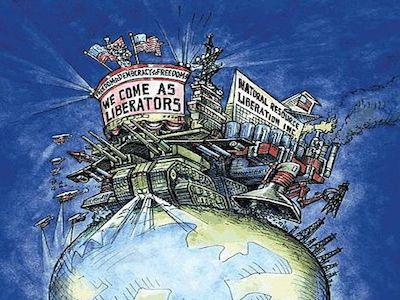
The subject here is the fate of what is considered Western Civilization, and why it is doomed to not only failure, but complete collapse as a political and ruling force. In fairness, all civilizations eventually fail, and in my opinion, this is mainly due to the false belief that a system of top-down rule, restrictive laws, and completely concentrated co-existence, is necessary for sustained survival. While the division of labor is extremely useful in many if not most aspects of modern life, total concentration of populations is not  mandatory for civilization to survive and prosper. But it is the desired outcome by those who rule, (consider ‘smart cities’) because it allows for easier control over the masses of common people, who always far outnumber the ruling class, and are therefore considered a continuous threat to their power.

The ‘West’ has claimed to be the most superior, most benevolent, most enlightened, and most powerful group of nation-states for centuries, but it is coming apart at the seams so quickly that its influence and grip on the rest of the world could end in short order. But is that the designed plan, or is it due to outrageous arrogance, criminal excess at every level of existence, devastation of the monetary and economic systems, widespread brutal aggression, or all the above?

Western civilization is certainly on the brink of extinction, and the sought after replacement is that of a technocratic world governing system run by the very few. It seems the further man supposedly advances, the more backward is his pretend progress. Certainly, and positively in the U.S, intelligence levels and the ability to think critically have all but disappeared; this in a time when western society is ‘claimed’ to be the most ‘educated.’ In fact, the exact opposite is the case, as schooling in this country has caused mass ignorance and stupidity over generations, all by design. In order to control the people, the West decided long ago to purposely dumb down the common population, and indoctrinate them to such an extent, as to make impotent the idea of individual legitimate thought, and any ability to question authority. This tactic by the State was successful in its mission, but also successful in creating its own demise. This is quite the irony, but then that is the way of the madness of humanity.

Consider our current reality for a moment, and then consider the outcome of this political experiment. This nation, although never totally free, was one of wonder for a good portion of its history. 170 years ago, nearly 100% literacy was common, classical education was brilliant, and children were intelligent, driven, responsible, and grown up by the time they were in their mid-teens or before. Most all were entrepreneurs and understood moral principles, self-responsibility, and the importance of family. They based their lives on logic and reason, and due to these attitudes, were incredibly valuable to the building of independent, honest, virtuous, and vital societies. If one is to compare that to today’s population, an awakening should immediately occur.

Currently, this country is in the midst of a complete and total mental breakdown of the masses, in that they are not, generally speaking, responsible for themselves, and are dependent on an evil and heinous government. The intellectual capabilities of the general population have descended into the realm of effective illiteracy of the majority, regardless of age. Hate is the new norm accepted by the proletariat, sexual perversion is in full view of all, and promoted by the State. Theft, looting, property destruction, and violence at every turn, are openly ignored, while being sanctioned by government and its complicit mouthpieces in the rotten media. Constant war is tolerated, the murdering military is lauded as heroes, while truthtellers are shamed, threatened, and ostracized, and in some cases eliminated. ‘Reverse’ racism is rampant and applauded, while society has become married to victimization as a way of life. Self-esteem, confidence, responsible behavior, empathy, and the drive to succeed have disappeared from view. Total government control, destruction of wealth of all but the super-rich, blanket surveillance, lockdowns, ludicrous and immoral mandates, mass bio-weapon tyranny, tremendous property theft, and purposeful murder of innocents is routine, and mostly ignored. Entire towns and cities are being intentionally destroyed, thousands burned to death with microwave or directed energy weapons, or by other atrocious means, while those affected clamor for more government assistance, instead of eliminating the criminal and murderous State that is at the heart of all this barbarous madness.

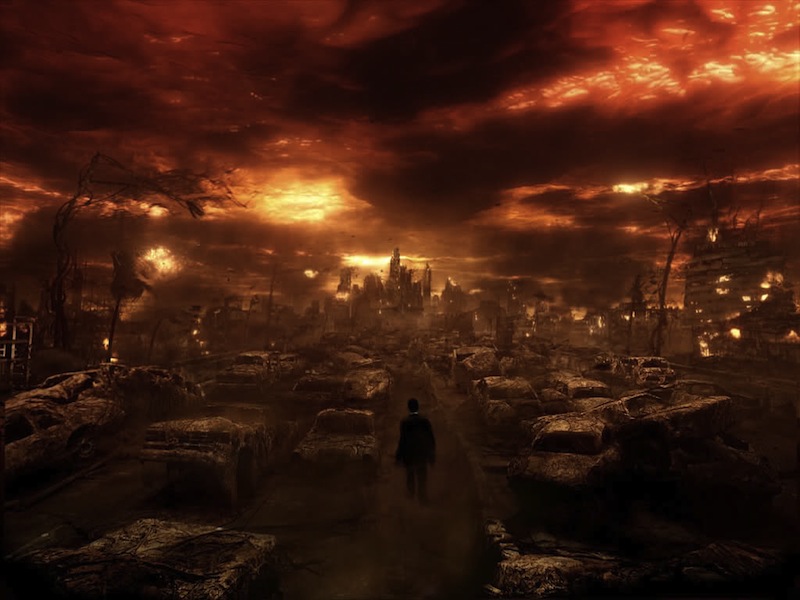
The governing systems of Western societies have no intention, and never have, to free or protect the people, as the only goal sought by these evil ruling monsters, is power and control of all by brute force, lies, propaganda, and murder. Western civilization will be purposely relegated to the dustbin of history; the result being the swift and merciless destruction of life and all societal cohesion. Without mass dissent and non-compliance, bogus ‘climate change,’ currency destruction, digitization of all aspects of life, concentration of populations, famine, property theft, war, and transhumanism, will lead to even more perverse behavior, idiocy, and mass indifference of the majority.

This will signal the end of an era, and the beginning of a permanent hell on earth. This was caused by the masses of collective hordes ignoring their responsibility to themselves, in favor of the expectation of total dependence instead of individual excellence. No one can hide from reality forever, as it will eventually catch up and swallow you whole.

The State cannot rule successfully unless the people voluntarily allow it, and choose to surrender to obedience and a life of slavery. Only people who will accept and be convinced of truth, and have the courage to act on that truth, can be of use to freedom. All others, those who do not want to know the truth, those who continue to cling to the State’s false narratives, and who seek a master, should be absolutely avoided, as they will never help or improve themselves, and therefore will be of no value to those who seek real freedom.

“Violence is not necessary to destroy a civilization. Each civilization dies from indifference toward the unique values which created it.”

 ~ Nicolas Gomez Davila, 1913-1994, Columbian writer
Our Challenge Is To Transcend Our Evolutionary Ape Heritage

By Caitlin Johnstone

Source: CaitlinJohnstone.com

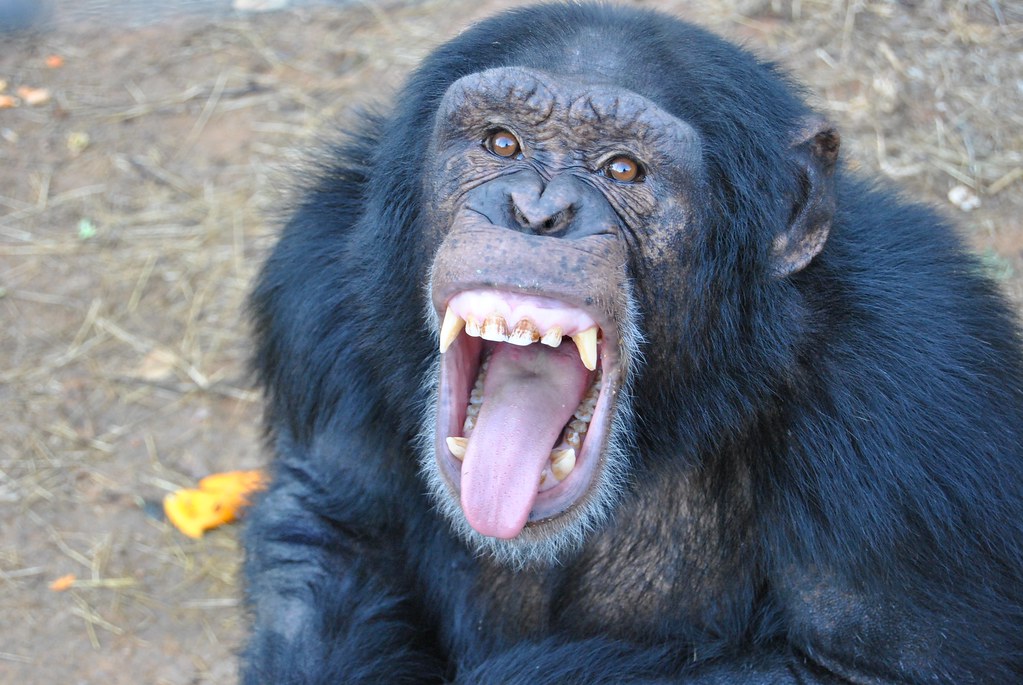
Did you know chimpanzees hunt smaller primates for food?

They do. They’re actually very skillful hunters due to their size, their strength, and especially their intelligence. They coordinate their attacks, working together to cut off the escape routes of their prey to greatly increase their success rate. Scientists have even frequently observed them using crude spears to kill a small primate species called the lesser bush baby for their meat.

One of the many interesting things about this behavior in our primate cousins is that they are so good at hunting they can become victims of their own success, wiping out entire populations of prey in their area. Red colobus monkeys have been hunted to the brink of local extinction in Uganda by chimpanzees hungry for a quick protein fix, solely because they’ve been gobbling up those delicious little guys faster than they can reproduce.

Sound familiar?

The tendency of homo sapiens to overburden our ecosystem with our consumption is not unique to us, and is not new. In fact, it looks like we’ve been on this trajectory toward ecocide since our ancient evolutionary ancestors began evolving extra brain matter.

And it is possible to just stop there and conclude that we are no different from our chimp relatives in this sense. That we will simply keep overhunting the red colobus monkey until there are none left, that we will keep depleting and destroying our biosphere until it can no longer sustain life. That the human brain differs from the chimpanzee’s only in intelligence, not in wisdom. That we are in essence no different from the cyanobacteria at the dawn of the Proterozoic Era, a new species showing up on the scene and causing a mass extinction event in an ecosystem overburdened by their rapid flourishing.

You do also however have the option of openness to the possibility that maybe, just maybe, our species is destined for greater things. That maybe, just maybe, we have within us the capacity to transcend the mindless patterning of our evolutionary ancestors and move into a mindful relationship with this planet and its life forms. That maybe, just maybe, this whole human adventure doesn’t need to end in disaster after all.

From what I can tell, the only people who find this idea outlandish are those who have never experienced a great unpatterning of their own. Who have never healed the wounds of their past and transcended the unwholesome mental habits which were given to them by their conditioning. To anyone who has experienced a dramatic transformation from dysfunction into health, it’s obvious that any human could potentially go through such transformations as well. Or even all humans.

It is possible that our descendents will look back on humanity’s existence on this planet from prehistoric times up until this crucial present moment as a kind of bridge between animal life and a new terrestrial expression that isn’t driven by the unconscious conditioning patterns that have driven the movements of every species on this planet from the very first single-celled organisms onward. That what we’re experiencing right now at this critical juncture is what it looks like before the emergence of the Earth’s first conscious species.

An unconscious human is one driven compulsively by deep-seated mental habits they don’t really see and can’t do much to control, so they’ll often find themselves engaged in unwholesome behavior patterns like addiction, unkindness, greed and neurosis, and making the same mistakes over and over for reasons they don’t quite understand.

A conscious human is one who doesn’t have unseen conditioning pulling the strings from behind the scenes in their subconscious mind, because they have done their work and drawn their inner demons into the light of consciousness where they can be healed. They are therefore able to move through life deliberately and in the interest of what’s best, rather than compulsively and in a way that spreads trauma to others.

A conscious humanity would mean that this way of functioning blossoms throughout the entire species.

Doesn’t it kind of look like that might be what’s happening? Like all the chaos and confusion of these strange times could simply be the birth pangs of a species whose relationship with consciousness is about to take a dramatic pivot? The increasingly shrill mass media narratives rapidly approaching white noise saturation? The increasingly widespread awareness that our society’s rules are made up and we can change them whenever we want? The mysterious increase in incidents of spiritual awakening as reported by teachers of enlightenment? Just how goddamn weird everything’s been getting these last few years?

I think it’s possible. I think it’s possible we are moving as a species toward an adaptation that will enable us to survive in a situation which is very different from the one we first emerged in, as every species eventually does if it doesn’t go extinct. If this is indeed what is happening, it stands to reason that it will be an adaptation that prevents us from wiping ourselves out via ecocide or nuclear war, and that a collective movement into consciousness is what that adaptation will look like.

A conscious species would be able to work in cooperation with its ecosystem, rather than compulsively consuming it due to primitive impulses to obtain and dominate and egoic impulses to be rich and have more. A conscious species would be able to convert civilization from competition-based models into collaboration-based models, where rather than trying to climb over each other to get ahead we all work together to make sure everyone has what they need to live. A conscious species would no longer see the sense in dividing itself up into separate competing nation-states which brandish armageddon weapons at each other out of fear and greed.

The more I learn about humanity, and the more I learn about myself, the more possible such a world appears to be. Sure the world’s a chaotic and distressing mess right now, but so is childbirth. However bad things get for us, as long as we’re still alive our problems are nothing that can’t be fixed with a collective movement into consciousness.

Anyway. That’s my pet theory right now. And the cool thing about my theory is that if you like it too, you don’t have to wait for it to come true. You can start becoming more conscious on your own right now and leading the charge for the rest of us. Investigate your true nature, heal your wounds, be responsible with your actions, and begin working to coax all your endarkened bits into the light.

And then hopefully the rest will follow. If they don’t, worst-case scenario is you wind up a lot more happy and functional than you otherwise would have been, because you brought so much more consciousness to your inner processes and your habits of perception and cognition.

This is where the real adventure is at, in my opinion. This is where the rubber meets the road.

I will meet you there.

Ireland: Thoughts on Wildness and Domestication

By Renzo Connors

Source: Anarchists Worldwide

“If I decide to break the chains of domestication, I can only do so because I feel the chains and suffer the effects of domestication on my own skin.” – Alfredo Bonanno

I

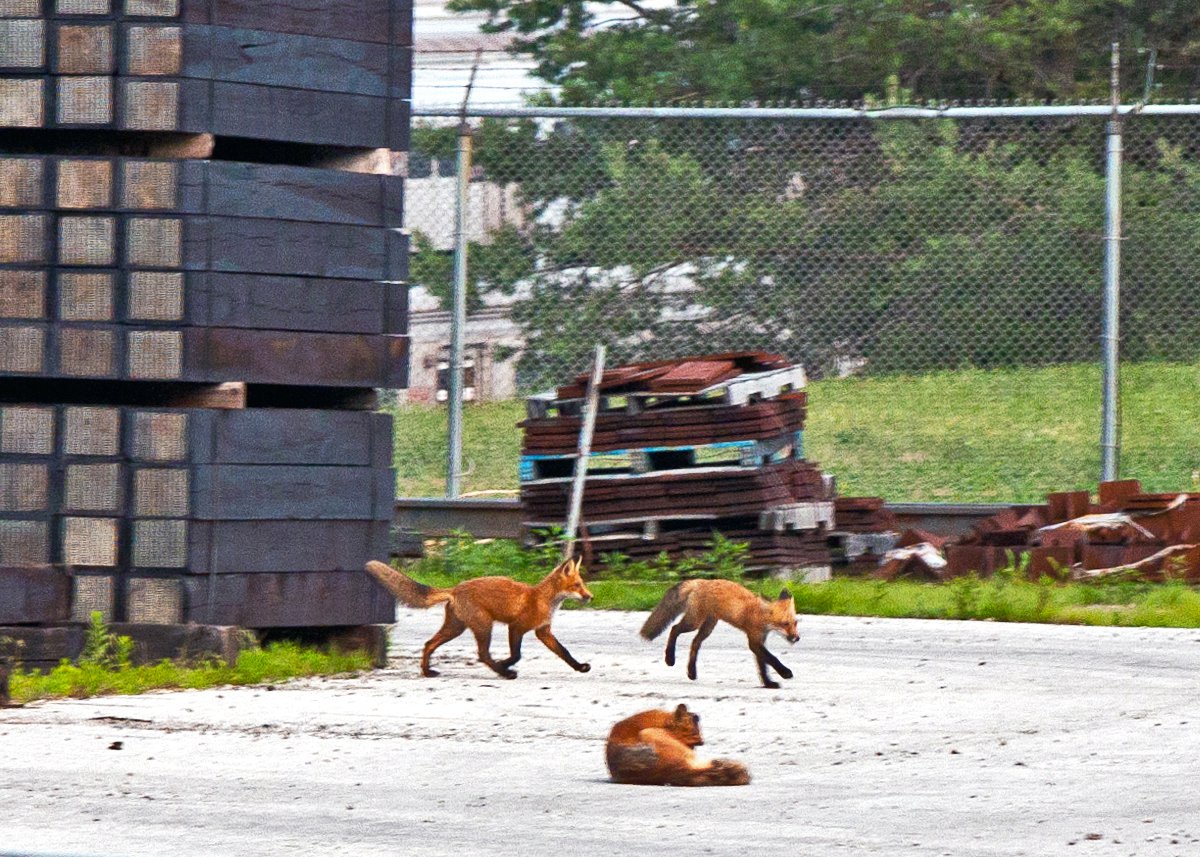
While out walking or cycling at night, foxes can always be seen roaming the housing estate. The glow of their eyes in darkness, appearing from dark alleyways suddenly visible under the street lights, they move around without a sound, hardly noticed. These lovely magnificent creatures are the embodiment of wildness. Leviathan towers all around but yet these wild beings live on freely from domestication. The foxes at times live off the scraps and waste that civilization throws away, but long after civilization crumbles these creatures will live on.

These wild beings will live on long after civilization kills itself because they are not dependent on civilization to provide the means of life. They remain wild and undomesticated, still equipped with the knowledge and skills to find food, build shelter, and survive independently for themselves.

The vast majority of humans on the other hand are totally domesticated and dependent on civilization and the vast majority would not be able to survive without shops and machines. Only a tiny percentage of humans that inhabit the earth still live wild, free, and living autonomously. The rest are imprisoned within the concrete and metal structures of techno-industrial society.

Domestication begins from birth, straight away an individual is given a birth certificate and social security number. These will be needed throughout life, to be recognised by whatever state an individual happens to be born into, to go to school, to work, to open a bank account and from there to get loans to buy shit, to get a passport, to register to vote, so the state knows who you are, what taxes you have paid or owe, your credit history: to be controlled and exploited. From birth, through childhood, into adulthood,an individual is moulded and taught how to behave, what is acceptable and what is not; through force and blackmail of collective and religious moralities created by the systems and institutions that make up civilization. The end result: a domesticated and a functional obedient citizen and wage slave.

Everything within the civilized culture is geared towards this. Education, children’s stories, TV shows, movies, books, games, and even songs are all exposure to the social norms and control of civilization. The soul purpose of the individual in civilization is to produce and reproduce the social structures, authoritarian institutions and daily subservience to civilized society. There is little room for escape from behind the computer screens and consumerism.

II

Tenalach
Irish – Used to describe a relationship one has with the land, air and water, a deep connection that one literally hears the Earth sing.

I’ve always felt an affinity and closeness with wild spaces. From childhood, playing in the fields and woodlands, fishing in the lake and swimming in the rivers that were close to the housing estate I grew up in. As a kid taking day trips to the Wicklow mountains seeing all the views, beauty of the trees and plants, rugged valleys, and at times what seems like inhospitable landscape of bog land and cliff drops.

Being in such spaces conjures up and stores feelings within me I wouldnt be able to adequately describe with words. Perhaps they could be described as something spiritual.

The landscape has been left scarred by civilization. Roads built long ago by the British colonists to flush out any hiding rebels, shells and ruins of buildings left over from the dawn of industrialism scattered across the landscape, electrical dams blocking up rivers, TV and radio transmitter masts, bog land robbed and left mutilated to feed industrial “progress”, forests cut down and replaced by animal agriculture and monocrop Sitka tree plantations poisoning the land, and the mass graves from pogroms and genocide of the religious and imperalist conquerers. There isn’t a place left on this island that civilization hasn’t left its mark.

******

In my early 20’s locked up in prison for taking part in the anti-imperialist struggle, I felt these feelings for the wild more intensely.

Not seeing any plants or trees, except the ones I could see from my cell window on the horizon. The urge to walk in grass and sand in my bare feet, wanting to roam in woodland to look up at the sky through the canopy.

For the years spent incarcerated I daydreamed about being in nature, being in the mountains, being by the sea.

After four years with eight months left I was granted temporary release for Christmas.

For the first time outside the concrete walls, iron bars and razor wire of prison there was only one thing I really wanted to do and that was to go to the ocean.

The beach was a short walk from where I was staying. To get there I’d first have to walk through a park. As I walked, even though it was winter there was still a lot of colour. A lot of the big tall trees in the park are evergreen trees so they still had their colour. Going through the park my head and eyes were darting around taking in the landscape, walking under the tall trees, their canopy blocking out the sky. It was an amazing feeling being hit in the face with so many different colours, different shades of green.

Sensory stimulation from the sounds of flowing water making its way down streams, birds chirping and singing, the wind blowing long grass and branches, colors of the landscape and the various shades of browns and greens of foliage was almost overwhelming to the senses.

When I reached the beach I walked for a little bit and then sat on a sand dune for about two hours looking out into the vast ocean of green, reflecting in my thoughts and finding some solace in my mind.

Are these feelings that rush around my mind and body urging me wildness, the inner primal anarchic instinct buried by years of domestication?

Or are they an individual desire and love within me for the wild?

The Political Value of Psychedelics

By Dr. James Cooke

Source: Reality Sandwich

Psychedelics and Politics

Psychedelics are political.  Their use in the 1960s had a political impact that is still being felt today, and their widespread banning was driven by political motives.  But how can a class of chemicals consistently impact our opinions of how we organize and relate to each other?  Psychedelics can affect the brains of individuals in ways that produce consistent insights.  These insights have direct relevance for our individual and collective wellbeing, and can point the way towards political change that would benefit us all.

The 1960s

The LSD-fuelled hippie movement was instrumental in the origins of the modern ecological awareness in politics that is so widespread today.  It helped birth modern anti-war peace movements and the practice of living in sustainable, eco-friendly communes.  What is it about the time we live in and the effects of psychedelic substances that result in their producing this kind of change in political thinking?  To understand this, we have to not only consider how psychedelics act in the brain, but we also have to understand both the unusual situation humans have found themselves in since the advent of civilization and the psychology that gave rise to it.

The Human Animal

We live in an unusual time.  For approximately 97% of human existence our species lived close to nature in small social groups.  Like other animals, evolution programmed us with a survival instinct and fear of death.  This fear incentivized us to control the world around us in order to make us feel safe.  Unlike other animals, however, we succeeded in dominating nature.  Thanks to our capacity for language and our dexterous hands that were freed up by our walking upright, it became possible for us to create culture and technology.  The preservation of knowledge from generation to generation that comes with language allowed for greater and greater control of the world around us.  Eventually we found ourselves in complex civilizations, a very long way from home.

The Price of Progress

This way of being that led to the relentless growth of civilizations is characterized by a particular kind of psychology, one that is governed by fear.  Sacrificing one’s happiness today in order to prepare for tomorrow can often make sense, but being consistently emotionally hijacked by fear without realising it can lead to a lot of unnecessary suffering.  This is true for individuals suffering with trauma and it’s true for our species as a whole.  In such a situation, there is the loss of the ability to find peace and wellbeing in the present.  We desperately look towards the future in the hope that if we just keep pushing forwards we will find a way out of our situation, not realizing that this way of being in itself is the problem.  The result is that, while we may no longer be routinely at risk of being eaten by predators, we are suffering from an epidemic of disorders of alienation, such as addiction, anxiety and depression.

The Fear Trap

Why do we continue to do this?  One reason is that we are naturally fearful creatures.  It makes sense that we would have evolved to sacrifice our wellbeing today in order to ensure our survival tomorrow.  Evolution is about staying alive, it’s not about being happy.  Another reason is that evolution has endowed us with incredible coping mechanisms.  We can be living in agony but, if we see now no other option, our capacity for language allows us to tell ourselves a story about why our situation is actually fine.  It is by taking these stories to be more real than our felt conscious experiences that we manage to repress our anguish.

Civilization and Control

Beyond the individual, there are other dynamics that keep us trapped in the game of “progress” at the expense of our wellbeing.  Once agriculture had been invented it became possible to generate surplus food, paving the way for a minority of individuals to hoard resources.  This made it possible for wealthy individuals to coerce the majority into doing their bidding as they had something that they needed for their very survival.  The ability of humans to live in stories has also been crucial in perpetuating this control.  Our ability to rationalize and normalize our experiences made it possible for each generation to grow up believing that this situation was correct or right in some way, instead of seeing how they are being exploited.

Deep Ecology

It wasn’t always this way.  Prior to the hierarchical arrangements of control that define civilization, humans throughout the world routinely explored their being part of the natural world through religious and spiritual practices.  Psychedelic plant medicines were widely used in order to explore our interconnectedness with the natural world.  The Norwegian philosopher Arne Næss coined the term “deep ecology” to refer to the non-hierarchical principles of interdependence and interconnectedness that are deeper than a superficial concern for the environment.  Ecology in this sense can apply equally to the natural world, to social arrangements or even to the contents of your own mind.

Ecology vs. Hierarchy

While the systems of control that define “civilized” states typically separate and atomize people so they can be used to generate wealth for others, human communities centred around ecological and spiritual principles are based on collaboration and the valuing of individual and collective wellbeing.  Psychedelics promote these ecological and spiritual perspectives, making them a threat to dominating systems of control.

Psychedelics and the Wisdom of Ecology

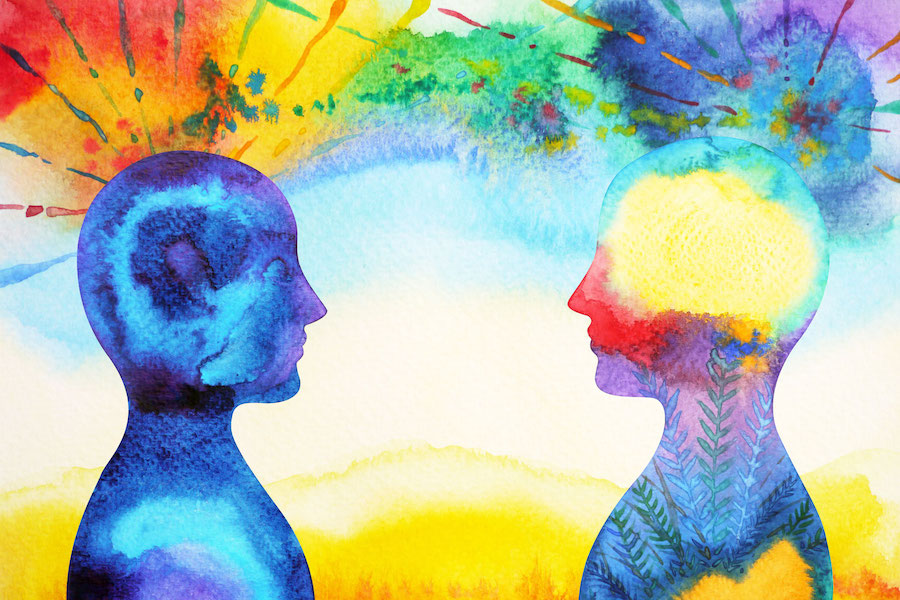
How do psychedelics promote ecological thinking?  In the brain of the individual, psychedelics can temporarily topple the hierarchical, control-based modes of thought that usually dominate our minds.  As is well attested to in Buddhist philosophy, it is these modes of thought that are responsible for the majority of our suffering.  With these structures of control dissolved, what’s revealed is a sense of interconnection and a more harmonious way of being.  This experience can produce insight into the wisdom of ecological principles such as openness, collaboration and naturalness as opposed to the controlling, atomizing and artificial arrangements that currently dominate society.  As our well-being as social primates depends on the community as a whole, it only follows that their relevance of these insights would extend beyond the individual to those who have an impact on us in society.

Hippies, Peace, Communes and the Environment

LSD use in the 60s pushed the brains of a generation in the direction of ecological thinking.  Many young people who might otherwise have unquestioningly fought in the Vietnam war suddenly saw their situation afresh, the propaganda of their home country replaced with a vision of a world of collective collaboration rather than one of conflict and domination.  The suicidal logic of ecological destruction was also laid bare, the narrative of progress through the domination of nature seemingly nothing more than an excuse for the powerful to line their pockets, a project that would soon take the earth and all of us with it.  A critical mass of young people came to similar conclusions and the hippie movement was born.

Science and Psychedelic Personality Change

Modern science is now mapping how psychedelics change people’s political opinions.  A study published in 2017 found that the number of times people use a psychedelic and the strength of their most powerful ego-dissolving experience correlate with increased nature relatedness, openness and reduced authoritarian thinking [1].  These aspects of the personality all reflect this movement towards greater ecological thinking.

The Psychology of Control

Without the benefit of psychedelics to help us travel in the direction of ecological thinking and greater wellbeing, many get trapped in coping mechanisms of control.  The traumatic nature of existence pushes some to move in the opposite direction, disowning their capacity for empathy and connection and reaffirming their sense of separation.  This process can result in disorders of the ego such as narcissism, sociopathy and psychopathy, all characterized by a lack of empathy and a delusionally high opinion of oneself.  We currently live in a system crafted to suit such personality types.  The coping mechanisms emerge in response to severe trauma early in life, when the child is learning how to connect with the world around them.  Investment in the ego and lack of concern for others is a pathology that can help such people cope with this powerful trauma.  It also represents the psychological dynamic that keeps society sick and blocks collective healing through the widespread adoption of the ecological perspective.

The Key Roadblock to Change

Society only consists of individuals interacting.  As a result, our political crises largely originate in the internal crises of individuals.  The collective trauma carried by the human race is passed on generation after generation.  A critical amount of narcissistic behaviour results in a society based around the separation and atomization of individuals, as well as around domination and control, of the environment and each other.  The extent to which our fellow humans are unconsciously trapped in narcissistic coping mechanisms is the extent to which our species will be trapped in its current mode of domination, control and suffering.

Psychedelic Medicine and the Healing of Collective Trauma

Psychedelic medicine holds the promise of moving culture in the direction of trauma healing and deep ecological thinking that is necessary to save our species and the planet from ecological destruction.  The main challenge will be how we engage with those at the other end of the spectrum, the narcissists and psychopaths so affected by trauma that they will defend their protective systems of domination at all costs. Psychedelic medicine may be able to reach some but perhaps the single greatest impact of psychedelics in years to come will be moving the public conversation toward a greater awareness of how the dynamics of trauma have deranged our world.  The creation of a global ecological culture that centers around trauma healing, emotional wellbeing and an awareness of the psychology of narcissism is the only hope our species and planet has for survival, and psychedelics are perhaps the most powerful tool we have in making this culture a reality.


References:

Nour MM, Evans L, Carhart-Harris RL. Psychedelics, Personality and Political Perspectives. J Psychoactive Drugs. 2017;49(3):182-191. doi:10.1080/02791072.2017.1312643

Four Reasons Civilization Won’t Decline: It Will Collapse

By Craig Collins

Source: CounterPunch

As modern civilization’s shelf life expires, more scholars have turned their attention to the decline and fall of civilizations past.  Their studies have generated rival explanations of why societies collapse and civilizations die.  Meanwhile, a lucrative market has emerged for post-apocalyptic novels, movies, TV shows, and video games for those who enjoy the vicarious thrill of dark, futuristic disaster and mayhem from the comfort of their cozy couch.  Of course, surviving the real thing will become a much different story.

The latent fear that civilization is living on borrowed time has also spawned a counter-market of “happily ever after” optimists who desperately cling to their belief in endless progress.  Popular Pollyannas, like cognitive psychologist Steven Pinker, provide this anxious crowd with soothing assurances that the titanic ship of progress is unsinkable.  Pinker’s publications have made him the high priest of progress.[1] While civilization circles the drain, his ardent audiences find comfort in lectures and books brimming with cherry-picked evidence to prove that life is better than ever, and will surely keep improving.  Yet, when questioned, Pinker himself admits, “It’s incorrect to extrapolate that the fact that we’ve made progress is a prediction that we’re guaranteed to make progress.”[2]

Pinker’s rosy statistics cleverly disguise the fatal flaw in his argument.  The progress of the past was built by sacrificing the future—and the future is upon us.  All the happy facts he cites about living standards, life expectancy, and economic growth are the product of an industrial civilization that has pillaged and polluted the planet to produce temporary progress for a growing middle class—and enormous profits and power for a tiny elite.

Not everyone who understands that progress has been purchased at the expense of the future thinks that civilization’s collapse will be abrupt and bitter.  Scholars of ancient societies, like Jared Diamond and John Michael Greer, accurately point out that abrupt collapse is a rare historical phenomenon.  In The Long Descent, Greer assures his readers that, “The same pattern repeats over and over again in history.  Gradual disintegration, not sudden catastrophic collapse, is the way civilizations end.”  Greer estimates that it takes, on average, about 250 years for civilizations to decline and fall, and he finds no reason why modern civilization shouldn’t follow this “usual timeline.”[3]

But Greer’s assumption is built on shaky ground because industrial civilization differs from all past civilizations in four crucial ways.  And every one of them may accelerate and intensify the coming collapse while increasing the difficulty of recovery.

Difference #1:  Unlike all previous civilizations, modern industrial civilization is powered by an exceptionally rich, NON-renewable, and irreplaceable energy source—fossil fuels.  This unique energy base predisposes industrial civilization to a short, meteoric lifespan of unprecedented boom and drastic bust.  Megacities, globalized production, industrial agriculture, and a human population approaching 8 billion are all historically exceptional—and unsustainable—without fossil fuels.  Today, the rich easily exploited oilfields and coalmines of the past are mostly depleted.  And, while there are energy alternatives, there are no realistic replacements that can deliver the abundant net energy fossil fuels once provided.[4]  Our complex, expansive, high-speed civilization owes its brief lifespan to this one-time, rapidly dwindling energy bonanza.

Difference #2:  Unlike past civilizations, the economy of industrial society is capitalist.  Production for profit is its prime directive and driving force.  The unprecedented surplus energy supplied by fossil fuels has generated exceptional growth and enormous profits over the past two centuries.  But in the coming decades, these historic windfalls of abundant energy, constant growth, and rising profits will vanish.

However, unless it is abolished, capitalism will not disappear when boom turns to bust.  Instead, energy-starved, growth-less capitalism will turn catabolic.  Catabolismrefers to the condition whereby a living thing devours itself.  As profitable sources of production dry up, capitalism will be compelled to turn a profit by consuming the social assets it once created.  By cannibalizing itself, the profit motive will exacerbate industrial society’s dramatic decline.

Catabolic capitalism will profit from scarcity, crisis, disaster, and conflict.  Warfare, resource hoarding, ecological disaster, and pandemic diseases will become the big profit makers.  Capital will flow toward lucrative ventures like cybercrime, predatory lending, and financial fraud; bribery, corruption, and racketeering; weapons, drugs, and human trafficking.  Once disintegration and destruction become the primary source of profit, catabolic capitalism will rampage down the road to ruin, gorging itself on one self-inflicted disaster after another.[5]

Difference #3:  Unlike past societies, industrial civilization isn’t Roman, Chinese, Egyptian, Aztec, or Mayan.  Modern civilization is HUMAN, PLANETARY, and ECOCIDAL.  Pre-industrial civilizations depleted their topsoil, felled their forests, and polluted their rivers.  But the harm was far more temporary and geographically limited. Once market incentives harnessed the colossal power of fossil fuels to exploit nature, the dire results were planetary.  Two centuries of fossil fuel combustion have saturated the biosphere with climate-altering carbon that will continue wreaking havoc for generations to come.  The damage to Earth’s living systems—the circulation and chemical composition of the atmosphere and the ocean; the stability of the hydrological and biogeochemical cycles; and the biodiversity of the entire planet—is essentially permanent.

Humans have become the most invasive species ever known.  Although we are a mere .01 percent of the planet’s biomass, our domesticated crops and livestock dominate life on Earth.  In terms of total biomass, 96 percent of all the mammals on Earth are livestock; only 4 percent are wild mammals.  Seventy percent of all birds are domesticated poultry, only 30 percent are wild.  About half the Earth’s wild animals are thought to have been lost in just the last 50 years.[6]  Scientists estimate that half of all remaining species will be extinct by the end of the century.[7] There are no more unspoiled ecosystems or new frontiers where people can escape the damage they’ve caused and recover from collapse.

Difference #4:  Human civilization’s collective capacity to confront its mounting crises is crippled by a fragmented political system of antagonistic nations ruled by corrupt elites who care more about power and wealth than people and the planet.  Humanity faces a perfect storm of converging global calamities.  Intersecting tribulations like climate chaos, rampant extinction, food and freshwater scarcity, poverty, extreme inequality, and the rise of global pandemics are rapidly eroding the foundations of modern life.

Yet, this fractious and fractured political system makes organizing and mounting a cooperative response nearly impossible.  And, the more catabolic industrial capitalism becomes, the greater the danger that hostile rulers will fan the flames of nationalism and go to war over scarce resources.  Of course, warfare is not new.  But modern warfare is so devastating, destructive, and toxic that little would remain in its aftermath.  This would be the final nail in civilization’s coffin.

Rising From the Ruins?

How people respond to the collapse of industrial civilization will determine how bad things get and what will replace it. The challenges are monumental.  They will force us to question our identities, our values, and our loyalties like no other experience in our history.  Who are we?  Are we, first and foremost, human beings struggling to raise our families, strengthen our communities, and coexist with the other inhabitants of Earth?  Or do our primary loyalties belong to our nation, our culture, our race, our ideology, or our religion?  Can we put the survival of our species and our planet first, or will we allow ourselves to become hopelessly divided along national, cultural, racial, religious, or party lines?

The eventual outcome of this great implosion is up for grabs.  Will we overcome denial and despair; kick our addiction to petroleum; and pull together to break the grip of corporate power over our lives?  Can we foster genuine democracy, harness renewable energy, reweave our communities, re-learn forgotten skills, and heal the wounds we’ve inflicted on the Earth?  Or will fear and prejudice drive us into hostile camps, fighting over the dwindling resources of a degraded planet?  The stakes could not be higher.

Notes.

[1] His books include: The Better Angels of Our Nature and Enlightenment Now: The Case for Reason, Science, Humanism, and Progress.

[2] King, Darryn. “Steven Pinker on the Past, Present, and Future of Optimism” (OneZero, Jan 10, 2019) https://onezero.medium.com/steven-pinker-on-the-past-present-and-future-of-optimism-f362398c604b

[3] Greer, John Michael.  The Long Descent (New Society Publishers, 2008): 29.

[4] Heinberg, Richard. The End Of Growth. (New Society, 2011): 117.

[5] For more on catabolic capitalism see: Collins, Craig. “Catabolism: Capitalism’s Frightening Future,”CounterPunch (Nov. 1, 2018). https://www.counterpunch.org/2018/11/01/catabolism-capitalisms-frightening-future/

[6] Carrington, Damian. “New Study: Humans Just 0.01% Of All Life But Have Destroyed 83% Of Wild Mammals,” The Guardian (May 21, 2018). https://www.theguardian.com/environment/2018/may/21/human-race-just-001-of-all-life-but-has-destroyed-over-80-of-wild-mammals-study

[7] Ceballos, Ehrlich, Barnosky, Garcia, Pringle & Palmer. “Accelerated Modern Human-Induced Species Losses: Entering The 6th Mass Extinction,” Science Advances. (June 19, 2015). http://advances.sciencemag.org/content/1/5/e1400253

COVID-19’s Black Swan Timeline

Black swan events are characterized by their extreme rarity, their severe impact, and the widespread insistence that they were obvious in hindsight.”

By Steve Brown

Source: The Duran

According to Investopedia a Black Swan event “is an unpredictable event that is beyond what is normally expected of a situation and has potentially severe consequences. Black swan events are characterized by their extreme rarity, their severe impact, and the widespread insistence that they were obvious in hindsight.”

In the twentieth century, the financial market crash of 1929 was a black swan event. While Germany’s invasion of Poland in 1939 is sometimes attributed the same, World War 2 was partly the result of an existential power vacuum subsequent to the Great War and thus an extension of it.  911 looked like such an unpredictable surprise event but the imperial arrogance and hubris that afflicted the West for at least fifty years prior rendered the potential for 911 Blowback predictable and foretold.*

The “Great Recession” of 2008-2009 was spawned with reckless abandon by corrupt banks criminally endorsed by Congressional legislation. Pillars of financial debauchery like Goldman Sachs were shorting their own subprime products anticipating the crash. Based on such engineered systemic financial fraud the crash of ten years ago does not qualify as a black swan event.

Except for the financial collapse of 1929, all the foregoing resulted in some immediate plan of action to confront the particular crisis. This time the magnitude is exponentially greater when authorities have scant idea about how to respond and media scare tactics rule the day. The result is to place the global economy in a self-induced coma.  Searching for answers, the New World Order has none.

The great philosophers Epictetus, Socrates, and Aristotle viewed logic and science as the foundation for civilization in opposition to irrational belief systems, superstition, and religion.  The great philosophers believed that learning from humanity’s past mistakes and anticipating future events – with intent to avoid mistakes of the past — would greatly advance prospects for civilized societies.  One highly advanced civilization of the ancient world, the Etruscans, considered past cycles as indicative of future events.

Recognizing a singular relationship in years with regard to life and death, Etruscans defined their theory of Saeculum.  Saeculum posited that major cataclysmic events engendered by humans will follow a pattern of ninety-year cycles. So, people living through a catastrophe in one age will have fully died out by the next.  For example we have the crash of 1929 and the advent of Covid-19 in 2019…. precisely ninety years apart.

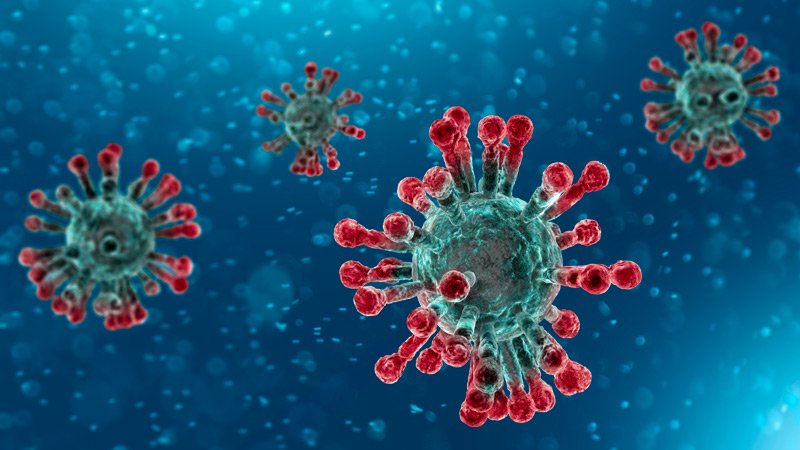
The Etruscan’s 90-year black swan cycle may be a bizarre coincidence, but defining COVID19 as such an event helps when confronting its ramifications.  We previously identified a unique confluence of geopolitical events threatening the western-led Warfare State.  And now a severe global health crisis – which promises to shut down the world economy — leverages this geopolitical mix to an even greater extent.  So, in what context may this current COVID cataclysm be viewed?

Putting aside the health factor for one moment this pandemic provides enormous cover for the far less than one percent along very broad lines:

  • Financial
  • Military
  • Socially
  • Politically

Essentially the political class now has carte blanche for:

  • Government bail-outs
  • Corporate bail-outs
  • Wall Street bail-outs
  • Control of a growing restive populace
  • Suppression of individual liberty
  • Increased militarization / powers for law enforcement
  • Political cover

As in 911, the Empire’s excuse is fear.  Perhaps not duct tape this time. But if Elites view this pandemic as an opportunity for draconian population control then the policy carries incredible risk… and not just for the people. Should this disease ease and the controls remain, an already highly stressed populace may lash out. Note that in the financial sector some passive investment firms have already failed. If oil markets cannot be stabilized then the world economy is at risk.

Meanwhile, it’s likely that $1200 monthly payments to the US populace will keep folks quiet. But what if the Fed, International Monetary Fund, and Bank of International Settlements can’t pay for the ponzi?  Perhaps China will bail – indications are that China already has. China is swapping for dollars, but not purchasing US Treasury debt.  That’s a big problem and a Big Risk for the US money masters.

Now there is no intent to make light of the serious health hazard posed by COVID19. Or to disrespect anyone who has become ill or died from the disease.  COVID19 is a deadly and serious illness. Of that there is no doubt.  The intent here is to heighten awareness that there may be a bigger picture for the too big to jail to exploit.  That picture is of a teetering New World Order mired in its own criminal system of usury and theft which hopes for a way out of the pickle it created (since 2009) at the expense of working people.  It’s just possible that those who wish to enslave us will attempt to do so using the prospect of their own demise to create an environment of escalating fear.

As this author has written for many years, when this system fails it will fail by its own hand and not by any fifth column or external enemy.  Until then, Elites may yet accomplish what Huxley and Orwell could not quite agree upon: that their vision of the future might ultimately coalesce and coexist.  So will this monetary system fail?  Probably not.  But if the pain is deep enough, it must reinvent itself.

Contrarily, in this crisis the law of unintended consequences may yet backfire on Elites. For now, they seem very confident.  But any hole in the COVID major media narrative or tear in the Elite’s agitprop universe will be carefully examined and amplified. If a COVID-analogous ‘Building 7’ scenario arises it will not be ignored this time.  That’s because we’ve known for far more than twenty years that those who rule us in the west are largely debauched liars, perverts, and thieves.  Under their control, we should expect nothing less.

*John O’Neill’s career history and death is a remarkable indictment of all US intelligence services.

Coronavirus reminds us we are organisms in an environment

By Kurt Cobb

Source: Resilience

A close friend of mine, a professor of English literature, has been researching American philosopher John Dewey, whose book Quest for Certainty captivated me so much many years ago that I read it again right after I had finished it the first time. My friend has been reminding me why I found Dewey so profound while shedding new light on the philosopher’s thinking.

Dewey, it turns out, is one of the few thinkers in American life who absorbed the true import of the work of Charles Darwin. Dewey reminds us that, quite simply, Darwin posited that we humans are organisms in an environment just like every other organism. Dewey’s star faded after World War II.  American and world society have since lapsed into a narrative that puts humans above and outside nature, protected by technological advancements that supposedly shield us from nature’s demands and vicissitudes. The general narrative is that we are heading into a push-button, voice-activated technocratic paradise. (I think of the various Star Trek television series as popular cultural reflections of this view.)

But, the first pandemic in a century is forcefully and sadly reminding all of us that Darwin was right about our place in the natural world, more specifically, that we will never be outside of it.

That the world is “wildly unprepared” for this pandemic is in part a result of our belief the we are on a separate journey from the rest of the natural world, headed toward a perfected existence in which nature obeys all of our commands and bothers us not at all. Why prepare for something that is merely a product of nature? We have the technology to overcome it, don’t we? There must be a pill, right? Actually, wrong.

Those who understand human vulnerabilities have been sounding the alarm for years. But the idea that our entire way of life could be dramatically disrupted worldwide simultaneously simply was not on the radar of most governments—at least not enough to get them to stockpile even the most basic medical supplies; face masks come to mind.

There is much talk of creating a vaccine and doing it quickly. But such an endeavor can take more than a year and even more time to manufacture and distribute. There is less talk about the unhealthy lifestyles and chronic disease such as heart disease and diabetes that result from that lifestyle which might need to be addressed if we are going to cope better with the world of microorganisms we inhabit. There is even less talk that those at the bottom of the economic ladder are the most vulnerable and that the wealth gap and the gap in access to health care it implies are actually a huge public health problem for all of us.

The very way in which we live—constantly pressing on the edge of wilderness to develop it and exploit it—puts humans potentially in contact with millions of viruses from which will come the next pandemic. And, the next one will likely come much sooner than 100 years from now.

If we continue to think of health as the absence of illness, of illness as something that is prevented by a pill or a shot—and if not ultimately prevented, treated by a pill or a shot—we humans won’t make the necessary changes as a global society to better withstand more frequent pandemics.

Robust health, not techofixes, is the best way to confront the biological perils of the natural world in which we participate. Such a focus would, however, take a complete rethinking of who we humans are, namely, organisms in an environment. Will the coronavirus awaken any more of us to this fact?

Epistemological divide: How we live in two different worlds of understanding

By Kurt Cobb

Source: Resilience

Epistemology is the study of how we know things. All of us cycle between two main ways of knowing in our modern culture: 1) the rational, reductionist way and 2) the holistic, relational, intuitive way. By far the most dominant way is the rational, reductionist way and our institutions, scientific, economic, financial and organizational are governed by this way of thinking.

For the reductionist thinker, everything in the universe is made up of parts. If we can understand the parts, we can understand the whole. Depending on the field, the physical world is nothing but atoms and molecules and the social world is nothing but self-maximizing, rational actors. The reductionist view is very powerful and filled with “nothing but” statements. It never occurs to the thoroughgoing reductionist that the idea of “parts” is merely a mental construct.

In our everyday relationships with friends and family, in our nonrational pursuits in music and the arts, in our religious lives, we tend toward the second way of thinking, holistic, relational and intuitive.

We cycle back and forth between these ways of knowing almost effortlessly and for the most part unconsciously. That seems to work well for us as individuals—except when we miscalculate or misperceive a situation and bad consequences follow. Mostly, we regroup and recover and go on, adjusting for what we have learned.

Can the same be said of society as a whole? Yes and no. Global human society can be likened to a superorganism that has its own logic and modes of action. Each of us is strongly influenced by its trajectory and constrained in our actions. We may wish fervently to address income inequality or hunger or climate change. But the complex interactions and power arrangements in our global society make it difficult to do anything but make a small dent. Even our personal destinies seem to be caught up in a flow of events which we cannot control, but rather must react to.

The reductionist way suggests mastery through manipulation of carefully measured forces: mass, temperature, vectors of force, energy gradients (both physical and chemical). We build machines that use energy to build yet more machines. We erect great public works, dams, bridges and roads that create the arteries through which commerce and people flow. We douse the land with chemical fertilizers boosting farm yields to feed hungry billions.

The holistic way suggests mastery through alignment with natural and social forces. We say that it is best to “go with the flow” in both the physical and social dimensions of our lives. Such words imply an intuitive apprehension of an entire pattern. Recognition of patterns becomes the master key to understand the world. But what is a pattern? It is certainly something that repeats, but not always exactly.

Mark Twain is often quoted as saying,”History never repeats itself but it does rhyme.” The mystery of comparison is the engine of perception, cognition and our resulting cultural outputs of literature, art and music.

The holistic way tries to see the entire picture including all the messy consequences. Knowing that those consequences ramify infinitely, it can only intuit the extent and significance of any pattern. The holistic way knows ahead of time that it will never see the whole, only “feel” its meaning.

Both ways are general approaches to modeling the world we see. We create mental models of how the world works and fits together. When we mistake those models for “the truth,” we can get stuck, failing to adjust to new information and experience. We begin to dismiss information contrary to our model rather than embracing such information as a new insight for our process of adjustment. You can hear the dismissal happening when people say, “That can’t be” or “Everybody knows that…”

Heraclitus says, “Nothing endures but change.” The global superorganism—described by Nate Hagens in the piece cited above entitled, “Economics for the future – Beyond the superorganism”—keeps changing but in a direction that constantly undermines the survivability of humankind (and many other organisms and animals). That organism perceives the world as parts to be controlled and exploited, not just partially and temporarily, but completely and permanently. The perception that the universe is a seamless whole where a victory of mastery in one place means a perilous defeat in another, never occurs to this superorganism.

As Hagens describes it, the global human superorganism does not understand that there is a future in which the consequences of its actions will be manifested in a colossal systemic collapse. There is only the hungry maw of now, of immediate control and mastery, of immediate gratification, of immediate power.

The point is not to banish the reductionist way of thinking. Rather, it is to recognize it for what it is, but one model of perception that has its limitations and will never embrace the entire universe—a model that is as prone to error as any other model and one that will never get close to “the truth” because as Heraclitus tells us, “the truth” of the universe is always changing.