It’s Time for Some Anti-Science Fiction

nature-spaceships_00374723

Source: The Hipcrime Vocab

It’s Time for Some Anti-Science Fiction
Why must positive depictions of the future always be dependent upon some sort of new technology?

Neal Stephenson is a very successful and well-known science fiction writer. He’s also very upset that the pace of technological innovation has seemingly slowed down and we seem to be unable to come up with truly transformative  “big ideas” anymore. He believes this is the reason why we are so glum and pessimistic nowadays. Indeed, the science fiction genre, once identified with space exploration and utopias of post-scarcity and abundant leisure time, has come to be dominated by depictions of the future as a hellhole of extreme inequality, toxic environmental pollution, overcrowded cities, oppressive totalitarian governments, and overall political and social breakdown. Think of movies like The Hunger Games, Elysium, The Giver, and Snowpiercer.

This pessimism is destructive and corrosive, believes Stephenson. According to the BBC:

Acclaimed science-fiction writer Neal Stephenson saw this bleak trend in his own work, but didn’t give it much thought until he attended a conference on the future a couple years ago. At the time, Stephenson said that science fiction guides innovation because young readers later grow up to be scientists and engineers.

But fellow attendee Michael Crow, president of Arizona State University (ASU), “took a more sort of provocative stance, that science fiction actually needed to supply ideas that scientists and engineers could actually implement”, Stephenson says. “[He] basically told me that I needed to get off my duff and start writing science fiction in a more constructive and optimistic vein.”

“We want to create a more open, optimistic, ambitious and engaged conversation about the future,” project director Ed Finn says. According to his argument, negative visions of the future as perpetuated in pop culture are limiting people’s abilities to dream big or think outside the box. Science fiction, he says, should do more. “A good science fiction story can be very powerful,” Finn says. “It can inspire hundreds, thousands, millions of people to rally around something that they want to do.”

Basically, Stephenson wants to bring back the kind of science fiction that made us actually long for the future rather than dread it. Stephenson means to counter this techno-pessimism by inviting a number of well-known science fiction writers to come up with more positive, even utopian, visions of the future, where we once again come up with “big ideas” that inspire the scientists and engineers in their white labcoats. He apparently believes that it is the duty of science fiction authors to act as, in the words of one commentator, “the first draft of the future. ” Indeed, much of modern technology and space exploration was presaged by authors like H.G. Wells and Jules Verne. From the BBC article above, here are some of the positive future scenarios depicted in the book:

  •     Environmentalists fight to stop entrepreneurs from building the first extreme tourism destination hotel in Antarctica.
  •     People vie for citizenship on a near-zero-gravity moon of Mars, which has become a hub for innovation.
  •     Animal activists use drones to track elephant poachers.
  •     A crew crowd-funds a mission to the Moon to set up an autonomous 3D printing robot to create new building materials.
  •     A 20km tall tower spurs the US steel industry, sparks new methods of generating renewable energy and houses The First Bar in Space.

The whole idea behind Project Hieroglyph, as I understand it, is to depict more positive futures than the ones being depicted in current science fiction and media. That seems like a good idea. But my question is – why must these positive futures always involve more intensive application of technology? Why are we unable to envision a better future in any other way besides more technology, more machines, more inventions, more people, more economic growth, etc. Haven’t we already been down that road?

Or to put it another way, why must science fiction writers assume that more technological innovation will produce a better society when our modern society is the result of previous technological innovations, and is seen by many people as a dystopia (with many non-scientifically-minded people actually longing for a collapse of some sort)? Perhaps, to paraphrase former president Reagan, in the context of our current crisis, technology is not the solution to the problem, technology is the problem.

***

It’s worth pointing out that many of the increasingly dystopian elements of our present circumstances have been brought about by the application of technology.

Economists have pinpointed technology as a key driver of inequality thanks to the hollowing out of the middle class due to the automation of routine tasks that underpinned the  industrial/service economy leaving only high-end and low-end jobs remaining, as well as the “superstar effect” where a few well-paid superstars capture all the gains because technology allows them to everywhere at once. Fast supercomputers have allowed the rich to game the stock market casino where the average stock is now held for just fractions of a second, while global telecommunications has led to reassigning jobs anywhere in the world where the very cheapest workers can be found. America’s manufacturing  jobs are now done by Chinese workers and its service jobs by Indian workers half a world away even as the old Industrial heartland looks suspiciously like what is depicted in The Hunger Games. Rather than a world of abundant leisure, stressed out workers take their laptops to the beach, fearful of losing their jobs if they don’t, while millions have given up even looking for work anymore. A permanently underemployed underclass distracts itself with Netflix, smartphones and computer games, and takes expensive drugs promoted by pharmaceutical companies to deal with their depression.

Global supply chains, supertankers, the “warehouse and wheels,” and online shopping have hollowed out local main street economies and led to monopolies in every industry across the board. Small family farmers have been kicked off the land worldwide and replaced by gargantuan, fossil-fuel powered agricultural factories owned by agribusinesses churning out  bland processed food based around wheat, corn and soy causing soaring obesity rates worldwide and runaway population growth.

Banks have merged into just a handful of entities that are “too-big-to-fail” and send trillions around the world at the speed of light. Gains are privatized while loses and risk are socialized, and the public sphere is sold off to profiteers at fire sale prices. A small financial aristocracy controls the system and hamstrings the world with debt. Just eighty people control as much wealth as half of the planet’s population, and in the world’s biggest economy just three people gain as much income as half the workforce. There are now more prisoners in America than farmers.

A now global trans-national elite of owner-oligarchs criss-crosses the world in Gulfsteam jets and million-dollar yachts and  hides their money in offshore accounts beyond the reach of increasingly impotent national governments, while smaller local governments can’t keep potholes filled, streets plowed and streetlights on for ordinary citizens. Many of the world’s great cities have become “elite citadels” making it impossible for regular citizens to live there. This elite controls bond markets, funds political campaigns and owns and controls a monopolized media that normalizes this state of affairs using sophisticated propaganda tools enhanced by cutting-edge psychological research enabled by MRI scanners. The media is controlled by a small handful of corporations and panders to the lowest common demonstrator while keeping people in a constant state of fear and panic. Advertising preys on our insecurities and desire for status to make us buy more, enabled by abundant credit. The Internet, once the hope for a more democratic future, has ended up as shopping mall, entertainment delivery system and spying/tracking system rather than a force for democracy and revolution.

Security cameras peer at us from every streetcorner and store counter and shocking revelations about the power and reach of the national security state that are as fantastic as anything dreamed up by dystopian science fiction writers have become so commonplace that people hardly notice anymore. Anonymous people in gridded glass office towers read our every email, listen to our every phone call and track our every move using our cell phones. New technology promises “facial recognition” and “smart” technology promoted by corporations promises to track and permanently record literally every move you make.

Remote-control drones patrol the skies of global conflict zones and vaporize people half a world away without their pilots ever seeing their faces. High-tech fighter jets allow us to “cleanly” drop bombs without the messiness of a real war. Private mercenaries are a burgeoning industry and global arms sales continue to increase even in a stagnant global economy with arms companies often selling to both sides. By some accounts one in ten Americans is employed in some sort of “guard labor,” that is, keeping their fellow citizens in line. The number of failed states continues to increase in the Middle East and Africa and citizens in democracies are marching in the streets.

Not that there’s nothing for the national security state to fear after all – technology has enabled individual terrorists and non-state actors to produce devastating weapons capable of destroying economies and killing thousands as 9-11 demonstrated. A single “superempowered” individual can kill millions with a nuclear bomb the size of a suitcase or an engineered virus or other bioterrorism weapon. The latest concern is “cyberwarfare” which could destroy the technological infrastructure we are now utterly dependent upon and kill millions. “Non-state actors” can wreak as much havoc as armies thanks to modern technology, and there are a lot of disgruntled people out there.

And then there is the environmental devastation, of which climate change is the most overwhelming, but includes everything from burned down Amazonian rainforest, to polluted mangroves in Thailand, to collapased fish stocks, dissolving coral reefs and oceans full of jellyfish. Half the  world’s terrestrial biodiversity has been eliminated in the past fifty years and we’ve lost so much polar ice that earth’s gravity is measurably affected. In China, the world’s economic success story, the haze is so thick that people can’t see the tops of the skyscrapers they already have and there are “cancer villages.” The skies may be a bit clearer in America thanks to deindustrialization, but things like drought in the Southwest and increasinginly powerful hurricanes are reminders that no one is immune. Entire countries and major cities look to be submerged under rising oceans and the first climate refugees are already on the move from places like Africa and Southeast Asia leading to anti-immigrant backlash in developed countries.

This is not some future dystopia, by the way, this is where technology has us led right now. Today. Current headlines. Maybe the reason that dystopias are so popular is because that seems to be where technology had led us here in the first decade of the twenty-first century. I’m skeptical that Project Hieroglyph and it’s fostering of “big ideas” will do much to change that.

Thus my fundamental question is, given the above, why is it always assumed that the path to utopia goes through a widespread deployment of even more innovation and technology? Is it realistic to believe that colonies on Mars, drones, intelligent robots, skyscrapers and space elevators will solve any of this?

I’ve written before about the fact that the technology we already have in our possession today was expected to deliver a utopia by numerous writers and thinkers of the past. “The coming of the wireless era will make war impossible, because it will make war ridiculous,” declared Marconi in 1912. HG Wells, a committed socialist who lived during perhaps the greatest period of invention before or since (railroads, harnessing of electricity, radio communication, internal combustion engines, powered flight, antibiotics),  very frequently depicted utopian societies brought about through the applications of greater technology. Science fiction authors still seem to conceive utopias as being exclusively brought about by “technological progress.” But given hindsight, is that realistic anymore?

Maybe it’s time for some anti-science fiction.

***

The classic example of this is William Morris’ utopian novel News From Nowhere.

Morris was a key figure in the Arts and Crafts movement, which was a reaction to the factory-based mass production and subsequent deskilling of the workforce. People no longer collectively made the world of goods and buildings around them, rather they were now made by a small amount of people using deskilled, alienated labor in giant factories with the profits accruing to a tiny handful of capitalist owners. Morris wanted another way.

In Morris’ future London there are very little in the way of centralized institutions.  People work when they want to and do what they want to. Money is not used. Life is lived leisurely pace. Writing during the transformative changes of the Industrial Revolution, Morris’ London looks less like a World’s Fair and more like a lost bucolic pastoral London that had long since vanished under the smoke of factories. Technology plays a very small role yet people are much happier.

Morris’ work was written partially in response to a book entitled Looking Backward by Edward Bellamy, which was extraordinarily popular in the late nineteenth century, but almost forgotten today. Bellamy’s year 2000 utopia had the means of production brought under centralized control, with people serving time in an “industrial army” for twenty years and then retiring to a life of leisure and  material abundance brought about by production for use rather than capitalist profit.

Morris still felt that this subordinated workers to machines rather than depicting a society for the maximization of human well-being, including work. Here is Morris in a speech:

“Before I leave this matter of the surroundings of life, I wish to meet a possible objection. I have spoken of machinery being used freely for releasing people from the more mechanical and repulsive part of necessary labour; it is the allowing of machines to be our masters and not our servants that so injures the beauty of life nowadays. And, again, that leads me to my last claim, which is that the material surroundings of my life should be pleasant, generous, and beautiful; that I know is a large claim, but this I will say about it, that if it cannot be satisfied, if every civilised community cannot provide such surroundings for all its members, I do not want the world to go on.”

Morris’ book shows that utopias need not be high-tech. It also shows that real utopias are brought about by the underlying philosophy of a society and its corresponding social relations. It seems to me like Stephenson’s utopias are all predicated on the continuation of the philosophy and social relations of our current society – more growth, more technology, faster innovation, more debt, corporate control, trickle-down economics, private property, absentee ownership, anarchic markets, autonomous utility-maximizing consumers, etc. It is yoked to our ideas of “progress” as simply an application of more and faster technology.

By contrast, Morris’ utopia has the technological level we would  associate with a “dystopian” post collapse society, yet everyone seems a whole lot happier.

***

Now I don’t mean to suggest that any utopia should necessarily be a place where we have reverted to some sort pre-industrial level of technology. We don’t need to depict utopias as living like the Amish (although that would be an interesting avenue of exploration). I merely wish to point out that a future utopia need not be exclusively the domain of science fiction authors, and need not be predicated by some sort of new wonder technology or space exploration. For example, in an article entitled Is It Possible to Imagine Utopia Anymore? the author writes:

Recently, though, we may have finally hit Peak Dystopia…All of which suggests there might be an opening for a return to Utopian novels — if such a thing as “Utopian novels” actually existed anymore…In college, as part of a history class, I read Edward Bellamy’s Looking Backwards, a Utopian science-fiction novel published in 1888. The book — an enormous success in its time, nearly as big as Uncle Tom’s Cabin — is interesting now less as literature than as a historical document, and it’s certainly telling that, in the midst of the industrial revolution, a novel promising a future socialist landscape of increased equality and reduced labor so gripped the popular imagination. We might compare Bellamy’s book to current visions of Utopia if I could recall even a single Utopian novel or film from the past five years. Or ten years. Or 20. Wikipedia lists dozens of contemporary dystopian films and novels, yet the most recent entry in its rather sparse “List of Utopian Novels” is Island by Aldous Huxley, published in 1962*. The closest thing to a recent Utopian film I can think of is Spike Jonze’s Her, though that vision of the future — one in which human attachment to sentient computers might become something close to meaningful — hardly seems like a fate we should collectively strive for, but rather one we might all be resigned to placidly accept

Many serious contemporary authors have tackled dystopia: David Foster Wallace’s Infinite Jest, Gary Shteyngart’s Super Sad True Love Story, Cormac McCarthy’s The Road, and so on. But the closest thing we have to a contemporary Utopian novel is what we could call the retropia: books like Michael Chabon’s Telegraph Avenue (about a funky throwback Oakland record store) or Jonathan Lethem’s Fortress of Solitude (about 1970s Brooklyn) that fondly recall a bygone era, by way of illustrating what we’ve lost since —  “the lost glories of a vanished world,” as Chabon puts it. Lethem’s more recent Dissident Gardens is also concerned with utopia, but mostly in so far as it gently needles the revolutionaries of yesteryear.

Indeed, the closest things we have to utopias on TV today are shows like Mad Men which take place during the era when Star Trek was on TV rather than a utopia inspired by Star Trek itself. For many Americans, their version of utopia is not in the future but in the past – the 1950’s era of widespread prosperity, full employment, single-earner households, more leisure, guaranteed pensions, social mobility, inexpensive housing, wide open roads and spaces, and increasing living standards. As this article points out:

When I first heard about the project, my cynical heart responded skeptically. After all, much of the Golden Age science fiction Stephenson fondly remembers was written in an era when, for all its substantial problems, the U.S. enjoyed a greater degree of democratic consensus. Today, Congress can barely pass a budget, let alone agree on collective investments.

If someone asked me to depict a more positive future than the one we have, deploying more technology is just about the last thing I would do to bring it about. In fact, the future I would depict would almost certainly include less technology, or rather technology playing a smaller role in our lives. I would focus more on social relations that would make us be happy to be alive, where we eat good food, spend time doing what we want instead of what we’re forced to, and don’t have to be medicated just to make it through another day in our high-pressure classrooms and cubicles. I might even depict a future with no television inspired by Jerry Mander’s 1978 treatise Four Arguments for the Elimination of Television (hey, remember this is fiction after all!)

Rather it would depict different political, economic and social relations first, with new technology playing only a supporting, not a starring role. Organizing society around the needs of productive enterprise, growth and profits (and nothing else) is the reason, I believe, why we are feeling so depressed about the future that dystopias resonate more with a demoralized general public who rolls their collective eyes at the exhortations of science fiction writers with an agenda**. The problem of science fiction is it’s single-minded conflagration of technology with progress.

Personally my utopia would be something more like life on the Greek island of Ikaria*** according to this article from The New York Times (which reads an awful lot like News from Nowhere):

Seeking to learn more about the island’s reputation for long-lived residents, I called on Dr. Ilias Leriadis, one of Ikaria’s few physicians, in 2009. On an outdoor patio at his weekend house, he set a table with Kalamata olives, hummus, heavy Ikarian bread and wine. “People stay up late here,” Leriadis said. “We wake up late and always take naps. I don’t even open my office until 11 a.m. because no one comes before then.” He took a sip of his wine. “Have you noticed that no one wears a watch here? No clock is working correctly. When you invite someone to lunch, they might come at 10 a.m. or 6 p.m. We simply don’t care about the clock here.”

Pointing across the Aegean toward the neighboring island of Samos, he said: “Just 15 kilometers over there is a completely different world. There they are much more developed. There are high-rises and resorts and homes worth a million euros. In Samos, they care about money. Here, we don’t. For the many religious and cultural holidays, people pool their money and buy food and wine. If there is money left over, they give it to the poor. It’s not a ‘me’ place. It’s an ‘us’ place.”

Ikaria’s unusual past may explain its communal inclinations. The strong winds that buffet the island — mentioned in the “Iliad” — and the lack of natural harbors kept it outside the main shipping lanes for most of its history. This forced Ikaria to be self-sufficient. Then in the late 1940s, after the Greek Civil War, the government exiled thousands of Communists and radicals to the island. Nearly 40 percent of adults, many of them disillusioned with the high unemployment rate and the dwindling trickle of resources from Athens, still vote for the local Communist Party. About 75 percent of the population on Ikaria is under 65. The youngest adults, many of whom come home after college, often live in their parents’ home. They typically have to cobble together a living through small jobs and family support.

Leriadis also talked about local “mountain tea,” made from dried herbs endemic to the island, which is enjoyed as an end-of-the-day cocktail. He mentioned wild marjoram, sage (flaskomilia), a type of mint tea (fliskouni), rosemary and a drink made from boiling dandelion leaves and adding a little lemon. “People here think they’re drinking a comforting beverage, but they all double as medicine,” Leriadis said. Honey, too, is treated as a panacea. “They have types of honey here you won’t see anyplace else in the world,” he said. “They use it for everything from treating wounds to curing hangovers, or for treating influenza. Old people here will start their day with a spoonful of honey. They take it like medicine.”

Over the span of the next three days, I met some of Leriadis’s patients. In the area known as Raches, I met 20 people over 90 and one who claimed to be 104. I spoke to a 95-year-old man who still played the violin and a 98-year-old woman who ran a small hotel and played poker for money on the weekend.

On a trip the year before, I visited a slate-roofed house built into the slope at the top of a hill. I had come here after hearing of a couple who had been married for more than 75 years. Thanasis and Eirini Karimalis both came to the door, clapped their hands at the thrill of having a visitor and waved me in. They each stood maybe five feet tall. He wore a shapeless cotton shirt and a battered baseball cap, and she wore a housedress with her hair in a bun. Inside, there was a table, a medieval-looking fireplace heating a blackened pot, a nook of a closet that held one woolen suit coat, and fading black-and-white photographs of forebears on a soot-stained wall. The place was warm and cozy. “Sit down,” Eirini commanded. She hadn’t even asked my name or business but was already setting out teacups and a plate of cookies. Meanwhile, Thanasis scooted back and forth across the house with nervous energy, tidying up.

The couple were born in a nearby village, they told me. They married in their early 20s and raised five children on Thanasis’s pay as a lumberjack. Like that of almost all of Ikaria’s traditional folk, their daily routine unfolded much the way Leriadis had described it: Wake naturally, work in the garden, have a late lunch, take a nap. At sunset, they either visited neighbors or neighbors visited them. Their diet was also typical: a breakfast of goat’s milk, wine, sage tea or coffee, honey and bread. Lunch was almost always beans (lentils, garbanzos), potatoes, greens (fennel, dandelion or a spinachlike green called horta) and whatever seasonal vegetables their garden produced; dinner was bread and goat’s milk. At Christmas and Easter, they would slaughter the family pig and enjoy small portions of larded pork for the next several months.

During a tour of their property, Thanasis and Eirini introduced their pigs to me by name. Just after sunset, after we returned to their home to have some tea, another old couple walked in, carrying a glass amphora of homemade wine. The four nonagenarians cheek-kissed one another heartily and settled in around the table. They gossiped, drank wine and occasionally erupted into laughter.

No robot babysitters or mile-high skyscrapers required.

* No mention of Ernest Callenbach’s Ecotopia published in 1975?

** ASU is steeped in Department of Defense funding and DARPA (The Defense Research Projects Agency) was present at a conference about the book entitled “Can We Imagine Our Way to a Better Future?” held in Washington D.C. I’m guessing the event did not take place in the more run-down parts of the city. Cui Bono?

***Ironically, Icaria was used as the name of a utopian science fiction novel, Voyage to Icaria, and inspired an actual utopian community.

Podcast Roundup

9/7: On Expanding Minds, hosts Maja D’Aoust and Erik Davis have a conversation with Andy Sharp of English Heretic about death, Horror films, Hiroshima, psychogeography, and his latest release, The Underworld Service.

 
http://s50.podbean.com/pb/fd840a4721e38d3f25dd4ec01834d2c6/541340f7/data2/blogs18/276613/uploads/ExpandingMind_090714.mp3

9/8: R.U. Sirius joins hosts Chris Dancy and Klint Finley to discuss technology transhumanism, and the current social/political climate among other topics.

https://soundcloud.com/itsmweekly/pending-mindful-cyborgs-episode-37
 
9/9: Peter Null interviews Professor Andrew Kolin, a professor of political science at Hilbert College in Hamburg and Kevin Carson, researcher at the Center for a Stateless Society, on militarization of police, centralization of power, war and the military-industrial complex.


http://s53.podbean.com/pb/e788a26888199ef114360f06cc89f48c/541347f9/data1/blogs18/371244/uploads/ProgressiveCommentaryHour_090914.mp3

9/10: On the C-Realm, KMO and June Pulliam discuss and dissect the archetypes and cultural meaning of zombie apocalypse narratives.


http://c-realmpodcast.podOmatic.com/enclosure/2014-09-10T12_48_22-07_00.mp3

9/11: Christopher Knowles joins Aeon Byte Gnostic Radio to examine how Gnosticism connects to alternative cultures, politics and humanity’s existential crisis.


http://content.screencast.com/users/AeonByte/folders/AEON%20BYTE/media/7984ec1d-8363-4162-a034-0dabc54aef33/1.%20Gnosticism%20and%20Politics%20with%20Chris%20Knowles.mp3

9/12: On New World Next Week, James Corbett and James Evan Pilato report on 9/11 terror hysteria, Obama’s private CFR event with Sandy Berger (9/11 document thief) and the cryptocurrency/anti-surveillance potential of a new off-the-grid communications technology.

 
http://www.corbettreport.com/mp3/2014-09-11%20James%20Evan%20Pilato.mp3

DATAcide: The Total Annihilation of Life as We Know It

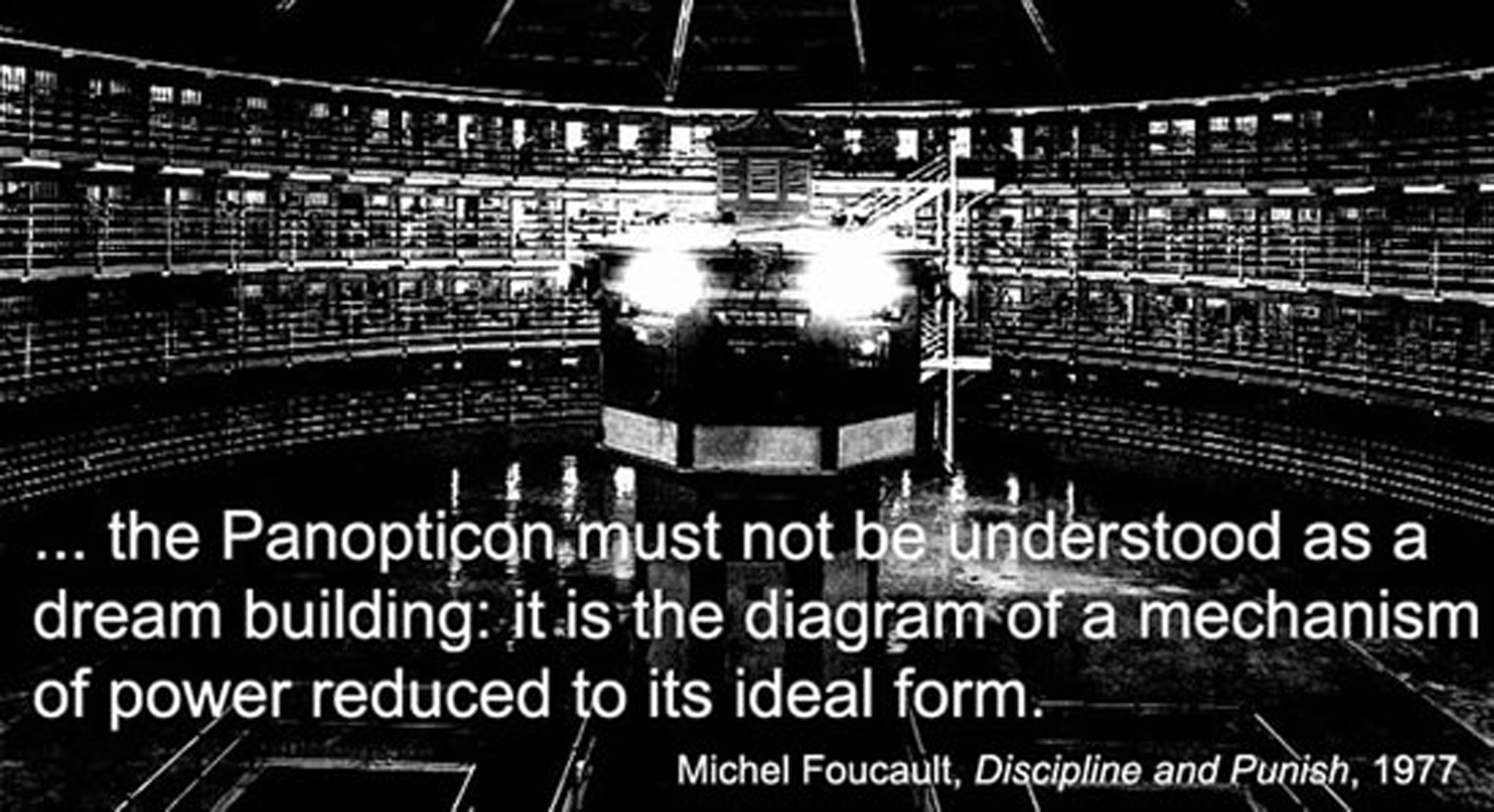
panopticon-image

By Douglas Haddow

Source: Adbusters

“So tell me, why did you leave your last job?” he asks.

The first thing I remember about the internet was the noise. That screeching howl of static blips signifying that you were, at last, online. I first heard it in the summer of ’93. We were huddled around my friend’s brand new Macintosh, palms sweaty, one of us on lookout for his mom, the others transfixed as our Webcrawler search bore fruit. An image came chugging down, inch by inch. You could hear the modem wince as it loaded, and like a hammer banging out raw pixels from the darkness beyond the screen, a grainy, low-res jpeg came into view. It was a woman and a horse.

Since then, I’ve had a complicated relationship with the internet. We all have. The noise is gone now, and its reach has grown from a network of isolated weirdos into a silent and invisible membrane that connects everything we do and say.

“I needed a bigger challenge,” I say. This is a lie.

The brewpub we’re in has freshly painted white walls and a polished concrete floor, 20 ft ceilings and dangling lightbulbs. It could double as a minimalist porn set, or perhaps a rendition chamber. Concrete is easy to clean. The table we’re at is long and communal. Whenever someone’s smartphone vibrates we all feel it through the wood, and we’re feeling it every second minute — a look of misery slicing across my face when I realize it’s not mine.

“Tell me about your ideal process,” the guy sitting down the table from us says. My eyes strain sideways. He looks to be about thirty; we all do. Like a young Jeff Bezos, his skin is the color of fresh milk. He’s dressed like a Stasi agent trying to blend in at a disco. Textbook Zuckercore: a collared blue-green plaid shirt unbuttoned with a subdued grey-on-grey graphic tee, blue jeans and sneakers. Functional sneakers. Tech sneakers. This is a tech bar. Frequented by tech people who do tech things. The park down the street is now a tech park. That’s where the tech types gather to broadcast their whimsy and play inclusive non-sports like Quidditch, which, I’m told, is something actual people actually do. It’s a nerd paradise where the only problems that exist are the ones that you’re inspired to solve. And I want in on it, because I want to believe.

“I’m a big fan of social,” I blurt out as an aside. He replies with a calm and ministerial nod. Nobody says “social media” anymore, it’s just “social” now.

My atoms are sitting here drinking a beer, being interviewed for a position at a firm that specializes in online brand management systems. Which is a euphemism for a human centipede of marketers selling marketing to marketers for marketing. The firm is worth a billion dollars. You’ve never heard of it. It’s the type of place where they force you to play ping-pong if you come in looking depressed. Meet the new boss, same as the old boss, except this one is very concerned that you see him as a positive force in the universe.

I’m here, bringing the cold beer to my dry lips and bobbing my head in my best impersonation of someone who doesn’t feel ill when he hears the words “key metrics,” “familiarity,” “control groups” and “variant groups.” It’s the dawn of the new creative economy, and I can dig it. I’m here, but I’m also spread across the internet in a series of containers. I’m in Facebook, I’m in Instagram, I’m in Google, I’m in Twitter and a thousand other places I never knew existed. Depending how my body is disposed of, it will either become dirt or atmosphere. But the digital atoms will live forever, or at least until civilization is incinerated by whatever means we choose to off ourselves.

“What about this position interests you?” he asks.

When the TechCrunchers preach the gospel of disruption, it’s from an industrial perspective that sees life on Earth as a series of business models to be upended. Disrupt or die is the motto, but they never mention the disruptees — the travel agents, the cab drivers, the bellhops. The journalists. The meat in the box before the box is crushed by the anvil of innovation.

“People have ideas about things but it’s a bunch of things. Sign up flow for example, high level things, but sometimes I think — let’s table this for now and put together some idea maps. I feel so empowered because we’re aligned,” someone else says. I look around but can’t trace the source.

It’s hard to focus on his questions when all the conversations occurring parallel to ours combine in a cacophony of sameness, as if we’re all Tedtalking a mantra of ancient buzzwords: Engagement. Intuitive. Connection. User base. Revolutionary. It’s like coke talk gone sour, not words that are meant to say things, but stale semiotics that signify you belong. This is the the new language of business. This is where Wall Street goes to find itself.

“I traded in my suit for khakis and sunglasses,” one of them says. But he’s wearing neither. “That’s the best decision you’ve ever made bro,” his colleague replies.

These are the most boring people on the planet. And it’s their world now, we’re just supplying the data for it. The game is simple: dump venture capital into a concept, get the eyeballs, take the data and profit. But the implications of this crude scheme are profound. Beyond all the hype, something weird is happening.

I can’t eat without instagramming my food. I can’t shit without playing Candy Crush. I can’t even remember who half the people are on my Facebook feed, but I’ll still mindlessly scroll through their tedious status updates and wince at their tacky wedding photos. Out of these aimless swipes, clicks and likes, a new world is being born. A world where everything we do, no matter how inane, is tracked, recorded, sorted and analyzed. Yahoo CEO Marissa Mayer has said the whole process is “like watching the planet develop a nervous system.” And through this system, every human action has become a potential source of profit for our data lords, a signal for them to identify and exploit.

“We are about to enter a world that is half digital and half physical, and without properly noticing, we’ve become half bits and half atoms. These bits are now an integral part of our identity, and we don’t own them,” says Hannes Grassegger.

Grassegger is a German economics journalist who was raised in front of his mom’s Macintosh, and later, on a Commodore 64 he got for his sixth birthday. He recently wrote “Das Kapital bin ich” (I am Capital), a book that has been criticized by the European left for being too capitalist, and by the right for being the communist manifesto of the digital era. In it he tries to answer a deceptively simple question: if our data is the oil of the 21st century, then why aren’t we all sheikhs?

“We’ve all been sharing. But the smart ones have been collecting — and they’ve packed us into their clouds,” he says. “Privacy. Transparency. Surveillance. Security gap. I don’t want to hear about it. These are sloppy downplayings of a radical new condition: We don’t own ourselves any more. We are digital serfs.”

Like Grassegger, and like everybody else, I was lured into this radical new condition with the feel-good promises of connection, friendship and self-expression. Apps, sites and services that allowed us to share what we loved, and do what we wanted. For Grassegger, these platforms were merely fresh lots ready to be ploughed, and in turn they kept the harvest: our feelings, thoughts, experiences and emotions, encoded in letters and numbers. Now they’re putting it all to work, exploiting these assets with algorithms and sentiment analysis, and our virtual souls are toiling even while we sleep.

His solution to this dilemma is practical and pragmatic, siding with a lesser evil of establishing a personalized free data market, which would allow us to exploit our information before others do it for us, arguing that “We must carry into the new space those rights and freedoms we eked out in the physical world centuries ago. The ownership over ourselves and the freedom to employ this property for our own benefit. Only this will help us leave behind our self-imposed digital immaturity.”

“KRRAAAAASHH!”

A waitress lets a pint glass slip from her hand and shatter on the floor, but no one bothers to look over; they’re too engaged. Then I notice something eerie about the vibe in this place. There’s no sneering, no sarcasm, and no self-deprecation. Everyone is just sort of floating along in an earnest tranquility. As if each anecdote about “that cool loft I found on Airbnb” contained some deep spiritual significance beyond my grasp.

My interrogator goes for a piss and I load up Facebook in the interim, hoping to find a shard of inspiration in my feed that will provide a topical talking point. Instead I find a listicle. A curiosity gap headline. An ad. A solicitation. Another ad. Another listicle. Oh dear, someone has lost their phone. And finally, an ad in the form of a listicle. Or is it a listicle in the form of an ad?

We were told to surf the web, but in the end, the web serf’d us. Yet there’s a worse fate than digital serfdom, as Snowden’s ongoing NSA revelations suggest. This isn’t simply about the commodification of all human kinesis, it’s the psychological colonialism that makes the commodification possible.

The nature of this bad trip was hinted at in June when we learned that Facebook manipulated the emotional states of nearly 700,000 of its users. Half of those chosen for the study were fed positivity, the others, despair. “The results show emotional contagion,” the Facebook scientists told us, meaning that they had discovered that alternating between positive and negative stimulus does indeed affect our behaviour. Or perhaps rediscovered. There’s a precedent for this. We’ve been here before.

Burrhus Frederic Skinner, known simply as B.F. to his BFFs, is best known as the psychologist with the painfully large forehead who tried to convince the world that free will was an illusion. But he wasn’t always so dire. He was once a young man with hopes and dreams who wrote poems and sonnets and wanted to become a stream-of-consciousness novelist like his idol, Marcel Proust. He failed miserably and it led him to conclude that he wasn’t capable of writing anything of interest because he had nothing to say. Frustrated and bitter, he resolved that literature was irrelevant and it should be destroyed, and that psychology was the true art form of the 20th century. So he went to Harvard and developed the concept of operant conditioning by putting a rat in a cage and manipulating its behaviour by alternating positive and negative stimulus. Now we’re the rats in the cage, only we don’t know where the cage ends and where it begins.

“What’s your five year vision for social?” he asks.

There’s a right way and a wrong way to answer this question. The wrong way is to be critical and cast scepticism on the internet’s role in our lives. For instance, you could draw a parallel between Facebook’s probing of emotional contagion and the Pentagon’s ongoing research into how to quash dissent and manage social unrest. Or you could mention how the Internet of Things will inevitably consolidate corporate power over our personal liberty unless we implement strict regulations on what part of ourselves can and cannot be quantified. But if you did that, you’d upset the prevailing good vibes and come off like a sickly paranoiac in desperate need of some likes.

The right way is to turn off, buy in and cash out. Reinforce the grand narrative and talk about how social is going to bring people together, not just online, but in the real world. How it will augment our interactions and make us more open. How in five years you’ll be able to meet your true love through an algorithm that correlates your iTunes activity to your medical history and how that algorithm will be worth a billion fucking dollars. And it’s through that magical cloud of squandered human potential that Skinner emerges once again and starts poking his finger into your brain.

After establishing himself as a household name, Skinner was finally able to live out his dream of writing a novel. That novel was Walden Two, a story about a utopian commune where people live a creative and harmonious life in accordance to the principles of radical behaviourism. In contrast to 1984 and Brave New World, it was meant to be a positive portrayal of a technologically-enabled utopian ideal. In it he writes, “The majority of people don’t want to plan. They want to be free of the responsibility of planning. What they ask for is merely some assurance that they will be decently provided for. The rest is a day-to-day enjoyment of life.”

In the late 60s, Walden Two directly inspired a series of attempts to create real world versions of the fictional community it described. These were just a few of the thousands of communes that were being established across America at that time. Some thrived, but the majority fell apart within a couple short years. They failed for a number of reasons: latrines overflowed, the tofu supply ran out, the livestock starved to death and so forth. But what many of them had in common was a cascading systems failure of their foundational hypothesis — that social change could be achieved through self-transformation and the problems of power could be solved simply by ignoring them. There was always a Machiavellian in the transformational mist, though, and a refusal to acknowledge outright how power creates invisible structures that undermine the potential for cooperative action ultimately led to their implosion. It’s in this stale pub, with its complimentary WiFi and overpriced organic popcorn, that those invisible power structures continue to thrive.

“There has to be incentive. There has to be. You can’t force people to use it,” a woman in the corner mutters. She’s among a cluster of people who for some reason are all carrying the same cheap, ugly backpack. Her hand gestures become more aggressive as the conversation progresses and she looks to be caught in a moment midway between panic and ecstasy. Her expression would make the perfect emoji for the inertia of our time. It looks sort of like this: (&’Z)

“Our notions of digital utopianism are deeply rooted in a communal wing of American counter-culture from the 1960s. That group of people have had an enormous impact on how we do technology. Many of the leading figures in technology come from that wing, Steve Jobs would be one,” says Fred Turner, a communications professor at Stanford University who researches and writes about how counterculture and technology interact.

“Their ideas of what a person is and what a community should be has suffused our idealized understanding of what a virtual community can be and what a digital citizen should be. That group believed that what you had to do to save the world was to build communities of consciousness — places where you would step outside mainstream America and turn away from politics and democracy, turn away from the state, and turn instead to people like yourself and to sharing your feelings, your ideas and your information, as a way of making a new world.”

There’s a fault line that runs underneath the recycling bins of America’s abandoned hippy communes all the way to my cracked iPhone 5 screen. And if there is one man who epitomizes the breadth of this fault, it’s Stewart Brand.

In 1968, Brand published the Whole Earth Catalog, an internet before the internet that provided a directory of products for sustainable, alternative and creative lifestyles, and helped connect those who pursued them. When the Whole Earth Catalog went out of business in 1971, Brand threw a “demise party” wherein the audience got to choose who would receive the magazine’s remaining twenty grand. They chose to give it to Fred Moore, an activist moonlighting as a dishwasher, who would go on to found the Homebrew Computer Club — the birthplace of Apple and the PC. In the 80s Brand launched The Whole Earth ’Lectronic Link, one of the world’s first virtual communities. Following its success, he started the Global Business Network — a think tank to shape the future of the world. They’ve worked on “navigating social uncertainty” with corporations like Shell Oil & AT&T, among others. In 2000, GBN was bought by Monitor Group, a consultancy firm that made headlines in 2011 by earning millions of dollars from the Libyan Government to manage and enhance the global profile of Muammar Gaddafi.

Brand’s most enduring legacy will likely come from coining the phrase “information wants to be free,” which serves as the business model for the Actually Existing Internet and the Big Data dream.

Looking around the brewpub, listening to the chatter, and staring into the bright blue eyes of my would-be employer, you can almost hear the words of Google CEO Eric Schmidt echo against the minimalist decor: “We know where you are. We know where you’ve been. We can more or less guess what you’re thinking about.”

In San Francisco, my fellow disruptees have taken to the streets and kicked off a proper bricks & bottle backlash against this sort of dictator-grade hubris that has come to define the Internet of Kings. Crude graffiti reading “DIE TECHIE SCUM” is scrawled on the sidewalk next to Googlebus blockades. TECH = DEATH signs are held up at protests. Tires are slashed, windows are smashed and #techhatecrimes is a hashtag that is being passed around Silicon Valley without a hint of irony.

Just down the street from where I’m sitting, a more passive form of protest has manifested in the form of a new café that promises an escape from the incessant blips and bleeps of the internet and its accoutrements.The tables there are also long and communal, but they’re wrapped inside an aluminum metal mesh designed to interrupt and restrain wireless signals and WiFi.

We are not going to escape this crisis by putting ourselves in a cage. There is no opt-out anymore. You can draw the blinds, deadlock your door, smash your smartphone, and only carry cash, but you’ll still get caught up in their all-seeing algorithmic gaze. They’ve datafied your car, your city and even your snail mail. This is not a conspiracy, it’s the status quo, and we’ve been too busy displacing our anxiety into their tidy little containers to realize what’s going on.

“Do you have any questions for me?” he finally asks, abruptly. My beer is empty, I’m thirsty for another, and the interview hasn’t gone well. I’ve failed to put on a brave face and the only questions that I have concern how much money I’m going to make. Will it be enough to pay for my escalating rent now that the datarazzi have moved into the neighborhood? Or will I have to drive an Über in my spare time to make ends meet?

The internet is a failed utopia. And we’re all trapped inside of it. But I’m not willing to give up on it yet. It’s where I first discovered punk rock and anarchism. Where I learned about the I Ching and Albert Camus while downloading “Holiday in Cambodia” at 15kbps. It’s where I first perved out on the photos of a girl I would eventually fall in love with. It’s home to me, you and everybody we know.

No, the appropriate question to ask is: “What is the purpose of my life?”

I’ve seen the best minds of my generation sucked dry by the economics of the infinite scroll. Amidst the innovation fatigue inherent to a world with more phones than people, we’ve experienced a spectacular failure of the imagination and turned the internet, likely the only thing between us and a very dark future, into little more than a glorified counting machine.

Am I data, or am I human? The truth is somewhere in between. Next time you click I AGREE on some purposefully confusing terms and conditions form, pause for a moment to interrogate the power that lies behind the code. The dream of the internet may have proven difficult to maintain, but the solution is not to dream less, but to dream harder.

WikiLeaks Cables Reveal U.S. Gov’t Planned To “Retaliate and Cause Pain” On Countries Refusing GMOs

monsanto

By Arjun Walia

Source: Collective Evolution

Studies that link Genetically Modified (GM) food to multiple human health ailments are not the only thing that has millions of people questioning the production of GM food. The fact that previously classified secret government documents show how the Bush administration developed ways to retaliate against countries that were refusing to use GM seeds is another. If documents regarding our food are required to be concealed from the public domain, something is not right, and it’s great to have an organization like WikiLeaks shed some light into the world that’s been hidden from us for so many years.

Targeting Certain Countries

The cables reveal that the State Department was lobbying all over the world for Monsanto, and other major biotech corporations. They reveal that American diplomats requested funding to send lobbyists for the biotech industry to meet with politicians and agricultural officials in “target countries.” These included countries in Africa, Latin America and some European countries.

A non-profit consumer protection group called Food & Water Watch published a report showing the details of the partnership between the federal government and a number of biotech companies who have pushed their GMO products on multiple countries for a number of years.

“The United States has aggressively pursued foreign policies in food and agriculture that benefit the largest seed companies. The U.S. State department has launched a concerted strategy to promote agricultural biotechnology, often over the opposition of the public and government, to the near exclusion of other more sustainable, more appropriate agricultural policy alternatives. The U.S. State department has also lobbied foreign governments to adopt pro-agricultural biotechnology politics and laws, operated a rigorous public relations campaign to improve the image of biotechnology and challenged common sense biotechnology safeguards and rules – even including opposing laws requiring the labeling of genetically engineered (GE) foods.” (source) 

HERE is one cable (out of many) from Morocco.

HERE Is a 2008 cable that summarizes a French documentary called “The World According to Monsanto which attacks the U.S. biotech industry and the fact that Monsanto and the U.S. Government constantly swap employees and positions, below is a excerpt from the cable:

Corporations Dictate Government Policy

“The film argues that Monsanto exerted undue influence on the USG. Former Secretary of Agriculture Dan Glickman is interviewed saying he had felt that he was under pressure and that more tests should have been conducted on biotech products before they were approved. Jeffrey Smith, Director, Institute for Responsible Technology, who is interviewed says that a number of Bush Administration officers were close to Monsanto, either having obtained campaign contributions from the company or having worked directly for it: John Ashcroft, Secretary of Justice, received contributions from Monsanto when he was re-elected, as did Tommy Thompson, Secretary of Health; Ann Veneman, Secretary of Agriculture, was director of Calgene which belonged to Monsanto; and Donald Rumsfeld, Secretary of Defense, was CEO of Searle, a Monsanto subsidiary; and Justice Clarence Thomas was a former lawyer for Monsanto.”

This is one example (out of many) that clearly show how giant corporations pretty much dictate government policy. When it comes to these food corporations, they are responsible for forcing independent agriculturists to go out of business, controlling the world’s seed supply and forcing farmers to become dependent on their seed. Monsanto and corporations like them have created this seed, and have prevented farmers from seed saving and sharing, which results in a dependence on Monsanto’s patented GMO seeds.

“The state department sent annual cables to ‘encourage the use of agricultural biotechnology,’ encouraging every diplomatic post worldwide to ‘pursue an active biotech agenda’ that promotes agricultural biotechnology, encourages the export of biotech crops and foods and advocated for pro-biotech policies and laws.” (source)

“The US Department of State is selling seeds instead of democracy. This report provides a chilling snapshot of how a handful of giant biotechnology companies are unduly influencing US foreign policy and undermining our diplomatic efforts to promote security, international development and transparency worldwide. This report is a call to action for Americans because public policy should not be for sale to the highest bidder.” – Wenonah Hauter, Food & Water Watch Executive (source)

One of the most revealing cables is from 2007, with regards to French efforts to ban a Monsanto GM corn variety. HERE is a cable that shows Craig Stapleton, former ambassador to France under the Bush administration, asking Washington to punish the EU countries that did not support the use of GM crops:

“Country team Paris recommends that we calibrate a target retaliation list that causes some pain across the EU since this is a collective responsibility, but that also focuses in part on the worst culprits. Moving to retaliation will make clear that the current path has real costs to EU interests and could help strengthen European pro-biotech voices.” (see source in above paragraph)

The U.S. government was not only working for the biotech industry, they were also threatening other governments who did not comply. Think about that for a moment. Over the years the United States government and Monsanto have collectively pushed their GMO agenda upon the rest of the world. Why? Do you really think it is to help feed the world? This could easily be done if we came together and pooled our resources. The entire planet could easily be fed organic food, and it could be done for free.

The World’s Resistance To GMOs

The past two years alone has seen millions of people from across the globe gather to show their opposition towards Monsanto and similar corporations. The “March Against Monsanto” is clear evidence of this. The people of the world are starting to see through the veil that’s been blinding the masses for years, and our food industry is one small, but large and important area where the veil is being lifted.

Activism and awareness has contributed to the banning of GMO products and the pesticides that go with them in multiple countries across the planet, it’s time for North America to follow suit.

Related CE articles:

New Study Links GMOs To Cancer, Liver/Kidney Damage & Severe Hormonal Disruption.

10 Scientific Studies Proving That GMOs Can Be Harmful To Human Health

For more CE articles on this subject please click HERE


Sources:

http://wikileaks.org/cable/2010/01/10RABAT14.html

http://www.cablegatesearch.net/cable.php?id=08PARIS614&q=monsanto

http://www.cablegatesearch.net/cable.php?id=07PARIS4723&q=france%20gm

http://rt.com/usa/wikileaks-monsanto-cables-report-273/

http://www.foodandwaterwatch.org/reports/biotech-ambassadors/


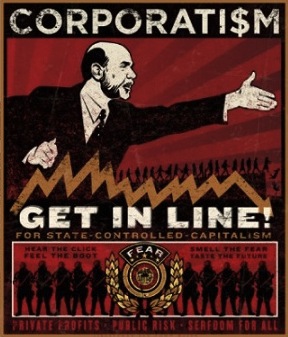
Corporatism Stifles Innovation

Corporatism-630-360

By James Hall

Source: BATR.org

For an economy to grow and create actual wealth, innovation is a bedrock component in the development of enhanced prosperity. Prosperity is an intriguing concept. Simply making and accumulating money falls short of establishing a successful economic model. This recent report illustrates a prime example. Facebook stock soars, as company briefly passes IBM in market value. “By most measures, Facebook is dwarfed by IBM: With about 7,000 employees, ten-year-old Facebook is on track to garner $12 billion in sales this year. The 103-year-old IBM has more than 400,000 workers and sold almost $100 billion of computer hardware and software in 2013.”

Is Facebook a shining star of innovation? Or is it the product of a society, which has given up on working towards a successful economy, whereby a prosperous middle class partakes in the engine of continued and shared affluence? Conversely, is IBM an innovated inventor, or is it a dinosaur of a previous era?

However, you answer such questions, Edmund Phelps in an opinion article, Corporatism not capitalism is to blame for inequality argues that tangible innovation is in decline.

“Innovation tailed off between 1940 and about 1970, while the top decile’s share of wealth and income began rising in the 1970s.

The causation runs the other way: losses of dynamism have tended to sharpen wealth inequality because it hits workers of modest means more than it hurts the wealthy. Developing new products is labour-intensive. So is producing the capital goods needed to make them. These jobs disappear when innovation stalls.”

An explanation of The Rise and Fall of Western Innovation, addresses the plight of economic reality. “It is undeniable that the U.S. economy is not delivering the steadily improving wages and living standards the nation’s residents expect.”

Mass Flourishing is meant to be Edmund Phelps’s chef d’oeuvre, the capstone to a half century of research into the sources of national wealth.

A decline in the pace of innovation threatens prosperity, in the U.S. and everywhere else.

The main cause of this decline, according to Phelps, is corporatism—the inevitable tendency of businesses, workers, and other interests to band together to protect what they have. In modern economies, he says, corporations, unions, and other interests turn government into an agency for forestalling change and preserving the status quo.”

The noted economic expert and academic Robert J. Shiller, in his article, Why Innovation Is Still Capitalism’s Star, provides a critique of “Mass Flourishing: How Grassroots Innovation Created Jobs, Challenge and Change”.

“Professor Phelps discerns a troubling trend in many countries, however, even the United States. He is worried about corporatism, a political philosophy in which economic activity is controlled by large interest groups or the government. Once corporatism takes hold in a society, he says, people don’t adequately appreciate the contributions and the travails of individuals who create and innovate. An economy with a corporatist culture can copy and even outgrow others for a while, he says, but, in the end, it will always be left behind. Only an entrepreneurial culture can lead.”

Jared Bernstein does not agree as stated in a response to Professor Shiller in ‘Does the Government Stifle Innovation? I Don’t See It (To the Contrary…)’. “My points are that a) many important innovations have involved government support somewhere along the way, and b) while one could and should worry about waste in this area, I’ve not seen evidence, nor does Shiller provide any, of stifling. …”.

Well, that viewpoint sure sound like Obama’s infamous endorsement of a government corporatism model, “If you’ve got a business — you didn’t build that. Somebody else made that happen.”

When examining the way corporate transnational businesses operate in the real world, their lack of internal in-house innovation is notorious. These gigantic corporatist carnivores excel at mergers and accusations in the quest of monopolization of markets. In these endeavors, their best friend is government cronyism and favoritism.

The essay, Blaming Capitalism for Corporatism, makes an important point.

“In various ways, corporatism chokes off the dynamism that makes for engaging work, faster economic growth, and greater opportunity and inclusiveness. It maintains lethargic, wasteful, unproductive, and well-connected firms at the expense of dynamic newcomers and outsiders, and favors declared goals such as industrialization, economic development, and national greatness over individuals’ economic freedom and responsibility. Today, airlines, auto manufacturers, agricultural companies, media, investment banks, hedge funds, and much more has at some point been deemed too important to weather the free market on its own, receiving a helping hand from government in the name of the “public good.”

Here within dwells the essential dilemma, defining the genuine “Public Good“. Government often acts according to Mr. Bernstein’s idea of progress, especially in technological terms. Focus on the notion – “economically important” – and the language filter that translates into a benefit for the Corporatocracy matrix.

“While “entrepreneurial culture” will always be essential, many innovations that turned out to be economically important in the US have government fingerprints all over them. From machine tools, to railroads, transistors, radar, lasers, computing, the internet, GPS, fracking, biotech, nanotech—from the days of the Revolutionary War to today—the federal government has supported innovation often well before private capital would risk the investment.”

Corporatism invents methods of greater control and market dominance for select elitist beneficiaries. When government provides seed money to fund research projects, pure science is seldom the objective. As examined in the essay, How Government Did (and Didn’t) Invent the Internet, Harry McCracken writes: (I’m even prepared to believe that if the Internet hadn’t been invented at DARPA, the private sector would have stepped in and done the job. But we’ll never know for sure, since it was invented at DARPA.)

Thus, the paradox most people are unable to see beyond the guise of “so called” progress. Is government involvement or outright development of transhumanist futuristic technology a valid form of innovation or is it the terminal scourge of central planning and a controlled economy? Surely, under such a system, the “Mass Flourishing” of sharing the wealth, will no longer be an issue among the “useless eaters”, designated for extinction.

– See more at: http://www.batr.org/corporatocracy/073014.html#sthash.RFUeioGh.dpuf

The Awakening – Clash of Civilizations

By Zen Gardner

Source: ZenGardner.com

Despite the furious efforts of the world’s Machiavellian destroyers, humanity is waking up. We’re seeing significant progress in exposing the ongoing brutal Gaza extermination, the mass revelation of chemtrails and other neo-scientific incursions, the disastrous effects of EMFs of every source, GMO food manipulation, tectronic surveillance and monitoring, and the front and center clearly induced global war and the militarization of society.

We’re in the thick of it now.

Don’t let these events and seeming contests of ideology throw you. There’s nothing level about this playing field, and the mass narrative is strong propaganda. Don’t even listen to it. Rely on your heart and alternative sources. Their only weapon is our consent by yielding to their lies. Disinformation serves several purposes, the most insidious of which is to introduce doubt to your heartfelt conviction regarding the reality of what is obviously before you. Keeping the mass mind at bay is imperative to their program.

Why? If we woke up to the truth we’d stop our participation and/or rise up and overthrow them. And they know that.

Major Signs of Awakening

As mentioned above, there are many manifestations that the Truth is flooding in to human consciousness. What we collectively do with this information is one thing; what we individually do with it is the key. We either activate, or we don’t. The more who do, the greater the mass awakening. With or without the masses, the awakening is coming to pass anyway, come what may. That’s the wonderfully exciting reality. What the naysayers and foot draggers do with it is their business, and their demise if they choose wrongly to ignore what is more obvious by the minute.

That Israelis are sitting on a hill sipping drinks in their beach chairs cheering the slaughter of civilian Palestinians should send shivers up anyone’s spine. That a captive population is being mercilessly annihilated on any pretext should shock even the most hard of hearing soul. Yet the mainstream media pounds its narrative of who the poor defenseless “good guys” are versus the obvious genocide and territory grab by an invading army.

Why not? The US has been doing this for decades, as have the Israelis. The conditioning runs deep. Literally mindfucked Amerikans are cheering just as avidly as is a swath of other similarly infected Canadians and Europeans and other mentally and spiritually disturbed Zionists around the world. The rest of the world sees it for what it is. A targeted slaughter and annihilation of something that’s in the way of another globalist maneuver for psychopaths to get what they want. And when it comes to the rabid Zionists everyone stands back.  The puppet powers and similarly cowed populace don’t dare touch them. Zionist fingers are in every facet of today’s societal and governmental fabric. The world is afraid to confront them.

Yet the truth of this masqueraded massacre is for all to see. The onus is on humanity. And the alternative is becoming crystal clear.

Financial, Governmental and Mad Scientific Schemes are Increasingly Obvious

Besides the obviously engineered take down of the Middle East and now Ukraine, there are many other fronts this hurricane of Truth is eroding in the human psyche. The geoengineering of our climate, oceans and soil are also becoming painfully, for them, clear. As long as real information is available hungry souls will find it and be forced to process it.

We also clearly see the central banking system, the FED, and our manipulated financial structure being exposed. Sitting helplessly watching no longer becomes an option. Pulling out of their system is a given eventuality, and it’s happening, as it becomes more evident by the day that major governmental powers are run by bought-off crooks and stooges.

The geoengineering chemtrail scam, poisoning humanity from it’s skies for whatever pretense, is taking a serious beating as communication and committed activism exposing this global affront wears away the veneer of outright lies and denial of such an obvious phenomenon. Take a look at the recent results of  sincere, concerned determination to bring this issue to the forefront of public awareness:

Our EMF Bombardment

Another insidious attack on our health and freedom is the electromagnetic assault on humanity, all in the guise of convenience, “conservation” and safety of course. Never mind the horrific surveillance invasion of our planet, the very presence of so many electromagnetic rays from so many man-made sources permeating our existence is one of the greatest threats to us, altering our genetic and physical make up and even influencing our thoughts and inherent impulses.

Besides France banning wi-fi in schools and Russia’s cellphone for youngsters prohibition, here’s just one example of the growing backlash under way:

Brazilian Courts order lower electromagnetic pollution

The Brazilian Judiciary determined to reduce the level of electromagnetic pollution generated by power lines to standard adopted by Swiss law (1.0 microtesla).

Two associations of residents in São Paulo — the largest city of Brazil — proposed the action. The plaintiff has pleaded to not be exposed to electromagnetic fields incompatible with the human health.

The electromagnetic fields generated by power lines that cross these areas is 10 times greater than the level determined by the court. The judgment of the Court of State of São Paulo (Tribunal de Justiça de São Paulo) has determined that the concessionaire of electric power reduces the electromagnetic field generated by power lines that pass through these neighborhoods. (Source)

GMO Rejection

The public outcry against genetically modified foods and the resultant use of the killer chemical glysophate has been front and center for quite a while. While the Monsanto dynasty and its network of affiliate chemical and distribution companies and ongoing governmental bribes and planted personnel continues its campaign, the rise against such infected food tyranny has been proportionally greater.

You just don’t mess with conscious people’s health. Period. And there are more of us by the minute.

Russia, China and a host of other nations are refusing to import GMO products. That this is so front and center in the public mind, whatever their entrained reflexive minds tell them, highlights this issue. Even more so in Amerika, whether to have these tampered with foods even labelled is appearing at their ballot boxes is keeping this subject front and center.

That’s pretty tough to ignore, even for the most brain dead, Brave New World “Epsilon” cretin out there.

The awakened civilization rolls on.

The List Continues

If you need further encouragement, get involved. You’ll see signs of it everywhere. Major inroads of Truth are being made by the minute as these disgusting forces continue to attempt to forge their desired goal of a subservient, complacent and even happily servile work force. Damn them, and do it with gusto.

Don’t be deceived, it’s all a wicked charade. A ploy, a scam: a counterfeit civilization they’re trying to construct that true conscious humanity is dissolving by the hour.

Disconnect – disobey – and de-enlist. Break your unconscious and conscious agreements. The parasites will shrivel up and disappear.

The time is now. It’s ours for the taking. And receiving.

Much love always, keep on, Zen

GMOs: the ‘right to know’ campaign is winning

did-you-know-graph

By Ralph Nader

Source: The Ecologist

Campaigners for the labeling of GMOs in food are winning their battle against corporate America, writes Ralph Nader. No wonder the corporations are fighting back with lawsuits and scare stories … they’re on the back foot, and they know it.

Let us celebrate today the latest initiatives of our nation’s growing food safety movement.

Across the country, consumers are demanding the right to know what is in their food, and labeling of genetically engineered food.

It’s a vibrant and diverse coalition: mothers and grandmothers, health libertarians, progressives, foodies, environmentalists, main street conservatives and supporters of free-market economics.

Last year, a New York Times poll found that a near-unanimous 93% of Americans support such labeling.

FDA: GMO food not proven safe

This is no surprise. Genetically engineered food has yet to be proven safe. In 1998, the US Food and Drug Administration (FDA) admitted in court that it had reached “no dispositive scientific findings” about the risks of genetically engineered foods.

There is no scientific consensus about the risks of eating genetically engineered food, according to a statement last year signed by nearly 300 scientists.

The scientists agree that “Concerns about risks are well-founded” and that a “substantial number” of “animal feeding studies and reviews of such studies … found toxic effects and signs of toxicity” in animals fed genetically engineered food, compared with controls. “Some of the studies give serious cause for concern.”

For example, a review of 19 studies on mammals, published in Environmental Sciences Europe, found that the “data appear to indicate liver and kidney problems” arising from diets of genetically engineered food.

According to Consumers Union senior scientist Michael Hansen PhD, the ability of genetically engineered crops to induce allergic reactions is a major food safety concern.”

GMO risks – many questions, few answers

When it comes to genetically engineered food, there are questions about risks, but no convincing answers. There is no mandatory pre-market safety testing for genetically engineered food.

These questions of risks and safety have festered for years because the big agrichemical companies use their intellectual property rights to deny independent scientists the ability to test genetically engineered crops, or to report their results.

Scientific American called these restrictions on free inquiry “dangerous”. “In a number of cases”the magazine reports“experiments that had the implicit go-ahead from the seed company were later blocked from publication because the results were not flattering.”

When scientists do publish studies adverse to the interests of the big agrichemical companies, they are met with vicious attacks on their credibility, their science and even in their personal lives.

Sixty-four nations have already required labeling of genetically engineered food, including the members of the European Union, Australia, Brazil, Turkey, South Africa, even Russia and China.

Nestlé: it’s no longer business as usual

The food industry is feeling the pressure. Paul Bulcke, CEO of Nestle, the world’s largest food and beverage company, said that “It is not business as usual anymore. Pressure is mounting from all sides and angles.”

Despite the overwhelming popularity of labeling, Congress refused to act, so citizens took up the cause in their own states.

Under heavy corporate lobbying and deceptive TV ads, ballot initiatives for labeling of genetically engineered food were narrowly defeated by 51% – 49% in both California and Washington State. In May, legislation in the California Senate led 19-16, but failed without the 21 vote majority needed for passage.

Finally, on May 8, in a major victory, Vermont approved the first unconditional statewide labeling law for genetically engineered food.“Vermonters take our food and how it is produced seriously, and we believe we have a right to know what’s in the food we buy”, said Gov. Peter Shumlin.

Since then, the food and agrichemical industries have escalated to a full panic. On June 13, the Grocery Manufacturers Association and three other trade associations – the heart of the junk food industry – filed a lawsuit in federal court to block the new Vermont labeling law.

The good news is that people are rushing to Vermont’s defense, including Ben & Jerry’s ice cream, which will re-name one of its flavors ‘Food Fight! Fudge Brownie’ to help fund a vigorous legal defense of Vermont’s new labeling law.

No, GMO labeling will not increase food prices

Elsewhere, industry is spending lavishly against the food movement. In New York State, the Daily News reported that “Trade organizations, farm groups and corporate giants such as Coca-Cola and Kraft have spent millions of dollars on lobbyists and campaign contributions to defeat” labeling of genetically engineered food.

The food industry is quick to scare consumers with the canard that labeling of genetically engineered food will raise food prices. But manufacturers change their labels often, so their claim doesn’t make sense.

It has been debunked in an study by Joanna Shepherd Bailey, a professor at Emory University School of Law, who found that“consumers will likely see no increases in prices” as a result of labeling genetically engineered food.

In Congress, US Rep Mike Pompeo (R-KS) introduced a bill at the behest of the Grocery Manufacturers Association – dubbed by its consumer opponents the ‘Deny Americans the Right-to-Know (DARK) Act’ – to block any federal or state action for labeling of genetically engineered food.

Sometimes, politics is drearily predictable: Can you guess Rep. Pompeo’s largest campaign contributor? You got it: Koch Industries.

Left and Right united can defat the corporate lobbies

But the shame is fully bipartisan: sleazy Democratic lobbyists like former US Senator Blanche Lincoln and Steve Elmendorf are plying their trade for Monsanto and the Grocery Manufacturers Association to keep you from knowing what’s in your food.

Meanwhile, the food disclosure movement is going full speed ahead with ballot initiatives for GMO labeling in Oregon and Colorado, as well aslegislative efforts in many other states.

There’s a great lesson in all this: when left and right join together, they can defeat big corporations and their subservient politicians. That’s the theme of my new book, Unstoppable: The Emerging Left-Right Alliance to Dismantle the Corporate State.

Food labeling is hardly a radical idea. Conservative economists are quick to point out that the free exchange of information about products is crucial to the proper functioning of a free market.

Even Monsanto supported labeling of genetically engineered food in Britain. But it spends millions to oppose labeling here in America. Such is corporate patriotism in the 21st Century: St. Louis-based Monsanto believes the British deserve more consumer rights than Americans do.

Not worried? You ought to be …

There are other reasons to be concerned about genetically engineered crops.

Genetically engineered crops have led to increased use of pesticides. For example, a study by Professor Chuck Benbrook of Washington State University found that between 1996 and 2011, genetically engineered crops have brought an increased use of more than 400 million pounds of pesticides.

Mutating weed resistance is requiring the Monsantos to sell even more powerful herbicides. More details on these backfiring GMO crop technologies are contained in the new book titled The GMO Deceptionedited by Professor Sheldon Krimsky and Jeremy Gruber.

Perhaps most alarming is the corporate control of agriculture in the hands of the world’s largest agrichemical companies – Monsanto, DuPont, Syngenta, Dow, Bayer and BASF.

“The Big 6 chemical and seed companies are working diligently to monopolize the food system at the expense of consumers, farmers and smaller seed companies”said Philip H. Howard, an associate professor at Michigan State University.

Food is love

These companies may be meeting their match in the mothers and grandmothers who have powered the movement for labeling of genetically engineered food. Like Pamm Larry, the pioneering grandmother who came up with the spreading idea reflected by the California ballot initiative for labeling.

Mothers know that food is love. Certainly, my mother did. She taught me early and often about how important it is to eat healthy food. She even wrote about these values in the book, It Happened in the Kitchen.

I’d like to think that she’d feel right at home with the mothers and grandmothers of today’s food movement. I sure do. In some ways, that’s the point: a movement that makes you feel at home, no wonder it is so popular.


Ralph Nader’s latest book is: Unstoppable: the Emerging Left-Right Alliance to Dismantle the Corporate State.


Podcast Roundup

6/8: Hosts Mickey Huff and Peter Phillips discuss the ongoing situation in the Ukraine with Dr. Michael Parenti, Prof. Michel Chossudovsky, and former Congresswomen and Green Party Presidential candidate Cynthia McKinney on “the Project Censored Show”. All of them are contributors to a new book by Clarity Press edited by Stephen Lendman, “Flashpoint Ukraine: How the US Drive for Hegemony Risks WWIII.”

https://s3.amazonaws.com/Pcradiodos/Project+Censored+060614.mp3

6/9: On “the Progressive Commentary Hour”, host Gary Null interviews Dr. Andrew Wakefield, a gastroenterologist and academician specializing in inflammatory bowel disease and the measles-mumps-rubella vaccine or MMR. They discuss how the US government uses corporations and universities to support policies, silence top scientists, jeopardize public health and protect corporate profits.

http://s36.podbean.com/pb/3f11f4e516587793b6f2d38475623afc/5398ccbc/data1/blogs18/371244/uploads/ProgressiveCommentaryHour_060914.mp3

6/10: On “the Higherside Chats”, Adam Gorightly and Vyzygoth joins host Greg Carlwood for a freewheeling but illuminating conversation about the suppressed history of the United States hidden beneath lies and disinformation most have been led to believe.

http://thehighersidechats.com/wp-content/uploads/2014/06/112-Vyzygoth.mp3

6/12: KMO talks with Vincent Horn of Buddhist Geeks on the lastest C-Realm podcast. They discuss the use of mindfulness techniques in technological society and its connection to DIY, Quanitifed Self and Maker movements. KMO wraps up with commentary on the nature of individualism and community.

http://www.c-realm.com/wp-content/uploads/418_Adaptive_Comtemplation.mp3