Peter Levenda is best known as the author of the Sinister Forces series, a seminal trilogy on the occult history of the United States. He’s also the alleged author of the Simon Necronomicon. Like Robert Anton Wilson (with a more historical and sociological bent), Levenda is able to draw connections between a wide range of fascinating but seemingly disparate topics and consistently digs up mindblowing information that could leave readers questioning their understanding of reality. Throughout the year he’s been doing a larger than usual number of podcast interviews in part to promote his latest book The Hitler Legacy: The Nazi Cult in Diaspora, How it was Organized, How it was Funded, and Why it remains a Threat to Global Security in the Age of Terrorism. Fans of his writing will likely enjoy all the following podcasts which highlight different aspects of his work. Those new to Levenda might want to start with the Higherside Chats interview which provides an expansive yet concise overview of his research.
12/17/15: The Higherside Chats (Sinister Forces, Occult History and The Nine)
By Luther Blissett and J. F. Sebastian of Arkesoul
Perhaps no philosophical concept more aptly describes the current cultural milieu than hyperreality, characterized by wikipedia as “an inability of consciousness to distinguish reality from a simulation of reality, especially in technologically advanced postmodern societies.” The predominance of hyperreality comes at a time when people in power have never had more to conceal, distort and distract the population from while there’s never been more people who have more means and motives to stay distracted. This is evident in many aspects of contemporary life from corporate news narratives shaped by sponsors and “official sources”, increasingly absurd denials of the true state of the economy from (mis)leaders, widespread dependence on pharmaceuticals worsened by direct-to-consumer advertising and a sham drug war, fanatical worship of celebrities, to slavish acquiescence to fads and fashion. But most obvious is the increasing amount of time spent in front of screens whether for work, shopping, social media, education, self-expression, games, web content, or the exponentially growing volume of video entertainment. Though video games and web series are catching up, the primary narrative formats for cultural expression and transmission today are still television and film.
Struggling to retain their cultural/economic status in the face of increased competition while appeasing shareholders of their monolithic multinational corporate owners, large film and television studios are increasingly risk averse. This is glaringly apparent in the output of major studios which are for the most part the media equivalent of comfort food; familiar (formulaic), satisfying (crowd pleasing), full of empty calories (lacking intellectual/emotional complexity or challenging ideas) and generally bland in terms of content and presentation. On television this is commonly displayed through clichéd tropes, characters and situations while films are now more than ever driven by CGI enhanced spectacle. Both rely on repeating what has worked in the past and (for viewers of a certain age) appealing to nostalgia while pandering to current cultural trends.
Of course such strategies overlap, as there’s more than a few television programs that offer Hollywood style spectacle and big budget movies which imitate successful formulas in the form of adaptations, sequels, prequels, reboots, spin-offs, and mockbusters. In fact the majority of Hollywood’s summer blockbuster output is now comprised of such derivative and safe content predominantly in the form of fantasy and science fiction films.
The ideological motives and functions of cinema and other pop culture are manifold, but a major one is control and influence of mass audiences. We now know the US government has been doing it at least since the 1950s. According to a Church Committee investigation detailing Operation Mockingbird in 1976:
“The CIA currently maintains a network of several hundred foreign individuals around the world who provide intelligence for the CIA and at times attempt to influence opinion through the use of covert propaganda. These individuals provide the CIA with direct access to a large number of newspapers and periodicals, scores of press services and news agencies, radio and television stations, commercial book publishers, and other foreign media outlets.”
More recently, in 1991 the Task Force Report on Greater CIA Openness revealed the CIA “now has relationships with reporters from every major wire service, newspaper, news weekly, and television network in the nation,” which enables them to “turn some ‘intelligence failure’ stories into ‘intelligence success’ stories, and has contributed to the accuracy of countless others.” It also revealed that the CIA has “persuaded reporters to postpone, change, hold, or even scrap stories that could have adversely affected national security interests…” (Global Research, Lights, Camera… Covert Action: The Deep Politics of Hollywood)
Government influence of culture factories such as Hollywood through covert infiltration or embedded advisors ensures that the end product reflects the values and behaviors they wish to promote (ie. xenophobia, deference to authority, nationalism, parochialism, narcissism, anti-intellectualism, consumerism, rapaciousness, etc). In some cases, most notably Zero Dark Thirty and United 93, the goal is to cement an official narrative into the collective consciousness. A more sophisticated method of social engineering via Hollywood is predictive programming; presenting through media societal changes to be implemented by leaders in order to gradually condition the public and reduce resistance to such changes.
Manipulation of public sentiment through mass media also makes sense from a purely corporate perspective. Why wouldn’t media owners gear the ideological content of their products to support the systems they benefit from while screening out more critical messages? Occasional subversive content may get past the gatekeepers if it’s immediately profitable (which it sometimes can be if particularly resonant), can be co-opted in some way that serves the status quo, or if the creative minds behind it are particularly lucky, talented, and/or well connected. Regardless, one could argue uncritical media consumption is a form of pacification through distraction and escapism and all corporate media content are a result of calculating the highest return on investment, which more often than not reflects the culture’s most deeply ingrained values and myths.
This is particularly true for fantasy/sci film films, which have become ubiquitous for a number of reasons including cultural tastes of global demographics, aesthetic trends (eg. hyperreal CG effects for evermore spectacular imagery), impact of changing media technology on the economics of production and distribution, growing awareness of the value of properties belonging to rich fictional universes which can be mined by worldbuilding studio screenwriters, and in many cases, resonance with our increasingly dystopian world. Most fundamental is profitability, especially as sfx technology becomes more advanced and affordable, licensing opportunities increase, and film franchises that come with large and passionate built-in fan bases reduce the need for marketing and practically sell themselves.
Many who grow up immersed in geek culture already have a hyperreal relationship with fantasy and science fiction realms which heightens the nostalgia evoked by the stream of multimedia incarnations and product tie-ins (bolstered by cult-like fan communities). Is it any surprise that fans who’ve extrapolated on the “Jedi” concept from the Star Wars films turned it into a religion? The Jedi cosmology (and similar ones from countless sci-fi/fantasy films) are modeled on mysticism, a philosophical framework which could fill a void for spiritually deprived materialist cultures. For many people, comic book fandom is another safe and entertaining way to explore concepts that might otherwise be too “out there” (perhaps especially among those who share an equally strong interest in materialist science). At the same time, because of the influence of marketing, the greater role of technology in society and changing cultural trends, geek culture has become a larger part of mainstream culture. Combined with celebrity worship, the lure of technology (both on-screen and off), and increasingly omnipotent powers of multinational corporations, modern big budget sci-fi/fantasy films represent a confluence of potent socioreligious crosscurrents.
Recent works such as Christopher Knowles’s Our Gods Wear Spandex and Grant Morrison’s Supergods examine to an extent superheroes as modern mythological archetypes. Bill Moyer’s The Power of Myth explored how Joseph Campbell’s theory of the monomyth (or hero’s journey) influenced and shaped the Star Wars films (which itself has influenced myriad blockbusters since). In The Hero With a Thousand Faces, Campbell identified a story template used in almost all pre-modern cultures across the globe which goes something like this:
A reluctant “chosen one” in an ordinary world receives a call to adventure and warning of a danger that must be confronted. With the training and wisdom of a mentor the hero crosses the threshold into the unknown. Companions acquired along the way assist in overcoming a series of challenges and temptations until reaching the depth of their fears and resultant apotheosis or rebirth. This empowers them to achieve their goal and return triumphant to an admiring family/community/nation etc.
It’s not hard to see the attraction of narratives such as this which tap into primal emotional needs and can be found in a wide range of religious narratives such as the lives of Buddha, Christ, Muhammad and Rama among others. It also serves as a metaphor for spiritual/psychological journeys through life.
In a recent post on his Secret Sun blog, Christopher Knowles states “Myths grow out of times of crisis and upheaval, in one way or another. The current vogue for superheroes is a symptom of the powerlessness felt by a populace under assault by the realities of Globalist social engineering, war-making and economic redundancy.” I would add that myths can also be exploited to function as part of a cultural assault to perpetuate Globalist agendas. Authoritarians are all too eager to depict themselves as monomythic demigod saviors and/or those serving them as self-sacrificing rugged individualist heroes fulfilling their grand destinies.
In the same piece, Knowles concludes: “But myths do die. They aren’t immortal. The next war or wars may in fact sweep away the myths of the 20th Century entirely. The wars may send people reaching back to far older myths as civil wars can rekindle the bonfires of identity, sending people back to the myths of ancestors. This has always emerged in times of close conflict, particularly in conflicts seen as struggles against occupying powers.”
If he’s correct, there may be some hope for our culture to reclaim myths as a means of understanding reality rather than serve as a trapdoor to fabricated hyperreality. The problem is that there is a gap that needs “filling in” between reality and hyperreality. One of the many consequences of postmodernism is the complete blurring of the line between what is real and what is not. A sort of apathy has kicked in within the human psyche given that crushing truths, not easily discernable in the past, are all out there in the raw. Religious and scientific truths once held sacred can be easily discarded. Morality is a rare hobby in a generation both cynical and powerless to discern reality. This is as well due to globalism and technology, which serve as hubs for information retrieval that wasn’t readily available. Humanity has developed thicker skin, while at the same time widened the existential void left by a reality that is less and less objectifiable. Opinion makers are everywhere, information is ubiquitous, and the species is obsessed with being entertained while answers are readily manufactured in the shape of capital fetishes, all the while ideology that purportedly made a call for a “better and different” world, such as Marxism and psychoanalysis, has become both a haunting spectre and an empty promise.
In the past these formulae failed. In the future they seem more and more unlikely. Capitalism has adapted itself to revolutionary ideology. It has generated even more power from it, defusing the motivation for change and twisting the definition of revolution, all the while turning such concepts into brands. The irony. There is call for a “new objectivism”, however. A bet for a system reboot, in which categorical truths can be retrieved and argued from. The analogy is this: keeping what works and dismissing what doesn’t. Sounds like a simple and logical plan. The problem is that those who get to define what works and what doesn’t will be the powerful, uncanny minority. This is their game, and we have cynically accepted it. It is the way it is. Unless we can evolve from reality to hyperreality, and from hyperreality back into reality, as a species that learns, adapts, understands how high the stakes really are, and moves forward as a collective that is conscious and responsible of its flaws, it appears we are doomed. Three scenarios: first, the narrative will continue as is: the majority will continue to be repressed, and will perpetually seek escape by the hand that feeds until lost completely in hyperreality. Technology moves forward, religion condenses into inconvenient myth: we completely “plug in”. Then what? Well, you just have to see Her to see into this future. The second, war extinguishes civilization and winds back the evolutionary clock, think Mad Max, until we reach the first scenario, as if in a loop. The third and most bleak, nuclear war. The species ends.
What we learn from this exercise is that we are at the apex. This is it. The crushing truth of existence is firmly on our shoulders. War is unravelling. An ever-shrinking number of brands dominate the world. And an even smaller number of people call the shots. In between reality and hyperreality there is confusion. There is no longer a basis to discern between the two. We are as it were, lost. We need to fill in this gap. We need to dig deeper than ever before for a reason to dissolve our differences. Somehow the dilemma is set: surrender or die. But the crux of the problem can be overridden if we use the knowledge and tools we have to fight for a better, and more responsible alternative.
Editor’s note: On this 87th anniversary of the birth of Philip K. Dick (December 16, 1928 – March 2, 1982), enjoy a deep dive into some of the more paranormal aspects of his life and how they relate to experiences of other visionaries.
This article will look at some of the similarities between the contact experiences of two American writers, Philip K Dick and Robert Anton Wilson. In the 1973-1974 time frame, both would have unusual experiences that they thought could be contact with an extraterrestrial civilization. Or some undefinable something that wanted them to think it was extraterrestrial. And as incredible as it sounds, some of their experiences are confirmed by other people, and include verified transmission of knowledge that it seems they could not have obtained from any human source. We will also look very briefly at some other possibly related contact experiences involving musician and cultural icon John Lennon, researcher into human-dolphin communication and consciousness Dr. John Lilly and the Swiss scientist and inventor of LSD Dr. Albert Hofmann.
NOTE: William Burroughs first told Robert Anton Wilson about the “23 Enigma”. Wilson and Kerry Thornley incorporated it into their ideas and created the related concept of the Discordian Law of Fives (2+3=5). The number 23 and the numbers 2 & 3 & 5 recur at multiple points in this article. In most cases I do not note them but the interested reader may wish to note how many times they recur and if it is more than expected by chance.
PHILIP K DICK
Philip K Dick was a science fiction writer with a prolific output from 1953 to 1981 of 121 short stories and 44 novels. Since his death in l982 he has become even better known. His stories have been made into major films like “Blade Runner”, “A Scanner Darkly,” and “Minority Report”. He has also been acknowledged as a major influence on other films, including “The Matrix”. The recent indie film “Radio Free Albemuth” is an excellent adaptation of Phil’s novel of the same name, dealing with Phil’s fictional version of the true events dealt with in this article.
PKD had themes that recur over and over again throughout his stories – What is real? What is human? How do we know that what we think of as reality is actually real? What defines humanity? Will humans be replaced by machines? PKD also had political themes and religious themes. Though he turned 40 in l968, he identified with the youth counterculture of the l960’s. He was against the Vietnam War and the Nixon administration. He refused to pay federal taxes in protest of the war, and his name appeared in published ads of writers and artists involved in the protest. The federal government confiscated his car for back taxes.
A typical PKD hero was a writer, small businessman, a TV repairman and/or a backyard inventor. He finds his life turned upside down when he discovers that reality is not what it seemed. He wages a fight against vast evil empires of heartless corporations, fascist governments, robots posing as humans, and alien invaders. He is often assisted by a beautiful and intelligent dark haired girl.
Starting in 1971, Phil was no longer just writing about government conspiracies, alternative realities, and struggles against an empire. He started living it. His home was broken in to. Things were damaged, papers were taken, but little of value was stolen. It did not seem like a traditional burglary. Strangely, part of Phil was actually relieved. He thought, “See! I’m not some crazy paranoid. They really are after me.” But he was also horrified and scared of what they would do next. It also validated him however. He must be getting through and having an impact if he was enough of a threat to have this done to him.
His wife Tessa confirms that in 1969 Phil got a phone call from a fan, Dr. Timothy Leary. She wonders if that call was wiretapped by Feds trailing Leary, and if Phil came on their radar screen then, if he had not before. When Leary escaped from Folsom prison, she wonders if Phil got attention because of the Leary connection. Phil claimed that he also talked to John Lennon as part of this same phone call. The connection was probably Rolling Stone writer Paul Williams, who knew PKD well and wrote about him in Rolling Stone magazine, and Williams was with Lennon and Leary in Canada.
President Nixon had called Leary “the most dangerous man in America”, a label he only used for one other person, Pentagon Papers leaker Daniel Ellsberg. Nixon had authorized a break in at Ellsberg’s psychiatrist’s office. The FBI, BNDD(DEA) and the CIA were involved in the hunt and recapture of Leary. Did one of those agencies do the break in looking for clues to where Leary was hiding? Nixon was also using the pretext of a marijuana conviction to try to get Lennon deported. The real reason was his anger over Lennon’s support of the anti-war movement, both lyrically and financially.
Aside from the Leary/Lennon connection, Phil had also attracted government attention on his own, as he had in the Ramparts magazine anti-war tax protest. He later found out that letters he had sent to Soviet scientists had been intercepted by the CIA. His books appeared on a list compiled by the government of works that promoted the drug culture. (This was ironic as Phil later became very anti-hard drugs, because he felt they robbed people of their humanity and led to tragic results). In between marriages, Phil opened his home to and hung out with drug users, small time criminals, political radicals, teenage runaways and street people. An Orange County cop told Phil “They don’t need crusaders here.” Phil says he was afraid to ask the cop who or what he thought he was crusading for.
Phil obsessed over who did the break in – the FBI? CIA? KGB? Local police? A right wing group like the Neo-Nazis? A criminal gang? But eventually something else even bigger would come along to obsess over.
In February and March of l974, Phil had amazing contact experiences that changed his life. He would spend the rest of his life trying to figure out what exactly happened, and who or what was responsible. His theories included mental illness at one end, to direct contact with God at the other end. In between were the theories of contact with an alien race, time travelers, an AI (Artificial Intelligence) computer from the future, a government agency or a secret society.
Eventually he came to call what contacted him VALIS, for Vast Active Living Intelligence System. Phil would have different ideas on what VALIS was – a satellite beaming information to him from an alien world or just a manifestation of God? He came to think VALIS was a satellite from advanced entities perhaps from the Sirius double star system. One of the missions of VALIS was to fight the Empire,(“The Empire never ended”) the continuation of the Roman Empire in the evil power elites in the East and West, who were secretly connected in their desire to keep their populations enslaved. The second mission of VALIS was to enlighten people with information and knowledge, to spark creativity, invention, art and innovation. This was also partially done through the true hidden and suppressed gospels of Jesus Christ which were revealed to the world in the Gnostic Gospels found at Nag Hammadi in 1945. This information is a living plasmate that comes alive in every person who reads the gospels or who reads about VALIS in the stories of Philip K Dick. The final mission of VALIS was to show Phil that this is a fake world, a “Black Iron Prison”, a “criminal virus” that occludes people from seeing that the world is alive. In fact the world that we see is fake, and we may be living in a computer simulation or a hologram. Now you can see why the creators of “The Matrix” acknowledge PKD as a major influence.
He would write what he called his Exegesis to investigate and explain what he came to call the “2-3-74” experience, meaning February and March of 1974. His Exegesis would grow to over 8,000 pages. Recently a 900 page version was published. Phil increasingly came to favor theological interpretations of VALIS, but at one point, after reading Arthur C. Clarke’s novel “Childhood’s End”, he expressed his experience in Clarke language and classic Sci-Fi terms:
(1)We are not only being watched; we are being controlled, but don’t know it; they remain beyond our threshold of vision.
(2) They work for a higher purpose, one we can’t understand but which fits our concepts of spiritual, moral purposes.
(3) We are instruments, therefore, of an invisible spiritual force which causes us to grow and develop in certain arranged directions.
(4) Some of us are either part of their race or can be elevated to their level, as they work through these individuals.
(5) The probable reason for their concealment is our evil qualities. We cannot be trusted, individually or collectively (man qua beast).
(6) A critical moment has approached or is approaching; this is a unique period in their work, therefore in our use-purpose.
(7) The extent of camouflage and delusion induced in us is extraordinary in amount and degree
Understand that the above formulation was not Phil’s favorite. As I stated he increasingly came to favor a more theological interpretation, bringing in elements from Buddha, Dionysus, and mysticism, but primarily Gnostic Christianity as revealed in the Nag Hammadi scriptures uncovered in 1945. But I like the formulation above because it is clear and concise and perhaps fits best with some of the other experiences we will look at later. Section #5 about concealment deals with a subject Phil talked a lot about, which was the fate of men like Socrates, Christ, Bruno, JFK , MLK and his friend Bishop Jim Pike. Given that history, VALIS must conceal itself most of the time, and rather than announce itself on the lawn of the White House, and be sent to federal prison or worse, it would reveal itself gradually in scattered trash, pulp magazines, rock music songs, comic books, B movies, episodes of “Star Trek”, sci-fi paperbacks and through an imperfect odd California science fiction writer.
In part of the 2-3-74 experience Phil saw a cartoon cat that appeared in the pink light of a rectangle that reflected the “Golden Ratio.” The Golden Ratio of 1.618 occurs throughout nature, and is seen in everything from galaxies to sea shells to flowers to the human face. Phil’s cat had just died and he said the cartoon cat came over to him and put his paw on his shoulder, as if to console him and tell him it will be all right.
In another part of the2- 3-74 experience, Phil said he experienced hundreds of abstract and expressionist art paintings. They were as vivid and colorful and real as anything he had ever seen in his life. He mentioned Kandinsky and Klee as the type of art that he saw.
Then throughout 1974 he experienced strange events, some seemingly “good”, and some seemingly “bad”. Strange synchronicities, “coincidences” that seemed to have underlying connections. If VALIS was a positive moral force aiding Phil and humanity, there were also other dark forces wanting to keep humanity enslaved and blind, and Phil feared these dark forces. He gave his son Christopher an improvised Christening with chocolate milk and a bit of hot dog bun, as a way to protect him from these dark forces.
Phil had multiple marriages and divorces and a documented history of mental illness; and of course, he had a vivid imagination, as seen in his stories. Add in that he had a reputation as a drug user, and it is tempting to write off these interesting but unverifiable experiences as hallucinations, insanity, and/or hoaxes.
It’s true that Phil had mental health issues, but they mostly revolved around depression. In this period, living with his wife Tessa and young son Christopher, he was happy most of the time. Phil did take legal uppers, and he experimented with LSD, but only twice. His reputation as a wild man drug user was exaggerated in the press. One time Phil was eating dinner at a sci-fi convention, and a fan snatched a pill beside his plate and swallowed it. “What’s going to happen to me?” the fan asked. Phil explained, “Well, if you have a sore throat it will feel better.”
First of all, it is doubtful that Phil would have been moved to devote the time and energy of an 8,000 page exegesis if all these events were just hoaxes or misperceptions. Secondly, a few key incidents have been verified either by outside facts and/or his wife at the time, Tessa.
Tessa B. Dick has written her own book called “Remembering Firebright: My Life with Philip K. Dick”. In a few instances she explains how she thinks Phil misconstrued ordinary facts into something fantastic. One senses she is honestly recounting things as best she can remember, and that like Phil, she has struggled over the years to understand these events. But on several key incidents, she largely confirms Phil’s account of events. She says that unusual and unexplainable things did happen.
One of these is the “Firebright” of the book’s title. Phil said this was a small baseball size sphere of blue light. He said he thought it facilitated communication between him and an alien satellite that was in orbit around the earth. This satellite explained mysteries of the universe to him, sometimes by historical figures he admired (or simulations thereof), like Francis Bacon and Thomas Aquinas. Tessa did not experience that aspect, but she states she did see Firebright, that she and Phil could see it together, and each correctly describe what it was doing. Was it a shared hallucination? Was it a shared reality?
Another incident described by Phil was when his radio kept playing, even after he turned it off and even after he unplugged it. He said the radio was saying messages attacking him. Tessa does confirm the radio kept playing even after being unplugged, and it was not the type that had batteries. She did not hear personal attacks on Phil, but normal pop songs. However, she can’t explain how or why it kept playing. She did note at the time that the neighbor’s apartment was mostly vacant, as if nobody actually lived there, but they had a lot of electronic equipment, so there may be a natural earth-bound explanation for the strange radio incident. She felt then and now that they were spying on someone, be it Phil or someone else. But that would not explain the mystery of “Firebirght”, nor would it explain the following mystery.
Sometime in the late summer of 1974, Phil reported drifting between sleep and waking while listening to the Beatles song “Strawberry Fields Forever,” sung by John Lennon. At the point in the song where it says “Living is easy with eyes closed,” Phil opened his eyes. He cried out to Tessa to “Call the doctor and tell him that Christopher has an inguinal hernia and he could die if it strangulated”. Tessa says Phil looked as if he were in a trance and she confirms what he said, and that he stated the medical terms correctly. She took their 14 month old son Christopher to a doctor, and the doctor confirmed Phil’s diagnosis, and the doctor scheduled and eventually did the potentially life-saving surgery as soon as Christopher was old enough, which was a couple of months later. In the meantime they were instructed to be careful not to let him cry for any prolonged period.
In subsequent conversations with the “normal” Phil, Tessa says he went back to not understanding the medical terms and was mispronouncing them. Who or what intervened and gave Phil the information that saved his son’s life? Was it VALIS?
I was able to recently ask Phil’s last wife Tessa about this incident. She again confirmed most of the elements of Phil’s story as correct. She said the doctor told her that if Christopher had been left to cry throughout the night for an extended period, the hernia could have strangulated and cut off blood flow, causing serious injury or even death. She does not remember the stereo being on, so unless Phil had the small radio on, she wondered if Phil heard “Strawberry Fields Forever” in his dream. I asked her how was Phil able to correctly diagnose the hernia? Was it VALIS, a religious miracle, just really good intuition or simply unexplainable? She stated:
“I have no earthly explanation for how Phil could have known that our son had a hernia. He did not change diapers, and he had little medical knowledge. I knew that something was wrong with our baby, but I had not yet discussed it with Phil.”
Phil felt that it was VALIS, and that it also intervened in his life in other positive ways. He says it prompted him to ask his agent for back royalties on books sold overseas, and he subsequently received substantial checks. He also had a sense of renewed creativity and in addition to the non-fiction Exegesis, the strange events in his life gave inspiration to several excellent novels, including “Radio Free Albemuth”, “VALIS”, “The Divine Invasion”, and others. His income from book sales greatly increased, and his novel “Do Androids Dream of Electric Sheep” was made into the movie “Blade Runner” (the title came from William Burroughs). He saw parts of the film before it was released and was greatly impressed. He told the makers of the film that it validated his entire career and even his life.
Tragically, he never got to see the entire film and the world got no more PKD stories. He had a series of strokes leading to a heart attack , which caused his death on March 2, 1982. Before he died and when he was in seemingly good health, he may have had a premonition about his death, as he told Tessa, whom he had divorced but was seeing again, “You will remember, and you will tell them”.
ROBERT ANTON WILSON
Robert Anton Wilson was an editor at Playboy magazine — a very good, interesting and well paid job. But he left the magazine in 1971 to pursue his other interests. These interests included sex, drugs, higher states of consciousness, libertarian economics, anarchist politics, Constitutional rights, philosophy, quantum physics, history, psychology and the occult.
Along with Robert Shea he wrote the “Illuminatus!” trilogy, the most complex exposure of the conspiracies running the world and/or satire of such theories. He wrote many successful books, and he approached all topics with his trademark agnosticism and maybe logic. This avoided the traps of dogmatism and guruism. He wrote about serious subjects with a sense of humor, but treated even seemingly crazy ideas seriously.
Within weeks of meeting Timothy Leary in 1964, he and his family saw their first UFO. Timothy Leary, who was kicked out of Harvard for his LSD experiments, would become a good friend, mentor, frequent teacher, major influence, sometime student, co-author, and partner in “thought crime”.
Philip K. Dick met several times with RAW, and they became correspondents. PKD famously said that “Wilson managed to reverse every mental polarity in me, as if I had been pulled through infinity.” PKD mentions RAW in his Exegesis, and RAW mentions PKD in his books. Just as PKD’s fiction seemingly came to life in his contact experiences, RAW’s fiction also escaped from the page into his life.
RAW embarked on a course of what he called “deliberately induced brain change.” From July 23, 1973 until October, 1974, he entered a belief system in which he was (perhaps) receiving telepathic messages from advanced entities on a planet near the double star Sirius.
Were these entities real? To him, at the time, they “seemed real enough”, though “not as real as the IRS”, but “easier to get rid of.”
In keeping with his model agnosticism and desire not to get trapped in any one reality tunnel, RAW undertook a multiple-paths-all-at-once approach to making contact with higher intelligence. He used incantations and rites by Aleister Crowley to invoke the Holy Guardian Angel. Wilson says that if you look at Crowley’s words on the page, they mostly seem like “pretentious rubbish”, but when read out loud, it “vibrates, moans and sings with eerie power.” He also used a hypnosis tape called “Beliefs Unlimited” by Dr. John Lilly, the pioneer in inter-species communication and consciousness research. At first he also used Mescaline and LSD. He later achieved similar results without any drugs. He also tried tantric sex with his wife with the goal of breaking through to new levels of consciousness (and having fun, which RAW always liked to do).
In a dream on July 23, 1973, he got the message “Sirius is very important.” He did not know what it meant. He found out that Sirius was a double star system about 8.6 light years away from Earth. Further research showed him that Sirius (maybe) played an important role in the belief systems of Crowley, the Freemasons, and various occult groups. He then found out that in the ancient Egyptian tradition, the dog star Sirius was celebrated from July 23 to September 8. This was the period when contact between Sirius and Earth was said to be strongest.
He wrote about his experiences in his book “Cosmic Trigger.” You don’t just read this book, you go along on his intellectual, spiritual and physical adventure with him. The topics he writes about start happening in his life. In similar and different ways to what happened to PKD, strange things, unexplained events and seeming “coincidences” linked by underlying synchronicity start to occur.
In this book he mentions Philip K. Dick and his novel “VALIS” based on real events. He notes some of the similarities and differences in their experiences. He also mentions a book by Robert KG Temple called “The Sirius Mystery”.
In reading Temple’s book, he learned that there was evidence (maybe) that Egypt, Sumeria and other ancient civilizations told legends of contact with advanced men who came down from the sky to teach them engineering, science and arts, and that these men came from the Sirius system. He learned that the Dogon tribe in West Africa also had legends of contact with entities from Sirius, and knew that Sirius had a companion star which was not visible to the naked eye. How did they know it existed? Because they really were visited long ago by entities from Sirius who told then about it? Well maybe. But maybe they learned about it from more recent European visitors. But if so why did they claim it was a long standing part of their belief system? What about all the other evidence of “Ancient Astronauts” and many peoples who tell legends of men from the sky, including stories from the Bible?
Wilson quotes this key part by Robert KG Temple from his book “The Sirius Mystery”:
“I would even venture that we may be under observation or surveillance at this very moment, with an extraterrestrial civilization based at the Sirius system, monitoring our development to see when we will be ready ourselves for their contacting us . . .Would they think that (this book) was their cue? If what I propose in this book really is true, then am I pulling a cosmic trigger?”
Most of the experiences Wilson describes are fascinating, but subjective and unverifiable. He himself comes to no definite conclusion about them. But one in particular stands out as unexplainable, and like the incident with Philip K. Dick and his son, it involves a child in danger. On April 26, 1974, Wilson was with a group of self-proclaimed witches in a new version of the Golden Dawn occult group. He had a vision of his son Graham lying on the ground with police walking toward him. He was afraid this indicated that Graham had been in an accident or some kind of trouble.
He invoked a cone of protection around his son and tried to send a message to call him in the morning. The next morning Graham did call and he explained that he and his friends had been illegally sleeping in a field. Police spotted their car, and walked towards them with their flashlights. They were certain they would be seen and then arrested, but amazingly, the cops did not see them and just walked away. This happened a few minutes before midnight, which was the same time that Wilson had his vision of Graham lying in a field with police walking towards him.
Wilson would later have another vision that a member of his family was in danger, and thought again it was Graham. Tragically, it turned out to be his daughter Luna, killed in a violent and senseless robbery. He writes movingly of her life and death. A lifelong opponent of the death penalty, even in his grief and anger, he does not want her killer to die, because he believes more than ever in the value of life over death.
Wilson comes to no final conclusions about his experiences. He suspects that the Holy Guardian Angel and the extraterrestrials from Sirius probably do not exist outside of our imaginations. But even if they are not literally real, RAW thinks that a belief in them was a tool to open up access to a previously untapped area of his brain.
On the other hand, remembering Arthur C. Clarke’s idea that any sufficiently advanced technology may be indistinguishable from magic, RAW wondered “what if Temple’s book was true?” What if PSI powers like ESP and telepathy are true? Stars can last 9 billion years. We are only half way through the life cycle of our star. That means there could be civilizations from Sirius or elsewhere that are one billion years more advanced than us. RAW asks what would be the technological capabilities and PSI powers of a civilization 100 million years, 500 million years, two billion years more advanced than we are now? RAW wonders if they will use psychic powers and/or technologically advanced communication methods to aid our evolution. Which sounds a lot like VALIS.
In his book “The Illuminati Papers”, Wilson quotes Dr. Ronald Bracewell from Stanford and Dr. Frank Drake of Cornell as saying that advanced aliens may have immortality and may be “trying to communicate with us right now.” Dr. Brian O’Leary, a Berkeley PHD and former NASA employee, states that aliens, be they extraterrestrial or inter-dimensional, may be on Earth now and have “technologies of consciousness.” Did an advanced race use “technologies of consciousness” to contact PKD and RAW?
Wilson in “Cosmic Trigger” also noted that the genius Tesla reported getting whole detailed descriptions and blue prints for inventions into his mind from an unknown source and sometimes had conversations with unseen entities. He reported that Dr. Jacques Valle told him that over 100 scientists had similar experiences of transmission of ideas but most are afraid to go public for fear of ridicule. Dr. Jack Sarfatti is one of the few who have gone public.
The discoverer of DNA, Nobel Prize winner Dr. Francis Crick, was a regular user of marijuana and may have first perceived the double helix shape of DNA while on LSD. Dr. Kary Mullis says taking LSD was one of the most important things he ever did and that he would not have won the Nobel prize for perfecting the PCR DNA method if he had not done it. He also had a strange UFO or Mothman Prophecies type encounter with an entity. Steve Jobs said taking LSD was one of the most important things he had done and convinced him that the goal of life was not just to make money but to invent and design things that would go into the stream of history and affect consciousness. Both the DNA and computer internet revolutions owe something to the (VALIS directed?) discovery of LSD Dr. Hofmann which we will examine. Is DMT or LSD a pathway to communication with higher intelligence? Or is it a pathway to open up previously untapped parts of our brain? Maybe. But this is a reason for LSD and other drugs to be legal, so they can be correctly manufactured and taken in safe doses at facilities with medical and psychological professionals. Both RAW and PKD strongly warned people not to take street drugs, they each saw the bad consequences that can result.
JOHN LENNON, DR JOHN LILLY, DR ALBERT HOFMANN
Finally I want to mention very briefly some other experiences that may have some similarities to the PKD and RAW experiences. John Lennon, as part of the Beatles and on his own, was a huge catalyst for the Sixties counter-culture revolution. Not only a force in music and the arts, he affected politics through his support of the anti-war movement and giving money to radical groups. He even gave money to Dr. Timothy Leary when he was on the run. John had a life-long interest in the subject of UFO’s, including subscribing to British journals on the subject. In a period when he separated from Yoko Ono and was living with May Pang, he actually saw a UFO from the balcony of his NY apartment. It was on August 23, 1974. John actually cried out for the UFO to take him. They took pictures but they did not come out. They called all their friends. One of their friends called the police and newspapers and was told others had seen it as well.
May Pang later said that Lennon told her “if the masses started to accept UFO’s, it would profoundly affect their attitudes toward life, politics, everything. It would threaten the status quo.” Pang also said that 1974 was not his first sighting. He told her more than once he suspected he had been abducted as a child and that this experience made him different from other people the rest of his life. Abducted by aliens? “Yes, but John didn’t go into detail about it”. Pang said.
Dr. John Lilly, MD, was a genius who pioneered human – dolphin communication and researched communication among whales and gorillas. He also researched human consciousness with himself as a test subject. He did experiments with LSD, Ketamine and other substances, sometimes in conjunction with an isolation tank he developed. His work with dolphins inspired the film “Day of the Dolphin” and his research on consciousness inspired the film “Altered States”.
Adam Gorightly wrote an article called “John Lilly, Ketamine and the Entities from ECCO”. He describes two incidents that have some similarities to the experiences discussed here. Adam told me he got the information from a book by Lilly called “John Lilly, So Far”. The first incident seems to have taken place in the summer of 1973, the summer of the RAW Sirius experience. Lilly took Ketamine and got into his hot tub. His body could not support itself and he sank under. He was drowning. His friend Phil Halecki had a sudden urge to call him. He called him at that moment. He got John’s wife Toni who said John was fine he was in the hot tub. Phil insisted she get him right now. She did and saw John face down and drowning. She saved him and performed CPR, which she had just learned the day before from a magazine article.
John felt he was saved by the work of what he playfully called the Earth Coincidence Control Office, or ECCO. He first encountered these entities of light and love as a child and given his religious upbringing he thought of them as angels. He came to believe that they arrange “coincidences” on Earth to assist in the growth of knowledge and for the greater good. ECCO sounds very similar to what PKD called VALIS, the Vast Active Living Intelligence System, which he felt intervened in his life to save his son, impart knowledge and fight the Empire. Both ECCO and VALIS also sound similar to the Carl Jung concepts of synchronicity, the collective unconscious and archetypes. They also resonate with what quantum physicist David Bohm called the “implicate order” and Celtic legends call Fairyland.
While ECCO works on the side of aiding humans, an entity Dr. Lilly called Solid State Intelligence (SSI) works to achieve dominance for computers and machines over all biological forms, in particular intelligent mammals like humans, dolphins and whales. Think of the machines in “The Matrix” or the mega computer Skynet in “The Terminator”. Dr. Lilly used computers and technology for good purposes but feared there use for bad purposes, by evil men of the military-industrial corporate state or even self-aware AI computers on their own.
The other incident is said by the book to have happened in the fall of 1974, but as the book is loose with dates and even years, I have reason to think it was probably 1973. John and Toni were on a flight to Los Angeles. Dr. Lilly took Ketamine on the flight and then looked at the Comet Kahoutek and it greatly increased in brightness. He then received a message that said SSI was going to shut down all systems at LAX. He told this to Toni, who disapproved of John’s increasing drug experiments and thought ECCO was nonsense. But minutes later, the pilot announced they could not land at LAX because a plane had crashed into power lines causing a black out. The plane landed safely elsewhere. Terence Kahoutek was not visible to the naked eye in 1974 but it was visible in 1973. There was a plane that hit power lines on November 17, 1973.
John later felt that the message was from ECCO about the dangers of SSI. Had the pilot attempted to land at LAX when the power and lights went out, he might have crashed. Did ECCO/VALIS send Dr. Lilly a warning? As it had sent to his friend when he was drowning? As ECCO/VALIS had sent to PKD and RAW about their sons? Dr. Lilly later got warning messages of nuclear devastation from ECCO in 1974.
Dr. Albert Hofmann was the Swiss chemist who had many great patents and discoveries, but his greatest was discovering LSD. He said that he had planned a career in the humanities or arts but that “Mystical experiences in childhood, in which nature was altered in magical ways” caused him to want to understand the world and he choose chemistry. At the website for the Albert Hofmann Foundation writer John Beresford notes that the first major step in the creation of the atom bomb happened on December 2, 1942, in Chicago. Enrico Fermi as part of the Manhattan Project caused the first nuclear chain reaction.
About 131 or 132 days later Dr. Hofmann had what he called in German a “Vorgefuhl”, which roughly translates as a presentiment, about LSD-25. He actually first discovered that 5 years ago, on November 16, 1938, but he had discarded it on the useless pile, no doubt with hundreds of other failures. Dr. Hofmann would not say if the Vorgefuhl happened when he was asleep or awake. But it was strong enough that it caused him to go back to this formula from 5 years ago, and on April 16, 1943 he (re) discovered LSD – 25, and changed the history of the world. World War II was raging and the stakes got even higher some 132 days before with the Chicago nuclear chain reaction.
Beresford writes:
“One is free to speculate that the “instruction” to re-synthesize LSD came from a spiritual power which intervenes in the affairs of man to restore order when the danger of disorder has become too great. The reckless act of science in Chicago in December, 1942 was remedied in Basel four months later with Albert Hofmann chosen as the instrument to perform the cure.”
What he describes sounds very much like VALIS. Along these lines one should also consider that the first detonation of an atom bomb occurred on July 16, 1945 (7/16=23?) at the Trinity Site at White Sands Missile Range, New Mexico. About two years later, around June 16, 1947, the “flying saucer” enters American culture with the reality (or myth) of a saucer crash at Roswell, New Mexico, just 114 miles to the east of the Trinity Site at White Sands Missile Range, New Mexico. On June 21, 1947 the Maury Island UFO is sighted in Puget Sound, Washington. On June 24, 1947 pilot Kenneth Arnold sees nine shining discs near Mt. Rainer in Washington. Others pilots also see them and a man photographs these discs.
Terence McKenna believed that the reality (or myth) of UFO’s were a confounding of the close minded scientific, corporate and government establishments, in the same way that the reality (or myth) of the resurrection of Jesus was a confounding of Greek empiricism and Roman Imperialism. McKenna felt that what he called the “Overmind” of the planet can create UFO’s, miracles and other events when technology and power out run ethics. His “Overmind” also sounds a lot like PKD’s VALIS, except it is probably not extraterrestrial in origin. But then again VALIS may not actually be extraterrestrial either, even if it wanted to appear to be so at times.
Carl Jung felt the massive wave post war UFO sightings indicated “changes in the constellation of psychic dominants, of the archetypes, or “gods” as they used to be called, which bring about, or accompany, long-lasting transformations of the collective psyche.” He compared them to the “signs and wonders” that accompanied the transition from paganism to Christianity. Constantine seeing a cross in the sky and the spinning disc and lights seen at Fatima in 1917 might also fit in here.
This entity, let us call it VALIS, is not necessarily always pro-Christianity, or pro or anti-technology, or UFO. As Dr. Jacques Vallee states it is a cultural thermostat. In the summer the thermostat cools your house, in the winter it warms it. At the time of the brutal Roman Empire the Christian idea of universal love was needed. When Christianity became a Roman Empire of its own, a new confounding was needed. (PKD=”The Empire never ended”) VALIS acted to spur science and technology when needed and to counter it when needed. Dr. Vallee felt these things have been with us a long time but ancient man called them gods from the sky, later man called them angels or demons, the Celts called them fairies.
Jung felt that some UFO’s were real in the sense that they are picked up on radar screens and in some cases can be photographed, and McKenna felt that they were “real” in every sense of the word, though most or all were probably not nuts and bolts craft and most or all were not probably not extraterrestrial in origin. It presents another way to think about unexplained things. These alternative ideas are explored best in “Passport to Magonia” by Dr. Jacques Vallee , “The Mothman Prophecies” and “Our Haunted Planet” by John Keel, “The Archaic Revival” by Terence McKenna and “Flying Saucers: A Modern Myth of Things Seen in the Skies” by Carl Jung.
We can perhaps tie the presentiment about LSD and the start of the UFO sightings to the end of WWII and the start of the nuclear era. Why did the experiences of PKD, RAW, Lennon and Lilly happen in the 1973/1974 era? Was it related to the Nixon drive for war abroad and a police state at home? Was there a higher danger for nuclear war or other calamity in this time frame? General Alexander Haig, in the waning days of the Nixon regime which ended on August 9, 1974, issued instructions to the military not to follow orders from the President, reportedly out of fears revolving around his drinking and mental state, and concerns he might start a nuclear war or use troops to refuse to cede power if impeached.
Philip K Dick felt VALIS had a political dimension. He had received the message “The Empire never ended”. He took this to mean the Roman Empire continued through Nazi Germany, through totalitarian communism in the East and the military-industrial complex ruling elite in the West. PKD felt The Nixon regime in particular had come to power through the murders of JFK, RFK and MLK, and now posed the threat of outright fascist dictatorship and a police state through the pretext of the War on Drugs and the criminalization of dissent and free thought. PKD thought VALIS helped to defeat Nixon in this crucial 1973/1974 period. In his novels the character President Ferris F Fremont was an even more McCarthyite and fascistic version of Nixon. “The Empire never ended.” That was the message PKD got from VALIS. The true Gnostic Christian rebels helped by VALIS defeated Nixon in August 1974.
Or was the 1973/1974 era also the time for a need for a change in culture and the arts, in ways that we cannot understand or explain? Was there, as Carl Jung would put it, a need for a change in the collective psyche?
CONCLUSION
RAW was excited when Ken Campbell did a stage play in Liverpool of “Illuminatus!” in 1986. In 2014 Ken’s daughter, Daisy Eris Campbell did a stage play of “Cosmic Trigger”. Graphic novelist Alan Moore has often talked about the influence RAW had on him. Moore has also stated that he has read and admired PKD. Moore supported the new play and provided the voice for an off stage character. Moore wrote the magnificent graphic novel “V for Vendetta” which was the basis for the film of the same name. RAW was quite happy when a German youth named Karl Koch adopted the name of his “Illuminatus!” anarchist hero Hagbard Celine as his computer hacker name and became (in)famous.
PKD, through the films “Blade Runner” and “The Matrix” as well as his many novels, stories and non-fiction, influenced modern science fiction, art, film, the Cyberpunk movement and the computer hacker culture. Influenced by PKD, RAW and Moore, the cyberpunks, white knight computer hackers and hacktivists try to turn the technology of the modern corporate police state against itself. The RAW influenced Alan Moore was very pleased when members of autonomous groups like the pro-democracy activists in Eastern Europe and the Middle East, Occupy and Anonymous started using the stylized Guy Fawkes masks used by his hero V from “V for Vendetta” in real life protests. Moore stated that when he wrote “V for Vendetta” he would have thought “wouldn’t it be great if these ideas actually made an impact? So when you start to see that idle fantasy intrude on the regular world…It’s peculiar. It feels like a character I created 30 years ago has somehow escaped from the realm of fiction.”
The change we want will not come from over optimism and simply waiting for God, the New Age , the UFO or LSD or any other one thing alone to rescue us. Nor will it come from over pessimism and thinking the Rockefellers and Bushes and their plutocratic ilk control the world and we are totally helpless to affect change. As RAW said those guys may think they run the world, “but I prefer to think me and my friends run the world”. He believed time would judge whether the power of money or the power of ideas would win in the long run. He felt the power of ideas would. If VALIS or something like it is actually real then it should be studied further, to find ways to connect to it, to enable it (or even just the untapped powerful parts of our brain) to assist us. But in the end it is up to us. Wilson said that any single act of love or hope could be the grain of sand that tips the scales towards utopia, while any single act of cruelty or injustice may be the grain of sand that tips the scales the other way, toward oblivion. It is up to all of us.
As Alan Moore said in 2014 in a promotion for the “Cosmic Trigger” play, “It is time to take the safety off and pull the Cosmic Trigger.”
Is VALIS real? Most seem to quickly write off the experiences of Philip K Dick and Robert Anton Wilson as products of their over active imaginations. Yet parts of their stories are verified by others and resist such easy explanations. Who or what gave Phil the information that probably saved his son Christopher’s life? What caused the accurate vision of Wilson? What caused Dr. Hofmann to ‘remember” a useless formula from years ago, which led to the (re) invention of LSD? Indeed what is the seemingly intelligent force behind evolution, that has taken us from amphibian to ape, from ape to caveman, and from caveman to Einstein, Shakespeare and Beethoven? And from there to what a 1,000 years from now? Philip K Dick said the Vast Active Living Intelligence System exists to 1) Fight the Empire in all its manifestations and 2) Exult, inspire and direct man to higher intelligence, creativity and achievement.
Whatever we are talking about, it seems unlikely it involves entities from across the galaxy – unless such distances can be traveled instantly. And it is not clear why entities light years away would take such an interest in us. So rather than ET’s the evidence is more supportive of Inter Dimensional entities. As some quantum physicists postulate, there may be multiple dimensions coexisting with us here on Earth. They have some capacity to communicate with us. At different times in history we have called these entities Gods, men from the sky, fairies, angels or aliens. They seem to communicate to certain individuals at certain critical times in our history. They may be part of the active intelligent force that has created our planet, the life on it and has directed our evolution.
Consider the words of Nobel Prize winning physicist Max Planck, think about the perfect rotation of our Earth around the sun, and reflect on how closely Planck’s description matches PKD’s concept of a Vast Active Living Intelligence System: “[As a hard headed physicist I tell you that] there is no such thing as matter as such. All matter originates and exists only by virtue of a force which brings the particle of an atom to vibration and holds this most minute solar system of the atom together. We must assume behind this force the existence of a conscious and intelligent mind. This mind is the matrix of all matter.”
Max Planck, The nature of Matter Speech, 1944
AK WILKS AUTHOR BIO
AK Wilks has a BA in Political Philosophy and a Juris Doctor in Law. He has worked as an attorney, researcher and writer. He is also a screenwriter. He is continuing his research into the subjects of PKD, RAW, LSD, HP Lovecraft, Crowley, the UFO enigma, contacts with higher intelligence and related subjects for a book and/or film.
A few months ago, I freed myself from society, I’ve released myself from attachments I had and fear that locked me to the system. And since then, I started seeing the world from a different perspective. The perspective that everything is changing and most of us have not even realized that.
Why is the world changing? In this post I’ll list the reasons that take me to believe this.
1 — No one can stand the employment model anymore.
Each one is reaching its own limit. People that work in big corporations can’t handle their jobs. The lack of purpose starts to knock the door of each one as a desperate scream coming from the heart.
People want to escape. They want to leave everything behind. Look how many people trying to become entrepreneurs, how many people going on sabbaticals, how many people depressed in their jobs, how many people in burnout.
2- The entrepreneurship model is also changing
A few years ago, with the explosion of the startups, thousands of entrepreneurs, ran to their garages to create their billion dollar ideas. The glory was to get funded by an investor. Investor’s money in hand was just like winning the World Cup.
But what happens after you get funded?
You become an employee again. You have people that are not aligned with your dream, that don’t give a damn to the purpose and everything turns into money. The financial return starts to be the main driver.
Many people are suffering with this. Brilliant startups start to fall because the model of chasing money never ends.
We need a new model of entrepreneurship.
And there is already many good people doing this.
3- The rise of collaboration
Many people have already realized that makes no sense to go alone. Many people awake to this crazy mentality of “going on your own”.
Stop, take a step back and think. Isn’t it an absurd, we, 7 billion people living in the same planet get so separated from each other? What sense does it make, you and the thousands (or millions) of people living in the same city turn your back to each other? Every time I think of that I get kind of depressed.
But fortunately, things are changing. All the movements of sharing and collaborative economy are pointing towards this direction. The rise of collaboration, sharing, helping, giving a hand, getting united.
It is beautiful. It brings tears to my eyes.
4- We are finally starting to understand what the internet is
Internet is an incredibly spectacular thing and only now, after so many years we are understanding it’s power. With internet, the world opens, the barriers fall, separation ends, union starts, collaboration explodes, help emerges.
Some nations made revolution with the internet, such as the Arab Spring. In Brazil we are just starting to use better this magnificent tool.
Internet is taking down mass control. There is no more television, no more few newspapers showing the news they want us to read. You can go after whatever you want, you relate to whoever you want. You can explore whatever you want, whenever you want.
With internet, the small starts to get a voice. The anonymous become known. The world gets united. And the system may fall.
5- The fall of exaggerated consumption
For many years, we have been manipulated, stimulated to consume as maniacs. To buy everything that was launched in the market. To have the newest car, the latest iphone, the best brands, lots of clothes, lots of shoes, lots of lots, lots of everything.
But many people have already understood that it makes no sense at all. Movements such as the lowsumerism, slow life, slow food, start to show us that we have organized ourselves in the most absurd possible way.
Each time less people using cars, less people buying a lot, each time more people trading clothes, donating, buying old things, sharing goods, sharing cars, apartments, offices.
We need nothing of what they told us we needed.
And this consciousness can break any corporation that depends on exaggerated consumption.
6- Healthy and organic eating
We were so crazy that we accepted eating any kind of garbage. It only needed to taste good, that was ok.
We were so disconnected, that the guys started to add poison in our food and we didn’t say anything.
But then some guys started to wake up and give strength to movements of healthy eating and organic consumption.
And this is going to be huge.
But what does it have to do with economy and work? Everything!
The production of food is the basis of our society. Food industry is one of the most important in the world. If consciousness changes, our eating habits also change, and consumption changes, and then the big corporations must follow these changes.
The small farmer is starting to have strength again. Also people who are planting their own food.
And that changes the whole economy.
7 — The awakening of spirituality
How many friends do you have that practice yoga? What about meditation?
How many used to do it 10 years ago?
Spirituality for many years was a thing of the esoteric people. Of those weird people from mysticism.
But fortunately, this is also changing. We got to the limit of our rationality. We could see that only with the rational mind we cannot understand everything that happens here. There is something more happening and I know you want to understand.
You want to understand how things work in here. How life operates, what happens after death, what is this energy thing that people talk so much, what is quantum physics, how can thoughts become things and create our reality, what are coincidences and synchronicities, why meditation works, how is it possible to cure with the hands and what about these alternative therapies that medicine does not approve, but work?
Companies are promoting meditation to their employees. Schools teaching meditation to kids.
8 — Unschooling movements
Who created this teaching model? Who chose the classes you have to take? Who chose the lessons we learn in history classes? Why didn’t they teach us the truth about other ancient civilizations?
Why should the kids obey rules? Why should they watch everything in silence? Why should they wear uniform?
Take a test to prove that you learned?
We created a model that forms followers of the system. That prepare people to be ordinary human beings.
But fortunately there are many people working to change that. Movements like unschooling, hackschooling, homeschooling.
Maybe you have never thought of this and you are chocked with the points I’m listing here.
But all these things are happening.
Silently, people are awakening and realizing how crazy it is to live in this society.
Look at all these movements and try to think everything is normal.
Gustavo Tanaka — Brazilian author and entrepreneur, trying to create with my friends a new model, a new system and maybe helping to create a new economy.
Many of Buddhism’s core tenets significantly overlap with findings from modern neurology and neuroscience. So how did Buddhism come close to getting the brain right?
Over the last few decades many Buddhists and quite a few neuroscientists have examined Buddhism and neuroscience, with both groups reporting overlap. I’m sorry to say I have been privately dismissive. One hears this sort of thing all the time, from any religion, and I was sure in this case it would break down upon closer scrutiny. When a scientific discovery seems to support any religious teaching, you can expect members of that religion to become strict empiricists, telling themselves and the world that their belief is grounded in reality. They are always less happy to accept scientific data they feel contradicts their preconceived beliefs. No surprise here; no human likes to be wrong.
But science isn’t supposed to care about preconceived notions. Science, at least good science, tells us about the world as it is, not as some wish it to be. Sometimes what science finds is consistent with a particular religion’s wishes. But usually not.
Despite my doubts, neurology and neuroscience do not appear to profoundly contradict Buddhist thought. Neuroscience tells us the thing we take as our unified mind is an illusion, that our mind is not unified and can barely be said to “exist” at all. Our feeling of unity and control is a post-hoc confabulation and is easily fractured into separate parts. As revealed by scientific inquiry, what we call a mind (or a self, or a soul) is actually something that changes so much and is so uncertain that our pre-scientific language struggles to find meaning.
Buddhists say pretty much the same thing. They believe in an impermanent and illusory self made of shifting parts. They’ve even come up with language to address the problem between perception and belief. Their word for self is anatta, which is usually translated as ‘non self.’ One might try to refer to the self, but the word cleverly reminds one’s self that there is no such thing.
When considering a Buddhist contemplating his soul, one is immediately struck by a disconnect between religious teaching and perception. While meditating in the temple, the self is an illusion. But when the Buddhist goes shopping he feels like we all do: unified, in control, and unchanged from moment to moment. The way things feel becomes suspect. And that’s pretty close to what neurologists deal with every day, like the case of Mr. Logosh.
Mr. Logosh was 37 years old when he suffered a stroke. It was a month after knee surgery and we never found a real reason other than trivially high cholesterol and smoking. Sometimes medicine is like that: bad things happen, seemingly without sufficient reasons. In the ER I found him aphasic, able to understand perfectly but unable to get a single word out, and with no movement of the right face, arm, and leg. We gave him the only treatment available for stroke, tissue plasminogen activator, but there was no improvement. He went to the ICU unchanged. A follow up CT scan showed that the dead brain tissue had filled up with blood. As the body digested the dead brain tissue, later scans showed a large hole in the left hemisphere.
Although I despaired, I comforted myself by looking at the overlying cortex. Here the damage was minimal and many neurons still survived. Still, I mostly despaired. It is a tragedy for an 80-year-old to spend life’s remainder as an aphasic hemiplegic. The tragedy grows when a young man looks towards decades of mute immobility. But you can never tell with early brain injuries to the young. I was yoked to optimism. After all, I’d treated him.
The next day Mr. Logosh woke up and started talking. Not much at first, just ‘yes’ and ‘no.’ Then ‘water,’ ‘thanks,’ ‘sure,’ and ‘me.’ We eventually sent him to rehab, barely able to speak, still able to understand.
One year later he came back to the office with an odd request. He was applying to become a driver and needed my clearance, which was a formality. He walked with only a slight limp, his right foot a bit unsure of itself. His voice had a slight hitch, as though he were choosing his words carefully.
When we consider our language, it seems unified and indivisible. We hear a word, attach meaning to it, and use other words to reply. It’s effortless. It seems part of the same unified language sphere. How easily we are tricked! Mr. Logosh shows us that unity of language is an illusion. The seeming unity of language is really the work of different parts of the brain, which shift and change over time, and which fracture into receptive and expressive parts.
Consider how easily Buddhism accepts what happened to Mr. Logosh. Anatta is not a unified, unchanging self. It is more like a concert, constantly changing emotions, perceptions, and thoughts. Our minds are fragmented and impermanent. A change occurred in the band, so it follows that one expects a change in the music.
Both Buddhism and neuroscience converge on a similar point of view: The way it feels isn’t how it is. There is no permanent, constant soul in the background. Even our language about ourselves is to be distrusted (requiring the tortured negation of anatta). In the broadest strokes then, neuroscience and Buddhism agree.
How did Buddhism get so much right? I speak here as an outsider, but it seems to me that Buddhism started with a bit of empiricism. Perhaps the founders of Buddhism were pre-scientific, but they did use empirical data. They noted the natural world: the sun sets, the wind blows into a field, one insect eats another. There is constant change, shifting parts, and impermanence. They called this impermanence anicca, and it forms a central dogma of Buddhism.
This seems appropriate as far as the natural world is concerned. Buddhists don’t apply this notion to mathematical truths or moral certainties, but sometimes, cleverly, apply it to their own dogmas. Buddhism has had millennia to work out seeming contradictions, and it is only someone who was not indoctrinated who finds any of it strange. (Or at least any stranger than, say, believing God literally breathed a soul into the first human.)
Early on, Buddhism grasped the nature of worldly change and divided parts, and then applied it to the human mind. The key step was overcoming egocentrism and recognizing the connection between the world and humans. We are part of the natural world; its processes apply themselves equally to rocks, trees, insects, and humans. Perhaps building on its heritage, early Buddhism simply did not allow room for human exceptionalism.
I should note my refusal to accept that they simply got this much right by accident, which I find improbable. Why would accident bring them to such a counterintuitive belief? Truth from subjective religious rapture is also highly suspect. Firstly, those who enter religious raptures tend to see what they already know. Secondly, if the self is an illusion, then aren’t subjective insights from meditation illusory as well?
I don’t mean to dismiss or gloss over the areas where Buddhism and neuroscience diverge. Some Buddhist dogmas deviate from what we know about the brain. Buddhism posits an immaterial thing that survives the brain’s death and is reincarnated. After a person’s death, the consciousness reincarnates. If you buy into the idea of a constantly changing immaterial soul, this isn’t as tricky and insane as it seems to the non-indoctrinated. During life, consciousness changes as mental states replace one another, so each moment can be considered a reincarnation from the moment before. The waves lap, the sand shifts. If you’re good, they might one day lap upon a nicer beach, a higher plane of existence. If you’re not, well, someone’s waves need to supply the baseline awareness of insects, worms, and other creepy-crawlies.
The problem is that there’s no evidence for an immaterial thing that gets reincarnated after death. In fact, there’s even evidence against it. Reincarnation would require an entity (even the vague, impermanent one called anatta) to exist independently of brain function. But brain function has been so closely tied to every mental function (every bit of consciousness, perception, emotion, everything self and non-self about you) that there appears to be no remainder. Reincarnation is not a trivial part of most forms of Buddhism. For example, the Dalai Lama’s followers chose him because they believe him to be the living reincarnation of a long line of respected teachers.
Why have the dominant Western religious traditions gotten their permanent, independent souls so wrong? Taking note of change was not limited to Buddhism. The same sort of thinking pops up in Western thought as well. The pre-Socratic Heraclitus said, “Nothing endures but change.” But that observation didn’t really go anywhere. It wasn’t adopted by monotheistic religions or held up as a central natural truth. Instead, pure Platonic ideals won out, perhaps because they seemed more divine.
Western thought is hardly monolithic or simple, but monotheistic religions made a simple misstep when they didn’t apply naturalism to themselves and their notions of their souls. Time and again, their prominent scholars and philosophers rendered the human soul exceptional and otherworldly, falsely elevating our species above and beyond nature. We see the effects today. When Judeo-Christian belief conflicts with science, it nearly always concerns science removing humans from a putative pedestal, a central place in creation. Yet science has shown us that we reside on the fringes of our galaxy, which itself doesn’t seem to hold a particularly precious location in the universe. Our species came from common ape-like ancestors, many of which in all likelihood possessed brains capable of experiencing and manifesting some of our most precious “human” sentiments and traits. Our own brains produce the thing we call a mind, which is not a soul. Human exceptionalism increasingly seems a vain fantasy. In its modest rejection of that vanity, Buddhism exhibits less error and less original sin, this one of pride.
How well will any religion apply the lessons of neuroscience to the soul? Mr. Logosh, like every person who’s brain lesion changes their mind, challenges the Western religions. An immaterial soul cannot easily account for even a stroke associated with aphasia. Will monotheistic religions change their idea of the soul to accommodate data? Will they even try? It is doubtful. The rigid human exceptionalism is cemented firmly into dogma.
Will Buddhists allow neuroscience to render their idea of reincarnation obsolete? This is akin to asking if the Dalai Lama and his followers will decide he’s only the symbolic reincarnation of past teachers. This is also doubtful, but Buddhism’s first steps at least made it possible. Unrelated to neuroscience and neurology, in 1969 the Dalai Lama said his “office was an institution created to benefit others. It is possible that it will soon have outlived its usefulness.” Impermanence and shifting parts entail constant change, so perhaps it is no surprise that he’s lately said he may choose the next office holder before his death.
Buddhism’s success was to apply the world’s impermanence to humans and their souls. The results have carried this religion from ancient antiquity into modernity, an impressive distance. With no fear of impermanent beliefs or constant change, how far will they go?
Ralph Waldo Emerson once said, “A man in debt is so far a slave.” Money has no intrinsic value yet we spend our days damaging our health and spirit in order to obtain it. Why do we sacrifice our well-being for it? Is it the cliché that “we just want to provide a better life for our kids than we had?” Is it just way of the civilized world? The most important question to ask, however, is what power do we have to change this way of thinking and living? The reality is simple: money is a vehicle for social control. Debt makes us good, obedient workers and citizens.
The traditional workweek started in 1908 at The New England Cotton Mill in order to allow followers of the Jewish religion to adhere to Sabbath. With the passage of The Fair Labor Standards Act in 1938, the 40-hour workweek became the norm. Data from the 2013 American Community Survey showed that the average commute time in America is about 26 minutes each way. According to a Gallup poll, the average workweek in America is 34.4 hours, however, when only taking into account full time workers, that average shoots up to 47, or 9.4 hours per day during a 5-day workweek. Keeping averages in mind then, between commuting, working and figuring in an hour for lunch (usually less), that puts us at approximately 11 hours and 40 minutes for the average full time worker. If you have a family with young kids, just add in another few hours for homework, baths, etc.
When the day is done, how much time do you have for yourself? To exercise, meditate or otherwise unwind the way that all the healthy living gurus preach? And how much of yourself, your presence of mind, is left to devote to family? We give the company the heat of our most intense mental fire while our families get the smoke. Yet Jeb Bush, the 2016 GOP presidential hopeful, says we need to work more.
The answer to why we put ourselves through this daily grind is multifaceted. The most pervasive reason is workplace and societal pressures. We are raised in a matrix of sorts. The cycle starts around the age of five when we are expected to adhere to a regimented 8-hour day of school. At this age, we don’t have the intellect to question why, so we mechanistically follow the path that’s laid out. This daily path becomes engraved in our minds and becomes as automatic as the sun’s daily journey. Our school system is adept at churning out working class individuals en masse. We are taught along the way not to question authority, again adhering to the working class mentality.
On the opposite end of the spectrum are those in power. They are the ones that like to color outside the lines. Many books abound with titles such as The Wisdom of Psychopaths that illustrate how people with psychopathic traits, ones who don’t tend to follow rules, are often found in managerial roles such as CEOs all the way up to presidents of countries. With these rare manipulative, coldhearted personalities in place and the rest of us following like good sheeple without questioning, the stage is set for compliance.
If you have been in the working world long enough, then the following statement should ring true: if you work extra hours, you are a great worker; if you decline, you’re useless and apathetic. In the work world, there’s typically no in between. The pressure to succeed for the pride and benefit of the company unfortunately supersedes that of the pressure to be a good parent, sibling, son or daughter. According to a study done by the economic policy institute, between 1948 and 2013, productivity has grown 240% while income for non-managerial workers has grown by 108%. To make up for this discordance, pride of doing what’s best for the company has been employed as a motivational tactic. This tactic has been used as a sharp IV needle that’s been inserted into our veins and we have willingly ingested the contents that are injected through it. Pressure to conform toward achieving the company’s goals has overcome our will to be compensated accordingly.
The other side of this pressure comes from society as a whole outside the education/workplace. A close friend of mine works for a state court and makes about $40K/year. He is also a self-employed business owner on the off hours. I estimate that he works about 70-80 hours a week. He owns a home in a well-to do neighborhood and he drives a seventy thousand dollar luxury car. This crystallizes the saying ‘big hat, no cattle.’ But when a lie is told over and over, the lie becomes the truth.
When we look at someone who drives a luxury car and lives in an upscale part of town, we see this as success because of how often that visual of it has been pounded tirelessly into our minds. We fail to see that these are nothing but symbols of success and false ones at that. They appear real because as a society, we have been conditioned to see them this way by the advertising industry. In the book, The Millionaire Next Door, the authors annihilate this illusion. Numbers don’t lie and the statistics show that most true millionaires, those with a net worth of over one million dollars, do not own those luxuries that we typically associate with success and wealth. They view them as the reality of what they are: a depreciating liability. According to the book, the typical millionaire owns a home in the two to three hundred thousand dollar-range and a non-luxury automobile. If something goes wrong with either, they have the cash reserves to fix it. On the other hand, the commonplace owner of the luxury home and car can’t afford the roof and the tires respectively without going deeper into debt if they should need replacing.
Ownership of these symbols of wealth becomes a self-perpetuating illusion to satisfy the psychological need for acceptance. Unfortunately, human behavior dictates that emotional needs often override logical thinking. It’s been said that the borrower is slave to the debt-owner and with luxury items, debt is the rule, not the exception. Debt is healthy for those in power and contributes to a needy and thus obligated worker.
The current wisdom of slave, spend and save for retirement has only one destiny. That destiny can be summed up in three sentences. Spend your healthiest and most productive years working to support a life of materials and thus illusions of success while elevated stress damage your health. During this time, be sure to save enough money for retirement so you can enjoy those years of the subsequent poor health. And lastly, do it in the name of pride for your company and country.
I take pride in being American, as I’m sure most Americans do, however, if you’re reading this you’re likely smart enough to see the holes in the daily grind. It saps our creative potential and our physical, as well as our spiritual energy. We don’t need any studies to tell us how stressed we are and subsequently, how unhealthy we are. The physical manifestations of stress such as obesity, hypertension, heart disease, increased risk of cancer, depression, anxiety and many others tell us all we need to know. They tell us that we need a better work/life balance. They tell us that the pendulum has swung too much in the direction of work and away from life. Fortunately, there’s a way that we can take it back.
The most important way to restore this balance is to realize the power that we, as consumers, hold. Tyler Durden, the protagonist in the film, Fight Club said it best…
“…advertising has us chasing cars and clothes, working jobs we hate so we can buy shit we don’t need.”
The marketing and advertising industry know, more than anyone else, what motivates the human mind and how to tap into those instinctual drives. To defend against this industries seductiveness, we need to journey within ourselves and bring to light what’s really important to us. What most of us will find is that experiences and time well spent, not materials, are what makes us happy. In the book, aptly titled Well Being, the authors Tom Rath and Jim Harter discuss how experiences have been proven to make us happier than material posessions.
We revel in the anticipation of the experience, we enjoy the experience itself and we look back on it fondly for as long as we live. We do this while the expensive car or house that we borrowed money long ago to obtain falls apart causing us to borrow more money. If we live according to the rule that everything we purchase, with the exception of a home, is acquired by cash, then we fail to become slaves to debt and by extension, work. We no longer relinquish our power to creditors.
Oscar Wilde was famously quoted as saying that anyone who lives within their means suffers from a lack of imagination. Materialistically speaking, living by this notion will bind us with shackles to a life of debt servitude. When we rip those shackles of debt from our wrists, our minds become clear and we see what truly makes us happy. We spend more time with friends and family. We focus on our passions and hobbies. In essence, we get back to the foundation of what it means to be human. After all, none of us will ever arrive upon the mountain of our last moments of existence wishing we spent more time at the office. We will instead arrive wishing we completed that book, that painting or that experience with those we love most. For those can be purchased not with debt, but with time. And there is no more cunning, covert and deceitful thief of time as that villain we call debt.
About the Author
M.J. Higby practices medicine in Phoenix, AZ. He is passionate about martial arts, most notably Brazilian Jiu Jitsu. He enjoys writing about mental, spiritual and physical well being and questioning the methods by which we attain it. You can reach him on Facebook and Twitter @MJHigby
VALIS is a 1981 science fiction novel by Philip K. Dick. The title stands for Vast Active Living Intelligence System, which in some respects is very close to the living intelligence I discuss in this series of essays.[i] A living intelligence also suggests a non-local field view of reality. The latest findings in the quantum sciences (notably quantum mechanics and biophysics) posit a field-view understanding that is said to underpin the construction of our universe, and hence the nature of our reality.
In the past, various people — mystics, psychologists, and consciousness researchers — have alluded to this intelligence field by a variety of names: cosmic consciousness, superconsciousness, transpersonal consciousness, integral consciousness, etc. All these descriptions share common themes; namely, a heightened sense of intuition and empathy, a feeling of greater connectivity to the world and to people, a sense of ‘inner knowing’ (gnosis), and the realization that humanity exists and evolves within a universe of intelligence and meaning. Forms and intimations of these new consciousness patterns are already emerging in the world, but as yet they have not become a part of our accepted paradigm.
As Dr. Richard Bucke stated in his work Cosmic Consciousness, the early signs of this new evolutionary development have been appearing within humankind for some time:
The simple truth is, that there has lived on the earth, ‘appearing at intervals’, for thousands of years among ordinary men, the first faint beginnings of another race … This new race is in the act of being born from us, and in the near future it will occupy and possess the earth.1
Such signs — or evolutionary mutations — have included, for example, visionaries, mystics, artists, psychics, and a smattering of young gifted children. I would posit that social and cultural events have occurred throughout world history that have served to seed higher functioning into human consciousness. Such events would have taken the form of artistic movements; scientific innovations; faith movements; cultural/social revolutions; architecture; fraternities; myths and legends; sporting fixtures, and more. All such socio-cultural impacts affect human consciousness in a way that prepares the human mind for periods of development and change. Within these seemingly random occurrences lie the components that act as the ‘technologies’ for developing human consciousness. In recent years we have seen the rapid expansion of our informational flows, and thus human awareness in general.
The increasing manifestation of a collective human consciousness — or rather a collective of minds accessing the living intelligence — is most likely to be in line with certain evolutionary necessities. Preparation has been necessary through a succession of events that form an overall pattern of mutually reinforcing stimuli aimed at raising humanity’s psychic awareness. This includes the expansion of intellect, psychological awareness, social development, humanitarianism, empathy, and creativity. These developments have also served to stimulate human intuition. In other words, there have been moments throughout recent human history that helped prepare the ‘mental soil’ for new patterns of consciousness to slowly seed and grow. According to one well-placed commentator on this subject:
The human being’s organism is producing a new complex of organs in response to such a need. In this age of the transcending of time and space, the complex of organs is concerned with the transcending of time and space. What ordinary people regard as sporadic and occasional bursts of telepathic or prophetic power are…nothing less than the first stirrings of these same organs.2
Similarly, the revered Persian poet Jalalludin Rumi stated,
New organs of perception come into being as a result of necessity/Therefore, O man, increase your necessity, so that you may increase your perception.[ii]
On the whole, socio-cultural and material forces are slow to react to changes in expressions of human consciousness. Yet this is nothing new, as throughout history there have been individuals who, feeling the need for transformational change, have been caught up in social-cultural upheavals. These events and human efforts, according to Gopi Krishna, indicate a stirring of the human evolutionary impulse:
I can safely assert that the progress made by mankind in any direction, from the subhuman level to the present, has been far less due to man’s own efforts than to the activity of the evolutionary forces at work within him. Every incentive to invention, discovery, aesthetics, and the development of improved social and political organizations invariably comes from within, from the depths of his consciousness by the grace of … the superintelligent Evolutionary Force in human beings.3
I would further add that in order for continued human development to occur there are particular periods of human history wherein humanity becomes ready, or in need of, the activation of particular faculties — our evolutionary potentials. During such transitional periods humanity will acquire — or be coerced into developing — new capacities for accessing consciousness (a.k.a. the living intelligence). As in all paradigm shifts, old energies must inevitably give way to the new.
In the years ahead a new wave of young people will be manifesting a consciousness that is simultaneously open to spiritual impulses as well as to the latest in scientific research. A new generation will be growing up with the desire to develop a collective sense of wellbeing, connectedness, empathy and creative vision. What we refer to as the ‘nonlocal’ will to them be the same as integral interconnectedness, and will feel natural and normal. New patterns of thinking and a stronger sense of intuition will also be a sign that greater access to the field of living intelligence is occurring. This access is the same as, in our older language, direct interaction with nonlocal and non-ordinary states of consciousness.
The experience of direct nonlocal consciousness used to be the domain of experienced practitioners (shamans, mystics, psychics) who would have undergone rigorous and lengthy training. Our ‘everyday consciousness’ of the local view of the universe has been until now largely unprepared for the realms of non-ordinary reality. In Western civilization especially, the nonlocal mode of perception (subjective experience) has not been encouraged, or even recognized. As such it has lain dormant, atrophied, and largely left to the province of the esoteric sciences. The myopic, linear, and rational view of reality has resulted in the dominating values of competition, power, ego, and greed. A nonlocal, intuitive sense of reality, however, will be one that embraces the values of Connection ~ Communication ~ Collaboration ~ Consciousness ~ Compassion. It is my view that the new generation(s) of young people in the world will be the first to embody these values in a widespread manner — thus ushering in a new epoch for the development of human consciousness.
Connected to Living Information
It appears that the Earth is now receiving different forms of energetic impacts — especially electromagnetically — which will alter the Earth’s resonant energy signature. As the Earth’s magnetic field is not a static shield, but rather like an oscillating wave, fluctuations in the field are known to affect living systems upon the Earth. Biological bodies, being electrical energy units, are sensitive to external energetic and atmospheric variations, though usually these reactions operate at a subconscious level. Likewise, magnetic variations can have unusual effects on human consciousness. Our sciences are now understanding more and more how human life – our thoughts, emotions, and behavior — are affected directly by fluctuations in Earth’s magnetic field.[iii] As the energetic resonance of the Earth alters over time, this will undoubtedly affect how human DNA calibrates itself as a newborn child enters into the world.
The knowledge that human DNA can be influenced and modulated by frequencies (sound, light, language, and thought) has been utilized by various spiritual traditions over the ages. This can be seen in the variety of exercises that utilize thought focus (prayer), sounds (music, chanting, singing), light (both natural light and produced light, such as in stained glass), and language (specific recitations such as a mantra and zikr). Similarly, various shamanic practices have alluded to the notion that DNA can be accessed through deliberate, conscious intention.4 DNA appears to function, therefore, not only as a protein builder (the minority function) but also as a medium for the storage, receiving, and communication of information.
If we understand that information is processed by us on a neurobiological level, then we can accept that our nervous systems are channels for information. Since we know that DNA is present throughout our cellular structure, we can be sure that our complete physiology is involved in and related to external energy fields — electromagnetism, gamma bursts, solar rays, as well as consciousness fields.
It appears that part of our human DNA ‘energetic signature’ can be re-calibrated in our lifetime through exercising various techniques, as in a range of meditative practices and associated stimuli (as described above). For many people, these are the exact practices that have guided them through their lives. It may be that in past epochs direct intervention — such as wisdom teachings, mystery schools, and the like — were required in preparing individuals to access the living intelligence as the current environment alone was not sufficient to provide the catalytic trigger.
This situation, I speculate, may now be changing. The young children being born today appear to be already more connected with a form of intuitive intelligence. Contact with one’s own intuitive intelligence is another way of saying a person manifests a degree of gnosis. And true gnosis is a form of transceiving of information; that is, the receiving as well as transmitting of nonlocal information. Such gnosis is likely to be in the form of informational exchange between the human nervous system and living intelligence, which together in-form the body consciousness field. A more coherent connection between a person and the living intelligence field suggests greater potential/capacity for a self-initiated awakening, without the need for external teaching environments. It may be the case that humanity has just been waiting for the establishment of an energetically conducive environment. And that time may now be at hand.
Fields of Resonance
In preceding years the human socio-cultural environment was not conducive to individual development on a large scale. For this reason many wisdom teachings or streams of perennial wisdom had to operate quietly, or as clandestine operations. And yet the human capacity to access consciously the living intelligence field is without doubt an in-born natural ability. Only that for most people this capacity has lain dormant as, like an under-exercised muscle, it was never properly used. As one source recently pointed out — ‘The information you need is encoded in the structural makeup of every single cell in your body. Contact is there.’5 The same source also noted that:
When you are aware of your totality, the Life-impulse will transmit to you everything that you need to know in any given situation. Its message will always come as your first spontaneous impulse. Be attentive.6
We now know that the entire genetic information for a human body is contained in each of the body’s many trillion cells. It may be the case — only speculative at this stage — that accessing the living intelligence also operates through connection/communication with the information that is en-folded in these communicating fields of energy. That is, our human physiology — DNA, cellular structure, nervous system, etc. — acts as a whole, coherent, transceiving apparatus that filters our consciousness from the nonlocal intelligence field. The bodily ‘transceiving apparatus’ resonates with the various energy fields that originate literally under our feet as well as above our heads.
Geologists are developing their understanding of how Earth energies are transmitted both along the surface of the crust as well as within the core of the Earth. Latest research indicates that the Earth’s core behaves more along the lines of a crystalline structure, rather than as the molten mass that many of us imagine. In 1936 it was discovered (by the seismologist Inge Lehmann) that the Earth has a solid inner core distinct from its liquid outer core. This solid inner core was deduced by observing how earthquake-generated seismic waves were being reflected off the boundary of the inner core. Likewise, the outer core was found to be liquid, as earlier suspected. However, more recent observations have shown that the inner core is not completely uniform. Rather, it contains large-scale structures indicated by seismic waves that pass more rapidly through some parts of the inner core than through others. It has even been suggested that the inner solid core is formed from iron crystals. What is known by science is that the inner core, through its dynamo action, plays a significant role in the generation of Earth’s magnetic field. Similarly, the crust of the Earth is known to support a network of energized, or ‘magnetized’ paths — variously called ley lines, Earth grid, pilgrimage routes, etc. It appears that the Earth manifests particular tracks, or routes, of increased energy upon which it is said many ancient temples, ceremonial sites, gatherings, and the like have been based. Indeed, many gatherings and buildings today continue to be based upon certain accepted energized ‘hot spots.’ Quite literally, the energy fields of the Earth pulsate under our very feet. In addition to this, above our heads the Earth’s magnetic field, interacting with solar and cosmic rays, envelopes humanity in a bubble of fluctuating energy.
The latest findings in science tell us that the Earth’s electromagnetic field is a sensitive membrane that responds to solar activity such as sun spot cycles, solar flares, coronal mass ejections, and solar winds. We also know from neuroscience that human brain activity creates small electrical charges. Further, the human heart is now understood to act as a vibrant generator of electromagnetic energy. Collate this with a human nervous system and cellular structure that communicates as a coherent quantum field, then we have intrinsic resonance between human biology and our terrestrial, solar, and cosmic environments. We are literally living amidst a VALIS – Vast Active Living Intelligence System.
This understanding connects us with notions of a nonlocal field of consciousness that has been referred to over the years as the noosphere (Teilhard de Chardin; Vladimir Vernadsky); Overmind (Sri Aurobindo); and the world sensorium (Oliver Reiser). We can also consider this ‘noosphere/overmind’ — a.k.a. living intelligence field — as emerging as a form of planetary consciousness. If this is the case, then humanity may be instrumental in facilitating the emergence of a single planetary organism with a shared living intelligence (i.e., consciousness). A collectively aligned conscious and aware human civilization could become a physical channel for this living intelligence. This suggests that, as a species, we would have arrived at the point where we now needed to interiorize the evolutionary process for further development to occur.
The manifestation of consciousness through humanity appears to be undergoing an increased psychic compression that may serve to synchronize life on this planet. This process, in fact, is nothing ‘esoteric’ as it has been part of human civilization from the first day our ancestors began to worship an external presence. The convergence of human consciousness/thought patterns takes place in ceremonial worship, and is central to human prayer. If we look at the salah practice of formal worship in Islam (it constituting one of the Five Pillars of Sunni Islam), we see that this ritual prayer obliges the worshipper to pray five times a day facing Mecca. These specifically designated times of concentrated states of consciousness create an intense convergence and focused stream of energy across the globe directed toward the geographical location of Mecca. We have many other forms of consciousness convergence (or mental synchronization) upon this planet, throughout a myriad of socio-cultural-religious-spiritual ceremonies, events, gatherings, etc. For example, the ‘Global Consciousness Project’[iv], established by Roger Nelson at Princeton University, has demonstrated how human consciousness becomes collectively coherent and synchronized at moments of global emotional release. In the past, however, heightened synchronization in the human collective consciousness field was induced by external triggers[v]. It is to be speculated whether a change is underway upon this planet that will result in supporting greater coherence in the human consciousness field. If this is the case, we may suspect that this will facilitate a clearer contact between the human transceiving apparatus (the human body) and the nonlocal living intelligence field.
It is my own sense that the coming generation(s) will be among the first to awaken en masse to an era of instinctual gnosis. That is, a generation of instinctively aware young children who inherently feel an intentional connection and communion between their ‘self’ and the living intelligence. This contact will be a young person’s primary contact in their life, providing trustful feelings and instinctual guidance. This, we can hope, will assist in making our epochal and monumental planetary transition less turbulent and more coherent. The 13th century Persian poet Jalāl ad-Dīn Rūmī – known in the West simply as Rumi – suggested this intentional coherence when he accurately wrote about the distinction between acquired and instinctual intelligence:
Two Kinds of Intelligence
There are two kinds of intelligence: One acquired,
as a child in school memorizes facts and concepts
from books and from what the teacher says,
collecting information from the traditional sciences
as well as from the new sciences.
With such intelligence you rise in the world.
You get ranked ahead or behind others
in regard to your competence in retaining
information. You stroll with this intelligence
in and out of fields of knowledge, getting always more
marks on your preserving tablets.
There is another kind of tablet, one
already completed and preserved inside you.
A spring overflowing its springbox. A freshness
in the center of the chest. This other intelligence
does not turn yellow or stagnate. It’s fluid,
and it doesn’t move from outside to inside
through the conduits of plumbing-learning.
This second knowing is a fountainhead
from within you, moving out. 7
This ‘second knowing’ which is the ‘fountainhead’ within us corresponds to the source of living intelligence – present within our very cells. Through accessing this contact/communication we are likely to find ourselves actively engaging with a developmental impulse unfolding upon this planet.
Notes
1 Bucke, R. (1972/1901) Cosmic Consciousness: A Study in the Evolution of the Human Mind. London: The Olympia Press.
2 Shah, I. (1982) The Sufis. London: Octagon, p.54
3 Krishna, G. (1993) Higher Consciousness and Kundalini. Ontario, CA: F.I.N.D. Research Trust, p.166
4 Narby, J. (1999) Cosmic Serpent: DNA and the Origins of Knowledge. London: Phoenix.
5Carey, K. (1995/1982) The Starseed Transmissions. New York: HarperCollins, p.47
6Carey, K. (1995/1982) The Starseed Transmissions. New York: HarperCollins, p.41
By Luther Blissett and J. F. Sebastian of Arkesoul
In February 2015 Ross Ulbricht was convicted of money laundering, computer hacking and conspiracy to traffic narcotics for his role (either with or as Dread Pirate Roberts) in creating and administrating the darknet market Silk Road. For this, U.S. District Judge Katherine Forrest sentenced Ulbricht to life in prison without possibility for parole. Why was Ulbricht treated more severely than most murderers and child molesters (not to mention wall street and state criminals who do far more societal harm than all others combined)? The only logical explanation is that they needed to make an example out of him not just for his actions but for what he represented. The draconian sentence sends a message that the government is doubling down on its destructive and wasteful war on drugs and is clearly threatened by agorists (ie. those advocating for a society of voluntary exchanges and counter-economics without violence or authority) who utilize the darknet to make their ideas manifest. To understand the scope of the threat this poses to governments one must understand what the darknet is.
The darknet is an anonymous overlay network accessed through special software, configurations and/or protocols. It was created in the 1970s to designate anonymous networks isolated from ARPANET (an early form of the internet) which, for security purposes, had addresses hidden from network lists and were unresponsive to pings or other inquiries. The World Wide Web content that exists on darknets (known as the dark web) can only be accessed through anonymous browsers such as the Freenet or TOR Browser Bundle. The darknet and dark web are part of the deep web, the content of the World Wide Web not discoverable by means of standard search engines.
Interest in and use of the darknet has grown dramatically since TOR was released to the public in 2003. Much like when the internet was new, the darknet is often slow, though it has more to do with the complex random rerouting necessary for anonymity than the hardware or infrastructure. And like the early internet, the darknet is widely viewed as the new “wild west”. The darknet does attract its share of fringe subcultures including cryptoanarchists, transhumanists, digital pirates, sexual fetishists, drug users and dealers of different types, etc., but the groups that have arguably been the most empowered by the technology are political dissidents such as whistleblowers and activists.
As governments and corporations gain increasing power over the physical realm through laws, economics, violence and surveillance, one of the few remaining options for anyone wanting to bring about systemic change without fear of retribution, is the darknet. The government would of course never openly admit their fear of such a threat, though it’s apparent that law enforcement and intelligence agencies (who behave as if they’re entitled to the right to monitor all activity) are threatened enough even by less overtly political darknet sites such as Silk Road. They may claim concern over drug gang violence and addiction justifies the crackdown, but if that were actually the case they would have ended the war on (some) drugs years ago when more than enough data was available proving harm reduction to be a more humane and effective strategy.
Of course violent and cruel behavior can be found on the darknet, just as it exists offline. One could argue such cases should be investigated in ways that don’t jeopardize the anonymity of all users. What about the safety of victims attempting to evade dangerous individuals and groups? Whistleblowers need anonymity as well if releasing information on crimes committed by people in power.
As law enforcement struggles to defeat darknet anonymity with new tools such as Memex (a data-trawling program), programmers innovate to make darknet sites more decentralized, private, secure, and user friendly. Improved user interface will draw more users to the darknet, especially as awareness of internet privacy and security issues increase. Government efforts to police and regulate the darknet will also increase further as aspects of the darknet become both more mainstream and fringe, the darknet marketplace expands exponentially and improved cryptocurrencies are developed to meet demand.
As is, the Darknet is a system that is continually evolving. And, inasmuch as it poses a threat and a risk to authority, there is friction between the two. On the one hand, there is the axiom for control and security, which often times conflates manipulation with exploitation. On the other, freedom and liberty of expression, which often times conflates a lack of cohesion with relativism.
Regarding the first side of the debate, it’s a natural product of strategic rationality to calculate safe scenarios as to ensure survival. Vertical hierarchies often times result in perverse agendas that funnel the interests of the few on the top. However, these exist to ensure safety for a particular collective. That is the very paradox of government: The criterion for peace, however illusory, is to make up a contract with the State and its people. “I give up certain rights in exchange of safety”. This is game theory: Predict the behavior of others so as to ensure safety. The government fulfills this need through law and order. Let’s minimise risk, and up control as well as safety, which produces a space to live and grow. In this model, the assumption is to always expect the worst, while paradoxically ensuring productivity through an illusory cohesion and identity. In a collective that is afraid of itself, everybody is “doing their part”, but as well miss out on having a say on the big issues. Government is a fail switch for everything absurd, illogical, and different. The infamous saying applies: “Fear what you don’t understand”.
On the other side of the debate, the inverse is suiting. Greater freedom involves having a voice. The trade off is becoming segregated as an outsider, because having an opinion comes with a price. Refusing to accept the “game rules” of “law and order”, is anathema to cohesion and identity. This philosophy is natural to fringe culture, because often times fringe culture is made up of victims of a system that doesn’t respond to the needs and demands of its people. That’s the problem: If everybody played by the rules, including those at the top, then the big illusion would make sense. There’d be intrinsic justice to the operational structures of society. That’s another paradox, power perverts when it should essentially allow and protect human flourishing and expression. That’s what we are taught, right? Civilization is supposed to be good. But it seems more and more evident that we haven’t yet learnt how to keep our governments at bay and working for the people. Because ideas fracture models by confronting power structures of domination and corruption, we essentially have a duty to be creative and protect what we rightfully are as a species. Ideas are revolutionary, because they add to the frame of possibilities and suggest ways in which the old modes of thinking are outdated. They pose a danger for the status quo, insofar as they fragment cultural psyches. They allow people to think. This is not what Government wants. Our freedom in exchange for safety. Censorship in exchange for control. Our voices in exchange for capital.
At odds, therefore, is the fear for different things versus the need for expression. The Darknet is an idea. It’s not perfect. It fails in many ways, particularly in allowing terrible transactions to happen. However, these are already there with or without the Darknet. If the government was smarter, it would learn to cooperate with the Darknet. It would stop trying to silence voices by hammering the stick. It would offer incentives for creativity and solutions. Yes, the Darknet might be a channel for people to do bad things. But it also allows for new and positive changes. Change is good. Change is evolution. We move forward as we learn. At some point, the Darknet will learn how to push the bad and to cohere the good. If we admonish the Darknet we also chastise our right to expression. We need to challenge our governments, and the Darknet meets that demand. One could argue there’s many pressing problems as important (if not more so) as electronic freedom, but few could have as much of an effect on the outcome of every other struggle. Government can’t silence our voices, it must adapt to them. The battle over the Darknet symbolizes a crossroads in history where decisions made now will have an increasingly large impact on our lives in the future. If freedom prevails, we have an opportunity to make a great idea function for an even greater and much more illuminating goal.
Some day, we could be a shining beacon of hope for the oppressed people of the world just as so many oppressed and violated souls have found refuge here already. Will it happen overnight? No. Will it happen in a lifetime? I don’t know. Is it worth fighting for until my last breath. Of course. Once you’ve seen what’s possible, how can you do otherwise? How can you plug yourself into the tax eating, life sucking, violent, sadistic, war mongering, oppressive machine ever again? How can you kneel when you’ve felt the power of your own legs? Felt them stretch and flex as you learn to walk and think as a free person? I would rather live my life in rags now than in golden chains. And now we can have both! Now it is profitable to throw off one’s chains, with amazing crypto technology reducing the risk of doing so dramatically. How many niches have yet to be filled in the world of anonymous online markets? The opportunity to prosper and take part in a revolution of epic proportions is at our fingertips!
I have no one to share my thoughts with in physical space. Security does not permit it, so thanks for listening. I hope my words can be an inspiration just as I am given so much by everyone here. Dread Pirate Roberts [3/20/2012]




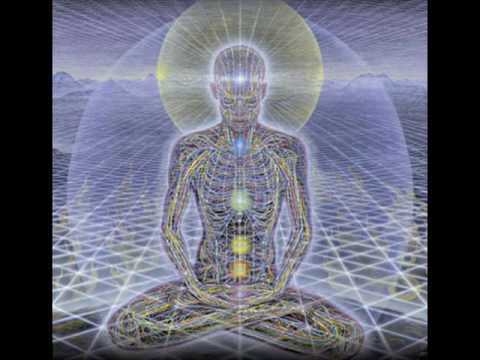


 After the Crash