Why the Darknet Matters

shutterstock_251313145-650

By Luther Blissett and J. F. Sebastian of Arkesoul

In February 2015 Ross Ulbricht was convicted of money laundering, computer hacking and conspiracy to traffic narcotics for his role (either with or as Dread Pirate Roberts) in creating and administrating the darknet market Silk Road. For this, U.S. District Judge Katherine Forrest sentenced Ulbricht to life in prison without possibility for parole. Why was Ulbricht treated more severely than most murderers and child molesters (not to mention wall street and state criminals who do far more societal harm than all others combined)? The only logical explanation is that they needed to make an example out of him not just for his actions but for what he represented. The draconian sentence sends a message that the government is doubling down on its destructive and wasteful war on drugs and is clearly threatened by agorists (ie. those advocating for a society of voluntary exchanges and counter-economics without violence or authority) who utilize the darknet to make their ideas manifest. To understand the scope of the threat this poses to governments one must understand what the darknet is.

The darknet is an anonymous overlay network accessed through special software, configurations and/or protocols. It was created in the 1970s to designate anonymous networks isolated from ARPANET (an early form of the internet) which, for security purposes, had addresses hidden from network lists and were unresponsive to pings or other inquiries. The World Wide Web content that exists on darknets (known as the dark web) can only be accessed through anonymous browsers such as the Freenet or TOR Browser Bundle. The darknet and dark web are part of the deep web, the content of the World Wide Web not discoverable by means of standard search engines.

Interest in and use of the darknet has grown dramatically since TOR was released to the public in 2003. Much like when the internet was new, the darknet is often slow, though it has more to do with the complex random rerouting necessary for anonymity than the hardware or infrastructure. And like the early internet, the darknet is widely viewed as the new “wild west”. The darknet does attract its share of fringe subcultures including cryptoanarchists, transhumanists, digital pirates, sexual fetishists, drug users and dealers of different types, etc., but the groups that have arguably been the most empowered by the technology are political dissidents such as whistleblowers and activists.

As governments and corporations gain increasing power over the physical realm through laws, economics, violence and surveillance, one of the few remaining options for anyone wanting to bring about systemic change without fear of retribution, is the darknet. The government would of course never openly admit their fear of such a threat, though it’s apparent that law enforcement and intelligence agencies (who behave as if they’re entitled to the right to monitor all activity) are threatened enough even by less overtly political darknet sites such as Silk Road. They may claim concern over drug gang violence and addiction justifies the crackdown, but if that were actually the case they would have ended the war on (some) drugs years ago when more than enough data was available proving harm reduction to be a more humane and effective strategy.

Of course violent and cruel behavior can be found on the darknet, just as it exists offline. One could argue such cases should be investigated in ways that don’t jeopardize the anonymity of all users. What about the safety of victims attempting to evade dangerous individuals and groups? Whistleblowers need anonymity as well if releasing information on crimes committed by people in power.

As law enforcement struggles to defeat darknet anonymity with new tools such as Memex (a data-trawling program), programmers innovate to make darknet sites more decentralized, private, secure, and user friendly. Improved user interface will draw more users to the darknet, especially as awareness of internet privacy and security issues increase. Government efforts to police and regulate the darknet will also increase further as aspects of the darknet become both more mainstream and fringe, the darknet marketplace expands exponentially and improved cryptocurrencies are developed to meet demand.

As is, the Darknet is a system that is continually evolving. And, inasmuch as it poses a threat and a risk to authority, there is friction between the two. On the one hand, there is the axiom for control and security, which often times conflates manipulation with exploitation. On the other, freedom and liberty of expression, which often times conflates a lack of cohesion with relativism.

Regarding the first side of the debate, it’s a natural product of strategic rationality to calculate safe scenarios as to ensure survival. Vertical hierarchies often times result in perverse agendas that funnel the interests of the few on the top. However, these exist to ensure safety for a particular collective. That is the very paradox of government: The criterion for peace, however illusory, is to make up a contract with the State and its people. “I give up certain rights in exchange of safety”. This is game theory: Predict the behavior of others so as to ensure safety. The government fulfills this need through law and order. Let’s minimise risk, and up control as well as safety, which produces a space to live and grow. In this model, the assumption is to always expect the worst, while paradoxically ensuring productivity through an illusory cohesion and identity. In a collective that is afraid of itself, everybody is “doing their part”, but as well miss out on having a say on the big issues. Government is a fail switch for everything absurd, illogical, and different. The infamous saying applies: “Fear what you don’t understand”.

On the other side of the debate, the inverse is suiting. Greater freedom involves having a voice. The trade off is becoming segregated as an outsider, because having an opinion comes with a price. Refusing to accept the “game rules” of “law and order”, is anathema to cohesion and identity. This philosophy is natural to fringe culture, because often times fringe culture is made up of victims of a system that doesn’t respond to the needs and demands of its people. That’s the problem: If everybody played by the rules, including those at the top, then the big illusion would make sense. There’d be intrinsic justice to the operational structures of society. That’s another paradox, power perverts when it should essentially allow and protect human flourishing and expression. That’s what we are taught, right? Civilization is supposed to be good. But it seems more and more evident that we haven’t yet learnt how to keep our governments at bay and working for the people. Because ideas fracture models by confronting power structures of domination and corruption, we essentially have a duty to be creative and protect what we rightfully are as a species. Ideas are revolutionary, because they add to the frame of possibilities and suggest ways in which the old modes of thinking are outdated. They pose a danger for the status quo, insofar as they fragment cultural psyches. They allow people to think. This is not what Government wants. Our freedom in exchange for safety. Censorship in exchange for control. Our voices in exchange for capital.

At odds, therefore, is the fear for different things versus the need for expression. The Darknet is an idea. It’s not perfect. It fails in many ways, particularly in allowing terrible transactions to happen. However, these are already there with or without the Darknet. If the government was smarter, it would learn to cooperate with the Darknet. It would stop trying to silence voices by hammering the stick. It would offer incentives for creativity and solutions. Yes, the Darknet might be a channel for people to do bad things. But it also allows for new and positive changes. Change is good. Change is evolution. We move forward as we learn. At some point, the Darknet will learn how to push the bad and to cohere the good. If we admonish the Darknet we also chastise our right to expression. We need to challenge our governments, and the Darknet meets that demand. One could argue there’s many pressing problems as important (if not more so) as electronic freedom, but few could have as much of an effect on the outcome of every other struggle. Government can’t silence our voices, it must adapt to them. The battle over the Darknet symbolizes a crossroads in history where decisions made now will have an increasingly large impact on our lives in the future. If freedom prevails, we have an opportunity to make a great idea function for an even greater and much more illuminating goal.


Some day, we could be a shining beacon of hope for the oppressed people of the world just as so many oppressed and violated souls have found refuge here already. Will it happen overnight? No. Will it happen in a lifetime? I don’t know. Is it worth fighting for until my last breath. Of course. Once you’ve seen what’s possible, how can you do otherwise? How can you plug yourself into the tax eating, life sucking, violent, sadistic, war mongering, oppressive machine ever again? How can you kneel when you’ve felt the power of your own legs? Felt them stretch and flex as you learn to walk and think as a free person? I would rather live my life in rags now than in golden chains. And now we can have both! Now it is profitable to throw off one’s chains, with amazing crypto technology reducing the risk of doing so dramatically. How many niches have yet to be filled in the world of anonymous online markets? The opportunity to prosper and take part in a revolution of epic proportions is at our fingertips!

I have no one to share my thoughts with in physical space. Security does not permit it, so thanks for listening. I hope my words can be an inspiration just as I am given so much by everyone here.
Dread Pirate Roberts  [3/20/2012]

What Did You Call Me?

Reverend-Billy-3

By Reverend Billy

Source: Reality Sandwich

What did you call me? 

That is a traditional last bit of language before the shove, the fist and the bullet.

We have a circus in our benighted city New York, of name-calling, misunderstanding, and yes, murder.   This week we have Quentin Tarantino using the word “murdered” for the victims of police violence, a few hours from the funeral of a cop named Ralph Holder, who was murdered in the line of duty. Police commissioner Bill Bratton lashes out, calling the film-maker “contemptible.” (But the number of unarmed Americans shot and killed by police is approaching a thousand this year.)

This merry-go-round of words is very close to the end of language, the “What Did You Call Me?” of every B-movie western… This has gone on since before 9/11. Rudolf Giuliani took it to a new level. Then Mike Bloomberg, with his commissioner Ray Kelly – pandered to language-destroying emotions of fear every single day of the three terms of that administration.

You have to ask – how could the two sides work together? Is it possible to even begin in this canyon of clichés? The police are so defensive, they act like Scientologists. They are hair-trigger-ready to be disrespected. On the other hand, Black Lives Matter is the first successful social movement in memory, and people like me treasure this historical moment. It proves that a social movement in this age of Consumerism and Militarism is still possible. Black Lives Matter is our daylight.

We ask – how would we heal? One development this week intrigues. Al Sharpton was called to preside at the funeral by the father of the Officer Ralph Holder, and then he backed away as the pack of Irish cops Bratton and the union heads Lynch and Mullins – laid it on thick.

But the choice by the father is fascinating. It showed a moment of healing leadership coming from a not-in-the-media-circus regular citizen. It was daringly hopeful, and probably not realistic. Clearly, though, it was the kind of gesture we need. No politician could’ve done this, though our mayor Bill de Blasio may have tried – really no public figure could ever be this creative.

“Never assume that every critic is a hater, not everyone is hating on you, some people are telling you the truth.”   —Nina Simone

What Tarantino did that really gets to the police is – he claimed the word “murder.” Murder is a crime and crime is the territory of the police.

It didn’t seem to matter to them that so many called out, “Stop killing us!” But if you shout “Stop murdering us.” – the police are incensed. “Murder” is something only they understand. The police own the word “Murder.”

You could say that Tarantino is a player in a very long game of healing. Other public figures may join him in using such language. Murder is murder. More police who murder need to go on trial for murder. That word can no longer be held sacred, with the police the only priests allowed to speak it.

This is one trail of healing, but there must be others. One that I think of, as a many-times arrested and jailed New York activist, is this: How would any non-police person ever criticize the cops openly? How would that be possible? At this point in time – this is how far it’s gone – no public language can criticize cops that is not immediately damned by cops. I used the word “damned” rather than “attacked,” because the police hunt down critics in the manner of a religious cult.

“I love this country more than in any in the world, and exactly for this reason I insist on the right to criticize her perpetually.”   —James Baldwin

Don’t you find yourself grateful and amazed that the children of slaves continue to risk their lives in the act of citizenship? This is a key to possible healing. In New York City, we have a standing army of 35,000 police and they are systematically denied the education of the 1st Amendment, and they are armed. They are led by demagogues in the old style of Mussolini: And yet, African-Americans get out of bed every day and go outside into public space a willful, risky act of citizenship.

The healing that we see is so needed for this divided city will not come from Black Lives Matter backing down, changing language, acquiescing. We are in a long recovery from 9/11, which only strengthened the racism already in us.

The movement for the return to “Peace Officers” is very like the Earth Movement. Entrenched power that believes it is the owner of legalized violence must be faced down in public space. Since citizens cannot exercise their 1st Amendment rights in the privatized parks and streets now, the healing of violent law enforcement will involve some form of trespassing.

It may sound novel to suggest that healing comes from continuing the advancement of one of the antagonists. Yes – Black Lives Matter needs to advance and grow. Safety for black citizens must be normalized and formalized – and this will heal the law enforcement community. Healing in this case mostly means the education of the police.

Black Lives Matter was sparked by young blacks who refused to leave the sidewalk in front of the Ferguson police department for months.  Here in NYC, the bridges and tunnels and Macy’s and Grand Central Station were occupied. The die-ins were always called trespassing. Those die-ins must be the seeds of healing.

“I stand with the murdered.” —Quentin Tarantino

Our Hollywood buddy trespassed on police language. We hope that he continues to use such direct, honest words – and so must we.

RiseUpOctober was criticized for scheduling the “rally” at the same time as Officer Holder’s funeral, but we were going to a funeral too. Throughout the week the police and their media called the Union Square rally a political exercise, as if it were a vested interest group.

This is simply psychological bullying. They don’t think of us as experiencing sorrow. If they showed contrition for the results of their bullets, it might dawn on them that we are gathered with sorrow in our anger. Last year, the number of deaths from police use of deadly force was about 20 times the number of police deaths while on duty. And if you cannot imagine sorrow in another human being, you are more likely to hurt them. Out of this de-humanization, cops kill.

Following Black Lives Matter as our teacher, we must use all the words and all the space with our bodies. The healing is the pulling back, slowly and painfully, of these people from their fearful violence. We must pull them back to a trust of their neighbors that they haven’t enjoyed in so long.


Reverend Billy and the Stop Shopping Choir open their show “The Earth Wants YOU!” at Joes’ Pub at New York’s Public Theater on Sunday November 15. Contact Revbilly.com for show times and ticket info.

Catalyzing the Shamanic Archetype

mushrooms_art2

By Paul Levy

Source: Reality Sandwich

The following is excerpted from Awakened By Darkness: When Evil Becomes Your Father.

Spiritual awakenings oftentimes get precipitated by experiences of wounding, abuse and trauma, which is to say that in a genuine spiritual awakening there is often a co-joining of healthy and pathological factors. The idea is to nourish the healthy aspects of the process so that they become stronger, while allowing the pathological factors to naturally fall away as they become integrated into the wholeness of the newly emerging psyche. To quote the great Hindu saint Ramakrishna, “How to get rid of the lower self? The blossom vanishes of itself as the fruit grows, so will your lower self vanish as the divine grows in you.”

Being wounded almost always initiates and catalyzes the “shamanic archetype” to begin to form-ulate and crystallize itself in the unconscious. Shamanism is the root from which humanity’s various spiritual disciplines have issued; the earliest origins of modern psychotherapy known to history lie in archaic shamanism. When the shamanic archetype is activated, it precipitates a deeper part of the psyche to become mobilized, as people enacting the shamanic archetype journey deep inside themselves, flying on the wings of their creative imagination to become familiar with and address what has gotten activated within them. The shamanic archetype becomes catalyzed in us by a severe emotional and spiritual crisis, oftentimes organically growing out of unresolved abuse issues from childhood—this was certainly true for me.

The shamanic archetype is one of the major processes currently animated in the collective psyche of our species. We’d have to be truly “disturbed” if our emotions aren’t disturbed by the diabolic and dark shadow forces playing out their polarizing, manipulative and exploitive agendas in our world. How we hold what has gotten triggered within us as we both witness and participate in these distressing dramas determines whether the latent shamanic archetype within us manifests in service of our—and our planet’s—healing or not. Just as dreams are the unconscious’s way of balancing a one-sidedness in an individual’s psyche, the shamanic archetype is the dynamically evolving pattern of healing that is being constellated in the collective unconscious as a compensatory response to the trauma and abuse playing itself out on the world stage.

A person would never—if they were in their right mind—choose to be a shaman. It’s not the sort of thing that someone takes a weekend workshop or a class and then becomes a shaman. Becoming a shaman is a vocation, which is to say that it is something one is “called” to do; this calling is typically conceived of as coming from the spirits, i.e., from an autonomous spiritual factor deep within the psyche. Etymologically, the word “calling” has to do with hearing a voice—the voice of the other within ourselves—with which, like a living person, we develop an ongoing and deepening relationship. This inner figure has from time immemorial been referred to by a multiplicity of names—our muse, ally, guiding spirit, angel, genius and daemon, to name but a few. Attracting many names to itself is typical of something numinous; one name doesn’t quite “do it.”

If it is a true calling and we resist, however, we can fall ill, go crazy or even die; the point is that the stakes are high, and being called to shamanize is something to take seriously. It necessarily involves making a descent into the underworld of the unconscious—into the netherworld of the shadow—where we have to confront our own dark side and madness; this is why in a shamanic initiatory experience, the potential shaman looks like they’re having a psychotic break. A Siberian shaman reminds us, “If you find the spirit of madness, you will begin to shamanize.” Becoming a shaman is not for the faint of heart; the initiate typically has to go through a death experience, whose other side, if all goes well, is rebirth. The suffering involved—which is actually a purification—is intense. Speaking of what he calls “shamanic suffering,” Holger Kalweit, author of Dreamtime and Inner Space: The World of the Shaman, writes that the suffering a potential shaman goes through is “a suffering intense enough to kill.” I can totally relate; after the abuse from my father, it was as if the doors of my unconscious opened up, unleashing formidable energies that easily could have killed me.

A key part of the shaman’s initiation is to come to terms with evil. Mircea Eliade refers to shamans as “pre-eminently the antidemonic champions; they combat not only demons [who Eliade refers to as “the true enemies of humanity”] and disease, but also black magicians…. What is fundamental and universal is the shaman’s struggle against what we could call ‘the powers of evil.’” In my life, my encounter with the evil that came through both my father and psychiatry were the forms that my descent into the underworld took; if I hadn’t re-contextualized these experiences as being part of a deeper shamanic initiatory process, I would have been stuck in and personally identified with these experiences in their literal rather than symbolic form, possibly for the rest of my life, which would have been truly tragic. Von Franz wrote, “The symbolic inner experiences which the Shaman lives through during his period of initiation are identical with the symbolic experiences the man of today lives through during the individuation process…curing the soul of individuals and collective states of possession is really the principal task of the Shaman.” The mission of the shaman is to heal—both individually and collectively—the state of possession by unconscious psychic forces of the members of their community, as well as the community as a whole.

In indigenous, shamanic communities, the role of the shaman does not exist in isolation, but as a role that the community collaboratively dreams up for the health and sanity of the wider community. The role of the shaman is relational in nature—only taking on its meaning in relation to others as well as the surrounding environment—not something that exists independent of the field in which the shaman lives. Being a role in the field, in the ideal sense the position of shaman need not be monopolized by or restricted to one person; a shaman is a role that any and everyone can pick up as we become more creative and fluid within ourselves. In a genuinely healthy community, roles are very fluid, which is to say—in a form of “collective shamanism”—the role of the shaman can potentially be played out at various times by each of its members. Because the role is being shared by all of its members, different people can play the shamanic role without necessarily having to descend into the depths of hell; they are required, however, to self-reflectively deal with how their own unconscious darkness is contributing to the collective shadow that is getting dreamed up in and through the community.

We are all potentially “shamans-in-training,” in the sense that we are all being called—both individually and collectively—to deal with the darkness that seems to be ruling our world. The formless archetype of the shaman/healer is thirsting for sentient instruments to express and actualize itself in embodied form. Recognizing, and saying “Yes” to the deeper shamanic calling that is pulsing through our veins inspires us to breathe life into and incarnate the figure of the shaman who lives within us. We are being invited by the universe to step into our shamanic “garments” and consciously participate in our own evolution. Instead of our ritual implements being drums and rattles, however, as “modern-day shamans” our accessories might be something like the keyboard of a computer or the tools of multi-media, as we work to inspire change in the underlying consciousness of the field by a keystroke or the creative use of a video camera or website. Co-operating with our deeper shamanic calling constellates the universe to support us in our endeavor, as the universe itself is the sponsor of our calling. Assenting to our calling gets us “in-phase” with ourselves such that we become our own best ally.

The psyche is easily dissociable; due to trauma it can readily fragment into seemingly separate parts. Being wounded creates a dissociation in us, in the sense that we dis-associate from and lose connection with parts of ourselves. People of shamanic temperament, however, are able to turn the psyche’s natural ability to dissociate to their advantage. They are able to purposely dissociate, which is very different from the unconscious pathology of dissociative disorder. The shaman’s ability to dissociate, and fluidly travel between different reference points within themselves helps them to re-member their dis-membered selves, as well as to retrieve the split-off, and hence unconscious, soul of the community.

A shaman often suffers from the plight of their people. Due to their “standing” at the gateway between the conscious and unconscious aspects of their own mind as well as the community at large, they are able—like a healing enzyme—to act as agents transforming and raising unconscious contents into conscious awareness, making these contents available to the community. I think of Jung—a deeply shamanic personality—who was afflicted with dreams and visions of bloodbaths and catastrophes in Europe which he wasn’t able to understand until soon thereafter the First World War broke out, and he realized that his personal experiences reflected the collective situation that was brewing in the cauldron of humanity’s unconscious.

People going through a spiritual awakening/shamanic initiation find themselves, as if living in an archetypal fairy tale, inhabiting a deeper mythic realm where everything that happens is in-fused with deeper meaning. This deeper meaning doesn’t come from outside of us; we are the arbiters of meaning—“meaning-generators.” Instead of being mute and having no say in things, our world is always speaking to us symbolically, speaking “through” things (so to speak); this can take a little while to interpret, integrate and to learn to navigate. The goal is to bring together the two worlds so that we can fluidly travel between the everyday world of ordinary reality and the deeper mythological, symbolic realm, a dimension which is always having its say—the question is whether we recognize what is being said. This is analogous to having a fluid back and forth, give and take relationship between the conscious and unconscious minds within ourselves.

A key part of the shaman’s vocation is to be able to “see” the spirits, which is to be able to recognize and develop relationship with the forces of the unconscious. Wetiko can be thought of as having its own spirit; this is why I am continually pointing out the importance of “seeing” how this spirit operates—out in the world, through others, via our relationships and within our own mind. Seeing “the spirits,” which von Franz points out is today simply called “the unconscious” takes away their autonomy and seeming power over us, while expanding the light of our consciousness in the service of individuation. The more individuated we become, the wider is our consciousness of the realm of the unconscious which spreads out before us in, as and through the world. To wake up to the dreamlike nature of reality is to realize that we are surrounded on all sides by the unconscious; dreams themselves are the unmediated expression of the unconscious. The process of becoming conscious doesn’t banish the unconscious, but rather, aids us in developing the trust to give ourselves over to it time and again, thereby learning how to receive its gifts of wisdom. When we shed light on the darkness of the unconscious, it’s not that all of its contents become illumined; rather, there becomes a more permeable boundary for the unconscious contents to emerge into consciousness, as well as for consciousness to step into the world of the unconscious.

The shaman is akin to and a kin of the figure of the artist. To quote anthropologist Carlton Coon, “Whatever else he may be, the shaman is a gifted artist.” Mythologist Joseph Campbell draws a parallel between artists and ancient shamans when, speaking about modern artists, he says that “the whole unconscious has opened up and they fall into it.” We continually deepen our individuation only insofar as we don’t cling to our conscious experience, but allow ourselves to submerge into the depths of the unconscious however and wherever it shows up, trusting that we will be able to creatively express—and hence, become conscious of—what is moving us. As Jung points out, “The unconscious no sooner touches us than we are it—we become unconscious of ourselves.” This ongoing dynamic of falling into and giving shape and form to the unconscious, then stepping out of and contemplating what has just come through us—going back and forth between the subjective and objective domains—furthers our realization of the unconscious, both within ourselves and in the world at large. Through this process, the shamanically-oriented person is adding consciousness to and assimilating the unconscious in the field, while simultaneously metabolizing the unconscious parts of themselves that have been activated.

The shamanic personality’s ability to fluidly navigate back and forth between the conscious mind and the deep waters of the unconscious contrasts with people who fall into their unconscious and, unfortunately, become overwhelmed by the experience, losing both the ability to creatively express their experience, as well as their sense of self. The shaman learns to swim, surf and snorkel in the waters of the unconscious while the failed shaman, whatever label we call them by (schizophrenic, bi-polar, etc.), drowns in the depth of its waters. This is why it is profoundly important, as Jung realized, to have a strongly developed sense of ego when we encounter these deeper, more powerful realms, for if we don’t we can easily get swallowed up and lose ourselves. We need a strong sense of self in order to get in relationship with these powerful energies.

As the shaman travels between the worlds of the conscious and the unconscious, the boundary between these two worlds becomes more permeable. There is no clear demarcation point between the conscious and the unconscious; an un-boundaried continuum, one starts where the other leaves off. In their journey, shamans create a bridge so that the conscious mind and the unconscious can more easily pass between, influence and illumine each other, which transfigures everything. Over time these two seemingly opposite realms begin to become indistinguishable from and turn into each other, while at the same time, paradoxically, becoming more distinct from each other. Inseparably and reciprocally co-arising in their interaction, both the conscious and unconscious minds are dynamically contained within the wider totality of psyche.

The psyche is simultaneously “historical”—in the sense that its development can only be understood in the context of its personal and collective past—and “trans-historical,” which is to say that the psyche atemporally abides outside of linear time, yet simultaneously generates events experienced by humans in historical time. Though within its very structure is written the whole history of humanity, the psyche is at the same time teleological, in that it is purposeful, seeking its own actualization. Jung writes, “Anything psychic is Janus-faced: it looks both backwards and forwards.” The psyche is like a pivot through which, both on the individual and collective levels, we choose either to look backwards and re-create the unhealed past, or step into consciously participating in our own creative future evolution in the present. In a spiritual awakening/shamanic initiation, it is as if we are connecting with a healed, whole and awake part of us that, atemporally speaking—outside of linear time—has always existed. We begin to cooperate with and surrender to a deeper impulse within us, as if we are allowing ourselves to be drawn into the strange attractor that is ourselves, a process which can only take place in the present moment. By becoming aware of and stepping into this higher-dimensional part of ourselves, we are attracting this particular part of ourselves, with its corresponding universe, into materialization; this is the sacred power of dreaming.

This seemingly bi-polar process of oscillating between the polarities of the conscious and the unconscious is an apt description of the shaman’s journey between the worlds. As this process unfolds in and over time, a center or mid-point emerges, which contains, embraces and unites the opposites: this is, in Jung’s language, “the Self.” The Self is an expression of the intrinsic wholeness within us, a wholeness which already exists but is paradoxically brought forth into consciousness via this process of collaboration with the unconscious. At points this descent can be experienced as if we are just recursively playing out our unhealed abuse issues (the iteratio stage of alchemy), but is in actuality a deepening descent down a spiral, a circumambulation which ultimately illumines the center point—the Self. Transforming consciousness, the Self acts like a magnet, attracting to itself that which is proper to it. Jung comments, “We can hardly escape the feeling that the unconscious process moves spiral-wise round a center, gradually getting closer, while the characteristics of the center grow more and more distinct. Or perhaps we could put it the other way round and say that the center—itself virtually unknowable—acts like a magnet on the disparate materials and processes of the unconscious and gradually captures them as in a crystal lattice…. Often one has the impression that the personal psyche is running around this central point like a shy animal, at once fascinated and frightened, always in flight, and yet steadily drawing nearer.”

As the shaman’s accomplishment deepens, they are able to tap into and participate in the primordial, timeless source of creativity itself. A person’s ability to heal and facilitate healing for others depends upon their ability to link to the larger world of the “pleroma” (a field of abundant potential, boundless luminosity and creativity, and infinite sentience). Approaching the numinosity of the pleroma is therapeutic at its core—what Jung calls “the real therapy”—as it releases us from what he calls “the curse of pathology.” Connecting with this more expanded perspective within us alchemically transforms what seemed to be pathological into something expressing and leading us closer to the numinosum.

Archetypally, shamans take on and into themselves the illness of those they are working with, falling ill themselves. As a result of the abuse from my father, I feel like I have been sick for years, suffering under the burden of a shamanic sickness. The wetiko bug that used my father to get into me has activated my psychic immune system to go into overdrive to deal with this toxic invader. I have “taken on” my father’s pathology, which carries a double meaning: to “take on” means to confront, as well as to take within myself (so as to suffer with). I’ve been slowly transmuting the virulence of the wetiko germ that I “caught” from my father; this book is my latest attempt to shed light on—and “make light” (of)—what has gotten triggered within me. What makes a shaman an accomplished shaman, however, is that they are somehow able to work with and metabolize the illness, integrating it into the wholeness of their being and subsequently finding their way back to health; this process nonlocally helps the person(s) who were originally ill. In addition, this helps the whole universe, by eliminating that personalized quanta of sickness from the collective field—“lightening” the shadow in the collective unconscious ever so slightly.

I am in no way claiming that I am an accomplished shaman—this is true only in my wildest dreams—but what I am saying is that the archetype of the shaman—which is related to the archetype of the wounded healer—is one of the deeper processes that has shaped and given meaning to the experiences in my life. In addition, the shamanic archetype is one of the fundamental underlying patterns that is informing all of our processes, both individually and collectively, as a species. Humanity as a whole is going through a profound shamanic initiation of epic proportions, writ large on the world stage as well as within each of our hearts and minds. When we realize this, we can connect with each other so as to collaboratively help each other successfully pass through our shared ordeal. What a radical idea!

 

Co-Creation and the Greater Reality

431233_10150711357695081_1179126980_n

By Rahkyt

Source: Sacred Space in Time

Life is a continuous process of creation and destruction. With every action and reaction, something new is birthed into being and something old undergoes the processes of destruction. From the thought processes we engage in during the course of the day, to the actions we take and reactions we make, we are creating and destroying our perception of reality. As a result, in each instance, we are truly remaking ourselves anew, in the only way that matters: the construction of our own, personal rendition of reality.

Memory serves the function of maintaining consistency. Without it, we become a new person in each instance. Memories ties us to the past and creates a stream of impressions which guide our present and future actions. We define ourselves by our memories and through them, we present a facade to the world comprised of impressions that may be factual or not, based upon our own emotional ties to events that have passed. The past itself, being dependent upon perception, is more illusory than real. Outside of mechanical means of perception, video and audio recordings, pictures, etcetera, our memories of the past are not at all reliable. Our emotional state of being at the moment of experience often determines how we perceive them and the mind fills in gaps with re-created scenes, making memory often more fantastical than reality-based.

When we hold on to stories of the past and use them to define our present we limit our options and outcomes. By stating to ourselves and others that we are this and that because we have experienced this or that we bind ourselves to the potentialities inherent in the probabilistic options arising from the present manifestation of effects caused by our experience of this and/or that. Logical determinism is the result. We see no other options available because our synaptic patterns of reality-formation dictate outcomes bounded by the past, when, in reality, there are no such boundaries truly in place. Only those we have placed upon ourselves.

We are thereby bound into preconditioned repetitions of past patterns from which there is seemingly no escape. Despair and depression result, limiting the outcomes of a life to a downward-spiraling reoccurrence pattern. Fear acts as the conditioning factor, pulling up past scenes of loathing that trap thought into conditioned pathways of expression. Again and again we dance the same dance, although the tune itself has changed. The ability to cognate at higher levels is a divine gift that allows us to shift those patterns out and to achieve a higher state of expression if we so choose to do so. We can change, no matter the thickness of our synaptic connections, the density of our neural nets, the pervasivity of fear-based patterns of call and response.

Removing these boundaries and experiencing the full gamut of experience is the challenge of a lifetime. Becoming open to the infinite expression of creative union with the ultimate requires the death of the past and the embrace of the present, thereby delimiting the possibilities of the future. It entails the conscious processing of future experience by the release of past experience resulting in the embrace of the Now experience. Each moment recreates itself anew, requiring new output in order to take full advantage of new input. While reality does seemingly proceed in cycles and we undergo certain types of experience again and again it is really a spiral and each new experience while appearing similar is a new iteration at a higher level of occurrence. Therefore, the same reaction is not always the best action.

Determining the difference between action and reaction takes a depth of understanding that must be based upon recognition of fundamental patterns inherent within our lived realities. A thorough recapitulation of our life experiences, whee every memory we can access has been ruminated upon and its lessons internalized and made accessible to conscious thought. Where our reactions become instead new actions based upon the present input which may be slightly different from past input in important and fundamental ways.

Life is purposeful and there are no accidents. Each perception, each interaction is meaningful and is connected to external realities in fundamental ways. Together, we co-create the Greater Reality and, despite the hype, we are all integrally connected at the base level of existence, beneath conscious perception and experience.  This web of continuous co-creation is beyond the conscious ability of most to perceive and yet, to be able to do so is not necessary. Trust in God, in the willful and deliberate manifestation of reality is required alongside the desire to act in harmonious resonation with the dictations of the Multiverse. This can be done by simply existing in the flow of creation and destruction, maintaining a perceptive ambivalence to societally-determined conceptions of value yet adhering to the internal sense of beingness within the continuous flow of change and evolution.

No matter how things seem, whether they are determined to be good or bad, all has purpose, all has reason. Accepting this truth of existence and working within one’s own flow of interaction at the personal and subjective level sends emanations of causality out into the greater creation, combining with the output of other souls to morph into stupendously complex manifestations that form the holographic context of the combined, material co-creation that we call the world.


Why Empathy Matters

0f73e837b760c553edaf501f804317bb

By Zen Gardner

Source: ZenGardner.com

It’s not easy to stay sensitive in such a cruel, desensitized world but it’s imperative we do. That’s the beauty of empathic souls; they have open and loving hearts, even if it hurts, which is why each of us needs to generate and receive so much love and encouragement.

Loving empathy is its own reward, even if we’re not showered directly with supporting human love as much as we’d prefer. The spiritual is supreme. Connection to Source is our unfailing infinite supply line of everything we need. But I agree, it’s sure nice when that consciousness is manifest in another human being and can be shared between us.

That’s the nature of true interpersonal love, and we need to shower it upon each other.

Empathize or Cauterize

I feel strongly that if we don’t allow ourselves to have broken hearts for the lost and suffering we’re virtually useless consciousness and a betrayal to Source. True heartfelt empathy heals and strengthens ourselves and those around us as we go through this voyage. Letting these sincere emotions course through us, whether it be sharing the pain of battered and betrayed victims of all sorts, including animals, or the sadness of the passing of a dear friend, they’re good for us and are a wonderful opportunity to draw closer to Source.

Using these deep experiences as an energy carrier signal to piggy back other issues on our hearts and minds into the great bosom of Love is a real key. When channeled consciously from the heart, these experiences lead to much greater intuitive understandings, strength of spirit, and that deep, deep peace that passes understanding.

Those who cannot move with these fully awake empathic spiritual impulses in effect have become cauterized. The media works hard at this, bashing the collective head with desensitizing, violent images and mind crushing propaganda constantly. That’s why they do it. Not just to promote their programs, but to shut down our conscious awareness, the all-empowering Source of love and light.

That’s what they fear the most. That we will awaken and tap into our magnificence.

Counteracting the War Against Love

This is fundamentally what this current hijack attempt is all about. Extinguishing love. Love is soft, love is kind. But it is also extremely powerful. Love is a form of creation at work. It contradicts everything we’re witnessing in today’s media driven control structure.

Express your love every chance you get. Others are starved for it just as you are. Give and it will return, but don’t do it with that motive. It just happens naturally, because that is the co-creative nature of love. So many are starved for a word of encouragement, a kind gesture, a thank you or word of appreciation. The downdraft of ugliness is so strong right now we need to support each other in any way we can.

Make yourself vulnerable. It’s the most protected space there is. Put a little love in your heart – and let it out!

Our Warfare Is Spiritual

The forces of darkness cannot overcome the Light, as hard as they may try. Any success they may seem to have at harnessing humanity for their own ends is so very temporary. While we are infinite spiritual beings, they are temporal, parasitic forces.

Keep that in mind, no matter how things may appear at times.

Let’s fully manifest and get this era done away with by letting Universe work fully through us. It happens one heart at a time, but each of us has to keep doing what we’re each meant to do and be.

Stay soft and loving, yet strong and resolved. Our weapons are spiritual – don’t let them entice you into their arena of mind games and ignorant lower vibrational reactionism. Stay where you are strong, yet engage them nonetheless. On your terms.

Thank all of you who give so much. Please know how loved and appreciated you are by so, so many.

Let it flow – we’re just getting started!

Love always, Zen

The Tyranny of Time

time-travel_2

By Mark Rockeymoore

Source: Sacred Space in Time

The days compound, vivid and expansive, experience manifesting as desire frustrated or fulfilled. Memories build personality, the “I” that is a minuscule component of the Self projected into the illusory 3-D world takes on a solidity that further materializes error, identification with the world the causative factor in the inevitable descent into purgatory. The past “I Was” informs the future “I Will Be” and the present “I Am” is lost in a miasma of regrets and worries, projecting backwards and forwards in time to the detriment of the Now.

What is this remorseless construct that both fulfills and detracts from existence, creating imaginary realities that encompass the entirety of the individuated existence? Perception is linear, the future seems to follow the past in successive streams of memory, which builds upon itself, solidifying pathways of thought which become the “I” that experiences the world. Faint memories of the near and distant past arise in the fathomless ocean of consciousness, informing the present moment and constricting choice along pathways of potentiality determined by previous experience. We will be what we were is the seemingly logical rationalization that results in the false determination that we cannot change and that the path we have always followed is the only path available now and in the future.

What is lost in this seemingly simplistic logical formulation is that reality encompasses all possibilities and that who we were is not necessarily who we must become. The physical manifestation of thought include words and actions that proceed from non-material reality to material reality. Thoughts as sub-vocal verbalizations and imagery can originate both internally and externally. Thoughts can free the mind or imprison it. The weight we apply to our thoughts determines our ability to manifest our realities, with ingrained and repetitive thought processes taking precedence over new and original thought processes.

As human biology provides the physical hard-drive for non-physical, energetic interactions with the manifest and unmanifest reality, the brain’s synapses form the wires we thicken or thin with repetitive use. Energy easiest and most efficiently through well-defined pathways.  Habits and patterns of thought, vocalization and behavior follow. Time acts as a structure that encompasses the unknown infinite and eternal within the finite capacity of materiality. Its dictates reinforce holographic immaterialities and further reduce clarity of mind and intention.

Timelessness, as a function of higher perception, can be considered to be the casting off of illusory linearity as the primary mode of interpreting existence. Even while immersed within the moment to moment flow of seconds, minutes, hours, days, weeks and years, it is possible to transcend the limitations time places upon potentiality by recasting thought. By realizing that perception is not bound by the past or constrained by the future. That there are no limits to manifestation. That there are no limits to each of us being, fully, who and what we are.

To release one’s self from the Tyranny of Time is to realize that the Now moment is our access to communion with the infinite and eternal. That within each second lies a gateway to unlimited potentiality that is accessible to those who make the choice to court freedom and to banish the past and future as determinative factors in their decision-making processes. No path is set in stone unless we cast it thusly ourselves. Unlimited potentiality is our birthright. Claim yours.

Drop the Rope

8583170_f520

By Zen Gardner

Source: ZenGardner.com

It’s interesting how we get entangled in compromising situations and interactions, often unwittingly. We all face this challenge continually. So often the very encounter itself is predestined to failure without our even knowing it and results in a sense of energy sapping futility.

If you find yourself in such a tug of war, it’s time to rethink your entire stance. In fact, it might be time to drop the connection all together. Winning ain’t what it’s cracked up to be, nor to your benefit in most cases in these circumstances.

This happens because we get snared into lower level thinking on a preset playing field designed to do just that. Ensnare and entrap. This societal mechanism is designed to set the parameters and disguise the real solution which is way outside this constructed paradigm. When we join into the “contest” we subject ourselves to the win-lose dialectic, the pitting of one versus another paradigm that has beset humanity for eons.

That’s not to say there isn’t a time to attempt to illuminate ignorance or expose manipulative mechanisms, we just can’t expect to “win” in an arena built for pointless conflict that distracts from seeing the essential and empowering reality that blows their entire construct to bits.

If we’re too busy fighting amongst ourselves, physically or intellectually, we’ll never see that bigger picture where the true problem truly lies.

The conscious conclusion to draw on such encounters is clear. If you don’t want to play their insidious, pointless, draining and distracting games of tug of war, simply drop the rope and walk away.

The Conflict Dialectic

Society has been manipulated to such a degree that the easiest way to control us is through simple distraction. Bread and circus competitive sports and similar mind-stinting entertainment, right-left paradigm political charades and society dividing issues such as race, immigration and social, economic and class status are furiously alive trigger points of distraction running rampant in this seriously dysfunctional world mind.

We help define and reinforce these memes ourselves by our participation. Without rising above this imposed playing field and understanding the world we’re already living in we certainly cannot find the way to change it, never mind the way out into a new paradigm without their constrictions.

Simply said, if you don’t want to play their insidious, pointless, draining and distracting games of tug of war, simply drop the rope and move on. Let them fall in their own devices.

Dropping the Rope

When dealing with this seeming “conflict resolution” we appear to be confronting on many levels, “dropping the rope” is a very interesting way to break this sycophantic relationship with our oppressors. What invariably surfaces in our left brain human response in these sorts of circumstances is a sort of contest between people or situations. One side opposes the other in some form, and one or the other or both sides express umbrage at what the other is saying.

It’s a programmed and mass entranced conflict, the “strategy of tension” as they call it, utilized by the media and military with very successful abandon.

When we find ourselves in these situations it can be quite stressful. Reflexive thinking usually kicks in and we take sides, concentrating on the “issues” at hand while ignoring the overall. Even in a personal heated exchange, subtle or obvious, no one wins. They can’t. The overarching truth is being missed in this morass of “logical” confined thought subscribed to by the perspective of the participants.

Overall social psychosis perhaps, or the left brained reptilian mind going to work, who knows. It’s just futile in that type of paradigm. These types of conflicts are an exercise in futility. Oh, we may bring some light of truth to the conversation or situation but the problem is that we’re buying into their boxing ring. Someone has to come out the “victor” and the game goes on, without addressing the underlying reality outside the ring, or imposed and deliberately created stadium of conflict.

This realization is a blow to the egoic mind set and, while essentially counter intuitive, it’s only destined to be repeated. And the pointless game goes on. Don’t fall for it. You’re well above all this.

Spiritual Scoliosis and Letting Go of the Unchangeable

The application of this realization can get quite personal.  Those we’re closest to can often display usage of this dialectic and it’s not easy to discern up close and personal, nor know how to respond to it.

There’s often an embedded agenda to what is being said or proposed, as exemplified by news outlets, or as we usually see it by people around us, that is much more profound than the surface argument. You’ll often hear sweeping language with generalities that appear to be true in such contests of mind but these can have a much more insidious nature.

People, as well as social engineers, often use this technique.

It’s usually very cleverly embedded, be it by an individual or ideology. But on an individual basis it can get pretty dicey.

The Personal Touch

It’s naive to think we could correct spiritual scoliosis or perform some kind of exorcism or somehow overwhelm this mechanism to get it into its proper place and perspective when dealing with an infected individual with such a mindset. In fact, those are the things and persons that conscious people sidestep until the subject really wants help and starts to see the light of day and fully lets go of their petty shibboleths.

These are issues that really aren’t so petty when you get down to the spiritual nature of it and difficult to discern as well as confront.

But when you’re awake to these traits you don’t argue with them or plea with them to let go. They either do when confronted with conscious awareness or they don’t. Otherwise you leave them alone until there’s a change, and move on to those open to real dialogue. This kind of conscious awareness is sadly thin in today’s world but people are catching on.

No players, no game is a great default setting.

Their approach has a lot to do with posturing, as if they’re authoritative on some subject. Unthinking people often submit to that. When someone comes on pretending to be an authority on anything and speaks in that tone and posture it’s time to sit up and take notice – carefully. Not sit back in acquiescence. Real truth sharers propose and entreat. Remember, words, which carry spirit, can eventually overpower you if you keep listening to where you sense it’s empowering rooted in truth and love, or isn’t healthy.

It’ll be clear. Just listen.

Be Like Water

Avoiding these kinds of obstacles is a bit of an an acquired art, but it can be learned. This has to do with the nature of on going change. Water just goes around the rock, or over it, or both. Sometimes rocks move with the water a little but never fully. Like those set in their ways.

They’re rocks. That’s the attached baggage people won’t let go of in their hearts and it clogs up the works and infects anything it embeds in. They’re fine, or should I say less dangerous, on their own and they have their place despite their issues. But they’re not water; and if you expect them to come along like water it’s going to be a long and arduous journey that pretty much is playing the rock’s game.

Water moves on to where its welcomed. Go with the flow. Let the rocks be, i.e; let go of the rope.

Conclusion

It’s important to not get caught up in futile and ultimately destructive contests of any sort, be they relationships or unconscious dialogue as they can have very deceitful and disempowering consequences.

That’s how the system works. Getting everyone caught up in lower vibrational interactions that muffle the call to conscious awareness and activism in avenues that have real meaning. It’s something to which they are clearly diametrically opposed. They’re more than happy to entangle you in anything petty to keep you from realizing that.

You can’t win on their level. Don’t even go there. But if you do and find yourself in a tug of war with ignorance, egos or manipulating entities…..just drop the rope. It’s that simple.

Let ’em fall on their asses and you go merrily on your way.

And go take a nice walk in our majestic freedom and glory in your independent magnificence! Then turn and do and say what’s right – in every situation you come up against.

Screw the programming. We’re free.

That’s how truth wins out.

Much love,

Zen

ZenGardner.com


One dog’s solution to overcoming lower vibrational conflicts:

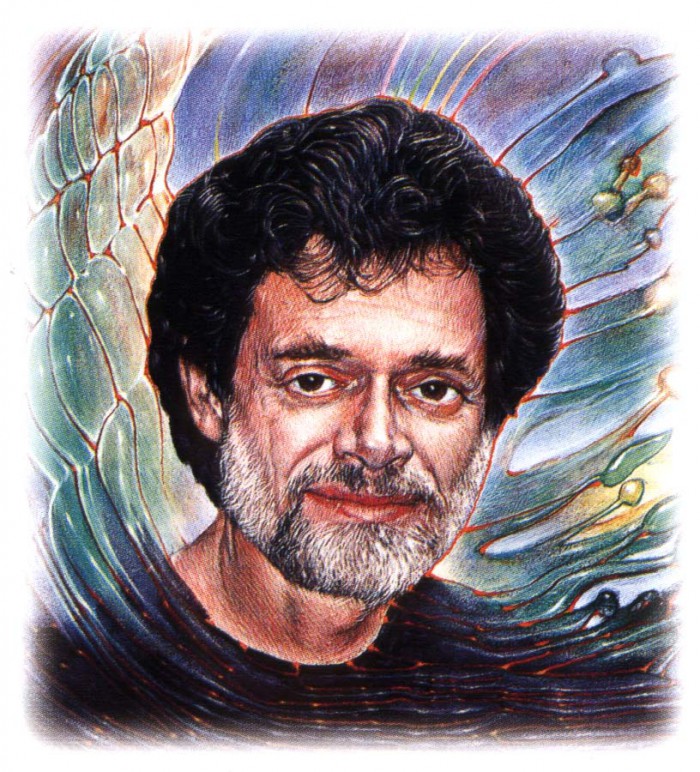
Terence McKenna’s Disillusioned Perspective on Mass-Consumerist Culture

Editor’s note: Since Terence McKenna’s passing on April 3 2000, his ideas have only grown in relevance and popularity largely because of their prescience and resonance to growing segments of internet culture. In commemoration of the 70th anniversary of his birthday we’re sharing this article which reflects an important yet often neglected aspect of McKenna’s worldview.

By Jordan Bates

Source: Refine the Mind

“We have to create culture, don’t watch TV, don’t read magazines, don’t even listen to NPR. Create your own roadshow.”

Terence McKenna is one of those cult-famous, societal-fringe figures of whom the majority of people have never heard. He’s also someone whose views probably have a polarizing effect on anyone who encounters them. At the very least, though, Terence was an exceptionally original thinker, and those who explore a fraction of his work will note his erudition and incredible ability to articulate his thoughts.

McKenna was an American philosopher and ethnobotanist who passed away in the year 2000. He was known for possessing expertise on a broad range of subjects including history, biology, geology, botany, and ecology. He toured and lectured extensively on everything from language and science to shamanism and extraterrestrials, developing a sizable and enthusiastic following.

His controversial status is in large part due to his vocal advocacy of  mind-altering substances. McKenna was a well-known psychonaut–one who explores consciousness through the ingestion of psychedelic hallucinogens–and a staunch proponent of the use of naturally occurring psychoactive compounds.

Obviously this latter aspect of McKenna’s legacy is an immediate turn-off to many. For a major sector of the population, the colossal stigma surrounding psychedelic substances is sufficient reason to lambaste the views of a well-known user. I, however, am not so quick to dismiss such a person, especially one as lucid, compelling, internally consistent, and dedicated to free inquiry as Terence McKenna.

McKenna’s Views on Mass-Consumerist Culture

I’ve delved into hours of McKenna’s lectures, and I am particularly interested in his ideas on culture. When McKenna speaks of culture, he seems to refer primarily to modern, mass-consumerist culture, so keep that in mind.

McKenna held a rather unfriendly position toward culture that can be summed up succinctly by one of his most famous quotations: “Culture is not your friend.” McKenna saw modern culture as a sort of engine detached from the interests of the individual and serving the manipulative, power-focused agendas of various institutions and wealthy individuals.

The following short video contains a portion of one of his lectures in which he addresses culture. I encourage you to watch it now (I will transcribe and elaborate on its central ideas below):

What Civilization is and What it Could be

McKenna certainly had a way of poetically articulating his ideas, and the video opens with what I feel is one of Terence’s most memorable metaphors:

“What civilization is is 6 billion people trying to make themselves happy by standing on each other’s shoulders and kicking each other’s teeth in. It’s not a pleasant situation. And yet you can stand back and look at this planet and see that we have the money, the power, the medical understanding, the scientific know-how, the love, and the community to produce a kind of human paradise.”

With this statement McKenna addresses the hyper-competitive environment that is symptomatic of the modern capitalistic socioeconomic paradigm. Our culture has a tendency to glorify competition, and many would argue that competition drives innovation and “progress” (a slippery word). I doubt McKenna would argue that competition has not been essential to the invention of our modern world, but he seems to step back and ask, “Yes, but when will it be enough?”

McKenna suggests that we’ve reached a stage of technological advancement and knowledge that would allow us to “produce a kind of human paradise.” This declaration sounds vague and idealistic, but based upon what I know of McKenna, I assume that by “human paradise” he envisioned something like a drastic change in the work paradigm, an elimination of poverty and starvation, a great reduction in disease and illness-related death, the end of war, and a much more palpable sense of a world community.

“Culture is Not Your Friend”

These items might sound far-fetched, but McKenna is not the first to suggest that such a situation is possible with our modern technology. R. Buckminster Fuller comes to mind as another prominent thinker who held similar views. After making this statement, McKenna elaborates on what he believes prevents us from attaining this state of affairs–namely, a lack of significant resistance to the poor leadership, dehumanizing values, and damaging cultural “control icons” that he perceives in the world. He states:

“Culture is not your friend. Culture is for other peoples’ convenience and the convenience of various institutions, churches, companies, tax collection schemes, what have you. It is not your friend. It insults you. It disempowers you. It uses and abuses you. None of us are well-treated by culture.”

[…]

But the culture is a perversion. It fetishizes objects. It creates consumer mania. It preaches endless forms of false happiness, endless forms of false understanding in the form of squirrelly religions and silly cults. It invites people to diminish themselves and dehumanize themselves by behaving like machines.”

Modern World as Dystopia?

McKenna holds that modern culture is centered around the agendas of those who are almost certainly not you. He believes that culture diminishes and dehumanizes the vast majority of the population by inviting them to unreflectively reinforce its models.

McKenna seems to suggest that instead of focusing on creating the type of world that is possible, we are caught up in a game of culture–a robotic pursuit of fetishized objects and false visions of a proverbial light at the end of the tunnel.

To some, this view may seem rather grim and dystopian. I don’t see it that way. I see it as a warning that remains pertinent in 2013 [and 2015]. The culture McKenna refers to does exist, and its effects are far-reaching and potentially insidious. However, I know that there are many, many people who are aware of this cultural game and do not conform to its status quo, who resolve to try to choose their own way of life and who see through the glitzy media-images.

Simply by being among this latter group of people, I think we’re doing the work that McKenna believed needed to be done–the work of resisting the damaging and dehumanizing aspects of modern consumerist culture. The mere realization that we are culturally conditioned to behave in certain ways is a sufficient catalyst to begin assuming a more active and reflective role in deciding how to live and act.

I see nothing wrong with being a cultural participant, but it should be our goal to develop a deeper awareness of the ideals our culture would have us pursue. When we understand the culture’s vision for our lives, we can continue to exist within our given society while challenging its flaws in subtle ways. We can deliberately express ourselves in forms that disrupt its norms, and we can consciously choose which aspects of it are worth partaking in. In this way, we become active constituents of culture, shifting and re-imagining its values, contributing to the gradual creation of a culture that we can call our “friend”.

McKenna Suggests We Must Create Culture

McKenna was certainly a vocal critic of mass culture, but to his credit, he was also quite vocal about offering alternatives. He believed strongly in the importance and utility of art, the primacy of felt experience, and the need to create our own values and alternative spaces for expression.

I’ll leave you with one last quote from another of Terence’s lectures that is especially poignant here. He was a frank and opinionated speaker, to be sure, but don’t let his style put you off. Terence was also always quick to check his own views and make light of his position. He didn’t want to insult people–he just wanted us to ask questions. This message from beyond the grave is valuable to each of us; ponder it with an open mind:

“We have to create culture, don’t watch TV, don’t read magazines, don’t even listen to NPR. Create your own roadshow. The nexus of space and time where you are now is the most immediate sector of your universe, and if you’re worrying about Michael Jackson or Bill Clinton or somebody else, then you are disempowered, you’re giving it all away to icons, icons which are maintained by an electronic media so that you want to dress like X or have lips like Y. This is shit-brained, this kind of thinking. That is all cultural diversion, and what is real is you and your friends and your associations, your highs, your orgasms, your hopes, your plans, your fears. And we are told ‘no’, we’re unimportant, we’re peripheral. ‘Get a degree, get a job, get a this, get a that.’ And then you’re a player, you don’t want to even play in that game. You want to reclaim your mind and get it out of the hands of the cultural engineers who want to turn you into a half-baked moron consuming all this trash that’s being manufactured out of the bones of a dying world.”
― Terence McKenna