“If men define situations as real, they are real in their consequences.” — The Thomas Theorem, formulated in 1928 by William Isaac Thomas and Dorothy Swaine Thomas
The world of society appears a machine run off of the fuel of self-fulfilling prophecy. The word “prediction” gives us insight into the nature of prophecy: prediction. Speaking of a thing before it has happened. Prognostication, the half-rational half-intuitive art of looking at the mess around us and hazarding a guess at where it is going to go.
It would be easy to assume that this is a passive act, a matter of mere observation — as though it necessarily follows that when one perceives the present, they can perceive the future. But what about when the prediction alters the present, contributing to a future that without the prediction would not exist? Of course, since we do not have the capacities to create a universe exactly alike our own to test and experiment with, to play back and forth making slight alterations, we cannot know for certain. We can do our best to connect the branching causal links, however.
So when I first learned about the Thomas Theorem, something clicked immediately.
“If men define situations as real, they are real in their consequences.” — The child in America: Behavior problems and programs.
I had struggled for ages to explain to people how mental states and psychological abstractions are not merely ephemeral reactions to external stimuli, but aspects of feedback loops that in turn affect our behaviors. Our thoughts on events affect how we feel in reaction to our own interpretations of those events, our emotions subsequently affect our drives and aversions and alter our behaviors. Because we cannot directly observe thought, belief, or feelings, it is easy to believe that they have no real-world effect.
For many of us born in countries that have inherited the legacy of Christendom, we are told that by the merit of our very birth we are gifted with a metaphysical superpower known as free-will, which allows us continuous authorship and subsequently total responsibility for every action that we take, every decision we enact. It is then easy — with this presupposition firmly entrenched — to dismiss the effects of external stimuli on internal mentality, and visa-versa. To deny that we are open systems, and that there is an influx and egress between our environment and the core of our existence as perceiving-beings. (I have no desire to get into a debate on the metaphysics of free-will, but merely point to it as an example of a way of thinking that produces real-world change.)
If I think that everything I do is sourced originally from within myself, then there is no incentive to investigate the catalysts that prompt me to ponder in the first place, nor those which compel me to take action. No reason to reflect upon the framing and anchoring of news stories, blogs, or books. The unconscious is relegated to the status of urban myth, a spook to worry lesser beings who believe in such superstition. The assumption of free-will is necessarily the denial of non-conscious cognitive processes, of denial of bias, and the proposition that we are the masters of the entirety of our being.
This is a belief system which renders a person totally responsible for everything they do; the perfect grift. If you can convince people that psychic abstractions have no real-world effect, that thoughts and feelings are merely strange footnotes in human existence, wisps of our experience that follow only after our free-will based decisions, then you can convince people that the life they are currently perceiving is not merely a best-guess neurological prediction machine. You can convince them that new ideas and managed expectations, emotions, and visceral drives have no more than superficial impact on their lives. The doctrine of free-willism, the metaphysical presupposition tacitly assumed as true and inherited by our cultural ties to Abrahamism, is essentially an anti self-help system. If you assume all that you have to do is throw free-will at a problem to solve it, and the problem remains unsolved, it must be that you desire to be burdened and have chosen such a victimization. You are always at fault, or in denial. It declaws the idea of introspection, of conscious behavior modification and extensive practice and training, of therapies intended to guide a person into their more desired state, of art that sways and moves people or inspires them into action. It denies the effect of lies, of propaganda, of marketing. It is a myth that deceptively limits our sense of the power of myth.
If we assume that we are the ultimate source from which all of our opinions, actions and emotions arise, we will not search out how they were absorbed by osmosis from our environment, our parents, our peers, nor how old narratives prime us to select more of the same, and discard the rest. If we accept that we are neither source nor first cause, we are forced to face the unconscious head-on, to stare at it in its darkened visage despite the pain or unease it causes us.
We have to come to accept that not all of our interpretations of events are just or fair, and that the relationship between psyche and environment is an open one. That the things we see as passive — such as making an off-hand prediction about the future — can affect the external world and alter that which we strive to objectively assess. Consider such phenomena as the Pygmalion effect, in which higher expectations placed on a person leads to increases upon performance; and likewise the inverted Golem effect, in which lower expectations placed results in lowered performance. We deal with Mean-World syndrome, in which those who consume large amounts of violent media tend to believe that the world is a more violent and unforgiving place than people who do not consume such media, despite the statistics that seem to indicate that violence crime has been steadily decreasing in many parts of the world for an extended time. The placebo effect, far from meaning “nothing happens”, refers to substances administered as medicines that have no active therapeutic effect, which still cause changes in the experiential — even the physiological — state of the patient. Nocebo effect does the opposite, in which inert substances produce harmful effects on the individual.
I’m not trying to convince you free-will isn’t real or that there’s nothing you can do to affect your own behavior, or to accept that you are a bio-robotic automaton, a p-zombie devoid of agency or identity. My musing here is merely a sort of memorial to self-fulfilling prophecy, a reminder to myself and others that the unconscious is not accepted into our cultural narrative despite the near ubiquity of the term. If you want to see an alien world, merely think of humans as open systems subject to outside influence and go and talk to anyone about current events.
The end of the world is a growth industry. You can almost feel Armageddon in the air: from survivalist and ‘prepper’ websites (survivopedia.com, doomandbloom.net, prepforshtf.com) to new academic disciplines (‘disaster studies’, ‘Anthropocene studies’, ‘extinction studies’), human vulnerability is in vogue.
The panic isn’t merely about civilisational threats, but existential ones. Beyond doomsday proclamations about mass extinction, climate change, viral pandemics, global systemic collapse and resource depletion, we seem to be seized by an anxiety about losing the qualities that make us human. Social media, we’re told, threatens our capacity for empathy and genuine connection. Then there’s the disaster porn and apocalyptic cinema, in which zombies, vampires, genetic mutants, artificial intelligence and alien invaders are oh-so-nearly human that they cast doubt on the value and essence of the category itself.
How did we arrive at this moment in history, in which humanity is more technologically powerful than ever before, and yet we feel ourselves to be increasingly fragile? The answer lies in the long history of how we’ve understood the quintessence of ‘the human’, and the way this category has fortified itself by feeding on the fantasy of its own collapse. Fears about the frailty of human wisdom go back at least as far as Ancient Greece and the fable of Plato’s cave, in which humans are held captive and can only glimpse the shadows of true forms flickering on the stone walls. We prisoners struggle to turn towards the light and see the source (or truth) of images, and we resist doing so. In another Platonic dialogue, the Phaedrus, Socrates worries that the very medium of knowledge – writing – might discourage us from memorising and thinking for ourselves. It’s as though the faculty of reason that defines us is also something we’re constantly in danger of losing, and even tend to avoid.
This paradoxical logic of loss – in which we value that which we’re at the greatest risk of forsaking – is at work in how we’re dealing with our current predicament. It’s only by confronting how close we are to destruction that we might finally do something; it’s only by embracing the vulnerability of humanity itself that we have any hope of establishing a just future. Or so say the sages of pop culture, political theory and contemporary philosophy. Ecological destruction is what will finally force us to act on the violence of capitalism, according to Naomi Klein in This Changes Everything: Capitalism vs the Climate (2014). The philosopher Martha Nussbaum has long argued that an attempt to secure humans from fragility and vulnerability explains the origins of political hierarchies from Plato to the present; it is only if we appreciate our own precarious bodily life, and the emotions and fears that attach to being human animals, that we can understand and overcome racism, sexism and other irrational hatreds. Disorder and potential destruction are actually opportunities to become more robust, argues Nassim Nicholas Taleb in Antifragile (2012) – and in Thank You for Being Late (2016), the New York Times’ columnist Thomas Friedman claims that the current, overwhelming ‘age of accelerations’ is an opportunity to take a pause. Meanwhile, Oxford University’s Future of Humanity Institute pursues research focused on avoiding existential catastrophes, at the same time as working on technological maturity and ‘superintelligence’.
It’s here that one can discern a tight knit between fragility and virility. ‘Humanity’ is a hardened concept, but a brittle one. History suggests that the more we define ‘the human’ as a subject of intellect, mastery and progress – the more ‘we’ insist on global unity under the umbrella of a supposedly universal kinship – the less possible it becomes to imagine any other mode of existence as human. The apocalypse is typically depicted as humanity reduced to mere life, fragile, exposed to all forms of exploitation and the arbitrary exercise of power. But these dystopian future scenarios are nothing worse than the conditions in which most humans live as their day-to-day reality. By ‘end of the world’, we usually mean the end of our world. What we don’t tend to ask is who gets included in the ‘we’, what it cost to attain our world, and whether we were entitled to such a world in the first place.
Stories about the end of time have a long history, from biblical eschatology to medieval plague narratives. But our fear of a peculiarly ‘human’ apocalypse really begins with the 18th-century Enlightenment. This was the intellectual birthplace of the modern notion of ‘humanity’, a community of fellow beings united by shared endowments of reason and rights. This humanist ideal continues to inform progressive activism and democratic discourse to this day. However, it’s worth taking a moment to go back to René Descartes’s earlier declaration of ‘I think, therefore I am’, and ask how it was possible for an isolated self to detach their person from the world, and devote writing, reading and persuasion to the task of defending an isolated and pure ego. Or fast-forward a few centuries to 1792, and consider how Mary Wollstonecraft had the time to read about the rights of man, and then demand the rights of woman.
The novelist Amitav Ghosh provides a compelling answer in his study of global warming, The Great Derangement (2017). Colonisation, empire and climate change are inextricably intertwined as practices, he says. The resources of what would become the Third World were crucial in creating the comfortable middle-class existences of the modern era, but those resources could not be made available to all: ‘the patterns of life that modernity engenders can only be practised by a small minority … Every family in the world cannot have two cars, a washing machine and a refrigerator – not because of technical or economic limitations but because humanity would asphyxiate in the process.’
Ghosh disputes one crucial aspect of the story of humanity: that it should involve increasing progress and inclusion until we all reap the benefits. But I’d add a further strand to this dissenting narrative: the Enlightenment conception of rights, freedom and the pursuit of happiness simply wouldn’t have been imaginable if the West had not enjoyed a leisured ease and technological sophistication that allowed for an increasingly liberal middle class. The affirmation of basic human freedoms could become widespread moral concerns only because modern humans were increasingly comfortable at a material level – in large part thanks to the economic benefits afforded by the conquest, colonisation and enslavement of others. So it wasn’t possible to be against slavery and servitude (in the literal and immediate sense) until large portions of the globe had been subjected to the industries of energy-extraction. The rights due to ‘us all’, then, relied on ignoring the fact that these favourable conditions had been purchased at the expense of the lives of other humans and non-humans. A truly universal entitlement to security, dignity and rights came about only because the beneficiaries of ‘humanity’ had secured their own comfort and status by rendering those they deemed less than human even more fragile.
What’s interesting about the emergence of this 18th-century humanism isn’t only that it required a prior history of the abjection it later rejected. It’s also that the idea of ‘humanity’ continued to have an ongoing relation to that same abjection. After living off the wealth extracted from the bodies and territories of ‘others’, Western thought began to extend the category of ‘humanity’ to capture more and more of these once-excluded individuals, via abolitionism, women’s suffrage and movements to expand the franchise. In a strange way these shifts resemble the pronouncements of today’s tech billionaires, who, having extracted unimaginable amounts of value from the mechanics of global capitalism, are now calling for Universal Basic Income to offset the impacts of automation and artificial intelligence. Mastery can afford to correct itself only from a position of leisured ease, after all.
But there’s a twist. While everyone’s ‘humanity’ had become inherent and unalienable, certain people still got to be more fully ‘realised’ as humans than others. As the circle of humanity grew to capture the vulnerable, the risk that ‘we’ would slip back into a semi-human or non-human state seemed more present than before – and so justified demands for an ever more elevated and robust conception of ‘the human’.
One can see this dynamic at work in the 18th-century discussions about slavery. By then the practice itself had become morally repugnant, not only because it dehumanised slaves, but because the very possibility of enslavement – of some humans not realising their potential as rational subjects – was considered pernicious for humanity as a whole. In AVindication of the Rights of Woman (1792), for example, Wollstonecraft compared women to slaves, but insisted that slavery would allow no one to be a true master. ‘We’ are all rendered more brutal and base by enslaving others, she said. ‘[Women] may be convenient slaves,’ Wollstonecraft wrote, ‘but slavery will have its constant effect, degrading the master and the abject dependent.’
These statements assumed that an entitlement to freedom was the natural condition of the ‘human’, and that real slavery and servitude were no longer genuine threats to ‘us’. When Jean-Jacques Rousseau argued in The Social Contract (1762) that ‘man is born free, and everywhere he is in chains’, he was certainly not most concerned about those who were literally in chains; likewise William Blake’s notion of ‘mind-forg’d manacles’ implies that the true horror is not physical entrapment but a capacity to enslave oneself by failing to think. It’s thus at the very moment of abolition, when slavery is reduced to a mere symbol of fragility, that it becomes a condition that imperils the potency of humanity from within.
I’m certainly not suggesting that there is something natural or inevitable about slavery. What I’m arguing is that the very writers who argued against slavery, who argued that slavery was not fitting for humans in their very nature, nevertheless saw the unnatural and monstrous potential for slavery as far too proximate to humans in their proper state. Yet rather than adopt a benevolence towards the world in light of this vulnerability in oneself, the opposite has tended to be the case. It is because humans can fail to reach their rational potential and be ‘everywhere in chains’ that they must ever more vigilantly secure their future. ‘Humanity’ was to be cherished and protected precisely because it was so precariously elevated above mere life. The risk of debasement to ‘the human’ turned into a force that solidified and extended the category itself. And so slavery was not conceived as a historical condition for some humans, subjected by ruthless, inhuman and overpowering others; it was an ongoing insider threat, a spectre of fragility that has justified the drive for power.
How different are the stories we tell ourselves today? Movies are an interesting barometer of the cultural mood. In the 1970s, cinematic disaster tales routinely featured parochial horrors such as shipwrecks (ThePoseidon Adventure, 1972), burning skyscrapers (The Towering Inferno, 1974), and man-eating sharks (Jaws, 1975). Now, they concern the whole of humanity. What threatens us today are not localised incidents, but humans. The wasteland of Interstellar (2014) is one of resource depletion following human over-consumption; the world reduced to enslaved existence in Elysium (2013) is a result of species-bifurcation, as some humans seize the only resources left, while those left on Earth enjoy a life of indentured labour. That the world will end (soon) seems to be so much a part of the cultural imagination that we entertain ourselves by imagining how, not whether, it will play out.
But if you look closely, you’ll see that most ‘end of the world’ narratives end up becoming ‘save the world’ narratives. Popular culture might heighten the scale and intensity of catastrophe, but it does so with the payoff of a more robust and final triumph. Interstellar pits the frontier spirit of space exploration over a miserly and merely survivalist bureaucracy, culminating with a retired astronaut risking it all to save the world. Even the desolate cinematic version (2009) of Cormac McCarthy’s novel The Road (2006) concludes with a young boy joining a family. The most reduced, enslaved, depleted and lifeless terrains are still opportunities for ‘humanity’ to confront the possibility of non-existence in order to achieve a more resilient future.
Such films hint at a desire for new ways of being. In Avatar (2009), a militaristic and plundering West invades the moon Pandora in order to mine ‘unobtanium’; they are ultimately thwarted by the indigenous Na’vi, whose attitude to nature is not one of acquisition but of symbiotic harmony. Native ecological wisdom and attunement is what ultimately leads to victory over the instrumental reason of the self-interested invaders. In Mad Max: Fury Road (2015), a resource-depleted future world is controlled by a rapacious, parasitic, and wasteful elite. But salvation comes from the revolutionary return of a group of ecologically attuned and other-directed women, all blessed with a mythic wisdom that enables ultimate triumph over the violent self-interest of the literally blood-sucking tyrant family. These stories rely on quasi-indigenous and feminist images of community to offer alternatives to Western hyper-extraction; both resolve their disaster narratives with the triumph of intuitive and holistic modes of existence over imperialism and militarism. They not only depict the post-post-apocalyptic future in joyous terms, but do so by appealing to a more benevolent and ecologically attuned humanity.
These films whisper: take a second glance at the present, and what looks like a desperate situation might actually be an occasion for enhancement. The very world that appears to be at the brink of destruction is really a world of opportunity. Once again, the self-declared universal humanity of the Enlightenment – that same humanity that enslaved and colonised on the grounds that ‘we’ would all benefit from the march of reason and progress – has started to appear as both fragile and capable of ethical redemption. It’s our own weakness, we seem to say, that endows humanity with a right to ultimate mastery.
What contemporary post-apocalyptic culture fears isn’t the end of ‘the world’ so much as the end of ‘a world’ – the rich, white, leisured, affluent one. Western lifestyles are reliant on what the French philosopher Bruno Latour has referred to as a ‘slowly built set of irreversibilities’, requiring the rest of the world to live in conditions that ‘humanity’ regards as unliveable. And nothing could be more precarious than a species that contracts itself to a small portion of the Earth, draws its resources from elsewhere, transfers its waste and violence, and then declares that its mode of existence is humanity as such.
To define humanity as such by this specific form of humanity is to see the end of that humanity as the end of the world. If everything that defines ‘us’ relies upon such a complex, exploitative and appropriative mode of existence, then of course any diminution of this hyper-humanity is deemed to be an apocalyptic event. ‘We’ have lost our world of security, we seem to be telling ourselves, and will soon be living like all those peoples on whom we have relied to bear the true cost of what it means for ‘us’ to be ‘human’.
The lesson that I take from this analysis is that the ethical direction of fragility must be reversed. The more invulnerable and resilient humanity insists on trying to become, the more vulnerable it must necessarily be. But rather than looking at the apocalypse as an inhuman horror show that might befall ‘us’, we should recognise that what presents itself as ‘humanity’ has always outsourced its fragility to others. ‘We’ have experienced an epoch of universal ‘human’ benevolence, a globe of justice and security as an aspiration for all, only by intensifying and generating utterly fragile modes of life for other humans. So the supposedly galvanising catastrophes that should prompt ‘us’ to secure our stability are not only things that many humans have already lived through, but perhaps shouldn’t be excluded from how we imagine our own future.
This is why contemporary disaster scenarios still depict a world and humans, but this world is not ‘the world’, and the humans who are left are not ‘humanity’. The ‘we’ of humanity, the ‘we’ that imagines itself to be blessed with favourable conditions that ought to extend to all, is actually the most fragile of historical events. If today ‘humanity’ has started to express a sense of unprecedented fragility, this is not because a life of precarious, exposed and vulnerable existence has suddenly and accidentally interrupted a history of stability. Rather, it reveals that the thing calling itself ‘humanity’ is better seen as a hiatus and an intensification of an essential and transcendental fragility.
The mother lode of all conspiracies is the New World Order. In essence, it is a high-level, multi-generational plan to render all sovereign national governments subservient to an unelected, supranational, authoritarian world government. In this scheme, the people of planet earth will be micromanaged with strict social, technological and financial controls. It is the total consolidation of global power into the hands of a ruthless, minority elite who aim to rape the planet and enslave the human race.
They can’t do it alone, though, they need your help. They need witting and unwitting minions to set the brush fires of revolutionary change in our towns and cities. They need pawns to agitate and disrupt the relative peace, and to upend the status quo with turmoil. They need senseless, animal-like violence, caught on camera and replayed ad infinitum on cable news and social media. They need terror, of both the foreign and domestic variety. They need fear in the streets, and fear in the minds of the proles.
Most of all, though, they need you to create chaos, so that they can bring order.
The powers that be, those demons of the deep state, those orchestrators of fear, famine, debt and war, cannot achieve their plan without leading the masses into confusion and disarray, for only then will the masses demand an end to their own freedoms and privacy. And sadly, it appears their army of minions is growing in strength and audacity.
In the aftermath of Charlottesville it is more clear than ever that there is no shortage of pawns for the New World Order. The armies of ignorance are gathering, and here are three signs you might be among them.
1. You’re Playing the Divide and Conquer Game
Left vs. Right. Black vs. White. Republican vs. Democrat. Citizen vs. Immigrant. Communist vs. Fascist. Have vs. Have Not. My Team vs. Your Team. Me vs. You.
There a thousand and one ways for a society to faction and split apart, but without community and unity we are lost, doomed and done. If you’re entrenched in one side of any dualistic paradigm, seeking to convert or to crush the other side, then you’re playing right into the hands of the NWO.
The tactic of top-down divide and conquer is the oldest play in the book of how to overthrow sovereign people. The rulers foment conflict amongst the people, then step out of the way and let them fight it out, so that they can step in later as the benevolent savior… big brother.
If you’re playing this game, then you’re doing their work for them.
2.) You’re a Vocal Supporter of the War Du Jour
Today the drums are beating for a nuclear assault against North Korea… and military intervention in Venezuela. Just recently we’ve been told we need to prepare for conflict with Russia, and that an invasion of Syria is in our best interests. Prior to that we destroyed Libya and Iraq, we occupied Afghanistan, and we’ve been using the war on drugs and the war on terror as casus belli for interference in dozens of countries around the world.
The imperial mindset is several generations deep in America, and the citizenry has all but fully abandoned the anti-war stance in favor of gung-ho, jingoistic cheerleading of any and all military escapades.
The New World Order is brute force, but in our hyper-connected world they need to create the appearance of public support in order to advance the military industrial colonization of the world. It cannot do this without the public support and advocacy of at least some segment of the proletariat.
If you’re always on board for the expansion of international conflict, taking cues from mainstream media in this regard, and demanding action against all of our perceived enemies, you are aiding and abetting the New World Order.
3.) You Direct Your Anger and Frustration Towards Anyone but Those at the Very Top of the Pyramid
Zero doubt there are a million problems plaguing our complex world today, and it can be comforting to blame someone whom you can look in the eye, someone who is unprotected by the wealth and security afforded by the oligarchy. Emotional reactions to the stresses in our modern world are to be expected, but without knowledge of the contemporary power structures pulling the big strings, those reactions can be sorely misdirected onto lesser players and other pawns.
The truth is out there. At the root, a geo-political financial elite is conquering the world through manipulation of currencies, the imposition of astronomically insurmountable levels of public and private debt, and full-spectrum military dominance of uncooperative nations. This program is far above and beyond the capacity of your fellow citizen.
If you’re convinced that taking your outrage to the streets in war against your fellow countrymen is going to solve the problems of the world, you’re helping to fulfill the goals of the New World Order.
Final Thoughts
Social unrest and civil war are the final stepping-stones to a brave new authoritarian future. In order to get there, the American people must exhibit a self-motivated and determined resolve for violence against each other.
The New World Order needs blue pill takers, those people who deliberately choose ignorance in exchange for spurious peace of mind. They need useful idiots to help distract the rest of the population from the crimes of the oligarchy. They need armies of volunteer foot soldiers and pawns who will create the conditions necessary for martial law and even broader restrictions of rights and freedoms.
For the New World Order to succeed, we must ultimately demand our own slavery.
A wonderful thing about observing and analyzing the human mind is that there is a seemingly infinite variety of phenomena to observe and analyze. I sometimes wonder if it is even remotely possible to master this subject but, even if it is not, at least it provides an unending source of ‘entertainment’.
The phenomenon that I want to discuss in this article is what Anita McKone and I call the ‘magic rat’.
Before proceeding, let me emphasize that the ‘magic rat’ is an incredibly dangerous psychological disorder that afflicts most political and virtually all corporate leaders, notably including those in the United States, thus rendering them incapable of responding intelligently and appropriately to the ongoing crises in human affairs. And, tragically, it afflicts most other people too, which is one reason why it is difficult to muster a strategic response to these crises, even at grassroots level.
In describing this disorder, I also want to emphasize that it never occurs in isolation. Individuals afflicted by this disorder will invariably have a multiplicity of other disorders too, not necessarily labeled ‘disorders’ in the psychological literature.
So what is the ‘magic rat’, and why can’t it be trapped?
When a human being is terrified to consider a particular fact or set of facts, their mind has an enormous variety of unconscious mechanisms for preventing them from doing so. The most obvious version of this phenomenon which has been identified is known as ‘denial’. See ‘The Psychology of Denial’.
However, the ‘magic rat’ is a different phenomenon which most humans routinely use (unconsciously) to avoid having to respond to frightening circumstances. The nature of these frightening circumstances varies from one individual to the next although patterns can be readily observed in many contexts.
In 2003, Anita had a dream in which a rat was running around and I was chasing it and hitting it with an iron bar. However, each time that I appeared to land a blow on the rat, the rat simply disappeared and reappeared somewhere else. And so my chase resumed. I just couldn’t pin it down.
This psychological phenomenon is readily observed and many people will be able to recall this from their own experience. The ‘magic rat’ occurs when someone is given information that terrifies them. It is important to understand that their fear is unlikely to be readily displayed and it will often be concealed behind some behaviour, such as an apparently ‘rational’ argument or ‘off-hand’ comment in response, or perhaps even a joke.
The frightening information might be personal but it might just as readily be information of any other kind, such as in relation to something that happened historically or about the state of the world. What matters is that the person to whom the information is presented is (unconsciously) terrified by it and responds (again unconsciously) by employing the ‘magic rat’.
The ‘magic rat’ is simply the mechanism by which an unconscious and terrified mind instantly switches its attention from something frightening to something more pleasant to avoid having any time to consciously engage with the presented information. The switch happens instantaneously precisely because the person is so terrified by the information that their mind takes their attention away from it in a moment. If their mind did not do this, the person would be compelled to consider the information and to respond to it.
As Anita and I discussed this phenomenon recently, we could easily recall four different responses by the ‘magic rat’ that we have observed. In no particular order, the first response is for the terrified person’s unconscious mind to shut out the frightening information so effectively that it might well have never been uttered/written; they then proceed as if it had not been.
The second response is for the person frightened by the information to instantly switch the topic of discussion to something else that feels safe (so that they do not have to engage with the information). In some contexts, this might look like a ‘rational’ response but, in fact, closer examination will reveal that their response is irrelevant to the issue raised previously. This version is probably the most difficult to identify simply because most of us have learned to largely ignore what we probably (but incorrectly) perceive as ‘red herrings’.
The third response is to ‘throw out smoke bombs’, as Anita describes it, so that the whole issue is clouded by distractive ‘noise’ designed to distract the attention of the person/people presenting the information in the first place so that they are lured into discussing a less frightening subject. These ‘smoke bombs’ can take many forms, including introducing irrelevant information to confuse you or offering a sarcastic comment as the preliminary to any response (which, of course, will be wide of the subject).
The fourth response is to attack you verbally or physically, because your information is considered an attack on them against which they must immediately and aggressively defend themselves. This version of the problem is sometimes labeled ‘kill the messenger’.
There are no doubt other versions of the ‘magic rat’: what matters is that the person in question is so frightened that they find a way to avoid dealing with the issue that makes them scared.
The purpose of the ‘magic rat’ mechanism is to enable an individual to remain feeling safe in the delusion that they have created for themselves and it is vital that the truth does not penetrate this delusion.
Why would an individual want to (unconsciously) use a delusion to feel safe? For the simple reason that, as a child, the individual never felt safe but was also never given any time or the necessary conditions to both feel this fear while feeling safe, and to actually be safe for most of the time. So because evolution did not equip any individual to live in a permanent state of feeling terrified, the child has no ‘choice’ but to (unconsciously) generate a delusional sense of safety in the unsafe environment. Once the child has done this, however, the delusional state becomes ‘permanent’ and is ‘defended’, both consciously and unconsciously depending on the context, using mechanisms such as the ‘magic rat’ described above.
So is this problem very prevalent? Unfortunately, it is ‘everywhere’. For instance, if you take the information I have presented above and consider this the next time you listen to or read something from Donald Trump, you will have an excellent opportunity to observe and identify the ways in which his mind routinely uses ‘magic rats’ to avoid dealing with reality. See, for example, his decisions in relation to the environment and climate, summarised in ‘A Running List of How Trump Is Changing the Environment‘.
You might also ponder the extraordinary violence that this man suffered, as a child, at the hands of those adults who were supposed to love him. In addition, you might consider the phenomenal danger to humanity of having this individual in charge of the world’s largest nuclear arsenal and its primary human, environmental and climate destroyer: the US military.
But Trump is not the only person afflicted with this psychological disorder. Members of both houses of the United States Congress, with only a few exceptions, also routinely display this disorder although, it should be emphasized, it is often combined with other disorders as they terrifiedly submit to the directives of the insane neocon elite driving US foreign policy and its perpetual war against life.
You will also have no trouble identifying this disorder in Israeli or Saudi Arabian leaders either. Again, however, they are far from alone.
Most importantly though, the ‘magic rat’ is almost invariably evident when adults are challenged to consider their phenomenal violence – ‘visible’, ‘invisible’ and ‘utterly invisible’ – against children, which leads to the terrified and dysfunctional outcomes described above (as well as all of the other terrified and dysfunctional outcomes). See ‘Why Violence?‘ and ‘Fearless Psychology and Fearful Psychology: Principles and Practice‘.
So if you don’t even want to know about this violence, the good news is that your ‘magic rat’, if you have one, will ensure that you never even consider looking at these documents (or don’t get past the first page). The problem, for humanity as a whole, is that if too many people are too terrified to even consider the truth, then we are in deep trouble from which I can see no exit. Because if we are to extricate ourselves from this mess, we must start with the truth, no matter how terrifying.
Is there anything you can do next time you see someone use their magic rat? Yes. You can reflect that they sound too terrified to consider the information in question. If you feel capable of doing this, bear in mind that you might then need to also listen to their terrified response, which might be aggressive as well. For a fuller answer to this question, see ‘Nisteling: The Art of Deep Listening‘.
Moreover, if you ever notice your own mind being taken away from information that frightens you, see if you can take your attention back to what you found frightening and feel your fear. The information, in itself, is not going to cause you any harm. It is, after all, simply the truth and you are infinitely more powerful to know the truth and hence be in a position to respond to it, even if it scares you initially.
So if you feel able to respond intelligently and powerfully to reality, which means that you can contemplate information that is terrifying to many, then you might consider participating in the fifteen-year strategy of ‘The Flame Tree Project to Save Life on Earth‘ and signing the online pledge of ‘The People’s Charter to Create a Nonviolent World‘. And if you want to develop an effective strategy to resist one or the other of the many threats to our survival, consider using the strategic framework explained in Nonviolent Campaign Strategy.
We cannot trap the ‘magic rat’ that afflicts so many individuals but we might be able to assist some of them to recover from this psychological disorder. We might also be able to mobilise those not afflicted (or not so badly afflicted) to respond powerfully to frightening information about the state of our world.
Sadly, however, many people will use their ‘magic rat’ until the day they die. The important point is that we do not let these people, like Donald Trump, decide the fate of humanity.
Biodata: Robert J. Burrowes has a lifetime commitment to understanding and ending human violence. He has done extensive research since 1966 in an effort to understand why human beings are violent and has been a nonviolent activist since 1981. He is the author of ‘Why Violence?‘ His email address is flametree@riseup.net and his website is at http://robertjburrowes.wordpress.com
— Robert J. Burrowes P.O. Box 68 Daylesford Victoria 3460 Australia Email: flametree@riseup.net
Edmund Berger in his essay Underground Streams speaking of various tactics used by the Situationists, Autonomia, and the Carnivalesque:
“Like the Situationists the Autonomia would engage with the tradition of the Carnivalesque alongside a Marxist political analysis. Bakhtin had described the carnival as “political drama without footlights,” where the dividing line between “symbol and reality” was extremely vague, and the Autonomia had embodied this approach through their media-oriented tactics of detournement. But under a regime of emergency laws a great portion of the Autonomia was sent to prison or into exile, leaving its legacy through an extensive network of radical punk and anarchist squats and social centers.”
One of the things we notice is that the Autonomia movement actually struck a nerve at the heart of Power and forced their hand, which obligingly reacted and used their power over and dominion of the Security System to screen out, lock up, and exclude this threat. That’s the actual problem that will have to be faced by any emancipatory movement in the present and future: How to create a movement that can be subversive of the system, and yet chameleon like not rouse the reactionary forces to the point of invoking annihilation or exclusionary measures?
A movement toward bottom-up world building, hyperstition, and exit from this Statist system will have to do it on the sly utilizing a mirror world strategy that can counter the State and Public Security and Surveillance strategies. Such Counter-Worlds of Exit and Hyperstitional instigation will need to work the shadow climes of the energetic unconscious, triggering a global movement from the shadows rather than in direct opposition.
In many ways as I think we need a politics of distortion, allure, and sincerity, one that invents a hyperstitional hyperobject among the various multidimensional levels of our socio-cultural systems, calling forth the energetic forces at the heart of human desire and intellect, bypassing the State and Corporate filters and Security Systems of power and control. Such a path will entail knowing more about the deep State’s secret Security apparatus and Surveillance methodologies, technologies, and tactics than most thinkers are willing to acknowledge or even apprehend. Like the Hacker movements of the 90’s up to Anonymous one will need to build shadow worlds that mimic the stealth weapons of the State and Corporate Global apparatus and assemblages; but with one caveat – these weapons are non-violent “weapons of the mind”, and go unseen and unrecognized by the State Security Systems at Local and Global levels.
A global system of mass, warrantless, government surveillance now imperils privacy and other civil liberties essential to sustaining the free world. This project to unilaterally, totally control information flow is a product of complex, ongoing interplay between technological, political, legal, corporate, economic, and social factors, including research and development of advanced, digital technologies; an unremitting “war on terror”; relaxed surveillance laws; government alliances with information technology companies; mass media manipulation; and corporate globalism. One might say it as the Googling of the World.
The United Stats internally hosts 17 intelligence agencies under the umbrella known as the Security Industrial Complex. They are also known for redundancy, complexities, mismanagement and waste. This “secret state” occupies 10,000 facilities across the U.S. Over the past five years the total funding budget exceeded half a trillion dollars. The notion of globalization which has its roots in the so called universalist discourses of the Enlightenment had as its goal one thing: to impose a transparent and manageable design over unruly and uncontrollable chaos: to bring the world of humans, hitherto vexingly opaque, bafflingly unpredictable and infuriatingly disobedient and oblivious to human wishes and objectives, into order: a complete, incontestable and unchallenged order. Order under the indomitable rule of Reason.1
This Empire of Reason spreads its tentacles across the known world through networks and statecraft, markets and tradecraft, war and secrecy, drugs and pharmakon. The rise of the shadow state during Truman’s era began a process that had already been a part of the Corporate worldview for decades. The monopoly and regulation of a mass consumption society was and always will be the goal of capitalist market economies. In our time the slow and methodical spread of the American surveillance state and apparatus has shaped the globalist agenda. Because of it the reactionary forces of other state based control systems such as Russia and China are exerting their own power and surveillance systems as counters to Euro-American hegemony.
Surveillance is a growing feature of daily news, reflecting its rapid rise to prominence in many life spheres. But in fact surveillance has been expanding quietly for many decades and is a basic feature of the modern world. As that world has transformed itself through successive generations, so surveillance takes on an ever changing character. Today, modern societies seem so fluid that it makes sense to think of them being in what Bauman terms a ‘liquid’ phase. Always on the move, but often lacking certainty and lasting bonds, today’s citizens, workers, consumers and travelers also find that their movements are monitored, tracked and traced. Surveillance slips into a liquid state.
As Bauman relates it liquid surveillance helps us grasp what is happening in the world of monitoring, tracking, tracing, sorting, checking and systematic watching that we call surveillance. Such a state of affairs engages with both historical debates over the panopticon design for surveillance as well as contemporary developments in a globalized gaze that seems to leave nowhere to hide, and simultaneously is welcomed as such. But it also stretches outwards to touch large questions sometimes unreached by debates over surveillance. It is a conversation in which each participant contributes more or less equally to the whole. (Bauman)
Our network society has installed its own “superpanopticon” (Mark Poster). Such a system is ubiquitous and invisible to the mass of users. As Poster states it “The unwanted surveillance of one’s personal choice becomes a discursive reality through the willing participation of the surveilled individual. In this instance the play of power and discourse is uniquely configured. The one being surveilled provides the information necessary.” For Poster, this supply of self-surveillance is provided through consumer transactions stored and immediately retrievable via databases in their constitution of the subject as a “sum of the information in the fields of the record that applies to that name.” The database compiles the subject as a composite of his or her online choices and activities as tracked by IFS. This compilation is fixed on media objects (images, text, MP3s, Web pages, IPs, URLs) across the deluge of code that can be intercepted through keyword pattern recognition and private lists of “threatening” URLs.2
Our so called neoliberal society has erased the Public Sphere for the atomized world of total competition in a self-regulated market economy devoid of politics except as stage-craft. As authors in the Italian autonomist movements have argued for the past fifty and more years, this “total subsumption” of capital upon the life-sphere has been accomplished through “material” and “immaterial” means. According to these authors, capital in late capitalism and neoliberalism has attempted to progressively colonize the entire life-sphere. Resistance, they argue, comes through the “reserves” to capital that remain as the social and intellectual foundation from which capital draws, including through “immaterial labor” using digital means. Gradually during modernity, such theorists have argued, life itself has been taken as a target for capitalist subsumption, through the cooptation of communication, sexual and familial relationships (Fortunati 1995), education, and every other sphere of human activity, with economic exchange and survival as the ultimate justification for all relationships.3
Capital’s “apparatus of capture” has become increasingly efficient and broad in its appropriation of selves as subjects of its political economy through the combination of appropriating governmental functions such as: buying off political actors and agencies, cutting public funding to modernist institutions and infrastructures, redefining the agenda of education and other cultural institutions toward capitalist values, owning and narrowing the focus of the media, forcing family structures and individuals to adapt to scarcity economies, and using government police and surveillance forces and economic pressures to crush resistance. In short, it is said that neoliberalism has advanced by the totalitarian institutionalization of national and international capitalism, one nation after another, using domestic means to force compliance in domestic markets and using international pressures (economic, military, cultural) to do the same to other countries, cultures, and peoples. (Day, pp. 126-127)
The increased accuracy (or believed accuracy) of increased surveillance and feedback targeting through the collection of social big data and its analyses and social and political uses (ranging from drone predators to state surveillance in both democratic and communist/ authoritarian governments to consumer targeting— for example, the targeting done by Target Corporation, as described in a 2012 New York Times article [Duhigg 2012])— belong to a conjoined mechanism of cybernetic and neoliberal governmentality, which crosses governmental and corporate databases and organizations. Social big data seeks to demarcate trends, which then directly or indirectly act as norms, which further consolidate individual and group action within market-determined norms (Rouvroy 2013). People are forced into competition, into a “freedom” that is monitored and checked within systems of feedback control. As Norbert Weiner suggested in the Cold War period (Wiener 1954, 1961), communicative control can be used toward a discourse of “rationality”; a rationality that is seen as proper to a given political economy. The documentary indexing of the subject provides the codes for the subject’s social positioning and expressions by others and by itself. Thanks to networked, mobile devices, the subject can attempt to continuously propose him- or herself to the world as the subject of documentary representation. (Day, pp. 132-133)
Those of us in the West who use mobile devices are becoming hooked into an elaborate datasociety in which every aspect of our lives is conditioned to enforce a self-regulatory system of choices and taboos. The surveillance is done at the level of individuals, who are monitored and whose actions are predicted throughout key moments of their consumption or production, marking changes in trends and phase states, and recalculating the trajectory of entities according to these new parameters and relationships. Our algorithmic society is splicing us all into a grid of total control systems from which it will become increasingly difficult to extricate ourselves.
As Douglas Rushkoff said recently digital technology is programmed. This makes it biased toward those with the capacity to write the code. In a digital age, we must learn how to make the software, or risk becoming the software. It is not too difficult or too late to learn the code behind the things we use—or at least to understand that there is code behind their interfaces. Otherwise, we are at the mercy of those who do the programming, the people paying them, or even the technology itself.4 More and more our mass society is being programmed through an immaterial grid of datafied compliance and surveillance that captures our desires and regulates our choices. In some ways we’ve become the mindless generation, unable to stand back from the immersive worlds of our technosphere in which we live and breath. We’ve become enamored with our Mediatainment Industrial Complex that encompasses us to the point that those being born now will not know there ever was a word without gadgets. In fact we’ve all become gadgets in a market world of science fiction, our desires captured by the very gadgets we once thought would free us from the drudgery of time. Instead we’ve been locked within a world without time, a timeless realm in which the very truth of history has been sucked out of it and instead we live in a mythic time of no time, prisoners of a cartoon world of endless entertainment and false desires. In such a world the virtual has become actual, we wander through life caught in the mesh of a fake world of commodity cartoons, citizens of a dreamland turned nightmare. Shall we ever wake up?
Modern radical thought has always seen subjectivation as an energetic process: mobilization, social desire and political activism, expression, participation have been the modes of conscious collective subjectivation in the age of the revolutions. But in our age, energy is running out and desire, which has given modern social dynamics their soul, is absorbed in the black hole of virtualization and financial games, as Jean Baudrillard argues in his 1976 book, Symbolic Exchange and Death. In this book, Baudrillard analyzes the hyperrealistic stage of capitalism, and the instauration of the logic of simulation.
The end of the spectacle brings with it the collapse of reality into hyperrealism, the meticulous reduplication of the real, preferably through another reproductive medium such as advertising or photography. Through reproduction from one medium into another the real becomes volatile, it becomes the allegory of death, but it also draws strength from its own destruction, becoming the real for its own sake, a fetishism of the lost object which is no longer the object of representation, but the ecstasy of denegation and its own ritual extermination: the hyperreal. […]
The reality principle corresponds to a certain stage of the law of value. Today the whole system is swamped by indeterminacy, and every reality is absorbed by the hyperreality of the code and simulation. The principle of simulation governs us now, rather that the outdated reality principle. We feed on those forms whose finalities have disappeared. No more ideology, only simulacra. We must therefore reconstruct the entire genealogy of the law of value and its simulacra in order to grasp the hegemony and the enchantment of the current system. A structural revolution of value. This genealogy must cover political economy, where it will appear as a second-order simulacrum, just like all those that stake everything on the real: the real of production, the real of signification, whether conscious or unconscious.
Capital no longer belongs to the order of political economy: it operates with political economy as its simulated model. The entire apparatus of the commodity law of value is absorbed and recycled in the larger apparatus of the structural law of value, this becoming part of the third order of simulacra. Political economy is thus assured a second life, an eternity, within the confines of an apparatus in which it has lost all its strict determinacy, but maintains an effective presence as a system of reference for simulation. (Baudrillard 1993a: 71-72, 2).5
We’ve all become simulations now. It’s not our bodies that matter in this digital universe of data, but rather the dividual traces we leave across the virtualized world that can be manipulated to produce profit. In the sphere of semiocapitalism, financial signs are not only signifiers pointing to particular referents. The distinction between sign and referent is over. The sign is the thing, the product, the process. The “real” economy and financial expectations are no longer distinct spheres. In the past, when riches were created in the sphere of industrial production, when finance was only a tool for the mobilization of capital investment in the field of material production, recovery could not be limited to the financial sphere. It also took employment and demand. Industrial capitalism could not grow if society did not grow. Nowadays, we must accept the idea that financial capitalism can recover and thrive without social recovery. Social life has become residual, redundant, irrelevant. (Bifo)
Those of us of an older generation still remember what existed the other side of the virtual screen, but the mass of young being born now will not have that luxury and their minds will be completely immersed in this new virtual actuality with no sense of the Outside.
While those on the Left still ponder outmoded political worlds the world of capital has abandoned both the political and the social. It’s time to wake up … I wanted to say, “before it’s too late”. My problem, my despair is that it is already too late. And, yet, I continue throwing out my little posts in hopes that someone is listening, that someone will awaken from their dogmatic slumber and act… is that you?
Raiford Guins. Edited Clean Version: Technology and the Culture of Control (Kindle Locations 1304-1308). Kindle Edition.
Day, Ronald E.. Indexing It All: The Subject in the Age of Documentation, Information, and Data (History and Foundations of Information Science) (p. 126). The MIT Press. Kindle Edition.
Douglas Rushkoff. Program or Be Programmed (Kindle Locations 1363-1367). Kindle Edition.
Berardi, Franco Bifo. After the Future (Kindle Locations 2276-2294). AK Press. Kindle Edition.
The trouble, of course, is that even after the Deep State (a.k.a. “The Swamp”) succeeds in quicksanding President Trump, America will be left with itself — adrift among the cypress stumps, drained of purpose, spirit, hope, credibility, and, worst of all, a collective grasp on reality, lost in the fog of collapse.
Here’s what you need to know about what’s going on and where we’re headed.
The United States is comprehensively bankrupt. The government is broke and the citizenry is trapped under inescapable debt burdens. We are never again going to generate the kinds and volumes of “growth” associated with techno-industrial expansion. That growth came out of energy flows, mainly fossil fuels, that paid for themselves and furnished a surplus for doing other useful things. It’s over. Shale oil, for instance, doesn’t pay for itself and the companies engaged in it will eventually run out of accounting hocus-pocus for pretending that it does, and they will go out of business.
The self-evident absence of growth means the end of borrowing money at all levels. When you can’t pay back old loans, it’s unlikely that you will be able to arrange new loans. The nation could pretend to be able to borrow more, since it can supposedly “create” money (loan it into existence, print it, add keystrokes to computer records), but eventually those tricks fail, too. Either the “non-performing” loans (loans not being paid off) cause money to disappear, or the authorities “create” so much new money from thin air (money not associated with real things of value like land, food, manufactured goods) that the “money” loses its mojo as a medium of exchange (for real things), as a store of value (over time), and as a reliable index of pricing — which is to say all the functions of money.
In other words, there are two ways of going broke in this situation: money can become scarce as it disappears so that few people have any; or everybody can have plenty of money that has no value and no credibility. I mention these monetary matters because the system of finance is the unifying link between all the systems we depend on for modern life, and none of them can run without it. So that’s where the real trouble is apt to start. That’s why I write about markets and banks on this blog.
The authorities in this nation, including government, business, and academia, routinely lie about our national financial operations for a couple of reasons. One is that they know the situation is hopeless but the consequences are so awful to contemplate that resorting to accounting fraud and pretense is preferable to facing reality. Secondarily, they do it to protect their jobs and reputations — which they will lose anyway as collapse proceeds and their record of feckless dishonesty reveals itself naturally.
The underlying issue is the scale of human activity in our time. It has exceeded its limits and we have to tune back a lot of what we do. Anything organized at the giant scale is headed for failure, so it comes down to a choice between outright collapse or severe re-scaling, which you might think of as managed contraction. That goes for government programs, military adventures, corporate enterprise, education, transportation, health care, agriculture, urban design, basically everything. There is an unfortunate human inclination to not reform, revise, or re-scale familiar activities. We’ll use every kind of duct tape and baling wire we can find to keep the current systems operating, and we have, but we’re close to the point where that sort of cob-job maintenance won’t work anymore, especially where money is concerned.
Why this is so has been attributed to intrinsic human brain programming that supposedly evolved optimally for short-term planning. But obviously many people and institutions dedicate themselves to long-term thinking. So there must be a big emotional over-ride represented by the fear of letting go of what used to work that tends to disable long-term thinking. It’s hard to accept that our set-up is about to stop working — especially something as marvelous as techno-industrial society.
But that’s exactly what’s happening. If you want a chance at keeping on keeping on, you’ll have to get with reality’s program. Start by choosing a place to live that has some prospect of remaining civilized. This probably doesn’t include our big cities. But there are plenty of small cities and small towns out in America that are scaled for the resource realities of the future, waiting to be reinhabited and reactivated. A lot of these lie along the country’s inland waterways — the Ohio, Mississippi, Missouri river system, the Great Lakes, the Hudson and St. Lawrence corridors — and they also exist in regions of the country were food can be grown.
You’ll have to shift your energies into a trade or vocation that makes you useful to other people. This probably precludes jobs like developing phone apps, day-trading, and teaching gender studies. Think: carpentry, blacksmithing, basic medicine, mule-breeding, simplified small retail, and especially farming, along with the value-added activities entailed in farm production. The entire digital economy is going to fade away like a drug-induced hallucination, so beware the current narcissistic blandishments of computer technology. Keep in mind that being in this world actually entitles you to nothing. One way or another, you’ll have to earn everything worth having, including self-respect and your next meal.
Last time we looked at the differences between the “Left” as manifested in the mainstream political discourse and those of a number of authors, blogger and thinkers that I’ve (somewhat arbitrarily) lumped under the umbrella of the Alt-Left. We listed a lot of their views, but what lies at the heart of the Alt-Left’s critique?
The article describes the ideas of a thinker named Rajani Kanth. Like some on the Alt-Right, Kanth is highly critical of many of the ideas which came out of the European Enlightenment. Kanth’s critique, thought, centers around what he calls Eurocentric Modernism, which he feels had come to define the current world order, pushing out any alternatives:
We’re taught to think of the Enlightenment as the blessed end to the Dark Ages, a splendid blossoming of human reason. But what if instead of bringing us to a better world, some of this period’s key ideas ended up producing something even darker?
In [author Rajani Kanth’s] view, what’s throwing most of us off kilter…was…a set of assumptions, a particular way of looking at the world that pushed out previous modes of existence, many quite ancient and time-tested, and eventually rose to dominate the world in its Anglo-American form…Kanth argues that this framework, which he calls Eurocentric modernism, is collapsing….
Many of the authors previously mentioned are critical of Eurocentric Modernism, even if they are not familiar with that concept. What is Eurocentric Modernism?
The Eurocentric modernist program, according to Kanth, has four planks: a blind faith in science; a self-serving belief in progress; rampant materialism; and a penchant for using state violence to achieve its ends. In a nutshell, it’s a habit of placing individual self-interest above the welfare of community and society.
Eurocentric Modernism is also intrinsically tied up with the concept of the One Big Global Market put into place by European economic liberals using strong centralized states and top-down state violence. The Market itself is the greatest “social engineering” project ever conceived, and is currently showing signs of fraying around the edges (or even collapsing outright):
Eurocentric modernism…delivered a society which is essentially asocial — one in which everybody sees everybody else as a means to their own private ends…[and] consigned us to an endless and exhausting Hobbesian competition. For every expansion of the market, we found our social space shrunk and our natural environment spoiled. For every benefit we received, there came a new way to pit us against each other…[P]eople are not at all like Adam Smith’s homo economicus, a narrowly self-interested agent trucking and bartering through life. Smith…turned the human race — a species capable of wondrous caring, creativity, and conviviality — into a nasty horde of instinctive materialists: a society of hustlers.
In fact, economics has been called the “crown jewel” of the Eurocentric Modernist project. Rather than any sort of actual “science,” it is a code of ethics and philosophical justification for the world as it is under Eurocentric Modernism. It prevents any challenge to it, depicting the current order as “scientific,” “natural” and “inevitable.” (i.e. “There is no alternative”). According to its adherents, any criticism of it is contrary to “human nature.” Every day, millions of people in every corner of the globe are indoctrinated in its tenets, like a modern-day religion. You can’t understand the political regime of Eurocentric Modernism without its philosophical handmaiden—Economics.
Modern orthodox economists frequently theorize and propose their models wrapped in algebraic expressions and econometrics symbols that make their theories incomprehensible to anyone without a significant training in mathematics. These complicated mathematical models rely on sets of assumptions about human behavior, institutional frameworks, and the way society works as whole; i.e. theoretical underpinnings developed through history. Yet, more frequently than not, their assumptions go to such great lengths that the models turn out utterly detached from reality.
This approach was promoted during the 1870s, in an effort to emulate the success of the natural sciences in explaining the world around us, and so transform Political Economy into the “exact” science of Economics. The new discipline, born with a scientific aura, would provide a legitimate doctrine to rationalize the existing system and state of affairs as universal, natural, and harmonious.
It is understandable that economists wanted their field to be more like the natural sciences. At the time, great advances in physics, biology, chemistry, and astronomy had unraveled many mysteries of the universe. Those discoveries had yielded rapid development around the world. The Second Industrial Revolution was well underway, causing a transition from rudimentary techniques of production to the extensive uses of machines. Physics and mathematics were validated to a great extent with the construction of large bridges, transcontinental railroads, and the telephone. There exists extensive evidence to establish that this success of the natural sciences and the scientific method had a big influence on the mathematization of what had been the field of Political Economy. Early neoclassical theorists misappropriated the mathematical formalism of physics, boldly copied their models, and mostly admitted so. Particularly guilty of this method were W.S. Jevons and Léon Walras; credited with having arrived at the principle of marginal utility independently…
Not only did it borrow the language of science, at around the same time it eliminated all class/institutional power relations from consideration, instead depicting us all as “equals” making mutually beneficial voluntary exchanges.
…Power was originally recognised as important by the Classical economists like Adam Smith. However this changed with the rise of socialism. Wealthy industrialists and rulers feared this threat and sought to find an economic theory that would debunk socialism and protect themselves. It was for this reason that economics began to downplay issues like inequality and poverty. It also de-emphasised production and therefore any resulting questions about social relations. Instead economics switched to discussing marginal utility of hypothetical individuals where none had power over the other. There was no boss or servant, but rather groups of individuals voluntarily interacting in mutually beneficial arrangements.
Crucially, economics became depersonalised and it was no longer possible to make value judgements. A dollar spent by a rich person on a loaf of bread was the same as a dollar spent by a poor person on the same loaf. It was no longer argued that one person may need the dollar more or that the starving may need the loaf more than the fat. Economics abandoned the idea that people have needs and assumed we only have desires. This change in focus did not happen by chance or due to superior argument but due to the politics of the time…
Rather than the pseudoscience of Economics, Kanth suggests we take our social inspiration from a different source—human anthropology:
Utopian dreamers have often longed for a more hospitable way of living. But Kanth believes that when they look to politics, economics or philosophy for answers, they are missing the best inspiration: human anthropology…without which our forays into economics, psychology, sociology, and pretty much everything are hopelessly skewed…the Eurocentric modernist tradition, influenced by the Judeo-Christian idea that we are distinct from the world of nature, seeks to separate us from the animal world. We are supposed to be above it, immortal, transcending our bodies and the Earth…
As Kanth sees it, most of our utopian visions carry on the errors and limitations born of a misguided view of human nature. That’s why communism, as it was practiced in the Soviet Union and elsewhere, projected a materialist perspective on progress while ignoring the natural human instinct for autonomy— the ability to decide for ourselves where to go and what to say and create. On flip side, capitalism runs against our instinct to trust and take care of each other.
[D]idn’t Eurocentric modernism…give us our great democratic ideals of equality and liberty to elevate and protect us?…Kanth…notes that when we replace the vital ties of kinship and community with abstract contractual relations, or when we find that the only sanctioned paths in life are that of consumer or producer, we become alienated and depressed in spirit. Abstract rights like liberty and equality turn out to be rather cold comfort. These ideas, however lofty, may not get at the most basic human wants and needs.
The key is not to project ourselves into the future, but to learn from the practical, beneficial ways humans have lived in the past and still do, in some cases, in the present…
Now let’s introduce a related concept here called High Modernism. This concept was developed by James Scott in his book Seeing Like A State. It has some similarities and overlaps with Eurocentric Modernism, but is distinct from it.
High Modernism is associated with the project of state-building. To this end, it is intrinsically tied up with many elements of the mainstream Left/Right view–democracy, meritocracy, top-down technocratic management, rationalism, materialism, educational attainment, laissez-faire capitalist markets, centralized power, standardization, multiculturalism and globalism.
High Modernism is the attempt to standardize and regularize the world so as to make it legible for rational management and top-down planning by centralized bureaucracies. It places a premium on maximizing “efficiency.” The ultimate purpose is taxation–the funneling of resources from a periphery to a core. In Scott’s view, this process defines the creation of what we normally term “the State.” However, this process often has unforeseen consequences.
[James] Scott defines [High Modernism] as[:]
“A strong, one might even say muscle-bound, version of the self-confidence about scientific and technical progress, the expansion of production, the growing satisfaction of human needs, the mastery of nature (including human nature), and above all, the rational design of social order commensurate with the scientific understanding of natural laws.”
…which is just a bit academic-ese for me. An extensional definition might work better: standardization, Henry Ford, the factory as metaphor for the best way to run everything, conquest of nature, New Soviet Man, people with college degrees knowing better than you, wiping away the foolish irrational traditions of the past, Brave New World, everyone living in dormitories and eating exactly 2000 calories of Standardized Food Product (TM) per day, anything that is For Your Own Good, gleaming modernist skyscrapers, The X Of The Future, complaints that the unenlightened masses are resisting The X Of The Future, demands that if the unenlightened masses reject The X Of The Future they must be re-educated For Their Own Good, and (of course) evenly-spaced rectangular grids (maybe the best definition would be “everything G. K. Chesterton didn’t like.”).
Clearly both the Mainstream Left and Right are adherents of High Modernism. But more importantly, even the major so-called “Leftist” or “collectivist” movements of the Twentieth Century, such as Soviet Communism, were just as wedded to ideas of “progress” and High Modernism as was Western “libertarian” capitalism. The distinction between Left and Right breaks down here.
Many adherents of Communism were moved by Marx’s descriptions of Capitalism’s flaws and shortcomings, but they attempted to construct a “new and improved” top-down hierarchical system in its place which was just as much based on a flawed conception of human nature (the Soviet “new man;” a “classless society”). To keep this utopian project going also required state violence and oppression. Yet we forget that our Capitalist Systems rely just as much on state violence and social control. Note that the “free” societies of the West have now become just as much carceral/surveillance states as the fallen regimes of Eastern Europe, if not more so. As John Gray commented, “The Cold War was a family quarrel among Western ideologies. “
Both ostensibly “Left” and “Right” movements were obsessed with an idea of “progress” that left millions of dead bodies in its wake. As I’ve written before, we are taught to believe that One Big Capitalist Market came about organically through the “scaling up” of primordial farmer’s markets due to our “natural” instincts to “truck barter and exchange.” Yet this is horribly wrong. It’s another part of economics indoctrination.
As Karl Polanyi demonstrated, the One Big Global Market was an artificially constructed by aggressive top-down state violence. The Enclosure Movement, the Highland Clearances, the Poor Laws, Speenhamland, Work Houses, Debtor’s Prisons, the Luddite Revolts, the Corn Laws, Game Laws, Colonialism, the Gold Standard, state-granted corporate charters (e.g. the East India Companies), national banks (the Bank of England), and many other historical changes brought it about.
Millions of people perished in the construction of the Market, from Native Americans, to English peasants, to Irish subsistence farmers, to Indian and African villagers (to the unemployed coal miners overdosing in rural Appalachia today). Many institutions we take for granted in the modern world are band-aids put into place as a result of popular demands for some sort of protection from the destructiveness of this project (e.g. popular democracy, the Welfare State, unemployment insurance, child labor laws, environmental protections, etc.). These people were victims of Modernism just as much as the victims of the Holdomor, yet they have been erased from history. The top-down creation of the Market by central governments is what allowed Capitalism to form in Northern Europe and to project itself around the world.
It may be hard to believe given how much we’ve become inured to it, but the social dysfunction we take for granted today, with its rampant homelessness, mental illness, unemployment, abused children and elderly, beggars on the street, and so forth, would have been unthinkable to traditional societies. What was once shocking has become normal.
Scott describes in detail the processes by which local knowledge is supplanted by regularized systems. Some examples he gives are: the replacement of small-plot peasant agriculture with large-scale, “efficient” mechanized farms of monocrops, assigning people permanent last names (and later ID numbers), bulldozing neighborhoods of crooked streets and replacing them with planned, rectangular grids of wide-open streets, replacing vernacular architecture with cookie-cutter high-rise housing projects, the supplanting of regional dialects with a single “national” language, universal childhood education, and the standardization of money, weights and measures. For example:
…Enlightenment rationalists noticed that peasants [in 18th century Prussia] were just cutting down whatever trees happened to grow in the forests, like a chump. They came up with a better idea: clear all the forests and replace them by planting identical copies of Norway spruce (the highest-lumber-yield-per-unit-time tree) in an evenly-spaced rectangular grid. Then you could just walk in with an axe one day and chop down like a zillion trees an hour and have more timber than you could possibly ever want.
This went poorly. The impoverished ecosystem couldn’t support the game animals and medicinal herbs that sustained the surrounding peasant villages, and they suffered an economic collapse. The endless rows of identical trees were a perfect breeding ground for plant diseases and forest fires. And the complex ecological processes that sustained the soil stopped working, so after a generation the Norway spruces grew stunted and malnourished. Yet for some reason, everyone involved got promoted, and “scientific forestry” spread across Europe and the world.
And this pattern repeats with suspicious regularity across history, not just in biological systems but also in social ones…
With the advent of globalism, the High Modernist concept now has the entire world in its grip, and is driving us off a cliff. From the countless environmental catastrophes, to the breakdown of entire nations like Syria and Afghanistan, to the ultimate High Modernist project of China, it seems like this project has run its course and is leaving us with a destabilized climate and social situation.
Unemployment, violent crime, war, violence, depression, obesity, environmental catastrophe, social chaos, extreme inequality, mass incarceration–all are getting worse, and our leaders have no answers besides enriching themselves! No wonder we’re desperately searching for alternatives.
I see a lot of the criticism of the Alt-left stemming from a critical view of both Eurocentric modernism and High Modernism. The similarities between them are that both are fundamentally a Procrustean bed for humans, as opposed to the anthropology-centered approach advocated by Kanth.
Nassim Nicholas Taleb argues that we, the human beings inhabiting this planet, try to solve problems of great significance and complexity with the…Procrustean method. Instead of making the bed fit the travelers, we stretch and cut off limbs to do the inverse.
One example Taleb points out are schoolchildren who we pump full of medication so that they adapt to the unbelievably flawed education system, instead of altering the curriculum to suit the children. It couldn’t be that the 10-year-old boy is not meant to sit in the same chair inside the dull classroom for hours on end every day, and when he starts to fidget he’s diagnosed with ADHD, considered hyperactive and has a learning disability, which of course needs to be corrected by tinkering with his brain chemistry.
Situations like this are everywhere around us and they often bear grave consequences…[The Bed of Procrustes] represents Taleb’s view of modern civilization’s hubristic side effects:
Modifying humans to satisfy technology
Blaming reality for not fitting economic models
Inventing diseases to sell drugs
Defining intelligence as what can be tested in a classroom
Convincing people that employment is not slavery
Philosopher John Gray writes in Straw Dogs:
The chief effect of the Industrial Revolution was to engender the working class. It did this not so much by forcing a shift from the country to towns as by enabling a massive growth in population. At the beginning of the twenty-first century, a new phase of the Industrial Revolution is under way that promises to make much of that population superfluous.
Today the Industrial Revolution that began in the towns of northern England has become worldwide. The result is the global expansion in population we are presently witnessing. At the same time, new technologies are steadily stripping away the functions of the labour force that the Industrial Revolution has created.
An economy whose core tasks are done by machines will value human labour only in so far as it cannot be replaced. [Hans] Moravec writes: ‘Many trends in industrialized societies lead to a future where humans are supported by machines, as our ancestors were by wildlife.’ That, according to Jeremy Rifkin, does not mean mass unemployment. Rather, we are approaching a time when, in Moravec’s words, ‘almost all humans work to amuse other humans’.
In rich countries, that time has already arrived. The old industries have been exported to the developing world. At home, new occupations have evolved, replacing those of the industrial era. Many of them satisfy needs that in the past were repressed or disguised. A thriving economy of psychotherapists, designer religions and spiritual boutiques has sprung up. Beyond that, there is an enormous grey economy of illegal industries supplying drugs and sex. The function of this new economy, legal and illegal, is to entertain and distract a population which – though it is busier than ever before secretly suspects that it is useless.
Industrialisation created the working class. Now it has made the working class obsolete. Unless it is cut short by ecological collapse, it will eventually do the same to nearly everyone. ..Bourgeois life was based on the institution of the career – a lifelong pathway through working life. Today professions and occupations are disappearing. Soon they will be as remote and archaic as the ranks and estates of medieval times.
Our only real religion is a shallow faith in the future; and yet we have no idea what the future will bring. None but the incorrigibly feckless any longer believe in taking the long view. Saving is gambling, careers and pensions are high-level punts. The few who are seriously rich hedge their bets. The proles – the rest of us – live from day to day.
In Europe and Japan, bourgeois life lingers on. In Britain and America it has become the stuff of theme parks. The middle class is a luxury capitalism can no longer afford.
What is Kanth’s alternative?
Kanth thinks what we’d much prefer is to live in what he calls a “social economy of affections,” or, put more simply, a moral economy. He points out that the simple societies Europeans were so moved by when they first began to study them, conjuring images of the “noble savage,” tended toward cooperation, not competition. They emphasized feeling and mutual affection. Karl Marx got his idea of communism from looking at the early anthropological studies of simple societies, where he was inspired by the way humans tended to relate to each other.
“Today we are taught to believe that society doesn’t owe us a living,” says Kanth. “Well, in simple societies they felt the exact opposite. Everybody owed everybody else. There were mutual ties. People didn’t rely on a social contract that you can break. Instead, they had a social compact. You can’t break it. You’re born with it, and you’re delighted to be part of it because it nurtures you. That’s very different from a Hobbesian notion that we’re all out to zap each other.”
Note that this is very different from the Alt-Right, who celebrate capitalist Markets as Social Darwinist winnowing mechanisms eliminating the “weak” and “unfit” and argue that one’s intrinsic value as human being is solely a function of one’s Intelligence Quotient (IQ) and money-earning power. They celebrate a society of constant, unremitting conflict, where all one is entitled to is what he or she can claw free from the impersonal market, nothing more and nothing less.
The Alt-Right is, as one commenter observed, obsessed with the idea of inequality–between people, nations, and various “races.” They believe that the strong are entitled to rule, and that the weak must yield. They believe in a society where the “best” climb to the top, and anything that retards this, like “democracy” or “collectivism” is bad and leads to dysgenics or some sort of ill-defined cultural rot. The Alt-Right wants an “every man for himself” predatory world of relentless individualism, where society owes you nothing and you owe nothing to society, and the strong are free to prey upon the weak at every turn (“There is no such thing as society…there are individuals, and there are families…”).
In my view, one of the major mistakes of the Alt-Right is their refusal to accept that modern globalized libertarian capitalism is a project of the High Modernism of the Enlightenment, rather than a permanent feature of the human condition stemming from our “natural instincts” to “exchange value.” Note that “exchanging value” is not the same thing as maximizing profits. Most ancient thinkers saw profiting at the expense of others as unnatural, since by definition it implies an unequal exchange of value (which it must be). Furthermore, they made no distinction between “the economy” and the rest of society. This was a creation of economic liberals of eighteenth century Britain.
While there’s always been an elite with a lust for power, the desire to hoard and accumulate possessions was not a major factor until fairly recently. Neither was acquiring large amounts of money. The Alt-Right accepts the economics creed as gospel—that markets are “natural”, that we are instinctively inclined to maximize our own self-interest, and that anything that restricts this behavior is an affront to “freedom.” However, most societies before the present day recognized that runaway greed and self-interest would tear society apart and lead to collapse, not to “higher” states of civilization. They put certain limits on self-seeking behavior. It was the centuries-long process of breaking down communitarian values and privatizing the commons that led to market-based capitalism (along with mechanization). Capitalism is simply impossible without strong centralized states (meaning that “anarcho-capitalism” is an oxymoron).
The Alt-Right looks to the Victorian Era (and perhaps the Roman Empire) as their ideal society. Men rule, and women’s sexual behavior is extremely regulated. Constraints on social behavior are strictly enforced by restrictive social norms. Political control is restricted to the “best” people (the wealthy and property-holders) rather than the “rabble.” Monarchy is still a valid system of government, and power is often hereditary. The gap between rich and poor is extreme, and there is no “welfare state” to support the useless eaters. In this Dickensian economy, people are forced to struggle just to survive, and this breeds “achievement culture.” The winners (usually white males) are rewarded with higher reproductive success, driving Darwinian evolution to “superior” lifeforms. Without being able to satisfy their carnal urges, people instead channel their efforts into work and duty to empire. Europe is not on its back foot, but ruling over much of the globe (including Africans and Muslims) with no apologies, as it should be. The Market dominates the globe without all the pesky rules and regulations imposed by nanny states to protect the weak and unfit. Large-scale heroic engineering projects are launched on a weekly basis, from bridges to canals to railroads. Anything that departs from this ideal society is “decline”–an obsession with the alt-right.
Personally, I don’t think that most people want to live this way.
We may be able to perform dazzling technical feats, like putting a colony on Mars, but we will pay for it by working even harder and longer hours so that a few may get the benefit. A whole lot of lost time and suffering, and for what? Kanth points out that the Bushmen do not have a Mars rocket, but they do have a two-and-a-half-day workweek — something that most modern humans can only dream of. What’s more significant to the lives of most of us?
“We have become unhinged from our own human nature as heat-seeking mammals,” says Kanth. “What we really crave is warmth, security, and care — the kinds of things we get at home and in close social units.” Our greatest human need, he says, is something far more humble than launching rockets: we want to huddle.
The Alt-Left, from what I can tell, is much more focused on creating a well-functioning society where the rapacity of the elites is held in check. They believe in communitarian values–things like common ownership and worker self-determination. To this end, they oppose authoritarianism, institutionalized hierarchy, slavery, gender inequality, racism, bigotry, and conflict. They advocate that the needs of business and the market be subordinated to the needs of a healthy society, rather than society arranging itself according to the requirements of the global marketplace. They advocate environmental stewardship and living in harmony with the natural world (e.g. Permaculture in place of the industrial food system).
If there’s once commonality I see in many of the Alt-Left’s arguments, it is the replacement of large-scale, depersonalized, centralized, high-tech, authoritarian systems with communal, locally-based, more informal ones based in face-to-face relationships and intrinsic social ties such as family, friendship and community. This does not advocate isolationism; only that one’s local community is intact and more important than abstract notions of globalism. It is a vision of a convivial society. There is often more than a hint of nostalgia in their writings.
Thus, for example, James Howard Kunstler argues that we need to downsize and downscale, abandon suburban sprawl, move back to small and medium-sized towns, grow our own food in local farms and gardens, get the old train system up and running again (NOT build new high-speed rail) and reactivate downtown main streets in place of Wal mart. He sees much ill in the alienating suburban infrastructure America has built around automobiles (“Happy Motoring”) and big-box consumerism.
His fictional World Made by Hand series of books depicts a future America where we live essentially like modern-day Amish–with pre-Civil war technology in small towns connected by horses, canals and railroads, growing food locally and living in line with the seasons. Computer scientists, business executives and telemarketers have been replaced by dirt farmers, carpenters and blacksmiths. But the key is, he depicts this way of life, harsh as it is–as far more meaningful and emotionally satisfying than life in modern-day America, which is increasingly resembling the hellish dystopias envisioned by cyberpunk authors in the 1980’s.
When I go around the country, there’s a great clamor for ‘solutions.’ Whenever I hear that world solutions, it’s always invariably in connection with the wish to keep all our stuff running. The amount of delusional thinking that’s being generated by this set of very vexing problems is staggering. There’s understandably a wish to keep all the stuff running that we’ve got up running. That’s the psychology of previous investment. The only conversation they want to have at the Aspen Environmental Institute is all the nifty new ways we’re going to run our cars.
The most impressive part of the situation at the moment is our failure to construct a coherent consensus about what’s happening to us, and what we’re going to do about it…I think the young people especially are going to have to discover that hope is not something that is given to them by a politician or a corporation or by anybody else. Hope is something that you generate inside yourself by demonstrating to yourself that you’re competent–that you understand the signals that are coming to you from the universe…Life is tragic, and history doesn’t care if we pound our civilization down a rathole…
John Michael Greer advises us to “collapse now and avoid the rush.” He argues that we will increasingly be unable to sustain our extravagant ways of life due to decreasing net energy available to industrial civilization. This means that more and more people will inevitably be thrown into what is considered poverty by modern American standards, and we had best learn to live with it. He looks to the past to find inspiration about different and less resource-intense ways to live. He is highly skeptical of new technology, seeing them as “solutions in search of problems.”
His recent fiction work imagines a world where modern cutting-edge high technology has been replaced with older, simpler, more resilient technologies (Retropia). The imaginary country has “fallen back” to earlier levels of development, but these are far more stable and politically functional that the world depicted “outside” where the status-quo is failing and a slavish devotion to technology and “innovation” is increasingly becoming a burden for most people rather than a blessing.
First, industrial society was only possible because our species briefly had access to an immense supply of cheap, highly concentrated fuel with a very high net energy—that is, the amount of energy needed to extract the fuel was only a very small fraction of the energy the fuel itself provided…Second, while it’s easy to suggest that we can simply replace fossil fuels with some other energy source and keep industrial civilization running along its present course, putting that comfortable notion into practice has turned out to be effectively impossible. No other energy source available to our species combines the high net energy, high concentration, and great abundance that a replacement for fossil fuel would need…Third, these problems leave only one viable alternative, which is to decrease our energy use, per capita and absolutely, to get our energy needs down to levels that could be maintained over the long term on renewable sources. The first steps in this process were begun in the 1970s, with good results, and might have made it possible to descend from the extravagant heights of industrialism in a gradual way, keeping a great many of the benefits of the industrial age intact as a gift for the future. Politics closed off that option in the decade that followed, however, and the world’s industrial nations went hurtling down a different path, burning through the earth’s remaining fossil fuel reserves at an accelerating pace and trusting that economic abstractions such as the free market would suspend the laws of physics and geology for their benefit…
Fourth, while it’s fashionable these days to imagine that this process will take the form of a sudden cataclysm that will obliterate today’s world overnight, all the testimony of history and a great many lines of evidence from other sources suggests that this is the least likely outcome of our predicament. Across a wide range of geographical scales and technological levels, civilizations take an average of one to three centuries to complete the process of decline and fall, and there is no valid reason to assume that ours will be any exception…Fifth, individuals, families, and communities faced with this predicament still have choices left. The most important of those choices parallels the one faced, or more precisely not faced, at the end of the 1970s: to make the descent in a controlled way, beginning now, or to cling to their current lifestyles until the system that currently supports those lifestyles falls away from beneath their feet…
Dmitry Orlov advises us to disengage from the money economy and formal work arrangements, and instead develop informal, face-to-face relationships based on shared commonalities. He advises “investing” in practical skills and land rather than opaque financial instruments. He himself lives a peripatetic life based on sailing.
His book “Communities that Abide” looks at what are considered minority “out-group” cultures that nonetheless have managed to sustain themselves even as big, top-down hierarchical political systems have collapsed around them (like the Soviet Union, the original focus of his writings). These groups all have durable, time-tested ways of living that have largely resisted Scott’s “High Modernism” and retained earlier lifeways, for example, the Roma (Gypsies), The Old Order Mennonites (Amish), the Pashtun tribes of Afghanistan, and others. His latest book, “Shrinking the Technosphere” describes how our dependence on centralized high technology is increasingly antagonistic to genuine freedom and autonomy, and describes ways to minimize dependence on such technologies in our daily lives.
He cynically believes that large-scale institutions, including state, national, and local governments, are irreformable, and that any attempts to “fix” them are doomed to fail. Politics is nothing more than show business. Instead, he argues, we should actively disengage from them to the greatest extent possible, refuse to participate, and tend to our own business by forming ways to attend to our daily needs which do not rely on the existence of any large-scale institutions, whether public or private.
I would argue that all of the above authors are all “Small-C” conservatives, in the true sense of the word. They are highly suspicious of anarchic capitalist markets and banks and skeptical of all the new technology being foisted upon us. They see “innovation” as more often than not a dirty word. They all advocate less dependence on top-down hierarchical systems, an emphasis on local community, self-reliance for one’s daily needs, and a slower/simpler way of living.
According to Ran Prieur:
If I defined an alt-left, it would explicitly take no position on race, or on racially charged subjects like immigration. The core of my alt-left definition would be economics. Libertarians want a “level playing field” but I want a playing field slanted so hard that trying to turn a lot of money into more money would be like climbing a mountain, and being content with just enough money for basic dignity and comfort would be like coasting downhill on a bicycle.
Rather than the Victorian Era, the Alt-Left looks back much farther—to the hunter-gatherer past—in search of answers. It was a world of equality, sexual openness, freedom, spontaneity, abundance, and leisure. They are likely to see our decline as starting with the transition to sedentary agriculture where elites gained control of the political system, women’s reproductive behavior began to be strictly regulated, war became endemic, slavery was established, yawning gaps between rich and poor emerged, we destroyed our natural habitats, population exploded, people got sicker had to work far longer and harder to support the ruling class.
Or, perhaps they might look for inspiration to the European High Middle Ages, with the dissolution of the centralized Roman State and the re-emphasis on small-scale local economies. While the mainstream Left sees this as a time of backwardness caused by adherence to religion, the Alt-Left sees much to admire in societies not based on acquisition and overproduction, but instead focused on humanism and spiritual values (even if the behavior of the Catholic Church was less then admirable):
The Alt-Left has many antecedents, what Morris Berman calls the “alternative tradition.” This ranges from the old-school communist/anarchist thinkers such as Marx, Proudhon, Kropotkin, Owen, and others, to the American Transcendentalists like Thoreau, Whitman and Emerson, to voices from the 1960’s–Lewis Mumford, E.F. Schumacher, Richard Theobald, Kenneth Boulding, Jane Jacobs, Barry Commoner, and others. These views have always been suppressed by the dominant culture, which is dedicated to the religion of progress.
However, the religion of progress seems to be breaking down. It’s telling that many of the above writers are put in the “collapse” camp. Perhaps when Eurocentric Modernism has run its course and consigned to the dustbin of history, we can rebuild something more healthy and durable. Assuming there are any of us left, that is.
Kanth…senses that a global financial crisis, or some other equivalent catastrophe, like war or natural disaster, may soon produce painful and seismic economic and political disruptions. Perhaps only then will human nature reassert itself as we come to rediscover the crucial nexus of reciprocities that is our real heritage. That’s what will enable us to survive.
Hopefully it won’t come to that, but right now, we can learn to “step out and breathe again,” says Kanth. We can “reclaim our natural social heritage, which is our instincts for care, consideration, and conviviality.” Even in large cities, he observes, we naturally tend to function within small groups of reference even though we are forced into larger entities in the workplace and other arenas. There, we can build and enrich our social ties, and seek to act according to our moral instincts. We can also resist and defy the institutions that deny our real humanity. Rather than violence or revolution, we can engage in “evasion and disobedience and exile.”
We had better get to it, he warns. To put it bluntly, Eurocentric modernism is not compatible with human civilization. One of them has got to go.
At the very end of the film High-Rise, Ben Wheatley’s 2015 adaptation of J.G. Ballard’s novel from the seventies, we hear a familiar authoritarian voice extolling the virtues of capitalism. Against the backdrop of the high-rise building that is in many ways the protagonist of the film, the camera closes in on a young boy sitting on a jerry-rigged structure made up of discarded tires, a golf bag, a hockey stick, and a profusion of wires that have allowed him to tune in to the wisdom of Margaret Thatcher. “There is only one economic system in the world, and that is capitalism,” Thatcher says, and the only remaining argument is whether this is to be a form of state capitalism, “where there will never be political freedom,” or if capitalism is to be “in the hands of people outside State control.”
The fire last month that killed eighty people in Grenfell Tower, a twenty-four-story high-rise for low-income, mostly minority Londoners, is a stark example of what that Thatcherite vision looks like when carried out to its logical extreme. Built in the seventies in what can now be seen as the last great wave of public housing in Britain, a trend that started under the post-war Labour Government with the New Towns Act of 1946, Grenfell Tower steadily came under assault from the market forces unleashed by Thatcher. Located in London’s wealthiest borough of Kensington and Chelsea, the upkeep of the building was outsourced by the borough council to the ingeniously named Kensington and Chelsea Tenants Management Organisation, a body that steadfastly ignored, and sometimes used lawyers to threaten, tenants protesting about safety concerns.
The cladding newly installed on the exterior, apparently more for the purpose of making the building appear attractive to private buyers of available units than for reasons of maintenance, was found to be highly flammable and responsible for spreading the fire throughout the building. Other “refurbishment” work left the building with just one staircase and exit, and that too partially blocked. In the aftermath of the fire, when the Conservative party prime minister Theresa May visited the site to talk to members of the emergency services, she avoided meeting residents of the building. The borough council, meanwhile, at first refused to admit residents and media into its “public” meeting. Then, when ordered by a court to allow the media to attend its proceedings, it cancelled a scheduled session.
When Ballard’s novel was published in 1975, Thatcher was merely a rising star in the Conservative Party, still four years away from occupying 10 Downing Street. From there, she would go on to use every lever of the state to promote her vision of state-less capitalism, a ferocious ideology of elite self-interest that would ravage Britain and, promoted across the Atlantic by her American counterpart Ronald Reagan, blight the United States. Given a massive boost by the end of the Cold War, this worldview received regular technocratic updates from the Anglo-American leaders who succeeded Thatcher and Reagan, the old piss always managing to find new bottles—Tony Blair’s New Labour, Bill Clinton’s New Democrats, George Bush’s New American Century and so on, all the way to Barack Obama and David Cameron until we reach what now looks like the terminal point of that blight, the endgame of Theresa May and Donald Trump.
The rhetoric of neoliberalism was that, with a market society taking root in Britain and the United States, the model could be exported to the world at large. Grenfell Tower shows, instead, that it meant turning Britain, the so-called home of free markets and democracy, into a banana republic. The same could be said of the United States, where crises in infrastructure show a similar trajectory, including in the cost-cutting measures that led to the presence of lead and other toxins in the drinking water of Flint, Michigan, in the very town that, as portrayed by Michael Moore in the documentary Roger and Me, was once home of the nation’s largest General Motors plant.
In London, this transformation was achieved, by successive Conservative governments as well as by Blairite New Labour types, through a relentless stripping away of public housing in favor of private residences for the extremely wealthy. Thatcher, in 1979, had introduced “Right to Buy,” allowing tenants in public housing to buy their units at discounts of up to 50 percent. Initially reluctant at the idea of providing a state subsidy to buyers, and nudged into the populist move by other Conservative politicians, Thatcher was nevertheless the one who endowed Right to Buy with an aspirational flavor that everyone could become middle class. The buyers, however, tended to be the most well-off among the tenants, and although the units were initially meant to be lived in, they were eventually often sold at market rates to private landlords, in effect a privatization carried out with the help of public money. It is a process similar to what has happened to Mitchell-Lama housing in New York as buildings have steadily been acquired by private investors, including a building in East Harlem where seven died in a fire in 1987 and that, once purchased by a company backed by a Morgan Stanley investment fund, saw long-time minority residents harassed to make way for new, wealthier tenants.
The resulting housing crisis in London has been accompanied by an evisceration of services, as in the cuts in fire services and policing pioneered by May as home secretary. And all this has been achieved swiftly, accompanied by a technocratic jargon that appears utterly self-referential. Among these are words like deregulation, outsourcing, and, especially, “austerity,” as if what has been going on is some kind of secular Ramadan, a communal fasting to be followed by an iftar party, rather than a refusal by elites to provide basic services to citizens of the sort depicted, recently, in Ken Loach’s film, I, Daniel Blake.
Ballard’s novel captures all this quite perfectly, including the arc from enlightened self-interest to enlightened dementia as his high-rise, which starts out as a self-contained utopia for the professional classes, descends steadily into a small-scale civil war. It ends, as emphasized by the opening passage of the novel where a character eats “the roast hindquarter of the Alsatian,” in a man-eats-dog free enterprise society. With its forty floors, thousand apartments, supermarket, swimming-pools, bank, and school, Ballard’s high-rise, one guesses, has been at least partially funded by taxpayers’ money. It is built, after all, in a reclaimed area of London’s “abandoned dockland and warehousing along the north bank of the river.” Once completed, however, one of five such towers, it looks out with a glance every bit as predatory as the wealthy in Kensington and Chelsea eyeing the property values near Grenfell Tower, at the “rundown areas around it, decaying nineteenth-century terraced houses and empty factories already zoned for reclamation.”
But if Grenfell is a working-class, minority other to Ballard’s tower, ravaged from the outside by predatory capitalists rather than a gated community devoured from within, it also provokes something that is not to be found in Ballard’s prescient work. The tenants who voiced concerns about safety, including two minority women who went missing in the blaze, exemplify a social vision quite different from Ballard’s crazed professionals turning upon each other. In the continuing protests of survivors and their allies asking to be let into the closed meetings being conducted by the borough council and in the demands made by the Labour party leader that empty residences in the borough, owned by absentee rich landlords, be used to house survivors, we see the inverse of Ballard’s psychotic elites competing to the death. Corbyn’s proposal stirred a Tory writer to ventilate about his “true, disturbing nature,” as if he were beginning a class war. But in Corbyn’s bringing to life a moribund Labour party in the face of a relentless media campaign against him, in the votes his party received in the recent general elections, especially from the disenfranchised young, the working class, and minorities, there is a profound stirring of hope, the beginnings of a refusal of Thatcher’s diseased world of man eats dog in a gutted tower.


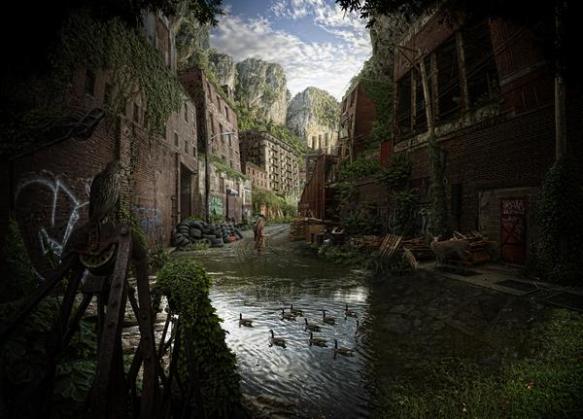


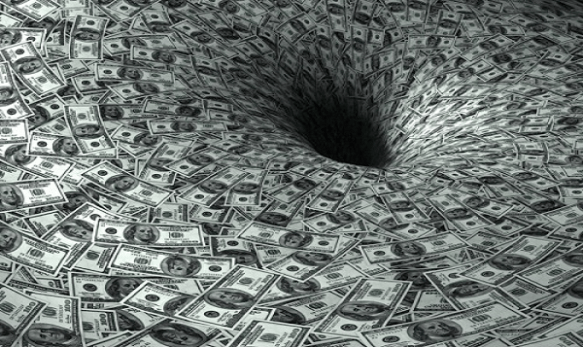


 After the Crash