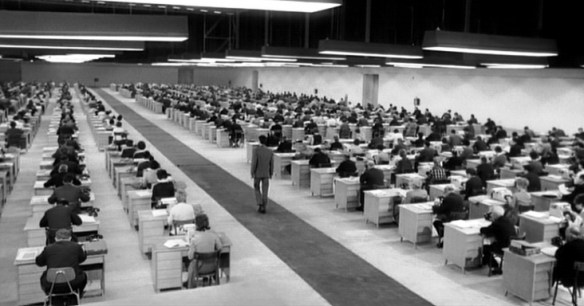
And empires die

Source: Intrepid Report

Nothing ever seems to last, everybody changes oh so fast,
promises made promises lost and pride is kept at any cost,
And flowers die, and children cry, and lonely people carry on.
—Palermo & Farruggio 1970

That was from the song And Flowers Die, by prolific composer Michael Palermo and this writer as lyricist. How appropriate to compare this song with the ‘death song’ of our Military-Industrial Amerikan Empire, now in only its 72nd year of prominence. How great and powerful our empire was for so long. We controlled the economies and governments of so many countries, even continents. Now it is the autumn of our status as Number One. The Asian rim, as many refer to it, being led by China and all those other nations in that region, will become the future economic powerhouse of this planet.

This writer will leave it to the many progressive scholars out there for the explanation of the how and why of this equation. Let me just say that we all, from grade school on, have been fed the pabulum of America as a democracy, benevolent to the entire world. Many sadly still believe that lie, and that strengthens the reason why this empire is in freefall.

Since we became the preeminent world empire at the end of WW2, two things held the greedy ones who run things in we’ll say half check: The progressive federal tax rate and the union movement. The top tax rate from 1953 to 1963 was 91%. Now, we know that the super rich did not pay at that rate, but even after their accountants sharpened a few pencils, many still had to pay at least 50%, for argument sake. Today’s top rate is 39.6%, meaning that folks like mega millionaire Mitt Romney pay at around 15%-20%. Do the math and see how much more went into the treasury then as opposed to now. The second factor that held this empire in half check was the stronger union movement in the ‘50s, ‘60s and ‘70s. In the 1950s, about 35% of American workers belonged to unions. In 1983, it went down to around 20%. Now, the percentage is around 12%. So, that means that three times more working stiffs in the recent past had the protection of a union, however weak or compliant that union may have been. Today, this empire can breathe easily as fewer and fewer working stiffs even have a union!

To this writer, with all the many factors that have contributed to the demise of our nation via this Military-Industrial Empire, the number one factor is our foreign policy. When over half of your spending goes for military reasons, how can a nation sustain itself at home? When you have over 1,000 military bases in over 100 countries, and you consistently are involved in these phony wars, the home front must feel the strain. Our myriad of domestic bleeding is so obvious . . . yet so few here will acknowledge it. Our infrastructure is crumbling, our health care is a mess, too many mediocre paying jobs (with too many being part time with NO benefits), our political system is controlled by Big Money, our media is controlled by the same Big Money . . . and the fools still fight amongst each other over the Two Party/One Party con job.

Let’s face it: All the major industrialized nations are controlled by their super rich. There are really few exceptions. Sadly, with over 99+ % of the populace in all these countries being just simple working stiffs, it is time for a change of mindset. The mindset must be simple: The super rich need to go back to paying their fair share, and government needs to become what Mark Twain prescribed: ‘To protect us from the crooks and scoundrels.’

As Babies are Prescribed Pharmaceuticals, Have We Reached Dystopia?

Tablets Pills Baby

By Joe Jarvis

Source: The Daily Bell

Would you let a five-year-old smoke a joint? I certainly hope not. Yet that would probably be less harmful than loading kids up on pharmaceuticals.

Currently, over a million American children UNDER SIX YEARS OLD are taking psychiatric drugs. Babies are literally being doped up by the pharmaceutical industry. Over 274,000 babies UNDER ONE-YEAR-OLD are given drugs, mostly for anxiety.

Anxiety drugs for babies. Have they tried motherly love? Or is that just an old fashioned, outdated concept?

You know, I like to mention society’s similarity to Orwell’s 1984. And surely the growing police state, war on drugs, and endless military campaigns–where the enemy seems to change daily–are reminiscent of the fictional dictatorship of Big Brother.

But it seems the powers that be are working tirelessly to blend together the dystopia of 1984, with that of Aldous Huxley’s Brave New World.

In that dystopia, there is no police state or war. Society has been perfectly designed by scientists, inspired by Ford’s assembly line. Babies are grown in the lab, cloned to all look alike, depending on their class. Parents are an embarrassing relic of the past. How silly to think a child needs family when they have the state!

The lower castes are deprived of oxygen as embryos to stunt their mental development. In America, they use fluoride in the drinking water instead.

In Brave New World, children listen to 24-hour propaganda in their cribs. Betas hear:

Alpha children wear grey. They work much harder than we do, because they’re so frightfully clever. I’m really awfully glad I’m a Beta, because I don’t work so hard. And then we are much better than the Gammas and Deltas. Gammas are stupid. They all wear green, and Delta children wear khaki. Oh no, I don’t want to play with Delta children. And Epsilons are still worse.

White pride, black pride, gay pride, national pride. Pride is not meant for accidents of birth. You should be proud of accomplishments and achievements, not genetics and geography. Perhaps someone has been whispering in these radicalized children’s ears.

And how jealous the Department of Education must be of the incubators of Brave New World! They have to sometimes wait years to indoctrinate children. But at least the government gets to drug them up at a young age! And if the TV is left on, most of the programming is done for them.

Of course, the adults are drugged up in Brave New World as well, just like in America. If anyone feels the least bit anxious, nervous, sad–or any other troublesome emotion–they get “soma.” It’s the perfect mix of drugs with only pleasant feelings and no ill side effects.

The 1 in 6 Americans on antidepressants, antipsychotics, and anti-anxiety medication still have to put up with side effects.

The 50 million plus Americans on psychiatric medication sometimes kill themselves, or go mad and kill others. I guess the government is still working out the kinks. Or it’s just another creative blending of 1984 and Brave New World. In the former, the proles must be properly terrified.

And there is one more thing I can remember from Brave New World that strikes eerily similar to modern America.

At what age does the public education system start teaching sex ed? Kindergarteners in some states receive “age appropriate”–according to the government–sexual education. Some studies suggest teen pregnancies rise in areas where sex ed is taught at younger ages.

How young is too young for a sex change? Kids can now choose between 43 genders, or make up a new one! It’s like Mr. Potato head, but with their own bodies. And they will be given corresponding drugs to enhance the “natural” changes.

In the classrooms of Brave New World:

“We had Elementary Sex for the first forty minutes,” she answered. “But now it’s switched over to Elementary Class Consciousness.”

The Director walked slowly down the long line of cots. Rosy and relaxed with sleep, eighty little boys and girls lay softly breathing…

He let out the amazing truth. For a very long period before the time of Our Ford, and even for some generations afterwards, erotic play between children had been regarded as abnormal (there was a roar of laughter); and not only abnormal, actually immoral (no!): and had therefore been rigorously suppressed.

Drugging the population, programming citizens with propaganda, sexualizing children, creating class divisions.

These dystopian novels were meant to be warnings, not instruction manuals.


Kafka Warned Us

By

Source: CounterPunch

Kafka’s The Trial can be read in retrospect as a prelude to the Twentieth/Twenty-First century. Although probably not written as prophecy, Kafka’s short unfinished book nevertheless provides a road map to the terrors of the current Surveillance State.

As readers of CounterPunch are all too familiar, modern man, as a single individual, is at the mercy of the modern state and those who, lurking in semi-secrecy, direct it.

Kafka’s The Trial superbly conveys the unease of our current existential situation.

Early one morning, The Trial’s main protagonist, Joseph K, awakes to find that, totally unexpectedly, he has been arrested. Throughout the book he endeavors to find the reason for his arrest without any definite success.

However, what he does discover is a vast semi-secret bureaucracy/organizaton whose inner workings and outward displays of power and decision making remain opaque at best.

Initally, Joseph K, believes that he lives in a “Rechtsstaat” (a state where the rule of law is respected) and thus where it is expected that all civilized norms and laws are upheld.

Yet, he soon comes to see that he has lived in a state of fundamental error and illusion about the true nature of his existence.

What appeared to him as a well ordered and just state is, all of a sudden, revealed to be a capricious omnipotent octopus capable of strangling (in this case literally) anyone deemed to be, for whatever reason, expendable.

All law is suspended or, at least, made a mockery of. All that remains are the inner, turgid demands of power.

Joseph K. is convinced of his innocence. But his conviction is no match for the monolithic power that stands against him. He is eventually crushed, if not by his enemy’s repetitive legal machinations, then by his fatalistic far-reaching administrative power.

In the end, the “Organization” which Joseph K has confronted is almighty and can be controlled by neither appeals to law, logic, or custom. In this, modern man is in a similar situation.

He stands, at any moment, beneath the mercy of a gigantic machinery that, if it wills, can almost casually set into motion his utter annihilation. The devastation and erasure of ones past, present, and future self is an ever-present possible function of the modern state. Advances in technology and organization make such a function all the more easier.

How to combat this greatest threat to humankind’s liberty will make the difference of whether or not future generations live in a world of securely grounded freedom or if they will succumb “like a dog” to the increasingly totalitarian powers of what we call today: the Surveillance State.

The War on Social Media is Being Stepped Up

By Jonathan Cook

Source: Dissident Voice

A really social media, one where we can freely express ourselves and where we alone control the content, is the problem. It must be stopped at all costs.

First, it was “fake news”: the suggestion that social media is uniquely damaging to democracy, rather than the corporately owned media that feeds us constant lies, including the egregious deception that WMD existed in Iraq, and selects self-serving political priorities, such as that Russia’s Vladimir Putin is the biggest threat to the planet’s safety (Donald Trump and climate breakdown are far bigger threats right now).

The latest concern is “trolling”. The UK’s Electoral Commission wants to ban people from voting over bad online etiquette. How will “trolling” be defined? We don’t know yet, but you can be sure it won’t encompass someone like Tony Blair, who trolled some 40 million British voters, then ignored their views, to take us into an illegal war.

Behind the scenes, social media platforms are advanced on creating new algorithms that will increasingly hide dissenting sites from view for all but the most committed to finding them.

These are the first shots in a coming war for control of the internet. Don’t be fooled by arguments that fake news and trolls are to be found on social media. Of course, they are. That is the price one pays for democratic platforms. There will always be people who prefer abuse or mischief over rational discussion and good manners.

But the panic about fake news and trolling is not driven by a sudden concern about media deception and misinformation. That has always been with us. It is about who gets to decide what is real and fake, and who gets to be abusive. It is – and always has been – about power.

Once, not long ago, the only media choice you had was to select your source of propaganda: the Sun, Telegraph, Guardian, New York Times, USA Today, National Enquirer, BBC, CNN etc. If you read a paper and felt strongly enough, you could write a letter to the editor. The paper decided whether you would be one of a dozen people whose views got aired that day on the letters page. That was what “media” meant.

There were no websites, talk-backs, below the line commentaries, blogs, Facebook or Twitter. It was a one-way process. The corporate media told you what was happening, and you listened. There was a consensus only because it had been manufactured through omission.

Now that consensus is breaking down. Certainly, the freedom to speak and think has gone to our heads. It can lead us in all kinds of directions, good and bad, as we try to use these newly discovered muscles like a baby learning to crawl.

The corporate media, and the political class they serve, hate this development. We do not have long. We need to defy the evolutionary process, moving from toddlers to teenagers and adults in record time.

Do not mistake the political and media elite for doting parents, concerned with our welfare. They are not trying to help us get on feet and walk. They want us back in our cribs, gurgling and cooing.

Ken Burns’ Vietnam War: An Object Lesson in the Failures of the Objective Lens

By Reed Richardson

Source: FAIR

If journalism resigns itself to being a “first draft of history,” Ken Burns’ popular PBS documentaries, written by Lynn Novick, have increasingly aspired to—and achieved—a coveted status as popular historical canon. This has, in part, been accomplished by Burns’ choice of cozily American subject matter—jazz, baseball, the Brooklyn Bridge—as well as the calming effect that time and distance provide when it comes to more difficult, inflammatory topics like the Civil War. His success is a rare, fraught feat.

But how would Burns’ earnest, middlebrow glosses on American history, forever panning slowly across sepia-tinted photos, treat a more contemporaneous, contentious event like the Vietnam War? The answer can be found in a 10-part, 18-hour opus that for the first time ventures outside Burns’ previous editorial and narrative comfort zones. The Cold War lead-up, decade-plus of intense air and ground combat, and subsequent years of national shame/guilt over the war affected the second half of our 20th century like nothing else.

Teasing out a coherent, honest through-line of such a momentous, highly charged topic is ambitious, to say the least, and Burns rises to the challenge in many ways. Most notable among them: a dedicated effort to include the voices and experiences of the Vietnamese who suffered and/or fought Americans, to create a much more complete, insightful portrait of the war. But in the striving to present all sides and simply lay out the facts for the viewer, Burns nonetheless pulls his punches when it comes to assigning blame and culpability for the disastrous war. As a result, he has produced a sometimes daring, sometimes schmaltzy, richly detailed yet ultimately flawed film about the tragedy and horrors that the United States brought upon itself and inflicted upon Southeast Asia.

As a Washington Post article (9/18/17) on all the behind-the-scenes detective work that went into the film makes clear, Burns and Novick did an incredible amount of research and original reporting. However, the narrative shortcomings of the documentary mirror many of the same journalistic sins one finds in the corporate media’s coverage of the far-off wars of today. Much like the mainstream press, Burns suffers from inherent biases about objectivity that affect his storytelling.

In an insightful New Yorker profile (9/4/17) of Burns by Ian Parker, one can see the tendrils of the filmmaker’s can’t-we-find-a-consensus editorial viewpoint that longs for inviolable truths sure to exist somewhere in between the ideological extremes:

Burns frequently—almost hourly—says, “Sometimes a thing and the opposite of a thing are true at the same time,” paraphrasing a remark made by Wynton Marsalis, in Jazz. Burns uses the line less to acknowledge historical uncertainty than to advertise inclusiveness: a desire to guide all but the most sectarian or jaded viewers through an obstacle course of their own biases. He is not disengaged from his material, but his sense of a subject, and his sense of an audience’s reaction to that subject, seem to be fused. He once said, “I want to bring everybody in.”

Later in that story, Burns betrays more of this tendency for false equivalence when he makes a prediction about the bifurcated political reaction his documentary would receive. Sounding very much like a put-upon, but archly centrist editorial page editor, he makes clear that he sees angering both the right and the left simultaneously as an occupational hazard, if not a proxy for having arrived closest to the truth:

After The Vietnam War, I’ll have to lie low. A lot of people will think I’m a Commie pinko, and a lot of people will think I’m a right-wing nutcase, and that’s sort of the way it goes.

While this suggests little capacity on the part of Burns to engage in past criticisms of his work—chief among them, his tendency to overindulge in hokey American splendor-ism—that’s not to say there aren’t stark departures from his oeuvre in The Vietnam War. In just the first few minutes of the first episode, “Deja Vu,” over a squawling original Trent Reznor score, Burns literally pushes the audience backwards by spooling iconic footage of the war—and protests of it—in reverse. It’s a disorienting, but shrewd gambit; a recognition of all the baggage the Vietnam War still carries in the American psyche.

Right after this jarring sequence, though, the old Burns reappears. We see languid, gauzy shots of the Vietnam Memorial in Washington, DC, overlaid with Bob Dylan’s “Hard Rain’s Gonna Fall” and former US senator and Vietnam veteran Max Cleland talking philosophically about the tragedy of suffering and surviving war. As presented, Cleland’s connection to the war is inexplicably vague—he’s only identified on-screen by his name and “Army”—and, though he is a triple amputee because of wounds suffered from a grenade blast in Vietnam, he is filmed only in close up, as if Burns still wants to ease his audience into the full violence wrought by the war. (Burns repeats this ambiguous decontextualization of his interview subjects throughout the documentary.) Then, the film’s narration, once again voiced by longtime actor Peter Coyote, offers up what journalism would call the “nut graf,” the defining leitmotif of the 17 hours and 55 minutes yet to come.

America’s involvement in Vietnam began in secrecy. It ended 30 years later in failure, witnessed by the entire world. It was begun in good faith by decent people out of fateful misunderstandings, American overconfidence and Cold War miscalculation. And it was prolonged because it seemed easier to muddle through than admit that it had been caused by tragic decisions made by five American presidents belonging to both political parties.

There is a lot to unpack in this short passage, but it is accurate in its summation of Burns’ narrative focus throughout his film: that is, long on personal perspectives and documentary evidence of the chronological evolution, but short on broader conclusions about American foreign policy, or any real condemnation of the indescribable cruelty and dishonesty among policymakers who orchestrated it. In one telling anecdote, Burns confided to the New Yorker that his team debated saying “ended in defeat” in this section, but nevertheless chose “failure” instead.

Likewise, the film’s “begun in good faith by decent people” line doesn’t merely land like a false note, it deafens like a discordant symphony. As Veterans for Peace pointed out, Burns’ own documentary refutes this claim. Nearly every episode in the film offers up myriad examples of our elected officials, the military, or CIA willfully lying to the public (or each other) about the US’s involvement in Vietnam, often for personal or political gain.

Nor can you overlook the passive construction of the language, which helps to strip agency from the war’s cheerleaders. Burns’ equivocations here represent stunning intellectual cop-outs, pure and simple, and throw doubt on all that follows.

Relevant to such a compromised take is how Burns and Novick get funding for their projects. Less than a quarter of their money is provided by government sources; the rest comes from charities and the private sector. So perhaps it’s foolish to believe any Ken Burns documentary—partly paid for by the likes of David Koch and Bank of America, among other sponsors—would offer up a polemicized indictment of US politicians and war policy.

By all accounts, Burns and Novick maintain full editorial independence, but their funding pipeline for future projects also greatly depends upon the continued generosity of those same nonprofit and corporate benefactors, who don’t ordinarily court highly controversial filmmakers. As a result of this ongoing relationship, there’s an unseen, but unmistakable gravitational pull that serves to keeps the pair from wandering too far afield from conventional wisdom. Just like Bank of America, in other words, Ken Burns has a brand to protect.

To stay safely within the bounds of convention, Burns and Novick spend a great deal of their time “in-country,” so to speak, on a simple, universal theme: War is hell. And their ability to convey the visceral fear and pathos of battle at the human level is remarkable and poignant: “In war, nobody wins or loses. There is only destruction. Only those who have never fought like to argue about who won or lost,” says Bao Ninh, a North Vietnamese soldier Burns interviews. (Bao is no random grunt—he is also the author of The Sorrow of War, a novel of a soldier’s anguish—but, again, Burns identifies him only as “North Vietnamese Army.”)

When paired with the blunt, chilling lessons that combat taught US Marine Karl Marlantes, the combination has a powerful effect. “One of the things I learned in the war is that we’re not the top species on the planet because we’re nice,” recounts Marlantes about a firefight from 1969. “People talk a lot about how well the military turns kids into killing machines and stuff, and I’ll always argue that it’s just finishing school.”

Feeding this seething killing machine on the American side was a wide-open, virulent streak of racism, which Burns, to his credit, delves into (finally) in the fifth episode. (A Washington Post podcast interview with Burns—9/22/17—delves further into this aspect of the war.) Still, the film can never quite make the leap between the countless tragedies on the tactical level and strategic policies that enabled them and then quickly metastasized.

The most famous battlefield atrocity, the 1968 My Lai massacre, which was mostly covered up and pinned on one Lt. William Calley, again shows Burns putting his directorial thumb on the scale. Rather than call the massacre “murder,” as it was originally described by Novick, Burns switched the script to read that “the killing of civilians has happened in every war.” While true, this statement is so banal that it is meaningless, and serves to inoculate My Lai and all the other atrocities committed in the war of their conscience-shocking power. In effect, the film’s stance is normalizing war crimes. And Burns all but confesses to this in a bizarre admission to the New Yorker: “‘Killing’ was the better word, [Burns] said, ‘even though My Lai ismurder.’”

These distinctions without differences betray a corrupted objectivity, one that can’t really reckon with the fact that the wanton destruction and unceasing, lawless violence seen at My Lai was more the rule than the exception. Perpetrating atrocities was, in fact, standard operating procedure for entire units on the US and Vietnamese sides throughout the war, not merely the work of a few deranged individuals. One academic who studies democide (murder by government) conservatively estimates North Vietnam killed 216,000 non-combatants between 1954 and 1975. (The Vietnamese government had been silent about the film until this week, when it issued a boilerplate response. But Vietnamese citizens have been able to watch a version of the documentary with Vietnamese subtitles on PBS online.)

To cite but one specific example of this lawless killing by the US military, the “Tiger Force” recon platoon of the 1/327th Infantry Regiment, 101st Airborne Division, committed a “wave of terror” in Vietnam’s Central Highlands in 1967. This bloodthirsty campaign was detailed in a 2003 series by the Toledo Blade (10/19/03). But for a more exhaustively comprehensive look at the tsunami of illegal killing by the US across the entire theater, you’re better off reading Nick Turse’s damning account: Kill Anything That Moves: The Real American War in Vietnam. As an American Conservative (7/30/13) book review of Turse’s book makes clear:

The relentless violence against civilians was more than the activity of a few sociopaths: It was policy. This was a war fought along Fordist principles—Robert McNamara had gone to the Department of Defense straight from the helm of the auto giant—and the slaughter was industrial in scale. Victory over the Viet Cong was to be achieved by quantifiable “kill ratios,” to reach that elusive tipping point where the insurgency could no longer replenish its troops. This approach hard-wired incentives to secure a high “body count” down the chain of command, with the result that US soldiers often shot civilians dead to pad their tallies and thereby move up the ranks.

Turse sent copies of his book to Burns’ team, and it is listed as a source in the show’s online bibliography. But while episodes two and three of Burns’ series do take time to cite McNamara’s chilling preference for quantifying enemy deaths as success (i.e., the infamous “body counts”), the film still fails to connect all the dots as to how this high-level political and military mindset—also propelled by racism—set the conditions for consistent, everyday atrocities, versus mere military operations, by combat units. (Thomas Bass’s highly critical essay covering the entire 18-hour documentary—Mekong Review, 8–10/17—discusses this.)

Ironically, Burns and Novick’s compromised framing also echoes much of the jingoistic reporting of the war as it was happening, which the film does an admirable job of debunking. Most TV media coverage of the early years of ever-expanding war, Burns notes, was almost willfully obtuse, invoking World War II newsreels that portrayed the war in terms that were “enthusiastic, unquestioning, good guys fighting and defeating bad guys.” At one point, Burns features a Marine, Roger Harris, telling his mother in 1967 that “she shouldn’t believe what she sees in the newspaper, what she sees on television, because we’re losing the war.”

There were a few, notable exceptions, however. While Vietnam was still fighting French colonial rule, on-the-ground reporters like Seymour Topping, the local Associated Press correspondent in Saigon, were warning that Western imperialist intentions in the country were doomed to fail. In 1951, Topping said as much to a young congressmember from Massachusetts, John F. Kennedy, who was visiting the nation for the first time.

Once the US began sending advisers, and then combat troops, in the early 1960s, Burns points to a handful of reporters—Neil Sheehan (who was an adviser to the documentary), the New York Times’ David Halberstam and Malcolm Browne of the AP—who dared to buck the party line. After spending time in the field, the film notes, they “were beginning to see that from the Vietnamese countryside, things looked very different than they did from the press offices in Washington or Saigon.”

But even intrepid reporters committed to telling the truth about the war were susceptible to creeping American bias. Sheehan, who had fought in Korea, acknowledges that he found riding along in US helicopters on an South Vietnamese Army air assault raid “absolutely thrilling.” Similarly, Joe Galloway, a UPI reporter who filed countless battlefield reports during the war, says in the film:

You can’t just be a neutral witness to something like war.… It’s not something you can stand back and be neutral and objective, and all of those things that we try to be as reporters, journalists and photographers. It doesn’t work that way.

Not coincidentally, when Galloway recounts a landmark 1965 battle in the Ia Drang Valley, where the Air Cavalry unit he was with faced a massive, frontal attack by the Viet Cong, he notably lapses into the first-person plural: “We had two things going for us. We had a great commander and great soldiers and we had air and artillery support out the yin-yang.” That Galloway later co-authored a New York Times bestselling book about the battle with its US commander, Lt. Gen. Hal Moore, and was later awarded a Bronze Star by the US Army for helping rescue a wounded soldier during that battle, goes unmentioned by Burns.

It’s this blindspot—the failure to see that one is adopting the point of view of one’s subjects—that ultimately dooms the film’s potential. Which is a tragedy, since the US is currently failing to learn the the same painful, sunk-costs lessons of Vietnam with its bipartisan, Groundhog Day war policy in Afghanistan. As Drake University political science professor, David Skidmore, noted in his review of the film (Military Times, 9/17/17):

Now Trump has also reneged from previous pledges to disengage from Afghanistan…the histories of US military involvements in Vietnam and Afghanistan should serve as warnings to future presidents who might be tempted to again jump onto the treadmill of perpetual war.

Burns has said he wants his film to act at as “some sort of vaccination” to war, to “get you immune to the disunion that it has sponsored.” But by denying the role and agency of the people who lied us into the Vietnam War, and then kept lying to keep us from leaving, his film misdiagnoses the real problem.

Looking for an invading sickness or outside cause for the mayhem and destruction our country unleashed upon Vietnam, and itself, is a dodge. In the end, the answer to the fundamental question about the Vietnam War, “Why?,” cannot be found in any clinical or objective analysis—no matter how many hours of documentary footage you have—that stubbornly avoids placing blame where it is so richly due.

Decoding a Fake Reality

By Rosanne Lindsay

Source: Waking Times

Reality is a program of beliefs we decode:

Disease equals Health
Fake news equals Truth
Wars equal Peace
Uniformity equals Unity
State-granted rights equal human rights
Slavery equals Freedom.

All is illusion.

As our world unfolds in multiple dimensions, we are focused in a time-space continuum (linear construct) with limited perception. Our “perception deception” in this reality timeline means that no matter what happened in the past, or what might happen in the future, we are always pondering it and creating it in the Now.

The power to restructure reality is only possible with the clarity of the cosmic mind. Unfortunately, as humans, we are easily programmed to believe that what we see, feel, taste, hear, and smell is all there is.

“The outer world is a reflection of the inner world. Other people’s perception of you is a reflection of them; your response to them is an awareness of you.” ~Roy T. Bennett, The Light in the Heart

Our beliefs guide our perception about who we are and what we can create. Believe we are sick and tired and we are. The body responds to core beliefs. The cells hear what we say, they hear limitations and feel fear. If we love our cells, the body will support our beliefs. What we do in our bodies is pivotal to our multidimensional selves, as well as to other timelines.

The Structure of Reality

Reality is constructed in time and space in this Third Dimension. Time and space are frequencies which cycle in a looped timeline, which our brains decode so that we can experience life as humans. Everything cycles, from the seasons to the economy, just as history tends to repeat itself.

We live in a Matrix system that can be described as a grid, a hologram, or a game composed of electromagnetic (EM) frequencies. The hologram is information as light that is distributed non-locally. Our brains decode this information based on perception; how things appear to us. And as we know, appearances can be deceiving.

Indeed, all is not as it seems. We create a collective reality with electromagnetic frequencies where everyone and everything is connected, in similar fashion to how the internet works. However, in the space we occupy we see only a small visible light spectrum, a narrow band of information that represents only 0.0001% of the whole electromagnetic spectrum.

Spirit First

We perceive that the brain is the central processing unit of the body, the body is a computer, and our DNA is nature’s hard drive. Yet we must also accept that we are receivers and transmitters of information – we are also the energy that runs the body. We are Spirit first. We are consciousness having a physical experience in a holographic constructed reality for our soul’s growth and evolution. Consciousness creates reality.

“You are a creator. You of humanity… Science has a fixation on knowledge, particularly that which is compatible with sense perception. Despite instruments which far exceed man’s sensory capacity, all knowledge gained in translated back to a sense perception before it can be coded as information. If it cannot be seen, heard, touched, smelled or tasted, it is not received by physical man. The five senses of man. The four walls and the lid of your prison. Discard them. Touch will not determine subtle shapes. Eye will not perceive reality. Ears do not hear the song of the universe. You cannot taste the food of angels or smell the fragrance of a higher truth. We rejoice as you begin to unshackle the self-imposed chains of limitation. Use your physical senses, enjoy them, but never for one moment believe in them as complete reality. Your heart knows – experience. Believe. Believe. Whatever you believe is so.” ―  Jade Plant, Talking with Nature by Michael J. Roads

If we understand the construction of an atom, then we appreciate that we are not solid at all. We are pure awareness in a cosmos we cannot measure. We are not our bodies or our names. We are not our emotions. We are limitless. Through our limited perception and core beliefs this may sound impossible.

However, we are not impossible but everything that is possible. All possibility means we are everything and no-thing. We are matter and energy, sound and silence. Life is a continuum, between physical and non-physical. Without beginning and without end.

In this game of illusion, we are a projection of our True Selves. In this reality, we are a hologram in a holographic universe. A hologram: a three-dimensional projection written on a two dimensional surface (i.e., piece of paper).

We are here to remember that we are more than words on paper just as we are more than base pairs of our DNA. Our DNA is a projection of a greater force. We are wave and particle at the same time. We are not complex. We are multiplex.

In this game of illusion, humans are caught in a time loop distortion where we have lost our power to those who control the program in the hologram. Not only are minds controlled (via social engineering and frequencies), but human genetics have been manipulated to perceive through five physical senses, resulting in the suppression of our true selves and our true potential.

The Freedom To Choose

In navigating All That We Are, we have a choice. We can choose to become bees in a Hive Mind on a colony of control and draconian laws, or we can choose freedom.

“Liberty lies in the hearts of men and women. When it dies there, no constitution, no law and no court, can save it.” ― Judge Learned Hand

When we talk about freedom, we perceive only a fraction of what is possible based on what we have been programmed and conditioned to believe through the limits of the five senses. The moment we perceive differently to use all of our senses, and to embody freedom, we reclaim our freedom. We no longer have to conform to colony control.

Decoding a Fake Reality

The mind controls beliefs in a reality that conforms to core beliefs. When we do not see beyond the page and open to all that is possible, we decode a fake reality and perpetuate it. We become distracted by the limitations set up to suppress our inherent power instead of creating the reality that best serves all of humanity and the planet.

“Morpheus: The Matrix is everywhere. It is all around us. Even now, in this very room. You can see it when you look out your window or when you turn on your television. You can feel it when you go to work… when you go to church… when you pay your taxes. It is the world that has been pulled over your eyes to blind you from the truth.


Neo: What truth?


Morpheus: That you are a slave, Neo. Like everyone else you were born into bondage. Into a prison that you cannot taste or see or touch. A prison for your mind.” ~The Matrix

The Matrix is a system into which humans incarnate and reincarnate for the purpose of soul evolution, and to wake up. While this construct may not be able to be “fixed” it can be conditioned by the way we respond to it.

A Reality of Now in Three Steps

Step 1: Free the mind from the program of beliefs.

Unlearn Core Beliefs:
Schools are there to enlighten us to the truth of the world.
Governments grant rights to protect us.
Big Pharma cures us.
The mainstream media tells the truth about what is happening in the world.
Politicians stand for hope and change.
Terrorists (false flag events) necessitate less freedom though more controls and surveillance.
GMO foods feed the world.
RFID microchips make life more convenient and efficient.
Chemtrails and geoengineering control “global warming” to protect the planet.

Step 2: Expand what we think is possible. Choose to become conscious of the Matrix system or to choose to remain unconscious. If we are in denial we cannot change anything. Accept what is so that we can change what is.

Step 3: Move from thinking and talking about it to doing something about it. Start with the body. Change emotions to lighten the body burden. Love the Self. See the body respond and heal and watch it ripple out to change reality.

The Silencing of Dissent

By Chris Hedges

Source: Information Clearing House

The ruling elites, who grasp that the reigning ideology of global corporate capitalism and imperial expansion no longer has moral or intellectual credibility, have mounted a campaign to shut down the platforms given to their critics. The attacks within this campaign include blacklisting, censorship and slandering dissidents as foreign agents for Russia and purveyors of “fake news.”

No dominant class can long retain control when the credibility of the ideas that justify its existence evaporates. It is forced, at that point, to resort to crude forms of coercion, intimidation and censorship. This ideological collapse in the United States has transformed those of us who attack the corporate state into a potent threat, not because we reach large numbers of people, and certainly not because we spread Russian propaganda, but because the elites no longer have a plausible counterargument.

The elites face an unpleasant choice. They could impose harsh controls to protect the status quo or veer leftward toward socialism to ameliorate the mounting economic and political injustices endured by most of the population. But a move leftward, essentially reinstating and expanding the New Deal programs they have destroyed, would impede corporate power and corporate profits. So instead the elites, including the Democratic Party leadership, have decided to quash public debate. The tactic they are using is as old as the nation-state—smearing critics as traitors who are in the service of a hostile foreign power. Tens of thousands of people of conscience were blacklisted in this way during the Red Scares of the 1920s and 1950s. The current hyperbolic and relentless focus on Russia, embraced with gusto by “liberal” media outlets such as The New York Times and MSNBC, has unleashed what some have called a virulent “New McCarthyism.”

The corporate elites do not fear Russia. There is no publicly disclosed evidence that Russia swung the election to Donald Trump. Nor does Russia appear to be intent on a military confrontation with the United States. I am certain Russia tries to meddle in U.S. affairs to its advantage, as we do and did in Russia—including our clandestine bankrolling of Boris Yeltsin, whose successful 1996 campaign for re-election as president is estimated to have cost up to $2.5 billion, much of that money coming indirectly from the American government. In today’s media environment Russia is the foil. The corporate state is unnerved by the media outlets that give a voice to critics of corporate capitalism, the security and surveillance state and imperialism, including the network RT America.

My show on RT America, “On Contact,” like my columns at Truthdig, amplifies the voices of these dissidents—Tariq Ali, Kshama Sawant, Mumia Abu-Jamal, Medea Benjamin, Ajamu Baraka, Noam Chomsky, Dr. Margaret Flowers, Rania Khalek, Amira Hass, Miko Peled, Abby Martin, Glen Ford, Max Blumenthal, Pam Africa, Linh Dinh, Ben Norton, Eugene Puryear, Allan Nairn, Jill Stein, Kevin Zeese and others. These dissidents, if we had a functioning public broadcasting system or a commercial press free of corporate control, would be included in the mainstream discourse. They are not bought and paid for. They have integrity, courage and often brilliance. They are honest. For these reasons, in the eyes of the corporate state, they are very dangerous.

The first and deadliest salvo in the war on dissent came in 1971 when Lewis Powell, a corporate attorney and later a Supreme Court justice, wrote and circulated a memo among business leaders called “Attack on American Free Enterprise System.” It became the blueprint for the corporate coup d’état. Corporations, as Powell recommended in the document, poured hundreds of millions of dollars into the assault, financing pro-business political candidates, mounting campaigns against the liberal wing of the Democratic Party and the press and creating institutions such as the Business Roundtable, The Heritage Foundation, the Manhattan Institute, the Cato Institute, Citizens for a Sound Economy, the Federalist Society and Accuracy in Academia. The memo argued that corporations had to fund sustained campaigns to marginalize or silence those who in “the college campus, the pulpit, the media, and the intellectual and literary journals” were hostile to corporate interests.

Powell attacked Ralph Nader by name. Lobbyists flooded Washington and state capitals. Regulatory controls were abolished. Massive tax cuts for corporations and the wealthy were implemented, culminating in a de facto tax boycott. Trade barriers were lifted and the country’s manufacturing base was destroyed. Social programs were slashed and funds for infrastructure, from roads and bridges to public libraries and schools, were cut. Protections for workers were gutted. Wages declined or stagnated. The military budget, along with the organs of internal security, became ever more bloated. A de facto blacklist, especially in universities and the press, was used to discredit intellectuals, radicals and activists who decried the idea of the nation prostrating itself before the dictates of the marketplace and condemned the crimes of imperialism, some of the best known being Howard Zinn, Noam Chomsky, Sheldon Wolin, Ward Churchill, Nader, Angela Davis and Edward Said. These critics were permitted to exist only on the margins of society, often outside of institutions, and many had trouble making a living.

The financial meltdown of 2008 not only devastated the global economy, it exposed the lies propagated by those advocating globalization. Among these lies: that salaries of workers would rise, democracy would spread across the globe, the tech industry would replace manufacturing as a source of worker income, the middle class would flourish, and global communities would prosper. After 2008 it became clear that the “free market” is a scam, a zombie ideology by which workers and communities are ravaged by predatory capitalists and assets are funneled upward into the hands of the global 1 percent. The endless wars, fought largely to enrich the arms industry and swell the power of the military, are futile and counterproductive to national interests. Deindustrialization and austerity programs have impoverished the working class and fatally damaged the economy.

The establishment politicians in the two leading parties, each in service to corporate power and responsible for the assault on civil liberties and impoverishment of the country, are no longer able to use identity politics and the culture wars to whip up support. This led in the last presidential campaign to an insurgency by Bernie Sanders, which the Democratic Party crushed, and the election of Donald Trump.

Barack Obama rode a wave of bipartisan resentment into office in 2008, then spent eight years betraying the public. Obama’s assault on civil liberties, including his use of the Espionage Act to prosecute whistleblowers, was worse than those carried out by George W. Bush. He accelerated the war on public education by privatizing schools, expanded the wars in the Middle East, including the use of militarized drone attacks, provided little meaningful environmental reform, ignored the plight of the working class, deported more undocumented people than any other president, imposed a corporate-sponsored health care program that was the brainchild of the right-wing Heritage Foundation, and prohibited the Justice Department from prosecuting the bankers and financial firms that carried out derivatives scams and inflated the housing and real estate market, a condition that led to the 2008 financial meltdown. He epitomized, like Bill Clinton, the bankruptcy of the Democratic Party. Clinton, outdoing Obama’s later actions, gave us the North American Free Trade Agreement (NAFTA), the dismantling of the welfare system, the deregulation of the financial services industry and the huge expansion of mass incarceration. Clinton also oversaw deregulation of the Federal Communications Commission, a change that allowed a handful of corporations to buy up the airwaves.

The corporate state was in crisis at the end of the Obama presidency. It was widely hated. It became vulnerable to attacks by the critics it had pushed to the fringes. Most vulnerable was the Democratic Party establishment, which claims to defend the rights of working men and women and protect civil liberties. This is why the Democratic Party is so zealous in its efforts to discredit its critics as stooges for Moscow and to charge that Russian interference caused its election defeat.

In January there was a report on Russia by the Office of the Director of National Intelligence. The report devoted seven of its 25 pages to RT America and its influence on the presidential election. It claimed “Russian media made increasingly favorable comments about President-elect Trump as the 2016 US general and primary election campaigns progressed while consistently offering negative coverage of Secretary [Hillary] Clinton.” This might seem true if you did not watch my RT broadcasts, which relentlessly attacked Trump as well as Clinton, or watch Ed Schultz, who now has a program on RT after having been the host of an MSNBC commentary program. The report also attempted to present RT America as having a vast media footprint and influence it does not possess.

“In an effort to highlight the alleged ‘lack of democracy’ in the United States, RT broadcast, hosted, and advertised third party candidate debates and ran reporting supportive of the political agenda of these candidates,” the report read, correctly summing up themes on my show. “The RT hosts asserted that the US two-party system does not represent the views of at least one-third of the population and is a ‘sham.’ ”

It went on:

RT’s reports often characterize the United States as a ‘surveillance state’ and allege widespread infringements of civil liberties, police brutality, and drone use.

RT has also focused on criticism of the US economic system, US currency policy, alleged Wall Street greed, and the US national debt. Some of RT’s hosts have compared the United States to Imperial Rome and have predicted that government corruption and “corporate greed” will lead to US financial collapse.

Is the corporate state so obtuse it thinks the American public has not, on its own, reached these conclusions about the condition of the nation? Is this what it defines as “fake news”? But most important, isn’t this the truth that the courtiers in the mainstream press and public broadcasting, dependent on their funding from sources such as the Koch brothers, refuse to present? And isn’t it, in the end, the truth that frightens them the most? Abby Martin and Ben Norton ripped apart the mendacity of the report and the complicity of the corporate media in my “On Contact” show titled “Real purpose of intel report on Russian hacking with Abby Martin & Ben Norton.”

The blacklist published by the shadowy and anonymous site PropOrNot in November 2016 soon followed. The blacklist was composed of 199 sites PropOrNot alleged, with no evidence, “reliably echo Russian propaganda.” More than half of those sites were far-right, conspiracy-driven ones. But about 20 of the sites were major left-wing outlets including AlterNet, Black Agenda Report, Democracy Now!, Naked Capitalism, Truthdig, Truthout, CounterPunch and the World Socialist Web Site. The blacklist and the spurious accusations that these sites disseminated “fake news” on behalf of Russia were given prominent play in The Washington Post in a story headlined “Russian propaganda effort helped spread ‘fake news’ during the election, experts say.” The reporter, Craig Timberg, wrote that the goal of the Russian propaganda effort, according to “independent researchers who have tracked the operation,” was “punishing Democrat Hillary Clinton, helping Republican Donald Trump and undermining faith in American democracy.” Last December, Truthdig columnist Bill Boyarsky wrote a good piece about PropOrNot, which to this day remains essentially a secret organization.

The owner of The Washington Post, Jeff Bezos, also the founder and CEO of Amazon, has a $600 million contract with the CIA. Google, likewise, is deeply embedded within the security and surveillance state and aligned with the ruling elites. Amazon recently purged over 1,000 negative reviews of Hillary Clinton’s new book, “What Happened.” The effect was that the book’s Amazon rating jumped from 2 1/2 stars to five stars. Do corporations such as Google and Amazon carry out such censorship on behalf of the U.S. government? Or is this censorship their independent contribution to protect the corporate state?

In the name of combating Russia-inspired “fake news,” Google, Facebook, Twitter, The New York Times, The Washington Post, BuzzFeed News, Agence France-Presse and CNN in April imposed algorithms or filters, overseen by “evaluators,” that hunt for key words such as “U.S. military,” “inequality” and “socialism,” along with personal names such as Julian Assange and Laura Poitras, the filmmaker. Ben Gomes, Google’s vice president for search engineering, says Google has amassed some 10,000 “evaluators” to determine the “quality” and veracity of websites. Internet users doing searches on Google, since the algorithms were put in place, are diverted from sites such as Truthdig and directed to mainstream publications such as The New York Times. The news organizations and corporations that are imposing this censorship have strong links to the Democratic Party. They are cheerleaders for American imperial projects and global capitalism. Because they are struggling in the new media environment for profitability, they have an economic incentive to be part of the witch hunt.

The World Socialist Web Site reported in July that its aggregate volume, or “impressions”—links displayed by Google in response to search requests—fell dramatically over a short period after the new algorithms were imposed. It also wrote that a number of sites “declared to be ‘fake news’ by the Washington Post’s discredited [PropOrNot] blacklist … had their global ranking fall. The average decline of the global reach of all of these sites is 25 percent. …”

Another article, “Google rigs searches to block access to World Socialist Web Site,” by the same website that month said:

During the month of May, Google searches including the word “war” produced 61,795 WSWS impressions. In July, WSWS impressions fell by approximately 90 percent, to 6,613.

Searches for the term “Korean war” produced 20,392 impressions in May. In July, searches using the same words produced zero WSWS impressions. Searches for “North Korea war” produced 4,626 impressions in May. In July, the result of the same search produced zero WSWS impressions. “India Pakistan war” produced 4,394 impressions in May. In July, the result, again, was zero. And “Nuclear war 2017” produced 2,319 impressions in May, and zero in July.

To cite some other searches: “WikiLeaks,” fell from 6,576 impressions to zero, “Julian Assange” fell from 3,701 impressions to zero, and “Laura Poitras” fell from 4,499 impressions to zero. A search for “Michael Hastings”—the reporter who died in 2013 under suspicious circumstances—produced 33,464 impressions in May, but only 5,227 impressions in July.

In addition to geopolitics, the WSWS regularly covers a broad range of social issues, many of which have seen precipitous drops in search results. Searches for “food stamps,” “Ford layoffs,” “Amazon warehouse,” and “secretary of education” all went down from more than 5,000 impressions in May to zero impressions in July.

The accusation that left-wing sites collude with Russia has made them theoretically subject, along with those who write for them, to the Espionage Act and the Foreign Agent Registration Act, which requires Americans who work on behalf of a foreign party to register as foreign agents.

The latest salvo came last week. It is the most ominous. The Department of Justice called on RT America and its “associates”—which may mean people like me—to register under the Foreign Agent Registration Act. No doubt, the corporate state knows that most of us will not register as foreign agents, meaning we will be banished from the airwaves. This, I expect, is the intent. The government will not stop with RT. The FBI has been handed the authority to determine who is a “legitimate” journalist and who is not. It will use this authority to decimate the left.

This is a war of ideas. The corporate state cannot compete honestly in this contest. It will do what all despotic regimes do—govern through wholesale surveillance, lies, blacklists, false accusations of treason, heavy-handed censorship and, eventually, violence.


Chris Hedges, spent nearly two decades as a foreign correspondent in Central America, the Middle East, Africa and the Balkans. He has reported from more than 50 countries and has worked for The Christian Science Monitor, National Public Radio, The Dallas Morning News and The New York Times, for which he was a foreign correspondent for 15 years.


The Hamilton Hustle

By Matt Stoller

Source: The Baffler

AS DONALD TRUMP SETTLES INTO THE WHITE HOUSE, elites in the political class are beginning to recognize that democracy is not necessarily a permanent state of political organization. “Donald Trump’s candidacy is the first time American politics has left me truly afraid,” wrote Vox cofounder Ezra Klein just before the election. Andrew Sullivan argued in New York magazine that American democracy is susceptible, “in stressful times, to the appeal of a shameless demagogue.” Paul Krugman wrote an entire column on why republics end, citing Trump’s violations of political norms. But if you want to understand the politics of authoritarianism in America, the place to start is not with Trump, but with the cool-kid Founding Father of the Obama era, Alexander Hamilton.

I’m not just talking about the actual founder, though we’ll come back to him. I’m talking about the personage at the center of the Broadway musical, Hamilton.

The show is a Tony Award–winning smash hit, propelling its writer, Lin-Manuel Miranda, to dizzying heights of fame and influence. It is America’s Les Misérables, an achingly beautiful and funny piece of theater about a most unlikely icon of democratic inclusiveness, Alexander Hamilton.

I’m not going to dissect the show itself—the politics of it are what require reexamination in the wake of Trump. However, it should be granted one unqualified plaudit at the outset: Miranda’s play is one of the most brilliant propaganda pieces in theatrical history. And its construction and success tell us a lot about our current political moment. Before it was even written, the play was nurtured at the highest levels of the political establishment. While working through its material, Miranda road-tested song lyrics at the White House with President Obama. When it was performed, Obama, naturally, loved it. Hamilton, he said, “reminds us of the vital, crazy, kinetic energy that’s at the heart of America.” Michelle Obama pronounced it the best art she had ever seen.

The first couple’s comments were just the leading edge of a cultural explosion of praise. Actress Kerry Washington called it “life changing.” Lena Dunham said, “If every kid in America could see Hamilton they would thirst for historical knowledge and then show up to vote.” Saturday Night Live featured a sketch wherein Lorne Michaels begged guest host Miranda for Hamilton tickets (“I can do a matinee!”). It’s perhaps harder to list celebrities who haven’t seen Hamilton than those who have. And in Washington, D.C., politicians who haven’t seen the show are considered uncool.

Admiration for the play crossed the political spectrum. Conservative pop-historian Niall Ferguson opened up a book talk, according to one witness on Twitter, “with a rap set to music inspired by Hamilton.” Former secretaries of the treasury praised it, from Tim Geithner to Jack Lew to Hank Paulson. So did Dick Cheney, prompting Obama to note that the wonder of the play was perhaps the only thing the two men agreed on. Trevor Noah asked if Bernie Sanders, who had just seen the play, ran for president just so he would be able to get tickets. Rahm Emanuel, the mayor of Chicago and former White House chief of staff, raised eyebrows by jetting off to New York City to see a performance of Hamilton the night after Chicago teachers went on strike.

It’s not just that Hamilton is about a founding father, and thus inherently making statements about who we are as a culture. It’s become a status symbol within the Democratic establishment, offering them the chastened consolation that they might still claim solidarity with the nascent American democracy of the eighteenth century that’s stubbornly eluded them in the present-day political scene. Hillary Clinton quoted the play in her speech accepting the Democratic nomination, and told a young voter, “I’ve seen the show three times and I’ve cried every time—and danced hard in my seat.” The play has become a political football in the era of Trump. When Trump’s vice president, Mike Pence, saw the show, one of the cast members read him a special note, written by Miranda and several cast members, asking Pence to protect all of America. Hamilton cast members helped lead the Women’s March in Chicago to protest Trump’s inauguration. Right-wing website Breitbart has a hostile mini-Hamilton beat, noting that the play’s producers specifically requested non-white actors to fill the cast.

And after Trump won, Hamilton became a refuge. Journalist Nancy Youssef tweeted she overheard someone at the Pentagon say, “I am reaffirming my belief in democracy by listening to the Hamilton soundtrack.”

Beast Master

What’s strange about all of this praise is how it presumes that Alexander Hamilton was a figure for whom social justice and democracy were key animating traits. Given how Democrats, in particular, embraced the show and Hamilton himself as a paragon of social justice, you would think that he had fought to enlarge the democratic rights of all Americans. But Alexander Hamilton simply didn’t believe in democracy, which he labeled an American “disease.” He fought—with military force—any model of organizing the American political economy that might promote egalitarian politics. He was an authoritarian, and proud of it.

To assert Hamilton disliked democracy is not controversial. The great historian Henry Adams described an evening at a New York dinner, when Hamilton replied to democratic sentiment by banging the table and saying, “Your people, sir—your people is a great beast!” Hamilton’s recommendation to the Constitutional Convention, for instance, was to have a president for life, and to explicitly make that president not subject to law.

Professional historians generally avoid emphasizing Hamilton’s disdain for the people, at least when they write for the broad public. Better to steer safely clear of the freight train of publicity and money behind the modern Hamilton myth. One exception is amateur historian William Hogeland, who noted in a recent Boston Reviewessay that Hamilton had strong authoritarian tendencies. Hamilton, he wrote, consistently emphasized “the essential relationship between the concentration of national wealth and the obstruction of democracy through military force.”

Indeed, most of Hamilton’s legacy is astonishingly counter-democratic. His central role in founding both the financial infrastructure of Wall Street and a nascent military establishment (which supplanted the colonial system of locally controlled democratic militias) was rooted in his self-appointed crusade to undermine the ability of ordinary Americans to govern themselves. We should be grateful not that Hamilton structured the essential institutions of America to fit his vision, but that he failed to do so. Had he succeeded, we would probably be living in a military dictatorship.

Father of Finance

Viewers of the play Hamilton have a difficult time grasping this point. It just seems outlandish that an important American political official would argue that democracy was an actively bad system. Sure, America’s leadership caste has done plenty on its own to subvert the legal norms and folkways of self-rule, via voting restrictions, lobbying and corruption, and other appurtenances of access-driven self-dealing. But the idea of openly opposing the hallowed ideal of popular self-government is simply inconsistent with the past two hundred years of American political culture. And this is because, in the election of 1800, when Hamilton and his Federalist allies were finally crushed, America repudiated aristocracy and began the long journey toward establishing a democratic political culture and undoing some, though not all, of the damage wrought by Hamilton’s plutocratic-leaning Federalist Party.

Indeed, the shifting popular image of Hamilton is itself a gauge of the relative strength of democratic institutions at any given moment. In the roaring 1920s, when Wall Street lorded it over all facets of our public life, treasury secretary Andrew Mellon put Hamilton’s face on the ten-dollar bill. Mellon was the third richest man in the country, famous for, among other things, having his brother and chairman of one of his coal mining subsidiaries extoll the virtues of using machine guns to enforce labor discipline. Mellon himself, who later presided over the Great Depression, was routinely lauded by big business interests as the “greatest secretary of the treasury since Alexander Hamilton.” Big business leaders in Pittsburgh, such as Andrew Carnegie and Henry Clay Frick, worshipped Hamilton (as well as Napoleon).

During the next decade, as populists put constraints on big money, Hamilton fell into disrepute. In 1925, Franklin Delano Roosevelt, then just a lawyer, recognized Hamilton as an authoritarian, saying that he had in his mind after reading a popular new book on Hamilton and Jefferson “a picture of escape after escape which this nation passed through in those first ten years; a picture of what might have been if the Republic had been finally organized as Alexander Hamilton sought.” By 1947, a post-war congressional report titled “Fascism in Action” listed Hamilton as one intellectual inspiration for the Nazi regime. Hamilton’s name practically became an epithet among Democrats of the New Deal era, which makes it all the more surprising that he is the darling of the modern party.

Within this context, it’s useful to recognize that Hamilton the play is not the real story of Alexander Hamilton; rather, as historian Nancy Isenberg has noted, it’s a revealing parable about the politics of the finance-friendly Obama era. The play is based on Ron Chernow’s eight-hundred-page 2004 biography of Hamilton. Chernow argues that “Hamilton was an abolitionist who opposed states’ rights, favored an activist central government, a very liberal interpretation of the Constitution and executive rather than legislative powers.” Hamilton, he notes, “sounds . . . like a modern Democrat.” The abolition arguments are laughably false; Hamilton married into a slaveholding family and traded slaves himself. But they are only part of a much broader obfuscation of Hamilton’s politics.

No Accidental Coup

To understand how outrageous Chernow’s understanding of Hamilton is, we must go through a few key stories from Hamilton’s life. We should probably start with the Newburgh Conspiracy—Hamilton’s attempt to foment a military coup against the Continental Congress after the Revolution. In 1782 several men tried to organize an uprising against the Continental Congress. The key leader was Robert Morris, Congress’s superintendent of finance and one of Hamilton’s mentors. Morris was the wealthiest man in the country, and perhaps the most powerful financier America has ever known, with the possible exception of J. P. Morgan. His chief subordinate in the plot was a twenty-seven-year-old Hamilton, former aide-de-camp of George Washington and delegate to the Congress.

After the war, army officers, then camped out in Newburgh, New York, had not been paid for years of service. Morris and Hamilton saw in this financial-cum-political crisis an opportunity to structure a strong alliance between the military elite and wealthy investors. Military officers presented a petition to Congress for back pay. Congress tried to pass a tax to pay the soldiers, while also withholding payments owed to bondholders. Hamilton blocked this move. Indeed, according to Hogeland, “when a motion was raised to levy the impost only for the purpose of paying army officers, Hamilton shot it down: all bondholders must be included.” Meanwhile, Morris and Hamilton secretly encouraged General Horatio Gates at Newburgh to organize a mutiny. After unifying investors and the military elite, Morris and Hamilton calculated that the military officer corps would threaten Congress with force unless the Articles of Confederation were amended to allow full federal taxing power by federal officials. This coup attempt would then, they reasoned, force Congress to override state governments that were more democratic in their approach to political economy, and place aristocrats in charge.

According to Hogeland,

In Morris’s plan these taxes, collected not by weak state governments but by a cadre of powerful federal officers, would be earmarked for making hefty interest payments to wealthy financiers—including Morris himself, along with his friends and colleagues—who held millions of dollars in federal bonds, the blue-chip tier of domestic war debt.

The mutiny itself failed due to a public statement by George Washington opposing a military uprising. But in broader terms, the plot succeeded, once Washington promptly warned Congress about the unstable situation and urged that they take drastic action to centralize and federalize the structure of the American republic. Military officers received what would be the equivalent today of multi-million-dollar bonuses, paid largely in federal debt instruments. This effectively institutionalized the elite coalition that Morris and Hamilton sought to weaponize into a tool of destabilization. The newly unified creditors and military officers formed a powerful bloc of aristocratic power within the Congress that pushed hard to dramatically expand federal taxing power. This group “set up [Hamilton’s] career,” Hogeland writes, because by placing him in power over their asset base—a national debt—they would assure a steady stream of unearned income. Chernow obscures Hamilton’s participation in the mutiny, claiming in a rushed disclaimer to preserve his hero’s honor that Hamilton feared a military uprising—but he then proceeds to note that Hamilton “was playing with combustible forces” by attempting to recruit Washington to lead the coup. It’s a howling inconsistency bordering on falsification.

Snobs at the Falls

When Hamilton became Washington’s secretary of the treasury, he swiftly arranged the de facto payoff of the officer group at Newburgh, valuing their bonds at par and paying them the interest streams they wanted. Here was perhaps the clearest signal that the Federalist Party was structured as an alliance between bondholders and military elites, who would use a strong central government as a mechanism to extract money from the farming public. This was Hamiltonian statecraft, and it was modeled on the political system of the Whigs in Great Britain, the party of “monied interests” whose power was anchored by the Bank of England.

Chernow, a longtime Wall Street Journal financial writer, portrays Hamilton as a visionary financial genius who saw beyond the motley array of foolish yeoman farmers who supported his ideological foe Thomas Jefferson. In lieu of the static Jeffersonian vision of a yeoman’s republic, Chernow’s Hamilton is reputed to have created a dynamic, forward-looking national economy—though it’s more accurate to say that Hamilton was simply determined to shore up the enduring basis of a financial and industrial empire. Hillary Clinton even quoted the play paraphrasing Hamilton’s line, “They don’t have a plan—they just hate mine.” But in fact, there were competing modern visions of finance during the period, as Terry Bouton showed in Taming Democracy. And the one we have today—a public central bank, substantial government involvement in credit markets, paper money—has characteristics of both.

True to their own aristocratic instincts and affiliations, Hamilton and his mentor Morris wanted to insulate decision-making from democratic influence. Morris told Congress that redistributing wealth upward was essential so that the wealthy could acquire “those Funds which are necessary to the full Exercise of their Skill and Industry,” and thereby promote progress. While in office, Hamilton granted a group of proto-venture-capitalists monopoly control over all manufacturing in Paterson Falls, New Jersey, the site of some of the most powerful waterfalls on the East Coast. Hamilton, who captained this group of investors, thought it would power a network of factories he would then control. Among the prerogatives enjoyed by the funders of the Paterson Falls project was the authority to condemn lands and charge tolls, powers typically reserved to governments. More broadly, in the fight to establish a for-profit national bank owned and controlled by investors, he placed control over the currency in the hands of the wealthy, linking it to gold and putting private financiers in charge.

Morris and Hamilton sought, as much as possible, to shift sovereign powers traditionally reserved for governments into the hands of new chartered institutions—private corporations and banks—that would be strategically immunized from the democratic “disease.” These were not corporations or banks as we know them; they were quasi-governmental institutions with monopoly power. Jefferson sought to place an anti-monopoly provision in the Constitution precisely because of this well-understood link between monopoly finance and political power.

Chernow portrays this far-reaching debate over the future direction of America’s productive life as a byproduct of Hamilton’s unassailably noble attempt to have the federal government retire the Revolutionary War debt. This is simply false (and a very common lie, expressed with admiration by other prominent Hamilton fans like Alan Greenspan and Andrew Mellon). Hamilton wanted a large permanent debt; he wanted it financed so his backers could extract a steady income from the people by way of federal taxes. To pay off the debt would be to kill the goose laying the golden egg. By constricting the question of democracy to a question of accounting, Chernow misrepresents what was really at stake. It was a fight over democracy, authoritarianism, and political economy—and in many ways, the same one we’re having today.

The Gold Standard and the Iron Fist

In the 1780s and 1790s, Hamilton won this battle, and the effects were catastrophic. Interest rates shot up as a monopoly of finance gathered in the hands of the merchant class. The debt was owned by the wealthy, while ordinary farmers who had fought in the Revolution had to pay the tax in gold that they didn’t have. It was a heavily deflationary policy, and the era after the Revolution saw an economic contraction similar in size to that of the Great Depression, with a foreclosure crisis as severe. According to Bouton, “There were more Pennsylvanians who had property foreclosed by county sheriffs during the post-war decades than there were Pennsylvania soldiers who fought for the Continental Army.”

Protests broke out in the western parts of the country, similar to pre-Revolution-era revolts against the British, who, in extracting revenues for the Crown and its allies, were pursuing the same policies that Hamilton did. These protests were a response not to taxes, but to the specific tax structure Hamilton constructed. Western farmers, though not poor, had little access to cash, so they used whiskey as currency—a medium of exchange that farmers in many cases produced sporadically in backyard stills. Hamilton’s tax was a political attack on these farmers, whom he saw as his political opponents. The levy targeted whiskey because western farmers had converted this commodity into a competitive monetary system. The whiskey levy was also regressive, with a low rate on industrial distillers and a high rate for small farmers, with the goal of driving the farmers out of the whiskey business. Furthermore, Hamilton placed the collection authority for the tax in the hands of the wealthiest big distillers, who could then use it to drive their smaller competitors out of business. This was all intended not only to destroy the political power of small farmers, but to foment a rebellion that Hamilton could then raise an army to crush. And that’s just what happened.

In 1795, Washington and Hamilton raised more than ten thousand troops to march into Western Pennsylvania, the strongest redoubt of opposition to the new tax (known forever after as the Whiskey Rebellion). Washington, halfway through the march and perhaps doubting the wisdom of this use of military power, handed over command to Hamilton, and went home. Entrusted with executive power, Hamilton used indefinite detention, mass arrests, and round-ups; seized property (including food stores for the winter); and had soldiers administer loyalty oaths. He also attempted to collect testimony to use against his political enemies, such as William Findley and Albert Gallatin (who would later be Jefferson’s and Madison’s secretary of the treasury), which he “hoped to use,” as Hogeland writes, “to silence his political opponents by hanging them for treason.” This is the strong-armed tyranny that David Brooks (to take one among countless exemplars of latter-day Hamilton worship) celebrates when he says that Hamilton gave us “the fluid capital markets that are today the engine of world capitalism.” It is also, far from incidentally, what John Yoo cited as precedent when defending George W. Bush’s national security policies.

Similarly, Hamilton’s fights with John Adams in the late 1790s represented one of the most dangerous periods in American history, akin to the McCarthy era on steroids. The latter part of the French Revolution was as shocking to Americans of the early republic as the 1917 Russian Revolution was to their modern successors. It stoked the widespread fear among Federalists that any talk of democracy would lead to similar guillotine-style massacres; they began referring to Jefferson’s supporters as “Jacobins”—an epithet that was the 1790s equivalent of “terrorist” or “communist.” This was the era of the Alien and Sedition Acts, which made criticism of the government a federal crime. But in addition, and more frighteningly, Hamilton constructed the only partisan army in American history (titled the “New Army”) and tried to place himself at the head of it. Only Federalists could be officers. He envisioned himself leading an expedition into Florida and then South America, and mused aloud about putting Virginia “to the test” militarily. Ultimately, Adams—perhaps the most unlikely savior of self-governance in the annals of our history—figured out what Hamilton was doing and blocked him from becoming a New World Napoleon. The New Army was disbanded, and our military established a tradition of nonpartisanship.

Another Near Miss

When Thomas Jefferson won the presidency, he described that year’s presidential election as the “Revolution of 1800,” precisely because it was proof that self-government could work. Unlike the succession from Washington to Adams, this was a change in party control, the first peaceful transfer of power in a republic in modern history. Most popular accounts of the hard-fought 1800 ballot focus on Hamilton’s relationship with John Adams, his endorsement of Jefferson, and the Burr-Jefferson soap opera—and how all of these personal intrigues culminated in an eventual tie among electors. In fact, this is so well known that liberals unhappy with the outcome of the 2016 election tried to convince members of the Electoral College to overturn Trump’s victory, and titled their project “Hamilton electors.”

But there’s a darker story of the 1800 deadlock. It involves the more extreme wing of the Federalist Party, which simply tried to have the election overturned, risking civil war to do so. Federalists were inflamed at a host of purported Republican outrages, including the party’s opposition to the Alien and Sedition Acts and to the creation of the New Army. They also claimed the Republicans were sympathetic to France (with which we were then engaged in a post-Revolutionary “quasi-war”) and abetted domestic disturbances like the Whiskey Rebellion and a similar uprising a few years later known as the Fries’s Rebellion. In 1799, Federalists put forward “the Ross bill” to have the Senate effectively choose the next president by empowering a select committee to disallow electors. The bill was defeated by House members who didn’t want to delegate their authority to the Senate.

Then, after the election, Federalist allies in the lame duck session of Congress were considering, according to Jefferson, “a law for putting the government into the hands of an officer of their own choosing.” Jefferson threatened armed resistance, and both Pennsylvania and Virginia began military preparations. Ultimately, the Federalists backed down. As historian James Lewis pointed out, the election of 1800 produced a peaceful transition of power, but that was not necessarily a likely outcome.

Hamilton lost, but not without bequeathing to later American citizens a starkly stratified political economy. Bouton argues that the defeats of the middle class in the 1780s and 1790s narrowed democracy for everyone. As poor white men found the freedoms for which they fought undermined by a wealthy elite, they in turn “tried to narrow the concept to exclude others.” Much of the turn toward a more reactionary version of white supremacy in the early 1800s, in other words, can be laid at Hamilton’s feet. Later on, Hamilton’s financial elite were ardently in favor of slave power. Manhattan, not any Southern state, was the first political entity to follow South Carolina’s call for secession, because of the merchants’ financial and cultural ties to the slave oligarchy. In other words, Hamilton’s unjust oligarchy of money and aristocracy fomented a more unjust oligarchy of race. The aggrieved rites of ethnic, racial, and cultural exclusion evident in today’s Trump uprising would no doubt spark a shock of recognition among the foes of Hamilton’s plutocracy-in-the-making.

Rites of the Plutocrats

Hamilton had tremendous courage, insight, and brilliance. He is an important Founder, and not just because he structured early American finance. His life sheds light on some deep-rooted anti-democratic forces that have always existed in America, and in particular, on Wall Street. Much of the far-reaching contemporary Hamilton PR offensive is connected to the Gilder Lehman Institute, which is financed by bankers who back the right-wing Club for Growth and American Enterprise Institute (and support Hamilton’s beloved gold standard). Robert Rubin in 2004 started the Hamilton Project at the Brookings Institution, which laid out the framework for the Obama administration’s financial policies. Chernow has made millions on books fawning over J. P. Morgan, the Warburg financial family, and John D. Rockefeller. And thanks largely to the runaway success of Hamilton the musical, Chernow is now, bizarrely, regarded as a court historian of American democracy in the mold of Arthur Schlesinger Jr.

One of Hamilton’s biggest fans is Tim Geithner, the man who presided over the financial crisis and the gargantuan bank bailouts during the Obama presidency. In his 2014 memoir, Stress Test, Geithner wrote admiringly of Hamilton as the “original Mr. Bailout,” and said that “we were going to deploy federal resources in ways Hamilton never imagined, but given his advocacy for executive power and a strong financial system, I had to believe he would have approved.” He argues this was a financial policy decision. In doing so, he evades the pronounced anti-democratic impulses underlying the response to the financial crisis.

As economist Simon Johnson pointed out in a 2009 essay in The Atlantic titled “The Quiet Coup,” what the bailouts truly represented was the seizure of political power by a small group of American financiers. Just as in the founding era, we saw a massive foreclosure crisis and the evisceration of the main source of middle class wealth. A bailout, similar to one that created the national debt, ensured that wealth would be concentrated in the hands of a small group. The Citizens United decision and the ever-increasing importance of money in politics have strong parallels to the property disenfranchisement along class lines that occurred in the post-Revolutionary period. Just as turnout fell to record lows in much of the country in 2014, turnout collapsed after the rebellions were put down. And in another parallel, Occupy Wall Street protesters camped out across the country were evicted by armed guards—a martial response coordinated by banks, the federal government, and many Democratic mayors.

The Obama era looks like an echo of the Federalist power grabs of the 1780s and 1790s, both in its enrichment and glorification of financial elites and its open disdain for anything resembling true economic democracy. The Obama political elite, in other words, celebrates Hamilton not in spite of Hamilton’s anti-democratic tendencies, but because of them.

Set in contrast to the actual life and career of its subject, the play Hamilton is a feat of political alchemy—as is the stunningly successful marketing campaign surrounding it. But our generation’s version of Hamilton adulation isn’t all that different from the version that took hold in the 1920s: it’s designed to subvert democracy by helping the professional class to associate the rise of finance with the greatness of America, instead of seeing in that financial infrastructure the seeds of a dangerous authoritarian tradition.

In 1925, Franklin Roosevelt asked whether there might yet be a Jefferson to lead the forces of democracy against Hamilton’s money power. Perhaps someone—maybe Elizabeth Warren, who pointed out on PBS that Hamilton was a plutocrat—is asking that question again. That said, Hamilton is a great musical. The songs are catchy. The lyrics are beautiful. But the agenda is hidden, because in America, no political leader, not even Donald Trump, can credibly come right out and pronounce democracy a bad thing and agitate for rule by big finance. And the reason for that is that Alexander Hamilton, despite his success in structuring Wall Street, lost the battle against American democracy. Thank God for that.