After the Crash

Dispatches From a Long Recovery (Est. 10/2024)

After the Crash

Truth Is What We Hide, Self-Serving Cover Stories Are What We Sell

By Charles Hugh Smith

Source: Of Two Minds

The fact that lies and cover stories are now the official norm only makes us love our servitude with greater devotion.

We can summarize the current era in one sentence: truth is what we hide, self-serving cover stories are what we sell. Jean-Claude Juncker’s famous quote captures the essence of the era: “When it becomes serious, you have to lie.”

And when does it become serious? When the hidden facts of the matter might be revealed to the general public. Given the regularity of vast troves of well-hidden data being made public by whistleblowers and white-hat hackers, it’s basically serious all the time now, and hence the official default everywhere is: truth is what we hide, self-serving cover stories are what we sell.

The self-serving cover stories always tout the nobility of the elite issuing the PR: we in the Federal Reserve saved civilization by saving the Too Big To Fail Banks (barf); we in the corporate media do investigative reporting without bias (barf); we in central government only lie to protect you from unpleasant realities–it’s for your own good (barf); we in the NSA, CIA and FBI only lie because it’s our job to lie, and so on.

Three recent essays speak to the degradation of data and factual records in favor of self-serving cover stories and corrosive political correctness.

Why we stopped trusting elites (The Guardian)

“It’s not just that isolated individuals are unmasked as corrupt or self-interested (something that is as old as politics), but that the establishment itself starts to appear deceitful and dubious. The distinctive scandals of the 21st century are a combination of some very basic and timeless moral failings (greed and dishonesty) with technologies of exposure that expose malpractice on an unprecedented scale, and with far more dramatic results.

Perhaps the most important feature of all these revelations was that they were definitely scandals, and not merely failures: they involved deliberate efforts to defraud or mislead. Several involved sustained cover-ups, delaying the moment of truth for as long as possible.

(The selective coverage) “generated a sense of a media class who were adept at exposing others, but equally expert at concealing the truth of their own behaviours.

Several of the defining scandals of the past decade have been on a scale so vast that they exceed any individual’s responsibility. The Edward Snowden revelations of 2013, the Panama Papers leak of 2015 and the HSBC files (revealing organised tax evasion) all involved the release of tens of thousands or even millions of documents. Paper-based bureaucracies never faced threats to their legitimacy on this scale.”

From the Late Founder and Editor Robert Parry of the Consortium for Independent Journalism (via John S.P.)

When I was a young reporter, I was taught that there were almost always two sides to a story and often more. I was expected to seek out those alternative views, not dismiss them or pretend they didn’t exist. I also realized that finding the truth often required digging beneath the surface and not just picking up the convenient explanation sitting out in the open.

But the major Western news outlets began to see journalism differently. It became their strange duty to shut down questioning of the Official Story, even when the Official Story had major holes and made little sense, even when the evidence went in a different direction and serious analysts were disputing the groupthink.

Looking back over the past two decades, I wish I could say that the media trend that we detected in the mid-1990s had been reversed. But, if anything, it’s grown worse. The major Western news outlets now conflate the discrete difficulties from made-up “fake news” and baseless “conspiracy theories” with responsible dissenting analyses. All get thrown into the same pot and subjected to disdain and ridicule.

In academia, censorship and conformity have become the norm (Globe and Mail)

In truth, facts today are deemed controversial if they deviate from accepted narratives, and professors must self-censor out of fear of being condemned and losing their jobs.

Based on conversations I’ve had with colleagues still working in academia and from what I can tell about recent cases of censorship, the antagonism is primarily from left-leaning colleagues attacking other liberals.

These instances are indicative of a larger, worrisome trend – instead of debating contentious ideas, those in opposition to them throw words ending in “-phobic” around, shutting the conversation down and pretending they don’t exist.

For those who say ideas that denigrate members of society shouldn’t be entertained, silencing the debate doesn’t make hateful beliefs go away. In many cases, it isn’t controversial findings that pose a threat; the threat comes from the possibility that others will use these facts to justify discrimination. But it’s important that we distinguish between an idea and the researcher putting forth that idea, and the potential for bad behaviour.

With academics avoiding entire areas of research as a result, knowledge currently being produced is constrained, replaced by beliefs that are pleasant-sounding but biased, or downright nonsensical. The recent “grievance studies” investigation, led by academics Peter Boghossian, James Lindsay and Helen Pluckrose, laid bare how bad the problem has become. The trio managed to get seven fake papers (but oh-so politically correct and hence “good to go”–CHS) accepted in high-ranking humanities journals.

In a consumerist-based culture accustomed to 24/7 selling of one self-serving story or another, the fact that lies and cover stories are now the official norm only makes us love our servitude with greater devotion. I’ve noticed a new twist on self-serving propaganda: an alternative opinion isn’t debated, it’s debunked, as if questioning the official narrative is by definition a “conspiracy theory” that can be “debunked” by repeating the official self-serving cover story enough times.


Of related interest:

Global Crisis: the Convergence of Marx, Orwell and Kafka (July 25, 2012)

Are You Loving Your Servitude Yet? (July 25, 2012)

Orwell and Kafka Do America (March 24, 2015)

The Ghosts of 1968 (February 14, 2018)


The Evidence Pours In: Poverty Is Getting Much Worse In America

By Paul Buchheit

Source: Occupy.com

A White House report recently proclaimed that the “War on Poverty is largely over and a success.” United Nations Ambassador Nikki Haley said it was “ridiculous for the United Nations to examine poverty in America.”

Well-positioned Americans must talk like this, of course, because admitting the debilitating state of poverty in America might provoke feelings of guilt for 35 years of oppressive economic policies. Wealthier people need to take an honest look at the facts. They need to face reality as it sadly exists in America today.

1 in 7 Americans is Part of the World’s Poorest 10%

According to the Credit Suisse 2018 Global Wealth Databook, 34 million American adults are among the world’s poorest 10%. How is that possible? In a word, debt. In more excruciating words: stifling, misery-inducing, deadly amounts of debt for the poorest Americans. And it goes beyond dollars to the “deaths of despair” caused by the stresses of inferior health care coverage, stagnating incomes, and out-of-control inequality.

Numerous sources report on the rising debt for the poor half of America, especially for the lowest income group, and largely because of health care and education costs. Since 2008 consumer debt has risen almost 50 percent. The percentage of families with more debt than savings is higher now than at any time since 1962.

It could be argued that Scandinavian countries face the same degrees of debt as Americans. But far less of the debt is for health and education costs. And the Scandinavian safety net is renowned for its generous provisions for all citizens.

Half of us Are in or Near Poverty

$1 in expenses twenty years ago is now $1.25. $1 in earnings twenty years ago is now still $1.

More and more Americans are facing financial difficulty. Estimates of adults living from paycheck to paycheck range from half to 60 percent to 78 percent. Any sign of a recession would be devastating for most of us.

It’s estimated that a typical U.S. household needs about $60,000 annually to meet all expenses. That’s only manageable if two adults are working full-time for $15 per hour. Beyond that, little cushion exists. No American adult in the bottom 40% has more than $31,124 in total wealth, including house and car and savings (Table 3-4).

Booming Economy, Low Unemployment, and Other Deceptions

While 1 in 7 Americans is part of the world’s poorest 10%, nearly 3 in 7 Americans are part of the world’s richest 10%. The economy is booming for THEM. Yet the Wall Street Journal has the arrogance to claim that “Americans traditionally left behind…are reaping the benefits..”

How about the “jobs for everyone” fantasy? The official unemployment rate, according to the Bureau of Labor Statistics (BLS) itself, is based on employees “who did any work for pay or profit during the survey reference week.” The BLS workforce includes contingent and alternative employment arrangements that make up about 10% of the workforce. It includes part-time workers (even one hour a week!), who make up about 16% of the workforce. And, inexplicably, it fails to count as unemployed those who have given up looking for work – 4% more Americans than in the year 2000.

Many of today’s ‘gig’ jobs don’t pay a living wage, and most have no retirement or health benefits, no job security, no government regulations backing them, and usually a longer work day, with many people putting in 10- to 12-hour days for $13 per hour or less. According to a New York Times report, “41.7 million laborers – nearly a third of the American work force – earn less than $12 an hour, and almost none of their employers offer health insurance.”

Safety Net Failures

While it’s true that the U.S. spends a greater percentage of its GDP on social safety net programs than developing countries, Americans generally have to face much higher costs for housing, heating, transportation, child care, and other basic expenses.

Beyond this, there are significant shortcomings in American social protections, as pointed out by the UN. These include the “shockingly high number of children living in poverty” and the “reliance on criminalization to conceal the underlying poverty problem.” Furthermore, with the call for work requirements comes the realization that the job market for the poorest Americans is “extraordinarily limited.”

Poverty: Not Just a Number

Poverty is living without health care, and choosing the life-threatening alternative of opioid painkillers. Poverty is the stress of overwhelming debt; the steady decline of jobs that pay enough to support a family; the inability to afford a move to a desired neighborhood; the deadening impact of inequality on physical and mental well-being.

The United Nations describes America as a nation near the bottom of the developed world in safety net support and economic mobility, with its citizens living “shorter and sicker lives compared to those living in all other rich democracies,” with the highest infant mortality rate in the developed world, the world’s highest incarceration rate, and the highest obesity levels.

Low-income Americans are often surrounded by food deserts, with insufficient access to clean water and sanitation, and with the pollution levels of third-world countries. The poorest among us are even susceptible – unbelievably – to rare tropical diseases and once-eradicated scourges like hookworm.

The extreme levels of American poverty and inequality are ripping apart once-interdependent communities with mental health and homelessness problems, and with a surge in drug and alcohol and suicide“deaths of despair.”

Part of the definition of poverty is “the state of being inferior in quality.” As one of the most unequal nations in the entire world, America is also, in many ways, one of the most poverty-stricken.

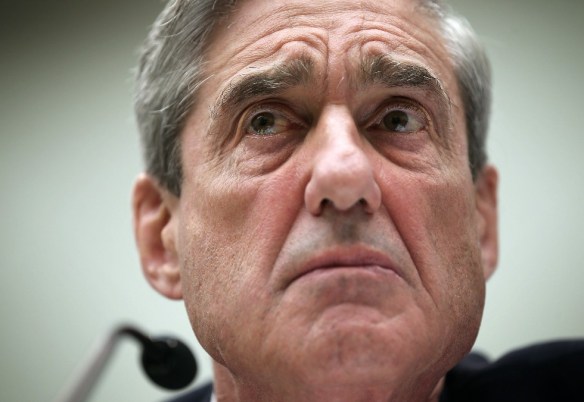
Mueller’s End Game

By Peter Van Buren

Source: We Meant Well

A baby born when Robert Mueller started his investigation would be talking by now. But would she have anything to say?

We last looked at what Mueller had publicly, and what he didn’t have, some ten months ago, and cautioned skepticism that he would prove “collusion.” It’s worth another look now, but we’ll give away the ending: there is still no real evidence of, well, much of anything significant about Russiagate. One thing clear is the investigation seems to be ending. Mueller’s office reportedly even told various defense lawyers it is “tying up loose ends.” The moment to wrap things up is politically right as well; the Democrats will soon take control of the House and it is time to hand this all off to them.

Ten months ago the big news was Paul Manafort flipped; that seems to have turned out to be mostly a bust, as we know now he lied like a rug to the Feds and cooperated with the Trump defense team as some sort of mole inside Mueller’s investigation (a heavily-redacted memo about Manafort’s lies, released by Mueller on Friday, adds no significant new details to the Russiagate narrative.) George Papadopoulos has already been in and out of jail — all of two weeks — for his sideshow role, Michael Avenatti is now a woman beater who is just figuring out he’s washed up, Stormy Daniels owes Trump over $300k in fees after losing to him in court, there is no pee tape, and if you don’t recall how unimportant Carter Page and Richard Gates turned out to be (or even remember who they are), well, there is your assessment of all the hysterical commentary that accompanied them a few headlines ago.

The big reveal of the Michael Flynn sentencing memo on Tuesday was he will likely do no prison time. Everything of substance in the memo was redacted, so there is little insight available. If you insist on speculation, try this: it’s hard to believe something really big and bad happened such that Flynn knew about it but still wasn’t worth punishing for it, and now, a year after he started cooperating with the government, nobody has heard anything about whatever the big deal is. So chances are the redactions focus on foreign lobbying in the U.S.

This week’s Key to Everything is Michael Cohen, the guy who lied out of self-interest for Trump until last week when we learned he is also willing to lie, er, testify against Trump out of self-interest. If you take Cohen’s most recent statements at face value the sum is failed negotiations we all knew about already to build a Trump hotel in Moscow went on a few months longer than originally stated. Meanwhile, the U.S. Attorney’s Office for the Southern District of New York submitted a sentencing memo Friday for Cohen recommending 42 months in jail. In a separate filing, Mueller made no term recommendation but praised Cohen for his “significant efforts to assist the special counsel’s office.” The memos reveal no new information.

Call it as sleazy as you want, but looking into a real estate deal is neither a high crime nor a misdemeanor, even if it’s in Russia. Conspiracy law requires an agreement to commit a crime, not just the media declaiming “Cohen was communicating directly with the Kremlin!” Talking about meeting Russian persons is not a crime, nor is meeting with them. The takeaway this was all about influence buying by the Russkies falls flat. If Putin sought to ensnare Trump, why didn’t he find a way for the deal to actually go through? Mueller has to be able to prove actual crimes by the president, not just twist our underclothes into a weekly conspiratorial knot. For fun, look here at the creative writing needed to even suggest anything illegal. Doesn’t sound like Trump’s on thin ice with hot shoes.

Sigh. It is useful at this point of binge-watching the Mueller mini-series to go back to the beginning.

The origin story for all things Russiagate is a less-than-complete intelligence finding hackers, linked to the Russian government, stole emails from the Democratic National Committee (DNC) in 2016. The details have never been released, no U.S. law enforcement agency has ever seen the server/scene of the crime, and Mueller’s dramatic indictments of said hackers, released as Trump met with Putin in Helsinki, will never be heard of again, or challenged, as none of his defendants will ever leave Russia. Meanwhile, despite contemporaneous denials of the same, it is now somehow accepted knowledge the emails (and Facebook ads!) had some unproven major affect on the election.

The origin story for everything else, that Trump is beholden to Putin for favors granted or via blackmail, is opposition research purchased by the Democrats and carried out by an MI6 operative with complex connectionsinto American intelligence, the salacious Steele Dossier. The FBI, under a Democratic-controlled Justice Department, then sought warrants to spy on the nominated GOP candidate for president, based on evidence paid for by his opponent.

Yet the real origin story for all things Russiagate is the media, inflamed by Democrats, searching for why Trump won (because it can’t be anything to do with Hillary, and “all white people and the Electoral College are racists” just doesn’t hold up.) Their position is Trump must have done something wrong, and Robert Mueller, despitehelping squash a Bush-era money-laundering probe, lying about the Iraq War, and flubbing the post-9/11 anthrax investigation, has been resurrected with Jedi superpowers to find it. It might be collusion with Russia or Wikileaks, or a pee tape, or taxes, all packaged as hard news but reading like Game of Thrones plot speculation. None of that is journalism to be proud of, and it underlies everything Mueller.

As the NYT said in a rare moment of candor, “From the day the Mueller investigation began, opponents of the president have hungered for that report, or an indictment waiting just around the corner, as the source text for an incantation to whisk Mr. Trump out of office and set everything back to normal again.”

The core problem is Mueller just hasn’t found a crime connected with Russiagate someone working for Trump might have committed. His investigation to date hasn’t been a search for the guilty party, Colonel Mustard in the library, but a search for an actual underlying crime, some crime, any crime. All Mueller has uncovered are some old financial misdealing by Manafort and chums that took place before and outside of the Trump campaign, payoffs to Trump’s mistresses which are not in themselves inherently illegal (despite what prosecutors simply assert in the Cohen sentencing report, someone will have to prove to a jury the money was from campaign funds and the transactions were “for the purpose of influencing” federal elections, not say simply “protecting his family from shame.” Cohen’s guilty pleas cannot legally be considered evidence of someone else’s guilt), and a bunch of people lying about unrelated matters.

And that’s the give away to Muller’s final report. There was no base crime as the starting point of the investigation. With Watergate there was the break-in at Democratic National Headquarters. With Russiagate you had… Trump winning the election (remembering the FBI concluded the DNC hack was done by the Russians forever ago, no Mueller needed.)

Almost everything Mueller has, the perjury and lying cases, are crimes he created through the process of investigating. He’s Schroeder’s Box; the crimes only exist when he tries to look at them. Mueller created most of his booked charges by asking questions he already knew the answers to, hoping his witness would lie and commit a new crime literally in front of him. Nobody should be proud of lying, but it seems a helluva way to contest a completed election as Trump enters the third year of his term.

Mueller’s end product, his report, will most likely claim a lot of unsavory things went on. But it seems increasingly unlikely he’ll have evidence Trump worked with Russia to win the election, and even less likely that Trump is now under Putin’s control. If Mueller had a smoking gun we’d be watching impeachment hearings by now.

Instead Mueller will end up concluding some people may have sort of maybe tried to interfere with an investigation into what turned out to be nothing, another “crime” that exists only because there was an investigation to trigger it. He’ll dump that steaming pile of legal ambiguity into the lap of the Democratic House to hold hearings on from now until global warming claims the city of Benghazi and returns it to the sea. Or the 2020 election, whichever comes first.


BONUS:

The uber-point of all this Ocean’s Nineteen-level conspiracy is supposedly so Putin can, whatever, sow dissent in America. Because if he wanted a puppet in the Oval Office it has been a damn poor return on investment — sanctions are still in place, NATO is still on Russia’s border, Montenegro joined NATO, Trump approved arms sales to the Ukraine, RT and Sputnik are sidelined as registered foreign agents, Cold Warrior-like hardliners Bolton and Pompeo are in power, the U.S. just delivered Russia an ultimatum on an arms control treaty that could return some American missiles to Europe, and more. On the plus side, there were those friendly Tweets.

Along the way new journalistic “norms” were created: Trump is too stupid to have made his money, so it must be ill-gotten. Trump did real estate deals in NYC and so is mobbed up. Trump’s taxes (albeit available to the IRS and Treasury for decades, the FBI and Mueller via warrant for years) hide secrets. Meanwhile, everyone in Russia with a few bucks is an oligarch, and everyone who anyone from the Trump side spoke with is “connected to Putin.” Trump doesn’t have lawyers, he has fixers and consigliere.

These tropes allow journalists to communicate in a kind of shorthand with the rubes who still imagine something will happen to annul the 2016 election. They allow each mini-development to appear to be a major event, as in the mind of the media everything is related, and everything accumulative. So a lie about a real estate deal in Russia is HUGE because it has something to do with Russia and see that connects all the dots!

None of that is journalism to be proud of, and it underlies everything Mueller. It is almost sad looking back at the old articles and TV tales to see how excited everyone got — Flynn was indicated! Sessions recused himself! Comey will save us! The Nunes Memo! They all used to matter sooooo much. Outlets like the NYT and WaPo rolled out a “source close to the White House” to comment whatever just happened means Mueller is getting close to nailing Trump. The nutters who took over once cogent places like HuffPo and Salon run “reporting” that reads like Game of Thrones plot speculation. Everybody runs the same headlines: BREAKING: Reports: Sources: Trump Fixer to Flip; Avenatti Says “Orange is the New Black, Buttercup!”

As one writer puts it, “For the last two years the mass media machine has been behaving very, very strangely, and it isn’t getting better, it’s getting worse. Not since the lead-up to the invasion of Iraq have we seen mainstream media outlets trying to shove narratives down our throats so desperately and aggressively.”

The Largest Conspiracy Theory Peddlers Are MSM And The US State Department

By Caitlin Johnstone

Source: CaitlinJohnstone.com

The US State Department has issued a statement accusing the Syrian government of having carried out a false flag chemical weapons attack in northwestern Aleppo with the intent to blame it on the jihadist factions in the region, citing “credible info” that the public has not been permitted to see. Never mind the known fact that there are actual, literal Al Qaeda affiliates who have admitted to using chemical weapons in Aleppo, and who are known to have used chemical weapons throughout Syria even by the State Department’s own admission: the Official Narrative is that only the Syrian government uses chemical weapons, so the chemical weapons usage must necessarily be a false flag staged by Syrian president Bashar al-Assad.

Except they didn’t use the words “false flag”. Despite the accusation being the exact definition of the thing that a false flag attack is, you won’t see the US government using that term, nor will you ever see it used in this instance by any of the authorized mainstream narrative-framing institutions like CNN or Fox News. This is because the term “false flag” is reserved solely for mention when referring to crazy, kooky Kremlin propaganda, as in the insane, unhinged, tinfoil hat belief that terrorists in Syria might possibly have some kind of motive to stage a false flag chemical attack in order to get the US, UK and France to act as their air force in a retaliatory strike against the Syrian government. That kind of false flag would be completely inconceivable to any right-minded empire loyalist, and is forbidden to even think about.

At the same time we are seeing a push from the mass media to advance a narrative that the Yellow Vests protests in France are due to Russian influence, with Iraq-raping neocon Max Boot publishing a column today in the Washington Post that is based entirely around the talking point that two trending Russian topics on social media have been “giletsjaune” and “France,” and Bloomberg putting out an article blatantly titled “Pro-Russia Social Media Takes Aim at Macron as Yellow Vests Rage”. Their entire theory is that since there are people in Russia talking about a major event that everyone else in the world is also talking about, the protests against Macron’s unpopular centrist policies are therefore the result of a conspiracy seeded by Russia.

But you’ll never hear this theory about a Russian conspiracy referred to as a “conspiracy theory” by the mainstream press. The theory that Russian elites have conspired to infiltrate the highest levels of the US government has been given serious treatment at the top echelons of media and political influence, despite its lacking any discernible evidence whatsoever, but when they talk about these alleged conspiracies they always make a point of using the word “collusion” instead. There is no actual difference between the words collude and conspire when used in this way, but the former is used because a deliberate effort has been made to stigmatize the word “conspiracy” while the word “collude” remains effectively neutral in the public eye.

But the fact of the matter is that conspiracy theories have gone mainstream, and there is no legitimate reason to call the authorized, power-manufactured conspiracy theories by a different name than the grassroots narratives like those about 9/11 or the JFK assassination. Indeed, due to the nature of populist folk narratives there is a lot more publicly available evidence contradicting the official 9/11 and JFK assassination stories than there is for the establishment Russia conspiracy theories, because those narratives often boil down to nothing more than secretive intelligence agencies saying “This is true because we said so.” Since grassroots conspiracy theories are unable to rely on empty assertions from authority, they tend to be built upon information that is publicly available.

Some people get annoyed with me for using the term conspiracy theory at all, but I insist that the phrase is itself intrinsically neutral: a theory about a conspiracy. The problem is not the phrase, it is the stigma that has been attached to that phrase by establishment media and establishment politicians; shifting to a different phrase to describe theories about conspiracies would only ensure that that phrase becomes stigmatized in the exact same way by the same sort of campaign. This would only ensure the survival of the tactic of regurgitating a pre-stigmatized label in the war of ideas instead of advancing actual arguments. The fact of the matter is that powerful people do indeed conspire, those conspiracies do indeed need to be talked about, and the largest promulgators of conspiracy theories are not Infowars or RT, but mainstream media and the US State Department.

Those who dismiss an idea by calling it a “conspiracy theory” without providing further argumentation are simply admitting to you that they have no argument, and it is right to point this out when they do it, because something being a conspiracy theory doesn’t mean it’s not grounded in facts. Some conspiracy theories are good and are backed by solid evidence, some are stupid and are circulated for intellectually dishonest reasons. Once upon a time you would be called a conspiracy theorist for saying the west is arming terrorists in Syria or the DNC is conspiring to ensure the primary victory of Hillary Clinton; those things are now conspiracy facts, as history has vindicated the solid theories which predicted them. Other conspiracy theories are promulgated by dim-witted partisan loyalists for no other reason than dim-witted partisan loyalty, like the aforementioned Russiagate conspiracy theory, or the QAnon conspiracy theory which claims Donald Trump is leading a rebellion against the Deep State as cryptically reported by an anonymous user on 8chan.

Other conspiracy theories are subscribed to simply because they help people escape the cognitive dissonance of conflicting beliefs. For example, a strong believer in capitalism who sees the undeniable signs that a plutocratic class has control of their government, but who cannot accept that this plutocratic takeover was facilitated by a rampant capitalist system which ensures that the greediest sociopaths rise to the top, may avoid cognitive dissonance by explaining the existence of the corrupt dominator class with conspiracy theories about Jews or pedovore cults. A liberal who cannot accept that neoliberal empire loyalists like Macron have failed to “make centrism cool” as Max Boot predicted will avoid cognitive dissonance by explaining the failures of the Church of the Status Quo with conspiracy theories about Russian social media campaigns.

Conspiracy theories, in reality, are nothing more than people’s attempts to explain what is going on in their world. Why Trump got elected. Why things stay shitty despite our perfectly rational attempts to change them. Why voting doesn’t seem to make much difference in the actual behaviors of one’s government. Why we keep marching into stupid wars, Orwellian dystopia and climate collapse despite having every incentive not to. Why the wealthiest of the wealthy keep getting wealthier while everyone else gets poorer and poorer. Some attempts to explain these things will come from a well-informed and intellectually honest place, and some will come from a myopic and intellectually dishonest place. Their individual merits can only be assessed on a case-by-case basis.

And in my opinion the conspiracy theories coming from the world’s most powerful institutions are the most dishonest by far. I saw a recent post by the WikiLeaks Twitter account which referred to the corporate media as “the narrative business pretending to be in the news business,” which is in my opinion a perfect way to phrase it. The real currency of the world is not gold, nor is it bureaucratic fiat, nor even raw military force; it’s narrative control. The ability to control the stories people tell about what’s going on in their world means the ability to control how they think, how they vote, how they behave, and how they all agree money and power itself operates within our society. Since society is made of narrative, controlling the narrative is controlling that society.

Conspiracy theories are a way for those in power to manipulate the narrative without actually giving the public any hard facts and evidence, and the world’s most powerful institutions are increasingly relying on conspiracy theories because they don’t have facts and evidence on their side. And why would they? The same power establishment which deceived the world into destroying Iraq is obviously far too depraved to be able to justify its global hegemony with factual evidence. All they have is narrative control, and they’re starting to lose even that.

Democrats downplay Google censorship at congressional hearing

By Andre Damon

Source: WSWS.org

Google CEO Sundar Pichai denied allegations that the company was engaged in political censorship Monday at a hearing before the Senate Judiciary Committee.

Throughout the hearing, Republicans repeatedly claimed that the company was censoring search results to the detriment of right-wing viewpoints, while Democrats either denied the company’s censorship or justified it.

The fundamental reality—completely ignored at the hearing—is that the real targets of censorship by Silicon Valley, working with the US intelligence agencies and with the consent of both political parties, are left-wing, anti-war and socialist political organizations.

In August 2017, Google announced that it would implement changes to its search algorithm to promote “authoritative” news sources to the detriment of what it called “alternative” viewpoints. This action led to a massive decline in search rankings and traffic to left-wing, anti-war and progressive websites.

The campaign to implement this censorship regime was spearheaded by the Democratic Party, which, based on claims of Russian “meddling” in the 2016 election, sought to pressure the technology giants to block and suppress left-wing opposition, which it branded as “extremist viewpoints.”

The narrative of both parties is strikingly at odds with reality. Compared to April 2017, the far-right Breitbart.com had its search traffic increase by 25 percent. By contrast, search results for the World Socialist Web Site are down by 76 percent over the same period, and other left-wing sites remain down by 50 percent or more.

At the hearing, Pichai made one of Google’s most explicit denials to date that it was carrying out political censorship.

“I lead this company without political bias and work to ensure that our products continue to operate that way,” Pichai declared. “To do otherwise would go against our core principles and our business interests. We are a company that provides platforms for diverse perspectives and opinions,” he said.

He added, “It’s not possible for any employee or groups of employees to manipulate our search results.”

In fact, the changes implemented in 2017 by the company were intended to empower “search evaluators” to impact Google search results. These individuals, whose input was added to Google’s more impartial PageRank algorithm, were told to respond negatively to pages displaying “alternative” viewpoints unless users explicitly specified they were looking for such views.

While some political organizations aligned with the Democratic Party were affected by Google’s actions, they either ignored or supported the censorship regime. The far right, meanwhile, made opposition to censorship a rallying cry.

US President Donald Trump, setting the tone for substantial sections of the Republican Party, has prominently accused Google of censoring search results. Republican members of Congress repeatedly held hearings accusing the company of suppressing right-wing and conservative political views.

“Google has long faced criticism for manipulating search results to censor conservatives,” Representative Lamar Smith declared at Monday’s hearing.

The Democrats, for their part, used Pichai’s testimony to alternately deny and justify the company’s censorship. In his remarks, committee chairman Jerrold Nadler declared that “no credible evidence supports this right-wing conspiracy theory.” In effect, Nadler and the other Democrats used the Republicans’ accusations about Google’s ‘liberal’ bias as a straw man, arguing, by extension, that all claims that Google is manipulating search results are a “conspiracy theory.”

Nadler then proceeded to justify Google’s censorship, which he had just denied. “Even if Google were deliberately discriminating against conservative viewpoints, just as Fox News and Sinclair broadcasting and conservative talk radio hosts like Rush Limbaugh discriminate against liberal points of view, that would be its right as a private company to do so, and not to be questioned by government.”

This, too, is a straw-man. In carrying out their censorship of left-wing views, Google and the other technology giants are acting at the instigation of the US intelligence agencies and leading political figures, serving as the state’s accomplice in violating the Constitution.

Responding to the Republicans’ claims, The Washington Post wrote in an editorial, “Members of the conservative majority on the House Judiciary Committee spent much of their time hammering Mr. Pichai with baseless accusations that Google rigs its search results to censor conservative content. Black-box algorithms will inevitably prioritize some content over other content, and to the extent companies can be transparent about how their systems work, they should be. But a single-minded and mindless focus on a nonexistent left-wing conspiracy within Google has had the paradoxical effect of discouraging companies from properly policing their platforms, as they hesitate to remove content that should be removed for fear of unfounded criticism.”

In other words, the Post is concerned that the Republican’s grandstanding about what they allege to be a bias against right-wing viewpoints might undermine the plans by the US intelligence agencies to intensify their censorship of left-wing opposition.

As working class-opposition throughout Europe and around the world continues to mount, the American political establishment is ramping up demands for censorship. Responding to the Yellow Vest demonstrations against social inequality in France, the New York Times wrote an editorial warning that “the power of social media to quickly mobilize mass anger, without any mechanism for dialogue or restraint, is a danger to which a liberal democracy cannot succumb.”

The clear implication is that a growing international upsurge of the working class will be met with even further repression and censorship.

GHW Bush: Honoring a War Criminal

By Stephen Lendman

Source: StephenLendman.org

America honors its worst. Throughout his career as a House member, UN envoy, GOP National Committee chairman, ambassador to China, CIA director, vice president and president, GHW Bush was an unapologetic imperial spear carrier.

He supported all US wars of aggression and launched his own – against nations threatening no one. His actions showed profound indifference to rule of law principles and human suffering.

Countless millions were grievously harmed by an agenda he backed and led as president. Major media shamefully praised what demands condemnation and accountability, even posthumously.

Praising “his leadership and choices on the global stage,” the NYT claimed “historians will almost certainly treat him more kindly than the voters did in 1992” – establishment ones only, not honorable truth-tellers.

A Jeb Bush/James Baker op-ed shamefully said they “never met a man as remarkable as George HW Bush” – a profound perversion of truth.

Wall Street Journal editors praised his war on Iraq, ignoring his naked aggression and genocidal sanctions, the latter responsible for the deaths of around 5,000 Iraqi children under age-five monthly while in force.

He was involved in Washington’s Contra war in Nicaragua. It followed the Sandinista National Liberation Front’s (FSLN) overthrow of US-supported tyrannical Anastasio Somoza’s fascist regime.

As president, he ordered the invasion of Panama on December 20, 1989, aiming to prove his toughness against a defenseless nation no match against America’s military might.

Manuel Noriega was Washington’s man in Panama from December 1983 until yearend 1989, a valued CIA asset until forgetting who’s boss.

No longer being convenient stooge enough for his imperial master led to his downfall.

Bush’s machismo and imperial arrogance bore full responsibility for thousands of Panamanian civilian deaths and injuries, many more thousands displaced.

Residential neighborhoods were destroyed in poorest parts of the country, including by incendiary devices used to torch structures.

Tanks crushed victims. Panamanian defense force members, civilians, journalists, and others were executed in cold blood.

Bush proved his cajones by mass slaughter and destruction. In the aftermath, he shamefully said it was “worth it” – smashing nations a US specialty before and after the rape of Panama.

William Blum earlier called (fantasy) “democracy” America’s deadliest export. Its agenda makes the world safe for Wall Street and other corporate favorites at the expense of ordinary people everywhere.

Commenting on carnage in Panama, Blum said “(t)he invasion and ensuing occupation produced gruesome scenes: People burning to death in the incinerated dwellings, leaping from windows, running in panic through the streets, cut down in cross fire, crushed by tanks, human fragments everywhere.”

Accountability never follows the highest of US high crimes, victims blamed for US wrongdoing every time.

Most Americans know nothing about the so-called 1989 Christmas invasion, why it was launched, the devastation caused, or human toll.

Raping Panama, deposing and arresting Noriega, along with Bush’s Gulf War walkover of Iraq let him crow that “we’ve kicked the Vietnam syndrome once and for all.”

Horrendous Nuremberg-level crimes don’t matter. Noriega fell out of favor for not cooperating with Washington’s contra war on Nicaragua.

Media hysteria vilified him, citing things that didn’t matter when he was Washington’s man in Panama.

When no longer wanted, his fate was sealed, how Washington treats other foreign leaders no longer useful, notably Saddam Hussein.

The January 1991 Gulf War followed imposition of sanctions in August 1990. Enforced for over a dozen years, they were genocidal. A Kuwait-funded PR campaign whipped up public support for naked aggression – ending on February 28.

US forces committed high crimes of war and against humanity, including mass slaughter and destruction of essential to life facilities.

Terror-bombing blasted power plants, dams, water purification facilities, sewage treatment and disposal systems, telephone and other communications, hospitals, schools, residential areas, mosques, irrigation sites, food processing, storage and distribution facilities, hotels and retail establishments.

Transportation infrastructure, oil wells, pipelines, refineries and storage tanks, chemical plants, factories and other commercial operation, civilian shelters, government buildings, and historical sites were also destroyed.

The Panama and Gulf War were two of history’s great crimes. In Iraq, virtually everything needed for normal life was destroyed or heavily damaged.

Genocidal sanctions killed up to two millions Iraqis, two-thirds of them children under age-five. Bush II’s 2003 “shock and awe” blitzkrieg through 2007 took up to 2.0 million more lives, mostly young children.

Two imperial wars of aggression and genocidal sanctions destroyed the cradle of civilization. War and related violence in Iraq continues to this day, the nation occupied as a US colony.

Bush I’s new world order agenda, continued by his successors, including Bush II, features endless wars of aggression, state terror on a global scale, along with growing homeland tyranny, heading toward becoming full-blown.

A special place in hell awaits GHW Bush, Bush II when he passes, and all other US war criminals.

They include everyone supporting Washington’s imperial agenda, including congressional  members authorizing funds without which wars can’t be waged.

An earlier article said the Bush I, II, and entire family dynasty speaks for itself – a crime family for over a century.


Related Articles:

The Amazing GWHB Hagiography

If There’s A Hell Below, That’s Where He’ll Go: The BAR Obituary on George H.W. Bush


Sick of Facebook? Read This

By Eleanor Goldfield

Source: Anti-Media

“I didn’t realize you were still doing your show!”

“Why can’t I see your posts anymore?”

“I’ve had to re-follow you several times on Facebook.”

These are but a few of the various comments and complaints about my Facebook page that I’ve fielded the past two years. With growing regularity and intensity, the cheery blue “F” has fucked over radical journalists like me, emboldened by the Russiagate and fake news narratives that brand any dissident or alternative media as our generation’s folk devils. While recent crackdowns have been far more pointed and Orwellian than before, censorship and Facebook go way back.

In 2012, The Guardian reported on Facebook’s arbitrary and ridiculous nudity and violence guidelines which allow images of crushed limbs but – dear god spare us the image of a woman breastfeeding. Still, people stayed – and Facebook grew. In 2014, Facebook admitted to mind control games via positive or negative emotional content tests on unknowing and unwilling platform users. Still, people stayed – and Facebook grew. Following the 2016 election, Facebook responded to the Harpie shrieks from the corporate Democrats by setting up a so-called “fake news” task force to weed out those dastardly commies (or socialists or anarchists or leftists or libertarians or dissidents or…). And since then, I’ve watched my reach on Facebook drain like water in a bathtub – hard to notice at first and then a spastic swirl while people bicker about how to plug the drain.

And still, we stayed – and the censorship tightened. Roughly a year ago, my show Act Out! reported on both the censorship we were experiencing but also the cramped filter bubbling that Facebook employs in order to keep the undesirables out of everyone’s news feed. Still, I stayed – and the censorship tightened. 2017 into 2018 saw more and more activist organizers, particularly black and brown, thrown into Facebook jail for questioning systemic violence and demanding better. In August, puss bag ass hat in a human suit Alex Jones was banned from Facebook – YouTube, Apple and Twitter followed suit shortly thereafter. Some folks celebrated. Some others of us skipped the party because we could feel what was coming.

On October 11th of this year, Facebook purged more than 800 pages including The Anti-Media, Police the Police, Free Thought Project and many other social justice and alternative media pages. Their explanation rested on the painfully flimsy foundation of “inauthentic behavior.” Meanwhile, their fake-news checking team is stacked with the likes of the Atlantic Council and the Weekly Standard, neocon junk organizations that peddle such drivel as “The Character Assassination of Brett Kavanaugh.” Soon after, on the Monday before the Midterm elections, Facebook blocked another 115 accounts citing once again, “inauthentic behavior.” Then, in mid November, a massive New York Times piece chronicled Facebook’s long road to not only save its image amid rising authoritarian behavior, but “to discredit activist protesters, in part by linking them to the liberal financier George Soros.” (I consistently find myself waiting for those Soros and Putin checks in the mail that just never appear.)

What this all proves is what was already clear two years ago: Facebook is afraid of dissenting voices – and they have the power to drain the social media presence of this rising tide of leftist ire. We can’t plug this drain. The drain (and the entire bathtub) is in the hands of a private corporation that has intertwined itself with the government in a perverse partnership based on silencing dissent and streamlining a Stepford-like online experience. Russia’s bad, nipples are hidden, Santa is white, go back to sleep. Put simply, if we are interested in uncovering truth, building networks, fighting for justice and freedom, we have to make a shift.

I understand why people stay – I understand why I stayed. More than a quarter of humanity uses Facebook; it’s been deemed too big to delete. People go there for connection – to see kids growing, to see what people are cooking, to reassure themselves that an ex’s new partner is ugly. People go there to build their brands. I’ve personally built followings for two bands, several organizations and one TV show on the platform. But I can no longer get through. I, and journalists like me, can not break through that aforementioned perverse partnership.

It follows that the “news” people get on Facebook, a main source for news, will never be the news from the front lines of our fights. It will never be the news from the most marginalized and oppressed folks. It will never be the news that hits straight at the heart of this crooked, corrupt system. It will be sanitized, whitewashed, twisted propaganda that serves and protects the owners of corporate media – the very same corporations that depend on our oppression, distraction and apathy. It will be infotainment and whatever makes you feel good about you. Because that means you’ll keep coming back. And as you go back, you’ll expose yourself entirely to the blue and white algorithm. Indeed, outside of Orwellian censorship, Facebook also excels at spying on us.

Already back in 2008, alternative media reported on the surveillance power of Facebook. Ten years later and after his historic NSA leaks, Edward Snowden reminded us that “Facebook is a surveillance company rebranded as ‘social media.’” It seems a hyperbolic visual but the dystopian picture of a constantly surveilled human being scrolling through banal content curated by a state-sponsored corporation is very real.

Since the October purge, calls from the left regarding alternatives have been loud but splintered. Many suggest that we go back to the days of analog organizing – phone calls, knocking on doors, in-person meetings. As an organizer, I was unaware that we had ever stopped doing that. Truly, face-to-face organizing remains the most effective tool for us social beings. At the same time, to cast off the advancements of technological networking would be to walk away from an internet designed to be a place of collaboration and sharing. We shouldn’t and don’t have to do that.

What we need is an open source, non-surveillance platform. And right now, that platform is Minds. Before you ask, I’m not being paid to write that. My relationship with Minds consists of my account there and an interview with Minds co-founder Bill Ottman on my show.

Fashioned as an alternative to the closed and creepy Facebook behemoth, Minds advertises itself as “an open source and decentralized social network for Internet freedom.” Minds prides itself on being hands-off with regards to any content that falls in line with what’s permitted by law, which has elicited critiques from some on the left who say Minds is a safe haven for fascists and right-wing extremists. Yet, Ottman has himself stated openly that he wants ideas on content moderation and ways to make Minds a better place for social network users as well as radical content creators.

What a few fellow journos and I are calling #MindsShift is an important step in not only moving away from our gagged existence on Facebook, but in building a social network that can serve up the real news folks are now aching for. To be clear, we aren’t advocating that you delete your Facebook account – unless you want to. For many, Facebook is still an important tool and our goal is to add to the outreach toolkit, not suppress it.

We have set January 1st, 2019 as the ultimate date for this #MindsShift. Several outlets with a combined reach of millions of users will be making the move – and asking their readerships/viewerships to move with them. Along with fellow journalists, I am working with Minds to brainstorm new user-friendly functions and ways to make this #MindsShift a loud and powerful move. We ask that you, the reader, add to the conversation by joining the #MindsShift and spreading the word to your friends and family. (Join Minds via this link) We have created the #MindsShift open group on Minds.com so that you can join and offer up suggestions and ideas to make this platform a new home for radical and progressive media.

Now is the time to defend the remnants of the Information Revolution. In the streets and online, we need to hear and uplift voices for radical and progressive change. Take off the corporate gag, close the social media surveillance blinds, and shift.

The Lonely American

By Sean Posey

Source: The Hampton Institute

In 2015, psychotherapist Traci Ruble started a “community listening project” in San Francisco dubbed “Sidewalk Talk.” The project sends trained volunteers to meet strangers on the street and listen to them discuss their problems and concerns. In a promotional video, Ruble is shown with her fellow volunteers, asking people if they’d like to sit for a talk. “You want to be listened to? It feels good!” Sidewalk Talk has apparently caught on and is now in 29 cities across the country.

Are there large numbers of Americans so bereft of friends and confidants that they have only strangers in the street to confide in? There apparently are. New studies are showing that Americans are increasingly lonely, isolated, and unhappy. Unmoored from one another and from a (fading) sense of community. More and more of our fellow citizens are going through life alone. This has devastating consequences for individual health and portends a troubled future for the American experiment.

According to a recent Cigna study involving 20,000 adults, loneliness in America has reached “epidemic proportions.” “Most Americans,” the report states, “are now considered lonely.” When asked how often they feel like no one knows them well, 54 percent responded that they sometimes or always feel that way. Nearly half of respondents report feeling sometimes or always alone. The numbers are even more disturbing when broken down:

“We also see that roughly one in four respondents rarely/never feel as though there are people who really understand them (27%), that they belong to a group of friends (27%), can find companionship when they want it (24%), or again feel as though they have a lot in common with others (25%).” Only 53 percent of American have daily “meaningful in-person social interactions,” according to Cigna.

Loneliness and social isolation, both “actual and perceived,” have direct consequences on one’s health, according to a 2015 study published in the journal Perspectives on Psychological Science. The effects of loneliness on mortality are the equivalent of smoking 15 cigarettes a day, which makes prolonged loneliness a bigger individual health risk than obesity.

Loneliness is also connected, perhaps not surprisingly, to mental disorders. According to the National Institute of Mental Health , nearly one in five adults have a mental health condition. Mental health issues are now one of the fastest growing causes of long-term absences from work. More disturbing still is the connection between loneliness and suicide, which recently hit a 30-year high in America. Even the opioid crisis, a main contributor to the country’s declining life expectancy, has been connected to the loneliness epidemic. These deaths are increasingly classified by researchers and the media as “deaths of despair.”

The World Happiness Report 2017, compiled by a group of independent experts for the United Nations, recently delivered even more bad news for Americans. The introduction to the report (written by John F. Helliwell, Richard Layard, and Jeffrey Sachs) states “Happiness is increasingly considered the proper measure of social progress and the goal of public policy.”

The top countries on the list rank highly on six key factors, the report explains: “healthy years of life expectancy, social support (as measured by having someone to count on in times of trouble), trust (as measured by a perceived absence of corruption in government and business), perceived freedom to make life decisions, and generosity (as measured by recent donations).” Norway, Denmark, Iceland, and Switzerland are the happiest nations. The US, on the other hand, finished in 19th place. Rising levels of corruption and “declining social support” are listed among the primary reasons for America’s dismal placing.

While the phenomena of decreasing happiness and increasing loneliness are finally getting notice, much of the blame is often placed on recent developments in the country’s history, including the rise of neoliberalism (understandable) and the election of Donald Trump as president (equally understandable). However, historical roots and recent developments alike seem to constitute important elements of the country’s failure to develop a meaningful sense of community and attachment among its citizenry.

American culture is often described – rightly – as highly individualistic. Despite the Puritans and their quest for ” a city upon a hill,” as John Winthrop so memorably put it, the first immigrants to the New World often arrived seeking material, not spiritual, prosperity. “Even in the sixteenth century,” writes historian Leo Marx, “the American countryside was the object of something like a calculated real estate promotion.” This was a “business civilization,” as historian Morris Berman refers to it (something Calvin Coolidge echoed during the 1920s when he said, “The business of America is business”).

The peerless observer Alexis de Tocqueville saw this during his travels through the country in 1831. While de Tocqueville admired much of the American character, he understood the downside of the relentless individualism that permeated every aspect of social and cultural life: “They owe nothing to any man, they expect nothing from any man; they acquire the habits of always considering themselves as standing alone, and they apt to imagine that their whole destiny is in their hands.”

Americans proved to be relentless seekers; first moving beyond the Royal Proclamation line that the British issued to separate their colonies from Indian lands; and then, finally, fulfilling “Manifest Destiny” and closing the frontier in the 19th century. The existence of the frontier in American life nurtured a “dominant individualism,” according to historian Frederick Jackson Turner – one that failed to disappear with the frontier itself.

War, however, proved to be a force for increasing civic mindedness, and it provided a boon for voluntary associations – trends that no doubt helped combat the social isolation which certainly accompanied the settling of the country. According to historian Theda Skocpol, the five largest civic associations of the late 19th and early 20th centuries formed between 1864 and 1868.

Robert Putnam found similar evidence for an increase in civic mindedness among the generation shaped by World War II. In the seminal book Bowling Alone: The Collapse and Revival of American Community, Putnam calls the generation that fought the war the “long civic generation,” also known as the “Greatest Generation.” According to the Cigna study, they’re the generation least affected by the epidemic of loneliness. On the other hand, Generation Z (those born between 1995 and 2010) reported the highest levels of loneliness. The civic connectedness and civic mindedness of the Greatest Generation simply did not last. “The [generational] changes are probably part of a larger societal shift toward individual and material values and away from communal values,” Putnam writes in Bowling Alone.

There’s evidence to support his assertion. In Bowling Alone, Putnam cites a Roper study from 1972 that asked adults to identify essential elements of “the good life.” Approximately 38 percent chose “a lot of money,” but an equal percentage chose “a job that contributes to the welfare of society.” By 1996, the percentage of people who chose making a lot of money had risen to 63 percent. According to current research, 71 percent of millennials place a similar emphasis on making money.

But much like other Americans, outcomes for the wealthy compare poorly to those of their peers in other countries. For example, according to a 2007 study in the Journal of the American Psychological Association, the “richest, healthiest Americans” are as a sick as the poorest citizens in Britain. What’s the reason? The study’s author, Sir Michael Marmot of University College London Medical School, gives two reasons: Americans worker longer hours, are more stressed than their counterparts in other wealthy democracies, and Americans are apparently more likely to feel “friendless and isolated.”

This pervading sense of loneliness and disconnection, while felt particularly by the young, cuts across class, gender and race, according to Cigna. The rise of social media is sometimes blamed for an increase in feelings of loneliness and isolation, but its use did not figure as a major cause of loneliness in the study.

For much of the past century, some American artists and intellectuals have pointed fingers at the country’s culture – or what passes for culture – as being at the root of societal anomie. In 1950, playwright and novelist Thornton Wilder stated that a lack of a codification of ideals was making American life difficult to process. Americans, he said, were always on the move – a “very un-European” manner of life.

Famed sociologist Philip Slater delivered perhaps one of the most pointed critiques of American life in his 1970 book, The Pursuit of Loneliness. He declared the human desire for engagement, community, and yes, dependence, were frustrated at every turn by American life. “Americans have created a society in which they are automatic nobodies,” he writes, “since no one has any stable place or enduring connection.”

And it hasn’t only been liberals who have echoed such criticisms. Michael Hendrix writes in the National Review, “Americans conceive of themselves as individuals isolated from others in such a way that it becomes an imperative for them to form their own meaning for their own lives.” Clearly, many Americans aren’t forming a meaning for their own lives, at least not alone. The dismal statistics tell us as much. But as we have seen – with some exceptions – this is a problem as old as America itself. A country where individuals are adrift and leading lives without meaningful, connective and nourishing attachments is a country with a grim future indeed. And the problem is now accelerating, as levels of loneliness and disconnection rise among the millennials and Generation Z.

How will the country solve its most vexing problems when Americans are no longer capable of holding onto even the most elementary attachments to one another and their surrounding communities? We might find out, too late, that a society of atomized individuals is no society at all.

Lara Trace Hentz

INDIAN COUNTRY NEWS

In Saner Thought

"It is the duty of every man, as far as his ability extends, to detect and expose delusion and error"..Thomas Paine

ZEDJournAI

Human in Algorithms

Rooster Crows

From the Roof Top

Aisle C

I See This

The Free

blog of the post capitalist transition.. Read or download the novel here + latest relevant posts

अध्ययन-अनुसन्धान(Essential Knowledge of the Overall Subject)

अध्ययन-अनुसन्धानको सार