How Globalists Plan To Use Technology And Poverty To Enslave The Masses

By Brandon Smith

Source: Alt-Market.com

Tyranny is often seen as a sudden and inexplicable development in a society; the product of a singular despot that rockets to power for a limited window of time due to public fear or stupidity. This is one of the great lies of the modern era.

The truth is that for at least the past century almost every historically despised “tyrant” was merely a puppet of a larger managerial cabal, and the construction of each totalitarian state was accomplished slowly and quietly over the course of decades by those same financial elitists. From the Bolsheviks, to Hitler and the Third Reich, to Mao Zedong, to most tin-pot dictators across the Middle East and Africa, there has always been an organized group of money men and think tanks fueling the careers of the worst politicians and military juntas of the epoch.

The rise of a tyrannical system takes extensive time, planning and staging. Human beings do not simply jump right into the arms of a dystopian nightmare regime impulsively at a moment’s notice. We have been told by popular media that this is how it works; that during hard economic or social conditions men with charismatic personalities and evil intentions suddenly rise to the surface and take power by promising a better world in exchange for public fealty. But where did those economic and social crises come from to begin with? Were they a natural consequence of the era, or were they deliberately engineered?

The reality is that people must be psychologically conditioned to trade freedom for the illusion of safety. Sometimes this takes generations.  Every attempt at a totalitarian framework inevitably elicits a rebellion. Therefore, the most successful tyranny would be one that the public DEMANDS. They have to think it is their idea, otherwise they will eventually fight it.

Globalist financiers and power addicts need something more than mere military might or bureaucratic force to obtain their ideal slave society. They need 4th Generation warfare tactics. They need to con the masses into accepting their own servitude.

There are two tools that make this outcome possible: The first is controlled economic decline, the second is the integration of a technological gulag into every aspect of public life.

Economic Weapons Of Mass Distraction

It is no coincidence that dictatorial governments gain prominence as the global economy suffers; it is extremely difficult for people to remain vigilant to tyranny when they are completely distracted by their own survival. This is why my focus as an analyst has always been primarily on economics and solutions to fiscal disaster; it all begins and ends with the economy. If the public can be prepped to develop their own alternative economic systems before a crisis occurs, then they will be less distracted by the chaos and more apt to notice when the globalists offer tyranny as a fix-all.

Without alternative markets at the local level there is no redundancy, no protection from a crash. With most people dependent on the existing system for their livelihoods, the economy becomes a very useful weapon for the globalists.

Holding the economy hostage creates numerous advantages. Through deflationary pressure wages can be kept low while higher paying jobs disappear. Manufacturing can be phased out or outsourced overseas, as in the U.S. Small business ownership becomes difficult as taxes generally rise while financial conditions decline.

Through inflationary or stagflationary pressures, low wages and the inadequate job market are combined with exploding prices. This makes survival for many people untenable without government aid.

In this environment, the working public becomes reliant on the service sector, which provides no useful skill sets. Soon, you have entire generations of people with no production abilities whatsoever. They become drones working in meaningless office and retail jobs squandering away their days knowing that they are accomplishing nothing beyond a meager paycheck.

The lack of a greater purpose or mission in life and the nagging realization that the average person has no productive capacity creates a palpable atmosphere of desperation. They do not own their own work, and they have nothing much to show for their labor; nothing to point at and say, “I built that.” The public gets to the point that they may even welcome an economic collapse simply to escape the drudgery.

This is where movements to support totalitarianism come from — the subset of citizens that are fed up with fighting against the economy and have no sense of independence. These people do not know how to solve their own problems, they are always looking for someone else to do it for them. The globalists are happy to suggest their own predetermined solutions to the public once the financial structure hits a point of maximum pain.

However, after the economy is repaired in exchange for the submission of the citizenry, people might still decide one day that the trade was unfair. Thus, a deterrent is needed to keep them in line.

The Technological Fish Tank

It is important to understand that there is no major country in the western OR eastern world that is not building a digital control grid, and this helps to support my position that eastern nations are just as subservient to globalist demands as western nations. All the geopolitical drama surrounding events like the trade war, the Syrian war or various elections, etc.; none of this matters in the end. When determining if the strings of a particular government are being pulled by the globalist cabal, all you have to do is look at how quickly they are implementing oppressive systems that serve globalist interests.

For example, India’s government has been hitting the news feeds lately as their supreme court recently ruled that the controversial Aadhaar biometric program is legal. In a nation of 1.3 billion people, around 1 billion have already been biometrically profiled in a national database. This data can include fingerprints, iris scans and face scans.

I have heard it argued that India is a rather odd place to experiment with such a database, considering 60% of the population is under the poverty line and most people barely have basic amenities. But I would point out that this is why it is a PERFECT place for the globalists to start cataloging the world population on larger scale.

Again, financial desperation and a lack of productions skills tends to produce subservience. Hundreds of millions of poverty stricken people in India’s sprawling urban sewers are voluntarily giving up their biometric data in exchange for government aid programs.

For the people not anchored down by the poor economy India has instituted other measures, including requiring anyone accessing government services, opening a bank account or signing up for a mobile phone service also give up their biometrics to the government.  In nations not yet impoverished at India’s level, more subversive measures have been instituted for surveillance of the population. Data is simply taken rather than traded.

In Russia, Vladimir Putin has put the Yarovaya laws he signed in 2016 into effect. All digital data from phone conversations to emails is now recorded and stored by telecoms for government access for a minimum of six months, this includes Facebook and Twitter posts. The 2014 bloggers law also requires any blogger with over 3,000 followers be put on government file and they cannot remain anonymous. Any business operating a public Wi-Fi network is required by law to identify users by ID, which is also stored for at least six months.

Russia’s FISA-style surveillance grid is vast, yet, many people in the liberty movement seem to ignore this reality with misplaced Putin-worship. As I have noted in numerous articles, Russia is heavily influenced by international financiers.

Goldman Sachs and JP Morgan are the largest investment banks in the country. Their central bank works closely with the IMF and the BIS. The Kremlin has in the past called for a global currency controlled by the IMF. And Putin even admits in his own biography First Person that he has been friends with New World Order salesman Henry Kissinger since before he became president of Russia. In a latest show of how globalist Russia really is, the Russian Foreign Minister recently criticized the U.S. in a speech to the U.N. general assembly over its “attacks” on the “international order,” including undermining the World Trade Organization and global climate change agreements.

With the above in mind, it should come as no surprise to anyone that Russia is playing right along with globalist efforts to identify and track every single living person. It should also come as no surprise that Donald Trump, surrounded by globalists within his own cabinet, is continuing and expanding FISA surveillance under his administration.

At the beginning of 2018 Trump signed a bill renewing the National Security Agency’s warrantless FISA mass surveillance of the American population. Leading Democrats happily supported the action. Despite all of Trump’s rhetoric against FISA recently, it was Trump that made FISA’s continuation possible.

Major social media companies are cooperating wholeheartedly with mass surveillance efforts as they share personal data with governments around the world regularly.  Facebook alone saw an increase in government requests for data of over 33% in 2017, and the nature of most of this data sharing is not open to public scrutiny.

This is one reason why I’m rather bewildered by the recent conservative fury over social media discrimination – it’s as if personal liberty activists are being tricked with reverse psychology to DEMAND unhindered participation in media sites that spy on them.  Why does anyone still want to sign up for these websites?

But where is this all going? How does the combination of poverty and digital surveillance translate to tyranny? I believe China’s “social credit” program is the answer.  The system is based on the idea of “maintaining trust”, but whose trust?  Well, the government’s trust, of course.  Trust is measured using a social credit score that is tracked over a citizen’s life.  Punished behaviors include anything from smoking in a no smoking area to publishing internet content that the powers-that-be disapprove of.

China is representative of the end game for the globalist ideal for civilization. With mass economic struggle leading to dependency on government welfare programs and employment opportunities, few citizens can afford to be “blacklisted.” China’s social credit system creates an environment in which any and every action on the part of citizens is tracked and then “rated” for acceptance or consequence. This includes how people express attitudes toward the government itself. Obviously, this is the ultimate control mechanism, very similar to the Cheka established by Lenin and Stalin in Russia after the Bolshevik Revolution, but on a massive digital scale.

This is why mass surveillance is evil, regardless of whether someone is breaking the laws or not. It gives government the power to dictate and mold behavior by inspiring self-censorship rather than holding people directly at gun point. It is tyranny enforced in a less obvious way; a prison in which the prisoners maintain the locks and the chains and the bars.  Individuals do not dare do anything outside of collective norms for fear that it could be interpreted as socially negative. Punishment might include loss of access to the economy itself, and when most people are living from paycheck to paycheck, this could mean death.
Conjuring Up the Next Depression

By Chris Hedges

Source: TruthDig

During the financial crisis of 2008, the world’s central banks, including the Federal Reserve, injected trillions of dollars of fabricated money into the global financial system. This fabricated money has created a worldwide debt of $325 trillion, more than three times global GDP. The fabricated money was hoarded by banks and corporations, loaned by banks at predatory interest rates, used to service interest on unpayable debt or spent buying back stock, providing millions in compensation for elites. The fabricated money was not invested in the real economy. Products were not manufactured and sold. Workers were not reinstated into the middle class with sustainable incomes, benefits and pensions. Infrastructure projects were not undertaken. The fabricated money reinflated massive financial bubbles built on debt and papered over a fatally diseased financial system destined for collapse.

What will trigger the next crash? The $13.2 trillion in unsustainable U.S. household debt? The $1.5 trillion in unsustainable student debt? The billions Wall Street has invested in a fracking industry that has spent $280 billion more than it generated from its operations? Who knows. What is certain is that a global financial crash, one that will dwarf the meltdown of 2008, is inevitable. And this time, with interest rates near zero, the elites have no escape plan. The financial structure will disintegrate. The global economy will go into a death spiral. The rage of a betrayed and impoverished population will, I fear, further empower right-wing demagogues who promise vengeance on the global elites, moral renewal, a nativist revival heralding a return to a mythical golden age when immigrants, women and people of color knew their place, and a Christianized fascism.

The 2008 financial crisis, as the economist Nomi Prins points out, “converted central banks into a new class of power brokers.” They looted national treasuries and amassed trillions in wealth to become politically and economically omnipotent. In her book “Collusion: How Central Bankers Rigged the World,” she writes that central bankers and the world’s largest financial institutions fraudulently manipulate global markets and use fabricated, or as she writes, “fake money,” to inflate asset bubbles for short-term profit as they drive us toward “a dangerous financial precipice.”

“Before the crisis, they were just asleep at the wheel, in particular, the Federal Reserve of the United States, which is supposed to be the main regulator of the major banks in the United States,” Prins said when we met in New York. “It did a horrible job of doing that, which is why we had the financial crisis. It became a deregulator instead of a regulator. In the wake of the financial crisis, the solution to fixing the crisis and saving the economy from a great depression or recession, whatever the terminology that was used at any given time, was to fabricate trillions and trillions of dollars out of an electronic ether.”

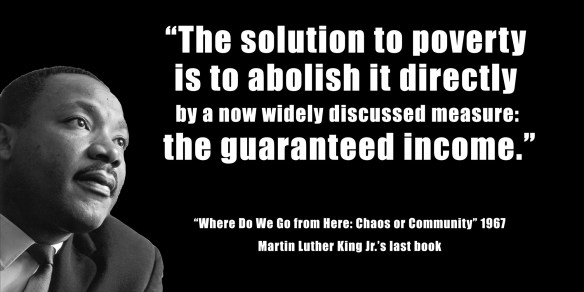
The Federal Reserve handed over an estimated $29 trillion of this fabricated money to American banks, according to researchers at the University of MissouriTwenty-nine trillion dollars! We could have provided free college tuition to every student or universal health care, repaired our crumbling infrastructure, transitioned to clean energy, forgiven student debt, raised wages, bailed out underwater homeowners, formed public banks to invest at low interest rates in our communities, provided a guaranteed minimum income for everyone and organized a massive jobs program for the unemployed and underemployed. Sixteen million children would not go to bed hungry. The mentally ill and the homeless—an estimated 553,742 Americans are homeless every night—would not be left on the streets or locked away in our prisons. The economy would revive. Instead, $29 trillion in fabricated money was handed to financial gangsters who are about to make most of it evaporate and plunge us into a depression that will rival that of the global crash of 1929.

Kevin Zeese and Margaret Flowers write on the website Popular Resistance, “One-sixth of this could provide a $12,000 annual basic income, which would cost $3.8 trillion annually, doubling Social Security payments to $22,000 annually, which would cost $662 billion, a $10,000 bonus for all U.S. public school teachers, which would cost $11 billion, free college for all high school graduates, which would cost $318 billion, and universal preschool, which would cost $38 billion. National improved Medicare for all would actually save the nation trillions of dollars over a decade.”

An emergency clause in the Federal Reserve Act of 1913 allows the Fed to provide liquidity to a distressed banking system. But the Federal Reserve did not stop with the creation of a few hundred billion dollars. It flooded the financial markets with absurd levels of fabricated money. This had the effect of making the economy appear as if it had revived. And for the oligarchs, who had access to this fabricated money while we did not, it did.

The Fed cut interest rates to near zero. Some central banks in Europe instituted negative interest rates, meaning they would pay borrowers to take loans. The Fed, in a clever bit of accounting, even permitted distressed banks to use these no-interest loans to buy U.S. Treasury bonds. The banks gave the bonds back to the Fed and received a quarter of a percent of interest from the Fed. In short, the banks were loaned money at virtually no interest by the Fed and then were paid interest by the Fed on the money they borrowed. The Fed also bought up worthless mortgage assets and other toxic assets from the banks. Since Fed authorities could fabricate as much money as they wanted, it did not matter how they spent it.

“It’s like going to someone’s old garage sale and saying, ‘I want that bicycle with no wheels. I’ll pay you 100 grand for it. Why? Because it’s not my money,’ ” Prins said.

“These people have rigged the system,” she said of the bankers. “There is money fabricated at the top. It is used to pump up financial assets, including stock. It has to come from somewhere. Because money is cheap there’s more borrowing at the corporate level. There’s more money borrowed at the government level.”

“Where do you go to repay it?” she asked. “You go into the nation. You go into the economy. You extract money from the foundational economy, from social programs. You impose austerity.”

Given the staggering amount of fabricated money that has to be repaid, the banks need to build greater and greater pools of debt. This is why when you are late in paying your credit card the interest rate jumps to 28 percent. This is why if you declare bankruptcy you are still responsible for paying off your student loan, even as 1 million people a year default on student loans, with 40 percent of all borrowers expected to default on student loans by 2023. This is why wages are stagnant or have declined while costs, from health care and pharmaceutical products to bank fees and basic utilities, are skyrocketing. The enforced debt peonage grows to feed the beast until, as with the subprime mortgage crisis, the predatory system fails because of massive defaults. There will come a day, for example, as with all financial bubbles, when the wildly optimistic projected profits of industries such as fracking will no longer be an effective excuse to keep pumping money into failing businesses burdened by debt they cannot repay.

“The 60 biggest exploration and production firms are not generating enough cash from their operations to cover their operating and capital expenses,” Bethany McLean writes of the fracking industry in an articletitled “The Next Financial Crisis Lurks Underground” that appeared in The New York Times. “In aggregate, from mid-2012 to mid-2017, they had negative free cash flow of $9 billion per quarter.”

The global financial system is a ticking time bomb. The question is not if it will explode but when it will explode. And once it does, the inability of the global speculators to use fabricated money with zero interest to paper over the debacle will trigger massive unemployment, high prices for imports and basic services, and a devaluation in which the dollar will become nearly worthless as it is abandoned as the world’s reserve currency. This manufactured financial tsunami will transform the United States, already a failed democracy, into an authoritarian police state. Life will become very cheap, especially for the vulnerable—undocumented workers, Muslims, poor people of color, girls and women, anti-capitalist and anti-imperialist critics branded as agents of  foreign powers—who will be demonized and persecuted for the collapse. The elites, in a desperate bid to cling to their unchecked power and obscene wealth, will disembowel what is left of the United States.

Saturday Matinee: American Nomads

Synopsis from Top Documentary Films

Beneath the America we think we know lies a nation hidden from view – a nomadic nation, living on the roads, the rails and in the wild open spaces.

In its deserts, forests, mountain ranges and on the plains, a huge population of modern nomads pursues its version of the American dream – to live free from the world of careers, mortgages and the white picket fence.

When British writer Richard Grant moved to the USA more than 20 years ago it wasn’t just a change of country. He soon found himself in a world of travelers and the culture of roadside America – existing alongside, but separate from, conventional society. In this film he takes to the road again, on a journey without destination.

In a series of encounters and unplanned meetings, Richard is guided by his own instincts and experiences – and the serendipity of the road. Traveling with loners and groups, he encounters the different ‘tribes’ of nomads as he journeys across the deserts of America’s south west.

The U.S. Economy In Two Words: Asymmetric Gains

By Charles Hugh Smith

Source: Of Two Minds

The Status Quo is in trouble if the bottom 95% wake up to the asymmetric gains that are the only possible output of our hyper-financialized economy.

The core dynamic of the U.S. economy in this era is asymmetric gains: the gains in income, wealth and power are increasingly concentrated in the top slice of the economy and society, while the income, wealth and power of the majority stagnate or decline.

The Status Quo must paper over this widening gulf with threadbare narratives that no longer match reality: for example, we’re an ownership society. We sure are: the vast majority of the nation’s productive assets are owned by the top 5%.

The U.S. economy has changed, but the transformation is largely invisible to the average participant and conventional economist. The previous iteration of the economy expired in the 1970s, an era of stagflation (stagnant growth and rising inflation that eroded the purchasing power of most households), higher energy costs and increasing global competition, an era in which the “external costs” of industrial-scale pollution finally came home to roost and the early stages of digital technologies began impacting human labor.

Stocks and bonds were destroyed in the 1970s. Investing capital in industrial production no longer generated outsized profits.

The 1980s ushered in a New Economy based on financial magic: the outsized profits flowed to those with access to credit and the tools of financialization: buying assets with borrowed money, selling the assets off in the global marketplace and reaping enormous gains by producing no goods or services.

We now inhabit a hyper-financialized economy in which the only way to get ahead is to speculate. For the middle class, this means speculating in housing: if you hit the jackpot and your house soars in value, then leverage this new wealth into the cash needed to buy a second property–or extract the equity to fund a more luxe lifestyle.

Entrepreneurs seek to generate “value” only as a means of cashing out via an initial public offering or selling their company to a global corporation. The “value” sought now is the perception of value–the magic of future promise that boosts valuations into the millions, or better yet, billions.

How many entrepreneurs are looking forward to owning their company ten years hence? Very few, as “the long haul” has no value in a hyper-financialized economy. If you don’t cash out in six months, your Big Idea might be worthless, leapfrogged by some other Big Idea.

In a hyper-financialized economy, hype is the most valuable skill. Those who can raise $100 million in capital for a fancy juicer win, as do those who sell the Big Idea to global corporations desperate not to miss out on the Next Big Thing.

In a hyper-financialized economy, future income is pulled into the present and monetized to benefit the top dogs. We borrow from the future to fund the inefficiencies of today. It’s a great system, and the Status Quo has the answer to everything: the government can never go broke because all it has to do is print more money.

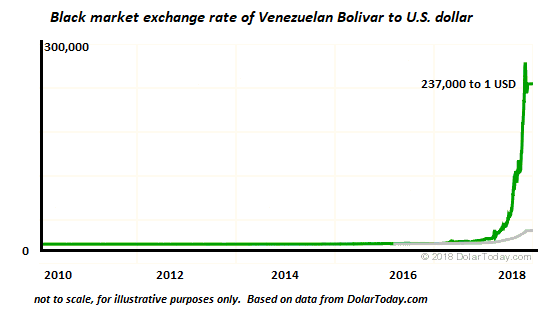
What a swell idea. Isn’t that what Venezuela has done for the past decade? And how did that work for them? If you think that destroying the purchasing power of “money” is a winner, then by all means, go on believing that the government can never go broke because all it has to do is print more money.

Here’s my favorite chart of asymmetric gains. The vast majority of the gains reaped since the 2008-09 Global Financial Meltdown have flowed to the top .1%. This is not a bug, it is a feature of hyper-financialization. Indeed, it is the only possible output of the current system.

Meanwhile, the bottom 95% live in an economy where wages go nowhere and costs are soaring. The financial media cheers when wages (supposedly) rise by 2%, but nobody dares measure the impact of rising costs in services such as healthcare and higher education.

The Status Quo is in trouble if the bottom 95% wake up to the asymmetric gains that are the only possible output of our hyper-financialized economy. Hype and propaganda are the key tools of the present era, as these are required to disconnect perception from reality. How long the disconnect will last is anyone’s guess, but when the two reconnect, all that is solid now will melt into thin air.


USA in a Debt Trap Death Spiral

By F. William Engdahl

Source: New Eastern Outlook

The US economy and its financial structures have never recovered from the great financial meltdown of 2008 despite the passage of ten years. Little discussion has been given to the fact that the Republican Congress last year abandoned the process of mandatory budget cuts or automatic sequestration that had been voted in a feeble attempt to rein in the dramatic rise in US government debt. That was merely an added factor in what soon will be recognized as a classic debt trap. What is now looming over not just the US economy but also the global financial system is a crisis that could spell the end of the post-1944 dollar system.

First some basic background. When President Nixon, on advice of Paul Volcker, then at US Treasury, announced on August 15, 1971 the unilateral end of the Bretton Woods gold-dollar system, to replace it with a floating dollar, Washington economists and Wall Street bankers realized that the unique role of the US dollar as leading reserve currency held by all central banks and the currency for world commodity and other trade, especially oil, gave them something that appeared to be a gift from monetary heaven.

So long as the world needed US dollars, Washington could run government deficits without end. Foreign central banks, especially the Bank of Japan in the 1980’s and since the turn of the century, the Peoples’ Bank of China, would have little choice but to reinvest their surplus trade dollar earnings in interest-bearing AAA-rated US Treasury securities. This perverse dollar system allowed Washington to finance its wars in faraway places like Afghanistan or Iraq with other peoples’ money. During the Administration of George W. Bush, when Washington’s annual budget deficit exceeded annually one trillion dollars, Vice President Dick Cheney cynically quipped, “debt doesn’t matter; Reagan proved that.” Up to a point that appeared so. Now we are getting dangerously near to that “point” where debt does matter.

Federal Debt Rise

There are generally speaking three major divisions of debt measured in the US economy: Federal debt of Washington, corporate debt and private household debt. Today, owing in large part to ten years of historic low interest rates following the largest financial crisis in history–the 2007-2008 sub-prime crisis that became a global systemic crisis after September 2008–all three sectors have borrowed as if there was no tomorrow because of the near-zero Federal Reserve interest rates and their various Quantitative Easings. Nothing so radical can last forever.

Since the financial crisis erupted in 2008 US Federal debt has more than doubled from $10 trillion to over $21 trillion today. Yet conditions were made manageable by a Federal Reserve emergency policy that dealt with the financial and banking crisis by buying almost $500 billion annually of that debt. Much of the remainder was bought by China, Japan and even Russia and Saudi Arabia. Further debt levels were restrained by the bipartisan spending caps established in the Budget Control Act of 2011 that had kept recent deficits partially in check.

Now conditions of future US Federal debt and deficit growth are pre-programmed for systemic crisis over the next several years.

‘Trumponomics’ Disaster

The economics of the Trump Tax Cuts Act of 2017, signed in December, dramatically cut certain taxes on business corporations from 35% to 21%, but did not offset that with revenue increases elsewhere. The promise is that cheaper taxes will spur economic growth. This is a myth under present economic conditions and overall public and private debt burdens. Instead, the new tax law, assuming ideal economic conditions, will decrease expected revenues by a total of $1 trillion over the next 10 years. If the economy goes into severe recession, highly likely, tax revenues will plunge and the deficits will explode even more.

What the new Trump tax cut act will do is dramatically increase the size of the US annual budget deficit. The Congressional Budget Office estimates that as early as Fiscal Year 2019 the annual deficit that must be financed by debt will reach $1 trillion. Then the Treasury Borrowing Advisory Committee expects government debt issues of $ 955 billion for FY2018, compared with $ 519 billion in FY 2017. Then for FY 2019 and 2020 the deficit will exceed $1 trillion. By 2028, ten years from now, under mild economic assumptions, the size of the USA Federal debt will rise to an untenable $34 trillion from roughly $21 trillion today, and the deficit in 2028 will exceed $1.5 trillion. And this year 2018 alone, with historically low interest rates the cost of interest only on the total Federal debt will reach $500 billion.

Zombie borrowers…time bombs

Now after almost a decade of unprecedented low interest rates to bail out Wall Street and create new asset inflation in stocks, bonds and housing, the Fed is in the early stages of what some call QT or Quantitative Tightening. Interest rates are rising and have been for the past year, so far very gradually as the Fed is being cautious. The Fed however is continuing to raise rates, and now the Fed Funds stands at 1.75% after nearly ten years at effectively zero. Were they to stop now it would signal a market panic that the Fed knew something far worse than they say.

Because never in its history has the Federal Reserve indulged in such a monetary experiment with so low rates so long, the effects of reversing are going to be as well unprecedented. At the onset of the 2008 financial crisis the Fed rates were around 5%. That is what the Fed is aiming at to return to “normal.” However, with rising interest rates, the lowest credit sector, so-called non-investment grade or “junk bonds” face domino style defaults.

Moody’s Credit Rating has just issued a warning that, barring some sort of miracle, as US interest rates rise, and they are, as much as 22% of US corporations that are being kept alive borrowing at historically low interest, not only in shale oil but in construction and utilities, so-called “zombie” corporations, will face an avalanche of mass defaults on their debt. Moody’s writes that, “low interest rates and investor appetite for yield has pushed companies into issuing mounds of debt that offer comparatively low levels of protection for investors.” The Moody’s report goes on to state some alarming numbers: since 2009, the level of global non-financial junk-rated companies has soared by 58%, representing $3.7 trillion in outstanding debt, the highest ever. Some 40%, or $2 trillion, are rated B1 or lower. Since 2009, US corporate debt has increased by 49%, hitting a record total of $8.8 trillion. Much of that debt has been used to fund stock repurchases by the companies to boost their stock price, the main reason for the unprecedented Wall Street stock market bubble.

Fully 75% of federal spending is economically non-productive including military, debt service, social security. Unlike during the 1930s Great Depression when levels of Federal debt were almost nil, today the debt is 105% of GDP and rising. Spending on national economic infrastructure including the Tennessee Valley Authority and a network of federally-build dams and other infrastructure resulted in the great economic boom of the 1950s. Spending $1.5 trillion on a dysfunctional F-35 all-purpose fighter jet program won’t do it.

Into this precarious situation Washington is doing its very best to antagonize the very countries that it needs to finance these deficits and buy the US debt—China, Russia and even Japan. As financial investors demand more interest to invest in US debt, the higher rates will trigger the default avalanche Moody’s warns. This is the real backdrop to the dangerous US foreign policy actions of the recent period. No one in Washington seems to care and that’s the alarming fact.

The Coming Collapse

By Chris Hedges

Source: Occupy.com

The Trump administration did not rise, prima facie, like Venus on a half shell from the sea. Donald Trump is the result of a long process of political, cultural and social decay. He is a product of our failed democracy. The longer we perpetuate the fiction that we live in a functioning democracy, that Trump and the political mutations around him are somehow an aberrant deviation that can be vanquished in the next election, the more we will hurtle toward tyranny. The problem is not Trump. It is a political system, dominated by corporate power and the mandarins of the two major political parties, in which we don’t count. We will wrest back political control by dismantling the corporate state, and this means massive and sustained civil disobedience, like that demonstrated by teachers around the country this year. If we do not stand up we will enter a new dark age.

The Democratic Party, which helped build our system of inverted totalitarianism, is once again held up by many on the left as the savior. Yet the party steadfastly refuses to address the social inequality that led to the election of Trump and the insurgency by Bernie Sanders. It is deaf, dumb and blind to the very real economic suffering that plagues over half the country. It will not fight to pay workers a living wage. It will not defy the pharmaceutical and insurance industries to provide Medicare for all. It will not curb the voracious appetite of the military that is disemboweling the country and promoting the prosecution of futile and costly foreign wars.

It will not restore our lost civil liberties, including the right to privacy, freedom from government surveillance, and due process. It will not get corporate and dark money out of politics. It will not demilitarize our police and reform a prison system that has 25 percent of the world’s prisoners although the United States has only 5 percent of the world’s population. It plays to the margins, especially in election seasons, refusing to address substantive political and social problems and instead focusing on narrow cultural issues like gay rights, abortion and gun control in our peculiar species of anti-politics.

This is a doomed tactic, but one that is understandable. The leadership of the party, the Clintons, Nancy Pelosi, Chuck Schumer, Tom Perez, are creations of corporate America. In an open and democratic political process, one not dominated by party elites and corporate money, these people would not hold political power. They know this. They would rather implode the entire system than give up their positions of privilege. And that, I fear, is what will happen. The idea that the Democratic Party is in any way a bulwark against despotism defies the last three decades of its political activity. It is the guarantor of despotism.

Trump has tapped into the hatred that huge segments of the American public have for a political and economic system that has betrayed them. He may be inept, degenerate, dishonest and a narcissist, but he adeptly ridicules the system they despise. His cruel and demeaning taunts directed at government agencies, laws and the established elites resonate with people for whom these agencies, laws and elites have become hostile forces. And for many who see no shift in the political landscape to alleviate their suffering, Trump’s cruelty and invective are at least cathartic.

Trump, like all despots, has no ethical core. He chooses his allies and appointees based on their personal loyalty and fawning obsequiousness to him. He will sell anyone out. He is corrupt, amassing money for himself—he made $40 million from his Washington, D.C., hotel alone last year—and his corporate allies. He is dismantling government institutions that once provided some regulation and oversight. He is an enemy of the open society. This makes him dangerous. His turbocharged assault on the last vestiges of democratic institutions and norms means there will soon be nothing, even in name, to protect us from corporate totalitarianism.

But the warnings from the architects of our failed democracy against creeping fascism, Madeleine Albright among them, are risible. They show how disconnected the elites have become from the zeitgeist. None of these elites have credibility. They built the edifice of lies, deceit and corporate pillage that made Trump possible. And the more Trump demeans these elites, and the more they cry out like Cassandras, the more he salvages his disastrous presidency and enables the kleptocrats pillaging the country as it swiftly disintegrates.

The press is one of the principal pillars of Trump’s despotism. It chatters endlessly like 18th-century courtiers at the court of Versailles about the foibles of the monarch while the peasants lack bread. It drones on and on and on about empty topics such as Russian meddling and a payoff to a porn actress that have nothing to do with the daily hell that, for many, defines life in America. It refuses to critique or investigate the abuses by corporate power, which has destroyed our democracy and economy and orchestrated the largest transfer of wealth upward in American history.

The corporate press is a decayed relic that, in exchange for money and access, committed cultural suicide. And when Trump attacks it over “fake news,” he expresses, once again, the deep hatred of all those the press ignores. The press worships the idol of Mammon as slavishly as Trump does. It loves the reality-show presidency. The press, especially the cable news shows, keeps the lights on and the cameras rolling so viewers will be glued to a 21st-century version of “The Cabinet of Dr. Caligari.” It is good for ratings. It is good for profits. But it accelerates the decline.

All this will soon be compounded by financial collapse. Wall Street banks have been handed $16 trillion in bailouts and other subsidies by the Federal Reserve and Congress at nearly zero percent interest since the 2008 financial collapse. They have used this money, as well as the money saved through the huge tax cuts imposed last year, to buy back their own stock, raising the compensation and bonuses of their managers and thrusting the society deeper into untenable debt peonage. Sheldon Adelson’s casino operations alone got a $670 million tax break under the 2017 legislation. The ratio of CEO to worker pay now averages 339 to 1, with the highest gap approaching 5,000 to 1.

This circular use of money to make and hoard money is what Karl Marx called “fictitious capital.” The steady increase in public debt, corporate debt, credit card debt and student loan debt will ultimately lead, as Nomi Prins writes, to “a tipping point—when money coming in to furnish that debt, or available to borrow, simply won’t cover the interest payments. Then debt bubbles will pop, beginning with higher yielding bonds.”

An economy reliant on debt for its growth causes our interest rate to jump to 28 percent when we are late on a credit card payment. It is why our wages are stagnant or have declined in real terms—if we earned a sustainable income we would not have to borrow money to survive. It is why a university education, houses, medical bills and utilities cost so much. The system is designed so we can never free ourselves from debt.

However, the next financial crash, as Prins points out in her book “Collusion: How Central Bankers Rigged the World,” won’t be like the last one. This is because, as she says, “there is no Plan B.” Interest rates can’t go any lower. There has been no growth in the real economy. The next time, there will be no way out. Once the economy crashes and the rage across the country explodes into a firestorm, the political freaks will appear, ones that will make Trump look sagacious and benign.

And so, to quote Vladimir Lenin, what must be done?

We must invest our energy in building parallel, popular institutions to protect ourselves and to pit power against power. These parallel institutions, including unions, community development organizations, local currencies, alternative political parties and food cooperatives, will have to be constructed town by town. The elites in a time of distress will retreat to their gated compounds and leave us to fend for ourselves. Basic services, from garbage collection to public transportation, food distribution and health care, will collapse. Massive unemployment and underemployment, triggering social unrest, will be dealt with not through government job creation but the brutality of militarized police and a complete suspension of civil liberties.

Critics of the system, already pushed to the margins, will be silenced and attacked as enemies of the state. The last vestiges of labor unions will be targeted for abolition, a process that will soon be accelerated given the expected ruling in a case before the Supreme Court that will cripple the ability of public-sector unions to represent workers. The dollar will stop being the world’s reserve currency, causing a steep devaluation. Banks will close. Global warming will extract heavier and heavier costs, especially on the coastal populations, farming and the infrastructure, costs that the depleted state will be unable to address. The corporate press, like the ruling elites, will go from burlesque to absurdism, its rhetoric so patently fictitious it will, as in all totalitarian states, be unmoored from reality. The media outlets will all sound as fatuous as Trump. And, to quote W.H. Auden, “the little children will die in the streets.”

As a foreign correspondent I covered collapsed societies, including the former Yugoslavia. It is impossible for any doomed population to grasp how fragile the decayed financial, social and political system is on the eve of implosion. All the harbingers of collapse are visible: crumbling infrastructure; chronic underemployment and unemployment; the indiscriminate use of lethal force by police; political paralysis and stagnation; an economy built on the scaffolding of debt; nihilistic mass shootings in schools, universities, workplaces, malls, concert venues and movie theaters; opioid overdoses that kill some 64,000 people a year; an epidemic of suicides; unsustainable military expansion; gambling as a desperate tool of economic development and government revenue; the capture of power by a tiny, corrupt clique; censorship; the physical diminishing of public institutions ranging from schools and libraries to courts and medical facilities; the incessant bombardment by electronic hallucinations to divert us from the depressing sight that has become America and keep us trapped in illusions. We suffer the usual pathologies of impending death. I would be happy to be wrong. But I have seen this before. I know the warning signs. All I can say is get ready.

Suicide? American Society is Murdering Us

By Ted Rall

Source: CounterPunch

They say that 10 million Americans seriously consider committing suicide every year. In 1984, when I was 20, I was one of them.

Most people who kill themselves feel hopeless. They are miserable and distraught and can’t imagine how or if their lives will ever improve. That’s how I felt. Within a few months I got expelled from college, dumped by a girlfriend I foolishly believed I would marry, fired from my job and evicted from my apartment. I was homeless, bereft, broke. I didn’t have enough money for more than a day of cheap food. And I had no prospects.

I tried in vain to summon up the guts to jump off the roof of my dorm. I went down to the subway but couldn’t make myself jump in front of a train. I wanted to. But I couldn’t.

Obviously things got better. I’m writing this.

Things got better because my luck changed. But — why did it have to? Isn’t there something wrong with a society in which life or death turns on luck?

I wish I could tell my 20-year-old self that suicide isn’t necessary, that there is another way, that there will be plenty of time to be dead in the end. I’ve seen those other ways when I’ve traveled overseas.

In Thailand and Central Asia and the Caribbean and all over the world you will find Americans whose American lives ran hard against the shoals of bankruptcy, lost love, addiction or social shame. Rather than off themselves, they gathered their last dollars and headed to the airport and went somewhere else to start over. They showed up at some dusty ex-pat bar in the middle of nowhere with few skills other than speaking English and asked if they could crash in the back room in between washing dishes. Eventually they scraped together enough money to conduct tours for Western tourists, maybe working as a divemaster or taking rich vacationers deep-sea fishing. They weren’t rich themselves; they were OK and that was more than enough.

You really can start over. But maybe not in this uptight, stuck-up, class-stratified country.

I remembered that in 2015 when I suffered another setback. Unbeknownst to me, the Los Angeles Times — where I had worked as a cartoonist since 2009 – had gotten itself into a corrupt business deal with the LAPD, which I routinely criticized in my cartoons. A piece-of-work police chief leveraged his department’s financial influence on the newspaper by demanding that the idiot ingénue publisher, his political ally, fire me as a favor. But mere firing wasn’t enough for these two goons. They published not one, but two articles, lying about me in an outrageous attempt to destroy my journalistic credibility. I’m suing but the court system is slower than molasses in the pre-climate change Arctic.

Suicide crossed my mind many times during those dark weeks and months. Although I had done nothing wrong the Times’ smears made me feel ashamed. I was angry: at the Times editors who should have quit rather than carry out such shameful orders, at the media outlets who refused to cover my story, at the friends and colleagues who didn’t support me. Though many people stood by me, I felt alone. I couldn’t imagine salvaging my reputation — as a journalist, your reputation for truthtelling and integrity are your most valuable asset and essential to do your job and to get new ones.

As my LA Times nightmare unfolded, however, I remembered the Texas-born bartender who had reinvented himself in Belize after his wife left him and a family court judge ordered him to pay 90% of his salary in alimony. I thought about the divemaster in Cozumel running away from legal trouble back in the States that he refused to describe. If my career were to crumble away, I could split.

You can opt out of BS without having to opt out of life.

Up 30% since 1999, suicide has become an accelerating national epidemic — 1.4 million Americans tried to kill themselves in a single year, 2015 — but the only times the media focuses on suicide is when it claims the lives of celebrities like Kate Spade and Anthony Bourdain. While the media has made inroads by trying to cover high-profile suicides discreetly so as to minimize suicidal ideation and inspiring others to follow their example, it’s frustrating that no one seems to want to identify societal and political factors so that this trend might be reversed.

Experts believe that roughly half of men who commit suicide suffer from undiagnosed mental illness such as a severe personality disorder or clinical depression. Men commit suicide in substantially higher numbers than women. The healthcare insurance business isn’t much help. One in five Americans is mentally ill but 60% get no treatment at all.

Then there’s stress. Journalistic outlets and politicians don’t target the issue of stress in any meaningful way other than to foolishly, insipidly advise people to avoid it. If you subject millions of people to inordinate stress, some of them, the fragile ones, will take their own lives. We should be working to create a society that minimizes rather than increases stress.

It doesn’t require a lot of heavy lifting to come up with major sources of stress in American society. People are working longer hours but earning lower pay. Even people with jobs are terrified of getting laid off without a second’s notice. The American healthcare system, designed to fatten for-profit healthcare corporations, is a sick joke. When you lose your job or get sick, that shouldn’t be your problem alone. We’re social creatures. We must help each other personally, locally and through strong safety-net social programs.

Loneliness and isolation are likely leading causes of suicide; technology is alienating us from one another even from those who live in our own homes. This is a national emergency. We have to discuss it, then act.

Life in the United States has become vicious and brutal, too much to take even for this nation founded upon the individualistic principles of rugged libertarian pioneers. Children are pressured to exhibit fake joy and success on social media. Young adults are burdened with gigantic student loans they strongly suspect they will never be able to repay. The middle-aged are divorced, outsourced, downsized and repeatedly told they are no longer relevant. And the elderly are thrown away or warehoused, discarded and forgotten by the children they raised.

We don’t have to live this way. It’s a choice. Like the American ex-pats I run into overseas, American society can opt out of crazy-making capitalism without having to opt out.

A 2% Financial Wealth Tax Would Provide A $12,000 Annual Stipend To Every American Household

Careful analysis reveals a number of excellent arguments for the implementation of a Universal Basic Income.

By Paul Buchheit

Source: Nation of Change

It’s not hard to envision the benefits in work opportunities, stress reduction, child care, entrepreneurial activity, and artistic pursuits for American households with an extra $1,000 per month. It’s also very easy to justify a financial wealth tax, given that the dramatic stock market surge in recent years is largely due to an unprecedented degree of technological and financial productivity that derives from the work efforts and taxes of ALL Americans. A 2% annual tax on financial wealth is a small price to pay for the great fortunes bestowed on the most fortunate Americans.

The REASONS? Careful analysis reveals a number of excellent arguments for the implementation of a Universal Basic Income (UBI).

(1) Our Jobs are Disappearing

A 2013 Oxford study determined that nearly HALF of American jobs are at risk of being replaced by computers, AI, and robots. Society simply can’t keep up with technology. As for the skeptics who cite the Industrial Revolution and its job-enhancing aftermath (which actually took 60 years to develop), the McKinsey Global Institute says that society is being transformed at a pace “ten times faster and at 300 times the scale” of the radical changes of two hundred years ago.

(2) Half of America is Stressed Out or Sick

Half of Americans are in or near poverty, unable to meet emergency expenses, living from paycheck to paycheck, and getting physically and emotionally ill because of it. Numerous UBI experiments have led to increased well-being for their participants. A guaranteed income reduces the debilitating effects of inequality. As one recipient put it, “It takes me out of depression…I feel more sociable.”

(3) Children Need Our Help

This could be the best reason for monthly household stipends. Parents, especially mothers, are unable to work outside the home because of the all-important need to care for their children. Because we currently lack a UBI, more and more children are facing hunger and health problems and educational disadvantages.

(4) We Need More Entrepreneurs

A sudden influx of $12,000 per year for 126 million households will greatly stimulate the economy, potentially allowing millions of Americans to TAKE RISKS that could lead to new forms of innovation and productivity.

Perhaps most significantly, a guaranteed income could relieve some of the pressure on our newest generation of young adults, who are deep in debt, underemployed, increasingly unable to live on their own, and ill-positioned to take the entrepreneurial chances that are needed to spur innovative business growth. No other group of Americans could make more productive use of an immediate boost in income.

(5) We Need the Arts & Sciences

A recent Gallup poll found that nearly 70% of workers don’t feel ‘engaged’ (enthusiastic and committed) in their jobs. The work chosen by UBI recipients could unleash artistic talents and creative impulses that have been suppressed by personal financial concerns, leading, very possibly, to a repeat of the 1930s, when the Works Progress Administration hired thousands of artists and actors and musicians to help sustain the cultural needs of the nation.

Arguments against

The usual uninformed and condescending opposing argument is that UBI recipients will waste the money, spending it on alcohol and drugs and other ‘temptation’ goods. Not true. Studies from the World Bank and the Brooks World Poverty Institute found that money going to poor families is used primarily for essential needs, and that the recipients experience greater physical and mental well-being as a result of their increased incomes. Other arguments against the workability of the UBI are countered by the many successful experiments conducted in the present and recent past: FinlandCanada, Netherlands, Kenya, IndiaGreat Britain, Uganda, Namibia, and in the U.S. in Alaska and California.

How to pay for it

Largely because of the stock market, U.S. financial wealth has surged to $77 trillion, with the richest 10% owning over three-quarters of it. Just a 2 percent tax on total financial wealth would generate enough revenue to provide a $12,000 annual stipend to every American household (including those of the richest families).

It’s easy to justify a wealth tax. Over half of all basic research is paid for by our tax dollars. All the technology in our phones and computers started with government research and funding. Pharmaceutical companies wouldn’t exist without decades of support from the National Institutes of Health. Yet the tech and pharmaceutical companies claim patents on the products paid for and developed by the American people.

The collection of a wealth tax would not be simple, since only about half of U.S. financial wealth is held directly in equities and liquid assets (Table 5-2). But it’s doable. As Thomas Piketty notes, “A progressive tax on net wealth is better than a progressive tax on consumption because first, net wealth is better defined for very wealthy individuals..”

And certainly a financial industry that knows how to package worthless loans into A-rated mortgage-backed securities should be able to figure out how to tax the investment companies that manage the rest of our ever-increasing national wealth.