No Fly List Used by Government to Intimidate Activists and Recruit Informants

03

The idea of a No Fly List has always been a flawed concept as a true terrorism prevention measure. If people are deemed too dangerous to be allowed to board a flight after being searched and/or scanned and having their bags x-rayed, why would it be okay to let them go free to attack somewhere else? If there’s not enough evidence to suggest they’d stage such attacks they should be allowed to fly. Of course preventing terrorism was merely a stated goal used to justify the unconstitutional No Fly List.

New revelations regarding the true purposes of the No Fly List have been revealed as a result of two recent lawsuits. In 2010, Panagacos v. Towery was filed by Julianne Panagacos and six other antiwar activists against government spy John Towery, who infiltrated at least four different organizations in the Northwest, Port Militarization Resistance, Students for a Democratic Society, the Industrial Workers of the World, and Iraq Veterans Against the War. New documents recently came to light as the result of a Public Records Act request which, according to a WSWS.org article, proved:

Towery attended a Domestic Terrorism Conference in 2007 at which “domestic terrorist” dossiers on antiwar and left-wing activists were distributed for police review. These individuals could later be targeted for state repression ranging from preventing them from boarding airplanes (if they were placed on the federal “no-fly” list) to preventive detention in the event of a mass roundup of supposed “terrorists.”

Of course this comes as no surprise to anyone following independent news sources (and especially activists), but it’s rare to see it supported by official documentation. The same article reveals how, like other instances of FBI entrapment, Towery attempted to recruit one of the plaintiffs in the suit as a terrorist patsy:

Crespo described how Towery had sought to entrap him by persuading him to buy guns and learn how to shoot. After seeming to befriend Crespo while attending antiwar meetings, Towery at one point visited him at home and showed him a gun and how to load and unload it. Later, he showed Crespo documents about military tactics and suggested making use of them in “our actions.” Subsequently, he gave Crespo a copy of a proposed article written from the perspective of the 9/11 hijackers. Fortunately, Crespo’s reaction to these approaches—which he described as “the weirdest thing in the world”—was to keep his distance.

Read the full article here: http://www.wsws.org/en/articles/2014/03/01/anti-m01.html?view=article_mobile

In a new article just posted at RT, another lawsuit in a New York federal court has revealed how the No Fly List has been used by the FBI to recruit Muslim informants:

FBI ‘intentionally and unlawfully’ used No Fly List to recruit Muslims as informers

By RT.com

The FBI used a no-fly list to recruit four US Muslims as informants, violating their constitutional rights to freedom of speech, association and religion. That’s the claim being made by four US Muslims in a New York federal court Tuesday.

Muhammad Tanvir, Jameel Algibhah, Naveed Shinwari and Awais Sajjad, who are between them either US residents or permanent US residents, are demanding that the FBI remove them from the no-fly list which contains the names of people who are not permitted to board a commercial aircraft for travel in or out of the United States, according to threat and intelligence reporting.

“This impermissible abuse of the No Fly List has forced Plaintiffs to choose between their constitutionally-protected right to travel, on the one hand, and their First Amendment rights on the other,” says the lawsuit.

One of the plaintiffs, Awais Sajjad, a lawful permanent US resident, learned that he was on a No Fly List in 2012 when he tried to board a flight to Pakistan. The FBI agents questioned Sajjad at the airport before releasing him. Soon they returned with an offer: he could work as an FBI informer and in return the agency would give him citizenship and compensation, the Washington Post reported.

When he refused, the bureau “kept him on the list in order to pressure and coerce Mr. Sajjad to sacrifice his constitutionally-protected rights,” says the lawsuit.

Meanwhile, three other complainants – Tanvir, Algibhah and Shinwari – said they were added to the list immediately after they refused to work as FBI informants for religious reasons.

Shinwari, a legal US resident from Omaha, Nebraska, said that after his arrival from his native country, Afghanistan, in 2012, he was twice detained and questioned by FBI agents who wanted to know if he knew anything about national security threats. He was soon put on the No Fly List, though he has never been convicted of a crime or posed a threat to national security, according to his lawyers.

In one of their visits, FBI agents wanted to know about the “local Omaha community, did I know anyone who’s a threat?” he says.

“I’m just very frustrated, [and I said] what can I do to clear my name?” says Shinwari. “And that’s where it was mentioned to me: you help us, we help you. We know you don’t have a job; we’ll give you money,” The Guardian reported him as saying.

Though Shinwari was allowed to fly within the United States in March, he still fears that if he flies to Afghanistan to see his wife and family, whom he hasn’t seen for at least two years, he might not be able to return.

“Defendants’ unlawful actions are imposing an immediate and ongoing harm on Plaintiffs and have caused Plaintiffs deprivation of their constitutional rights, emotional distress, damage to their reputation, and material and economic loss,” adds the lawsuit.

According to Jameel Algibhah, from the Bronx, New York, the FBI asked him to get access to a Queens mosque and even pose as an extremist in online forums.

“We’re the only ones who can take you off the list,” an unnamed FBI agent told him, Algibhah told The Guardian.

The fourth plaintiff, Muhammad Tanvir, started taking action against the FBI in October 2013, after he refused to spy on his local Pakistani community. Now he can’t visit his ailing mother.

Ramzi Kassem, associate professor of law at the City University of New York, told the Washington Post that “the no-fly list is supposed to be about ensuring aviation safety, but the FBI is using it to force innocent people to become informants.”

Meanwhile, the lawsuit seeks not only the plaintiffs’ removal from the no-fly list but also the establishment of a more robust legal mechanism to contest placement upon it.

“This policy and set of practices by the FBI is part of a much broader set of policies that reflect over-policing in Muslim-American communities,” said Diala Shamas, one of the lawyers for the four plaintiffs.

The FBI has not commented on the lawsuit.

Meanwhile, this is not the first No Fly List-related lawsuit against the FBI. In 2010 the American Civil Liberties Union (ACLU) attempted to sue US Department of Justice and the FBI over their barring of American citizens, including several veterans of the US military, who ended up on the No Fly List and have been denied entry to their own country.

The No Fly List was created by the US government’s Terrorist Screening Center (TSC) after the September 11, 2001 attacks on the United States. In 2012, the list was extended to around 21,000 individuals.

The list, including US citizens and residents as well as foreigners, has been repeatedly criticized on civil liberties grounds, due to ethnic, religious, economic, political and racial discrimination. It has also raised concerns about privacy and government secrecy.

The ACLU called inclusion on a list a potentially “life-altering” experience, adding that “it is not at all clear what separates a ‘reasonable-suspicion-based-on-a-reasonable-suspicion’ from a simple hunch.”

Until March, no one had successfully convinced a court to force authorities to take them off the No Fly List. Rahinah Ibrahim, a Malaysian architect, became the first person ever removed from the notorious list after the managed to force officials to admit she had been placed on the list due to an error by the agency.

Related Podcast: On the 4/21/14 broadcast of the Project Censored radio show, host Mickey Huff is joined by  co-host Dr. Deepa Kumar and Dr. Arun Kundnani, author of The Muslims are Coming! Islamophobia, Extremism, and the Domestic War on Terror. The topic of the show is Islamophobia and the Politics of Empire, from the national insecurity state to drone wars and beyond in the 21st century.

https://s3.amazonaws.com/Pcradiodos/PROJECT-CENSORED-041814.mp3


Mass Incarceration: The Whole Pie

Source: Prison Policy Initiative

A Prison Policy Initiative briefing

By Peter Wagner and Leah Sakala

Wait, does the United States have 1.4 million or more than 2 million people in prison? And do the 688,000 people released every year include those getting out of local jails? Frustrating questions like these abound because our systems of federal, state, local, and other types of confinement — and the data collectors that keep track of them — are so fragmented. There is a lot of interesting and valuable research out there, but definitional issues and incompatibilities make it hard to get the big picture for both people new to criminal justice and for experienced policy wonks.

On the other hand, piecing together the available information offers some clarity. This briefing presents the first graphic we’re aware of that aggregates the disparate systems of confinement in this country, which hold more than 2.4 million people in 1,719 state prisons, 102 federal prisons, 2,259 juvenile correctional facilities, 3,283 local jails, and 79 Indian Country jails as well as in military prisons, immigration detention facilities, civil commitment centers, and prisons in the U.S. territories.

pie chart showing the number of people locked up on a given day in the United States by facility type and, where available, the underlying offense


Jail churn is particularly high because at any given moment most of the 722,000 people in local jails have not been convicted….

While the numbers in each slice of this pie chart represent a snapshot cross section of our correctional system, the enormous churn in and out of our confinement facilities underscores how naive it is to conceive of prisons as separate from the rest of our society. In addition to the 688,000 people released from prisons each year, almost 12 million people cycle through local jails each year. Jail churn is particularly high because at any given moment most of the 722,000 people in local jails have not been convicted and are in jail because they are either too poor to make bail and are being held before trial, or because they’ve just been arrested and will make bail in the next few hours or days. The remainder of the people in jail — almost 300,000 — are serving time for minor offenses, generally misdemeanors with sentences under a year.

So now that we have a sense of the bigger picture, a natural follow-up question might be something like: how many people are locked up in any kind of facility for a drug offense? While the data don’t give us a complete answer, we do know that it’s 237,000 people in state prison, 95,000 in federal prison, and 5,000 in juvenile facilities, plus some unknowable portion of the population confined in military prisons, territorial prisons and local jails.

There are almost 15,000 children behind bars whose “most serious offense” wasn’t a crime.

Offense figures for categories such as “drugs” carry an important caveat here, however: all cases are reported only under the most serious offense. For example, a person who is serving prison time for both murder and a drug offense would be reported only in the murder portion of the chart. This methodology exposes some disturbing facts, particularly about our juvenile justice system. For example, there are almost 15,000 children behind bars whose “most serious offense” wasn’t anything that most people would consider a crime: almost 12,000 children are behind bars for “technical violations” of the requirements of their probation or parole, rather than for a new specific offense. More than 3,000 children are behind bars for “status” offenses, which are, as the U.S. Department of Justice explains: “behaviors that are not law violations for adults, such as running away, truancy, and incorrigibility.”

Turning finally to the people who are locked up because of immigration-related issues, more than 22,000 are in federal prison for criminal convictions of violating federal immigration laws. A separate 34,000 are technically not in the criminal justice system but rather are detained by U.S. Immigration and Customs Enforcement (ICE), undergoing the process of deportation, and are physically confined in special immigration detention facilities or in one of hundreds of individual jails that contract with ICE. (Notably, those two categories do not include the people represented in other pie slices who are in some early stage of the deportation process because of their non-immigration-related criminal convictions.)

This whole-pie approach can give Americans, who seem increasingly ready for a fresh look at the criminal justice system, some of the tools they need to demand meaningful changes.

Now that we can, for the first time, see the big picture of how many people are locked up in the United States in the various types of facilities, we can see that something needs to change. Looking at the big picture requires us to ask if it really makes sense to lock up 2.4 million people on any given day, giving us the dubious distinction of having the highest incarceration rate in the world. Both policy makers and the public have the responsibility to carefully consider each individual slice in turn to ask whether legitimate social goals are served by putting each category behind bars, and whether any benefit really outweighs the social and fiscal costs. We’re optimistic that this whole-pie approach can give Americans, who seem increasingly ready for a fresh look at the criminal justice system, some of the tools they need to demand meaningful changes to how we do justice.

Notes on the data

This briefing draws the most recent data available as of March 13, 2014 from:

Several data definitions and clarifications may be helpful to researchers reusing this data in new ways:

  • The state prison offense category of “public order” includes weapons, drunk driving, court offenses, commercialized vice, morals and decency offenses, liquor law violations, and other public-order offenses.
  • The state prison “other” category includes offenses labeled “other/unspecified” (7,900), manslaughter (21,500), rape (70,200), “other sexual assault” (90,600), “other violent” (43,400), larceny (45,900), motor vehicle theft (15,000), fraud (30,800) and “other property” (27,700).
  • The federal prison “other” category includes people who have not been convicted or are serving sentence of under 1 year (19,312), homicide (2,800), robbery (8,100), “other violent” (4,000), burglary (400), fraud (7,700), “other property” (2,500), “other public order offenses” (17,100) and a remaining 7,850 records that could not be put into specific offense types because the “2011 data included individuals commiting drug and public-order crimes that could not be separated from valid unspecified records.”
  • The juvenile prison “other” category includes criminal homicide (924), sexual assault (4,638), simple assault (5,445), “other person” (1,910), theft (3,759), auto theft (2,469), arson (533) “other property” (3,029), weapons (3,013) and “other public order” (5,126).
  • To minimize the risk of anyone in immigration detention being counted twice, we removed the 22,870 people — cited in Table 8 of Jail Inmates at Midyear 2012 — confined in local jails under contract with ICE from the total jail population and from the numbers we calculated for those in local jails that have not been convicted. (Table 3 reports the percentage of the jail population that is convicted (60.6%) and unconvicted (39.4%), with the latter category also including the immigration detainees held in local jails.)
  • At least 17 states and the federal government operate facilities for the purposes of detaining people convicted of sexual crimes after their sentences are complete. These facilities and the confinement there are technically civil, but in reality are quite like prisons. They are often run by state prison systems, are often located on prison grounds, and most importantly, the people confined there are not allowed to leave.

Acknowledgements

Thanks especially to Drew Kukorowski for collecting the original data for this project and to Alex Friedmann for both identifying ways to update the data, and for locating the civil commitment data. We thank Tracy Velázquez and Josh Begley for their insights on how to use color to tell this story. Thanks to Holly Cooper, Cody Mason, and Judy Greene for helping to untangle the immigration-related statistics. Thanks also to Arielle Sharma and Sarah Hertel-Fernandez for their copy editing assistance.

Footnotes

  1. The number of state and federal facilities is from Census of State and Federal Correctional Facilities, 2005, the number of juvenile facilities from Census of Juveniles in Residential Placement, 2010, the number of jails from Census of Jail Facilities, 2006 and the number of Indian Country jails from Jails in Indian Country, 2012. We aren’t currently aware of a good source of data on the number of the facilities of the other types.  ↩
  2. U.S. Department of Justice, Prisoners in 2011, page 1, reporting that 688,384 people were released from state and federal prisons in 2011.  ↩
  3. See page 3 of Bureau of Justice Statistics, Jail Inmates at Midyear 2012 – Statistical Tables for this shocking figure of 11.6 million.  ↩
  4. See Office of Juvenile Justice and Delinquency Prevention, Census of Juveniles in Residential Placement, 2010 page 3.  ↩
  5. Of all of the confinement systems discussed in this report, the immigration system is the most fragmented and the hardest to get comprehensive data on. We used Congress Mandates Jail Beds for 34,000 Immigrants as Private Prisons Profit, Bloomberg News, Sept 24, 2013. Other helpful resources include Privately Operated Federal Prisons for Immigrants: Expensive. Unsafe. Unnecessary, Dollars and Detainees The Growth of For-Profit Detention and The Math of Immigration Detention.  ↩
  6. It is important to remember that the correctional system pie is far larger than just prisons and includes another 3,981,090 adults on probation, and 851,662 adults on parole. See Appendix tables 2 and 4 in Bureau of Justice Statistics, Probation and Parole in the United States, 2012.  ↩

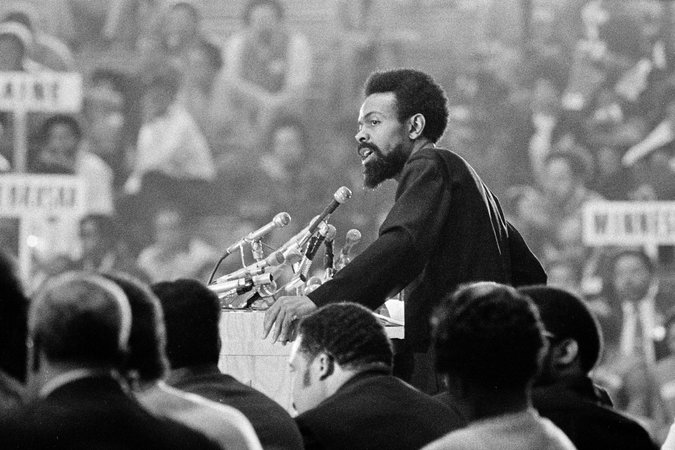
Rest in Peace, Amiri Baraka

Photo: Gary Settle/The New York Times

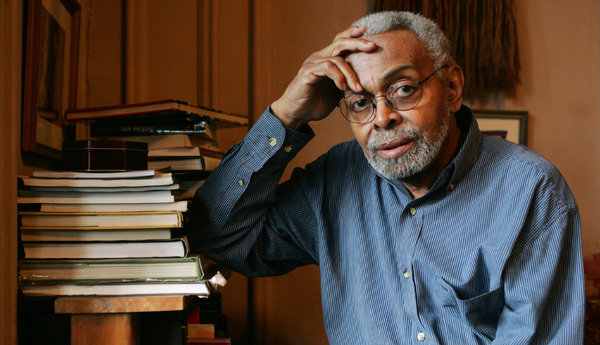
Photo: Gary Settle/The New York Times

Yesterday Amiri Baraka, a longtime activist and one of the great American poets, passed away at age 79. The cause of his death, at Beth Israel Medical Center in Newark, New Jersey, was not immediately released, but he was hospitalized in the facility’s intensive care unit since Dec. 21 and had a long struggle with diabetes.

Reflecting the exploratory and always-evolving nature of his mind, Amiri’s career path connected him to the Greenwich Village Beat community, the Black Nationalists, the Black Arts Movement (which he founded in 1964), and Marxist-Leninists. Though his beliefs during different stages of life may have different labels, he was consistently committed to justice, unity, social change and the struggle against oppression. As a revolutionary organizer, cultural critic, poet, novelist, essayist, historian, playwright, publisher and orator, Amiri Baraka’s words and ideas have influenced and inspired untold numbers of people around the world. His works have also been the source of much controversy, outrage and condemnation, at least during the initial time of their release.

One of Baraka’s last great acts as a rabble-rouser was his recitation of his poem “Somebody Blew Up America” before 2,000 people at the September 2002 Geraldine R. Dodge Poetry Festival held in Stanhope, New Jersey. This was incredibly courageous because throughout the country (especially on the East Coast) just one year after the attacks, questioning the official 9/11 story was enough to make one viewed as a conspiracy theorist, an apologist for terrorists, possibly traitorous, and/or insensitive to victims and their families. To do so and implicate the Israeli government, as Amiri Baraka did in his poem, led to accusations of antisemitism from the Anti-Defamation League. Many at the time believed the accusations even though under closer scrutiny it was obviously untrue because in the poem he clearly condemns the murder of Jews in the Holocaust and the lines in question could more accurately be described as anti-Zionist.

Who know why Five Israelis was filming the explosion And cracking they sides at the notion?

This is in reference to the well-documented case of the five dancing Israelis arrested on 9/11.

Who knew the World Trade Center was gonna get bombed Who told 4000 Israeli workers at the Twin Towers To stay home that day Why did Sharon stay away?

The most well-known incidence of Israeli foreknowledge are probably the reports from employees of instant messaging service Odigo. Other cases are listed here: http://911review.org/Wget/www.cooperativeresearch.org/wot/sept11/911mossad.html

Amiri Baraka was appointed Poet Laureate of New Jersey just one month before delivering “Somebody Blew Up America” to the public. Despite pressure from the powers that be to resign immediately, he steadfastly refused. In his own words, from an October 2, 2002 post on his website: “I WILL NOT ‘APOLOGIZE’, I WILL NOT ‘RESIGN!'” Governor Jim McGreevey and state legislators discovered there was no legal way to remove Poet Laureate appointees so in an act revealing their fear, hatred and desperation, they abolished the post in July 2003. This is just one chapter of many from Baraka’s often history-making career, but it’s emblematic of his courage, integrity, dedication to truth, and stubborn stance against injustice. This isn’t to say he was a saint or superhero. None of us are without fault, but what we can learn from Amiri is that development of political thought and civic engagement can and should be lifelong processes, and one can remain true to oneself yet open to new ideas and experiences. Above all, his life is a reminder that simple words (especially when composed and unleashed with skill at the right place and time) contain immense power; sometimes enough to change the world.

Photo: Ruth Fremson/The New York Times

Photo: Ruth Fremson/The New York Times

Somebody Blew Up America

They say its some terrorist, some barbaric A Rab, in Afghanistan It wasn’t our American terrorists It wasn’t the Klan or the Skin heads Or the them that blows up nigger Churches, or reincarnates us on Death Row It wasn’t Trent Lott Or David Duke or Giuliani Or Schundler, Helms retiring

It wasn’t The gonorrhea in costume The white sheet diseases That have murdered black people Terrorized reason and sanity Most of humanity, as they pleases

They say (who say?) Who do the saying Who is them paying Who tell the lies Who in disguise Who had the slaves Who got the bux out the Bucks

Who got fat from plantations Who genocided Indians Tried to waste the Black nation

Who live on Wall Street The first plantation Who cut your nuts off Who rape your ma Who lynched your pa

Who got the tar, who got the feathers Who had the match, who set the fires Who killed and hired Who say they God & still be the Devil

Who the biggest only Who the most goodest Who do Jesus resemble

Who created everything Who the smartest Who the greatest Who the richest Who say you ugly and they the goodlookingest

Who define art Who define science

Who made the bombs Who made the guns

Who bought the slaves, who sold them

Who called you them names Who say Dahmer wasn’t insane

Who? Who? Who?

Who stole Puerto Rico Who stole the Indies, the Philipines, Manhattan Australia & The Hebrides Who forced opium on the Chinese

Who own them buildings Who got the money Who think you funny Who locked you up Who own the papers

Who owned the slave ship Who run the army

Who the fake president Who the ruler Who the banker

Who? Who? Who?

Who own the mine Who twist your mind Who got bread Who need peace Who you think need war

Who own the oil Who do no toil Who own the soil Who is not a nigger Who is so great ain’t nobody bigger

Who own this city

Who own the air Who own the water

Who own your crib Who rob and steal and cheat and murder and make lies the truth Who call you uncouth

Who live in the biggest house Who do the biggest crime Who go on vacation anytime

Who killed the most niggers Who killed the most Jews Who killed the most Italians Who killed the most Irish Who killed the most Africans Who killed the most Japanese Who killed the most Latinos

Who? Who? Who?

Who own the ocean

Who own the airplanes Who own the malls Who own television Who own radio

Who own what ain’t even known to be owned Who own the owners that ain’t the real owners

Who own the suburbs Who suck the cities Who make the laws

Who made Bush president Who believe the confederate flag need to be flying Who talk about democracy and be lying

Who the Beast in Revelations Who 666 Who know who decide Jesus get crucified

Who the Devil on the real side Who got rich from Armenian genocide

Who the biggest terrorist Who change the bible Who killed the most people Who do the most evil Who don’t worry about survival

Who have the colonies Who stole the most land Who rule the world Who say they good but only do evil Who the biggest executioner

Who? Who? Who?

Who own the oil Who want more oil Who told you what you think that later you find out a lie

Who? Who? Who?

Who found Bin Laden, maybe they Satan Who pay the CIA, Who knew the bomb was gonna blow Who know why the terrorists Learned to fly in Florida, San Diego

Who know why Five Israelis was filming the explosion And cracking they sides at the notion

Who need fossil fuel when the sun ain’t goin’ nowhere

Who make the credit cards Who get the biggest tax cut Who walked out of the Conference Against Racism Who killed Malcolm, Kennedy & his Brother Who killed Dr King, Who would want such a thing? Are they linked to the murder of Lincoln?

Who invaded Grenada Who made money from apartheid Who keep the Irish a colony Who overthrow Chile and Nicaragua later

Who killed David Sibeko, Chris Hani, the same ones who killed Biko, Cabral, Neruda, Allende, Che Guevara, Sandino,

Who killed Kabila, the ones who wasted Lumumba, Mondlane, Betty Shabazz, Die, Princess Di, Ralph Featherstone, Little Bobby

Who locked up Mandela, Dhoruba, Geronimo, Assata, Mumia, Garvey, Dashiell Hammett, Alphaeus Hutton

Who killed Huey Newton, Fred Hampton, Medgar Evers, Mikey Smith, Walter Rodney, Was it the ones who tried to poison Fidel Who tried to keep the Vietnamese Oppressed

Who put a price on Lenin’s head

Who put the Jews in ovens, and who helped them do it Who said “America First” and ok’d the yellow stars

Who killed Rosa Luxembourg, Liebneckt Who murdered the Rosenbergs And all the good people iced, tortured, assassinated, vanished

Who got rich from Algeria, Libya, Haiti, Iran, Iraq, Saudi, Kuwait, Lebanon, Syria, Egypt, Jordan, Palestine,

Who cut off peoples hands in the Congo Who invented Aids Who put the germs In the Indians’ blankets Who thought up “The Trail of Tears”

Who blew up the Maine & started the Spanish American War Who got Sharon back in Power Who backed Batista, Hitler, Bilbo, Chiang kai Chek

Who decided Affirmative Action had to go Reconstruction, The New Deal, The New Frontier, The Great Society,

Who do Tom Ass Clarence Work for Who doo doo come out the Colon’s mouth Who know what kind of Skeeza is a Condoleeza Who pay Connelly to be a wooden negro Who give Genius Awards to Homo Locus Subsidere

Who overthrew Nkrumah, Bishop, Who poison Robeson, who try to put DuBois in Jail Who frame Rap Jamil al Amin, Who frame the Rosenbergs, Garvey, The Scottsboro Boys, The Hollywood Ten

Who set the Reichstag Fire

Who knew the World Trade Center was gonna get bombed Who told 4000 Israeli workers at the Twin Towers To stay home that day Why did Sharon stay away?

Who? Who? Who?

Explosion of Owl the newspaper say The devil face cd be seen

Who make money from war Who make dough from fear and lies Who want the world like it is Who want the world to be ruled by imperialism and national oppression and terror violence, and hunger and poverty.

Who is the ruler of Hell? Who is the most powerful

Who you know ever Seen God?

But everybody seen The Devil

Like an Owl exploding In your life in your brain in your self Like an Owl who know the devil All night, all day if you listen, Like an Owl Exploding in fire. We hear the questions rise In terrible flame like the whistle of a crazy dog

Like the acid vomit of the fire of Hell Who and Who and WHO who who Whoooo and Whooooooooooooooooooooo!

Copyright 2002. AMIRI BARAKA.

Pearl Harbor: The Original 9/11

pearl-harbor

Yesterday marked the 72nd anniversary of the Pearl Harbor attack, which from today’s perspective can be viewed as the template on which 9/11 was modeled after. In both cases, documentation exists implicating the U.S. government. In the case of Pearl Harbor, there’s the McCollum Memo which describes in detail the strategy used to successfully provoke the Japanese government into attacking. Shortly before the Pearl Harbor attack, Secretary of State Hull presented “peace terms” to the Japanese government that all but guaranteed an inevitable attack.

In the case of 9/11, there’s a policy document from Project for a New American Century called Rebuilding America’s Defenses, which provides a clear motive to create a “catastrophic and catalyzing event – like a new Pearl Harbor”. It’s not conclusive proof they were behind the attacks, but it’s suspicious to say the least that the people with established motives for conducting an event like 9/11 were responsible for national security at the time multiple unlikely and implausible coincidences made such a successful attack possible.

A number of other dubious aspects of the Pearl Harbor attack were compiled at Washington’s Blog last year, including:

Active Interference with Military’s Ability to Defend

It has also recently been discovered that the FDR administration took numerous affirmative steps to ensure that the Japanese attack would be successful. These steps included taking extraordinary measures to hide information from the commanders in Hawaii about the location of Japanese war ships (information of which they would normally be informed), denying their requests to allow them to scout for Japanese ships, and other actions to blind the commanders in Hawaii so that the attacks would succeed. See, for example, this book (page 186).

Key Military Players Incommunicado

In addition, the heads of the Army and Navy suddenly disappeared and remained unreachable on the night before Pearl Harbor. And they would later testify over and over that they “couldn’t remember” where they were (pages 320 and 335).

Gagging Whistleblowers

Two weeks after Pearl Harbor, the Navy classified all documents top secret, and the Navy Director of Communications sent a memo ordering all commanders to “destroy all notes or anything in writing” related to the attacks. More importantly, all radio operators and cryptographers were gagged on threat of imprisonment and loss of all benefits. (page 256).

Media Complicity

Amazingly, the Army’s Chief of Staff informed the Washington bureau chiefs of the major newspapers and magazines of the impending attacks before they occurred, and swore them to an oath of secrecy, which the media honored (page 361); and listen to interview here (we personally spent an hour speaking with Stinnett, and find him to be a highly credible and patriotic American.)

Postscript: Coincidentally, Philip Zelikow – the Executive Director of the 9/11 Commission, the administration insider whose area of expertise is the creation and maintenance of “public myths” thought to be true, even if not actually true, who controlled what the 9/11 Commission did and did not analyze, then limited the scope of the Commission’s inquiry so that the overwhelming majority of questions about 9/11 remained unasked – also happened to be the main guy defending the alleged unforeseeablity of the Pearl Harbor attack, who wrote a hit piece on Pearl Harbor historians like Stinnett.

Just like 9/11, Pearl Harbor was used as a tool to focus mass hatred on a race demonized by propaganda. The attack created a culture of fear allowing for suspension of civil liberties while crushing opposition to the war. Most importantly (for powerful interests pushing for war) the attacks were a pretense for pursuing and expanding global political and economic hegemony.

For a comprehensive compilation of evidence of U.S. government involvement in the Pearl Harbor conspiracy, see: http://whatreallyhappened.com/WRHARTICLES/pearl/www.geocities.com/Pentagon/6315/pearl.html

Justice System May Be Deaf & Dumb But Not Blind

blind_justice

Compare and contrast the following recent police encounters. In the first, a man who was reportedly behaving in a hostile and erratic manner rams his SUV into a police car before they have a chance to pull him over. He leads a second police car on a chase before ramming into a third police vehicle. He backs up the SUV and rams it a second time before being blocked in by the car behind him. The man continues to fight the police as they attempt to get him out of the SUV and is eventually tasered and arrested.

In the second case, a woman in a minivan with five kids on board as passengers are pulled over for going 71 in a 55 mph zone. She argues with the police over the ticket and drives off but is pulled over again shortly after. A police officer tries to pull the kids out of the van before being rushed by the driver’s 14 year son who is tasered. The officer begins smashing the van’s windows with his baton as backup arrives. The woman attempts to flee again and an officer fires three shots at her van. She leads the police on a chase before surrendering in front of a hotel.

There’s a number of different factors behind the approaches taken by the police in the two cases, but one can’t help but wonder if race and class may have played a part in the way the respective drivers were treated. The first case took place in Oregon and the driver was Dave Dahl, a white man and founder of a local bread company. The police knew who he was because they received a call from someone believing he was off his medication and suffering from a mental breakdown. Whether Oregon police are better trained and/or afraid of getting sued, they demonstrated that police can effectively stop potentially dangerous reckless drivers without resorting to guns.

In the second case the driver was Oriana Ferrell, a black woman from Memphis on vacation with her kids. Though she didn’t deal with the situation in the wisest manner, she was not trying to ram the police and the police officers were also at fault for escalating the situation. Because she was stopped in an isolated area and was no doubt aware of the reality of institutional racism, she may have felt a need to flee for the safety of her family. Such fear appears to have been justified by documented police actions such as shooting at her van full of kids.

Dash-cam footage of the incident:

Poor training and systemic corruption may also have been a factor. Just ten days after Ferrell and her family’s near-death experience, a New Mexico police officer shot and killed a woman after a high speed pursuit.

You can more about the contrasting police encounters here:

http://www.katu.com/news/local/Daves-Killer-Bread-founder-in-custody-after-three-deputies-cars-rammed-232046381.html

http://www.syracuse.com/news/index.ssf/2013/11/police_shoot_at_minivan_full_of_kids_after_traffic_stop_gets_heated.html

On Ourselves in the Othernets

52-psychedelic-art-300x289

Though a month old, this piece by Chris Arkenberg of URBEINGRECORDED was one I found to be nonetheless thought provoking (I’ve added my own commentary in italics following the original paragraphs):

Ourselves in the Othernets

So dig: in about 20 years we went from knowing rather little about the world beyond what we directly experienced and what we gleaned through books and pictures and the occasional documentary or foreign movie, to having immediate on-demand insight into any facet of the globe you could imagine.

True, though I miss the sense of community and unique curation of some of the old physical media brick and mortar establishments.

And many you couldn’t imagine. The sheer amount of visibility into humanity is simply astonishing. And it’s this informational shift, this too-much-bloody-perspective that is really amplifying the change and disruption and anxiety through which we grapple with the unfolding narrative of our species.

I would argue that the disruption is amplified not just from too many perspectives, but from the cognitive dissonance caused by conflicting data and the struggle to discern which has a closer correlation to reality.

You see, humans are still basically tribal animals. We like what we know and we fear what we do not. Geography, bloodlines, race, and class are among the sociocultural elements that bind us when we share them and separate us from those who fall onto a different end of the spectrum. We cast the differences and the things we do not understand into the Other. The Other becomes the boogeyman, the shadow, the unknown that is presumed to be a threat (because it’s safest to first assume that things are threats and then let information persuade us otherwise).

Good description of unfortunate xenophobic and threat response tendencies that are all too easy for manipulative leaders to exploit.

This innate fear of the Other makes it easier to wage economics and wars on those folks over the mountain or beyond the sea. You can much more easily demonize or dehumanize people who have no discernible face, casting them into the Other without further regard. They’re different from us. They don’t like the things we do or worship the same gods. It’s our right as better, more civilized beings to have their oil/water/food/women/etc. In general, this made it easier to get down to business without the impediment of worrying about our impact on the savages. [Insert any relevant aside about colonialism or how the prosperity of the West has been built on the backs of cheap resources and labor in the Third World.]

At the same time, fear of the Other can blind us from seeing psychopaths and sociopaths who may look no different from ourselves. In fact, since they tend to be more adept at blending in, manipulating others, and seeking personal gain at expense of others, it’s no surprise many such people end up in positions of power.

And then the steady march of trade made it incrementally easier and easier to see bits of the Other. Radio emerged, then the telephone and television. But even those were mostly local or regional. Globalization reinforced shipping lanes and supply chains and people started engaging the overseas Other to figure out how Toyota managed to bust the asses of US automakers or how the Chinese could subsidize western luxury with cheaper manufacturing. And meanwhile, creeping along the copper lines, the internet was starting to form.

Depictions of the Other in media doesn’t necessarily help when society is exposed to predominantly negative images of certain groups. And early forms of globalization have been around at least since the colonial era previously mentioned and the global slave trade of the 17th century. It seems government and big business have always welcomed the Other…as cheap labor.

The early adopters really started to engage the web around 1993-1995. A few years later you could buy a cell phone that wasn’t the size of a brick but still a lot of folks who needed mobile connectivity just used a more affordable pager – a one-way ping that sent you running for a pay phone to respond. But by 2000 a lot of people were online and within another 5 years many of them had cell phones. Apple landed the smart phone revolutions and now, as of 2013, it’s not hyperbole to say that *most* people in the world have cell phones and sms. Many of them have internet access – at least enough to fill add hubs to regions still mostly lacking. And this penetration of digital eyes is especially high amongst the western nations so adept at justifying imperialism by demonizing and dehumanizing the Other. Ahem.

It’s amazing how fast these changes occurred. Penetration of “digital eyes” may be high among imperialist nations yet demonization of the Other continues largely thanks to corporate/government influence of mass media. Fortunately independent/foreign news and media offer a counterbalance to increasing audiences as corporate media declines.

Any analysis of the contemporary context we live in must therefore consider this fundamental reframing of such a core psychological construct. [IMHO.] The Other is collapsing into the known. We now see so much of the people, cultures, and races and interests and classes and… and basically the Other looks a lot like us, doesn’t it? Consider for a moment what it means for borders and national identity when our affinities are inherently borderless; when we make Facebook friends with people scattered all across the globe; when the streets of Bagdad (pre-post-Saddam) surprisingly looked a lot like the streets of Northridge or Minneapolis; and when the art and music and writings and media blend more and more across frictionless digital channels, reconfiguring to speak about the shared lives of humanity more than any isms or schisms. Well, call me a global-mind liberal tree-hugging old softy but it actually makes me feel better to see the barriers of culture and nationalism crumble a bit under the weight of the innate human need to connect and share and collaborate and remix. We’re still tribal, sure, and culture is valuable but the tribes are getting bigger and more distributed, and at the same time there are more and more niches in the Long Tail waking up to assert their *own* culture, however deep it may be in the sub-genre taxonomy.

From my perspective it’s a little simplistic to say the Other looks like us. In some cases they may, but the internet can also expose the extremes of different cultures and subcultures as well. It’s often a positive trend to be able to relate more with the Other, but it’s also important to acknowledge differences. And even though the Other may look like us, they may not think like us. Case in point are political/economic elites and the top 1%, who more people used to identify more with. Whether because they’re more corrupt than ever because of greater political/economic power or because of greater awareness of their harmful policies revealed mostly through the internet and independent media, they’re increasingly recognized as a new type of Other.

The impact of this shift and the crazy pace at which it’s happened has injected a tremendous amount of instability into the global system. And it’s all been carried along the sudden Cambrian explosion of computation and connectivity spreading into every nook and cranny it can find, wiring it all up and transforming the layers above. The sense of rapid change and the exponentiation of technological progress is probably not going to be a temporary or transitional event. It’s looking more likely that we’re steaming up a steep curve that’s elevating change from a passage to a condition. It’s the new normal within which we live our lives.

Can’t argue with that.

This is why I’m a bit sanguine on fears of NSA totalitarianism or rumors of grand conspiracies slowly wrapping us all up for the impending boot on our necks. I don’t believe in monoliths. There’s too much instability in the system for any one controller to reign it all in. Instead we live in a world of too many competitors – governments, transnationals, corporate multinationals, NGO’s, ideological blocks, cartels, super-empowered individuals. Even within organizations it’s all Game of Thrones and balkanized silos. They’re all vying for control but the outcome will not be any single winner. It will be a dynamic patchwork of power structures that, like any good ecosystem, will mostly keep each other in check. Mostly. Sometimes some of them align around a goal, other times they break apart and fragment.

This is where I do disagree. The scenario described would be an improvement over our current situation and may be where we end up eventually, but we’re not there yet. There might seem to be many conflicting factions but a closer examination reveals them to be different cards held by a relatively small number of players, and why wouldn’t these players cheat or conspire to retain their positions of power? A couple years ago a study from the Swiss Federal Institute of Technology in Zurich did a comprehensive analysis of 37 million companies, 43,060 transnational corporations and share ownerships linking them. They discovered that global corporate control has a dominant core of 147 firms with interlocking stakes. Together they control 40% of the wealth in the network. A total of 737 control 80% of it all.

The dystopic (realist?) balance to this sanguinity moves among the machines and the algorithmic mycelium wending its way through our networks and our devices and more and more of our lives. The opportunities for embedded governance when we all have a chip and an IP and a personal node on the net are indeed considerable. A geofenced life is a fenced life nevertheless, even if the prison is invisible. We humans may overcome our prejudices just in time to unite against the emerging Other of machine intelligence. There may yet be a Matrix scenario ahead of us though I suspect it won’t be possible for quite some time. Humans are fallible and, for now, we fallibly program the machines, lending de-rezed bits of our slippery minds to their cognitive computation. But what is the logic, the perspective, when the machines wise up and suddenly our dissent is regarded as a malfunctioning program throwing up a little flag on the network that can then be dispatched without ever requiring that humanly-fallible oversight? Perhaps then they just crawl into your mindtank and intermediate your pathetic shreds of freewill.

Among the emerging “True Other” I would include along with machine intelligence psychopathic government and corporate systems and the individuals who flourish within such systems.

But, you know, this is why we write programs to protect us. And why there are teenagers who are better at cracking things open than any would-be monolith will ever be at keeping them closed. This is the generational dance of evolution. The young are always one step ahead. It’s like a failsafe built-in to the species. Some inchoate balancer that makes sure nature maintains the upper hand lest we slip up and give it all away to fascists and imperialists and corporations and algorithms. And I suppose this is my faith, after all. That there is a failsafe. That we won’t let it all slip into ruin. Or at least, if we do, it will be the ruin of nature asserting its claim on us all, consuming civilization back into the womb of the Mother to be reconsidered and redrawn for the next momentous round of parthenogenesis. Maybe a little better and a little more suited to this world. Hopefully the music will be as good.

I must admit I have no idea how the future will turn out, but this proposed possibility is more hopeful than a number of likely outcomes.

American Apartheid Starts in Detroit

Power_outage_in_downtod55e1d2b-c272-479b-8a84-906566e6862b0000_20100710181343_320_240

A recent op-ed from Glen Ford, executive editor of Black Agenda Report, describes the situation in Detroit as the nexus of a new American apartheid in which inhabitants of largely Black urban centers are denied meaningful votes and ability to defend collective and individual property from the wealthy elite. In reaction to this alarming trend, on October 5 and 6, the International People’s Assembly will hold a conference, Against Banks and Against Austerity, in Detroit. Ford describes the goals of the conference in greater detail in this excerpt:

The International Peoples Assembly conference demands that the so-called debt to the banks be canceled – not just for Detroit, which supposedly owes Wall Street $22 billion, but for cities, school systems, states and countries around the world that have been purposely made into debt slaves for the rich. Workers pensions and jobs, and the vital services they provide to the community, must be guaranteed. This is a critical demand, since the emergency management regime in Pontiac, Michigan, has stripped the municipal workforce down to only 20 people for a city of 60,000. The unemployed must be put back to work repairing the damage inflicted on Detroit by the bankers’ foreclosure and disinvestment policies. Public education, which is rapidly being privatized, must be restored to the public sphere and fully funded.

Read the full article here: http://www.blackagendareport.com/content/detroit-nexus-new-american-apartheid

For those not familiar with the “emergency management regime” Ford referenced, it has been a topic of intense debate in Michigan for at least the past couple of years. The so-called emergency management legislation first introduced in 2011, was supposedly designed to help local government survive financial crises but also removed all powers from democratically elected officials and transferred governing power, including the power to make local laws, to appointed emergency managers (who are not required to obey local laws such as city charters or ordinances). Though the law was voted down by Michigan voters, a revised version was passed in December of 2012 during a lame duck session.

More details about Michigan’s “emergency manager” law here:

http://sugarlaw.org/projects/democracy-emergency/

http://www.huffingtonpost.com/david-alexander-bullock/detroit-elections_b_1442049.html

This past September 11th, citizens of Detroit experienced a harmful consequence of the emergency management powers when the city lost power during a heat wave that week. As described by Randa Morris at Addicting Info.:

In the city of Detroit, power outages left people stranded in elevators, trapped four hours in the blistering heat. Hundreds were evacuated from buildings in the downtown area, traffic lights did not function, public transportation was disabled and 1,400 sites across the city were without power. Wayne State University and other key buildings still remained closed, the following day. All of this after the city’s power supply supposedly failed.

…The problem is that the city’s power supply never failed.

On September 12th, 2013, Bill Nowling casually stated that the city’s power outages were intentional. Officials and citizens working in the city were given no warning before the electricity was cut off. Law enforcement officials working in the Hall of Justice had no time to prepare. Senior citizens and disabled citizens using elevators in the city’s downtown district had no way to know what was coming. The entire criminal justice system was shut down without notice. Wayne State University Campus was just one of many sites evacuated under emergency conditions. Traffic lights across the city stopped working. 1,400 public and private locations were left without power. And the entire thing was intentional, to “send a message” to the people of Detroit. Bill Nowling works in the office of Kevyn Orr, Detroit’s Emergency Manager.

Read the full story here: http://www.addictinginfo.org/2013/09/14/detroit-blackout/

So this unannounced power shutdown which endangered the health and safety of an entire city can be attributed to a single individual only accountable to Governor Rick Snyder, who appointed him as Emergency Manager in March. And what are Kevyn Orr’s credentials? He was the lead attorney who collected over a million dollars representing Chrysler during its bankruptcy proceedings in 2009. Private emails uncovered by labor activist Robert Davis indicate that Orr stood to make millions more in legal fees by facilitating Detroit’s bankruptcy which was filed on July 18, 2013. Orr has also been behind efforts to privatize Detroit’s energy grid according to this WSWS.org article by Khara Sikhan:

The Detroit Public Lighting Department (DPLD), has been systematically defunded for decades, and Democratic Mayor Dave Bing proposed to fully privatize the lighting department in 2012.

In mid-August, Kevyn Orr fired DPLD director Richard Tenney as part of his plan to restructure the city government. Orr announced in June that the city would sell off the public lighting grid to DTE Energy, in line with Bing’s proposal.

The drive to privatize the city’s lighting department, far from benefiting the city’s residents, would be only another means of extracting profit from the city.

Read the full article here: http://www.wsws.org/en/articles/2013/09/14/powe-s14.html?view=print