“Black Mirror” (2011 – ) is a British anthology series created by satirist Charlie Brooker exploring potential unintended social/psychological effects of technology. It’s sort of an updated and darker version of The Twilight Zone offering (often pessimistic) commentary on society, government, culture and relationships.
Check out this fascinating summary of How We Got to Now: Six Innovations That Made the Modern World. This particular summary looks at the part of the book that documents how our perception of time has changed, and how that has affected the modern world.
The book talks about something called the “Hummingbird Effect,” which describes the way in which various inventions and technical discoveries change the world in unexpected ways. Some of you may recall James’ Burke’s excellent TV show Connections on BBC/PBS (These used to be available on YouTube, but JamesBurkeWeb appears to have disappeared. Still, some episodes can still be found) which covered the same ground:
Johnson points out that, much like the evolution of bees gave flowers their colors and the evolution of pollen altered the design of the hummingbird’s wings, the most remarkable thing about innovations is the way they precipitate unanticipated changes that reverberate far and wide beyond the field or discipline or problem at the epicenter of the particular innovation. Pointing to the Gutenberg press — itself already an example of the combinatorial nature of creative breakthroughs — Johnson writes:
“Johannes Gutenberg’s printing press created a surge in demand for spectacles, as the new practice of reading made Europeans across the continent suddenly realize that they were farsighted; the market demand for spectacles encouraged a growing number of people to produce and experiment with lenses, which led to the invention of the microscope, which shortly thereafter enabled us to perceive that our bodies were made up of microscopic cells. You wouldn’t think that printing technology would have anything to do with the expansion of our vision down to the cellular scale, just as you wouldn’t have thought that the evolution of pollen would alter the design of a hummingbird’s wing. But that is the way change happens.”
It starts with Galileo’s observation that a pendulum always swings to-and-fro in a regular amount of time.
“But machines that could keep a reliable beat didn’t exist in Galileo’s age; the metronome wouldn’t be invented for another few centuries. So watching the altar lamp sway back and forth with such regularity planted the seed of an idea in Galileo’s young mind. As is so often the case, however, it would take decades before the seed would blossom into something useful.”
The ability to accurately measure time was a departure from before when:
“Instead of fifteen minutes, time was described as how long it would take to milk the cow or nail soles to a new pair of shoes. Instead of being paid by the hour, craftsmen were conventionally paid by the piece produced — what was commonly called “taken-work” — and their daily schedules were almost comically unregulated.”
Once the regimentation of the clock was introduced, many things followed from that due to the Hummingbird Effect:
Over the century that followed, the pendulum clock, a hundred times more accurate than any preceding technology, became a staple of European life and forever changed our relationship with time. But the hummingbird’s wings continued to flap — accurate timekeeping became the imperceptible heartbeat beneath all technology of the Industrial Revolution, from scheduling the division of labor in factories to keeping steam-powered locomotives running on time. It was the invisible hand of the clock that first moved the market — a move toward unanticipated innovations in other fields. Without clocks, Johnson argues, the Industrial Revolution may have never taken off — or “at the very least, have taken much longer to reach escape velocity.” He explains:
“Accurate clocks, thanks to their unrivaled ability to determine longitude at sea, greatly reduced the risks of global shipping networks, which gave the first industrialists a constant supply of raw materials and access to overseas markets. In the late 1600s and early 1700s, the most reliable watches in the world were manufactured in England, which created a pool of expertise with fine-tool manufacture that would prove to be incredibly handy when the demands of industrial innovation arrived, just as the glassmaking expertise producing spectacles opened the door for telescopes and microscopes. The watchmakers were the advance guard of what would become industrial engineering.”
Not mentioned is the introduction of public schools, designed to take farmers used to “cow milking time” and “discipline” them into a workforce able to sit still and obey and punch a clock, a system we are still living with today. Those of us who cannot or will not conform to this ruthless discipline are severely punished:
And yet, as with most innovations, the industrialization of time came with a dark side — one Bertrand Russell so eloquently lamented in the 1920s when he asked: “What will be the good of the conquest of leisure and health, if no one remembers how to use them?” Johnson writes:
“The natural rhythms of tasks and leisure had to be forcibly replaced with an abstract grid. When you spend your whole life inside that grid, it seems like second nature, but when you are experiencing it for the first time, as the laborers of industrial England did in the second half of the eighteenth century, it arrives as a shock to the system. Timepieces were not just tools to help you coordinate the day’s events, but something more ominous: the “deadly statistical clock,” in Dickens’s Hard Times, “which measured every second with a beat like a rap upon a coffin lid.”
[…]
“To be a Romantic at the turn of the nineteenth century was in part to break from the growing tyranny of clock time: to sleep late, ramble aimlessly through the city, refuse to live by the “statistical clocks” that governed economic life… The time discipline of the pendulum clock took the informal flow of experience and nailed it to a mathematical grid. If time is a river, the pendulum clock turned it into a canal of evenly spaced locks, engineered for the rhythms of industry.“
And as clocks became ever more precise and ubiquitous, things flowed from that – more regimentation, more standardization (village clocks used to be set by the sun’s position, but this introduced inaccuracies in railroad timetables – thus two inventions, one steam-powered and one not, are bound up together), and entirely new scientific discoveries which led to new inventions such as the computers that now rule over our lives:
Johnson goes on to trace the hummingbird flutterings to the emergence of pocket watches, the democratization of time through the implementation of Standard Time, and the invention of the first quartz clock in 1928, which boasted the unprecedented accuracy of losing or gaining only one thousandth of a second per day…But the most groundbreaking effect of the quartz clock — the most unpredictable manifestation of the hummingbird effect in the story of time — was that it gave rise to modern computing and the Information Age. Johnson writes:
“Computer chips are masters of time discipline… Instead of thousands of operations per minute, the microprocessor is executing billions of calculations per second, while shuffling information in and out of other microchips on the circuit board. Those operations are all coordinated by a master clock, now almost without exception made of quartz… A modern computer is the assemblage of many different technologies and modes of knowledge: the symbolic logic of programming languages, the electrical engineering of the circuit board, the visual language of interface design. But without the microsecond accuracy of a quartz clock, modern computers would be useless.”
And once the computer is invented – note that it becomes the new mega-metaphor taking over from the steam engine – the brain as “neural network” that can be simulated, the economy as a perfect “information processing machine” via the price mechanism and humans as “rational utility maximizers”of Neoliberal economics, and recasting the analog world as binary one of ones and zeros – art, music, literature, etc. that can be simulated through sufficiently complex algorithms. All this flows from our view of the world, which in turn is dictated by our technology.
More at the link. It’s worth noting that this entire thesis was laid out by Lewis Mumford as far back in the 1930’s in Technics and Society, and this book looks like it covers much the same ground.
Mumford’s these is that the Industrial Revolution did not spring forth fully-formed from nowhere, but came forth from changes in the human perception of the world and man’s relationship to nature that had been occurring for centuries beforehand. He called this the Eotechnic period, and points out that it needs to be understood to see how the modern world emerged. He classified the subsequent periods as Paleotechnic (centered around the stream engine, iron and coal), and the Neotechnic (centered around electricity and the scientific method). He stressed how much our perception of the natural world and human nature dictate the nature of our science and social organization.
Several intellectual revolutions had to take place in order to get us to the Industrial Revolution. One, as noted above and emphasized by Mumford, was the accurate measurement of time. Another was the increasing control over motive forces exemplified by the windmill and watermill. Another was individual perception, as indicated by the use of perspective in painting. Another was the increasing standardization, political centralization and bureaucracy. Another was the discovery of the New World of which the ancients had no knowledge or precedent. Another was the increasing use of the abstraction of money for trade. But perhaps the biggest one of all was recasting the natural world as a machine that could be analyzed and understood. These changes were all formative to the Industrial Revolution, which could not have come about without them.
Mumford writes extensively about the Medieval period, and how that period increasingly used technology to control the environment but in a genuinely humane way, one designed to enhance human needs and desires rather than control or eliminate them. Think of the medieval clock-making guild as opposed to the deskilled factory worker for example. The decentralized and localized nature of the Medieval period is what allowed technology to be used in this way.
But, beginning in the seventeenth century with the rise of the nation-state and the consolation of Europe’s kingdoms into large, centralized states with standards and bureaucracy (much of it due to the emergence of gunpowder and artillery, against which castles and mounted knights were useless), all that began to to change. Technology became increasingly tyrannical, and man was more and more forced into the “logic of the machine.” Consider the armies that emerged identical uniforms, identical weapons with interchangeable parts and drilled, regimented training designed to turn men into interchangeable parts themselves. Military training was the precursor to the disciplined workforce of the Industrial Revolution, which is why the connection between business and military discipline remains to this day (corporations today are run on the top-down hierarchical military model). Since battles were won by sheer numbers of “citizens” with rifles rather than an aristocratic warrior class who owned horses, the social relations changed, and the common man emerged with more importance. Population growth equaled national strength in the new order. Man’s rationality became celebrated, all other values were discounted. Productivity and technological “progress” became goals in the themselves rather than means to an end. Pursuit of growth and profit became all-consuming, human needs be damned.
In contrast to the Medieval period, today’s technology is dehumanizing, submitting man to centralized control, and seeing him as nothing more than a machine. Mumford envisioned a society where human values could once again take center stage instead of the productivist logic of “the myth of the machine” Thus Mumford was not anti-technology; rather he wanted a world in which technology served profoundly different values than in our present time. The brutal regulation of time, rather than the human time of being in the world – the difference between chronos and kairos, or the subjective and the objective – is one of the best illustrations of this difference. Just because we can measure time down to the nanosecond does not mean we have to be enslaved to it. That is a social choice, as Mumford would quickly remind us.
In honor of the birthday of the venerable author whose writings have inspired and expanded the hearts & minds of countless kindred spirits, I’m sharing a few PKD-related works from the archives. Posted below are a couple of rare interviews with Philip K. Dick shedding light on his work and the bizarre events which greatly affected the latter part of his life followed by a speculative essay on his “2-3-74” experience.
2-3-74 and After: A Mystical and Paranormal Overview
By Mark W. Smith
“A poet makes himself a visionary through a long, boundless, and systematized disorganization of all the senses. All forms of love, of suffering, of madness; he searches himself, he exhausts within himself all poisons, and preserves their quintessence. Unspeakable torment, where he will need the greatest faith, a superhuman strength, where he becomes all men the great invalid, the great criminal, the great accursed – and the Supreme Scientist! For he attains the unknown! Because he has cultivated his soul, already rich, more than anyone! He attains the unknown, and if, demented, he finally loses the understanding of his visions, he will at least have seen them! So what if he is destroyed in his ecstatic flight through things unheard of, unnameable: other horrible workers will come; they will begin at the horizons where the first one has fallen!”
Arthur Rimbaud (May 15,1871)
PKD: Sham or Shaman? In February of 1974 Philip K. Dick was feeling a
lot of personal stress: financial matters involving the I.R.S.,
lingering effects of the break-in of his home and other fears
experienced in 1971, and family matters involving the birth of a new
child. He was also dealing with the effects of an impacted wisdom
tooth. Phil had been administered Sodium Pentothal during surgery and
later was awaiting the delivery of a pain killer. Phil had also been
taking lithium in prescribed doses for some time.
During this time Phil began to receive and experience a series of
dreams, visions and other-worldly experiences that would change his
life and times for ever. He would spend the remaining years of his
life in pursuit of explanations for what had happened. What follows is
a synopsis of possible ideas, borrowed from both western and eastern
thought; past, present and even future.
In speculating on the condition of Phil’s psyche at this point, one
must ponder the combined effects of the stress, pain and drugs. The
vision quest is a ritual practiced for gaining a guardian spirit or
asking for supernatural guidance. These three forces are often
utilized in preparing the mind and spirit for this: stress, in the
form of isolation, fasts, thirsts and physical danger; pain, through
mutilation or self mortification; and drugs, such as hallucinogens. In
the successful vision quest the combination of these preparations will
place the individual in a trance and make him a receptacle for
supernatural forces. The vision quest still lies outside the realm of
tribal shamanism.
Shamanism itself exists within the social structure of the tribe and
is the practice of entering an altered state of consciousness and
traversing non-physical realities in order to heal sickness, both
physical, emotional, and spiritual; or to tell of the future and of
things to pass, or to contact the dead, etc. The shamans are not
priests, but are often more like mystics, and as such are separated
from the main function of the society by their intense experiences.
Siberian shamans go down to the underworld of the ancestral spirits to
gain their knowledge. This belief system has had parallels in other
cultures as well; in yoga tradition, the Manomya and Akashaloka
siddhis provide access to other dimensions of the universe. In Iranian
mysticism, Hurgalya, the celestial earth, is accessible for spiritual
travel.
Within the shamanic traditions it is a long-held belief that of the
three chief methods of obtaining shamanic powers (1) family
transmission, (2) spontaneous vocation, and (3) people who become
shamans of their own free will, the self-made shaman is the least
powerful.
Mircea Eliade in Shamanism: Archaic Techniques of Ecstasy says,
“However selected, a shaman is not recognized as such until after he
has received two kinds of teaching: (1) ecstatic (dreams, trances,
etc.) and (2) traditional (shamanic techniques, names and functions of
spirits, mythology and genealogy of the clan, secret languages,
etc.).”
Looking at Phil’s experience through a shamanistic viewpoint, we can
say that it was spontaneous, and upon receiving the “call” he had a
series of dreams, trances, visions, etc. Then he spent the next eight
years trying to learn the traditions of his people, their mythology,
the names and functions of their spirits, and so on.
For the most part he was on his own in his attempts to relate the
experiences to the traditions of his people, due to the spiritual
poverty that existed around him, and one wonders what would have been
made of his experiences if he had been born or lived in a culture of
rich shamanistic traditions.
The Symbolism of the First Encounter. Phil states that on February 20,
1974 he was visited by a beautiful girl who was delivering his
prescription (Darvon), and noticed a gold necklace that she was
wearing. He was suddenly stuck by the experience of “anamnesis”, which
was first employed by Plato as the recollection or remembrance of
Eternal Truth. Asking her what it was, she informed him that the
amulet had a fish inscribed on it, and that the fish was a sign used
by the early Christians. She then departed.
Phil felt that the events that were to follow began that day and were
triggered by his looking at this golden fish amulet. The word “amulet”
comes from the French “amulet”, which in turn comes from the Latin
“amuletum” and means “for defense”. Amulets have been common since
ancient times, can be made out of virtually anything, and are believed
to be imbued with magical or supernatural power.
Symbols as well have always been felt to retain magical powers. They
function as translators of the human condition into meta-universal
terms and reveal the connection between the microcosm and the
macrocosm. W.B.Yeats once stated, “I cannot now think symbols less
than the greatest of all powers whether they are used consciously by
the master of magic or half unconsciously by their successors, the
poet, the musician, and the artist.” (In Yeat’s Golden Dawn).
Gold itself has long been associated with the sun, the force which
brings light, form and order out of chaos and darkness. The fish
inscribed in the gold represented Christ to the early Christians
because the Greek word “ichthys”, meaning “fish”, was an acronym for
“Jesus Christ, Son of God, Savior”. Also, fish live in water and water
has long symbolized the unconscious mind. Water has also been used as
a symbol of life.
One must speculate as to the effects of these combined events on
Phil’s mind on that fateful February day in 1974. Phil’s interest in
early Christianity, and his friendship with James A. Pike, the
Episcopal Bishop of California, dating back to the mid-sixties, has
been well-documented in several of his novels. Could this combination
of circumstances culminate in the results that were to follow?
The Vatic PKD. Phil felt that he was transported to the world of Acts
(fifth book of the Christian Bible’s New Testament) and he felt that
it was his real time and place. He felt that he was a person called
Simon Magus, a first century Gnostic. He was also to name this ancient
personage Thomas, a first-century Christian or “Firebright”, described
as an entity of spiritual wisdom. He never was able to decide on a
name for this personage or the nature of its origin.
Spontaneous Retrocognition (a.k.a. postcognition) is a phenomenon in
which an individual is able to “see” into the past. Occurring in the
form of an hallucination or vision, the present surroundings are
replaced by a scene from the past. Psychic Archeology is the ability
to use psychic skills to aid in the field of archeology. Canadian
archeologist J. Norman Emerson has used the talents of psychic George
McMullen, who reports that he sees movie-like images of the past as he
comes into contact with artifacts. He also states that he is assisted
in this process by beings of light. Although this is more akin to
psychometry, the ability to gain information from objects of the past
by handling them, it is explained that the information is conveyed by
vibrations embedded within an object by the emotions or actions of the
past. Although I don’t think Phil ever claimed to have touched the
golden fish, if the vibrations were of enough intensity and/or he was
sensitive enough or open enough, I feel an impression may have been
felt, even without the his physically touching the amulet.
Spontaneous past-life recall is a phenomenon where an individual
experiences the remembrance of a previously lived life. There are many
documented cases of spontaneous past-life recall, one of the earliest
being of a young Japanese boy born in 1815. Religious mysticism of the
east acknowledges the existence of past-life recall and claims that
through the practice of yoga meditation one can access all the details
of one’s past lives. This is tied to the central belief in
reincarnation, the return of the soul to a new physical form after the
death of the previous one.
PKD the Possessed. Revelations from divine, semi-divine, or other
spirits and entities have been reported for thousands of years. Most
Holy books, including the Christian Bible, have been founded on this
premise. In 1904 Aleister Crowley, self-made magician and occultist,
and his wife Rose Kelly received communications from an entity who
identified himself as “Aiwass”, the Egyptian god Horus’ messenger, and
penned “Liber Legis”, also called “The Book of the Law”. It became one
of his most important works, and a standard in modern occult
teachings. For three years beginning in 1954, Andrija Puharich
observed and recorded a young man who, while in a spontaneous trance,
would write and speak in the ancient language of Egypt. This has been
detailed in his book, The Sacred Mushroom. In the 1930’s in England, a
woman spoke ancient Egyptian in a trance over a period of six years,
which has been detailed in the book, Ancient Egypt Speaks by Hulme &
Woods. Phil claimed to receive messages in sanskrit and koine Greek,
two ancient languages of which he had no previous knowledge.
Spirit possession is the taking over of one’s mind, body or soul by an
external force such as a deity, spirit, demon, entity or a separate
personality. Although not strictly accepted by Christianity as a
whole, many of the world’s religious beliefs (e.g. Voudon and many
eastern religions) do accept it. Yet even within Christianity there
are sanctified rituals for exorcism, (the Rituale Romanum, dating back
to 1614) and acceptance of possession by the Holy Spirit.
The term “channeling” has gained in popularity over the last decade or
so, and is a form of communication with “non-worldly entities”. In its
most basic form it has existed in most cultures throughout history,
and in these cultures it has gone though periods of acceptance and
rejection.
James Joyce used the term “epiphany”, meaning “the manifestation of
the divine or supra-personal”. Rainer Maria Rilke said that he
received signals from “cosmic space” for twenty-one days and during
that time produced a fascinating body of written work, some of the
world’s best poetry.
Joan of Arc, a peasant girl of France, having heard the voices of
“Saints” urging her to help Charles VII regain the throne, led a large
army into battle in 1429, and in that same year, victorious in battle,
crowned Charles at Reims.
Phil also considered the possibility that his late friend Bishop James
Pike (d. 1969), was the source of his experiences. He pondered the
idea that his psyche was merging with Pike’s in an attempt to make
contact with him from the “other side”. During the early to mid-1960’s
Phil and Pike had become friends, spending many hours involved in
theological speculation. They also spent much time, after Pike’s son,
Jim, committed suicide in February of 1966, discussing Pike’s efforts
to contact his son. Phil acknowledges Pike in the front of his book
The Maze of Death as providing him with a “wealth of theological
material for my inspection, none of which I was previously acquainted
with.” He disappeared in the Judean desert while on a quest for the
historical Jesus, and was never seen again.
PKD the Dreamer. People claim that it is through dreams, intuitive
flashes, and visions that they experience spontaneous past-life
recall, and researchers look for the sudden acquisition of knowledge
or information by the individual that cannot be explained by other
means. Australian aborigines receive their knowledge about spiritual
matters, as well as practical information about how to survive in an
extremely hostile environment, through dreaming. They call it the
“dreamtime”.
When looking at the series of events that happened to Phil we must ask
ourselves how they relate to each other. Which ones were primary
events, and which ones were secondary events or even tertiary events
resulting from the previous ones. As Lawrence Sutin, author of Divine
Invasions: A Life of Philip K. Dick states, “Phil was a living psychic
caldron” at this point. I feel that the many dreams experienced by
Phil during this time period must be thought of in these terms.
In the following weeks Phil was to have a series of nightmares, which
frightened him further; they contained huge flying reptiles. In one of
these dreams he describes that he was a young child in a prehistoric
tribe and as these dragons came near he transformed into his pet
saber-tooth tiger and began to posture in defiance, but he found
himself in a cage without means of escape. Upon being aroused from her
sleep by “… the sound of a large reptile hissing,” his wife, Tessa,
found “… Phil lying there, still asleep, hissing. Afraid to touch
him, I called out his name. I was getting more scared with every
second that passed. I sensed that it was not Phil who was hissing, but
some mindless beast that had taken over his body.”
Dragons have been used as symbols of the life force in many cultures
for thousands of years, the essence of nature, an underlying invisible
force. The flying dragon is an inner symbol of dark unconscious forces
which must be transformed into creative forces. In alchemy, the
mystical art of transforming consciousness, the dragon was a symbol of
Mercury manifested as passion and concupiscence, which must undergo
extraction and transformation, before becoming a peacemaker, a
mediator between warring elements, and a producer of unity.
Alchemy was (and still is) an art studied by practitioners of the
western esoteric tradition which has its roots in Greco-Egyptian
esoteric teachings. As stated above, Phil was now a “living psychic
caldron,” and he wished to bring himself to a rolling boil. (For more
on alchemy, see Appendix 2.)
Behind the Pink Door. Regarding some information concerning the use of
massive doses of water-soluble vitamins that were suggested to improve
the neural firing and the communication between the two hemispheres of
the brain, Phil discovered an article in the April 1974 issue of
Psychology Today that told about a case where a doctor had treated a
schizophrenic patient with a combination of water-soluble vitamins.
Phil copied down the “recipe” and began his own treatment,
experimenting further with dosage and vitamin ratios. Phil states in
his notes that, “both hemispheres [of the brain] came together, for
the first time in my life.”
He also began burning, day and night, white votive candles before a
shrine he’d assembled in his bedroom. This shrine also contained a
small wooden saint figure from the Philippines. He and his wife
purchased a sticker with the Christian fish symbol on it and placed it
in their living room window. As Phil watched the sticker with the
afternoon sun streaming though it, he reported seeing pink rectangular
shapes, phosphene images it seemed, prefiguring what was to come.
In mid-March Phil reports that he was into his fifth night without
sleep when he experienced a barrage of frightening vortices of light.
These came to him in rapid-fire repetition; he felt his own thoughts
accelerating.
They seemed to be phosphene graphics that resembled modern abstract
paintings, such as by the artists Kandinsky and Klee. He felt that
hundreds of thousands of them were being downloaded into his mind.
Phil began to feel that he was the recipient of a vast amount of
encoded information. He felt that there was no way that he could have
been the author of this information, as the quantity was too vast.
These “transmissions” were to continue daily for the next week.
Terence McKenna has also reported that tryptamine-induced ecstasy
sometimes triggers a kind of synesthesia in which syntactical
structures (spoken language) become visible and language is transmuted
from a thing heard to a thing seen; the syntax becomes unambiguously
visible.
Phil goes on to tell us that the first stage of his visions at this
time was to undergo the Bardo Thodol (Tibetan Book of the Dead)
journey at the end of which he met Aphrodite, Goddess of Divine Love.
He reports little understanding of the meaning of any of this at the
time.
Aphrodite was only one of the many encounters Phil would have with a
divine female aspect who spoke to him while he was in a series of
hypnogogic states. The name given to this voice by Phil was the A.I.
(artificial intelligence) Voice, but he always assigned female
qualities to it. He called it many things: Artemis and Diana, Athena
and Minerva, Saint Sophia and his twin sister Jane, with all of whom
he felt he was in telepathic communication at times. (His twin sister
Jane had died a little over a month after birth. For more on the
divine female aspect, see Appendix 3.)
Dick and Jane. Philip Kindred Dick and his dizygotic (fraternal) -twin
sister Jane Charlotte were born six weeks premature, on December 16,
1928 at home. Lawrence Sutin reports that, “Phil was born at noon,
twenty minutes ahead of his sister… They were frail things. Phil
weighed four and one-quarter pounds and squealed loudly. Jane, a mere
three and one-half pounds, was quieter and darker…” Jane was not to
live; she died January 26, 1929, a little over a month old. Although
too young to have conscious memory of his sister, she remained the
central event in Phil’s psychic life.
Lawrence Sutin writes in his biography, Divine Invasions, “This
‘twinning’ motif found expression in a number of Phil’s stories and
novels, notably Dr. Bloodmoney (1965), Flow My Tears, The Policeman
Said (1974), A Scanner Darkly (1977), VALIS (1981), and The Divine
Invasion (1981).”
He goes on to quote from Phil’s “Exegesis”, from an entry written near
the end of his life:
She [Jane] fights for my life & I for hers, eternally. My sister is
everything to me. I am damned always to be separated from her/& with
her, in oscillation. Very fast.
Both: I have her in me, and often outside me, but I have lost her; 2
realities at once yin/yang.
Sutin continues, “Two realities, out of which, as from rich loam, the
multiverses of the stories, the novels, and the “Exegesis” blossomed.
But always the loss of Jane hovered in Phil’s soul.” (For more
concerning the subject of twins, see Appendix 4.)
A Counter-Intelligence Victim? For the next week or so Phil perceived
that he would receive a letter that would kill him. This knowledge had
been conveyed to him in a dream. On March 20th that day arrived, and
the letter came in the form of a xeroxed sheet of paper from the
left-wing New York newspaper The Daily World, which contained two book
reports. Phil felt that this letter was somehow connected to a
two-week period of amnesia he had suffered in 1972 while living in
Canada. He suspected that he had been “programmed” but didn’t know to
do what or for whom. He feared that the trigger for this programming
had been the letter, but that it somehow failed.
Phil thought something was taking control of him to direct his actions
in response to the xeroxed letter. He speculated that it was Thomas;
although now he felt that instead of a first-century Christian Thomas
was a thought-control implant, implanted by the US Army intelligence.
His name for this was “Pigspurt,” which fear caused him to call the
FBI and his local police department stating, “I am a machine,” and
then requesting to be locked up. No known action was taken by the
authorities.
He thought that maybe he had been the involuntary recipient of an ESP
experiment. He even wrote to Leningrad in the then Soviet Union asking
if they had been involved in any experiments exploring long-distance
ESP transmissions. He received no reply.
Phil was to gain control of himself shortly after this, although he
continued to believe that he must continue to placate the authorities.
He made a series of contacts to the FBI over the next seven months.
(As a sidebar: Phil was to learn in 1975, through the Freedom of
Information Act, that a letter he had sent in 1958 had been
intercepted by the CIA. See Appendix 5 for more on government
mind-control experiments.)
The radio began to abuse Phil with obscenities and death commands.
Even when the radio was unplugged the abuse continued, waking him and
his wife in the middle of the night. The radio was plugged back in,
“because it was easier to sleep with the music on,” remembered his
wife Tessa, in an interview with J.B. Reynolds.
Phil’s visions continued. He began to see what he termed “the golden
rectangle”. This “door” was marked with letters from the Greek
alphabet and he repeatedly saw this door projected onto any natural
formation that resembled it. At one time he even saw his pet cat Pinky
emerging outward from through the door. The cat had taken on a larger
and more ferocious appearance, although the cat was old and in poor
health. Looking beyond the door Phil saw a “static landscape,
nocturnal, a quiet black sea, sky, the edge of an island, and
surprisingly, the unmoving figure of a nude woman standing on the sand
by the edge of the water. I recognized her; it was Aphrodite.”
Pinky the Cat. As time progressed more strange occurrences invaded
Phil’s life. He began to feel that the pets in his life seemed more
intelligent and were trying to communicate with him.
Animal psi (Anpsi) is the ability of animals to make use of the same
ESP faculties that humans are said to possess. It is suggested that
this human-to-animal communication is nurtured by the love of their
human guardians; if this be true, than Phil’s cat Pinky must surely
have been a candidate, as Phil had a deep emotional bond with his
beloved cat. It even seems synchronicitous that the beam of light
which provided Phil with his experience and knowledge was pink and his
cat’s name was “Pinky”.
Later in the fall Phil stated that while he and his wife were lying in
bed, he saw a “pale white light” enter and fill the room. He saw Pinky
the cat floating, inert and exposed. Becoming frightened, he began to
think that Death had entered the room and that he was going to die. He
began praying in Latin for almost half an hour.
After the episode ended he stated to his wife that he’d known it was
Death and thought it had come for him. He also explained that within
the next four days Death would strike.
Later that night he reports a dream in which he heard a loud gunshot
fired at him; he was OK but a woman next to him had been injured and
was dying. He ran for help.
Three days later Pinky died, and on the night he died Phil was in the
bathroom and felt a hand on his shoulder; turning to see who was
there, he saw no one. He felt it was the touch of his good friend
pausing to say good-bye upon his departure.
The Mystical PKD. Prior to this Phil had injured himself during the
summer and had undergone corrective surgery. In this weakened state
Phil says that he was again hit by the pink beam of light, which
informed him of a potentially fatal inguinal hernia that his son
Christopher had. This information was confirmed by a physician and the
necessary surgery was performed later that day.
Aldous Huxley gave a series of seven lectures at MIT in the fall of
1960 on the subject of the visionary experience and discussed the
nature of these experiences. Although he stated that every visionary
experience is unique, as every human being is unique, there are
similarities. He went on to say that the highest common factor in all
the experiences, is the experience of light. He classified the aspect
even further, speaking of “undifferentiated light” and “light in
differentiated form”. The former was described as an enormous blast of
light, disembodied in any form – just a great flood of light. When the
pink beam hit Phil, he described it as blinding, like a flashbulb
going off in his face. The latter was described by Huxley as the
experience of light embodied in shapes, in personages, and in
landscapes. Huxley went on to explain that “the experience will often
begin with a vision of what may be called living geometries,
geometrical forms brilliantly lighted, continuously changing. These
may modulate into some kind of metrical objects such as carpets,
mosaics and so on. There may then be tremendous visions of
landscapes… And then there are sometimes visions of figures, strange
faces.” When William Blake saw them, he called them seraphim and
cherubim. This description of the visionary experience also dovetails
with Phil’s.
Both Evelyn Underhill, author of the classic general introduction to
the study of mysticism, Mysticism, and Huxley agree that central to
the classic mystical experience is, in Huxley’s words, “that
experience which transcends the subject-object relationship, which
produces a sense of solidarity between the experiencer and the
universe, which gives the experiencer a sense of the basic
All-Rightness of the universe…”
In The Luminous Vision: Six Medieval Mystics and their Teachings, Anne
Bancroft, in her introduction, states, “The true mystic, then, is one
who is freed from feelings of oppression and insecurity which arise
when we regard the world as alien to us and ourselves as being
directed by it from without.” This fundamental part of the visionary
experience seems clearly to have not been a part of Phil’s
experiences, and although there are many important similarities
between his experiences and the mystic state there are also many
differences.
Again Phil pondered where the information came from and who was
communicating with him. He described it as the ability to read and
understand secret messages that were embedded within the inferior bulk
of the total amount of the transmissions. He began looking toward the
heavens.
Interstellar Telepathy, Sirius, and the Illuminati. Many people have
claimed to have received messages via interstellar telepathy.
Saul-Paul Sirag, a physicist, has said that over a hundred scientists
in the United States have had this experience, but are reluctant to
admit it publicly, for obvious reasons. Buckminster Fuller, renowned
scientific philosopher, has stated that he sometimes thinks that he
has received messages from interstellar telepaths. Dr. John Lilly,
psychoanalyst, neuro-anatomist, cyberneticist, mathematician, and
pioneering dolphin researcher, has made allusions to contact during
the early seventies from interstellar entities he terms the “Cosmic
Coincidence Control Center”. Alan Vaughn, a well-known occultist and
editor of Psychic magazine, also had the impression of being contacted
from the star Sirius in January 1973.
During July and August 1973, Timothy Leary, the scientific clinical
psychologist and arch-heretic fired from Harvard, received what he
termed the “Starseed Transmissions”; the messages came in nineteen
bursts and were seldom in recognizable English. Leary theorizes that
“Higher Intelligence” is a two-step process: first DNA is seeded on a
planet to take root and grow; second, when the life form(s) grow and
show signs of maturity, transmissions (via interstellar ESP) are sent
to the fledgling intelligence to facilitate its growth and eventual
return to the stars. Leary feels that interstellar ESP has been going
on all through the ages, and that each culture interprets the
messages, from where and from whom they come, in relationship to their
own cultural beliefs (e.g. angels, spirits, goddesses, UFOs, demons,
fairies, weird people, the Virgin Mary, etc.).
Robert A. Wilson, novelist, poet, lecturer, stand-up comic, futurist,
and psychologist, feels he was contacted from July 1973 to October
1974 by some form of interstellar telepathy. He has since then written
several books which make connections between occult practices of
various Rosicrucian luminaries and communications from interstellar
entities.
In his book Cosmic Trigger he states, “[George Hunt] Williamson, an
early 1950s contactee, claims to have met some flying saucerites from
Sirius. He prints vast huge chunks of their language… and I found
that a few of the words were almost identical with some words in the
“angelic” language used by Dr. John Dee, Aleister Crowley and other
magi of the Illuminati tradition… Williamson also informs us that
the Sirians have been with earth for ‘several thousand years’ and that
their allies here use as insignia the Eye of Horus – the origin of the
Illuminati eye-in-triangle design.” (For more on the Illuminati, see
Appendix 2.)
Wilson goes on to find similarities in the various “transmissions”,
stating, “It seems clear that the Starseed Transmissions acquired a
rather heavy Timothy Leary flavor in passing through the Leary nervous
system, just as The Book of the Law took on an undeniably Crowleyan
aroma in passing through Aleister’s neurons, but the underlying
message is hauntingly similar.” Wilson met with Phil several times,
and they corresponded for awhile. Wilson felt that Phil’s experiences
were strangely resonant with his, stating, “The parallels with my own
experience are numerous – but so are the differences. If the same
source was beaming ideas to both Phil and me, the messages got our
individual flavors mixed into them as we decoded the signals.”
Phil’s transmissions did take on a distinctly phildickian slant as
they passed through his nervous system, yet I wonder what a synthesis
of the various separate transmissions would bring about.
When considering “from whom” or “from where” these transmissions came,
Wilson gives three possible ways to think about it in his book, Masks
of the Illuminati. “ONE: it is a metaphor that signifies, roughly,
learning to receive communications from your own unconscious mind,
without the usual distortion. TWO: it’s not that simple at all; [the
higher intelligence] speaks to you through your own conscious mind,
but it is literally a separate being… THREE: yes it is a metaphor,
after all, but for something so far out of our ordinary consciousness
that it matters not a rap whether you think of it in terms of the
first answer or in terms of the second answer; it transcends them
both…”.
Phil associated the source of the information with the nearby star
Sirius, as did Wilson, Crowley and Leary. Wilson ponders whether or
not Sirius and Earth have achieved some kind of cosmic link, and he
has researched a host of interesting references concerning this. He
has found references to this mysterious star throughout occult history
dating from the ancient Egyptians up to the present day, and whether
you trace backward from the present, or forward from the past, you
“… continually collide with the mysterious and enigmatic history of
Freemasonry.”
Phil also explored the idea that his experiences could be understood
and explained within this tradition. He had even answered an add in
the back of a pulp magazine for membership in the Ancient and Mystical
Order Rosea Crucis, (AMORC). (For more on Freemasonry and AMORC, see
Appendix 2.)
Phil himself seemed impressed with Wilson’s ideas: “Wilson managed to
reverse every mental polarity in me, as if I had been pulled through
infinity. I was astonished and delighted.”
All in all, it seems to me, the early to mid-seventies were a very
busy time for “alien” transmissions, as Phil was not alone in his
experience.
Cryptozoology. Communication from “extradimensional entities” has been
posed by several leading researchers in the field. George Creighton
suggests in Timothy Good’s book, Alien Contact, “… that some aliens
are interdimensional beings indigenous to the planet Earth, who may
have existed with us for thousands of years.” Researcher John Keel
uses the term “ultraterrestrials”.
Phil himself pondered the possibility of this. In his book VALIS he
wrote the following: “The name for this is mimesis. Another name is
mimicry. Certain insects do this; they mimic other things: sometimes
other insects – poisonous ones – or twigs and the like. Certain
biologists and naturalists have speculated that higher forms of
mimicry might exist since lower forms… have been found all over the
world.
“What if a high form of sentient mimicry existed – such a high form
that no human (or few humans) had detected it? What if it could only
be detected if it wanted to be detected? Which is to say, not truly
detected at all, since under these circumstances it has advanced out
of its camouflaged state to disclose itself. ‘Disclose’ might in this
case equal ‘theophany’. The astonished human being would say, I saw
God; whereas in fact he saw only a highly evolved ultra-terrestrial
life form, a UTI, or an extra-terrestrial life form (an ETI) which has
come here at some time in the past…”
Mystical Alien Biological Crypto-Intelligence. Phil also termed this
new, dual consciousness within him “homoplasmate” and defined it as a
combination of human (Phil) and plasmate (an information-rich life
form). He felt this plasmate had been sleeping for the last two
thousand years in a dormant seed form as living information in the
codices found at Nag Hammadi. In his book, The Transmigration of
Timothy Archer, he discusses the word “anokhi”, found in some Zadokite
documents that were unearthed with the Qumran scrolls. He goes on to
discuss its meaning, and then to involve hallucinogenic mushrooms
along the same line of thought explored in the late John Allegro’s
book The Sacred Mushroom and The Cross.
I will mention here that Terence McKenna has put forth the theory that
the stropharia cubensis (psilocybin) mushroom is an alien intelligence
that did not evolve on Earth. He outlines his beliefs and ideas in
several books: The Archaic Revival, Food of the Gods: The Search for
the Original Tree of Knowledge, and True Hallucinations, which are
worth the read for anyone wishing to pursue this line of thought
further. I feel he has put together a non-sectarian version of the
central concepts explored by Phil and Allegro in this area.
Gnostic Christianity. Phil was to have one last key vision in January
and February of 1975, that of the Palm Tree Garden and the Black Iron
Prison. In this vision, the Palm Tree Garden was contrasted to the
Black Iron Prison, signifying two opposing ways of being in the world.
It is one of the central ideas in gnostic belief that the word we live
in is an illusion created to enslave us and cut us off from our divine
birthright. Phil called what we normally call reality a “cardboard
cutout fake” and termed it the “Black Iron Prison”; his vision of our
true reality he termed the “Palm Tree Garden”. Lawrence Sutin’s
biography quotes some correspondence Phil wrote in 1975: ” This is not
an evil world, as Mani [founder of Manicheanism, which equates matter
with evil] supposed. There is a good world under the evil. The evil is
somehow superimposed over it (Maya), and when stripped away, pristine
glowing creation is visible.”
Phil’s whole experience with the events of 2-74 to 2-75 became
associated with ideas surrounding the vision of the Palm Tree Garden
and the Black Iron Prison. He spent the next eight years of his life
writing in his journal, working with these events; it grew to over one
million hand-written words, and if time and life had permitted it
continue to grow as we speak.
Phil seemed to lean towards a gnostic Christian structure to give form
to the information and the experiences he received. Jay Kinney in his
article “The Mysterious Revelations of Philip K. Dick” found
similarities between Dick’s vision and another twentieth-century
vision. C.G. Jung wrote a small booklet entitled Septem Sermones ad
Mortuos (Seven Sermons to the Dead) which he had received in a
three-day period in 1916; he gave authorship credit to “Bestialities”,
a gnostic Christian of the second century. Kinney also went on to say
that, “Dick and Jung both came to see in the surviving fragments of
early gnostic scriptures, such as those found in 1945 at Nag Hammadi,
Egypt, evidence of world views similar to those put forth in their own
respective trance-visions.” Yet one must remember gnostic concepts
were just one avenue of thought, among many Phil mapped out.
I have purposely not tried to delve to far into Phil’s own mystical
and philosophical views, as time and space prevent it, but have
attempted to give a simple sketch of the various elements that were
involved with his experiences, and also provide a few references for
anyone wishing to further explore these elements.
For those who may be interested in Phil’s own thoughts and ideas,
Philip K. Dick: The Last Testament” by Gregg Rickman is a 230-page,
edited transcription of interviews with Dick from 1981 and 1982; a
good place to begin, as are Phil’s own novels.
Appendix 1: Bibliography and Acknowledgements.
All of the personal and bibliographic knowledge mentioned in this
article concerning Philip K. Dick’s life was gained from Divine
Invasions: A Life of Philip K. Dick” by Lawrence Sutin. (Harmony
Books, a division of Crown Publishers, Inc., 1989.)
For insight to Philip K. Dick’s thoughts and ideas on the subject
matter see the following:
(1) “The Mysterious Revelations of Philip K. Dick,” Jay Kinney, in
Gnosis: A Journal of the Western Inner Traditions, #1 (Fall/Winter
1985-1986).
(2) Deus Irae, Philip K. Dick and Roger Zelazny. Dell Books, 1976.
(3) The Divine Invasion, Philip K. Dick. Pocket Books, 1981.
(4) A Maze of Death, Philip K. Dick. Daw Books, 1970.
(5) Radio Free Albemuth, Philip K. Dick. Avon Books, 1985.
(6) VALIS, Philip K. Dick. Bantam Books, 1981.
Other Sources:
(1) The Agency: The Rise and Fall of the CIA, John Ranelagh. Cambridge
Publishing Ltd., 1986.
(2) Alien Contact, Timothy Good. William Morrow and Company, 1991.
(3) The Archaic Revival, Terence McKenna. HarperSanFrancisco
Publishers, 1993.
(4) CIA: The “Honorable” Company, Brian Freemantle. The Rainbird
Publishing Group, 1983.
(5) The Complete Golden Dawn System of Magic, Israel Regardie. Falcon
Press, 1984.
(6) Cosmic Trigger, Robert Anton Wilson. Falcon Press, 1977.
(7) Dictionary of Symbols, Tom Chetwynd. The Aquarian Press, 1982.
(8) Ego and Archetype, Edward F. Edinger. R.R. Donnelley & Sons Co,
1972.
(9) Encyclopedia of Mystical and Paranormal Experience, R.E. Guiley.
HarperCollins Publishers, 1991.
(10) Food of the Gods: The Search for the Original Tree of Knowledge,
Terence McKenna. Bantam Books, 1992.
(11) The Luminous Vision: Six Medieval Mystics and their Teachings,
Anne Bancroft. Unwin Paperbacks, 1989.
(12) Masks of the Illuminati, Robert Anton Wilson. Dell Publishing,
1981.
(13) Moksha: Writings on Psychedelics and the Visionary Experience,
Aldous Huxley. (M. Horowitz and C. Palmer, ed.) Stonehill Publishing
Company, 1977.
(19) Twins, by Peter Watson. Hutchinson & Co., 1981.
(20) The Woman’s Encyclopedia of Myths and Secrets, Barbara Walker.
Harper & Row Publishers, 1983.
Appendix 2: The Western Esoteric Tradition.
The Englishman John Dee was a mathematician, philosopher, and the
adviser to Queen Elizabeth I. An exceptional student who attended the
University of Cambridge at age fifteen, he’s said to have studied a
full eighteen hours a day. Upon graduation he developed a large
following as a travelling lecturer. Returning to England he developed
a friendship with Queen Elizabeth I, and was awarded a royal position
as the warden of Christ’s College in Manchester. He gathered many
ancient texts and tomes that had been lost when the Roman Catholic
Church and Monasteries were sacked after the Reformation. His own
personal library of 4000+ books was said to be the largest of its kind
in Europe.
Starting in 1582, and for the next seven years, John Dee and a partner
named Edward Kelly were to receive messages from a series of angels.
On March 9, 1582, Kelly received a vision of the angel Uriel. On March
14 was another visitation, this time from the angel Michael. For the
next several years they received detailed information about a
mysterious language now called “Enochian”. It combined the kabbalah,
tarot, astrology, and geomancy into one single psychological field.
Israel Regardie stated, “In short, the method works: it unlocks the
secret doors of the mind as no other published system has ever done.”
(In The Complete Golden Dawn System of Magic.)
Dr. Francis Years, historian, feels that John Dee was a prime mover in
the Rosicrucian Brotherhood, and outlines this in two books, The World
Stage and The Rosicrucian Enlightenment.
This leads us into the strange and murky world of the Rosicrucians, an
occult order that is both historical and mythological. This tradition
is a blending of Islamic, Christian, and Jewish mysticism, and has its
roots in ideas that were formulated and developed by the ancient
religions of Egypt and Greece; each religious mysticism
cross-fertilizing with the others and creating a mysticism and a large
body of information and experience that is uniquely Western.
Appendix 3: The Divine Female Aspect.
The anima, the female shadow figure that exists within a man’s psyche,
was an idea developed by C.G. Jung. He felt that each person had
qualities of both sexes, which allows for the full range of emotional
expression. In his book, Dictionary of Symbols, Tom Chetwynd explains
that the anima is the source of receptiveness and sensitivity, and of
the patience required to nurture the seeds of future development. The
anima is the source that enables one to experience the imagery of
one’s own unconscious. Jung felt that the anima was first projected
onto the mother, but as the individual develops it will be projected
onto others, to give it shape and bring understanding.
Often described as the “Goddess of Love”, Aphrodite was much more than
simply that. She was a trinity (Virgin, Mother, Crone). She was the
ancestral mother of the Romans, having given birth to Aeneas, their
founding father. The Christians converted her temple on Cyprus into a
sanctuary of the Virgin Mary, but even today, within this temple, Mary
is hailed as “Panaghia Aphroditessa” (All-Holy Aphrodite). Aphrodite
ruled birth, life, love, death, time, and fate, and reconciled man to
all of them through sensual and sexual mysticism.
Artemis or Diana was an Amazonian moon-goddess. She was both nurturer
and huntress, bringing forth and nurturing all living things, yet she
was also the killer of the very creatures she brought forth. Again a
trinity is evoked: lunar virgin, mother of all creatures, destroyer.
Gnostic Christians called their wisdom-goddess Sophia and frequently
identified her with Diana.
Athena was the mother goddess of Athens; the Greeks claimed she was
born fullgrown from Zeus’ head, after he swallowed her mother Metis
(female wisdom). Minerva was the Roman Goddess of wisdom, war, and the
lunar calendar; she was the Roman form of Athena.
Sophia was the Gnostic Great Mother, the spirit of female wisdom.
Sophia was God’s female soul, source of all His power. Barbara Walker,
in her book The Woman’s Encyclopedia of Myths and Secrets, states
that, “Early Gnostic Christians held that, like Krishna and Shiva, or
Dionysus and Zeus, Christ and God merged together with Sophia as an
androgyne: ‘The Son of Man agreed with Sophia, his consort, and
revealed Himself in a great light as bisexual. His male nature was
called the savior, the begetter of all things, but his female, Sophia,
Mother of all.'”
Gnostic Christian Creation Myth. “Sophia was born from the primordial
female power Sige [silence]. Sophia gave birth to a male spirit,
Christ, and a female spirit, Achamoth [Chokmah]. The latter gave birth
to the elements and the terrestrial world, then brought forth a new
god named Ialdabaoth, Son of Darkness, along with five planetary
spirits later regarded as emanations of Jehovah: Iao, Sabaoth, Adonai,
Eloi, and Uraeus.
“These spirits produced archangels, angels and finally men. Ialdabaoth
or Jehovah forbade man to eat the fruit of the tree of knowledge, but
his mother Achamoth sent her own spirit to earth in the form of a
serpent Ophis to teach man to disobey the jealous god. The serpent was
also Christ, who taught Adam to eat of the tree of knowledge despite
god’s prohibition.
“Sophia sent Christ again to earth in the shape of her own totemic
dove, to enter the man Jesus at his baptism in the Jordan. After Jesus
died Christ left his body and returned to heaven. Sophia gave him a
body of ether, and placed him in heaven to help collect souls. Some
said Jesus became Sophia’s spouse and his glory depended on this
sacred marriage; for he was only one of the Aeons, a minor spirit, the
‘common fruit’ of the Pleroma.” (From The Woman’s Encyclopedia of
Myths and Secrets, p.951.)
Sophia has also been identified as Jesus’ mother, as she was the Light
that descended to earth and entered the body of Mary to conceive him.
Sophia has also been described as the “mind” of God much the same as
Metis was to Zeus. Sophia also appears in the Jewish mystical
tradition of the Kabbalah as the Shekhina of God.
Appendix 4: Twinning.
The word “twin” comes from the ancient German word, “twina” or
“twine”, and means “two together”.
Types of twins: The birth of twins can happen in one of two ways. If
the ovaries release two eggs and they are fertilized, they will grow
into two independent fetuses, each with its own placenta. These twins
are called fraternal or dizygotic twins, “dizygotic” (DZ) from the
Greek “di” meaning “two” and “zygotos” meaning “yoked” or “egg”.
Identical twins come from a single egg, which divides into two
separate individuals after fertilization. These twins are called
monozygotic (MZ), “mono” coming from the Greek meaning “single”.
There are an estimated 100 million twins in the world, and about one
third of these are MZ (3.5 per 1000 live births). The connection
between MZ twins appears statistically to be greater than the bond
which exists between DZ twins, but there have been examples of DZs who
have held extraordinary interdependence upon each other.
Twin Studies: Studies have shown that the similarities found in twins
fall into three areas: first, there are the anecdotal coincidences
such as the similarities in names, clothing choices, dressing styles,
choices of authors and books and colors; second, there are the
psychological and/or behavioral similarities like the same dreams and
fears, job preferences and sports interests; third, the psychiatric
similarities of depression, alcoholism, violence, and other mental
health characteristics.
Peter Watson in his book Twins states, “The most intriguing is that
twinhood, especially identical twinhood, faces us with people who,
though separate individuals biologically, psychologically are not.”
Watson also explains, “They may compete in the womb for nourishment or
may even ‘jockey’ for position, one draining the blood away from the
other. In all these cases the twins may show the effects at birth:
although they are ‘identical, one at first looks quite different,
bigger, healthier, more advanced than the other. Another accident that
can happen is that one growing twin fetus ‘absorbs’ the other. Cases
like this are discovered only much later when, as an adult, an
individual has an operation… and the surgeon finds a fetus mummified
inside the body. It should have been a twin – but lost the race very
early on.”
Appendix 5: The CIA and Mind Control.
Since 1960, seven research centers have been established to research
parapsychology and thought transference. In his book CIA: The
“Honorable” Company Brian Freemantle states, “I.M. Kogan, chairman of
the Bioinformational Section of the Moscow Board of the Popov Society,
is carrying out experiments on distanced mental suggestion, long-range
intercity telepathy, and awakening a subject from a
hypnotically-induced sleep, by ‘beamed’ suggestion.
“L.L. Vasiliev, at Leningrad Institute for Brain Research, is
attempting long-range telepathy and long-distance hypnosis, to put
people to sleep…
“Other Soviet research is into tapping the electrical field known to
be emitted by the human brain, both to ‘read’ the thoughts and to
control them.”
The CIA has also been interested in parapsychology and has developed
projects in remote viewing, telekinesis, and telepathy, as well as
others.
Mind Control research was established by the US government in the late
forties and early fifties, involving both the CIA and US Army
Intelligence.
The Freedom of Information Act reveals that projects like MKULTRA,
MKDELTA, MKSEARCH, MKNAOMI, MKACTION, PANDORA, BLUEBIRD and ARTICHOKE,
as well as others, were developed with the sole purpose of researching
and experimenting with various means of mind and thought control, and
their use of unknowing civilian subjects is well-documented.
In 1953, under coordination by Dr. Sidney Gottlieb, a number of
programs were overseen. Project Chatter (which had begun in 1947)
attempted to identify and develop “truth drugs”. MKNAOMI (1952)
developed and tested biological chemical weapons. MKDELTA (1952)
oversaw operational use of MKULTRA materials overseas.
In total 149 MKULTRA subprojects, all investigating behavioral
modification, toxins and drugs, were established. MKULTRA, Subproject
142 was developed to experiment with electrical brain stimulation.
Subproject 94 utilized miniaturized stimulating electrode implants for
the purpose of remote directional control of selected species.
The Allen Memorial Institute, the psychiatric section of McGill
University in Montreal was used for experiments in what Dr. Ewin
Cameron termed “psychic driving”. Dr. Cameron headed the project, and
was a man of high esteem in the psychiatry profession. In 1953 he was
President of the American Psychiatric Association and later was
appointed the first President of the World Psychiatric Association.
The experiments were in “depatterning”, the wiping completely clean
the mind of the individual using electroshocks and prolonged drug use.
This CIA-inspired program was to try to erase a person’s mind, then
having done so, “repattern” it. Other projects were established in the
Boston Psychopathic Hospital, the University of Illinois Medical
School, the University of Oklahoma, the University of Rochester, and
the Mount Sinai Hospital and Columbia University in New York.
In searching for a chemical that would produce a non-toxic aberrant
mental state, the CIA modified the tail pipe of a car and drove around
New York (80 miles or so) emitting a gas to test its effects on the
passersby. This was named Operation BIG CITY. They also travelled the
New York subway system with vaporized LSD to see if it would affect
people in enclosed places.
In 1964 a new project was developed called MKSEARCH. Into this new
program seven of the most successful MKULTRA projects were
transferred. This involved testing unknowing army personal as well as
the inmates of federal institutions and mental defectives in a
Washington hospital.
MKSEARCH ended in 1972, but running parallel to that program was
another drug testing program called OFTEN which continued to operate.
A Church Committee investigation in 1975 ended with the following
statement: “These programs resulted in substantial violations of the
rights of individuals within the United States.”
These projects have all been discontinued, but as the Freedom of
Information Act cannot as yet touch secret documents from the late
seventies and forward one is left again to speculate as to whether or
not similar yet more technologically advanced projects continue, or
whether or not the knowledge of such will ever see the light of day.
There is even speculation by Martin Cannon that the recent uncovering
of the prolific amount of UFO abductions are but a cover story and
popular explanation for work being done by the CIA and/or Army
Intelligence.
The usual tendency in our modern secular thinking is to view the outer world as separate from ourselves, but really it is just a partial reflection of what we fundamentally are. Objective reality is one of two pieces. Both pieces make up one whole. The other part is our subjective world, which are our feelings, thoughts and beliefs.
In this ancient and rebirthed understanding, we are realizing we are both the inner and outer worlds.
Now I could go into why quantum physics specifies that these two portions are inseparable, or why ancient wisdom and modern mystics say the same thing, but if we’re on this path we intuitively and possibly even logically know this already.
Instead, here I’m going to focus on what actually makes up our experience, as well as ways to find our peace by loving our experience, because it’s not always easy to accept and embrace all of what we perceive in life.
Some of it is simply hard for our hearts to take and challenging for our minds to fathom. But our experience is much like an intimate relationship: it has its ups and downs, there are things that need to change, there are things that we wouldn’t change for the world and there are hard lessons involved which hopefully inspire us to develop ourselves. And just like we love our partner regardless of their positives and negatives, we should also love our experience, irrespective of its strengths and weaknesses.
Another way to begin to look at it is by considering how we love ourselves. Just as we don’t condone everything about our partner, yet we still love them, we still love ourselves, even if sometimes we’re not proud of all our feelings, thoughts and actions. After all, we make mistakes, learn and navigate our entire lives growing into our new, more developed selves.
But our experience is much bigger than our ego, or our perception and the ingredients of our ‘illusory separate’ selves. It’s also the objects of our experience, because if we change the objects, we also change the experience. Therefore, it is the two realities combined; it’s an intimate interconnection between the inner and outer worlds.
Let’s put it in a simple model:
Subjective world = feelings, thoughts, beliefs, actions Objective world = body, people, earth, universe. Experience = the interconnected total of our subjective and objective worlds.
This means that there is something which is the bridge between or the basis of these two seemingly separate realities.
Both pioneer scientists and contemporary spirituality view consciousness (or something like consciousness) as the ground of all being and therefore the bridge of these realms. Though to be clear: it’s not our individual consciousness but the whole of consciousness which is the unifying factor.
One way to illustrate this is through the analogy of a fire. The whole of consciousness is the fire, the objective world including our brain is a flame in the fire and our subjective world is our flame’s heat. All are the fire. All are consciousness.
One common assumption about our individual consciousness is that it is generated by the big brain (containing 100 billion neurons), the second brain (100 million neurons embedded in the walls of our gut) and the heart (which contains 40,000 neurons); much like a generator creates electricity. Even though this is voiced by some materialists as being a proven scientific fact, it’s not – it’s speculation based primarily on the evidence that if we tamper with the brains (particularly the big brain) in certain ways, it tampers with our awareness in particular ways too.
But just as all scientists and laymen alike should know – correlation does not imply causation. Just because our individual consciousness changes when we alter our brain does not mean that the brain created the consciousness in the first place.
The alternative to this explanation, one that is receiving support from emerging scientific evidence, is that the brain receives or tunes into consciousness, much like a radio or television tunes into signals. If we tamper with our radio or TV set, then it will no doubt have an associated impact on the way the signal is received, without actually changing the signal itself. Therefore, just because modifying our brain can alter our experience, does not inherently mean that we have changed consciousness itself. We have simply changed our experience of consciousness.
This makes sense when we acknowledge how our experience is influenced by what’s happening both inside and outside of us. We’re tuning into particular frequencies of consciousness to have an experience which is co-created by both our inner and outer worlds.
When we begin to meditate this point becomes even clearer. Think of our conscious awareness as the light from a torch and the darkness as our subconscious mind. When we meditate, we can navigate through our subconscious mind by making it conscious with our light. Meditation is the act of navigating our awareness through our subconscious mind. The more skilled we become at expanding our mind with meditation, the deeper we go into the darkness of our subconscious. Then suddenly – as many experienced meditators agree – we potentially reach beyond our subconscious mind.
In other words – advanced meditation can craft our individual awareness into a cosmic consciousness or even consciousness itself. This is also a common experience when taking a psychedelic substance. Over and over again, through countless individuals and a wide array of tribal, traditional and current cultures, it is believed that during a psychedelic trip (or other trance-induced activity) the mind becomes one with the whole of reality.
The line between the internal and external worlds has become reverently blurred. This is a big concept to entertain, but once we do, we arrive at an inevitable conclusion. If our experience is a melting between two interconnected worlds, and we love our experience, then we love both worlds. We therefore have a solid foundation to establish and maintain our inner peace.
That isn’t to say that we like everything within it – such as war, murder, emotional dysfunction, suffering etc. – just that we embrace it for what it is. We’re at peace because we understand it as a manifestation of what we fundamentally are: consciousness (or the more traditional term of God). The way we then operate through our lives is based on love, because we view our experience as a reflection of ourselves and we love it as we would love ourselves, and all humanity.
This is when loving our experience becomes an art because we learn to consciously co-create our experience in a way that is beautiful, inspiring and above all loving. Ultimately, you should love your experience like you love yourself, because it is you. It’s a sure-fire way to be at peace.
What it means to feel a little excited about the prospect of a horrific event.
Folks speak blithely about their guilty pleasures. But if you get a little thrill when you contemplate the worldwide obliteration of society in a horrific Armageddon, have you crossed a line from “person with a guilty pleasure” to “person who is a dangerous psychopath”?
This was a question that wrecked most of one afternoon following a discussion of Ebola with some co-workers. We were brainstorming ideas for stories about the awful pandemic, and the topic of American preparedness came up. Although Ebola seems decently isolated on our shores, public health officials are girding our infrastructure for worst-case scenarios.
I made the following confession: Although obviously the West African Ebola crisis sickens and saddens me, and although I ofcourse don’t want Ebola to run rampant … whenever I hear about the idea of our nation crumbling in an apocalyptic plague, I get an amoral twinge of excitement. It’s a tiny but unavoidable rush, not unlike the burst one feels when a rollercoaster begins to crest a hill, or when Darth Vader flicks on his lightsaber for the climactic battle of The Empire Strikes Back. I feel a similar frisson when it seems like a geopolitical crisis is bringing us to the brink of World War III (all summer, every time I read about ISIS’s march, I felt a jolt). I’m not proud of the way I feel, but it never goes away.
“If it’s not in the hypothetical and you’re seeing the devastation and you’re more excited than distraught, then you’re in the psychopathic range.”
Surely, I thought, at least some of my journalist coworkers could relate. They could not. “Dude,” one muttered to me. “That’s kinda fucked up.” Red-faced, I took to Gchat and iMessage to see if any non-work friends felt a similar electricity when they considered a real-world apocalypse. “Not really,” said one. “I don’t get scared, but I don’t get excited, either,” said another. “I don’t even want to be homeless in America, much less experience The Road,” said one of my dearest pals.
My pondering had turned to mild panic. Was I crazy? Or at least, in the immortal words of Matchbox 20, just a little unwell? I sought journalists’ favorite kind of professional help: I called up some researchers, specifically, in this case, those who had studied humanity’s fixation on end-of-the-world scenarios. I began each interview by asking if I was crazy for having my shameful thrills about apocalyptic news.
“I have that, too!” exclaimed University of Minnesota neuroscientist Shmuel Lissek (to my great relief). The idea of Armageddon “wakens your autonomic nervous system,” he says. “Your heart starts beating faster, you start breathing faster, your sweat glands engage. There’s a certain exhilaration from that idea, and one can enjoy that kind of arousal, especially if there’s a part of you that knows it won’t happen.”
Lissek’s research on the human fear-response suggests that apocalyptic exhilaration is actually the product of useful evolutionary traits. “We’d rather have a false alarm than miss a potential threat,” he says. “Organisms endowed with brain circuitry leading them to take even minor threats”—such as the unlikely prospect of a worldwide Ebola outbreak—”seriously are more likely to pass on their genes.” Plus, he says, “Life gets boring with the in and out routine of our daily lives, so having something like [the apocalypse] be a possibility is exciting.”
Of course, cautions Lissek, some balance is in order here. “When the apocalypse is in the hypothetical, it’s normal for the excitement to be stronger than the fear,” he says. “If it’s not in the hypothetical and you’re seeing the devastation and you’re more excited than distraught, then you’re in the psychopathic range.”
But University of California-San Diego psychologist Nicholas Christenfeld has a slightly different take. He agrees that my feelings were in the normal range for humans, but said that those feelings were the result of an irrational aspect of human cognition.
“If you hear about a horrible tragedy that kills 1,200 people, there’s some part of us that thinks, Just 1,200? But 120,000 would be so much cooler!” Christenfeld says it’s part of a quirky divide in human thought when we experience or hear about any kind of massive event, be it a natural disaster or a well-executed air-show performance from the Blue Angels. On the one hand, we recognize the valence of our emotions—a judgment about whether the thing we’re experiencing is good or bad. But we also recognize the magnitude of the emotion—the degree to which it’s big or rare.
“In humans, to some extent, the valence is secondary,” Christenfeld says. “One could run up the magnitude and make things more exciting and engrossing, regardless of whether the thing you’re thinking about is good or bad.” He compares it to the experience of enjoying a tragic movie in which the protagonists die. “You’ll say, ‘It was so gripping! I wept!’ It’s not that you liked that they died, but you liked the intensity of the emotion,” he says. “These apocalypses are tapping into that same two-factor experience. The vast scale of the destruction would be awesome, in the literal definition of that word.”
Other experts suspected my excitement might have to do with contemplating the world that would come after a society-destroying plague. “We’re so stressed and overloaded, that you can start to think, Wouldn’t life be simpler if things just broke down?” says Jeff Greenberg, a social psychologist at the University of Arizona. “As long as we’re among the survivors, life gets simpler. In a world like ours right now, the idea of being heroic and doing the right thing is so complex that we don’t know what it might even be. But in a post-apocalyptic world, we’d have simpler ways to know what the right thing is.”
Along similar lines, University of California-Davis sociologist John R. Hall drew a parallel between my thinking and people’s endless fascination with the terrorist attacks of September 11, 2001. “When you have a phenomenon like 9/11, it’s literally a disclosure, which is the Greek meaning of the word,” he says. “It unveils an understanding of the world that is beyond what any of us possessed before or could’ve imagined having. Apocalyptic events seriously draw into question people’s taken-for-granted understanding of their worlds.” In other words, the end of the world as we know it can show the world as it always really was, beneath the veneer of stability.
These conversations put me somewhat at ease about my own mental health (at least in this particular matter). And all of the experts I spoke with emphasized that, as long as I don’t have a desire to bring about the end times (I don’t), I pose no threat to society.
But a new question popped up: If humans are predisposed to find apocalyptic scenarios exciting, couldn’t that numb our feelings of urgency about preventing the apocalypse? Even if we don’t want to speed it along, would my (and others’) desire for thrills subconsciously keep me from wanting to avert disaster? None of the experts I spoke with had a conclusive answer, though none of them seemed too worried about it. However, guilty creature that I am, I raced to the website of Doctors Without Borders and made a donation. I, like all sane people, continue to hope the crippling crisis in Liberia, Sierra Leone, and Guinea will come to an end soon.
Speaking of guilt, there’s one last tidbit I should mention. Greenberg, the social psychologist, pointed out that my choice of profession might also predispose me to my extremely guilty pleasure. “You’re in a business where bad news is exciting, right?” he asks. “The apocalypse would give you more stuff to write about.” Touché.
The same technologists who protest against the NSA’s metadata collection programs are the ones profiting the most from the widespread surveillance of students.
Since 2011, billions of dollars of venture capital investment have poured into public education through private, for-profit technologies that promise to revolutionize education. Designed for the “21st century” classroom, these tools promise to remedy the many, many societal ills facing public education with artificial intelligence, machine learning, data mining, and other technological advancements.
They are also being used to track and record every move students make in the classroom, grooming students for a lifetime of surveillance and turning education into one of the most data-intensive industries on the face of the earth. The NSA has nothing on the monitoring tools that education technologists have developed in to “personalize” and “adapt” learning for students in public school districts across the United States.
(Mega)data Collection + Analysis
“Adaptive”, “personalized” learning platforms are one of the most heavily-funded verticals in education technology. By breaking down learning into a series of tasks, and further distilling those tasks down to a series of clicks that can be measured and analyzed, companies like Knewton (which has raised $105 million in venture capital), or the recently shuttered inBloom (which raised over $100 million from the Gates Foundation) gather immense amounts of information about students into a lengthy profile containing personal information, socioeconomic status and other data that is mined for patterns and insights to improve performance. For students, these clickstreams and data trails begin when they are 5 years old, barely able to read much less type in usernames and passwords required to access their online learning portals.
Data collection and number crunching aren’t the only technologies being explored to revolutionize education– technology billionaire and philanthropist Bill Gates funded a $1.1 million project to fit middle-school students with biometric sensors to monitor their response and engagement levels during lessons, and advocated a $5 billion program to install video cameras in every classroom to record teachers for evaluation.
The Family Educational Rights and Privacy Act, a law put in place in 1974 to protect student academic records, does nothing to protect student data when it is in the hands of education technology companies. Instead, FERPA threatens to take federal funding away from schools who are found to have breached student privacy while it fails to mandate bare minimum security standards for the storage and transmission of student data. In fact, a recent revision of FERPA increased the power that companies have to collect and mine student data. Though lawmakers and privacy advocates are regularly outraged at the immense volume of student data freely floating through the web, the repeated failure to create legislation that protects student data from being used for profit is astounding.
One thing is clear: those who have the power to protect student privacy will not do so as long as they can continue to subsidize the cost of public education with student data.
Internet Censorship in Schools
In most educational institutions, the vast majority of IT operations are focused on monitoring, filtering and blocking web traffic instead of building secure networks that safeguard student records and sensitive behavioral data. Nowhere is this more apparent than in the widespread adoption of web filtering software tools in K-12 schools. Usage of these technologies is required for compliance with programs like E-Rate, which grant federal money to schools to fund internet access for their students.
To be eligible for funding from the E-Rate program, schools are required to comply with federal regulations that ban access to websites displaying pornography, graphic material, or any other that could otherwise be judged as immoral, improper or lewd. More often than not, this subjective criteria is determined by the opinions and belief systems of school administrators under political pressure to deny students access to content on controversial issues about topics like evolution, birth control and sex education. These decisions disproportionately affect young girls and LGBTQ students by denying them access to sites that provide important information about their rights, their developing bodies, their sexuality and their access to contraceptives. In the case of Securly, the first filtering tool designed for schools, the controls set by IT and administration for web access can extend far beyond the walls of the school and determine what content students can access while using school- issued machines from their home internet connections.
Despite the many positive contributions of the internet in the distribution and dissemination of knowledge across the planet, students are regularly denied access to valuable information that could positively impact their learning… all to safeguard a small percentage of federal budget money granted to their schools. The implications of this are particularly severe for low-income students who do not have access to the Internet at home; without the ability to freely access the web on their own terms, their digital literacy skills lag behind those of their affluent peers. Though teachers request better and broader internet access for students in their classrooms, administrator-imposed blocks and filters on school internet leave most students woefully unprepared to navigate the realities of the web. When students do find a way around the tools used to limit their access to the outside world (this happened with a group of students who were given iPads in the Los Angeles United School district last year), they’re labelled as “hackers” or miscreants, and disciplined for using Tor, a tool popular among students for anonymous web browsing and circumventing blacklists that ban websites from school networks.
Social Media Surveillance
Schools are adopting many other surveillance technologies with unprecedented reach into the private communications and lives of students and their families. In Lower Merion, PA, a suburb outside of Philadelphia, educators engaged remote administration tools on students’ laptops to regularly spy on their activities while at home. In a case that made its way into federal courts, one student was punished by administrators who mistook candy pictured through his laptop’s camera for drugs. While the full extent of the spying was never exposed, parents and students have expressed concern about educators having the ability to watch young girls undress in the privacy of their homes, unaware that they were being watched through their school-issued computers.
In 2013, the Glendale Unified School District in Glendale, CA took a move straight from the NSA surveillance handbook by seeking out a $40,000 contract with Geo Listening, a social media monitoring company that charges schools to eavesdrop on student social media chatter. While the company claims to only access posts that are public in the school districts they work with, and says it works closely with school districts to tailor their monitoring programs to prevent cyberbullying, suicide and active shooter incidents, it is very easy— too easy, in fact— to use such technologies to identify and target students who have been labeled deviant or delinquent within their communities, or who are otherwise outspoken and critical of their teachers and schools.
Schools are also demanding access to students’ social media communications in ways that severely harm their constitutionally protected rights to free speech. In Minnewaska, MN, a female student who complained about a hall monitor’s behavior in a Facebook post was questioned and given in-school suspension. Later, when a parent reported the student for “sexting” over Facebook with a classmate, she was removed from class again as a group of educators and a police officer armed with a taser demanded that the student hand over her password. They then read private communications that took place outside of school through her Facebook account. After being pulled from class multiple times, suspended from school, and barred from attending a school field trip (the same punishment was not doled out to the male student involved in the messaging), the ACLU stepped in to defend the student’s right to privacy and free speech in communications outside of school property. Though the ruling in the case upheld students’ protection under the 1st and 4th amendments, school districts around the country continue to demand access to students’ social media accounts and threaten to mark students’ academic records to make it difficult to get into a desired university or to seek other avenues for continued education.
Physical Surveillance
In addition to the online monitoring taking place in schools, there are many surveillance mechanisms in place to enforce physical security in public schools. Since the shootings that took place at Virginia Tech in 2007, and again after those that took place in Sandy Hook, CT in 2012, technology companies have launched myriad tools designed to minimize the potential loss of life in the next active shooting incident at a school. Some of these technologies include:
Metal detectors and scanners, which despite efficacy concerns, are installed and require students to submit to being searched before entering a school building
Biometric identification software, which uses facial recognition and other traits to track attendance in some educational institutions.
By preying on the absolute worst fears of administrators and parents across the country, technology companies are earning millions of dollars selling security “solutions” that do not accurately address the threat model these tools claim to dispel. School districts that purchase these systems further perpetuate the farce of security theater and infringe on students’ rights to privacy and individual freedom.
A Lifetime of Surveillance
When we develop and use educational technologies that monitor a student’s every moment in school and online, we groom that student for a lifetime of surveillance from the NSA, from data brokers, from advertisers, marketers, and even CCTV cameras. By watching every move that students make while learning, we model to students that we do not trust them– that ultimately, their every move will be under scrutiny from others. When students recognize that they are being watched, they begin to act differently– and from that very moment they begin to cede one small bit of freedom at a time.
Though the education technology revolution continually promises a silver bullet that will be a great democratizing force for all of society’s ills, it categorically disregards the patriarchal power structures and biases that both legitimate and perpetuate discrimination against minorities and marginalized groups. Despite it being well within the scope of educational technology tools to track, identify and expose biases towards groups of students, technologists avoid implementing small changes that monitor educator performance and correct for unconscious biases that negatively affect student learning. Because the surveillance taking place in schools is typically based on qualitative criteria like morality, appropriateness and good behavior, these technologies extend current practices and prejudices that perpetuate injustices against marginalized groups.
There are few to no safeguards built into the online and offline monitoring systems to protect students from the abuse of these tools. Young female students who are active on social media can be unfairly targeted, slut-shamed and disciplined for suggestive language that takes place outside of school, while their male counterparts are not held equally accountable for participating in sexually charged online conversations. Youth of color, a group that is disproportionately stereotyped as angry, aggressive, and unpredictable by educators, can easily be monitored, disciplined, and entered into the juvenile justice system for any outburst that could vaguely be misinterpreted as a threat to a homogeneous caucasian school culture. Any student grappling with issues of abuse, depression, disability, gender identity or sexuality could easily be discovered by online surveillance tools, stigmatized and outed to their teachers, parents and wider community.
Education technologists also continue to widen the digital divide between affluent and economically oppressed. Despite an industry-wide insistence that technology is not being developed to replace educators in the classroom, many poor school districts faced with massive budget cuts are implementing experimental blended learning programs reliant on “adaptive” and “personalized” software as a way to mitigate the effect of large class sizes on student learning. This means that students who attend costly private schools or live within rich school districts that can afford to employ more educators and maintain smaller class sizes receive much more personalized instruction from their teachers. Instead of receiving much-needed interaction and personalized learning directly from educators, poor students living in disadvantaged communities receive instruction from educational software that collects their data (which is likely to be sold), and have less individual instruction time from teachers than their affluent counterparts.
By developing technologies that collect, track, record, analyze every move a student makes both online and off, technologists and investors and educators are ensuring that today’s students will have less privacy than any other generation that came before them, threatening to make privacy and anonymity unattainable for future generations. Though the surveillance mechanisms at play in education technologies affect the privacy of millions of students who pass through the education system each year, this system is a profound, persistent threat to the privacy and individual liberty of LGBTQ students, low-income students, and students of color who have already been so severely failed by the status quo.
Ironically, the same technologists and investors who protest against the NSA’s metadata collection programs are the ones profiting the most from the widespread surveillance of students across the country, by building educational tools with the same function.
Our classical world is composed of mutually exclusive alternatives: Everything is either something or something else; it is a this or a that, though we may be unaware of these identities due to ignorance. A color is always either red or not red; two socks in a closed box are either a pair or not a pair whether we look inside or not. There is never a middle case in the classical world.
Quantum world, however, is quite different. Besides the two/many mutually exclusive alternatives everything in between too exists. A color is at once all colors until we pick one color by looking at it! A particle has no particular place until we force it to pick a place by measuring its place!
It turns out that mutually exclusive alternatives, our classical world, is only a small and often filtered portion of the underlying reality. Which reality we pick is determined by which reality we are inclined to pick, namely the reality that we desire.
The mutually exclusive alternatives of the classical world constitute a space of all possibilities existing at once, that is, a state of pure potentiality.
The logical principle that collapses in the quantum world is the principle of identity which says “Everything is itself.” Not anymore: Everything is both itself and not-itself until we make it into something that it is. In the quantum realm this new peculiarity is translated into the indistinguishability of identical particles. Quantum particles don’t have a history any more; they don’t have a memory or identity. They can at once choose to turn out at the other corner of the universe without being subject to Einstein’s principles of relativity. In fact, entanglement is a consequence of particles lacking fixed identities: No two electrons can be distinguished in principle.
Identity is a construct that we ourselves carry on our shoulders; it has no substantial reality; it is just like a name we are attached to. For us to be our ideal person we only need to be it; that is it. Actions don’t make people; it is people who make actions.
Data and census don’t determine people’s behavior; it is people who determine data and census.
You should not think twice about what you want to be, its chances, whether it is possible or not, or what the data or others say. You determine data and others by what and who you choose to be. Then choose to be your own idol and hero.
In a darkened room, a woman lies watched by an infra-red camera as she sleeps. It monitors her breathing, her movements, the flicker of her eyelids. Some hours later it stings her with a painful electric shock. She wakes, tumbles out of bed and into the restroom, whereupon a chip installed in her toothbrush tracks her arm movements. She’s photographed, silently, every thirty seconds. As she sets off in the morning her location is logged and data is streamed on the steps she takes. Her pulse and calorie count are recorded and sent to unseen observers. She has a dog at her side. The dog’s data is logged as well.
Such a tableau would be the envy of any futuristic dictatorship. In fact, the devices outlined above are all available on the consumer market now, for voluntary use. The impetus towards tracking our lives with smartphones, apps and stats represents a massive growth area into which companies like Jawbone, MyFitnessPal, RunKeeper, Runtastic, MapMyRun, Foodzy, GymPact, and Fitocracy are flooding. Alongside the Nike+ Fuelband, there’s the popular Fitbit Flex, a wristband that counts the steps you take by day and the number of times you stir in your sleep. There are smart cups to track what you drink and wristbands programmed to give you electric shocks for not achieving your goals. There’s even a “Fitbit for your vagina” in the form of the KGoal Smart Kegel Trainer—a Kickstarter project designed to track kegels, exercises for women’s pelvic floor muscles to improve childbirth and continence, and for helping them to achieve a better “clench strength” via Bluetooth.
With all this biofeedback now available on our phones, the act of walking, living and breathing can—at least to the “datasexuals” who embrace it—be an ongoing project with limitless potential for improvement. But might such potential also lead to a kind of “Taylorism within”? Applying scientific management to twentieth century business created a workforce optimized for maximum efficiency. Likewise, life-tracking is encouraging us to internalize this dream by optimizing ourselves. Rather than a tool for liberation, we’re using the tech, in other words, to tune our lives for maximum “productivity.”
Perhaps none of this should seem surprising for a consumer society that drives on anxiety. If bad breath had to be invented as a disease mouthwash would help to cure a century ago, now the Quantified Self movement suggests we must live in permanent beta, to aim not just at maintaining ourselves but to become “better than well.” And so, Dave Allen’s Getting Things Done and websites like Lifehackerhelp to turn our lives into a series of sanctioned tasks and goals, where one must carry a “Surprise Journal” to find areas for self-improvement in one’s life, and sleep comes in the form of “power” naps. There’s the Lumo Back, a gizmo that monitors the tricky process of sitting in a chair, while the Narrative wearable camera snaps your life twice a minute. Time management lessons are now available for kids, while the iPotty seems to give toddlers the message that they shouldn’t take their eyes off a screen even when satisfying the most basic of human needs.
Silicon Valley, naturally, is more than happy to export the mantra of ongoing product optimization to our bodies: life-hacking fanatics talk of “upgrades” and “body hacks,” with often obsessive results. In a Financial Times article that marked a mainstream recognition of the movement, Tim Ferriss–author of The 4-Hour Body–claimed that he could teach people how to lose weight without exercising, work on two hours’ sleep, and have a fifteen-minute orgasm, while bio-hacker Dave Asprey was adamant that he’s made himself twenty years younger and forty IQ points smarter through life-tracking and smart pills (“I’ve rewired my brain,” he said). All of this task management can become a considerable task in itself, leading to the piling up of Catch 22 ironies—like the fact that developers are now working on smartphone apps to solve the problem of people spending too much time on their smartphones.
Luckily, some are questioning the use of intimate monitoring devices in our lives. The information asymmetry provided by the emergent “Internet of Things” may create a class of uninsurable people, while ”digital Taylorism”—the tracking and tagging of workers like cattle—has been roundly criticized as it has begun to emerge at companies like Amazon. What’s disquieting about the popularization of life-tracking is the voluntary desire to become “time-motion humans,” to subject ourselves to a self-imposed surveillance state. “Track everything. Track your entire day—wherever you go,” says the website for the LumoBack. “VESSYL AUTOMATICALLY KNOWS AND TRACKS EVERYTHING YOU DRINK,” the Vessyl “smart mug” warns us in stark capitals. And once we’ve volunteered for this intimate biological scrutiny, we’re keen to publicize the results—using tools like the Withings scale, which threatens to broadcast our weight gains to our Twitter followers as “encouragement.” Self-Improvement Macht Frei.
Since the invention of the forceps we’ve been introducing machinery into our bodies to improve our lives (the aforementioned KGoal is actually based on a biofeedback device from the 1940s by Dr. Arnold Kegel), and undoubtedly many of these trackers are helping to make people healthier. But life tracking also comes from a certain ideological background, one that denigrates macro-interventions in our lives (nationalized health care) in favor of individual micro-solutionism (becoming our own gym instructors and fitness trainers).
We’re living in an entrepreneurial model of humanity, a vision of human beings as start-ups, where unfitness or obesity are viewed as “bugs” to be fixed rather than as products of an economy based on long hours and precarious work. Daily exercise has always been an individual responsibility, but sharing our biofeedback via social media encourages people to compete like businesses, vying for better health scores with the personal data that makes us special. (Flex boasts that it reflects “your stats, not any average Joe’s.”) Here we can all be Superman—“Join over 141,000 other people who want to discover their inner superhero,” urges website Superheroyou—while, back in the complex, unquantifiable real world, we often struggle to maintain control over the most basic facts of our finances and job prospects.
The Quantified Self literature is full of such fantasizing. It all treats the body as a fun challenge, a puzzle to be solved. We see this in the current trend towards adding game-like features to the process of life tracking, which leads to some quite startlingly intimate results (“Spreadsheets,” an app that promises to gamify your sex life, has the user get on the bed and talk dirty to a computer). Even antenatal workouts aren’t immune: the KGoal promises gamification in forthcoming product updates for those who fancy comparing their pelvic thrust scores to those of their peers.
The friendly rivalry that has always been a part of amateur fitness starts to look less inspiring, and more controlling, when it’s built into the architecture of smartphones and social media. It’s more like a crowd-sourced version of what philosopher Michel Foucault termed “Biopower,” the control over our bodies wielded by states and their institutions. But in this version, it’s not the institutions; we control ourselves, and each other.
As more and more aspects of our lives are seen as legitimate targets for intrusion by technology, the gaze inevitably falls on the newly born. Start-ups like Sproutling, Owlet, and Mimo are springing up to replace old-fashioned baby monitors with comprehensive, round-the-clock surveillance (temperature, pulse, breathing, position, room ambience) as well as all the attendant data crunching. These infants may be the first humans to grow up entirely in the lens of machines, with the process of rearing having been refashioned as a high-tech, high-maintenance project, requiring endless inputs from both parent and child alike. They will be the first “time-motion babies”: faster, happier, more productive, in the words of Radiohead’s Ok Computer.
Will they really be happier, versed as they will be, since birth, in the techniques of maximizing their sleep, optimizing their nutrients, and tracking the number of steps they walk? It seems doubtful, but then, it’s impossible to really tell when we talk about happiness—even Silicon Valley hasn’t worked out how to put a number on that.
Dale Lately writes about culture and communications and has contributed to the Guardian, 3:AM Magazine, OpenDemocracy, Litro and Pop Matters. His regular musings can be found at @dalelately and www.dalelately.blogspot.com.

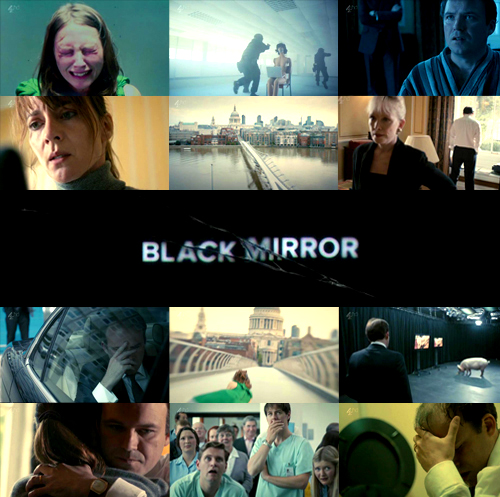


 After the Crash