Understanding NATO, Ending War

By Robert J. Burrowes

On 4 April 2019, the North Atlantic Treaty Organization, better known as NATO, marked the 70th anniversary of its existence with a conference attended by the foreign ministers of member nations in Washington DC. This will be complemented by a meeting of the heads of state of member nations in London next December.

Coinciding with the anniversary event on 4 April, peace activists and concerned scholars in several countries conducted a variety of events to draw attention to, and further document, the many war crimes and other atrocities committed by NATO (sometimes by deploying its associate and crony terrorist armies – ISIS, Al Qaeda, Al Nusra – recruited and trained by the CIA and funded by Saudi Arabia, other Gulf countries and the US directly or through one or other of its many agencies: see ‘NATO – No Need – NATO-EXIT: The Florence Declaration’), the threat that NATO poses to global peace and security as an appendage of the US military, and to consider ways that NATO might be terminated.

These protests and related activities included several outlined in ‘No To NATO: Time To End Aggressive Militarism’ which also explains how NATO ‘provides a veneer of legality’ when ‘the US is unable to get the United Nations Security Council to approve military action’ and ‘Congress will not grant authority for US military action’ and despite the clearcut fact that NATO has no ‘international legal authority to go to war’, the grounds for which are clearly defined in the Charter of the United Nations and are limited to just two: authorization by the UN Security Council and a response in self-defense to a military attack.

The most significant gathering of concerned scholars was undoubtedly the ‘Exit NATO!’ conference in Florence, Italy, which culminated in the Florence Declaration calling for an end to NATO. See ‘The Florence Declaration: An International Front Calling for NATO-Exit’.

If NATO’s record of military destruction is so comprehensive – in the last 20 years virtually destroying Yugoslavia (balkanized into various successor states), Iraq and Libya, while inflicting enormous damage on many others, particularly Afghanistan and Syria – how did it come into existence and why does it exist now?

The Origin and Functions of NATO

Different authors offer a variety of reasons for the establishment of NATO. For example, Yves Engler argues that two of the factors driving the creation of NATO were ‘to blunt the European Left’ and ‘a desire to bolster colonial authority and bring the world under a US geopolitical umbrella’. See ‘On NATO’s 70th anniversary important to remember its anti-democratic roots’ and ‘Defense of European empires was original NATO goal’.

But few would disagree with Professor Jan Oberg’s brief statement on the origin of NATO: ‘Its raison d’etre… had always and unambiguously been the very existence of the Soviet Union… and its socialist/communist ideology.’ See ‘NATO at 70: An unlawful organisation with serious psychological problems’.

In other words, NATO was established as one response to the deep fear the United States government harbored in relation to the Soviet Union which, despite western propaganda to the contrary and at staggering cost to its population and industrial infrastructure, had led the defeat of Nazi Germany in World War II.

As Professor Michel Chossudovsky elaborates this point: The NATO ‘alliance’ of 29 member states (with Israel also a de facto member), most with US military bases, US military (and sometimes nuclear) weapons and significant or substantial deployments of US troops on their territory, was designed to sustain ‘the de facto “military occupation” of Western Europe’ and to confront the Soviet Union as the US administration orchestrated the Cold War to justify its imperial agenda – global domination guaranteed by massive US military expansion – in service of elite interests (including the profit maximization of the military industrial complex, its fossil fuel and banking corporations, and its media and information technology giants).

While NATO has the appearance of a multinational military alliance, the US controls NATO command structures with the Pentagon dominating NATO decision-making. NATO’s Supreme Allied Commander Europe (SACEUR) and Supreme Allied Commander Atlantic (SACLANT) are Americans appointed by Washington with the NATO Secretary General Jens Stoltenberg performing merely bureaucratic functions.

In light of the above, Chossudovsky observes: ‘Under the terms of the military alliance, NATO member states are harnessed into endorsing Washington’s imperial design of World conquest under the doctrine of collective security.’ Even worse, he argues, given the lies and fabrications that permeate US-NATO military doctrine, key decision-makers believe their own propaganda. ‘Immediately after the Cold War, a new nuclear doctrine was formulated, focused on the preemptive use of nuclear weapons, meaning a nuclear first strike as a means of self-defense.’ More recently: ‘Not only do they believe that tactical nuclear weapons are peace-making bombs, they are now putting forth the concept of a “Winnable Third World War”. Taking out China and Russia is on the drawing board of the Pentagon.’ See ‘NATO-Exit: Dismantle NATO, Close Down 800 US Military Bases, Prosecute the War Criminals’ and ‘NATO Spending Pushes Europe from Welfare to Warfare’.

So, given the ongoing military threats – with an expanding range of horrific weapons (including, to nominate just two, ‘more usable’ low yield nuclear weapons and technologies on ‘weather warfare’ offered by the military/nuclear corporate war planners) that threaten previously unimagined outcomes – and interventions by a US-led NATO, with Venezuela and now Iran the latest countries to be directly threatened – see ‘“Dangerous game”: US, Europe and the “betrayal” of Iran’ – as well as a gathering consensus among peace activists and scholars of the importance of stopping NATO (particularly given the many opportunities, beginning with aborting its origin, that have been missed already as explained by Professor Peter Kuznick: see ‘“Obscene” Bipartisan Applause for NATO in Congress’) how do we actually stop NATO?

While several authors, including those with articles cited above, offer ideas on what should be done about ending NATO, Chossudovsky offers the most comprehensive list of ideas in this regard well aware that stopping NATO is intimately connected to the struggle to end war and globalization. Chossudovsky’s ideas range from organizational suggestions such as integrating anti-war protest with the campaign against the gamut of neoliberal economic ‘reforms’ and the development of a broad based grassroots network independent of NGOs funded by Wall Street, objectives such as dismantling the propaganda apparatus which sustains the legitimacy of war and neoliberalism, challenging the corporate media (including by using alternative media outlets on the Internet), providing encouragement (including information about the illegality of their orders) for military personnel to refuse to fight (perhaps like the GI coffeehouse movement during the US war on Vietnam: see ‘The story of the GI coffeehouses’), working to close down weapons assembly plants and many other suggestions. See Towards a World War III Scenario: The Dangers of Nuclear War and ‘NATO-Exit: Dismantle NATO, Close Down 800 US Military Bases, Prosecute the War Criminals’.

Given my own deep interest in this subject of US/NATO wars and in developing and implementing a strategy that ends their war-making, let me elaborate Chossudovsky’s explanation of NATO’s function in the world today by introducing a book by Professor Peter Phillips.

In his book Giants: The Global Power Elite, Phillips observes that the power elite continually worries about rebellion by the ‘unruly exploited masses’ against their structure of concentrated wealth. This is why the US military empire has long played the role of defender of global capitalism. As a result, the United States has more than 800 military bases (with some scholars suggesting 1,000) in 70 countries and territories. In comparison, the United Kingdom, France, and Russia have about 30 foreign bases. In addition, US military forces are now deployed in 70 percent of the world’s nations with US Special Operations Command (SOCOM) having troops in 147 countries, an increase of 80 percent since 2010. These forces conduct counterterrorism strikes regularly, including drone assassinations and kill/capture raids.

‘The US military empire stands on hundreds of years of colonial exploitation and continues to support repressive, exploitative governments that cooperate with global capital’s imperial agenda. Governments that accept external capital investment, whereby a small segment of a country’s elite benefits, do so knowing that capital inevitably requires a return on investment that entails using up resources and people for economic gain. The whole system continues wealth concentration for elites and expanded wretched inequality for the masses….

‘Understanding permanent war as an economic relief valve for surplus capital is a vital part of comprehending capitalism in the world today. War provides investment opportunity for the Giants and TCC elites and a guaranteed return on capital. War also serves a repressive function of keeping the suffering masses of humanity afraid and compliant.’

As Phillips elaborates: This is why defense of global capital is the prime reason that NATO countries now account for 85 percent of the world’s military spending; the United States spends more on the military than the rest of the world combined.

In essence, ‘the Global Power Elite uses NATO and the US military empire for its worldwide security. This is part of an expanding strategy of US military domination around the world, whereby the US/ NATO military empire, advised by the power elite’s Atlantic Council, operates in service to the Transnational Corporate Class for the protection of international capital everywhere in the world’.

In short, ending NATO requires recognition of its fundamental role in preserving the US empire (at the expense of national sovereignty) and maintaining geopolitical control to defend the global elite’s capital interests – reflected in the capitalist agenda to endlessly expand economic growth – and particularly the profits the elite makes by inciting, supplying and justifying the massively profitable wars that the US/NATO conduct on its behalf.

So if you thought that wars were fought for reasons other than profit (like defense, a ‘just cause’ or ‘humanitarian’ motives) you have missed the essential function of US/NATO wars. And while these wars might be promoted by the corporate media as conflicts over geostrategic considerations (like ‘keeping open the Straits of Hormuz’), access to resources (‘war for oil’) or even markets (so that we can have US junk-food chains in every country on Earth), these explanations are all merely more palatable versions of the word ‘profit’ and are designed to obscure the truth.

And this raises another question worth pondering. Given that wars are the highly organized industrial-scale killing of fellow human beings (for profit) as well as the primary means of expanding the number of fellow human beings who are drawn into the global capitalist economy to be exploited (for profit) and the primary method used for destroying Earth’s climate and environment (for profit), you might wander if those who conduct wars are sane. Well, as even posing the question suggests, the global elite – which drives wars, the highly exploitative capitalist economy and destruction of the biosphere – is quite insane. And there is a brief explanation of this insanity and how it is caused in the article ‘The Global Elite is Insane Revisited’.

Stopping NATO

So if war is precipitated and now maintained perpetually by an insane elite that controls and utilizes the US and NATO military forces to secure profits by killing and exploiting fellow human beings while destroying the climate and environment, how can we stop it? Clearly, not without a sophisticated strategy that addresses each dimension of the conflict.

Hence, my own suggestion is that we do three things simultaneously:

  1. Invite participation in a comprehensive strategy to end war, of which NATO is a symptom
  2. Invite participation in one or another program to substantially reduce consumption to systematically reduce the vital driver of ‘wars for resources’ (which will also reduce the gross exploitation of fellow human beings and humanity’s adverse impact on the biosphere), and
  3. Invite participation in programs to increase human emotional functionality so that an increasing proportion of the human population is empowered to actively engage in struggles for peace, justice and sustainability and to perceive the propaganda of elites and their agents, including NATO functionaries and corporate media outlets, without being deceived by it.

There is a comprehensive strategy to end war explained on this website – Nonviolent Campaign Strategy – which includes identification of the two strategic aims and a basic list of 37 strategic goals to end war. See ‘Strategic Aims’.

There is a strategy for people to systematically reduce their consumption and increase their self-reliance mapped out in ‘The Flame Tree Project to Save Life on Earth’. But if you want a simpler 12-point list which still has strategic impact, see ‘The Earth Pledge’ included in ‘Why Activists Fail’. If you want to better understand why people over-consume, you can find out here: ‘Love Denied: The Psychology of Materialism, Violence and War’.

There is a process for improving your own emotional functionality (which will develop your conscience, courage and capacity to think strategically) described in the article ‘Putting Feelings First’. If you would like to assist children to grow up without emotional dysfunctionalities, consider making ‘My Promise to Children’. If you want to read the foundation behind these two suggestions, see Why Violence? and Fearless Psychology and Fearful Psychology: Principles and Practice.

Complementary to these suggestions, you might like to sign the online pledge of The Peoples Charter to Create a Nonviolent World which links people working to end violence in all contexts.

There is one question that remains unaddressed by the suggestions above: How do we mobilize sufficient people (both anti-war activists and others) and organizations (including anti-war groups and others) to participate in the effort to end elite-sponsored war, including its organizational structures such as NATO?

Given the notorious difficulty of mobilizing activists to act strategically in any context (a much more complex version of the basic problem of mobilizing people), my primary suggestion is that individuals within the anti-war movement invite other individuals and activist groups to choose and campaign on one or more of the strategic goals necessary to end war listed in ‘Strategic Aims’. While some activist groups are already working to achieve one or more of these strategic goals, we clearly need to engage more groups to work on the many other goals so that each of these goals is being addressed. War will not be ended otherwise.

One thing that a section of the climate movement does well is to research and report on those banks, superannuation funds and insurance companies that provide financial services, loans, investment capital and insurance cover to fossil fuel corporations and to then invite concerned people to sign standard letters sent to these organizations requesting them to cease their support of fossil fuels. The anti-war movement could usefully emulate this tactic (on a far wider scale than has existed previously) in relation to weapons corporations and to invite individuals and organizations everywhere to boycott banks, superannuation funds and insurance companies with any involvement in the weapons industry.

But this is just one simple tactic (involving no risk and little effort) on a small but important range of ‘targets’ in the anti-war struggle. Unfortunately, there are plenty more targets that need our attention and that will require more commitment than signing a letter given that, for example, essential funding for the weapons industry is supplied by government procurement programs using your taxes.

Similarly, we need individuals and groups working to mobilize people to substantially reduce their consumption, and individuals and groups working to mobilize people to prioritize their emotional well-being (the foundation of their courage to act conscientiously and strategically in resisting war, exploitation and destruction of the biosphere generally). If we do not undertake these complementary but essential programs, our efforts to end war will be endlessly undermined by our own fear and over-consumption.

Because, in the final analysis, it is our fearfully surrendered tax dollars and our dollars spent consuming the resources seized in wars that will ensure that elite-driven wars for profit by the US and NATO will be financially sustained, whatever words we utter and actions we take.

So our strategy must address this fear and over-consumption too if it is to have the sophistication and comprehensiveness necessary to shut down NATO and end war.


Biodata: Robert J. Burrowes has a lifetime commitment to understanding and ending human violence. He has done extensive research since 1966 in an effort to understand why human beings are violent and has been a nonviolent activist since 1981. He is the author of Why Violence? His email address is flametree@riseup.net and his website is here.

Freedom Rider: U.S. Wages War Against the World

By Margaret Kimberly

Source: Black Agenda Report

The U.S. “troika of tyranny,” Trump, Bolton and Pompeo, are making things up as they go along, seeking to bend the planet to their lawless will.

“The activists who chose to protect the Venezuelan embassy from Guaido and the other Venezuelan traitors are showing us the way to move forward.”

This columnist has spent many years predicting a United States war on Iran. There is now a president who may finally make good on that long expressed threat. Donald Trump is deep in the thrall of Saudi Arabia and Israel, the two nations that pose the greatest risk to Iran. He happily does their bidding and is in a position to bring the sick neocon fantasy to reality.

But the U.S. excels at nothing except creating misery for millions of people and raising the risk of an all out hot war.  Cuba recently instituted rationing after Trump returned to the bad old days of strict sanctions enacted against that nation. More than 40,000 Venezuelans have lost their lives as a result of the crushing sanctions imposed on that country. Iran suffered catastrophic flooding but not one country would provide them with needed aid because U.S. sanctions prevented them from doing so.

“More than 40,000 Venezuelans have lost their lives as a result of the crushing sanctions.”

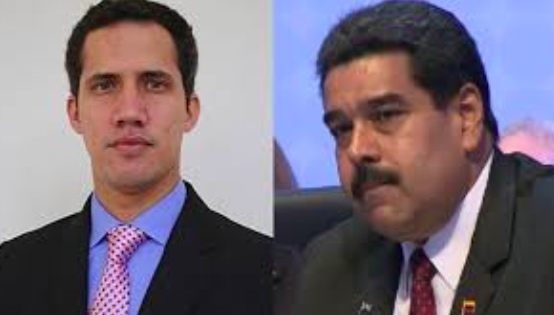
Aside from starving civilians and depriving them of medical care, the U.S. can’t do much else that doesn’t create dangerous consequences. The latest regime change attempt failed miserably and exposed the limits of U.S. power.  The Venezuelan coup attempt was a complete farce . Hand-picked puppet Juan Guaido never had more than 25 soldiers on his side, and those few were tricked into showing up for what amounted to a photo-op.

In the interim, National Security Adviser John Bolton and Secretary of State Pompeo have proven themselves to be the worst in a long line of bad foreign policy decision making. First they accused Iran of some unspecified aggressive act and sent a fleet of ships to make their case for a war of aggression. Then Pompeo scheduled meetings with Russian foreign minister Sergei Lavrov to be followed by talks with Vladimir Putin himself. But he chose to cut short his time in Russia in order to meet with Europeans and enlist their support for action against Iran.

“Hand-picked puppet Juan Guaido never had more than 25 soldiers on his side.”

All of the bluster, meeting changes and dispatching navy vessels to the Persian gulf prove one important point. The U.S. “troika of tyranny,” Trump, Bolton and Pompeo, are making things up as they go along. They picked a trade fight with China that they could not win. They want regime change in Iran and Venezuela but they won’t get the results they want even if they carry out military attacks.

In the meantime they fall back on the old tricks of false flags, in this case blaming Iran for a mysterious and conveniently timed oil tanker explosion in the United Arab Emirates. The Saudi puppets are obviously part of the plan and right on cue claim to have been sabotaged .

The United States has willing vassals such as the NATO member states. It has the biggest military in the world. It can attack Venezuela or Iran but faces serious consequences should it do so. Iran and Venezuela have friends, namely Russia and China. Those two countries have developed a strong alliance in order to protect themselves from the crazed and unpredictable Americans.

“They fall back on the old tricks of false flags.”

The U.S. continues to up the ante with phony requests to attack Venezuela allegedly coming from the dupes who thought the United States would put them in power. It isn’t coincidental that the activists protecting the Venezuelan embassy were expelled at the same time.

The evil war mongers are very stupid but that it isn’t a cause for celebration. Unintended consequences have already lead to two world wars and millions of dead.  Unfortunately no one who ought to educate the public on this subject are doing what they should. The corporate media always support presidents at war. Even supposedly liberal outlets have spent years demonizing Russia, Venezuela and Iran. In so doing they have made the population ignorant and or blood thirsty. Democrats in congress are equally imperialist and will say nothing as the government plans a humanitarian catastrophe. At most they will mutter that Trump must ask for their approval before killing thousands of people. Instead they carry on the discredited Russiagate story but oppose none of the things that actually make the Trump administration so dangerous.

“At most Democrats will mutter that Trump must ask for their approval before killing thousands of people.”

But Russiagate and phony claims of a constitutional crisis were intentionally created for this moment. When the United States most needs détente and a lessening of tensions, the lies meant to make Russia look like an aggressor are repeated and make war more likely.

Only the people can lead the United States away from disaster. The activists who chose to protect the Venezuelan embassy from Guaido and the other Venezuelan traitors are showing us the way to move forward. Leftish Democrats won’t help us. The media will continue to lie in service to the state. The “resistance” aren’t angry about anything except a faux scandal. Those of us who want peace will have to say so and demand that our representatives work for the people and not for the cause of war and suffering. There will be no saviors for this country or for the rest of the world. We can only rely on ourselves.

Corporate Media Target Gabbard for Her Anti-Interventionism—a Word They Can Barely Pronounce

Tulsi Gabbard being asked by CBS‘s Stephen Colbert (3/11/19) why she doesn’t see the US as a “force for good in the world.”

By Owen Marsh

Source: FAIR

Presidential hopeful Tulsi Gabbard has not garnered much press coverage since announcing her bid on February 2; she’s the 13th-most-mentioned Democratic candidate on TV news, according to FAIR’s most recent count (4/14/19).

But when corporate media do talk about the Hawaii congressmember, they tend to reveal more about themselves than about her.

A veteran of the Iraq War, Gabbard is centering her presidential campaign around anti-interventionism (2/3/19): the belief that US interference in foreign countries, especially in the form of regime-change wars, increases the suffering of the citizens in those countries.

When corporate outlets talk about this anti-interventionist position, they primarily use it to negatively characterize the candidates who espouse it. Few in establishment media seem interested in going any deeper or considering the veracity of arguments raised by anti-interventionists.

The Washington Post (1/15/19) listed Gabbard’s anti-interventionism as a factor that hurts her electability in a video titled, “Why Some See Tulsi Gabbard as a Controversial 2020 Candidate.” Part of the video’s explanation: “The congresswoman has raised concern among Democrats in the past when she criticized Obama’s strategy on Iran, ISIS and Syria.”

CBS News (2/4/19) briefly interviewed Honolulu Civil Beats reporter Nick Grube regarding Gabbard’s campaign announcement. The anchors had clearly never encountered the term anti-interventionism before, struggling to even pronounce the word, then laughing and saying it “doesn’t roll off the tongue.” When asked to define the candidate’s position, Grube equated it to President Trump’s foreign policy. But “America First” rallying cries aside, it hardly seems accurate to call Trump an anti-interventionist, given his administration’s regime change efforts in Venezuela, his unilateral reimposition of sanctions on Iran (FAIR.org5/2/19) and his escalation of the drone wars (Daily Beast11/25/18).

When Gabbard appears on talkshows, she is typically on the receiving end of baseless questions coated in assumptions of military altruism. Gabbard appeared on ABC’s The View (2/20/19) and articulated her argument that US intervention does more harm than good to the people purportedly being helped. Rather than respond to any of the points she raised, however, the hosts resorted to the kinds of shallow questions that have been supporting interventionism for decades.

Sunny Hostin asked, “So should we not get involved when we see atrocities abroad?” Fellow panelist Ana Navarro elaborated:

I’m very troubled by the tweets about Venezuela that you’ve put out…. [Maduro] is not allowing humanitarian aid, he is a thug, he is a dictator, he is corrupt. And I am very supportive of what the United States is doing right now…. Why are you so against intervention in Venezuela?

On CBS’s Late Show With Stephen Colbert (3/11/19), the host resorted to old-fashioned American exceptionalism and Cold War–style paranoia to counter the congressmember:

Nature abhors a vacuum. If we are not involved in international conflicts, or trying to quell international conflicts, certainly the Russians and the Chinese will fill that vacuum…. That might destabilize the world, because the United States, however flawed, is a force for good in the world, in my opinion.

Comments like these may seem harmless; why not, after all, fight “atrocities”? In fact, they contain the same language that media have used for decades to justify interventionism and quiet dissenters.

Colbert’s exceptionalism argument, in particular, is reminiscent of the centuries-old vision of the US as a “shining city upon a hill.” It’s also a frame historically employed by media to rationalize the country’s foreign policy. As communications scholar Andrew Rojecki wrote in his 2008 research article (Political Communication2/4/08) on elite commentary of George W. Bush’s military interventions in Afghanistan and Iraq, “Over the course of the two crises, American exceptionalist themes made up a constant background presence in elite commentary and opinion.”

In other words, the assurance that Colbert has that the US has been “a force for good in the world” has paved the way for some of the greatest disasters of the modern world, including the 17-year-old war in Afghanistan (or almost 40 years, if you date from the US deliberately provoking the 1979 Soviet intervention) and the half-million-plus killed in the Iraq War. Other difficult cases for proponents of intervention include Libya, where removing an authoritarian ruler devastated the nation and brought back slave markets, and Syria, where hawks evade responsibility for the hundreds of thousands killed in a US-backed effort to overthrow the government by pretending that the US has failed to intervene.

Currently, in Venezuela, where Navarro is “very supportive of what the United States is doing,” Washington has imposed sanctions that are blamed for killing 40,000 in the last two years (CEPR, 4/25/19). Meanwhile, the US offers as a publicity stunt a convoy with “humanitarian aid” valued at less than 1 percent of the assets it has blocked Venezuela from spending.

Another easy to way to discredit anti-war critics is to accuse them of siding with the enemy (FAIR.org4/1/06). So it’s not much of a surprise that when Gabbard gets mentioned in establishment news, a comment about her meeting with Syrian President Bashar al-Assad is usually soon to follow.

Gabbard traveled to Syria in 2017, on what her office called a “fact-finding mission.” During her trip, she met and spoke with al-Assad, prompting the media to question her loyalties ever since, equating her meeting to tacit support of his regime. (Gabbard calls Assad a “brutal dictator,” but says US efforts to overthrow his government are “illegal and counterproductive.”)

New York Times columnist Bari Weiss appeared on the popular Joe Rogan Experience podcast (1/21/19) and confidently called Gabbard an “Assad toadie.” When Rogan asked her what “toadie” meant, she couldn’t define the word, asking the show’s producer to look it up for her. (It means “sycophant”).

The New York Times (1/11/19) and Associated Press (Washington Post5/2/19) both identified Gabbard’s meeting with Assad as a factor that made her a controversial candidate. In an article about Gabbard’s apparent fall from grace within the Democratic party, Vox (1/17/19) characterized Gabbard’s opposition to the funding of Syrian rebels as “quasi-support for Syrian President Bashar al-Assad, the dictator responsible for the outbreak of the Syrian civil war and the conflict’s worst atrocities.”

Interviewers from MSNBC’s Morning JoeABC’s The ViewCBS’s Late Show and CNN’s Van Jones Show all asked Gabbard to justify her meeting with Assad, or pressured her to renounce him as an enemy. None were interested in asking even the most basic question of substance, “What did you and Assad talk about during your meeting?” The implication is clear: When it comes to those designated by the state as official enemies, communication is suspect.

So perhaps the simplest explanation for corporate media’s treatment of Gabbard is that she opposes the kind of intervention that they have historically been complicit in.

FAIR (e.g, 4/913/19/078/11) has documented mainstream media’s consistent support for US intervention across the globe. FAIR has also been documenting corporate media’s support for intervention in Venezuela, finding recently that zero percent of elite commentators opposed regime change in that country (4/30/19) and noting corporate media’s harsh admonishment of Bernie Sanders after he tepidly questioned US intervention in Venezuela (3/5/19).

Gabbard’s campaign is just one small piece of a larger phenomenon in the mainstream media: Space for dissenting opinions on the US’s neoliberal, interventionist foreign policies must not be allowed.

Saturday Matinee: The Veto

THE VETO: Film exposing CNN, Al Jazeera, Channel 4 and the western media propaganda war against Syria

By Vanessa Beeley

Source: 21st Century Wire

I met journalist and friend Rafiq Lutf and cameraman Abdul-Mun’aim Arnous in January 2018 and I was honoured when Rafiq asked me to work with him on his film project, The Veto.

As Dr Shaaban said to me in August 2016, “Western propaganda is paid for in Syrian blood”. This is true. The horrifying bloodshed and loss of life in Syria could never have happened without the colonial media manufacturing consent for another illegal war against a Sovereign nation.

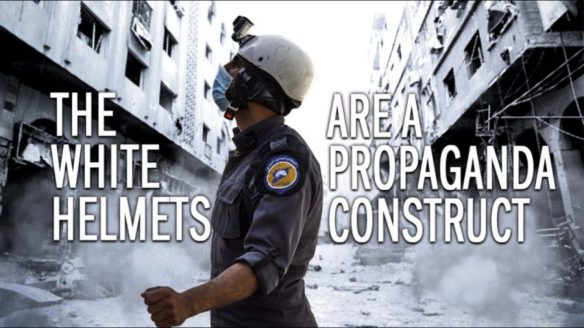
The Veto tracks the evolution of the propaganda campaign waged by Western media against Syria. From Baba Amr in Homs 2011/2012 until the modern day “propaganda construct” – the NATO-member-state funded White Helmets. It honours Russia and China’s vetoes that have consistently defended Syria’s sovereignty and territorial integrity in the UN.

George Orwell said “The most effective way to destroy people is to deny and obliterate their own understanding of their history.” Western media has been tasked with writing the history of the Syrian conflict to serve the aggressors in the US Coalition of terrorism.

As Dr Shaaban also told me:

“The US alliance and its media are focusing on our history, material history, cultural history, identity, our army. Any power that keeps you as an entire state, or any statesman that represents strength or unity will be demonized and destroyed.”

The Veto exposes the criminal intentions of Western media and it archives the progression of the propaganda war waged by the West against Syria. Syrians are writing the history of the Syrian conflict because Syria and her allies have courageously resisted the Imperialist machine.

As Rafiq has said so eloquently “we are the Veto” and we must use it against the Industrial Media Complex in the West. Syria’s history belongs to the Syrians and Syria’s final victory must ensure that Western media is never again given the power to destroy a nation, divide its people and promote international terrorism both military and economic. Watch the film: 

Who knows? Who cares? If the Media Claim 50 Countries Reject Venezuela’s Elected President and Repeat It Enough It Must Be True

Wno’s the president of Venezuela? The elected Nicolas Maduro or the self-proclaimed unelected Juan Guaido?

By Dave Lindorff

Source: This Can’t Be Happening

American media still refer to Juan Guaidó, America’s hand-picked “legitimate leader” or “legitimate president” of Venezuela, as having an “administration.”

The truth is that his “administration” — consisting of advisors and other opposition leaders — are all either arrested and being held by the government, hiding, seeking asylum in various foreign embassies (Spanish, Italian, Brazilian and Argentinian) in the capital of Caracas, or have fled to other countries like Brazil and Colombia.

Guaidó, apparently a government of one, has so far avoided arrest probably because the elected Venezuelan President Maduro doesn’t want to give the US an excuse to try and rescue him, or to launch military actions of some kind against Venezuela as the White House keeps threatening to do.

Clearly, in calling for US military intervention, Guaidó has both demonstrated almost his total lack of backing among the masses of Venezuelan people, as well as his desperation, given Latin American’s visceral resentment of US interventions in their country, all of which have been designed to put autocrats or even military juntas in power, and many of which have openly overthrown popularly elected governments, as in Guatemala, Chile, Brazil, Nicaragua, Haiti, Dominican Republic, and elsewhere.

None of this gets reported in the US. Only recently has the New York Times, always a reliable backer of US imperial policy in Latin America, at least hinted at the possibility that the reason Maduro remains president and that Guaidó’s efforts to oust him are failing  so abysmally could be that the Venezuelan people want him to stay president, and do not want a US-backed coup or a US military intervention to replace him.

At this point the huffing and puffing coming from Secretary of State Mike Pompeo and especially from the White House National Security Advisor and chief militarist blowhard John Bolton, are looking pretty pathetic, with Bolton trying to sow dissension and distrust by hinting that Maduro “better not trust” his own generals’ loyalty, and by offering rewards to those generals willing to abandon Maduro.

It is an indication of the United States’s declining power and influence in Latin America that few outside the US with its insular mass media believe that the US would or even could successfully invade Venezuela and impose a government on that country of 32 million (a number that keeps declining as the upper middle class and rich flee).

If anything, US sabotage and threats and US backing for a government of the wealthy are probably galvanizing support for Maduro. While people in the US, if they are paying any attention at all to events in Venezuela, may believe that Maduro is a corrupt thug, people in Venezuela itself, and in most of Latin America know full well that the main problems in that oil-rich country have to do with the collapse in oil prices since the heady days of Hugo Chavez when it was going for $100 a barrel, to American efforts to block Venezuela from exporting its oil now, and to freeze or even seize Venezuelan assets and oil receipts from the oil it does manage to export, and to other forms of economic warfare engaged in by the United States. As in Cuba, this kind of strategy by the US only works to build support for the country’s existing government.

At some point Guaidó is going to go. He will either be written off by the US media — his main backer — or will be arrested. Probably the latter will follow the former since once he’s recognized as an impotent charlatan, his arrest will not make him a martyr for the opposition. Already he has lost what public support he had as Venezuela’s wealthy abandon the country for Florida. As well, the “50 countries” that we in the US keep hearing about which supposedly back Guaidó as Venezuela’s “legitimate leader” are realizing that they were hoodwinked by the US. The are now mostly calling for a calmer response to the crisis in Venezuela, and are refusing to buy into US military threats against the Maduro government. Meanwhile nobody in the US media mentions that over 140 countries in the world support Maduro as the leader of Venezuela. 

In truth it’s impossible to find that list of “more than 50 countries” backing a self-proclaimed and unelected Guaidó as Venezuela’s president. The closest I could come by running google searches was a map produced by Bloomberg News listing 13 countries besides the US as supporting Guaidó. These included Canada, the UK, Guatemala, Honduras, Costa Rica, Panama, Ecuador, Colombia, Peru, Chile, Argentina, Paraguay and Brazil. That is 13 plus the United States. Listed as supporting Maduro as elected President are Russia, China, Turkey, Bolivia, and Cuba, though I believe Bloomberg neglected to mention Nicaragua, a strong Maduro backer, which would make it six. All of Africa and much of Asia was left as “no opinion,” though in fact that means they are continuing to recognize the current Maduro government. 

For a time, most of the countries of Europe were lining up behind Guaidó, particularly after Germany announced that it was recognizing him as the new interim leader of Venezuela in late January, and after it ousted the country’s ambassador, but then by late March Germany was having second thoughts, and rejected the person sent there by Guaidó to assume the position of Venezuelan ambassador. At this point, except for the UK, the countries of Europe, along with Mexico and Uruguay, are simply calling for a dialogue and a negotiated solution to the Venezuela political crisis, and in addition to opposing any talk of military action or a coup, are seeking nothing more than a new election (which Maduro would probably win, given the alternative of the return of a government of the rich). The Europeans are no longer really backing Guaidó.

The reporters who continue to refer to “more than 50 countries” calling for Maduro’s ouster all must be using the same wrong or outdated news clip or some exaggerated and dated State Department press release.  (I asked the State Department for an updated list today but so far none has been forthcoming, though it would appear such a list shouldn’t take long to compile given how short it must be.)

Social Media and the Society of the Spectacle

By Kenn Orphan

Source: CounterPunch

“The reigning economic system is a vicious circle of isolation. Its technologies are based on isolation, and they contribute to that same isolation. From automobiles to television, the goods that the spectacular system chooses to produce also serve it as weapons for constantly reinforcing the conditions that engender “lonely crowds.”

― Guy Debord, The Society of the Spectacle

“The conscious and intelligent manipulation of the organized habits and opinions of the masses is an important element in democratic society. Those who manipulate this unseen mechanism of society constitute an invisible government which is the true ruling power of our country. We are governed, our minds are molded, our tastes formed, our ideas suggested, largely by men we have never heard of. This is a logical result of the way in which our democratic society is organized. Vast numbers of human beings must cooperate in this manner if they are to live together as a smoothly functioning society.”

― Edward Bernays, Propaganda

“We think we’re searching Google; Google is actually searching us. We think that these companies have privacy policies; those policies are actually surveillance policies. We’re told that if we have nothing to hide, then we have nothing to fear. The fact is, what they don’t tell us and what we are forgetting, that if you have nothing to hide, then you are nothing, because everything about us that makes us our unique identities, that gives us our individual spirit, our personality, our sense of freedom of will, freedom of action, our sense of our right to our own futures, that’s what comes from within. Those are our inner resources. That’s our private realm. And it’s intended to be private for a reason, because that is how it grows and flourishes and turns us into people who assert moral autonomy—an essential element of a flourishing, democratic society.”

― Shoshana Zuboff, author of Master or Slave: The Fight for the Soul of Our Information Civilization 

“Under observation, we act less free, which means we effectively are less free.”

― Edward Snowden

Recently I was rereading some of Guy Debord’s The Society of the Spectacle. I was reminded of how essential this work by the late French Marxist philosopher is to today’s age of social media. Debord’s understanding of how the forces of capital shape our collective experiences and thoughts speaks to our time where algorithms dominate the trajectory of the psyche against a craven backdrop of what political philosopher Sheldon Wolin has described as “inverted totalitarianism.”

Every day we are bombarded with the imagery of empire and capital. It is relentless. Our minds have become both a marketplace and a commodity to be traded. And it is a lucrative industry with Facebook and Google as prime examples. Their data collection and surveillance typify a conjoining of the state and capitalist economy; and they have carved out insidious new spaces in the human brain to coerce self-imposed censorship and conformity to the prevailing consumerist global order.

This social conditioning is a process which requires mass compliance. The infamous propagandist for industry and vaunted “father of public relations” Edward Bernays understood that. It takes time to manipulate the multilayered strata of the human psyche, especially in regard to large populations of people. But history is replete with tragic examples of its successful implementation by powerful interests. Today those interests lie squarely with capital and empire; but the effects are the same, distraction, censorship, alienation, coerced, compliance with the norms of the status quo and the numbing of the critical mind.

Debord said, “Such a perfect democracy constructs its own inconceivable foe, terrorism. Its wish is to be judged by its enemies rather than by its results. The story of terrorism is written by the state and it is therefore highly instructive. The spectating populations must certainly never know everything about terrorism, but they must always know enough to convince them that, compared with terrorism, everything else seems rather acceptable, or in any case more rational and democratic.” This profound observation is even more important today. The state, via mass media, informs us of the villains and phantoms they believe we should fear. Other, far more destructive, deadly and oppressive threats such as the continued proliferation of nuclear arms, catastrophic climate change, collapse of ecosystems, dangers to public health from industrial pollutants, vastly unequal, racist and brutal economic and legal systems, militarism or plutocratic tyranny can then be relegated as non-issues, or at least lesser ones.

Most people on the planet will not suffer or die from a terrorist attack, but they are very likely to be severely affected by the other issues mentioned above. Imagery on portable screens that virtually everyone in the West and around the world has access to communicates messages that may speak to some of these dire or existential problems, but they do so in an abstract manner that divorces the observer from the subject.

As Debord observed, this kind of culture of spectacle informs our personal relationships as well. Whether one is “present” on social media or not has become a sort of litmus test of ones presence in life itself. “Likes” or emojis have replaced and truncated language to such an extent that now older forms of communication are often looked at with novelty, suspicion, or even disgust. What’s more is that emojis in social media, particularly Facebook, have been employed all too often as tools of ridicule or even harassment of weak or vulnerable people. But what is perhaps the most striking about the current social media age is its repetitive narrative of self-aggrandizement. One so repetitive and hypnotic that it almost appears invisible. The “selfie” and “status update” are examples of the unending drive of social media to create a false sense of self to present to the world. Of course this self must conform and be well adjusted to consumerist society in one form or another lest it be tagged for “mental health issues,” subversive thought or behavior, or simply be rendered unnoticed or unimportant by society in general.

Indeed, I am certain Debord would be horrified at the age of social media. At no other time in human history has there been a greater confluence of authoritarian dominance or social control implemented in such an intimate and ubiquitous manner. Unlike Debord’s time, social media provides a new medium to not only socially condition the masses but for the corporate state to gather what was once private information about those masses via their personally owned devices and apps.

That it masquerades as a form of democracy is equally disturbing, especially since at its core it represents the policing of thought and dampening of dissent. He wrote as if penning a prophecy: “The spectator’s consciousness, imprisoned in a flattened universe, bound by the screen of the spectacle behind which his life has been deported, knows only the fictional speakers who unilaterally surround him with their commodities and the politics of their commodities. The spectacle, in its entirety, is his “mirror image.””

This spectacle reigns supreme in today’s social media culture. It is essential to its formulation and operating guidelines. Under such a paradigm history must be sterilized of analysis and ultimately atomized into unrelated instances to make an eternal present, divorced from any transformative potential. Therefore corporations and industries which have long records of polluting the environment or lying to the public about the safety of their products can continue to expand and even be celebrated by the corporate owned media. Religious institutions with long histories of abuse, patriarchy and repression can maintain their status as trusted institutions. The military can repeat the lie over and over that it is noble despite a history drenched in the blood of well documented atrocities and ongoing crimes. The United States and many other nations can keep calling themselves democracies despite quite obvious facts that strongly refute that designation. The mere notion of revolution then is made to be farcical or even dangerous. After all, how could revolution ever be seen as necessary within a democracy?

Social media does not necessarily signal the death of democratic freedom, but in its current form and under the aegis of capital it is certainly a nail in its coffin. This is because under such circumstances it is incapable of being anything other than a means for capital accumulation for the corporate state and a platform for its narrative, and it will do this through ever more invasive, censorial and repressive means. As Edward Snowden pointed out, people are less free when they feel that they are being observed. This is especially so when the observer is the state. Several studies have indicated that there is a sharp decline in certain online searches among the general public following any indication that government agencies are logging those searches, even if those citizens have not committed any crime. And the chilling effect is not unfounded. One incident involved an innocent couple who were visited by counter-terrorism police after searching Google for pressure cookers and backpacks. Since the internet has become the world’s public library, the implications for democracy are as dire as they are clear.

Unplugging from any of this isn’t easy, nor is it necessarily virtuous, but there are ways to divest from its social control personally and collectively. There are also ways to use it which defy its dominant algorithms. Détournement, which merely means rerouting or hijacking in French, is one of those ways. This involves inverting the imagery or messages of capital and empire to illustrate and even amplify their mendacity. It has a long history of effective use in bending the dominant narrative to one which reflects reality.

All of this is not to say that technology or social media are inherently bad, but to recognize that much of it has become a vehicle for a rather pernicious authoritarianism. And its danger lies in the fallacy of its benign appearance. Whether it be Google maps or one of countless other “helpful” apps one uses on a daily basis, surveillance capital becomes a means of controlling behavior, transactions, choices, as well as determining which members of society present a threat to the order. In other words, conformity is strongly reinforced while any form of dissent is rendered dangerously subversive. But although the algorithmic maps to our collective psyche are being endlessly drawn by programmers and their corporate and state masters, we still have the agency to navigate these landscapes with our eyes open. And indeed, the best tool we possess will always be that critically informed dissent the powerful so fear the most.

Coup Attempt in Venezuela: What You’re Not Being Told

By Derrick Broze

Source: The Conscious Resistance

As self-proclaimed “Interim President” Juan Guaidó attempted to stage a military coup in Venezuela, the country’s U.N. ambassador declared President Nicolas Maduro victorious and called the United States a “rogue nation.”

The turbulent situation that has been unfolding in Venezuela for the last few years reached new heights on Tuesday as opposition leader and self-declared “Interim President” Juan Guaidó attempted to wrangle power away from Venezuelan President Nicolas Maduro, in what many are calling an attempted coup. Early Tuesday morning, Guaidó gave a press conference declaring that he has the support of the Venezuelan people and military, and demanded that Maduro step down. Guaidó also called on Venezuelans to take to the streets and call for an end to Maduro’s reign as president.

During the day’s events, cameras caught armored vehicles, reportedly belonging to the Bolivian military, running into crowds of protesters. Human Rights Watch (HRW) tweeted that 25 peopled were detained and dozens were wounded. HRW also noted that Venezuelan authorities shut down two international television channels and censored one radio station. “The regime should know that it will be held accountable for these abuses,” tweeted José Miguel Vivanco, Executive Director of HRW’s America Division.

Meanwhile, Venezuela’s U.N. ambassador Samuel Moncada held a press conference stating that President Maduro has “defeated” opposition leader Juan Guaidó and his supporters. Moncada stated “the country is right now in a situation of perfect normality.” Moncada criticized U.N. Secretary-General Antonio Guterres for not supporting Maduro’s government against Guaidó.

Moncada also attacked the United States for what he said was another example of their interventionist policies, singling out President Trump and Vice President Mike Pence for their support of Guaidó. “This is one of the most strange and weird situations we are in now, which the superpower of the world is the main rogue state going around, without care, destroying countries, invading countries, and threatening with the use of force,” Moncada stated.

The Ambassador to the UN also noted that the United States’ use of sanctions amounts to an act of war and only hurts the Venezuelan people. “Sanctions kill, as simple as that. Sanctions are criminal sanctions, are weapons of mass destruction. You don’t see the smoke, but you see the effect, you see the deleterious effect of killing and suffering,” Moncada said. “The sanctions use banks sanction, sanctions use ships, sanctions use insurance companies, and financial blockades. They cannot just say that they are concerned about liberty or freedom or the children in Venezuela, and then exercise a ghastly, nasty policy of calculated cruelty. They are acting like torturers, it is a collective punishment.”

Indeed, the Washington D.C.-based Center for Economic Policy Research published a reportlast week which determined that U.S. sanctions against Venezuela were likely responsible for 40,000 deaths in 2017-2018.

The harsh reality is that Maduro is by no means a perfect leader and his support of censoring media, use of the military to suppress protests (whether engineered or authentic), his suppression of the opposition, and other despicable acts do need to be called out. However, Ambassador Moncada is also correct that the United States does act as an imperialist “rogue” nation, using force on any nation that does not follow the Western Imperialist agenda. Unfortunately, it seems that the Venezuelan people are caught between a leader who is unpopular in some circles and an even more unpopular self-proclaimed “Interim President” with multiple connections to the Western Empire.

Of course, if our readers are unaware of these connections, it is because the corporate media (CNNWaPoThe Hill, and others) have been running non-stop coverage of why Guaidó should be accepted as the leader of Venezuela while ignoring any bit of evidence that the “uprising” might be less than genuine.

Despite the round the clock support of Guaidó, on April 13 the Grayzone exclusively reportedthat a who’s who of Trump advisors, right-wing Latin American officials, and Venezuelan opposition figures met to discuss “Assessing the Use of Military Force in Venezuela.” The meeting was hosted on April 10 at the Center for Strategic and International Studies (CSIS), a Washington-based think tank. This meeting included current and former State Department, National Intelligence Council, and National Security Council officials, along with Admiral Kurt Tidd, who was until recently the commander of the US Naval Forces Southern Command, overseeing operations in Central and South America.

The truth is that the Western Empire has been attempting to use Guaidó to install a puppet government in Venezuela. There is also evidence that the U.S. government and its intelligence agencies have attempted to take advantage of electricity blackouts in order to dethrone Maduro. In addition, there are a number of corporations and special interests who stand to benefit from the overthrow of Maduro and the crowning of Guaidó.

Although the American media has failed to report any of the above conflicts, there are still some Americans who are standing against the Venezuelan coup. A group calling itself the Embassy Protection Collective was invited by Venezuela’s government to protect the Venezuelan Embassy in Washington D.C. from illegal seizure by the U.S. government or opposition supporters. The group—which includes members of CODEPINK, Popular Resistance, the Answer Coalition, MintPress News and more—has been working to raise awareness on the attempts by the Western oligarchy to install another puppet government in Venezuela.

The reality of the situation in Venezuela is much more complicated than the likes of CNNwould have the American people believe. Only by dissecting the lies from the American media, the Maduro government, and the Guaidó contingent can we hope to get to the truth and support the people who really matter: The Venezuelan People.

Chelsea Manning, Julian Assange, WikiLeaks, and The Deepwater Horizon

By Greg Palast

Source: GregPalast.com

Five years ago this month, on the 20th of April, 2010, the BP Deepwater Horizon drilling rig blew itself to kingdom come.

Soon thereafter, a message came in to our office’s chief of investigations, Ms Badpenny, from a person I dare not name, who was floating somewhere in the Caspian Sea along the coast of Baku, Central Asia.

The source was in mortal fear he’d be identified ”“ and with good reason. Once we agreed on a safe method of communication, he revealed this: 17 months before BP’s Deepwater Horizon blew out and exploded in the Gulf of Mexico, another BP rig suffered an identical blow-out in the Caspian Sea.

Crucially, both the Gulf and Caspian Sea blow-outs had the same identical cause: the failure of the cement “plug”.

To prevent blow-outs, drilled wells must be capped with cement. BP insisted on lacing its cement with nitrogen gas ”“ the same stuff used in laughing gas ”“ because it speeds up drying.

Time is money, and mixing some nitrogen gas into the cement saves a lot of money.

However, because BP’s penny-pinching method is so damn dangerous, they are nearly alone in using it in deep, high-pressure offshore wells.

The reason: nitrogen gas can create gaps in the cement, allow methane gas to go up the borehole, fill the drilling platform with explosive gas ”“ and boom, you’re dead.

So, when its Caspian Sea rig blew out in 2008, rather than change its ways, BP simply covered it up.

Our investigators discovered that the company hid the information from its own shareholders, from British regulators and from the US Securities Exchange Commission. The Vice-President of BP USA, David Rainey, withheld the information from the US Senate in a testimony he gave six months before the Gulf deaths. (Rainey was later charged with obstruction of justice on a spill-related matter.)

Britain’s Channel 4 agreed to send me to the benighted nation of Azerbaijan, whose waters the earlier BP blow-out occurred in, to locate witnesses who would be willing to talk to me without getting “disappeared”. (They didn’t talk, but they still disappeared.)

And I was arrested. Some rat had tipped off the Security Ministry (the official name of the Department of Torture here in this Islamic Republic of BP). I knew I’d get out quick, because throwing a reporter of Her Majesty’s Empire into a dungeon would embarrass both BP and the Azeri oil-o-crats.

The gendarmes demanded our film, but I wasn’t overly concerned: Before I left London, Badpenny handed me one of those Austin Powers camera-in-pens, on which I’d loaded all I needed. But I did fear for my witnesses left behind in Azerbaijan ”“ and for my source in a tiger cage in the USA: Pvt Chelsea Manning.

Manning could have saved their lives

Only after I dove into deep water in Baku did I discover, trolling through the so-called “WikiLeaks” documents, secret State Department cables released by Manning. The information was stunning: the US State Department knew about the BP blow-out in the Caspian and joined in the cover-up.

Apparently BP refused to tell its own partners, Chevron and Exxon, why the lucrative Caspian oil flow had stopped. Chevron bitched to the office of the US Secretary of State, Condoleezza Rice. (George Bush’s cabinet member should not be confused with the 129,000-tonne oil tanker “Condoleezza Rice”, which Chevron named after their former board member.)

The US Ambassador in Baku got Chevron the answer: a blow-out of the nitrogen-laced cement cap on a giant Caspian Sea platform. The information was marked “SECRET”. Apparently loose lips about sinking ships would help neither Chevron nor the Azeri President Ilham Aliyev, the beneficiary of millions of dollars in payments of oil company baksheesh.

So what about Chelsea Manning?

Manning has been charged with “aiding the enemy” ”“ a crime punishable by death.

But Manning’s sole and only purpose was to get out the truth. It wasn’t Manning who wrote the cover-up memos, she merely wanted to get them to the victims: us.

And since when did the public become “the enemy”?

Had Manning’s memos come out just a few months earlier, the truth about BP’s deadly drilling methods would have been revealed, and there’s little doubt BP would have had to change its ways. Those eleven men could well have been alive today.

Did Manning know about this particular hush-hush cable about BP’s blow-out when she decided she had to become Paul Revere and warn the planet?

That’s unlikely, in the thousands of cables she had. But she’d seen enough evidence of murder and mendacity in other cables, so, as Manning, under oath, told a court, she tried to give it all to the New York Times to have knowledgeable reporters review the cables confidentially for life-saving information.

The New York Times immediately seized on this extraordinary opportunity”¦ to ignore Manning. The Times only ran it when the Guardian was going to scoop ”“ and embarrass ”“ the New York hacks.

Though there are limits. While reporter David Leigh put the story of BP’s prior blow-out on page one of the Guardian, neither the New York Times or any other major US news outlet ran the story of the blow-out and oil industry cover-up. No surprise there, though ”“ the most “prestigious” US news programme, PBS Newshour, was sponsored by”¦ Chevron Corporation.

Hanging their source while taking his applause

As a working journalist, and one whose head is likely to be in the foggy gun-sights of some jet jockey or a dictator’s goon squad, I have more than a little distaste for toffs like New York Times‘ former executive editor, columnist Bill Keller, who used Manning’s documents to cash in on a book deal and land star turns on television while simultaneously smearing his source Manning as, “troubled”, “emotionally fractured”, “vague”, “inchoate” and ”“ cover the children’s ears ”“ “gay”.

Furthermore, while preening about their revelations from the Manning documents, the Times had no problem with imprisoning their source. I do acknowledge that the Times and Keller did editorialise that a sentence of life imprisonment without parole would be “overkill”. How white of them.

When it was mentioned that Manning is no different from Daniel Ellsberg, the CIA operative who released the Pentagon Papers, Keller reassured that the Times also told Ellsberg he was “on his own” and did not object to their source being charged as a spy.

And the Times‘ much-lauded exposure of the My Lai massacre? My late good friend, the great investigative reporter Ron Ridenhour, who gave the story to Seymour Hersh, told me that he and Hersh had to effectively blackmail the Times into printing it.

Manning: aid to the enemy?

Times man Keller writes that Manning, by going to “anti-American” WikiLeaks, threatened the release of, “information that might get troops in the field or innocent informants killed”.

Really?

This is the same Bill Keller who admits that he knew his paper’s reports in 2003 that Saddam Hussein had weapons of mass destruction were completely false, but that he ”“ as editor ”“ covered up his paper’s knowledge their WDM stories were simply bogus. Those stories validated the Bush propaganda and helped tip the political balance to invade Iraq. Four-thousand US soldiers died. I guess the idea is that releasing information that kills troops is criminal, but that dis-information that kills troops is quite acceptable.

Maybe I’m just cranky because I wouldn’t have seen my own sources vanish and my film grabbed if the Times had only run the Manning facts about BP and Caspian when they had the chance.

Look, I’m only picking on the New York Times and PBS Newshour because they are the best in America, God help us.

What other lives could have been saved by the Manning revelations? Lots. Watch this space: I promise more aid to the enemies of the state ”“ which is YOU.


* * * * * * * *

Greg Palast investigated the BP Deepwater Horizon deaths for Channel 4 Television UK . Those dispatches are contained in his highly acclaimed book Vultures’ Picnic, named Book of the Year 2012 on BBC Newsnight Review.