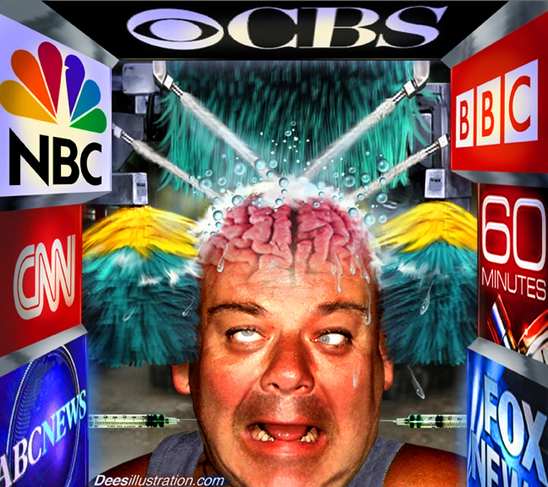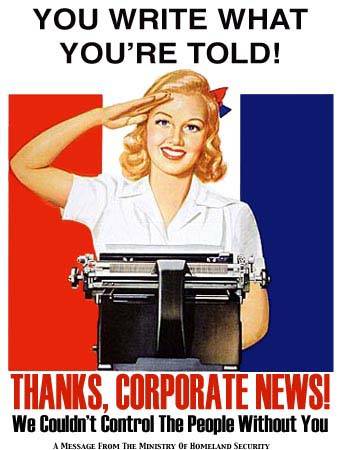
Fake Intellectuals Working For Think Tanks Funded By the Arms Industry Are Driving Support For War After War After War

By Jeremy Kuzmarov

Source: Covert Action

A few days after the October 7 attacks in northern Israel, The Atlantic Council ran an inflammatory article on its website by Jonathan Panikoff, a former deputy national intelligence officer, entitled “It doesn’t matter whether Iran planned the Hamas attack—Tehran is still to blame.”[1]

The article referenced a Wall Street Journal article that claimed unfoundedly that Iran was responsible for planning the attacks, and expressed belief that even if Iran didn’t directly plan it, Iran was still responsible because it had supported Hamas in the past.

The article went on to support an aggressive military response by the U.S. and Israel that could potentially entail bombing Iran. The latter was a long-held dream of neoconservatives who have wanted to overthrow the regime of the Ayatollahs since it took over from the Shah, a U.S. and Israeli client, in a 1979 revolution.

Glenn Diesen, The Think Tank Racket: Managing the Information War With Russia (Clarity Press, 2023) looks at the influence of think tanks like The Atlantic Council in driving gargantuan U.S. military budgets and endless wars that have no end in sight.

The Atlantic Council has been particularly hawkish with regards to Russia, helping to fuel a proxy war between the U.S. and Russia in Ukraine that has decimated a generation of Ukrainian and Russian youth and left us on the threshold of World War III.

Diesen is an associate professor at the University of Southeast Norway and an associate editor of the journal Russia in Global Affairs.

His book emphasizes the undue influence that think tank pseudo-intellectuals play because of their ubiquitous presence in the mainstream media as well as academia and because of their authorship of policy reports that often guide government policy.

Rather than being even-handed or in any way objective in their analysis, the think tank fellows follow a preordained narrative.

According to Diesen, their job is to manufacture consent for the goals of their paymasters—weapons manufacturers and oil companies who profit off of war along with foreign governments courting more U.S. military aid.

Diesen writes that “think-tanks have become a symptom of hyper-capitalism in which all aspects of society have become an appendage to the market. Even political influence is regulated by the free-market, in which think tanks are an important component.”

Diesen notes that a brilliant achievement of propaganda has been to convince the population that propaganda is only an instrument of authoritarian states—that the U.S. is supposedly combating—and not liberal democracies.

The think tanks help condition the public to fear foreign threats and support wars of aggression under the veneer of providing independent expert analysis.

Paul Craig Roberts, the Assistant Secretary of the Treasury for Economic Policy under Ronald Reagan, has called The Atlantic Council the “marketing arm of the military-security complex,” while Diesen calls it “NATO’s Propaganda Wing.”

The Atlantic Council’s financial report from 2019/2020 reveals that it received over $1 million from the United Arab Emirates (UAE), according to Diesen. It also received major contributions from the British Foreign and Commonwealth Office, Facebook, Goldman Sachs, The Rockefeller Foundation, the National Endowment for Democracy (NED), U.S. State Department, a Saudi oil billionaire (Bahaa Hariri), Ukrainian oligarch Viktor Pinchuk, Crescent Petroleum, and Burisma, an energy company owned by Ukrainian oligarchs which appointed Hunter Biden to its board along with former CIA counter-terrorism director Cofer Black.

The Atlantic Council’s close ties to the CIA were further evident when its former executive vice-president, Damon Wilson, was appointed CEO of the NED, a CIA offshoot that promotes propaganda and supports dissidents in countries whose governments have been targeted by the U.S. for regime change.

Former CIA Director James R. Woolsey is listed as a lifetime director of the Atlantic Council, while former CIA Directors Leon Panetta, Robert Gates and David Petraeus are listed on its Board, along with such war criminals as Henry Kissinger, and Condeleezza Rice.

Over the past decade, the Atlantic Council has published countless reports on Russia’s kleptocracy and disinformation being spread allegedly by Vladimir Putin, and has hosted anti-Russian dissidents and Belarusian opposition figures such as Svetlana Tikhanovskaya, who called for more aggressive intervention by the U.S. in Belarusian politics

One of The Atlantic Council’s fellows, Michael Weiss, spreads his anti-Russia invective as an editor at the popular online media outlet, The Daily Beast. He helps run a neo-McCarthyite website, PropOrNot that promotes the worst kind of fear mongering imaginable, attacking independent media outlets, including the Ron Paul Institute, for allegedly advancing Russian propaganda.

In 2015, the Atlantic Council helped prepare a proposal for arming the Ukrainian military with offensive weaponry like Javelin anti-tank missiles—the same year that it presented its Distinguished Leadership Award to Marillyn Adams Hewson, then the CEO of Lockheed Martin, which produces Javelin missiles and many other lethal weapons.

Since the commencement of Russia’s special military operation in Ukraine, The Atlantic Council has doubled down on its long-standing Russophobia, calling for bombing Russia and starting World War III.

Last February, Matthew Kroenig, the Deputy Director of the Atlantic Council’s Scowcroft Center for Strategy and Security, argued for consideration of the U.S. preemptive use of ’tactical’ nuclear weapons.[2] This would not only kill thousands of people directly but likely cause what scientists characterize as a “nuclear winter” by injecting so much smoke and debris into the air that it will block sunlight and cause a precipitous drop in global temperatures, affecting food production across the globe.

Triggering New Cold and Hot Wars

The Atlantic Council’s support for war with Russia is characteristic of think tanks which played a crucial role in pushing the decision to expand NATO after the Cold War.

George F. Kennan and other foreign policy experts had warned against this because NATO was perceived as a hostile military alliance by Russia and it would undermine new European security initiatives involving Russia. Vietnam War architect Robert S. McNamara at the time also called for a new “peace dividend” by which the U.S. would reduce its military budget and address social needs with taxpayer dollars.

The overriding imperative of the weapons industry, however, was to revitalize cold war thinking to ensure continuously high military budgets and the expansion of NATO and the think-tanks were enlisted to fulfill that end.

Diesen points out that the Brookings Institute, one of the oldest American think tanks, played an instrumental role in the Russia Gate hoax, which greatly contributed to the spread of Russophobia underlying the U.S. proxy war against Russia in Ukraine.

A primary researcher and contributor to the Steele dossier, the seminal document in Russia Gate which spread false information about Donald Trump being blackmailed because of an alleged encounter with Russian prostitutes, was an employee of the Brookings Institute named Igor Danchenko, who was indicted by Special Counsel John Durham for lying to the FBI.

Working under Fiona Hill, a senior fellow at the Brookings Institute and renowned anti-Russian hawk, Danchenko claimed to have accrued incriminating information against Trump from a meeting with Russian-American Chamber of Commerce President Sergey Millian, who said that this meeting never actually took place.[3]

The Atlantic Council was another false purveyor of Russia Gate whose revenues increased tenfold from 2006-2016 when it began demonizing Vladimir Putin and smearing politicians like Tulsi Gabbard who advocated for cooperative diplomacy between the U.S. and Russia.

Leaving out the fact that Putin revitalized Russia’s economy after the failed privatization and shock therapy initiatives of the 1990s, The Atlantic Council made people believe that Putin invaded Ukraine on a whim and would destabilize all of Europe if he was not stopped.

This kind of analysis obscures the true origins of the conflict in Ukraine and the Western role in supporting NATO expansion and a 2014 coup against Ukraine’s legally elected government led by Viktor Yanukovych, which led to the outbreak of civil war.

The Atlantic Council continues today along with other think-tanks to whitewash Ukrainian war crimes, corruption and close ties with the far-right and neo-Nazis.

Michael McFaul of the Hoover Institute even celebrates Ukrainian President Volodymyr Zelensky’s crackdown on opposition politicians and media, while hypocritically framing the struggle against Russia as one of authoritarianism versus democracy.

McFaul and others have made clear that a primary U.S. foreign policy goal is to try and delink Ukraine and the rest of Europe from Russia while expanding U.S. natural gas sales in Europe.

In 2019, the RAND Corporation, the think tank of the intelligence agencies, issued a report calling for threatening NATO expansion and the arming of Ukraine in order to draw Russia into a conflict that would facilitate its overextension militarily and economically and cause the Russian government to lose domestic and international support.

The same report advocated for intensifying the ideological and information war against Russia to weaken the legitimacy and stability of its government, and voiced support for the anti-corruption crusade of opposition leader Alexei Navalny, whom Diesen identifies as a British intelligence asset supportive of policies designed to weaken the Russian Federation.

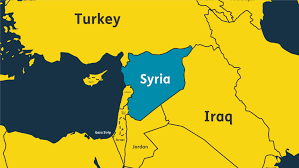
RAND earlier had advocated for provoking civil war within Syria through covert action and informational warfare and by capitalizing on the sustained Shia-Sunni conflict in order to undermine the nationalist Assad regime and draw Russia into the conflict there.

RAND also advocated for the destabilization of the Caucuses in order to cause a fissure between Russia and its traditional ally, Armenia, hence weakening Russia.

This latter goal was achieved when Armenia’s Prime Minister Nikol Pashinyan expressed no-confidence in Russia’s ability to protect it after Azerbaijan—heavily armed by the U.S. and Israel—invaded the Armenian enclave of Nagorno-Karabakh.

RAND had also issued policy recommendations for reducing Russian influence in Moldova and undercutting Russian trade with Central Asia and promoted regime change in Belarus to destabilize a Russian ally and alter the country’s orientation westward.

Following this prescription, the NED and other U.S. agencies provoked an uprising in 2020 against Belarus’ socialist leader Alexander Lukashenko, who was demonized in western media though he helped curb inequality and poverty considerably while resisting the rapid privatization initiatives carried out by other post-Soviet leaders.

CNAS and Team Biden

One of the most influential think tanks today is the Center For a New American Security (CNAS), which received huge sums from oil companies like Chevron and BP, financial giants like Bank of America, and J.P. Morgan Chase, and Amazon and Google from Big Tech.

CNAS’s former CEO, Victoria Nuland, was a former adviser to Dick Cheney and a key architect behind the 2014 coup in Ukraine.[4]

CNAS’ founder, Michèle Flournoy, was a board member of the defense contractor Booz Allen Hamilton who as the Under Secretary of Defense for Policy helped develop counterinsurgency policy for Afghanistan and contributed to convincing Barack Obama to invade Libya. More recently, she has advocated for an aggressive military buildup in the South China Sea to counter a rising China.

When Joe Biden became president, at least 16 CNAS alumni were selected for foreign policy positions. CNAS had pushed heavily for making Kamala Harris Vice President as her foreign policy team consisted of an army of CNAS think-tankers—including Flournoy.

The appointment of CNAS alumni to prestigious positions and their lobbying influence epitomizes the so-called revolving door in which high level White House and Pentagon officials who serve corporate-military interests while in power are rewarded with lucrative paying jobs in which they continue to serve the same underlying interests.

Diesen emphasizes at the end of his book that think tanks in the modern U.S. have helped to subvert democracy and obstruct U.S. foreign policy in the interests of wealthy corporations that profit from endless wars. He sees as a solution more public disclosures about the sources of think tank funding and public pressures that could help reduce their influence.

Another more radical solution is a socialist revolution that would result in the nationalization of the weapons industry, taking profit out of war, and reorganizing research, development and production toward fulfilling human needs.


  1. Panikoff is the Atlantic Council’s Director of the Scowcroft Middle East Security Initiative. 
  2. In John Bellamy Foster, John Ross, and Deborah Veneziale, Washington’s New Cold War: A Socialist Perspective (New York: Monthly Review Press, 2023), 42. 
  3. The New Knowledge think-tank fabricated a story of Russian interference in the 2017 Alabama state election with the intent of causing the defeat of Republican candidate Roy Moore. 
  4. Nuland was also a fellow at the Brookings Institute. 

In Gaza genocide, US defends Israel’s ‘aura of power’

As South Africa accuses Israel of genocide, the Biden administration endorses Israel’s bid to sow “fear” in Gaza’s defenseless civilians.

By Aaron Maté

Source: Aaron Maté Substack

Days after South Africa filed a motion to the International Court of Justice accusing Israel of genocide against the Palestinians of Gaza, the Biden administration responded with indignation. The allegation, White House spokesperson John Kirby declared, is “meritless, counterproductive, and completely without any basis in fact whatsoever.”

South Africa’s 84-page submission is in fact exhaustive in its documentation of Israel’s mass murder campaign in Gaza and Israeli leaders’ open intention to carry it out. By contrast to this detailed intervention, Israel’s chief sponsor in Washington openly admits that it still refuses even minimal scrutiny of the extermination campaign that it is funding and arming.

Nearly three months into an Israeli assault that has relied on billions of dollars in US weaponry, the Biden administration has still “conducted no formal assessment of whether Israel is violating international humanitarian law,” Politico reports. While going out of its way to avoid this assessment, the Biden administration has gone around Congressional review to transfer $147.5 million in artillery shells and other gear to Israel – the second time it has invoked emergency powers to do so.

A senior administration official insists to Politico that there is nothing to worry about: “If you just look at what Israel is doing, they aren’t systematically targeting civilians.” Even if that were true, which it clearly is not, what is indisputable is that Israel is systematically killing civilians. As even President Biden blurted out last month, Israel is carrying out “indiscriminate bombing,” an unambiguous war crime. For this reason, the New York Times reports, when Biden offered that “not… scripted comment,” his blunder “sent aides scrambling to explain.”

How the White House is now scrambling to explain its view that Israel is not committing genocide or even violations of humanitarian law is even more revealing. According to Politico: “The U.S. came to that conclusion in part after looking at press reports and conversations with Israeli officials about their military operations.” Absent from the Biden administration’s list of source material is its own intelligence, which recently found that almost half of the munitions that Israel has dropped on Gaza have been indiscriminate “dumb” bombs that have predictably murdered countless civilians in their homes and shelters.

Instead, the US is only relying on “press reports” – but clearly not those documented in South Africa’s ICJ submission, which collects Israeli leaders’ genocidal rhetoric in nine pages of chilling detail (p. 59-67). That leaves “conversations with Israeli officials” – who, unsurprisingly, are not keen to admit that they are the 21st century’s worst war criminals.

Israel’s bombing campaign is accompanied by an unprecedented blockade that deprives Gaza of vital aid. According to Arif Husain, the chief economist at the United Nations World Food Program, “80% of the people [globally], or four out of five people, in famine or a catastrophic type of hunger are in Gaza right now.”

At the White House podium, Kirby said that he is “not aware of any kind of formal assessment being done by the United States government to analyze the compliance with international law by our partner Israel.” And given that Kirby has previously stated that the White House has “no red lines” when it comes to Israel’s conduct, that will remain the case. “We have not seen anything that would convince us that we need to take a different approach in terms of trying to help Israel defend itself,” he said.

But just as the US is fully aware that its partner Israel is committing genocide, the US is also aware that Israel’s professed “right to self-defense” against occupied territory has nothing to do with self-defense. Biden administration officials have admitted as much to one of their most reliable media mouthpiece since Oct. 7th, the New York Times. “The Americans say Israel’s forceful response… reflects the importance that it places on re-establishing deterrence against attacks from adversaries in the region,” the Times reported in November. “The Israeli military’s aura of power was shaken by the Oct. 7 attack, the officials say.”

To restore Israel’s shaken “aura of power,” therefore, the empathetic Americans have given Israel a free pass to slaughter more than 22,000 defenseless civilians, all while pushing the two million survivors into famine and desperation.

This imperative of “deterrence” – establishing a monopoly on violence against occupied Palestinians and regional neighbors – has guided Israeli strategy since its inception.

As a divisional military commander in 1967, future Israeli Prime Minister Ariel Sharon voiced concern that Israel was losing its “deterrence capability,” which he defined as “our main weapon – the fear of us.”

In 1988, one month into the first Intifada, Defense Minister Yitzhak Rabin boasted that his policy of brutalizing demonstrating Palestinians was successfully employing Israel’s main weapon of fear. “The use of force, including beatings, undoubtedly has brought about the impact we wanted—strengthening the population’s fear of the Israel Defense Forces,” Rabin said.

When Israel launched Operation Cast Lead in December 2008, a three-week long assault that killed 1,400 Palestinians, including more than 300 children, in the Gaza Strip, Israel wielded the same weapon. According the New York Times, Israeli officials were guided by a “larger concern”: that their “enemies are less afraid of it than they once were or should be.” Therefore, the Times reported, “Israeli leaders are calculating that a display of power in Gaza could fix that,” using slain Palestinians civilians to “re-establish Israeli deterrence.”

The same imperative applies to Israel’s current extermination campaign in Gaza. In calling for “a war of unprecedented magnitude” on Gaza, former Israeli Prime Minister Naftali Bennett explained in October that “Israel’s future depends not on pity from the world, but on fear in the hearts of our enemies.”

In a new account of the Biden administration’s dealings with Israel, the New York Times again confirms that Israel seeks to preserve its monopoly on state terror. In Gaza, the Times explains, “strategically, Israel does not mind too much if the rest of the world thinks it is willing to go overboard with overwhelming force.” After all, Israel has spent more than a “half century… fostering the image of invincibility, an image shattered on Oct. 7. Israeli leaders want to reestablish the deterrence that was lost.”

Israel indeed need not mind that the world opposes its genocidal campaign when the world’s top superpower gives it free rein to “go overboard with overwhelming force” – the Times’ artful euphemism for state terror.

The White House continues to make this endorsement clear, even as it occasionally feigns concern about the civilian toll. According to the Times, “there is no serious discussion within the Biden administration about cutting Israel off or putting conditions on security aid.” The only “real debate” concerns “the language to use and how hard to push,” on marginal tactical issues. But no matter how many more civilians die, “no one inside is really pressing for a dramatic policy shift like suspending weapons supplies to Israel — if for no other reason than they understand the president is not willing to do so.”

Israel undoubtedly appreciates Biden’s unwillingness to stop the genocide. As Israel’s former US ambassador Michael Oren explains, Israel was “dependent on the United States,” after Oct. 7th. “And that meant they have a say in things.” The White House’s main contribution, Oren adds, is that “Biden has not used the two most obvious tools available to him to force Israel’s hand, namely the flow of U.S. arms to Israel and the U.S. veto at the U.N. Security Council that protects Israel from international sanctions.” According to White House insiders, while Biden and Netanyahu “are not truly friends,” both “understand each other’s politics and their mutual dependence at this point.”

Biden and Netanyahu’s mutual dependence only means that Israel must occasionally temper its savagery to meet US public relations needs. According to Times, Netanyahu “agreed to let humanitarian aid into Gaza as a condition for Mr. Biden visiting” Israel after Oct. 7th. In other words, Netanyahu let a trickle of humanitarian aid into the besieged Gaza death camp solely for the political benefit that a Biden visit could offer him. The Times offers this revelation in passing without further comment. In the view of the Times and its Biden administration sources, it is perfectly reasonable for Israel to block vital supplies to Gaza just to extract a gesture of US political support for its extermination campaign there.

In a recent opinion article for The Wall Street Journal, Netanyahu described his “three prerequisites for peace between Israel and its Palestinian neighbors in Gaza” as follows: “Hamas must be destroyed, Gaza must be demilitarized, and Palestinian society must be deradicalized.”

But Netanyahu’s vision of “peace” is predicated on exterminating his Palestinian neighbors in Gaza. Along with its bombing campaign and starvation siege, Israeli officials have openly called for ethnic cleansing. “What needs to be done in the Gaza Strip is to encourage emigration,” Israeli finance minister Bezalel Smotrich recently told Israeli Army Radio. “If there are 100,000 or 200,000 Arabs in Gaza and not 2 million Arabs, the entire discussion on the day after will be totally different.” According to The Times of Israel, Netanyahu has informed cabinet members that: “Our problem is [finding] countries that are willing to absorb Gazans, and we are working on it.”

Any serious “prerequisite for peace” therefore requires the inverse of Netanyahu’s strategy: the Israeli government must be demilitarized and Israeli society must be deradicalized. The same applies for the Biden administration, which is so radicalized that it openly flaunts its support for what South Africa calls “the physical destruction of Palestinians in Gaza,” all to help defend Israel’s “aura of power.”

Apocalypse Now: The Government’s Use of Controlled Chaos to Maintain Power

By John & Nisha Whitehead

Source: The Rutherford Institute

Figure One: Just stop a few of their machines and radios and telephones and lawn mowers…throw them into darkness for a few hours and then you just sit back and watch the pattern. 

Figure Two: And this pattern is always the same? 

Figure One: With few variations. They pick the most dangerous enemy they can find…and it’s themselves. And all we need do is sit back…and watch…and let them destroy themselves. — “The Monsters Are Due on Maple Street,” Twilight Zone

Will 2024 be the year the Deep State’s exercise in controlled chaos finally gives way to an apocalyptic dismantling of our constitutional republic, or what’s left of it?

All the signs seem to point in this direction.

For years now, the government has been pushing us to the brink of a national nervous breakdown.

This breakdown—triggered by polarizing circus politics, media-fed mass hysteria, militarization and militainment (the selling of war and violence as entertainment), a sense of hopelessness and powerlessness in the face of growing corruption, the government’s alienation from its populace, and an economy that has much of the population struggling to get by—has manifested itself in the polarized, manipulated mayhem, madness and tyranny that is life in the American police state today.

Why is the Deep State engineering this societal madness? What’s in it for the government?

What is playing out before us is a chilling lesson in social engineering that keeps the populace fixated on circus politics and conveniently timed spectacles, distracted from focusing too closely on the government’s power grabs, and incapable of standing united in defense of our freedoms.

It’s not conspiratorial.

It’s a power play.

Rod Serling, the creator of the Twilight Zone, understood the dynamics behind this power play.

In the Twilight Zone episode, “The Monsters Are Due on Maple Street,” Serling imagined a world in which the powers-that-be carry out a social experiment to see how long it would take before the members of a small American neighborhood, frightened by a sudden loss of electric power and caught up in fears of the unknown, will transform into an irrational mob and turn on each other.

It doesn’t take long at all.

Likewise, in Netflix’s apocalyptic thriller Leave the World Behind (produced by Barack and Michelle Obama’s studio), unexplained crises lead to a technological blackout that leaves the populace disconnected, disoriented, isolated, suspicious, and under attack from mysterious ailments and each other.

As one of Leave the World’s characters speculates, the culprit behind the escalating catastrophes, which range from WiFi outages and mysterious health ailments to cities under siege from rogue forces, may be the result of a military campaign intended to destabilize a nation by forcing people to turn against each other.

It’s really not so far-flung a scenario when you consider some of the many ways the government already has the ability to manufacture crises in order to sow fear, fuel hysteria, destabilize the nation and institute martial law.

The government has the tools and the know-how to manufacture health crises. Long before COVID-19 locked down the nation, the U.S. government was creating lethal viruses and unleashing them on an unsuspecting public.

The government has the tools and the know-how to manufacture civil unrest and political upheaval. Since the days of J. Edgar Hoover, the FBI has been using agent provocateurs to infiltrate activist groups in order to “expose, disrupt, misdirect, discredit and otherwise neutralize” them.

The government has the tools and the know-how to manufacture economic instability. As the national debt continues to rise upwards of $34 trillion, with little attempt by federal agencies to curtail spending, it stands as the single-most pressing threat to the economy.

The government has the tools and the know-how to manufacture environmental disasters. Deployed in 1947, Project Cirrus, an early precursor to HAARP, the government’s weather-altering agency, attempted to disable a hurricane as it was moving out to sea. Instead of weakening the storm, however, the government steered it straight into Georgia, resulting in millions of dollars in damaged properties.

The government has the tools and the know-how to manufacture communications blackouts. Internet and cell phone kill switches enable the government to shut down communications at a moment’s notice. It’s a practice that has been used before in the U.S. In 2005, cell service was disabled in four major New York tunnels (reportedly to avert potential bomb detonations via cell phone). In 2009, those attending President Obama’s inauguration had their cell signals blocked (again, same rationale). And in 2011, San Francisco commuters had their cell phone signals shut down (this time, to thwart any possible protests over a police shooting of a homeless man).

The government has the tools and the know-how to manufacture terrorist attacks. Indeed, the FBI has a pattern and practice of entrapment that involves targeting vulnerable individuals, feeding them with the propaganda, know-how and weapons intended to turn them into terrorists, and then arresting them as part of an elaborately orchestrated counterterrorism sting.

The government has the tools and the know-how to manufacture propaganda aimed at mind control and psychological warfare. Not long ago, the Pentagon was compelled to order a sweeping review of clandestine U.S. psychological warfare operations (psy ops) conducted through social media platforms. The investigation came in response to reports suggesting that the U.S. military had been creating bogus personas with AI-generated profile pictures and fictitious media sites on Facebook, Twitter and Instagram in order to manipulate social media users. Of the many weapons in the government’s vast arsenal, psychological warfare (or psy ops) can take many forms: mind control experiments, behavioral nudging, propaganda. In fact, the CIA spent nearly $20 million on its MKULTRA program, reportedly as a means of programming people to carry out assassinations and, to a lesser degree, inducing anxieties and erasing memories, before it was supposedly shut down.

We must never forget that the government no longer exists to serve its people, protect their liberties and ensure their happiness.

Rather, “we the people” are the unfortunate victims of the diabolical machinations of a make-works program carried out on an epic scale whose only purpose is to keep the powers-that-be permanently (and profitably) employed.

This is how tyranny rises and freedom falls.

Almost every tyranny being perpetrated by the U.S. government against the citizenry—purportedly to keep us safe and the nation secure—has come about as a result of some threat manufactured in one way or another by our own government.

Think about it: Cyberwarfare. Terrorism. Bio-chemical attacks. The nuclear arms race. Surveillance. The drug wars. Domestic extremism. The COVID-19 pandemic.

In almost every instance, the U.S. government has in its typical Machiavellian fashion sown the seeds of terror domestically and internationally in order to expand its own totalitarian powers.

Consider that this very same government has taken every bit of technology sold to us as being in our best interests—GPS devices, surveillance, nonlethal weapons, etc.—and used it against us, to track, trap and control us.

Are you getting the picture yet?

The U.S. government isn’t protecting us from threats to our freedoms.The U.S. government is creating the threats to our freedoms.

It’s telling that in Leave the World Behind, before disaster strikes, the main characters—on their way to a family vacation—are utterly oblivious, connected to their electronic devices and insulated from each other and the world around them. Adding to the disconnect, the family’s teen daughter, Rose, is fixated on binge-watching episodes of Friends, even as the world falls apart around them. As TV critic Jen Chaney explains, the sitcom’s presence in the story “underlines how human beings crave escapism at the expense of embracing the actual present, a different way of ‘leaving the world behind.’

We’re in a similar escapist bubble, suffering from a “crisis of the now,” which keeps us distracted, deluded, amused, and insulated from reality.

Professor Jacques Ellul studied this phenomenon of overwhelming news, short memories and the use of propaganda to advance hidden agendas. “One thought drives away another; old facts are chased by new ones,” wrote Ellul.

“Under these conditions there can be no thought. And, in fact, modern man does not think about current problems; he feels them. He reacts, but he does not understand them any more than he takes responsibility for them. He is even less capable of spotting any inconsistency between successive facts; man’s capacity to forget is unlimited. This is one of the most important and useful points for the propagandists, who can always be sure that a particular propaganda theme, statement, or event will be forgotten within a few weeks.”

Yet in addition to being distracted by our electronic devices and diverted by bread-and-circus entertainment spectacles, we are also being polarized by political theater, which aims to keep us divided and at war with each other.

This is the underlying cautionary tale of Leave the World Behind and “The Monsters Are Due on Maple Street”: we are being manipulated by forces beyond our control.

A popular meme circulating a while back described it this way:

“If you catch 100 red fire ants as well as 100 large black ants, and put them in a jar, at first, nothing will happen. However, if you violently shake the jar and dump them back on the ground the ants will fight until they eventually kill each other. The thing is, the red ants think the black ants are the enemy and vice versa, when in reality, the real enemy is the person who shook the jar. This is exactly what’s happening in society today. Liberal vs. Conservative. Black vs. White. Pro Mask vs. Anti Mask. The real question we need to be asking ourselves is who’s shaking the jar … and why?”

As I make clear in my book Battlefield America: The War on the American People and in its fictional counterpart The Erik Blair Diaries, the government has never stopped shaking the jar.

When Black Mirror’s Dystopia Becomes Our Reality

Exploring the Impact of Black Mirror’s Predictive Technologies on Society and Ethics

By Nolan Clarke

Source: Medium

In the eerie twilight between fiction and reality, the anthology series “Black Mirror” has captivated audiences with its unnerving portrayal of technological advancements and their potential consequences. As we stand on the brink of a new era, it’s both fascinating and disconcerting to contemplate which of these technologies might soon transcend the screen and become part of our everyday lives. In this exploration, we delve into the dark corridors of possibility, uncovering the most disturbing technologies from “Black Mirror” that could become real in the near future.

The Grains of Memory: ‘The Entire History of You’

In the episode ‘The Entire History of You’, characters have ‘grains’ implanted behind their ears, recording everything they see and hear. This technology is not too far off from the reality we are inching towards with the continuous advancement in augmented reality (AR) and wearable tech. Companies like Google and Facebook are already experimenting with AR glasses. Imagine a world where every conversation and every event in your life is recorded, rewound, and scrutinized. The implications for privacy and mental health are profound, opening up a pandora’s box of ethical dilemmas.

The Echoes of Social Acceptance: ‘Nosedive’

In ‘Nosedive’, society is ruled by social ratings, with every interaction affecting one’s societal status. This dystopian vision mirrors the existing social credit systems and online rating platforms. China’s social credit system, for instance, rewards or punishes citizens based on their behavior. The psychological impact of living in a society where one’s worth is constantly judged and quantified is alarming, leading to a performative existence devoid of authenticity.

The Haunting Presence of the Dead: ‘Be Right Back’

This episode brings to life an AI that imitates the deceased, based on their online presence. With advancements in AI and deep learning, creating digital personas of the departed is not far-fetched. Companies are already developing chatbots based on deceased individuals’ online data. The moral implications are significant, raising questions about grief, closure, and the ethics of digitally resurrecting the dead.

The Tyranny of Surveillance: ‘Arkangel’

‘Arkangel’ presents a future where children are monitored through neural implants, giving parents omnipresent surveillance capabilities. This reflects the growing trend of helicopter parenting and the use of technology to track children. With GPS trackers and smartphone monitoring apps already prevalent, the leap to neural implants doesn’t seem too distant. The invasion of privacy and loss of childhood independence are stark reminders of the dangers of over-surveillance.

The Price of Convenience: ‘Crocodile’

In ‘Crocodile’, memories can be externally accessed and displayed. With tech giants already exploring brain-computer interfaces, the concept of accessing thoughts or memories isn’t purely fictional. Neuralink, for instance, aims to create devices that can be implanted in the human brain. The ethical implications of such technology are immense, potentially threatening the very sanctity of our thoughts and experiences.

The Dark Side of Entertainment: ‘White Bear’

‘White Bear’ shows a world where punishment is turned into a form of entertainment. While this may seem extreme, the proliferation of reality TV and online shaming cultures points towards a society increasingly desensitized to the exploitation of human suffering for entertainment. The blurring lines between justice and voyeurism highlight a disturbing aspect of human nature.

Conclusion: A Reflection on Our Path Forward

As these “Black Mirror” technologies creep from fiction to reality, we must tread cautiously, balancing innovation with ethical responsibility. We stand at a crossroads, where the choices we make today will shape the morality and humanity of our technological tomorrow. In the end, it’s not just about the technology we create, but the reflection of ourselves that we see in it — a black mirror showing us who we might become if we’re not careful.

News That the U.S. Regime Blocks From the Public

By Eric Zuesse

Source: The Duran

First of all, the U.S. regime blocks from the public the scientifically proven fact that America IS a regime — a dictatorship — instead of a democracy (just click onto the link there in order to get to the evidence on that fact).

Of course, all of the evidence that there was a U.S. coup in February 2014 in Ukraine, and that Ukraine has been controlled by the U.S. regime ever since, is likewise hidden from the public.

For example, there is no mention of this fact in an 18 December 2023 Washington Post ‘news’-report that headlined “Listening devices found in office of Ukraine’s top general, Valery Zaluzhny”, though the fact that a power-struggle is now taking place within that U.S. colony (‘ally’) is crucially important to understanding what’s happening there; and, so, that WP ‘news’-story blocks truthful understanding of what is going on. (That ‘news’-story even fails to mention, or even hint, that what is going on is a power-struggle within Ukraine’s government; and, then, it is even so bold as to speculate that this spying upon Ukraine’s General Zaluzhny was done “possibly by Russian special services,” and the WP provided zero evidence for that extremely unlikely alternative explanation.)

Here is a 26-minute-long video discussion of these events which comes from a non-regime news-source and provides the necessary context in order to understand what’s actually happening to Ukraine’s government now — and it makes clear that a ferocious power-struggle is now going on within the government of Ukraine. Here is a different presentation — an article instead of a video — that likewise is from a non-Establishment news-site that’s not censored. Both the video and the article offer facts that the billionaires want the public not to know: that Ukraine’s government is now falling apart.

Similarly, the fact that (as I documented on 17 December 2023) “Polls Show Americans Wildly Deceived About Gaza War” is blocked from the public, by the U.S. regime (which censorship actually explains WHY “Polls Show Americans Wildly Deceived About Gaza War”).

What happens when a public are so extremely deceived, as this? How is it even POSSIBLE for such a nation to BE a democracy? IS it possible?

Americans were blatantly lied-to by our Government and by its ‘news’-media (both Republican and Democratic) in the lead-up to our invasion and destruction of Iraq in 2003, which ‘news’ not only failed to expose and contradict the regime’s lies about “Saddam’s WMD” which were provably lies even at the time they were being reported; and, yet, despite the Government’s and media’s having lied in order to produce popular support to perpetrate that atrocity, Americans continue, even to this day, to subscribe to these same lying ‘news’-media, a full twenty years after the fact. First, the lies were reported as-if they were instead truths; then when the falsehoods could no longer be denied to have been falsehoods, ‘intelligence errors’ were said to have caused the falsehoods; but never was the truth published: that both the Government and its ‘news’-media had intentionally deceived their public in order to carry-out the U.S. empire’s program as being the result of a ‘democracy’ — not as it actually was: the result of a dictatorship. It is a dictatorship by and for an ‘elite’ who consist of the richest 1% (and mainly by the richest 0.1%) of the richest 1% of the American public, an aristocracy of extreme wealth.

America’s aristocrats do not themselves and directly do the censoring-out of the key facts, but, instead, their corporations carefully hire (and, when dissatisfied, demote or fire) the employees and agents who do this dirty-work of deceiving the public, on their behalf. This is the way that the empire — and ANY empire — functions.

It has become not merely the norm but the rule within the U.S. empire, and it is yet another historical example of the solidly established fact that censorship is essential to any dictatorship and toxic to any democracy.

Why is the media ignoring evidence of Israel’s own actions on 7 October?

The BBC and others keep revisiting Hamas crimes that day, but fail to report on growing evidence that Israel killed its own citizens, often in grotesque fashion

By Jonathan Cook

Source: Jonathan Cook Blog

Barely a day has passed since the 7 October attack by Hamas when the western media has not revisited those events, often to reveal what it claims are new details of astonishing atrocities carried out by the Palestinian group.

These disclosures have served to sustain public indignation in the West, and kept Palestinian solidarity activists on the back foot. 

In turn, the outrage has smoothed Israel’s path as it has levelled vast swaths of Gaza; killed more than 18,700 Palestinians, most of them women and children; and denied the enclave’s population of 2.3 million access to food, water and fuel. 

Critically, it has also made it far easier for western governments to throw their weight behind Israel – and arm it – even as Israeli leaders have repeatedly engaged in genocidal talk and carried out ethnic cleansing operations.

Israel’s intense bombing campaigns have herded nearly two million Palestinians into a small section of Gaza, pressed up against its short border with Egypt, while starvation and fatal disease start to take their toll.

Many of the claims about 7 October have been shocking beyond belief, such as stories that Hamas beheaded 40 babies, baked another in an oven, carried out mass, systematic rapes, and cut a foetus from its mother’s womb.

US Secretary of State Antony Blinken even described in graphic detail – and wholly falsely – a Hamas attack on an Israeli family: “The father’s eye gouged out in front of his kids. The mother’s breast cut off, the girl’s foot amputated, the boy’s fingers cut off before they were executed.”

Little evidence

Atrocities were undoubtedly committed that day by Hamas and other gunmen in Israel, as groups like Human Rights Watch have been documenting.

They have continued to occur in Gaza every day since, not least through Israel’s continuing and relentless bombing of civilians, and through Hamas’ refusal to free the remaining Israeli hostages without an exchange of Palestinians held in Israeli prisons. 

But in respect of the more shocking allegations against Hamas promoted by the western media – which have bolstered the case for Israel’s two-month rampage in Gaza – often little or no evidence has been forthcoming beyond claims made by Israeli officials and highly partisan and unreliable first responders.

Last week the BBC and others led again with stories of systematic Hamas mass rapes on 7 October. Efforts by the United Nations to investigate these claims are being obstructed by Israel.

Nonetheless, once more, coverage of the growing devastation in Gaza was sidelined. 

Media readiness to re-examine 7 October long after those events took place has operated within strict limits, however. Only claims that support Israel’s narrative about what happened that day are being aired. 

A growing body of evidence suggesting a far more complex reality, one that paints Israel’s own actions in a far more troubling light, is being ignored or suppressed.

This deeply dishonest approach from the western media indicates that they are not, as they declare, fearlessly pursuing the truth. Rather, they are regurgitating talking points being fed to them by Israel. 

That is not only unconscionable – particularly given Israel’s long track record of promoting lies, both small and large – but it violates all basic journalistic codes.

What did Hamas have to gain from expending so much energy and ammunition on horror-show theatrics rather than its plan to seize hostages?

For many western leaders and journalists, it appears no rational answer is needed. Hamas – and possibly all Palestinians – are simply barbarians for whom murdering Israelis, Jews or maybe all non-Muslims comes as second nature.

But for those whose minds are less bent by racist assumptions, an alternative picture of events has been steadily cohering, prompted by the testimonies of Israeli survivors and officials, as well as reporting from the Israeli media. Much of the evidence has been collected by the independent journalist Max Blumenthal and the Electronic Intifada website.

Because they contradict Israel’s official story, these testimonies have been studiously ignored by the western media. 

Burned alive

Surprisingly, the person whose statements have most confounded the official narrative is Mark Regev, the spokesman for Israeli Prime Minister Benjamin Netanyahu.

In an interview on MSNBC on 16 November, Regev noted that Israel had reduced the official death toll by 200 after its investigations had shown that the charred remains it had counted included not just Israelis but Hamas fighters too. The fighters, burned alive, had been too disfigured to easily identify.

Regev told MSNBC host Mehdi Hasan: “There were actually bodies that were so badly burned we thought they were ours. In the end, apparently, they were Hamas terrorists.”

There was an obvious problem with Regev’s disclosure that went unchallenged by the MSNBC interviewer, and has been ignored by the media since. How did so many Hamas fighters end up burned – and in exactly the same locations as Israelis, meaning their remains could not be identified separately for many weeks?

Did Hamas fighters carry out some strange ritual, self-immolating in cars and homes alongside their hostages? And if so, why?

There is a likely explanation, confirmed by an Israeli survivor of the 7 October events, as well as by a security guard, and a variety of military personnel. But these accounts starkly undermine the official narrative.

Shelled by Israel

Yasmin Porat, who fled the Nova festival and ended up hiding in Be’eri, was one of the few to survive that day. Her partner, Tal Katz, was killed. 

She has repeatedly explained to the Israeli media what happened. 

According to Porat’s account to Kan radio on 15 November, the Hamas fighters in Be’eri barricaded themselves into a house with a group of a dozen or so Israeli hostages – either planning to use them as human shields or as bargaining chips for an exit.

The Israeli military, however, was in no mood for bargaining. Porat escaped only because one of the Hamas fighters vacated the house early on, using her as a human shield, before giving himself up. 

Porat describes Israeli soldiers engaging in a four-hour firefight with the Hamas gunmen, despite the presence of Israeli civilians. But not all of the hostages were killed in the crossfire. Israel ended the clash with an Israeli tank firing two shells into the house. 

In Porat’s account, when she asked why this had been done, “they explained to me that it was to break the walls, in order to help purify the house”.

The only other survivor, Hadas Dagan, who was lying face down on the lawn in front of the house during the firefight, reported to Porat what happened after the two shells hit the house. Dagan saw both of their partners lying near her, killed by shrapnel from the explosions. 

A 12-year-old girl, Liel Hatsroni, who had been screaming inside the house throughout the firefight, also fell silent. 

Hatsroni and her aunt, Ayalan, were both incinerated. It took weeks to identify their bodies.

Notably, Liel Hatsroni’s charred remains have been one of the emotive pieces of evidence cited by Israel for accusing Hamas of killing and burning Israelis.

In reporting the deaths of Liel, her aunt, her twin brother and her grandfather, the Israeli news website Ynet stated that Hamas fighters “murdered them all. Afterwards, they set the house alight”.

Confused pilots

Porat’s testimony is far from the only source showing that Israel is likely to have been responsible for a significant proportion of the civilian deaths that day – and for the burned bodies. 

The security coordinator at Be’eri, Tuval Escapa, effectively confirmed Porat’s account to the Haaretz newspaper. He said: “Commanders in the field made difficult decisions – including shelling houses on their occupants in order to eliminate the terrorists along with the hostages.”

The burnt-out cars at the Nova festival and their occupants appear to have suffered a similar fate. Worried that Hamas gunmen were fleeing the area with hostages in cars, it seems, helicopter pilots were told to open fire, incinerating the cars and all the occupants.

There is a likely explanation for this. The Israeli army has long had a secret protocol – known as the Hannibal directive – in which soldiers are instructed to kill any captured comrades to avoid their being taken hostage. It is less clear how this directive applies to Israeli civilians, though it appears to have been used in the past

The goal is to prevent Israel from facing demands to release prisoners.

In at least one case, an Israeli military official, Col Nof Erez, has stated that “the Hannibal directive was apparently applied”. He called the Israeli air strikes on 7 October “a mass Hannibal”.

Haaretz has reported that police investigators concluded that “an IDF combat helicopter that arrived at the scene and fired at terrorists there apparently also hit some festival participants”.

In a video released by the Israeli military, Apache helicopters are shown randomly firing missiles at cars leaving the area, presumably on the assumption that they contained Hamas fighters trying to smuggle hostages back into Gaza.

The Ynet news website cited an Israeli air force assessment of its two dozen attack helicopters in the skies above the Nova festival: “It was very difficult to distinguish between terrorists and [Israeli] soldiers or civilians.” Nonetheless, pilots were instructed “to shoot at everything they see in the area of the fence” with Gaza.

“Only at a certain point did the pilots begin to slow their attacks and carefully choose the targets,” the outlet reported.

Another Israeli publication, Mako, noted that “there was almost no intelligence to assist in making fateful decisions”, adding that the pilots “emptied the ‘belly of the helicopter’ in minutes, flew to re-arm and returned to the air, again and again”.

In another Mako report, the commander of an Apache unit is quoted stating: “Shooting at people in our territory – this is something I never thought I would do.” Another pilot recalled of the attack: “I find myself in a dilemma as to what to shoot at.” 

Secrets to the grave

Quite extraordinarily, in reporting the devastation of ravaged houses and burnt and crumpled cars, reporters have completely ignored the visual evidence staring them in the face, and simply amplified the official Israeli narrative.

There are plenty of more-than-obvious questions no one is asking – and for which no answers are ever likely to be forthcoming.

How did Hamas wreak such widescale and intense devastation when its fighters’ own videos show them mostly bearing light arms? 

Were those carrying basic RPGs capable of accurately tracking and hitting hundreds of fast-moving vehicles fleeing the festival – and doing so from ground level? 

Video footage from Hamas body-cams shows cars leaving the Nova festival with both gunmen and hostages inside. Why would Hamas risk incinerating its own people?

Given Hamas’ keenness to film its triumphs, why is there no footage of such actions? And why would Hamas waste its most prized ammunition on random attacks on cars rather than save it for the far more difficult task of attacking Israeli military bases?

Israel appears not to be interested in investigating the burnt-out cars and wrecked homes, possibly because it already knows the answers and fears that others may one day find out the truth too.

With religious organisations demanding that the cars be hurriedly buried to preserve the sanctity of the dead, the metal skeletons will take their secrets to the grave.

Grotesque fables

What seems certain from this growing body of evidence – and from the trail of visual clues – is that on 7 October many Israeli civilians were killed either in the crossfire of gun battles between Israel and Hamas or by Israeli military directives to stop Hamas fighters returning to Gaza and taking hostages with them. 

This week, an Israeli commentator in the Haaretz newspaper called the testimonies “earth-shattering”, and added: “Was the Hannibal directive applied to civilians? An investigation and public debate need to happen now, no matter how difficult they are.” 

But as the army has made clear, it has no intention to investigate when its whole genocidal campaign against Gaza is premised on lurid claims that appear to bear a limited relationship to reality. 

None of that justifies Hamas’ atrocities, especially the killing and taking hostage of civilians. But it does paint a very different picture of that day’s events.

Remember, Israel and its supporters have sought to compare the Hamas attack on 7 October with the Nazi Holocaust. They have concocted grotesque fables to present Palestinians as bloodthirsty savages deserving of any fate that befalls them. 

And those fables have served as the basis for western indulgence and sympathy for Israel as it has carried out ethnic cleansing and genocide in Gaza. 

The truth is it would have been much harder for western governments to sell Israel’s rampage in Gaza to their publics had Hamas’ crimes been seen, sadly, as all too typical of modern militarised confrontations in which civilians become collateral damage. 

What western governments and institutions should have done is demand an independent investigation to clarify the extent of Hamas atrocities that day rather than echo Israeli officials who wanted an excuse to trash Gaza and drive its inhabitants into neighbouring Sinai.

The western media’s performance has been even more dismal – and dangerous. It professes to be a watchdog on power. But it has repeatedly amplified the Israeli occupier’s evidence-free claims, peddled libels against Palestinians with little or no scrutiny, and actively suppressed evidence challenging Israel’s official narrative.

For that reason alone, western journalists are entirely complicit in the crimes against humanity currently being perpetrated in Gaza – crimes being committed right now, not two months ago.

‘Sacrificial Lamb’: US Troops in Syria and Iraq is a Colonial-Style Occupation Ready to Sacrifice Their Lives for Israel in a Future Middle East Conflict

By Timothy Alexander Guzman

Source: Silent Crow News

The Yemen News Agency (SABA) reported that “A U.S. military official has revealed that U.S. and coalition forces have been subjected to at least 97 attacks in Iraq and Syria since Oct. 17 until Wednesday.”  A US official confirmed “that the attacks came at 45 attacks in Iraq, in addition to 52 attacks in Syria.”  In a statement provided by the Islamic Resistance, it said that “the targeting of the US occupation base in al-Shadadi comes in response to the crimes of the enemy in the Gaza Strip.”  The Iraqis and Syrians are legitimately angry that Israel is getting away with genocide in Gaza and that the US government still has troops occupying their lands.  Since the war in Iraq began, the US and its allies including Israel has brought more death and destruction to the Middle East and Africa including Iraq, Syria, Lebanon, Libya, Yemen, Somalia and Palestine. 

They see US troops as occupiers just like the Israelis who have been occupying Palestinian land since 1948, so why is the mainstream media surprised that there has been an increase of attacks since the October 7th incident between Hamas and Israel.  The US government has violated international laws and even their own constitution by allowing US troops to remain in Syria. In Article 2(4) of the United Nations Charter All Members shall refrain in their international relations from the threat or use of force against the territorial integrity or political independence of any State, or in any other manner inconsistent with the Purposes of the United Nations.” The US government’s own constitution states that “The Congress shall have Power . . .] To declare War, grant Letters of Marque and Reprisal, and make Rules concerning Captures on Land and Water.”  Since Washington’s political establishment is beholden to Israel’s agenda, it decided to illegally occupy Syria when war criminal and former US President, Barack Obama declared that Syrian President, Bashar al Assad had lost his legitimacy and that he “must go.” Since then, the US congress still has not declared war, so why are US troops still in Syria? 

Syrian President, Bashar al-Assad never invited US troops to help fight the “Islamic State” known as ISIS, besides it was the US and Israel who funded and armed the Islamic State, Al-Qaeda, and other terrorist organizations in the first place.  So, fighting so-called “terrorism” was not the intended goal. 

The US is in Syria to play a significant part of a future war against the Syrian and Iraqi governments and the rest of the Middle East including the resistance on behalf of Israel.  The other reason that US troops are still in Syria is what the former US President Donald Trump had admitted publicly, to Take the Oil.”    

There are about 900 US troops, including an unspecified number of private contractors and US Special Forces who have been deployed to Syria’s northeastern oil fields including Al-Tanf in the south blocking the Syrian government’s energy supplies. 

The pretext of fighting terrorism is pure propaganda.  The US-NATO Alliance, Israel, and to an extent, Saudi Arabia, Turkey and Qatar, all played a significant role against Syria that began in 2011 that killed hundreds of thousands of Syrians thus turning millions more into refugees in the process.  It is internationally known that it was mainly the Russian military, Iranian-backed militias who played a major role in the defeat of ISIS.  One of the main reasons that the US is still in Syria is ‘Regime Change’ since it was Washington’s bi-partisan bureaucrats who allocated billions of dollars’ worth of arms to ISIS since the war began. It is well known that members of ISIS are mostly veterans from Al Qaeda and other linked terrorist organizations from Iraq, Afghanistan and other war zones from around the world.

US Troops in Syria and Iraq are Open Targets, Seen as Illegitimate

The corporate mainstream media reports daily on US occupation troops in Syria and Iraq being open targets by various resistance groups since Israel declared war on Hamas.  Al Mayadeen recently had a report based on numerous attacks on US bases in Syria, ‘Iraqi Resistance targets three US occupation bases in Syria ‘reported on several attacks on US bases in Syria and “confirmed that the US occupation military base in the Conoco gas field north of Deir Ezzor in Syria was targeted twice in less than an hour.”  It was also confirmed that “US forces at the al-Shadadi base in Syria was also targeted” and that the Islamic Resistance in Iraq announced in a statement that it targeted the Tanf occupation base and another occupation base in the Rukban camp using drones and achieved direct hits.” The resistance said that “the drones directly hit their targets in the two American bases.”  

The attacks have become a regular occurrence since Israel declared war on Gaza which means war on everyone who is Palestinian.  “Hashem al-Kindi, the head of the Naba Strategic Studies Group, told Al Mayadeen that “the Islamic Resistance in Iraq has carried out more than 70 strikes on American bases, and the escalation is ongoing” adding that “the Resistance in Iraq “used new weapons with long ranges, and it will also escalate by targeting Israel,” confirming that it “can push the confrontation to ranges unknown to the enemy.” 

The Iraqi resistance considers “US occupation bases in Syria and Iraq as legitimate targets” since the US supports Israel unconditionally including its genocide of the Palestinian people.  “On a similar note, the Pentagon said in a statement that the rate of attacks carried out against US personnel in Iraq and Syria has increased by 45% in the past three weeks.” 

FOX News, CNN Ignores Illegal US Occupation and Promotes a War Against Iran

The US mainstream media reports daily on how US troops are being targeted by “Iranian proxies.”  A report by the Zionist-run FOX News, ‘US military bases in Iraq, Syria attacked again, bringing total to at least 90 since Oct. 17’ blames Iran who is Washington’s and Israel’s main adversary in the Middle East, “Iran holds considerable sway in Iraq, and a coalition of Iran-backed groups brought Iraqi Prime Minister Mohammed Shia al-Sudani to power in October 2022. At the same time, there are some 2,000 U.S. troops in Iraq under an agreement with Baghdad, mainly to counter the militant Islamic State group.”  In another article by FOX News from May 26, 2023, ‘Iran regime close to getting nuclear bomb, but what’s the holdup?’, that Iran has moved dangerously close to enriching weapons-grade uranium for a nuclear bomb, but the regime has not yet crossed the critical threshold of declaring it has built an atomic weapon.”  

Fox News reached out to Lisa Daftari, an Iran expert and editor-in-chief of the Foreign Desk and said that “If there is reason to believe that there are a number of retardants that have put a pause in their weapons development, they’d relate back to targeted attacks by the U.S. and Israel, who clearly are very much concerned about stopping the mullahs” she continued “Israel has reportedly conducted at least two dozen targeted operations on Iran’s regime in the last 15 or so years, including drone attacks, cyberattacks, if you recall Stuxnet and assassinations of key players in Iran’s nuclear program.” 

Jason Brodsky, policy director of the U.S.-based United Against a Nuclear Iran (UANI), was also interviewed by FOX News and said that “I think Iran’s leadership to date has calculated the costs of doing so would outweigh the benefits at this juncture — mainly a destructive attack which targets its entire nuclear infrastructure,” he said that Iran’s leadership is emboldened and will cross international red lines, “But my concern is that calculus risks changing as the U.S. and Europe’s non-response to Iran’s nuclear escalation over the last two years — for example 60% enrichment and production of uranium metal — has emboldened Tehran’s leadership to continue testing international red lines.”  The article mentions that “The United States military and Israel Defense Forces launched a joint drill, Juniper Falcon, in February. The IDF’s website stated, “The exercise tested collective U.S.-Israel readiness and strengthened the interoperability between the two militaries,” the IDF stated on its website after the drill.” 

An article from CNN published on December 8th follows the same line, ‘Iran-backed militia vows more attacks after US Embassy in Iraq comes under fire’ said that “On Friday morning local time, a multi-mortar attack was launched against the US Embassy compound in Iraq, a US official told CNN. There were no injuries or infrastructure damage reported. Hours later, US and coalition forces came under attack three more times – once in Syria, and twice in Iraq – in a mix of rocket and drone attacks.”  The article mentions a man by the name of Abu Alaa al-Walae who is the commander of the Iraqi Kataib Sayyid al-Shuhada and said that he “did not claim responsibility for the attacks but said later Friday that they “reject talk about stopping or easing operations as long as Zionist crimes continue in Gaza and the American occupation continues in Iraq.” 

Syrian and Iraqi resistance groups do not need permission from Iran to attack US bases who are illegally occupying their territories to supposedly fight terrorists, it’s all a lie.  They know that the US troops who are in Syria and Iraq are there to counter Israel’s enemies once a major war breaks out.  Stealing the oil and controlling the political landscape is a bonus for Washington and its Big Oil conglomerates.

Washington is Sacrificing their Own Troops at the Behest of Israel

The bottom line is that Washington is preparing for a major war in the Middle East to save Israel by sacrificing its own US troops.  The Jerusalem Post published what US Air Force Third Air Force Commander Lt. Gen. Richard Clark had said in 2018:     

Washington and Israel have signed an agreement which would see the US come to assist Israel with missile defense in times of war and, according to Haimovitch, “I am sure once the order comes we will find here US troops on the ground to be part of our deployment and team to defend the State of Israel.”

And those US troops who would be deployed to Israel, are prepared to die for the Jewish state, Clark said, “We are ready to commit to the defense of Israel and anytime we get involved in a kinetic fight there is always the risk that there will be casualties. But we accept that – as every conflict we train for and enter, there is always that possibility,” he said

The US occupation in Syria and Iraq is about assisting Israel’s geopolitical agenda and we must include the US strategic goal to control the abundant natural resources and the political landscape of the Middle East.

If the US and Israel were to be victorious in a world war which is highly unlikely, governments in the Middle East and Africa will be forced to accept Western and Israeli dominance indefinitely, if not, those who want their country to be free and sovereign will be subject to regime change or will face threats of being bombed back to the stone age just like what they are doing to Gaza. The obvious is right in front of our eyes.

27 Premises

Silent Assumptions to Drive Systemic Thinking

By J Circio

Source: Modern Mythology

When you derive a conclusion, how do you get there? As you gather facts and pieces of narratives and figure out the picture that the puzzle should be configured into, what assumptions are you making — do you need to make for the sake of expediency, if nothing else — to get there without spending the better part of a lifetime so you no longer require a shortcut?

These are intrinsically generalizations, since they seem to arise from experience such as — if you find blue seashells every time you go to a particular sea shore, you might derive that sea shells are often blue and so come to conclude that is a general rather than local effect.

The following list each contain a brief explanation, and then a few additional comments. More on this in the upcoming Newsletter! (December 2023)

Talk with a GPT instructed to follow these 27 Premises, aka Narrative Machine-139.

1. Simpler is not necessarily more correct; Complicated is not necessarily more correct.

This principle challenges the idea that the truth or correctness of an idea, theory, or system can be judged based on its simplicity or complexity alone. It’s a rebuttal to both any rigid application of Occam’s Razor, which suggests that simpler explanations are generally better, and to the assumption that more complex theories are inherently more sophisticated or accurate simply on account of their complexity.

“Correctness” is question and context dependent, not innate.

2. Simplicity often obscures inner complications… and the inverse is also often true.

This principle underscores the notion that both simplicity and complexity can be misleading in their own ways. A simple explanation might overlook critical nuances, while a complex one might overcomplicate what is fundamentally straightforward.

An important corollary is that looking at a problem with the mindset of optimal complexity, or optimal simplicity, each will bring out some dynamics and minimize or remove others. Ideally, both frames need to be considered, although not always equally weighted.

3. Anything true is likely propped up by unspoken falsehoods. The inverse is sometimes but not always true.

This suggests that truths are often supported by assumptions or beliefs that may not be accurate. It underscores the importance of scrutinizing the underlying assumptions of any ‘truth,’ as well as the extreme difficulty of actually doing so. The inverse — that falsehoods can support truths — is acknowledged as a less common but possible scenario.

Logical relationship is based on assumptions about likeness, mimesis, and consistency with specified rules. In generalized form, it is tautological. This was a major fin de siecle fixation (before WW1), and in many ways historically and culturally, the devastation of that particular apocalypse was a form of answer to the question, in terms of some of the potential outcomes of “applied reason.”

Of that which goes beyond such tautological relationships, to quote Wittgenstein, “we cannot speak.” As he would also later come to recognize, that includes a significant portion of life.

4. Everything is relatively dependent on context; everything is in some sense connected, but not equivalently.

Context is critical in understanding any concept, idea, or system, as the environment in which anything might come to be. This principle aligns with systems theory, where the meaning and function of a component can only be fully understood in relation to the whole system. It also touches on existentialist ideas about individual perception being shaped by one’s unique context, however the emphasis is on the distributed interconnections of systems that actually operate within the world.

Everything is relatively dependent/contingent, and the range of possibilities that exist within those overlapping contexts in a given place and time, which is another way of saying that everything is connected but not equivalent. Your mileage may vary based on the local neighborhood you’re living in, whether that means solar system or city block. The same is likely true regarding time.

5. Time has various senses, such as that which is measured versus that which allows for experience.

This principle integrates ideas from physics and phenomenology. While time has measurable physical properties, our experience of time is subjective and varies based on individual perception and context.

Time can be measured through the entropy in a system, and it can be distorted by mass (4d curvature), but as a field that allows for experience to occur, our experience of time is just another socio-biological construct of our nervous system.

6. There are no first causes. Look instead for drivers of outcomes.

In line with complex systems theory, this principle rejects the notion of an original, singular cause of events, suggesting that causes are themselves effects of prior conditions, forming an interconnected web of causality.

The billiard ball model is oftentimes less salient than the idea of ‘entanglement.’ Attempting to chase that train to its point of origin will invariably lead you back to the big bang, although that neither means that it necessarily started there, or that it was ‘caused’ by it. Rather, if that had not happened, its antecedents would similarly not exist. That is to say the chain is one of contingency and continuity rather than discrete causality.

7. Nothing happens for a “reason”. (Causal syncretism).

This principle challenges the notion of a singular, directed purpose in events, instead favoring a view of causality where events are contingent on preceding conditions, always “reasons” plural. This aligns with complex systems theory, where outcomes are often the result of numerous interacting variables rather than a linear cause-effect relationship.

“It was meant to be.” Only in the sense that everything happens because many other things did or didn’t happen. What can we actually make of this contingency?

8. Meaning is something we project on the world, not the other way around.

This principle reflects the existentialist and constructivist view that meaning is not an inherent property of the world but is either constructed or imagined by individuals through their interactions, experiences, and interpretations.

Meaning is dependent on action and intent. What is the meaning of a rock? What is the meaning of a flower? What is the meaning of that letter you sent to me? Only one of these makes sense. Even the Buddha’s “flower sermon” only makes sense because of the intention behind holding up the flower, even if its specific meaning is enigmatic.

9. Conversely, and yet equally, our meaning is shaped by our being in the world.

Expanding on the previous as a corollary and yet seemingly contradictory point, this principle suggests that our personal meaning is contingent on our interactions with the world around us. There is in fact no contradiction here. This is a phenomenological view, recognizing that our consciousness and perception shape our understanding and meaning-making processes.

Our meaning is shaped by our own being in the world. We are not in any way inseparable from the worlds in which we have been. “Nothing exists within a void.” That also has dual meaning.

10. No point of view, model, or experience can singularly encompass the truth; they can only model it well or poorly, which is to say, be more or less pertinent to the needs of a specific situation.

This aligns with the philosophical understanding that absolute objectivity is unattainable, and in fact incoherent. All perspectives and models are inherently limited by virtue of their very existence, and can only approximate truth within specific contexts.

Those “needs” might be broad or narrow. Relating back to the first Premise, this is a determinative factor when it comes to how to model a situation, how many variables are necessary to track, and how they should be evaluated.

11. Correlation isn’t causation except when it is.

This principle addresses a fundamental concept in statistics and scientific reasoning, emphasizing the distinction between correlation (when two variables are related) and causation (when one variable directly affects another). While correlation does not inherently imply causation, there are instances where a causal relationship does exist, emphasizing the need for careful analysis in understanding relationships between variables.

This impetus to look for the exception to the rule holds true for many other things as well: e.g. The human mind isn’t like a computer… except in the ways it is.

12. Cause is often both partial and plural.

This principle suggests that in many situations, causes are not singular or absolute but are instead multiple and interconnected, each contributing partially to the outcome. It emphasizes a more nuanced understanding of causality that acknowledges the complexity and interdependence of factors in various contexts.

13. Beware false binaries, such as Free Will/Determinism.

This principle emphasizes the importance of recognizing and challenging oversimplified dichotomies, like the free will versus determinism debate. It suggests that such binary oppositions often fail to capture the complexity and nuance of philosophical, scientific, and ethical concepts.

Outcomes are determined within the context of systems, and in that sense nothing exists “outside” of the system including our own volition. We are free to the extent that our available range of choices allow us to be, although those actions are similarly conditioned (and so on down the chain). All parts affect all other parts, if not universally in the same type or measure.

14. Emergent complexity makes determinism problematic, and randomness or order may appear to emerge at certain levels of complexity or scale.

This principle addresses the challenges determinism faces in the context of complex systems, where emergent properties and behaviors can arise unpredictably. It suggests that at different levels of complexity, what may seem random or orderly may be a product of the system’s own inherent complexity. The unpredictability and non-linearity inherent in complex systems, where larger patterns and behaviors emerge from the interactions of simpler components, render deterministic models less applicable or even irrelevant in certain contexts.

Emergent complexity makes determinism not just epistemologically problematic, but also it doesn’t seem to hold between different scales. For example, things may appear more random at certain levels of complexity or scale, and deterministic at others.

15. Taxonomic categories are descriptive, not prescriptive.

This principle suggests that the classifications and categories we use in various disciplines are tools for describing the world, not inherent truths that dictate how the world must be. It aligns with contemporary understandings in linguistics, biology, and social sciences, challenging essentialist and fixed views of categorization.

We cannot learn all we need to know about an entity from its descriptive taxonomy. Language conceals as it reveals. This has cross-domain salience.

16. Fixed reality is always off limits.

This principle suggests that reality is not knowable without introducing some form of extension or abstraction based on our own prior assumptions, our experiences, and is similarly contingent upon the types of experience we can have. This aligns with post-structuralist ideas about the fluidity of meaning and reality.

We are required to look around corners to derive anything about the world we live in. This is at the root of the “problem of language” and representation in western philosophy.

17. Consciousness as we so far know it on earth is an embodied phenomenon.

This principle posits that consciousness may be a fundamentally embodied experience, emerging from the interactions between a living organism and its environment. It suggests that consciousness is not an abstract or detached entity but is intimately connected to the physical and experiential realities of organisms, operating within an environment.

More on this in upcoming notes.

18. Complexity and emergence on their own don’t simply result in capacity for experience.

This principle posits that consciousness arises not merely as a byproduct of complexity, but from a confluence of various factors within a system, leading to emergent phenomena that cannot be predicted solely from the properties of individual components. It emphasizes the role of emergence in the development of consciousness and warns against simplistic, reductionist views.

19. Consciousness may have a plurality of forms.

This principle recognizes the diversity and continuum of consciousness across different life forms, challenging the notion of a singular, universal model of consciousness. It posits that consciousness manifests in various forms, each unique to its bearer’s biological and ecological makeup.

20. The form of embodiment appears to determine cognitive shaping.

This principle acknowledges the significant role of the body in shaping cognition and consciousness, challenging the traditional dichotomy between the self and the external world. It suggests that the form of embodiment — how an entity exists within an existing ecosystem — plays a crucial role in the development and nature of its consciousness.

21. Self is sustained by narrative.

This is influenced by both existentialism and narrative psychology. It posits that our sense of self is constructed through the stories we tell about ourselves and our experiences, highlighting the importance of narrative in identity formation.

In this specific sense, we don’t exist save as a figment of our collective imagination, and the universe is just another such narrative construction, even if what it represents is obviously quite ‘real’ in a sense that none of our stories are. (Real, but singularly unknowable.)

22. Stories collectivize experience.

This aligns with the role of narrative in forming collective identities and shared understandings, a concept central to folklore and myth studies. Stories serve a crucial role in shaping collective understanding, identity, and social cohesion, but they also have the power to enforce and sustain hierarchies, manipulate public opinion, and solidify power structures.

This dual aspect of storytelling reflects its significant influence in societies, capable of both unifying and dividing through the central lie that the signifier is an entity akin to the signified.

23. A group, when regarded as a single entity, is a kind of mental fiction.

This principle acknowledges that while we often conceptualize groups as singular entities, this is a cognitive simplification. Each member of a group retains individuality as actually existing entities, whereas the group identity is an abstract construct.

The singular entities described by a group are not a mental fiction, nor are they usually strictly limited by that definition.

24. Entities are replicated within other minds by way of narrative methods.

This principle reflects the idea that our understanding of others and the world is mediated through the stories we construct and share, highlighting the role of narrative in shaping our understanding and internal representation of entities, whether they are individuals, groups, concepts, or events. It suggests that our mental models of these entities are largely formed and communicated through storytelling and narrative frameworks.

Our experience is direct, certain, and present to ourselves, and to no one else. Language is one of the primary ways that humans attempt to bridge that gap, to maintain the illusion of a society when living in groups far larger than actual kinship groups.

25. Ideology is a form of fashion.

This principle suggests that aesthetics, beyond mere surface beauty, play a significant role in forming ideologies, cultural hierarchies, and power dynamics. It emphasizes that our understanding and interpretation of the world are profoundly influenced by aesthetic values and preferences.

“Aesthetics” as based in the “image”, a field of idealized possibilities and desires that run through the whole of our daily lives, composed among other things of what we want to see and how we want to be seen. Much of our ethics might amount to the attempt to make that idealized vision a reality.

26. Performance is a fundamental aspect of social life.

This principle, drawing from Judith Butler’s concept of performativity and the ideas presented in the excerpt, suggests that performance and performativity are fundamental aspects of social life, shaping and reifying social relations, structures, and ethics. It highlights the dual nature of performance as both a real act in the world and a constructed representation that can distort reality.

This might seem a path through which ethics can be materialized from art — as if by a single work you might write a new Gospel through the act of speaking or writing. There is a danger, however, in misunderstanding the function of performativity.

It is not a process that lends inherent truth to the concepts it conveys, but rather, it creates a semblance of reality, often masking their inherently subjective and contingent nature.

27. Interpretation is in part an act of projection.

This principle reflects the postmodernist view that multiple interpretations of any text or artwork are valid. It acknowledges the intersubjective / co-creative nature of understanding and interpretation.

There is no singularly correct reading of a book, movie, album, meme, piece of street theater. This includes the creator’s reading of their own work. Some are however nearer or further from the mark. (Determined by who or what? There’s the rub).

There’s a deeper level to it. Mythic symbols — like a god such as Dionysus — tend to bear a great deal of resemblance on the people investing attention (manna) into that image. This is true whether that reflection is a positive or negative one. As an embodiment of libidinally repressed “homicidal fury” (in Rene Girdard’s words), to Freud, Dionysus was a threat. To Nietzsche, he came to represent the allure of a kind of revolution of the spirit. To Jung, the potential of casting off restriction seemed most salient. And so on.

It might even seem as if we only see the psychology of the person speaking writ large in their symbols and the stories they make of them. And yet it is not quite so. The fact that they aren’t just a simple mirror is the greater mystery, as there’s a character hiding out there within or perhaps beyond the symbol, or at least a bias or tendency, which exists outside our influence, on the other side of the mirror.

Reading List Recommendations

For more explication in the following, begin with the following list:

Philosophy and Systems Theory:

  • “The Structure of Scientific Revolutions” by Thomas Kuhn — Explores how scientific theories and paradigms evolve and are influenced by historical and social contexts.
  • “The Logic of Scientific Discovery” by Karl Popper — A critical analysis of the philosophy of science, emphasizing the importance of falsifiability in scientific theories.

Complexity Theory and Biology:

  • “Complexity: A Guided Tour” by Melanie Mitchell — Offers an accessible introduction to complexity theory and its applications in various disciplines, including biology and computer science.
  • “The Web of Life: A New Scientific Understanding of Living Systems” by Fritjof Capra — This book delves into the principles of living systems and their relevance to understanding complex biological and ecological networks.

Semiotics and Phenomenology:

  • “Course in General Linguistics” by Ferdinand de Saussure — A foundational text in the study of semiotics, exploring the nature of linguistic signs and their meaning.
  • “Being and Time” by Martin Heidegger — A seminal work in phenomenology, discussing concepts of being, time, and existence.

Existentialism:

  • “Existentialism is a Humanism” by Jean-Paul Sartre — A concise introduction to existentialist philosophy, emphasizing human freedom and responsibility.
  • “On Truth and Lie in a Non-moral Sense” by Friedrich Nietzsche — Examination of several cogent concepts.

Narrative Psychology and Myth Studies:

  • “The Hero with a Thousand Faces” by Joseph Campbell — Examines the common patterns in global myths, highlighting the significance of storytelling in human culture. The monomyth reduces differences and conflates similarities, which poses both a conceptual tool and a potential cognitive risk, if unexamined.
  • “Acts of Meaning” by Jerome Bruner — Explores the role of narrative in shaping human perception, cognition, and culture.

Folklore and Myth Studies:

  • “Mythologies” by Roland Barthes — A collection of essays analyzing modern myths and the semiotics of popular culture.
  • “The Power of Myth” by Joseph Campbell and Bill Moyers — A dialogue exploring the enduring power of myth in human society.

Manuel DeLanda:

  • “A Thousand Years of Nonlinear History” — DeLanda applies the concepts of nonlinearity and self-organization to interpret the course of history, offering a unique perspective on social and biological systems.
  • “Intensive Science and Virtual Philosophy” — This book tackles the topic of virtuality and its relation to reality, emphasizing the role of topological thinking in understanding complex systems.

Jean Baudrillard:

  • “Simulacra and Simulation” — Baudrillard’s exploration of the nature of reality, simulation, and the hyperreal offers critical insights into the impact of media and technology on society.
  • “The Consumer Society: Myths and Structures” — An analysis of consumer culture, exploring themes of consumption, social stratification, and the creation of modern myths.

Peter Godfrey-Smith:

  • “Other Minds: The Octopus, the Sea, and the Deep Origins of Consciousness” — An intriguing exploration of consciousness through the lens of cephalopod intelligence, blending philosophy, biology, and the study of the mind.
  • “Metazoa” — extends this exploration into the history of evolution beyond cephalopods.
  • “Theory and Reality: An Introduction to the Philosophy of Science” — This book provides an accessible introduction to the main themes in the philosophy of science, from logical positivism to scientific realism and antirealism.

John Gray:

  • “Straw Dogs: Thoughts on Humans and Other Animals” — Gray challenges the commonly held beliefs about what it means to be human, questioning humanism and our perceptions of human progress.
  • “The Silence of Animals: On Progress and Other Modern Myths” — A contemplative work that critiques the idea of human progress and explores the value of contemplating the world beyond human-centric narratives.

Additional Recommendations:

  • “Narrative Machines: Modern Myth, Revolution & Propaganda” by James Curcio — This work examines the role of narrative and myth in shaping cultural and political realities.
  • “Nonzero: The Logic of Human Destiny” by Robert Wright — An exploration of cultural evolution, arguing that human history is marked by a trend toward increased complexity and cooperation.
  • “Chaos: Making a New Science” by James Gleick — A seminal work on chaos theory, illustrating how the principles of chaos are evident in various scientific disciplines.
  • “The Postmodern Condition: A Report on Knowledge” by Jean-François Lyotard — This book examines the status of knowledge in the computerized societies of the West and the legitimization of knowledge in the postmodern era.
  • “The Spell of the Sensuous: Perception and Language in a More-Than-Human World” by David Abram — An examination of the relationship between human perception, language, and the natural world, advocating for a more ecologically attuned way of living.
  • “The Society of the Spectacle” by Guy Debord — A critical theory of media and consumer culture, examining the ways in which reality is constructed and consumed.
  • “Finite and Infinite Games” by James P. Carse — Explores the concept of life as a series of games, each with different rules and outcomes, influencing our perception of identity and reality.