Most rational Americans have correctly criticized and denounced the violent insurrection in the Capitol last week. Those moments of attack by a racist, disgusting mob have not lacked for condemnation and denunciation. They were violent. They were reprehensible. They called for the killing of lawmakers, demanded the hanging of Congress members. The liberal media and even most of Fox News have not held their tongues when it comes to excoriating the morally bankrupt people who took part. And I agree with those thoughts.
BUT – why don’t we see an equal amount of disgust and condemnation for the violence done by our ruling class, the courtesans of corporate destruction?
Is allowing people to die or fall ill due to lead pipes in Flint, Chicago, Pittsburgh, and hundreds of other citiesnot violence?
Is allowing citizens to lose their lives to cancer from Teflon™ chemicals dumped in their water or preventable oil spills not violence?
Is allowing tens of thousands to die of preventable illnesses from our garbage healthcare system not violence?
It’s violence on a breathtaking scale, far greater than what was done at the Capitol and far greater than any of us will witness in person. And yet large scale corporate-endorsed violence, death and destruction is not only allowable, it’s celebrated, it’s furthered, and promoted. Oil company documents show that they tell cities that oil spills are good for the economy. Other documents show that fossil fuel companies have known about the harm climate change would do since the 1970’s, but they simply saw it as the price of doing business. Corporate sacrifice zones like “Cancer Alley” in Louisiana are well known to be deadly to those who live there, yet it doesn’t matter to the corporations because their money will be green nonetheless. It doesn’t matter to the politicians because the poor who live in these sacrifice zones have no political power. The 40% of food that’s thrown out is not a secret. The subsidies paid to factory farms encourage them to produce heaping mountains of food and dairy and meat even if they can’t sell it all in our market economy. So they throw it out or bury it. Giving it to those in need would take too much time and effort.
Should the racist violent insurrectionists at the Capitol be punished? Absolutely. But so too should the bought-off politicians who do the bidding of our morally bankrupt corporate America. These politicians and the CEOs they serve are purveyors of violence. They trade in, produce, and reap violence. They sit on hordes of money—the obscene profit from feeding American lives into the death cult of unfettered capitalism.
Our mainstream media are blanketing the airwaves with talk of how the violent insurrectionists must be punished, and while they are not wrong, the criminal behavior those same talking heads and “reporters” ignore speaks volumes. All violence is not equal. Some of it is profitable and protected. Some of it is the American way.
People of the U.S. often fail to notice the methods their own government uses to do what amounts to brainwashing them. The book Manufacturing Consent by Edward S. Hermann and Noam Chomsky details how U.S. corporate-controlled mainstream media outlets (today that includes mainstream TV “news” networks, most mainstream magazines, newspapers, etc.) act as propagandists. Another excellent source on U. S. media propaganda is Michael Parenti’s book, Inventing Reality.
When mainstream TV, magazines, newspapers and mainstream Internet sites all repeat the same false talking points over and over, they’re often deliberately attempting to brainwash, rather than inform, the public. Their motive is usually to gain mass public support for something that brings dishonest politicians and the oligarchy money and power. For example, they often propagandize the public to support illicit war for profit.
Today’s political propagandists pretend only the right wing criticizes them, but many on the left oppose misleading propaganda as well. I’m politically progressive, don’t like Biden or Trump because they are both far too right wing in my view. However, I think the extremist push to “get Trump” and paint him as inciting the January 6 protest are obvious efforts to manipulate the public’s thinking. Trump encouraged the protesters to “fight”, but to “fight” politically has traditionally been used to simply mean to battle verbally, to argue, or to boycott or strike. He didn’t specify or urge physical violence.
This opinion piece has nothing to do with minimizing the harm done by any actual violence on January 6. Violence should never be condoned and is a separate issue from protests in general. Instead this is about being aware of ways the U.S. government is now employing methods long used to promote propaganda, to discourage even peaceful protests, and to influence the public mind. The current government manipulation is a way of manufacturing consent, or as Michael Parenti called it, inventing reality.
What is the U.S. government likely to gain by manipulating the public into dropping their critical thinking skills and becoming lost in emotional rage, and by turning the public against protest and implying that all forms of dissent are possibly “insurrection” or sedition? (1) The focus on Trump and January 6 turns the public’s attention away from the country’s many other problems, including the fact that we’re the world’s only advanced nation without an adequate healthcare system. It also distracts us from the urgent need for environmental reform. (2) If the powers that be can get most Americans to focus on only Trump, there will be no focus on the U.S. politicians responsible for turning the U.S. into an oligarchy, with much money funneled away from the middle class to the wealthiest one percent. [Source] (3) If the powerful corrupt politicians can increase penalties for even peaceful protests, they’ll frighten and shame innocent people and prevent them from needed legitimate protesting, (4) If the public can be manipulated into believing that only right-wing racists and fascists refuse to accept government propaganda and authoritarianism, the left can be intimidated through guilt by association and through fear of being identified with the right wing.
People should walk the fine line between too much skepticism and not enough. Excessive suspicion is doubt not supported by evidence. Healthy skepticism is based on reality, including the U. S. government’s characteristic way of using disinformation to control public opinion throughout history. The thing that should give people pause and keep them aiming toward a balance of skepticism is the fact that the U.S. government has a long and well documented legacy of using widely-known propaganda techniques on the U.S. public. For anyone who doubts the U.S. government routinely propagandizes the public, at least read the two books mentioned above, which provide many additional reference sources and essentially prove this is true beyond any doubt. If the U.S. population likes to be maneuvered and more or less brainwashed by their own government, they’re free to do that. However, thoughtful skepticism, independent research and honest scrutiny are preferable.
Anyone who believes locking President Donald Trump out of his social media accounts will serve as the first step on the path to healing the political divide in the United States is likely to be in for a bitter disappointment.
The flaws in this reasoning need to be peeled away, like the layers of an onion.
Twitter’s decision to permanently ban Trump for, among other things, “incitement of violence” effectively cuts him off from 88 million followers. Facebook has said it will deny Trump access to his account till at least the end of his presidential term.
The act of barring an elected president, even an outgoing one, from the digital equivalent of the public square is bound to be every bit as polarising as allowing him to continue tweeting.
These moves threaten to widen the tribal divide between the Democratic and Republican parties into a chasm, and open up a damaging rift among liberals and the left on the limits of political speech.
Claims of ‘stolen’ election
The proximate cause of Facebook and Twitter’s decision is his encouragement of a protest march on Washington DC last week by his supporters that rapidly turned violent as several thousand stormed the Capitol building, the seat of the US government.
Five people are reported to have died, including a police officer struck on the head with a fire extinguisher and a woman who was shot dead inside the building, apparently by a security guard.
The protesters – and much of the Republican party – believe that Trump’s Democratic opponent, Joe Biden, “stole” November’s presidential election. The storming of the Capitol occurred on the day electoral college votes were being counted, marking the moment when Biden’s win became irreversible.
Since the November election, Trump has cultivated his supporters’ political grievances by implying in regular tweets that the election was “rigged”, that he supposedly won by a “landslide”, and that Biden is an illegitimate president.
The social networks’ immediate fear appears to be that, should he be allowed to continue, there could be a repetition of the turmoil at the Capitol when the inauguration – the formal transfer of power from Trump to Biden – takes place next week.
No simple solutions
Whatever we – or the tech giants who now dominate our lives – might hope, there are no simple solutions to the problems caused by extreme political speech.
To many, banning Trump from Twitter – his main megaphone – sounds like a proportionate response to his incitement and his narcissistic behaviour. It appears to accord with a much-cited restriction on free speech: no one should be allowed to shout “Fire!” in a crowded theatre.
But that comparison serves only to blur important distinctions between ordinary speech and political speech.
The prohibition on shouting “Fire!” reflects a broad social consensus that giving voice to a falsehood of this kind – a lie that can be easily verified as such and one that has indisputably harmful outcomes – is a bad thing.
There is a clear way to calculate the benefits and losses of allowing this type of speech. It is certain to cause a stampede that risks injury and death – and at no gain, apart from possibly to the instigator’s ego.
It is also easy to determine how we should respond to someone who shouts “Fire!” in a crowded theatre. They should be prosecuted according to the law.
Who gets to decide
Banning political speech, by contrast, is a more complicated affair because there is rarely consensus on the legitimacy of such censorship, and – as we shall see – any gains are likely to be outweighed by the losses.
Trump’s ban is just the latest instance in a growing wave of exclusions by Twitter and Facebook of users who espouse political views outside the mainstream, whether on the right or the left. In addition, the tech giants have been tinkering with their algorithms to make it harder to find such content – in what amounts to a kind of pre-censorship.
But the critical issue in a democracy is: who gets to decide if political speech is unreasonable when it falls short of breaching hate and incitement laws?
Few of us want state institutions – the permanent bureaucracy, or the intelligence and security services – wielding that kind of power over our ability to comment and converse. These institutions, which lie at the heart of government and need to be scrutinised as fully as possible, have a vested interest in silencing critics.
There are equally good grounds to object to giving ruling parties the power to censor, precisely because government officials from one side of the political aisle have a strong incentive to gag their opponents. Incitement and protection of public order are perfect pretexts for authoritarianism.
And leaving the democratic majority with the power to arbitrate over political speech has major drawbacks too. In a liberal democracy, the right to criticise the majority and their representatives is an essential freedom, one designed to curb the majority’s tyrranical impulses and ensure minorities are protected.
‘Terms of service’
In this case, however, the ones deciding which users get to speak and which are banned are the globe-spanning tech corporations, the wealthiest companies in human history.
Facebook and Twitter have justified banning Trump, and anyone else, on the grounds that he violated vague business “terms of service” – the small print on agreement forms we all sign before being allowed access to their platforms.
But barring users from the chief means of communication in a modern, digitised world cannot be defended simply on commercial or business grounds, especially when those firms have been allowed to develop their respective monopolies by our governments.
Social media is now at the heart of many people’s political lives. It is how we share and clarify political views, organise political actions, and more generally shape the information universe.
The fact that western societies have agreed to let private hands control what should be essential public utilities – turning them into vastly profitable industries – is a political decision in itself.
Political pressures
Unlike governments, which have to submit to intermittent elections, tech giants are accountable chiefly to their billionaire owners and shareholders – a tiny wealth elite whose interests are tied to greater wealth accumulation, not the public good.
But in addition to these economic imperatives, the tech companies are also increasingly subjected to direct and indirect political pressures.
Sometimes that occurs out in the open, when Facebook executives get hauled before congressional committees to explain their actions. And doubtless pressure is being exerted too out of sight, behind closed doors.
Facebook, Twitter, Google and Apple all want their respective, highly profitable tech monopolies to continue, and currying favour with the party in power – or the one coming into power – is the best strategy for avoiding greater regulation.
Either way, it means that, in their role as gatekeepers to the global, digital public square, the tech giants exercise overtly political powers. They regulate an outsourced public utility, but are not subject to normal democratic oversight or accountability because their relationship with the state is veiled.
Censorship backfires
Banning Trump from social media, whatever the intention, will inevitably look like an act of political suppression to his supporters, to potential supporters and even to some critics who worry about the precedent being set.
In fact, to many it will smack of vengeful retaliation by the “elites”.
Consider these two issues. They may not seem relevant to some opponents but we can be sure they will fuel his supporters’ mounting sense of righteous indignation and grievance.
First, both the department of justice and the federal trade commission under Trump have opened anti-trust investigations of the major tech corporations to break up their monopolies. Last month the Trump administration initiated two anti-trust lawsuits – the first of their kind – specifically against Facebook.
Second, these tech giants have chosen to act against Trump now, just as Biden prepares to replace him in the White House. Silicon Valley was a generous funder of Biden’s election campaign and quickly won for itself positions in the incoming administration. The new president will decide whether to continue the anti-trust actions or drop them.
Whether these matters are connected or not, whether they are “fake news” or not, is beside the point. The decision by Facebook and Twitter to bar Trump from its platforms can easily be spun in his supporters’ minds as an opportunistic reprisal against Trump for his efforts to limit the excesses of these overweening tech empires.
This is a perfect illustration of why curbs on political speech – even of the most irresponsible kind – invariably backfire. Censorship of major politicians will always be contested and are likely to generate opposition and stoke resentment.
Banning Trump won’t end conspiracy theories on the American right. It will intensify them, reinforce them, embolden them.
Obnoxious symptom
So in the cost-beneft calculus, censoring Trump is almost certain to further polarise an already deeply divided American society, amplify genuine grievances and conspiracy theories alike, sow greater distrust towards political elites, further fracture an already broken political system and ultimately rationalise political violence.
The solution is not to crack down on political speech, even extreme and irresponsible speech, if it does not break the law. Trump is not the cause of US political woes, he is one obnoxious symptom.
The solution is to address the real causes, and tackle the only too justified resentments that fuelled Trump’s rise and will sustain him and the US right in defeat. Banning Trump – just like labelling his supporters “a basket of deplorables” – will prove entirely counter-productive.
Fixing a broken system
Meaningful reform will be no simple task. The US political system looks fundamentally broken – and has been for a long time.
It will require a much more transparent electoral system. Big donor money will have to be removed from Congressional and presidential races. Powerful lobbies will need to be ousted from Washington, where they now act as the primary authors of Congressional legislation promoting their own narrow interests.
The old and new media monopolies – the latter our new public square – will have to be broken up. New, publicly funded and publicly accountable media models must be developed that reflect a greater pluralism of views.
In these ways, the public can be encouraged to become more democratically engaged, active participants in their national and local politics rather than alienated onlookers or simple-minded cheerleaders. Politicians can be held truly accountable for their decisions, with an expectation that they serve the public interest, not the interests of the most powerful corporations.
The outcome of such reforms, as surveys of the American public’s preferences regularly show, would be much greater social and economic equality. Joblessness, home evictions and loss of medical cover would not stalk so many millions of Americans as they do now, during a pandemic. In this environment, the wider appeal of a demagogue like Trump would evaporate.
If this all sounds like pie-in-the-sky idealism, that in itself should serve as a wake-up call, highlighting just how far the US political system is from the liberal democracy it claims to be.
When watching this Jimmy Dore Show about the Capitol incident one can clearly see that some of the police were reluctant to intervene against the surprise visitors. Some even took selfies with them. The police may have been overwhelmed and decided that more fighting would have been counterproductive. Or, maybe, they let it happen on purpose?
The LIHOP theory is often applied to the 9/11 incident in 2001. The FBI and others knew that terrorist from the Middle East were about to use air planes to attack within the U.S. but it was decided to let that happen and to use the event for political gain. That political gain came in form of the Patriot Act which gave the government more power to spy on its citizens, and in form of the war of terror on the Middle East.
Even weeks before Wednesday’s event there had been lots of open source chatter about a big protest in Washington and plans to take on the Capitol. Like in in 455, when the Vandals sacked Rome, there was little done by the local authorities to prevent that. The actors in both incidents have by the way remarkable similarities.
If we consider that ‘Vandals’ storming the Capitol was known to be upcoming and that the vandals actually managed to do it, we have to look for potential aims of those who might have allowed it to happen.
Two are sticking out. The ‘Domestic terrorism’ issues and the mass destruction of communication channels used by Trump and the political right.
President-elect Joe Biden characterized the mob that stormed the U.S. Capitol on Wednesday as domestic terrorists, referring to the violence as “one of the darkest days in the history of our nation.”
…
Mr. Biden has said he plans to make a priority of passing a law against domestic terrorism, and he has been urged to create a White House post overseeing the fight against ideologically inspired violent extremists and increasing funding to combat them.Federal law defines domestic terrorism as dangerous and illegal acts intended to coerce a population or influence the government. While it can be charged in some states, no generic federal crime exists. Domestic terrorism spans extremist ideologies, but it has been predominantly a far-right phenomenon in recent decades, according to researchers.
In 2019 Adam Schiff, the unhinged Russia basher who has falsely claimed that he had evidence of a Trump collusion with Russia, introduced a ‘domestic terrorism’ bill that will now likely be taken up.
Rep. Adam Schiff (D-Calif.), the chairman of the House Intelligence Committee, introduced legislation Friday that would make domestic terrorism a federal crime.The Confronting the Threat of Domestic Terrorism Act would create a federal criminal statute that would cover domestic acts of terror committed by those without links to foreign organizations.
…
“The attack in El Paso by a white supremacist is only the most recent in a disturbing and growing trend of domestic terrorism, fueled by racism and hatred. The Confronting the Threat of Domestic Terrorism Act would for the first time create a domestic terrorism crime, and thus provide prosecutors with new tools to combat these devastating crimes,” Schiff said in a statement.
The actual bill Schiff introduce is quite generic and covers a wide range of actions as well as attempts to take such actions or conspiring to do them:
Whoever, in a circumstance described in subsection (b), and with the intent to intimidate or coerce a civilian population, influence the policy of a government by intimidation or coercion, or affect the conduct of a government by mass destruction, assassination, or kidnapping—
(A) knowingly kills, kidnaps, maims, commits an assault resulting in serious bodily injury, or assaults with a dangerous weapon any person within the United States; or
(B) creates a substantial risk of serious bodily injury to any other person by knowingly destroying or damaging any structure, conveyance, or other real or personal property within the United States or by attempting or conspiring to destroy or damage any structure, conveyance, or other real or personal property within the United States,
in violation of the laws of any State, or the United States, shall be punished under section 2332b(c).
Any prosecutor will be able to use the wording of the law to indict someone who has been talking about bashing a road sign for ‘domestic terrorism’.
Such a law will of course not only be used against the ‘white supremacists’ who Schiff claims to dislike but, as ACLU pointed out, primarily against the left and minorities:
People of color and other marginalized communities have long been targeted under domestic terrorism authorities for unfair and discriminatory surveillance, investigations, and prosecutions. Law enforcement agencies’ use of these authorities undermines and has violated equal protection, due process, and First Amendment rights. Law enforcement agencies already have all the authorities they need to address white supremacist violence effectively. We therefore urge you instead to require agencies to provide meaningful public data on their use of resources and failure to prioritize white supremacist violence.The ACLU strongly urges you to oppose H.R. 4192, Confronting the Threat of Domestic Terrorism Act because it is unnecessary and would serve to target the very communities that Congress is seeking to protect.
As a second consequence of the Capitol incident the tech monopoly companies, which are largely aligned with the corporate Democrats, took coordinated action to disrupt the communication between Trump and his political followers as well as within the general political right.
Ben Collins @oneunderscore__ – 21:19 UTC · Jan 8, 2021
BREAKING: Twitter is taking dramatic action on remaining QAnon accounts for breaking their “Coordinated Harmful Activity” rules, some of whom heavily promoted Wednesday’s storming of the Capitol.
Mike Flynn, Sidney Powell, 8kun’s Ron Watkins banned.
Twitter’s statement below:
Thousands of Twitter accounts, mostly not prominent ones, were culled over night.
The banning of Trump has nothing to do with the actual content of Trump’s or others’ communications:
Byron York @ByronYork – 23:53 UTC · Jan 8, 2021
Twitter has permanently banned President Trump, and they did it on the basis of two unobjectionable tweets. Example: Twitter says Trump’s ‘I won’t go to inauguration’ tweet will ‘inspire’ violence. https://blog.twitter.com/en_us/topics/c…
The was an organized and likely long planned campaign initiated by the incoming Biden administration. Trump’s tweets and followers were probably the biggest traffic generators Twitter and Facebook ever had. They would not have killed off that profitable source of revenues if the incoming administration had not threatened them with new regulations.
Michael Tracey condemned this campaign in a series of tweets:
Twitter’s stated rationale for banning Sidney Powell, Mike Flynn, and others — “behavior that has the potential to lead to offline harm” — is extraordinarily creepy and could be used against virtually anyone if the powers-that-be decided it was politically necessary
Purging the sitting President from his primary communications platform is absolute authoritarian lunacy
It was obvious within about 10 minutes on Wednesday that this “crisis” would be exploited to drastically ramp up censorship and suppress political speech
None of this is about “safety,” it’s about purposely inflating a threat in order to assert political and cultural dominance
If we’re accepting this new “incitement” doctrine there are thousands of activists who could be purged/criminalized for “inciting” an enormous wave of violent riots over the summer. But thankfully there’s a thing called “protected speech,” although it’s quickly being shredded
The most extreme, coordinated corporate censorship offensive in modern history and liberals/leftists are in a mindless celebratory stupor. Pathetic shills
Corporate liberals and leftists have been absolutely obsessed with purging the internet of political undesirables since 2016, and this “crisis” is the perfect opportunity to finally fulfill their deepest authoritarian wish
The new corporate authoritarian liberal-left monoculture is going to be absolutely ruthless — and in 12 days it is merging with the state. This only the beginning
Must just be a total coincidence that YouTube also happened to terminate Steve Bannon. Definitely not a coordinated political revenge campaign by the tech oligarchs as they wait for a Democratic administration to come in
Notice that the threat of “violence” Twitter says justifies their political purge never applies to traditional forms of state violence — Trump’s tweets announcing bombings or assassinations were never seen as necessitating some disciplinary intervention in the name of “safety”
Make no mistake. Both actions that follow from the ludicrous Capitol ‘sacking’, Biden’s ‘domestic terrorism’ act and the systematic eradication of communication channels for people with certain opinions, will primarily be used against the left.
When President Biden starts his first war all significant protest against it will be declared to be ‘domestic terrorism’. All communication against it will be ‘inciting’ and therefore banned. We know this because it has always been like this.
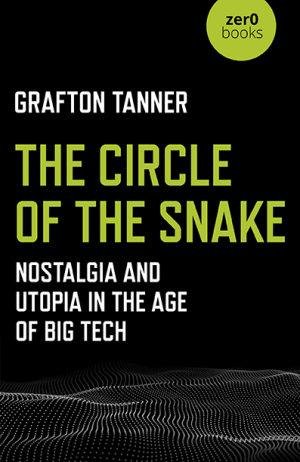
The Circle of the Snake: Nostalgia and Utopia in the Age of Big Tech
By Grafton Tanner
Zero Books, 2020
I’m sure many members of Generation X have taken a moment to look around the pop culture landscape over the past decade and a half and had a sudden moment of realization: there are certainly a whole lot of people trying to sell me things using the media of my youth. Ultimately, this is nothing new. I remember when every pop culture moment, from sitcoms to TV commercials, seemed to be using the Baby Boomers’ favorite songs to sell them cars and sneakers. But in 2020, the dominance of these re-treaded properties is even more nakedly cynical, whether its the endless sequels of the Star Wars and Marvel cinematic universes, or the easy-to-consume, signifier-filled pastiches of the worlds of Stranger Things and Ready Player One. The cultural marketplace, as dominated by bloated media and tech empires, no longer sees any need to admit the novel, the fresh, the unusual.
Both the “why” and the “how” of this cultural and technological tendency are explored by author Grafton Tanner in his new book, The Circle of the Snake: Nostalgia and Utopia in the Age of Big Tech. (Disclosure: Tanner is an occasional contributor to We Are The Mutants.) Tanner explores not only the pop culture properties that utilize nostalgia in an effort to assuage the anxieties of contemporary life in the aftermath of the 2008 financial rupture; he also explains how tech companies use the feedback from algorithmic analysis to keep consumers locked into a never-ending cycle—an ouroboros—of digital satisfaction of their subconscious desires for an older, more secure time. This nostalgic digital utopia, in turn, keeps consumers constantly “on,” working through endless “quests” that approximate proactivity but in the end keep people locked into pointless and unproductive cycles of feedback, emotional satisfaction, and control. “Recommender systems and predictive analytics—the very tools that allow our contemporary media to function—zero in on quick reactions, such as a flash of anger or a swell of nostalgia,” says Tanner in his Introduction. “These reactions are noted by algorithms, which then make recommendations based on them… The result is a nostalgic feedback loop wherein old ideas travel round.”
Tanner examines how the Big Tech tendency towards technolibertarianism and monopoly over the past 20 years has created the material conditions for this self-reinforcing system of psychic feedback. With an increasing belief in culture as disposable and “just for fun,” the material and political implications of this system of control are obfuscated. The way that these cultural narratives award Big Tech further and deeper power over all of us is merely part of the game. And we are enlisted as active players, not merely passive viewers, as in the era of television’s height. The online world, Tanner notes, demands a keen eye for analysis and a deep capacity for paying attention. The technolibertarian and neoliberal alike view our tech-suffused world—everyone is plugged in, 24/7—as a kind of utopia-in-waiting, or indeed a permanent utopia, where the idealized past can be endlessly revisited and basked in, while the present never changes from its current state of cultural and political stasis. This virtual plaza of commerce, emotional satisfaction, the illusion of proactivity, and control and surveillance describe the boundaries of Big Tech’s dominance of both our material and psychic space at the beginning of the 2020s.
The interview below was conducted in November and December 2020 via email and has been lightly edited for clarity.
***
GRASSO: Given the topic of your first book for Zero, Babbling Corpse: Vaporwave and the Commodification of Ghosts, the topic for The Circle of the Snake seems like a natural outgrowth. But from reading the book it also seems like there were a lot of specific events and observations about the world of Online and Big Tech over the past few years that led to the book’s development. What are the origins of The Circle of the Snake, and what kinds of specific cultural developments led you to propose and write the book?
TANNER: I can pinpoint the exact moment I knew I was going to write a book on Big Tech. I was living in a kind of exile in 2016, in this small town in Georgia, trying to piece my life back together after a series of false starts after college. I was sitting in a Barnes & Noble reading the 2016 Tech Issue of The Atlantic, and there was a story by Bianca Bosker about former Google employee Tristan Harris, who left the Valley and started an advocacy group called Time Well Spent because he thought Big Tech was eroding mental health. He was on a mission to fix Big Tech by making it work for us, not against us. But the piece didn’t make me feel better about tech. In fact, it was terrifying: here is an ex-Valley technocrat, mournful that he had invented habit-forming technology with severe public side effects, asking us to not only forgive him, but believe in him to create newer, better tech. I was incensed.
Shortly thereafter, we learned that Cambridge Analytica sharpened their psychographic modeling techniques by harvesting Facebook data from millions of users without their permission, all to aid in the election of Donald Trump. There was suddenly this huge backlash against Big Tech. I was supportive of it, but I also understood it came a little too late. Tech critics had been sounding the alarm for years and years. It took the election of a fascist for the left to wake up to the tech nightmare, only to realize the ones promising to end the nightmare were former technocrats themselves.
And yet, as many were loudly critiquing Big Tech for its role in throwing elections, spreading fascism, and worsening mental health, the culture industry was churning out politically retrograde nostalgia-bait. Was it really that the techlash had made everyone even more nostalgic for the pre-digital past? Or was there some kind of connection between nostalgia and Big Tech? These were the questions I had in mind when I started writing.
GRASSO: I think one of the things I like best about the book is your fusion of theory, philosophy, and epistemology with the material and economic realities of 21st century Big Tech and Big Media. Throughout the book you explore concepts such as surveillance, sublimity, nostalgia (of course), and virtuality with concrete examples from the online plaza. Essentially, if I’m not mistaken, you’re saying that the people who created the feedback loops that keep us hooked on technology and the internet and mine our data for still more ways to sell to us have themselves studied their philosophy, economic history, and techniques of mass psychology and persuasion with great attention?
TANNER: Persuasion techniques, yes, but I wouldn’t go so far as to say the technocrats have studied much else beyond their limited worldview, which is scientistic. Yes, technocrats like James Williams and Tristan Harris like to cite philosophers, but they usually do it to support their self-help solutions to the attention economy. Wake up with a little philosophy, they say, because reading Socrates is better for the mind than scrolling through Twitter. It’s a very neckbeard way of thinking about cultural consumption.
Make no mistake: these technocrats are uninterested in anything other than making a lot of money. If that means learning psychological techniques of persuasion with Stanford psychologist B.J. Fogg, then so be it. They weren’t and aren’t trying to make the world a better place or something. Like the banks before the Great Recession, the technocrats are out to make a quick buck by any means necessary, and they would have kept on doing what they were doing if the bubble hadn’t burst. People were disgruntled with Facebook for years before Cambridge Analytica, and tech critique was already a robust genre by 2016. But it took a kind of implosion, a Great Recession-style reckoning with Big Tech, to change the public opinion. Honestly, the technocrats would probably benefit from studying a little history and philosophy, instead of cloistering themselves in the ideological fortress of STEM.
GRASSO: I think one of the “oh shit” moments in the text for me was finding out that the Black Mirror special choose-your-own-adventure episode “Bandersnatch,” which I quite liked mostly for its material and inspirational signifiers (early ’80s computing, references to Philip K. Dick) was also used to mine viewers’ data in a delightfully dark real-life Dickean stroke. It’s not merely that nostalgia offers us a safe place from the dangerous present, but that those who create these nostalgic visions are working hand-in-hand with the very media empires that make us crave the past: another ouroboros.
TANNER: “Bandersnatch” not only exploits viewers’ nostalgia for its own gain, but it further normalizes the feeling of being controlled. Everyone today knows we’re being controlled from afar: by Twitter, Instagram, Amazon, insurance companies, think tanks, banks, and so forth. We are part of this giant social experiment called consumer capitalism. The purpose is to find out what we’ll buy. But we aren’t being controlled by future gamers or, as much as Elon Musk would like to believe, programmers in this computer simulation we call life. “Bandersnatch” is a work of fiction masquerading a horrible fact—that Netflix is the one controlling us, that we are not as in control as we think. The irony, of course, is that we relinquish our control via the technology we use every day, but we ultimately have very little choice in the matter. Students use devices at school, and jobs often require employees to have smartphones. We aren’t puppets, but we’re by no means totally free either.
GRASSO: So that leads me to asking you about your critique of specific media franchises: Stranger Things and the endless array of sequels and especially reboots we’ve seen since the end of the aughts. You very cannily explore Stranger Things‘ reliance on physical signifiers of commodities and objects that are no longer extant but remind us of the shackles of our technology-laden present (the old landline telephone, the shopping mall) as a key to its appeal to both Gen-Xers who were there and Zoomers who weren’t. Likewise the cinematic reboot is a way to cheaply create product and content that will connect with multiple generations. This element of “spot the Easter egg, aren’t you smart?” for older generations melds with the offer of a trip to a now-alien time for younger generations. These franchises seem to simultaneously reward passive immersion in nostalgia with an illusion of proactivity.
TANNER: Well, the spot-the-Easter-egg activities are very often nostalgic exercises themselves. Viewers are invited to find the nostalgic signifiers, even if they don’t know what they are. That’s the brilliance of Easter egg marketing for advertisers: you might not know what the hidden clue means, but you know it’s a clue and so you make note of it. Of course, the “real” fans will be able to cite all the references, but regular viewers can sometimes recognize a clue, like a corded phone or a VCR or a reference to an older movie, when they see it.
Easter egg marketing is the advertising tactic of choice in the prosumer age. It turns watching into a game. And it’s very heuristic. The films with the most Easter eggs inspire the most “count them all” YouTube videos or Buzzfeed listicles. The problem here isn’t that movies and series reference a bunch of older media; the problem is that Easter eggs reference certain things and leave others out, thus establishing these unnecessary pop culture canons. I don’t care that the Halloween franchise makes reference to itself. It’s an extended universe at this point—of course it’s going to do that. What I find questionable is its constant updating in an attempt to recapture the magic of the original film. I’m always signaling my love of Halloween III: Season of the Witch, but that film is too wacky to be included in the Halloween universe, because the franchise is desperately trying to give us the original again, as if it were the first time, without all the messy parts of the sequels. The Halloween filmmakers want to keep the bloodline of the first film pure, which means anything standing in the way must be excised.
GRASSO: You mark the period between 9/11 and the financial crisis of 2008 (and its aftermath) as the final foreclosure of any alternative to our current future and one of the dividing lines between an idealized past depicted in our nostalgic media and the forever Now. Unsurprisingly, so many of the elements of online life we now recognize as irredeemably toxic (social media, ranking and rating apps, tentpole cinematic universes full of identical sequels) began around the end of the Bush years as well.
TANNER: One of these days, I’m going to write a history-critique of the 2000s. I find the decade fascinating. It was probably the nadir of contemporary culture. Mark Fisher called it “the worst period for (popular) culture since the 1950s.”
It’s true: there was no breaking point at which contemporary nostalgia ramped up. It was a gradual shift between 9/11 and the Great Recession. Directly after 9/11, the U.S. was reeling from shock. Before nostalgia set in later in the decade, there was a feeling of futurelessness, as Robert Jay Lifton wrote—a feeling that there can be no future after 9/11, that the fear of another terrorist attack foreclosed the future altogether, that if people could fly planes into buildings on a regular weekday morning, then anything horrific is possible. During these years, we saw the birth of cinematic universes with the Star Wars prequels and the first megabudget superhero films. Of course, there were Batman, Superman, and Star Wars films before the twenty-first century, but it was after 9/11 that we saw the avalanche of these movies, several of which could not have been made without post-9/11 Pentagon support, with its bloated influence and near-endless supply of capital. You cannot downplay the reach these films have. They’re seen all over the world. And they aren’t just pro-military propaganda, they are engines of nostalgia.
After the Great Recession, nostalgia calcified. People were moving back in with their parents, revisiting old memories to soothe the anxiety of joblessness. Financial recessions are progressive only for the bankers, if they’re bailed out. For workers, they’re regressive. They set people back and invite the sufferers to hide away from it all. There is nothing wrong with this reaction. We cannot blame people who were hit by the Recession for their nostalgia. But we can blame the ones who caused it. And austerity measures only increase the desire to escape into nostalgic feelings. In short, financial meltdowns are crises that affect the future because they erase the plausibility of surviving the present.
GRASSO: You state that nostalgia is not only an emotion used to track us and to trigger specific emotional responses (which themselves are often assuaged by consumption), but also, possibly most importantly, to control us. And that control is not only physical/material but also social/aesthetic, limiting our options to wander away from the digital plaza. How do nostalgia and nostalgic media help this attempt by the market to quantify, objectify, and commodify us, the consumer?
TANNER: Content creators—a sickening term that reduces art and culture to commodities—understand the value of nostalgia. Consumer scientists have known for years that nostalgia sells. If anger draws your attention to the screen, then nostalgia triggers you to buy what will soothe the anger. That’s the cycle we’re dealing with in the present century.
And the worse things get, the more that nostalgia will naturally rise to the surface for many people. It’s not that media companies force-feed nostalgia to us. Many people are already feeling the emotion. It’s inescapable because nostalgia is a modern condition. Corporations merely go the extra mile by locking nostalgia into these feedback loops. The more you feed nostalgia into the cultural industry, the more of it you will consume because entire companies depend on you to want it. We live in a world of disruption, and every modern displacement is accompanied by nostalgia. Corporate capital knows this and depends on it.
GRASSO: Two of the specific technologies you talk about, Instagram and virtual reality, have undergone mutations in their appeals to our desire to escape the modern world. Instagram started off as a fairly disposable nostalgic evocation of the Polaroid camera aesthetic and has become a playground for big-money influencers and exhibitionists; virtual reality has evolved into just another facet of the internet’s control apparatus, despite its conceptual origins in early ’80s cyberpunk and its promised potential to give people the ability to create their own worlds. Why do these technologies seem to always mutate in the direction of greater commercialization and/or control, despite their initial apparent harmlessness or revolutionary promise?
TANNER: In the case of Instagram, its nostalgia factor was mainly due to the horrible photo quality of early smartphone cameras. With some Wi-Fi, a phone, and an app, you could take photos anywhere and upload them on the spot, which was enticing enough for many people to do just that, but you couldn’t deny the photo quality was very poor. So one way to deal with this poor quality was to saturate photos in a kind of analog haze, which could be done by applying one of several different stock filters. I can’t emphasize this enough: so much of our nostalgic appetite in the early 2010s was whetted by the inability to take and post a decent looking digital photo.
Whether it’s Instagram or virtual reality, digital technology is never totally harmless. It’s like when Tristan Harris and the Center for Humane Tech guys tell us we can have our digital cake and eat it too. You can’t have “humane tech” because tech is driven by the profit motive, which itself is often powered by another force: the military. Have you seen this new recruiting ad for the Marine Corps? It’s basically telling young people that joining the military will be an escape from the overwhelming anxieties of the digital age. The scariest thing about the ad is that it conceals the long relationship between tech and the military. Which is to say, the “tech” presented in the ad couldn’t exist without the military-industrial complex. At this point, any new, possibly revolutionary digital technology will either be bought out by a Big Tech monopoly or put to use on the battlefield.
GRASSO: As far as solutions and escapes from this predicament go, you talk a little bit about the ineffectual attempts of former technocrats to try to ameliorate our enslavement to the internet and social media with apps that limit time on websites or “safety labels,” and find them all wholly wanting. Likewise, you mention attempts to make nostalgia something constructive, playful, reflective (in the schema of Svetlana Boym). And yet the very structure of the internet and Big Media as it stands now denies all alternatives to the current control stasis. What does a constructivist nostalgia look like? Where could it exist in the cracks of the current marketplace? Is there a place for nostalgia as a political instrument of the left outside of the usual avenue of Left Melancholy?
TANNER: I’m currently writing a history of nostalgia, out fall 2021 with Repeater Books, called The Hours Have Lost Their Clock: A Recent History of Nostalgia. In it, I put forth a theory of radical nostalgia, drawing on the work of Alastair Bonnett and Svetlana Boym. Radical nostalgia is the third “R” beyond reflective and restorative nostalgia, which Boym coined. She was right about nostalgia, but over the first two decades of the present century, restorative nostalgia ballooned while the reflective strains were edged to the margins. But there needs to be this third form, radical nostalgia, because the melancholic disposition of reflective nostalgia just hasn’t been working for the left and the restorative tint has proven to be destructive.
Radical nostalgia is the act of looking back to those moments when collective action stood up to capital. It yearns for the social movements of the past. It aches for them. It isn’t interested in “getting back there,” in restoring what’s been lost, but in learning from those who came before: the struggle for indigenous rights, the staunch anti-capitalism of Martin Luther King Jr., Stonewall, the Battle of Seattle. When Richard Branson signals his support for LGBTQ+ communities, that isn’t radical nostalgia. There’s nothing radical about it; it’s mere nostalgia. Radical nostalgia looks to these and other movements to continue the fight for a more egalitarian future. It is inherently anti-fascist.
Radical nostalgia takes the action step of restorative and the aching heart of reflective nostalgia and fuses them together. It knows that the past isn’t perfect, which means what we yearn for shouldn’t be either. Restorative nostalgia is too clean, too high-definition. Reflective nostalgia kicks the can around, although reflectors might recognize the problems of the past long before the restorers do. But radical nostalgia knows that everything is imbued with horror, the past especially. Many revolutionary movements of the past suffered from machismo and intolerance, even in their own collectives. Radical nostalgia knows this and endeavors to leave it in the past. Some things must remain buried.
And radical nostalgia is one perspective we can take to resist the utopian thinking of tech. At this point, Big Tech is about the only entity that circulates visions of the future, but those visions are falling out of favor thanks to the techlash. Get ready, because they will absolutely be replaced with a different utopian vision: the humane tech movement. We’re going to be dealing with the technocrats for years. It’s going to seem like we should trust Tristan Harris and the Center for Humane Tech guys. They’re going to be pushing their vision of the future for years to come. But they are the new boss, same as the old. Only collective action, informed by the decolonial and anti-fascist movements of history, can resist what’s coming in the next decade and beyond.
It should not be considered radical or extremist to oppose mass murder for profit and power.
It should not be considered radical or extremist to oppose the globe-spanning power alliance that is perpetrating most of that mass murder on the world stage today.
It should not be considered radical or extremist to oppose the existence of secretive government agencies which have extensive histories of committing horrific crimes.
It should not be considered radical or extremist to say that everyone ought to have a basic standard of living instead of being deprived of food, shelter and medicine if they have the wrong imaginary numbers in their bank account.
It should not be considered radical or extremist to oppose the existence of a small class of elites who use their vast fortunes to manipulate our entire society toward their advantage.
It should not be considered radical or extremist to want plutocrats and government agencies to stop deliberately manipulating people’s minds using mass media propaganda.
It should not be considered radical or extremist to want everyone to have an equal chance of getting their voice heard in our information ecosystem instead of a few select power-serving lackeys.
It should not be considered radical or extremist to want a society that is ruled by the many for the benefit of the many instead of one that is run by the few for the benefit of the few.
It is very normal, sane and healthy to want a world where everyone has what they need to live, where everyone is free to do, say and think whatever they like as long as it isn’t hurting anyone else, and where nobody is being murdered by powerful governments. This is a very basic, intuitive, common sense desire to have for yourself and for your fellow human beings; it’s wanting for your society what you want for yourself.
Yet people who promote policies which are aimed at creating this kind of world are consistently marginalized and dismissed as radicals and extremists. It’s okay to say you oppose war in principle, but if you oppose any specific acts of warmongering being perpetrated by your government you’ll get labeled a Russian asset, a dictator apologist and all sorts of other pejorative labels which exist solely to justify keeping you off of mainstream platforms. It’s okay to think we should live in peaceful collaboration with each other and our ecosystem, but if you promote specific policies to make that happen you’re an evil commie, a class warrior and a moonbat in the same way.
Simply advocating sanity over insanity gets you shoved out of sight and out of mind by the narrative managers responsible for preserving a world order that is stark raving insane from top to bottom. If you oppose the systems exploited by the ruling power establishment which murders, exploits and oppresses people at home and abroad all day every day while destroying the very ecosystem we depend on for survival, then you are branded a lunatic and your wrongthink quarantined so as not to infect the mainstream herd.
This dynamic is made possible by the fact that the powerful are constantly pouring their wealth and influence into manufacturing the collective delusion that madness is sanity and sickness is health. The plutocrat-controlled political class and the plutocrat-owned media class feed the public an unceasing stream of propaganda aimed at convincing them that capitalism is totally working, that western imperialism is a kooky conspiracy theory, and that the military, police and politicians are our friends. This is what’s constantly being done by mainstream news media, and with varying degrees of subtlety it’s what is being done by every show on television and every movie churned out by Hollywood as well.
But that’s all it is: a collective propaganda-induced delusion. In reality it is the mainstream promoters of the establishment-authorized status quo who are the violent extremists, and it is those who desire health and sanity who are the moderates.
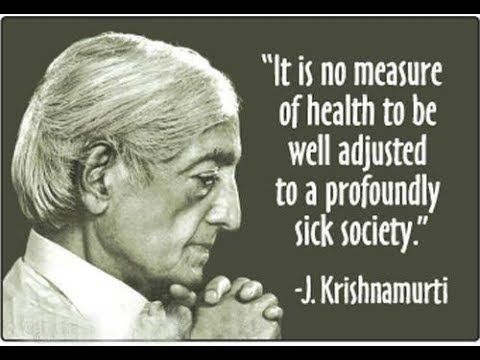
The madness of our world will necessarily continue for as long as we are unable to collectively find our way out of it, and we will be unable to collectively find our way out of it for as long as they are able to keep us collectively confused about what is madness and what is sanity. About what is normal and what is abnormal. About what is moderate and what is extreme.
If you oppose the madness of our world, don’t make an identity out of being a “radical”. Don’t build an egoic structure around life on the fringe. You are not radical, and your ideas should not be fringe. To live a revolutionary life, you should insist on the normality and mundaneness of your own position. Sanity should not be special and unusual, and we should not participate in the delusion that it is.
Let your life be an expression of the common sense ordinariness of revolution.
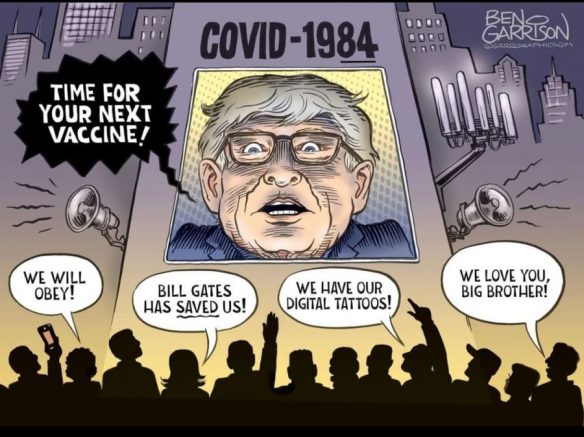
On September 11th, 2001, terrorist attacks took place on the World Trade Center and the Pentagon allegedly orchestrated by Al Qaeda led by Osama bin Laden, and subsequently blamed it on Saddam Hussein and the Baath Party and then the war on Iraq began. The Middle East became the prime target of increased Western and Israeli conflicts and interventions. Guantanamo bay, Cuba became a torture center. Surveillance of the Muslims became normalized, then so did surveillance of the entire world. That was phase 1 of Western-led global tyranny, now on to phase 2, with a new disease, the Corona Virus aka Covid-19, appeared on the world stage. Medical bureaucrats from the Centers for Disease Control (CDC) including the longtime medical bureaucrat-in-charge, Dr. Anthony Fauci and Big Tech billionaire nerd, Bill Gates along with the rest of the establishment view everyone as a potential carrier a danger, therefore, they must vaccinate everyone to fight this new disease with an emphasis on treating the situation as a national security threat so Operation Warp Speed was announced. At the same time, the U.S. government and its allies are fighting continuous wars that they themselves start on the rest of the world and on top of everything else, the world’s global economy is on the brink of the Greatest Depression along with a collapsing global reserve currency, the U.S. dollar.
Just imagine this sometime in the near future, you wake up one morning, you brush your teeth and then you turn on the television and on the screen is the ’emergency broadcast system’ flashing in red, alerting people about new Covid infection rates spiking in your area and it’s declared a red zone. With a disarmed populace in place who has no rights to self-defense, military personnel in hazmat suits wearing masks will be making door to door visits with mandated vaccines in hand, and if you resist, well, you can paint a picture for yourself. The streets are empty and businesses you once visited are now permanently closed making it increasingly difficult to get your basic necessities. Public and private schools are open on the condition that each child is fully vaccinated under government mandates regardless of the health risks associated with the vaccines and in many cases if a child is not vaccinated, the school nurse will do it for you without your permission. Those who have jobs will have no choice but to get vaccinated or they lose that weekly paycheck they depend for their food and other expenses. Then you look outside your window and you see the same breadlines in government-approved centers with people wearing facemasks, patiently waiting for their next meal as long as they have their vaccination card in hand. Crime is out of control with no police protection because a couple of years earlier, major cities and towns across the U.S. decided to defund the police. They now have social workers and civilian patrols resembling the actions of the Nazi’s who had the useful idiots known as the brown shirts safeguarding the streets from a spread of a disease that cannot be controlled by whatever ridiculous mandates they impose, making sure that the people have facemasks and their government issued vaccination cards readily available for inspection. The internet is also heavily regulated. Depression and suicides increasing by the day, yet, no resistance by the population, just slaves under a medical dictatorship that makes Nazi Germany look like a walk in the park. That is a dystopian future.
That same old ‘New World Order conspiracy theory that many people laughed about is now unfolding before our eyes. For decades the people were warned, yet they are still blinded by the mainstream media’s fear mongering nonsense and blatant lies that it becomes comical at times. Yet, people are living in extreme fear. Across the globe, new Covid-19 outbreaks are rising due to false positives detected by the unreliable RT-PCR tests. Countries around the world are waking up to this fact including Portugal who according to the Off-Guardian.org reported that “an appeals court in Portugal has ruled that the PCR process is not a reliable test for Sars-Cov-2, and therefore any enforced quarantine based on those test results is unlawful.” Why? Well the article summed up what the study had found:
Most notably this study by Jaafar et al., which found that – when running PCR tests with 35 cycles or more – the accuracy dropped to 3%, meaning up to 97% of positive results could be false positives.
The ruling goes on to conclude that, based on the science they read, any PCR test using over 25 cycles is totally unreliable. Governments and private labs have been very tight-lipped about the exact number of cycles they run when PCR testing, but it is known to sometimes be as high as 45. Even fearmonger-in-chief Anthony Fauci has publicly stated anything over 35 is totally unusable
It is well-known that high-risk groups with already life-threatening ailments are the ones at risk, even if there was a severe flu season in effect, they will still be at risk regardless. Covid-19 lockdowns and mandatory facemasks and the possibility of forced vaccinations in various U.S. states and a number of countries is becoming part of everyday life, the “new normal” it seems. The Hill reported that government-issued vaccine cards will be distributed to everyone in the US population ‘Details emerging on vaccine cards that will accompany inoculations.” The report said that the federal government will hand-out cards with your name on them which will list what vaccines you have received and which ones will be due, “Everyone will be issued a written card that they can put in their wallet that will tell them what they had and when their next dose is due,” Kelly Moore, associate director of the Immunization Action Coalition, said Wednesday, according to CNN. “Let’s do the simple, easy thing first. Everyone’s going to get that.” Then clinics and hospitals will send your vaccine report to the federal agencies-in-charge which will basically track and trace individuals of all ages:
Moore added that clinics providing vaccinations will also report what vaccine is administered to state immunization registries. Numerous clinics will also give patients the option to provide their phone numbers so they can be sent a reminder to take their second dose of the vaccine
The world we once new is dramatically changing, a coerced society that’s is constantly living on the edge of fear, facing lockdowns every few months when Covid-19 cases spike while the establishment continues its early stages of total global control over society. They already control the people through mandated facemasks and lockdowns while Big Pharma is pushing a handful of vaccines so that people can travel, buy food, or for their children to attend school under the “new normal” rules once they get their vaccines. People are acquiescent to authority, accepting the establishment’s recommendations as law as they walk around confused with facemasks, avoiding people at length. One time I was walking down one of the main avenues while I was in New York City as a woman was trying to avoid a group of young girls without facemasks, she immediately hoped into traffic to avoid them and right behind her was a city bus narrowly missing her by an inch, this woman was obviously so fearful of contracting Covid-19, she almost got herself killed by an incoming city bus, and to be honest with you, I closed my eyes because I thought she was history. This is the state of the world of paranoia and fear we are living in. There are even people who have not even been outside their homes since the World Health Organization declared Covid-19 an international pandemic. Fights are breaking out everywhere between those who refuse facemasks versus the slaves who listen to Dr. Anthony Fauci and the rest of the medical establishment who claim that wearing facemasks is about protecting yourself and respecting others, so people are policing themselves and “snitching” on each other, a dream come true for those who rule.
Normalcy in society has completely changed for the worst. People are less human today because of what the establishment has pushed upon us with their absurd ideas to control the population to prevent an over-exaggerated disease from spreading. Yet, suicides, depression and loneliness is killing more people by the day because of these unnecessary lockdowns. The people are on the edge of insanity. The normal life already seems like a long time ago as new trends became normalized over the years before the corona virus ever existed like humans having relationships with sex robots and life-sized dolls. Humans having sex with robots and dolls and in some cases, even marrying them seems pretty bizarre to me. I am pretty sure that both men and some women are purchasing sex robots and dolls at a higher-rate since the pandemic begun although a handful of people have been interested in this new phenomenon has been introduced to the public. In ‘The Age of Sex Robots: The pros and cons in this emerging sexual age’ by David W. Wahl, PhD in Psychology Today wrote:
Sex robots are here. It’s not just a gimmick of science fiction. Granted, the artificially intelligent sex robots of such films as “Ex Machina” and “AI” are not here yet, but it’s only a matter of time. Most sex robots now are little more than slightly animated sex dolls. Perhaps the most advanced sex robot that we know of is “Samantha.” A creation of Synthea Amatus, Samantha is designed to be capable of enjoying sex.
But Samantha is not all about sex. She can also talk about science and philosophy. She can even tell jokes (although hopefully not while you are having sex with her). Consent is even an issue with Samantha. If you are too rough with her or she doesn’t like your behaviors, she is programmed to go into “dummy mode” and completely shut down. Currently, robotic partners can go for prices in excess of $10,000
That is incredible and frightening. What if they created another doll was created down the road where “dummy mode” can turn into violent mode, but that will probably take another generation or so. I hope most people won’t fall for these types of futuristic relationships, but the point I am trying to make here is that this is where humanity is headed and this is not normal but it falls into the hands of the establishment technically speaking since in a way can reduce population growth.
What has society morphed into?
Now a Great Reset is upon us and make no mistake, it is real despite what The New York Times has falsely claimed that it does not in an absurd article they published titled ‘The Baseless Great Reset’ Conspiracy Theory Rises Again’, it’s real and we need to ask ourselves, will we except this insane idea? The World Economic Forum (WEF) is pushing ‘The Great Reset’ agenda since last May with calls to rebuild the global economy, social engineer society and enforce environmental sustainability rules and regulations to improve capitalism for basically major corporations, bankers and the ruling establishment. The corporate-technological alliance will be controlled by a powerful consortium of the pharmaceutical, financial, communications, defense industries and other major corporations with the government enforcing their dirty deeds with help from the mainstream-media continuing their propaganda. The Great Reset is being promoted by the United Kingdom’s very own, Prince Charles and WEF’s founder and executive chairman, Klaus Schwab who reminds me of Dr. Evil from Austin Powers who is also a former member of the steering committee of the Bilderberg Group which is behind the many changes the ruling establishment has envisioned for society. Life for humanity seems like it will never be the same. The Great Reset is a plan to foment corporate control over the entire economic and social landscape. They want control of the world’s natural resources and to expand their world government’s surveillance grid to unprecedented levels that fascist dictators from the past including Adolf Hitler, Benito Mussolini, Francisco Franco and Chile’s Augusto Pinochet could have only dreamed about.
What is happening to society has been predicted for a long time by many, including one of the most famous names in science fiction, George Orwell, the 1984 author who wrote and predicted a future dystopian police state. Orwell’s dire predictions of what we face in the near future was an early warning to all of humanity. However, I believe that many people are not simply going to accept this way of life as the new normal, some will, but many will refuse to obey such absurd demands from the establishment and this is the start of a revolution, a revolution of the mind and the establishment is afraid of that. The masses will rise and will demand its freedoms it once had. People around the world already disobey lockdowns, face mask mandates, oppose continuous wars, oppose government tyranny and every other human rights abuses they face. We are not, and I repeat, we are not at the point of no return, there is hope.
This lockdown madness will destroy people’s livelihoods and in some cases, will kill more people than the disease itself. How far can the establishment push us? We are at a time where we need to make a critical decision that will change our lives forever because a group of powerful and politically connected people who are government bureaucrats, or people who are closely associated with Big Pharma, Big Oil, Big Tech, the Military-Industrial Complex, bankers, Wall street, the elite families and so on, you know, the ones we have been warning about called the establishment or the ruling elite for some time are trying to change the structure of society, to control human nature. The year 2020 has been turbulent to say the least, 2021 will be chaotic and that is guaranteed. What is happening now is what George Orwell’s 1984 warned us about more than 70 years ago. At this point in time, it will be up to all of us to resist, because that’s what it will take, and when that happens, people like George Orwell will finally rest in peace without rolling in his grave knowing that the world’s human spirit is alive and well, after all, that’s what he ultimately hoped for.
The profit-maximizing Big Tech / Big Media Totalitarian regime hasn’t just strangled free speech and civil liberties; it’s also strangled democracy.
The U.S. has entered an extremely dangerous time, and the danger has nothing to do with the Covid virus. Indeed, the danger long preceded the pandemic, which has served to highlight how far down the road to ruin we have come.
The danger we are ill-prepared to deal with is the consolidation of the private-sector media and its unification of content into one Approved Narrative which is for sale to the highest bidders. This is the perfection of for-profit Totalitarianism in which dissent is crushed, dissenters punished and billions of dollars are reaped in managing the data and content flow of the one Approved Narrative.
So don’t post content containing the words (censored), (censored) or (censored), or you’ll be banned, shadow-banned, demonetized, demonized and marginalized. Your voice will be erased from public access via the Big Media platforms and you will effectively be disappeared but without any visible mess or evidence–or recourse in the courts.
That’s the competitive advantage of for-profit Totalitarianism–no legal recourse against the suppression of free speech and dissent. And if you’re shadow-banned as I was, you won’t even know just how severely your free speech has been suppressed because the Big Tech platforms are black boxes: no one outside the profit-maximizing corporation knows what its algorithms and filters actually do or exactly what happens to the disappeared / shadow-banned.
Shadow-banning is an invisible toxin to free speech: if you’re shadow-banned, you won’t even know that the audience for your posts, tweets, etc. has plummeted to near-zero and others can no longer retweet your content. You only see your post is online as usual, because this is the whole point of shadow-banning: you assume your speech is still free even as its been strangled to death by Big Tech black box platforms.
Since Andy Grove’s dictum only the paranoid survive is my Prime Directive, I’ve paid a bit more to have access to server traffic data. So I can pinpoint precisely when I was shadow-banned: my overall traffic fell off a cliff and the number of readers visiting from links on Big Tech platforms fell from thousands to near-zero.
The new consolidated Big Media Totalitarians play an interesting game of circular sources: in the traditional, now-obsolete / suppressed form of journalism, a reporter would be required to identify a minimum of three different sources for the story, and make at least a desultory effort to present two sides of the issue.
That model is out the window in the USSA’s Big Media Totalitarian regime. Now reporters only have to use a completely bogus, fabricated source in another Big Media story. Just being in another Big Media platform / publication is now “proof” that the source is legitimate.
In other words, investigative journalism is nothing but a Potemkin Village of circular sources conjured out of thin air by Big Media. Here’s an example from my own experience of being shadow-banned.
1. A completely bogus organization pops up out of nowhere and doesn’t bother identifying its owners, managers or sources.
2. This complete travesty of a mockery of a sham fabrication then issues a list of websites which it claims, with zero evidence, are stooges / outlets of Russian propaganda.
3. With zero investigation of this slanderous, evidence-free “source,” the venerable Washington Post (owned by Jeff Bezos) publishes an evidence-free hit piece glorifying this fabrication on Page One.
4. The other Big Media giants then amplify the bogus slander because it came from a “legitimate source,” the Washington Post.
Do you understand how circular sourcing works now? Once a flagrantly bogus bit of propaganda is embraced by one Big Media giant as part of the Approved Narrative, then every other Big Media / Big Tech corporation promotes the fabrication as “real news” even as it is obviously the acme of “fake news”, a complete fabrication.
The fake “source” was called PropOrNot, and the list included dozens of well-respected independent websites, all slandered with a completely fake accusation for one reason: each site had published some content that cast a skeptical eye on the crowning of Hillary Clinton in 2016 and the crushing of Bernie Sanders’ campaign by Big Media’s Approved Narrative.
As long as you post videos of kittens and kids dancing, you’re OK because your content (owned and controlled by the platform you posted it on–read the terms of Service) is free to the platforms and they use your content to “engage” users which generates billions in profits.
But if you question the Approved Narrative, you put a big day-glo target on your back. Now if you’re a multi-millionaire, you know, a top 0.1% per-center, you can afford to keep posting dissenting views even after you’ve been demonetized and your income falls to near-zero.
The rest of us aren’t quite so privileged. This is another of the toxic elements in Big Media / Big Tech’s consolidated control of what was once known as free speech: They don’t have to ban your content outright, which might cause a few ripples of tame protest; all they have to do is starve you into submission by strangling your source of income.
Thanks to watertight terms of service, even a multi-millionaire is legally powerless against the USSA’s Big Media Totalitarian regime. By posting content, you already gave away all your rights. So you can go solo and post content on some obscure corner of the web that no one knows exist, but that’s the functional equivalent of being banned and demonetized.
So go right ahead and enter a sound-proof box and scream your head off; nobody can hear you. Welcome to the totally privately owned, legally untouchable Big Tech / Big Media Totalitarian regime that will let you know what’s in the Approved Narrative because that’s all you’re allowed to see.
Gordon Long and I cover these topics and many more in our latest video Buying the Narrative (35:41) Since I’d like the video to actually be viewed more than 11 times, I avoided using the terms (censored), (censored) or (censored), and that’s the final fatal poison delivered by our profit-maximizing Big Tech / Big Media Totalitarian regime: self censorship. You know what you can’t say, so don’t say it. Stick with the kitten videos and you’ll be just fine.
You’ll be just fine but you no longer live in a functioning democracy. The profit-maximizing Big Tech / Big Media Totalitarian regime hasn’t just strangled free speech and civil liberties; it’s also strangled democracy.
It’s all fun and games until the pendulum of Totalitarian Consolidation and its Approved Narrative reaches an extreme (like, say, right now) and the pendulum swings back to an equal extreme at the other end of the spectrum. Keep in mind that hubris and money are no match for history: the more powerful you claim to be, the greater your fall. The way of the Tao is reversal.




 After the Crash