It’s an open secret. The deep state is working hand in hand with Silicon Valley social media giants like Twitter, Facebook and Google to control the flow of information. That includes suppressing, censoring and sometimes outright purging dissenting voices – all under the guise of fighting fake news and Russian propaganda.
Most recently, it was revealed that Twitter’s senior editorial executive for Europe, the Middle East and Africa is an active officer in the British Army’s 77th Brigade, a unit dedicated to online warfare and psychological operations.
In other words: he specializes in disseminating propaganda.
The news left many wondering how a member of the British Armed Forces secured such an influential job in the media.
The bombshell that one of the world’s most influential social networks is controlled in part by an active psychological warfare officer was not covered at all in the New York Times, CNN, CNBC, MSNBC or Fox News, who appear to have found the news unremarkable.
But for those paying attention and for those who have been following ’MintPress News’ extensive coverage of social media censorship, this revelation was merely another example of the increasing closeness between the deep state and the fourth estate.
Amazon owner, and world’s richest man, Jeff Bezos was paid $600 million by the CIA to develop software and media for the agency, that’s more than twice as much as Bezos bought the Washington Post for, and a move media critics warn spells the end of journalistic independence for the Post.
Meanwhile, Google has a very close relationship with the State Department, its former CEO Eric Schmidt’s book on technological imperialism was heartily endorsed by deep state warmongers like Henry Kissinger, Hillary Clinton and Tony Blair.
What Lockheed Martin was to the twentieth century…technology and cyber-security companies [like Google] will be to the twenty-first.”
Another social media giant partnering with the military-industrial complex is Facebook. The California-based company announced last year it was working closely with the neoconservative think tank, The Atlantic Council, which is largely funded by Saudi Arabia, Israel and weapons manufacturers to supposedly fight foreign “fake news.”
The Atlantic Council is a NATO offshoot and its board of directors reads like a rogue’s gallery of warmongers, including the notorious Henry Kissinger, Bush-era hawks like Condoleezza Rice, Colin Powell, James Baker, the former head of the Department of Homeland Security and author of the PATRIOT Act, Michael Chertoff, a number of former Army Generals including David Petraeus and Wesley Clark and former heads of the CIA Michael Hayden, Leon Panetta and Michael Morell.
39 percent of Americans, and similar numbers of people in other countries, get their news from Facebook, so when an organization like the Atlantic Council is controlling what the world sees in their Facebook news feeds, it can only be described as state censorship on a global level.
After working with the council, Facebook immediately began banning and removing accounts linked to media in official enemy states like Iran, Russia and Venezuela, ensuring the world would not be exposed to competing ideas and purging dissident voices under the guise of fighting “fake news” and “Russian bots.”
Meanwhile, the social media platform has been partnering with the U.S. and Israeli governments to silence Palestinian voices that show the reality of life under Israeli apartheid and occupation. The Israeli Justice Minister proudly revealed that Facebook complied with 95 percent of Israeli government requests to delete Palestinian pages. At the same time, Google deleted dozens of YouTube and blog accounts supposedly connected to the government of Iran.
In the last week alone, Twitter has purged several Palestinian news pages, including Quds News Network — without warning or explanation.
Electronic Intifada co-founder Ali Abunimah wrote,
This alarming act of censorship is another indication of the complicity of major social media firms in Israel’s efforts to suppress news and information about its abuses of Palestinian rights.”
Alternative voices not welcome
The vast online purge of alternative voices has also been directed at internal “enemies.”
Publishers like Julian Assange and whistleblowers like Chelsea Manning are still being held in solitary confinement in conditions that international bodies and human rights groupscall torture, for their crime of revealing the extent of the global surveillance network and the control over the media that Western governments have built.
As attempts to re-tighten the state and corporate grip over our means of communication increases, high-quality alternative media are being hit the hardest, as algorithm changes from the media monoliths have deranked, demoted, deleted and disincentivized outlets that question official narratives, leading to huge falls in traffic and revenue.
The message from social media giants is clear: independent and alternative voices are not welcome.
One causality in this propaganda war is Daniel McAdams, Executive Director of the Ron Paul Institute for Peace and Prosperity, a public advocacy group that argues that a non-interventionist foreign policy is crucial to securing a prosperous society at home. McAdams served as Senator Paul’s foreign affairs advisor between 2001 and 2012. Before that, he was a journalist and editor for the Budapest Sun and a human rights monitor across Eastern Europe.
McAdams, who spent much of his time on Twitter calling out the war machine supported by both parties, was recently permanently banned from the platform for so-called “hateful conduct.” His crime? Challenging Fox News anchor Sean Hannity over his hour-long segment claiming to be against the “deep state,” while simultaneously wearing a CIA lapel pin. In the exchange, McAdams called Hannity “retarded,” claiming he was becoming stupider every time he watched him.
Yes, despite that word and its derivatives having been used on Twitter over ten times in the previous minute, and often much more aggressively than McAdams used it – only McAdams fell victim to Twitter’s ban hammer. Something didn’t make sense about this ban. One only needs to read the replies under any of President Trump’s tweets to see far more hateful speech than what McAdams displayed to suspect foul play.
I spoke with McAdams about the ban and began by asking him if he accepts the premise of the ban, or if he believes something else was afoot.
Have you ever wondered how all those Wikipedia articles get produced … you know, the ones you pull up on your phone to look up an actor, an author, or a recipe, or a historical or scientific fact? Unfortunately, one of the Consent Factory staff had an opportunity to find out recently.
Apparently, what happened was, someone (presumably one of my readers) tried to add a reference to one of my essays to Wikipedia’s Identity Politics page. The Ministry of Wiki-Truth objected, adamantly. A low-level edit war ensued. Once the Ministers had quashed the rebellion, one of them, “Grayfell,” immediately went to the CJ Hopkins Wikipedia article and started punitively “editing” its contents for “neutrality.”
Other Ministers soon joined in the fun. The list of my awards was summarily deleted. My debut novel, Zone 23, which I published under the Consent Factory’s literary imprint, Snoggsworthy, Swaine & Cormorant Paperbacks, was “edited” into a vanity publication that I “self-published,” probably in my mother’s basement. The “Snoggsworthy, Swaine & Cormorant” imprint (which every bookseller, library, and professional catalog recognizes) was disappeared so that my potential readers will be warned that I’m trying to trick them into buying a book that wasn’t published by a “real” (i.e., corporate) publisher, like the Penguin Group, or one of its … uh, imprints. References to my “political satire and commentary,” and to many of the alternative outlets that regularly repost my essays (like the outlet you’re probably reading this in) were also zapped, because they’re all “fake news” sites operated by Putin-Nazi agents.
Also, given my attempted book fraud, the Wikipedia Ministers immediately launched an investigation into whether I had possibly made up my entire career. Perhaps I had invented all the productions of my plays, and my awards, and even my existence itself. I assume they have contacted my “legitimate” publishers, Bloomsbury Publishing and Broadway Play Publishing, to verify that I haven’t somehow hacked their websites and faked my other books. If they haven’t … well, they should probably get on that.
This “editing” and pursuant investigation was overseen and approved by a senior member of the Ministry’s Arbitration Committee, Doug Weller, who is apparently a “Grandmaster Editor” or a “Lord High Togneme Vicarus” in Wiki-speak. (I kid you not … click the link.) Given Lord Weller’s supervision of the process, I think it’s probably safe to say that this was not just the work of a bunch of kids attempting to negatively impact my book sales because someone on the Internet pissed them off.
This brouhaha was brought to my attention by the Consent Factory’s in-house Wikipedia Liaison, King Ubu (or König Ubu in German). As his job title suggests, King Ubu’s duty is to periodically check my Wikipedia article and make sure that no one has posted anything false, defamatory, or just plain weird. Naturally, when he saw how the Ministers of Wiki-Truth were punitively “editing” my page for “neutrality,” he attempted to engage them. This did not go well. I won’t go through all the gory details, but, if you’re curious, they’re here on the CJ Hopkins “talk” page (which King Ubu reports that he has copied and archived, which I find a bit paranoid, but then, I’m not an IT guy).
Look, normally, I wouldn’t bore you with my personal affairs, but my case is just another example of how “reality” is manufactured these days. In the anti-establishment circles I move in, Wikipedia is notorious for this kind of stuff, which is unsurprising when you think about it. It’s a perfect platform for manufacturing reality, disseminating pro-establishment propaganda, and damaging people’s reputations, which is a rather popular tactic these days. The simple fact is, when you google anything, Wikipedia is usually the first link that comes up. Most people assume that what they read on the platform is basically factual and at least trying to be “objective” … which a lot of it is, but a lot of it isn’t.
If the name Philip Cross doesn’t ring any bells, you might want to have a look into his story before you go back to uncritically surfing Wikipedia. As of May 14, 2018 (when Five Filters published this article about him and his service at the Ministry of Wiki-Truth), he had been editing Wikipedia for five years straight, every day of the week, including Christmas. He (if Cross is an actual person, and not an intelligence agency PSYOP) specializes in maliciously “editing” articles regarding anti-war activists and other anti-establishment persons. The story is too long to recount here, but have a look at this other Five Filters article. If you’re interested, that’s a good place to start.
Or, if you don’t have time to do that, go ahead and use my case as an example. See, according to Ubu, the Ministry’s punitive “editing” of my article to make it more “neutral” began when this specific Minister (“Grayfell”) discovered (a) that I existed, and (b) that I am a leftist heretic. “Grayfell,” as it turns out, is extremely invested in maintaining a positive image of Antifa, whose Wikipedia article he actively edits, and whose honor and integrity he valiantly defends, not only from conservatives and neo-fascist bozos, but apparently also from nefarious leftist authors and political satirists like myself.
Which … OK, I probably deserve it, right? I have satirized identity politics. I have satirized Antifa. I have satirized liberals. I don’t forbid controversial outlets (or any other outlets for that matter) from republishing my political satire and commentary, even after I was instructed to do so by the Leftism Police at CounterPunch. Jesus, I even included a link to a Breitbart article in the preceding paragraph … don’t read it, of course, it’s all a bunch of lies, notwithstanding all the supporting evidence.
Chief among my leftist heresies, I haven’t insulted Trump nearly enough. I don’t believe he’s a “Russian asset” or the resurrection of Adolf Hitler. I believe he is the same narcissistic ass clown and self-absorbed con man he has always been. Much as I dislike the man, I’m not on board with the deep-state coup the Intelligence Community, the Democrats, and the rest of the neoliberal Resistance have been trying to stage since he won the election.
So it’s probably good that “Grayfell” and his pals discovered me and are feverishly “correcting” my article, and God knows how many other articles that don’t conform to Wikipedia “policy,” or Philip Cross’ political preferences, or Antifa’s theory of “preemptive self-defense,” or whatever other non-ideological, totally objective editorial standards the “volunteer editors” at the Ministry of Wiki-Truth (who have nothing to do with the Intelligence Community, or Antifa, or any other entities like that) consensually decide to robotically adhere to.
How else are they going to keep their content “neutral,” “unbiased,” and “reliably sourced,” so that people can pull up Wikipedia on their phones and verify historical events (which really happened, exactly as they say they did), or scientific “facts” (which are indisputable) … or whether Oceania is at War with EastAsia, or Eurasia, or the Terrorists, or Russia?
Oh, and please don’t worry about my Wikipedia article. König Ubu assures me he has done all he could to restore it some semblance of accuracy, and that the Ministers have moved on to bigger fish. Of course, who knows what additional “edits” might suddenly become a top priority once “Grayfell” or Antifa gets wind of this piece.
It should be obvious by now what the plan is for Julian Assange—psychological torture resulting in either a total breakdown or an untimely death, the latter supported by the psychopaths who claim they are our leaders. This psychological torture was noted, with standard corporate media disinterest, by Nils Melzer, an internationally recognized expert on torture treatment.
“Unless the UK urgently changes course and alleviates his inhumane situation, Mr. Assange’s continued exposure to arbitrariness and abuse may soon end up costing his life,” Melzer, UN special rapporteur on torture and other cruel, inhuman or degrading treatment, said in a statement last week.
Melzer demanded “that London immediately take measures to protect Assange’s health and dignity… However, what we have seen from the UK Government is outright contempt for Mr. Assange’s rights and integrity… Despite the medical urgency of my appeal, and the seriousness of the alleged violations, the UK has not undertaken any measures of investigation, prevention and redress required under international law.”
In America, the UK, and much of Europe, the financial elite and its political class consider truth-telling a cardinal sin, a crime punishable by death—not by lethal injection, but slowly and sadistically under a torture system tweaked by the CIA and put into action in rendition dungeons scattered around the world.
Assange has provided vital information to the international public which demonstrates systematic corruption by Washington and its allies. For telling the truth, he is now being persecuted, just as his whistleblowing colleagues, Chelsea Manning and Edward Snowden are. Manning has been repeatedly imprisoned in the US, while Snowden has had to seek asylum in Russia for fear of being summarily incarcerated as a “traitor” if he returns to the US.
In fact, all of us, those who look beyond the headlines and ferret out the truth, are half a dozen steps away from suffering Julian Assange’s fate.
The national security state and its political class plan to kill Assange, keep Chelsea Manning in prison and find a way to return Snowden to the US for a show trial and life behind bars (or execution).
It must, however, first salt the earth where truth is harvested. Thousands of blogs, similar to this one, and websites contradicting and disassembling approved narratives, will be targeted for extinction.
The Mueller investigation did not result in dethroning Donald Trump. The Clinton-DNC attack on a duly elected president, however, resulted in millions of easily duped Americans believing Russia somehow meddled in the 2016 election and will do it again in 2020.
According to corporate entities in “partnership” with the state (the true nature of fascism), Russia is not alone in its supposed hatred of democracy and the self-proclaimed exceptional nation-state.
“There is an undeclared war that Russia and China are waging against the United States and the West,” Jim Sciutto,CNN’s chief national security correspondent and co-anchor of CNN Newsroom, told the Poynter Fellowship in Journalism Speaker Series in October. “China and Russia, over the last 10 years, have done a remarkably good job at this.”
This alleged manipulation of American voters, according to the state and its corporate propaganda media, is assisted by Russian agents and a countless number of mindless dupes unaware of Vladimir Putin’s desire to destroy America.
A shady website that claims “Russia is Manipulating US Opinion Through Online Propaganda” has compiled a blacklist of websites its anonymous authors accuse of pushing fake news and Russian propaganda. The blacklist includes over 200 outlets, from the right-wing Drudge Report and Russian government-funded Russia Today, to Wikileaks and an array of marginal conspiracy and far-right sites. The blacklist also includes some of the flagship publications of the progressive left, including Truthdig, Counterpunch, Truthout, Naked Capitalism, and the Black Agenda Report, a leftist African-American opinion hub that is critical of the liberal black political establishment.
“You can see in the current atmosphere, where anti-Russia hysteria has spread like typhoid, how readily-accepted such a notion would be by many. The reds are under our beds and the Russkies have taken over our airwaves,” wrote Daniel McAdams of The Ron Paul Institute for Peace & Prosperity wrote in 2017.
The Washington Post, owned by billionaire Jeff Bezos, rolled out the red carpet for the shadowy group, PropOrNot, and its baseless fact-devoid accusations of alternative media treason and complicity with Russia.
Bezos is working closely with the CIA on a $600 million internet-cloud deal to get the NSA, DoD, the National Reconnaissance Office, the National Geospatial-Intelligence Agency, and other government snoop-and-subvert operations interconnected.
The Alliance for Securing Democracy’s Hamilton 68 effort to destroy alternative media also has roots in the 2016 election loss of Hillary Clinton. Hamilton 68 is a project supported by the US State Department, the German Marshall Fund, and NATO. Neocon William Kristol and DNC operative John Podesta sit on its advisory board. The organization leans heavily on the Russian collusion fairy tale, thus lending to the conclusion alternative media is a Trojan horse that will help the “New Hitler” Putin destroy democracy.
I certainly don’t have a crystal ball to gaze into and read the future. However, it seems rather obvious what the outcome of all this feverish work to demonize truth-tellers and install gatekeepers on the internet will be.
First, high visibility “fake news” websites will feel the heat. This is already well underway with the persecution of Alex Jones for the crime of questioning Sandy Hook and promoting the Pizzagate conspiracy theory. Lawsuits aimed at Jones are intended to drive his operation into bankruptcy and hold him criminally responsible for questioning official narratives.
The takeaway here—questioning official narratives and positing counter-narratives is a risky business and you are advised not to engage in treasonous behavior with Russian agents if you value your freedom, ability to earn a living, and want to stay off a government terror list.
Second, the concerted effort to sanitize social media of heretical political expression is moving along at a fairly robust clip. Numerous activists and alternative websites and individuals—including the above mentioned McAdams—have been scrubbed since Hillary Clinton declared war on freedom of political expression, which she fallaciously and absurdly chalked up to malfeasance by Russia and the misbehavior of Deplorables.
Third, there will be “meddling by Russia” in the 2020 election regardless of the winner of the presidential teleprompter reader sweepstakes. This will be considered a national emergency and the floodgates will fly open to suffuse the population with scary stories of democracy lost to the autocrat Putin. Radical measures to stem the tide of subversion will be put forward and turned into law by the political class.
I have no idea what the outcome of this will be except to say many of us will be prevented from posting counter-narratives and unearthing hidden truths—historical, political, and economic. Earlier this year the FBI designated alternative media commentary as domestic terrorism.
“The FBI assesses these conspiracy theories very likely will emerge, spread, and evolve in the modern information marketplace, occasionally driving both groups and individual extremists to carry out criminal or violent acts,” the document states. It also goes on to say the FBI believes conspiracy theory-driven extremists are likely to increase during the 2020 presidential election cycle.
The FBI’s not talking about flat-earthers and UFOologists. It is targeting alternative media. The historical record—ignored by the propaganda media—of the FBI’s COINTELPRO operation to destroy political movements in the 1960s and 70s should be revisited. It is paradigmatic of the state and its subversion of opposition. For the FBI, terror is truth unshackled.
Again, I have no idea what will happen, but considering the emphasis placed on the destruction of the First Amendment—along with the Second and Fifth—and the manufactured hysteria of insidious Russian (and Chinese) subversion, and the credulity (or indifference) of the American people, it now appears the alternative media is in danger of extinction, at least on the internet.
One of the biggest and most consistent challenges of my young career so far has been finding ways to talk about solutions to our predicament in a way that people will truly hear. I talk about these solutions constantly, and some readers definitely get it, but others will see me going on and on about a grassroots revolution against the establishment narrative control machine and then say “Okay, but what do we do?” or “You talk about problems but never offer any solutions!”
Part of the difficulty is that I don’t talk much about the old attempts at solutions we’ve already tried that people have been conditioned to listen for. I don’t endorse politicians, I don’t advocate starting a new political party, I don’t support violent revolution, I don’t say that capitalism contains the seeds of its own destruction and the proletariat will inevitably rise up against the bourgeoisie, and in general I don’t put much stock in the idea that our political systems are in and of themselves sufficient for addressing our biggest problems in any meaningful way.
What I do advocate, over and over and over again in as many different ways as I can come up with, is a decentralized guerrilla psywar against the institutions which enable the powerful to manipulate the way ordinary people think, act and vote.
I talk about narrative and propaganda all the time because they are the root of all our problems. As long as the plutocrat-controlled media are able to manufacture consent for the status quo upon which those plutocrats built their respective empires, there will never be the possibility of a successful revolution. People will never rebel against a system while they’re being successfully propagandized not to. It will never, ever happen.
Most people who want drastic systematic changes to the way power operates in our society utterly fail to take this into account. Most of them are aware to some extent that establishment propaganda is happening, but they fail to fully appreciate its effects, its power, and the fact that it’s continually getting more and more sophisticated. They continue to talk about the need for a particular political movement, for this or that new government policy, or even for a full-fledged revolution, without ever turning and squarely focusing on the elephant in the room that none of these things will ever happen as long as most people are successfully propagandized into being uninterested in making them happen.
It’s like trying to light a fire without first finding a solution to the problem that you’re standing under pouring rain. Certainly we can all agree that a fire is sorely needed because it’s cold and wet and miserable out here, but we’re never going to get one going while the kindling is getting soaked and we can’t even get a match lit. The first order of business must necessarily be to find a way to protect our fire-starting area from the downpour of establishment propaganda.
A decentralized guerrilla psywar against the propaganda machine is the best solution to this problem.
By psywar I mean a grassroots psychological war against the establishment propaganda machine with the goal of weakening public trust in pro-empire narratives. People only believe sources of information that they trust, and propaganda cannot operate without belief. Right now trust in the mass media is at an all-time low while our ability to network and share information is at an all-time high. Our psywar is fought with the goal of using our unprecedented ability to circulate information to continue to kill public trust in the mass media, not with lies and propaganda, but with truth. If we can expose journalistic malpractice and the glaring plot holes in establishment narratives about things like war, Julian Assange, Russia etc, we will make the mass media look less trustworthy.
By decentralized I mean we should each take responsibility for weakening public trust in the propaganda machine in our own way, rather than depending on centralized groups and organizations. The more centralized an operation is, the easier it is for establishment manipulators to infiltrate and undermine it. This doesn’t mean that organizing is bad, it just means a successful grassroots psywar won’t depend on it. If we’re each watching for opportunities to weaken public trust in the official narrative makers on our own personal time and in our own unique way using videos, blogs, tweets, art, paper literature, conversations and demonstrations, we’ll be far more effective.
By guerrilla I mean constantly attacking different fronts in different ways, never staying with the same line of attack for long enough to allow the propagandists to develop a counter-narrative. If they build up particularly strong armor around one area, put it aside and expose their lies on an entirely different front. The propagandists are lying constantly, so there is never any shortage of soft targets. The only consistency should be in attacking the propaganda machine as visibly as possible.
How To Get Your Dissident Ideas Heard In The New Media Environment
People have been asking me for some advice on how to get started doing what I do and building an audience, so here are a few tips I've picked up on this weird and wonderful journey.https://t.co/UsgCGKiF6E
As far as how to go about that attack, my best answer is that I’m leading by example here. I’m only ever doing the thing that I advocate, so if you want to know what I think we should all do, just watch what I do. I’m only ever using my own unique set of skills, knowledge and assets to attack the narrative control engine at whatever points I perceive to be the most vulnerable on a given day.
So do what I do, but keep in mind that each individual must sort out the particulars for themselves. We’ve each got our own strengths and abilities that we bring to the psywar: some of us are funny, some are artistic, some are really good at putting together information and presenting it in a particular format, some are good at finding and boosting other people’s high-quality attacks. Everyone brings something to the table. The important thing is to do whatever will draw the most public interest and attention to what you’re doing. Don’t shy away from speaking loud and shining bright.
It isn’t necessary to come up with your own complete How It Is narrative of exactly what is happening in our world right now; with the current degree of disinformation and government opacity that’s too difficult to do with any degree of completion anyway. All you need to do is wake people up in as many ways as possible to the fact that they’re being manipulated and deceived. Every newly opened pair of eyes makes a difference, and anything you can do to help facilitate that is energy well spent.
Without an effective propaganda machine, the empire cannot rule. Once we’ve crippled public trust in that machine, we’ll exist in a very different world already, and the next step will present itself from there. Until then, the attack on establishment propaganda should be our foremost priority.
Let me begin by saying I have no idea what happened at Sandy Hook Elementary School on December 14, 2012.
However, since 9/11, I have questioned the veracity of many news reports and claims issued by officialdom about terrorism and mass shootings. The government and its media have been caught hundreds of times lying about or twisting news stories, so I believe skepticism is entirely warranted.
That said, I am now convinced the First Amendment is a dead letter. I have felt that way for some time. Recent events put a capstone on my previous arguments that much of the Bill of Rights is dead. This was recently underscored by the persecution of activist and author Jim Fetzer for writing a book that claims the massacre at Sandy Hook never happened.
A Wisconsin jury has ruled that James Fetzer, a retired professor from the University of Minnesota Duluth, must pay [Leonard] Pozner $450,000 for accusing him of forging his son Noah’s death certificate. Fetzer is the coauthor of Nobody Died at Sandy Hook, which alleges that Pozner faked his son’s birth certificate and that the Obama administration staged the shooting in an effort to pass legislation on gun control.
The ruling and “award” granted to the plaintiff will undoubtedly drive Fetzer to financial ruin if it is not overturned on appeal—and I predict it will stand. This court case is a pivotal moment for those who work to eradicate free speech, a right granted to those who make controversial statements or write books some people find objectionable.
The right to speak guaranteed by the First Amendment to the U.S. Constitution includes the right to voice opinions, criticize others, and comment on matters of public interest. It also protects the use of hyperbole and extreme statements when it is clear these are rhetorical ploys. Accordingly, you can safely state your opinion that others are inept, stupid, jerks, failures, etc. even though these statements might hurt the subject’s feelings or diminish their reputations. Such terms represent what is called “pure opinions” because they can’t be proven true or false. As a result, they cannot form the basis for a defamation claim.
It is Fetzer’s opinion Pozner lied about the death of his son and falsified his death certificate. The incident has a number of unanswered questions, including Facebook posts about the shooting that appeared the day before the event. The corporate media narrative on the shooting was changed several times. Military experts claimed it would have been impossible for a skinny 19-year old Adam Lanza to have shot so many people in such a short period of time.
If the government really wanted to put the entire case to rest and dispel what it calls malicious conspiracy theories, it would explain why, as Dr. Wayne Carver, the medical examiner overseeing the case, said during a news conference parents were not allowed to identify their murdered children. They were shown photographs instead. This is highly unusual and suspicious.
I’m not saying Lanza isn’t responsible. I’m saying there are numerous unanswered questions swept neatly into the memory hole by the government and its media. In short, the government is responsible for engendering conspiracy theories by not resolving key issues in this case and many others.
Getting to the bottom of Sandy Hook, however, is not the point here. The point is: as a citizen born with inalienable natural rights including speech, you will not be permitted to propose theories on certain topics the state has demarcated as off-limits and punishable if a “tinfoil hate conspiracy theorist” deviates from official narratives, many which are lies designed to emotionally manipulate people and gain consensus under false pretense to further degrade your right to speak and write on crucial issues.
The Fetzer trial is a big win for the ruling elite. For years now, it has worked tirelessly to characterize investigative journalism outside limits imposed by the government as criminal—and now, according to the FBI, as terrorism.
Jim Fetzer and Alex Jones are the first to be subjected to Soviet-like show trials for the crime of disagreeing with the state. More will follow in due course.
“What I find [ominous] is how seldom, today, we see the phrase ‘the 22nd century.’ Almost never. Compare this with the frequency with which the 21st century was evoked in popular culture during, say, the 1920s.”
The 2010s are almost over. And it doesn’t quite feel right.
When the end of 2009 came into view, the end of the 2000s felt like a relatively innocuous milestone. The current moment feels so much more, what’s the word?
Ah, yes: dystopian.
Looking back, “dystopia” might have been the watchword of the 2010s. Black Mirror debuted close to the beginning of the decade, and early in its run, it was sometimes critiqued for how over-the-top it all felt. Now, at the end of the decade, it’s regularly critiqued as made obsolete by reality.
And it’s not just prestige TV like Black Mirror reflecting the decade’s mood of incipient collapse. Of the 2010s top 10 highest-grossing films, by my count at least half involve an apocalypse either narrowly averted or, in fact, taking place (I’m looking at you, Avengers movies).
People have reasons to wallow. I get it. The existential threat of climate change alone — and seeing efforts to mitigate it slow down precisely as it becomes more pressing — could fuel whole libraries of dystopian fiction.
Meanwhile, our current tech landscape — the monopolies, the wild spread of disinformation, the sense that your most private data could go public whenever, with no recourse, all the things that risk making Black Mirror feel quaint — truly feels dystopian.
We enjoy watching distant, imaginary dystopias because they distract us from oncoming, real dystopias.
Since no one in a position to actually do something about our dystopian reality seems to be admitting it — no business leaders, politicians or legacy media — it makes sense that you might get catharsis of acknowledgment from pop culture instead. And yet, the most popular end-of-the-world fiction isn’t about actual imminent threats from climate or tech. It’s about Thanos coming to snap half of life out of existence. Or Voldemort threatening to destroy us Muggles.
Maybe that kind of pop culture, which acknowledges dystopia but not the actual threats we currently face, gives us a feeling of control: Sure, Equifax could leak my social security number and face zero consequences, but there are no Hunger Games. Wow — it really could be so much worse! Maybe we enjoy watching distant, imaginary dystopias because they distract us from oncoming, real dystopias.
But let’s look at those actual potential dystopias for a moment and think about what we need to do to avert them.
I’d suggest the big four U.S. tech giants — Amazon, Facebook, Apple, Google — each have a distinct possible dystopia associated with them. If we don’t turn around our current reality, we will likely get all four — after all, for all the antagonistic rhetoric among the giants, they are rather co-dependent. Let’s look at what we might have, ahem, look forward to — unless we demand the tech giants deliver on the utopia they purportedly set out to achieve when their respective founders raised their rounds of millions. I would argue not only that we can, but that we must hold them accountable.
“Mad Max,” or, slowly then all at once: starring Apple
“‘How did you go bankrupt?’ Bill asked. ‘Two ways,’ Mike said. ‘Gradually and then suddenly.’”
—Ernest Hemingway, The Sun Also Rises.
When you think of Mad Max, you probably think of an irradiated, post-apocalyptic desert hellscape. You’re also not thinking of Mad Max.
In the original 1979 film, the apocalypse hasn’t quite yet happened. There’s been a substantial social breakdown, but things are getting worse in slow motion. There are still functioning towns. Our protagonist, Max, is a working-class cop; and while there’s reason to believe a big crash is coming, or has even begun, society is still hanging on. (It’s only in the sequels that we’re well into the post-apocalyptic landscape people are thinking of when they say “Mad Max.”)
A relatively subtle dystopia, where things gradually decline in the background, is also a good day-to-day description of a society overrun by algorithms, even without the attention-grabbing mega-scandals of a Cambridge Analytica or massive data breach. A kind of dystopia “light” — and Apple is its poster child.
After all, Apple has a genuinely better track record than some of the other tech giants on a few key privacy issues. But it’s also genuinely aware of the value of promulgating that vision of itself — and that can lead Apple users into danger.
In January, Apple purchased a multistory billboard outside the Consumer Electronics Show in Las Vegas, with this message: “What happens on your iPhone, stays on your iPhone.” Sounds great — but it’s deeply misleading, and as journalist Mark Wilson noted, Apple’s mismatch between rhetoric and behavior fuels the nightmare that is our current data security crisis:
“[iPhone] contents are encrypted by default […] But that doesn’t stop the 2 million or so apps in the App Store from spying on iPhone users and selling details of their private lives. “Tens of millions of people have data taken from them — and they don’t have the slightest clue,” says [the] founder of [the] cybersecurity firm Guardian […] The Wall Street Journal studied 70 iOS apps […] and found several that were delivering deeply private information, including heart rate and fertility data, to Facebook.” [Emphasis mine.]
A tech giant that is claiming it’s the path to salvation, while effectively creating a trap for those who believe it, sounds ironically familiar given Apple’s famous evocation of Big Brother.
After all, when people talk about habit-forming technology in terms so terrifying they’ve convinced Silicon Valley executives to limit their children’s access to their own products, let’s be real: They’re talking about iPhones.
When academic child psychology researcher Jean Twenge talks about a possible teenage mental health epidemic fueled by social media, we know what’s at the heart of it: She’s talking about iPhones.
All those aforementioned horror stories, and a huge slice of those algorithms you’ve heard so much about, are likely first reaching you on smartphones that, with world market share above 50%, are largely, you guessed it, iPhones. (And none of these stories even mention Apple workers at overseas at facilities like Foxconn who create our iPhones and who really are living in a kind of explicit dystopia.)
What happens on your iPhone almost certainly doesn’t stay on your iPhone. But who created that surveillance capitalism running it all in the first place?
Enter Google.
“Black Mirror:” “Nosedive,” or, welcome to surveillance capitalism: starring Google
“We know where you are. We know where you’ve been. We can more or less know what you’re thinking about.”
You’ve probably heard it before: “if you’re not paying, you’re the product.” This is usually in reference to ostensibly “free” services like Facebook or Gmail. It’s a creepy thought. And, according to Shoshana Zuboff, professor emeritus at Harvard and economic analyst of what she’s termed “surveillance capitalism,” the selling of your personal information undermines autonomy. It’s worse than you being the product: “You are not the product. You are the abandoned carcass.”
Google, according to Zuboff, is the original inventor of Surveillance Capitalism. In their early “Don’t Be Evil” days, the idea of accessing people’s private Google searches and selling them was considered unthinkable. Then Google realized it could use search data for targeting purposes — and never stopped creating opportunities to surveil their users:
“Google’s new methods were prized for their ability to find data that users had opted to keep private and to infer extensive personal information that users did not provide. These operations were designed to bypass user awareness. […]In other words, from the very start Google’s breakthrough depended upon a one-way mirror: surveillance.”
Twenty years later, surveillance capitalism has become so ubiquitous that it’s hard to live in Western society without being surveilled constantly by private actors.
As far as I know, no mass popular culture has really yet captured this reality, but one small metaphor that kind of hits on its effects is a Black Mirror episode called “Nosedive.”
In “Nosedive,” everyday people’s lived experience is very clearly the picked-apart carcass for an entire economic and social order; a kind of surveillance-driven social credit score affects every aspect of your daily life, from customer service to government resources to friendships, all based on your app usage and, most creepily, how other people rate you in the app.
If surveillance capitalism has been the engine powering our economy in the background for nearly two decades, it’s now having a coming-out party. Increasingly, Google isn’t just surveilling us in private — with its “designing smart cities” initiatives, the company will literally be making city management decisions instead of citizens: Sidewalk Labs, a Google sister company, plans to develop “the most innovative district in the entire world” in the Quayside neighborhood of Toronto, and Google itself is planning on siphoning every bit of data about how Quayside residents live and breathe and move via ubiquitous monitoring sensors that will likely inform — for a fee naturally — how other cities will develop.
If surveillance capitalism has been the engine powering our economy in the background for nearly two decades, it’s now having its coming-out party.
Much like Apple, Google takes pains to present itself as a conscientious corporate citizen. They might be paternalistic, or antidemocratic — but they have learned it’s important to their brand that they’re seen as responsive to their workers and the broader public, largely thanks to the courageous and persistent effort of their workers and consumer advocates in civil society.
Not so much with Amazon.
“Elysium,” or, dystopia for some, Prime Day for others: starring Amazon
“[The New York Times] claims that our intentional approach is to create a soulless, dystopian workplace where no fun is had and no laughter heard. Again, I don’t recognize this Amazon and I very much hope you don’t either.” —Jeff Bezos, August 17, 2015 letter to staff after the New York Times investigation into working conditions at the company.
In 2015, Jeff Bezos felt the need to set the record straight: The New York Times was wrong about Amazon. Working there did not feel like a dystopia.
The years since have only validated the New York Times story, which focused on life for coders and executives at Amazon. Notably, when the Times and other investigative journalists have probed life for the far more numerous warehouse workers employed by Amazon, Bezos has largely stayed silent.
In fact, the further down the corporate ladder you get at Amazon, the more likely it seems that Jeff Bezos will stay quiet on any controversy. Just this month, in a report published almost exactly four years after Bezos’ “Amazon is not a dystopia” declaration, the New York Times has uncovered almost a dozen previously unreported deaths allegedly caused by Amazon’s decentralized delivery network. Rather than defend itself out loud, Amazon has kept quiet while repeating the same argument in the courts: Those delivery people aren’t Amazon workers at all, and thus Amazon is not liable.
Amazon, like every major tech giant, has a key role in the dystopia of surveillance capitalism — the monopolylike market share of Amazon Web Services, and Amazon’s involvement in increasingly ubiquitous facial recognition software, represent their own deeply dystopian trends. But the most visible dystopia Amazon creates, for all to see, is dystopia in the workplace.
In many ways, Amazon is the single company that best explains the appeal of an Andrew Yang figure to a certain slice of economically alienated young voters. When speaking near Amazon’s HQ in Seattle, Yang explicitly talked about the surveillance of Amazon workers, and how reliable those jobs are in any case:
“All the Amazon employees [here] are like, ‘Oh shit, is Jeff watching me right now?’… [Amazon will] open up a fulfillment warehouse that employs, let’s call it 20,000 people. How many retail workers worked at the malls that went out of business because of Amazon? [The] greatest thing would be if Jeff Bezos just stood up one day and said, ‘Hey, the truth is we are one of the primary organizations automating away millions of American jobs.’ […] I have friends who work at Amazon and they say point-blank that ‘we are told we are going to be trying to get rid of our own jobs.’”
You can flat-out disagree with Yang’s proposed solutions, but a lot of his appeal stems from the fact that he’s diagnosing a problem that broad swaths of people don’t feel is being talked about. Yang validates his supporters’ concerns that they are, in fact, living in a dystopia of the corporate overlord variety.
In the movie Elysium, most work is done in warehouses, under constant surveillance, with workers creating the very automation systems that surveil and punish them. The movie takes place in a company townlike setting, with no such thing as a class system or social mobility. Meanwhile, the ruling class in Elysium lives in space, having left everyone else behind to work on Earth, a planet now fully ravaged by climate change.
That might sound particularly far-fetched, but given Bezos’ explicit intention to colonize space because “we are in the process of destroying this planet,” it suddenly doesn’t feel so off the mark. And in an era where Governors and Mayors openly genuflect to Amazon, preemptively giving up vast swaths of democratic powers for the mere possibility that Amazon might host an office building there, it’s hard not to feel like we’re already in an Elysium-flavored dystopia.
Amazon has their dystopia picked out, flavor and all. But what happens when the biggest social network in the world can’t decide which dystopia it wants to be when it grows up?
Pick a dystopia — any dystopia!: starring Facebook
“Understanding who you serve is always a very important problem, and it only gets harder the more people that you serve.”
—Mark Zuckerberg, 2014 interview with the New York Times.
Ready Player One is one of the more popular recent dystopian novels.
The bleak future it depicts is relatively straightforward: In the face of economic and ecological collapse, the vast majority of human interaction and commercial activity happens over a shared virtual reality space called Oasis.
In Oasis, the downtrodden masses compete in enormous multiplayer video games, hoping to win enough prizes and gain sufficient corporate sponsorship to scrape out a decent existence. Imagine a version of The Matrix, where people choose to constantly log into unreality because actual reality has gotten so unbearably terrible, electing to let the real world waste away. Horrific.
Ready Player One is also the book that Oculus founder and former Facebook employee Palmer Luckey used to give new hires, working on virtual reality to get them “excited” about the “potential” of their work.
Sound beyond parody? In so many ways, Facebook is unique among the tech giants: It’s not hiding the specter of dystopia. It’s amplifying dystopia.
It’s hard to pick a popular dystopia Facebook isn’t invested in.
28 Days Later, or any of the various other mass-violence-as-disease horror movies like The Happening? Facebook has been used to spread mass genocidal panics far more terrifying than any apocalyptic Hollywood film.
What about the seemingly way out there dystopias — something like THX-1138 or a particularly gnarly Black Mirror episode where a brain can have its thoughts directly read, or even electronically implanted? It won’t comfort you to know that Facebook just acquired CTRL-Labs, which is developing a wearable brain-computer interface, raising questions about literal thought rewriting, brain hacking, and psychological “discontinuity.”
Roger McNamee, an early Zuckerberg advisor and arguably its most important early investor, has become unadorned about it: Facebook has become a dystopia. It’s up to the rest of us to catch up.
We spent the 2010s on dystopia—let’s spend the 2020s on utopia instead
“Plan for the worst, hope for the best, and maybe wind up somewhere in the middle.” —Bright Eyes, “Loose Leaves”
People generally seem to think dystopias are possible, but utopias are not. No one ridicules you for conceiving of a dystopia.
I think part of that is because it gives us an easy out. Dystopias paralyze us. They overwhelm. They make us feel small and powerless. Envisioning Dystopia is like getting married anticipating the divorce. All we can do is make sure it’s amicable.
Is there room for a utopian counterweight? There’s not only room, there’s an urgent need if we want to look forward (as opposed to despondently) to the 22nd century. We cannot avert or undo dystopias without believing in their counterparts.
But we need to make the utopian alternative feel real, accessible, and achievable. We need to be rooting not for the lesser of two evils, but for something actually good.
Dystopias — real, about-to-unfold dystopias — have been averted before. The threat of nuclear apocalypse during the Cold War. The shrinking hole in the ozone layer (which is both distinct from, and has lessons to teach us about, the climate crisis). We didn’t land in utopia, but it was only by hitching our wagons to a utopian vision that we averted the worst.
In 2017, cultural historian Jill Lepore penned a kind of goodbye letter to dystopian fiction, calling for a renewal of utopian imagination. “Dystopia,” she lamented, “used to be a fiction of resistance; it’s become a fiction of submission.” Dystopian narratives once served as stark warnings of what might be in store for us if we do nothing, spurring us on to devise a brighter future. Today, dystopian fiction is so prevalent and comes in so many unsavory flavors that our civic imaginations are understandably confined to identifying the one we deem most likely to inevitably happen, and to come to terms with it.
But we don’t have to.
A new decade is on the way. Let’s spend the 2020s exercising our utopian imaginations — the muscles we use to envision dystopia are now all too-well-developed, and a body that only exercises one set of muscles quickly grows off-balance.
Dystopias disempower. We are tiny, inconsequential — how could we do anything about them? Utopias, on the other hand, are rhetorical devices calling upon us to build. They invite our participation. Because a utopia where we don’t matter is a contradiction in terms.
Let’s envision a world where those creating algorithms are thinking not only about their reach, but also about their impact. A world in which we are not the carcass left behind by surveillance capitalism. A world in which calling for ethical norms and standards is in itself a utopian act.
Let’s spend the next decade fighting for what we actually want: A world in which the powerful few are held to a higher standard; an industry in which ethics aren’t an afterthought, and the phrase “unintended consequences” doesn’t absolve actors from the fall out of their very deliberate acts.
Let’s actualize the utopia which, ironically enough, the tech giants themselves so enthusiastically promised us when they set out to change the world.
Let’s spend this next decade asking for what we actually want.
If you want a vision of the future, don’t imagine “a boot stamping on a human face — for ever,” as Orwell suggested in 1984. Instead, imagine that human face staring mesmerized into the screen of some kind of nifty futuristic device on which every word, sound, and image has been algorithmically approved for consumption by the Defense Advanced Research Projects Agency (“DARPA”) and its “innovation ecosystem” of “academic, corporate, and governmental partners.”
The screen of this futuristic device will offer a virtually unlimited range of “non-divisive” and “hate-free” content, none of which will falsify or distort the “truth,” or in any way deviate from “reality.”
Western consumers will finally be free to enjoy an assortment of news, opinion, entertainment, and educational content (like this Guardian podcast about a man who gave birth, or MSNBC’s latest bombshell about Donald Trump’s secret Russian oligarch backers) without having their enjoyment totally ruined by discord-sowing alternative journalists like Aaron Maté or satirists like myself.
“Fake news” will not appear on this screen. All the news will be “authentic.” DARPA and its partners will see to that. You won’t have to worry about being “influenced” by Russians, Nazis, conspiracy theorists, socialists, populists, extremists, or whomever.
Persons of Malicious Intent will still be able to post their content (because of “freedom of speech” and all that stuff), but they will do so down in the sewers of the Internet where normal consumers won’t have to see it.
Anyone who ventures down there looking for it (i.e., such “divisive” and “polarizing” content) will be immediately placed on an official DARPA watchlist for “potential extremists,” or “potential white supremacists,” or “potential Russians.”
Once that happens, their lives will be over (ie, the lives of the potentially extremist fools who have logged onto whatever dark web platform will still be posting essays like this, not the lives of the Persons of Malicious Intent, who never had any lives to begin with, and who by that time will probably be operating out of some heavily armed, off-the-grid compound in Idaho).
Their schools, employers, and landlords will be notified. Their photos and addresses will be published online. Anyone who ever said two words to them (or, God help them, appears in a photograph with them) will have 24 hours to publicly denounce them, or be placed on DARPA’s watchlist themselves.
Meanwhile, up where the air is clean, Western consumers will sit in their cubicles, or stagger blindly down the sidewalk like zombies, or come barrel-assing at you on their pink corporate scooters, staring down at the screens of their devices, where normal reality will be unfolding.
They will stare at their screens at their dinner tables, in restaurants, in bed, and everywhere else. Every waking hour of their lives will be spent consuming the all-consuming, smiley, happy, global capitalist Spectacle, every empty moment of which will be monitored and pre-approved by DARPA.
…or whatever ass-puckering apocalyptic panic the global capitalist ruling classes determine they need to foment that day, we will know that this news has been algorithmically vetted and approved by DARPA and its corporate, academic, and government partners, and thus, is absolutely “real” and “true,” or we wouldn’t be seeing it on the screen of our devices.
Fake news and social media posts are such a threat to U.S. security that the Defense Department is launching a project to repel ‘large-scale, automated disinformation attacks’…the Defense Advanced Research Projects Agency (DARPA) wants custom software that can unearth fakes hidden among more than 500,000 stories, photos, video and audio clips. If successful, the system after four years of trials may expand to detect malicious intent and prevent viral fake news from polarizing society…”
What could be more reassuring than the knowledge that DARPA and its corporate partners will be scanning the entire Internet for content created with “malicious intent,” or which has the potential to “polarize” society, and making sure we never see that stuff? If they can’t do it, I don’t know who can.
Anyway, according to the Bloomberg article, DARPA and its corporate partners won’t have the system up and running in time for the 2020 elections, so the Putin-Nazis will probably win again.
Which means we are looking at four more years of relentless Russia and fascism hysteria, and fake news and divisive content hysteria, and anti-Semitism and racism hysteria, and … well, basically, general apocalyptic panic over anything and everything you can possibly think of.
Believe me, I know, that prospect is exhausting … but the global capitalist ruling classes need to keep everyone whipped up into a shrieking apoplectic frenzy over anything other than global capitalism until they can win the War on Populism and globally implement the New Normality, after which the really serious reality policing can finally begin.
I don’t know, call me crazy, or a Person of Malicious Intent, but I think I’d prefer that boot in the face.
ɪˈluːʒ(ə)n/ noun
an instance of a wrong or misinterpreted perception of a sensory experience.
a deceptive appearance or impression.
a false idea or belief.
We live in a society in which spurious realities are manufactured by the media, by governments, by big corporations, by religious groups, political groups. I ask, in my writing, ‘What is real?’ Because unceasingly we are bombarded with pseudo realities manufactured by very sophisticated people using very sophisticated electronic mechanisms. ~Philip K. Dick
On the face of it, life is unruly – it is too complex, too dirty, too full of uncertainties and unknowns that would only disturb the masses. People, after all, need to be comforted. That’s why another reality is conjured up that is manufactured by the media. Philip K. Dick asks what is real as we are under the bombardment and assault of pseudo realities. We may ask ourselves the same question, what is real? Perhaps our perfect crime has been to hide the real so well that our modern societies have ventured beyond the illusion of reality itself. The perfect crime is the perfect cover up. The power to make better choices comes from the power to have information. Information has been the life-blood of our societies and cultures and has been guarded tenaciously throughout the centuries. Whether sacred ‘divine’ knowledge or information on how to improve one’s life in general; they have all been guarded by various institutions throughout our history. From priest kings to shamans; from religious figures to scientists; from life-coaches to gurus; and from governments to mainstream media – information has always come at a price, if it has come at all.
Information was something traditionally given to people in a controlled manner. The masses were provided information generally in-keeping with their level of intelligence as well as their need to know. And traditionally, both these factors were notoriously kept low. Anthropologists tend to agree that homo sapiens has conquered the globe due to its flexible ability to cooperate on a mass scale and with strangers. And historians add to this by saying that human societies have proved so successful because they are able to socially organize themselves and survive as long as order is maintained. That is, the unified elites have always been able to dominate the disorderly masses. The masses remain disorganized if they lack sufficient access to credible information. And that is where the cult of information and the spectacle of entertainment enter into the picture.
Modern life has become inundated with information, and it has spilled over into the hands of the masses. The age of illiterate masses listening to their local church sermons to receive the word of divine guidance is long gone. The Gutenberg Press managed to signal the end to the monopoly on scribes. Books began to bring new and inspiring information to the masses whom were quickly learning to read. And then something enormously powerful happened at the end of the 20th century – the communication channels were multiplied, and people began to talk back, in droves. People were no longer only receivers of information as in the past; they could now produce the information themselves and share it with a potential audience of millions around the globe. The planetary talking box was opened, and people were finding they had voices. And that is when propaganda stepped up a notch to become even more of a hardcore science and governmental tool.
In our not so distant past, if you wanted to seize political power in a country then normally your first step would be to control the army and the police; that is, the institutions of brute force. Today though it is only in the less ‘democratic’ countries where dictatorships still use such overt force when trying a coup d’etat. The real war is the war of minds. The day after the fall of Khrushchev in the former Soviet Union the editors of Pravda, Izvestiia, and the heads of the radio and television were replaced but the army wasn’t called out. More recently, after the failed coup attempt in Turkey, in July 2016, the incumbent government came down heavy on what it considered to be the country’s alternative media. In the immediate aftermath, 148 journalists and media workers were jailed, and 169 media and publishing outlets were closed down under the state of emergency.[i] And that was just the beginning. In any society it is important who controls the news information, and how it is dispersed. Yet since we now live in an ‘Internet Age’ of global communication and information networks, it is increasingly harder by the day to keep a tight control on things. In a sense, Pandora’s Box has already opened. And if there is so much information out there then how do you maintain order? The best answer is – provide more of it. Provide so much information that people are drowning in it. And then add some more to discredit what is already out there. People are then not only swimming in information but begin to drown in it. And the rest – well, that’s entertainment!
The Illusion of Truth
A spectral illusion is created through our mainstream media and news in order to offer a simplified vision of the world to us. It is Us vs. Them; Good vs. Bad; Developed vs. Undeveloped; Legal vs. Illegal; and all the rest of these bland dichotomies that are brandished as deep truths.
We have an ‘official culture’ that functions as the ether. We are immersed in it even if we are not aware, as fish in the sea do not always debate the water. This official culture creates the signs and symbols that affectively dictates our slice of reality: money, credit, status, intellect, policy, major sports, lesser sports, celebrities, good film, bad film, popular book, ignored book, love, sexy, seduction, disappointment, etc, etc. We buy into all these terms so deeply that it is no surprise to learn that we are a cultural species in therapy. We have been brought up and ‘educated’ to protect ourselves with the illusion of truth. Everything withdraws behind its own appearance, so that things appear to take place even when they do not. This is the great absence in our lives – excuses riddled with illusion, hiding through false appearance. We are left to decipher the world, to try and pull back the illusionary curtains. The crime of life is its incompleteness – a living absence that gnaws at us. We drift between second-hand news as ghosts drift between walls. If everyone believes in a lie, it doesn’t stop it from being a lie, or make it into a truth.
The illusion is often what many people want to hear, rather than the brutalities, or mundane reality, of life. It is as if we prefer bland information and filtered news, or celebrity gossip, as a complement to one’s own sense of restricted reality. Most modern societies thrive by the cultivation of illusion. In the end, such cultures of illusion may succeed in robbing the masses of their perceptual abilities to separate illusion from truth. As journalist Chris Hedges notes – ‘not since the Soviet and fascist dictatorships, and perhaps the brutal authoritarian control of the Catholic Church in the Middle Ages, has the content of information been as skillfully and ruthlessly controlled and manipulated.’1 Our so-called developed societies manufacture and peddle their illusion of reality as much as they can. And any denouncement or doubt upon this illusion is immediately met by a systemic defense that labels the critics as conspiracy theorists, anarchists, or anti-social. In other words, those who question the cultural narrative (a.k.a. illusion) are branded as deluded. Reality, it seems, is that which the majority believe.
It has been said that when a culture, and its people, become unmoored from reality then they retreat into a world of fantasy. And then this fantasy mode can invert meanings, truths, and all sense of what is going on. Such collective illusions – or ‘bubble realities’- can feed the populace on trigger words and phrases like war on terror or yes, we can or make us great again, and within these narrow hypnotic parameters all critical thought, ambiguity, and conscious observation vanish. And when the people can no longer distinguish between what is truth and what is fiction (make-believe), then reality gets usurped and the fantasy world takes over.
An epidemic of information can just as easily turn into a pandemic of misinformation. In many ways it already has. Information has always been used as a tool of psychological warfare as it forms a part of state-sponsored operations that serve as a new back door into peoples’ minds. Once false information is planted inside of our minds then it becomes harder to be objective or to make clear distinctions. Such information can then easily be hash-tagged, trended, and go viral. Going viral is now a common word, used to denote things, both positive and negative, that have gained rapid, and often unexpected, popularity. The word viral used to signify the behavior of a virus; that is, a small, infectious agent. The analogy is an apt one – agents of infection are now constantly roaming our information networks and entering into our minds. Information we receive is likely to be infected with a ‘viral agent’ just like coughing can and does spread the common cold. And one of the largest spreaders of ‘thought viruses’ today is social media. The social media, with customized targeting of news and adverts, is increasingly reinforcing the opinions, viewpoints, and beliefs we have already chosen to accept rather than presenting us with challenging new ones. We end up reinforcing our own bubbles of perception instead of expanding them.
The criteria and legitimacy of truth has been substituted by the promotion of incredulous untruths throughout our media systems. We now have a serious credibility issue with our major social institutions – media, politics, education, and finance. The mainstream media now represents the triumphant illusionism; the ambiguity of the spectacle that deceives and anaesthetizes the imagination. The gradual, uniform bombardment of information has succeeded in leveling out difference and now much of the content comes across as being almost the same. Diversity is just a superficial sleight-of-hand distraction. It doesn’t really matter which mainstream news channel a person tunes into; they are all getting their information from a very limited selection of sources. Information is dispersed from a very tightly centralized sphere of power.
Media Centralization
These days most western media organizations are owned by only a handful of giant conglomerates, such as Comcast; Disney; Time Warner; News Corp; Viacom; Vivendi Universal; and Bertelsmann. Over the years they have continued to absorb rival companies – called mergers – that expand their broadcasting reach. For example, the average person is not very likely to have heard of Charter Communications. Are they famous? Are they big? They are the second-largest cable operator in the United States, just behind Comcast, and the third largest pay-TV operator. In 2015 Charter bought out Time-Warner Cable in a deal valued at 78.7 billion dollars. Now that’s big. After the corporations, perhaps the next biggest information sources are the journalistic press companies, such as Associated Press and Reuters News. Are they objective?
In the US especially, television journalism has become a masquerade. Much of our news is personalized tidbits, intimate stories of stars, politicians, and the celebrity elite that are passed off as news in order to distract us. Such crass journalism seeks out not stories of depth or worth but a fantasy play of personalities. And the more ‘larger-than-life’ the stories then the more chance they have of success and of being taken into people’s hearts. Stories that reflect these ‘celebrity’ personalities get media attention, especially when saturated in gossip, relationships, or domestic struggles. Personalities are less adored when they go marching against fracking practices or oil pipeline proposals. Somehow it just doesn’t feel right that a beautiful star from a movie franchise should be protesting in a jumpsuit and sneakers in the rain. The two images just don’t go together well in people’s heads.
Information itself has now become its own form of stagecraft. And most of the news in today’s modern world is booby-trapped.
Newsflash: News is Fake
Today’s information and news is more about perception management than it is about educating the people. Influencing minds is more favorable, and more lucrative, than informing them. The end result is both more guaranteed and more controlled. Open information has always been a dangerous thing, as religious and social institutions have long known. Controlled information seeks to create contrived headlines, censored and cut images, and sanitized news. And as consumers of such news, we are accepting and buying into an encroaching unrealism. It is a world of substitution that subverts the mind. It is often easier to confuse and misinform than it is to inculcate opinion.
Today we are faced with a new type of news. We have entered a mirror hall of journalism where fake news and alternative facts are further obscuring the veneer of truth by tampering with the already fragile and fragmented sense of reality. The malady of the unreal is spreading like a pandemic. Fake is the new ‘new’!
In the last couple of years, the meme of ‘alternative facts’ has been gaining ground, especially in political talk. It is a convenient way of brushing off inconvenient news as well as appearing to discredit the source of the information. Not only that, it is also a deliberate way to add confusion to the issue. Once people begin to question the validity of reported news and the ‘facts of the truth’ then no one can be sure again of what is real or not. This appeared to be a political tactic during the 2016 US presidential campaign, especially on the part of the Republican nominee Donald Trump (who subsequently became president). Not only did Trump like to refer to inconvenient news as ‘alternative facts’ but he also cultivated a habit (whether consciously or not) of contradicting himself and being inconsistent in his policies. In the end, it proved confusing for journalists to pin him down, and social media was rife with a flood of contradictory statements, opinions, and criticism. Nobody really knew what Trump stood for, either politically or personally; and in the end not only did it not seem to matter to many, but the uncertainty and confusion most likely worked in his favor.
In a similar manner, it was noted by astute commentators that the Putin government in Russia also plays the ‘uncertainty card’ by playing all sides of the political game. In his documentary Hypernormalization Adam Curtis points out that the Putin regime backed and supported many of their political opponents and critical factions, unbeknown to the factions themselves, and then exposed this tactic publicly. The result was that credibility in the political domain was eroded and in its wake was left uncertainty and confusion. The role of ‘truth’ was no longer viable. It is hard for anyone to discern what is real and what is credible information when the playing field is deliberately manipulated with misinformation. A similar strategy has been used by governmental spy agencies the world over. In fact, it would be fair to say that a great deal of mainstream information currently in circulation is misinformation. That is, it has been tampered, doctored, censored, or falsified. Perhaps the only real ‘truth’ is that which comes through personal experience. The rest is a fabrication of the world. The recent much-publicized phenomenon of ‘fake news’ is not something new, only that once upon a time it was under controlled dispersion and called mainstream news.
Nowadays, that which is classed as knowledge is more often data-information that has been agreed upon for general dissemination. We find in our daily news that extracts from an upcoming political speech have been ‘leaked’ to the press. Why is it that the press seems to know what’s upcoming in almost all of the political speeches? It’s obvious to any half-serious observer that political offices pass on parts of their upcoming speeches deliberately to test the waters with their content and to prepare the public of what is to come. Leaky channels are just another name for information channels these days.
These all-too-often instances of leaks, or ‘legitimate’ news dissemination, are nothing when compared to the state-sponsored infiltrations from government agencies. The so-called ‘Russiagate’ scandal is just another mix of hypocrisy and misinformation. It shows a shameless level of hypocrisy in that it is well-known, and documented, that countries such as the US and China have a horde of cyber-technicians infiltrating online forums, chat sites, web gatherings, blogs, etc, and deliberately seeding and spreading a range of calculated (mis)information. This information may be pro-government propaganda, deliberate misinformation, alternative ‘facts,’ or downright post-truth irregularities aimed at confusing the infosphere. The information highways are an open playing field where many actors, agencies, and agendas are vying for presence, infiltration, and dominance. The game is now on in the digital realms – and it’s all about the management of perception. It’s hard to judge just exactly who is saying what, or why.
Who is saying what?
It is going to be increasingly likely that the news you read online or from your favorite newspaper will not have been written by whom you thought it was. Take a look at this example:
Thomas Keehn didn’t allow a single run as Stags defeated Good Counsel 1-0 on Wednesday. Keehn allowed just two hits and induced a fly out from Walker to end the game.
The pitching was strong on both sides. Thomas Keehn struck out nine, while Orie sat down three.
Stags captured the lead in the second inning.
A single by Grass in the second inning was a positive for Good Counsel.
Keehn earned the win for Stags. He went seven innings, giving up zero runs, two hits, and striking out nine. Orie took the loss for Good Counsel. He tossed six innings, giving up one run, three hits, and striking out three.
Timmy Pyne went 2-for-2 at the plate to lead Stags in hits.[ii]
Maybe not the most prosaic of pieces; and it certainly will not win any literary prizes. Yet I doubt that the author will care, for it is neither a he nor a she – it is an algorithm. It was written by a powerful artificial intelligence engine, named ‘Quill,’ that was created by Narrative Science, Inc; a company set up to produce automated articles in a variety of areas, including sports, business, and politics. This intelligence software can generate a news story approximately every thirty seconds. Many of their automated articles are already published and used by widely known and respected websites that prefer not to disclose this fact. A quick way to find articles produced by ‘Quill’ is to do a search using the following words – ‘Powered by Narrative Science and GameChanger Media’ – as I just did to find the above extract. The idea that people write all the news stories is just another illusion. At a 2011 industry conference the co-founder of Narrative Science, Kristian Hammond, predicted that the number of news articles that would be written by algorithms within fifteen years would be over ninety percent.2
On their homepage website Narrative Science boldly claim that:
Narrative Science is humanizing data like never before, with technology that interprets your data, then transforms it into Intelligent Narratives at unprecedented speed and scale. With Narrative Science, your data becomes actionable—a powerful asset you can use to make better decisions, improve interactions with customers and empower your employees.[iii]
So, our data information is being humanized ‘like never before’ by taking out the human element – how’s that? Well, it’s just another illusion – a great sleight-of-hand and the deft art of perception management. Yet whilst it’s hard to totally agree with the above prediction that in the near future over ninety percent of our news will be written by algorithms, it does show how those in the industry perceive our ever-decreasing human future.
My own sense is that with the continued rise of social media there will be a healthy civil journalism from the people on the ground. There is also likely to be an increase in alternative news gathering and dissemination. Yet it does beg the question of whether we will be able to discern the difference between human-generated news and an algorithm. How would you know that something you read online was written by an algorithm or not? And this takes us to the issue of trust, which is likely to be a growing area of concern in the years ahead. As the illusion of our information intensifies, the notion of trusted networks and trusted sources will become paramount. And trust is a matter of discernment.
During these years we will need to strengthen our senses of discernment. To have discernment means that we have an active critical faculty – and that means being alert. Alert to the sources of our news, opinions, and cultural reporting. And especially alert to what is being told (or fed) to us through our leaky political channels. We need to be alert and observe how the information is being played out through our mainstream institutional channels. Most of the news and information that will be on ‘public display’ in these years will be directed at an emotional level. And much of this too will be a pendulum swing between trite entertainment and emotional fear. The saturated world of information in which we now live can be a rich source for us or it can be a distracting circus. It is our responsibility to decide which one we wish to make it.
We need to really see what’s going on, and to see through the show. We have to take out the trash before it has a chance to enter into our minds. Working on being the grounded observer is subtler than we may ever suspect. And in our increasingly carnivalesque cultures it is ever more needed, and a counterbalance to the sparkling spectacles that beguile us. The spectacle, I suspect, is about to get a lot more expressive.



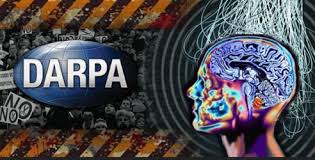

 After the Crash