A Brief History of Nicaragua

IMG_4398

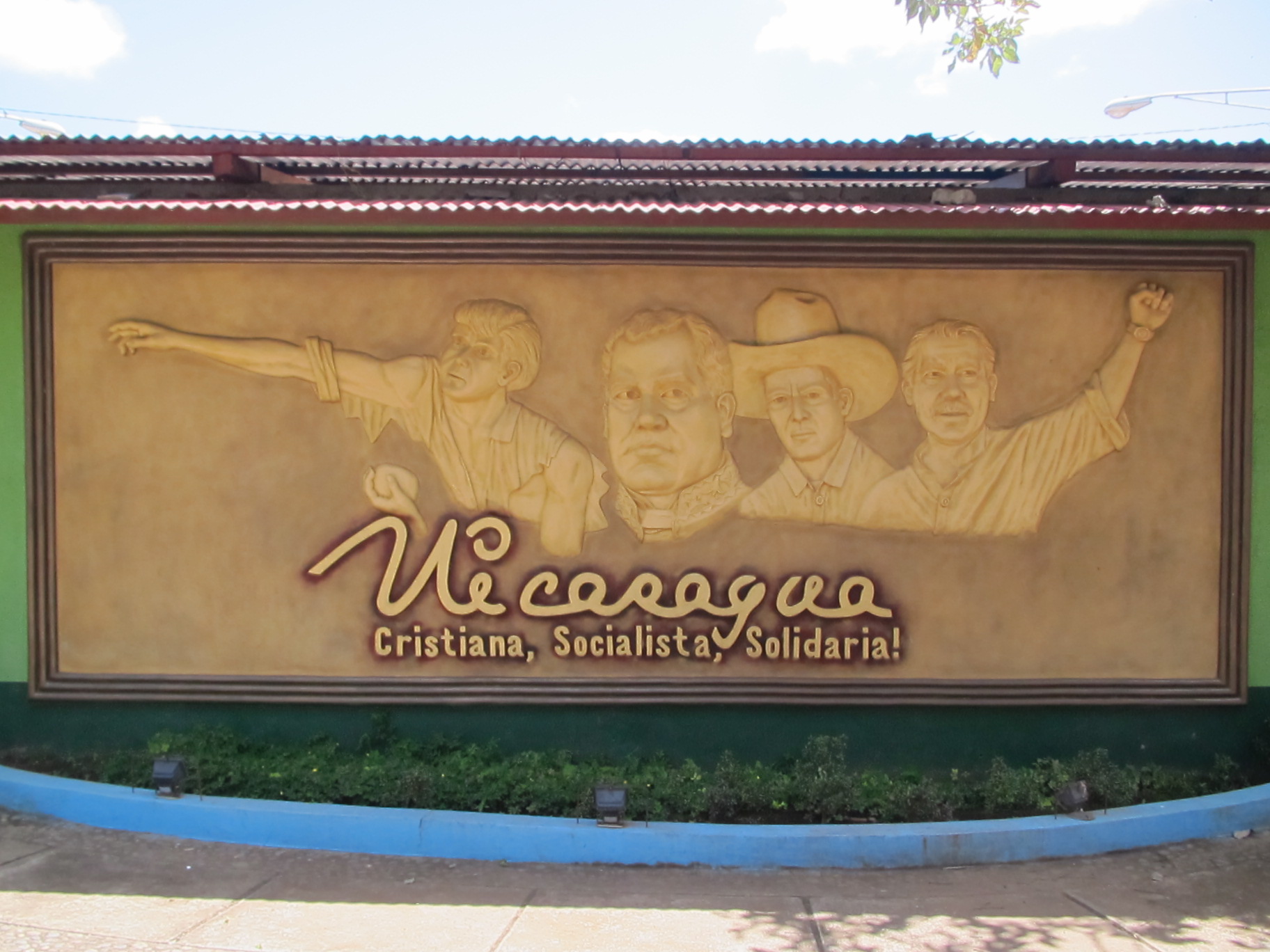
To have even a basic understanding of Nicaraguan culture it’s important to first know a little about the land’s history. In the Pre-Columbian era, the region now called Nicaragua was inhabited by several tribes culturally related to Aztec and Maya civilizations. Not long after Christopher Columbus first reached Nicaragua in 1502, an attempt was made to conquer the region by Gil González Dávila in the 1520s. On April 17, 1523, Dávila first met with Cacique Diriangen, leader of the Dirian peoples. Dávila gave the tribe a three day deadline to become Christians but rather than comply Diriangen led an attack, making him the first known resistance fighter of Nicaragua.
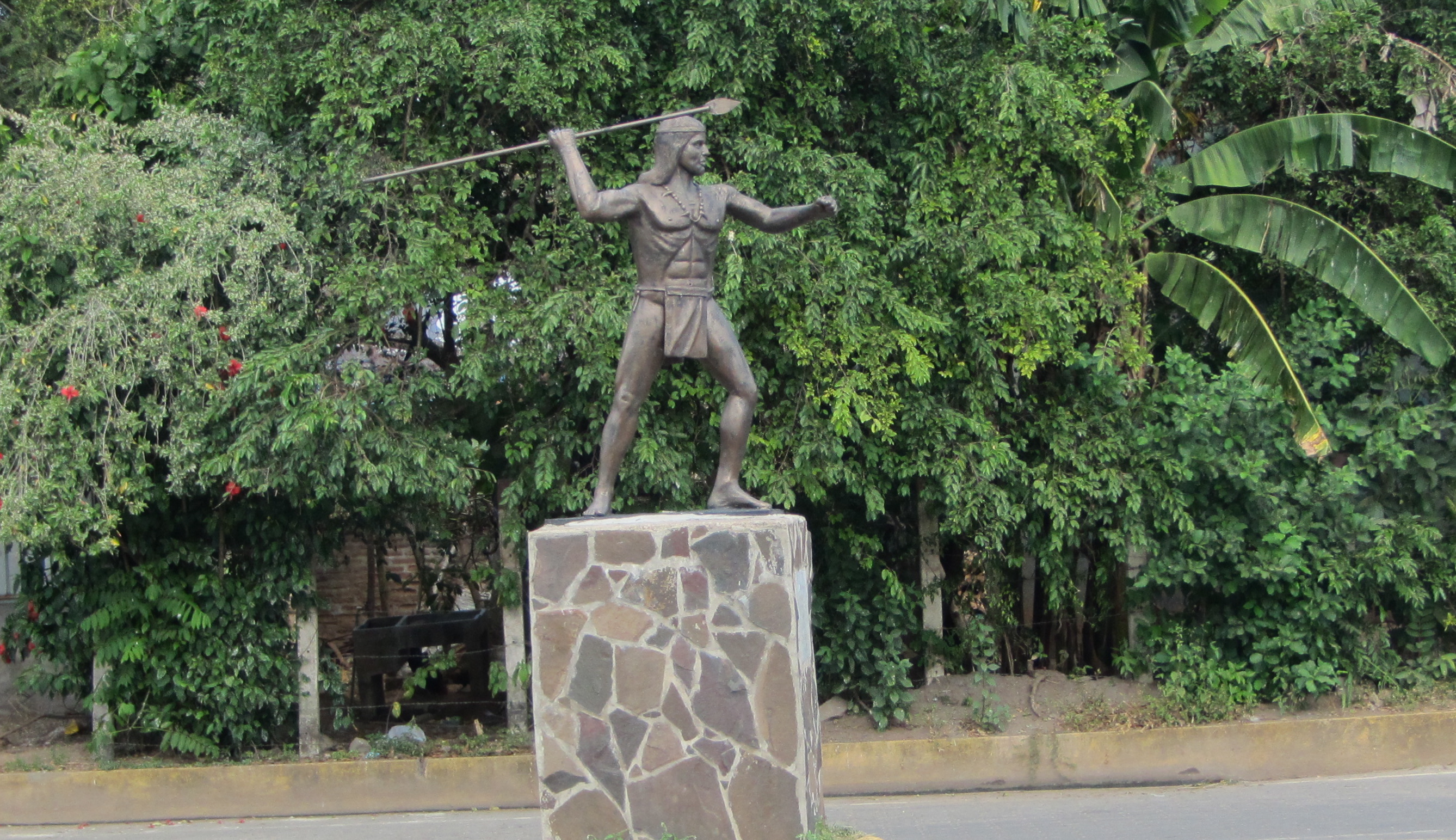
A statue of Diriangen at the entrance to the town of Diria.

A statue of Diriangen at the entrance to the town of Diria.

During over 300 years of colonization, countless indigenous people died of diseases, rival conquistadors waged war on each other, Caribbean pirates raided cities along Lake Nicaragua, British forces fought the Spanish in Nicaragua during a sub-conflict of the the Seven Years’ War, and in 1610 Momotombo volcano erupted, destroying the old capital city of León. In 1838, Nicaragua became an independent republic. Within a few decades, during a power struggle between León and Granada, filibusterer William Walker was hired by the government of León to fight on their side but he exploited the region’s instability and briefly established himself as President of Nicaragua before being forced out of the country a few years later. Three decades of conservative rule followed, during which the U.S. began formulating plans to build a canal across Nicaragua (which may soon become a reality with funding from Chinese corporations). However, when the U.S. shifted their plans to Panama, President Jose Santos Zelaya attempted to negotiate with European partners. Because of the potential threat Zelaya posed to U.S. hegemony and his ambitions to unite the Central American nations, the U.S. government compelled him to resign with the threat of military force and funding of conservative opposition groups, replacing him with a series of puppet regimes. Attempting to prevent insurrection, Nicaragua was occupied by U.S. Marines from 1912 to 1933. From 1927 (the start of Somoza’s rise to power though the National Guard), national hero Augusto César Sandino led a guerrilla war against the conservative government and the U.S. Marines. Shortly after a peace agreement was reached with a newly elected Sacasa administration, the Marines left Nicaragua and the head of the National Guard, Anastasio Somoza García ordered Sandino’s assassination. Sandino was killed by National Guard troops on February 21, 1934. His body was hidden and never found. In 1937 Somoza ousted the Sacasa government in a rigged election.
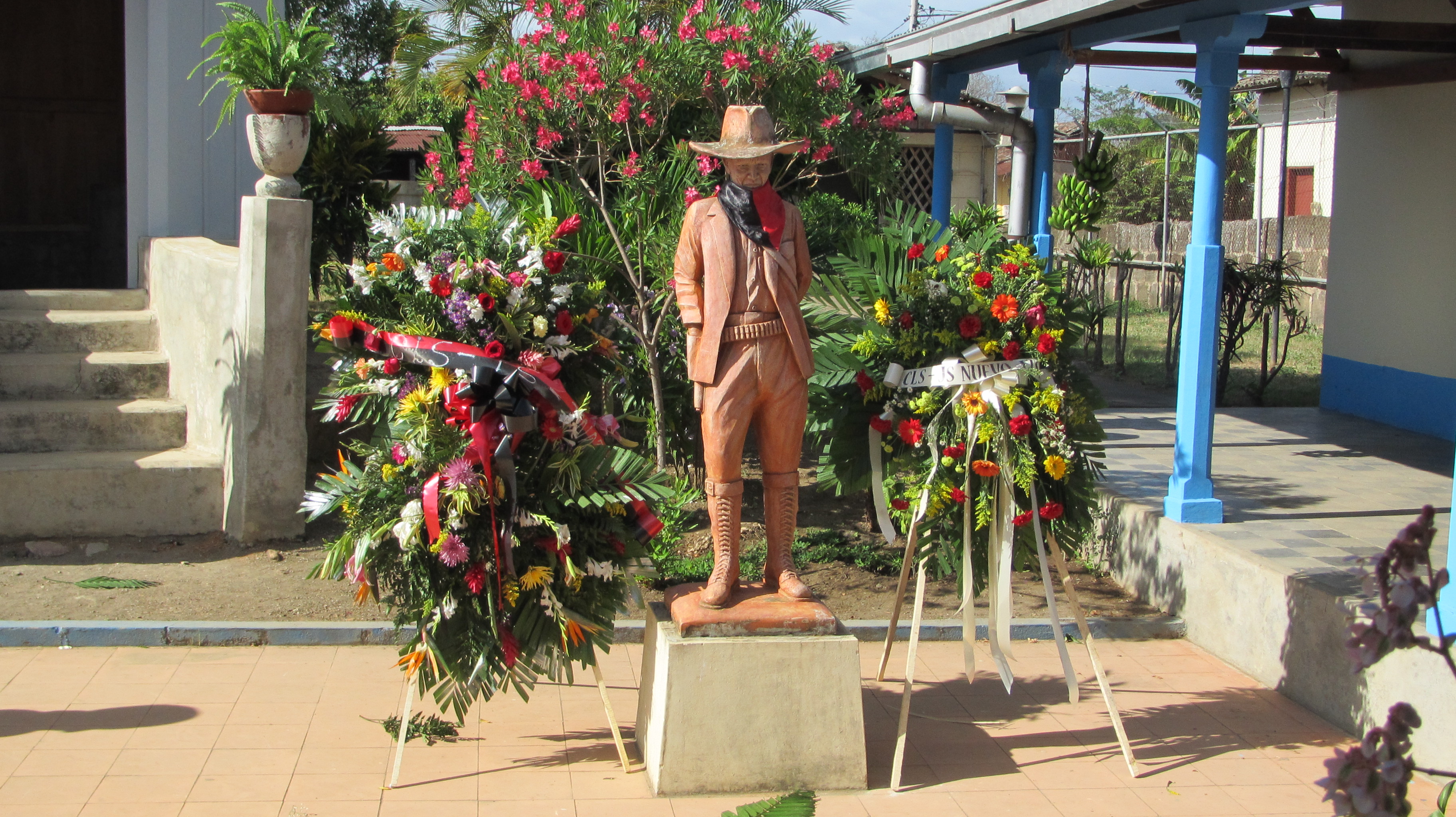
A statue of Sandino at the Augusto C. Sandino Library, a museum located in the house where he grew up in the town of Niquinohomo (Valley of the Warriors).

A statue of Sandino at the Augusto C. Sandino Library, a museum located in the house where he grew up in the town of Niquinohomo (Valley of the Warriors).

The Somoza regime was Nicaragua’s longest lasting hereditary military dictatorship, having ruled for 43 years. The father of the dynasty, Anastasio Somoza García, was famously called “our son of a bitch” by FDR and was assassinated by 27 year old poet Rigoberto López Pérez in León in 1956. In response to increasingly corrupt and reactionary policies of the Somoza government, Carlos Fonseca, Silvio Mayorga, and Tomás Borge led the formation of the Sandinista National Liberation Front (Frente Sandinista de Liberación Nacional or FSLN, named after and inspired by Augusto Sandino) in 1961. In 1972 a major earthquake hit Managua killing 6000 people, injuring tens of thousands and leaving hundreds of thousands homeless. President Anastasio Somoza Debayle mishandled the situation by failing to distribute essential aid and supplies. When it was later revealed that the government was siphoning relief money for personal gain, popularity and membership of the FSLN greatly increased. Hundreds of Chilean refugees also joined their ranks after a CIA-backed coup assassinated Chilean president Salvador Allende in 1973 and installed the dictator Augusto Pinochet the following year.
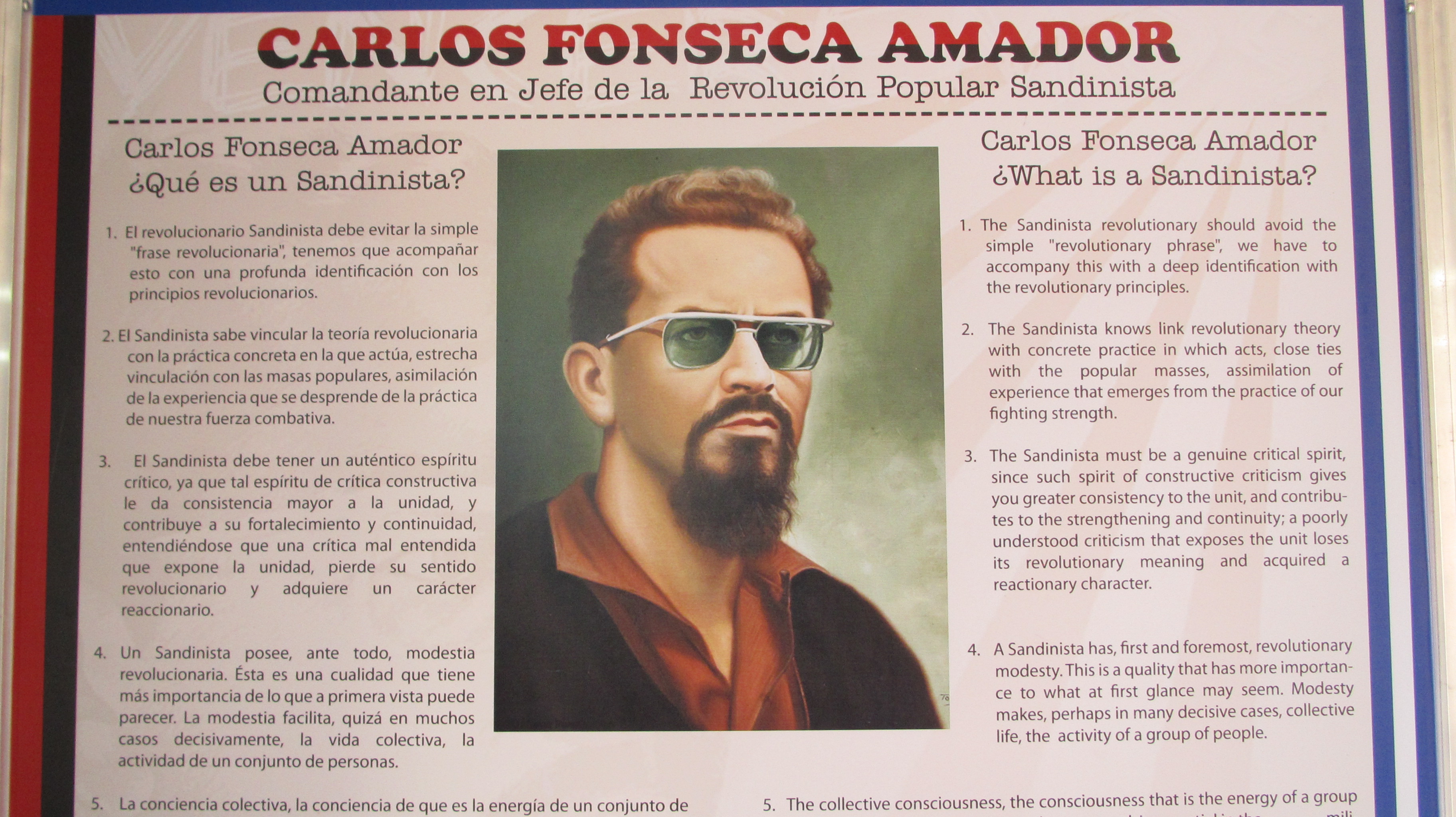
A display at the Carlos Fonseca Museum in Matagalpa.

A display at the Carlos Fonseca Museum in Matagalpa.

When Pedro Joaquin Chamorro, editor of the national newspaper and critic of Somoza, was assassinated by the government on January 10, 1978, a mass insurrection was triggered. By the end of Summer, armed youths took over Matagalpa while factions of the FSLN and civilian recruits had the National Guard under siege in Managua, Masaya, León, Chinandega and Estelí. On July 19, 1979, FSLN forces entered the capital and officially assumed power. Just two days before, Anastasio Somoza Debayle resigned and fled to Miami. He was killed a year later by a rocket attack from members of the Argentinian Revolutionary Workers Party while in exile in Paraguay.

Though the Sandinista government inherited a country in ruins and over a billion dollars in debt, they had an ambitious platform which included:

  • nationalization of property owned by the Somozas and their supporters
  • improved rural and urban working conditions
  • free unionization for all workers, both urban and rural
  • price fixing for commodities of basic necessity
  • improved public services, housing conditions, education
  • abolition of torture, political assassination and the death penalty
  • protection of democratic liberties
  • equality for women
  • non-aligned foreign policy

The Sandinistas had early successes with their education and literacy programs but were soon hindered by emerging conflicts with counter-revolutionary Contra forces heavily financed, armed and trained by the CIA. Investigations into the Iran-Contra scandal revealed some of the funding was acquired through arms sales to Iran and drug shipments to U.S. inner cities (read Gary Webb’s Dark Alliance for more about this). Despite strong support for the opposition by the U.S., the FSLN’s Daniel Ortega won the 1984 elections. Less than a year later the Reagan administration implemented a complete embargo on U.S. trade with Nicaragua that would last five years. By the late 80s, the continuing Contra campaign was notorious for human rights violations, corruption and terrorism. In August 1987, Costa Rican president Oscar Arias Sanchez created a peace accord which led to a ceasefire signed by Contra and Sandinista representatives a year later. Disillusioned by conflict and economic strife (made worse by Reagan’s embargo), Nicaraguan voters elected conservative administrations throughout the 1990s and early 2000s but seeing little improvement and much corruption, they reelected FSLN member Daniel Ortega in 2006 and 2011. So far, there has not yet been radical reforms that corporate investors feared and that more radical liberals hoped for, but Ortega has maintained a skepticism towards capitalism while simultaneously maintaining relations with the U.S. and rivals such as Iran, Libya and Venezuela.

As for how the average Nicaraguan feels about their current situation, opinions seem to vary but I plan to share some of the impressions I got in a future post.

Saturday Matinee: Walker

Walker afiche

Following the modest successes of “Repo Man” and “Sid and Nancy”, director Alex Cox took a chance on an Acid Western filmed in Nicaragua about soldier-of-fortune William Walker. Featuring a script by cult screenwriter Rudy Wurlitzer, a great soundtrack by Joe Strummer of the Clash, and an excellent performance by Ed Harris in the title role, “Walker” (1987) is unlike any historical biopic made before or since. The stylistic madness of the film reflects the madness of Walker’s misadventures. A sense of absurdity and inevitability is added to the proceedings through intentional anachronisms. While this may take viewers out of the story, it also makes it impossible to ignore parallels between the colonialist, imperialist attitudes of Walker’s time and U.S foreign policy of the 1980s and today.

While the film failed at the box-office in the U.S., it became the second highest grossing film in Nicaragua at the time. Walker is a rare film that not only has a radical message but its production was a radical political act in itself, having economically supported the Sandinista government.

Rest in Peace, Amiri Baraka

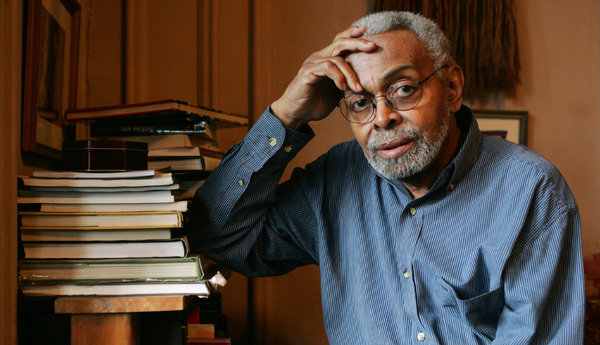
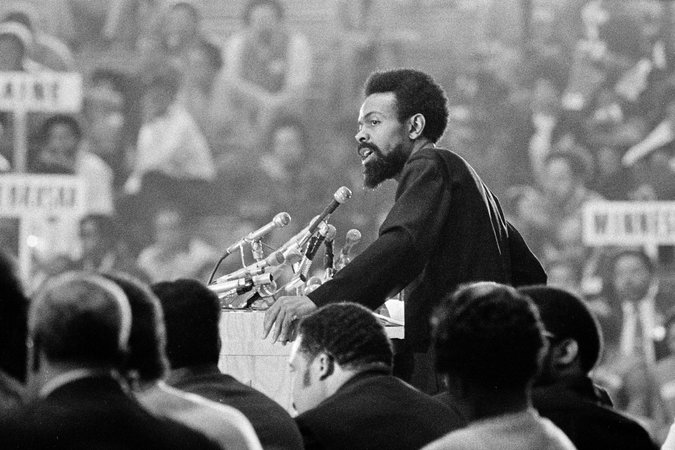
Photo: Gary Settle/The New York Times

Photo: Gary Settle/The New York Times

Yesterday Amiri Baraka, a longtime activist and one of the great American poets, passed away at age 79. The cause of his death, at Beth Israel Medical Center in Newark, New Jersey, was not immediately released, but he was hospitalized in the facility’s intensive care unit since Dec. 21 and had a long struggle with diabetes.

Reflecting the exploratory and always-evolving nature of his mind, Amiri’s career path connected him to the Greenwich Village Beat community, the Black Nationalists, the Black Arts Movement (which he founded in 1964), and Marxist-Leninists. Though his beliefs during different stages of life may have different labels, he was consistently committed to justice, unity, social change and the struggle against oppression. As a revolutionary organizer, cultural critic, poet, novelist, essayist, historian, playwright, publisher and orator, Amiri Baraka’s words and ideas have influenced and inspired untold numbers of people around the world. His works have also been the source of much controversy, outrage and condemnation, at least during the initial time of their release.

One of Baraka’s last great acts as a rabble-rouser was his recitation of his poem “Somebody Blew Up America” before 2,000 people at the September 2002 Geraldine R. Dodge Poetry Festival held in Stanhope, New Jersey. This was incredibly courageous because throughout the country (especially on the East Coast) just one year after the attacks, questioning the official 9/11 story was enough to make one viewed as a conspiracy theorist, an apologist for terrorists, possibly traitorous, and/or insensitive to victims and their families. To do so and implicate the Israeli government, as Amiri Baraka did in his poem, led to accusations of antisemitism from the Anti-Defamation League. Many at the time believed the accusations even though under closer scrutiny it was obviously untrue because in the poem he clearly condemns the murder of Jews in the Holocaust and the lines in question could more accurately be described as anti-Zionist.

Who know why Five Israelis was filming the explosion And cracking they sides at the notion?

This is in reference to the well-documented case of the five dancing Israelis arrested on 9/11.

Who knew the World Trade Center was gonna get bombed Who told 4000 Israeli workers at the Twin Towers To stay home that day Why did Sharon stay away?

The most well-known incidence of Israeli foreknowledge are probably the reports from employees of instant messaging service Odigo. Other cases are listed here: http://911review.org/Wget/www.cooperativeresearch.org/wot/sept11/911mossad.html

Amiri Baraka was appointed Poet Laureate of New Jersey just one month before delivering “Somebody Blew Up America” to the public. Despite pressure from the powers that be to resign immediately, he steadfastly refused. In his own words, from an October 2, 2002 post on his website: “I WILL NOT ‘APOLOGIZE’, I WILL NOT ‘RESIGN!'” Governor Jim McGreevey and state legislators discovered there was no legal way to remove Poet Laureate appointees so in an act revealing their fear, hatred and desperation, they abolished the post in July 2003. This is just one chapter of many from Baraka’s often history-making career, but it’s emblematic of his courage, integrity, dedication to truth, and stubborn stance against injustice. This isn’t to say he was a saint or superhero. None of us are without fault, but what we can learn from Amiri is that development of political thought and civic engagement can and should be lifelong processes, and one can remain true to oneself yet open to new ideas and experiences. Above all, his life is a reminder that simple words (especially when composed and unleashed with skill at the right place and time) contain immense power; sometimes enough to change the world.

Photo: Ruth Fremson/The New York Times

Photo: Ruth Fremson/The New York Times

Somebody Blew Up America

They say its some terrorist, some barbaric A Rab, in Afghanistan It wasn’t our American terrorists It wasn’t the Klan or the Skin heads Or the them that blows up nigger Churches, or reincarnates us on Death Row It wasn’t Trent Lott Or David Duke or Giuliani Or Schundler, Helms retiring

It wasn’t The gonorrhea in costume The white sheet diseases That have murdered black people Terrorized reason and sanity Most of humanity, as they pleases

They say (who say?) Who do the saying Who is them paying Who tell the lies Who in disguise Who had the slaves Who got the bux out the Bucks

Who got fat from plantations Who genocided Indians Tried to waste the Black nation

Who live on Wall Street The first plantation Who cut your nuts off Who rape your ma Who lynched your pa

Who got the tar, who got the feathers Who had the match, who set the fires Who killed and hired Who say they God & still be the Devil

Who the biggest only Who the most goodest Who do Jesus resemble

Who created everything Who the smartest Who the greatest Who the richest Who say you ugly and they the goodlookingest

Who define art Who define science

Who made the bombs Who made the guns

Who bought the slaves, who sold them

Who called you them names Who say Dahmer wasn’t insane

Who? Who? Who?

Who stole Puerto Rico Who stole the Indies, the Philipines, Manhattan Australia & The Hebrides Who forced opium on the Chinese

Who own them buildings Who got the money Who think you funny Who locked you up Who own the papers

Who owned the slave ship Who run the army

Who the fake president Who the ruler Who the banker

Who? Who? Who?

Who own the mine Who twist your mind Who got bread Who need peace Who you think need war

Who own the oil Who do no toil Who own the soil Who is not a nigger Who is so great ain’t nobody bigger

Who own this city

Who own the air Who own the water

Who own your crib Who rob and steal and cheat and murder and make lies the truth Who call you uncouth

Who live in the biggest house Who do the biggest crime Who go on vacation anytime

Who killed the most niggers Who killed the most Jews Who killed the most Italians Who killed the most Irish Who killed the most Africans Who killed the most Japanese Who killed the most Latinos

Who? Who? Who?

Who own the ocean

Who own the airplanes Who own the malls Who own television Who own radio

Who own what ain’t even known to be owned Who own the owners that ain’t the real owners

Who own the suburbs Who suck the cities Who make the laws

Who made Bush president Who believe the confederate flag need to be flying Who talk about democracy and be lying

Who the Beast in Revelations Who 666 Who know who decide Jesus get crucified

Who the Devil on the real side Who got rich from Armenian genocide

Who the biggest terrorist Who change the bible Who killed the most people Who do the most evil Who don’t worry about survival

Who have the colonies Who stole the most land Who rule the world Who say they good but only do evil Who the biggest executioner

Who? Who? Who?

Who own the oil Who want more oil Who told you what you think that later you find out a lie

Who? Who? Who?

Who found Bin Laden, maybe they Satan Who pay the CIA, Who knew the bomb was gonna blow Who know why the terrorists Learned to fly in Florida, San Diego

Who know why Five Israelis was filming the explosion And cracking they sides at the notion

Who need fossil fuel when the sun ain’t goin’ nowhere

Who make the credit cards Who get the biggest tax cut Who walked out of the Conference Against Racism Who killed Malcolm, Kennedy & his Brother Who killed Dr King, Who would want such a thing? Are they linked to the murder of Lincoln?

Who invaded Grenada Who made money from apartheid Who keep the Irish a colony Who overthrow Chile and Nicaragua later

Who killed David Sibeko, Chris Hani, the same ones who killed Biko, Cabral, Neruda, Allende, Che Guevara, Sandino,

Who killed Kabila, the ones who wasted Lumumba, Mondlane, Betty Shabazz, Die, Princess Di, Ralph Featherstone, Little Bobby

Who locked up Mandela, Dhoruba, Geronimo, Assata, Mumia, Garvey, Dashiell Hammett, Alphaeus Hutton

Who killed Huey Newton, Fred Hampton, Medgar Evers, Mikey Smith, Walter Rodney, Was it the ones who tried to poison Fidel Who tried to keep the Vietnamese Oppressed

Who put a price on Lenin’s head

Who put the Jews in ovens, and who helped them do it Who said “America First” and ok’d the yellow stars

Who killed Rosa Luxembourg, Liebneckt Who murdered the Rosenbergs And all the good people iced, tortured, assassinated, vanished

Who got rich from Algeria, Libya, Haiti, Iran, Iraq, Saudi, Kuwait, Lebanon, Syria, Egypt, Jordan, Palestine,

Who cut off peoples hands in the Congo Who invented Aids Who put the germs In the Indians’ blankets Who thought up “The Trail of Tears”

Who blew up the Maine & started the Spanish American War Who got Sharon back in Power Who backed Batista, Hitler, Bilbo, Chiang kai Chek

Who decided Affirmative Action had to go Reconstruction, The New Deal, The New Frontier, The Great Society,

Who do Tom Ass Clarence Work for Who doo doo come out the Colon’s mouth Who know what kind of Skeeza is a Condoleeza Who pay Connelly to be a wooden negro Who give Genius Awards to Homo Locus Subsidere

Who overthrew Nkrumah, Bishop, Who poison Robeson, who try to put DuBois in Jail Who frame Rap Jamil al Amin, Who frame the Rosenbergs, Garvey, The Scottsboro Boys, The Hollywood Ten

Who set the Reichstag Fire

Who knew the World Trade Center was gonna get bombed Who told 4000 Israeli workers at the Twin Towers To stay home that day Why did Sharon stay away?

Who? Who? Who?

Explosion of Owl the newspaper say The devil face cd be seen

Who make money from war Who make dough from fear and lies Who want the world like it is Who want the world to be ruled by imperialism and national oppression and terror violence, and hunger and poverty.

Who is the ruler of Hell? Who is the most powerful

Who you know ever Seen God?

But everybody seen The Devil

Like an Owl exploding In your life in your brain in your self Like an Owl who know the devil All night, all day if you listen, Like an Owl Exploding in fire. We hear the questions rise In terrible flame like the whistle of a crazy dog

Like the acid vomit of the fire of Hell Who and Who and WHO who who Whoooo and Whooooooooooooooooooooo!

Copyright 2002. AMIRI BARAKA.

We’re Number One!*

*the number one nation that the world considers the greatest threat to peace, that is.

464x560xthreat.gif.pagespeed.ic.pNHBtM206x

In an annual global survey reaching 67,806 respondents across 68 countries, conducted by the Worldwide Independent Network and Gallup at the end of 2013, citizens were asked “Which country do you think is the greatest threat to peace in the world today?”. The U.S. topped the list, with 24 percent believing America to be the biggest danger to peace.

Not surprisingly, the U.S. was rated most highly in areas recently targeted for American intervention: the Middle East and North Africa. A majority in Peru, Brazil and Argentina expressed concern about the U.S., which was also flagged as the greatest threat by 32% in Eastern Europe, 37% in Mexico,  17% of Canadians, and 13% of U.S. citizens.

Being a threat apparently doesn’t make America any less desirable as a place to live, as it was still voted as the country that people would most like to move to by a narrow margin of 9%. This doesn’t necessarily mean America is the “best” place to live, but being the biggest threat does give it certain privileges, such as having the most concentrated wealth, being the largest consumer, having the power to dominate and exploit resources of other nations and bomb/embargo those who don’t cooperate, etc.

Snowden’s Christmas Message to the World

Yesterday, NSA whistleblower Edward Snowden gave an “Alternative Christmas Message” on Britain’s Channel 4 television. It was short and concise, yet more substantial and important than a typical State of the Union Address. Though he makes the connection to Orwell’s 1984 that many of us have already made, it’s still a message more people need to become aware of or be reminded of. It’s also a call to action that all freedom loving people can rally behind regardless of nationality and political ideology.

This is the full transcript followed by the unedited video:

Hi, and Merry Christmas. I’m honored to have the chance to speak with you and your family this year.

Recently, we learned that our governments, working in concert, have created a system of worldwide mass surveillance, watching everything we do.

Great Britain’s George Orwell warned us of the danger of this kind of information. The types of collection in the book—microphones and video cameras, TVs that watch us—are nothing compared to what we have available today. We have sensors in our pockets that track us everywhere we go.

Think about what this means for the privacy of the average person. A child born today will grow up with no conception of privacy at all. They’ll never know what it means to have a private moment to themselves—an unrecorded, unanalyzed thought. And that’s a problem, because privacy matters. Privacy is what allows us to determine who we are and who we want to be.

The conversation occurring today will determine the amount of trust we can place both in the technology that surrounds us and the government that regulates it. Together, we can find a better balance. End mass surveillance. And remind the government that if it really wants to know how we feel, asking is always cheaper than spying.

For everyone out there listening, thank you, and Merry Christmas.

Talking About Mandela

NelsonMandela42yo_681489n

By Margaret Kimberley

Originally published at Black Agenda Report

Nelson Mandela belongs to history now. We should be able to look at his whole life, his whole record in perspective. That perspective ought to include who is praising Nelson Mandela nowadays and why.

Freedom Rider: Talking About Mandela

Nelson Mandela’s passing provides an important and rare opportunity for discussion of some very serious issues. We should not fear principled critique of people we admire but instead we have been treated to maudlin self-indulgence, useless idol worship and wrongheaded defense of Mandela’s memory.

Everyone looms large in death, and it is especially difficult to be truthful when a person of Mandela’s stature passes away. South Africa’s apartheid system was an international pariah, reviled by most of humanity and Mandela was the icon who it was hoped would bring it down forever.

Black Americans saw themselves in images of Sharpeville and Soweto. Mandela stood in for our assassinated leaders, political prisoners and victims of COINTELPRO. The South African struggle became our struggle and our chance to achieve what we were denied here at home. Of course Mandela’s release from 27 years of imprisonment brought near universal joy but it should have also raised more questions.

Mandela was one of the signatories of the Freedom Charter, which among other things demanded the nationalization of South Africa’s resources and reparations for the theft of African land by the Europeans. He was a member of the South African communist party, as were other leaders of the African National Congress. We should have known that the South African government wasn’t letting him go free without exacting a huge price. It is difficult to look the gift horse in the mouth, but the silence created a vacuum which made it easier for the rule of international capitalists to stay in place, even as they appeared to give up political control.

Mandela’s early history is something to honor and remember but now his memory comes wrapped in the poison pill of acceptance by the corporate media and disreputable democratic and republican politicians. Now when right wingers condemn Mandela as a communist, his admirers cringe and deny what is true. Instead of examining what a communist is and why the party was supported by the movement, we see black people instead take the position of our enemies and use the word as a slur. We must remember that scorn from certain quarters is a badge of honor.

Contrast the reaction to Mandela’s death with that of the late Venezuelan president Hugo Chavez. While Chavez was equally beloved around the world, the American government gave no glowing tributes and sent no high level delegation. Chavez was every bit as deserving of praise and honor but unlike Mandela he succeeded in standing up to empire. He personally protested against George W. Bush and even called him the devil at the United Nations. Hugo Chavez prevailed when American presidents wanted him out of office. He won re-election and shamed this country when he donated Venezuelan oil to help poor Americans stay warm in the winter. Of course Barack Obama, George W. Bush, Jimmy Carter, and Bill Clinton were absent from his funeral.

Nelson Mandela had difficult choices to make. He chose to accept an IMF loan with strings attached that kept millions in poverty. He and his successors turned their backs on the Freedom Charter. No one can know his intentions but the results of those decisions were disastrous for the masses of black people in South Africa.

Mandela’s release from prison should have been seen as a new stage in the struggle and not the end of it. Those of us who came of age during the anti-apartheid movement and who truly loved the man have to admit the short comings of love when liberation is at stake.

There are many lessons to be learned during this time of mourning. Our emotions play an important role in inspiring us to take action against injustice but they can also betray us when we lack an understanding of what liberation really is.

Liberation may or may not come with a presidential inauguration. It certainly hasn’t come if the usual suspects in the corporate media, Pennsylvania Avenue and Downing Street suddenly give words of praise. The success of certain individuals is not liberation either. There are now black millionaires in South Africa but that does little good to the impoverished masses.

Liberated people don’t live in squalor. They earn more than a living wage. They need not fear loss of job or life if they protest their salaries or working conditions. They have free health care and education. They don’t fear incarceration and they don’t live in stratified societies. They live in safety and the law treats them all as equals to one another. They can protest and oppose the power structure without fear of repercussion. South Africa doesn’t fit these criteria, neither does the United States, and we who love freedom and justice shouldn’t spare anyone when we express these simple and obvious truths.

Margaret Kimberley’s Freedom Rider column appears weekly in BAR, and is widely reprinted elsewhere. She maintains a frequently updated blog as well as at http://freedomrider.blogspot.com. Ms. Kimberley lives in New York City, and can be reached via e-Mail at Margaret.Kimberley(at)BlackAgendaReport.com.

Editor’s note: In contrast to the insightful and honest reporting from Black Agenda Report and other independent news sources, corporate news has predictably been downplaying “controversial” aspects of Mandela’s life that threaten the status quo. In some cases, their coverage reveals surprising negligence, insensitivity and/or stupidity.

Pearl Harbor: The Original 9/11

pearl-harbor

Yesterday marked the 72nd anniversary of the Pearl Harbor attack, which from today’s perspective can be viewed as the template on which 9/11 was modeled after. In both cases, documentation exists implicating the U.S. government. In the case of Pearl Harbor, there’s the McCollum Memo which describes in detail the strategy used to successfully provoke the Japanese government into attacking. Shortly before the Pearl Harbor attack, Secretary of State Hull presented “peace terms” to the Japanese government that all but guaranteed an inevitable attack.

In the case of 9/11, there’s a policy document from Project for a New American Century called Rebuilding America’s Defenses, which provides a clear motive to create a “catastrophic and catalyzing event – like a new Pearl Harbor”. It’s not conclusive proof they were behind the attacks, but it’s suspicious to say the least that the people with established motives for conducting an event like 9/11 were responsible for national security at the time multiple unlikely and implausible coincidences made such a successful attack possible.

A number of other dubious aspects of the Pearl Harbor attack were compiled at Washington’s Blog last year, including:

Active Interference with Military’s Ability to Defend

It has also recently been discovered that the FDR administration took numerous affirmative steps to ensure that the Japanese attack would be successful. These steps included taking extraordinary measures to hide information from the commanders in Hawaii about the location of Japanese war ships (information of which they would normally be informed), denying their requests to allow them to scout for Japanese ships, and other actions to blind the commanders in Hawaii so that the attacks would succeed. See, for example, this book (page 186).

Key Military Players Incommunicado

In addition, the heads of the Army and Navy suddenly disappeared and remained unreachable on the night before Pearl Harbor. And they would later testify over and over that they “couldn’t remember” where they were (pages 320 and 335).

Gagging Whistleblowers

Two weeks after Pearl Harbor, the Navy classified all documents top secret, and the Navy Director of Communications sent a memo ordering all commanders to “destroy all notes or anything in writing” related to the attacks. More importantly, all radio operators and cryptographers were gagged on threat of imprisonment and loss of all benefits. (page 256).

Media Complicity

Amazingly, the Army’s Chief of Staff informed the Washington bureau chiefs of the major newspapers and magazines of the impending attacks before they occurred, and swore them to an oath of secrecy, which the media honored (page 361); and listen to interview here (we personally spent an hour speaking with Stinnett, and find him to be a highly credible and patriotic American.)

Postscript: Coincidentally, Philip Zelikow – the Executive Director of the 9/11 Commission, the administration insider whose area of expertise is the creation and maintenance of “public myths” thought to be true, even if not actually true, who controlled what the 9/11 Commission did and did not analyze, then limited the scope of the Commission’s inquiry so that the overwhelming majority of questions about 9/11 remained unasked – also happened to be the main guy defending the alleged unforeseeablity of the Pearl Harbor attack, who wrote a hit piece on Pearl Harbor historians like Stinnett.

Just like 9/11, Pearl Harbor was used as a tool to focus mass hatred on a race demonized by propaganda. The attack created a culture of fear allowing for suspension of civil liberties while crushing opposition to the war. Most importantly (for powerful interests pushing for war) the attacks were a pretense for pursuing and expanding global political and economic hegemony.

For a comprehensive compilation of evidence of U.S. government involvement in the Pearl Harbor conspiracy, see: http://whatreallyhappened.com/WRHARTICLES/pearl/www.geocities.com/Pentagon/6315/pearl.html

50 Years After JFK

AMERICAN ROYALTY JFK DALLAS 03

In the half century since JFK’s assassination researchers have yet to determine conclusively who did it, but what can be proven definitively is that the official story is a lie. Despite overwhelming evidence that Lee Harvey Oswald could not possibly have killed JFK in the way claimed by the Warren Commission Report, many in the corporate media still cling to the belief that he was the “lone gunman”. Most who have examined the assassination in-depth suspect the involvement of a cabal of different factions, which JFK himself referenced in his famous address to the American Newspaper Publishers Association in 1961.

Some of the people involved include those most opposed to the truth getting out. Documented evidence reveals the CIA was so threatened by independent researchers looking into JFK’s murder, they coined a new ad hominem attack to discredit them: “Conspiracy Theorists”. Worse than assassinating people’s character is actual assassination, which may have been behind the suspiciously large number witnesses holding important information for investigators who died in mysterious circumstances. Others involved in the “anti-conspiracy conspiracy” might include select heads of corporate news outlets who to this day continue to push the official story and discredit all information which contradicts it. Of course many people within groups involved in the cover-up had no direct role in the planning and execution of the assassination. Some might believe mass distrust of government would be too damaging were the truth to get out, others could be doing favors for powerful allies, were paid off, and/or pressured into cooperating.

As much as the establishment would like us to ridicule and dismiss those who believe anything other than the official story, more people than ever are open to alternative theories because so many have been proven to be true over time, there’s greater awareness that governments and corporations do lie, cheat, steal and kill, and the internet has empowered more people than ever to research on their own or at least cross-check information. Though it’s likely we will never see justice for JFK, because of the work of “conspiracy theorists” we are now more aware of the scope of government/corporate criminality and connections between government, wall street, war-profiteers, and the criminal underworld. Information uncovered related to the JFK assassination provides a glimpse into “deep politics” and an alternative historical narrative. Connections to JFK can be made to Watergate, Iran-Contra, and 9/11 (which is not too surprising because they benefit the same military-industrial geopolitical factions). As new evidence continues to expand our understanding of what took place on 11/22/63, such knowledge could also help us understand government/corporate crimes of the present and future.

On the Smells Like Human Spirit podcast, host Guy Evans interviews author and activist Dr. Michael Parenti and whistleblower/ex-secret service agent Abraham Bolden on the events of 11/22/63:

[audio http://traffic.libsyn.com/smellslikepodcast/SLHS111.mp3 ]

James Corbett on why JFK still matters:

Bill Hick’s irreverent take on the official story:

A short film on the JFK assassination: