Two for Tuesday
Reply

By Phil Butler
Source: New Eastern Outlook
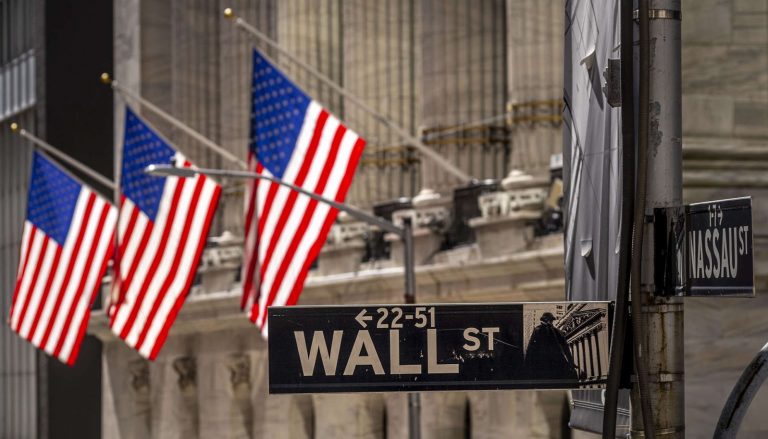
Brazil’s Luiz Inacio Lula da Silva has called on BRICS nations to create an alternative to replace the dollar in foreign trade. Other experts suggest President Joe Biden’s policies will destroy America’s middle class for good. The news comes when China and Russia strengthen ties with Brazil and Latin America. Brazil’s leader questioned the institution of the U.S. dollar as the world’s trade currency in the first place and asked why each country could not trade in its currency.
This brings to the forefront the historical moment when the gold standard was abolished in favor of the current system. When President Richard Nixon moved to abolish the gold standard as a commitment mechanism, his administration ushered in decades of relative volatility and made hard currency.
The exchange of gold was severely curtailed through the Bretton Woods international monetary agreement of 1944. When the International Monetary Fund was established, the U.S. Dollar became the most potent currency in the world. Initially, the role of the IMF was only to assist with international transactions, but as we see today, that institution has far overstepped its original purpose. Today, the IMF is a leverage arm for the United States and a few European nations to fund countries/regimes that align with its policy. The U.S., for instance, has an almost 20% share of contributions to the fund.
The primary purpose of remaining off the gold standard is that the government can print money endlessly, with two primary goals. First, a massive defense budget and needless proxy wars would not be possible if the United States were on the gold standard. Secondly, the people who control the central banks cannot extract interest on national debts that are currently out of control. So, the fiat currency supposedly backed by the “full faith and credit” of the government, the dollar, is worth what lying politicians and finance ministers say it is.
One look at the worldwide bond market reveals a disturbing imbalance. The U.S., which now has over $51 trillion in outstanding debt, has borrowed more to finance wars and programs than China, Japan, Germany, Italy, France, the U.K., and Canada combined. The American taxpayer is responsible for almost 40% of all the foreign debt in the world. And the outlook for the short and long-term future could be better.
President Joe Biden wants to borrow even more when his administration conducts a proxy war against Russia in Ukraine. With billions flowing into Europe’s most corrupt country, Americans are on the precipice of an economic catastrophe not seen since the Great Depression.
According to the Bipartisan Policy Center in Washington and the Congressional Budget Office, the government will no longer be able to pay everyone — including bondholders, Social Security recipients, and federal employees — sometime this summer or early this fall. A New York Times report from late March outlines the situation. But the problem is far worse than many experts suggest. No matter which way lawmakers move, the U.S. has almost insurmountable fiscal issues. The ramifications will be dire whether or not they raise the debt limit. And if the BRICS countries go off the dollar as a trade currency… Well.
Many experts predict that American greenbacks won’t be worth the printed paper if the world stops using the U.S. dollar as its world currency reserve. Moreover, if the dollar loses its value significantly, every American who owes a credit card loan or a home mortgage will find it ten times harder to pay off those debts.
To make matters worse, millions of jobs will be sacrificed for the Federal Reserve to get any financial stability. Analysis from RSM International shows that the central banks must “induce” a recession to get America’s economic situation in check. And the dollar being made useless by the larger world community was not a factor in their analysis.
The bottom line is if we were still on the gold standard, this would be fine. The gold standard reduced the risks of such economic crises and recessions. Income levels were higher when we were on the bullion-backed system. More importantly, the gold standard created hard limits on printing money and limiting military spending. For more intuition on this, this Barron’s report reveals how our current failing system came into being. The information also serves as a crystal ball for what will happen.
As confidence in the dollar wanes and U.S. policy overseas gets more aggressive toward BRICS nations and others, the tipping point of the American hegemony draws closer.
By Tom Prugh
Source: resilience
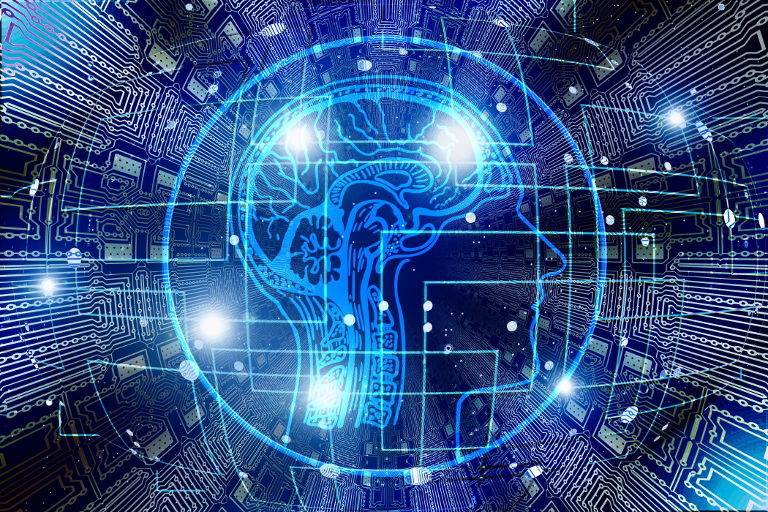
The other day I joined the rush to explore ChatGPT, signing up at the OpenAI website. I gave it my full legal name and correct birth date, and asked it to pretend I had died and to write my obituary. The result was 300 words describing a somewhat boring paragon of a man.
Except maybe for the boring part, I am not that man, much less that paragon.
The obit wasn’t completely wrong, but it did nothing to undermine ChatGPT’s reputation for “uneven factual accuracy.” It said I was born in Ohio (true), but in Cleveland (false) in 1957 (false). It said I was a “committed environmentalist” (true; I worked for the late lamented Worldwatch Institute for the best part of my career), and that I was an active member of “several environmental organizations” (somewhat true, off and on). It described me as an “avid cyclist” (kind of true, but the last time I did a century ride was 1987).
So much for the hits. The misses include accounts of me as:
The obituary proclaimed that my “death” had “left a deep void in the lives of his family, friends, and colleagues” and that I would be “deeply missed by all who knew him.” Well, that would be gratifying—if there is a me to be gratified—but I’ll settle for a drunken wake where somebody plays “Won’t Get Fooled Again.”
Maybe everyone should try this. You too might be amused and/or appalled by the plausible distortions and lies a quasi-intelligent computer program can gin up by accessing the petabytes of data (“data”?) on the Internet—accounts of people and events that are bogus but increasingly, and seamlessly, hard to tell from reality.
I am not a tech nerd and my grasp of what ChatGPT does is rudimentary. But I find it disturbing that this expression of artificial intelligence will instantly fabricate a profile and populate it with—not questions, or blanks to be filled in—but invented factoids tailored to fit a particular format. And this reservation isn’t just me being PO’d about my obit (I’m actually grateful my Internet footprint isn’t bigger); prominent tech geeks also have misgivings. Here’s Farhad Manjoo, for instance:
ChatGPT and other chatbots are known to make stuff up or otherwise spew out incorrect information. They’re also black boxes. Not even ChatGPT’s creators fully know why it suggests some ideas over others, or which way its biases run, or the myriad other ways it may screw up. …[T]hink of ChatGPT as a semi-reliable source.
Likewise Twitter and other social media, whose flaws and dangers are well known by now, and feared by some of the experts who know them best. The most recent book from revered tech guru and virtual reality pioneer Jaron Lanier is called Ten Arguments for Deleting Your Social Media Accounts Right Now. Chapter titles include “Quitting Social Media Is the Most Finely Targeted Way to Resist the Insanity of Our Time,” “Social Media Is Making You into an Asshole,” “Social Media Is Undermining Truth,” and “Social Media Is Making Politics Impossible.”
About those politics: ChatGPT and its successors and rivals, whatever their virtues, are the latest agents in the corruption of the public sphere by digital technology, threatening to extend and deepen the misinformation, fabulism, and division stoked by Twitter and other digital media. Once again, a powerful new technology is out the door and running wild while society and regulators struggle to understand and tame it.
It’s hard to see how this can end well.
An earlier post in this series (DR5) looked at recent archaeological evidence suggesting that humans have explored lots of different means of governing ourselves over the last several thousand years. Eventually, for several reasons, we seem to have ended up with large, top-down, hierarchical organizations. These have lots of problems that won’t be reviewed here, but neuroscientist and philosopher Eric Hoel argues that at least they freed us from the “gossip trap.”
Hoel thinks the main reason small prehistoric human groups didn’t evolve hierarchical governing systems is because of “raw social power,” i.e., gossip:
[Y]ou don’t need a formal chief, nor an official council, nor laws or judges. You just need popular people and unpopular people.
After all, who sits with who is something that comes incredibly naturally to humans—it is our point of greatest anxiety and subject to our constant management. This is extremely similar to the grooming hierarchies of primates, and, presumably, our hominid ancestors.
“So,” Hoel says, “50,000 BC might be a little more like a high school than anything else.”
Hoel believes that raw social power was a major obstacle to cultural development for tens of thousands of years. When civilization did finally arise, it created “a superstructure that levels leveling mechanisms, freeing us from the gossip trap.”
But now, Hoel says, the explosion of digital media and their functions have resurrected it:
[I]f we lived in a gossip trap for the majority of our existence as humans, then what would it be, mentally, to atavistically return to that gossip trap?
Well, it sure would look a lot like Twitter.
I’m serious. It would look a lot like Twitter. For it’s on social media that gossip and social manipulation are unbounded, infinitely transmittable.
…Of course we gravitate to cancel culture—it’s our innate evolved form of government.
Allowing the gossip trap to resume its influence on human affairs—and turbocharging it the way digital media are doing—seems like a terrible way to run a PTA or a garden club, let alone a community or a nation.
The industrialization of made-to-order opinions, “facts,” and “data” via AI and social media, despite efforts to harness them for constructive ends, is plunging us into an epistemological crisis: “How do you know?” is becoming the most fraught question of our time. T.S. Eliot said that “humankind cannot bear very much reality,” but now we are well into an era when we can’t even tell what it is—or in which we simply make it up to please ourselves. The more convincing these applications become, the less anchored we are to the “fact-based” world.
We’ve struggled with this for centuries. Deception is built into nature as an evolutionary strategy, and humans are pretty good at it, both individually and at scale by means of propaganda, advertising, public relations, and spin. These all prey on human social and cognitive vulnerabilities (see DR4).
Humans can only perceive the world partially and indirectly. It starts with our senses, which ignore all but a tiny fraction of the vast amount of data that’s out there. (Sight, for instance, captures only a sliver of the electromagnetic spectrum.) In addition, we’re social creatures and our perceptions of what’s real are powerfully shaped by other people. And now comes the digital mediation of inputs, in which information and data come from the ether via often faceless and anonymous sources and are cloaked or manipulated in ways we may never detect or suspect.
Digital media curate our information about reality, like all media do. But things have changed in the last few decades, and especially in the last few years. It’s been only a generation or so since the old days when Walter, or Chet and David, or any of hundreds of daily newspapers told us what was going on in the world. In those days the curation was handled by a relatively small number of individuals with high profiles. We knew, or could learn, something about who they were and where their biases lay. They were professionals, which also counted for something. There’s no perfect system and this one wasn’t either, but its chain of information custody was a far cry from the distant, anonymized, chat-botted, and algorithm-driven inputs flooding the public sphere now.
One liberal pundit recently noted that the increasing ideological specialization of media outlets “compels customers who care about getting a full and nuanced picture not to buy from just one merchant … .” That’s good advice. But you don’t have to force yourself, teeth clenched, to watch Fox News or MSNBC to get a different point of view; just sit down with your neighbors for a civil chat. In fact, getting away from our TVs and into a room with other people now and then would be good for all of us.
This being a blog about deliberative democracy, I default to deliberation in response to many of our political ills. Deliberation can’t fix everything, and no doubt we will get fooled again—but the tools of democratic deliberation can be used to mitigate the seemingly ubiquitous attempts at manipulation and deceit that surround us. Humans have struggled for a long time to build institutions to check our worst tendencies and have had some success. Digitally mediated information poses a fresh threat and we need institutions to meet these new circumstances.
Deliberative settings built for shaping community action should be among those new institutions. At the very least, they will outperform the social processes seen in high school cafeterias. The methods and structures of deliberative democracy can shorten the chain of information custody as well as restore and nurture the direct human presence of neighbors and fellow citizens: they’re sitting around the same table, and you will see them later at the local school or grocery store. Like them or not (or vice versa), they remain a potent element of our daily lives—a source of influence that can work for good or ill. Deliberation channels normal human interactions in ways that can benefit the community, help check the kinds of fantasist catastrophes so prevalent in digital media, and ground our perceptions of reality in the shared concerns of a community of people who may be less than friends but far more than strangers.

By Martin Purvis
Source: The Film Sufi
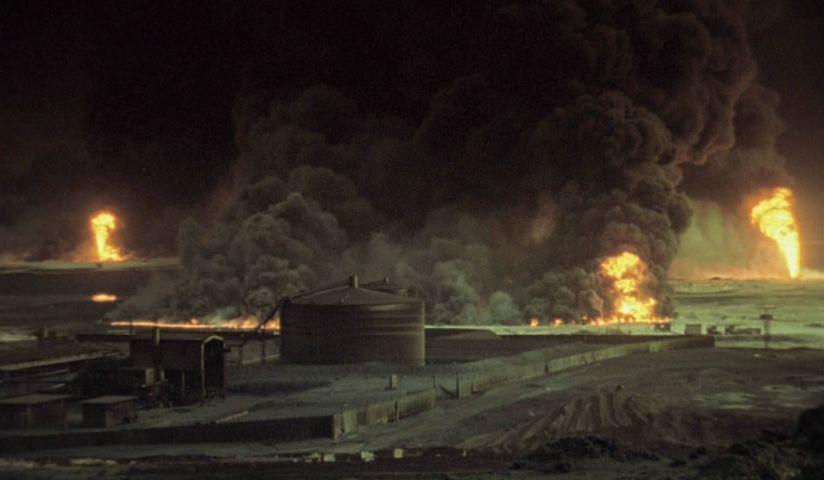
Werner Herzog’s documentary films lie at an extreme distance from the Anglo-American tradition of documentary filmmaking. Part of that distance can be linked to the distinction between two fundamental stances towards the depiction of reality: “Objectivism” and “Interactionism”, which I have discussed in other essays, for example, Avatar (2009), Close-Up (1990), and SiCKO (2007). American documentarians generally align themselves with Objectivism and hold that they are presenting an objective view of reality. An extreme form of this approach is “direct cinema”, which seeks to create the illusion that the filmmaker is an invisible “fly on the wall” and has no impact on the subjects being filmed, thereby supposedly ensuring scientific objectivity. But even in more conventional American documentaries with explicitly polemical content, there is a presumption that objective reality, independent of any observer, is being presented. Continental European documentary filmmakers, on the other hand, have had a tendency to lean towards Interactionism and have made more personal films in which the filmmaker and his or her point of view is a confessed part of the narrative. Herzog is so much on the Interactionist side of the ledger that his documentary films not only include his personal perspective, but seem primarily to be his own personal essays about the world – he, himself, is an implicit focus of the film, and the “reality” depicted is self-consciously Herzog’s own reality. Lessons of Darkness (Lektionen in Finsternis, 1992), which was shot in Kuwait in the immediate aftermath of the First Gulf War (1990-91) is one such example of Herzog’s style.
Although focussed on the harrowing events and ravages that happened in Iraq and Kuwait during that time, Lessons of Darkness has clear-cut affinities with Herzog’s first documentary Fata Morgana (1971), which was shot in Africa. In that earlier film Herzog edited footage that he had (seemingly randomly) shot in the African Sahel and tried to fashion a dark vision about man’s hopeless ineffectiveness, and consequently likely impermanent existence, on the planet – an ephemeral existence like a mirage. Some twenty years later, with Lessons of Darkness, Herzog again collected footage, this time in Kuwait, and then assembled his photographic essay in post-production, and again his vision is one of dark apocalypse and pessimism concerning man’s prospects for a sustainable future. In fact both Fata Morgana and Lessons of Darkness contain vague commentary that suggests that humankind on Earth is being clinically observed, with amazement and horror, by a visitor from another planet. However, in neither film is there any real narrative or sequence of events that could amount to a story – they are both more or less personal essays of despair. But if we assert that they are both cinematic commentaries, we have also to concede that neither of these two films provides an explicit disquisition or argument, or even has a clearly articulated thesis. What we are really presented with is just a suggestive sequence of images, on which the viewer reflectively fills in many of the blanks and faces a greater-than-usual task of constructing his or her own story or vision. This process of placing much of the narrative burden on the viewer essentially fails with Fata Morgana (which was almost a random collection of lurid images of garish and pathetic human folly), but is more successful with Lessons of Darkness, primarily because the viewer in this case is more likely to bring to the film considerable familiarity with what happened during the “First Gulf War”and use that material for his own imaginative reconstructions.
The greater part of Lessons of Darkness consists of lurid scenes of fires in the Kuwaiti oilfields burning out of control and spewing gargantuan clouds of smoke. These images are interspersed with images of devastation, both at the physical and human level, and with human firefighters seemingly overmatched in their efforts to quell the multiple, raging infernos. The images are apparently meant to be abstractly horrific, and there is almost no spoken dialogue and no explicit reference to the Gulf War, or to specific places, or to any historical context. To set some kind of context, Lessons of Darkness opens with images of wasteland and destruction, and the prologue refers to a planet “in our solar system” which evidently has undergone a catastrophic war. So the viewer sees things simultaneously with respect to two overarching narrative perspectives: the real Gulf War and an abstract metaphorical fable of how bizarre humankind’s self-destructive impulses might be to a detached, external observer. The film is then presented partitioned into thirteen chapters, each identified by apocalyptic, perhaps oracular, intertitles which suggest chapters to some sort of apocryphal Book of Revelations.
Herzog’s fascination with fire extends to a fascination with its opposite, darkness (hence the title). The demonic forces that lurk inside the hearts of men seem to be beyond civilized understanding or rational control. These issues of cruelty and madness are as elemental as fire, itself, and are not confined to the Middle East [1]. This apparently was Herzog’s project: not to focus on just the particular horror of what happened in one part of the globe, but to fashion a fiction that would portray a more universal damnation. To this end, he opens the film with his own fabricated quotation (“The collapse of the stellar universe will occur, like creation, in grandiose splendor”) which he probably attributes to Blaise Pascal in order to give it the appropriate resonance – Pascal is perhaps not so well-known to English-speaking audiences, but his genius occupies a peculiarly iconic place in the European mind.
The horror that Herzog attempts to convey by his images of man-made Hell is enhanced by its unspeakable nature – it is beyond human articulation. Instead of a deafening roar from the fires drowning out occasional shouts from the firefighters, much of the stoundtrack is filled with funereal, dirge-like orchestral music from Mahler, Prokofieff, Verdi, Wagner, and Arvo Part. The unspeakable nature of this horror is explicitly referenced by the two mothers: one mother is unable to speak comprehensibly, and the child of the other mother has been rendered speechless by rational choice. It is left to our imaginations to fill out these nightmares.
Notes:
“The methods were brutal. Army trucks dumped gallons of deadly germs alongside roads and railway lines linking Chinese towns so that infections would spread from town to town; planes dropped porcelain bombs containing infected fleas on dozens of villages, causing devastating outbreaks of bubonic plague. The Japanese laced more than 1,000 wells in the area of Harbin with typhoid bacilli. They also inserted typhus into bottles of lemonade that children loved to drink in the summer, Harris reported. In Nanking, they distributed anthrax-filled chocolate and cake to hungry children. The Japanese discovered that packing fountain pens and walking sticks with deadly germs was a particularly effective way of secretly disseminating them. In 1940, Major General Ishii sent a train carrying 70 kilograms of typhus bacterium, 50 kilograms of cholera germs, and 5 kilograms of plague-infected fleas to the city of Hangzhou, a holiday resort favored by Shanghai’s wealthy. From there, the germs were dumped into ponds and reservoirs and spread by aerial spraying, contaminating all life in fields of wheat and millet during the harvest.”
By John & Nisha Whitehead
Source: The Rutherford Institute
“Since when have we Americans been expected to bow submissively to authority and speak with awe and reverence to those who represent us? The constitutional theory is that we the people are the sovereigns, the state and federal officials only our agents. We who have the final word can speak softly or angrily. We can seek to challenge and annoy, as we need not stay docile and quiet.”— Justice William O. Douglas
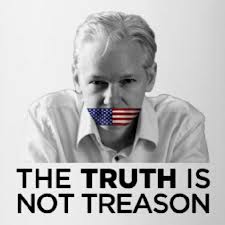
Absolutely, there is a war on free speech.
To be more accurate, however, the war on free speech is really a war on the right to criticize the government.
Although the right to speak out against government wrongdoing is the quintessential freedom, every day in this country, those who dare to speak their truth to the powers-that-be find themselves censored, silenced or fired.
Indeed, those who run the government don’t take kindly to individuals who speak truth to power.
In fact, the government has become increasingly intolerant of speech that challenges its power, reveals its corruption, exposes its lies, and encourages the citizenry to push back against the government’s many injustices.
This is nothing new, nor is it unique to any particular presidential administration.
For instance, as part of its campaign to eradicate so-called “disinformation,” the Biden Administration likened those who share “false or misleading narratives and conspiracy theories, and other forms of mis- dis- and mal-information” to terrorists. This government salvo against consumers and spreaders of “mis- dis- and mal-information” widens the net to potentially include anyone who is exposed to ideas that run counter to the official government narrative.
In his first few years in office, President Trump declared the media to be “the enemy of the people,” suggested that protesting should be illegal, and that NFL players who kneel in protest during the national anthem “shouldn’t be in the country.”
Then again, Trump was not alone in his presidential disregard for the rights of the citizenry, especially as it pertains to the right of the people to criticize those in power.
President Obama signed into law anti-protest legislation that makes it easier for the government to criminalize protest activities (10 years in prison for protesting anywhere in the vicinity of a Secret Service agent). The Obama Administration also waged a war on whistleblowers, which The Washington Post described as “the most aggressive I’ve seen since the Nixon administration,” and “spied on reporters by monitoring their phone records.”
Part of the Patriot Act signed into law by President George W. Bush made it a crime for an American citizen to engage in peaceful, lawful activity on behalf of any group designated by the government as a terrorist organization. Under this provision, even filing an amicus brief on behalf of an organization the government has labeled as terrorist would constitute breaking the law.
President Franklin D. Roosevelt authorized the FBI to censor all news and control communications in and out of the country in the wake of the attack on Pearl Harbor. Roosevelt also signed into law the Smith Act, which made it a crime to advocate by way of speech for the overthrow of the U.S. government by force or violence.
President Woodrow Wilson signed into law the Espionage and Sedition Acts, which made it illegal to criticize the government’s war efforts.
President Abraham Lincoln seized telegraph lines, censored mail and newspaper dispatches, and shut down members of the press who criticized his administration.
In 1798, during the presidency of John Adams, Congress passed the Alien and Sedition Acts, which made it a crime to “write, print, utter or publish … any false, scandalous, and malicious” statements against the government, Congress or president of the United States.
Clearly, the government has been undermining our free speech rights for quite a while now.
Good, bad or ugly, it’s all free speech unless as defined by the government it falls into one of the following categories: obscenity, fighting words, defamation (including libel and slander), child pornography, perjury, blackmail, incitement to imminent lawless action, true threats, and solicitations to commit crimes.
This idea of “dangerous” speech, on the other hand, is peculiarly authoritarian in nature. What it amounts to is speech that the government fears could challenge its chokehold on power.
The kinds of speech the government considers dangerous enough to red flag and subject to censorship, surveillance, investigation, prosecution and outright elimination include: hate speech, bullying speech, intolerant speech, conspiratorial speech, treasonous speech, threatening speech, incendiary speech, inflammatory speech, radical speech, anti-government speech, right-wing speech, left-wing speech, extremist speech, politically incorrect speech, etc.
Conduct your own experiment into the government’s tolerance of speech that challenges its authority, and see for yourself.
Stand on a street corner—or in a courtroom, at a city council meeting or on a university campus—and recite some of the rhetoric used by the likes of Thomas Jefferson, Patrick Henry, John Adams and Thomas Paine without referencing them as the authors.
For that matter, just try reciting the Declaration of Independence, which rejects tyranny, establishes Americans as sovereign beings, recognizes God (not the government) as the Supreme power, portrays the government as evil, and provides a detailed laundry list of abuses that are as relevant today as they were 240-plus years ago.
My guess is that you won’t last long before you get thrown out, shut up, threatened with arrest or at the very least accused of being a radical, a troublemaker, a sovereign citizen, a conspiratorialist or an extremist.
Try suggesting, as Thomas Jefferson and Benjamin Franklin did, that Americans should not only take up arms but be prepared to shed blood in order to protect their liberties, and you might find yourself placed on a terrorist watch list and vulnerable to being rounded up by government agents.
“What country can preserve its liberties if their rulers are not warned from time to time that their people preserve the spirit of resistance. Let them take arms,” declared Jefferson. He also concluded that “the tree of liberty must be refreshed from time to time with the blood of patriots and tyrants.” Observed Franklin: “Democracy is two wolves and a lamb voting on what to have for lunch. Liberty is a well-armed lamb contesting the vote!”
Better yet, try suggesting as Thomas Paine, Marquis De Lafayette, John Adams and Patrick Henry did that Americans should, if necessary, defend themselves against the government if it violates their rights, and you will be labeled a domestic extremist.
“It is the duty of the patriot to protect his country from its government,” insisted Paine. “When the government violates the people’s rights,” Lafayette warned, “insurrection is, for the people and for each portion of the people, the most sacred of the rights and the most indispensable of duties.” Adams cautioned, “A settled plan to deprive the people of all the benefits, blessings and ends of the contract, to subvert the fundamentals of the constitution, to deprive them of all share in making and executing laws, will justify a revolution.” And who could forget Patrick Henry with his ultimatum: “Give me liberty or give me death!”
Then again, perhaps you don’t need to test the limits of free speech for yourself.
One such test is playing out before our very eyes on the national stage led by those who seem to believe that only individuals who agree with the government are entitled to the protections of the First Amendment.
To the contrary, James Madison, the father of the Constitution, was very clear about the fact that the First Amendment was established to protect the minority against the majority.
I’ll take that one step further: the First Amendment was intended to protect the citizenry from the government’s tendency to censor, silence and control what people say and think.
Having lost our tolerance for free speech in its most provocative, irritating and offensive forms, the American people have become easy prey for a police state where only government speech is allowed.
You see, the powers-that-be understand that if the government can control speech, it controls thought and, in turn, it can control the minds of the citizenry.
This is how freedom rises or falls.
Americans of all stripes would do well to remember that those who question the motives of government provide a necessary counterpoint to those who would blindly follow where politicians choose to lead.
We don’t have to agree with every criticism of the government, but we must defend the rights of all individuals to speak freely without fear of punishment or threat of banishment.
Never forget: what the architects of the police state want are submissive, compliant, cooperative, obedient, meek citizens who don’t talk back, don’t challenge government authority, don’t speak out against government misconduct, and don’t step out of line.
What the First Amendment protects—and a healthy constitutional republic requires—are citizens who routinely exercise their right to speak truth to power.
Tolerance for dissent is vital if we are to survive as a free nation.
While there are all kinds of labels being put on so-called “unacceptable” speech today, the real message being conveyed by those in power is that Americans don’t have a right to express themselves if what they are saying is unpopular, controversial or at odds with what the government determines to be acceptable.
By suppressing free speech, the government is contributing to a growing underclass of Americans who are being told that they can’t take part in American public life unless they “fit in.”
Mind you, it won’t be long before anyone who believes in holding the government accountable to respecting our rights and abiding by the rule of law is labeled an “extremist,” is relegated to an underclass that doesn’t fit in, must be watched all the time, and is rounded up when the government deems it necessary.
It doesn’t matter how much money you make, what politics you subscribe to, or what God you worship: as I make clear in my book Battlefield America: The War on the American People and in its fictional counterpart The Erik Blair Diaries, we are all potential suspects, terrorists and lawbreakers in the eyes of the government.

By Timothy Alexander Guzman
Source: Silent Crow News
That same old American institution called the United States Agency for International Development (USAID) who supports regime change and wars across the world has a board member who wrote an opinion piece for The Hill, a liberal online news organization on the relevance of the rules-based order and how much the world needs it. Harley Lippman, a board member for USAID wrote about how the rules-based order (New World Order) will continue despite the challenges of a multipolar world and the peace dividends it has brought to the table thus far. Lippman’s claims about where the rules-based order stands in this new world of geopolitics is propaganda at its best, so you might already know where this article is going since the liberal media is absolutely pro-establishment and pro-war.
Lippman wrote an opinion piece called ‘The rules-based order will endure, despite ‘shifting sands’ based on Russia and China’s achievements that includes establishing a diplomatic solution between Iran and Saudi Arabia and bringing back Syria into the fold with the rest of the Middle East which is a big deal, but to Lippman, it “rings hollow”, its insincere:
Russia and China recently have attempted to act as chief mediators on the international stage. Russia reportedly facilitated meetings between Saudi Arabia and Syria to restore ties and reopen their respective consular services, and China played peacemaker between Saudi Arabia and Iran. More recently, Saudi Arabia’s Cabinet approved a decision to join the Shanghai Cooperation Organization (SCO) as a dialogue partner. The SCO was created to counter U.S. economic hegemony and includes longtime adversaries and partners of our country. These recent developments have been described by some as evidence of the decline of the U.S.-led rules-based order.
Despite the clamoring of pundits to bemoan America’s decline, Moscow and Beijing’s attempts at diplomatic relevance ring hollow as the U.S. shores up the post-World War II international order by reinvigorating existing strategic alliances that underpin various security architectures
Lippman says that the US-led rules-based order is in decline but at the same time, it is working on replenishing its old alliances as a counterweight to Russia and China even though they were able to forge a peaceful solution among nations who were at odds against each other at one time or another. However, Russia and China are trying to establish real peaceful solutions among nations and that should be welcomed by the international community. Lippman says that “the U.S. values its alliance with Japan and South Korea in the Asia-Pacific to serve as a counterweight to an increasingly belligerent China.” A belligerent China? How many military bases does the US have around the world? In fact, how many of these bases surround China? China’s peace initiatives should be welcomed at all costs. Bringing peace is a good thing while the US and its Western allies (and Israel) has brought endless wars and chaos on almost every continent on the planet, in fact the US war machine has killed more than 20 million people since World War II. In other words, when Lippman says that the US “values” its alliance with Japan and South Korea, he is talking about the continuation of selling them military hardware and keeping the same US bases in place to counter China’s growing influence in the region so that the US war machine can keep antagonizing China in the South Pacific sea at all costs even if it means starting a war.
Lippman also takes aim at Russia, “Correspondingly, America’s role in NATO is pivotal to the West’s efforts to face off an aggressive Russia that threatens the security of Europe and the Balkans.” Seriously? Wasn’t Ukraine’s continuous bombardment of the Eastern Donbass region for more than 8 years killing at least 8,000 Ukrainian people who spoke Russian an aggressive action that was and still is supported by the US-NATO alliance?
The US has used its alliances to counter Russia and China as part of the old rules-based order strategy of divide and conquer in Asia and Eastern Europe. In other words, he wants Washington to keep the same policies of funding and arming one-side against another to advance the US war machine and continue the rules-based order to establish their Great Reset agenda.
Concerning the Middle East, Russia and China also have a wide range of interests with Iran, therefore that arrangement angers the US political establishment and their bosses who are based in Israel, and that’s the other problem for Lippman:
In contrast to America’s values-based approach to allies and partners, engagement with Russia and China offers only a transactional and interest-based relationship that rests on economic ties both countries share equally with such aggressors as Iran and Iran’s proxies
Russia and China’s strategic partnership with Iran, Syria and now Saudi Arabia bypasses US interests in the region so for most of the people in the Middle East, it’s a new development that is welcomed in a region that has only experienced regime change and endless wars that the US and its closest ally, Israel sponsored and at times participated in since the end of World War II:
Riyadh’s decision to restore diplomatic relations with Tehran via China is an attempt to reduce regional tensions with an aggressive neighbor committed to militant Islam and regional hegemony. In the near term, Tehran will likely seek to avoid actions that threaten this new relationship. However, absent an Iranian decision to radically redefine its foreign policy and abolish the Revolutionary Guards, this rapprochement is likely to collapse in the wake of fresh Iranian violence
First, let me start by saying that Iran is not looking to expand into a hegemonic footprint in the Middle East, it is Israel who is looking to expand its territorial ambitions by hoping to destroy all its Arab neighbors’ piece by piece and carry-out Oded Yinon’s plan or what is known as the “Greater Israel” project. Rabbi Fischmann, a member of the Jewish Agency for Palestine testified to the U.N. Special Committee of Enquiry on July 9th, 1947, said that “the Promised Land extends from the River of Egypt up to the Euphrates, it includes parts of Syria and Lebanon.” But Iran is the aggressor? The rules-based order will continue if the U.S. Central Command (CENTCOM) focuses on its security commitments according to Lippman:
America’s security commitment to the region must be paramount. U.S. Central Command (CENTCOM) remains the foundation of the region’s security architecture that protects trade and energy arteries critical to global economic stability. The Biden administration should ensure that CENTCOM remains well-resourced and focused on building regional partnerships. Furthermore, economic ties must be strengthened. American firms view the region with enthusiasm. The Biden administration must be more vocal in its support for trade and expedite approvals for technology sharing on 5G and 6G communications, green energy, and space. Furthermore, increased cabinet-level visits to the region would demonstrate the U.S.’s commitment to the region. While this will not offset the inevitable commercial relationships between the Gulf States and China, it will assert America’s ability to compete in this strategic region
Using the Sunni-Shiite argument is propaganda to further instigate that there is a sectarian divide in the Arab world for thousands of years’, and the threat of a nuclear-armed Iran and because of that, the US security structure under CENTCOM will remain in place since the US and Saudi Arabia has a long-standing relationship. China’s peace deal between Iran and Saudi Arabia is what he calls “cosmetic”, and that China has no place for its peace initiative in the Middle East:
Despite the region’s “shifting sands” of ever-changing relationships, the Sunni-Shiite tensions are over a thousand years old and Iran’s advancement toward nuclear status has every U.S. partner in the Middle East on alert. The traditional security architecture underpinned by U.S.-Saudi strategic ties will remain intact. As a result, future Chinese transactional neutrality is likely to be cosmetic, devoid of any significant strategic substance.
The U.S. and its allies can best sustain the rules-based order established after WWII through robust engagement with allies and partners in which we show that we understand and support their core economic and security interests in the same way that we expect they will do the same for American interests
Tell that to the families of the 20 million people that US and its NATO allies killed since the end of World War II. The old rules-based order has collapsed in the face of a new multipolar world, as for Harley Lippman’s vision for the US and its globalist cabal to continue its hegemonic agenda in this new world of ours, is just wishful thinking.
By Charles Hugh Smith
Source: Of Two Minds
I do not claim any expertise in social contract theory, but in broad brush we can delineate two implicit contracts: one between the citizenry and the state (government) and another between citizens.
We can distinguish between the two by considering a rural county fair. Most of the labor to stage the fair is volunteered by the citizenry for the good of their community and fellow citizens; they are not coerced to do so by the government, nor does the government levy taxes to pay its employees or contractors to stage the fair.
The social contract between citizens implicitly binds people to obeying traffic laws as a public good all benefit from, not because a police officer is on every street corner enforcing the letter of the law.
The social contract between the citizens and the state binds the government to maintaining civil liberties, equal enforcement of the rule of law, defending the nation, and in the 20th century, providing social welfare for the disadvantaged, disabled and low-income elderly.
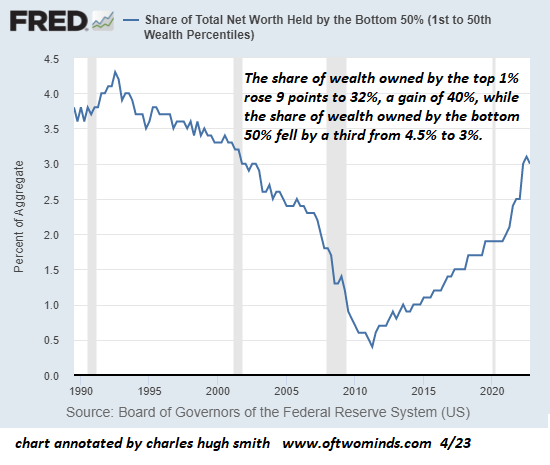
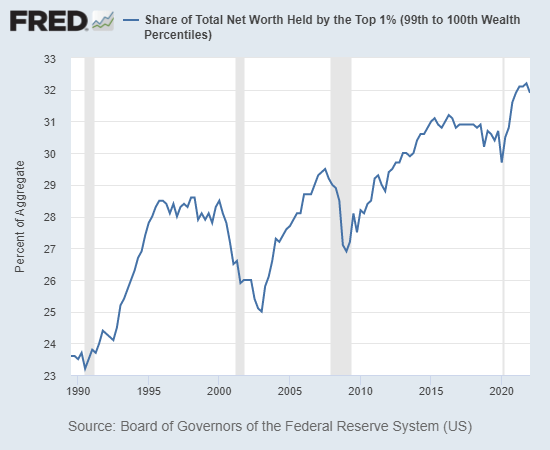
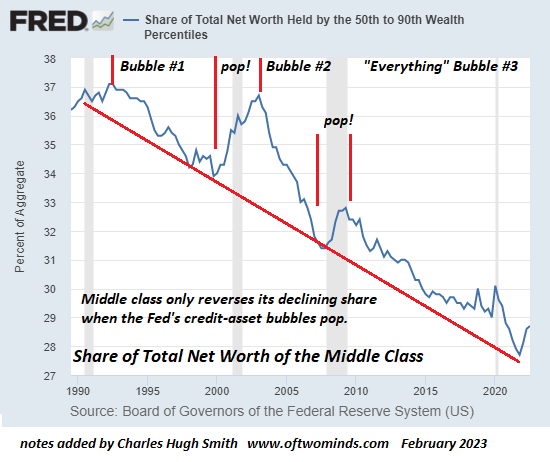
Critiques of “trickle down economics” focus on income inequality as a key metric of the Social Contract: rising income inequality is de facto evidence that the Social Contract is broken.
I think this misses the key distinction in the Social Contract between citizens and the state, which is the legitimacy of the process of wealth creation and the fairness of the playing field and the referees, i.e. that no one is above the law.
Few people begrudge legitimately earned wealth, for example, the top athlete, the pop star, the tech innovator, the canny entrepreneur, the best-selling author, etc. The source of these individual’s wealth is transparent, and any citizen can decline to support this wealth creation by not paying money to see the athlete, not buying the author’s books, not shopping at the entrepreneur’s stores, etc.
The Social Contract is broken not just by wealth inequality per se but by the illegitimate process of wealth acquisition, i.e. the state has tipped the scales in favor of the few behind closed doors and routinely ignores or bypasses the intent of the law even as the state claims to be following the narrower letter of the law.
By this definition, the Social Contract in America has been completely smashed. One sector after another is dominated by cartel-state partnerships that are forged and enforced in obscure legislation written by lobbyists. Once the laws have been riddled with loopholes and the regulators have been corrupted, “no one is above the law” has lost all meaning.
Those who violate the intent of the law while managing to conjure an apparent compliance with the letter of the law are shysters, scammers and thieves who exploit the intricate loopholes of the system, all the while parading their compliance as evidence the system is fair and just. In this way, the judicial system becomes part of the illegitimate process of wealth accumulation.
In America, political and financial Elites are above the intent of the law. Is bribery of politicos illegal? Supposedly it is, but in practice it is entirely and openly legal.
This is the norm in banana republics, whose ledgers are loaded with thousands of codes and regulations that are routinely ignored by those in power. In the Banana Republic of America, financial crimes go uninvestigated, unindicted and unpunished: banks and their management are essentially immune to prosecution because the crimes are complex (tsk, tsk, it’s really too much trouble to investigate) and they’re “too big to prosecute.”
The rot has seeped from the financial-political Aristocracy to the lower reaches of the social order. The fury of those still working legitimate jobs and paying their taxes is grounded in a simple, obvious truth: America is now dominated by scammers, cheaters, grifters and those gaming the system, large and small, to increase their share of the swag.
The honest taxpayer is a chump, a mark who foolishly ponies up the swag that’s looted by the smart operators. Everyone knows that the vast majority of wealth accumulation in America flows not from transparent effort on a level playing field, but from persuading the Central State (the Federal government and the Federal Reserve) to enforce cartels and grant monopolistic favors such as tax shelters designed for a handful of firms and unlimited credit to private banks.
When scammers large and small live better than those creating value in the real economy, the Social Contract has ceased to exist. When the illegitimate process of wealth acquisition–a rigged playing field, a bought-off referee, and an Elite that’s above the law by every practical measure–dominates the economy and the political structure, the Social Contract has been shattered, regardless of how much welfare largesse is distributed to buy the complicity of state dependents.
Once the chumps and marks realize there is no way they can ever escape their exploited banana-republic status as neofeudal debt-serfs, the scammers, cheats and grifters large and small will be at risk of losing their perquisites. The fantasy in America is that legitimate wealth creation is still possible despite the visible dominance of a corrupt, venal, self-absorbed, parasitic, predatory Aristocracy. Once that fantasy dies, so will the marks’ support of the Aristocracy.
As Voltaire observed, “No snowflake in an avalanche ever feels responsible”: every claim, every game of the system, every political favor purchased is “fair and legal,” of course. This is precisely how empires collapse.
In broad brush, we can trace the transition from feudalism to capitalism to the present financialized, globalized cartel-state neofeudalism and next, to a synthesis built on the opposite of neofeudalism, which is decentralization, transparency, accountability, legitimacy and the adaptive churn of competing ideas and proposals.
INDIAN COUNTRY NEWS
"It is the duty of every man, as far as his ability extends, to detect and expose delusion and error"..Thomas Paine
Human in Algorithms
100% Accurate Google Sheets + KDP Book Formatting | 24hr Delivery
From the Roof Top
I See This
blog of the post capitalist transition.. Read or download the novel here + latest relevant posts
अध्ययन-अनुसन्धानको सार