Saturday Matinee: The Damned

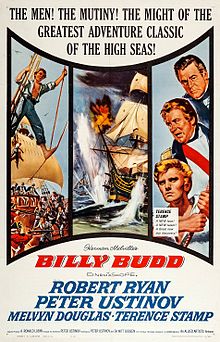
“The Damned” (released as “These Are the Damned” in the USA) is a 1963 British science fiction film directed by blacklisted Hollywood expat Joseph Losey, produced by Hammer Film and starring Macdonald Carey, Shirley Anne Field, Viveca Lindfors and Oliver Reed. The screenplay by Ben Barzman and  Evan Jones (based on H.L. Lawrence’s novel “The Children of Light”) centers on an American tourist (Macdonald Carey), an Englishwoman (Shirley Anne Field) and her biker gang leader brother King (Oliver Reed) who stumble across genetically modified children able to survive a nuclear war.


It’s back to the future with Venezuelan ‘Contras,’ the neocons, and the CIA

By Wayne Madsen

Source: Intrepid Report

Donald Trump displayed his full neocon colors on February 18 during a speech at Florida International University in Miami. With convicted Iran-contra felon Elliott Abrams now acting as his “special envoy” in charge of overthrowing the Venezuelan government of President Nicolas Maduro, Trump urged Venezuelan military officers to rise up in a coup d’état and oust Maduro, who Trump called a “Cuban puppet.”

Trump’s call for a coup in Venezuela is ironic when his most loyal supporter in the U.S. Senate, Lindsey Graham (R-SC), claimed that senior Justice Department officials who were discussing legally invoking the 25th Amendment to remove Trump from office in early 2017 were trying to stage a “coup” against Trump. Coups are unconstitutional in any form, while the removal of a president under the 25th Amendment is following the U.S. Constitution to the letter.

As protesters, who carried signs with “No U.S. Coup in Venezuela” and “Hands Off Venezuela,” staged a demonstration on campus and Trump rattled sabers against Venezuela in his speech on the Modesto A. Maidique Campus, covert U.S. operators were busy at Florida airports shipping arms to Venezuelan paramilitary units in Colombia.

At the same time as Trump was threatening Venezuela with a coup, the Haitian government of President Jovenel Moise and Prime Minister Jean-Henry Céant—one of a half dozen remaining allies of the Maduro government in the Western Hemisphere—was faced with an attempted U.S.-led insurrection in his impoverished nation. It is no coincidence that Moise, who was financially buoyed with $2 billion in fuel subsidies and other financial assistance from Venezuela’s state-run PetroCaribe Fund, has faced protests in his country that appear to have been prompted by U.S. “regime change” operatives. Planted in the Haitian media were reports that the Venezuelan fuel assistance funds had been pocketed by Moise and members of his government. That prompted violent protests on the streets of Port-au-Prince, Cap Haïtien, Jeremie, Gonaïves, and Jacmel that have been raging since February 7. More suspicious is that the U.S. State Department ordered all non-essential personnel out of the country following the outbreak of the protests.

On February 17, Haitian police arrested a group of eight heavily-armed men traveling in two cars in the capital of Port-au-Prince. Among the group were five Americans and a Russian, Serbian, and Haitian. The Russian and Serbian may hold permanent residency status in the United States. The Haitian newspaper Le Nouvelliste reported that police discovered in the foreigners’ cars automatic rifles, 45-caliber and Glock pistols, a large amount of ammunition, drones, and satellite phones. Also found in the vehicles were a telescope, backpacks, bullet-proof vests, and various documents, including a list of names of Haitian citizens. The vehicles bore no license plates and the suspects’ passports had no Haitian visa entry stamps. The passports did show extensive travel to other countries prior to being in Haiti. Five Haitian license plates were found in the vehicles.

When arrested by police, the eight men refused to provide identification, insisting that they were on some sort of “government mission.” They did not identify the “government” for whom they were working but insisted that they did not have to talk to the police. One of the arresting police officers said one of those arrested told him, “Our boss would call your boss.” After the eight men were arrested, another vehicle pulled up with a man, who spoke French to the police. He was also arrested. There are unconfirmed reports that the eight men arrested had earlier masqueraded as Haitian National Police officers.

The U.S. corporate media has largely refrained from identifying the arrested Americans and the others. WMR is not bound by protocols with the U.S.

Intelligence Community. The men arrested in Port-au-Prince are:

  • Kent Leland KROEKER, born February 14, 1967, USA partner and chief operating officer of Kroeker Partners, a private security firm. Kroeker is a Marine Corps officer veteran who flew missions in Iraq and Afghanistan
  • Christopher Mark McKINLEY, born September 26, 1969, USA
  • Danilo BAJAVIC, Serbian national, born Belgrade, born May 19, 1982, visa stamp for Karasovici, Croatia, dated July 21, 2017
  • Vlade JANKOVIC, Russian national, born October 9, 1978, Russia
  • Talon R. BURTON, U.S. national, born April 9, 1967, USA
  • Christopher M. OSMAN, U.S. national
  • Dustin Daniel PORTE, U.S. national, born February 12, 1976, USA
  • Michael ESTERA, Haitian national, born October 28, 1980, Haiti

In addition to Kroeker, all of the arrested Americans have U.S. military backgrounds. Estera may be a foreign national employee of the U.S. embassy in Port-au-Prince. It is also noteworthy that Blackwater founder Erik Prince, under investigation for conspiring with Russian, Saudi, and Emirati officials on behalf of the 2016 Trump presidential campaign, employs Serbian and Russian ex-military members in his Reflex Responses (R2) mercenary firm, based in Abu Dhabi. Prince’s sister, Betsy DeVos, is education secretary in the Trump administration.

Haitian police chief Michel-Ange Gedeon told reporters that the men would be charged with violation of weapons laws and criminal conspiracy. The U.S. State Department had no comment on whether the arrested Americans had received U.S. consular assistance, to which they are entitled. The Central Directorate of the Judicial Police (DCPJ) is in charge of the investigation of the foreigners.

The 1980s Contra wars of the Ronald Reagan administration were known for the heavy involvement of U.S. mercenaries, who operated in Central America with a “wink and a nod” from the Central Intelligence Agency and a covert coordination team in the basement of the White House, as well as the Pentagon, and State Department. The mercenaries received their orders from National Security Adviser John Poindexter, Marine Lieutenant Colonel Oliver North, and Elliott Abrams, now Trump’s regime change coordinator for Venezuela. As the Reagan team attempted to overthrow the Sandinista government of Nicaragua, they were also waging a brutal death squad campaign against leftists in El Salvador and Guatemala. In a repetition of history, the Trump administration has authorized a covert campaign to destabilize the government of Nicaragua, while assisting right-wing governments in Guatemala and Honduras to assassinate leftist journalists, activists, and indigenous leaders. Just as during the 1980s, El Salvador is due to become a staging post for a pro-U.S. rightist government under president-elect Nayib Bukele. Bukele replaces the administration led by the leftist Farabundo Marti National Liberation Front (FMLN), which was targeted by the Reagan administration during the 1980s with death squads and paramilitary teams.

At the same time the U.S. mercenaries were arrested in Haiti, Venezuelan authorities seized a Boeing 767 jet, operated by 21Air LLC, said to have been carrying arms to U.S.-backed rebels in Venezuela. The Boeing 767 took off on February 3 from Miami, the same city where Trump, championed by right-wing Cuban-Americans and exiled oligarchs from Venezuela, vowed to overthrow Maduro and “socialism” throughout the hemisphere.

The Boeing’s cargo was seized by Venezuelan authorities at Valencia airport. Included in the secret cargo manifest were 9 assault weapons, including AR-15 rifles, a Micro Draco semi-automatic pistol, and a Colt 7.62 rifle with telescopic sights, in addition to 118 ammunition cartridges and military radio antennas. 21Air LLC’s chairman is Adolfo Moreno, who, according to McClatchy News, is linked to Gemini Air Cargo, an airline involved with the CIA’s “extraordinary rendition” program during the George W. Bush administration and identified as such in a report made by the Council of Europe. The Boeing seized by Venezuela has been busy the last few months, making runs from Miami International Airport to Valencia and Caracas, Venezuela, and Bogota and Medellin, Colombia. 21Air claimed to McClatchy that the Boeing 767 had been chartered by another firm called GPS-Air. 21Air operates a sister firm, 21Cargo, formerly called Solar Cargo C.A.

Moreno is listed in Florida corporation records as also owning South Eastern Aviation LLC of Doral, Florida, Conaire LLC of Miramar, Florida, JW Aviation LLC of Doral; Apple Aviation LLC of Doral; Reliable Transport Logistics LLC of Hialeah, Florida; Freighter 23801 LLC of Hialeah, Freighter 23803 of Doral; Direct Warehouse LLC of Doral; Dynamic Travel LLC of Doral; Enduring Ventures LLC of Miami; and Florida Franchise Development LLC of Miramar. Florida Franchise Development was incorporated by Moreno in 2001 as a subsidiary of Gemini Air Cargo. That firm, along with Airline Management Group, incorporated in 1987, and Gemini Cargo Logistics Inc., the latter a subsidiary of Gemini Air Cargo, all had the same business address of 1750 NW 66th Ave., Miami. According to McClatchy, that address is currently used by Avianca, the Colombian national air carrier. When Trump called for the overthrow of the Venezuelan government, he did so in the midst of dozens of CIA front companies that specialize in carrying out coups, murder, and mayhem.

21Air LLC was incorporated in 2014 and is based in Greensboro, North Carolina, but operates out of Miami International Airport. North Carolina was the location of other CIA proprietary airline front companies involved in the agency’s kidnapping program. These included Air Serv International; Aero Contractors Limited, operating out of Johnston County Regional Airport and the Kinston Regional Jetport; Assembly Pointe Aviation, Inc.; and Water Above Mountain Holdings, LLC of Burlington, North Carolina.

Prior to January, when Maduro was sworn in for a second presidential term, the Boeing 767 had been traveling between Miami, Philadelphia, and other continental U.S. cities.

The smuggling of U.S. weapons to Venezuelan rebels has evoked memories of Elliott Abrams’s antics during the Iran-Contra scandal in the 1980s. CIA contract airlines, including Southern Air Transport, were busy illegally flying U.S. weapons to Honduras and, via air drop, over Nicaragua, for use by the U.S.-backed Nicaraguan Contra guerrillas. One thing about neocons like Abrams and Trump National Security Adviser John Bolton is that they rarely divert from their standard playbooks. Neocons, not being very bright to begin with, find it difficult to “think outside the box,” therefore they repeat the same failed policies and maneuvering over and over again. And that is the clinical diagnosis of insanity.


Wayne Madsen is a Washington, DC-based investigative journalist and nationally-distributed columnist. He is the editor and publisher of the Wayne Madsen Report (subscription required).

Thinking about American Totalitarianism

By Dan Corjescu

Source: CounterPunch

Totalitarianism evolves.

Yet what remains the same through time is the attempt at total control.

Today, control is veiled not overt.

Control weaves its way both totally and surgically into our everyday lives.

Totally, in the master narrative it weaves about “living in a democracy”.

Today, no one lives in a true democracy.

Elections, parties, political personalities are all fraudulent constructions hiding real power.

The media and the entertainment industry are focused on creating a consumerist-nationalist imaginary where shopping and waving the flag are effective daily remedies to ward off any uncomfortable existential doubts.

Both business and the nation still reign in the hearts and minds of millions as the “true Gods”.

The revolution of the “multitude” is far, far away.

Empire, American Empire, is neither setting, fading, or waning. On the contrary, its tentacles stretch throughout every conceivable path and production of biopower.

The expansion of American power that began in earnest after the Great War has continued unabated.

The world is more American now than it has ever been.

Surgically, America through its unrivaled mastery of technology, organization, and capital can pick and choose the actors and actions it wills to manipulate or eliminate.

American global networks of surveillance and suppression have grown and deepened. The threat of world revolution and terror are convenient stories to both mobilize and mesmerize the multitude.

A Hitler and/or a Bin-Laden will always conveniently appear when needed.

Consumption, in all its forms, is the only ideology and it is highly effective since it is based on basic biological processes. The pleasure centers of the brain have lent themselves to the construction of a life of bodily gratification. Thus the ideological celebration of the body has become the new ideological prison of the mind. Nietzsche’s “last man” is the middling subject of our present day totalitarianism.

The majority live their lives dedicated to the pursuit of pleasure and are of no threat or consequence. They are “well adjusted” to the “eternal” run of things. Those who are less so, can be easily handled with marginalization, demonization, psychiatry, and if all else fails, surreptitious elimination.

What are the ultimate goals of power? Its naked reproduction. Power is its own justification. The members may change, but the goal of power’s eternal maintenance remains the same.

Yes, we are allowed to talk, read, go to church, temple, or mosque and even demonstrate but any true chance at deviation from the total control of a society blinded by physical bliss and intoxicated by triumphant and progressivist narratives is precluded from the beginning.

Yet, in the end, change will come. But it will be a change that will serve the interests of those for whom total power is the ultimate aim. The world’s inherent fluidity will run and be directed through their rigid hands.

Fuck You, Dying American Empire: Reflections of an Aging Anti-Imperialist

Credit: JOEL PETT

By Jonah Raskin

Source: CounterPunch

Last year at Jamia Millia Islamia Central University in New Delhi, India I met students and teachers who thought that it was cool that I’d written an anti-imperialist book and that it was still in print nearly fifty years after it was first published. It was easy to be an anti-imperialist at Jamia Millia. After all, the students and the teachers were anti-imperialists and all worked-up about U.S. drones, U.S. air strikes and about the Syrians on the ground who had been battered and bombed.

It was also relatively easy to be an anti-imperialist in the late 1960s and early 1970s when anti-imperialism was a red badge of courage in SDS, the Venceremos Brigade, in anti-war circles and even among the Yippies, who were far more internationalist in their outlook than many on the Left assumed. Once upon a time, Jerry Rubin went to Cuba to check out the revolution, and later to Chile with singer and songwriter, Phil Ochs, to see what Salvador Allende was doing.

But here in the U.S. in 2018, is it still possible to be an authentic anti-imperialist, an anti-imperialist in more than name? I thought about that question recently when a former comrade explained that he was still an anti-imperialist and wondered if I was one, too.

It wasn’t the first time that my politics were questioned. In 1980, soon after Reagan was elected president, Professor Edward Said asked me if I was still on the Left and hadn’t drifted to the right like that former radical, David Horowitz, whom Alexander Cockburn dismissed as a “whiner.” A plain “Yes,” or a “No” answer wouldn’t do, nor a “Maybe.”

Am I now and have I ever been an anti- imperialist? It’s really nobody’s business but my own!

I don’t know anyone in my part of northern California who calls himself or herself an anti-imperialist, though friends and neighbors claim to be against racism, sexism, patriarchy and ageism.

U.S. anti-imperialism has a noble lineage. Mark Twain was an anti-imperialist and so was his friend and fellow writer, William Dean Howells. They both belonged to the American Anti-Imperialist League that was founded in 1898 to oppose the U.S. annexation of the Philippines and whose members included an odd assortment of individuals such as Jane Addams, Josephine Shaw Lowell, Henry James, David Starr Jordan, Grover Cleveland and Andrew Carnegie.

The League, which didn’t oppose U.S. entry into World War I, disbanded in 1920 just as U.S. imperialism was flexing its global muscles more than every before, though from its founding the American republic aimed to go West and become a continental empire.

Then, in the twentieth-century, the nation began to shrink the globe big time, to extract labor from peasants and workers in Asia and Africa and export American light bulbs, American Gatling guns, American lingo—“Kilroy Was Here”—and American movies.

Cultural imperialism always bugged me more than any other aspect of imperialism. I hated to see U.S. cultural commodities supplant indigenous cultures. That sight still rankles me, whether I see it in India, Mexico or the American South West. Every time I see and hear about the survival of ancient myths, legends, dances and music I’m ready to cheer.

Membership in an anti-imperialist league or organization makes sense, but to be an anti-imperialist of one in a sea of California anti-intellectualism and provincialism—“We’re number one”—has little or no meaning to me. Why be an anti-imperialist in name only? No, thanks! I don’t mean to live off past glory, though it was a thrill to meet students in India who had studied The Mythology of Imperialism and who told me it was the first book they’d ever read in which they could hear that the author was angry. That was me! I was pissed.

At 77, it’s not possible to be angry with the same intensity that I was angry at 27 when I wrote my anti-imperialist book in-between rioting in the streets, spray painting slogans at Times Square at midnight, going to jail and having the cops kick the shit out of me. I don’t know of any other way to be an anti-imperialist except the way I was an anti-imperialist during the War in Vietnam.

Indeed, it’s no easy feat to be an old anti-imperialist. Che died at 39, Lenin at 53 and Mark Twain at 74. The author of The Adventures of Huckleberry Finn and A Connecticut Yankee in King Arthur’s Court, which takes a big swipe at weapons of mass destruction, noted near the end of his life, “I am always on the side of the revolutionists, because there never was a revolution unless there were some oppressive and intolerable conditions against which to revolute.” Thanks, Mr. Twain. I’m glad you said that.

Today, there are so many oppressive and intolerable conditions the world over, and so many different imperialisms: the Chinese, the Russian, the India, the Israeli, the Brazilian and the U.S. It was comforting in the 1960s and 1970s to recognize that the American Empire was in decline and that the Soviets, the Vietnamese and the Chinese stood up to the Pentagon. Gratifying, too, that crowds in Paris, Rome, and London denounced the U.S. invasion and occupation of Vietnam, Laos and Cambodia.

Now, who stands up to the White House, the Senate, Google, Facebook and Amazon? Precious few citizens! Empires have proliferated and reinvented themselves. The American Empire is still in decline, though as George Lucas noted in 1980 it did “Strike Back” with Reagan, and later with Bush I, Bush II, Clinton and Obama.

An empire in decline—whether Roman, British, or American—isn’t a pretty thing. It can take decades to fall apart. I saw that when I lived in England. An Empire in decline isn’t really anything to cheer about. Indeed, the fall of empire makes life miserable for migrants, serfs, slaves, refugees, prisoners, pensioners and even for aging anti-imperialists. Maybe it’s a cheap shot. I don’t care. I’ll say it here, “Goodbye and Fuck you, American Empire.”

Death of Free Speech leads to Fascism

By Dmitry Orlov

Source: Club Orlov

Freedom of speech is rather important. If people do not feel free to express their thoughts, then all they can do is endlessly repeat what has been said before, creating an echo chamber which no new understandings can ever penetrate. What they repeat may have been a tissue of lies from the outset, or it may have been true or relevant once, but will become outdated and, essentially, as good as a lie.

Lies beget ignorance. Ignorance begets fear. Fear begets hatred. And hatred begets violence. The ability to speak our minds and to listen to others—even those who are said to be our enemies—is what separates us from wild beasts. Deprive us of this right, and sure as rain we degenerate into subhumans who claw at the ground, howl at the moon and gnaw on raw human flesh… or something like that.

The practice of free speech is quite a demanding art. Just being able to make intelligible sounds with your mouth or to poke at a keyboard in a way that pleases the spell-checker makes you no more an expert practitioner of free speech than does the ability to get up from your chair and walk to the bathroom make you a ballet dancer. Free speech encompasses the expression of fact and opinion. Facts cannot be fake, or you can stand accused of libel or of spreading disinformation. Opinion cannot be incendiary, or you can stand accused of undermining public order.

To be on the safe side, free speech should not contain performatives—speech acts that seek to alter the state of the world. Calls to action, unsolicited advice, coercion, intimidation, threats, personal categorizations and the like can all reasonably be banned without hurting the exercise of free speech at all. Demagoguery—attempts to manipulate public sentiment by exploiting popular desires, fears and prejudices—is rather unhelpful, although to some extent unavoidable. Some forms of free speech should be rightfully privileged over the rest: the literary arts (both fiction and nonfiction), cinematography, music, visual and performance arts are at the top; political slogans shouted over swine-toned music at an audience of sloppy drunks are definitely near the bottom.

The quality of society is directly proportional to the quality of its exercise of free speech, and to assure high quality some form of quality control is usually called for. Governments often have to backstop this need by legislating against certain forms of speech. The older standard against incendiary speech or speech that may cause a panic—shouting “Fire!” in a crowded theater—is justified as a matter of public safety. Newer standards against hate speech and discrimination are on shakier ground. They are essentially gag orders that drive the exercise of certain forms of speech underground, thereby making it harder to regulate and more dangerous. The expectation that banning “hate speech” will prevent hatred is unrealistic; nor is the expectation that haters can be compelled to do their hating in silence. Likewise, banning discriminatory speech can only suppress overt expressions of discrimination but not the behavior itself, making it more intractable, since nothing short of a lobotomy can prevent people from discriminating against those they find disagreeable.

Aside from government-provided backstops (which are blunt, inaccurate instruments) most of what provides for high-quality free speech is self-control and, to the extent that it is needed, self-censorship. Essentially, every negative form of free speech—disinformation, libel, demagoguery, manipulation, incendiary rhetoric, etc.—reduce the level of respect and trust between the speaker and the audience. Taken to an extreme, the concept of free speech itself becomes superfluous as everybody manifests their ignorance while spouting their worthless opinions without bothering to listen to anyone else—because everyone else is equally ignorant and their opinions are equally worthless and meaningless. The only thing that can prevent this backslide into worthlessness and meaninglessness is high standards of social adequacy.

But how can such high standards persist in a world of trolls and bots, of concocted false narratives endlessly blasted out at full volume, where a thought that is significantly longer than a tweet simply cannot be expressed? How can they be enforced if the modern value system requires tolerance, nondiscrimination and inclusiveness toward all—including the most miserable miscreants—lowering the price of admission to public discourse to zero? Surprisingly, it can, and it does persist: some writers find their readers and some performers find their audiences—somehow. Their numbers aren’t huge, but then, since quality is almost always inversely proportional to quantity, their small numbers don’t matter that much.

In fact, these numbers are so small that to ascribe any sort of significant agency to those who pay attention, or to those to whom they pay attention. The proper and essential function of free speech is not to somehow remake the world in one’s own image (you should consider yourself lucky if you can bring about a change in yourself, never mind make a difference in your own family or neighborhood). Its function is to keep you sane and grounded and to prevent you from cascading down through lies, ignorance, fear, hatred and violence, eventually degenerating into wild beasts who claw at the ground, howl at the moon and chew on each other…

The concocted false narratives endlessly blasted out at full volume make such work difficult. The narratives that are designed to generate a misplaced sense of agency are perhaps the most difficult veil to shred. No matter how many times I try to explain that the US is not a democracy and that it doesn’t matter who is president, these facts seem to just bounce off people’s heads. When I try to explain certain facts about technology—for instance, that wind and solar power unfortunately just don’t work and that the countries that pursue them are setting themselves up for economic disaster, but that for all of its dangers nuclear power does seem to have a very important future (although only in certain countries)—in response people demand to know whether or not I am “in favor” of nuclear power.

What a ridiculous question! That’s like you asking your flush toilet what it thinks of sewage treatment or your office chair whether it is in favor of a sedentary lifestyle. Just like the office chair and the toilet you and I, with respect to nuclear power, are not subjects but objects. If you are reading this, then you are willy-nilly in favor of nuclear power, because if the nuclear reactors were off your screen would be blank and you’d be sitting in the dark with the heat or the air conditioning not working. But that’s a false choice—simply because it isn’t on offer—any more than an office chair or a toilet can decide whether it wishes to be sat on or not.

And now there is another development that is making the exercise of free speech even more difficult: the phenomenon of “deplatforming.” Various companies, including Twitter, Facebook, PayPal, Patreon and various others, have taken it upon themselves to become arbiters of free speech and interpreters of the First Amendment. Their conceit is that their user base forms a “community” upon which they are entitled to impose “community standards.” In fact, they are privately owned for-profit companies and their clients are individuals or other companies, not communities. They may try to argue that they are publishers of some sort, and publishers are entitled to maintaining an editorial policy, but there is an unbridgeable gap between the editorial process and just typing some text and clicking “publish.” In fact, what they are attempting to do is perhaps best described as vigilante censorship. The most that they are entitled to do is refer their users for prosecution if there is reason to believe that their users have violated specific laws.

I became aware of this new “deplatforming” menace a couple of months ago, when some of my readers started abandoning Patreon after it deplatformed certain people. Prior to that my readership on Patreon had been growing nicely, but then the growth stalled. I’ll never know—and don’t really care—what was behind these decisions, since I don’t see them as legitimate. Typical parting comments from my readers were:

“You crossed the line with censorship and I cannot support this company.”

“I believe in freedom of speech. Censorship is not a virtue. Shame on you.”

“Patreon should not be a moral arbiter. You are supposed to be a payment platform.”

“This site cannot be trusted to support free speech.”

In short, Patreon’s censorship, which it disingenuously called “community standards,” was costing me money, and so I complained:

“Your editorial policy is costing me money. Since Patreon is just a paywalled blogging platform I don’t understand why you should have an editorial policy at all. If you find that your clients are violating state or federal laws you should refer them for prosecution; if not, I honestly do not understand what gives you the reason or the right, or the legal competence, to act as interpreters of the First Amendment.”

The answer I got back was rather terse: “…we do not disclose any details surrounding creator page removals…” First, that isn’t an answer to my question. Second, it shows a remarkable degree of contempt for any sort of fairness. Secret tribunals that result in “removals,” that are based on vague, private, arbitrary rules, that refuse to disclose the basis of their decisions, that cause financial losses but refuse acknowledge them or to compensate for them… doesn’t that sound just a tiny bit fascist?

And so I set up a SubscribeStar account where I publish all the same materials as on Patreon, and to which my readers have been gradually migrating. SubscribeStar is not quite as feature-rich as Patreon (yet) and it has been banned by PayPal (not a big loss; my readers seem to hate PayPal) but it does have the advantage of being honest: it is simply a blogging platform integrated with a paywall.

Meanwhile, the “deplatforming” has only grown worse. Most recently, CNN aired a public denunciation of RT (which it accused of being Russian), and based on this denunciation Facebook saw it fit to ban RT from Soapbox, Waste-Ed, Backthen as well shut down a personal project “In The Now” by the American journalist Anissa Naouai (because she works for RT). These were projects with millions of subscribers and billions of views. CNN’s denunciation was phrased as follows: these projects influence America’s young people! The bloody Russians are at it again, contaminating “our precious bodily fluids”!

None of this has anything at all to do with Russia, or the Russian government, or Putin personally. RT is government-financed, but so is BBC (which, it has now been admitted, lied about the fake chemical attacks in Syria’s Douma, causing Trump to unleash a volley of cruise missiles on Syria, most of which, luckily, the Syrians managed to shoot down). But while the British may lie as they wish (and provoke war crimes as a result) the Russians aren’t allowed to say anything at all—because they are Russian.

To understand the rationale behind this bout of Russophobia, it is important to understand that it has nothing to do with “containing Russia” or anything of the sort (that project has already failed). Instead, Russophobia neatly serves the internal political needs of the US and other Western countries. Two trends—the gradual suppression of free speech and the gradual dehumanization of Russians—go hand in hand. Free speech can be suppressed because of “Russian trolls” and election results can be manually rearranged as needed because of “Russian meddling.”

What makes such measures necessary? The West is experiencing an entire series of crises that is beginning to form the classical pattern defined by Lenin as the revolutionary situation: the elites can no longer rule as before while their subjects can no longer live as before. Western establishment (primarily its Deep State component) is forced to confront this problem. How can it preserve its power and maintain control, all without changing course or even swapping out it deeply unpopular public-facing figureheads? It has decided to deal with this crisis by suppressing the public will. Since such suppression is incompatible with maintaining the fiction of democratic governance, democracy has got to go. That’s where the Russians come in handy: if the voters don’t vote as programmed, then an entire election can be annulled because of “Russian meddling.” “Russian trolls” and Russian “fake news” are helpful too: they offer an excuse for suppressing free speech.

Having a phantom enemy is very helpful. First, there is nothing like the fear of an external enemy to force people to rally around their ruling elites. Second, since the enemy is a phantom, there is no danger of defeat in an actual war. But there is another danger: in the process of vilifying this phantom enemy, Russians as an ethnos are being progressively dehumanized. And the problem is that dehumanizing the enemy always results in degeneracy—not of the enemy, but of the dehumanizers themselves. Inevitably, it is the dehumanizers who end up running around on all fours, howling at the moon and having each other for dinner. Lies engender ignorance; ignorance engenders fear; fear engenders hatred; hatred engenders violence. At some point a horrific crime against Russians will take place, which will baptize both the Western elites and their Untermenschen in Russian blood, tying them together with bonds of criminal complicity. (This scenario has already been tested out in Eastern Ukraine.)

Before our eyes the most reactionary and the most chauvinistic and homicidal parts of Western financial elites are transforming Western “democracy” into a model terrorist dictatorship. But it is very hard to see what they could possibly hope to achieve other than the physical destruction of their own populations—if that can be considered an achievement. Perhaps their actual achievement will be in being able to carry out this destruction without having their own populations even notice that it is happening, lost as they are in a world of delusions fashioned out of false narratives endlessly blasted at them at high volume. We should feel lucky that a few voices are still able to pierce through the Bedlam, although we don’t know for how much longer. In the meantime, take a look around. This is what fascism looks like.

How CNN Led Facebook To Censor Pages Of Russia-Backed Video Company And Manufactured News Story

Disclosure: Kevin Gosztola co-hosts the “Unauthorized Disclosure” podcast with Rania Khalek, who is a contributor for Maffick Media’s Soapbox. “Unauthorized Disclosure” is entirely listener-funded. Shadowproof is member-supported and funded by reader donations.

By Kevin Gosztola

Source: Shadowproof

CNN went in search for a story about a Russian-funded digital media project that produces viral videos aimed at undermining American democracy. When CNN journalists could not find what they were looking for, they effectively manufactured the news by giving Facebook a pretext for removing the project’s pages used to share videos. Now, the cable news network had their story.

Four CNN journalists worked on the report, “Russia is backing a viral video company aimed at American millennials.” It appeared online late in the day on February 15 and broke the news that Maffick Media had their Facebook pages for three video channels suspended.

Maffick also produces In The Now, which Facebook took down as well.

Facebook never required pages to include information about their parent companies nor has the social media company ever labeled state-sponsored media, which CNN acknowledged. Yet, since the project involves funding from Russian state media, CNN believed Facebook may want to require the pages to disclose such details.

CNN contacted Facebook on February 13, and Facebook informed CNN they were “contemplating doing something about labeling state-funded media,” according to Donie O’Sullivan, a CNN reporter who worked on the story. The media organization held their story until Facebook took action.

Maffick produces three video channels—Backthen, which explores the history of Western imperialism, Waste-Ed, which covers environmental issues, including climate change, and Soapbox, which covers politics and current events.

As O’Sullivan said during an interview on CNN, “The content was pretty critical of the U.S government, of U.S mainstream media, but nothing that would be totally out of the ordinary necessarily.” Videos made a “lot of legitimate arguments,” and they “weren’t necessarily really hiding their Russian ties.”

“If you were to start Googling these pages, you could quickly work it back to see,” O’Sullivan added.

Journalist Rania Khalek, who produces videos for Soapbox, was interviewed by CNN, along with Maffick Media chief operating officer J. Ray Sparks. The interview took place in Berlin on February 11. However, CNN did not initially contact them.

“CNN was contacting peripheral employees, some of the people in the U.S., one of the camera people that I worked with. They contacted her,” Khalek shared. “And they actually lied to [this person] and told her they had already spoken to me, when they had not.”

According to Khalek, CNN seemed to be interested in whether any Maffick employees were difficult to work with, whether employees or contractors were paid decently, and whether they were leery of the stories they were asked to cover.

J. Ray Sparks contacted CNN to inform them that they were aware the news network was attempting to dig up dirt. Maffick made CEO Anissa Naouai, Khalek, and Sparks available to CNN in the interest of transparency, even though it was clear journalists were looking for material for a hit piece on the project.

Shadowproof was provided with a copy of the unedited interview that CNN conducted with Khalek and Sparks.

More Like An Interrogation By Intelligence Agents Than An Interview

The interview was conducted by CNN correspondent Drew Griffin. In February 2018, Griffin went to the home of a woman in Florida, a private citizen who supported Donald Trump’s presidential campaign, and insisted she was duped by Russia when she ran the “Team Trump Broward County” Facebook page.

The page’s events were reportedly promoted by Russia’s Internet Research Agency, a Kremlin-linked troll farm operated out of St. Petersburg.

“I don’t go with Russians, c’mon, give me a break,” the woman insisted, while Griffin tried to take away her independence as a campaign supporter and shame her for something out of her control.

The questions asked by Griffin collectively amounted to an interrogation. He went out of his way not to engage with answers to his questions that conflicted with the story CNN was chasing.

Also, Griffin was fishing for very private details involving the business model of Maffick that would help CNN attack the project. Sparks provided answers, despite the fact that the questions were invasive, and the vast majority of U.S. news media outlets would probably refrain from sharing such information with the public.

CNN misquoted Sparks twice. In the print report, they said Sparks claimed it was “standard business practice” not to disclose who owned a Facebook page. That made it seem like Sparks was specifically referring to Maffick and that he was exhibiting a flippant attitude to the question of who funds Maffick. However, Sparks said “standard industry practice” and was making a general point about CNN holding Maffick to a standard most media organizations throughout the world do not follow.

Griffin asked why Maffick tells employees and contractors they are funded by the Russia government but not their audience. “There’s no mention of Russia or Ruptly on the Facebook pages. Why is that?”

“Because that’s standard industry practice,” Sparks replied. “We get this question a lot, and it’s a funny question to me because why does Great Big Story not put CNN on their Facebook page? Why does CNN not put Time Warner on their Facebook page? The audience is not interested in these things.”

Sparks added, “I worked for Comedy Central for many years. No one ever knew that Comedy Central was owned by MTV, and that MTV was owned by Viacom. These were things that you had to discover as a more esoteric audience within the industry. The general audience never is interested in these things, and the standard practice is to just simply not mention them because the audience is not interested.”

Whether Sparks is right or not is insignificant. CNN used a different word so it better suited their story.

[Note: CNN later issued a correction during the weekend after Shadowproof published this report:

“The original version of this article incorrectly quoted Sparks as saying it is ‘standard business practice’ for a media outlet not to disclose its ownership on its Facebook page. He actually referred to ‘standard industry practice’ and ‘standard practice.’”]

Baselessly Accused Of Boosting ‘Kremlin Narratives’

Although Khalek and Sparks detailed their editorial independence at Maffick extensively, Griffin remained incredulous at the reality that officials working at the Kremlin are not dictating what specific stories should be covered. CNN quoted Ben Nimmo, a “senior fellow for information defense at the Atlantic Council’s Digital Forensic Research Lab,” to undermine their assertions.

“They routinely boost Kremlin narratives, especially those which portray the West negatively,” Nimmo stated.

He added Maffick’s pages are “broadly anti-U.S. and anti-corporate. That’s strikingly similar to RT’s output. Maffick may technically be independent, but their tone certainly matches the broader Kremlin family.”

The Atlantic Council is a militaristic think tank that receives funding from the U.S. government. In particular, Nimmo holds himself out as some bot hunter, who is an expert at exposing “Kremlin influence networks.” Yet, as journalist Max Blumenthal highlighted in 2018, Nimmo misidentified “several living, breathing individuals as Russian bots or Kremlin ‘influence accounts.’ Nimmo’s victims included Mariam Susli, a well-known Syrian-Australian social media personality, the famed Ukrainian concert pianist Valentina Lisitsa, and a British pensioner named Ian Shilling.”

Khalek told Griffin why her journalism challenges U.S. foreign policy and the power of U.S. corporations.

“I’m an American, right? My priority and my responsibility is to challenge destructive policies [of] the government that I pay tax dollars to. And that’s what I focus on in my videos,” Khalek declared. “I challenge war. I challenge corporate ownership of our government and of our political system. And this is one of the few places that I have where I can actually do that with complete editorial control.”

“Now, if CNN would like to give me a job to spend my time challenging the war industry and corporations, I’d be happy to do that. But that’s just not the case.”

“I have complete editorial control over my work on Soapbox,” Khalek said, prior this comment. “I get to tell the truth about war and corporations, which you don’t get to hear much about in corporate outlets, like CNN, where people oftentimes even get fired for being antiwar. You know, I’d ask, you where was Marc Lamont Hill’s editorial freedom when CNN fired him for telling the truth about Israeli occupation of Palestine?”

Griffin plowed forward as if he was oblivious to what happened to the former CNN contributor, and at no point did Griffin offer any examples, where specific Russian policies were mindlessly championed by Khalek or other Maffick contractors to boost the Kremlin.

Succumbing To Russophobia

It was the German Marshall Fund, which brought records on the ownership of Maffick to the attention of CNN. They also were the source CNN used to back up the notion that Facebook should require Maffick to disclose its ownership.

Bret Schafer, a social media analyst at the German Marshall Fund, said “that he believes most people who see content from the pages on Facebook have no idea it could be tied to Russia.”

“It should be clearly labeled,” he told CNN, “and when they don’t label them, they need to be called out on that.”

The German Marshall Fund receives funds from the U.S. government, and as it states on its website, the fund was founded in 1972 as “a non-partisan, nonprofit organization through a gift from Germany as a permanent memorial to Marshall Plan assistance.”

“GMF maintains a strong presence on both sides of the Atlantic. In addition to its headquarters in Washington, D.C., GMF has offices in Berlin, Paris, Brussels, Belgrade, Ankara, Bucharest, and Warsaw. GMF also has smaller representations in Bratislava, Turin, and Stockholm.”

The Marshall Plan was a foreign policy strategy adopted in 1947 to expand American dominance in the world. It aimed to expand access to European markets for U.S. businesses and fend off the rise of communism in countries like Italy and France.

One of the German Marshall Fund’s projects is the Alliance For Securing Democracy. It was far more strident in its assessment of Maffick than CNN.

The project’s advisory council includes Michael Chertoff, former Homeland Security Department chief, Bill Kristol, who was a board member of the Project for the New American Century, which pushed for the invasion of Iraq, Rick Ledgett, former NSA deputy director, Mike McFaul, former U.S. ambassador to Russia, Mike Morell, former acting CIA director, John Podesta, former chairman of Hillary Clinton’s presidential campaign, Mike Rogers, former congressman and chair of the House Intelligence Committee, James Stavridis, a former admiral who led European Command, and Jake Sullivan, former national security advisor to Vice President Joe Biden. (Journalist Glenn Greenwald further detailed the “marriage of convenience” between establishment Democrats and neoconservatives.)

It is the Alliance For Securing Democracy that developed Hamilton 68, a “tracker” it claimed could unearth Russian influence operations. But the individuals involved with Hamilton 68 have refused to share their methodology. They follow accounts “run by people around the world who amplify pro-Russian themes either knowingly or unknowingly,” which means any dissent deemed to be “anti-American” can draw their attention to hashtags worth tracking.

James Carden, a contributor for The Nation, wrote, “Projects like Hamilton 68 are the opposite of what one would expect in an open society like the United States: In essence, it seeks to police and narrow the scope of acceptable political discourse. The implicit message is that Americans should ignore unpleasant news so long as it comes from foreign outlets, regardless of the veracity of the story.”

“That the well-regarded German Marshall Fund has succumbed to the Russophobia now so in vogue across the political spectrum is cause for both sadness and concern,” Carden added.

“Completely In Line With What We’re Hearing From The Kremlin”

Twice Griffin pressed Khalek on her views. He maintained they are “completely in line with what we’re hearing from the Kremlin, especially on Venezuela.”

“Okay, do you have a specific criticism about what I said about Venezuela?” Khalek replied. “The U.S. right now under Trump—the president that CNN is very much against—is currently attempting to launch a right-wing coup in Venezuela and what I see from the mainstream press in the U.S., across the board, is support for that.”

“What I’m interested in is accurate reporting in Venezuela about what’s happening and what the U.S. is doing there,” Khalek continued. “And you know, that might align with this entity or that entity, but that’s not what I care about. What I care about is telling the truth. And I would like to know why CNN isn’t telling the truth about what’s happening in Venezuela.”

Khalek further outlined why this notion of “views aligning with the Kremlin” is dangerous.

Say I’m antiwar. Say that Trump right now is threatening a military intervention against Venezuela. If I oppose that, which the Russian government I think does—and so do other governments in the world. They also oppose it. But if I oppose U.S. war, does that automatically mean I’m going to be accused of being aligned with the Kremlin? And with this Russia hysteria that we’re experiencing now, I feel like this is a very, very dangerous McCarthyist tactic to start saying that leftist views, antiwar views are just the Kremlin government’s talking points.

Immediately following this statement from Khalek, Griffin said, “Business model folks and others who think there’s so much negative publicity surrounding a Russian label, especially in the world of journalistic freedom, that your company is probably purposely distancing itself from any kind of public or branding related to Russia.”

“Is that true? In terms of trying to grow this company and grow these channels, it would be wise that you did not have any kind of connection with Russia available to the public?”

Either Griffin has a lot of gall or is plainly ignorant. Khalek, Naouai, and Sparks granted unprecedented access to their work. Because it did not conform to widespread notions of state-funded media bandied about in Russia investigation coverage, Griffin and others at CNN discounted what was shared.

Griffin stuck to hyping the danger of Russian-funded media so CNN can keep profiting off the panic. So, it is stories like this one that drive media and journalists with ties to Russia underground and pushes them to engage in secrecy for their survival.

***

The key issue, which CNN deliberately avoids, is one that has been prevalent since 2014, when Abby Martin was an anchor for RT America and spoke out against Russian military aggression in Crimea. She went on Piers Morgan’s show on CNN and told Morgan that RT was no different than any other corporate media station in America.

“We’re talking about six corporations that control 90 percent of what Americans see, hear, and read, lead up to the Iraq War parroting exactly what the establishment said. I mean, you could reflect the exact same criticism on all the corporate media channels,” Martin contended.

As she put it, “RT toes a perspective of the Russian foreign policy just as the entire corporate media apparatus toes the perspective of the U.S. establishment.”

“Why do I have to work for RT to tell the truth about corporations and the U.S. government?” Martin asked. “I mean, seriously, you guys are beholden to advertisers that you cannot criticize.” That is why Martin was working for RT, not CNN.

Until journalists at U.S. media outlets, like CNN, quit projecting images on the cave wall for citizens in order to help the U.S. government maintain its global dominance and insulate government officials from scrutiny, particularly on matters of war, there will always be Americans who seek out jobs with foreign media outlets. They will seek out companies like Maffick to produce dissident journalism, which establishment media organizations refuse to support.

UPDATE: The report was updated on February 18 to reflect details from an interview with Donie O’Sullivan on CNN’s “Reliable Sources,” and to include the correction CNN printed after Shadowproof published this report.

Cyberpunk is Now and No One Knows What to Do With It

By Pattern Theory

Source: Modern Mythology

Cyberpunk broke science fiction. Creeping in alongside the commercialization of the internet, it extrapolated the corruption and dysfunction of its present into a brutal and interconnected future that remained just a heartbeat away. Cyberpunk had an attitude that refused to be tamed, dressed in a style without comparison. Its resurgence shows that little has changed since its inception, and that’s left cyberpunk incapable of discussing our future.

Ghost in the Shell got the live-action treatment in 2017, a problematic remakeof the 1995 adaptation. Some praised its art direction for increasing the visual fidelity of retrofuture anime cityscapes, but the general consensus was that the story failed to apply care and consideration towards human brains and synthetic bodies like Mamoru Oshii had more than two decades before. A few months later came Blade Runner 2049, a sequel to the cyberpunk classic. Critics and fans praised it for high production values, sincere artistic effort, and meticulous direction. Yet something had gone wrong. Director Denis Villeneuve couldn’t shake the feeling that he was making a period movie, not one about the future.

Enough has changed since the 1980s that cyberpunk needs reinvention. New aesthetics. An expanded vocabulary. Code 46 managed this years ago. It rejects a fetish for all things Japanese and embraces China’s economic dominance. Conversations being in English and are soon peppered with Mandarin and Spanish. Life takes place at night to avoid dangerous, unfiltered sunlight. Corporations guide government decisions. Genetics determine freedom of movement and interaction. Climate refugees beg to leave their freeway pastures for the safety of cities.

Code 46 is cyberpunk as seen from 2003, a logical future that is now also outdated.

If Blade Runner established the look, Neuromancer defined cyberpunk’s voice. William Gibson’s debut novel was ahead of the curve by acknowledging the personal computer as a disruptive force when the Cold War was at its most threatening. “Lowlife and high tech” meant the Magnetic Dog Sisters headlining some creep joint across the street from a capsule hotel where console cowboys rip off zaibatsus with their Ono Sendai Cyberdeck. But Gibson’s view of the future would be incomplete without an absolute distrust of Reaganism:

“If I were to put together a truly essential thank-you list for the people who most made it possible for me to write my first six novels, I’d have to owe as much to Ronald Reagan as to Bill Gates or Lou Reed. Reagan’s presidency put the grit in my dystopia. His presidency was the fresh kitty litter I spread for utterly crucial traction on the icey driveway of uncharted futurity. His smile was the nightmare in my back pocket.” — William Gibson

“Fragments of a Hologram Rose” to Mona Lisa Overdrive is a decade of creative labor that was “tired of America-as-the-future, the world as a white monoculture.” The Sprawl is a cyberpunk trilogy where military superpowers failed and technology gave Japan leadership of the global village. Then Gibson wrote Virtual Light and readers witnessed extreme inequality shove the middle class into the gig economy as corporations schemed to profit off natural disasters with proprietary technology.

Gibson knew the sci-fi he didn’t care for would absorb cyberpunk and tame its “dissident influence”, so the genre could remain unchanged. “Punk” is the go-to suffix for emerging subgenres that want to appear subversive while posing a threat to nothing and no one. It’s how “hopepunk” becomes a thing. But to appreciate cyberpunk’s assimilation, look at how it’s presented sincerely.

CD Projekt Red (CDPR), known for the Witcher game series, has spent six years developing what’s arguably the most anticipated video game of the moment, Cyberpunk 2077. Like Gibson, Mike Pondsmith, creator the original “pen-n-paper” RPG, and collaborator on this adaptation of his work, has had his writing absorbed by mainstream sci-fi. CDPR could survive on that 31-year legacy, but they insist they’re taking their time with Cyberpunk 2077 to craft an experience with a distinct political identity that somehow allows players to remain apolitical. In a way this is reflective of CDPR’s reputation as a quality-driven business that’s pro-consumer, but has driven talent away by demanding they work excessive hours and promoting a hostile attitude towards unions. This crunch culture is a problem across the industry.

We’ll soon see how Cyberpunk 2077 developed. What we can infer from its design choices, like giving protagonist V a high-collar jacket seen on the cover of the 2nd edition game book from 1990, is that Cybperpunk 2077 will be familiar. Altered Carbon and Ready Player One share this problem. Altered Carbon is so derivative of first-wave cyberpunk it’s easy to forget its based on a novel from 2002. Ready Player One at least has the courtesy to be shameless in its love of pop culture, proud to proclaim that nothing is more celebrated today than our participation in media franchises without ever considering how that might be a problem.

What’s being suggested, intentionally or not, is that contemporary reality has avoided the machinations of the powerful at a time when technology is wondrous, amusing, and prolific. If only we were so lucky.

238 cities spent more than a year lobbying Amazon, one of two $1 trillion corporations in existence, for privilege of hosting their new office. In November it was announced that Amazon would expand to Crystal City, Virginia and Long Island City, Queens. Plenty of New Yorkers are incensedthat the world’s largest online marketplace will get $3 billion in subsidies, tax breaks, and grants to further disrupt a housing market that takes more from them than any city should allow. Some Amazon employees were so excited to relocate they made down payments on their new homes before the decision went public, telling real estate developers to get this corner of New York readyfor a few thousand transplants. But what of the people already there?

Long Island City is home to the Queensbridge Houses, the largest housing project in the US. Built in 1939, these two buildings are home to more then 6,000 people with an average income of $16,000. That’s far below the $54,000 for Queens residents overall. But neither group is anywhere near the average salary for the 25,000 employees Amazon will bring with them, which will exceed $150,000. How many of those positions will be filled by locals? How many will come from Queensbridge?

Over 800 languages are spoken in Queens, making it the most linguistically diverse place in the world. Those diverse speakers spend over 30% of their income on rent. They risk being priced out of their neighborhoods. Some will be forced out of the city. Has Governor Cuomo considered the threat this deal poses to people’s homes? Has Mayor de Blasio prepared for the inevitable drift to other boroughs once property values spike? Looking at Seattle and San Francisco, there’s no reason to expect local governments to be proactive. So New Yorkers have taken up the fight on their own.

Amazon boss Jeff Bezos toyed with these politicians. He floated the idea that any city could become the next Silicon Valley and they believed him. They begged for his recognition, handed over citizen data, and took part in the $100 billion ritual of subsidizing tech companies.

It was all for nothing. Crystal City is a 20-minute drive from Bezos’ house in Washington DC, where Amazon continues to increase its spending on lobbyists. That’ll seem like a long commute compared to the helicopter ride from Long Island City, the helipad for which is subsidized by the city, to Manhattan, the financial and advertising capital of the world, where Bezos owns four more houses.

The auction for Bezos’ favor was a farce. New York and Virginia give him regular access to people with decision-making power, invaluable data, and institutions that are are sure to expand his empire. These cities were always the only serious options.

Amazon’s plans read like the start of a corporate republic, a cyberpunk trope inspired by company towns. Employers were landlords, retailers, and even moral authorities to workforces too in debt to quit. Many had law enforcement and militias to call on in addition to the private security companies they hired to break labor strikes, investigate attempts at unionization, and maintain a sense of order that resulted in massacres like Ludlow, Colorado.

Amazon is known for labor abuses, monitoring, and tracking speed and efficiency in warehouses without bathroom breaks, where employees have collapsed from heat exhaustion. They sell unregulated facial recognition services to police departments, knowing it misidentifies subjects because of inherent design bias. Companies with a history of privacy abuses have unfettered access to their security devices. They control about half of all e-commerce in the US and, as Gizmodo’s Kashmir Hill found out, it is impossible to live our lives without encountering Amazon Web Services.

It doesn’t take a creative mind to imagine similar exposition being attributed to corporate villains like Cayman Global or Tai Yong Medical.

Rewarding corporations for their bad behavior is just one way the world resembles a fictive dystopia. We also have to face rapid ecological and institutional decay that fractionally adjusts our confidence in stability, feeding a persistent situational anxiety. That should make for broader and bolder conversations about the future, and a few artists have managed to do that.

Keiichi Matsuda is the designer and director behind Hyper-Reality, a short film that portrays augmented reality as a fever dream that influences consumption, and shows how freeing and frightening it is to be cut off from that network. Matsuda’s short film got him an invitation to the World Economic Forum in Davos to “speak truth to power.” What Matsuda witnessed were executives and billionaires pledging responsibility with t-shirts and sustainability, while simultaneously destroying the environment, as an audience of their peers and the press nodded and applauded “this brazen hypocrisy.” So Matsuda took a stanchion to his own installation.

Independence means Matsuda gets to decide how to talk about technology and capitalism, and how to separate his art and business. It also means smaller audiences and fewer productions.

Sam Esmail used a more visible platform to “bring cyberpunk to TV” with Mr. Robot. Like Gibson’s Pattern Recognition, it’s cyberpunk retooled for the present — post-cyberpunk. Esmail never hesitates to place our villains in Mr. Robot. Enron is an influence on logo designs and tactics of evil corps. Google, Verizon, and Facebook are called out for their complicity with the federal government in exposing customer data. AT&T’s Long Lines building, an NSA listening post since the 1970s, plays the role of a corporate data hub that reaches across the county. Even filming locations serve as commentary.

An anti-capitalist slant runs through Mr. Robot, exposing the American dream as a lie and our concept of meritocracy as a tool to protect the oligarchy, presenting hackers as in direct contact with a world of self-isolation and exploitation, those who dare to hope for a future affected by people rather than commerce. And Esmail somehow manages this without interference from NBC.

Blade Runner will get more life as an animeCowboy Bebop is joining Battle Angel Alita in live action. Altered Carbon is in the process of slipping into a new sleeve. There’s no shortage of revivals, remakes, and rehashing of cyberpunk’s past on the way. They’ll get bigger audiences than a short film about submitting to algorithms. More sites will discuss their pros and cons than a mobile tie-in that name-drops Peter Kropotkin and Maria Nikiforova. But in being descriptive and prescriptive, moving to the future and looking for sure footing in the accelerated present, Matsuda’s and Esmail’s work reminds us that cyberpunk needs to be more than just repeating what’s already been said about yuppies, Billy Idol, and the Apple IIc.

We live at a time where 3D printing is so accessible refugees can obtain prosthesis as part of basic aid. People forced to migrate because of an iceless arctic will rely on that assistance. Or we could lower temperatures and slow climate change by spraying the atmosphere with sulfate, an option that might disrupt advertising in low-orbit. Social credit systems are bringing oppressive governments together. Going cashless is altering our expectations of others. Young people earn so little they’re leveraging nude selfies to extend meager lines of credit. Productivity and constant notifications are enough to drive some into a locked room, away from anything with an internet connection. Deepfakes deny women privacy, compromise their identity, and obliterate any sense of safety in exchange for porn. Online communities are refining that same technology, making false video convincing, threatening our sense of reality. Researchers can keep our memories alive in chat bots distilled from social media, but the rich will outlive us all by transfusing bags of teenage blood purchased through PayPal.

In a world that increasingly feels like science fiction it’s important to remind ourselves that writing about the future is writing about the present. Artists worthy of an audience should be unable to look at the embarrassment of inspiration around them and refuse the chance to say something new.