YouTube Financially Deplatforms Swath Of Indie Media Accounts

By Caitlin Johnstone

Source: CaitlinJohnstone.com

The Google-owned video sharing platform YouTube has demonetized numerous independent media accounts, a jarring escalation in the steadily intensifying campaign against alternative news outlets online.

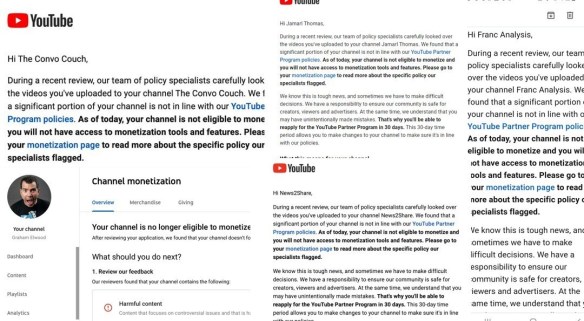
Progressive commentators Graham ElwoodThe Progressive SoapboxThe Convo CouchFranc AnalysisHannah Reloaded and Cyberdemon531 have all received notifications from YouTube that their videos are no longer permitted to earn money through the platform’s various monetization features, as has Ford Fischer, a respected freelancer who films US political demonstrations. No explanation has been offered for this decision beyond the vague claim that “your channel is not in line with our YouTube Partner Program policies” due to “harmful content”.

Like all large online platforms, YouTube’s appeals process is notoriously opaque and unaccountable. These accounts could remain demonetized for months, or forever, without any clear explanation at all. Ford Fischer, who has been in this situation before, said on Twitter that his account was left demonetized for seven months before YouTube reversed its decision.

“Last time you demonetized my channel, I spoke out for seven months. I didn’t delete a single piece of content. You admitted you were wrong. I forgive you. Please don’t do this again,” Fischer tweeted.

“No superchats, no ad revenue, no YouTube premium money,” tweeted Elwood, who also said “I have a call with my lawyers later today.”

“You guys have destroyed my channel without legit explanation as to why,” tweeted Jamarl Thomas of Progressive Soapbox. “No videos are given – and frankly there is literally zero ‘harmful’ content on my channel. This is a radically bad error that needs to be corrected.”

The Convo Couch’s Jonathan Mayorca tweeted the notification he received from YouTube which gave the reason as “Harmful content: Content that focuses on controversial issues and that is harmful to viewers,” saying no specific video or subject was named. Nobody receiving these notifications appears to have any idea what is meant by “harmful” or “controversial” or why YouTube is mentioning them in the same breath as though these two things are connected or synonymous in some way.

YouTube has been providing template responses saying “We recommend making the needed changes to your content and reapply in 30 days” while refusing to specify what the “needed changes” even are.

Speaking for myself, I can say with absolute certainty that I would not be able to create content at anywhere near the pace I do were I not making enough money from it to do it full time. Life is far too demanding with far too much else going on for me to be able to maintain anything like daily output; being financially deplatformed and having to get another job would force me down to an essay a week in my spare time, if that. Anyone who works in independent media full time knows this, and so do the powerful people who are steadily ratcheting up the campaign to silence anyone who hasn’t passed through the gatekeepers of the plutocratic media.

Financial deplatforming is censorship. People were given an opportunity to devote themselves to the vocation of creating media outside the gatekeeping apparatus of billionaire news institutions, which is arguably the single most important vocation anyone can give themselves to in our world right now, and they built their lives around their ability to do this. Now it’s being ripped away from them; their literal jobs are being taken away. They were offered a reason to think they’d be able to make a living doing very important work, and then they were sucker punched with what amounts to political censorship.

This has been a continually escalating trend for years. The general population is herded onto huge monopolistic social media platforms offering democratization of information where your voice can be heard, and then those platforms proceed to censor an increasing amount of political speech in increasing coordination with the US government.

https://twitter.com/FordFischer/status/1357055942446223360

If the democratization of information online is successfully reversed and the mass media gatekeepers are again the sole authorities on what’s real and true, people will be locked into forming their ideas on how to think, act and vote based on what they are told by the same plutocratic media institutions which have been deceiving them into every war and manipulating them into accepting the status quo for generations.

If the door is locked to the possibility of a grassroots information rebellion against the narrative hegemony of our rulers, we will remain doomed to continue along the same ecocidal, omnicidal trajectory these bastards have us on until it reaches its inevitable conclusion. This must be resisted.

Be Your Own Revolution

By Caitlin Johnstone

Source: CaitlinJohnstone.com

I made the mistake of involving myself in a sectarian Twitter spat when I was halfway through my morning coffee today and I instantly felt like an idiot.

People from the Left Twitter faction I’d offended rushed in to push back against the offense I’d caused them, and within minutes I felt it: the all-too familiar sensation of inspiration and creativity draining away from my body. Tension, coldness and defensiveness where previously there was playfulness and the crackling sensation of an exciting new day in which anything was possible.

If you’re active online, you’ve probably experienced this too. The days when you’re involved in sectarian bickering are the days when you are at your least creative, your least inspired, and your least effective at fighting against the machine. At best the drama gives your ego a tickle (as social media platforms are designed to do), after which you feel a bit yuck. The longer you engage in it, the lower the probability that you will produce something creative and inspired that day.

As a general rule, you may find that it works best to reject cliques and factions altogether. When you “belong” to any group you feel compelled to defend it, and to move with it wherever it goes even if that’s not where you feel like the energy is. You get invested in wanting the collective to move in a certain direction, and you get frustrated when it just wants to focus on silly nonsense and sectarian feuds.

So my advice to you here, which you of course can take or leave, is to just blast off on your own and fight your own revolution in your own way.

The unfortunate fact is that our society is insane, and its madness pervades literally every political faction to varying degrees. Marrying yourself to any group means marrying its madness. Instead, focus on becoming more sane, and then act based on that sanity.

Just blast off. Don’t wait for your comrades. Don’t try to pull them along with you before they are ready. Just blast forward into your own revolution, burning brightly and scorching the machine with your own light. If you shine brightly enough, the others may follow when they are ready.

One of the most frustrating things is seeing where we need to move and not being able to get the collective to come with you. You’re like, “It’s there! Let’s move!”, and they just want to bicker and ego spar. Just blast off into health yourself, and trust that the others will follow if and when they are able.

Be your own revolution. You have all the media access you need to help wake the world up with the power of your own inspired action. Reject cliques, factions and sectarianism, and have the courage to stand on your own two feet attacking the machine with your own unique abilities.

This doesn’t mean you can’t organize and work collectively; you absolutely can. If you see people doing something you want to uplift, uplift it. But when you’re done, don’t stay and become a member of the club. Move on and retain your self-sovereignty. If you’re doing something that people want to help uplift and amplify, let them do so. When they don’t want to anymore, let them go. Don’t try to manipulate them into staying.

You are free to collaborate with anyone on any issue at any time. You don’t actually need to be a member of the Blah Blah Whateverist Club to do this. And when nothing is happening that you want to collaborate with others on, you can attack the machine on your own, using your own unique set of tools based on your own inspiration. You are not owned or bound.

All these debates we’re seeing lately over who should be let into and kept out of the Revolution Club, how the Revolution Club should act, who should lead the Revolution Club etc are based on the assumption that there has to be a Revolution Club in the first place, and there just doesn’t. Organize and collaborate on a case-by-case, issue-by-issue basis while remaining sovereign.

Have the compassion to prioritize the needs of the collective and the courage to stand as an individual. Trying to impose your will on exactly how the collective revolution should and should not be moving is a doomed endeavor, because you cannot control the collective, you can only control yourself. So be your own revolution and attack the machine wherever you detect a weak point in its armor.

I’ve avoided all cliques and factions like the plague, and I’ve been far more effective in this fight than I would have been if I’d chosen to glom onto some faction and uphold all its -ists and -isms. It would have killed my ability to move with agility in whatever way is demanded by each present moment, because I would have been binding myself to the movements of a group that isn’t seeing what I’m seeing and can’t move the way I move.

This is just what’s worked for me, and of course your mileage may vary. But if you’re like me and you don’t see the various groups, organizations and factions getting us to where we need to go, consider stepping out of the vehicle, standing on your own two feet, and waging your own revolution.

Newspeak in the 21st Century: How to Become a Model Citizen in the New Era of Domestic Warfare

By Cynthia Chung

Source: Strategic Culture Foundation

With President Biden’s inauguration many feel that they can finally breathe a deep sigh of relief. At last sanity has been restored and we can all go back to our predictable lives knowing that the future can only get better during these next four years.

Well…not quite.

There still remains the problem that everybody may not be on board with the progressive changes that Biden’s Administration plans to push through. This, of course, is wholly unacceptable.

Disagreement has become an extremely sensitive issue lately; it was once thought that debate was an essential component to a strong and healthy democracy, however, we are now told that it is extremely dangerous, in fact, it may soon be categorised as a form of domestic terrorism.

As early as mid-Nov 2020, Biden was already discussing the need to pass further laws against domestic terrorism. This is interesting since under the 2001 Patriot Act (which was meant to be a temporary enforcement in reaction to 9/11, however, is still in place 19 years later), domestic terrorism is already defined as;

“activities that (A) involve acts dangerous to human life that are a violation of the criminal laws of the U.S. or of any state; (B) appear to be intended (i) to intimidate or coerce a civilian population; (ii) to influence the policy of government by intimidation or coercion; or (iii) to affect the conduct of a government by mass destruction, assassination, or kidnapping; and (C) occur primarily within the territorial jurisdiction of the U.S.”

So, the question begs, what else needs to be added to the Patriot Act, which was recognised at the time of its enforcement as something that should only be temporary since it was understood that it infringed upon civil liberties? Come to think of it, why is the Patriot Act still in place, which allows for the indefinite continuation of human rights violations such as warrantless wiretapping; illegal torture, kidnapping, and detention; mass surveillance; government secrecy; Real ID; no-fly list; political spying; abuse of material witness statutes; and attacks on academic freedom?

As Glenn Greenwald wrote in his formidable paper The New Domestic War on Terror is Coming, “what needs to be criminalized that is not already a crime?”, keeping in mind that as of June 2020, the United States has the highest prisoner rate in the world, followed by El Salvador, Turkmenistan, Thailand and Palau.

Well, the answer is apparently simple and as always for our own good. We have come to a point in time where the enemy is not some radicalized ideology, it is not some foreign despot, it is not even the threat of war (whether it be economic, cyber or nuclear), but rather it is ourselves. We, the people, are the new enemies of the State.

You may protest “Not I! I am a model citizen! I pay my taxes on time, I am never late or call in sick for work, I make sure to be up-to-date with the newest ‘woke’ revelations and I don’t engage with anything outside of the mainstream matrix during my free-time.” People such as yourself think, that when the Biden Administration is calling for tougher laws against domestic terrorism, that it is obviously meant for the ‘other guy,’ those uneducated bigots who are screaming at the top of their lungs “Treason!” and inciting what we are told to be forms of ‘insurrection,’ all in the name of the archaic ideas of ‘patriotism’ and the ‘U.S. Constitution.’

You, unlike so many others, have no problem recognising that the U.S. Constitution is actually part of the problem, that by the standards used today, the U.S. Constitution is itself responsible for ‘inciting violence’ and thus guilty of domestic terrorism, and thus needs to be revoked.

But you see… that’s just not good enough.

Though you are well on your way to becoming a model citizen in the 21st century, you still have a little ways to go. It is for this reason that a guide to 21st century Newspeak has been recently released to make sure that well-intentioned citizens like yourself are fully informed of what is required of you in terms of appropriate behaviour, as well as appropriate thoughts, and though this will take a little more time, appropriate instincts.

21st Century Newspeak

The first alteration that will need to take place is freedom of thought. It has been shown through peer-review studies that individual thoughts are susceptible to forming erroneous beliefs and can lead to dangerous behaviours such as refusal to integrate into a community standard.

Once an individual refuses to integrate into its designated community, it is only a matter of time before this individual shows opposition and even antagonism towards said community. Thus failure to integrate is one of the first signs that an individual is on the path to becoming a domestic terrorist.

Because the individual mind is flawed, it can no longer be trusted to be the standard of its own judgement of what is right and wrong. It is for this reason that we are introducing groupthink. This concept is not new, however, the difference is from now on the individual’s environment will only be allowed to reciprocate the values of groupthink, and all other thoughts outside of groupthink are to be banned and punishable under the new laws.

Even if thoughts outside of groupthink appear as harmless to the collective, they are not, for any thought that is not groupthink threatens to lead to a different outcome than that intended by groupthink and thus is a threat to the security of the collective.

In order to ensure commitment to groupthink, it will be mandatory that every individual engage in at least 2 minutes of Hate every hour throughout the day, every day. This can be achieved either by watching 2 minutes of Hate news, or by engaging in a public 2 minutes of Hate with a colleague, a friend or family member via social media.

It is imperative that an individual watch the 15 minute morning and evening “What to Hate” news provided by the Ministry of Truth (or Minitrue), in order to be the most up-to-date with what are the ongoing and new subjects of Hate, and what were previous subjects of Hate which are no longer deemed to be subjects of Hate.

It is most important that an individual never refer to a former subject of Hate as such. Any present subject of Hate must be seen as having always been a subject of Hate and any former subject of Hate must be seen as having never been a subject of Hate.

This may appear as an impossible task, but we assure you it is entirely possible with the use of doublethink, which many of you have already been practising. Doublethink requires that one be both conscious and unconscious of the fact that they are telling deliberate lies while genuinely believing them; to deny the existence of objective reality and all the while to take account of the reality which one denies. This makes up a part of our new Party slogan: FREEDOM IS SLAVERY.

Those who excel the most in doublethink will receive the highest stations within our newly organised community, as safe-guards against the renegade, the domestic terrorist.

Another alteration that will need to occur is how we think and refer to the past and the future. With the newly enforced groupthink, the present is what groupthink dictates it to be, which is subject to change, however, must be regarded as having always been.

The past is what the present dictates it to be, if it were not, it could challenge the basis for the present. Thus to preserve the present, the past must serve the present, only justifying why we Hate what we presently Hate and why we Love what we presently Love and can do nothing to contradict these Party lines. There will be permitted no records of an alternative past, there will be no way to prove that the past was ever different from what the present dictates it to be, the only threat to this narrative is the record of the individual mind, and once this ceases to be there will only be the Minitrue record as the recorder of past Truth.

In effect, the model citizen will perceive the past as dead and the future as unimaginable. The future is unimaginable because it is impossible to think of an alternative to the present, in fact, the mere act of thinking of an alternative to the present is considered a challenge to the status quo of the present, and thus is a challenge to groupthink, and thus is a form of domestic terrorism, which we will call from now on thoughtcrime.

Thoughtcrime is essentially any thought pertaining to memory, judgement of right and wrong, thoughts of an alternative reality, and self-reflection, which are now all deemed forms of thoughtcrime. If an individual is to engage in any of these sorts of thoughts, it is only a matter of time before they will come into conflict with groupthink and the Party line, thus private thoughts are banned and punished under the new laws.

It may seem an impossible task at first not to engage in private thoughts, but again, we assure you it is entirely possible using crimestopCrimestop is the practice of not grasping analogies, failing to perceive logical errors, misunderstanding the simplest arguments, of being bored or repelled by any train of thought which is capable of leading in a heretical direction. Crimestop is essentially, protective stupidity.

It is imperative that one practice crimestop during any interaction with another individual, however, it is also imperative that one practice crimestop within their own inner-dialogue, such that even from your own conscience you will be protected from committing a thoughtcrime.

Newspeak will also help dissuade from thoughtcrimeNewspeak is to be the new acceptable vocabulary, anything that references words outside of the most-up-to-date edition of the Newspeak dictionary will be considered Oldspeak and something to be construed as counter to groupthink. It is understood that by reducing the vocabulary to revolve around a few words such as good; which for example can be used as plusgood, doubleplusgood, ungood etc, it will serve to narrow the range of thought an individual is capable of, and thus reduce the capability of committing a thoughtcrime. How wonderful! That in the future we will be unable to commit crime for we will be incapable of its thought! This makes up another part of our new Party slogan: IGNORANCE IS STRENGTH.

In terms of the new laws, in effect, nothing will change. Unacceptable behaviours and thoughts will not be designated as illegal per se; one reason for this is because we do not plan on having any public trials. Anyone who is in violation of conduct will simply be removed either temporarily into a “re-education facility” or will be vaporised. Any subject that has been vaporised will be removed from the collective memory records and can never be referred to as having ever existed.

The reason why no public trials will be held from now on is because, as we have seen, dissent is infectious. Thus, holding public trials risk further encouragement towards dissent. It is for this reason that dissenters must be removed swiftly and quietly in the middle of the night. Such disappearances will occur relatively regularly and will eventually become the new normal, however, it will not be traumatic for the collective. The subject will simply cease to exist as if it were all just a dream, the structure of our daily routine unaffected.

In order to ensure utmost compliance, the collective will be employing the use of children spies, this has already been occurring abroad, and proves to be very effective.

Purges and vaporizations will be a necessary part of the government mechanics and will become the new normal. We have already discussed the necessity for vaporizations, as for the necessity of purges, it is because the community will be built so as to remain in stasis, however, this can only be accomplished through artificial means, for it is not natural that a thing remain the same but rather that it either improves or deteriorates.

However, in order for the Party to maintain absolute control, there can be no change to the present except for that chosen by the Party, thus any change is a challenge to the Party. In order to facilitate an artificial environment of no change, resources must artificially be kept low, and purges need to occur so that this environment of scarcity is tightly controlled and maintained.

In order for us to achieve this, our economy will have to go through stagnation, we will need to decrease the amount of land used for cultivation, we will no longer add capital equipment needed for industrial growth and great blocks of the population will be prevented from working and will be kept half alive by State charity. The wheels of industry cannot be allowed to turn so as to increase the real wealth of the world. Goods must be produced, but they must not be distributed, and in practice the only way of achieving this is by continuous warfare.

War will continue under the Old Cold War doctrine. War will always be present, and yet will never be seen by the majority of our citizens, the reason for this being that war will not be about a real threat to security nor about real conquests but rather will be about maintaining the present status quo by exhausting the surplus of consumable goods, while also helping to preserve the special mental atmosphere that a hierarchical society needs.

However, real war will be purely an internal affair, the war waged by the ruling group against its own subjects, with the object of the war as to keep the structure of society intact and unchanging.

A peace that is truly permanent under this new ideology is no different than an invisible permanent war. For peace in our new era will equate to stability through no change. This makes up our first Party slogan: WAR IS PEACE.

Conclusion

All of these means are necessary if we are to realise that the only secure basis for oligarchy is collectivism, and that oligarchy is the only means to achieving peace, freedom and strength for the collective.

However, we are still very far from this ideal and there is much that threatens its becoming, namely, the masses, or what we call the proles. So long as the masses believe that they are entitled to freedom of thought, our endeavours cannot succeed.

The individual must voluntarily relinquish this. It cannot be taken from them no matter the degree of control and no matter the threat of physical harm. An individual’s mind is theirs and cannot be taken, instead, the individual must be led to believe that it is in their best interest to relinquish their mind.

Let us do our best then to convince the individual that they are no longer fit to use their mind and let us pray that we are successful, for if we fail, our entire system of control fails with it.


“You would not make the act of submission which is the price of sanity…Reality exists only in the human mind, nowhere else. Not in the individual mind, which can make mistakes, and in any case soon perishes: only in the mind of the Party, which is collective and immortal. Whatever the Party holds to be truth, is truth. It is impossible to see reality except by looking through the eyes of the Party.”

– O’Brien in George Orwell’s “1984”

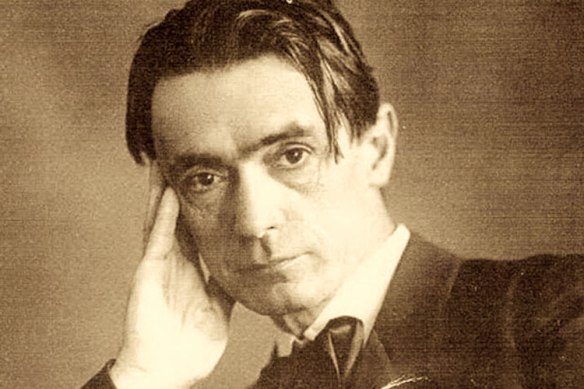
IN 1917 RUDOLF STEINER FORESAW A VACCINE THAT WOULD ‘DRIVE ALL INCLINATION TOWARD SPIRITUALITY OUT OF PEOPLE’S SOULS’

By Dylan Charles

Source: Waking Times

If you’ve felt at all like you’re in a spiritual war right now, you’re not alone.

Many of the world’s greatest scholars, philosophers and ascetics understood the world to be multi-dimensional and co-inhabited by non-physical beings both good and evil, always at war with us and each other.

It’s not something that can be rightly explained with language or science. One must cultivate such sensitivity that the existence of spiritual beings can be directly experienced.

Rudolf Steiner was an Austrian philosopher, educator, and spiritualist, and over the course of his life he published numerous books and papers on the science of spirituality. He viewed the human body as a spiritual vessel, open to occupation by other entities.

To be conscious of these forces was to have the power to reject their negative influence. To remain unconscious of them was to be a leaf in their wind, and spiritual cultivation was the key to developing conscious awareness of them.

“The spirits of darkness are now among us. We have to be on guard so that we may realize what is happening when we encounter them and gain a real idea of where they are to be found. The most dangerous thing you can do in the immediate future will be to give yourself up unconsciously to the influences which are definitely present.” ~ Rudolf Steiner

If people express the natural human inclination toward spiritual growth, they free themselves from fear and anxiety, and effectively develop a sort of immunity to the influences of negative entities. If not, our vibration attracts hostile spirits and we fall unconsciously unto their influence.

“There are beings in the spiritual realms for whom anxiety and fear emanating from human beings offer welcome food. When humans have no anxiety and fear, then these creatures starve… If fear and anxiety radiates from people and they break out in panic, then these creatures find welcome nutrition and they become more and more powerful. These beings are hostile towards humanity.

Everything that feeds on negative feelings, on anxiety, fear and superstition, despair or doubt, are in reality hostile forces in supersensible worlds, launching cruel attacks on human beings, while they are being fed. Therefore, it is above all necessary to begin with that the person who enters the spiritual world overcomes fear, feelings of helplessness, despair and anxiety. But these are exactly the feelings that belong to contemporary culture and materialism; because it estranges people from the spiritual world, it is especially suited to evoke hopelessness and fear of the unknown in people, thereby calling up the above mentioned hostile forces against them.” ~Rudolf Steiner

With such profound global fear, anxiety, and panic over the present pandemic, many are exposing their own spiritual sicknesses and acquiescing to any recommended behavior or intervention that might alleviate these emotions. Along with this is the push to vaccinate 7 billion healthy people.

Nearly 100 years ago, in a series of 14 essays published under the title, The Fall of the Spirits of Darkness, Steiner issued a warning to future generations about a possible measure of mass control, quite similar to the  visions presented by Orwell and Huxley. Steiner foresaw a future when vaccines could steal our spiritual nature.

First, some background:

“In these fourteen lectures, given at the end of 1917 following four years of war in Europe, Steiner speaks on the complex spiritual forces behind the World War I, humanity’s attempts to build theoretically perfect social orders, and the many divisions and disruptions that would continue on Earth into our own time. Humanity in general was asleep to the fact that fallen spirits, cast from the spiritual worlds, had become intensely active on Earth. This manifested mainly in human thinking and perception of the surrounding world. ” [Source]

The fall into such  destructive slumber would be marked by an age of materialism and centralization of power, during which the influences of ‘spirits of darkness’ would inspire humans to devise new technologies and new means of oppression. Steiner comments:

“I have told you that the spirits of darkness are going to inspire their human hosts, in whom they will be dwelling, to find a vaccine that will drive all inclination toward spirituality out of people’s souls when they are still very young, and this will happen in a roundabout way through the living body. Today, bodies are vaccinated against one thing and another; in future, children will be vaccinated with a substance which it will certainly be possible to produce, and this will make them immune, so that they do not develop foolish inclinations connected with spiritual life – ‘foolish’ here, or course, in the eyes of materialists. . . .

“. . . a way will finally be found to vaccinate bodies so that these bodies will not allow the inclination toward spiritual ideas to develop and all their lives people will believe only in the physical world they perceive with the senses. Out of impulses which the medical profession gained from presumption – oh, I beg your pardon, from the consumption [tuberculosis] they themselves suffered – people are now vaccinated against consumption, and in the same way they will be vaccinated against any inclination toward spirituality. This is merely to give you a particularly striking example of many things which will come in the near and more distant future in this field – the aim being to bring confusion into the impulses which want to stream down to earth after the victory of the [Michaelic] spirits of light [in 1879].” ~Rudolf Steiner

Steiner was talking only about vaccines here. His comment does not consider the compounded effects on human spirituality of the many myriad influences we have in our world today, all of which work against spiritual connection on their own right.

Again, if you’ve felt at all like you’re in a spiritual war, you’re not alone.

Destroying The Web Of Life: The Destruction Of Earth’s Biodiversity Is Accelerating

By Robert J. Burrowes

In August 2010, the secretary-general of the UN Convention on Biological Diversity, Ahmed Djoghlaf, warned that ‘We are losing biodiversity at an unprecedented rate.’ According to the UN Environment Program, ‘the Earth is in the midst of a mass extinction of life’ with scientists estimating that ‘150-200 species of plant, insect, bird and mammal become extinct every 24 hours’ which is nearly 1,000 times the ‘natural’ or ‘background’ rate. Moreover, it ‘is greater than anything the world has experienced since the vanishing of the dinosaurs nearly 65m years ago.’ See ‘Protect nature for world economic security, warns UN biodiversity chief’.

Two months later, at the tenth meeting of the Conference of the Parties to the Convention on Biological Diversity, held from 18 to 29 October 2010, in Nagoya, Aichi Prefecture in Japan, a revised and updated Strategic Plan for Biodiversity, including the Aichi Biodiversity Targets, for the 2011-2020 period was adopted. See ‘Strategic Plan for Biodiversity 2011-2020, including Aichi Biodiversity Targets’.

You can read the 20 Aichi Biodiversity Targets on the Convention’s website. They were ambitious but represented a realistic assessment of what needed to be achieved by 2020 if national governments were to achieve the longer term goal of ‘Living in Harmony with Nature’ by 2050. The 2050 Vision for Biodiversity required ‘a significant shift away from “business as usual” across a broad range of human activities.’ See ‘Global Biodiversity Outlook 5’.

So how have we done in the past ten years?

In 2015, distinguished conservationists Professor Gerardo Ceballos, Anne H. Ehrlich and Professor Paul R. Ehrlich published their book titled The Annihilation of Nature: Human Extinction of Birds and Mammals which tells the story of humanity’s ‘massive and escalating assault on all living things on this planet’ precipitating what is now Earth’s sixth great mass extinction: ‘a time of darkness for our planet’s birds and mammals’.

Noting that the roots of this destruction ‘run deep through time’ with human hunting and other activities responsible for pushing populations of animals to extinction long before the agricultural revolution (which began about 10,000 years ago), they observe that the current collective assault on animals, plants and microbes has reached a level so horrendous that ‘any alarm call we might sound will be too faint to match the tragedy that is unfolding’. But while the decimation of life that is currently underway is being caused by Homo sapiens, the consequences of this decimation will also have impact on humanity itself because the life-forms being annihilated are ‘working parts of life-support systems on which civilization depends’.

Despite the impressive statistics that record the demise of life on Earth and the fundamental threat this extinction crisis poses, Cebellos and the Ehrlichs are well aware that the public and politicians generally are not reacting emotionally to this crisis as do those who are ‘deeply familiar with the impoverishment of nature’. They hope we can relate to the fate of the last Spix’s macaw, a male that searched fruitlessly for a mate until it disappeared from the savannah of northeastern Brazil in 2000.

And did you know that even the iconic African lion may be facing extinction in the wild? In 2015, as a result of decades of hunting, disease and habitat loss, only 23,000 lions remained in Africa’s vast savannahs: less than 10% of what roamed there in 1950. There are fewer lions today.

But separately from species extinctions, Earth continues to experience ‘a huge episode of population declines and extirpations, which will have negative cascading consequences on ecosystem functioning and services vital to sustaining civilization’. In a 2017 report, Professor Ceballos and his coauthors describe what they label ‘a “biological annihilation” to highlight the current magnitude of Earth’s ongoing sixth major extinction event.’ Moreover, local population extinctions ‘are orders of magnitude more frequent than species extinctions. Population extinctions, however, are a prelude to species extinctions, so Earth’s sixth mass extinction episode has proceeded further than most assume.’ See ‘Biological annihilation via the ongoing sixth mass extinction signaled by vertebrate population losses and declines’.

Beyond even this, however, many additional species are now trapped in a feedback loop that will inevitably precipitate their extinction as well because of the way in which ‘co-extinctions’, ‘localized extinctions’ and ‘extinction cascades’ work once initiated and as has already occurred in almost all ecosystem contexts. See the (so far) six-part series ‘Our Vanishing World’.

Have you seen a flock of birds of any size recently? A butterfly?

What Is Driving the Sixth Mass Extinction?

Homo sapiens. And the key tool is always destruction of habitat, whether on land or in the ocean.

Of course, particular human behaviours have a huge impact. Fighting wars (or even just wasting resources to manufacture weapons and other military infrastructure) is one (particularly given that the perpetual war in which the US is engaged is to secure resources and markets), destroying the climate is another and deploying 5G is yet another. But there are many other destructive human behaviours too.

Consider the forests. Just last year, 6.5 million hectares of pristine forest were cut or burnt down for purposes such as clearing land to establish cattle farms so that many people can eat cheap hamburgers, mining (much of it illegal) for a variety of minerals (such as gold, silver, copper, coltan, cassiterite and diamonds) and logging to produce woodchips so that some people can buy cheap paper (including cheap toilet paper). See ‘Our Vanishing World: Rainforests’.

One outcome of this destruction is that 40,000 tropical tree species are now threatened with extinction. In addition, rainforest destruction is also the primary cause of species extinctions globally given the number of species that live in rainforests. See ‘Global Assessment Report on Biodiversity and Ecosystem Services’.

Another outcome is that ‘the precious Amazon is teetering on the edge of functional destruction and, with it, so are we’. See ‘Amazon Tipping Point: Last Chance for Action’.

And in relation to another major habitat that is being destroyed, consider the world’s oceans. In summary, the oceans are warming, acidifying and deoxygenating; being contaminated with nuclear radiation, by offshore oil and gas drilling as well as oil spills; being damaged by deep sea mining; being polluted by industrial (including chemical) and farming wastes while being damaged in a myriad other ways and being overfished.

In short: the oceans are under siege on a vast range of fronts and are effectively ‘dying’. For a comprehensive 18-point summary, see ‘Our Vanishing World: Oceans’.

If you like, you can read comprehensive summaries of the fate of Earth’s birds and insects too. See ‘Our Vanishing World: Birds’ and ‘Our Vanishing World: Insects’.

What Is the State of Play in Early 2021?

In a report published by the Intergovernmental Science-Policy Platform on Biodiversity and Ecosystem Services (IPBES) in May 2020, the authors observe that ‘Nature is declining globally at rates unprecedented in human history – and the rate of species extinctions is accelerating, with grave impacts on people around the world now likely.’ With a total estimated number of animal and plant species on Earth of 8 million (of which 5.5 million are insect species), an accelerating daily extinction rate combined with an ongoing decline in ecosystem health, the report concludes that 1,000,000 species of life on Earth are threatened with extinction. See ‘Nature’s Dangerous Decline “Unprecedented”; Species Extinction Rates “Accelerating”’ and ‘A million threatened species? Thirteen questions and answers’.

And the latest edition of the Convention on Biological Diversity’s flagship publication ‘Global Biodiversity Outlook 5’ was published on 18 August 2020. It reports that ‘Humanity stands at a crossroads with regard to the legacy it leaves to future generations. Biodiversity is declining at an unprecedented rate, and the pressures driving this decline are intensifying. None of the Aichi Biodiversity Targets will be fully met.’

But this is an understatement, to put it politely.

In their commentary on this predicament in November 2020, scholars Ruchi Shroff and Carla Ramos Cortés note that ‘Despite wide-spread international calls to curb the sixth mass extinction, no single goal of the Convention of Biological Diversity’s Aichi Biodiversity Targets, for the second consecutive decade, have been met. In some cases, biodiversity loss has been made worse as no action has been taken to curb pesticide use, pollution, fossil fuels and plastics.’ See ‘The Biodiversity Paradigm: Building Resilience for Human and Environmental Health’.

But the destruction is far worse than suggested by this. Given, as already noted above, the ongoing destruction of rainforests and oceans, not to mention other habitats ranging from wetlands to deserts, the annihilation of life on Earth continues to accelerate with no indicators signaling that this destruction is being slowed in any way.

Therefore, destruction of biodiversity remains one of the four primary paths to human extinction (along with nuclear war, the deployment of 5G and the climate catastrophe).

Is It too Late to Do Anything?

It might be. As mentioned above: Because many species are now trapped in a feedback loop that will inevitably precipitate their extinction because of the way in which ‘co-extinctions’, ‘localized extinctions’ and ‘extinction cascades’ work once initiated, many further extinctions are now inevitable.

However, we can take action to save those individuals and species not yet trapped in a feedback loop and that might yet be saved. But if you wait for governments or corporations to act responsibly, you will wait in vain as the last 20 years has demonstrated.

So you have some powerful options to consider. The first, and most important, is to consider the ways in which you can reduce your own consumption. The planetary environment is only being destroyed so that governments and corporations can respond to consumer demand. Everything from military spending and war to the extraction and burning of fossil fuels are fundamentally driven by what you buy. And each and every item that you buy has a negative environmental impact. There are no exceptions.

If you reduce your own consumption and increase your self-reliance, you will reduce the burden that extraction, transport, manufacture and distribution of resources imposes on the natural environment resulting in the destruction of habitat and the annihilation of biodiversity.

One option to consider is ‘The Flame Tree Project to Save Life on Earth’ which outlines a graduated series of steps for reducing consumption and increasing self-reliance.

If you want to better understand why so many human beings are addicted to endless consumption, see ‘Love Denied: The Psychology of Materialism, Violence and War’. There is more detail on the origins of this behaviour in ‘Why Violence?’ and ‘Fearless Psychology and Fearful Psychology: Principles and Practice’.

If you are inclined to campaign to defend biodiversity in one context or another, whether by campaigning to end war, halt the climate catastrophe, stop the deployment of 5G or end wildlife trafficking for example, consider doing so strategically. See ‘Nonviolent Campaign Strategy’.

You might also consider signing the online pledge of ‘The People’s Charter to Create a Nonviolent World’.

Or, if the options above seem too complicated, consider committing to:

The Earth Pledge

Out of love for the Earth and all of its creatures, and my respect for their needs, from this day onwards I pledge that:

  1. I will listen deeply to children. See ‘Nisteling: The Art of Deep Listening’.
  2. I will not travel by plane
  3. I will not travel by car
  4. I will not eat meat and fish
  5. I will only eat organically/biodynamically grown food
  6. I will minimize the amount of fresh water I use, including by minimizing my ownership and use of electronic devices
  7. I will not own or use a mobile (cell) phone
  8. I will not buy rainforest timber
  9. I will not buy or use single-use plastic, such as bags, bottles, containers, cups and straws
  10. I will not use banks, superannuation (pension) funds or insurance companies that provide any service to corporations involved in fossil fuels, nuclear power and/or weapons
  11. I will not accept employment from, or invest in, any organization that supports or participates in the exploitation of fellow human beings or profits from killing and/or destruction of the biosphere
  12. I will not get news from the corporate media (mainstream newspapers, television, radio, Google, Facebook, Twitter…)
  13. I will make the effort to learn a skill, such as food gardening or sewing, that makes me more self-reliant
  14. I will gently encourage my family and friends to consider signing this pledge.

Conclusion

One species – Homo sapiens – is annihilating life on Earth, driving at least 200 species to extinction each day. In the time it took you to read this article, another species of life on Earth vanished into the fossil record.

This annihilation of life is driven by our over-consumption. As Mahatma Gandhi, already wearing his own homespun cloth, noted more than 100 years ago: ‘Earth provides enough for every person’s need but not for every person’s greed.’

Of course, many people around the world are not responsible for over-consuming; they live life on its margins, with barely enough to eat let alone thrive. And this reflects inequities built into a global economic system that prioritizes profit for the few, not resources for living for all.

So that means that the burden for reducing consumption must fall on those in industrialized societies who benefit from the maldistribution of planetary resources.

Ralph Waldo Emerson once noted that ‘The end of the human race will be that it will eventually die of civilization.’

If we are to prove him wrong, we do not have much time left.

This is because Homo Sapiens is a part of the web of life. And we are ruthlessly destroying that web.


Biodata: Robert J. Burrowes has a lifetime commitment to understanding and ending human violence. He has done extensive research since 1966 in an effort to understand why human beings are violent and has been a nonviolent activist since 1981. He is the author of ‘Why Violence?’ His email address is flametree@riseup.net and his website is here.

Living in Dark Times: I Revolt, Therefore I Am!

By Dr. Rudolf Hänsel

Source: Global Research

“Really, I live in dark times! The guileless word is foolish. (…) The laughing man has only not yet received the terrible news.” This is how Bertolt Brecht‘s poem “An die Nachgeborenen” (To those born later) begins; published in June 1939.

It is one of the most important texts in German exile literature. Three generations later, we are again living in dark times.

Most citizens instinctively feel that “Something is Rotten in the State of Denmark” and “Time is Out of Joint” (Shakespeare). However, a sense of authority and a mental obedience reflex prevent them from distrusting the brazen lies of politicians, scientists and the mass media and from saying no. With this behaviour they stabilise the totalitarian system. 

Science has the task of leading people to knowledge. Depth psychology, for example, has found out what prevents people from using their common sense instead of handing over power to politicians. The clear-sighted free citizen will no longer obey: he will rebel against the unconstitutional Corona measures of governments as an outgrowth of the New World Order and will embrace the spirit of revolt. His highest goal is the realisation of freedom for all people. In this act of outrage, he finds himself: I revolt, therefore I am!

Science has to lead man to knowledge

The human community rightly expects science to alleviate the plight of people and to serve the protection of life. But there are hardly any independent scientists left, only academics (with university or college education) who kowtow. More and more scientists are hawking their knowledge and skills, and often their souls, to the military-industrial-media complex and Big Money. They even move so far away from their humanity that they help perfect the means for the general destruction of humanity. 

This is also true of psychologists, psychotherapists and psychiatrists who could greatly enrich people’s lives. The fact that the science of psychology is still very much underestimated in our latitudes is largely due to the fact that many German psychologists of Jewish faith had to go into exile in the USA during the period of fascism. However, psychology is also eyed with suspicion because many of its representatives, while striving to help individuals, are in favour of preserving the system. They want the person seeking advice to find his way in society, to be a good and well-behaved citizen. 

In war, the state hires psychologists so that the soldier stays in line and does not run away. And if the soldier’s mind falls ill on the battlefield, he is picked up by the psychologist on home leave and prepared again so that he continues to defend the fatherland at the risk of his life. Nowadays, psychologists give dubious advice to young and old alike on how to get through their anxieties, depressions and fits of despair due to the politically imposed Corona measures in reasonably good health. The betrayal of one’s own professional ethics is pushing humanity into misery. (1)

What joy, on the other hand, when one learns that a judge in Germany has already filed a 190-page constitutional complaint with the supreme court in December 2020 because of the drastic Corona measures imposed by the federal and state governments, because it is high time to “stabilise our liberal-democratic legal order again”. (2) Or that a professor from Tübingen is leaving the German Academy of Sciences and Literature Mainz, a sister organisation of the National Academy of Sciences “Leopoldina”, which advises the German government. His reason for leaving reads: 

“I want to serve a science that is committed to fact-based honesty, balanced transparency and comprehensive humanity.” (3)

First comes the feeling, then the action!

It is very difficult to get a person to move directly for a humane, peaceful and free society. Unconscious fears and inner psychological blocks prevent him from thinking rationally. When he becomes aware of this with the help of an experienced and compassionate psychologist or psychotherapist, he can begin to “have the mind free and cast off all timidity” (Rabelais). 

This person can listen to the other person when he is given new information and one draws his attention. He can then also think his own thoughts and begin to change, to take action. For this to happen, however, his deep soul feeling, his emotional life, must be addressed. The insight of scientific depth psychology is: First comes the feeling, then the action!

For this reason, it is counterproductive and hurtful to discriminate against fearful and obedient fellow citizens as “complete idiots” or “ducking mice”. Such an assessment shows that one does not know their deeper motives. Therefore, all conceivable motivations for obedience and fearful silence must be explored – especially authoritarian and religious upbringing in the parental home and school as well as the influence of society. (4)

Often it is the very personal accounts of those affected that speak to people deep down, stir them up and make them think. A positive example is the heartbreaking story of colleague Peter König, which was published on 27 December 2020 in the Canadian online platform “Global Research” (www.globalresearch.ca): “Death by Ventilator – A Personal Story – for the World to Know.” (5)

I revolt, therefore I am!

The clear-sighted human being who has become conscious of himself, who knows himself to be the master of his destiny, can really do nothing else but rebel against the conditions of the present social order, to commit himself to the spirit of revolt. The form of life that corresponds to this is that of permanent indignation.

In 1952, the French writer, philosopher, critic of religion and winner of the Nobel Prize for Literature Albert Camus (1913-1960) published the book “L’homme révolté” (Man in Revolt). Camus’ thinking culminates in the call to revolt in the sense of an incessant struggle for a higher degree of freedom. To take note of the absurdity of the world is to revolt against it. In this act of revolt, man would find himself – in a variation of Descartes‘ formula: “I revolt, therefore I am! 

This person wants neither earthly promises nor reassurances about the hereafter. The announcement of a future kingdom of God on earth or in heaven is indifferent to him. In both cases one had to wait, and during this time the innocent did not stop dying. The working masses, tired of suffering and dying, would be people without God. Man’s place in the revolt would be at their side. 

For free man and his revolt in the name of human right and human dignity, there would be no higher goal than the realisation of freedom for all – and that immediately and not via the “diversions” of a dictatorship, as the revolutionary demanded. 

Notes:

(1) http://www.nrhz.de/flyer/beitrag.php?id=27182&css; https://www.globalresearch.ca/cook-sweetens-meal-arsenic-charched-attempt-murder/5732124

(2) https://de.rt.com/inland/111310-richter-erhebt-verfassungsbeschwerde-gegen-corona/

(3) https://de.rt.com/inland/111305-aus-protest-gegen-lockdown-politik-tuebinger-professor-verlaesst-akademie-der-wissenschaften/

(4) https://www.globalresearch.ca/dispel-the-magic-belief-in-author…-power-and-violence-strengthen-community-feelings/5729560; http://www.nrhz.de/flyer/beitrag.php?id=27120&css

(5) https://www.globalresearch.ca/covid-death-by-ventlator-a-personal-storyfor-the-world-to-know/5733068


Big Tech, Nostalgia, and Control: Grafton Tanner’s ‘The Circle of the Snake’

By Michael Grasso

Source: We Are the Mutants

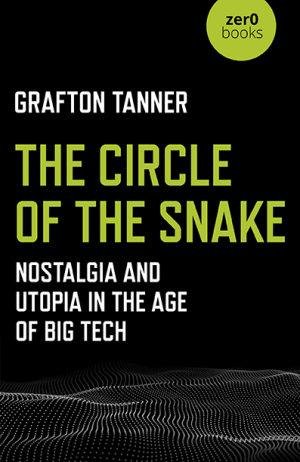
The Circle of the Snake: Nostalgia and Utopia in the Age of Big Tech
By Grafton Tanner
Zero Books, 2020

I’m sure many members of Generation X have taken a moment to look around the pop culture landscape over the past decade and a half and had a sudden moment of realization: there are certainly a whole lot of people trying to sell me things using the media of my youth. Ultimately, this is nothing new. I remember when every pop culture moment, from sitcoms to TV commercials, seemed to be using the Baby Boomers’ favorite songs to sell them cars and sneakers. But in 2020, the dominance of these re-treaded properties is even more nakedly cynical, whether its the endless sequels of the Star Wars and Marvel cinematic universes, or the easy-to-consume, signifier-filled pastiches of the worlds of Stranger Things and Ready Player One. The cultural marketplace, as dominated by bloated media and tech empires, no longer sees any need to admit the novel, the fresh, the unusual.

Both the “why” and the “how” of this cultural and technological tendency are explored by author Grafton Tanner in his new book, The Circle of the Snake: Nostalgia and Utopia in the Age of Big Tech. (Disclosure: Tanner is an occasional contributor to We Are The Mutants.) Tanner explores not only the pop culture properties that utilize nostalgia in an effort to assuage the anxieties of contemporary life in the aftermath of the 2008 financial rupture; he also explains how tech companies use the feedback from algorithmic analysis to keep consumers locked into a never-ending cycle—an ouroboros—of digital satisfaction of their subconscious desires for an older, more secure time. This nostalgic digital utopia, in turn, keeps consumers constantly “on,” working through endless “quests” that approximate proactivity but in the end keep people locked into pointless and unproductive cycles of feedback, emotional satisfaction, and control. “Recommender systems and predictive analytics—the very tools that allow our contemporary media to function—zero in on quick reactions, such as a flash of anger or a swell of nostalgia,” says Tanner in his Introduction. “These reactions are noted by algorithms, which then make recommendations based on them… The result is a nostalgic feedback loop wherein old ideas travel round.”

Tanner examines how the Big Tech tendency towards technolibertarianism and monopoly over the past 20 years has created the material conditions for this self-reinforcing system of psychic feedback. With an increasing belief in culture as disposable and “just for fun,” the material and political implications of this system of control are obfuscated. The way that these cultural narratives award Big Tech further and deeper power over all of us is merely part of the game. And we are enlisted as active players, not merely passive viewers, as in the era of television’s height. The online world, Tanner notes, demands a keen eye for analysis and a deep capacity for paying attention. The technolibertarian and neoliberal alike view our tech-suffused world—everyone is plugged in, 24/7—as a kind of utopia-in-waiting, or indeed a permanent utopia, where the idealized past can be endlessly revisited and basked in, while the present never changes from its current state of cultural and political stasis. This virtual plaza of commerce, emotional satisfaction, the illusion of proactivity, and control and surveillance describe the boundaries of Big Tech’s dominance of both our material and psychic space at the beginning of the 2020s.

The interview below was conducted in November and December 2020 via email and has been lightly edited for clarity.

***

GRASSO: Given the topic of your first book for Zero, Babbling Corpse: Vaporwave and the Commodification of Ghosts, the topic for The Circle of the Snake seems like a natural outgrowth. But from reading the book it also seems like there were a lot of specific events and observations about the world of Online and Big Tech over the past few years that led to the book’s development. What are the origins of The Circle of the Snake, and what kinds of specific cultural developments led you to propose and write the book?

TANNER: I can pinpoint the exact moment I knew I was going to write a book on Big Tech. I was living in a kind of exile in 2016, in this small town in Georgia, trying to piece my life back together after a series of false starts after college. I was sitting in a Barnes & Noble reading the 2016 Tech Issue of The Atlantic, and there was a story by Bianca Bosker about former Google employee Tristan Harris, who left the Valley and started an advocacy group called Time Well Spent because he thought Big Tech was eroding mental health. He was on a mission to fix Big Tech by making it work for us, not against us. But the piece didn’t make me feel better about tech. In fact, it was terrifying: here is an ex-Valley technocrat, mournful that he had invented habit-forming technology with severe public side effects, asking us to not only forgive him, but believe in him to create newer, better tech. I was incensed.

Shortly thereafter, we learned that Cambridge Analytica sharpened their psychographic modeling techniques by harvesting Facebook data from millions of users without their permission, all to aid in the election of Donald Trump. There was suddenly this huge backlash against Big Tech. I was supportive of it, but I also understood it came a little too late. Tech critics had been sounding the alarm for years and years. It took the election of a fascist for the left to wake up to the tech nightmare, only to realize the ones promising to end the nightmare were former technocrats themselves.

And yet, as many were loudly critiquing Big Tech for its role in throwing elections, spreading fascism, and worsening mental health, the culture industry was churning out politically retrograde nostalgia-bait. Was it really that the techlash had made everyone even more nostalgic for the pre-digital past? Or was there some kind of connection between nostalgia and Big Tech? These were the questions I had in mind when I started writing.

GRASSO: I think one of the things I like best about the book is your fusion of theory, philosophy, and epistemology with the material and economic realities of 21st century Big Tech and Big Media. Throughout the book you explore concepts such as surveillance, sublimity, nostalgia (of course), and virtuality with concrete examples from the online plaza. Essentially, if I’m not mistaken, you’re saying that the people who created the feedback loops that keep us hooked on technology and the internet and mine our data for still more ways to sell to us have themselves studied their philosophy, economic history, and techniques of mass psychology and persuasion with great attention?

TANNER: Persuasion techniques, yes, but I wouldn’t go so far as to say the technocrats have studied much else beyond their limited worldview, which is scientistic. Yes, technocrats like James Williams and Tristan Harris like to cite philosophers, but they usually do it to support their self-help solutions to the attention economy. Wake up with a little philosophy, they say, because reading Socrates is better for the mind than scrolling through Twitter. It’s a very neckbeard way of thinking about cultural consumption.

Make no mistake: these technocrats are uninterested in anything other than making a lot of money. If that means learning psychological techniques of persuasion with Stanford psychologist B.J. Fogg, then so be it. They weren’t and aren’t trying to make the world a better place or something. Like the banks before the Great Recession, the technocrats are out to make a quick buck by any means necessary, and they would have kept on doing what they were doing if the bubble hadn’t burst. People were disgruntled with Facebook for years before Cambridge Analytica, and tech critique was already a robust genre by 2016. But it took a kind of implosion, a Great Recession-style reckoning with Big Tech, to change the public opinion. Honestly, the technocrats would probably benefit from studying a little history and philosophy, instead of cloistering themselves in the ideological fortress of STEM.

GRASSO: I think one of the “oh shit” moments in the text for me was finding out that the Black Mirror special choose-your-own-adventure episode “Bandersnatch,” which I quite liked mostly for its material and inspirational signifiers (early ’80s computing, references to Philip K. Dick) was also used to mine viewers’ data in a delightfully dark real-life Dickean stroke. It’s not merely that nostalgia offers us a safe place from the dangerous present, but that those who create these nostalgic visions are working hand-in-hand with the very media empires that make us crave the past: another ouroboros.

TANNER: “Bandersnatch” not only exploits viewers’ nostalgia for its own gain, but it further normalizes the feeling of being controlled. Everyone today knows we’re being controlled from afar: by Twitter, Instagram, Amazon, insurance companies, think tanks, banks, and so forth. We are part of this giant social experiment called consumer capitalism. The purpose is to find out what we’ll buy. But we aren’t being controlled by future gamers or, as much as Elon Musk would like to believe, programmers in this computer simulation we call life. “Bandersnatch” is a work of fiction masquerading a horrible fact—that Netflix is the one controlling us, that we are not as in control as we think. The irony, of course, is that we relinquish our control via the technology we use every day, but we ultimately have very little choice in the matter. Students use devices at school, and jobs often require employees to have smartphones. We aren’t puppets, but we’re by no means totally free either.

GRASSO: So that leads me to asking you about your critique of specific media franchises: Stranger Things and the endless array of sequels and especially reboots we’ve seen since the end of the aughts. You very cannily explore Stranger Things‘ reliance on physical signifiers of commodities and objects that are no longer extant but remind us of the shackles of our technology-laden present (the old landline telephone, the shopping mall) as a key to its appeal to both Gen-Xers who were there and Zoomers who weren’t. Likewise the cinematic reboot is a way to cheaply create product and content that will connect with multiple generations. This element of “spot the Easter egg, aren’t you smart?” for older generations melds with the offer of a trip to a now-alien time for younger generations. These franchises seem to simultaneously reward passive immersion in nostalgia with an illusion of proactivity.

TANNER: Well, the spot-the-Easter-egg activities are very often nostalgic exercises themselves. Viewers are invited to find the nostalgic signifiers, even if they don’t know what they are. That’s the brilliance of Easter egg marketing for advertisers: you might not know what the hidden clue means, but you know it’s a clue and so you make note of it. Of course, the “real” fans will be able to cite all the references, but regular viewers can sometimes recognize a clue, like a corded phone or a VCR or a reference to an older movie, when they see it.

Easter egg marketing is the advertising tactic of choice in the prosumer age. It turns watching into a game. And it’s very heuristic. The films with the most Easter eggs inspire the most “count them all” YouTube videos or Buzzfeed listicles. The problem here isn’t that movies and series reference a bunch of older media; the problem is that Easter eggs reference certain things and leave others out, thus establishing these unnecessary pop culture canons. I don’t care that the Halloween franchise makes reference to itself. It’s an extended universe at this point—of course it’s going to do that. What I find questionable is its constant updating in an attempt to recapture the magic of the original film. I’m always signaling my love of Halloween III: Season of the Witch, but that film is too wacky to be included in the Halloween universe, because the franchise is desperately trying to give us the original again, as if it were the first time, without all the messy parts of the sequels. The Halloween filmmakers want to keep the bloodline of the first film pure, which means anything standing in the way must be excised.

GRASSO: You mark the period between 9/11 and the financial crisis of 2008 (and its aftermath) as the final foreclosure of any alternative to our current future and one of the dividing lines between an idealized past depicted in our nostalgic media and the forever Now. Unsurprisingly, so many of the elements of online life we now recognize as irredeemably toxic (social media, ranking and rating apps, tentpole cinematic universes full of identical sequels) began around the end of the Bush years as well.

TANNER: One of these days, I’m going to write a history-critique of the 2000s. I find the decade fascinating. It was probably the nadir of contemporary culture. Mark Fisher called it “the worst period for (popular) culture since the 1950s.”

It’s true: there was no breaking point at which contemporary nostalgia ramped up. It was a gradual shift between 9/11 and the Great Recession. Directly after 9/11, the U.S. was reeling from shock. Before nostalgia set in later in the decade, there was a feeling of futurelessness, as Robert Jay Lifton wrote—a feeling that there can be no future after 9/11, that the fear of another terrorist attack foreclosed the future altogether, that if people could fly planes into buildings on a regular weekday morning, then anything horrific is possible. During these years, we saw the birth of cinematic universes with the Star Wars prequels and the first megabudget superhero films. Of course, there were Batman, Superman, and Star Wars films before the twenty-first century, but it was after 9/11 that we saw the avalanche of these movies, several of which could not have been made without post-9/11 Pentagon support, with its bloated influence and near-endless supply of capital. You cannot downplay the reach these films have. They’re seen all over the world. And they aren’t just pro-military propaganda, they are engines of nostalgia.

After the Great Recession, nostalgia calcified. People were moving back in with their parents, revisiting old memories to soothe the anxiety of joblessness. Financial recessions are progressive only for the bankers, if they’re bailed out. For workers, they’re regressive. They set people back and invite the sufferers to hide away from it all. There is nothing wrong with this reaction. We cannot blame people who were hit by the Recession for their nostalgia. But we can blame the ones who caused it. And austerity measures only increase the desire to escape into nostalgic feelings. In short, financial meltdowns are crises that affect the future because they erase the plausibility of surviving the present.

GRASSO: You state that nostalgia is not only an emotion used to track us and to trigger specific emotional responses (which themselves are often assuaged by consumption), but also, possibly most importantly, to control us. And that control is not only physical/material but also social/aesthetic, limiting our options to wander away from the digital plaza. How do nostalgia and nostalgic media help this attempt by the market to quantify, objectify, and commodify us, the consumer?

TANNER: Content creators—a sickening term that reduces art and culture to commodities—understand the value of nostalgia. Consumer scientists have known for years that nostalgia sells. If anger draws your attention to the screen, then nostalgia triggers you to buy what will soothe the anger. That’s the cycle we’re dealing with in the present century.

And the worse things get, the more that nostalgia will naturally rise to the surface for many people. It’s not that media companies force-feed nostalgia to us. Many people are already feeling the emotion. It’s inescapable because nostalgia is a modern condition. Corporations merely go the extra mile by locking nostalgia into these feedback loops. The more you feed nostalgia into the cultural industry, the more of it you will consume because entire companies depend on you to want it. We live in a world of disruption, and every modern displacement is accompanied by nostalgia. Corporate capital knows this and depends on it.

GRASSO: Two of the specific technologies you talk about, Instagram and virtual reality, have undergone mutations in their appeals to our desire to escape the modern world. Instagram started off as a fairly disposable nostalgic evocation of the Polaroid camera aesthetic and has become a playground for big-money influencers and exhibitionists; virtual reality has evolved into just another facet of the internet’s control apparatus, despite its conceptual origins in early ’80s cyberpunk and its promised potential to give people the ability to create their own worlds. Why do these technologies seem to always mutate in the direction of greater commercialization and/or control, despite their initial apparent harmlessness or revolutionary promise?

TANNER: In the case of Instagram, its nostalgia factor was mainly due to the horrible photo quality of early smartphone cameras. With some Wi-Fi, a phone, and an app, you could take photos anywhere and upload them on the spot, which was enticing enough for many people to do just that, but you couldn’t deny the photo quality was very poor. So one way to deal with this poor quality was to saturate photos in a kind of analog haze, which could be done by applying one of several different stock filters. I can’t emphasize this enough: so much of our nostalgic appetite in the early 2010s was whetted by the inability to take and post a decent looking digital photo.

Whether it’s Instagram or virtual reality, digital technology is never totally harmless. It’s like when Tristan Harris and the Center for Humane Tech guys tell us we can have our digital cake and eat it too. You can’t have “humane tech” because tech is driven by the profit motive, which itself is often powered by another force: the military. Have you seen this new recruiting ad for the Marine Corps? It’s basically telling young people that joining the military will be an escape from the overwhelming anxieties of the digital age. The scariest thing about the ad is that it conceals the long relationship between tech and the military. Which is to say, the “tech” presented in the ad couldn’t exist without the military-industrial complex. At this point, any new, possibly revolutionary digital technology will either be bought out by a Big Tech monopoly or put to use on the battlefield.

GRASSO: As far as solutions and escapes from this predicament go, you talk a little bit about the ineffectual attempts of former technocrats to try to ameliorate our enslavement to the internet and social media with apps that limit time on websites or “safety labels,” and find them all wholly wanting. Likewise, you mention attempts to make nostalgia something constructive, playful, reflective (in the schema of Svetlana Boym). And yet the very structure of the internet and Big Media as it stands now denies all alternatives to the current control stasis. What does a constructivist nostalgia look like? Where could it exist in the cracks of the current marketplace? Is there a place for nostalgia as a political instrument of the left outside of the usual avenue of Left Melancholy?

TANNER: I’m currently writing a history of nostalgia, out fall 2021 with Repeater Books, called The Hours Have Lost Their Clock: A Recent History of Nostalgia. In it, I put forth a theory of radical nostalgia, drawing on the work of Alastair Bonnett and Svetlana Boym. Radical nostalgia is the third “R” beyond reflective and restorative nostalgia, which Boym coined. She was right about nostalgia, but over the first two decades of the present century, restorative nostalgia ballooned while the reflective strains were edged to the margins. But there needs to be this third form, radical nostalgia, because the melancholic disposition of reflective nostalgia just hasn’t been working for the left and the restorative tint has proven to be destructive.

Radical nostalgia is the act of looking back to those moments when collective action stood up to capital. It yearns for the social movements of the past. It aches for them. It isn’t interested in “getting back there,” in restoring what’s been lost, but in learning from those who came before: the struggle for indigenous rights, the staunch anti-capitalism of Martin Luther King Jr., Stonewall, the Battle of Seattle. When Richard Branson signals his support for LGBTQ+ communities, that isn’t radical nostalgia. There’s nothing radical about it; it’s mere nostalgia. Radical nostalgia looks to these and other movements to continue the fight for a more egalitarian future. It is inherently anti-fascist.

Radical nostalgia takes the action step of restorative and the aching heart of reflective nostalgia and fuses them together. It knows that the past isn’t perfect, which means what we yearn for shouldn’t be either. Restorative nostalgia is too clean, too high-definition. Reflective nostalgia kicks the can around, although reflectors might recognize the problems of the past long before the restorers do. But radical nostalgia knows that everything is imbued with horror, the past especially. Many revolutionary movements of the past suffered from machismo and intolerance, even in their own collectives. Radical nostalgia knows this and endeavors to leave it in the past. Some things must remain buried.

And radical nostalgia is one perspective we can take to resist the utopian thinking of tech. At this point, Big Tech is about the only entity that circulates visions of the future, but those visions are falling out of favor thanks to the techlash. Get ready, because they will absolutely be replaced with a different utopian vision: the humane tech movement. We’re going to be dealing with the technocrats for years. It’s going to seem like we should trust Tristan Harris and the Center for Humane Tech guys. They’re going to be pushing their vision of the future for years to come. But they are the new boss, same as the old. Only collective action, informed by the decolonial and anti-fascist movements of history, can resist what’s coming in the next decade and beyond.

A TAOIST MASTER EXPLAINS THE DIFFERENCE BETWEEN RELIGION AND INDIVIDUAL SPIRITUAL CULTIVATION

By Dylan Charles

Source: Waking Times

“The modern world needs true spiritual guidance and development.” ~ Taoist Master Hua Ching Ni

A spiritual war is upon us and the individual is challenged to maintain integrity in a sea of greed, egotism, terror and fear. With no clear path toward spiritual evolution, so many of us floundering and losing ourselves to addiction, despair and self-destruction.

When in the past ordinary religions might have served to offer a pathway toward spiritual awakening based upon the experiences of their ancient sages, today, the best they seem to offer is communal support. Far too often, though, modern religions are mired in greed, scandal, pedophilia and outright terrorism. Religions are failing to provide the help one needs to spiritually thrive in this insane world.

In a reading from the book 8,000 Years of Wisdom, Taoist Master Hua-Ching Ni talks about the state of religions today:

“Spirit can hardly be found in noisy, crowded churches and temples. Even where the teachings of the past sages have been established they have been spoiled by the insensitive trend of the times.

The spirit of the world’s religions died long ago and left most temples and churches merely empty shells.

These places continue as superficial social conventions and can only supply their devotees with shallow activities, psychological games of shadow playing, and hypnosis, all of which have absolutely nothing to do with spiritual reality.

This is the faith of today’s world, and most of their achievements are not the true answer.” ~ Taoist Master Hua Ching Ni

What then, is spiritual reality? And what does it look like in a world governed by fear, distracted by materialism, and kept in conflict by egotism? It’s really quite straightforward, says Master Ni, who refers to it as the “plain, simple truth of your life,’ which is best understood as the profoundly important concept of inner peace.

“The first spiritual goal of Taoism is the restoration and realization of one’s own well-balanced being, and then one’s spiritual evolution.

The highest goal of life is to combine oneself with the spiritual energy of the universe. There is one way to eliminate all wonder, bewilderment and confusion and that is to have inner peace.

The primary method or principle for personal cultivation is to keep peace within oneself and maintain normalcy in one’s environment; thus you can dwell with the spiritual energy and the spiritual energy dwells within you.” ~ Taoist Master Hua Ching Ni

Comparing the teachings of ordinary religions to true personal spiritual cultivation, Master Ni notes that undeveloped human beings follow and devote themselves to belief systems, deities and spiritual figureheads. In contrast, individuals seeking genuine spiritual evolution understand these systems for what they are: illusions and traps.

“People mistake religious emotionalism and hypnosis for spiritual reality.

Often in history religious emotion has been exalted as truth itself. This gave birth to all kinds of religious prejudice and persecution. Religious mobs have carried out the mischief caused by the hot-blooded in the forceful image of a spiritual sovereign. This has not the slightest connection with spiritual reality. It is the manifestation of the impure, heavy, bloody energy of undeveloped human beings before having completed their spiritual evolution.

Many people are fooled by their own ignorance or that of others. And in their ignorance they fool others too. People like this have no hope of reaching the spiritual realm. They will have no chance to touch the real spiritual life. So, before you commit yourself to any religion, you should develop the mental ability to discern what is religious emotion and what is the spiritual truth. One is the right way to follow, and the other is only a psychological pitfall and trap. This is very important for a seeker of truth on the spiritual path.” ~ Taoist Master Hua Ching Ni

Generating this type of spiritual emotionalism has become a profitable art form. Take note of the costumes worn by Catholic Cardinals and deference to the Pope in his symbolic Mitre hat. Islamic fundamentalists and ISIS do the same when they emote fear and terror by parading captives in front of religious soldiers clad in all black robes with faces covered, armed with rifles and sabres. Using symbolic imagery as tools of dominance and control, as Master Ni points out, has absolutely nothing to do with true spiritual reality.

What would the world look like if individuals first placed their own spiritual development ahead of their desire to change the world in accordance with their beliefs about spirituality and feelings of religious emotionalism? What if individuals were instead offered a plan of genuine spiritual cultivation, a path that led to actual inner peace?

“The spiritual process itself is a process of the evolution of the human spirit.” ~ Taoist Master Hua Ching Ni