Why Orwell matters

His defence of freedom flies in the face of all that is woke and regressive today.
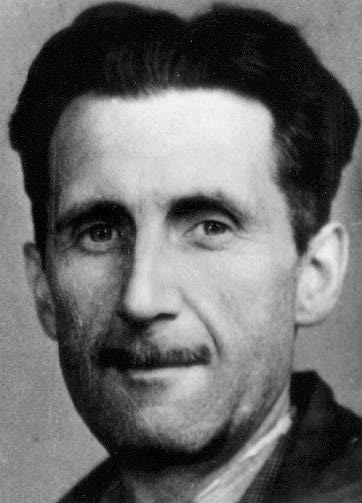
George Orwell aka Eric Blair (25 June 1903 – 21 January 1950)

By Bruno Waterfield

Source: Spike Online

Most people think that George Orwell was writing about, and against, totalitarianism – especially when they encounter him through the prism of his great dystopian novel, Nineteen Eighty-Four.

This view of Orwell is not wrong, but it can miss something. For Orwell was concerned above all about the particular threat posed by totalitarianism to words and language. He was concerned about the threat it posed to our ability to think and speak freely and truthfully. About the threat it posed to our freedom.

He saw, clearly and vividly, that to lose control of words is to lose control of meaning. That is what frightened him about the totalitarianism of Nazi Germany and Stalinist Russia – these regimes wanted to control the very linguistic substance of thought itself.

And that is why Orwell continues to speak to us so powerfully today. Because words, language and meaning are under threat once more.

Totalitarianism in Orwell’s time

The totalitarian regimes of Nazi Germany and Stalin’s Soviet Union represented something new and frightening for Orwell. Authoritarian dictatorships, in which power was wielded unaccountably and arbitrarily, had existed before, of course. But what made the totalitarian regimes of the 20th century different was the extent to which they demanded every individual’s complete subservience to the state. They sought to abolish the very basis of individual freedom and autonomy. They wanted to use dictatorial powers to socially engineer the human soul itself, changing and shaping how people think and behave.

Totalitarian regimes set about breaking up clubs, trade unions and other voluntary associations. They were effectively dismantling those areas of social and political life in which people were able to freely and spontaneously associate. The spaces, that is, in which local and national culture develops free of the state and officialdom. These cultural spaces were always tremendously important to Orwell. As he put it in his 1941 essay, ‘England Your England’: ‘All the culture that is most truly native centres round things which even when they are communal are not official – the pub, the football match, the back garden, the fireside and the “nice cup of tea”.’

Totalitarianism may have reached its horrifying zenith in Nazi Germany and Stalin’s USSR. But Orwell was worried about its effect in the West, too. He was concerned about the Sovietisation of Europe through the increasingly prominent and powerful Stalinist Communist Parties. He was also worried about what he saw as Britain’s leftwing ‘Europeanised intelligentsia’, which, like the Communist Parties of Western Europe, seemed to worship state power, particularly in the supranational form of the USSR. And he was concerned above all about the emergence of the totalitarian mindset, and the attempt to re-engineer the deep structures of mind and feeling that lie at the heart of autonomy and liberty.

Orwell could see this mindset flourishing among Britain’s intellectual elite, from the eugenics and top-down socialism of Fabians, like Sidney and Beatrice Webb and HG Wells, to the broader technocratic impulses of the intelligentsia in general. They wanted to remake people ‘for their own good’, or for the benefit of the race or state power. They therefore saw it as desirable to force people to conform to certain prescribed behaviours and attitudes. This threatened the everyday freedom of people who wanted, as Orwell put it, ‘the liberty to have a home of your own, to do what you like in your spare time, to choose your own amusements instead of having them chosen for you from above’.

In the aftermath of the Second World War, this new intellectual elite started to gain ascendancy. It was effectively a clerisy – a cultural and ruling elite defined by its academic achievements. It had been forged through higher education and academia rather than through traditional forms of privilege and wealth, such as public schools.

Orwell was naturally predisposed against this emergent clerisy. He may have attended Eton, but that’s where Orwell’s education stopped. He was not part of the clerisy’s world. He was not an academic writer, nor did he position himself as such. On the contrary, he saw himself as a popular writer, addressing a broad, non-university-educated audience.

Moreover, Orwell’s antipathy towards this new elite type was long-standing. He had bristled against the rigidity and pomposity of imperial officialdom as a minor colonial police official in Burma between 1922 and 1927. And he had always battled against the top-down socialist great and good, and much of academia, too, who were often very much hand in glove with the Stalinised left.

The hostility was mutual. Indeed, it accounts for the disdain that many academics and their fellow travellers continue to display towards Orwell today.

The importance of words

Nowadays we are all too familiar with this university-educated ruling caste, and its desire to control words and meaning. Just think, for example, of the way in which our cultural and educational elites have turned ‘fascism’ from a historically specific phenomenon into a pejorative that has lost all meaning, to be used to describe anything from Brexit to Boris Johnson’s Tory government – a process Orwell saw beginning with the Stalinist practice of calling Spanish democratic revolutionaries ‘Trotsky-fascists’ (which he documented in Homage to Catalonia (1938)).

Or think of the way in which our cultural and educational elites have transformed the very meanings of the words ‘man’ and ‘woman’, divesting them of any connection to biological reality. Orwell would not have been surprised by this development. In Nineteen Eighty-Four, he shows how the totalitarian state and its intellectuals will try to suppress real facts, and even natural laws, if they diverge from their worldview. Through exerting power over ideas, they seek to shape reality. ‘Power is in tearing human minds to pieces and putting them together in new shapes of your own choosing’, says O’Brien, the sinister party intellectual. ‘We control matter because we control the mind. Reality is inside the skull… You must get rid of these 19th-century ideas about the laws of nature.’

In Nineteen Eighty-Four, the totalitarian regime tries to subject history to similar manipulation. As anti-hero Winston Smith tells his lover, Julia:

‘Every record has been destroyed or falsified, every book has been rewritten, every picture has been repainted, every statue and street and building has been renamed, every date has been altered. And that process is continuing day by day and minute by minute. History has stopped. Nothing exists except an endless present in which the Party is always right.’

As Orwell wrote elsewhere, ‘the historian believes that the past cannot be altered and that a correct knowledge of history is valuable as a matter of course. From the totalitarian point of view history is something to be created rather than learned.’

This totalitarian approach to history is dominant today, from the New York Times’ 1619 Project to statue-toppling. History is something to be erased or conjured up or reshaped as a moral lesson for today. It is used to demonstrate the rectitude of the contemporary establishment.

But it is language that is central to Orwell’s analysis of this form of intellectual manipulation and thought-control. Take ‘Ingsoc’, the philosophy that the regime follows and enforces through the linguistic system of Newspeak. Newspeak is more than mere censorship. It is an attempt to make certain ideas – freedom, autonomy and so on – actually unthinkable or impossible. It is an attempt to eliminate the very possibility of dissent (or ‘thoughtcrime’).

As Syme, who is working on a Newspeak dictionary, tells Winston Smith:

‘The whole aim… is to narrow the range of thought. In the end we shall make thoughtcrime literally impossible, because there will be no words in which to express it. Every year fewer and fewer words, and the range of consciousness always a little smaller… Has it ever occurred to you, Winston, that by the year 2050, at the very latest, not a single human being will be alive who could understand such a conversation as we are having now?’

The parallels between Orwell’s nightmarish vision of totalitarianism and the totalitarian mindset of today, in which language is policed and controlled, should not be overstated. In the dystopia of Nineteen Eighty-Four, the project of eliminating freedom and dissent, as in Nazi Germany or Stalinist Russia, was backed up by a brutal, murderous secret police. There is little of that in our societies today – people are not forcibly silenced or disappeared.

However, they are cancelled, pushed out of their jobs, and sometimes even arrested by the police for what amounts to thoughtcrime. And many more people simply self-censor out of fear of saying the ‘wrong’ thing. Orwell’s concern that words could be erased or their meaning altered, and thought controlled, is not being realised in an openly dictatorial manner. No, it’s being achieved through a creeping cultural and intellectual conformism.

The intellectual turn against freedom

But then that was always Orwell’s worry – that intellectuals giving up on freedom would allow a Big Brother Britain to flourish. As he saw it in The Prevention of Literature (1946), the biggest danger to freedom of speech and thought came not from the threat of dictatorship (which was receding by then) but from intellectuals giving up on freedom, or worse, seeing it as an obstacle to the realisation of their worldview.

Interestingly, his concerns about an intellectual betrayal of freedom were reinforced by a 1944 meeting of the anti-censorship organisation, English PEN. Attending an event to mark the 300th anniversary of Milton’s Areopagitica, Milton’s famous 1644 speech making the case for the ‘Liberty of Unlicenc’d Printing’, Orwell noted that many of the left-wing intellectuals present were unwilling to criticise Soviet Russia or wartime censorship. Indeed, they had become profoundly indifferent or hostile to the question of political liberty and press freedom.

‘In England, the immediate enemies of truthfulness, and hence of freedom of thought, are the press lords, the film magnates, and the bureaucrats’, Orwell wrote, ‘but that on a long view the weakening of the desire for liberty among the intellectuals themselves is the most serious symptom of all’.

Orwell was concerned by the increasing popularity among influential left-wing intellectuals of ‘the much more tenable and dangerous proposition that freedom is undesirable and that intellectual honesty is a form of anti-social selfishness’. The exercise of freedom of speech and thought, the willingness to speak truth to power, was even then becoming seen as something to be frowned upon, a selfish, even elitist act.

An individual speaking freely and honestly, wrote Orwell, is ‘accused of either wanting to shut himself up in an ivory tower, or of making an exhibitionist display of his own personality, or of resisting the inevitable current of history in an attempt to cling to unjustified privilege’.

These are insights which have stood the test of time. Just think of the imprecations against those who challenge the consensus. They are dismissed as ‘contrarians’ and accused of selfishly upsetting people.

And worst of all, think of the way free speech is damned as the right of the privileged. This is possibly one of the greatest lies of our age. Free speech does not support privilege. We all have the capacity to speak, write, think and argue. We might not, as individuals or small groups, have the platforms of a press baron or the BBC. But it is only through our freedom to speak freely that we can challenge those with greater power.

Orwell’s legacy

Orwell is everywhere today. He is taught in schools and his ideas and phrases are part of our common culture. But his value and importance to us lies in his defence of freedom, especially the freedom to speak and write.

His outstanding 1946 essay, ‘Politics and the English Language’, can actually be read as a freedom manual. It is a guide on how to use words and language to fight back.

Of course, it is attacked today as an expression of privilege and of bigotry. Author and commentator Will Self cited ‘Politics and the English Language’ in a 2014 BBC Radio 4 show as proof that Orwell was an ‘authoritarian elitist’. He said: ‘Reading Orwell at his most lucid you can have the distinct impression he’s saying these things, in precisely this way, because he knows that you – and you alone – are exactly the sort of person who’s sufficiently intelligent to comprehend the very essence of what he’s trying to communicate. It’s this the mediocrity-loving English masses respond to – the talented dog-whistler calling them to chow down on a big bowl of conformity.’

Lionel Trilling, another writer and thinker, made a similar point to Self, but in a far more insightful, enlightening way. ‘[Orwell] liberates us’, he wrote in 1952:

‘He tells us that we can understand our political and social life merely by looking around us, he frees us from the need for the inside dope. He implies that our job is not to be intellectual, certainly not to be intellectual in this fashion or that, but merely to be intelligent according to our lights – he restores the old sense of the democracy of the mind, releasing us from the belief that the mind can work only in a technical, professional way and that it must work competitively. He has the effect of making us believe that we may become full members of the society of thinking men. That is why he is a figure for us.’

Orwell should be a figure for us, too – in our battle to restore the democracy of the mind and resist the totalitarian mindset of today. But this will require having the courage of our convictions and our words, as he so often did himself. As he put it in The Prevention of Literature, ‘To write in plain vigorous language one has to think fearlessly’. That Orwell did precisely that was a testament to his belief in the public just as much as his belief in himself. He sets an example and a challenge to us all.

Our Authentically Fake and Hypocritical Society of Copies

By Edward Curtin

Source: Behind the Curtain

“Ditto,” said Tweedledum.
“Ditto, ditto!” cried Tweedledee.
– Lewis Carroll, Through The Looking-Glass

Sometimes a trifling contretemps can open a window onto significant issues.

As a case in point, The New York Times, a newspaper that regularly publishes U.S. propaganda without a bit of shame or remorse, recently reported on a controversy involving Simon & Schuster and Bob Dylan’s new book, The Philosophy of Modern Song. The report with the same information was repeated across the media.

The publishing company had offered limited-edition, authenticated, hand-signed copies of the book for $600 each.  Nine Hundred collectors and die-hard fans bought a copy, many, no doubt, caught in hero worship and the thought that a Dylan-penned signature would grant them a bit of his fame through the touch of his hand upon their lives.

The quest for immortality takes many forms, and the laying on of hands, even when done remotely through a signature, has long been a popular form of sleight-of-hand.

I once shook hands with an Elvis hologram impersonator and the thrill vibrated for days.

But these Dylan aficionados noticed something strange about the signatures: They didn’t seem to be actual signatures individually written with a pen by Dylan. As anyone knows from their own handwriting, no two signatures are the same, since the human hand is not a copy machine.  These signatures were identical.

It turned out that those who smelled a deception were right.  Under pressure from astute purchasers, Simon & Schuster had to come clean – sort of.  They offered to refund all purchasers for the deception. They released the following statement:

To those who purchased The Philosophy of Modern Song limited edition, we want to apologize. As it turns out, the limited editions books do contain Bob’s original signature, but in a penned replica form. We are addressing this immediately by providing each purchaser with an immediate refund.

This statement is a perfect example of double-talk, and more.

Then Dylan also apologized, saying that he used an auto-pen since he was suffering from vertigo and “during the pandemic, it was impossible to sign anything and the vertigo didn’t help.”  His apology seems sincere compared to the publisher’s double-talk, but then again, so did his signatures.  And the controversy has spread to the limited edition prints of his artwork.

“Limited edition prints” – a deception in itself, as if limiting the number of copies of an original painting makes them more original.  Ten dittos instead of eleven.

However, I am not primarily concerned with the nuances of this tempest in a teapot, which might disappear as fast as yesterday’s bluster, or it may forever tarnish Dylan’s reputation, which would be a shame if it also damaged the genuine greatness of his songs.

I would like to focus on the following matters that I have seen through its window: language usage, a society of copies, reading texts closely, and the degradation of literacy, all of which are tangled together with non-stop government propaganda disseminated by the corporate mass media to form a major social issue.

First, language.  Note in the Simon & Schuster apology the words: “As it turns out, the limited editions books do contain Bob’s original signature, but in a penned replica form.”  This is a clear deception twice over.  The books do not contain original signatures; they contain machine copies of it.  Phrasing it that way allows the company to plead innocent while also apologizing for its innocence as if they consider themselves guilty.  What exactly are they saying they are apologizing for?  Deceptions dittoed?

And the phrase “As it turns out,” implies that Simon & Schuster was surprised that the signatures were machine generated, which is highly improbable.  It also suggests they are not responsible; such verbiage approximates the common, passive introductory phrase “it so happens” or the equally non-literate “hopefully” to begin a sentence.

“It so happens” that I am writing these words and “it so happens” that you are reading them…as if we are victims of our own free choices.  Passive language for victims of fate who have learned to write and talk this way to avoid responsibility even for their own hope, as in: “I hope.”  Or maybe the widespread copycat use of “hopefully” is an unconscious attempt to deny pervasive hopelessness.  No matter how many times you repeat something doesn’t make it true.

The use of such language is a reflection of an age in which determinism has for decades been repeatedly promulgated to extinguish people’s belief in freedom.  Ditto: Saying “the exact same” doesn’t make the same more same through redundancy.  You can’t get any more same than same since same means identical, or any more opposite than opposite even if you say “the exact opposite.”  The English language is suffering.

To top it off, an esteemed book publishing company nearly a century old concludes with a sentence that a high school freshman – circa 1960 before all the dumbing-down of schooling – would realize was redundant with the words “immediately” (misplaced) and “immediate,” as if repetition would emphasize their contrition. “We are addressing this immediately by providing each purchaser with an immediate refund.”  Ditto.

But who notices these things?

Discerning readers – whether of the examples above or of a subtle controlled- opposition media article suggesting one thing while meaning another – are becoming rarer and rarer. Ideology, political party allegiances, and plain stupidity block many from grasping propaganda and media claims made out of thin air.

Anonymous sources, subtle phrasing, real or imagined intelligence sources, the use of words such as may, might, possible, could be, etc., are a staple of so much writing and broadcast news that they fly by people used to the speed of the digital life with texting and internet browsing where repetition and copying are king.  Yes, speed kills in so many ways.  The repetition of talking points across the major corporate media, something carefully studied and confirmed years ago, has become so obvious to anyone who chooses to take the time to investigate.  It’s not hard to do but few bother; they are too “busy.”  Thus propaganda and gibberish pass unnoticed.

Just as “The Real McCoy” (see the opening “Refrain” of Hillel Schwartz’ The Culture of the Copy) was a fake and the phrase came to represent the genuine to supposedly confirm authenticity, we are now living in an era of the counterfeit everywhere. Counterfeits of counterfeits.  Imposters.  Actors playing actors. Counterfeit traitors. Fabricated reality and copies of copies.  Ditto.  Ditto.  Ditto.  Lies about not lying.  (See The New York Times’, The Guardian’s, etcdeceptive, hypocritical, and self-serving joint letter asking the U.S government to end its prosecution of Julian Assange for publishing secrets.)

The Dylan controversy is a very minor example of a major issue that is little appreciated for its devastating impact on society.

For another minor example, we may ask how many times does one have to see the replay of Christian Pulisic’s recent goal against Iran in the 2022 World Cup to grasp its brilliance and to see that he was injured?  Two, three, five, ten?  And this is a sporting event, not some mall shooting or serious issue of war.  In a digital high-tech world repetition is the norm.  What does repetition do to the mind?

What does repetition do to the mind?

Despite the great sportsmanship shown by the players from both the U.S. and Iran on the pitch, U.S. Men’s Soccer executives, by deleting the Islamic Republic emblem from Iran’s flag on its social media sites, and the U.S. media tried repeatedly to politicize the game into a battle between the good Americans and the evil Iranians, even while a U.S. regime change color revolution was being attempted on the streets of Iran.

What does repetitious propaganda do to the mind?

Technology has not just allowed for machine signatures but has made us in many ways machine people who need to be hammered over the head time and again – and to like it. To go back again and again for more.  Everything but life has become repeatable.

Scott Fitzgerald’s Gatsby’s reply to Nick’s statement In The Great Gatsby – “You can’t repeat the past,” Nick tells Gatsby, who responds, “Can’t repeat the past? Why, off course you can!” – perfectly captures the “reality” of a digital screen culture of illusions in which many people have unconsciously come to believe that you can instantly replay life as well.

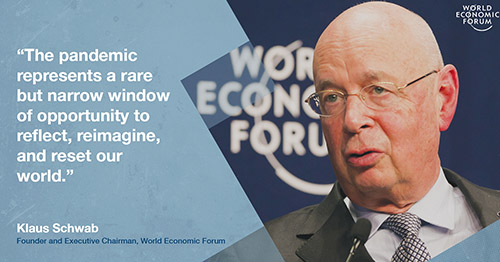
Indeed, to make people into machines is the goal of trans-humanists Klaus Schwab of the World Economic Forum with its Great Reset and the U.N.’s 2030 Agenda. Artificial intelligence (AI) for artificial people.  While there are innocent examples of repetition, the use of it is a fundamental tactic of propaganda, whether that be through words or images. And we are drowning in repeated media/government propaganda about the U.S. war against Russia in Ukraine, Covid19, Iran, China, Syria, etc.

It’s as easy as pie to innocently repeat, as I learned recently when my wife asked me to use her cell phone to take a photograph. Bumpkin that I am who despises these machines, rather than briefly hitting the button I held it down for a few seconds and took the same photo 67 ½ times.  It just so happened.

But the propagandists’ repetitions are no accident.  You can’t condemn Julian Assange year after year for posting U.S. war crimes – the Afghanistan War Logs – and then try to save your own ass after the man has been persecuted for more than a decade and counting.  The media who did this and then wrote the recent letter are counterfeit traitors to the truth and agents of the war criminals.  To call them journalists is to misuse language: They are imposters.

What does repetition do to the mind? asked Tweedledum to his identical twin Tweedledee.

Tweedledee replied, Look what it’s done to us.

The Twitter Files reveal influence of Russiagate disinformation

The suppression of the Hunter Biden laptop story shows how the Russian boogeyman is wielded to serve political goals and bury inconvenient facts.

(Jakub Porzycki/NurPhoto via Getty Images)

By Aaron Maté

Source: Aaron Maté Substack

Since 2016, US audiences have been flooded with claims that Russia has waged a “sweeping and systematic” interference campaign to influence them, and that Donald Trump and a bottomless cast of associates were somehow complicit.

No “scandal” in US history has yielded such a lengthy rap sheet of falsehoods, debunkings, and retractions. The Mueller investigation and parallel Congressional inquiries found no evidence for the all-consuming theories of a Trump-Kremlin conspiracy. Allegations of Russian government email hacking and social media operations are equally dubious, most notably on the foundational allegation that Russian intelligence stole Democratic Party emails and gave them to Wikileaks.

Even if we were to ignore the evidentiary gaps and accept each assertion about “Russian interference” at face value, the totality could in no way justify even a shred of the multi-year Russia-mania. With no shame and without end, prominent political and media voices have imbued Russian bots, memes, and hackers — real or imagined — with the power to “sow chaos” in US society, swing election results, and even become worthy of comparison to the attacks of Pearl Harbor and 9/11.

Given the Iraq WMD-esque preponderance of hyperbole and outright lies in the incessant claims of Russian subterfuge, it is reasonable to conclude that the US intelligence officials and political-media actors who have spread them are waging exactly what they accuse Russia of: a politically motivated disinformation campaign aimed at influencing the general public.

The newly disclosed Twitter Files — a cache of internal communications from the social media giant — offer new evidence of one of the Russiagate disinformation campaign’s core functions: protecting the rule of domestic elites, particularly in the Democratic Party.

In two consecutive presidential elections, the Russian boogeyman has been invoked to stigmatize and silence reporting on the Democratic candidate. It began in 2016, when journalists who reported on the stolen DNC emails’ revelations about Hillary Clinton’s Wall Street speeches or the DNC’s bias against Bernie Sanders were blamed for Trump’s victory and deemed to be unwitting Kremlin dupes promoting “disinformation” – in reality, factual material that embarrassed the pre-ordained winner.

Four years later, that same playbook was deployed for Clinton’s successor at the top of Democratic ticket, Joe Biden. In the weeks before the November 2020 election, Twitter and Facebook censored the New York Post’s reporting about the contents Hunter Biden’s laptop on the grounds that the computer material could be “Russian disinformation.” The Post’s stories detailed how Hunter Biden traded on his family name to secure lucrative business abroad, and raised questions about Joe Biden’s denials of any involvement.

The US media responded to the suppression of the laptop story with indifference or even approval. In one notable case, Glenn Greenwald resigned from the outlet that he co-founded, The Intercept, after its editors attempted to censor his coverage of the laptop controversy. Even stories that had long been public — such as the unqualified Hunter receiving an $80,000-per-month Burisma board seat just months after his father’s administration helped overthrow Ukraine’s government – were effectively off-limits.

There was never a shred of evidence that Russia was behind the laptop story, but that was of no consequence. Dutiful media editors, reporters, and pundits took their cues from a group of more than 50 former intelligence officials, who issued a statement declaring that the Hunter Biden laptop story “has all the classic earmarks of a Russian information operation.”

These intelligence veterans’ claim was in fact a classic Russiagate disinformation operation, as the Twitter files newly underscore.

ILLUSION & TRUTH: THE DISINTEGRATION OF METAPHYSICAL VALUES

Little rabbit in a magician hat.

By Kingsley L. Dennis

Source: Waking Times

“Yes, the world is an illusion. But Truth is always being shown there.” ~Idries Shah, The Dermis Probe.

It seems that we can talk about consciousness and consciousness studies so long as it remains within the ‘reality remit’ and does not push against the ‘barriers of perception.’ This is why so much of our modern societies and the media marketplace are filled with pop-spirituality as they function as cultural remedies rather than revolutions. That is, they provide a band aid plaster rather than seeking to find a permanent cure. Many easy ‘self-help’ practices offer a ‘false exit’ revolving door so that people are given the sensation of finding a way out of the ‘system’ only to be brought back into it again. Such teachings or offerings act as auto-tranquilizers – they act as auto-tranquilizing mechanisms to provide an alternative treatment, or pleasing sensation, that appears as fringe or ‘outside’ the system but is not. Rather, it is another sub-set within the overall program; but a subset that does not constitute a threat or provide a means to perceive through the programmed reality set. In other words, it is an allowed anomaly.

The ‘allowed anomalies’ are examples of mechanisms of mental anesthesia that soften or even dispel the original urge to seek for answers. They also serve as a quick satiation (fast food) to bring temporary satisfaction. Temporary satiation, or satisfaction, dulls down the real hunger so that afterwards the developmental urge remains in the ‘goldilocks zone’ of not too hungry or too full – just full enough to want to keep on with the spiritual pursuit yet not too hungry that they wish to seek beyond what is openly offered or available in the marketplace. The forces currently acting upon humanity are those that shall compel us to die away or die to become. The opportunity now available compels us to become something qualitatively new. This is now the perfect time for personal advancement and for the expansion of perception and awareness. It is no longer necessary to be clever – it is essential to be wise.

There has been a noticeable decline in what, in simple terms, may be called the ‘metaphysical quest’ (what has also been known as the ‘spiritual quest’). The inner impulse to seek beyond material-physical appearances has almost vanished from contemporary life. It was long ago co-opted into religious pursuits and fashioned into ritualistic ceremonies and dogma. And more recently, it has been ushered into what I have previously called ‘Ashram Avenues’ and ‘Guru Boulevards’ by people enticed with exotic interests. The glamour of ‘self-development’ has found a wanting marketplace within the glare of social media. The depth of inner longing is scratched at the surface and satisfied by sipping at the singing bowls of inner harmony and world peace.

It is all too easy to become stereotypes of ourselves, driven by platitudes of false mysticism and superficial attainment. There is so much within contemporary life that bears down upon us to make us forget ourselves that just the act of self-remembering becomes a force of rebellion and treason against the material world. We are led to forget those capacities that we bring with us from the metaphysical realm. We are here in this world as both guests and custodians; we inhabit our bodies during the life experience in the hope of making the most of those gifted lives. And yet, we rarely come to realize the truth of who we really are. We become entranced by the material realm and its systemic diversions. Our independent liberty and free will is dismantled by succumbing to set patterns, habits, and programmed behaviours. Generally, in our societies an individual is ‘permitted’ to access a form of ‘spirituality’ just enough to provide them with a taster smell of satisfaction. This is then carried around throughout life as a constant marker of ‘satisfied attainment’ – an outer recognized badge of honour. The individual then stops doing the Work – the critical seeking – and falls into line within the Game. The perennial memory starts to fade again. Yet … have we ever done enough?

Human civilization is infected with deviant distractions distributed through social, cultural, and also spiritual mischief. So much false gold within circulation creates a parallel economy. On the other side, however, true gold increases its value. The disintegration of metaphysical values, and the moral decay that accompanies this, are part of a deliberate projection into hyper-materialism. We have yet to fully realize that the fastest way to awaken is to become the cause of someone else’s awakening. By assisting and serving our fellow human beings we are simultaneously helping ourselves. Many people are already awake – they just don’t know it yet. Sounds contradictory? How many times have we known that something is the right thing to do and yet we fail to do it? Similarly, so many people instinctively feel the inner urge, and sense the inversion of the world, and yet choose not to act upon this. In the words of the sage and philosopher Sri Aurobindo:

At first the inner consciousness seems to be the dream and the outer the waking reality. Afterwards the inner consciousness becomes the reality and the outer is felt by many as a dream or delusion, or else as something superficial and external.[i]

Our current consensus reality is not an accurate portrayal of the life experience, and it is no longer where we need to be. We need to turn things around so that the outer world is recognized to be the dream state, or the lower perceptive level of reality. It is time to choose a different timeline – if that makes any sense?

If people continue to be fed by the dross of the external world – its media circus, entertainment absurdities, and directed propaganda – then the consensus reality gets continually imprinted (validated) by these inputs that people feed back into the system. A new template or consciousness field struggles to come into existence. The mass perceptive state remains low – very low. And as a collective species, humanity can no longer remain at this low level of perceptive awareness (ignorance) at a time when an advancement in awareness is vital. It is simply not sustainable in the long term. If this polarized state continues, then there is likely to be a splintering in humanity’s future, and not everyone will walk the same path going forward. What we choose today will become the reality we shall experience later. Now is the time for advancement in terms of perceptive awareness: it is time to EXPAND. It is time to grow out of the lens of infantile perception. It is time to walk each step with awareness, with conscious knowing, instead of stumbling through on autopilot.

Let us ponder on our predicament by concluding with the following tale:

The Fruit of the Tree

An ancient tale tells how a wise man once related a story about a remarkable tree which was to be found in India. People who ate of the fruit of this tree, as he told it, would neither grow old nor die. This legend was repeated, by a reliable person, to one of the Central Asian kings of long ago, and this monarch at once conceived a passionate desire for the fruit – the source of the Elixir of Life.

So the King sent a suitably resourceful representative to find and to bring back the fruit of that tree. For many years the emissary visited one city after another, travelled all over India, town and country, and diligently asked about the object of his search from anyone who might know about its nature and where it was to be found.

As you can imagine, some people told this man that such a search must obviously only be a madman’s quest; others questioned him closely to find out how a person of such evident intelligence could actually be involved in such an absurd adventure; their kindness in this respect, showing their consideration for him as a deluded dupe, hurt him even more than the physical blows which the ignorant had also rained upon him.

Many people, of course, told him false tales, sending him from one destination to another, claiming that they, too, had heard of the miraculous Tree. Years passed in this way, until the King’s representative lost all his hope of success, and made the decision to return to the royal court and confess his dismal failure. Now, there was also, luckily, a certain man of real wisdom in India – they do occasionally exist there – and the King’s man, having heard of him late in his search, thought; ‘I will at least go to him, desperate as I am, to seek his blessing on my journey homeward.’

He went to the wise man, and asked him for a blessing, and he explained how it was that he had got into such a distressed condition, a failure without hope. The sage laughed and explained:

‘You simpleton; you don’t need a blessing half as much as you need orientation. Wisdom is the fruit of the Tree of Knowledge. Because you have taken images and form, secondary names for things, as your aim, you have not been able to find what lies beyond. It has thousands of names: it may be called the Water of Life, the Sun, an Ocean and even a Cloud … But the emblem is not the thing itself.’

Whoever, this Teacher continued, attaches himself to names and clings to concepts without being able to see that these derivative things are only stages, sometimes barriers, to understanding, will stay at the stage of secondary things. They create, and remain in a sub-culture of emotional stimulus, fantasy and quasi-religion.[ii]

References:

[i] Sri Aurobindo, Integral Yoga. Lotus Press (1993), p49

[ii] Idries Shah, (1978) A Perfumed Scorpion. London: Octagon Press, p137-8

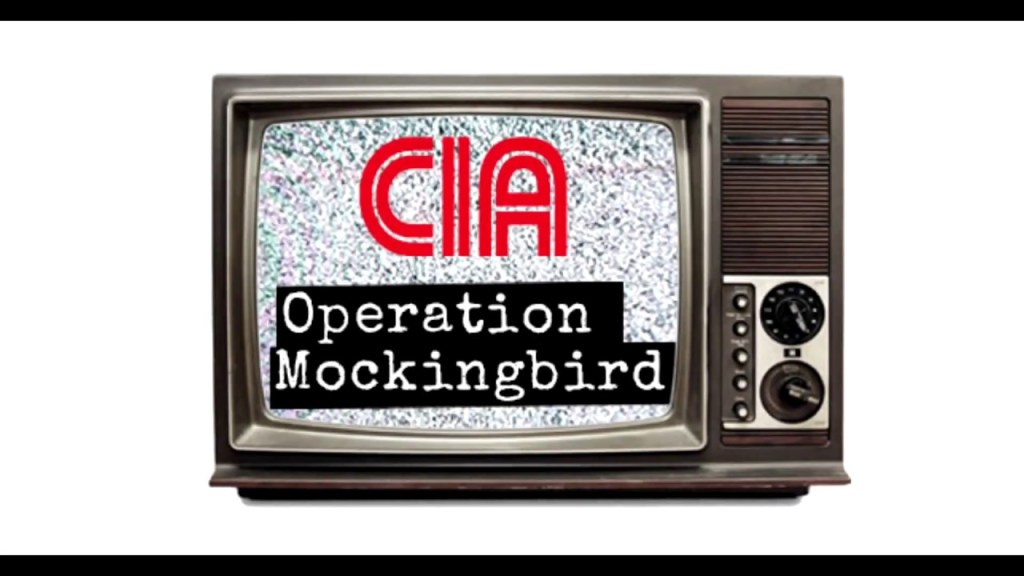
Why the CIA’s Operation Mockingbird is Widely Misunderstood

By Alex Constantine

Source: Constantine Report

In November, Newsweek, one of the most trusted news sources in the land, referred to Operation Mockingbird (CIA influence on the media, and, in many cases, infiltration) as “a supposed Cold War-era CIA program that is frequently referenced by QAnon conspiracy theorists.” (Source) Newsweek, of course, and the Washington Post were hubs in the Mockingbird network, so denial and misrepresentation are understandable.

But in the real world of CIA shenanigans …

Sourcewatch: “Operation Mockingbird was a secret Central Intelligence Agency campaign to influence domestic and foreign media beginning in the 1950s.

“The activities, extent and even the existence of the CIA project remain in dispute: the operation was first called Mockingbird in Deborah Davis’ 1979 book, Katharine the Great: Katharine Graham and her Washington Post Empire. But Davis’ book, alleging that the media had been recruited (infiltrated) by the CIA for propaganda purposes, was itself controversial and has since been shown to have had a number of erroneous assertions. More evidence of Mockingbird’s existence emerged in the 2007 memoir American Spy: My Secret History in the CIA, Watergate and Beyond, by convicted Watergate “plumber” E. Howard Hunt and The Mighty Wurlitzer: How the CIA Played America by Hugh Wilford (2008).”

https://www.sourcewatch.org/index.php/The_CIA_and_journalism

Carl Bernstein wrote about the program at length in Rolling Stone, and he waasn’t a QAnon adherent. Neither were the many journalists who have documented the history of the CIA-media relationship.

A misunderstanding about the code name Mockingbird has led some investigative reporters to dispute the operation’s existence. An FOIA request is submitted to the CIA for any related records. The Agency responds that it has no files under that code name. The journalist does receive documents on a Project Mockingbird, but that was an unrelated media surveillance op, and had nothing to do with Wurlitzers pumping out military-industrial propaganda. The journalist does his research, he finds that the CIA has, in fact, influenced public opinion via the news media, but where is the nomenclature Operation Mockingbird?

The journalist then brow-beats “conspiracy theorists” for falling into rabbit holes.

The fault lies with the reporter who doesn’t do essential homework on the origins of the bird. Officially, there is no  “Operation Mockingbird,” for the simple reason that the CIA didn’t exist when the it was conceived. Truman signed the Agency into existence in 1947. Allen Dulles, who would be appointed as its director, christened Operation Mockingbird the year before the Agency was born. His ambition to control men’s minds was a glint in his eye at the time. Cold war loomed, and he considered propaganda to be a priority. Dulles began lining up publishers, editors and journalists for an undertaking he thought of as mass mind control.

Nearly all of the CIA’s mind control files were destroyed in January, 1973 at the direction of DCI Richard Helms, so it’s possible that OM documents were among them. (Source: “Joint Hearings Before the Select Committee on Intelligence,” August 3, 1977, p. 3.)

By the time the CIA was repurposed from the obsolete postwar OSS, Operation Mockingbird was already well underway. As CIA director, Dulles pressed on with his objective to manipulate the common volk with dodgy news copy and op-ed treatises. It was a Dulles initiative before the CIA took Mockingbird under its wing.

Frank Wisner, the notorious Nazi recruiter, was selected to oversee the program. Wisner was recruited by Dean Acheson 1947 for a slot in the State Department’s Office of Occupied Territories. Shortly thereafter, the CIA created a the Office of Policy Coordination (OPC), the covert operations division of the Agency,  and Wisner was put in charge of the off-the-books media operation. (“Project Mockingbird,” the CIA journalist surveillance op, may well have been a sub-program.) So Mockingbird was a going concern by 1950, the year given by SourceWatch, among others, for its inception. Another common misunderstanding is the assumption that, because the CIA interacts with the media, all news is “fake news.” It isn’t. The overwhelming majority of journalists are independent of control beyond the editor’s desk. The lion’s share of all news reports are accurate enough — with the exception of the ultra-conservative echo chamber. But “fake news” is planted in the public print. Reader’s Digest, for instance, was a Mockingbird disinformation outlet for decades, and still prints propaganda. But the magazine wasn’t filled cover-to-cover with CIA perception management. One or two articles on Cold War topics were dropped into a mix of compressed books, human interest pieces, recipes, dieting tips, and the usual Digest  mom’s-jowls content. In some instances, paid CIA assets wrote the political articles. It’s the occasional planted story that warps public opinion. It’s not all that heavy-handed, a poison pill not a sledge hammer.

Newsweek was (and is) among the magazines most useful to the Operation. The code name may be unofficial, but infiltration of the media is not hard to prove, and it doesn’t take a complicit news weekly to know which way the wind blows.

Questioning The Official Story About Official Stories: A Role for Citizen Investigations

By Time Hayward

Source: Tim Hayward Blog

Official stories, according to the official story about them, are (nearly) always true. The ‘nearly’ gets mentioned just because, on rare occasions, an official story is acknowledged to have been wrong, as, for instance, with Iraq’s falsely alleged weapons of mass destruction in 2003. But that’s considered an exception to the rule, and to extrapolate from it to a more pervasive mistrust is to be foolish, ill-informed or even a dupe of hostile propaganda. In fact, diagnosing what is wrong with sceptics about official stories, and proposing ways of curing or otherwise dealing with them, are now becoming a growth industry in the media and academia. So we hear a lot about how dissenting from official narratives is to fall victim to ‘conspiracy theory’ or ‘disinformation’; and dissenters may be diagnosed as needing re-education or even psychological help. As for the dissent itself, this is increasingly subject to censure and censorship.

However, a major question is left unaddressed: What is it that’s supposed to make official stories so credible?

The assumption is that official stories are produced by people with relevant expert knowledge, so disputing them is a product of ignorance; and since experts have credentials, experience and the backing of competent institutions, rejecting their expertise is unwise or even delusional. Also assumed is that official stories are generally produced and disseminated in good faith.

But are those assumptions generally warranted? In probing their grounds we are brought to question whether the official meta-story, as we may call it, overstates reasons for automatically accepting official stories and underestimates the competence that members of the public can bring to independent inquiries.

Why Believe Official Stories?

No serious thinker would suggest that an official story should be believed just because it comes from officials. Indeed, use of the very expression ‘official story’, in practice, tends to imply that there is also some alternative story that does not have the backing of officials but might be more credible. We know, too, that many societies from various times and places have maintained order by invoking all manner of mythological stories, ideological stories, and blatantly discriminatory stories. Sometimes this has meant denying, suppressing or persecuting as heretics people engaged in rigorous intellectual questioning of officialdom.

A more plausible reason for believing official stories has been set out by the philosopher Neil Levy (2007). He points out that we all know most of the things we know in life because we have learned them from others: our direct personal experience of the world is extremely limited compared to the expanse of our general knowledge and the intricacies of our more specialist understandings. We rely on the testimony and good faith of others in almost everything we do, so just to live a normal life in society we trust a wide range of institutions and social arrangements. To doubt their general dependability would contradict the tacit assumptions that get us through life and would render inexplicable how even a tolerably well-ordered society could ever be possible.

The force of that consideration is strong, but not absolute – and how strong also depends on what kinds of communication we are referring to as official stories. It is strongest if one uses the term to refer to all public communications that emanate from an official source. In actual usage, however, that is not how the term ‘official story’ is normally understood. We don’t regard it as an ‘official story’ that to get a passport you need to submit an authenticated photograph of yourself; we don’t regard it as an ‘official story’ that in UK cars are to be driven on the left; and nor do we these days regard it as an ‘official story’ that smoking is bad for our health. By far the greater part of public pronouncements, like these, are simply taken to state how matters stand. When the distinctive term ‘official story’ occurs, it is typically in contexts where a public pronouncement has met with scepticism. So, for example, whereas we seldom nowadays hear the rationale for mandating wearing seatbelts in cars referred to as an ‘official story’, because there is no longer serious dissent, recent claims that the rationale for mandating mRNA injections against SARS-Cov2 was substantially comparable to that for seatbelts encountered resistance: the ‘official story’ about the benefits and safety of the mRNA injections has been subject to criticism from some sections of medical and scientific communities.

Of course, the mere fact of scepticism in some quarters does not mean that a given official story is necessarily mistaken, but it does highlight how an official story is not just an uncontroversial statement of how matters stand. It leads thoughtful people to look more closely at the nature of authority claimed for an official story.

Are There Experts in Expertise?

The authority claimed for official stories derives, as Levy explains, from the fact of being produced by ‘people socially acknowledged as the relevant experts on a topic’ (Levy 2022). Relevance here is understood in terms of knowledge and experience relating to the salient subject matter. However, certain people might officially be appointed as relevant experts, on other bases, such as known affinities with the organisation’s mission. So it is possible for designated experts to support an official story while a number of other people with materially relevant knowledge and experience take a quite different view.

Even among designated expert advisers, however, achieving an authoritative consensus on the kind of matter that official stories relate to is not straightforward. This is for reasons similar to those involved in giving policy advice (see e.g. Grundmann 2017). Insofar as an official story appeals to a scientific basis, it should be borne in mind that findings of science – a process of open, collaborative and progressive inquiry – have a provisional status, with all scientific statements being in principle corrigible. This means that a scientific adviser’s confidence can never be completely unconstrained or unhedged. Zeynep Panuk (2021) refers to a ‘paradox of scientific advice’ that arises from the difficulties of basing decisions on scientific knowledge that is almost always uncertain and subject to disagreement. Panuk cites experience of how overconfident scientists in advisory committees may suppress dissent so as to present a consensus view, only to find that its implementation had unfortunate or even disastrous consequences. Recent experiences of overconfident pronouncements on ‘The Science’ during the Covid pandemic have furnished further examples (Miller 2022Nelson 2022).

The kind of controversy for which an ‘official story’ comes into play will not normally reduce to some specialist detail of basic science, or even a collection of these, but will concern a situation involving many factors – including those pertaining to social organisation, human action and decision-making. Such situations are similar to those where policy advice is sought from scientific experts (SAPEA 2019 Ch. 2; Martin et al 2020). Official stories are seldom if ever straightforward statements of scientific opinion on a single well-defined scientific research question: they typically relate to situations where many interacting variables may not all be clearly disaggregable. There is in principle no necessary reason why an independent and unofficial grouping of investigators with materially relevant expertise might not be as well-suited to an inquiry as an official grouping. In fact, challenges to official stories can sometimes draw on impressive constellations of expertise.

Citizen Investigations

If the official meta-story may overestimate the dependability of designated expert advice, it may also underestimate the investigative competence of ordinary citizens. For challenges to official stories can be mustered not just by isolated individuals, caricatured as ‘doing their own research’ while ‘reading things on the internet,’ but by well-informed collaborative groups. These can be better able to track truths than independent individuals: ‘the superiority of the group over the individual does not require that one member has the right answer prior to deliberation: group deliberation may enable the aggregation of the genuine insights of several members and the rejection of the false hypotheses of some of the same individuals.’ (Levy 2019: 316)

Furthermore, if it is the case that ‘[g]roups of individuals who are strangers to one another are better at tracking truths than groups of individuals who have a shared history’ (Levy 2019: 318) then this is an advantage of groups comprising people who come together in cyberspace from all walks of life and may have little or no biographical information about those they connect with. Citizens doing their own research sometimes start their own Wikis, or form groups on Reddit, or informally deliberate via Twitter or Telegram. Sometimes they create investigative collectives offline.

It was from participating in chatrooms, for instance, that the now much-feted organisation Bellingcat originated: its founder, Eliot Higgins, a gamer-turned-investigative-citizen, would review copious amounts of war footage from his sofa in Leicester and discuss his observations in chatrooms. The work of his investigative collaborative has come to be ‘commended in the global media and by global agencies such as Amnesty International and Human Rights Watch.’ (Nguyen and Scifo 2018: 377) Impressed by the methods of ‘open source intelligence’ (D’Alessandra and Sutherland 2021), curators of official stories in the West – particularly those relating to geopolitical issues involving Russia – have bestowed accolades on Bellingcat, along with generous funding and encouragement.

So, there is precedent for treating citizens’ investigations as authoritative. Other groups of citizen investigators, that do not receive any funding, have mounted significant challenges to some of the West’s own official stories. Thus, directly countering Bellingcat, on occasion, is the Working Group on Syria, Propaganda and Media which has earned the confidence of whistleblowers rather than officials (OPCW 2020).

Aside from the benefits of collaboration, the reality of serious dissent in the digital sphere is that it can involve myriad critical individuals with significant independent claims to epistemic authority in their professional fields and who exhibit judicious awareness of both their own limitations and the value of others’ insights. For instance, challenging various official narratives are whistleblowers who include scientists, diplomats, intelligence officers, and various state or corporate employees. Challenges come too from professionals with relevant specialist expertise across fields like medicine, architecture, engineering, pharmaceuticals, and a gamut of others. Also worth highlighting are those journalists with previous careers in mainstream media organisations who found they could only maintain their professional integrity by becoming independent.[1] When a group of people independently deliberating together can include, for instance, a former head of a nation’s armed services, a UN weapons inspector, a senior diplomat, an intelligence officer, a world leading International Relations expert and a seasoned war correspondent, the insights they generate regarding situations relevant to foreign policy may well be no less sound than those informing the official story.[2] Indeed, in virtue of their freedom from institutional constraints, they may be more reliably informative for the public than the official story.

If serious challenges to official stories have become more prevalent in recent years, as they arguably have, this is likely due in good part to the sheer extent to which mainstream media have excluded the voices of experts who, maintaining their professional integrity and independence in the face of sometimes considerable hostility, have continued to articulate their challenges to official stories. Attentive members of the public notice this – just as they notice when the force of the state is brought to bear on those who bring to light its lies and malfeasance, and not only in high profile cases like Edward Snowden, Chelsea Manning, Katharine Gun or Julian Assange.

Part of the official meta-story currently is that the internet and social media are being flooded by targeted disinformation that is misleading and confusing people. However, from another perspective one might see that thanks to digital communications citizens can become aware of arguments developed by other experts which are suppressed by protectors of an ‘official story’. An example would be the authors of the Great Barrington Declaration (GBD) (2020), advocating an approach to dealing with the Covid situation characterized as ‘focused protection’ instead of the officially promoted lockdown approach. Lay persons may not be able to adjudicate first hand between recommendations from the GBD and the John Snow Memorandum (2020), which defended lockdown, but they can understand enough to know that the latter does not command an unproblematic consensus such as would be rational simply to defer to. Members of the public can assess the trustworthiness of expertise and official stories without a high level of technical knowledge, as science studies scholars have shown (Yearley 2005; Hess 2012).

People understand that if a view is suppressed rather than openly addressed and rebutted the reason might be that it cannot be rebutted. If an attentive public observes that dissent is simply treated as inadmissible, and especially if those formulating it are subject to smearing or censorship, then there is a corresponding diminution of public trust in the orthodox view.

Tension At The Heart of An Official Story

If the claim that the authority of an official story derives from an expert consensus can be questionable, something more certain is that an official story is asserted with the kind of authority that comes with power. People may defer to an official story not because they necessarily find it credible but out of a prudent concern to avoid the costs of dissidence. Those with power can also incentivise wider media of communication to stick to the narrative. This difference between epistemically earned authority and politically declared authority is a tension at the heart of official stories. Understanding it helps explain why we find a good many journalistic and scholarly studies of the supposed pathologies of dissident citizens and rather little reflection on the real nature of the authority of official stories.

Today we find a welter of studies of online ‘disinformation’ that trace webs of connection across cyberspace seeking to link influential dissenting accounts on social media with bots and trolls associated with malign actors. These communications are said to be engaged in strategically. That is, their aim is to persuade the public to accept a pre-established story rather than to allow people to determine, through open deliberations, what the most credible story is.

Yet this is exactly what the promulgators of official stories themselves do. Regardless of whether the content of a given official story is reliable or not, the form of an official story – in virtue of fulfilling its official function – is that of a strategic communication. Its communication, as official, is presented as a matter not for deliberation but for public acceptance. It is not submitted to public scrutiny with an implicit invitation for critical feedback. It is not up for discussion. It is communicated not to advance debate but to settle it.

This is the inherent tension in an official story: its assertion of epistemic authority depends on an implicit claim that it can be backed by processes of deliberative reasoning, but the pronouncement of an official story as a settled opinion curtails any such process.

What this means in practice has been illustrated, for instance, in the situation arising with the UK Government’s Covid response, which professedly aimed to ‘Follow The Science’ (Stevens 2020). This notion can only ever be ‘a misleading oversimplification’ of what it means to base policy on science (Abbasi 2020), and when UK government ministers claimed to be ‘guided by the science’, what they meant in practice was being guided by their scientists: ‘Ministers formed strong relationships with key scientific advisors, relied on evidence from their Scientific Advisory Group for Emergencies (SAGE), and ignored or excluded many other sources.’ (Cairney 2021) Thus a policy of public communications was decided on the basis of a selective interpretation of scientific findings. But more than this, instead of caution in the face of uncertainty, a policy of robustly promoting a particular view involved the use of psychological operations of a kind more normally associated with a war effort than with public health advice (Sidley 2021, 2022).

Unfortunately, as that example also showed, the defence of an official story against criticism can include counter-measures taken to smear and discredit dissenters. This is never an edifying approach, but is especially troubling when it involves discrediting serious critics who have their own credible claim to epistemic authority. This was illustrated in the case of the eminent scientists who signed the Great Barrington Declaration. They were widely vilified not only in the media but even by other academics, for pointing to certain established principles of epidemiology – including those developed over the two preceding decades of pandemic preparedness planning – that were being set aside and overridden by policy-makers on the basis of modellers’ projections in favour of a ‘zero-covid’ strategy (Ioannidis 2022). This vilification involved not only overt smearing but also something more insidious, namely, the pre-emptive dismissal of their views – notwithstanding their impeccable academic pedigree – as too far ‘beyond the pale’ to warrant serious consideration (HART 2022).

This situation showed that the other institutions of civil society, including the media and academia, which the official meta-story claims provide critical scrutiny, can in fact simply amplify official strategic communications. Thus the organisations that Levy recommends we rely on as guarantors of the authors of official stories can in reality see it as their responsibility to promote and defend the official story rather than question it. Public perceptions that this is the case are accompanied by a deficit of trust in the media and institutions more generally.

The official meta-story blames ‘conspiracy theorists’ and other critical questioners for this lack of trust. But perhaps that gets things the wrong way round.

Conclusion

Trust is something that has to be won, and, if betrayed, it can be lost. As the public’s trust in official stories diminishes, the official meta-story looks to blame this on ‘conspiracy theorists’ and other ‘disruptive influences’. Perhaps a more credible story about official stories would include serious reflection on how they might be made more transparently trustworthy.

Meanwhile, it is reasonable to suggest that each serious challenge to an official story should be assessed on its merits. This does not mean being swayed by extravagant contrarian hypotheses, since these should be treated with even more caution, and, when appropriate, summarily rejected. It does mean being duly aware of how the presumption in favour of official stories is necessarily defeasible. That is the case not just because any story may prove to be mistaken, even in all good faith, but also because we know that any organisation with politically-conferred authority is liable at times to come under political pressures that may, in certain circumstances, override scruples of honesty.

References

Abbasi, Kamran. 2020. ‘Covid-19: politicisation, “corruption,” and suppression of science’. BMJ; 371:m4425, 13 November: doi:10.1136/bmj.m4425   

Cairney, Paul. 2021. ‘The UK Government’s COVID-19 Policy: What Does “Guided by the Science” Mean in Practice?’ Frontiers in Political Science 315 March.https://www.frontiersin.org/articles/10.3389/fpos.2021.624068 DOI: 10.3389/fpos.2021.624068

D’Alessandra, Federica and Kirsty Sutherland. 2021. ‘The Promise and Challenges of New Actors and New Technologies in International Justice’. Journal of International Criminal Justice, 19(1): 9–34. https://doi.org/10.1093/jicj/mqab034

Great Barrington Declaration. 2020. https://gbdeclaration.org/

Grundmann, Reiner. 2017. ‘The Problem of Expertise in Knowledge Societies’. Minerva 55, 25–48 (2017). https://doi-org.ezproxy.is.ed.ac.uk/10.1007/s11024-016-9308-7

HART [Health Advisory and Recovery Team]. 2022. ‘The crushing of dissent throughout the covid era’, 8 October: https://www.hartgroup.org/the-crushing-of-dissent-throughout-the-covid-era/

Hess, David J. 2012. Science Studies: An Advanced Introduction. New York: NYU Press.

Ioannidis, John P. 2022. ‘Citation impact and social media visibility of Great Barrington and John Snow signatories for COVID-19 strategy.’ BMJ Open 2022;12:e052891. doi:10.1136/ bmjopen-2021-052891

John Snow Memorandum. 2020. https://www.johnsnowmemo.com/

Levy, Neil. 2007. ‘Radically Socialized Knowledge and Conspiracy Theories’, Episteme 4(2): 181-192.

Levy, Neil. 2019. ‘Due deference to denialism: explaining ordinary people’s rejection of established scientific findings’. Synthese 196: 313-327.

Levy, Neil. 2022. ‘Do Your Own Research!’ Synthese 200: 356. https://doi.org/10.1007/s11229-022-03793-w

Martin, Graham P., Esmée Hanna, Margaret McCartney and Robert Dingwall. 2020. ‘Science, society, and policy in the face of uncertainty: reflections on the debate around face coverings for the public during COVID-19’. Critical Public Health 30:5: 501-508, DOI: 10.1080/09581596.2020.1797997

Miller, Ian. 2022. Unmasked: The Global Failure of COVID Mask Mandates.

Nelson, Fraser. 2022. ‘The lockdown files: Rishi Sunak on what we weren’t told.’ The Spectator, 27 August: https://www.spectator.co.uk/article/the-lockdown-files-rishi-sunak-on-what-we-werent-told/

Nguyen, An and Salvatore Scifo. 2018. ‘Mapping the Citizen News Landscape: Blurring Boundaries, Promises, Perils, and Beyond.’ In Journalism, edited by Tim P. Vos. Berlin/Boston: De Gruyter.

OPCW [Organisation for the Prohibition of Chemical Weapons]. 2019. ‘Report Of The Fact-Finding Mission Regarding The Incident Of Alleged Use Of Toxic Chemicals As A Weapon In Douma, Syrian Arab Republic, On 7 April 2018.’ OPCW Technical Secretariat S/1731/2019: https://www.opcw.org/sites/default/files/documents/2019/03/s-1731-2019%28e%29.pdf

Panuk, Zeynep (2021) ‘COVID-19 and the Paradox of Scientific Advice.’ Perspectives on Politics 20(2): 562-576. DOI: https://doi.org/10.1017/S1537592721001201

SAPEA [Science Advice for Policy by European Academies]. 2019. Making sense of science for policy under conditions of complexity and uncertainty. Berlin: SAPEA. https://doi.org/10.26356/MASOS 

Sidley, Gary. 2021. ‘A Year of Fear.’ The Critic 23 March: https://thecritic.co.uk/a-year-of-fear/

Sidley, Gary. 2022. ‘Britain’s unethical Covid messaging must never be repeated.’ The Spectator 6 February: https://www.spectator.co.uk/article/britain-s-unethical-covid-messaging-must-never-be-repeated/

Stevens, Alex. 2020. ‘Governments cannot just ‘follow the science’ on COVID-19’. Nature Human Behaviour 4, 560: https://doi.org/10.1038/s41562-020-0894-x

Yearley, Steven. 2005. Making Sense of Science: Understanding the Social Study of Science. Thousand Oaks, CA: Sage.


[1] This is the case, for instance, with Jonathan Cook (formerly of The Guardian), Chris Hedges (formerly with the New Yorker), John Pilger (award-winning documentary film maker), and the late Robert Parry who founded the independent outlet Consortium News.

[2] This is to characterize part of the composition of the Berlin Group 21 that has produced the Statement of Concern relating to whistleblowers from the OPCW. See https://berlingroup21.org/ and associated press release: https://www.einnews.com/pr_news/538579944/leading-international-voices-call-on-opcw-and-its-scientific-advisors-to-allow-all-douma-investigators-to-be-heard

WE ARE TRAPPED IN A TRUMAN SHOW DIRECTED BY PSYCHOPATHS

“Whether in actual fact the policy of the boot-on-the-face can go on indefinitely seems doubtful. My own belief is that the ruling oligarchy will find less arduous and wasteful ways of governing and of satisfying its lust for power, and these ways will resemble those which I described in Brave New World. Within the next generation I believe that the world’s rulers will discover that infant conditioning and narco-hypnosis are more efficient, as instruments of government, than clubs and prisons, and that the lust for power can be just as completely satisfied by suggesting people into loving their servitude as by flogging and kicking them into obedience.” – Aldous Huxley – Letter to George Orwell about 1984 in 1949

“There will be, in the next generation or so, a pharmacological method of making people love their servitude, and producing dictatorship without tears, so to speak, producing a kind of painless concentration camp for entire societies, so that people will in fact have their liberties taken away from them, but will rather enjoy it, because they will be distracted from any desire to rebel by propaganda or brainwashing, or brainwashing enhanced by pharmacological methods. And this seems to be the final revolution” ― Aldous Huxley

When I step back from the day-to-day minutia and trivialities flooding my senses from all directions and media devices, it almost appears as if I’m living in a highly scripted reality TV program where the characters and plots are designed to create passions and reactions to support whatever narrative is being weaved by those directing the show. Huxley really did foresee the future as clearly and concisely as anyone could, decades before his dystopian vision came to fruition.

Orwell’s boot on the face vision is only now being initiated because a few too many critical thinkers have awoken from their pharmaceutically induced stupor and begun to question the plotline of this spectacle masquerading as our reality. The mass formation psychosis infecting the weak-minded masses; relentless mass propaganda designed to mislead, misinform, and brainwash a dumbed down and government indoctrinated populace; and complete control of the story line through media manipulation, regulation, and censorship of the truth; has run its course. As Charles Mackay stated 180 years ago, the masses go mad as a herd, but only regain their senses slowly, and one by one.

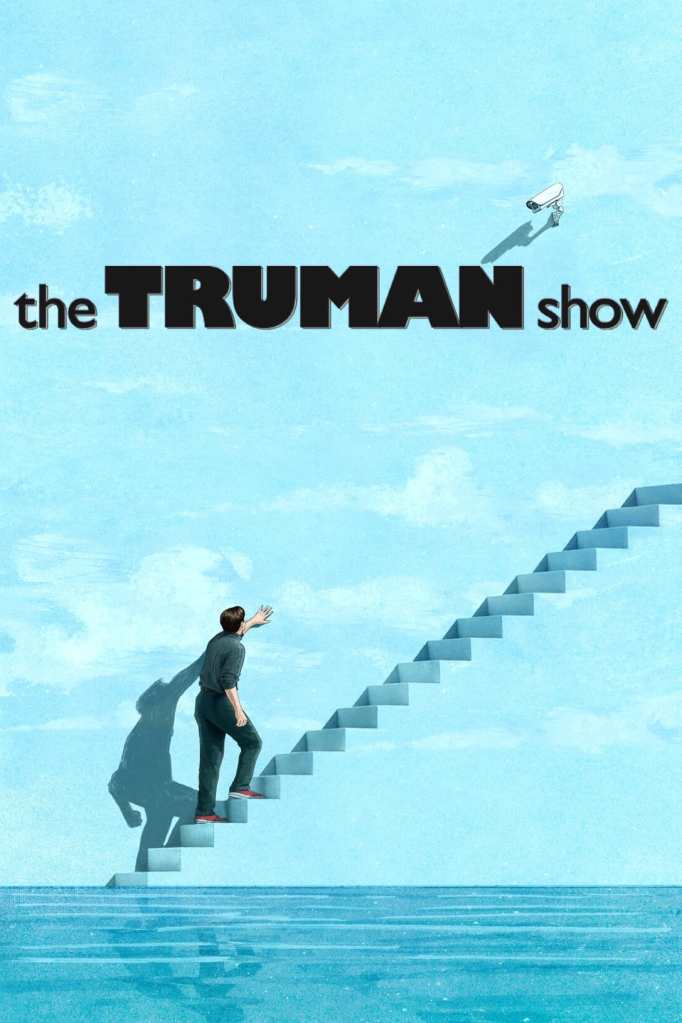
My recognition that the world seems to be scripted and directed by Machiavellian managers, working behind a dark shroud, representing an invisible governing authority, molding our minds, suggesting our ideas, dictating our tastes, and creating fear, triggered a recollection of the 1998 Jim Carrey movie – The Truman Show. The movie, directed by Peter Weir (Gallipoli, Witness, Dead Poet’s Society), had the surreal feel of Forest Gump, while beckoning the horrendous introduction of reality TV (Big Brother, Survivor), which poisons our shallow unserious society to this day. The plot of the movie focuses on individuality versus conformity, consumerism, voyeurism, reality versus manipulation, false narratives, the truth about the American Dream, and the dangers of surveillance in a technologically advanced society.

Truman Burbank is the unsuspecting star of The Truman Show, a reality television program filmed 24/7 through thousands of hidden cameras and broadcast to a worldwide audience. Christof, the show’s creator seeks to capture Truman’s authentic emotions and give audiences a relatable every man. Truman has been the unsuspecting star of the show since he was born 30 years prior. Truman’s hometown of Seahaven Island is a complete set built within an enormous dome, populated by crew members and actors who highlight the product placements that generate revenue for the show. The elaborate set allows Christof to control almost every aspect of Truman’s life, including the weather. The picture-perfect home, with picket fence and plastic people, is an attempt to convince Truman he is living the American Dream rather than in an inescapable dystopian techno-prison.

To prevent Truman from discovering his false reality, Christof manufactures scenarios that dissuade Truman’s desire for exploration, such as the “death” of his father in a sea storm to instill aquaphobia, and by constantly broadcasting and printing messages of the dangers of traveling and the virtues of staying home. One cannot but acknowledge the plotline to keep Truman under control, obedient, and locked down in his controlled environment, with no escape hatch visible, as exactly the plotline used by our overlords during the Covid scam. Using fear to regulate your subjects is a familiar theme used by those controlling the narrative and pulling the strings behind the scenes of our glorious democracy of dystopia.

The first task was to instill fear into the masses through fake videos, fake medical experts spewing fake “facts”, denying the reality masks, social distancing, and locking down the world did not stop a microscopic virus, while suppressing treatments which were clearly safe and effective (ivermectin, hydroxychloroquine) and forcing Fauci’s remdesivir and ventilators on patients – insuring their deaths. Truman’s life was built upon lies, deception, and fake narratives, controlled by a tyrannical director putting on a show to please his bosses and maximize profits. We are experiencing the same reality today.

Since March 2020 we have been trapped in a dystopian reality show based on lies, deception, and fake narratives about a weaponized virus created in a lab funded by Anthony Fauci and utilized to further the totalitarian Great Reset agenda of Schwab, Gates and their ilk, while maximizing the profits of Pfizer, TV networks and filling the pockets of politicians, shills, and apparatchiks willing to sellout the people of our country for thirty pieces of silver.

As the Truman Show approached its 30th anniversary, Truman began discovering unusual elements, such as a spotlight falling out of the sky in front of his house and a radio channel that precisely described his movements. He began to awaken to the fact he was nothing but a peculiarity trapped in a cage and constantly deterred from escaping at every turn, for the good of the show. He lived in a scripted world of conformity, where questioning the plot was not allowed, and the masses just played their parts.

This is exactly how a dictatorship without tears uses technology, pharmaceuticals, and psychological manipulation to convince the masses to love their servitude. This is the reality show we have been living in during this 21st Century dictatorship dystopia of dunces. But this psychological phenomenon is not new to mankind, as Plato described an ancient Truman Show analog in the 4th Century BC with his Allegory of the Cave. The nature of human beings has not changed across the trials and tribulations of history.

In the allegory, Plato describes a group of people who have lived chained in a cave all their lives, facing a blank wall. The people watch shadows projected on the wall from objects passing in front of a fire behind them and give names to these shadows. The shadows are the prisoners’ reality but are not an accurate representation of the real world. An enlightened man is like a prisoner who is freed from the cave and comes to understand the shadows on the wall are not reality.

The ignorant inmates do not desire to leave their prison/cave, for it is the only life they know, and they fear reality. The fire and the puppets, used to create shadows, are controlled by artists. Plato indicates the fire is also the political doctrine taught by a nation state. The artists use light and shadows to indoctrinate the masses with the dominant doctrines of the times. Few humans ever escape the cave. Most humans will remain at the bottom of the cave, with a small few elevated as major artists, to project the shadows keeping the masses disoriented, confused and fearful.

“Whereas the truth is that the State in which the rulers are most reluctant to govern is always the best and most quietly governed, and the State in which they are most eager, the worst.” ― Plato, The Allegory of the Cave

“Most people are not just comfortable in their ignorance, but hostile to anyone who points it out.” ― Plato, The Allegory of the Cave

The State is run by an eager group of psychopaths who are hell bent on destroying our civil society and common culture on behalf of globalists attempting to implement their Great Reset agenda, and enforcing it through technological surveillance, mind control through propaganda messaging, and strict management of the daily plot via mainstream media and social media censorship of the truth. As Plato contemplated twenty four centuries ago, most men will remain in their cave, believing shadows presented by their overlords is reality, never questioning their servitude or seeking the truth.

Never has this fact been truer than during this covid pandemic reality show directed by our Christof – mass murderer Anthony Fauci. The willful ignorance of the masses was assumed by the covid controllers who cast shadows of fear and death on the cave walls of the locked down extras in this well-orchestrated reality show. Using a purposefully misleading PCR test to vastly overestimate “cases”, paying hospitals to classify all deaths as covid, and having the propaganda professionals at CNN, MSNBC and Fox showing Covid Death Counters on their screens 24/7 to terrify the masses into compliance was the Covid Show.

Once the fear level was ramped to eleven on the control dial, the producers of this show introduced the miraculous Big Pharma vaccine antidote to save the day. Their script was so believable they were able to convince over 5 billion members of their captive audience to inject themselves with an untested, unproven genetic therapy, that didn’t prevent you from catching, transmitting, getting sick, being hospitalized, or dying from the Fauci funded Wuhan lab produced virus. But, as a dramatic twist to the tale, it seems the “vaccine” causes myocarditis, blood clots, infertility, miscarriages, heart attacks, cancer, and sudden death.

Despite the obvious dangers and failures of these “vaccines”, those bullied into getting jabbed became so comfortable in their ignorance, they were easily persuaded to hate the unjabbed and wish for their deaths. Orwell’s “Two Minutes of Hate” was extended for over a year and continues to this day. Rather than think critically and question why annual flu cases averaged 35 million per year prior to 2020 but dropped to near ZERO during the covid “emergency”, the cave dwellers lashed out in anger at anyone questioning the plot, because to admit they were duped would destroy their self-esteem and decrease their virtue signal credits.

The annual flu didn’t disappear. Covid was the annual flu, with a multi-billion-dollar marketing campaign. This wasn’t a pandemic, but an IQ test, and most people failed miserably. But the critical thinking unvaxxed are still considered the enemy of the state, especially since they have been proven right.

Whether we are trapped in an artificial world produced in a dome, cave, or our current technologically advanced surveillance propaganda state, the goal of those controlling our false reality is to take away our freedoms, crush dissent, keep us ignorant of the truth, and treat us as plebs to be taxed and molded. Christof, whose name is supposed to invoke him being a god-like figure ruling over Truman’s world, declares Truman could discover the truth and leave at any time, while using every diabolical trick to keep that from ever happening, because his show generated revenues exceeding the GDP of a small country.

Truman and ourselves are essentially prisoners in a vast production, and our overlords believe it is their duty to convince us to love our servitude and prefer our cells, because it is financially beneficial to the overlords and their crew.

Our world is not fake, but it is tightly controlled by those running the show. Seemingly random events, plots, and subplots are manipulated to generate specific emotions and reactions by the public in order to achieve the objectives of those benefiting from the various storylines. They are molding our minds and forming our tastes through psychological and technological manipulation of our daily existence. Christof explained why most rarely discover the truth or question the world they live in – “We accept the reality of the world with which we’re presented. It’s as simple as that.”

We have allowed men we have never seen to dictate how we live our lives, the choices we make, and which politicians and “experts” to believe, without ever putting in the effort to understand why we are being prodded to do so. We are locked in a self-imposed prison of desires, emotions, and needs through mass media messaging and a constant barrage of advertisements. Conformity and obedience are the desired traits sought by the ruling class, while individuality and skepticism are frowned upon and punished through social ostracism.

We are conditioned from birth to believe what they tell us to believe. Government school indoctrination and mass media misinformation does the trick. Distracted by our techno-gadgets and ignorant of truth is how the globalist oligarchs methodically implement their Great Reset agenda. They are so convinced of the ignorance of the masses they openly proclaim their depopulation and techno-prison schemes with no fear of push back or retribution.

The ending of the Truman Show is a lesson in resistance, persistence, and the strength of the individual, even in the face of a technologically advanced Big Brother state. It offers a message of hope, no matter how powerful our overlords appear to be. Refusing to obey or conform by one individual can inspire others to do likewise. Once Truman ‘awoke’ to his plight as a lab rat in a scripted show, he began to plot his escape. Using a makeshift tunnel in his basement, out of view of Christof’s cameras, he disappeared and forced the suspension of the broadcast for the first time in thirty years.

Christof discovers Truman sailing away from Seahaven in a small boat, as he has overcome the fake conditioning of fear instilled in him by the man who supposedly loves him but traumatized him about the sea by faking his father’s death while at sea. Christof chooses to almost drown Truman by creating a violent storm to deter him from discovering the truth. Ultimately the storm ceases and his boat strikes the wall of the dome.

This is exactly how our controllers treat the ignorant masses. They feed us stories designed to make us fearful and compliant to the exhortations of their paid experts. Paid to lie. Paid to misinform. Paid to persuade people a dangerous concoction is “safe and effective”. The evilness of using Sesame Street characters to convince four-year-old children they need this Big Pharma gene altering toxic brew, even though essentially ZERO children on earth died from covid, is a testament to the greed and malevolent impulses of those in power. Vast amounts of ever-increasing advertising revenue are what kept The Truman Show on the air for thirty years.

The covid advertising campaign will never be topped, as Hollywood stars, top athletes, famous writers, rock legends, supposedly impartial journalists, and all the major networks said SHOW ME THE MONEY!!!! Everyone was for sale, and all they had to do was lie and say the jabs were “safe and effective”. Product placement was the money-making formula for the Truman Show, while hard selling a Big Pharma phony cure over the airwaves 24/7 using the tax dollars of the victims was the final solution of the Great Reset Cabal.

The grand finale is a clash of the philosophies of reality versus false reality, as Truman discovers a staircase leading to an exit door. Christof speaks to Truman, claiming there was no more truth in the real world than in his artificial world, and he would be safe, with nothing to fear, in a world controlled by men invisible to him assuring him they have his best interests at heart. Truman chooses individuality, truth, risk, living a real meaningful life, and seeking honest relationships over a safe existence in a bubble where all decisions were made by others. Truman bows to the audience and exits, leaving Chistof to mourn the loss of his star and the revenue he generated. The ignorant masses watching the show cheer his escape and then ask, “what’s on next?” Plato captured the uncertainty and bewilderment Truman must have felt as he walked into the light.

The covid advertising campaign will never be topped, as Hollywood stars, top athletes, famous writers, rock legends, supposedly impartial journalists, and all the major networks said SHOW ME THE MONEY!!!! Everyone was for sale, and all they had to do was lie and say the jabs were “safe and effective”. Product placement was the money-making formula for the Truman Show, while hard selling a Big Pharma phony cure over the airwaves 24/7 using the tax dollars of the victims was the final solution of the Great Reset Cabal.

The grand finale is a clash of the philosophies of reality versus false reality, as Truman discovers a staircase leading to an exit door. Christof speaks to Truman, claiming there was no more truth in the real world than in his artificial world, and he would be safe, with nothing to fear, in a world controlled by men invisible to him assuring him they have his best interests at heart. Truman chooses individuality, truth, risk, living a real meaningful life, and seeking honest relationships over a safe existence in a bubble where all decisions were made by others. Truman bows to the audience and exits, leaving Chistof to mourn the loss of his star and the revenue he generated. The ignorant masses watching the show cheer his escape and then ask, “what’s on next?” Plato captured the uncertainty and bewilderment Truman must have felt as he walked into the light.

“Anyone who has common sense will remember that the bewilderments of the eyes are of two kinds, and arise from two causes, either from coming out of the light or from going into the light” ― Plato, The Allegory of the Cave

This world of manufactured dystopian pleasure harkens more towards Huxley’s Brave New World, where pharmaceuticals and conditioning would keep the public seeking pleasure, pre-occupied with trivialities, distracted by materialism, unable to think critically, and reduced to passivity and egoism through the control of messaging by their controllers. Our efficient totalitarian state has gained complete control by convincing the masses to love their servitude and beg for more rules, restrictions, and reduction of liberties in the name of safety and security.

Smart phones, smart cities, and smart streets are nothing more than code for spying on you and controlling you. Truman finally understood his liberty was his to choose and not Christof’s to give. There is a small minority of Americans who are realizing the same thing after two years of totalitarian measures designed to take away our freedoms and liberty. The question is whether enough will exit this tyrannical government produced show to make a difference. The future of mankind literally depends on the answer to this question.

LIFE IN THE POST-COVID WORLD ORDER

By Dr. Tim Coles

Source: Waking Times

In Brave New World, author Aldous Huxley wrote that the slaves of the future are happy. Drugged and genetically modified, their personalities are blunted and their bodies and minds configured by a technocracy whose scientists design humans to maximise their outputs for the benefit of the ruling classes.

Outside the world of fiction, the World Economic Forum (WEF) is an umbrella of multibillion-dollar, mostly US-based corporations and billionaires; a think tank in which the rulers of the world meet to discuss and try to shape the general direction of the global order. With permanent strikers in the US, for instance, refusing to work in what the late anthropologist David Graeber eloquently called “bullshit jobs,” the WEF’s academics and researchers understand that they could lose their grip on power. Global financial inequalities are widening as anti-democratic sentiments grow within “democratic” societies, whose populations realise that they have no control over their lives.

Rather than risk revolutions in numerous countries from strikers – now called The Great Resignation – the WEF seeks to ideologically capture potential revolutionary leaders and re-programme them to favour the WEF system (e.g., Greta Thunberg’s platform at the annual conference). The businesses that fund and join WEF’s Davos meetings recognise that real estate remains the physical basis on which profitable assets are constructed. Under slogans like the Great Reset, the Fourth Industrial Revolution, and Build Back Better, WEF elites want to cement their new world order.

But what will that new order look like for non-elites? Unlike the present global malaise, the “new normal” – or “next normal” as WEF elites are calling it – aims to use hi-technology and data collection to tailor environments to the needs and wishes of the public who will be expected to participate in “sustainable” infrastructure and be data points for constant public health monitoring.

Like the hapless victims of Huxley’s dystopia, tomorrow’s society will be happily enslaved, at least in the minds of WEF planners. Workspaces will blur the lines between personalisation and professionalism, feelings of being cheated by the system will be reconceived as consuming less to help the environment, and the pains of reality will be soothed with immersion into joyous, incessant virtual reality like Facebook’s new Meta concepts.

Build Back Better

Mega-wealth in the global economy is a house of cards: it consists of digits on bank account computer screens that increase when the rich buy and sell repackaged debts to each other. When the gravy train derails every decade or so, the public bails out the perpetrators. Yet, the three main bases on which the intangible economy is constructed are tangible: precious metals, hydrocarbons, and real estate.

The new rulers of the world are the asset managers who hold the stocks, shares, bonds, and portfolios of the banks, hedge funds, insurers, pension companies, and real estate holdings. They include BlackRock, State Street, UBS, and Vanguard. Their fake wealth would not exist without the physical ownership of land. Real estate is the skin of the balloon in which they blow the hot air of money markets.

The WEF corporations understand the importance of real estate in relation to wealth inequality and uber-profits. They also understand that the younger generations are getting more and more desperate. In terms of size, housing quality is leading to mental health issues as younger people live and work in increasingly crowded and expensive cities. Not only is property ownership a dream for the majority of young westerners, renting is becoming harder as owners are reluctant to let their property to people in the insecure work of the expanding gig economy.

WEF corporations fear a brain and labour drain from cities as work-from-home youngsters flee to the countryside where dwellings are bigger and cheaper. The WEF notes that cities generate 80 per cent of global GDP, yet their revenues (e.g., from local taxes and property sales) are expected to fall as fewer people use public transport and reduced council budgets lead to disinvestment from public services. Asset companies want to keep workers locked into cities and are looking to redesign urban hellholes to make them more appealing: eco-friendly, health conscious, and tailored to the psychology of the individual.1

WEF authors say that the new agenda will take place via “an increase in public-private cooperation,” meaning the taxpayer foots the bill, as usual. New urban slums will be greenwashed and prettied via the harnessing of personalised big tech data collection for “customisation.” While the rich continue to plunder, the working classes will have to get used to “adaptive reuse”; an eco-friendly normalisation of second-hand products; or “pre-loved” as they now call them. The WEF says that, “The private sector can also play an instrumental role in helping the public sector craft legislation that is viable for business.” What could possibly go wrong?

WEF emphasises that a whole tenth of global GDP is concentrated in a single sector: real estate. Commenting on the above, Christian Ulbrich, Global Chief Executive Officer and President of the real estate services company JLL, confirms: “The world will look different in the coming years; our cities and urban centres especially so.”2

On greenwashing in response to public pressure, Ahmed Galal Ismail, Chief Executive Officer of the holding company Majid Al Futtaim Properties, says “global investors, pension funds and financial institutions are demanding that their investee companies incorporate, track and report ESG [environmental, social and governance] performance into the risk-adjusted returns that they deliver.”3

As we shall examine in more detail, artificial intelligence and the instantaneous advertising and automated services markets are exploding. In so-called smart homes, the wishes and intentions of the occupant will be sales opportunities for programmed machines, from fridges to heating systems, as the very biology of the tenant is tracked and analysed under the PR-friendly cover of public health monitoring.

Under counter-Covid biosurveillance, prospective AI in smart homes might also be tailored to provide commercial services. AI could, for instance, offer to adjust the solar-controlled room temperature if in-home cameras sense that the occupant might be too hot or cold. “Autonomous buildings autotune, adapting to dynamic indoor and outdoor conditions, create optimal working conditions.” Through bastardised communitarianism designed by WEF to prevent the poor from ever attaining wealth under the slogan of “equity,” the buildings will be designed with “cost-sharing mechanisms.”

Existing examples, not yet fully authoritarian like the above, include the hub at Causeway, Boston, Massachusetts: a mixed-use revitalisation project that includes heat-regulating glass, airflow-supported balconies, and local food production. Another is Hong Kong’s Taikoo Place: an interconnected business hub. Citing patents per head of population, the WEF notes that increased population density – i.e., big cities – is linked to increased creativity and productivity. But the people who do the hard work don’t share in the patent wealth. Taxpayers, for instance, funded the vaccines that low-paid nurses administer, yet big pharma reaps the rewards.

In other words, they want people crammed into cities to boost innovation, but they also want to polish the turd of urbanisation by making dystopian dives look like efficient, modern pockets of eco-friendly mingling.

For instance, knowing that most people prefer the more relaxed atmosphere of villages to crowded and impersonal cities, the government of Victoria, Australia supports the 20 Minute City concept in which the village – grocer, butcher, baker, pharmacy, health clinic, bus stop – is integrated into the city.4

“Sustainable McDonald’s” is an oxymoron, yet Australia once again serves as a testbed for the Fourth Industrial Revolution (4IR) with “sustainable” fast-food outlets that allegedly cut CO2 emissions by a third. The solar-powered “smartly” ventilated takeaway/restaurant in Melton South is a prototype for other sites. Through Podium, Australia is also pioneering the end-to-end digitisation of real estate: from design, purchase, lease, and construction, to repurchase, letting, contract, and the new age of tailored living. This will create a new blockchain for real estate markets.

In this part of the new world order, constant labour is normalised. “From focus zones to work cafes, the space integrates ‘external’ elements such as coworking and the home office.” Happy slaves must also be healthy slaves. Design concepts include an “ergonomically supportive home office with limited distractions.” There will be a “blend of social spaces with productivity enablers,” such as colleagues who give unconscious prompts to others to work harder. This will be achieved through the design of the building itself. For instance, computers on which people work might be strategically placed near the coffee machine so that the idler sees their colleagues labouring and is prompted to return to work. Exercise machines might be placed near the snack bar so that workers tempted by candy are also guilted into doing a few minutes’ exercise before returning to their toil.

The Fourth Industrial Revolution

Covid has given WEF corporations the chance to integrate public health concepts via constant social biosurveillance in their existing 4IR agenda. Over the last few decades, the phrase “new normal” became normal as politicians, intellectuals, and the media sought to brainwash us into believing that terrorism would make total surveillance and travel restrictions a new normal, as would limitations on freedom and growth caused by anthropogenic climate change.

Since Covid, the WEF asks: “What will the ‘next normal’ look like?” (Emphasis added). WEF’s message is confused. On the one hand, its authors lessen mental health concerns by promoting community, but on the other, they note that the structure of the socioeconomic order will increase isolation. Facebook is notorious for keeping people isolated in echo chambers, but the new Meta rebranding, as we shall see, will blend isolation and community in augmented, virtual reality (VR) settings. The happy slave will be alone in their tiny, greenwashed hovel but feel emotionally connected with friends in a VR universe.

When it comes to online shopping, there will be less “face-to-face interaction.” The last-minute deliveries spurred by Covid “will persist beyond the pandemic”5 and be delivered by the kinds of people whom the WEF envisages occupying the above properties. Jab mandates for working people are part of the “next normal,” and patents on the vaccines are of primary interest to the mega-rich. But the WEF is less interested in ensuring the safety and efficacy of Covid vaccines and more concerned with bolstering “vaccine confidence.” Even though the jab appears to be effective only in reducing hospitalisations, the WEF was quick to ask how its thought leaders could work to promote “trust” in big pharma’s rushed products.6

It is important to distinguish between words and actions. Sometimes, WEF founder and chairman Klaus Schwab speaks truth and horrifies those familiar with his words. Examples include references to microchipping the population and replacing humans with robots.7 At other times, Schwab seems to say the opposite, acknowledging that what is erroneously called “capitalism” – which actually means state-backed monopoly corporatism – has damaged the younger generations, stagnated the middle classes, and fuelled the climate crisis. In order to look good and paint the global elite’s WEF as some kind of progressive or “woke” (as the right-wing say) face of “capitalism,” Schwab points out that which is wrong with the “capitalist” order.

The reality is that pretty words and agreement with those injured by profit-driven corporatism is a cover. It is as if an abuser consoles their victim while continuing to abuse them. In his introduction to the WEF’s report on youth, Schwab plays this game, writing things many of us would agree with: that long-term planning is better than short-term profit and that intergenerational parity is better than growing inequality.8

As part of its pyramid structure, the WEF claims that its global reach on this issue was over two million people, the vast majority of whom were journalists, intellectuals, businesspeople, and community leaders; in other words, rungs on the ladder of hierarchy, not ordinary people. These so-called cultural leaders will shape the doctrines for those below them through entertainment, education, media, and the workplace.

The report pays lip service to getting corporations to disinvest from fossil fuels and working with Generation Z’s thought leaders to create a new agenda for sustainability. In reality, it is the same old monopoly corporatism in which ordinary people are the flotsam and jetsam in the plans of those higher than them in the social order. For example, one Lab held in Luxembourg concluded that the WEF should decide what is or is not ethical consumption: “It would be unfair and naïve to put all the burden on consumers having to educate themselves in order to avoid greenwashing.”9

If, for instance, someone decides not to buy the latest Apple gadget because ‘child mining’ in Congo extracted the device’s coltan, ‘forced labour’ in China created the product, ‘air miles’ brought the item to the West, and ‘tax avoidance’ enables the company to be a monopoly, a WEF messaging campaign might greenwash and claim that the gadget’s production was ethical and its carbon footprint neutral.

Another event in Australia concluded that the WEF should harness the wisdom of indigenous people when promoting the new agenda so that people resonate with ancient ways of living whilst continuing to work for corporate overlords.

This is a form of mind control in which the labouring masses have internal freedom and believe they participate in a spiritual society, when in fact the limits of their reality are set by superiors who pretend to consult with and gain the approval of those they are controlling. The Davos Lab’s Millennium Manifesto is jam-packed with empty verbiage such as, “We will ask big questions to advance bold solutions.”10

The Great Reset

Another aspect of the WEF agenda is what Schwab calls the Great Reset: a professed plan to promote economic and social equity while cementing the structures that guarantee worsening inequality. In addition to trapping working people in properties designed to enhance their productivity and monetise their idiosyncrasies (like the AI temperature control example above), the revolutionary potential of the exploited classes as well as their dissatisfaction will, if the WEF planners get their way, be quelled by the promotion of transhumanism and virtual reality, in which humanity is “reset” to begin anew with biological and digital enhancements.

One of the methods of control is trapping people in social media bubbles. After US President Donald Trump came to power (2017–21) and threatened the neoliberal agenda, ideological managers such as mainstream media, think tanks, and political unions, took action against what they call “fake news.” Fact-check organisations have morphed into the guardians of neoliberal elites. Often “populists” like Trump and his supporters lie, misreport, and publish fake news. Fact-checkers expose those lies, but they have a deeper agenda.

In most cases, so-called fact-checkers simply argue over interpretations of truth, which the fact-checkers then use to delegitimise real populism. The ideological basis from which they operate promotes the agenda of the World Economic Forum and others. But who fact checks the fact-checkers? Researchers have uncovered their connections to the political, corporate, and media establishment. In this revolving door system, former mainstream corporate media editors and journalists take up new roles as self-professed fact-checkers whose targets are those opposed to the neoliberal order.

In addition, social media have, for years, been on a deplatforming crusade as part of “woke washing” (while keeping oppressive and prejudicial structures in place) and under the influence of the intelligence services. In their evidence to US Congress after the 6 January Capitol insurrection, both Facebook co-founder Mark Zuckerberg and Twitter co-founder Jack Dorsey confirmed that because of “security” concerns, domestic US intelligence agencies advised (i.e., leaned on) them to deplatform accounts, including the President’s.

All of the above serves to blandify social media content and constrain users to the boundaries of what is acceptable within neoliberal culture. Anything too progressive (e.g., the World Socialist Web Site) or regressive (e.g., Breitbart News) is censored, pushing the entire user base of hundreds of millions of people into a giant corporate-approved echo chamber (e.g., CNN, New York Times).

This process is called “digital literacy” by the WEF and others. Without “digital literacy,” people might fall for dangerous “fake news” (i.e., news not approved by WEF corporations). But people might also create and share real news and real information that does not fall within the bounds of accepted neoliberal ideology, such as questioning the efficacy of big pharma-produced vaccines or pointing out the serious problems with the corporate-political elite. In making the world “digitally literate,” the WEF employs doublethink: “Steps must be taken to prevent abuse and harm while maintaining the freedom to openly exchange ideas.”11

Slaving for the ultra-rich in personally-tailored smart cities, the younger generations censored into the neoliberal sheep pen by social media will, according to the WEF model, augment their capacities with technology. The transhumanist agenda is specifically harnessed for the older, infirm generations who have gone from being useless eaters – from the WEF perspective – to potential data points for augmentative technologies. As part of the WEF propaganda campaign, the organisation is preparing to “Articulate the potential benefits of artificial intelligence,” particularly for the older generations.12

For “older” people, which we assume means the over-60s, WEF suggests placing representatives in the design process, the reasoning being that over-60s tend to have different aesthetic tastes, practical preferences, and physical and cognitive requirements to young people. The young are born into the new technological changes, and those changes become part of their environment. In contrast, the over-60s must adapt. Pursuing profit, companies are using the WEF as a vehicle to help turn the over-60s into transhumanist augmentation technology consumers: home-help robots, implants for better eyesight, time-released painkillers, etc. The WEF does not seek solutions for ending the collection and selling of personal data but rather for more transparency. This way companies can cheat consumers whilst being honest that they are cheating them. The aim is to make consumers feel less angry because they appreciate the honesty.

WEF suggests that companies “Disclose the data being collected.” They hope that older people will thus be more willing to have their information sold. The WEF also wants to “Obtain meaningful consent.” The clue is in the word “meaningful,” suggesting that up until now, consent has not been meaningful. One of the more insidious agendas is to “Design for appropriate trust.” Just as they seek to make the younger generations “digitally literate,” i.e., keep them in a mental prison, WEF corporations aim to protect the elderly from “deception,”13 but not the deceptions on which their system is built.

The WEF is aware that the general public might, if left on their own, form groups, communities, parties, and movements that spread an anti-“capitalist” message and develop new social models. If such a long-term grassroots revolution succeeded, it would not only hurt the profits of the owner-classes but threaten the system they spent so long developing. Repackaging profit-driven agendas as some form of third position between capitalism and socialism is achieved, in part, by rhetorically emphasising “corporate responsibility.”14

The WEF also seeks to capture potential revolutionaries by appealing to “social justice.” The WEF intellectuals are aware that young people tend to be driven more than old people by outrage. The right-wing dismisses these young, conscious activists as “social justice warriors.” Instead of encouraging people to change the system in their own image, WEF intellectuals want to make people feel like they have – without actually having – input into their conditions. “[R]ecognising, co-designing, partnering and learning with impacted stakeholders… must be at the centre of any corporate action on equity and social justice in our unequal world.”15

Another factor profitable to the corporate class is social impact bonds. Historically, the underclasses – those below the working classes – were a financial negative. They claimed benefits, needed free healthcare, public housing, etc. The working classes laboured, the middle classes paid the most relative taxes, and the rich lived off the labour of the poor, profits generated by the consuming middle classes, and hording through tax avoidance.

But over the last decades, banks figured out ways of profiting from the underclasses: social impact bonds. Under such systems, government cuts back on social welfare and relies instead on charities to keep offenders out of prison and reach homelessness reduction targets, etc. The banks that fund the charities are then reimbursed by government, and the loans of the banks are serviced by taxpayers. This social impact bond system creates an incentive to have a permanent underclass and champion the alleged virtues of “charity” instead of systemic change that brings genuine inclusivity and democratic empowerment.16 Gerbrand Haverkamp, Executive Director of the World Benchmarking Alliance, is quoted as saying: “[W]e need businesses that can profitably solve societal problems, without profiting from societal harms.”17 This model incentivises the creation of a permanent underclass.

Engineered ‘Life’ In Fake Worlds

There is a sinister, occultic element to the WEF’s agenda. Certain members who currently practice what they believe to be online “meme magic(k)” are also involved in the development of Facebook’s VR world: the Metaverse.

A near-billionaire developer and Trump supporter, Palmer Luckey, used social media to boost Trump’s profile and deflate his rival Hillary Clinton in the run-up to the 2016 US presidential election. Luckey made his fortune selling the Oculus VR headset to Zuckerberg. Luckey’s benefactor, a lobby called Nimble America, believed that “meme magic is real.” The Millennial generation started to use images with text circulated online to boost their agendas and attack their enemies (memes). One famous meme was Pepe the Frog, an innocent cartoon hijacked by racists and right-wingers (usually both) to signal their political allegiances. The cultists behind the spread of such memes believed that they could invoke spiritual power (“meme magic(k)” to vanquish enemies. Pepe, to give one of many examples, is drawn with light reflecting in both eyes in the shape of a Freemasonic dot-triangle.

Regardless of his involvement or lack of involvement in such practices, the executive director of Oculus, Jason Rubin, sent his 50-page report on the Metaverse to Zuckerberg. Just as US military planners devised a “shock and awe” terror campaign to inflict on the Iraqi people in 2003, Rubin said that “shock and awe” tactics would condition the user to accept their new digital life in the Metaverse. CNBC has seen leaked policy documents: “It imagined users floating through a digital universe of virtual ads, filled with virtual goods that people buy.”18

Chillingly (no pun intended), FB Oculus’s Michael Abrash says: “It all started with Snow Crash,” the futuristic ‘90s novel written by Neal Stephenson. The Guardian, which picked up the Abrash quote, conveniently omits a crucial detail about the novel: that the fictional online world on which the new scheme is based contains a mind virus that can infect users as they merely look at the screen. Likening it to Snow Crash, though providing no evidence, certain individuals claim that the Pepe meme that evolved into something else has, for many years, contained a hidden mind virus.

Whether the mind virus is real or not is beside the point. Certain online occultists, including Luckey, are using the fear of mind control, coupled with what Rubin calls “shock and awe,” to get users to submit to the dialectic: a “progressive” Zuckerberg world order of Joe “Build Back Better” Biden in a virtual reality, or a more overtly fascistic world order of “meme magic(k)” and mind warfare using Trump as a frontman.

Part of the Trump meme war and the fake news hysteria surrounding the President had the effect of making ‘truth’ a vague and flexible concept. As the concept of truth becomes fuzzy, that which is real is set to become fuzzier. WEF says of Meta: “This could manifest itself in several ways, but many experts believe that ‘extended reality’ (XR) – the combination of augmented, virtual and mixed reality – will play an important role.”19 The WEF hopes that once we have been bombarded into the new system, we will all be Huxleyan happy slaves in their Brave New World, playing with intangible VR toys and mingling with avatars of our loved ones.

About the Author

Dr T.J. Coles is an associate researcher at the Organisation for Propaganda Studies, a columnist with Axis of Logic, a contributor to numerous publications (including CounterPunch and Truthout) and the author of several books including Manufacturing Terrorism (Clairview Books), Human Wrongs (iff Books) and Privatized Planet (New Internationalist).

Footnotes

1. World Economic Forum and BCG, Insight Report, April 2021, www3.
weforum.org/docs/WEF_A_Framework_for_the_Future_of_Real_Estate_2021.pdf
2. Quoted in ibid.
3. Ibid.
4. Ibid.
5. WEF and McKinsey, “Pandemic, Parcels and Public Vaccination:
Envisioning the Next Normal for the Last-Mile Ecosystem,” Insight Report, April 2021, www3.weforum.org/docs/WEF_Pandemic_Parcels_and_Public_Vaccination_report_2021.pdf
6. WEF, Insight Report, May 2020, www3.weforum.org/docs/WEF_How_
to_Build_Trust_in_Vaccines_2021.pdf
7. Interview with Radio Télévision Suisse, 10 January 2016, www.youtube.com/watch?v=IJcey1PPiIM
8. Klaus Schwab, “Introduction,” “Davos Lab: Youth Recovery Plan,” Insight Plan, WEF, August 2021, www3.weforum.org/docs/WEF_Davos_Lab_Youth_Recovery_Plan_2021.pdf
9. WEF, ibid.
10. Ibid.
11. Ibid.
12. WEF,” Insight Report, August 2021, www3.weforum.org/docs/WEF_
Designing_Artificial_Intelligence_Technologies_for_Older_Adults_2021.pdf
13. Ibid.
14. WEF, Business for Social Responsibility and Laudes Foundation, Insight Report, September 2021, www3.weforum.org/docs/WEF_Lighthouse_
Action_Social_Justice_Stakeholder_Inclusion_2021.pdf
15. Ibid.
16. Ibid.
17. Quoted in ibid.
18. Salvador Rodriguez, CNBC, 30 October 2021, www.cnbc.com/2021/10/30/facebooks-meta-mission-was-laid-out-in-a-2018-paper-
on-the-metaverse.html
19. Stefan Hall and Cathy Li, WEF, 29 October 2021, www.weforum.org/agenda/2021/10/facebook-meta-what-is-the-metaverse