Biden state media appointee advocated using propaganda against Americans and ‘rethinking’ First Amendment

The head of the Joe Biden transition team for the US Agency for Global Media, Richard Stengel, has branded himself the “chief propagandist,” urged the government to use propaganda against its “own population,” and called to “rethink” the First Amendment.

By Ben Norton

Source: The GrayZone

Richard Stengel, the top state media appointee for US President-elect Joe Biden’s transition team, has enthusiastically defended the use of propaganda against Americans.

“My old job at the State Department was what people used to joke as the chief propagandist,” Stengel said in 2018. “I’m not against propaganda. Every country does it, and they have to do it to their own population. And I don’t necessarily think it’s that awful.”

Richard “Rick” Stengel was the longest serving under-secretary of state for public diplomacy and public affairs in US history.

At the State Department under President Barack Obama, Stengel boasted that he “started the only entity in government, non-classified entity, that combated Russian disinformation.” That institution was known as the Global Engagement Center, and it amounted to a massive vehicle for advancing US government propaganda around the world.

A committed crusader in what he openly describes as a global “information war,” Stengel has proudly proclaimed his dedication to the carefully management of the public’s access to information.

Stengel outlined his worldview in a book he published this June, entitled “Information Wars: How We Lost the Global Battle Against Disinformation and What We Can Do About It.”

Stengel has proposed “rethinking” the First Amendment that guarantees the freedom of speech and press. In 2018, he stated, “Having once been almost a First Amendment absolutist, I have really moved my position on it, because I just think for practical reasons in society, we have to kind of rethink some of those things.”

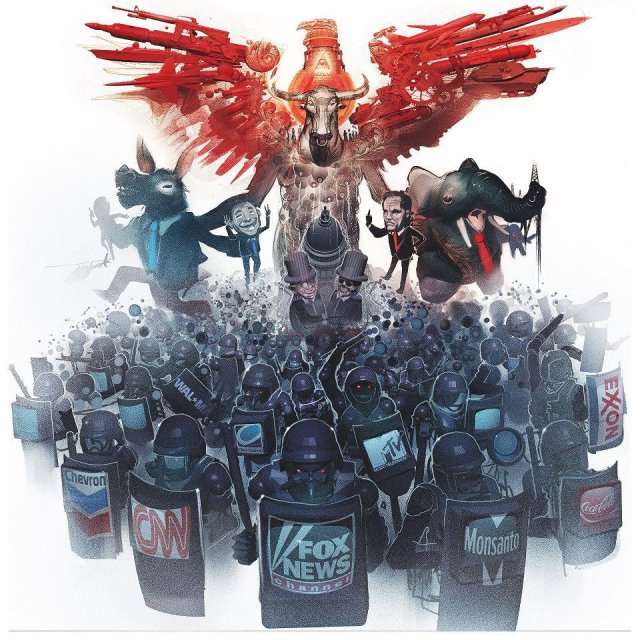
The Biden transition team’s selection of a censorial infowarrior for its top state media position comes as a concerted suppression campaign takes hold on social media. The wave of online censorship has been overseen by US intelligence agencies, the State Department, and Silicon Valley corporations that maintain multibillion-dollar contracts with the US government.

As the state-backed censorship dragnet expands, independent media outlets increasingly find themselves in the crosshairs. In the past year, social media platforms have purged hundreds of accounts of foreign news publications, journalists, activists, and government officials from countries targeted by the United States for regime change.

Stengel’s appointment appears to be the clearest signal of a coming escalation by the Biden administration of the censorship and suppression of online media that is seen to threaten US imperatives abroad.

From Obama admin’s “chief propagandist” to Russiagate-peddling MSNBC pundit

Before being appointed as the US State Department’s “chief propagandist” in 2013, Richard Stengel was a managing editor of TIME Magazine.

In the Obama administration, Stengel not only created the Global Engagement Center propaganda vehicle; he also boasted that he “led the creation of English for All, a government-wide effort to promote the teaching of English around the world.”

After leaving the State Department in 2016, Stengel became a strategic advisor to Snap Inc., the company that runs the social media apps Snapchat and Bitmoji.

Stengel also found time for a fellowship at the Atlantic Council, a think tank closely linked to NATO and the Biden camp which has received funding from the US government, Britain, the European Union, and NATO itself, along with a host of Western weapons manufacturers, fossil fuel corporations, Gulf monarchies, and Big Tech juggernauts.

Stengel worked closely with the Atlantic Council’s Digital Forensic Research Lab, a dubious organization that has fueled efforts to censor independent media outlets in the name of fighting “disinformation.”

But Stengel is perhaps most well known as a regular political analyst on MSNBC in the Donald Trump era. On the network, he fueled Russiagate conspiracy theories, portraying the Republican president as a useful idiot of Russia and claiming Trump had a “one-sided bromance” with Vladimir Putin.

Stengel left MSNBC this November to join Biden’s presidential transition. The campaign announced that he was tapped to lead the Biden-Harris agency review team for the United States Agency for Global Media (USAGM).

USAGM is a state media propaganda organization that has its origins in a Cold War vehicle created by the CIA to spread disinformation against the Soviet Union and communist China. (The agency was previously called the Broadcasting Board of Governors, or BBG, until it rebranded in 2018.)

USAGM states on its website that its most important mission is to “Be consistent with the broad foreign policy objectives of the United States.”

An agency shakeup this year produced revelations that USAGM provided clandestine assistance to separatist activists during the protests that consumed Hong Kong in 2019. The program earmarked secure communications assistance for protesters and $2 million in “rapid response” payouts for anti-China activists.

Richard Stengel’s “obsessive” crusade against Russian “disinformation”

When Richard Stengel referred to himself as the State Department’s “chief propagandist,” advocated the use of propaganda against the American people, and proposed to “rethink” the First Amendment, he was participating in a May 3, 2018 panel discussion at the Council on Foreign Relations (CFR).


During the CFR event, titled “Political Disruptions: Combating Disinformation and Fake News,” Stengel hyped up the threat of supposed “Russian disinformation,” a vague term that is increasingly used as an empty signifier for any narrative that offends the sensibilities of Washington’s foreign policy establishment.

Stengel stated that he was “obsessed with” fighting “disinformation,” and made it clear he has a particular obsession with Moscow, accusing “the Russians” of engaging in “full spectrum” disinformation.

Joining him on stage was political scientist Kelly M. Greenhill, who mourned that alternative media platforms publish “things that seem like they could be true… that’s the sphere where it’s particularly difficult to debunk them… it’s this gray region, this gray zone, where it’s not traditional disinformation, but a combination of misinformation and play on rumors, conspiracy theories, sort of gray propaganda, that’s where I think the nub or the crux of the problem lies.”

Stengel approved, adding, “By the way those terms, the gray zone, are all from Russian active measures, that they’ve been doing for a million years.”

The panelists made no effort to hide their disdain for independent and foreign media outlets. Stengel stated clearly that a “news cartel” of mainstream corporate media outlets had long dominated US society, but he bemoaned that those “cartels don’t have hegemony like they used to.”

Stengel made it clear that his mission is to counter the alternative perspectives given a voice by foreign media platforms that challenge the US-dominated media landscape.

“The bad actors use journalistic objectivity against us. And the Russians in particular are smart about this,” Stengel grumbled.

He singled out Russia’s state-funded media network, RT, lamenting that “Vladimir Putin, when they launched Russia Today, said it was an antidote to the American English hegemony over the world media system. That’s how people saw it.”

Ben Decker, a research fellow at the Misinformation Project at the Harvard Kennedy School of Government, lamented that “RT is invading every weekly finance media space.”

But Decker was cheered by the proliferation of US oligarchs committed to retaking control of the narrative. “In America and across the world,” he stated, “the donor community is very eager to address this problem, and very eager to work with communities of researchers, academics, journalists, etc. to target this problem.”

“I think that there is an appetite to solve this from the top down,” he continued, urging the many academics in the audience “to apply for grant money” in order to fight this Russian “disinformation.”

The CFR panel culminated with an African audience member rising from the crowd and confronting Stengel: “Because what is happening in America is what the United States flipped on the Global South and in the Third World, which we lived with, for many, many years, in terms of a master narrative that was and still is propaganda,” the man declared.

Rather than respond, Stengel rudely ignored the question and made his way hurriedly for the exit: “You know what, I hate last questions. Don’t you? I never, I usually just want to end something before the last question.”

The video of the revealing confrontation caused such a furor that CFR’s YouTube account disabled comments and made the video unlisted. It cannot be found in a search on Google or YouTube; it can only be found with the direct link.

The video of the full discussion is embedded below:

The 2020 Election Bamboozle: We Are All Victims of the Deep State’s Con Game

By John W. Whitehead

Source: The Rutherford Institute

“We’re run by the Pentagon, we’re run by Madison Avenue, we’re run by television, and as long as we accept those things and don’t revolt we’ll have to go along with the stream to the eventual avalanche…. As long as we go out and buy stuff, we’re at their mercy… We all live in a little Village. Your Village may be different from other people’s Villages, but we are all prisoners.”— Patrick McGoohan

This is not an election.

This is a con game, a scam, a grift, a hustle, a bunko, a swindle, a flimflam, a gaffle, and a bamboozle.

In this carefully choreographed scheme to strip the American citizenry of our power and our rights, “we the people” are nothing more than marks, suckers, stooges, mugs, rubes, or gulls.

We are victims of the Deep State’s confidence game.

Every confidence game has six essential stages: 1) the foundation to lay the groundwork for the illusion; 2) the approach whereby the victim is contacted; 3) the build-up to make the victim feel like they’ve got a vested interest in the outcome; 4) the corroboration (aided by third-party conspirators) to legitimize that the scammers are, in fact, on the up-and-up; 5) the pay-off, in which the victim gets to experience some small early “wins”; and 6) the “hurrah”— a sudden manufactured crisis or change of events that creates a sense of urgency.  

In this particular con game, every candidate dangled before us as some form of political savior—including Donald Trump and Joe Biden—is part of a long-running, elaborate scam intended to persuade us that, despite all appearances to the contrary, we live in a constitutional republic.

In this way, the voters are the dupes, the candidates are the shills, and as usual, it’s the Deep State rigging the outcome.

Terrorist attacks, pandemics, civil unrest: these are all manipulated crises that add to the sense of urgency and help us feel invested in the outcome of the various elections, but it doesn’t change much in the long term.

No matter who wins this election, we’ll all still be prisoners of the Deep State.

We just haven’t learned to recognize our prison walls as such.

It’s like that old British television series The Prisoner, which takes place in a mysterious, self-contained, cosmopolitan, seemingly idyllic retirement community known only as The Village.

Perhaps the best visual debate ever on individuality and freedom, The Prisoner (17 episodes in all) centers around a British secret agent who abruptly resigns only to find himself imprisoned, monitored by militarized drones, and interrogated in The Village, a beautiful resort with parks and green fields, recreational activities and even a butler.

While luxurious, the Village is a virtual prison disguised as a seaside paradise: its inhabitants have no true freedom, they cannot leave the Village, they are under constant surveillance, all of their movements tracked. Residents of the Village are stripped of their individuality and identified only by numbers.

First broadcast in Great Britain 50-some years ago, The Prisoner dystopian television series —described as “James Bond meets George Orwell filtered through Franz Kafka”—confronted societal themes that are still relevant today: the rise of a police state, the loss of freedom, round-the-clock surveillance, the corruption of government, totalitarianism, weaponization, group think, mass marketing, and the tendency of human beings to meekly accept their lot in life as prisoners in a prison of their own making.

The series’ protagonist, played by Patrick McGoohan is Number Six.

Number Two, the Village administrator, acts as an agent for the unseen and all-powerful Number One, whose identity is not revealed until the final episode.

“I am not a number. I am a free man,” was the mantra chanted on each episode of The Prisoner, which was largely written and directed by Patrick McGoohan, who also played the title role.

In the opening episode (“The Arrival”), Number Six meets Number Two, who explains to him that he is in The Village because information stored “inside” his head has made him too valuable to be allowed to roam free “outside.”

Throughout the series, Number Six is subjected to interrogation tactics, torture, hallucinogenic drugs, identity theft, mind control, dream manipulation, and various forms of social indoctrination and physical coercion in order to “persuade” him to comply, give up, give in and subjugate himself to the will of the powers-that-be.

Number Six refuses to comply.

In every episode, Number Six resists the Village’s indoctrination methods, struggles to maintain his own identity, and attempts to escape his captors. “I will not make any deals with you,” he pointedly remarks to Number Two. “I’ve resigned. I will not be pushed, filed, stamped, indexed, debriefed or numbered. My life is my own.”

Yet no matter how far Number Six manages to get in his efforts to escape, it’s never far enough.

Watched by surveillance cameras and other devices, Number Six’s attempts to escape are continuously thwarted by ominous white balloon-like spheres known as “rovers.” Still, he refuses to give up. “Unlike me,” he says to his fellow prisoners, “many of you have accepted the situation of your imprisonment, and will die here like rotten cabbages.”

Number Six’s escapes become a surreal exercise in futility, each episode an unfunny, unsettling Groundhog’s Day that builds to the same frustrating denouement: there is no escape.

As journalist Scott Thill concludes for Wired, “Rebellion always comes at a price. During the acclaimed run of The Prisoner, Number Six is tortured, battered and even body-snatched: In the episode ‘Do Not Forsake Me Oh My Darling,’ his mind is transplanted to another man’s body. Number Six repeatedly escapes The Village only to be returned to it in the end, trapped like an animal, overcome by a restless energy he cannot expend, and betrayed by nearly everyone around him.”

The series is a chilling lesson about how difficult it is to gain one’s freedom in a society in which prison walls are disguised within the seemingly benevolent trappings of technological and scientific progress, national security and the need to guard against terrorists, pandemics, civil unrest, etc.

As Thill noted, “The Prisoner was an allegory of the individual, aiming to find peace and freedom in a dystopia masquerading as a utopia.”

The Prisoner’s Village is also an apt allegory for the American Police State: it gives the illusion of freedom while functioning all the while like a prison: controlled, watchful, inflexible, punitive, deadly and inescapable.

The American Police State, much like The Prisoner’s Village, is a metaphorical panopticon, a circular prison in which the inmates are monitored by a single watchman situated in a central tower. Because the inmates cannot see the watchman, they are unable to tell whether or not they are being watched at any given time and must proceed under the assumption that they are always being watched.

Eighteenth century social theorist Jeremy Bentham envisioned the panopticon prison to be a cheaper and more effective means of “obtaining power of mind over mind, in a quantity hitherto without example.”

Bentham’s panopticon, in which the prisoners are used as a source of cheap, menial labor, has become a model for the modern surveillance state in which the populace is constantly being watched, controlled and managed by the powers-that-be while funding its existence.

Nowhere to run and nowhere to hide: this is the new mantra of the architects of the Deep State and their corporate collaborators (Facebook, Amazon, Netflix, Google, Instagram, etc.).

Government eyes are watching you.

They see your every move: what you read, how much you spend, where you go, with whom you interact, when you wake up in the morning, what you’re watching on television and reading on the internet.

Every move you make is being monitored, mined for data, crunched, and tabulated in order to amass a profile of who you are, what makes you tick, and how best to control you when and if it becomes necessary to bring you in line.

When the government sees all and knows all and has an abundance of laws to render even the most seemingly upstanding citizen a criminal and lawbreaker, then the old adage that you’ve got nothing to worry about if you’ve got nothing to hide no longer applies.

Apart from the obvious dangers posed by a government that feels justified and empowered to spy on its people and use its ever-expanding arsenal of weapons and technology to monitor and control them, we’re approaching a time in which we will be forced to choose between obeying the dictates of the government—i.e., the law, or whatever a government official deems the law to be—and maintaining our individuality, integrity and independence.

When people talk about privacy, they mistakenly assume it protects only that which is hidden behind a wall or under one’s clothing. The courts have fostered this misunderstanding with their constantly shifting delineation of what constitutes an “expectation of privacy.” And technology has furthered muddied the waters.

However, privacy is so much more than what you do or say behind locked doors. It is a way of living one’s life firm in the belief that you are the master of your life, and barring any immediate danger to another person (which is far different from the carefully crafted threats to national security the government uses to justify its actions), it’s no one’s business what you read, what you say, where you go, whom you spend your time with, and how you spend your money.

Unfortunately, George Orwell’s 1984—where “you had to live—did live, from habit that became instinct—in the assumption that every sound you made was overheard, and, except in darkness, every movement scrutinized”—has now become our reality.

We now find ourselves in the unenviable position of being monitored, managed, corralled and controlled by technologies that answer to government and corporate rulers.

Consider that on any given day, the average American going about his daily business will be monitored, surveilled, spied on and tracked in more than 20 different ways, by both government and corporate eyes and ears.

A byproduct of this new age in which we live, whether you’re walking through a store, driving your car, checking email, or talking to friends and family on the phone, you can be sure that some government agency, whether the NSA or some other entity, is listening in and tracking your behavior.

This doesn’t even begin to touch on the corporate trackers that monitor your purchases, web browsing, Facebook posts and other activities taking place in the cyber sphere.

Stingray devices mounted on police cars to warrantlessly track cell phones, Doppler radar devices that can detect human breathing and movement within in a home, license plate readers that can record up to 1800 license plates per minutesidewalk and “public space” cameras coupled with facial recognition and behavior-sensing technology that lay the groundwork for police “pre-crime” programspolice body cameras that turn police officers into roving surveillance cameras, the internet of things: all of these technologies (and more) add up to a society in which there’s little room for indiscretions, imperfections, or acts of independence—especially not when the government can listen in on your phone calls, read your emails, monitor your driving habits, track your movements, scrutinize your purchases and peer through the walls of your home.

As French philosopher Michel Foucault concluded in his 1975 book Discipline and Punish, “Visibility is a trap.”

This is the electronic concentration camp—the panopticon prison—the Village—in which we are now caged.

It is a prison from which there will be no escape. Certainly not if the government and its corporate allies have anything to say about it.

As Glenn Greenwald notes:

“The way things are supposed to work is that we’re supposed to know virtually everything about what [government officials] do: that’s why they’re called public servants. They’re supposed to know virtually nothing about what we do: that’s why we’re called private individuals. This dynamic – the hallmark of a healthy and free society – has been radically reversed. Now, they know everything about what we do, and are constantly building systems to know more. Meanwhile, we know less and less about what they do, as they build walls of secrecy behind which they function. That’s the imbalance that needs to come to an end. No democracy can be healthy and functional if the most consequential acts of those who wield political power are completely unknown to those to whom they are supposed to be accountable.”

None of this will change, no matter who wins this upcoming presidential election.

And that’s the hustle, you see: because despite all of the work being done to help us buy into the fantasy that things will change if we just elect the right candidate, the day after a new president is sworn in, we’ll still find ourselves prisoners of the Village.

This should come as no surprise to those who haven’t been taking the escapist blue pill, who haven’t fallen for the Deep State’s phony rhetoric, who haven’t been lured in by the promise of a political savior: we never stopped being prisoners.

So how do you escape? For starters, resist the urge to conform to a group mind and the tyranny of mob-think as controlled by the Deep State.

Think for yourself. Be an individual. As McGoohan commented in 1968, “At this moment individuals are being drained of their personalities and being brainwashed into slaves… As long as people feel something, that’s the great thing. It’s when they are walking around not thinking and not feeling, that’s tough. When you get a mob like that, you can turn them into the sort of gang that Hitler had.”

You want to be free? Remove the blindfold that blinds you to the Deep State’s con game, stop doping yourself with government propaganda, and break free of the political chokehold that has got you marching in lockstep with tyrants and dictators.

As I make clear in my book Battlefield America: The War on the American People, until you come to terms with the fact that the government is the problem (no matter which party dominates), you’ll never be free.

Battlefield Social Media: The West’s Growing Censorship

Censorship in the West flourishes as tech giants turn social media back into traditional programmed media. 

By Gunnar Ulson

Source: Land Destroyer

The United States, United Kingdom and the European Union are fond of passing judgement on nations around the globe regarding “free speech.”

While it is increasingly clear to a growing number of people that this “concern” is disingenuous and aimed at merely defending agitators funded and directed by Western special interests in these targeted nations, the West still likes to fashion itself as a sort of champion of free speech.

Yet back home the Internet has been taken over by social media and tech giants like Google, Facebook and Twitter.

Their platforms clearly serve as online public squares where everything is discussed and even election campaigns play out. Yet these companies have, over the years, begun to eliminate voices of dissent against a notion known as “consensus.”

If you are speaking out against “consensus” you are in real danger of disappearing from these platforms. Some of these platforms, like Google-owned YouTube, serve as the livelihood to people who have for years built up their audiences, produced hundreds of videos and when their accounts are deleted for speaking out against the “consensus,” they have their livelihoods destroyed.

In the wake of these incremental “purges” is a chilling effect with content creators self-censoring or even withdrawing entirely from Western social media.

It is the sort of very real censorship the West has crusaded against in fiction around the globe for decades. 

Concensus or Else 

A more recent example is Google’s decision to ban ad revenue for those going against the Coronavirus Disease 2019 (COVID-19) “consensus.”

CNBC in their story “Google will ban ads from running on stories spreading debunked coronavirus conspiracy theories,” would claim:

Google next month will ban publishers from using its ad platform to show advertisements next to content that promotes conspiracy theories about Covid-19. It will also ban ads that promote those theories. In cases where a particular site publishes a certain threshold of material that violates these policies, it will ban the entire site from using its ad platforms.

Those “conspiracy theories” might include questioning the official death rates of COVID-19. Yet even the British government itself has been recently forced to investigate its statistics regarding death rates, vindicating the very sort of people who would have been either forced into silence or forced to give up ad revenue.

The London Guardian in its article, “Matt Hancock orders urgent review of PHE Covid-19 death figures,” would admit:

The UK health secretary, Matt Hancock, is ordering an urgent review of the daily Covid-19 death statistics produced by Public Health England, after it emerged that they may include recovered former sufferers who could have died of other causes.

False reporting over deaths to hype COVID-19, induce greater public panic and pave the way for billions in government handouts to pharmaceutical giants is at the very core of many of these so-called “conspiracy theories” Google seeks to silence through its campaign of financial coercion.

Imagine if this chilling effect was achieved sooner. Would the British government have even bothered investigating its faulty statistics if there weren’t people suspicious of them?

The chilling effect this has over openly discussing something as serious as COVID-19 considering its socioeconomic impact is truly alarming and much more so because it is happening in the so-called “free world” overseen by its self-appointed arbitrators in the US, UK and EU.

A similar campaign was carried out to purge Google, Twitter and Facebook of anyone allegedly connected with “Russia” who also so happened to be anti-war and anti-NATO for waging those wars.

Entire lists are compiled by Western government-funded organizations which are then submitted to these tech giants for purging. The Western media writes accompanying articles announcing, justifying and spinning the purges… but also sending a warning to those left about what is and isn’t going to be tolerated on these platforms.

Social Media Transforming Back into Programmed Media 

Content creators are faced with two decisions; to either self-censor themselves to protect their work, their audiences and their livelihood, or to accept the possibility they will eventually be “purged” (censored) and need to rebuild their audiences from scratch on platforms with far fewer potential readers, viewers and patrons.

Social media, of course, is no longer social media in this sort of environment, but more akin to the sort of programmed media giant Western special interests built their power on over the course of the 20th and early 21st century.

Private Public Squares? 

Of course the defense is that Google, Facebook and Twitter are “private companies”and can do as they please with their platforms. In reality, these companies work in tandem with Western governments whether it is fomenting political destabilization abroad or creating “concensus” at home.

The notion that censorship is “ok” because the US, UK and EU governments launder it through private companies ignores the close relationship these companies have with the government and how their platforms have been transformed into defacto public squares and critical channels of public communication and participation.

The West’s growing overt censorship leaves it with a choice; to either accept that it is in reality as guilty of censorship and manipulating the public as it has claimed its opponents are, or continue pretending it isn’t but at the continued cost of its legitimacy upon the global stage.

There is a very good reason the West is in decline around the globe and why its attempts to leverage notions like “human rights” and “free speech” against nations like China or Russia are increasingly impotent. That reason can be found, at least in part, among the growing number of purge lists, censorship campaigns and calls for “consensus” across Western social media.

Finally, the increasingly overt nature of censorship and controlled narratives promoted by tech giants like Google, Facebook and Twitter should have them facing restrictions and bans around the globe. Why should any nation host a “public square” where discourse is entirely controlled by interests oceans away? Why shouldn’t a local alternative be created instead where the revenue is kept locally and if narratives are to be controlled, controlled in a way that best suits people locally?

It is ironic that, China for example, is condemned for not allowing Google, Facebook and Twitter to operate freely within their information space because it is a violation of “free speech,” even as Google, Facebook and Twitter cudgel free speech on their own respective platforms.

How much longer will the world tolerate these double standards? How long until individuals, organizations and even entire nations begin creating alternatives to Google, Facebook and Twitter to at the very least balance out the lopsided power and influence they have collectively accrued and abused? 

Omnibus Collisions: Coronavirus Policing and Overreach in Victoria

By Binoy Kampmark

Source: Dissident Voice

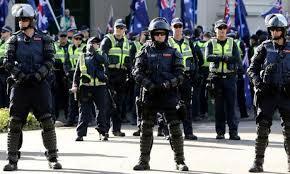
In her September 17 speech to parliament, the Attorney General of the Australian state of Victoria, Jill Hennessy, explained various provisions of the COVID-19 Omnibus (Emergency Measures) and Other Acts Amendment Bill.  Of most interest was the proposal that would dramatically inflate the scope of public health power in ostensibly preventing a spread of COVID-19.  “The broader class of persons who may be appointed as authorised officers may include public sector employees from Victoria and other jurisdictions.  For example, health services staff, WorkSafe officers such as Inspectors, Victoria Police members and Protective Service Officers.”

The formulation seemed an odd one: health services staff as designated officers to halt transmission perhaps, but unqualified members of the Victoria Police, along with Protective Service Officers?  The Secretary of the Department of Health and Human Services was the proposed appointer; the appointees (“authorised officers”) would be anybody deemed to possess appropriate skills, attributes or experience.  Such elevated, muscularly vested officers would have the power to detain anyone who has tested positive for COVID-19, or anyone who had been in close contact with a positive case, for a period “reasonably necessary to eliminate a serious risk to public health,” provided it was “reasonably believed”  they would fail to comply with a direction of self-quarantine.

Hennessy evaded the severe implications of such a broadly worded provision, arguing for convenience and efficiency, the two traditional hallmarks of the authoritarian mentality. The appointment power would focus upon “individuals with particular attributes, such as connection to particular communities”.  “Contact tracing” would be able to take place in “a culturally safe manner.”  As for any oversight limitations, these appointments would be subject to a “specific instrument” outlining specific authority and limitations authorised by the Secretary and Chief Health Officer.

This was something that did not escape the notice of some members of the Victorian Parliament.  Greens MP Tim Read noted how the Omnibus Bill, in that draft form, gave police, protective services officers and private security guards powers to unilaterally determine who constituted a high risk with little regard to medical expertise.  “Currently only public servants with the relevant skills and experience can make that decision”.  Enforcing directions was a separate function of law enforcement.  “So the bill would allow police to both make health directions on individuals and then to enforce them.”

The Omnibus Bill also saw various legal advocates spring into action. Michael Borsky QC went for understatement in claiming that detaining someone for hypothetical future conduct was a “very unusual legal construct”.  The provision was “open to abuse”.  Nor did impress the legal heads at the Victorian Bar, where there was much head shaking.  The proposed criteria for appointing such officers was deemed too “broad and generic”.  Their lack of precision “potentially opened the door for those who are not trained as health professionals to be appointed ‘authorised officers’.”

Granting such individuals unilateral powers of detention against individuals not abiding by a public health direction was another point of concern. An officer’s “reasonable belief” was a “standard of validation” vast and subjective.  The Victorian Bar also suggested some measure of accountability: that decisions made by such authorised officers be “reviewed by the Chief Health Officer (or senior delegate) within a short, stipulated period (preferably not longer than 24 hours).”

The talents of Victorian policing have already been found wanting during one of the most extreme lockdown measures in the developed world.  Reem Mussa, humanitarian advisor on forced migration to Médicins Sans Frontièresremembered the terror caused by the appearance of five hundred police “on housing estates [in Melbourne], trapping residents inside with no coherent health strategy or plans to keep them safe, fed or with access to medication and essentials.”  23 confirmed cases of COVID-19 had been found on the estates in July.  Panic coursed through the various administrative arms of government.

In September, a very public display of policing mismanagement took place with the arrest of Ballarat resident Zoe Buhler, a pregnant mother apprehended in front of her children and husband in their home for a Facebook post inciting protest against the lockdown rules.  No police officer thought it necessary to explain the offence of incitement, nor accept her offer to remove the offending post.  It was such conduct that prompted Greg Barns of the Australian Lawyers Alliance to argue for limits on police powers when linked to pandemic controls.

The Police Accountability Project, based at the Flemington & Kensington Community Legal Centre in Melbourne, has also been alarmed by the aggressive, untutored policing formula pursued in the state.  “The policing we have seen in Victoria to date and the scale of the policing we have seen [on July 4] and today in Flemington & North Melbourne, has caused and continues to do harm.”

Over the course of the lockdown, the PAP project has noted ten concerns about how harsh Stage 4 restrictions have been enforced.  A few are worth noting.  Police, for instance, were ill trained to make complex assessments about exemptions requiring health expertise.  “Police ignored genuine health based exemptions and continually resorted to lock-down responses because it more closely aligned with their training.”  They had failed to comprehend the public health impacts of their work, and that most pressing of points that policing “undermines public health responses.”  The policing of curfews had been “applied in a discriminatory, abusive and harmful manner.”  With such a stunning resume of faults and blunders, it is a wonder how the drafters in the Attorney-General’s department took leave of their senses.

On October 8, the Victorian government quietly trimmed parts of the proposed bill dealing with detention.  Finding themselves in retreat, a flutter of qualifications were made.  “We have always said we would negotiate in good faith,” claimed a less than chastened Hennessy.  Giving little away, the Attorney-General claims to have made such amendments that will continue “to deliver the temporary, necessary changes we need to respond to the challenges the pandemic presents”.

According to Guardian Australia, the proposed table of changes will still preserve the power to appoint police and protective services officers as authorised officers, but with fewer powers.  They will still be able to exercise considerable discretion in, for instance, searching property without a warrant if “necessary for the purpose of investigation, eliminating or reducing the risk to public health”.  The daft dangers of making police and security personnel pseudo-health officers remain.

Saturday Matinee: Taking Liberties

“Taking Liberties” (2007) is a British documentary directed by Chris Atkins. Using a mix of animation, news footage and interviews, it examines how Labour has overreacted to the terror threat, using it as an excuse to weaken civil liberteis including the right to protest, right to freedom of speech, right to privacy, right not to be detained without charge, presumption of innocence until proven guilty, and protections against torture. In short, it’s a cinematic chronicle of the origin of the modern British surveillance state under the Blair ministry.

Eyewitness to the Agony of Julian Assange

By Timothy Erik Strom and John Pilger

Source: CounterPunch

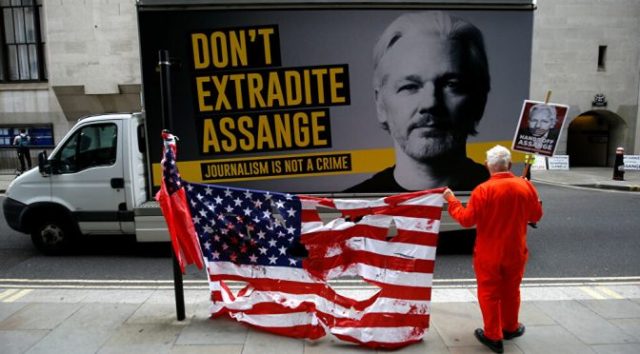
John Pilger has watched Julian Assange’s extradition trial from the public gallery at London’s Old Bailey. He spoke with Timothy Erik Ström of Arena, Australia:

Q:  Having watched Julian Assange’s trial firsthand, can you describe the prevailing atmosphere in the court?

The prevailing atmosphere has been shocking. I say that without hesitation; I have sat in many courts and seldom known such a corruption of due process; this is due revenge. Putting aside the ritual associated with ‘British justice’, at times it has been evocative of a Stalinist show trial. One difference is that in the show trials, the defendant stood in the court proper. In the Assange trial, the defendant was caged behind thick glass, and had to crawl on his knees to a slit in the glass, overseen by his guard, to make contact with his lawyers. His message, whispered barely audibly through face masks, WAS then passed by post-it the length of the court to where his barristers were arguing the case against his extradition to an American hellhole.

Consider this daily routine of Julian Assange, an Australian on trial for truth-telling journalism. He was woken at five o’clock in his cell at Belmarsh prison in the bleak southern sprawl of London. The first time I saw Julian in Belmarsh, having passed through half an hour of ‘security’ checks, including a dog’s snout in my rear, I found a painfully thin figure sitting alone wearing a yellow armband. He had lost more than 10 kilos in a matter of months; his arms had no muscle. His first words were: ‘I think I am losing my mind’.

I tried to assure him he wasn’t. His resilience and courage are formidable, but there is a limit. That was more than a year ago. In the past three weeks, in the pre-dawn, he was strip-searched, shackled, and prepared for transport to the Central Criminal Court, the Old Bailey, in a truck that his partner, Stella Moris, described as an upended coffin. It  had one small window; he had to stand precariously to look out. The truck and its guards were operated by Serco, one of many politically connected companies that run much of Boris Johnson’s Britain.

The journey to the Old Bailey took at least an hour and a half. That’s a minimum of three hours being jolted through snail-like traffic every day. He was led into his narrow cage at the back of the court, then look up, blinking, trying to make out faces in the public gallery through the reflection of the glass. He saw the courtly figure of his dad, John Shipton, and me, and our fists went up. Through the glass, he reached out to touch fingers with Stella, who is a lawyer and seated in the body of the court.

We were here for the ultimate of what the philosopher Guy Debord called The Society of the Spectacle: a man fighting for his life. Yet his crime is to have performed an epic public service: revealing that which we have a right to know: the lies of our governments and the crimes they commit in our name. His creation of WikiLeaks and its failsafe protection of sources revolutionised journalism, restoring it to the vision of its idealists. Edmund Burke’s notion of free journalism as a fourth estate is now a fifth estate that shines a light on those who diminish the very meaning of democracy with their criminal secrecy. That’s why his punishment is so extreme.

The sheer bias in the courts I have sat in this year and last year, with Julian in the dock, blight any notion of British justice. When thuggish police dragged him from his asylum in the Ecuadorean embassy—look closely at the photo and you’ll see he is clutching a Gore Vidal book; Assange has a political humour similar to Vidal’s—a judge gave him an outrageous 50-week sentence in a maximum-security prison for mere bail infringement.

For months, he was denied exercise and held in solitary confinement disguised as ‘heath care’. He once told me he strode the length of his cell, back and forth, back and forth, for his own half-marathon. In the next cell, the occupant screamed through the night. At first he was denied his reading glasses, left behind in the embassy brutality. He was denied the legal documents with which to prepare his case, and access to the prison library and the use of a basic laptop. Books sent to him by a friend, the journalist Charles Glass, himself a survivor of hostage-taking in Beirut, were returned. He could not call his American lawyers. He has been constantly medicated by the prison authorities. When I asked him what they were giving him, he couldn’t say. The governor of Belmarsh has been awarded the Order of the British Empire.

At the Old Bailey, one of the expert medical witnesses, Dr Kate Humphrey, a clinical neuropsychologist at Imperial College, London, described the damage: Julian’s intellect had gone from ‘in the superior, or more likely very superior range’ to ‘significantly below’ this optimal level, to the point where he was struggling to absorb information and ‘perform in the low average range’.

This is what the United Nations Special Rapporteur on Torture, Professor Nils Melzer, calls ‘psychological torture’, the result of a gang-like ‘mobbing’ by governments and their media shills. Some of the expert medical evidence is so shocking I have no intention of repeating it here. Suffice to say that Assange is diagnosed with autism and Asperger’s syndrome and, according to Professor Michael Kopelman, one of the world’s leading neuropsychiatrists, he suffers from ‘suicidal preoccupations’ and is likely to find a way to take his life if he is extradited to America.

James Lewis QC, America’s British prosecutor, spent the best part of his cross-examination of Professor Kopelman dismissing mental illness and its dangers as ‘malingering’. I have never heard in a modern setting such a primitive view of human frailty and vulnerability.

My own view is that if Assange is freed, he is likely to recover a substantial part of his life. He has a loving partner, devoted friends and allies and the innate strength of a principled political prisoner. He also has a wicked sense of humour.

But that is a long way off. The moments of collusion between the judge— a Gothic-looking magistrate called Vanessa Baraitser, about whom little is known—and the prosecution acting for the Trump regime have been brazen. Until the last few days, defence arguments have been routinely dismissed. The lead prosecutor, James Lewis QC, ex SAS and currently Chief Justice of the Falklands, by and large gets what he wants, notably up to four hours to denigrate expert witnesses, while the defence’s examination is guillotined at half an hour. I have no doubt, had there been a jury, his freedom would be assured.

The dissident artist Ai Weiwei came to join us one morning in the public gallery. He noted that in China the judge’s decision would already have been made. This caused some dark ironic amusement. My companion in the gallery, the astute diarist and former British ambassador Craig Murray wrote:

I fear that all over London a very hard rain is now falling on those who for a lifetime have worked within institutions of liberal democracy that at least broadly and usually used to operate within the governance of their own professed principles. It has been clear to me from Day 1 that I am watching a charade unfold. It is not in the least a shock to me that Baraitser does not think anything beyond the written opening arguments has any effect. I have again and again reported to you that, where rulings have to be made, she has brought them into court pre-written, before hearing the arguments before her.

I strongly expect the final decision was made in this case even before opening arguments were received.

The plan of the US Government throughout has been to limit the information available to the public and limit the effective access to a wider public of what information is available. Thus we have seen the extreme restrictions on both physical and video access. A complicit mainstream media has ensured those of us who know what is happening are very few in the wider population.

There are few records of the proceedings. They are: Craig Murray’s personal blog, Binoy Kampmark on CounterPunch, Joe Lauria’s live reporting on Consortium News and the World Socialist Website. American journalist Kevin Gosztola’s blog, Shadowproof, funded mostly by himself, has reported more of the trial than the major US press and TV, including CNN, combined.

In Australia, Assange’s homeland, the ‘coverage’ follows a familiar formula set overseas. The London correspondent of the Sydney Morning Herald, Latika Bourke, wrote this recently:

The court heard Assange became depressed during the seven years he spent in the Ecuadorian embassy where he sought political asylum to escape extradition to Sweden to answer rape and sexual assault charges.

There were no ‘rape and sexual assault charges’ in Sweden. Bourke’s lazy falsehood is not uncommon. If the Assange trial is the political trial of the century, as I believe it is, its outcome will not only seal the fate of a journalist for doing his job but intimidate the very principles of free journalism and free speech. The absence of serious mainstream reporting of the proceedings is, at the very least, self-destructive. Journalists should ask: who is next?

How shaming it all is. A decade ago, the Guardian exploited Assange’s work, claimed its profit and prizes as well as a lucrative Hollywood deal, then turned on him with venom. Throughout the Old Bailey trial, two names have been cited by the prosecution, the Guardian’s David Leigh, now retired as ‘investigations editor’ and Luke Harding, the Russiaphobe and author of a fictional Guardian ‘scoop’ that claimed Trump adviser Paul Manafort and a group of Russians visited Assange in the Ecuadorean embassy. This never happened, and the Guardian has yet to apologise. The Harding and Leigh book on Assange—written behind their subject’s back—disclosed a secret password to a WikiLeaks file that Assange had entrusted to Leigh during the Guardian’s ‘partnership’. Why the defence has not called this pair is difficult to understand.

Assange is quoted in their book declaring during a dinner at a London restaurant that he didn’t care if informants named in the leaks were harmed. Neither Harding nor Leigh was at the dinner. John Goetz, an investigations reporter with Der Spiegel, was at the dinner and testified that Assange said nothing of the kind. Incredibly, Judge Baraitser stopped Goetz actually saying this in court.

However, the defence has succeeded in demonstrating the extent to which Assange sought to protect and redact names in the files released by WikiLeaks and that no credible evidence existed of individuals harmed by the leaks. The great whistle-blower Daniel Ellsberg said that Assange had personally redacted 15,000 files. The renowned New Zealand investigative journalist Nicky Hager, who worked with Assange on the Afghanistan and Iraq war leaks, described how Assange took ‘extraordinary precautions in redacting names of informants’.

Q: What are the implications of this trial’s verdict for journalism more broadly—is it an omen of things to come?

The ‘Assange effect’ is already being felt across the world. If they displease the regime in Washington, investigative journalists are liable to prosecution under the 1917 US Espionage Act; the precedent is stark. It doesn’t matter where you are. For Washington, other people’s nationality and sovereignty rarely mattered; now it does not exist. Britain has effectively surrendered its jurisdiction to Trump’s corrupt Department of Justice. In Australia, a National Security Information Act promises Kafkaesque trials for transgressors. The Australian Broadcasting Corporation has been raided by police and journalists’ computers taken away. The government has given unprecedented powers to intelligence officials, making journalistic whistle-blowing almost impossible. Prime Minister Scott Morrison says Assange ‘must face the music’. The perfidious cruelty of his statement is reinforced by its banality.

‘Evil’, wrote Hannah Arendt, ‘comes from a failure to think. It defies thought for as soon as thought tries to engage itself with evil and examine the premises and principles from which it originates, it is frustrated because it finds nothing there. That is the banality of evil’.

Q: Having followed the story of WikiLeaks closely for a decade, how has this eyewitness experience shifted your understanding of what’s at stake with Assange’s trial?

I have long been a critic of journalism as an echo of unaccountable power and a champion of those who are beacons. So, for me, the arrival of WikiLeaks was exciting; I admired the way Assange regarded the public with respect, that he was prepared to share his work with the ‘mainstream’ but not join their collusive club. This, and naked jealousy, made him enemies among the overpaid and undertalented, insecure in their pretensions of independence and impartiality.

I admired the moral dimension to WikiLeaks. Assange was rarely asked about this, yet much of his remarkable energy comes from a powerful moral sense that governments and other vested interests should not operate behind walls of secrecy. He is a democrat. He explained this in one of our first interviews at my home in 2010.

What is at stake for the rest of us has long been at stake: freedom to call authority to account, freedom to challenge, to call out hypocrisy, to dissent. The difference today is that the world’s imperial power, the United States, has never been as unsure of its metastatic authority as it is today. Like a flailing rogue, it is spinning us towards a world war if we allow it. Little of this menace is reflected in the media.

WikiLeaks, on the other hand, has allowed us to glimpse a rampant imperial march through whole societies—think of the carnage in Iraq, Afghanistan, Libya, Syria, Yemen, to name a few, the dispossession of 37 million people and the deaths of 12 million men, women and children in the ‘war on terror’—most of it behind a façade of deception.

Julian Assange is a threat to these recurring horrors—that’s why he is being persecuted, why a court of law has become an instrument of oppression, why he ought to be our collective conscience: why we all should be the threat.

The judge’s decision will be known on the 4th of January.

Trump’s Murder of Qassem Soleimani: Why We Must Stand Up to the Christianity of Brutality.

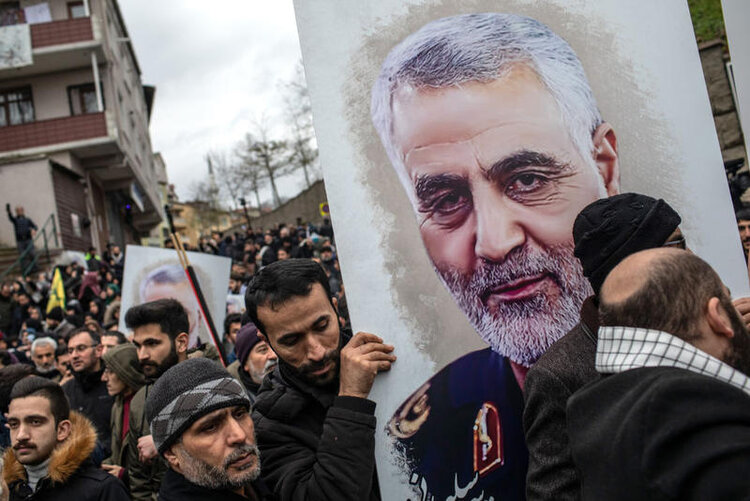
ISTANBUL, TURKEY – JANUARY 05: People hold posters showing the portrait of Iranian Revolutionary Guard Major General Qassem Soleimani and chant slogans during a protest outside the U.S. Consulate on January 05, 2020 in Istanbul, Turkey. Major General Qassem Soleimani, was killed by a U.S. drone strike outside the Baghdad Airport on January 3. Since the incident, tensions have risen across the Middle East. (Photo by Chris McGrath/Getty Images)

By Sander Hicks

Source: New York Megaphone

This is the investigation that prompted our publication to establish an online conference on Nonviolence, and the Legacy of Mahatma Gandhi, Oct. 2, 2020. It’s essential we understand how Pompeo and the GOP justify their violence in the name of Christianity. The future of nonviolence must stand apart from the “Christianity of Brutality.” That’s what Jesus would do.

Earlier this year, President Trump shocked the world by murdering a high-ranking Iranian government official. Pressured by Secretary Pompeo, Trump ordered the assassination of an Iranian general who enjoyed movie-star celebrity status in his home country, General Qassem Soleimani. The killing brought the world to the brink of a major new war. Among the many laws this act broke, it violated Iraqi sovereignty, as it took place in Iraq. It happened in the middle of the night on January 3rd, 2020, using an American MQ-6 Reaper drone.

Dexter Filkins, in the New Yorker, called the hit on Soleimani, “the most consequential act taken against the regime in Tehran in thirty years.” And that’s saying a lot, because the US has inflicted much suffering on Iran over time, from CIA coups, to pushing Iraq to kill a million Iranians in the “Iran-Iraq War,” to today’s harsh economic sanctions. Yet Iran has grown into an influential regional superpower able to stand toe-to-toe with US proxies, Israel and Saudi Arabia, to see through the hypocrisy and the posturing of the War on Terror.

Trump, earlier, wanted to re-open negotiations towards a new Nuclear Agreement with Iran. He was in contact with President Rhouhani. But killing the charismatic Soleimani shut down any chance of a new nuclear deal. Now the Iranians are free to develop their nuclear power capabilities, unhindered.

Trump was left to explain himself. How could the US President justify this attack?

Remember that one year ago, things were boiling over in Iraq/Iran. Various Iran-backed militias rioted in Baghdad and broke the windows at US consulates. An American contractor was killed and US officials feared another Benghazi, or a new Tehran-style Embassy hostage crisis like in 1979. The US Military and Trump responded by killing 25 Shi’a militia members. Pentagon top brass then offered killing Soleimani as an additional option but assumed Trump wouldn’t be so brash. That was like giving a pyromaniac teenager a set of matches and five gallons of gasoline.

Killing a foreign government official is illegal, according to US policy and international law. Trump, at first, asserted Soleimani had plans to target four U.S. embassies, a claim that his own Defense Secretary Esper was not able to substantiate.  It “seems to be totally made up,” said Congressman Justin Amash from Michigan.

On Twitter, Trump tried to give the last word by claiming that the US acted in self-defense because Soleimani posed an “imminent threat.” But Trump seemed unconvinced himself, as he tweeted that it “doesn’t really matter because of his horrible past.”

Ah, but it does matter.

Killing people is a crime, you see, and a lot of people think so. The US has written laws that restrain this kind of thing from coming out of the White House, as it does so much damage to the U.S.’s moral standing in the world. (If capitalism and imperialism haven’t mangled that reputation forever.)

Former DA Vincent Bugliosi, in his book The Prosecution of George W. Bush for Murder, showed that presidents could well go to prison for the extrajudicial killings and illegal wars they engage in. The Hague Convention of 1907 and the UN ban the killing of a foreign government official, outside of wartime. Even Thomas Jefferson, in a letter to James Madison, denounced “assassination, poison, perjury” as brutal statecraft, “held in just horror.”

In the wake of the killings of JFK and MLK and the targeted domestic killings of COINTEL-PRO, the US Congress convened the Church Committee and the House Select Committee on Assassinations in the mid and late ’70s. President Gerald Ford responded by issuing an executive order that has since become standard US policy. No US government employee “shall engage in, or conspire to engage in, political assassination.”

President Reagan affirmed and expanded this policy against assassination. But back at the Trump White House, the pressure to kill Soleimani came from evangelical Christian Secretary of State Mike Pompeo. CNN reported that White House insiders said Pompeo “was the one who made the case to take out Soleimani, it was him absolutely.” Pompeo also made a claim that Soleimani posed an “imminent threat,” but later backed off that claim, and instead explained that Soleimani had the “blood of American [soldiers]” on his hands from working with the Iraqi resistance.

At a loss for legal justification, Vice President Mike Pence stepped up with a “Hail Mary” kind of throw. He asserted that there may be a connection between Soleimani and “the 12 9/11 attackers.” (But Mike, there were 19 hijackers on 9/11.) Students of history will note that the NeoCon Right still invokes 9/11 when it’s desperate to justify a crime. 9/11 still has that power 20 years later. It’s like a myth that is eternal. If we allow it.


Who Was Qassem Soleimani

Millions of Iranians poured out into the streets for a three-day funeral in all top Iranian cities and towns. Hamed Ghashgavi in Tehran, told me, “General Soleimani, we know he was popular but none of us thought millions will mourn his death!”

Qassem Soleimani “had a command presence,” CIA Veteran John Maguire said. “He walked into the room and you could feel him.” Maguire had negotiated with Soleimani in Baghdad in 2004.

A native of the more tribal Southern Iranian province of Kerman, Soleimani was born in 1957. He fought at the front lines of the Iran/Iraq war, that nine-year slog fought with chemical weapon assaults, compliments of Iraq. The grinding agony, often in trenches, was compared to World War I. Inside Iran, the conflict is known as the “War of Holy Defense.” But the Reagan White House viewed the Iran/Iraq War as a chance to get aggressive and retaliate for the late 70’s hostage crisis. The US supported Iran‘s biggest rival, Saddam Hussein, as he invaded Iran. The USA gave Hussein several billions in economic aid and military training to help attack the nascent Islamic Republic.

The experience of Iraq invading Iran was deeply formative on young Soleimani, who lost many friends in the war. But Soleimani there became a legend known as “The Goat Burglar” for his talents at slipping behind enemy lines and coming back with live goats to feed his platoon. He regularly volunteered to fight at the front lines. He had a deep camaraderie with his fellows. Before battle, he would kiss each of them on the forehead and pray with them to be martyred.

From the end of the War, to 1997, Soleimani laid low, he didn’t get on well with President Rafsanjanhi. But sooner after that period, he rose to lead the elite “Quds” aka “Jerusalem” Force division of the Iranian Revolutionary Guard. His power grew, as did his closeness with Iranian Supreme Leader Ayatollah Khamenei. Gen. Petreaus once recalled that Soleimani told him, “You should know that I, Qassem Soleimani, control the policy for Iran with respect to Iraq, Lebanon, Gaza and Afghanistan.”

Soleimani as US Ally Against Terrorism

In the corporate US media, Soleimani’s death was brushed off. He was expendable. A “terrorist.”

But a deeper look past the demonization shows an interesting pattern. Soleimani had a history of working with the Americans. Every time he worked with the USA, it went well for the Americans. In the end, the USA just stabbed him in the back.

When 9/11 happened, the Bush/Cheney regime decided to target Afghanistan and its Taliban regime. Qassem Soleimani saw an opportunity to reduce terrorism in the land immediately to the east of Iran. Soleimani worked with the US attacking forces. He and Iranian diplomats shared intelligence with the US on Taliban positions. The Americans informed the Iranians about an al-Qa`ida agent hiding out in Mashhad in eastern Iran.  Soleimani was, “pleased with [the] cooperation,” and spoke at this time that “maybe it’s time to rethink our relationship with the Americans.”

It was not to be.

Bush and Cheney bowed to pressure from their Zionist wing and slapped the Iranians in the face with the “Axis of Evil” speech. It has been a long-standing policy of Israel to block any rapprochement between the US and Iran. Bush named Iran as a leading proponent of terrorism, despite its recent work against terrorism, with the Americans in Afghanistan. Soleimani felt betrayed.

Cut to 2014, and the US is back asking for Iran’s help, when US coalition forces are losing in Iraq. The jihadists were on the offensive, taking territory in Iraq, including the major city of Mosul. Iraq’s leading Shia cleric Ali al-Sistani, issued a call-to-arms to fight the Sunni extremists. Young Shia men volunteered by the thousands. Soleimani and his elite Quds Force helped organize them.

For the next three years, until 2017, Iran helped turn the tide there against ISIS and Al Nusra. On a number of occasions, Americans were hitting Islamic State targets from the air while General Soleimani directed ground forces against the militants.

At the same time, the US, Saudi Arabia, and Israel were working against Soleimani and Iran in Syria. The US had decided to work against the Ba’ath Arab Socialist, Bashar Assad, who sometimes enjoyed the support of Russia and Iran.

When Rep. Tulsi Gabbard (D-HI) flew to Syria in 2017, it was to better understand the Syrian civil war. She met Assad and top Syrian officials. In the street, Syrian citizens begged her to stop the US funding of ISIS. She returned to Congress and proposed HR 608, the Stop Arming Terrorists Act. Because at this point, the US was fighting ISIS in Iraq, but working with ISIS in Syria. On the ground in Tehran, in 2017 at the New Horizon conference, when I asked Saudis, Arabs, and other locals from the region, who is funding ISIS? People uniformly named either Saudi Arabia or the USA.

Pop Quiz. Name the only country that has consistently opposed the Islamic State and al-Qaeda?

The Answer? No, it’s not the USA. It’s Iran.

The History of the US/Iran Relationship: 

A Crash Course from 1953 to the Present

Iran is a regional superpower in a kind of local “cold war” against Saudi Arabia and Israel. There are a set of facts that no one should do without when trying to figure out the real history of the Iran/US relationship.  A deeper understanding of this history could begin to lay the groundwork to re-establish diplomatic ties, which have been suspended since the Islamic Revolution of 1979.

In 2000, even Madeline Albright recognized that the CIA’s brutal 1953 coup overthrew the democratically-elected progressive Iranian Prime Minister Mohammad Mossadegh, and replaced him with the fickle Iranian king, Reza Shah. With their SAVAK secret police, the Shahs repressed dissidents and communists, and so Islam became the legal method of resistance. When President Jimmy Carter allowed the ailing Shah to travel to the USA to receive healthcare, Ayatollah Khomeini called for a general strike in Iran and flew back to Iran from his exile in France. 98% of the population voted to replace the monarchy with the Islamic Republic, in a referendum vote.

Because of the US’s support of the Shah, the Islamic Revolution resulted in an unplanned take-over of the US embassy. 53 US hostages were kept for 444 days until they were released on the day of Ronald Reagan’s inauguration.

During the Iran/Iraq War, it’s worth noting that young Qassem Soleimani met the young Mahmoud Ahmadinejad, when both were fighting the Iraqi invasion. They would have a long, complicated relationship, as Adhmadinejad would go on to become elected President of Iran, from 2005 to 2013. His politics were “hardliner” compared to his successor, the more moderate Rouhani. Ahmadinejad may be most famous for his 2010 speech in front of the United Nations, in which he questioned the official story about 9/11.

Regarding 9/11/01, Iran was not involved, but US Allies were. The USA’s CIA Counterintelligence Database reports that two Mossad agents were among five Israelis arrested by NJ Police, on 9/11/01, for celebrating the attacks publicly, as they watched the World Trade Center burn. Held in custody for two months by FBI, Bush officials intervened and all five were released to go back to Israel. On Israeli television, they were celebrated as heroes.

15 of the 19 9/11 hijackers were Saudi, including two with ties to Saudi intelligence (Al Mihdhar and Al Hamzi). When Congress’s suppressed “28 Pages” of its own 9/11 Report were released in 2016, they documented Saudi funding of the 19 hijackers, from none other than US Ambassador from Saudi Arabia,  Prince Bandar bin Sultan (aka “Bandar Bush”). But even Bandar’s many appearances in the suppressed “28 Pages” have yet to prompt a grand jury investigation in US courts.

Later that month, in September 2001, General Wesley Clark, reported that a senior general inside the Pentagon told him, “Here’s the paper from the Office of the Secretary of Defense [Rumsfeld] outlining the strategy. We’re going to take out seven countries in five years.’ And he named them…ending with Iran.”

The Iraq War officially started in 2003 and phase one didn’t end until 2011. Similar to the 9/11 official story, the premise for the Iraq War was a loose set of assumptions and insinuations, not hard facts or evidence of Saddam Hussein’s weapons of mass destruction. Hussein’s overthrow and execution was another targeted killing on a grander scale, similar to that of Soleimani. The Bush/Cheney “War on Terror” was a colossal waste of money, even by the libertarian think tank Cato Institute. “A recent study…puts the cost of the War on Terror at roughly $5 trillion — a truly astonishing number. Even if one believes American efforts have made the nation marginally safer, the United States could have achieved far greater improvements in safety and security at far less cost through other means.”

In 2007, German news magazine Die Spiegel leaked that Vice President Dick Cheney had a secret plan to invade Iran next.

Barack Obama was elected as a symbol of hope and change, but his pick of Hillary Clinton as Secretary of State was tragic for Iran. Hillary Clinton removed the Iranian terrorist group MEK from the State Department’s “Terrorism Watch List” in 2012. The media crowed that the lobbyists had done it again, as MEK represents big money ex-patriate Iranians who would like to see violent regime change in Iran. MEK was once a bizarre culty Islamic splinter group, banished to Albania, and hated in Iran for backing Iraq in the Iran/Iraq War. But money changes everything, and now with lavish funding, these days the MEK throws huge gala events in DC and NYC and pays Rudy Giuliani and John Bolton to come speak.

After President Barack Obama jettisoned Hillary Clinton as Secretary of State, he did some ground-breaking work by working with moderate President Rouhani and signing the “Iran Nuclear Deal,” the JCPOA in 2015.

In 2017, with Trump in Office, Defense Secretary Jim Mattis and others routinely ignored the Trump White House’s multiple calls to pressure Iran militarily. Their belief was that Syria’s Assad had effectively won the Syrian civil war, thanks to Iran and Russia, and now the war on ISIS took priority. Mattis quit at the end of 2018 when Trump demanded US withdrawal from Syria.

In 2018, former Exxon CEO Rex Tillerson quit as Secretary of State, and Mike Pompeo succeeded him. Pompeo lost no time in focussing a target on his longtime nemesis, Qassem Soleimani. It started in April of 2019, with the shocking designation of Iran’s entire Revolutionary Guard (IRGC) as a “terrorist organization.” According to The Iran Agenda book by Reuters reporter Reese Erlich, the IRGC is a huge economic entity in Iran, and it controls about 10% of the entire Iranian economy. So declaring IRGC a terrorist organization would be like declaring Amazon a terrorist organization in the US.

But there were more than words in the declaration. The knives were coming out. “Bolton and Pompeo knew that that designation opened up the targeting aperture,” one former senior Trump administration official said.


War Powers

In 1973, Congress passed the War Powers Resolution. It requires the President to report to Congress whenever armed forces are introduced “into hostilities or into situations where imminent involvement in hostilities is clearly indicated,” and to terminate any hostilities after 60 days unless authorized by Congress.

But since 1973, Congress has done little to reclaim its constitutional responsibility to control the war machine. Professor Jack Goldsmith points out, “Our country has, quite self-consciously, given one person, the President, an enormous sprawling military and enormous discretion to use it in ways that can easily lead to a massive war.”

If there’s any one issue that may someday inspire a US Constitutional Convention, it may be the long history the USA has had with a “unitary executive” who abuses their powers to wage undeclared wars on smaller, weaker nations. Our system is running contrary to the spirit and the letter of the US Constitution. What happened in the Soleimani case is more than just the murder of one man. It shows that our current class of leadership, from Clinton to Trump, is so in love with violence, it crosses a line into contempt for the Constitution. The love of war is all.

What could possess their souls?


The Christianity of Brutality

The flaws of the American brand of evangelical Christianity led directly to Soleimani’s fiery death with nine others. The dominant religion in America birthed a bloody global trauma that caused the whole planet to smell the stench of World War III. However, any student of the New Testament will notice that Jesus actually stood against the nationalism and the exclusionary practices of the Jewish leadership. He called the Pharisees and Scribes, “vipers” and even worse, “lawyers.”

Jesus’s pivotal lesson about the Good Samaritan exposes the hypocrisy of the “purity” of the High Priests. They were so obsessed with purity, they wouldn’t help a man beaten up in the street. Their religion blinded them to the basic humanity in all of us. At a time of crisis, when we need something to unite us, religion could reveal an inner light within us all. The Good Samaritan story holds up the forgotten and hated people of our day.  The one who is hated most by society turns out to have the most heart. The outsider, the Samaritan ignores all the codes of the day and stops to care for the crushed and bloodied man. That’s the path. Actions of compassion and healing are the true way, not a religion of showiness, prestige, and power.

Mike Pompeo and the neoConservative Christians are super Pro-Israel, because their Christianity is based in the Old Testament, where God is oftentimes a violent, nationalistic force who favors his “Chosen People” in their many wars.  Pompeo has compared Trump to King Cyrus, and likes to dwell on the Book of Esther, in which the Jewish people commit genocide on the Iranians/Persians, killing over 5,000 in one fell swoop. (An event celebrated every year with the Jewish feast of Purim.)

The Old Testament also has eternal wisdom, great laws, and lessons in it, like “Thou Shalt Not Kill” from the Ten Commandments. The Wisdom literature, such as Psalms and Proverbs, show the universal conception of God, evolving into a more compassionate, loving vision over time. But to rely on the Old Testament as a true book of history is shaky ground. To base US Foreign Policy on it is ahistorical. Most of the Old Testament is war stories, in which genocide and exclusion are held up as ideals. A little-known fact is that some early Christians didn’t at first want to include the Old Testament in their Bible. They felt that the teachings of Christ were complete: be humble, be of service, make your life about truth, integrity, and nonviolence. These were so much more substantial than the old books, which had led directly to the superficial posturing of the Pharisees, and the “Simple Way” resistance of Jesus of Nazareth.

It seems that with the killing of Soleimani, something has hijacked the spirituality of a man like Mike Pompeo. He became a “born-again Christian” inside the super-powered pressure-cooker of West Point US Military Academy. It’s like someone only gave him half the story. The American right-wing wants the righteousness of religion without doing the real work of Jesus’s core command, “Love your enemies, and pray for those who persecute you.”

The story of the New Testament is really this: a young, passionate, former carpenter from the sticks, Jesus of Nazareth, picks up the oral traditions of  a “street rabbi.” Able to quote the prophets, see people’s problems, and inspire people to change, he becomes a traveling street preacher, able to talk about the love of God in a radical new way. He challenges the aristocracy of the high priests and denounces their rigidity and formalism. He gathers a wide range of people “from below.” He teaches and heals among the peasant and working classes (without excluding Roman soldiers). Drawing on the Wisdom literature, he expands and radicalizes his message, in a time in which occupied Palestine was seeking ways to resist the violence of the Roman Empire.  Influenced by the Zealots, and tempted by the lure of political power, Jesus ultimately rejected that path. He did consider it but rejected driving Rome out of Palestine with a sword. He even welcomed Pharisees at his gatherings and teaching sessions. His challenge to “love our enemies” was really a challenge to see that there is a light within all of us, including Americans, Israelis, and Iranians, and that it’s a common love of the truth. The historical Jesus never endorses killing people. He says we should “turn the other cheek” rather than retaliate with violence.

Essentially we have here an avatar, one of history’s most dynamic and radical figures, revered today in both Christianity, Buddhism, and Islam, because he opened up a new space of what is possible for humanity: living in a place of dialogue, a love for the Word, sharing, truth, eating together, healing each other, reveling in our common humanity, and working out problems without violence. That is the space of God.

The violent Christianity of Mike Pompeo feels about as authentic as his boss, Donald Trump, wielding a Bible like a weapon, as a vague warning to protestors and radicals fed up with racism and police brutality.

They need to look deeper, because 2000 years ago, Jesus would have been among those protestors. According to the book Rabbi Jesus by Bruce Chilton, when Jesus cleared the Temple in Jerusalem, he went in with an affinity group of 50-100 followers. It was an “Occupy the Temple” action, in which Jesus stood up to capitalism: the money-changers, animal-sellers, and merchants who had turned religion into a business. Jesus and crew literally pushed over the tables and set the doves free. It clarified Jesus’s work and became one of his last public acts of direct action.

In their zeal to make Christianity about violence and Old Testament rivalries against Iran, Pompeo and Trump totally miss the revolutionary spirituality of compassion for all beings and the essentially anti-capitalist message of Jesus. I am reminded of the young, rich kid who comes up to Jesus in the New Testament and says, “Hey, I have followed all the rules, but nothing is working for me!” So Jesus says, You must give up all your wealth, your power, your status, all you cling to, and get on the road with us, follow this path, be inside our movement, follow me. But the kid couldn’t do it because he was too attached: to luxury, to his self-concept, to his fragile and tender illusions, to a status quo of empire, class, and power.

It’s like that kid today is Mike Pompeo, and all the American Christians who do what he does. They want to follow Jesus, but can’t escape their formalism, their illusions, they can’t give up the habits of easy nationalism, their remote-control high tech violence, their sloganeering and stereotyping. Jesus says something truly radical – it’s not too late to turn around – give up all you have and follow me.

Instead the modern day Pharisees have been sending the FBI out to harass American activists.


Summer of 2019: FBI at My Front Door

I have been researching this article for six weeks, but I began to write the first draft on August 6, 2020. That date is actually the one year anniversary of the FBI visiting my home to stifle my international travel plans to advocate for peace with Iran. It seems that calling for peace has become something of a crime, in the time of Trump and Pompeo.

The FBI also visited such US dissidents as former Pentagon official Michael Malouf, and former US-Saudi diplomatic attaché Michael Springmann, and about fifteen others. What we all had in common was that we had previously attended the Iranian’s New Horizon conference, where dissidents from the USA and other countries were able to gather, share views, network, and brainstorm solutions to the problems of aggression, imperialism, and world peace.

When the FBI was at my house, they handed over a copy of a recent indictment of an American who had defected to Iran. But this situation had nothing to do with the New Horizon conference. The US Treasury, however, had sent the FBI to enforce their recent harsh economic sanctions against New Horizon. Four Iranians from New Horizon were sanctioned for hosting this  international think tank, a kind of “Davos of the Global South.”

The FBI home visit was a gross violation of my core rights to free speech, religion, and the right to peaceably assemble and tackle grievances. The Bill of Rights took a backseat to an obsession with killing. We had been planning to attend the next New Horizon in Beirut that Fall.

This was certainly a nadir for US activists, but shortly thereafter, there was a bit of a thaw, when in September 2019, President Trump fired his White House war-monger, John Bolton.  And then, the next month after that, the “mastermind” of the Trump White Houses’s sanctions on Iran, Sigal Pearl-Mandelker, resigned after being harassed by peace activists at a public event.


Against the Balance of Power, Towards the Balance of Peace

President Woodrow Wilson, once said, “Peace cannot…rest upon an armed balance of power.” Lasting peace, he maintained, required “not a balance of power, but a community of power; not organized rivalries, but an organized common peace.”

So instead of old religions, old rivalries, and old prejudices being given all of the power, what if the world could coalesce around a new vision, in which political assassination was banned, and just not required, because the balance of power was no longer based on violence.

The next step would be to map out a path to a place where we as one people on Earth can declare that war itself is simply out of date. How can we get to a place where we have outgrown it? The answer is to grow. We are close to being capable of global nonviolence. Gandhi said that the roots of nonviolence were already in the heart of all the world’s great religions.

The words of President Wilson ring true, “There is only one power to put behind the liberation of mankind, and that is…the power of the united moral forces of the world.”

“The power of the united moral forces of the world” is a power that peoples of all religions, and no religions, could get behind, support, and live.

Practical Proposals for Global Social Change

It’s time for a Truth and Reconciliation Conference around the murder of Qassem Soleimani. It will be a way to start to talk about the truth behind the “balance of power” and begin the healing among the peoples of the world.

So that’s why, this article is not just some investigative journalism about a criminal act, I have created a way for you to get involved, in an international dialogue, with Iranian and American activists, on Zoon, this Friday, on October 2, the International Day of NonViolence. From 4 PM to 9 PM, we will have political and spiritual speakers from Iran, and the USA, and other countries.

We will hold a global Truth and Reconciliation Conference, to talk about a global cultural shift, to change the entire system. We have a great bunch of speakers: everyone from Lt. Col. (Ret.) Lawrence Wilkerson, to radical priest Fr. John Dear, to Iranian film-maker Nader Talebzedeh.

Qassem Soleimani did not die in vain. He wanted to be a martyr. Now, let us work to have his death help to transform the world.

 

Come Celebrate Peace and Nonviolence, Celebrate Gandhi’s Birthday.

4PM – 9 PM Oct. 2 on Zoom. More Info:

https://www.newyorkmegaphone.com/oct-2-gandhi-nonviolence-day

The author of the article above wishes to acknowledge Porsché Mysticque Steele for her editorial work, and thanks also to C. Maupin for advice.

Social media fact-checking, brought to you by the Deep State

By Daniel Espinoza

Source: Off-Guardian

Almost four years of mainstream media hype about “fake news” and “Russian meddling” propaganda has brought to the world exactly what they were intended to bring: an effective mechanism for internet and social media censorship.

In the center of this move toward global discourse control is an organization called the Poynter Institute, home to the International Fact-Checking Network (IFCN), a body created to coordinate, promote and train dozens of fact-checkers from around the world.

The IFCN and many non-profits working in the same field are funded by the big capitalist “philanthropists” of our era, like George Soros, Pierre Omidyar, Bill Gates, and even the Koch brothers…but also by the US Department of State and a shady “aid” – in reality, political meddling – organization, the National Endowment for Democracy (NED), historically linked to the CIA and regime change operations.

Google and Facebook – itself tied to the warmongering Atlantic Council and its “Digital Forensic Research Lab” – are also associated with Poynter, by funding and partnerships to fight “fake news” (including the development of an “automated” fact-checking program for the upcoming 2020).

The marriage between Poynter’s IFCN, politically inclined billionaires, the State Department – and the whitewashed public face of the Deep State – suggest that the institute is probably working in what Nelson Poynter, its founder, worked on for a key part of his life: propaganda and censorship for the US government.

Although this information is not available in Nelson Poynter’s Wikipedia profile or in poynter.org’s history page, his work for a government propaganda agency is not exactly a secret. A resemblance of his wife, Henrietta, also at the institute’s website, quickly passes over the fact that Poynter did work for the Office of War Information (OWI) during WWII, but his specific role as a government censor and propagandist is never mentioned.

Nevertheless, Hollywood Goes to War, a book written in 1987 by Clayton R. Koppes and Gregory D. Black, is one of the many historical sources that tell the details of Poynter’s job.

FILM CENSORSHIP AND THE BIRTH OF THE VOICE OF AMERICA

Nelson Poynter was recruited by the OWI with his wife Henrietta, who worked as assistant program chief under Elmer Davis, head of the agency. She came up with the name for the “Voice of America”, the famous psychological war operation of the US government.

The radio project was established in February 1942 and soon grew to be the most important US overt propaganda arm of the Cold War.

Unlike his wife’s job, Poynter’s regarded not radio – or his previous line of work, journalism – but movies. In 1942, the OWI’s Bureau of Motion Pictures (BMP) set up office in Hollywood, naming Poynter as its head. His mission was to act as liaison between the agency and the owners of Warner Brothers, Twentieth Century Fox, MGM and the other big studio names.

Elmer Davis, head of the OWI, regarded films as:

The easiest way to inject a propaganda idea into most people’s minds”, in part, because they “do not realize that they are being propagandized”.

Davis was a career journalist who worked for ten years for the New York Times before being recruited by the government. Franklin D. Roosevelt’s White House needed the film industry to incorporate specific themes in their movies, ideas that promoted the notion of WWII as being a “popular” war, fought to defend his Four Freedoms.

But at first, Poynter’s office in Hollywood had little veto power over what the industry could produce – for the entire Western world – limiting itself to suggest cosmetic changes here and there, or the toning down of reactionary and racist imagery and language, an inherent feature in the Hollywood of that era.

The heads of the studios were in fairly good terms with the US Army, historically close to the industry. Its owners were happy to portrait US wars abroad as heroic, in exchange for the lending of military equipment, installations and expert advice.

But in most cases, a disappointed Poynter complained, war ended up only as “a backdrop” for shallow romance, cheap comedies and other proven formulas. Poynter and his boss at the BMP, Lowell Mellett, also hired a former assistant of Harold Lasswell, a famous social researcher who said – back in the 30s – that democracy needed propaganda because people were not the best judges of their own interest.

Eventually, the team devised a way to exert more power over the unruly, reactionary and overly commercial Hollywood studios. They decided to ask the US Office of Censorship to weight in and threat them with banning “offending” films from export, seriously reducing their potential earnings.

According to Koppes and Black’s Hollywood Goes to War, it was a success, prompting MGM, Warner and the other big names to start turning their scripts for review to the Poynter. The BMP knew it was important to intervene right at that stage, before big amounts of money were spent in production.

Poynter was a diligent censor and propagandist, going as far as to suggest dialogues for the movie scripts he was reviewing, breaching “one of the industries taboos” and provoking the powerful tycoons, according to the authors mentioned above.

When the war ended, Poynter went back to journalism. He eventually took over the St. Petersburg Times (renamed Tampa Bay Times in 2012), owned by his father. He also founded the Congressional Quarterly with his wife Henrietta, who died in 1968. As we can read in the Poynter institute’s website:

When Henrietta died suddenly at the age of 66, Nelson mourned deeply. ‘Her passing marked the end of an era for Mr. Poynter,’ said David Shedden, former research librarian at The Poynter Institute. ‘He started looking to the future and thinking about his legacy. He focused on creating a school for journalists, which of course became the Modern Media Institute, and then the Poynter Institute’.”

Nevertheless, historian W.C. Bourne explains that many of the OWI’s top brass – as Elmer Davis and Nelson Poynter, former journalists – returned to the corporate media after the war, but “retained an abiding belief in the things for which OWI stood and the possibilities of accomplishment in the international information picture”.

Many of them also retained the Deep State contacts and a nationalistic “spirit of collaboration”.

A LEGACY OF CENSORSHIP

Nelson Poynter’s work for the government ended many decades ago, and it would be reasonable to suggest that his ties to the US government and its propaganda apparatus probably never involved the journalism institution he founded years after leaving the OWI.

But we have evidence pointing precisely in the opposite direction.

Firstly, the obvious – and open – ties between the institute and today’s version of the foreign meddling machine installed by the US during the Cold War (i.e. the NED). As informed on many occasions by independent journalists, one of the founders of the National Endowment for Democracy once admitted that:

A lot of what we do today was done covertly twenty-five years ago by the CIA.”

Secondly, the intimate ties between the Poynter Institute and the US State Department, which selected it to conduct the “Edward Murrow Program for Journalists”. It brings together “more than 100 emerging international journalists from around the world to examine journalistic practices in the United States”.

In other words, to be indoctrinated in Western corporate journalism and culture and start a relationship with a potential foreign opinion leader.

The State Department’s Murrow program is part of Bureau of Educational and Cultural Affairs (ECA), an agency dedicated to “cultural diplomacy”, intimately tied to intelligence and foreign policy since way before the Cold War. The participants to be trained by Poynter are chosen by US embassies abroad.

2017 report of the historical success of the educational exchange agency stated that:

…565 alumni of the ECA programs are current heads or former heads of state and government, and 31 alumni are heads of international organizations.”

Thirdly, the Poynter Institute, too, redacted an infamous blacklist of “fake news” sites, with the intention of marginalize and, in this case, deny many of them of any kind of advertisement money.

A BLACKLIST TO DEFUND THEM ALL

For this operation, launched on April 30, 2019, Poynter ganged-up with the rest of the fact-checking “cartel”, so to speak.

The institute gathered the blacklists and analysis done in recent years by Snopes, Fact-check.org, Politifact (owned by the Tampa Bay Times and Poynter), OpenSources and the Fake News Codex, and used them to create the mother of all blacklists, naming 515 “unreliable” news websites.

It was retracted shortly after its publication, on May 2, after coming under criticism for “unreliability and poor methodology”. The irony! And this should be understood as an indictment on the whole bunch. As one critic from the George Washington University noted:

Beneath the veneer of its precision, the fact-checking enterprise relies heavily on opinion and interpretation…If a list summarizing fact-checking results and verified by fact checkers is ultimately retracted by those same fact checkers for not being rigorous, it underscores the question of why we should trust anything from the fact-checking community.”

To add insult to injury, Poynter’s dubious list of “unreliable websites” was intended to cause financial harm to those named in it, by guiding advertisers and ad-technology applications to deny them of ads.

After the retraction, Stephen Gutowski, a writer from one of the affected websites, Free Beacon, wrote:

What a disgusting exercise in bad faith from an organization that’s supposed to be about improving and promoting journalism. Instead, they’re creating tabloid-level listicles to smear reporters without offering even a single piece of evidence. Shame on you, @Poynter.”

Philip Klein, from The Washington Examiner – also listed – thought it was:

…worrisome to call for advertisers blacklisting news organizations, especially given the opacity of the process and arbitrariness of many of the judgements [sic].”

THE “CARTEL”

Most of the non-profits behind Poynter’s blacklist share patrons, except for the controversial Snopes, that runs on less grant money than advertisement revenues.

The International Fact-checking Network and its more than a hundred “associated” – subordinated – smaller fact checkers around the globe, are also funded by the same “philanthropists”, like Bill Gates, whose foundation already finances tens of mainstream corporate news outlets with tens of millions of dollars, just like the Columbia Journalism Review recently uncovered.

Regarding Poynter and Gates, specifically:

…Poynter senior vice president Kelly McBride said Gates’s money was passed on to media fact-checking sites, including Africa Check, and noted that she is “absolutely confident” that no bias or blind spots emerged from the work, though she acknowledged that she has not reviewed it herself.”

In a blatant conflict of interests, those same fact-checkers often (try to) debunk information related to the Gates Foundation, just like a private PR agency.

Many lesser players in the global constellation of fact checkers are also funded directly by George Soros and his Open Society Foundation, the Ford Foundation, the US embassy and/or the NED.

When “fact-checking”, the members of this private-public consortium often limit themselves to copy/paste from their “parent” sources, like Poynter’s Politifact and Snopes.

As Emil Marmol and Lee Mager recently wrote for Project Censored, the “fake news” psychological operation was little more than a “Trojan horse for silencing alternative news and reestablishing corporate news dominance”:

The fake news hysteria created by those in government and echoed by the corporate news media is being harnessed and used as a pretext for the suppression of dissent and counterhegemonic viewpoints while re-establishing the corporate press’s preeminence as the sole purveyor and manufacturer of public opinion”.

The Covid-19 pandemic has accelerated the degenerative process under the guise of “protecting us”, prompting democratic governments to take dangerous paths, like arresting citizens for promoting street marches on Facebook.

The internet opened up a world of information to the regular citizen, we must keep it open so more of us can take a look.


Daniel Espinosa lives in Arequipa, second largest city of Peru. He graduated in Communication Sciences in Lima and started researching propaganda and mainstream media. He writes for a Peruvian in-print weekly, Hildebrandt en sus trece, since 2018, and collaborates with many online media. His writings are a critique of the role of mass media in society. You can read his previous work through his MuckRack profile.