When exposing a crime is treated as committing a crime, you are being ruled by criminals.
In the current governmental climate, obeying one’s conscience and speaking truth to the power of the police state can easily render you an “enemy of the state.”
The government’s list of so-called “enemies of the state” is growing by the day.
Wikileaks founder Julian Assange is merely one of the most visible victims of the police state’s war on dissidents and whistleblowers.
Five years ago, on April 11, 2019, police arrested Assange for daring to access and disclose military documents that portray the U.S. government and its endless wars abroad as reckless, irresponsible, immoral and responsible for thousands of civilian deaths.
Included among the leaked materials was gunsight video footage from two U.S. AH-64 Apache helicopters engaged in a series of air-to-ground attacks while American air crew laughed at some of the casualties. Among the casualties were two Reuters correspondents who were gunned down after their cameras were mistaken for weapons and a driver who stopped to help one of the journalists. The driver’s two children, who happened to be in the van at the time it was fired upon by U.S. forces, suffered serious injuries.
There is nothing defensible about crimes such as these perpetrated by the government.
When any government becomes almost indistinguishable from the evil it claims to be fighting—whether that evil takes the form of war, terrorism, torture, drug trafficking, sex trafficking, murder, violence, theft, pornography, scientific experimentations or some other diabolical means of inflicting pain, suffering and servitude on humanity—that government has lost its claim to legitimacy.
These are hard words, but hard times require straight-talking.
It is easy to remain silent in the face of evil.
What is harder—what we lack today and so desperately need—are those with moral courage who will risk their freedoms and lives in order to speak out against evil in its many forms.
Throughout history, individuals or groups of individuals have risen up to challenge the injustices of their age. Nazi Germany had its Dietrich Bonhoeffer. The gulags of the Soviet Union were challenged by Aleksandr Solzhenitsyn. America had its color-coded system of racial segregation and warmongering called out for what it was, blatant discrimination and profiteering, by Martin Luther King Jr.
And then there was Jesus Christ, an itinerant preacher and revolutionary activist, who not only died challenging the police state of his day—namely, the Roman Empire—but provided a blueprint for civil disobedience that would be followed by those, religious and otherwise, who came after him.
Indeed, it is fitting that we remember that Jesus Christ—the religious figure worshipped by Christians for his death on the cross and subsequent resurrection—paid the ultimate price for speaking out against the police state of his day.
A radical nonconformist who challenged authority at every turn, Jesus was a far cry from the watered-down, corporatized, simplified, gentrified, sissified vision of a meek creature holding a lamb that most modern churches peddle. In fact, he spent his adult life speaking truth to power, challenging the status quo of his day, and pushing back against the abuses of the Roman Empire.
Much like the American Empire today, the Roman Empire of Jesus’ day had all of the characteristics of a police state: secrecy, surveillance, a widespread police presence, a citizenry treated like suspects with little recourse against the police state, perpetual wars, a military empire, martial law, and political retribution against those who dared to challenge the power of the state.
For all the accolades poured out upon Jesus, little is said about the harsh realities of the police state in which he lived and its similarities to modern-day America, and yet they are striking.
Secrecy, surveillance and rule by the elite. As the chasm between the wealthy and poor grew wider in the Roman Empire, the ruling class and the wealthy class became synonymous, while the lower classes, increasingly deprived of their political freedoms, grew disinterested in the government and easily distracted by “bread and circuses.” Much like America today, with its lack of government transparency, overt domestic surveillance, and rule by the rich, the inner workings of the Roman Empire were shrouded in secrecy, while its leaders were constantly on the watch for any potential threats to its power. The resulting state-wide surveillance was primarily carried out by the military, which acted as investigators, enforcers, torturers, policemen, executioners and jailers. Today that role is fulfilled by the NSA, the FBI, the Department of Homeland Security and the increasingly militarized police forces across the country.
Widespread police presence. The Roman Empire used its military forces to maintain the “peace,” thereby establishing a police state that reached into all aspects of a citizen’s life. In this way, these military officers, used to address a broad range of routine problems and conflicts, enforced the will of the state. Today SWAT teams, comprised of local police and federal agents, are employed to carry out routine search warrants for minor crimes such as marijuana possession and credit card fraud.
Citizenry with little recourse against the police state. As the Roman Empire expanded, personal freedom and independence nearly vanished, as did any real sense of local governance and national consciousness. Similarly, in America today, citizens largely feel powerless, voiceless and unrepresented in the face of a power-hungry federal government. As states and localities are brought under direct control by federal agencies and regulations, a sense of learned helplessness grips the nation.
Martial law. Eventually, Rome established a permanent military dictatorship that left the citizens at the mercy of an unreachable and oppressive totalitarian regime. In the absence of resources to establish civic police forces, the Romans relied increasingly on the military to intervene in all matters of conflict or upheaval in provinces, from small-scale scuffles to large-scale revolts. Not unlike police forces today, with their martial law training drills on American soil, militarized weapons and “shoot first, ask questions later” mindset, the Roman soldier had “the exercise of lethal force at his fingertips” with the potential of wreaking havoc on normal citizens’ lives.
Acts of civil disobedience by insurrectionists. Much like the Roman Empire, the American Empire has exhibited zero tolerance for dissidents such as Julian Assange, Edward Snowden and Chelsea Manning who exposed the police state’s seedy underbelly. Jesus was also branded a political revolutionary starting with his attack on the money chargers and traders at the Jewish temple, an act of civil disobedience at the site of the administrative headquarters of the Sanhedrin, the supreme Jewish council.
Military-style arrests in the dead of night. Jesus’ arrest account testifies to the fact that the Romans perceived Him as a revolutionary. Eerily similar to today’s SWAT team raids, Jesus was arrested in the middle of the night, in secret, by a large, heavily armed fleet of soldiers. Rather than merely asking for Jesus when they came to arrest him, his pursuers collaborated beforehand with Judas. Acting as a government informant, Judas concocted a kiss as a secret identification marker, hinting that a level of deception and trickery must be used to obtain this seemingly “dangerous revolutionist’s” cooperation.
Torture and capital punishment. In Jesus’ day, religious preachers, self-proclaimed prophets and nonviolent protesters were not summarily arrested and executed. Indeed, the high priests and Roman governors normally allowed a protest, particularly a small-scale one, to run its course. However, government authorities were quick to dispose of leaders and movements that appeared to threaten the Roman Empire. The charges leveled against Jesus—that he was a threat to the stability of the nation, opposed paying Roman taxes and claimed to be the rightful King—were purely political, not religious. To the Romans, any one of these charges was enough to merit death by crucifixion, which was usually reserved for slaves, non-Romans, radicals, revolutionaries and the worst criminals.
Jesus was presented to Pontius Pilate “as a disturber of the political peace,” a leader of a rebellion, a political threat, and most gravely—a claimant to kingship, a “king of the revolutionary type.” After Jesus is formally condemned by Pilate, he is sentenced to death by crucifixion, “the Roman means of executing criminals convicted of high treason.” The purpose of crucifixion was not so much to kill the criminal, as it was an immensely public statement intended to visually warn all those who would challenge the power of the Roman Empire. Hence, it was reserved solely for the most extreme political crimes: treason, rebellion, sedition, and banditry. After being ruthlessly whipped and mocked, Jesus was nailed to a cross.
Jesus—the revolutionary, the political dissident, and the nonviolent activist—lived and died in a police state. Any reflection on Jesus’ life and death within a police state must take into account several factors: Jesus spoke out strongly against such things as empires, controlling people, state violence and power politics. Jesus challenged the political and religious belief systems of his day. And worldly powers feared Jesus, not because he challenged them for control of thrones or government but because he undercut their claims of supremacy, and he dared to speak truth to power in a time when doing so could—and often did—cost a person his life.
Unfortunately, the radical Jesus, the political dissident who took aim at injustice and oppression, has been largely forgotten today, replaced by a congenial, smiling Jesus trotted out for religious holidays but otherwise rendered mute when it comes to matters of war, power and politics.
Yet for those who truly study the life and teachings of Jesus, the resounding theme is one of outright resistance to war, materialism and empire.
What a marked contrast to the advice being given to Americans by church leaders to “submit to your leaders and those in authority,” which in the American police state translates to complying, conforming, submitting, obeying orders, deferring to authority and generally doing whatever a government official tells you to do.
Will we follow the path of least resistance—turning a blind eye to the evils of our age and marching in lockstep with the police state—or will we be transformed nonconformists “dedicated to justice, peace, and brotherhood”?
As Martin Luther King Jr. reminds us in a powerful sermon delivered 70 years ago, “This command not to conform comes … [from] Jesus Christ, the world’s most dedicated nonconformist, whose ethical nonconformity still challenges the conscience of mankind.”
Ultimately, as I make clear in my book Battlefield America: The War on the American People and in its fictional counterpart The Erik Blair Diaries, this is the contradiction that must be resolved if the radical Jesus—the one who stood up to the Roman Empire and was crucified as a warning to others not to challenge the powers-that-be—is to be an example for our modern age.
While this article will focus on the genocide in Gaza, it is important to recognize that this genocide against the Palestinians – second only in its severity to the original Nabka in 1948 – is simply exploiting longstanding Zionist aspirations to play a key part in fulfilling a wider Elite program.
If you prefer watching film, this four-part series does an excellent job with archival footage to also illustrate the long history of Zionist planning, political manipulation and imperial collusion that generated and maintains the extraordinary violence inflicted on the people of Palestine. See ‘Al-Nabka: The Palestinian catastrophe – Episodes 1-4’.
But whichever way(s) you acquire a deeper understanding of what has taken place and why it is still taking place, several things will become clear. Most notably for me was (again) perceiving the sheer terror and insanity (and thus warped worldview and predisposition to violence) of those ‘behind’ the entire enterprise from the beginning right through to those responsible for imposing it now. I have discussed this issue many times previously, including here: ‘The Global Elite is Insane Revisited’.
And if you would like to read the 23 emotional characteristics that define the psychological profile of ‘archetype perpetrators of violence’ (such as people like Israeli Prime Minister Benjamin Netanyahu, Defence Minister Yoav Gallant and the Elite figures who put people like this in place), you can do so in the document ‘Why Violence?’ pp.12-15.
This partly explains why the amount of time it takes to kill or displace the bulk of the Palestinian population is of no consequence to Elite agents, including the Israeli and US governments, despite some authors expressing concern that the death of Israeli soldiers is costing the Israeli government support for its genocidal invasion. See ‘Industrial Killing of Civilians in Gaza Won’t Defeat the Armed Insurgency’.
This is because it is neither the Israeli government nor the government of the United States orchestrating this genocide, even though it appears to constitute the latest manifestation of C19th Zionist aspirations to create a Jewish ‘homeland’ in an ethnically cleansed Palestine. Hence, what the respective electorates of Israel and the United States think of this genocide is inconsequential to their governments. The governments answer to a higher power.
But with Elite plans for all cities extensively documented in the ‘smart city’ literature readily available, there remains much more to make Gaza, particularly following its recent substantial destruction, into the technocratic prison that Elite planners envisage for us all.
This was highlighted by Elon Musk’s latest visit to Israel to discuss ‘the operation of Starlink satellite internet in Gaza’ with Israeli officials, including Prime Minister Benjamin Netanyahu and President Isaac Herzog, during which it was made clear that deployment of the satellites – a critical foundation stone that enables creation of the new technocratic surveillance and control-oriented ‘smart cities’ – is already being planned even while the genocide is still being conducted and whatever ‘humanitarian’ slant might be attached to their deployment in the short-term. The agreement between Musk’s company SpaceX and Israel allows the company’s Starlink Internet satellites to operate in the Gaza Strip ‘with the approval of the Israeli ministry of communication’. See ‘Has Power of Starlink Turned Elon Musk Into Tech Oligarch?’ and ‘Elon Musk’s Power as Geopolitical Arbiter Signals “Decay” of US State’.
After all, even with Gaza largely populated by Israeli settlers, Elite plans to imprison us all in ‘smart’ cities means that there is no distinction between Palestinians and ‘ordinary’ Israelis when it comes to how the future population of Gaza will be treated.
If you would like to read an account of how the televised genocide in Gaza is being used to advance the Elite program – including the extensive interests of the Rothschild family – while some sections of the world (including the UN, various national leaders, some Islamic and Arabic organizations and members of the protesting public) complain powerlessly, even while Hamas and its allies within Gaza and the West Bank as well as in the Axis of Resistance (Iran, Syria, the Ansar Allah [Houthis] in Yemen, Hezbollah in Lebanon, and the Popular Mobilization Forces in Iraq) offer military resistance, you can do so in this article: ‘Will Palestine Ever Be Free? Understanding Elite Strategy in the Global Context’.
The problem is simple. Whether in politics or in other domains, while listening to what people say it is imperative to observe what they do. While articles such as these document a range of actors from the US Secretary of Defense Lloyd Austin, prominent actors in West Asia such as Saudi Crown Prince Mohammed bin Salman and others in key Arab and Muslim states suggesting what Israel should do to end the genocide, none of them is willing to take any action that would force Israel’s hand, such as cut off weapons supplies, or even take action that would seriously impede Israel’s genocidal assault. The unspoken message to Israel is as follows: ‘We will make ourselves look good by calling on you Israelis to take some token action to end the genocide but we won’t get in your way. So go ahead.’
And it has never troubled the Elite (and thus its agents) about what might appear to be happening. To reiterate, it is no ‘strategic defeat’ for Israel, as some commentators have argued, or even a ‘political defeat of Israel on the global stage’ because it ignored ‘the fundamental precepts of international humanitarian law’ and allowed itself ‘to be characterized as a practitioner of genocide, and its actions against Gaza as war crimes’. See ‘Israel Headed for Strategic Defeat in Gaza’.
So why don’t these issues concern the Elite and its agents? The answer is simple: As explained below, at the superficial level, the Elite knows that it cannot be held accountable (and it can protect those of its agents that it chooses for as long as it chooses). But there is a more fundamental reason which I will explain after briefly elaborating why the Elite knows it cannot be held accountable.
First, international law is a toothless tiger. Moreover, there is no national jurisdiction that can hold the Elite accountable either. The Elite is immune from prosecution in any court, anywhere.
So don’t be impressed/deceived by governments ‘calling for a ceasefire’ or its various equivalents, UN resolutions, scholars and others signing statements, calls for accountability under international law and large numbers of people signing petitions or protesting. Whatever the level of revulsion expressed, history teaches us that such actions mean nothing but are useful in convincing the ill-informed wider public that ‘something is being done’. It isn’t.
And this brings us to the most fundamental issue: For the Elite, ‘winning’ or ‘losing’ in limited contexts such as Gaza is not important. Killing as many people as possible, enslaving those left alive (these days, technocratically), redistributing wealth and reshaping world order to enhance Elite control are the desired outcomes. As has been the case for the past 230 years at least.
This is why, for example, the United States has been engaged in perpetual war since World War II, has conducted a wide range of coups d’état (‘regime changes’) or otherwise militarily intervened in other countries. See Killing Hope: US Military and CIA Interventions Since World War II.
The point is this: These wars killed millions of people (mainly civilians), enslaved many people (by forcing them into the periphery of the world economy), transferred enormous wealth to the Elite in a wide range of ways and consolidated Elite control. So it matters nought to the Elite if the US government is $34trillion dollars in debt – see US Debt Clock – and much of the US population impoverished.
But to return our attention to Gaza: If you want an accurate understanding of what is actually being done, just keep an eye out for any individual, government, international organization or other entity taking action that actually impedes the genocide and/or moves Palestine closer to liberation.
And people participating in the ongoing Palestinian Boycott, Divestment, Sanctions (BDS) movement – see ‘Act Now Against These Companies Profiting from the Genocide of the Palestinian People’ – are leading the resistance to the Israeli occupation and genocide in the nonviolent realm, although a great deal more needs to be done in this realm for it to have the strategic impact necessary to succeed.
My point is straightforward: After documenting ‘this catastrophe for the Palestinians’, long-time and highly regarded scholar Professor John Mearsheimer poses ‘one simple question for Israel’s leaders, their American defenders, and the Biden administration: have you no decency?’ See ‘Death and Destruction in Gaza’.
The answer, of course, is ‘no’. Elite agents, whether in Israel or the US (or elsewhere), do as they are directed, and morality of any kind is not a consideration. If wars and genocides throughout history, including the C20th, have taught us anything, it is that ‘decency’ is not a factor that enters into Elite deliberations when mass killing is organized and perpetrated to serve Elite ends. And anyone with a cursory knowledge of history and the capacity to analyze should know this too.
In essence, if the primary objectives of Hamas – notably including statehood for Palestine, the release of Palestinian prisoners from Israeli jails and an end to Israeli settler and police incursions into the al-Aqsa mosque in Jerusalem: see the Hamas document ‘Our Narrative… Operation Al-Aqsa Flood’ – are used as the measure of progress (as they should be), then the results are little short of catastrophic so far.
How even ‘winning’ the war in Gaza, assuming this ultimately occurs, achieves Palestinian statehood is problematic, to put it mildly; so far only about 240 Palestinian detainees and prisoners out of 5,000 – see ‘Statistics on Palestinians in Israeli custody’ – have been released in exchange for over 100 Israeli hostages; and there is no mention in anything I have read that suggests that any progress has been made on putting in place a protocol for ending Israeli civilian and police incursions into the al-Aqsa mosque, with the latest Good Shepherd Collective report advising ‘Settlers continue with their program to change the status quo at the Al-Aqsa Mosque, with armed incursions.’ See ‘Weekly Report’.
So the only clear tangible gain for Hamas so far (in relation to its apparent objectives) is some 240 released prisoners.
The strategic reality is that halting the genocide in Gaza and, ultimately, liberating Palestine while also defeating imposition of the global technocracy which this conflict is facilitating, will not be achieved by such tactics.
And the genocide will not be halted, Palestine liberated or the advancing global technocracy impeded by those solidarity groups, such as Palestine Action in the UK, that campaign against Elbit (Israel’s largest weapons manufacturer) by encouraging secretive acts of sabotage by individuals or small ‘cells’ – see ‘The Underground Manual’ – despite occasional apparent ‘victories’. See ‘Palestine Action Campaign Leads to Fisher German Ending Ties with Elbit’.
Halting the Genocide in Gaza and Ending the Occupation of Palestine using Nonviolent Strategy
If the genocide is to be halted and the occupation ended, it will require a substantial mobilization of people to participate in a comprehensive strategically-oriented campaign that precisely identifies the tactics to be undertaken (not just a random list of actions) and, as the historical record demonstrates, not by using secrecy and sabotage in their execution. For detailed explanations of these points, see The Strategy of Nonviolent Defense: A Gandhian Approach.
Before proceeding, if you doubt that a nonviolent strategy can halt a genocide in progress, you can read a solid account of when this has occurred historically and how it was accomplished in the section titled ‘Nonviolent Defense Against an Extremely Ruthless Opponent’ on pp.238-245 of the book just cited.
But if we are able to mobilize enough people to halt the genocide, we will be in a stronger position to keep struggling to end the occupation as well so, strategically speaking, it is useful to see these two political purposes as related.
And while defeating the attempt to impose a global technocracy on us all will require a worldwide mobilization far beyond what has even begun yet, success in Palestine could bolster these efforts. After all, what is happening in Gaza is coming to us all, one way or another, although few people are aware of this yet.
Anyway, to illustrate what both a nonviolent strategy to halt the genocidal assault by Israel against Gaza and a nonviolent strategy to liberate Palestine would entail, I have reproduced below just nineteen ‘consolidated’ strategic goals, written in a form appropriate for this particular context, taken from the comprehensive but generalized list of 50 ‘Strategic Goals for Defeating a Genocidal Assault’.
In most cases, I have also briefly explained the value of that strategic goal and perhaps offered examples, either historically or in the current context, where tactics in pursuit of that goal have been undertaken.
This incomplete/consolidated list of strategic goals is based on principles not explained here but carefully elaborated on the website just identified. Needless to say, it is a straightforward task to consult the full list of strategic goals (to halt a genocide or liberate an occupied country) and reword each of the remaining goals to make it appropriate to the Palestinian situation and nominate the specific groups that should be mentioned where appropriate.
Thus, just nineteen strategic goals that would contribute both to defeating Israel’s genocidal assault on Gaza and liberating Palestine (which conform to the formula described on the website) are listed below (with brief explanations and historical examples where appropriate). It should be noted, however, that the list would be considerably longer as individual organizations – such as each organization involved in inciting, facilitating, organizing, conducting and/or benefiting from the genocide (for whatever reason but including national and religious groups with competing perspectives as well as corporations involved in media, banking and resource extraction) – should be specified separately.
Of course, individual groups within the defense would usually accept responsibility for focusing their work on achieving just one or two of the strategic goals. It is the responsibility of the struggle’s strategic leadership to ensure that each of the strategic goals (identified and prioritized according to local circumstances) is being addressed (or to prioritize if resource limitations require this).
If there is no identified strategic leadership, individuals and local groups should proceed to tackle those strategic goals most relevant to their circumstances, interests and capacities.
(1) To cause the people of Palestine(men, women and children) to identify their support for, and participation in, the Palestinian resistance strategy by wearing a symbol of Palestinian unity (a keffiyeh,as a head covering or scarf, orthe colors of the Palestinian flag: black, white, green and red) and by boycotting all corporate/governmentmedia and social media outlets that support the genocide in Gaza and/or the occupation of Palestine.
(2) To cause the people of Israel(men, women and children) to identify their solidarity with the people of Palestineand opposition to the genocide and occupation by wearing a symbol of solidarity(a keffiyeh,as a head covering or scarf, orthe colors of the Palestinian flag: black, white, green and red) and by boycotting all corporate/governmentmedia and social media outlets that support the genocide in Gaza and/or the occupation of Palestine.
Government and corporate media and social media have long been used to control the narrative regarding what is happening in Palestine. If you choose to boycott these outlets, in favor of outlets committed to telling you the truth, you play a valuable role in holding media that lies accountable and supporting those telling the truth who are often suppressed.
(3) To cause people elsewhere in the world(men, women and children) to identify their solidarity with the people of Palestineand opposition to the genocide and occupation by wearing a symbol of solidarity(a keffiyeh,as a head covering or scarf, orthe colors of the Palestinian flag: black, white, green and red) and by boycotting all corporate/governmentmedia and social media outlets that support the genocide in Gaza and/or the occupation of Palestine.
(4) To cause young people in Israel to resist conscription and recruitment into the military, police, intelligence services and other forces/organizations inciting, facilitating, organizing and/or conducting the genocide or maintaining the occupation of Palestine.
For example, prior to the current genocide and despite four stints in prison, 19-year-old Israeli woman Hallel Rabin resolutely stood her ground, refusing to serve in the Israeli army occupying Palestine. This article includes a video of Rabin speaking eloquently about her reasons for resisting. See ‘Refusing to serve in the army is my small act of making change’.
And despite the risk of a significant jail sentence, Ariel Davidov, a 19-year-old Israeli ‘refusenik’ believes that ‘not joining the army is one of the most effective things you can do’ to ‘end the cycle of violence’. See ‘Why Israeli army refusers are crucial to ending the cycle of violence’.
These intelligent and conscientious young people are far from alone and highlight the possibilities open to those of us who choose to mobilize an effective nonviolent resistance to violence, wherever it occurs in the world.
We just need their commitment and courage.
(5) To cause soldiers, airmen, sailors, intelligence personnel, drone pilots and others in the Israeli military to refuse to obey orders that will lead to the arrest, assault, torture, shooting, bombing and other forms of harm to Palestinians, medical personnel, foreign aid workers, journalists, solidarity activists and othersin Palestine.
Of course, the right and duty to make decisions based on conscience were enshrined in international law a long time ago, including in Principle IV of the Nuremberg Charter: ‘The fact that a person acted pursuant to order of [their] Government or of a superior does not relieve [them] from responsibility under international law, provided a moral choice was in fact possible to [them]’. See ‘Principles of International Law Recognized in the Charter of the Nürnberg Tribunal and in the Judgment of the Tribunal 1950’.
And the historical record demonstrates that dialogue and nonviolent action designed to convince troops to disobey their orders have sometimes been successful. For example, it was a vital element of the Czechoslovakian resistance to the Warsaw Pact invasion during 1968, it was the defining feature of the nonviolent revolution in the Philippines in 1986, it was the crucial factor in thwarting the Chinese government’s first attempt to clear Tiananmen Square on 20 May 1989, and it was fundamental to the defeat of the Soviet coup in 1991. See The Strategy of Nonviolent Defense: A Gandhian Approach. pp.256-8.
Individuals in Israel who make such conscience-based choices are supported by Mesarvot, one of the organizations that supports Israeli ‘refuseniks’ in a campaign against the occupation of Palestine.
[An earlier organization – Yesh Gvul (‘There is a limit’) – was founded in 1982 ‘as a political movement aimed at supporting refuseniks and conscientious objectors’. It now appears to be inactive.]
But the potential for something more significant might be inferred from this article by Shimri Zameret, a soldier who conscientiously resisted participation in the Israeli military response to the Palestinian second Intifada, spending 21 months in prison as a result, and now comments on disquiet within the military for the anti-democratic ‘reforms’ pursued by Netanyahu in 2023. See ‘A mass wave of Israeli army refusal could be a transformative moment’.
Zameret and many others are part of another organization – the Refuser Solidarity Network – that also supports soldiers opposed to the occupation and the policies (genocidal and otherwise) that derive from it.
In any case, there is enough evidence of disquiet among young Israeli conscripts and serving soldiers (and possibly personnel in other services, such as the intelligence services) concerned about participating in the genocide and occupation to make it strategically worthwhile for people, whether in Israel or elsewhere, to contact serving personnel with encouragement to consider their conscience about the moral path in this context and offers to listen while they deliberate.
(6) To cause the private military contractors (mercenaries) employed by the Israeli Army to refuse to participate in the genocide in Gaza and/or in maintenance of the occupation.
According to one source, there are an estimated 28,000 mercenaries in the Israeli military. This constitutes a heavy drain on the Israeli economy, which is now being threatened by various measures. See ‘Gaza Exhausted Israel’s Economy’.
Apart from efforts to dissuade foreign soldiers from joining the Israeli military, increasing pressure on the Israeli economy will make it difficult for ordinary Israelis impacted – as Mohandas K. Gandhi understood the Indian boycott of cloth imports from Manchester in defence of the indigenous khadi industry would make it difficult for workers in England – but the Israeli leadership will endeavour to hold out against enormous pressure as it will be directed to do. Nevertheless, there are many measures that can be taken, including those outlined below, to keep this pressure building.
(7) To cause the officers in the Israeli police and Shin Bet (the security agency) in Israel to refuse to obey orders toinflict violence on Israeli nonviolent activists and to arrest, assault, torture and shoot Palestinians, medical personnel, foreign aid workers, journalists, solidarity activists and othersin Palestine.
Again, there are many historical precedents around the world of police refusing orders to inflict violence on populations they police, including during the lockdowns imposed as part of the restrictions enforced under the recent Covid-19 regime. See ‘Policing the Elite’s Technocracy: How Do We Resist This Effectively?’
And there is already substantial dissatisfaction within the Israeli Police for various reasons, leading significant numbers to leave the force. A key reason for the dissatisfaction is that senior officers are often abusive of lower ranks (in various ways) and, whether in the police or Shin Bet, punishment of these officers is virtually non-existent (or trivial when it happens). See ‘Why do so many Israel Police officers quit?’
Fortunately, the long legacy of nonviolent struggle in extremely violent contexts has much to teach nonviolent activists about dealing powerfully with such situations. This article offers 20 ideas of use in both the Israeli and Palestinian contexts: ‘Nonviolent Action: Minimizing the Risk of Violent Repression’.
Not every police or Shin Bet officer will follow orders to be violent unthinkingly. Our challenge is to amplify their inclination to do what is right, irrespective of the orders they are given.
(8) To cause military personnel in the military forces of Israeli-allied countries including the United States, the United Kingdom and elsewhere to refuse deployment to the conflict zone near Israel and Palestine.
Since then, the United States has set up and deployed ‘Operation Prosperity Guardian’, a multinational coalition supposedly intended ‘to help protect merchant ships in the Red Sea area from drones and missiles’ fired by Yemen’s Ansar Allah against vessels perceived to be supporting, directly or indirectly, Israel’s attacks on Gaza. See ‘US unveils international force to defend Red Sea. Here’s what we know’.
This can also be resisted by people, including anti-war activists, in the various countries (the United States, United Kingdom, Bahrain, Canada, France, Italy, Netherlands, Norway, Seychelles and Spain) that are deploying troops and weapons systems to the region by taking targeted nonviolent action against weapons producers and the troops facing deployment to the region. As always, see the list of possible actions in the article ‘198 Tactics of Nonviolent Action’.
(9)To cause members of trade unions and professional associations, activist groups, religious bodies, women’s organizations, student bodies, consumer groups andethnic groups, as well as artists, musicians, intellectuals and members of other key social groupsin Israel to resist the genocide and the occupation by encouraging their members to boycott all government/corporate media and social media that support the genocide or occupation and to withdraw their labor [temporarily/permanently] from any organization complicit in the genocide and/or occupation.
And while loudly condemned by most of his fellow MPs in the Israeli Knesset, Ofer Cassif had the courage to sign a petition in support of the hearing at the International Court of Justice accusing Israel of genocide in Gaza. In response to his widespread condemnation, Cassif noted ‘I will not give up the fight for our existence as a moral society. This is true patriotism…’. See ‘Balls of Steel’.
While it will clearly take stronger actions than these to halt the genocide, like the efforts of those young Israelis resisting conscription into the Israeli military, they are undertaken by those who have a conscience and the courage to live it and all movements for justice are built on such individuals.
No doubt Israel has plenty more yet and one of our tasks is to encourage Israelis to act and support them when they do. There are plenty of people in the United States and elsewhere who could usefully focus some effort on contacting Israelis they know and encouraging them to take a conscientious stand (and perhaps listen supportively while any individual considers such a course).
As mentioned above, there are trade unions, professional associations, religious bodies, women’s organizations and a great many other groups in Israel that can be approached to ask their members to boycott media supporting the genocide/occupation and to consider withdrawing their labor from organizations that are complicit.
The wider the resistance is spread, the less pressure there is on any one individual.
(10) To cause members of trade unions and professional associations, activist groups, religious bodies, women’s organizations, student bodies, consumer groups andethnic groups, as well as artists, musicians, intellectuals and members of other key social groupsin countries in which governments are complicit in the genocide (including the USA, UK, Germany and other European countries particularly) to resist the genocide and the occupation by encouraging their members to boycott all government/corporate media and social media that support the genocide or occupation and to withdraw their labor [temporarily/permanently] from any organization complicit in the genocide and/or occupation.
The point is that this discontent is everywhere and, at some point, the more courageous will act and inspire many around them, whatever organization in which they work.
And other forms of resistance that are especially effective in that particular context can be considered. Again, for inspiration, consider ‘198 Tactics of Nonviolent Action’.
(11) To cause members of trade unions and labor organizations, activist groups, religious bodies, women’s organizations, student bodies, consumer groups andethnic groups, as well as artists, musicians, intellectuals and members of other key social groupsin countries in which governments are complicit in the genocide (including the USA, UK, Germany and other European countries particularly) to resist the genocide and the occupation by encouraging their members to boycott those products that are extracted (or produced)and exported by corporations acting in concert with the Israeli government.
While Felicity Arbuthnot, in the 2013 article just cited, nominated the interest of the BG Group in Gaza’s gas and oil reserves, in early 2016, the BG Group became part of Shell Global. See ‘Combining Shell and BG: a simpler and more profitable company’.
Of course, Shell has been a Rothschild corporation since the very early 20th century. According to the Rothschild Archive: ‘As it turned out, Rothschilds had a decisive influence in shaping Royal Dutch Shell, more so than anyone had previously imagined.’ See ‘Searching for oil in Roubaix’. But Shell does not represent the only Rothschild investment in energy supplies.
Consequently, widespread and persistent consumer boycotts that target Shell, Chevron (for which the key brand names are Texaco and Caltex) and Siemens products could play a valuable role in compelling these corporations, and their Elite owners, to reconsider their role in sponsoring the genocide and occupation.
(12) To cause people in your country to boycott Israel as a tourist destination.
The genocide in Gaza has had a significant, adverse impact on the Israeli economy. See ‘Gaza Exhausted Israel’s Economy’. Causing people to boycott Israel as a tourist destination (in favor of traveling elsewhere) is an effective way to reduce Israeli government finance available for the genocide and occupation.
An important subset of this, which focuses more on removing the apparent legitimacy attached to Israeli institutions, is advocated by the BDS Movement and involves the encouragement of academics, prominent entertainers, cultural figures (such as writers and artists) and sportspeople to boycott Israel. See ‘Academic Boycott’ and ‘Cultural Boycott’. Individuals in this category can set a powerful example for their colleagues/fans.
(13) To cause the workers in the trade unions andprofessional associationsthat work for individual weapons corporations (such as Elbit Systems, Rafael, Lockheed Martin and Boeing)that supply weapons to the Israeli militaryto withdraw their labor [partially/wholly], [temporarily/permanently].
Thus, whether in relation to an Israeli weapons corporation, such as Elbit Systems and Rafael, or a weapons corporation in the US, the UK, Germany or other countries that supply weapons to Israel, each trade union and/or professional association representing employees working for the corporation is effectively supporting individuals to participate in enabling the genocide and maintenance of the occupation.
Individuals and organizations can be encouraged to choose not to do so using a variety of means, always beginning with dialogue but then, if the issue cannot be resolved through listening and clear communication, using a range of nonviolent tactics at worksites, ranging from demonstrations and picket lines to blockades. But again, plenty of options here: ‘198 Tactics of Nonviolent Action’.
(14) To cause corporations that provide vital services/components to weapons corporations that supply weapons to Israel to cease doing so.
But there are a great many possibilities as the sheer diversity of parts in military weapons means that many corporations are drawn into the staggering array of supply lines. Choosing those services and components that are more specific and critical to military impact – including command, control, communications, delivery, targeting – rather than some insignificant, generic part, will ensure strategic value derives from success in any campaign.
If this isn’t feasible (or efforts fail) in a particular context, consider the following strategic goal.
(15) To cause the workers in the relevant trade unions or labor organizations to withdraw their labor [temporarily/permanently] [partially/wholly] from those corporations that supply services/components to weapons corporations that supply weapons to Israel.
A corporation management might not have a conscience but plenty of workers do, and approaching them through their trade union or labor organization might open opportunities to discuss possible ways they can noncooperate with the genocide and occupation.
(16) To cause vessels and cargo planes engaged in transporting goods and weapons to or from Israel to cease doing so [temporarily/permanently].
Beyond that, however, and given that most governments won’t do this, activists working in conjunction with local trade unions can do it too. For example, starting in the late 1980s in Australia, the combined efforts of nonviolent activists and trade unionists caused significant delays in the unloading of imported rainforest timber from cargo ships. The awareness generated by these widely publicized and graphic actions was used to mobilize a massive boycott of imported rainforest timber by the Australian community, effectively eliminating the trade within three years as entire industries switched to sourcing timber from more sustainable sources. Watch ‘Time to Act’ and see ‘Nonviolent Struggle for the Rainforests’.
Of course, trade union action of this nature has a long history. For example, during the apartheid era in South Africa, Danish dock workers in 1963 decided not to unload ships carrying South African products, triggering a similar boycott in Sweden, England and elsewhere.
In relation to Palestine, the first solidarity action of this nature occurred in South Africa when the South African Transport and Allied Workers Union (SATAWU) decided not to unload an Israeli ship due to arrive in Durban on 8 February 2009. See ‘The BNC Salutes South African Dock Workers Action!’
And in 2014, the Arab Resource and Organizing Center in the United States launched Block the Boat in response to the call by the Palestinian General Federation of Trade Unions (PGFTU) and a coalition of all major Palestinian workers unions and professional associations who called on their fellow trade unionists and workers worldwide to boycott Israel and businesses that are complicit with its apartheid regime. They specifically urged a refusal to handle Israeli goods and support for union members refusing to build Israeli weapons.
Analysing the ten-year history of ‘Block the Boat’ actions in various countries, researchers Rafeef Ziadah and Katy Fox-Hodess identified some crucial variables worth addressing to make these nonviolent actions have maximum impact. Critically, this included thinking carefully about how activists could most effectively get involved in working with unions and how activists can take some of the more extreme pressures off workers, particularly when sanctions for taking solidarity action are onerous. See ‘Dockworkers and Labor Activists Can Block the Transport of Arms to Israel’.
Workers in Palestine has recently posted a video of nonviolent actions undertaken around the world to shut down weapons factories and disrupt weapons shipments to Israel in response to the genocide in Gaza.
If nonviolent actions of this nature in solidarity with Palestine appeal to you and other activists in your local port, you can identify the arrival of Israel’s ZIM vessels on their port schedule – see ZIM vessels Port schedule – and track their vessels on either Marine Traffic or Vessel Finder.
(17) To cause consumers, including members of religious, service, sporting, business and other community organizations,to boycott those products produced by companies taking advantage of the Israeli occupation economy in Palestine.
As the BDS Movement points out, it is superior strategy for people to focus their efforts on certain companies prioritized for targeting (because of their deep complicity in the occupation) rather than dissipate effort so widely that little impact is felt anywhere. See ‘BDS Guide to Strategic Campaigning for Palestinian Rights’.
But if you want more comprehensive lists to view other companies you can boycott, the Who Profits Research Center has compiled a list of companies to boycott because they profit from the Israeli occupation economy.
The American Friends Service Committee has also compiled a list of companies, with two sectors additional to the ‘Who Profits’ list above. See ‘Investigate: What are you invested in?’
Another simple option is to sign the ‘No Tech for Apartheid’ letter to Google and Amazon for providing ‘cloud technology to the Israeli government and military… to surveil Palestinians and force them off their land’. But boycotting Google and Amazon is a far more powerful option given they are spying on you too as part of their role in advancing the Elite’s technocracy.
(18) To cause the individual and organizational investors(including religious and sporting bodies) of banks,asset managers, insurance companies and pension funds in Israel and elsewhere to shift their money to ethical banks and credit unions, asset managers, insurance companies and pension funds that do not finance, invest in or are otherwise involved in supplying banking, asset management, insurance or pension services toIsrael (and Israeli settlements in occupied Palestine) or to weapons corporations that supply weapons to Israel.
The BDS Movement specifically encourages divestment from the French multinational insurance giant AXA ‘for its investments in Israeli banks [with Bank Hapoalim, Bank Leumi, First International Bank of Israel, Israel Discount Bank, Mizrahi Tefahot Bank being the main five], which are deeply complicit in Israel’s illegal settlement enterprise on occupied Palestinian land’. See ‘AXA Divest’.
If you live outside Europe or an organization is not listed and you are in doubt, the general principle is to always seek those (invariably smaller) institutions that identify as ‘ethical’ and investigate these to see if they deserve your patronage.
As an aside, if your knowledge of the management (or membership) of a financial institution with which you deal suggests they might be willing to divest from Israel (or weapons corporations) without significant public engagement first, it may be worth your while to approach them to find out. Obviously, you do not need to boycott or organize a wider boycott of an institution that is responsive to dialogue.
(19) To cause SpaceX, which manufactures and deploys Starlink spy satellites to facilitate genocide in Gaza and the occupation of Palestine generally, to cease doing so.
One way in which pressure can be exerted is by mobilizing people, wherever they live, to boycott the Starlink service (and switch to another provider) in their area. Another less direct way is to boycott X (formerly Twitter) because it is also owned by Elon Musk (who owns SpaceX).
Summary
Not all of the strategic goals nominated above will need to be achieved for the strategy to be successful but each goal is focused in such a way that its achievement will functionally undermine the power of those conducting the genocide and the occupation.
And if we are to defeat the Elite technocracy being imposed on the entire human population, with Palestine (in both the West Bank and Gaza) being used as the testing ground and incubator of so many of the technologies that will be used to kill or enslave us all, then we must resist strategically, as explained in the campaign of ‘We Are Human, We Are Free’ with one-page flyers, identifying the simplest version of the strategy, available in 23 languages.
Conclusion
The people of Palestine have the same choice we all face in relation to the Elite’s rapidly advancing technocracy.
We can do nothing, we can complain (by lobbying and petitioning governments or international organizations), we can sign public declarations, we can turn up at demonstrations, and do all of the other things that put the power to change things in the hands of others. And watch this come to nought.
According to Dr Anis Sayigh, Palestinian intellectual and chairman of the Palestine Research Center in Beirut until it was destroyed by Israel in 1983, in 1936 the Palestinians were convinced by Arab leaders in the region to end a nonviolent general strike to give Britain a chance to prove its ‘good intentions’. Dr Sayigh goes on to state: ‘Unfortunately, to this day, we are still discussing UN resolutions and American and European initiatives to give the West a chance to prove its good intentions.’ Watch episode 2 of ‘Al-Nabka: The Palestinian catastrophe – Episodes 1-4’.
The point is simple: Until we learn that the Elite and its agents – no matter who or where they are: western, Arabic, Israeli, Russian, Chinese, Indian, Christian, Jewish, Islamic, Hindu, international organization, corporation, NGO, philanthropic foundation…. – will never change a system from which they benefit enormously by exploiting us, we will continue to run the treadmill of defeat whatever the cause for which we fight.
So we have a choice: Keep doing what history clearly demonstrates does not work or plan and take strategically-focused action that makes a difference ourselves.
That choice is yours whether we are fighting to defend Palestinians in Gaza from the ongoing genocide, liberate Palestine from Israeli occupation or defend humanity from the rapidly advancing technocracy.
Biodata: Robert J. Burrowes has a lifetime commitment to understanding and ending human violence. He has done extensive research since 1966 in an effort to understand why human beings are violent and has been a nonviolent activist since 1981. He is the author of ‘Why Violence?’ His email address is flametree@riseup.net and his website is here.
“When the song of the angels is stilled, when the star in the sky is gone, when the kings and princes are home, when the shepherds are back with their flocks, the work of Christmas begins: to find the lost, to heal the broken, to feed the hungry, to release the prisoner, to rebuild the nations, to bring peace among the people, to make music in the heart.”—Howard Thurman, theologian and civil rights activist
The Christmas story of a baby born in a manger is a familiar one.
The Roman Empire, a police state in its own right, had ordered that a census be conducted. Joseph and his pregnant wife Mary traveled to the little town of Bethlehem so that they could be counted. There being no room for the couple at any of the inns, they stayed in a stable (a barn), where Mary gave birth to a baby boy, Jesus. Warned that the government planned to kill the baby, Jesus’ family fled with him to Egypt until it was safe to return to their native land.
Yet what if Jesus had been born 2,000 years later?
What if, instead of being born into the Roman police state, Jesus had been born at this moment in time? What kind of reception would Jesus and his family be given? Would we recognize the Christ child’s humanity, let alone his divinity? Would we treat him any differently than he was treated by the Roman Empire? If his family were forced to flee violence in their native country and sought refuge and asylum within our borders, what sanctuary would we offer them?
Those nativity scenes were a pointed attempt to remind the modern world that the narrative about the birth of Jesus is one that speaks on multiple fronts to a world that has allowed the life, teachings and crucifixion of Jesus to be drowned out by partisan politics, secularism, materialism and war, all driven by a manipulative shadow government called the Deep State.
The modern-day church has largely shied away from applying Jesus’ teachings to modern problems such as war, poverty, immigration, etc., but thankfully there have been individuals throughout history who ask themselves and the world: what would Jesus do?
What would Jesus—the baby born in Bethlehem who grew into an itinerant preacher and revolutionary activist, who not only died challenging the police state of his day (namely, the Roman Empire) but spent his adult life speaking truth to power, challenging the status quo of his day, and pushing back against the abuses of the Roman Empire—do about the injustices of our modern age?
Dietrich Bonhoeffer asked himself what Jesus would have done about the horrors perpetrated by Hitler and his assassins. The answer: Bonhoeffer was executed by Hitler for attempting to undermine the tyranny at the heart of Nazi Germany.
Martin Luther King Jr. asked himself what Jesus would have done about America’s warmongering. The answer: declaring “my conscience leaves me no other choice,” King risked widespread condemnation as well as his life when he publicly opposed the Vietnam War on moral and economic grounds.
Even now, despite the popularity of the phrase “What Would Jesus Do?” (WWJD) in Christian circles, there remains a disconnect in the modern church between the teachings of Christ and the suffering of what Jesus in Matthew 25 refers to as the “least of these.”
Yet this is not a theological gray area: Jesus was unequivocal about his views on many things, not the least of which was charity, compassion, war, tyranny and love.
After all, Jesus—the revered preacher, teacher, radical and prophet—was born into a police state not unlike the growing menace of the American police state. When he grew up, he had powerful, profound things to say, things that would change how we view people, alter government policies and change the world. “Blessed are the merciful,” “Blessed are the peacemakers,” and “Love your enemies” are just a few examples of his most profound and revolutionary teachings.
When confronted by those in authority, Jesus did not shy away from speaking truth to power. Indeed, his teachings undermined the political and religious establishment of his day. It cost him his life. He was eventually crucified as a warning to others not to challenge the powers-that-be.
Can you imagine what Jesus’ life would have been like if, instead of being born into the Roman police state, he had been born and raised in the American police state?
Consider the following if you will.
Had Jesus been born in the era of the America police state, rather than traveling to Bethlehem for a census, Jesus’ parents would have been mailed a 28-page American Community Survey, a mandatory government questionnaire documenting their habits, household inhabitants, work schedule, how many toilets are in your home, etc. The penalty for not responding to this invasive survey can go as high as $5,000.
Instead of being born in a manger, Jesus might have been born at home. Rather than wise men and shepherds bringing gifts, however, the baby’s parents might have been forced to ward off visits from state social workers intent on prosecuting them for the home birth. One couple in Washington had all three of their children removed after social services objected to the two youngest being birthed in an unassisted home delivery.
Then again, had Jesus’ parents been undocumented immigrants, they and the newborn baby might have been shuffled to a profit-driven, private prison for illegals where they first would have been separated from each other, the children detained in make-shift cages, and the parents eventually turned into cheap, forced laborers for corporations such as Starbucks, Microsoft, Walmart, and Victoria’s Secret. There’s quite a lot of money to be made from imprisoning immigrants, especially when taxpayers are footing the bill.
From the time he was old enough to attend school, Jesus would have been drilled in lessons of compliance and obedience to government authorities, while learning little about his own rights. Had he been daring enough to speak out against injustice while still in school, he might have found himself tasered or beaten by a school resource officer, or at the very least suspended under a school zero tolerance policy that punishes minor infractions as harshly as more serious offenses.
Had Jesus disappeared for a few hours let alone days as a 12-year-old, his parents would have been handcuffed, arrested and jailed for parental negligence. Parents across the country have been arrested for far less “offenses” such as allowing their children to walk to the park unaccompanied and play in their front yard alone.
Rather than disappearing from the history books from his early teenaged years to adulthood, Jesus’ movements and personal data—including his biometrics—would have been documented, tracked, monitored and filed by governmental agencies and corporations such as Google and Microsoft. Incredibly, 95 percent of school districts share their student records with outside companies that are contracted to manage data, which they then use to market products to us.
Jesus’ anti-government views would certainly have resulted in him being labeled a domestic extremist. Law enforcement agencies are being trained to recognize signs of anti-government extremism during interactions with potential extremists who share a “belief in the approaching collapse of government and the economy.”
While traveling from community to community, Jesus might have been reported to government officials as “suspicious” under the Department of Homeland Security’s “See Something, Say Something” programs. Many states, including New York, are providing individuals with phone apps that allow them to take photos of suspicious activity and report them to their state Intelligence Center, where they are reviewed and forwarded to law-enforcement agencies.
Viewed by the government as a dissident and a potential threat to its power, Jesus might have had government spies planted among his followers to monitor his activities, report on his movements, and entrap him into breaking the law. Such Judases today—called informants—often receive hefty paychecks from the government for their treachery.
Had Jesus used the internet to spread his radical message of peace and love, he might have found his blog posts infiltrated by government spies attempting to undermine his integrity, discredit him or plant incriminating information online about him. At the very least, he would have had his website hacked and his email monitored.
Had Jesus attempted to feed large crowds of people, he would have been threatened with arrest for violating various ordinances prohibiting the distribution of food without a permit. Florida officials arrested a 90-year-old man for feeding the homeless on a public beach.
Had Jesus spoken publicly about his 40 days in the desert and his conversations with the devil, he might have been labeled mentally ill and detained in a psych ward against his will for a mandatory involuntary psychiatric hold with no access to family or friends. One Virginia man was arrested, strip searched, handcuffed to a table, diagnosed as having “mental health issues,” and locked up for five days in a mental health facility against his will apparently because of his slurred speech and unsteady gait.
Without a doubt, had Jesus attempted to overturn tables in a Jewish temple and rage against the materialism of religious institutions, he would have been charged with a hate crime. More than 45 states and the federal government have hate crime laws on the books.
Had anyone reported Jesus to the police as being potentially dangerous, he might have found himself confronted—and killed—by police officers for whom any perceived act of non-compliance (a twitch, a question, a frown) can result in them shooting first and asking questions later.
Rather than having armed guards capture Jesus in a public place, government officials would have ordered that a SWAT team carry out a raid on Jesus and his followers, complete with flash-bang grenades and military equipment. There are upwards of 80,000 such SWAT team raids carried out every year, many on unsuspecting Americans who have no defense against such government invaders, even when such raids are done in error.
Instead of being detained by Roman guards, Jesus might have been made to “disappear” into a secret government detention center where he would have been interrogated, tortured and subjected to all manner of abuses. Chicago police have “disappeared” more than 7,000 people into a secret, off-the-books interrogation warehouse at Homan Square.
Indeed, as I make clear in my book Battlefield America: The War on the American People and in its fictional counterpart The Erik Blair Diaries, given the nature of government then and now, it is painfully evident that whether Jesus had been born in our modern age or his own, he still would have died at the hands of a police state.
Thus, as we draw near to Christmas with its celebration of miracles and promise of salvation, we would do well to remember that what happened in that manger on that starry night in Bethlehem is only the beginning of the story. That baby born in a police state grew up to be a man who did not turn away from the evils of his age but rather spoke out against it.
The term “free world” was a mainstay of the cold war lexicon for decades. Although the United States and its NATO allies still portray themselves as paragons of free thought and action and declare anyone they don’t like as laggards in regard to human rights. They make quite a show of bragging about being democracies but their actions prove otherwise.
The U.S. and Israel continue their killing spree in Gaza which now totals 11,000 fatalities of men, women, and children. While the President of the United States claimed to have seen confirmation that Hamas beheaded children, Palestinians in their sorrow display the broken bodies of their children, some of them headless or limbless as Israel bombs homes, hospitals, and ambulances. The U.S. and the European Union are steadfast in their support of the bloodletting.
Of course most of the world has unambiguously condemned the ongoing crime. Millions of people have protested on every continent to express their outrage and revulsion as the sick plot to kill Palestinians en masse and force the survivors to leave their homes intensifies by the day.
Eight nations, including South Africa, Bolivia, and Colombia have cut diplomatic ties with Israel. In Washington DC, headquarters of the aiders and abettors of the genocide, an estimated 300,000 people took to the streets in just one protest. Similar numbers were seen in London and other European capitals.
But these displays of empathy and solidarity pose a problem for the nations known as the collective west. The U.S. and its friends in NATO are committed to imposing their will on the rest of the world and they don’t want to hear from pesky citizens who point out their wrongdoing.
France and Germany both banned pro-Palestinian demonstrations and yet thousands marched anyway. The United Kingdom actually charged two young women with a terrorism offense for wearing images of a Hamas hang glider on their jackets as they marched in London. In the U.S., doxing, job termination, and even the censure of a member of Congress, Representative Rashida Tlaib, are all used to silence anyone who strays from official narratives.
Lest anyone think this assessment is overly harsh, consider that Joe Biden is proposing that any additional military aid to Israel be discussed in secret without any congressional oversight. Biden has little reason to fear rejection when even many “progressives” join in giving billions of dollars to the military industrial complex. Clearly something else is afoot that the people don’t want. Perhaps they want to put more U.S. boots on the ground in Israel and attack another nation. No one knows for sure but something very serious is in the offing. The desire to keep what ought to be public under very tight wraps ought to give everyone pause.
It must be pointed out that the repression of protests on Palestine is not occurring in a vacuum. The “democratic” nations are nothing of the sort. They are under the rule of capital which means that the popular will must be subverted. NATO nations are obligated to spend at least 2% of GDP on military spending, which means that people’s needs are not met in the way that they want. The European Union also demands austerity as a condition of membership.
The U.S. oligarchy is quite clear that even minor efforts to do what people want will be rejected. There is no Build Back Better, no minimum wage increase, no student loan debt relief. All of these options are off the table. Of course it has been proven that the U.S. electoral system provides smoke and mirrors but little else. Americans are harangued into voting but the results rarely result in the changes they seek.
The same is true in the rest of the collective west. The last thing they want is an energized citizenry making political demands they have no intention of fulfilling.
Palestine is the flashpoint now, but it is not the only crisis facing the fake democracies. Joe Biden’s re-election prospects are diminished as long as he is Israel’s genocide co-conspirator. He may churn out blather about Bidenomics but he has failed to live up to the phony “most progressive since FDR” trope and he can’t live down his role in perpetrating a slaughter that most Americans want to end. The fact that it hasn’t ended is further proof that political leadership are committed to ignoring whatever the people want.
The repression will only intensify as conditions worsen. Protesters in Atlanta who oppose the Cop City militarized policing project have been shot and killed by police, and charged as RICO conspirators. That heavy hand is a harbinger of what is potentially in store for everyone who dares to speak up. The repression isn’t fake, but any claims of true democracy are.
“There is more than one way to burn a book. And the world is full of people running about with lit matches.”—Ray Bradbury
What we are witnessing is the modern-day equivalent of book burning which involves doing away with dangerous ideas—legitimate or not—and the people who espouse them. Seventy years after Ray Bradbury’s novel Fahrenheit 451 depicted a fictional world in which books are burned in order to suppress dissenting ideas, while televised entertainment is used to anesthetize the populace and render them easily pacified, distracted and controlled, we find ourselves navigating an eerily similar reality.
Welcome to the age of technocensorship.
On paper—under the First Amendment, at least—we are technically free to speak.
In reality, however, we are now only as free to speak as a government official—or corporate entities such as Facebook, Google or YouTube—may allow.
By “censor,” we’re referring to concerted efforts by the government to muzzle, silence and altogether eradicate any speech that runs afoul of the government’s own approved narrative.
This is political correctness taken to its most chilling and oppressive extreme.
Clothed in tyrannical self-righteousness, technofascism is powered by technological behemoths (both corporate and governmental) working in tandem to achieve a common goal.
The government is not protecting us from “dangerous” disinformation campaigns. It is laying the groundwork to insulate us from “dangerous” ideas that might cause us to think for ourselves and, in so doing, challenge the power elite’s stranglehold over our lives.
Thus far, the tech giants have been able to sidestep the First Amendment by virtue of their non-governmental status, but it’s a dubious distinction at best when they are marching in lockstep with the government’s dictates.
Nothing good can come from allowing the government to sidestep the Constitution.
The steady, pervasive censorship creep that is being inflicted on us by corporate tech giants with the blessing of the powers-that-be threatens to bring about a restructuring of reality straight out of Orwell’s 1984, where the Ministry of Truth polices speech and ensures that facts conform to whatever version of reality the government propagandists embrace.
Orwell intended 1984 as a warning. Instead, it is being used as a dystopian instruction manual for socially engineering a populace that is compliant, conformist and obedient to Big Brother.
This is the slippery slope that leads to the end of free speech as we once knew it.
In a world increasingly automated and filtered through the lens of artificial intelligence, we are finding ourselves at the mercy of inflexible algorithms that dictate the boundaries of our liberties.
Eventually, depending on how the government and its corporate allies define what constitutes “extremism, “we the people” might all be considered guilty of some thought crime or other.
Whatever we tolerate now—whatever we turn a blind eye to—whatever we rationalize when it is inflicted on others, whether in the name of securing racial justice or defending democracy or combatting fascism, will eventually come back to imprison us, one and all.
Watch and learn.
We should all be alarmed when any individual or group—prominent or not—is censored, silenced and made to disappear from Facebook, Twitter, YouTube and Instagram for voicing ideas that are deemed politically incorrect, hateful, dangerous or conspiratorial.
Given what we know about the government’s tendency to define its own reality and attach its own labels to behavior and speech that challenges its authority, this should be cause for alarm across the entire political spectrum.
Here’s the point: you don’t have to like or agree with anyone who has been muzzled or made to disappear online because of their views, but to ignore the long-term ramifications of such censorship is dangerously naïve, because whatever powers you allow the government and its corporate operatives to claim now will eventually be used against you by tyrants of your own making.
The glaring fallacy that always lies at the heart of pro-censorship sentiments is the gullible, delusional belief that censorship powers will be deployed only to suppress views one dislikes, but never one’s own views… Facebook is not some benevolent, kind, compassionate parent or a subversive, radical actor who is going to police our discourse in order to protect the weak and marginalized or serve as a noble check on mischief by the powerful. They are almost always going to do exactly the opposite: protect the powerful from those who seek to undermine elite institutions and reject their orthodoxies. Tech giants, like all corporations, are required by law to have one overriding objective: maximizing shareholder value. They are always going to use their power to appease those they perceive wield the greatest political and economic power.
Be warned: it’s a slippery slope from censoring so-called illegitimate ideas to silencing truth.
Eventually, as George Orwell predicted, telling the truth will become a revolutionary act.
If the government can control speech, it can control thought and, in turn, it can control the minds of the citizenry.
It’s happening already.
With every passing day, we’re being moved further down the road towards a totalitarian society characterized by government censorship, violence, corruption, hypocrisy and intolerance, all packaged for our supposed benefit in the Orwellian doublespeak of national security, tolerance and so-called “government speech.”
Little by little, Americans are being conditioned to accept routine incursions on their freedoms.
This is how oppression becomes systemic, what is referred to as creeping normality, or a death by a thousand cuts.
It’s a concept invoked by Pulitzer Prize-winning scientist Jared Diamond to describe how major changes, if implemented slowly in small stages over time, can be accepted as normal without the shock and resistance that might greet a sudden upheaval.
Diamond’s concerns related to Easter Island’s now-vanished civilization and the societal decline and environmental degradation that contributed to it, but it’s a powerful analogy for the steady erosion of our freedoms and decline of our country right under our noses.
As Diamond explains, “In just a few centuries, the people of Easter Island wiped out their forest, drove their plants and animals to extinction, and saw their complex society spiral into chaos and cannibalism… Why didn’t they look around, realize what they were doing, and stop before it was too late? What were they thinking when they cut down the last palm tree?”
Much like America’s own colonists, Easter Island’s early colonists discovered a new world—“a pristine paradise”—teeming with life. Yet almost 2000 years after its first settlers arrived, Easter Island was reduced to a barren graveyard by a populace so focused on their immediate needs that they failed to preserve paradise for future generations.
The same could be said of the America today: it, too, is being reduced to a barren graveyard by a populace so focused on their immediate needs that they are failing to preserve freedom for future generations.
The forest…vanished slowly, over decades. Perhaps war interrupted the moving teams; perhaps by the time the carvers had finished their work, the last rope snapped. In the meantime, any islander who tried to warn about the dangers of progressive deforestation would have been overridden by vested interests of carvers, bureaucrats, and chiefs, whose jobs depended on continued deforestation… The changes in forest cover from year to year would have been hard to detect… Only older people, recollecting their childhoods decades earlier, could have recognized a difference. Gradually trees became fewer, smaller, and less important. By the time the last fruit-bearing adult palm tree was cut, palms had long since ceased to be of economic significance. That left only smaller and smaller palm saplings to clear each year, along with other bushes and treelets. No one would have noticed the felling of the last small palm.”
Sound painfully familiar yet?
We’ve already torn down the rich forest of liberties established by our founders. It has vanished slowly, over the decades. The erosion of our freedoms has happened so incrementally, no one seems to have noticed. Only the older generations, remembering what true freedom was like, recognize the difference. Gradually, the freedoms enjoyed by the citizenry have become fewer, smaller and less important. By the time the last freedom falls, no one will know the difference.
This is how tyranny rises and freedom falls: with a thousand cuts, each one justified or ignored or shrugged over as inconsequential enough by itself to bother, but they add up.
Each cut, each attempt to undermine our freedoms, each loss of some critical right—to think freely, to assemble, to speak without fear of being shamed or censored, to raise our children as we see fit, to worship or not worship as our conscience dictates, to eat what we want and love who we want, to live as we want—they add up to an immeasurable failure on the part of each and every one of us to stop the descent down that slippery slope.
Get ready for the next phase of the government’s war on thought crimes: mental health round-ups and involuntary detentions.
Under the guise of public health and safety, the government could use mental health care as a pretext for targeting and locking up dissidents, activists and anyone unfortunate enough to be placed on a government watch list.
In New York City, for example, you could find yourself forcibly hospitalized for suspected mental illness if you carry “firmly held beliefs not congruent with cultural ideas,” exhibit a “willingness to engage in meaningful discussion,” have “excessive fears of specific stimuli,” or refuse “voluntary treatment recommendations.”
While these programs are ostensibly aimed at getting the homeless off the streets, when combined with advances in mass surveillance technologies, artificial intelligence-powered programs that can track people by their biometrics and behavior, mental health sensor data (tracked by wearable data and monitored by government agencies such as HARPA), threat assessments, behavioral sensing warnings, precrime initiatives, red flag gun laws, and mental health first-aid programs aimed at training gatekeepers to identify who might pose a threat to public safety, they could well signal a tipping point in the government’s efforts to penalize those engaging in so-called “thought crimes.”
As the AP reports, federal officials are already looking into how to add “‘identifiable patient data,’ such as mental health, substance use and behavioral health information from group homes, shelters, jails, detox facilities and schools,” to its surveillance toolkit.
Make no mistake: these are the building blocks for an American gulag no less sinister than that of the gulags of the Cold War-era Soviet Union.
The word “gulag” refers to a labor or concentration camp where prisoners (oftentimes political prisoners or so-called “enemies of the state,” real or imagined) were imprisoned as punishment for their crimes against the state.
Totalitarian regimes such as the Soviet Union also declared dissidents mentally ill and consigned political prisoners to prisons disguised as psychiatric hospitals, where they could be isolated from the rest of society, their ideas discredited, and subjected to electric shocks, drugs and various medical procedures to break them physically and mentally.
In addition to declaring political dissidents mentally unsound, government officials in the Cold War-era Soviet Union also made use of an administrative process for dealing with individuals who were considered a bad influence on others or troublemakers. Author George Kennan describes a process in which:
The obnoxious person may not be guilty of any crime . . . but if, in the opinion of the local authorities, his presence in a particular place is “prejudicial to public order” or “incompatible with public tranquility,” he may be arrested without warrant, may be held from two weeks to two years in prison, and may then be removed by force to any other place within the limits of the empire and there be put under police surveillance for a period of from one to ten years.
The age-old practice by which despotic regimes eliminate their critics or potential adversaries by making them disappear—or forcing them to flee—or exiling them literally or figuratively or virtually from their fellow citizens—is happening with increasing frequency in America.
Now, through the use of red flag laws, behavioral threat assessments, and pre-crime policing prevention programs, the groundwork is being laid that would allow the government to weaponize the label of mental illness as a means of exiling those whistleblowers, dissidents and freedom fighters who refuse to march in lockstep with its dictates.
That the government is using the charge of mental illness as the means by which to immobilize (and disarm) its critics is diabolical. With one stroke of a magistrate’s pen, these individuals are declared mentally ill, locked away against their will, and stripped of their constitutional rights.
These developments are merely the realization of various U.S. government initiatives dating back to 2009, including one dubbed Operation Vigilant Eagle which calls for surveillance of military veterans returning from Iraq and Afghanistan, characterizing them as extremists and potential domestic terrorist threats because they may be “disgruntled, disillusioned or suffering from the psychological effects of war.”
Coupled with the report on “Rightwing Extremism: Current Economic and Political Climate Fueling Resurgence in Radicalization and Recruitment” issued by the Department of Homeland Security (curiously enough, a Soviet term), which broadly defines rightwing extremists as individuals and groups “that are mainly antigovernment, rejecting federal authority in favor of state or local authority, or rejecting government authority entirely,” these tactics bode ill for anyone seen as opposing the government.
Thus, what began as a blueprint under the Bush administration has since become an operation manual for exiling those who challenge the government’s authority.
An important point to consider, however, is that the government is not merely targeting individuals who are voicing their discontent so much as it is locking up individuals trained in military warfare who are voicing feelings of discontent.
Under the guise of mental health treatment and with the complicity of government psychiatrists and law enforcement officials, these veterans are increasingly being portrayed as ticking time bombs in need of intervention.
For instance, the Justice Department launched a pilot program aimed at training SWAT teams to deal with confrontations involving highly trained and often heavily armed combat veterans.
One tactic being used to deal with so-called “mentally ill suspects who also happen to be trained in modern warfare” is through the use of civil commitment laws, found in all states and employed throughout American history to not only silence but cause dissidents to disappear.
For example, NSA officials attempted to label former employee Russ Tice, who was willing to testify in Congress about the NSA’s warrantless wiretapping program, as “mentally unbalanced” based upon two psychiatric evaluations ordered by his superiors.
NYPD Officer Adrian Schoolcraft had his home raided, and he was handcuffed to a gurney and taken into emergency custody for an alleged psychiatric episode. It was later discovered by way of an internal investigation that his superiors were retaliating against him for reporting police misconduct. Schoolcraft spent six days in the mental facility, and as a further indignity, was presented with a bill for $7,185 upon his release.
Marine Brandon Raub—a 9/11 truther—was arrested and detained in a psychiatric ward under Virginia’s civil commitment law based on posts he had made on his Facebook page that were critical of the government.
Each state has its own set of civil, or involuntary, commitment laws. These laws are extensions of two legal principles: parens patriae Parens patriae (Latin for “parent of the country”), which allows the government to intervene on behalf of citizens who cannot act in their own best interest, and police power, which requires a state to protect the interests of its citizens.
The fusion of these two principles, coupled with a shift towards a dangerousness standard, has resulted in a Nanny State mindset carried out with the militant force of the Police State.
The problem, of course, is that the diagnosis of mental illness, while a legitimate concern for some Americans, has over time become a convenient means by which the government and its corporate partners can penalize certain “unacceptable” social behaviors.
In fact, in recent years, we have witnessed the pathologizing of individuals who resist authority as suffering from oppositional defiant disorder (ODD), defined as “a pattern of disobedient, hostile, and defiant behavior toward authority figures.” Under such a definition, every activist of note throughout our history—from Mahatma Gandhi to Martin Luther King Jr.—could be classified as suffering from an ODD mental disorder.
Of course, this is all part of a larger trend in American governance whereby dissent is criminalized and pathologized, and dissenters are censored, silenced, declared unfit for society, labelled dangerous or extremist, or turned into outcasts and exiled.
Red flag gun laws (which authorize government officials to seize guns from individuals viewed as a danger to themselves or others), are a perfect example of this mindset at work and the ramifications of where this could lead.
As The Washington Post reports, these red flag gun laws “allow a family member, roommate, beau, law enforcement officer or any type of medical professional to file a petition [with a court] asking that a person’s home be temporarily cleared of firearms. It doesn’t require a mental-health diagnosis or an arrest.”
While in theory it appears perfectly reasonable to want to disarm individuals who are clearly suicidal and/or pose an “immediate danger” to themselves or others, where the problem arises is when you put the power to determine who is a potential danger in the hands of government agencies, the courts and the police.
Remember, this is the same government that uses the words “anti-government,” “extremist” and “terrorist” interchangeably.
This is the same government whose agents are spinning a sticky spider-web of threat assessments, behavioral sensing warnings, flagged “words,” and “suspicious” activity reports using automated eyes and ears, social media, behavior sensing software, and citizen spies to identify potential threats.
This is the same government that keeps re-upping the National Defense Authorization Act (NDAA), which allows the military to detain American citizens with no access to friends, family or the courts if the government believes them to be a threat.
This is the same government that has a growing list—shared with fusion centers and law enforcement agencies—of ideologies, behaviors, affiliations and other characteristics that could flag someone as suspicious and result in their being labeled potential enemies of the state.
For instance, if you believe in and exercise your rights under the Constitution (namely, your right to speak freely, worship freely, associate with like-minded individuals who share your political views, criticize the government, own a weapon, demand a warrant before being questioned or searched, or any other activity viewed as potentially anti-government, racist, bigoted, anarchic or sovereign), you could be at the top of the government’s terrorism watch list.
Now consider the ramifications of giving police that kind of authority in order to preemptively neutralize a potential threat, and you’ll understand why some might view these mental health round-ups with trepidation.
No matter how well-meaning the politicians make these encroachments on our rights appear, in the right (or wrong) hands, benevolent plans can easily be put to malevolent purposes.
Even the most well-intentioned government law or program can be—and has been—perverted, corrupted and used to advance illegitimate purposes once profit and power are added to the equation.
The war on terror, the war on drugs, the war on illegal immigration, the war on COVID-19: all of these programs started out as legitimate responses to pressing concerns and have since become weapons of compliance and control in the government’s hands. For instance, the very same mass surveillance technologies that were supposedly so necessary to fight the spread of COVID-19 are now being used to stifle dissent, persecute activists, harass marginalized communities, and link people’s health information to other surveillance and law enforcement tools.
As I make clear in my book Battlefield America: The War on the American People and in its fictional counterpart The Erik Blair Diaries, we are moving fast down that slippery slope to an authoritarian society in which the only opinions, ideas and speech expressed are the ones permitted by the government and its corporate cohorts.
We stand at a crossroads.
As author Erich Fromm warned, “At this point in history, the capacity to doubt, to criticize and to disobey may be all that stands between a future for mankind and the end of civilization.”
People keep asking me to weigh in on the US presidential race and its candidates, which is what always happens whenever there’s a US presidential race on because media saturation makes it so central in the minds of Americans it’s often the main issue they want to talk about, even if they’re fairly aware.
I really don’t have anything to say about who Americans should vote for, other to repeat what I’ve said already about the fact that you can’t vote your way out of a mess you never voted yourself into in the first place.
But what I can do instead is offer my American friends some questions to ask that would probably be much more helpful to them and their nation than the question “Which presidential candidate should we vote for?”
Here are 15 such questions:
1. Why does nothing change no matter who we vote for?
2. Why does US foreign policy always continue along the same trajectory regardless of the president’s party or platform?
3. What keeps our voting population split right down the middle into two political factions of equal size, with neither side ever gaining enough of a majority to democratically change society in any meaningful way?
4. Why does the stalemate described in #3 always seem to benefit the rich, the powerful, and the war-horny?
5. Why is it that the most consequential US government policies like plutocratic influence, privatization, globalization, ecocidal capitalism and nuclear brinkmanship are never on the ballot? Why do these things keep happening, against our interests, without our ever voting for them or electing anyone who campaigned on the pledge to enact them?
6. If our federal government’s behavior never changes no matter who we elect, could it be that there are other bodies involved in government policy-setting whom we did not elect, and who remain in positions of influence regardless of the comings and goings of our official elected government?
7. If the above is the case, then who is it? Who’s really calling the shots in this country?
8. Could it be that everything we’ve been told about our country, our government, our political processes and our world is untrue?
9. If so, what are the implications of the fact that our schools and our media have been feeding us lies since we were small?
10. What forces would be responsible for keeping all these lies flowing throughout our society? What might keep an ostensibly free press spinning more or less the same lies throughout the western world day after day, year after year, generation after generation?
11. Is it possible that our entire electoral system is a sham designed to give the public the illusion of control so that they’ll let oligarchs and empire managers run the country undisturbed?
12. If the electoral system is a sham, then how do we enact the changes we so desperately need?
13. Is it possible that there are other ways to effect change in the United States which don’t involve casting a pretend vote in a fake election?
14. Could it be that those other means of forcing change are precisely what the charade of casting pretend votes in fake elections is meant to divert us from?
15. Should we perhaps spend less energy bickering about who should get sworn into the White House a year and a half from now, and more energy examining other possible avenues toward advancing meaningful change?
We can win this thing and create a healthy, harmonious world, and the work each of us does to help bring this about makes a real difference. The more I observe and learn about human behavior, the more convinced of this I become.
Let me explain.
Every positive change in human behavior is always preceded by an expansion of consciousness. This is true whether you’re talking about positive behavioral changes in an individual or in a collective.
By “expansion of consciousness” I mean an increase in awareness — someone or a group of someones becoming more aware of something than they previously were:
Someone gaining a new perspective on the forces within themselves which drive them to seek out dysfunctional relationships.
An addict becoming more conscious of the inner dynamics that compel them to use.
A victim of abuse realizing that abuse is happening, and that a better life is possible, and that they deserve it.
A community becoming aware that their clergy have been sexually abusing children.
The US civil rights movement making Americans more aware of the injustice and destructiveness of racism.
Increased literacy and a greater ability to distribute the written word giving society a greater hunger for freedom and democracy and less tolerance for overt tyranny.
Etc.
Conditions don’t get better until the forces which give rise to them are clearly seen and understood. This movement from the darkness of unconsciousness into the light of awareness can create the illusion that things are getting worse, because they turn up so much ugliness.
After the 1955 lynching of Emmett Till, his mother made the decision to hold an open-casket funeral to expose the world to the cruelty that black Americans were being subjected to by showing his mutilated body to the public. In that moment it looked like the world was being made more ugly, because an ugliness that had previously gone unseen by many people was being published in papers across the country. But it was later said that “The open-coffin funeral held by Mamie Till Bradley exposed the world to more than her son Emmett Till’s bloated, mutilated body. Her decision focused attention on not only American racism and the barbarism of lynching but also the limitations and vulnerabilities of American democracy.”
Similarly, the dawn of the internet has turned up a tremendous amount of ugliness and cruelty that had previously gone unseen and unknown to most people. This can lead to the mistaken impression that the internet itself is making people more cruel and ugly than they previously were, but it isn’t. It’s just turning up humanity’s longstanding inner demons that had previously functioned solely in the dark.
It looks ugly, it moves in a sloppy, clumsy, two-steps-forward-one-step-back shamble, but human consciousness is undeniably expanding. We’re getting so much better at sharing ideas and information with each other that we’ve arguably changed more as a species in the last thirty years than we did in the previous thirty centuries. We might outwardly look similar to the way we looked in our grandparents’ time, but billions of human brains connected to each other through the internet is something that is wildly unprecedented in the entire history of our species. Nothing like this has ever happened before.
So humanity is indisputably becoming more conscious, as awkward and sloppy as our situation looks right now. We’re becoming more and more aware of the problems our species faces, and our rulers are having to do more and more work to pull the wool over our eyes and keep us marching in a way that is convenient to them.
Police brutality. The abuses of Israeli apartheid. The agony of poverty. The ravages of ecocide. The ways we’ve been deceived and manipulated by the mass media. People are becoming more and more aware of these things than they used to be, because the truth about them is suddenly vastly more visible now than it previously was.
And what’s exciting is that we all have the ability to participate in, and facilitate, this expansion of consciousness. We each have the ability to help humanity become more conscious in our own small way, thereby bringing us that much closer to a positive shift in our collective behavior.
Anything you can do to help make humanity a little more aware of the abusive nature of the systems which drive the problems we now face makes a difference, even if it’s a difference as small as making one single person a little bit more aware of one specific aspect of the tyranny we’re being subjected to. It doesn’t make a huge difference, but it does make a difference. And as long as it makes the slightest bit of difference, it is worth doing, because a lot of slight differences adds up to a massive difference. And there are a whole lot of people who have the ability to do this.
What this means is that we each have the ability to directly and meaningfully participate in the creation of a healthy world, because we are each able to directly and meaningfully advance the only factor that ever leads to positive changes in human behavior. We can do this through the new technologies which have expanded humanity’s ability to share ideas and information like videos, blogs, podcasts, tweets and memes, and we can do this through older means like holding demonstrations, creating art, distributing literature, writing messages on walls, and just having conversations.
Anything you can do to help people become more aware of injustice, abuses, propaganda and tyranny, whether in your own community or in the world, makes a difference. Does this mean you will single-handedly save the day like the protagonist in a Hollywood movie? No. That’s not how real change happens, and it never has been. Real change is the result of sustained efforts of many, many people whose individual actions could never achieve much on their own.
I think the protagonist-driven storytelling models humanity uses in its legends, folk tales, novels and films often plays an unwholesome role in distorting people’s expectations about the efficaciousness of their own individual actions. Those storytelling models are designed to appeal to the human ego, which gets a tremendous amount of energy and attention in this particular slice of spacetime, but they are not accurate representations of the way real change actually happens in real life. In real life, change happens because a great many people put their shoulders up against the change that was needed and shoved in the required direction.
So that’s what we can all do: we can all lean our shoulders into the expansion of human consciousness and shove. Spread awareness of what’s going on in the world, make people more aware that we’re all being deceived and manipulated at mass scale, and help people to see that a better world is possible. The more people open their eyes to what’s happening, the more shoulders there are to help join in our collective shove toward consciousness.
Ultimately what we’re looking at is humanity’s journey toward becoming a conscious species. One that’s no longer driven by unconscious animal impulses and the flailings of illusory egoic constructs in our psyches, and is instead driven by a lucid perception of reality and a desire for the greater good of all beings.
We can all play a role in this achievement, both by expanding our own consciousness as far as it can go by bringing clarity to our own minds, our own worldviews and our own inner processes, and by helping others to become more aware of the world around them. It won’t often unfold in a way that is elegant and linear and egoically pleasing, but it will unfold. And if it unfolds enough, positive change becomes inevitable.


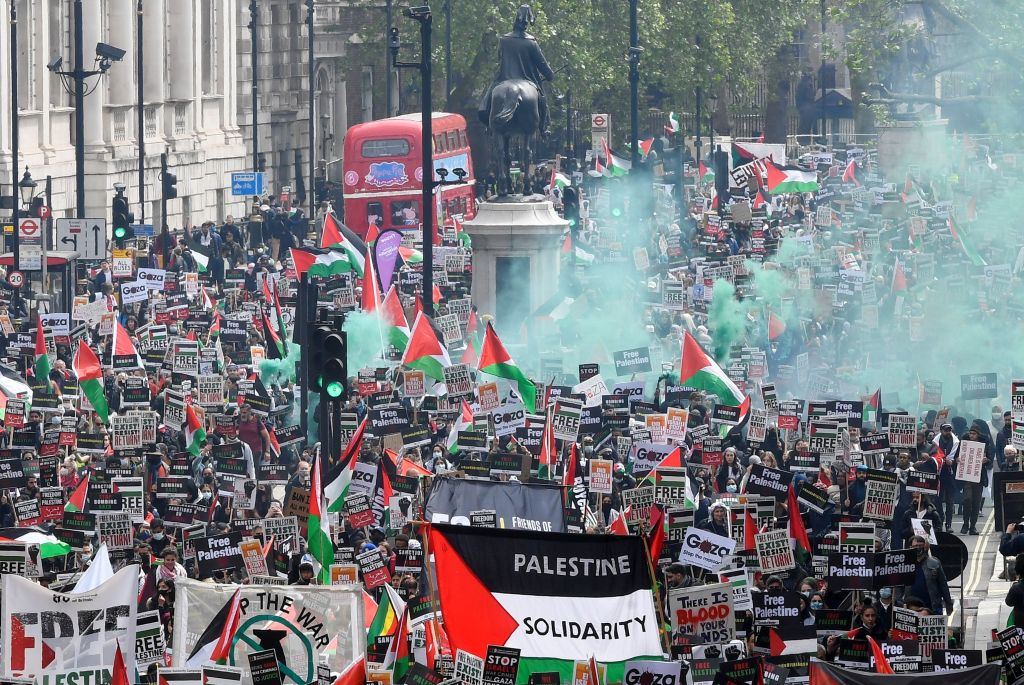
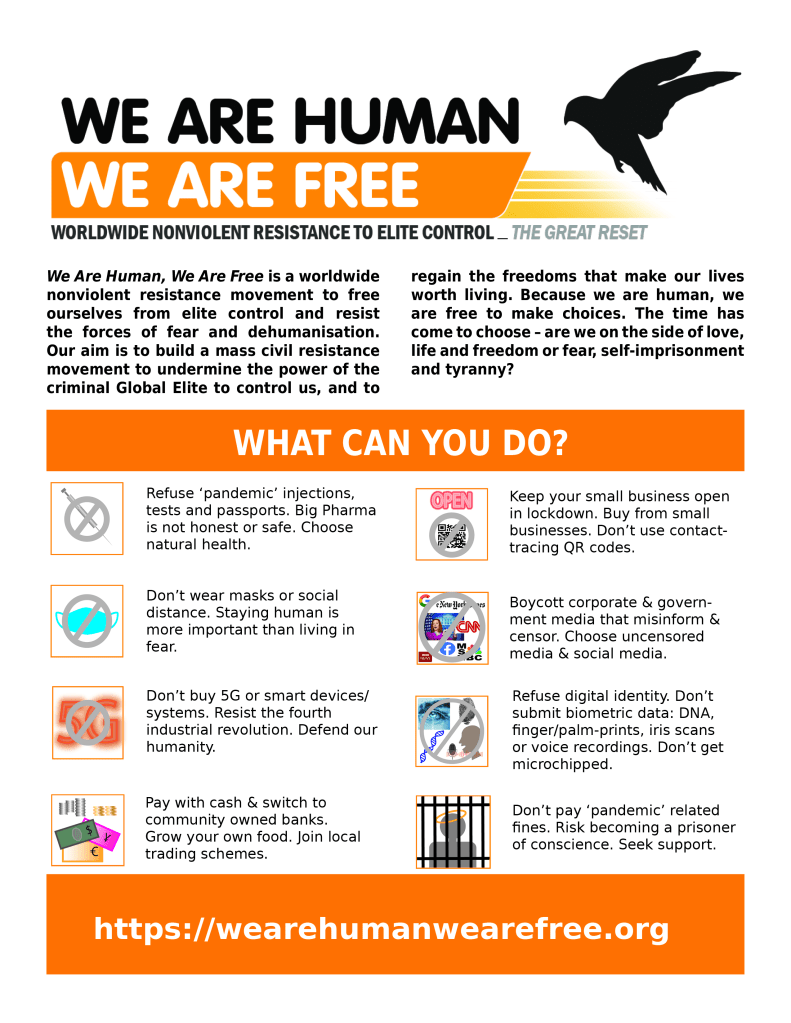
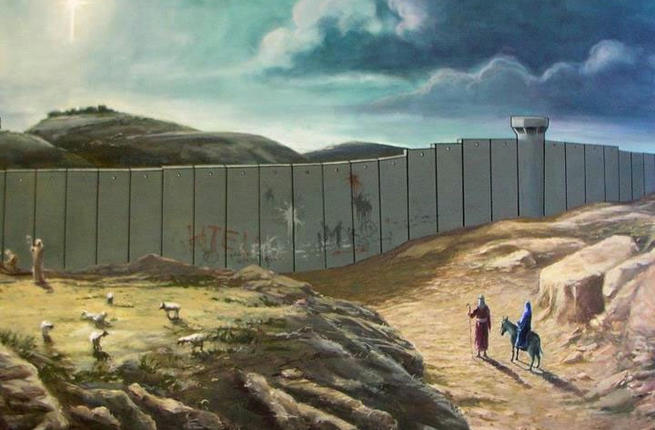
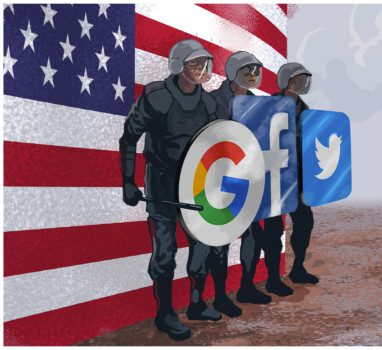



 After the Crash