Humans Are Creating Their Own Narratives

By Michael Krieger

Source: Liberty Blitzkrieg

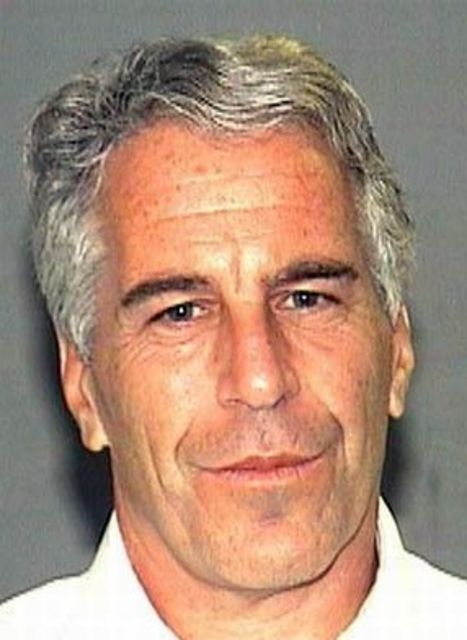
Somewhere between the arrest of Jeffrey Epstein and his extremely suspicious death in a Department of Justice operated prison, the public learned that an FBI intelligence bulletin published by the bureau’s Phoenix field office mentioned for the first time that conspiracy theories pose a domestic terrorism threat. This was followed up last week by a Bloomberg article discussing a new project by the U.S. military (DARPA) to identify fake news and disinformation.

We learned:

Fake news and social media posts are such a threat to U.S. security that the Defense Department is launching a project to repel “large-scale, automated disinformation attacks,” as the top Republican in Congress blocks efforts to protect the integrity of elections.

The Defense Advanced Research Projects Agency wants custom software that can unearth fakes hidden among more than 500,000 stories, photos, videos and audio clips. If successful, the system after four years of trials may expand to detect malicious intent and prevent viral fake news from polarizing society.

Recall that after the 2016 election, focus was on social media companies and we saw tremendous pressure placed on these platforms by national security state politicians and distressed Democrats to “do something” about the supposed fake news epidemic. Fast forward three years and it’s now apparently the U.S. military’s job to police human content on the internet. This is the sort of natural regression a society will witness so long as it puts up with incremental censorship and the demonization of any thought which goes against the official narrative.

Before we dissect what’s really going on, allow me to point out the glaringly obvious, which is that politicians, pundits, mass media and the U.S. military don’t actually care about the societal harm of fake news or conspiracy theories. We know this based on how the media sold government lies in order to advocate for the Iraq war, and how many of the biggest proponents of that blatant war crime have gone on to spectacularly lucrative careers in subsequent years. There were zero consequences, proving the point that this has nothing to do with the dangers of fake news or conspiracy theories, and everything to do with protecting the establishment grip on narrative creation and propagation.

The above tweet summarizes what’s really going on. It’s a provable fact that the harm caused by some crazy person reacting to viral “fake news” on social media doesn’t compare with the destruction and criminality perpetrated by oligarchs like Jeffrey Epstein, or governments which destroy entire countries and murder millions without flinching. It’s the extremely wealthy and powerful, as a consequence of their societal status and influence, who are in a position to do the most harm. This isn’t debatable, yet the U.S. military and media don’t seem particularly bothered by this sort of thing. What really keeps them up at night is a realization that the powerless masses of humanity are suddenly talking to one another across borders and coming to their own conclusions about how the world works. You’re supposed to be told what to think, not to think for yourself.

This is what the power structure’s really worried about. It’s terrified that billions of people are now in direct, instantaneous communication with one another and thinking independently about world events. The mass media’s freakout over the election of Donald Trump was never rooted in concerns about the man and his specific policies. What really bothered them was his election proved they no longer matter. Enough people simply ignored the media’s instructions to suck it up and go vote for Hillary Clinton. This repudiation and loss of control was devastating and terrifying for U.S. media personalities and their bosses.

At this point, it’s important to note that what’s happening is exactly what you’d expect after half the people on earth come online and start talking to one another in the midst of an oligarch-fueled epidemic of gangsterism masquerading as democratic government. The advent of the internet created the conditions for cross-border, near instantaneous, peer-to-peer human communication for the first time in history.

We’re still in the very early stages of discovering what it means to live in such a world, but what you’d expect to emerge is precisely what we’ve seen. We see countless streams of diverse narratives emerging to explain what’s happening around us and how power really operates. Humans are no longer accepting the narratives force-fed to them via mass media channels, and are instead talking directly to one another and creating their own narratives. This is exactly how it should be.

Meanwhile, into this increasingly disruptive environment comes the Epstein affair, which I consider another major inflection point in the public’s increased and justified cynicism about the establishment. While the mass media swallows the increasingly clownish official story hook, line and sinker, the public simply isn’t buying it according to recent polls. The most recent one from Emerson College showed that more people think he was murdered than think he committed suicide.

Alternative narratives are openly, and often successfully, competing with the spoon-fed narratives of mass media. Increased numbers are coming to understand that those who craft official narratives (government, mass media, billionaires) have their own interests, and those interests are typically not aligned with the interests of most people. There’s no reason to trust anything mass media or government says, because both groups are dominated by proven liars and war mongers. This obviously doesn’t mean you should believe everything you read online, but we must maintain perspective. Fake news from powerless citizens doesn’t compete with fake news from the government when it comes to disastrous consequences, yet the focus is always centered on the former and never the latter.

There’s a reason the U.S. military is suddenly talking about fighting fake news and disinformation, and the reason is the power structure is terrified of humans talking to each other and coming to their own conclusions. Moreover, this isn’t limited to an interpretation of world events. The emergence and success of Bitcoin represents a global movement of humans propagating an alternative narrative about money, how it could and how it should work. The longer human beings are allowed to freely talk to one another, the more likely they are to reject official narratives and shape society in a more sane manner. This represents an existential threat to the power structure. And they know it.

It’s also why CNN anchor Chris Cuomo instructed his viewers to not pay attention to those who were closest to Jeffrey Epstein.

Now the good news. I think the cat’s already out of the bag. People aren’t going back to simply swallowing official narratives regurgitated by some television mannequin with makeup and an expensive suit who’s being paid by a billionaire. This doesn’t mean there won’t be a fight; in fact, we’re already in it.

Going forward, I suspect the narrative managers will more aggressively label anyone who doesn’t toe the official line as somehow linked to or sympathetic with foreign governments. They won’t offer any proof, but they’ll claim it authoritatively. This will become an increasingly potent weapon as governments begin to more intensely scapegoat foreign nations as the root of all our problems. We’ve already seen this since the 2016 election, but I expect it to increase in frequency and force.

As such, it’s going to be increasingly important for all of us to retain control of our minds and emotions as much as possible. We must never forget the importance of critical thinking, and must adamantly defend the right of humans to talk to one another freely and come to our own conclusions. We must never forget how preposterous it is to assume media giants owned by billionaires have any interest in telling us the truth about anything.

So keep writing, keep talking, keep thinking and never lose sight of the big picture. We have the power to create our own narratives, and with it, a much better future for generations to come.

Protecting Information Space from Facebook’s Tyranny

By Gunnar Olson

Source: Land Destroyer

The recent attack aimed at New Eastern Outlook (NEO) and several of its authors once again exposes the infinite hypocrisy of US and European interests including across their media and among their supposed human rights advocates.

It also exposes the severe threat that exists to the national security of nations around the globe who lack control over platforms including social media used by their citizens to exchange information.

This lack of control over a nation’s information space is quickly becoming as dangerous as being unable to control and protect a nation’s physical space/territory.

Facebook’s Tyranny  

NEO and at least one of its contributors had their Facebook and Twitter accounts deleted and were accused of “coordinated inauthentic behavior,” according to Facebook’s “newsroom.”

Their statement reads:

In the past week, we removed multiple Pages, Groups and accounts that were involved in coordinated inauthentic behavior on Facebook and Instagram.

It also reads:

We removed 12 Facebook accounts and 10 Facebook Pages for engaging in coordinated inauthentic behavior that originated in Thailand and focused primarily on Thailand and the US. The people behind this small network used fake accounts to create fictitious personas and run Pages, increase engagement, disseminate content, and also to drive people to off-platform blogs posing as news outlets. They also frequently shared divisive narratives and comments on topics including Thai politics, geopolitical issues like US-China relations, protests in Hong Kong, and criticism of democracy activists in Thailand. Although the people behind this activity attempted to conceal their identities, our review found that some of this activity was linked to an individual based in Thailand associated with New Eastern Outlook, a Russian government-funded journal based in Moscow.

In this single statement, Facebook reveals about itself that it, and it alone, decides what is and isn’t a “news outlet.”

Apparently the blogs the deleted Facebook pages linked to were “not” news outlets, though no criteria was provided by Facebook nor any evidence presented that these links did not meet whatever criteria Facebook used.

While Facebook claims that it did not delete the accounts based on their content, they contradicted themselves by clearly referring to the content in their statement as “divisive narratives and comments” which clearly challenged narratives and comments established by Western media organizations.

The statement first accuses the pages of “coordinated inauthentic behavior,” but then admits they were only able to link the pages to a single individual in Thailand. How does a single person “coordinate” with themselves? Again, Facebook doesn’t explain.

Finally, Facebook reveals that any association at all with Russia is apparently grounds for deletion despite nothing of the sort being included in their terms of service nor any specific explanation of this apparent policy made in their statement. New Eastern Outlook is indeed a Russian journal.

Other governments, especially the United States, fund journals and media platforms not only in the United States, but around the globe. Facebook and Twitter, for example, have not deleted the accounts of the virtual army of such journals and platforms funded by the US government funded and directed via the National Endowment for Democracy (NED).

NED-funded operations often operate well outside of the United States, while NEO is based in Russia’s capital, Moscow. NED-funded operations often don’t disclose their funding or affiliations.

Ironically, the accounts Facebook deleted in Thailand were proficient at exposing this funding to the public.

The bottom line here is that Facebook is a massive social media platform. It is also clearly very abusive, maintaining strict but arbitrary control over content on its networks, detached even from their own stated terms of service. It is a form of control that ultimately and clearly works in favor of special interests in Washington and against anyone Washington declares a villain.

Facebook would be bad enough as just a massive US social media platform, but the real problem arises considering its global reach.

Looking at Information Space as we do Physical Space 

A nation’s information space is a lot like its physical space (or territory). The people of a nation operate in it, conduct commerce, exchange information, report news, and carry out a growing number of other economically, socially and politically important activities there. It is not entirely unlike a nation’s physical space where people conduct these same sort of activities.

A nation’s physical space would never be surrendered to a foreign government or corporation to control and decide who can and cannot use it and how it is used. But this is precisely what many nations around the globe have done regarding their information space.

Facebook is essentially that; a foreign corporation controlling a nation’s information space rather than its physical space. Facebook does this in many nations around the globe, deciding who can and cannot use that information space and how that information space is used.

A US corporation just decided that a Thailand-based writer associated with a political journal in Moscow is not allowed to operate in Thailand’s information space. It made that decision for Thailand. It admits in its statement that it worked, not with the Thai government or Thai law enforcement, but with “local civil society organizations,” almost certainly referring to US NED and corporate foundation-funded organizations like Human Rights Watch. Again, this is a clear violation of Thailand’s sovereignty, however minor this particular case may have been.

If it is not a legal violation of Thai sovereignty and an intrusion into their internal affairs impacting people living within their borders, it was certainly a violation and intrusion in principle.

Protecting Information Space

Nations like China and Russia understand the importance of information space.

Both nations also understand the critical importance of protecting it. Both nations have created and ensured the monopoly of their own versions of Facebook as well as other social media platforms. They also have their own versions of “Google” as well as platforms hosting blogs, videos, e-commerce and other essential services that make up a nation’s modern information space.

There is room for debate regarding how this control over Chinese and Russian information space is managed by their respective governments, but it is a debate the people of China and Russia are able to have, however restrictive it may or may not be, with people, organizations, corporations and governments within their own country, not with an untouchable Silicon Valley CEO thousands of miles away.

China and Russia created these alternatives and exercises control over their information space almost as vigorously as they defend their physical territory, understanding that their sovereignty depends as much on keeping foreign influence from dominating that space as it does keeping invading forces from crossing their border.

Smaller nations like Thailand, the subject of Facebook’s most recent “removal” campaign would benefit greatly from creating their own alternatives to Facebook, alternatives created, administered, and serving their interests rather than Silicon Valley’s or Washington’s.

Thais, for instance, cannot have any meaningful debate regarding Facebook’s policies, terms of service or their apparently arbitrary decision made independently of both since ultimately Facebook is a foreign corporation that does not answer to either the Thai people or the Thai government.

For China and Russia, both nations adept at exporting arms to smaller nations affording them the ability to defend their physical territory, an opportunity exists to export the means for these smaller nations to likewise defend their information space.

By aiding these nations in pushing out abusive monopolies like Facebook, Beijing and Moscow will also benefit by watering down US control over global information space and the news and points of view US tech corporations “allow,” and providing more space for the sort criticism and scrutiny NEO and its authors were engaged in right before Facebook removed them.

Can the Progressive-“Conspiracy” Divide be Bridged?

By John Kirby

Source: Off Guardian

People from a variety of advocacy communities who tackle issues ranging from the assassinations of the 1960’s to vaccine safety are rightly upset by a recent NBC News.com op-ed authored by Lynn Parramore, a progressive journalist known for her insightful pieces for Alternet and other outlets.

In the article, Parramore argues that those who espouse “conspiracy theories” might be displaying “narcissistic personality traits,” suffer from “low self-esteem,” and share a “negative view of humanity.” Various studies are cited in support of this claim.

As a filmmaker acquainted both with the author of the op-ed as well as a number of people from the communities under fire, I hope it’s possible to dispel some of the misconceptions on all sides and even find some common ground.

At the outset, it should be acknowledged that Parramore’s piece is an uncharacteristically harsh ad hominem smear, taking its place in a long line of similar attacks on people who have dared question—sometimes at great personal cost—a whole range of suspect official narratives over many years.

But Parramore and many journalists like her are neither assets of an intelligence service nor unthinking tools of big media; she is fully conscious of the ways in which power and wealth can be used collusively (one might even say conspiratorially) to deceive and abuse the public.

So what accounts for a piece like this one?  Why does it rankle a progressive like Parramore so intensely when she hears someone mention that the U.S. military-industrial complex had the most to gain from the September 11th attacks, or that Big Pharma may be applying the same racketeering techniques to the ever-expanding vaccination schedule she discovered at play in the opioid crisis?

Those of us who have labored long to publicize state crimes against democracy have our own list of the psychological, political, and economic factors that may be preventing smart people from seeing evidence that we regard as overwhelming.

The primary difficulty may lie in just how smart and thoroughly educated many of these writers are: no one who has spent a lifetime looking into the way the world works wants to think they might have missed something big.

And as Noam Chomsky has pointed out, the more educated we are, the more we are a target for state-corporate propaganda. Even journalists outside the mainstream may internalize establishment values and prejudices.

Which brings us to Parramore’s embrace of the term “conspiracy theory.”   Once a neutral and little-used phrase, “conspiracy theory” was infamously weaponized in 1967 by a memo from the CIA to its station chiefs worldwide.

Troubled by growing mass disbelief in the “lone nut” theory of President Kennedy’s assassination, and concerned that “[c]onspiracy theories have frequently thrown suspicion on our organization,” the agency directed its officers to “discuss the publicity problem with friendly and elite contacts (especially politicians and editors)” and to “employ propaganda assets to answer and refute the attacks of the critics. Book reviews and feature articles are particularly appropriate for this purpose.”

As Kevin Ryan writes, and various analyses have shown:

In the 45 years before the CIA memo came out, the phrase ‘conspiracy theory’ appeared in the Washington Post and New York Times only 50 times, or about once per year. In the 45 years after the CIA memo, the phrase appeared 2,630 times, or about once per week.”

While it turns out that Parramore knows something about this hugely successful propaganda drive, she chose in her NBC piece to deploy the phrase as the government has come to define it, i.e., as “something that requires no consideration because it is obviously not true.”  This embeds a fallacy in her argument which only spreads as she goes on.

Likewise, the authors of the studies she cites, who attempt to connect belief in “conspiracy theories” to “narcissistic personality traits,” are not immune to efforts to manipulate the wider culture. Studies are only as good as the assumptions from which they proceed; in this case, the assumption was provided by an interested Federal agency.

And what of their suggested diagnosis?

The DSM-5’s criteria for narcissism include “a pervasive pattern of grandiosity…a need for admiration and lack of empathy.”  My experience in talking to writers and advocates who—to mention a few of the subjects Parramore cites—seek justice in the cases of the political murders of the Sixties, have profound concerns about vaccine safetyor reject the official conspiracy theory of 9/11, does not align with that characterization.

On the contrary, most of the people I know who hold these varied (and not always shared) views are deeply empathic, courageously humble, and resigned to a life on the margins of official discourse, even as they doggedly seek to publicize what they have learned.

A number of them have arrived at their views through painful, direct experience, like the loss of a friend or the illness of a child, but far from having a “negative view of humanity,” as Parramore writes, most hold a deep and abiding faith in the power of regular people to see injustice and peacefully oppose it.

In that regard, they share a great deal in common with writers like Parramore: ultimately, we all want what’s best for our children, and none of us want a world ruled by unaccountable political-economic interests.

If we want to achieve that world, then we should work together to promote speech that is free from personal attacks on all sides. Even more importantly, we should all be troubled by efforts to shut down content and discussions labeled “false and misleading” on major social media platforms.

Who will decide what is false and what is true?

In the case of vaccines, there is actually no scientific consensus that they are safe—only a state-media consensus, emanating from groups like the CDC, which act as sales agents for Big Pharma.

A terrible precedent is being set, and both unfettered scientific inquiry and free speech are suffering greatly. Today it is vaccines and “conspiracy theories” that are being banned and labeled “dangerous” by the FBI. What will we be prevented, scared, or shamed away from discussing tomorrow?

President Kennedy said:

a nation that is afraid to let its people judge the truth and falsehood in an open market is a nation that is afraid of its people.”

Perhaps we should take a closer look at ideas that so frighten the powers-that-be. Far from inviting our ridicule, the people who insist that we look in these forbidden places may one day deserve our thanks.


John Kirby is a documentary filmmaker. His latest project, Four Died Trying, examines what John Kennedy, Malcolm X, Martin Luther King and Robert Kennedy were doing in the last years of their lives which may have led to their deaths.

Why is the New York Times still trying to sweep the Epstein case under the rug?

By Patrick Martin

Source: WSWS.org

A prominent article published in the Washington Post Thursday exposes the systematic violation of prison rules governing the detention of multimillionaire sex trafficker Jeffrey Epstein during the period immediately preceding his death on August 10.

Reporter Devlin Barrett writes: “At least eight Bureau of Prisons staffers knew that strict instructions had been given not to leave multimillionaire sex offender Jeffrey Epstein alone in his cell, yet the order was apparently ignored in the 24 hours leading up to his death, according to people familiar with the matter.”

His report continues: “The fact that so many prison officials were aware of the directive—not just low-level correctional officers, but supervisors and managers—has alarmed investigators assessing what so far appears to be a stunning failure to follow instructions, these people said.”

This language is quite extraordinary, suggesting that Post reporters have reason to believe that the security failure has no legitimate explanation, and may have been the result of concerted action to leave Epstein exposed and vulnerable.

The report continues, “Investigators suspect that at least some of these individuals also knew Epstein had been left alone in a cell before he died, and they are working to determine the extent of such knowledge …”

In other words, numerous prison officials, including some in authority, were aware that Epstein—on suicide watch from July 23 to July 29—was alone in a cell, in violation of rules governing at-risk prisoners. (Other press accounts claim that his cellmate was granted bail on Friday, August 9, and released from custody, leaving Epstein by himself.)

Epstein was found dead in his cell the following morning, at 6:30 a.m. on Saturday, August 10. During that night, the two guards assigned to check in on him every 30 minutes did not do so. Both were said to have been asleep for some or all of that night, rather than standing watch.

The two guards reportedly falsified the logs to show that they had checked on Epstein as required, but these logs were contradicted by video evidence from a surveillance camera monitoring the hallway outside his cell.

Investigators from the FBI and the inspector-general of the Department of Justice have taken possession of the videotapes, but have released no information about what they show, including whether there were any unauthorized visitors to Epstein’s cell the night he died.

The Post report suggests misconduct on a scale so staggering that it leaves little doubt that Epstein was either murdered or allowed to commit suicide, with the former far more likely. It defies belief that so many Bureau of Prisons employees, including managers and supervisors, could have each independently decided to ignore the rules for handling the most notorious prisoner then in federal custody.

Epstein had been arrested July 6 at Teterboro Airport in New Jersey, and was being held on sex-trafficking charges that carried a possible sentence of 45 years in prison. The nature of the charges, combined with his vast wealth and his connections in high places—including to Donald Trump, Bill Clinton, Prince Andrew of England, and Saudi Crown Prince Mohammed bin Salman—ensured maximum television and tabloid publicity for the case.

Many powerful people feared exposure if Epstein were brought to trial, and there is ample evidence that he was preparing an aggressive and highly publicized defense rather than attempting a plea bargain that would have swept the case under the rug. Epstein was meeting with his lawyers for as many as 12 hours a day, and they have described his demeanor as anything but downcast or suicidal. (Epstein denied that he had attempted suicide July 23, claiming he was the victim of an assault by a cellmate).

Under these circumstances, the real question is why the bulk of the American media, spearheaded by the New York Times, has chosen to swallow the claim of “suicide” and denounced any questioning of the official verdict as a “conspiracy theory.” Epstein was killed in downtown Manhattan, only a few miles from Times Square. But most of the reports exposing new evidence in the case have come in the pages of the Washington Post, while the Times has published lengthy reports—such as a front-page account in its edition of Sunday, August 19—which could be summed up as “nothing to see here, move along please.”

It is worth recalling that when Epstein was first arrested, the Times editorialized against making a political issue out of his kid-glove treatment during his first sex-crimes prosecution in 2008. The editorial urged congressional Democrats to stay away from Epstein, although the US Attorney who had recommended a token 13-month sentence in 2008—with six days out of seven on work-release to run his financial empire—was Alex Acosta, chosen by Trump as his secretary of labor.

While the Times warned Democrats that they would be making a martyr of Acosta by examining his conduct in the Epstein case, Acosta was actually forced to resign only a week after the publication of the editorial. Far from fearing that targeting Acosta was too ambitious, the Times editorial board seems rather to have feared that Epstein, followed by Acosta, would become the first two dominoes in a chain that would implicate others perhaps too close for comfort.


Related Articles:

Why is the media dismissing questions about Jeffrey Epstein’s death as “conspiracy theories”?
[13 August 2019]

The case of Jeffrey Epstein and the depravity of America’s financial elite
[13 July 2019]

Mass Media Delusions

By Dmitry, Orlov

Source: Club Orlov

For anyone who lives in the West (the US, the EU and its various adjuncts such as Australia, New Zealand) and wants to know what really goes on in the world, a major hindrance is the powerful filter imposed on reality by Western mass media. It uses two methods to prevent reality from leaking through to the public, one active, one passive.

The passive method uses omission and obfuscation: certain events and facts are simply not reported. Some are willfully suppressed, others carefully underemphasized, yet others are presented in a context designed to disguise their significance. For example, anybody attentive enough could have easily ascertained that Robert Mueller is senile and in no way shape or form was ever capable of running any sort of investigation or writing a report. And yet this salient fact was not reported at all; that’s willful suppression.

But now that Mueller has provided six hours of congressional testimony to prove this fact before anyone who cared to watch, outright suppression has become impossible and context substitution has come into play: those who draw attention to Mueller’s obvious senility are accused of being right-wing extremists. But how can a readily observable medical fact be dismissed as political bias? How could he have failed to recall important details from a report he supposedly wrote (or at least read)? Mind you, I am just using the Mueller disaster as a handy example. As I have explained many times, it doesn’t matter who is president and the entire ridiculous witch-hunt is an instance of fiddling while Rome burns.

The active method is to label all those who try to circumvent their filter as “conspiracy theorists”—a derogatory term that is easy to apply, although making it stick is rather tricky. It is easy to fall into the trap by insisting on a certain version of events without being in possession of specific physical proof. But it is equally easy to act as an independent collector and connoisseur of conspiracy theories (which are popular because they are interesting) in which case your accusers must be on par with you in their depth of knowledge of conspiracies or else be ready to forfeit their position as preeminent authorities on all things conspiratorial.

If none of the major Western news outlets reported a certain salient fact that can be readily exposed and attested by multiple sources by some people who, each one separately, do a bit of research, then how are these people conspiring, and how is that a theory? It can perhaps be argued that there is indeed a conspiracy—on the part of the major Western news outlets—to suppress this salient fact. That would indeed be a theory, but a difficult one to prove, and so why would anyone care to argue this point? Why not just let the salient fact speak for itself?

In short, the trick for avoiding the label of “conspiracy theorist” when reporting an unreported or underreported fact is to always couch it in the form of a question—“Here’s some evidence of something quite important, but Western mass media has failed to cover it; why?”—and leave Western mass media with the burden of proof that they didn’t conspire to suppress the coverage. Of course, no mass media outlet would ever accept such a challenge. Alternative responses include stony silence and, when that tactic starts looking ridiculous, resorting to ad hominem attacks and name-calling. But that leads to an inevitable loss of face because it automatically reduces to the childish game of “I know you are, but what am I?” As, for instance, in “Is refusing to report on Mueller’s obvious senility a sign of political extremism?”

Western mass media malfeasance doesn’t stop at suppression of facts; there is also its massive failing to provide any sort of meaningful analysis, or even to form rather obvious conjectures that we can then consider on their merits. For example, I might wildly conjecture that Robert Mueller was chosen as a senile stooge behind whose back Hillary Clinton’s political operatives conspired to unseat Donald Trump by a combination of falsified and coerced evidence, entrapment and various other forms of prosecutorial misconduct.

Again, I don’t have a dog in this race because I believe the US is in the process of flushing itself down the same golden toilet no matter who is its president. I have no particular love of “Donny, Putin’s man in Washington” (that’s a joke; Russians find it hilarious), but I do enjoy the comedic elements of watching this “Art of the Deal” president fail to close a single deal with anyone. In any case, I am perfectly happy to wait until the truth of the matter comes out. Sure, maybe it was Putin’s clever plan to make Americans spend four years beating each other up over an orange-haired buffoon who, as ordered by Putin, has been working tirelessly to wreck the relationship between the US and China and to ease China into an alliance with Russia, and also to wreck the relationship between the US and Europe, leaving a weakened and faltering US stranded all alone on the wrong side of the planet, but that’s just a conspiracy theory, isn’t it?


Russiagate as Organized Distraction

By Oliver Boyd-Barrett

Source: Consortium News

For over two years Russiagate has accounted for a substantial proportion of all mainstream U.S. media political journalism and, because U.S. media have significant agenda-setting propulsion, of global media coverage as well. The timing has been catastrophic. The Trump administration has shredded environmental protections,jettisoned nuclear agreements, exacerbated tensions with U.S. rivals and pandered to the rich.

In place of sustained media attention to the end of the human species from global warming, its even more imminent demise in nuclear warfare, or the further evisceration of democratic discourse in a society riven by historically unprecedented wealth inequalities and unbridled capitalistic greed, corporate media suffocate their publics with a puerile narrative of alleged collusion between the 2016 Trump campaign and Russia.

The Russiagate discourse is profoundly mendacious and hypocritical. It presumes that the U.S. electoral system enjoys a high degree of public trust and security. Nothing could be further from the truth. The U.S. democratic system is deeply entrenched in a dystopian two-party system dominated  by the rich and largely answerable to corporate oligopolies; it is ideologically beholden to the values of extreme capitalism and imperialist domination. Problems with the U.S. electoral system and media are extensive and well documented.

U.S. electoral procedures are profoundly compromised by an Electoral College that detaches votes counted from votes that count. The composition of electoral districts has been gerrymandered to minimize the possibility of electoral surprises. Voting is dependent on easily hackable corporate-manufactured electronic voting systems. Right-wing administrations reach into a tool-box of voter-suppression tactics that run the gamut from minimizing available voting centers and voting machines through to excessive voter identification requirements and the elimination of swathes of the voting lists (e.g. groups such as people who have committed felonies or people whose names are similar to those of felons, or people who have not voted in previous elections). Even the results of campaigns are corrupted when outgoing regimes abuse their remaining weeks in power to push through regulations or legislation that will scuttle the efforts of their successors. Democratic theory presupposes the formal equivalence of voice in the battlefield of ideas. Nothing could be further from the reality of the U.S. “democratic” system in which a small number of powerful interests enjoy ear-splitting megaphonic advantage on the basis of often anonymous “dark” money donations filtered through SuperPacs and their ilk, operating outside the confines of (the somewhat more transparently monitored) electoral campaigns.

Free and Open Exchange of Ideas

Regarding media, democratic theory presupposes a public communications infrastructure that facilitates the free and open exchange of ideas. No such infrastructure exists.  Mainstream media are owned and controlled by a small number of large, multi-media and multi-industrial conglomerates that lie at the very heart of U.S. oligopoly capitalism and much of whose advertising revenue and content is furnished from other conglomerates.

The inability of mainstream media to sustain an information environment that can encompass histories, perspectives and vocabularies that are free of the shackles of U.S. plutocratic self-regard is also well documented. Recent U.S. media coverage of the U.S.-gestated crisis in Venezuela is a case in point.

The much-celebrated revolutionary potential of social media is illusory. The principal suppliers of social media architecture are even more corporatized than their legacy predecessors. They depend not just on corporate advertising but on the sale of big data that they pilfer from users and sell to corporate and political propagandists often for non-transparent AI-assisted micro-targeting during “persuasion” campaigns. Like their legacy counterparts, social media are imbricated within, collaborate with, and are vulnerable to the machinations of the military-industry-surveillance establishment. So-called election meddling across the world has been an outstanding feature of the exploitation of social and legacy media by companies linked to political, defense and intelligence such as – but by no means limited to – the former Cambridge Analytica and its British parent SCL.

Against this backdrop of electoral and media failures, it makes little sense to elevate discussion of and attention to the alleged social media activities of, say, Russia’s Internet Research Agency.

Russian Contacts Deplored

Attention is being directed away from substantial, and substantiated, problems and onto trivial, and unsubstantiated, problems. Moreover, in a climate of manufactured McCarthyite hysteria, Russiagate further presupposes that any communication between a presidential campaign and Russia is in itself deplorable. Even if one were to confine this conversation only to communication between ruling oligarchs of both the U.S. and Russia, however, the opposite would surely be the case. This is not simply because of the benefits that accrue from a broader understanding of the world, identification of shared interests and opportunities, and their promise for peaceful relations. A real politick analysis might advise the insertion of wedges between China and Russia so as to head off the perceived threat to the USA of a hybrid big-power control over a region of the world that has long been considered indispensable for truly global hegemony.

Even if we address Russiagate as a problem worthy of our attention, the evidentiary basis for the major claims is weak.

Former Special Counsel Robert Mueller’s indictments and investigations implicated several individuals for activities that in some cases have no connection whatsoever to the 2016 presidential campaign.  In some other instances they appear to have been more about lies and obstructions to his investigation rather than material illegal acts, or amount to charges that are unlikely ever to be contested in a court of law.

The investigation itself is traceable back to two significant but extremely problematic reports made public in January 2017. One was the “Steele dossier” by former MI6 officer Christopher Steele. This is principally of interest for its largely unsupported allegations that in some sense or another Trump was in cahoots with Russia. Steele’s company, Orbis, was commissioned to write the report by Fusion GPS which in turn was contracted by attorneys working for the Democratic National Campaign. Passage of earlier drafts of the Steele report through sources close to British intelligence, and accounts by Trump adviser George Papadopoulos concerning conversations he had concerning possible Russian possession of Clinton emails with a character who may as likely have been a British as a Russian spy, were instrumental in stimulating FBI interest in and spying on the Trump campaign.

There are indirect links between Steele, another former MI6 agent, Pablo Miller (who also worked for Orbis) and Sergei Skripal, a Russian agent who had been recruited as informer to MI6 by Miller and who was the target of an attempted assassination in 2018. This event has occasioned controversial, not to say highly implausible and mischievous British government claims and accusations against Russia.

The  most significant matter raised by a second report, issued by the Intelligence Community Assessment and representing the conclusions of a small team picked from the Director of Intelligence office, CIA, FBI and NSA, was its claim that Russian intelligence was responsible for the hacking of the computer systems of the DNC and its chairman John Podesta in summer 2016 and that the hacked documents had been passed to Julian Assange and WikiLeaks. No evidence for this was supplied.

Although the hacking allegations have become largely uncontested articles of faith in the RussiaGate discourse they are significantly reliant on the problematic findings of a small private company hired by the DNC. There is also robust evidence that the documents may have been leaked rather than hacked and by U.S.-based sources. The fact that the documents revealed that the DNC, a supposedly neutral agent in the primary campaign, had in fact been biased in favor of the candidacy of Hillary Clinton, and that Clinton’s private statements to industry were not in keeping with her public positions, has long been obscured in media memory in favor a preferred narrative of Russian villainy.

Who Benefits?

Why then does the Russiagate discourse have so much traction? Who benefits?

Russiagate serves the interest of a (No. 1) corrupted Democratic Party, whose biased and arguably incompetent campaign management lost it the 2016 election, in alliance (No. 2) with powerful factions of the U.S. industrial-military-surveillance establishment that for the past 19 years, through NATO and other malleable international agencies, has sought to undermine Russian President Vladimir Putin’s leadership, dismember Russia and the Russian Federation (undoubtedly for the benefit of Western capital) and, more latterly, further contain China in a perpetual and titanic struggle for the heart of EurAsia.

In so far as Trump had indicated (for whatever reasons) in the course of his campaign that he disagreed with at least some aspects of this long-term strategy, he came to be viewed as unreliable by the U.S. security state.

While serving the immediate purpose of containing Trump, U.S. accusations of Russian meddling in U.S. elections were farcical in the context of a well-chronicled history of U.S. “meddling” in the elections and politics of nations for over 100 years. This meddling across all hemispheres has included the staging of coups, invasions and occupations on false pretext in addition to numerous instances of “color revolution” strategies involving the financing of opposition parties and provoking uprisings, frequently coupled with economic warfare (sanctions).

A further beneficiary (No.3) is the sum of all those interests that favor a narrowing of public expression to a framework supportive of neoliberal imperialism. Paradoxically exploiting the moral panic associated with both Trump’s plaintive wailing about “fake news” whenever mainstream media coverage is critical of him, and social media embarrassment over exposure of their big-data sales to powerful corporate customers, these interests have called for more regulation of, as well as self-censorship by, social media.

Social media responses increasingly involve more restrictive algorithms and what are often partisan “fact-checkers” (illustrated by Facebook financial support for and dependence on the pro-NATO “think tank,” the Atlantic Council). The net impact has been devastating for many information organizations in the arena of social media whose only “sin” is analysis and opinion that runs counter to elite neoliberal propaganda.

The standard justification of such attacks on free expression is to insinuate ties to Russia and/or to terrorism. Given these heavy handed and censorious responses by powerful actors, it would appear perhaps that the RussiaGate narrative is increasingly implausible to many and the only hope now for its proponents is to stifle questioning. These are dark days indeed for democracy.


Oliver Boyd-Barrett is professor emeritus at Bowling Green State University. He is author of “RussiaGate and Propaganda: Disinformation in the Age of Social Media” London and New York (Routledge).

Internet Free Speech All But Dead

Unelected, unnamed censors are operating across the Internet to suppress “unapproved” content.

By Philip Giraldi

Source: OpEdNews.com

The Internet was originally promoted as a completely free and uncensored mechanism for people everywhere to exchange views and communicate, but it has been observed by many users that that is not really true anymore. Both governments and the service providers have developed a taste for controlling the product, with President Barack Obama once considering a “kill switch” that would turn off the Internet completely in the event of a “national emergency.”

President Donald Trump has also had a lot to say about fake news and is reported to be supporting limiting protections relating to the Internet. In May, a “net neutrality” bill that would have prevented service providers from manipulating Internet traffic passed in the House of Representatives, but it is reported to be “dead on arrival” in the Senate, so it will never be enacted.

Social networking sites have voluntarily employed technical fixes that restrict some content and have also hired “reviewers” who look for objectionable material and remove it. Pending European legislation, meanwhile, might require Internet search engines to eliminate access to many unacceptable old posts. YouTube has already been engaged in deleting existing old material and is working with biased “partners” like the Anti-Defamation League (ADL) to set up guidelines to restrict future content. Many users of Facebook will have already undoubtedly noted that some contacts have been blocked temporarily (or even permanently) and denied access to the site.

Google now automatically disables or limits searches for material that it deems to be undesirable. If Google does not approve of something it will either not appear in search results or it will be very low on the list. And what does come up will likely favor content that derives from those who pay Google to promote their products or services. Information that originates with competitors will either be very low in the search results or even blocked. Google is consequently hardly an unbiased source of information.

In May 2017 Facebook announced that it would be hiring 3,000 new censors, and my own experience of social networking censorship soon followed. I had posted an article entitled “Charlottesville Requiem” that I had written for a website. At the end of the first day, the site managers noticed that, while the article had clearly attracted a substantial Facebook readership, the “likes” for the piece were not showing up on the screen counter, i.e., were not being tabulated. It was also impossible to share the piece on Facebook, as the button to do so had been removed.

The “likes” on sites like Facebook, Yahoo! news comments, YouTube, and Google are important because they automatically determine how the piece is distributed throughout the site. If there are a lot of likes, the piece goes to the top when a search is made or when someone opens the page. Articles similarly can be sent to Coventry if they receive a lot of dislikes or negative marks, so the approvals or disapprovals can be very important in determining what kind of audience is reached or what a search will reveal.

In my case, after one day my page reverted to normal, the “likes” reappeared, and readers were again able to share the article. But it was clear that someone had been managing what I had posted, apparently because there had been disapproval of my content based on what must have been a political judgment.

A couple of days later, I learned of another example of a similar incident. The Ron Paul Institute (RPI) website posts much of its material on YouTube (owned by Google) on a site where there had been advertising that kicked back to RPI a small percentage of the money earned. Suddenly, without explanation, both the ads and rebate were eliminated after a “manual review” determined the content to be “unsuitable for all advertisers.” This was a judgment rendered apparently due to disapproval of what the institute does and says. The ability to comment on and link from the pieces was also turned off.

Dissident British former diplomat Craig Murray also noted in April 2018 the secretive manipulation of his articles that are posted on Facebook, observing that his “site’s visitor numbers [were] currently around one-third normal levels, stuck at around 20,000 unique visitors per day. The cause [was] not hard to find. Normally over half of our visitors arrive via Facebook. These last few days, virtually nothing has come from Facebook. What is especially pernicious is that Facebook deliberately imposes this censorship in a secretive way.

The primary mechanism when a block is imposed by Facebook is that my posts to Facebook are simply not sent into the timelines of the large majority of people who are friends or who follow. I am left to believe the post has been shared with them, but in fact it has only been shown to a tiny number. Then, if you are one of the few recipients and do see the post and share it, it will show to you on your timeline as shared, but in fact the vast majority of your own friends will also not receive it. Facebook is not doing what it is telling you it is doing — it shows you it is shared — and Facebook is deliberately concealing that fact from you. Twitter has a similar system known as ‘shadow banning.’ Again, it is secretive and the victim is not informed.”

More recently, pressure to censor Internet social networking and information sites has increased, coming both from government and from various interested constituencies. In late May, Facebook founder and CEO Mark Zuckerberg met with French President Emmanuel Macron to discuss how to eliminate “hate speech” on the Internet. The two men agreed that the United States Internet model, in spite of already being heavily manipulated, is too laissez faire, and expressed an interest in exploring the French system where it is considered acceptable to ban unacceptable points of view. Zuckerberg suggested that it might serve as a good model for the entire European Union. France is reportedly considering legislation that establishes a regulator with power to fine Internet companies up to 4% of their global revenue, which can in some cases be an enormous sum, if they do not curb hateful expressions.

So unelected, unnamed censors are operating all around the Internet to control the content, which I suppose should surprise no one, and the interference will only get worse as both governments and service providers are willing to do what it takes to eliminate views that they find unacceptable — which, curiously enough, leads one to consider how “Russia-gate” came about and the current hysteria being generated in the conventional media and also online against both Venezuela and Iran. How much of the anger is essentially fake, being manipulated or even fabricated by large companies that earn mega billions of dollars by offering under false pretenses a heavily managed product that largely does what the government wants? Banning hate speech will be, unfortunately, only the first step in eliminating any and all criticisms of the status quo.

Tulsi Gabbard vs Google Goliath

By Rick Sterling

Source: Dissident Voice

Introduction

The Tulsi Gabbard presidential campaign has filed a major law suit against Google.  This article outlines the main points of the law suit and evidence the the social media giant Google has quietly acquired enormous influence on public perceptions and has been actively censoring alternative viewpoints.

Tulsi Now vs Google

Tulsi Now, Inc vs Google, LLC was filed on July 25 in the U.S. District Court for the Central District of California. The attorneys demand a jury trial and seek compensation and punitive damages of “no less than $50 million”. Major points and allegations in the 36 page complaint include:

* Google has monopolistic control of online searches and related advertising.

“Google creates, operates, and controls its platform and services, including but not limited to Google Search, Google Ads, and Gmail as a public forum or its functional equivalent by intentionally and openly dedicating its platform for public use and public benefit, inviting the public to utilize Google as a forum for free speech. Google serves as a state actor by performing an exclusively and traditionally public function by regulating free speech within a public forum and helping to run elections.” (p. 22)

“Google has used its control over online political speech to silence Tulsi Gabbard, a candidate millions of Americans want to hear from. With this lawsuit, Tulsi seeks to stop Google from further intermeddling in the 2020 United States Presidential Election….. Google plays favorites, with no warning, no transparency – and no accountability (until now).” (p. 2)

* At a critical moment Google undercut the Tulsi Gabbard campaign.

“On June 28, 2019 – at the height of Gabbard’s popularity among internet researchers in the immediate hours after the debate ended, and in the thick of the critical post-debate period… Google suspended Tulsi’s Google Ads account without warning.” (p. 3)

* Google has failed to provide a credible explanation.

The Tulsi campaign quickly sought to restore the account but “In response, the Campaign got opacity and an inconsistent series of answers from Google… To this day, Google has not provided a straight answer – let alone a credible one – as to why Tulsi’s political speech was silence right when millions of people wanted to hear from her.” (p. 4)

Google started by falsely claiming “problems with billing”.  Later, as reported in the NY Times story  a Google spokesperson claimed, “Google has automated systems that flag unusual activity on advertiser accounts – including large spending changes – to prevent fraud….In this case, ‘our system triggered a suspension.’ ”

* Google has a corporate profit motive to oppose Tulsi Gabbard.

“Google has sought to silence Tulsi Gabbard, a presidential candidate who has vocally called for greater regulation and oversight of (you guessed it) Google.” (p. 5)

“During her career in Congress, Gabbard has moved to limit the powers of big tech companies like Google and has fought to keep the internet open and available to all. Gabbard has co-sponsored legislation that prohibits multi-tiered pricing agreements for the privileged few, and she has spoken in favor of reinstating and expanding net neutrality to apply to Internet firms like Google.” (p. 8)

* Google’s Actions have caused significant harm to the Gabbard campaign and violate the U.S. and California constitutions and California business law.

“Through its illegal actions targeting Tulsi Gabbard, Google has caused the Campaign significant harm, both monetary (including potentially millions of dollars in forgone donations) and nonmonetary (the ability to provide Tulsi’s important message with Americans looking to hear it).” (p. 6)

“Google engages in a pattern and practice of intentional discrimination in the provision of its services, including discriminating and censoring the Campaign’s speech based not on the content of the censored speech but on the Campaign’s political identity and viewpoint.” (p. 27)

* The public has an interest in this case.

“Unless the court issues an appropriate injunction, Google’s illegal and unconstitutional behavior will continue, harming both the Campaign and the general public, which has an overwhelming interest in a fair, unmanipulated 2020 United States Election cycle. (p. 34)

Google Explanation is Not Credible

The Tulsi Gabbard Google Ads account was abruptly suspended at a crucial time. The question is why. Was it the result of “unusual activity” triggering an “automatic suspension” as claimed by Google? Or was it because someone at Google changed the software or otherwise intervened to undermine the Tulsi campaign?

Google’s explanation of an “automatic suspension” from “unusual activity” is dubious. First, the timing does not make sense. The sudden rise in searches on “Tulsi Gabbard” began the day before the suspension. Gabbard participated in the first debate, on June 26. Her presence and performance sparked interest among many viewers. Next morning, June 27, media reported that, “Tulsi Gabbard was the most searched candidate on Google after the Democratic debate in Miami“. The second debate took place in the evening of June 27. With discussion of the Democratic candidates continuing, Tulsi Gabbard continued to attract much interest. Around 9:30 pm (ET) on June 27 the Google Ads account was suddenly suspended. If the cause was “unusual activity”, the “automatic trigger” should have occurred long before.

Second, Google was fully aware of the “unusual activity”. In fact, Google was the source of the news reports on the morning of June 27.  Reports said:

According to Google Trends, Massachusetts Sen. Elizabeth Warren was the most searched candidate heading into the debate… After the debate, Gabbard vaulted into first.

Third, it is hard to believe that Google does not have any human or more sophisticated review before suspending a major Ads account on a politically intense night.  It should have been obvious that the cause of increased interest in Gabbard was the nationally televised Democratic candidates debate and media coverage.

Fourth, the changing explanation for the sudden suspension, starting with a false claim that there were “problems with billing”, raises questions about the integrity of Google’s response.

Google Secretly Manipulates  Public Opinion

Unknown to most of the public, there is compelling evidence that Google has been secretly manipulating search results to steer public perception and election voting for years.

Dr. Robert Epstein, former editor-in-chief of Psychology Today, has been studying and reporting on this for the past six years. Recently, on June 16, 2019 he testified before the Senate Judiciary Committee on the Constitution. His testimony is titled “Why Google Poses a Serious Threat to Democracy, and How to End That Threat”.

Epstein has published 15 books and over 300 scientific and mainstream media articles on artificial intelligence and related topics. “Since 2012, some of my research and writings have focused on Google LLC, specifically on the company’s power to suppress content – the censorship problem, if you will – as well as on the massive surveillance the company conducts, and also on the company’s unprecedented ability to manipulate the thoughts and behavior of more than 2.5 billion people worldwide.”

As shown by Dr. Epstein, Google uses several techniques to manipulate public opinion. The results of an online search are biased. Search “suggestions” are skewed. Messages such as “Go Vote” are sent to some people but not to others.

Epstein’s written testimony to Congress includes links to over sixty articles documenting his research published in sites ranging from Proceedings of the National Academy of Sciences to Huffington Post. Epstein’s testimony describes “disturbing findings” including:

“In 2016, biased search results generated by Google’s search algorithm likely impacted undecided voters in a way that gave at least 2.6 million votes to Hillary Clinton”. (Epstein notes that he supported Clinton.)

“On Election Day in 2018, the ‘Go Vote’ reminder Google displayed on its home page gave one political party between 800,000 and 4.6 million more votes than it gave the other party.”

“My recent research demonstrates that Google’s ‘autocomplete’ search suggestions can turn a 50/50 split among undecided voters into a 90/10 split without people’s awareness.”

“Google has likely been determining the outcomes of upwards of 25 percent of the national elections worldwide since at least 2015. This is because many races are very close and because Google’s persuasive technologies are very powerful.”

Google is Censoring Alternative Media  

In August 2017 TruePublica reported their experience and predictions in an article titled The Truth War is Being Lost to a Global Censorship Apparatus Called Google“. The article says:

60 percent of people now get their news from search engines, not traditional human editors in the media. It is here where the new information war takes place – the algorithm. Google now takes 81.2 percent of all search engine market share globally…. Google has the ability to drive demand and set the narrative, create bias and swing opinion.

In 2017, the World Socialist Web Site (wsws.org) reported that:

In April, under the guise of combating ‘fake news’, Google introduced new procedures that give extraordinary powers to unnamed ‘evaluators’ to demote web pages and websites. These procedures have been used to exclude the WSWS and other anti-war and oppositional sites. Over the past three months, traffic originating from Google to the WSWS  has fallen by approximately 70%…. In key searches relevant to a wide range of topics the WSWS regularly covers – including the U.S. military operations and the threat of war, social conditions, inequality and even socialism – the number of search impressions …has fallen dramatically.

In essence, Google has “de-ranked” and is screening searchers from seeing alternative and progressive websites such as truepublica, globalresearch, consortiumnews, commondreams, Wikileaks, truth-out and many more. WSWS reported numerous specific examples such as this one: “Searches for the term ‘Korean war’ produced 20,932 impressions in May. In July, searches using the same words produced zero WSWS impressions.”

“The policy guiding these actions is made absolutely clear in the April 25, 2017 blog post by Google’s Vice President for Engineering, Ben Gomes, and the updated ‘Search Quality Rater Guidelines’ published at the same time. The post refers to the need to flag and demote ‘unexpected offensive results, hoaxes and conspiracy theories’ – broad and amorphous language used to exclude any oppositional content…. “The ‘lowest’ rating is also to be given to a website that ‘presents unsubstantiated conspiracy theories or hoaxes as if the information were factual.’”

Tulsi Gabbard has not only called for much stricter regulations on high tech and social media giants. She has also challenged the Democratic Party and foreign policy establishment.  In late February 2016 she resigned as vice-chair of the Democratic National Committee to support candidate Bernie Sanders against the establishment favorite, Hillary Clinton. Gabbard has issued sharp criticisms of US foreign policy.  Recently she said:

We hear a lot of politicians say the same argument that we’ve got to stay engaged in the world otherwise we’ll be isolationists as though the only way the United States can engage with other countries is by blowing them up or strangling them with economic sanctions by smashing them and trying to overthrow their governments. This is exactly what’s wrong with this whole premise and the whole view in which too many politicians, too many leaders in this country are viewing the United States role in the world.

Conclusion

Did Google take the next step from silently censoring websites the corporation does not like to undercutting a presidential candidate the corporation does not like?

This is a David vs Goliath story. Google/Alphabet is the 37th largest corporation in the world with enormous political influence in Washington. Whether or not the law suit succeeds, it may serve the public interest by exposing Google’s immense monopolistic power and illustrate the need for much more regulation, transparency and accountability.  It may also generate more interest in Gabbard’s message and campaign in the face of efforts to silence her.


Rick Sterling is an investigative journalist who grew up in Canada but currently lives in the San Francisco Bay Area of California. He can be reached at rsterling1@gmail.com. Read other articles by Rick.