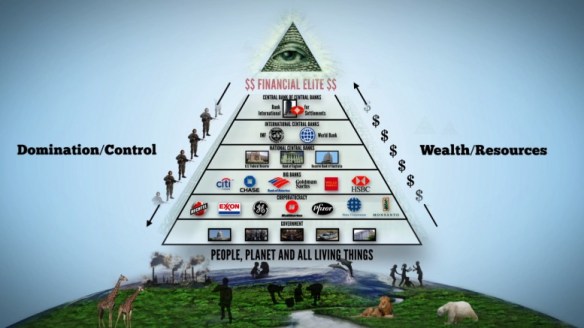
James C. Scott’s Against the Grain

By chilke

Source: The HipCrime Vocab

During my long discursion on the history of money, the academic James C. Scott published an important book called Against the Grain: A Deep History of the First States.

Regular readers will know that this has been a longstanding area of research (or obsession) of mine. I’ve referred to Scott’s work before, particularly Seeing Like A State, which I think is indispensable in understanding many of the political divisions of today (and why left/right is no longer a useful distinction). We’re in an era where much of the “left” is supporting geoengineering and rockets to Mars, and the “right” (at least the alt-right) is criticizing housing projects and suburban sprawl.

It’s unfortunate that Scott’s title is the same as another one of my favorite books on that topic by journalist Richard Manning: Against the Grain: How Agriculture Hijacked Civilization, another book I’ve referred to often. Manning’s book is not only a historical account about how the rise of grain agriculture led to war, hierarchy, slavery and sickness, but a no-hold-barred exploration of today’s grain-centric agribusiness model, where wheat, corn, soy and sugar are grown in mechanized monocultures and processed by the food industry into highly-addictive junk food implicated in everything from type two diabetes, to depression to Alzheimer’s disease (via inflammation):

Dealing with surplus is a difficult task. The problem begins with the fact that, just like the sex drive, the food drive got ramped up in evolution. If you have a deep, yearning need for food, you’re going to get along better than your neighbor, and over the years that gene is going to be passed on. So you get this creature that got fine-tuned to really need food, especially carbohydrates. Which brings us to the more fundamental question: can we ever deal with sugar? By making more concentrated forms of carbohydrates, we’re playing into something that’s quite addictive and powerful. It’s why we’re so blasted obese. We have access to all this sugar, and we simply cannot control our need for it—that’s genetic.

Now, can we gain the ability to overcome that? I’m not sure. You have to add to this the fact that there’s a lot of money to be made by people who know how to concentrate sugar. They have a real interest in seeing that we don’t overcome these kinds of addictions. In fact, that’s how you control societies—you exploit that basic drive for food. That’s how we train dogs—if you want to make a dog behave properly, you deprive him or give him food. Humans aren’t that much different. We just like to think we are. So as an element of political control, food and food imagery are enormously important.

The Scourge of Agriculture (The Atlantic)

Cancers linked to excess weight make up 40% of all US diagnoses, study finds (The Guardian)

Child and teen obesity spreading across the globe (BBC)

In that interview, Manning also makes this point which got so much attention in Yuval Noah Harari’s blockbuster, Sapiens (which came out years later):

…it’s not just human genes at work here. It’s wheat genes and corn genes—and how they have an influence on us. They took advantage of our ability to travel, our inventiveness, our ability to use tools, to live in a broad number of environments, and our huge need for carbohydrates. Because of our brains’ ability, we were able to spread not only our genes, but wheat’s genes as well. That’s why I make the argument that you have to look at this in terms of wheat domesticating us, too. That co-evolutionary process between humans and our primary food crops is what created the agriculture we see today.

As for the title, I guess Against the Grain is just too clever a title to pass up 🙂

I’m still waiting on the book from the library, but I have seen so many reviews by now that I’m not sure I’ll be able to add too much. What’s interesting to me is the degree to which the idea that civilization was a great leap backward from what we had before is starting to go mainstream.

The old, standard “Whig version” of universal progress is still pretty strong, though. Here’s one reviewer describing how it was articulated in the turn-of-the-century Encyclopedia Britannica:

The Encyclopaedia took its readers through a panorama of universal history, from “the lower status of savagery,” when hunter-gatherers first mastered fire; to the “middle status of barbarism,” when hunters learned to domesticate animals and became herders; to the invention of writing, when humanity “graduated out of barbarism” and entered history. Along the way, humans learned to cultivate grains, such as wheat and rice, which showed them “the value of a fixed abode,” since farmers had to stay near their crops to tend and harvest them. Once people settled down, “a natural consequence was the elaboration of political systems,” property, and a sense of national identity. From there it was a short hop—at least in Edwardian hindsight—to the industrial revolution and free trade.

Some unfortunate peoples, even entire continents such as aboriginal North America and Australia, might fall off the Progress train and have to be picked up by kindly colonists; but the train ran along only one track, and no one would willingly decline to board it…

What made prehistoric hunter-gatherers give up freedom for civilization? (The New Republic)

But, it turns out that the reality was quite different. In fact, hunter-gatherers resisted agriculture. Even where farmers and H-G’s lived side-by-side, the H-G’s (and herders) avoided farming as long as they could. When Europeans equipped “primitive” societies with seeds and hoes and taught them to farm, the natives threw away the implements and ran off into the woods. The dirt farmers of colonial America often ran away to go and live with the nomadic Indians, to the extent that strict laws had to be passed to prevent this (as documented in Sebastian Junger’s new book Tribe).

The shift to agriculture was in some respects…harmful. Osteological research suggests that domiciled Homo sapiens who depended on grains were smaller, less well-nourished and, in the case of women, more likely to be anaemic, than hunter-gatherers. They also found themselves vulnerable to disease and able to maintain their population only through unprecedentedly high birthrates. Scott also suggests that the move from hunting and foraging to agriculture resulted in ‘deskilling’, analogous to the move in the industrial revolution from the master tradesman’s workshop to the textile mill. State taxation compounded the drudgery of raising crops and livestock. Finally, the reliance on only a few crops and livestock made early states vulnerable to collapse, with the reversion to the ‘dark ages’ possibly resulting in an increase in human welfare.

Book Review: Against the Grain: A Deep History of the Earliest States by James C. Scott (London School of Economics)

So why did they do it? That is a question that nobody know the answer to, but it appears they stumbled into not because it was a better way of life, but due to some sort of pressures beyond their control. As Colin Tudge put it, “People did not invent agriculture and shout for joy; they drifted or were forced into it, protesting all the way.”Rather than taking up agriculture because it presented a better, more secure way of life as the Victorians thought (due to chauvinism and ignorance), it was actually much more unpleasant and much more work. Here’s a bit from Richard Manning’s book (pp. 23-24):

Why agriculture? In retrospect, it seems odd that it has taken archaeologists and paleontologists so long to begin answering this essential question of human history. What we are today–civilized city-bound, overpopulated, literate, organized, wealthy, poor, diseased, conquered, and conquerors–is all rooted in the domestication of plants and animals. The advent of farming re-formed humanity. In fact, the question “Why agriculture?” is so vital, lies so close to the core of our being that it probably cannot be asked or answered with complete honesty. Better to settle for calming explanation of the sort Stephen Jay Gould calls “just-so stories.”

In this case, the core of such stories is the assumption that agriculture was better for us. Its surplus of food allowed the leisure and specialization that made civilization. It’s bounty settled, refined, and educated us, freed us from the nasty, mean, brutish, and short existence that was the state of nature, freed us from hunting and gathering. Yet when we think about agriculture, and some people have thought intently about it, the pat story glosses over a fundamental point. This just-so story had to have sprung from the imagination of someone who never hoed a row of corn or rose with the sun for a lifetime of milking cows. Gamboling about plain and forest, hunting and living off the land is fun. Farming is not. That’s all one needs to know to begin a rethinking of the issue. The fundamental question was properly phrased by Colin Tudge of the London School of Economics: “The real problem, then, is not to explain why some people were slow to adopt agriculture but why anybody took it up at all when it is so obvioulsy beastly.” Research has supported Tudge’s skepticism.

Circumstances beyond their control must have played a role. Climate change is most commonly implicated. Overpopulation must have played a role, but this raises a chicken-and-egg problem: overpopulation is a problem created by agrarianism, so how could it have caused it?

One novel idea I explored earlier this year was Brian Hayden’s idea that the production of ever-increasing surpluses was part of a strategy by aggrandizing individuals in order to gain political power.

Periodic feasting events were ways to increase social cohesion and deal with uneven production in various climatic biomes–it was a survival strategy for peoples spread-out among a wide geographical area (mountains, plains, wetlands, riparian, etc.). If food was scarce in one area, resources could be pooled. Such feasting/resource pooling regimes were probably the earliest true “civilizations” (albeit before cities). It was also the major way to organize mass labor, and this lasted well into the historical period (both Egyptian and Mesopotamian texts testify to celebratory work feasts).

At these events, certain individuals would loan out surplus food and other prestige items in order to get people in debt to them. Cultural expectations meant that the debts would have to repaid and then some (i.e. with interest). These people would get their families and allies to work their fingers to the bone in order to produce big surpluses in societies where this was possible, such as horticultural and affluent forager societies. They would then become “Big Men”–tribal leaders without “official” status.

Would-be Big-Men would then try and outdo one another by throwing bigger feasts than their rivals. Competitive feasting provided an opportunity for aggrandizers to try and outdo one another in a series of power games and status jockeying. But the net effect such power games had across the society was to ramp up food production to unsustainable levels. This, in turn, led to intensification.

At these feasts, highly “prized” foodstuffs would be used by aggrandizers to lure people into debt and other lopsided obligations, as well as get people to work for them. Manning notes above how food has been traditionally used to control people. And, Hayden speculates, the foods used were probably ones with pleasurable or mind-altering effects. One common one was almost certainly alcohol.

He speculates that grains were initially grown not for flavor or for carbohydrates, but for fermentation. It’s fairly certain that alcohol consumption played a major role in feasting events, and it’s notable that the earliest civilizations were all big beer drinkers (Egypt, Mesopotamia, China, Mesoamerica). Most agricultural village societies around the world have some sort of beer drinking/fermentation ritual, as Patrick E. McGovern has documented. The first “recipe” ever written down was for beer brewing. Hayden speculates that early monoliths like Gobeckli Tepe and Stonehenge were built as places for such feasting events to take place, wedded to certain religious ideologies (all of them have astronomical orientations), and archaeology tends to confirm this. It’s notable that the earliest sites of domestication/agrarianism we know of are typically in the vicinity of these monoliths.

In other words, the root of this overproduction was human social instincts, and not just purely environmental or climatic factors. Is there some connection between plant/animal domestication and religious ideology? Is it any wonder that religious concepts in these societies transform to become very different from the animist/shamanic ones of hunter-gatherers? Flannery and Marcus point out that the establishment of a hereditary priesthood that constructs temples (replacing the shaman) is always a marker of the transition from an egalitarian society to a hierarchical one with hereditary leadership. Even in the Bible, king and temple arise more or less simultaneously (e.g. Saul/David/Solomon).

Scott’s book emphasizes the key role that cereal agriculture played in the rise of the early states.

It was the ability to tax and to extract a surplus from the produce of agriculture that, in Scott’s account, led to the birth of the state, and also to the creation of complex societies with hierarchies, division of labor, specialist jobs (soldier, priest, servant, administrator), and an élite presiding over them. Because the new states required huge amounts of manual work to irrigate the cereal crops, they also required forms of forced labor, including slavery; because the easiest way to find slaves was to capture them, the states had a new propensity for waging war. Some of the earliest images in human history, from the first Mesopotamian states, are of slaves being marched along in neck shackles. Add this to the frequent epidemics and the general ill health of early settled communities and it is not hard to see why the latest consensus is that the Neolithic Revolution was a disaster for most of the people who lived through it.

It’s worth noting that it wasn’t simply agriculture, but cereal production that relied on artificial irrigation that saw the rise of the first states. The need to coordinate all that labor, partition permanent plots of land, and resolve settlement disputes, must have led to the rise of an elite managerial class, as Ian Welsh points out:

Agriculture didn’t lead immediately to inequality, the original agricultural societies appear to have been quite equal, probably even more so than the late hunter-gatherer societies that preceded them. But increasing surpluses and the need for coordination which arose, especially in hydraulic civilizations (civilizations based around irrigation which is labor intensive and require specialists) led to the rise of inequality. The pharoahs created great monuments, but their subjects did not live nearly as well as hunter-gatherers.

The Right Stuff: What Prosperity Is and Isn’t (Ian Welsh)

And sedentism, as I’ve noted, is not so much a product of agriculture as a cause. Sedentary societies coexisted with high mobility for some time. Likely sedentary societies needed to be around for some time in order to build up the kind of surpluses aggrandizing elites needed to gain power. These probably started as “redistributor chiefs” who justified their role through a combination of martial leadership and religious ideology:

Sedentism does not have its origins in plant and animal domestication. The first stratified states in the Tigris and Euphrates Valley appeared ‘only around 3,100 BCE, more than four millennia after the first crop domestications and sedentism’. Sedentism has its roots in ecologically rich, preagricultural settings, especially wetlands. Agriculture co-existed with mobile lifestyles in which people gathered to harvest crops. Domestication itself is part of a 400,000 year process beginning with the use of fire. Moreover, it is not a process (or simply a process) of humans gaining increasing control over the natural world. People find themselves caring for dogs, creating an ecological niche for mice, ticks, bedbugs and other uninvited guests, and spending their lives ‘strapped to the round of ploughing, planting, weeding, reaping, threshing, grinding, all on behalf of their favorite grains and tending to the daily needs of their livestock’.

This was also noted in the Richard Manning interview, above:

…we always think that agriculture allowed sedentism, which gave people time to create civilization and art. But the evidence that’s emerging from the archeological record suggests that sedentism came first, and then agriculture. This occurred near river mouths, where people depended on seafood, especially salmon. These were probably enormously abundant cultures that had an enormous amount of leisure time—they just had to wait for the salmon runs to occur. There are some good records of those communities, and from the skeleton remains we can see that they got up to 95 percent of their nutrients from salmon and ocean-derived sources. Along the way, they developed highly refined art—something we always associate with agriculture.

Of course, agrarian societies using irrigation and plow-based agricuture in set plots are very different from horicultural societies practicing shifting cultivation. This is likley why early agricutural societies were rougly about as egalitarian as their predecessors, as Ian Welsh pointed out above. By the time the trap snapped shut, however, it was too late.

How agriculture grew on us (Leaving Babylon)

I’ve often wondered if, when certain humans learned how to domesticate, they used it as much on their fellow man as they did their animals. In this Aeon article, this passage really struck me:

When humans start treating animals as subordinates, it becomes easier to do the same thing to one another. The first city-states in Mesopotamia were built on this principle of transferring methods of control from creatures to human beings, according to the archaeologist Guillermo Algaze at the University of California in San Diego. Scribes used the same categories to describe captives and temple workers as they used for state-owned cattle.

How domestication changes species including the human (Aeon)

Indeed, the idea that humans domesticated themselves is another key concept in Harari’s Sapiens. Perhaps that domestication was much more “literal” than we have been led to believe. Perhaps human sacrifice was a way for early religious leaders to “cull” individuals who had undesirable traits from their standpoint: independence, aggression, a questioning attitude, etc. Indeed, hunter-gatherers do not like obeying orders from a boss. I wonder to what extent this process is still going on, especially in modern-day America with its schools, prisons, corporate cubicles, police, military, etc.:

Anthropologists and historians have put forward the ‘social control hypothesis’ of human sacrifice. According to this theory, sacrificial rites served as a function for social elites. Human sacrifice is proposed to have been used by social elites to display their divinely sanctioned power, justify their status, and terrorise underclasses into obedience and subordination. Ultimately, human sacrifice could be used as a tool to help build and maintain systems of social inequality.

How human sacrifice helped to enforce social inequality (Aeon)

And this is very relevent to our recent discussion of money: writing and mathematics were first used as methods of social control. As Janet Gleeson-White points out in this essay, accounting was our first writing technology. Money–and taxes–were an outgrowth of this new communications technology:

War, slavery, rule by élites—all were made easier by another new technology of control: writing. “It is virtually impossible to conceive of even the earliest states without a systematic technology of numerical record keeping,” Scott maintains. All the good things we associate with writing—its use for culture and entertainment and communication and collective memory—were some distance in the future. For half a thousand years after its invention, in Mesopotamia, writing was used exclusively for bookkeeping: “the massive effort through a system of notation to make a society, its manpower, and its production legible to its rulers and temple officials, and to extract grain and labor from it.”

Early tablets consist of “lists, lists and lists,” Scott says, and the subjects of that record-keeping are, in order of frequency, “barley (as rations and taxes), war captives, male and female slaves.” Walter Benjamin, the great German Jewish cultural critic, who committed suicide while trying to escape Nazi-controlled Europe, said that “there is no document of civilization which is not at the same time a document of barbarism.” He meant that every complicated and beautiful thing humanity ever made has, if you look at it long enough, a shadow, a history of oppression.

The Case Against Civilization (The New Yorker)

And the connection between writing and domestication/subjugation is powerfully made by this article from the BBC documenting the world’s oldest writing:

In terms of written history, this is the very remote past. But there is also something very direct and almost intimate about it too. You can see fingernail marks in the clay. These neat little symbols and drawings are clearly the work of an intelligent mind.

These were among the first attempts by our human ancestors to try to make a permanent record of their surroundings. What we’re doing now – my writing and your reading – is a direct continuation. But there are glimpses of their lives to suggest that these were tough times. It wasn’t so much a land of milk and honey, but porridge and weak beer.

Even without knowing all the symbols, Dr Dahl says it’s possible to work out the context of many of the messages on these tablets. The numbering system is also understood, making it possible to see that much of this information is about accounts of the ownership and yields from land and people. They are about property and status, not poetry.

This was a simple agricultural society, with a ruling household. Below them was a tier of powerful middle-ranking figures and further below were the majority of workers, who were treated like “cattle with names”. Their rulers have titles or names which reflect this status – the equivalent of being called “Mr One Hundred”, he says – to show the number of people below him.

It’s possible to work out the rations given to these farm labourers. Dr Dahl says they had a diet of barley, which might have been crushed into a form of porridge, and they drank weak beer. The amount of food received by these farm workers hovered barely above the starvation level. However the higher status people might have enjoyed yoghurt, cheese and honey. They also kept goats, sheep and cattle.

For the “upper echelons, life expectancy for some might have been as long as now”, he says. For the poor, he says it might have been as low as in today’s poorest countries.

Breakthrough in world’s oldest undeciphered writing (BBC)

So the earliest writing tends to confirm Scott’s account. And not just Scott’s account, but that of anthropologist James Suzman, who has simultaneously come out with a book about the disappearing way of life of the the !Kung San Bushmen of the Kalahari. This is also reviewed in the New Yorker article, above. These hunter-gatherers are going through today exactly what those people in the Near East experienced roughly 6-8000 years ago, giving us a window into history:

The encounter with modernity has been disastrous for the Bushmen: Suzman’s portrait of the dispossessed, alienated, suffering Ju/’hoansi in their miserable resettlement camps makes that clear. The two books even confirm each other’s account of that sinister new technology called writing. Suzman’s Bushman mentor, !A/ae, “noted that whenever he started work at any new farm, his name would be entered into an employment ledger, documents that over the decades had assumed great mystical power among Ju/’hoansi on the farms. The secrets held by these ledgers evidently had the power to give or withhold pay, issue rations, and determine an individual’s right to stay on any particular farm.”

Writing turned the majority of people into serfs and enabled a sociopathic elite to live well and raise themselves and their offspring above everyone else.

And here we are at the cusp of a brand new “information revolution” where literally our every thought and move can be monitored and tracked by a tiny centralized elite and permanently stored. And yet we’re convinced that this will make all our lives infinitely better! Go back and reread the above. I’m not so sure. I already feel like “cattle with a name” in our brave new nudged, credit-scored, Neoliberal world.

We’re also experiencing another period of rapid climate change and resource depletion, just like that experienced at the outset of the original coming of the state. We’re now doing exactly what they did: intensification, and once again it’s empowering a small sociopathic elite at the cost of the rest of us. And yet Panglossians confidently tell us we’re headed for a peaceful techno-utopia where all new discoveries will be shared with all of us instead of hoarded, and we’ll all live like gods instead of being exterminated like rats because we’re no longer necessary to the powers that be. Doubtless the same con (“We’ll all be better off!!!”) was played on the inhabitants of early states, too. Given the human social instincts noted above, let’s just say I’m not optimistic. Please pass the protein blocks.

Scott points out that the state is a very novel development, despite what we read in history books. We read about the history of states because states left written history, and we are their descendants. But that doesn’t mean most people lived under them. By Scott’s account, most humans lived outside of nation-states well into the 1500’s. A review of Jared Diamond’s The World Until Yesterday by Scott published a few years back in The London Review of Books was a foreshadowing of his current book (and may have even inspired it). In that review, he stated:

…Homo sapiens has been around for roughly 200,000 years and left Africa not much earlier than 50,000 years ago. The first fragmentary evidence for domesticated crops occurs roughly 11,000 years ago and the first grain statelets around 5000 years ago, though they were initially insignificant in a global population of perhaps eight million.

More than 97 per cent of human experience, in other words, lies outside the grain-based nation-states in which virtually all of us now live. ‘Until yesterday’, our diet had not been narrowed to the three major grains that today constitute 50 to 60 per cent of the world’s caloric intake: rice, wheat and maize. The circumstances we take for granted are, in fact, of even more recent vintage …Before, say, 1500, most populations had a sporting chance of remaining out of the clutches of states and empires, which were still relatively weak and, given low rates of urbanisation and forest clearance, still had access to foraged foods. On this account, our world of grains and states is a mere blink of the eye (0.25 per cent), in the historical adventure of our species.

Crops, Towns, Government (London Review of Books)

Why a leading political theorist thinks civilization is overrated (VOX)

Wither Collpase?

One of the more provocative ideas from Scott’s book is to question whether the withering away of state capacity–that is, a collapse–is really a bad thing at all!

We need to rethink, accordingly, what we mean when we talk about ancient “dark ages.” Scott’s question is trenchant: “ ‘dark’ for whom and in what respects”? The historical record shows that early cities and states were prone to sudden implosion.

“Over the roughly five millennia of sporadic sedentism before states (seven millennia if we include preagriculture sedentism in Japan and the Ukraine),” he writes, “archaeologists have recorded hundreds of locations that were settled, then abandoned, perhaps resettled, and then again abandoned.” These events are usually spoken of as “collapses,” but Scott invites us to scrutinize that term, too.

When states collapse, fancy buildings stop being built, the élites no longer run things, written records stop being kept, and the mass of the population goes to live somewhere else. Is that a collapse, in terms of living standards, for most people? Human beings mainly lived outside the purview of states until—by Scott’s reckoning—about the year 1600 A.D. Until that date, marking the last two-tenths of one per cent of humanity’s political life, “much of the world’s population might never have met that hallmark of the state: a tax collector.”

Book Review: Against the Grain: A Deep History of the Earliest States by James C. Scott (LSE)

Is the Collapse of Civilizations A Good Thing? (Big Think)

Indeed, is collapse even a relevant concept? What, really is collapsing?

We also need to think about what we apply the term ‘collapse’ to – what exactly was it that collapsed? Very often, it’s suggested that civilisations collapse, but this isn’t quite right. It is more accurate to say that states collapse. States are tangible, identifiable ‘units’ whereas civilisation is a more slippery term referring broadly to sets of traditions. Many historians, including Arnold Toynbee, author of the 12-volume A Study of History (1934-61), have defined and tried to identify ‘civilisations’, but they often come up with different ideas and different numbers. But we have seen that while Mycenaean states collapsed, several strands of Mycenaean material and non-material culture survived – so it would seem wrong to say that their ‘civilisation’ collapsed. Likewise, if we think of Egyptian or Greek or Roman ‘civilisation’, none of these collapsed – they transformed as circumstances and values changed. We might think of each civilisation in a particular way, defined by a particular type of architecture or art or literature – pyramids, temples, amphitheatres, for example – but this reflects our own values and interests.

[…]

States collapsed, civilisations or cultures transformed; people lived through these times and employed their coping strategies – they selectively preserved aspects of their culture and rejected others. Archaeologists, historians and others have a duty to tell the stories of these people, even though the media might find them less satisfactory. And writers who appropriate history for moral purposes need to think carefully about what they are doing and what they are saying – they need to make an effort to get the history as right as possible, rather than dumbing it down to silver-bullet theories.

What the idea of civilisational collapse says about history (Aeon)

Scott’s book gives us hope that the collapse of states, rather than being a bad thing, might lead to a flourishing of human freedom. In that, there is some hope. I’ll end with this thought from Scott’s review of Diamond:

Anthropology can show us radically different and satisfying forms of human affiliation and co-operation that do not depend on the nuclear family or inherited wealth. History can show that the social and political arrangements we take for granted are the contingent result of a unique historical conjuncture.

Mainstream Media & FBI Push Fake Terror Attack Even After Their Patsy Refused to Do It

The mainstream media is praising the FBI after their agents targeted a “terrorist” who refused to go through with an attack they were attempting to set up.

By Rachel Blevins

Source: The Free Thought Project

It is no secret that agents from the Federal Bureau of Investigation often look for and take advantage of vulnerable individuals on the internet by gaining their trust and convincing them to carry out attacks—but even in a case where the “terrorist” backed out of the attack, the mainstream media is still celebrating the FBI’s diligence in the War on Terror.

FBI thwarts alleged plan to carry out terrorist attack in San Francisco on Christmas,” the Washington Post reported, claiming that the agency was able to prevent a possible terrorist attack at San Francisco’s Pier 39 after arresting a man who told undercover agents he wanted to carry out an Islamic State-inspired suicide bombing at the popular tourist destination on Christmas Day.”

The New York Post joined in with the headline “FBI thwarts ISIS-inspired Christmas terror attack on San Francisco,” and the claim that the suspect was “former US Marine sharpshooter” Everitt Aaron Jameson, 26, who was discharged from the military for fraudulent enlistment, and now works as a tow truck driver.

The Department of Justice released a statement confirming that Jameson has been arrested for “attempting to provide material support to a foreign terrorist organization.” If convicted, he faces up to 20 years in prison and $250,000 in fines.

“According to court documents, Jameson had several online interactions with a confidential source in which he expressed support for the October 31, 2017, terrorist attack in New York City and offered his services for ‘the cause.’  In subsequent communications with an undercover agent, Jameson referred to his training in the U.S. military and noted he had been trained for combat and war.  Jameson later met with another undercover agent whom he believed to be associated with the senior leadership of the foreign terrorist organization, ISIS (the Islamic State of Iraq and al-Sham, also known as ISIL).  During his interactions with this undercover agent, Jameson offered to carry out violent acts and to provide financial support for the terrorist organization.”

Now, the question is—how did FBI agents find Jameson, and did he actually pose a threat of carrying out a terrorist attack?

The Los Angeles Times reported that Jameson began studying Islam one year ago, after he became “depressed and even suicidal over losing custody of his children.” However, his family insisted that he did not have violent tendencies, and had never mentioned anything about becoming involved with the Islamic State.

“He just ain’t no terrorist, no way,” Jameson’s father said. “He would never hurt people. Not ever. It’s just unbelievable. That’s not who he is.”

The criminal complaint filed against Jameson claimed that he first caught the agency’s attention when a “credible FBI Confidential Human Source” flagged his Facebook account as suspicious on Sept. 19, for “Liking” and “Loving” posts that were “pro-ISIS and pro-terrorism.”

“To provide an example of the types of posts Jameson was ‘Liking’ and ‘Loving’ during this time period, the CHS reported to the FBI that Jameson “loved” a post on November 29, 2017 that is an image of Santa Claus standing in New York with a box of dynamite. The text of the post reads, ‘ISIS post image of Santa with dynamite threatening attack on New York.’ The Propaganda poster shows Santa Claus standing on a roof next to a box of dynamite looking out over a crowd of shoppers with the words ‘We meet at Christmas in New York… soon.’ Under this post, Jameson selected the ‘Like’ option and then selected the “Heart” option to signify that he ‘Loved’ the post.”

However, the fact that Jameson “liked” a post on Facebook about an ISIS attack in the United States on Christmas day, does not guarantee that he would have actually carried out such an attack by himself.

While the complaint does detail the conversations Jameson had with FBI informants, and it shows that he appeared eager to provide supplies for an attack on a crowded area, and willing to carry out, he was never in contact with a suspected member of ISIS.

It is also important to consider the context. FBI informants were holding bait in front of a depressed, suicidal man, and were giving him a sense of attention and companionship that he was likely lacking in his own life. Ultimately, two days after meeting with FBI informants in person, the criminal complaint noted that Jameson sent a message on Dec. 18, saying, “I don’t think I can do this after all. I’ve reconsidered.”

It was too late. Even though he had not harmed anyone, and had declined to carry out the attack the agents were trying to talk him into, the FBI obtained a search warrant for Jameson’s home the next day. They seized a letter signed by “Abdullah Abu Everitt,” a last will and testament, and a series of weapons including “a Winchester .22 caliber rifle, a Ruger M77, a Ruger 9mm handgun, magazines, ammunition and fireworks.”

Everitt Jameson now faces up to 20 years in prison for engaging in conversations online with FBI informants who intentionally targeted his weaknesses, as the mainstream media celebrates the fact that the FBI has foiled yet another FBI terror plot, and the agents who are responsible for ruining an innocent man’s life, look for their next victim.

If Jameson never had any intention of carrying out a terror attack and the entire idea was forced on him by the FBI, why on Earth would this be on the news and touted as some foiled plot?

Well, the answer to that is simple.

Former FBI assistant director Thomas Fuentes actually reveals the answer as he defends the tactics used by the FBI to set up poverty-stricken, mentally ill men by offering them large sums of money and weapons to commit crimes.

After he defended the FBI’s role in bribing poor, mentally diminished people to get them to commit crimes, he let out a bombshell statement, confirming what many of us already know.

“If you’re submitting budget proposals for a law enforcement agency, for an intelligence agency, you’re not going to submit the proposal that ‘We won the war on terror and everything’s great,’ cause the first thing that’s gonna happen is your budget’s gonna be cut in half,” states Fuentes. “You know, it’s my opposite of Jesse Jackson’s ‘Keep Hope Alive’—it’s ‘Keep Fear Alive.’ Keep it alive.”

There you have it. The FBI puts Americans in danger by grooming otherwise entirely innocent people into doing harm — so they can keep fear alive.

But what would’ve happened if Jameson would’ve actually carried out this attack that the FBI was trying to force on him? Would the FBI still claim they had informants attempting to groom him? Would they admit their role in his life at all?

David Steele, a 20-year Marine Corps intelligence officer, the second-highest-ranking civilian in the U.S. Marine Corps Intelligence, and former CIA clandestine services case officer, had this to say about these most unscrupulous operations:

“Most terrorists are false flag terrorists, or are created by our own security services. In the United States, every single terrorist incident we have had has been a false flag, or has been an informant pushed on by the FBI. In fact, we now have citizens taking out restraining orders against FBI informants that are trying to incite terrorism. We’ve become a lunatic asylum.”

Indeed, we’ve become a lunatic asylum.


The Acceleration of Censorship in America

By Joe Lauria

Source: The Unz Review

Under increasing pressure from a population angry about endless wars and the transfer of wealth to the one percent, American plutocrats are defending themselves by suppressing critical news in the corporate media they own. But as that news emerges on RT and dissident websites, they’ve resorted to the brazen move of censorship, which is rapidly spreading in the U.S. and Europe. I know because I was a victim of it.

At the end of October, I wrote an article for Consortium News about the Democratic National Committee and Hillary Clinton’s campaign paying for unvetted opposition research that became the basis for much of the disputed story about Russia allegedly interfering in the 2016 presidential election.

The piece showed that the Democrats’ two paid-for sources that have engendered belief in Russia-gate are at best shaky. First was former British spy Christopher Steele’s largely unverified dossier of second- and third-hand opposition research portraying Donald Trump as something of a Russian Manchurian candidate.

And the second was CrowdStrike, an anti-Putin private company, examining the DNC’s computer server to dubiously claim discovery of a Russian “hack.” CrowdStrike, it was later discovered, had used faulty software it was later forced to rewrite. The company was hired after the DNC refused to allow the FBI to look at the server.

My piece also described the dangerous consequences of partisan Democratic faith in Russia-gate: a sharp increase in geopolitical tensions between nuclear-armed Russia and the U.S., and a New McCarthyism that is spreading fear — especially in academia, journalism and civil rights organizations — about questioning the enforced orthodoxy of Russia’s alleged guilt.

After the article appeared at Consortium News, I tried to penetrate the mainstream by then publishing a version of the article on the HuffPost, which was rebranded from the Huffington Post in April this year by new management. As a contributor to the site since February 2006, I am trusted by HuffPost editors to post my stories directly online. However, within 24 hours of publication on Nov. 4, HuffPost editors retracted the article without any explanation.

This broke with the earlier principles of journalism that the Web site espoused. For instance, in 2008, Arianna Huffington told radio host Don Debar that, “We welcome all opinions, except conspiracy theories.” She said: “Facts are sacred. That’s part of our philosophy of journalism.”

But Huffington stepped down as editor in August 2016 and has nothing to do with the site now. It is run by Lydia Polgreen, a former New York Times reporter and editor, who evidently has very different ideas. In April, she completely redesigned the site and renamed it HuffPost.

Before the management change, I had published several articles on the Huffington Post about Russia without controversy. For instance, The Huffington Post published my piece on Nov. 5, 2016, that predicted three days before the election that if Clinton lost she’d blame Russia. My point was confirmed by the campaign-insider book Shattered, which revealed that immediately after Clinton’s loss, senior campaign advisers decided to blame Russia for her defeat.

On Dec. 12, 2016, I published another piece, which the Huffington Post editors promoted, called, “Blaming Russia To Overturn The Election Goes Into Overdrive.” I argued that “Russia has been blamed in the U.S. for many things and though proof never seems to be supplied, it is widely believed anyway.”

After I posted an updated version of the Consortium News piece — renamed “On the Origins of Russia-gate” — I was informed 23 hours later by a Facebook friend that the piece had been retracted by HuffPost editors. As a reporter for mainstream media for more than a quarter century, I know that a newsroom rule is that before the serious decision is made to retract an article the writer is contacted to be allowed to defend the piece. This never happened. There was no due process. A HuffPost editor ignored my email asking why it was taken down.

Support from Independent Media

Like the word “fascism,” “censorship” is an over-used and mis-used accusation, and I usually avoid using it. But without any explanation, I could only conclude that the decision to retract was political, not editorial.

I am non-partisan as I oppose both major parties for failing to represent millions of Americans’ interests. I follow facts where they lead. In this case, the facts led to an understanding that the Jan. 6 FBI/NSA/CIA intelligenceassessment” on alleged Russian election interference, prepared by what then-Director of National Intelligence James Clapper called “hand-picked” analysts, was based substantially on unvetted opposition research and speculation, not serious intelligence work.

The assessment even made the point that the analysts were not asserting that the alleged Russian interference was a fact. The report contained this disclaimer: “Judgments are not intended to imply that we have proof that shows something to be a fact. Assessments are based on collected information, which is often incomplete or fragmentary, as well as logic, argumentation, and precedents.”

Under deadline pressure on Jan. 6, Scott Shane of The New York Times instinctively wrote what many readers of the report must have been thinking: “What is missing from the public report is what many Americans most eagerly anticipated: hard evidence to back up the agencies’ claims that the Russian government engineered the election attack. … Instead, the message from the agencies essentially amounts to ‘trust us.’”

Yet, after the Jan. 6 report was published, leading Democrats asserted falsely that the “assessment” represented the consensus judgment of all 17 U.S. intelligence agencies – not just the views of “hand-picked” analysts from three – and much of the U.S. mainstream media began treating the allegations of Russian “hacking” as fact, not as an uncertain conclusion denied by both the Russian government and WikiLeaks, which insists that it did not get the two batches of Democratic emails from the Russian government.

Yet, because of the oft-repeated “17 intelligence agencies” canard and the mainstream media’s over-hyped reporting, the public impression has built up that the accusations against Russia are indisputable. If you ask a Russia-gate believer today what their faith is based on, they will invariably point to the Jan. 6 assessment and mock anyone who still expresses any doubt.

For instance, an unnamed former CIA officer told The Intercept last month, “You’ve got all these intelligence agencies saying the Russians did the hack. To deny that is like coming out with the theory that the Japanese didn’t bomb Pearl Harbor.”

That the supposedly dissident Intercept would use this quote is instructive about how unbalanced the media’s reporting on Russia-gate has been. We have film of Japanese planes attacking Pearl Harbor and American ships burning – and we have eyewitness accounts of thousands of U.S. soldiers and sailors. Yet, on Russia-gate, we have only the opinions of “hand-picked” intelligence officials who themselves admit their opinions aren’t fact. No serious editor would allow a self-interested and unnamed source to equate Russia-gate and Pearl Harbor in print.

In this atmosphere, it was easy for HuffPost editors to hear complaints from readers and blithely ban my story. But before it was pulled, 125 people had shared it. Ray McGovern, a former CIA analyst, then took up my cause, being the first to write about the HuffPost censorship on his blog. McGovern included a link to a .pdf file that I captured of the censored HuffPost story. It has since been republished on numerous other websites.

Journalist Max Blumenthal tweeted about it. British filmmaker and writer Tariq Ali posted it on his Facebook page. Ron Paul and Daniel McAdams interviewed me at length about the censorship on their TV program. ZeroHedge wrote a widely shared piece and someone actually took the time, 27 minutes and 13 seconds to be exact, to read the entire article on YouTube. I began a petition to HuffPost’s Polgreen to either explain the retraction or restore the article. It has gained more than 2,000 signatures so far. If a serious fact-check analysis was made of my article, it must exist and can and should be produced.

Watchdogs & Media Defending Censorship

Despite this support from independent media, a senior official at Fairness and Accuracy in Reporting, I learned, declined to take up my cause because he believes in the Russia-gate story. I also learned that a senior officer at the American Civil Liberties Union rejected my case because he too believes in Russia-gate. Both of these serious organizations were set up precisely to defend individuals in such situations on principle, not preference.

In terms of their responsibilities for defending journalism and protecting civil liberties, their personal opinions about whether Russia-gate is real or not are irrelevant. The point is whether a journalist has the right to publish an article skeptical of it. I worry that amid the irrational fear spreading about Russia that concerns about careers and funding are behind these decisions.

One online publication decidedly took the HuffPost’s side. Steven Perlberg, a media reporter for BuzzFeed, asked the HuffPost why they retracted my article. While ignoring me, the editors issued a statement to BuzzFeed saying that “Mr. Lauria’s self-published” piece was “later flagged by readers, and after deciding that the post contained multiple factually inaccurate or misleading claims, our editors removed the post per our contributor terms of use.” Those terms include retraction for “any reason,” including, apparently, censorship.

Perlberg posted the HuffPost statement on Twitter. I asked him if he inquired of the editors what those “multiple” errors and “misleading claims” were. I asked him to contact me to get my side of the story. Perlberg totally ignored me. He wrote nothing about the matter. He apparently believed the HuffPost and that was that. In this way, he acquiesced with the censorship.

BuzzFeed, of course, is the sensationalist outlet that irresponsibly published the Steele dossier in full, even though the accusations – not just about Donald Trump but also many other individuals – weren’t verified. Then on Nov. 14, BuzzFeed reporter Jason Leopold wrote one of the most ludicrous of a long line of fantastic Russia-gate stories, reporting that the Russian foreign ministry had sent money to Russian consulates in the U.S. “to finance the election campaign of 2016.” The scoop generated some screaming headlines before it became clear that the money was to pay for Russian citizens in the U.S. to vote in the 2016 Duma election.

That Russia-gate has reached this point, based on faith and not fact, was further illustrated by a Facebook exchange I had with Gary Sick, an academic who served on the Ford and Carter national security staffs. When I pressed Sick for evidence of Russian interference, he eventually replied: “If it walks like a duck and talks like a duck…” When I told him that was a very low-bar for such serious accusations, he angrily cut off debate.

When belief in a story becomes faith-based or is driven by intense self-interest, honest skeptics are pushed aside and trampled. True-believers disdain facts that force them to think about what they believe. They won’t waste time making a painstaking examination of the facts or engage in a detailed debate even on something as important and dangerous as a new Cold War with Russia.

This is the most likely explanation for the HuffPost‘s censorship: a visceral reaction to having their Russia-gate faith challenged.

Why Critical News is Suppressed

But the HuffPost’s action is hardly isolated. It is part of a rapidly growing landscape of censorship of news critical of American corporate and political leaders who are trying to defend themselves from an increasingly angry population. It’s a story as old as civilization: a wealthy and powerful elite fending off popular unrest by trying to contain knowledge of how the elite gain at the others’ expense, at home and abroad.

A lesson of the 2016 campaign was that growing numbers of Americans are fed up with three decades of neoliberal policies that have fabulously enriched the top tier of Americans and debased a huge majority of everyone else. The population has likewise grown tired of the elite’s senseless wars to expand their own interests, which they to conflate with the entire country’s interests.

America’s bipartisan rulers are threatened by popular discontent from both left and right. They were alarmed by the Bernie Sanders insurgency and by Donald Trump’s victory, even if Trump is now betraying the discontented masses who voted for him by advancing tax and health insurance plans designed to further crush them and benefit the rich.

Trump’s false campaign promises will only make the rulers’ problem of controlling a restless population more difficult. Americans are subjected to economic inequality greater than in the first Gilded Age. They are also subjected today to more war than in the first Gilded Age, which led to the launch of American overseas empire. Today American rulers are engaged in multiple conflicts following decades of post-World War II invasions and coups to expand their global interests.

People with wealth and power always seem to be nervous about losing both. So plutocrats use the concentrated media they own to suppress news critical of their wars and domestic repression. For example, almost nothing was reported about militarized police forces until the story broke out into the open in the Ferguson protests and now the story has been buried again.

Careerist journalists readily acquiesce in this suppression of news to maintain their jobs, their status and their lifestyles. Meanwhile, a growing body of poorly paid freelancers compete for the few remaining decent-paying gigs for which they must report from the viewpoint of the mainstream news organizations and their wealthy owners.

To operate in this media structure, most journalists know to excise out the historical context of America’s wars of domination. They know to uncritically accept American officials’ bromides about spreading democracy, while hiding the real war aims.

Examples abound: America’s role in the Ukraine coup was denied or downplayed; a British parliamentary report exposing American lies that led to the destruction of Libya was suppressed; and most infamously, the media promoted the WMD hoax and the fable of “bringing democracy” to Iraq, leading to the illegal invasion and devastation of that country. A recent example from November is a 60 Minutes reporton the Saudi destruction of Yemen, conspicuously failing to mention America’s crucial role in the carnage.

I’ve pitched numerous news stories critical of U.S. foreign policy to a major American newspaper that were rejected or changed in the editorial process. One example is the declassified Defense Intelligence Agency document of August 2012 that accurately predicted the rise of the Islamic State two years later.

The document, which I confirmed with a Pentagon spokesman, said the U.S. and its Turkish, European and Gulf Arab allies, were supporting the establishment of a Salafist principality in eastern Syria to put pressure on the Syrian government, but the document warned that this Salafist base could turn into an “Islamic State.”

But such a story would undermine the U.S. government’s “war on terrorism” narrative by revealing that the U.S.-backed strategy actually was risking the expansion of jihadist-held territory in Syria. The story was twice rejected by my editors and to my knowledge has never appeared in corporate media.

Another story rejected in June 2012, just a year into the Syrian war, was about Russia’s motives in Syria being guided by a desire to defeat the growing jihadist threat there. Corporate media wanted to keep the myth of Russia’s “imperial” aims in Syria alive. I had to publish the article outside the U.S., in a South African daily newspaper.

In September 2015 at the U.N. General Assembly, Russian President Vladimir Putin confirmed my story about Russia’s motives in Syria to stop jihadists from taking over. Putin invited the U.S. to join this effort as Moscow was about to launch its military intervention at the invitation of the Syrian government. The Obama administration, still insisting on “regime change” in Syria, refused. And the U.S. corporate media continued promoting the myth that Russia intervened to recapture its “imperial glory.”

It was much easier to promote the “imperial” narrative than report Putin’s clear explanation to French TV channel TF1, which was not picked up by American media.

“Remember what Libya or Iraq looked like before these countries and their organizations were destroyed as states by our Western partners’ forces?” Putin said. “These states showed no signs of terrorism. They were not a threat for Paris, for the Cote d’Azur, for Belgium, for Russia, or for the United States. Now, they are the source of terrorist threats. Our goal is to prevent the same from happening in Syria.”

But don’t take Putin’s word for it. Then Secretary of State John Kerry knew why Russia intervened. In a leaked audio conversation with Syrian opposition figures in September 2016, Kerry said: “The reason Russia came in is because ISIL was getting stronger, Daesh was threatening the pos­sibility of going to Damascus, and that’s why Russia came in because they didn’t want a Daesh government and they supported Assad.”

Kerry admitted that rather than seriously fight the Islamic State in Syria, the U.S. was ready to use its growing strength to pressure Assad to resign, just as the DIA document that I was unable to report said it would. “We know that this was growing, we were watching, we saw that Daesh was growing in strength, and we thought Assad was threatened. We thought, how­ever, we could probably manage that Assad might then negotiate, but instead of negotiating he got Putin to support him.” Kerry’s com­ment suggests that the U.S. was willing to risk the Islamic State and its jihadist allies gaining power in order to force out Assad.

Why Russia Is Targeted

Where are independent-minded Western journalists to turn if their stories critical of the U.S. government and corporations are suppressed? The imperative is to get these stories out – and Russian media has provided an opening. But this has presented a new problem for the plutocracy. The suppression of critical news in their corporate-owned media is no longer working if it’s seeping out in Russian media and through dissident Western news sites.

Their solution has been to brand the content of the Russian television network, RT, as “propaganda” since it presents facts and viewpoints that most Americans have been kept from hearing.

As a Russian-government-financed English-language news channel, RT also gives a Russian perspective on the news, the way CNN and The New York Times give an American perspective and the BBC a British one. American mainstream journalists, from my experience, arrogantly deny suppressing news and believe they present a universal perspective, rather than a narrow American view of the world.

The viewpoints of Iranians, Palestinians, Russians, North Koreans and others are never fully reported in the Western media although the supposed mission of journalism is to help citizens understand a frighteningly complex world from multiple points of view. It’s impossible to do so without those voices included. Routinely or systematically shutting them out also dehumanizes people in those countries, making it easier to gain popular support to go to war against them.

Russia is scapegoated by charging that RT or Sputnik are sowing divisions in the U.S. by focusing on issues like homelessness, racism, or out-of-control militarized police forces, as if these divisive issues didn’t already exist. The U.S. mainstream media also seems to forget that the U.S. government has engaged in at least 70 years of interference in other countries’ elections, foreign invasions, coups, planting stories in foreign media and cyber-warfare, which Russian media crucially points out.

Now, these American transgressions are projected exclusively onto Moscow. There’s also a measure of self-reverence in this for “successful” people, like some journalists, with a stake in an establishment that underpins the elite, demonstrating how wonderfully democratic they are compared to those ogres in Russia.

The overriding point about the “Russian propaganda” complaint is that when America’s democratic institutions, including the press and the electoral process, are crumbling under the weight of corruption that the American elites have created or maintained, someone else needs to be blamed.

The Jan. 6 intelligence assessment on alleged Russian election meddling is a good example of this. A third of its content is an attack on RT for “undermining American democracy” by reporting on Occupy Wall Street, the protest over the Dakota pipeline and, of all things, holding a “third party candidate debates,” at a time when 71% of American millennials say they want a third party.

According to the Jan. 6 assessment, RT’s offenses include reporting that “the US two-party system does not represent the views of at least one-third of the population and is a ‘sham.’” RT also “highlights criticism of alleged US shortcomings in democracy and civil liberties.” In other words, reporting newsworthy events and giving third-party candidates a voice undermines democracy.

The assessment also says all this amounts to “a Kremlin-directed campaign to undermine faith in the US Government and fuel political protest,” but those protests by are against privileges of the wealthy and the well-connected, a status quo that the intelligence agencies were in essence created to protect.

There are also deeper reasons why Russia is being targeted. The Russia-gate story fits neatly into a geopolitical strategy that long predates the 2016 election. Since Wall Street and the U.S. government lost the dominant position in Russia that existed under the pliable President Boris Yeltsin, the strategy has been to put pressure on getting rid of Putin to restore a U.S. friendly leader in Moscow. There is substance to Russia’s concerns about American designs for “regime change” in the Kremlin.

Moscow sees an aggressive America expanding NATO and putting 30,000 NATO troops on its borders; trying to overthrow a secular ally in Syria with terrorists who threaten Russia itself; backing a coup in Ukraine as a possible prelude to moves against Russia; and using American NGOs to foment unrest inside Russia before they were forced to register as foreign agents.

Accelerated Censorship in the Private Sector

The Constitution prohibits government from prior-restraint, or censorship, though such tactics were imposed, largely unchallenged, during the two world wars. American newspapers voluntarily agreed to censor themselves in the Second World War before the government dictated it.

In the Korean War, General Douglas MacArthur said he didn’t “desire to reestablish wartime censorship” and instead asked the press for self-censorship. He largely got it until the papers began reporting American battlefield losses. On July 25, 1950, “the army ordered that reporters were not allowed to publish ‘unwarranted’ criticism of command decisions, and that the army would be ‘the sole judge and jury’ on what ‘unwarranted’ criticism entailed,” according to a Yale University study on military censorship.

After excellent on-the-ground reporting from Vietnam brought the war home to America, the military reacted by instituting, initially in the first Gulf War, serious control of the press by “embedding” reporters from private media companies. They accepted the arrangement, much as World War II newspapers censored themselves.

It is important to realize that the First Amendment does not apply to private companies, including the media. It is not illegal for them to practice censorship. I never made a First Amendment argument against the HuffPost, for instance. However, under pressure from Washington, even in peacetime, media companies can do the government’s dirty work to censor or limit free speech for the government.

In the past few weeks, we’ve seen an acceleration of attempts by corporations to inhibit Russian media in the U.S. Both Google and Facebook, which dominate the Web with more than 50 percent of ad revenue, were at first resistant to government pressure to censor “Russian propaganda.” But they are coming around.

Eric Schmidt, executive chairman of Alphabet, Google’s parent company, said on Nov. 18 that Google would “derank” articles from RT and Sputnik in the Google searches, making the stories harder for readers to find. The billionaire Schmidt claimed Russian information can be “repetitive, exploitative, false, [or] likely to have been weaponized,” he said. That is how factual news critical of U.S. corporate and political leadership is seen by them: as a weapon threatening their rule.

“My own view is that these patterns can be detected, and that they can be taken down or deprioritized,” Schmidt said.

Though Google would essentially be hiding news produced by RT and Sputnik, Schmidt is sensitive to the charge of censorship, even though there’s nothing legally to stop him.

“We don’t want to ban the sites. That’s not how we operate,” Schmidt said cynically. “I am strongly not in favor of censorship. I am very strongly in favor of ranking. It’s what we do.”

But the “deranking” isn’t only aimed at Russian sites; Google algorithms also are taking aim at independent news sites that don’t follow the mainstream herd – and thus are accused of spreading Russian or other “propaganda” if they question the dominant Western narratives on, say, the Ukraine crisis or the war in Syria. A number of alternative websites have begun reporting a sharp fall-off of traffic directed to their sites from Google’s search engines.

Responding to a deadline from Congress to act, Facebook on Nov. 22 announced that it would inform users if they have been “targeted” by Russian “propaganda.” Facebook’s help center will tell users if they liked or shared ads allegedly from the St. Petersburg-based Internet Research Agency, which supposedly bought $100,000 in ads over a two-year period, with more than half these ads coming after the 2016 U.S. election and many not related to politics.

The $100,000 sum over two years compares to Facebook’s $27 billion in annual revenue. Plus, Facebook only says it “believes” or it’s “likely” that the ads came from that firm, whose links to the Kremlin also have yet to be proved.

Facebook described the move as “part of our ongoing effort to protect our platforms and the people who use them from bad actors who try to undermine our democracy.” Congress wants more from Facebook, so it will not be surprising if users will eventually be alerted to Russian media reports as “propaganda” in the future.

While the government can’t openly shut down a news site, the Federal Communications Commission’s upcoming vote on whether to deregulate the Internet by ending net neutrality will free private Internet companies in the U.S. to further marginalize Russian and dissident websites by slowing them down and thus discouraging readers from viewing them.

Likewise, as the U.S. government doesn’t want to be openly seen shutting down RT operations, it is working around the edges to accomplish that.

After the Department of Justice forced, under threat of arrest, RT to register its employees as foreign agents under the Foreign Agents Registration Act, State Department spokeswoman Heather Nuaert said that “FARA does not police the content of information disseminated, does not limit the publication of information or advocacy materials, and does not restrict an organization’s ability to operate.” She’d earlier said that registering would not “impact or affect the ability of them to report news and information. We just have them register. It’s as simple as that.”

The day after Nuaert spoke the Congressional press office stripped RT correspondents of their Capitol Hill press passes, citing the FARA registration. “The rules of the Galleries state clearly that news credentials may not be issued to any applicant employed ‘by any foreign government or representative thereof.’ Upon its registration as a foreign agent under the Foreign Agents Registration Act (FARA), RT Network became ineligible to hold news credentials,” read the letter to RT.

But Russia-gate faithful ignore these aggressive moves and issue calls for even harsher action. After forcing RT to register, Keir Giles, a Chatham House senior consulting fellow, acted as though it never happened. He said in a Council on Foreign Relations Cyber Brief on Nov. 27: “Although the Trump administration seems unlikely to pursue action against Russian information operations, there are steps the U.S. Congress and other governments should consider.”

I commented on this development on RT America. It would also have been good to have the State Department’s Nuaert answer for this discrepancy about the claim that forced FARA registrations would not affect news gathering when it already has. My criticism of RT is that they should be interviewing U.S. decision-makers to hold them accountable, rather than mostly guests outside the power structure. The decision-makers could be called out on air if they refuse to appear.

Growing McCarthyite Attacks

Western rulers’ wariness about popular unrest can be seen in the extraordinary and scurrilous attack on the Canadian website globalresearch.ca. It began with a chilling study by the North Atlantic Treaty Organization into the relatively obscure website, followed by a vicious hit piece on Nov. 18 by the Globe and Mail, Canada’s largest newspaper. The headline was: “How a Canadian website is being used to amplify the Kremlin’s view of the world.”

“What once appeared to be a relatively harmless online refuge for conspiracy theorists is now seen by NATO’s information warfare specialists as a link in a concerted effort to undermine the credibility of mainstream Western media – as well as the North American and European public’s trust in government and public institutions,” the Globe and Mail reported.

“Global Research is viewed by NATO’s Strategic Communications Centre of Excellence – or StratCom – as playing a key accelerant role in helping popularize articles with little basis in fact that also happen to fit the narratives being pushed by the Kremlin, in particular, and the Assad regime.” The website never knew it had such powers.

I’ve not agreed with everything I’ve read on the site. But it is a useful clearinghouse for alternative media.

Numerous Consortium News articles are republished there, including a handful of mine. But the site’s typical sharing and reposting on the Internet is seen by NATO as a plot to undermine the Free World.

“It uses that reach to push not only its own opinion pieces, but ‘news’ reports from little-known websites that regularly carry dubious or false information,” the he Globe and Mail reported. “At times, the site’s regular variety of international-affairs stories is replaced with a flurry of items that bolster dubious reportage with a series of opinion pieces, promoted on social media and retweeted and shared by active bots.”

The newspaper continued, “’That way, they increase the Google ranking of the story and create the illusion of multi-source verification,’ said Donara Barojan, who does digital forensic research for [StratCom]. But she said she did not yet have proof that Global Research is connected to any government.”

This sort of smear is nothing more than a blatant attack on free speech by the most powerful military alliance in the world, based on the unfounded conviction that Russia is a fundamental force for evil and that anyone who has contacts with Russia or shares even a part of its multilateral world view is suspect.

Such tactics are spreading to Europe. La Repubblica newspaper in Italy wrote a similar hit piece against L’Antidiplomatico, a dissident website. And the European Union is spending €3.8 million to counter Russian “propaganda.” It is targeting Eurosceptic politicians who repeat what they hear on Russian media.

High-profile individuals in the U.S. are also now in the crosshairs of the neo-McCarthyite witch hunt. On Nov. 25 The Washington Post ran a nasty hit piece on Washington Capitals’ hockey player Alex Ovechkin, one of the most revered sports figures in the Washington area, simply because he, like 86 percent of other Russians, supports his president.

“Alex Ovechkin is one of Putin’s biggest fans. The question is, why?” ran the headline. The story insidiously implied that Ovechkin was a dupe of his own president, being used to set up a media campaign to support Putin, who is under fierce and relentless attack in the United States where Ovechkin plays professional ice hockey.

“He has given an unwavering endorsement to a man who U.S. intelligence agencies say sanctioned Russian meddling in last year’s presidential election,” write the Post reporters, once again showing their gullibility to U.S. intelligence agencies that have provided no proof for their assertions (and even admit that they are not asserting their opinion as fact).

Less prominent figures are targeted too. John Kiriakou, a former CIA agent who blew the whistle on torture and was jailed for it, was kicked off a panel in Europe on Nov. 10 by a Bernie Sanders supporter who refused to appear with Kiriakou because he co-hosts a show on Radio Sputnik.

At the end of November, Reporters Without Borders, an organization supposedly devoted to press freedom, tried to kick journalist Vanessa Beeley off a panel in Geneva to prevent her from presenting evidence that the White Helmets, a group that sells itself as a rescue organization inside rebel-controlled territory in Syria, has ties to Al Qaeda. The Swiss Press Club, which hosted the event, resisted the pressure and let Beeley speak.

But as a consequence the club director said its funding was slashed from the Swiss government.

Russia-gate’s Hurdles

Much of this spreading mania and intensifying censorship traces back to Russia-gate. Yet, it remains remarkable that the corporate media has failed so far to prove any significant Russian interference in the U.S. election at all. Nor have the intelligence agencies, Congressional investigations and special prosecutor Robert Mueller. His criminal charges so far have been for financial crimes and lying to federal authorities on topics unrelated to any “collusion” between the Trump campaign and Russians to “hack” Democratic emails.

There will likely be more indictments from Mueller, even perhaps a complaint about Trump committing obstruction of justice because he said on TV that he fired Comey, in part, because of the “Russia thing.” But Trump’s clumsy reaction to the “scandal,” which he calls “fake news” and a “witch hunt,” still is not proof that Putin and the Russians interfered in the U.S. election to achieve the unlikely outcome of Trump’s victory.

The Russia-gate faithful assured us to wait for the indictment of retired Lt. Gen. Michael Flynn, briefly Trump’s national security adviser. But again there was nothing about pre-election “collusion,” only charges that Flynn had lied to the FBI about conversations with the Russian ambassador regarding policy matters during the presidential transition, i.e., after the election.

One of Flynn’s conversations was about trying unsuccessfully to comply with an Israeli request to get Russia to block a United Nations resolution censuring Israel’s settlements on Palestinian land.

As journalist Yasha Levine tweeted: “So the country that influenced US policy through Michael Flynn is Israel, not Russia. But Flynn did try to influence Russia, not the other way around. Ha-ha. This is the smoking gun? What a farce.”

The media is becoming a victim of its own mania. In its zeal to push this story reporters are making a huge number of amateurish mistakes on stories that are later corrected. Brian Ross of ABC News was suspended for erroneously reporting that Trump had told Flynn to contact the Russians before the election, and not after.

There remain a number of key hurdles to prove the Russia-gate story. First, convincing evidence is needed that the Russian government indeed did “hack” the Democratic emails, both those of the DNC and Clinton’s campaign chairman John Podesta – and gave them to WikiLeaks. Then it must be linked somehow to the Trump campaign. If it were a Russian hack it would have been an intelligence operation on a need-to-know basis, and no one in the Trump team needed to know. It’s not clear how any campaign member could have even helped with an overseas hack or could have been an intermediary to WikiLeaks.

There’s also the question of how significant the release of those emails was anyway. They did provide evidence that the DNC tilted the primary campaign in favor of Clinton over Sanders; they exposed the contents of Clinton’s paid speeches to Wall Street, which she was trying to hide from the voters; and they revealed some pay-to-play features of the Clinton Foundation and its foreign donations. But – even if the Russians were involved in providing that information to the American people – those issues were not considered decisive in the campaign.

Clinton principally pinned her loss on FBI Director James Comey for closing and then reopening the investigation into her improper use of a private email server while Secretary of State. She also spread the blame to Russia (repeating the canard about “seventeen [U.S. intelligence] agencies, all in agreement”), Bernie Sanders, the inept DNC and other factors.

As for vaguer concerns about some Russian group “probably” buying $100,000 in ads, mostly after Americans had voted, as a factor in swaying a $6 billion election, it is too silly to contemplate. That RT and Sputnik ran pieces critical of Hillary Clinton was their right, and they were hardly alone. RT and Sputnik‘s reach in the U.S. is minuscule compared to Fox News, which slammed Clinton throughout the campaign, or for that matter, MSNBC, CNN and other mainstream news outlets, which often expressed open disdain for Republican Donald Trump but also gave extensive coverage to issues such as the security concerns about Clinton’s private email server.

Another vague Russia-gate suspicion stemming largely from Steele’s opposition research is that somehow Russia bribed or blackmailed Trump because of past business with Russians. But there are evidentiary and logical problems with these theories, since some lucrative deals fell through (and presumably wouldn’t have if Trump was being paid off).

Some have questioned how Trump could have supported detente with Russia without being beholden to Moscow in some way. But Jeffrey Sommers, a political scientist at the University of Wisconsin, wrote a convincing essay explaining adviser Steve Bannon’s influence on Trump’s thinking about Russia and the need for cooperation between the two powers to solve international problems.

Without convincing evidence, I remain a Russia-gate skeptic. I am not defending Russia. Russia can defend itself. However, amid the growing censorship and the dangerous new McCarthyism, I am trying to defend America — from itself.


An earlier version of this story appeared on Consortium News.

Jesus Was Born in a Police State

By John W. Whitehead

Source: The Rutherford Institute

“Jesus is too much for us. The church’s later treatment of the gospels is one long effort to rescue Jesus from ‘extremism.’”—author Gary Wills, What Jesus Meant

The Christmas narrative of a baby born in a manger is a familiar one.

The Roman Empire, a police state in its own right, had ordered that a census be conducted. Joseph and his pregnant wife Mary traveled to the little town of Bethlehem so that they could be counted. There being no room for the couple at any of the inns, they stayed in a stable, where Mary gave birth to a baby boy, Jesus.

Unfortunately, Jesus was born into a police state not unlike the growing menace of the American police state. When he grew up, he had powerful, profound things to say—things that would change how we view people, alter government policies and change the world. “Blessed are the merciful,” “Blessed are the peacemakers,” and “Love your enemies” are just a few examples of his most profound and revolutionary teachings.

When confronted by those in authority, Jesus did not shy away from speaking truth to power. Indeed, his teachings undermined the political and religious establishment of his day. It cost him his life. He was eventually crucified as a warning to others not to challenge the powers-that-be.

Yet what if Jesus, the revered preacher, teacher, radical and prophet, had been born 2,000 years later? What if, instead of being born into the Roman police state, he had been born and raised in the American police state?

Consider the following if you will.

Had Jesus been born in the era of the America police state, rather than traveling to Bethlehem for a census, Jesus’ parents would have been mailed a 28-page American Community Survey, a mandatory government questionnaire documenting their habits, household inhabitants, work schedule, how many toilets were in their home, etc. The penalty for not responding to this invasive survey can go as high as $5,000.

Instead of being born in a manger, Jesus might have been born at home. Rather than wise men and shepherds bringing gifts, however, the baby’s parents might have been forced to ward off visits from state social workers intent on prosecuting them for the home birth. One couple in Washington had all three of their children removed after social services objected to the two youngest being birthed in an unassisted home delivery.

Had Jesus been born in a hospital, his blood and DNA would have been taken without his parents’ knowledge or consent and entered into a government biobank. While most states require newborn screening, a growing number are holding onto that genetic material long-term for research, analysis and purposes yet to be disclosed.

Then again, had Jesus’ parents been undocumented immigrants, they and the newborn baby might have been shuffled to a profit-driven, private prison for illegals where they would have been turned into cheap, forced laborers for corporations such as Starbucks, Microsoft, Walmart, and Victoria’s Secret. There’s quite a lot of money to be made from imprisoning immigrants, especially when taxpayers are footing the bill.

From the time he was old enough to attend school, Jesus would have been drilled in lessons of compliance and obedience to government authorities, while learning little about his own rights. Had he been daring enough to speak out against injustice while still in school, he might have found himself tasered or beaten by a school resource officer, or at the very least suspended under a school zero tolerance policy that punishes minor infractions as harshly as more serious offenses.

Had Jesus disappeared for a few hours let alone days as a 12-year-old, his parents would have been handcuffed, arrested and jailed for parental negligence. Parents across the country have been arrested for far less “offenses” such as allowing their children to walk to the park unaccompanied and play in their front yard alone.

Rather than disappearing from the history books from his early teenaged years to adulthood, Jesus’ movements and personal data—including his biometrics—would have been documented, tracked, monitored and filed by governmental agencies and corporations such as Google and Microsoft. Incredibly, 95 percent of school districts share their student records with outside companies that are contracted to manage data, which they then use to market products to us.

From the moment Jesus made contact with an “extremist” such as John the Baptist, he would have been flagged for surveillance because of his association with a prominent activist, peaceful or otherwise. Since 9/11, the FBI has actively carried out surveillance and intelligence-gathering operations on a broad range of activist groups, from animal rights groups to poverty relief, anti-war groups and other such “extremist” organizations.

Jesus’ anti-government views would certainly have resulted in him being labeled a domestic extremist. Law enforcement agencies are being trained to recognize signs of anti-government extremism during interactions with potential extremists who share a “belief in the approaching collapse of government and the economy.”

While traveling from community to community, Jesus might have been reported to government officials as “suspicious” under the Department of Homeland Security’s “See Something, Say Something” programs. Many states, including New York, are providing individuals with phone apps that allow them to take photos of suspicious activity and report them to their state Intelligence Center, where they are reviewed and forwarded to law-enforcement agencies.

Rather than being permitted to live as an itinerant preacher, Jesus might have found himself threatened with arrest for daring to live off the grid or sleeping outside. In fact, the number of cities that have resorted to criminalizing homelessness by enacting bans on camping, sleeping in vehicles, loitering and begging in public has doubled.

Viewed by the government as a dissident and a potential threat to its power, Jesus might have had government spies planted among his followers to monitor his activities, report on his movements, and entrap him into breaking the law. Such Judases today—called informants—often receive hefty paychecks from the government for their treachery.

Had Jesus used the internet to spread his radical message of peace and love, he might have found his blog posts infiltrated by government spies attempting to undermine his integrity, discredit him or plant incriminating information online about him. At the very least, he would have had his website hacked and his email monitored.

Had Jesus attempted to feed large crowds of people, he would have been threatened with arrest for violating various ordinances prohibiting the distribution of food without a permit. Florida officials arrested a 90-year-old man for feeding the homeless on a public beach.

Had Jesus spoken publicly about his 40 days in the desert and his conversations with the devil, he might have been labeled mentally ill and detained in a psych ward against his will for a mandatory involuntary psychiatric hold with no access to family or friends. One Virginia man was arrested, strip searched, handcuffed to a table, diagnosed as having “mental health issues,” and locked up for five days in a mental health facility against his will apparently because of his slurred speech and unsteady gait.

Without a doubt, had Jesus attempted to overturn tables in a Jewish temple and rage against the materialism of religious institutions, he would have been charged with a hate crime. Currently, 45 states and the federal government have hate crime laws on the books.

Had anyone reported Jesus to the police as being potentially dangerous, he might have found himself confronted—and killed—by police officers for whom any perceived act of non-compliance (a twitch, a question, a frown) can result in them shooting first and asking questions later. Daniel Shaver, 26 years old, was crawling on the floor, sobbing and begging for his life, and had just reached down to pull up his shorts when a police officer opened fire on him with an AR-15 rifle. “If you move, we’re going to consider that a threat and we are going to deal with it and you may not survive it,” the cop shouted at Shaver before his partner started shooting.

Rather than having armed guards capture Jesus in a public place, government officials would have ordered that a SWAT team carry out a raid on Jesus and his followers, complete with flash-bang grenades and military equipment. There are upwards of 80,000 such SWAT team raids carried out every year, many on unsuspecting Americans who have no defense against such government invaders, even when such raids are done in error.

Instead of being detained by Roman guards, Jesus might have been made to “disappear” into a secret government detention center where he would have been interrogated, tortured and subjected to all manner of abuses. Chicago police “disappeared” more than 7,000 people into a secret, off-the-books interrogation warehouse at Homan Square.

Charged with treason and labeled a domestic terrorist, Jesus might have been sentenced to a life-term in a private prison where he would have been forced to provide slave labor for corporations or put to death by way of the electric chair or a lethal mixture of drugs.

Either way, whether Jesus had been born in our modern age or his own, he still would have died at the hands of a police state.

Indeed, as I show in my book Battlefield America: The War on the American People, what Jesus and other activists suffered in their day is happening to those who choose to speak truth to power today.

For those who celebrate Christmas as a season of miracles, it is indeed a time for joy and thanksgiving. Yet it should also be a time of reckoning, re-awakening and re-commitment to making this world a better place for all humanity.

Remember, what happened on that starry night in Bethlehem is only part of the story. That baby in the manger grew up to be a man who did not turn away from evil but instead spoke out against it, and we must do no less.

Thus, we are faced with a choice: remain silent in the face of evil or speak out against it. As Nobel Prize-winning author Albert Camus proclaimed:

What the world expects of Christians is that Christians should speak out, loud and clear, and that they should voice their condemnation in such a way that never a doubt, never the slightest doubt, could rise in the heart of the simplest man. That they should get away from abstraction and confront the blood-stained face history has taken on today. The grouping we need is a grouping of men resolved to speak out clearly and to pay up personally.

3 Characteristics of a True Political Awakening

By Sigmund Fraud

Source: Waking Times

History is written by the winners, or so they say, but there is an agreed upon version of our story that is taught to us in school and reinforced in everyday life by the media and government propagandists. Coasting through life haphazardly believing in this standardized version of reality is a form of consciousness, a contemporary way of relating to a world where the individual is consumed by the group, and truth becomes evermore out of reach.

The typical level of political awareness in our society is fairly basic, simplified and incomplete, but it serves as a functional trap for the mind and the imagination, pigeon-holing individuals into a conformist. This psychological trap preys upon two basic human traits: conservatism and progressivism. And because these traits are biologically hardwired into the human psyche, they are exploited as a fissure to create disharmony and division amongst the public.

Many people only rise to a level of political consciousness which allows them to understand their predisposition to one or the other of these traits. Awareness often ends here, with extreme devotion to one side of the publicized political spectrum.

The truth is that human societies have always needed an even distribution of people with each of these ideological tendencies in order to achieve a balance between our need for external and internal control, protection and care. Political awakening involves rising above the prescribed psychology of division, into a position of appreciation of the qualities which unite us all.

This idea is enumerated in the following three characteristics of true political awakening.

Trust in the Statist System Collapses

To continue to trust and support a consistently abusive master is often referred to as Stockholm Syndrome. When a person experiences a true and deep political awakening, it is not longer possible to excuse any of the crushing affronts to human rights and human dignity that are intrinsic to state power.

State power is historically abusive. The manipulation of our money supply, endless wars, wasting of public resources, corruption, permitting the destruction of the natural world, terrorizing citizens with abusive police and punitive tax codes, and limiting prosperity with regulatory overkill are all standard operating procedure for the state.

In a statist world, the awakening individual is tasked with the challenge of seeing through all of this in order to free the mind and see the greater possibilities for freedom and cooperation in the human story.

So-Called Leaders Are Seen as Puppets of Division

Watching the pendulum of public opinion and discourse swing violently back and forth between the merits of two political parties is comical once you’ve recognized just how predictable and destructive it is. We are goaded into engaging in the divisiveness, encouraged by the rhetoric of the political establishment.

It is our unity they fear most. Falling into the trap of politically dogmatic ideological fortifications is more dangerous to our society than just about anything else, and the truly politically awake fly above the argumentative mentality of those who are trapped in the two-party paradigm.

The Recognition that Politics is Heavily Influenced by Powerful Forces

If politics is the arena of government, and government is clearly influenced by corporate interests, intelligence agencies and deep state operators, and supranational organizations, then it makes no sense to pretend that we have power in the political system.  It makes no sense to pretend as though politicians are acting in the true interest of actual people. It makes no sense to pretend that we can save ourselves by calling on members of the state to represent us in their corrupt scene.

It is commonly known that politicians are beholden to special interests, and while they never talk openly about this influence, so many people carry on with the charade that politicians can wield  power over these organization, for the benefit of the plebs. They cannot, for these forces are beyond their control. The politically awakened understand that the plots against humanity extend way beyond the political scene.

Final Thoughts

Unity is the one thing that any political elite has always feared the most. Without smashing down the perceived barriers in contemporary political consciousness we can only expect our society to become more fractured, chaotic and dangerous. Trust in that which deceives and harms us is simply not possible for the truly politically awakened.

The End of Empire

The brutality abroad is matched by a growing brutality at home.

By

The American empire is coming to an end. The U.S. economy is being drained by wars in the Middle East and vast military expansion around the globe. It is burdened by growing deficits, along with the devastating effects of deindustrialization and global trade agreements. Our democracy has been captured and destroyed by corporations that steadily demand more tax cuts, more deregulation and impunity from prosecution for massive acts of financial fraud, all the while looting trillions from the U.S. treasury in the form of bailouts. The nation has lost the power and respect needed to induce allies in Europe, Latin America, Asia and Africa to do its bidding. Add to this the mounting destruction caused by climate change and you have a recipe for an emerging dystopia. Overseeing this descent at the highest levels of the federal and state governments is a motley collection of imbeciles, con artists, thieves, opportunists and warmongering generals. And to be clear, I am speaking about Democrats, too.

The empire will limp along, steadily losing influence until the dollar is dropped as the world’s reserve currency, plunging the United States into a crippling depression and instantly forcing a massive contraction of its military machine.

Short of a sudden and widespread popular revolt, which does not seem likely, the death spiral appears unstoppable, meaning the United States as we know it will no longer exist within a decade or, at most, two. The global vacuum we leave behind will be filled by China, already establishing itself as an economic and military juggernaut, or perhaps there will be a multipolar world carved up among Russia, China, India, Brazil, Turkey, South Africa and a few other states. Or maybe the void will be filled, as the historian Alfred W. McCoy writes in his book “In the Shadows of the American Century: The Rise and Decline of US Global Power,” by “a coalition of transnational corporations, multilateral military forces like NATO, and an international financial leadership self-selected at Davos and Bilderberg” that will “forge a supranational nexus to supersede any nation or empire.”

Under every measurement, from financial growth and infrastructure investment to advanced technology, including supercomputers, space weaponry and cyberwarfare, we are being rapidly overtaken by the Chinese. “In April 2015 the U.S. Department of Agriculture suggested that the American economy would grow by nearly 50 percent over the next 15 years, while China’s would triple and come close to surpassing America’s in 2030,” McCoy noted. China became the world’s second largest economy in 2010, the same year it became the world’s leading manufacturing nation, pushing aside a United States that had dominated the world’s manufacturing for a century. The Department of Defense issued a sober report titled “At Our Own Peril: DoD Risk Assessment in a Post-Primacy World.” It found that the U.S. military “no longer enjoys an unassailable position versus state competitors,” and “it no longer can … automatically generate consistent and sustained local military superiority at range.” McCoy predicts the collapse will come by 2030.

Empires in decay embrace an almost willful suicide. Blinded by their hubris and unable to face the reality of their diminishing power, they retreat into a fantasy world where hard and unpleasant facts no longer intrude. They replace diplomacy, multilateralism and politics with unilateral threats and the blunt instrument of war.

This collective self-delusion saw the United States make the greatest strategic blunder in its history, one that sounded the death knell of the empire—the invasion of Afghanistan and Iraq. The architects of the war in the George W. Bush White House, and the array of useful idiots in the press and academia who were cheerleaders for it, knew very little about the countries being invaded, were stunningly naive about the effects of industrial warfare and were blindsided by the ferocious blowback. They stated, and probably believed, that Saddam Hussein had weapons of mass destruction, although they had no valid evidence to support this claim. They insisted that democracy would be implanted in Baghdad and spread across the Middle East. They assured the public that U.S. troops would be greeted by grateful Iraqis and Afghans as liberators. They promised that oil revenues would cover the cost of reconstruction. They insisted that the bold and quick military strike—“shock and awe”—would restore American hegemony in the region and dominance in the world. It did the opposite. As Zbigniew Brzezinski noted, this “unilateral war of choice against Iraq precipitated a widespread delegitimation of U.S. foreign policy.”

Historians of empire call these military fiascos, a feature of all late empires, examples of “micro-militarism.” The Athenians engaged in micro-militarism when during the Peloponnesian War (431-404 B.C.) they invaded Sicily, suffering the loss of 200 ships and thousands of soldiers and triggering revolts throughout the empire. Britain did so in 1956 when it attacked Egypt in a dispute over the nationalization of the Suez Canal and then quickly had to withdraw in humiliation, empowering a string of Arab nationalist leaders such as Egypt’s Gamal Abdel Nasser and dooming British rule over the nation’s few remaining colonies. Neither of these empires recovered.

“While rising empires are often judicious, even rational in their application of armed force for conquest and control of overseas dominions, fading empires are inclined to ill-considered displays of power, dreaming of bold military masterstrokes that would somehow recoup lost prestige and power,” McCoy writes. “Often irrational even from an imperial point of view, these micromilitary operations can yield hemorrhaging expenditures or humiliating defeats that only accelerate the process already under way.”

Empires need more than force to dominate other nations. They need a mystique. This mystique—a mask for imperial plunder, repression and exploitation—seduces some native elites, who become willing to do the bidding of the imperial power or at least remain passive. And it provides a patina of civility and even nobility to justify to those at home the costs in blood and money needed to maintain empire. The parliamentary system of government that Britain replicated in appearance in the colonies, and the introduction of British sports such as polo, cricket and horse racing, along with elaborately uniformed viceroys and the pageantry of royalty, were buttressed by what the colonialists said was the invincibility of their navy and army. England was able to hold its empire together from 1815 to 1914 before being forced into a steady retreat. America’s high-blown rhetoric about democracy, liberty and equality, along with basketball, baseball and Hollywood, as well as our own deification of the military, entranced and cowed much of the globe in the wake of World War II. Behind the scenes, of course, the CIA used its bag of dirty tricks to orchestrate coups, fix elections and carry out assassinations, black propaganda campaigns, bribery, blackmail, intimidation and torture. But none of this works anymore.

The loss of the mystique is crippling. It makes it hard to find pliant surrogates to administer the empire, as we have seen in Iraq and Afghanistan. The photographs of physical abuse and sexual humiliation imposed on Arab prisoners at Abu Ghraib inflamed the Muslim world and fed al-Qaida and later Islamic State with new recruits. The assassination of Osama bin Laden and a host of other jihadist leaders, including the U.S. citizen Anwar al-Awlaki, openly mocked the concept of the rule of law. The hundreds of thousands of dead and millions of refugees fleeing our debacles in the Middle East, along with the near-constant threat from militarized aerial drones, exposed us as state terrorists. We have exercised in the Middle East the U.S. military’s penchant for widespread atrocities, indiscriminate violence, lies and blundering miscalculations, actions that led to our defeat in Vietnam.

The brutality abroad is matched by a growing brutality at home. Militarized police gun down mostly unarmed, poor people of color and fill a system of penitentiaries and jails that hold a staggering 25 percent of the world’s prisoners although Americans represent only 5 percent of global population. Many of our cities are in ruins. Our public transportation system is a shambles. Our educational system is in steep decline and being privatized. Opioid addiction, suicide, mass shootings, depression and morbid obesity plague a population that has fallen into profound despair. The deep disillusionment and anger that led to Donald Trump’s election—a reaction to the corporate coup d’état and the poverty afflicting at least half of the country—have destroyed the myth of a functioning democracy. Presidential tweets and rhetoric celebrate hate, racism and bigotry and taunt the weak and the vulnerable. The president in an address before the United Nations threatened to obliterate another nation in an act of genocide. We are worldwide objects of ridicule and hatred. The foreboding for the future is expressed in the rash of dystopian films, motion pictures that no longer perpetuate American virtue and exceptionalism or the myth of human progress.

“The demise of the United States as the preeminent global power could come far more quickly than anyone imagines,” McCoy writes. “Despite the aura of omnipotence empires often project, most are surprisingly fragile, lacking the inherent strength of even a modest nation-state. Indeed, a glance at their history should remind us that the greatest of them are susceptible to collapse from diverse causes, with fiscal pressures usually a prime factor. For the better part of two centuries, the security and prosperity of the homeland has been the main objective for most stable states, making foreign or imperial adventures an expendable option, usually allocated no more than 5 percent of the domestic budget. Without the financing that arises almost organically inside a sovereign nation, empires are famously predatory in their relentless hunt for plunder or profit—witness the Atlantic slave trade, Belgium’s rubber lust in the Congo, British India’s opium commerce, the Third Reich’s rape of Europe, or the Soviet exploitation of Eastern Europe.”

When revenues shrink or collapse, McCoy points out, “empires become brittle.”

“So delicate is their ecology of power that, when things start to go truly wrong, empires regularly unravel with unholy speed: just a year for Portugal, two years for the Soviet Union, eight years for France, eleven years for the Ottomans, seventeen for Great Britain, and, in all likelihood, just twenty-seven years for the United States, counting from the crucial year 2003 [when the U.S. invaded Iraq],” he writes.

Many of the estimated 69 empires that have existed throughout history lacked competent leadership in their decline, having ceded power to monstrosities such as the Roman emperors Caligula and Nero. In the United States, the reins of authority may be in the grasp of the first in a line of depraved demagogues.

“For the majority of Americans, the 2020s will likely be remembered as a demoralizing decade of rising prices, stagnant wages, and fading international competitiveness,” McCoy writes. The loss of the dollar as the global reserve currency will see the U.S. unable to pay for its huge deficits by selling Treasury bonds, which will be drastically devalued at that point. There will be a massive rise in the cost of imports. Unemployment will explode. Domestic clashes over what McCoy calls “insubstantial issues” will fuel a dangerous hypernationalism that could morph into an American fascism.

A discredited elite, suspicious and even paranoid in an age of decline, will see enemies everywhere. The array of instruments created for global dominance—wholesale surveillance, the evisceration of civil liberties, sophisticated torture techniques, militarized police, the massive prison system, the thousands of militarized drones and satellites—will be employed in the homeland. The empire will collapse and the nation will consume itself within our lifetimes if we do not wrest power from those who rule the corporate state.

Human Anxiety in Late-Stage Capitalism


By Phil Rockstroh

Source: Consortium News

A number of recent press articles, including an over 8,000-word feature piece in The New York Times have asked, to quote the Times’ headline, “Why Are More American Teenagers Than Ever Suffering From Severe Anxiety?”

Although the question was proffered, the reporters and editors responsible for the articles remain resolutely obtuse to the obvious: The bughouse crazy environment of late-stage capitalist culture evokes classic fight-or-flight responses attendant to episodes of severe anxiety and panic attacks.

The word panic has its derivation in reference to Pan, the Greek god of wilderness and wildness, of the animal body encoded within human beings and its attendant animalistic imperatives. To wit, deracinate an animal from its natural habitat and it will evince, on an instinctual basis, a fight-or-flight response.

If caged, the unfortunate creature will pace the confines of its imprisonment, chew and tear at its fur and flesh, become irritable, enervated, languish and even die from the deprivation of the environment it was born to inhabit. A caged animal, even if the unfortunate creature endures captivity, is not the entity nature conceived; the living being has been reduced to A Thing That Waits For Lunch.

Human beings, animals that we are, respond in a similar fashion. Experiencing anxiety is among the ways our innate animal spirits react to the capitalist cage. Inundate a teenager with the soul-defying criteria of the corporate/consumer state, with its overbearing, pre-careerist pressures, its paucity of communal eros, its demands, overt and implicit, to conform to a shallow, manic, nebulously defined yet oppressive societal order, and insist that those who cannot adapt, much less excel, are “losers” who are fated to become “basement dwellers” in their parents’ homes or, for those who lack the privilege, be cast into homelessness, then the minds of the young or old alike are apt to be inundated with feelings of angst and dread.

Worse, if teenagers are culturally conditioned to believe said feelings and responses are exclusively experienced by weaklings, parasites, and losers then their suffering might fester to the point of emotional paralysis and suicidal inclinations.

No Real Remedies

What does the capitalist state offer as remedy? Obscenely profitable, corporately manufactured and widely prescribed psychoactive medications. Treatment, which, at best, merely masks symptoms and bestows the illusion of recovery.

As R. D. Laing observed: “What we call ‘normal’ is a product of repression, denial, splitting, projection, introjection and other forms of destructive action on experience. It is radically estranged from the structure of being.”

In short, it is insanity to be expected to adapt to socially acceptable insanity. Yet we are pressured to adapt to, thus internalize odious, groupthink concepts and tenets. To cite one such groupthink example: homelessness is natural to the human condition and is a communally acceptable situation.

Closer to fact: The problem of homelessness is the result of a societal-wide perception problem — the phenomenon is the very emblem of the scrambling, twisting, dissociating, and displacing of perception that capitalist propagandists specialize in. Homelessness would be considered a relic of a barbaric past if this very simple principle was applied: Having access to permanent shelter is a human right and not a privilege.

What kind of a vile, vicious people would deny that simple proposition? Those conditioned by a lingering Puritan/Calvinist mindset to believe: Punishment for resisting the usurpation of the fleeting hours of one’s finite life must be severe. If the over-class can no longer get away with, as was once common practice in the Puritan/Calvinist tradition, public floggings to whip the labor force into line, then those who will not or cannot comply will be cast onto the cold, unforgiving concrete of a soulless cityscape.

It comes down to this, societies that are ridden with vast wealth inequity, due to the machinations of a rapacious over-class, create the obscenity known as homelessness. Moreover, the situation is only one of the numerous obscenities inherent to state capitalism. Obscenities that include, events that are dominating the present news cycle, e.g., the predations of a lecherous movie mogul, to the sub-cretinous doings and pronouncements of a Chief of State who is a bloated, bloviating, two-legged toxic waste dump.

Trump, No Aberration 

How is it then, liberals fail to grasp the fact that the Trump presidency is not an aberration; rather, his ascension to power should be regarded as being among the high probability variables of late-stage capitalism and empire building? The psychopathic, tangerine-tinged clown Trump is the embodiment of the Second Law of Thermodynamics, a development that is concomitant to over-expanded empires. Thus he will continue to flounce deeper into the quagmire of crash-engendering, economic legerdemain and perpetual war.

Empires are death cults, and death cults, on a subliminal basis, long for their own demise. Paradoxically, the collective mindset of imperium, even as it thrusts across the expanse of the world, renders itself insular, cut off from culturally enhancing novelty, as all the while, the homeland descends into a psychical swamp of churning madness.

A draining of the swamp of the collective mind cannot come to pass, for the swamp and citizenry are one. Withal, the likes of leaders such as Trump rise from and are made manifest by the morass of the culture itself. In a swamp, the gospel of rebirth and redemption is heard in the song of humus. New life rises from its compost.

In the presence of Trump’s debased mind and tombified carcass, one is privy to arias of rot. While Hillary Clinton’s monotonous tempo was the dirge of a taxidermist — cold, desiccated of heart, and devoid of life’s numinous spark — Trump’s voice carries the depraved cacophony of a Célinean fool’s parade … its trajectory trudging towards the end of empire.

As liberals new BFFL (Best Friend for Life) George W. Bush might ask, “Is our liberals learning.”

In a word, no. For example, the collective psyche of U.S. culture as been enflamed by the revelations that actresses were coerced into sexual encounters with a movie mogul whose power in the industry was only matched, even enhanced, by his sadistic nature. The staff of his company assisted, was complicit in, or remained silent about his lechery, as did the whole of the movie industry and the entertainment press. All as NFL athletes are being threatened with expulsion from the League if they kneel during the national anthem.

The Great Unspoken 

Yet the great unspoken remains: The enabling of and submission to the degradation, exploitation and tyranny, and the lack of resistance thereof share a common and singular factor: The careerism of all concerned. The cultural milieu concomitant to capitalism is at the rotten root and noxious blossoming of the situation.

Jean-Luc Godard’s 1967 cinematic barnburner “Two or Three Things I Know About Her” should be required viewing for those unaware or in denial of the acuity of the film’s theme i.e., becoming enmeshed within the psychical landscape of dominance, degradation, and submission inherent to and inseparable from capitalist/consumer culture will cause one to become party to societal sanctioned prostitution. When life is negotiated within a collective value system that devalues and deadens the individual’s inner life thus warps every human transaction, anomie descends, the worst among a people ascend to positions of power.

“Panic is the sudden realization that everything around you is alive.” — William S. Burroughs, from Ghost of Chance

When friends visited me in New York, where I lived for decades, I would take them on walking tours through the city. We would cross the Westside Highway and stroll the pedestrian walk along the Hudson River, or cross the East River by walking across the Brooklyn Bridge.

The effect of these excursions on people was often profound … the combined elements of the elemental beauty of the rivers and vastness of the city’s architecture and scope, clamor, and the dense interweaving of traditional ethnic customs and ad hoc social codes of New Yorkers often would heighten the visitors’ senses and open them to larger, more intricate awareness of themselves and extant reality … the freeways of the contemporary mind (conditioned to be constantly engaged in manic motion, with one’s mind either frenzied by an obsession with performing (ultimately futile) maneuvers directed to saving time — or stalled at a frustration inducing standstill) were replaced by the exigencies of life at street level, i.e., novel situations that had to be apprehended and negotiated.

The possibilities of life seemed greater. The crimped eros of insular suburban thought became loosened before the city’s intricacies and expansiveness. Although: Not all, or even a scant few, New Yorkers can maintain the state of being. Few of us can live by Rilke’s resolve to “make every moment holy.” Life, in the city, becomes grotesquely distorted … High rents, inflicted by hyper-gentrification, in combination with the deification of success and its cult of careerism overwhelm one’s psyche … There is so far to fall.

Angst (the word originally can be traced to the ancient Greek deity Ananke, the immovable by prayer and offering bitch Goddess of Necessity and the root word of anxiety) clamps down one’s sense of awareness. Ananke dominates the lives of the non-privileged citizenry while Narcissus, Trump’s, the Clintons’, et.al. and their financial and cultural elitists’ patron God rules the day. The pantheon of possibility has been decimated, a cultural cleansing has been perpetrated, by the egoist caprice of the beneficiaries of the late capitalist dictatorship of money.

Hence, we arrive at the primal wisdom tacitly conveyed by anxiety-borne states of fight or flight. Due to the reality that capitalism, on both an individual and collective basis, drives individuals into madness, all as the system destroys forest and field, ocean and sea and the soul-scape of all who live under its rapacious dominion, our plight comes down to this: We either struggle and strive, by and any and all means, to end the system — or it will end us.

Zucktown, USA

Facebook, Amazon, and Google are reviving the ill-fated “company towns” of the Gilded Age

By Julianne Tveten

Source: The Baffler

EARLIER THIS YEAR IN SILICON VALLEY, a phalanx of six-figure-earning Facebook engineers confronted Mark Zuckerberg about subsidizing their extortionate rents. Meanwhile, the contract laborers who serve them bacon kimchi dogs and duck confit found themselves cordoned off from the affordable housing market—where salaries approaching $74,000 qualify—and began converting their garages into homes. Still, if these events point to a dire situation, they’re but the latest stirrings of the hulking leviathan that is the region’s housing crisis—an issue that has peppered the headlines of news outlets great and small for nearly a decade.

Thanks in part to this accretion of bad press, Zuckerberg and his fellow cyborgian billionaires have sprung into action as property developers. In July, Facebook announced plans to create “Willow Campus,” an aggressively rectilinear, Rem Koolhaas-designed rebrand of a Menlo Park office complex it purchased in 2015. The expansion of its headquarters will boast fifteen hundred units of housing, 15 percent of which it claims will be “offered at below-market rates.” If that isn’t sufficiently microcosmic, the company promises to dedicate 125,000 square feet to commercial space, promising a grocery store, pharmacy, and the cryptically worded “additional community-facing retail.”

Equally if not more responsible for crafting California’s bloodsucking geometric crapscape is Google, whose newfangled parent company Alphabet has vowed to provide temporary housing, in the form of modular dwellings, for three hundred of its employees in its home city of Mountain View. For years, Google has been seeking to wrest control of the city from its government; last year, it gained over 370,000 square feet of office space along with the right to develop 1.4 million square feet in the North Bayshore neighborhood after vying with LinkedIn to furnish the territory with a new police station, road improvements, and college scholarships. (The modular homes will be constructed on a former NASA air base, which the company signed an agreement to lease for sixty years.)


We’re witnessing, in these schemes, a revival of the company town. An oft-recurring feature of the Western capitalist imaginary, the company town’s American variety dates back to the nineteenth century; railroad industrialist George Pullman’s eponymous city in Illinois provides one of the more illustrative examples. Pullman characterized his town, completed in 1884, as a lucrative, pro-business utopia filled with satisfied participants, employee and investor alike. Its veneer was indeed shiny: the amenities it promised—yards, indoor plumbing, gas, trash removal—were rare for industrial workers of the time, and its ultra-formal gardens and shopping center, which equipped them with a barbershop, dentist’s offices, a bank, and a slew of overpriced retail, offered a vanguard capitalist’s dabbling in luxury.

There was a catch: paternalistic and omnipresent capitalism. Immaculately manicured trees were merely curtains obscuring a panopticon, one that kept workers behaviorally economized. (White workers, that is—the town expressly excluded black people.) “[Pullman] wanted to create a company town where everybody would be . . . content with their place in the capitalist system,” Jane Eva Baxter explained to Paleofuture. Workers were forced to rent—with no option to buy—the uniform row houses that corralled them, and from which they worried over persistent inspection and imminent eviction. Their employers likewise controlled which books filled their libraries and which performances took place in their theaters, and a ban precluded them from congregating at saloons or holding town meetings unless sanctioned by the Pullman Company, lest they entertain the notion of unionizing.

The forced exchange not just of labor, but of personal autonomy, for the tenuous ability to buy bread or light one’s stove is, in a word, inhumane, and in three, cause for revolt. Pullman workers had organized several strikes throughout the 1880s, but none were so monumental as the one in 1894. In response to the prior year’s economic depression, Pullman opted to slash workers’ wages; rents, however, remained steadfastly fixed, enriching the company’s reported worth of $62 million while leaving workers with as little as two cents (after paying for housing costs). In partnership with the American Railway Union, four thousand Pullman workers, galvanized and desperate, withheld their labor, and legions of workers throughout the nation would soon join them. Yet the strike collapsed when the Cleveland administration, in a violent display of authoritarianism, deployed federal troops and imprisoned labor leaders. Not long after, by Illinois Supreme Court order, the town was forced to sell everything not used expressly for “industry.”

Still, Pullman’s fiasco didn’t discourage other magnates. In 1900, chocolatier Milton Hershey began construction on a factory complex near a collection of dairy farms in rural Pennsylvania, where he declared there’d be “no poverty, no nuisances, no evil”—a Delphic precursor to Google’s now infamous and defunct slogan, “Don’t be evil.” To attract workers, Hershey reclaimed many of Pullman’s gilded comforts: indoor plumbing, pristine lawns, central heating, garbage pickup, and eventually, the theaters and sports venues any company town worth its salt would host.

What was designed as a wholesome advertisement for the company quickly morphed into a miserly surveillance state. Hershey, who served as the town’s mayor, constable, and fire chief, patrolled neighborhoods to survey the maintenance of houses and hired private detectives to monitor employees’ after-hours alcohol consumption. While the town managed to stage a sort of idyllic capitalist performance for onlookers, by the 1930s its employees resented their binding environs and the Depression-era layoffs they endured from a company earning ten times its annual payroll in after-tax profits. A crippled attempt to unionize with the Congress of Industrial Organizations (CIO) bred a 1937 sit-down strike; days later, farmers and company cheerleaders armed with rocks and pitchforks bloodied and ejected the dissidents, destabilizing for good another corporate-civic lark. Hershey’s vast estate, however, remains unscathed to this day.


If Facebook and Google have begun to revive the company town, Amazon has already given it a futuristic luster. California’s inchoate company towns pale in comparison to their northern counterpart, which occupies 19 percent of Seattle’s office space and a farcical 8.1 million square feet. (Its CEO and founder, Jeff Bezos, has vowed to acquire four million more over the next five years, a muscular move meant to complement his midlife-crisis physique.) Touting its sponsorship of local engineering and sustainability programs, Amazon crows about such “investments” as its dog park, playing fields, art installations, and Buckyball-reminiscent domical gardens. Of course, with Bezos’s colonizing aspirations comes yet another bellicose rental market—the very conditions Facebook and Google claim to be combatting. When considered alongside its recent purchase of Whole Foods, Amazon’s dream of tethering its employees to their jobs—by way of homogenized cubes for rent and lightly discounted quinoa chips—is fast becoming a reality.

Like George Pullman and Milton Hershey, the tech industry’s elites take all prisoners in their respective campaigns to expand, absorb, and dominate. The tech company town, that most contemporary of neofeudalist wangles, is the next step in West Coast corporate behemoths’ quest to lure employees into a twenty-four-hour working existence—the totalizing successor to bottomless Indian food spreads, on-site bike-repair shops, and Frank Gehrized habitats. Its premise deviates not at all from that of its antecedents: a genial, painstakingly aestheticized service to workers, where beneficent corporate hands take the reins of the public good  for the well-being of the community. This time around, though, that community will be bridled with unionbusting and data-harvesting apparatuses sure to make even the most paranoid techno-tyrant salivate.

Certainly, the megalomaniacs who aim to populate municipal fixtures with registered-trademark logos will expect cities to genuflect at every turn. Bezos has exemplified this in Seattle, whose recent measure to “tax the rich” drove him to seek another location in which to build Amazon’s second headquarters. While residents of its hometown grapple with a commandeering leech that “suck[s] up our resources and refus[es] to participate in daily upkeep,” Amazon will soon attempt to prime another city to be sapped. Meanwhile, the smooth-faced metallic vampires of California have just begun to cosplay as frontiersmen, raring to follow Bezos’s lead. Drunk on glib TED Talk propagandizing, and accustomed to dismissing the civic inconveniences of corporate regulations and poor neighborhoods, our technosettlers feel little need to heed the lessons of the past when their chief interest is to monopolize the future. Taxing the techie billionaires is a start, but only when cities refuse to be their hosts will they cease to be their parasites.


Julianne Tveten writes about the technology industry’s relationship with socioeconomics and culture. Her work has appeared in Current Affairs, Hazlitt, In These Times, The Outline, and elsewhere.