Bernie Sanders Endorses the World’s Greatest (Presumptive) Evil

Screen-Shot-2016-07-13-at-9.42.28-AM

Bernie Sanders ran an extraordinary race, making lots of noise and causing great consternation, but never daring to leave the corporate duopoly. Now his job is to deliver the bulk of his sheep into Hillary Clinton’s enclosure. This final mission will require lots of lying, but Bernie got off to a good start with his surrender speech. “The Clintons have an infinite capacity for lying, and now they’ve got Bernie Sanders lying for them, too.”

By Glen Ford

Source: Black Agenda Report

“Sanders’ job is to shepherd his flock into a little leftwing corner of Hillary’s Big Tent, right next to the latrine and alongside her loyal Black Democrats.”

Bernie Sanders this Tuesday consummated his sheepdog agreement with the Democratic Party, delivering a formal endorsement of Hillary Clinton for president.  The capitulation script that Sanders read in New Hampshire, with the cackling Banshee of War at his side, could have been written back in the spring of last year, when he formally threw his hat into the race. From the very start, Sanders was firm in his allegiance to the Democratic wing of the corporate duopoly, and any indications to the contrary were purely products of his supporters wishful imaginations.

Bernie Sanders did not lie to his followers; they deceived themselves, just as most of them – the ones that were old enough – had fooled themselves into believing that Barack Obama was a peace candidate and a political progressive back in 2008, although Obama’s actual record and policy pronouncements showed him clearly to be a corporate imperialist warmonger – a political twin of his principal primary election opponent, Hillary Clinton and her philandering, huckster husband.

Back then, phony leftists like Bill Fletcher and Tom Hayden swore on their mothers’ honor that Obama’s campaign was really a people’s movement, a prelude to revolution – as if the Democrats, a militarist corporate political party, could give birth to an anti-corporate, anti-militarist people’s revolution.

Real Fascist vs. Trump Cartoon Version

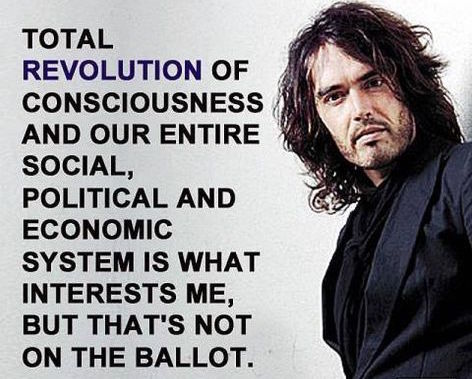
Bernie Sanders threw around the word “revolution” quite a bit. He was still using it in his surrender speech on Tuesday, assuring his flock that the revolution would continue as he marched arm in arm with the most dangerous person in the world, today – far more dangerous than Donald Trump, who will be buried in a landslide of historical proportions in November by a multi-billion dollar mountain of campaign contributions from Hillary Clinton’s Democratic and Republican friends on Wall Street. Sanders’ job is to shepherd his flock into a little leftwing corner of Hillary’s Big Tent, right next to the latrine and alongside her loyal Black Democrats, who are so meek in the presence of power that they won’t even complain about the smell.

In his kow-tow to the Queen of Chaos, Sanders put words in Clinton’s mouth that she never really said, and that would be lies if she did say them. Hillary “feels” this, Hillary “believes” that – it was as if he could read Hillary’s mind.  Hillary “knows,” said Sanders, “that something is very wrong when the very rich become richer while many others are working longer hours for lower wages.” Maybe she does know that, but she has no intention to do anything about it – just as she had no intention of allowing the Democratic Party platform to oppose TPP, although she claims she’s against it. As for those compromises Clinton did make on the platform: she was lying. The Clintons have an infinite capacity for lying, and now they’ve got Bernie Sanders lying for them, too.

If only 5 percent of Bernie Sanders’ 13 million voters formed or joined a party of the 99 percent – let’s say, the Green Party – that party would have nearly twice as many members as the British Labor Party. which would be one helluva start. Or, they can crawl along with Bernie into Hillary’s stinking Big Tent, where the real fascists live – the ones with actual experience in regime change, nuclear brinksmanship and mass Black incarceration.

Stein: Prosecute Clinton for Reckless Abuses of National Security

20160128news-Jill-Stein

Jill Stein made the following statement about the FBI decision regarding Hillary Clinton’s violations of national security laws as Secretary of State.

By Jill Stein

Source: Jill2016

Today FBI Director James Comey described Hillary Clinton’s email communications as Secretary of State as “extremely careless.” His statement undermined the defenses Clinton put forward, stating the FBI found 110 emails on Clinton’s server that were classified at the time they were sent or received; eight contained information classified at the highest level, “top secret,” at the time they were sent. That stands in direct contradiction to Clinton’s repeated insistence she never sent or received any classified emails.

All the elements necessary to prove a felony violation were found by the FBI investigation, specifically of Title 18 Section 793(f) of the federal penal code, a law ensuring proper protection of highly classified information. Director Comey said that Clinton was “extremely careless” in handling such information. Contrary to the implications of the FBI statement, the law does not require showing that Clinton intended to harm the United States, but that she acted with gross negligence.

The recent State Department Inspector General (IG) report was clear that Clinton blithely disregarded safeguards to protect the most highly classified national security information and that she included on her unprotected email server the names of covert CIA officers. The disclosure of such information is a felony under the Intelligence Identities Protection Act.

While the FBI is giving Clinton a pass for not “intending” to betray state secrets, her staff has said Secretary Clinton stated she used her private email system because she did not want her personal emails to become accessible under FOI laws. This is damning on two counts – that she intended to disregard the protection of security information, and that she had personal business to conceal.

This is not the end of the Clinton email issues. Department of Justice officials filed a motion in federal court on June 29th requesting a 27-month delay in producing correspondence between former Secretary of State Hillary Clinton’s four top aides and officials with the Clinton Foundation and Teneo Holdings, a public relations firm that Bill Clinton helped launch.

Hillary Clinton deleted 30,000 emails claiming they were ‘personal’. This is equal to the volume of her emails designated as department business. If half of an employee’s email volume is for their personal business, they are not using their time for their job.

If Secretary Clinton was conducting personal business for her family Foundation through the Secretary of State’s Office, this is a matter the American public deserves to know about. As Secretary of State Hillary Clinton routinely granted lucrative special contracts, weapons deals and government partnerships to Clinton Foundation donors. The Secretary of State’s office should not be a place to conduct private back room business deals.

The blurring of the lines between Clinton family private business and national security matters in the Secretary of State Office underscores evidence on many other fronts that Hillary Clinton is serving the 1%, not we the people.

Hillary Clinton’s failure to protect critical security information is not the only thing in her tenure as Secretary that deserves the term reckless, including her decision to pursue catastrophic regime change in Libya, and to support the overthrow of democratically elected governments in Ukraine and Honduras.


Dallas Shootings: White Supremacists Succeeded in Provoking Black Extremism

(Editor’s note: Though at this time it’s still too early too tell whether the shooting was in fact an act of black extremism and/or a more complex situation intended to appear that way, the author’s central argument, that the social chaos created by such events benefit a select few, remains valid.)

By Eclinik Learning

Source: Covert Geopolitics

Considered to be one of the worst in US police history, five police officers were shot dead and scores wounded by snipers, presumably as a retaliation to the blatant killings of two black men this week in Louisiana and Minnesota.

Initial reports said that the three snipers were not part of those who joined the Black Lives Matter rally where the shootings occurred.

This event has just raised the confrontation between the white police and the black community to a new level.

The existence of a well-organized group of white supremacists that are occupying positions of power and within the armed services of the government is at the root of all these perennial deadly and racially loaded confrontations.

The graphic video of the murder cannot be subjected to wild speculations because it shows beyond doubt of a cold blooded murders by police officers who happens to be white.

These fanatics are not just hurting black people but they are those same extremists who were aiming their pepper spray to black and white kids alike during those massive Occupy Movement rallies, in close coordination with those same mindless talkingheads who are still running the mainstream media today.

Their aim is to provoke racial, political, and cultural conflict wherever possible. It would be a complete waste of our time to try and change their trajectory considering that these extremists completely believe in their own superiority just by the virtue of the color of their skin.

A more drastic action, like removing them all from power, should be done. These people don’t respond positively to vocal street protests.

As far as this recent event is concern, there is now a very high probability that a counter-retaliation will occur against the black people. But we don’t think that it could reach the level of a full blown racial confrontation considering that a sizable number of the Americans know exactly who the real enemy is.

Who has benefited from this drastic shift of the national attention?

This event undoubtedly and effectively shifted the national conversation away from the FBI’s absolution of one Hillary Clinton for her “extremely careless” handling of state secrets via her personal email server, which in itself was just a mere diversion of more heinous crimes that the Clinton couple have to cover-up all these years.

It would not surprise us a bit if something bad will happen on the other side of the Atlantic to stop the fallout from the Chilcot Report indicating that Tony Blair was lying about everything that has to do with the invasion of Iraq.

Aside from these obvious motivations of escaping executive accountability by covering lies with more lies, and by putting the people of the world constantly on the edge, the endless appetite for gun control and mass surveillance lies at the very foundation of all these unprovoked police shootings and false flag operations.

Only this time, those who survived for a while begun to shoot back. The only problem is that the wrong police may have been the casualties.

It is therefore a lot wiser for those would-be snipers to set their sight directly on the Eye of the Pyramid.


Related Video:

Government, Terrorism, Money, Education and Other Important Discussions

images

By Phillip J. Watt

Source: The Mind Unleashed

The elite power structure – which uses the monetary system, war, false flags and the monopolized media as their primary mechanisms of control – has infiltrated every major government of the Western World. How do we know this? It’s simple; if they hadn’t been hijacked, then governments would have already begun a process of revolutionizing the way in which our societies are organized so that it benefits all of us, not just a select few.

The US Presidential race and two of its candidates have shown a small amount of hope for real change in America, something that not just its citizens desperately need, but the entire world too. Once the game is changed in the US – so that the government no longer works for those in control of the multinational and banking corporations – it will undoubtedly reverberate around the world.

Clinton is obviously a mouthpiece of the status quo and therefore cannot be trusted to enact real change. After all, she is an oligarch. On the other hand, Sanders and Trump appear to be anti-establishment, but are they really? It’s difficult to really know, because they could be controlled opposition. Yet even if they are separate to the existing order, can we really trust that they’ll do the job that the world’s peoples, and the environment, truly need?

Actions always speak louder than words, so regardless of the rhetoric of Trump and Sanders, does their policy agenda actually align to the truths that have been exposed by the many independent social researchers who are doing a wonderful job for the betterment of humanity?

Read below and decide for yourself.

The Real Policies for Change

This list is by no means exhaustive, but it reflects the fundamental shifts that we should be implementing in the short term to move into a new era of health and prosperity for humanity, and the environment we inhabit. In other words, these changes are the first essential steps if we want to overcome the dysfunction and deception that plague the hearts and minds of the people, as well as the systems that guide our collective activity.

If a political party or politician does not discuss these topics in general, then they are not aligned to the changes that we need, and therefore true progress. This is most likely because of two reasons; ignorance and/or corruption.

In any case, the exact way forward in each area is of course open for debate, but there must be an open and transparent dialogue held among the people. Simply, we all need to understand not just the issues, but the potential solutions to them.

This is obviously happening within conscious circles and progressive movements, however it’s not yet active within the mainstream mentality. This is just more evidence which illustrates that our politicians have failed us; that’s because it’s their job to bring these issues to the light of day so that everybody can participate in their resolution, if they so choose.

1. Monetary Policy: The way the economy is designed must rid society from the saturation of debt, move beyond indebtment to the oligarchs, cease the creation of fake currency by banks, overcome economic slavery by making the currency supply one of value and guarantee that local economies prosper.

2. Taxation Policy: The tax burden put on the people and the evasion of tax by multinational corporations needs to be resolved. One such method is abolishing all taxes and implementing a 2% debit-transaction taxso that citizens pay less tax, all individuals and businesses pay their fair share and there is an abundance of revenue to heal the wounds of a decaying society.

3. Budgeting Policy: Government revenues must be effectively and efficiently utilized to ensure the development of robust social services, increased wealth equality, the eradication of poverty, widespread sustainable practices, appropriate national defense programs and necessary infrastructure.

4. Defense and Foreign Policy: With unjust wars and false flag terrorism being the norm of the 21st Century, any decision to go to war must be sanctioned by the people via referendum. The reasons must be transparentally documented and validated as based in truth. All events at home and abroad that impact the decision-making of defense and foreign relations must be subject to robust and open investigations. Because national security is the first priority, all international relations should be treated diplomatically as the first line of defense.

5. Media Policy: The way in which information is disseminated throughout society must not be managed by monopolies, or a government. Media must be an open source platform where independent investigations are implemented and presented without bias. Any monopoly on the media must be disassembled so that the populace has unrestricted access to all the information necessary for the health and well-being of each individual and the community as a whole.

6. Education Policy: The way in which our children are educated is an indoctrination into the status quo, particularly economically and politically. The education system must therefore ensure that all children exercise their right to gain access to information that will help them to grow into healthy, happy and honorable adults, as well as question the way in which we organize society so that we can evolve it in alignment with our needs.

7. Governmental Policy: The amalgamation of government and business needs to be dissected. Politicians and bureaucrats are servants of the people and therefore must be representative of the needs and wants of the people. Moreover, government intervention of individual liberty and the free market must be also reduced.

8. Energy Policy: There is no longer any need to rely on fossil fuels, so creating the energy that society needs must be replaced with renewable resources – such as solar, air, water, wave, plant and free-energy technologies. Energy must also be made cheaply available to the public.

9. Health Policy: All foods and so-called medicines which impact the long-term health of the people must be labelled appropriately. Health programs that support emotional, psychological, philosophical, physical, spiritual, social and behavioral vitality must also be deeply embedded into schooling and other educational platforms. Holistic and preventative approaches to dis-ease must also be brought to the forefront of health education instead of relying on a symptomatic and prescriptive medical framework.

10. Medicine Policy: The pharmaceutical monopolies must be transformed into meeting the needs of the people, not shareholders and their profits. All natural and cheap remedies to disease – such as plant-based medicines and meditation – must be fully documented and reincorporated back into health education.

11. Housing Policy: Every person has a right to live in safe, comfortable and affordable housing. No individual should be homeless, unless by choice. Employment and Housing Policy must also be designed to ensure that the purchase of land is affordable and achievable for all.

12. Food Policy: The damaging impacts of industrial agriculture on earth’s natural systems, as well as the erosion of local economies (which is the direct result of trade agreements that primarily benefit the multinationals), needs to be reversed. One such way is by replacing it with a localized/regionalized Permaculture model where individuals and communities are supported to grow their own produce. This will help to increase local employment, as well as reconnect people to nature, the food they eat and their health requirements. In addition, all foods must be properly labelled and contain no toxic ingredients. GMOs must also be abandoned and organic foods must be readily available.

13. Water Policy: All citizens have a right to access safe and clean water. They should be supported to capture their own water needs. Where this is not possible, no toxins such as fluoride will be added to the water supply.

14. Animal Policy: All animal agriculture systems must respect the health and happiness of those animals. They must not subject them to any conditions in which they consistently suffer. One particular approach would be to incorporate it into a widespread permaculture model, in which animals are treated humanely.

15. Environmental Policy: Any practice that is environmentally unsustainable and negatively impacts the health and diversity of our natural systems is to be transformed into the opposite. The increasing extinction of animal and plant life must be reversed, as well as the trends of deforestation, ocean acidification and desertification.

16. Drug Policy: The war-on-drugs has been an epic failure because it has generated more crime, addiction, mental health problems and sent the market underground. It has also stigmatized the natural right to explore one’s own body and consciousness. The therapeutic and developmental aspects of so-called illegal drugs must be holistically researched so that society can be educated on both their positive and negative impacts. All illegal substances must be made legal, as they have begun to do in some countries, and a thoroughly-informed society must have safe access to pure substances for their own therapeutic, developmental and leisurely needs.

17. Sovereignty Policy: All citizens have natural rights, some of which have eroded through the recent policies of Western Governments. One example is privacy and another is the right to protest. This stripping of our rights needs to immediately stop and all rights aligned with natural law are to be reintroduced. No flesh and blood person should be treated as a legal fiction that works for a corporation impersonating as a government. This means that no legislation can impede on the natural laws that all individuals have a right to exercise.

18. Immunization Policy: All vaccines must be robustly studied independent of the pharmaceutical industry and the results made available to the public. All previous disease and death resulting from vaccines must also be publicly available. None will contain any ingredients other than to immunize against a specific disease. In addition, no child or adult will be forced or coerced into taking vaccines; every person must have their natural right to choose intact.

19. Atmospheric Policy: All geoengineering and chemical spraying programs are to immediately cease. The impacts that these programs have already had on the health of humanity, as well as the environment, must be holistically investigated and reversed.

20. Social Security Policy: Pensioners, people with a disability and other persons who require financial support must be treated with respect and must be able to comfortably live above the poverty line. Where possible, they will be supported to increase their education, training and skills so that they reenter the workforce. There should also be widespread volunteering programs with inherent incentives so the knowledge, skills and services of the elderly can be utilized for the benefit of the community.

Further Thoughts

There are many more areas that need to evolve, but its important to focus on the priorities in such as short piece. No doubt, many of you reading this would have been shocked and confused by some of the information herein. You might have even rejected elements to it, because it might have seemed too conspiratorial or challenging to believe. That’s okay; every single one of us who have woken up to these realities felt the same the first time we heard them too.

In any case, if you’d like to do follow up research, the links provided above will help you to initiate the process. Go deep too; it’s only when we individually undertake our own independent and robust research that we can come to a solid understanding of the true state of the world. The tip of course is to not be fooled by the propaganda narratives of the matrix-media and ensure we undertake research through the independent channels and progressive social researchers.

Furthermore, the above plans of attack are designed for the short to mid term. This does not discount the deeper agenda of moving from an economy of scarcity, to one of abundance. There are many models to achieve this, such as several resource-based economies, but until we build the foundations and start moving in that direction we have to work with what’s in front of us, right now.

In addition, of course it’s necessary to build new systems outside of the existing model to make the old ones redundant, yet we still need to use the systems that we’ve got and aim to transform society from within. After all, a balanced and holistic approach, is always the right approach.

Final Thoughts

Never has a government exposed all of the above issues. They might touch on some of them to some degree, but unfortunately we don’t have so-called leaders who actually call out the real challenges that we collectively face. There’s no doubt that some politicians know about these actualities, but the reality is they don’t publicly disclose it in fear of losing their credibility, or their livelihood.

But things are changing. Not only are more and more people joining the awakening community by educating themselves and taking action in response to these dysfunctions, but there are also political parties forming who dare to expose these truths to their audience and design robust policies in response. One such group is The Australian Sovereignty Party (ASP); in fact, many of the links above will direct you to the policies they’ve designed to rectify the failures of past governments.

Many parties around the world could learn a thing or two from this political force.

If you’re Australian, I highly encourage you to read the policy material at their website and join if their ethos resonates with you. Any person from around the world can join as an affiliate member too, so anyone is more than welcome to sign up to learn about how a true political party works. In addition, share this article and the ASPs progressive policies among your friends and family so that the momentum builds to bring Australians (and others) up-to-date with a political outfit that actually represents the real needs of you, me and all of us.

If you also believe in transforming our world into a better place, then at the very least research their policies. I know you’ll be pleasantly surprised (view their website here and follow them on facebook here). Furthermore, following is an interview I did with the President of the ASP, Daniel Huppert. In it he discusses many of the issues found in this article and the ASPs policy response to them. Enjoy.


ABOUT THE AUTHOR

Phillip J. Watt lives in Australia. His written work deals with topics from ideology to society, as well as self-development. Follow him on Facebook or visit his website.

Your Awakening Counts More Than Your Vote

russell-brand-total-revolution-of-consciousness

By Dylan Charles

Source: Waking Times

We live in a world where illusions are held in higher esteem than verifiable truth. This is no accident, as the individual has for decades now been on the receiving end of social engineering programs, advanced political and corporate propaganda, fear programming and outright mind control.

The sum total of all this mass conditioning has been to convince otherwise good-natured and hard-working people to participate in their own enslavement and to willingly acquiesce to the ever-increasing rules, invasions of privacy, taxations, permissions and control schemes of a government and world elite who have long since left public interest in the dust.

The American dream is a mythic idea that was supposedly founded on the principle that public oversight of government is possible thanks to an electoral process which would give an informed citizenry the opportunity to replace undesirable politicians with better ones. Government itself, though, is a brutish and violent force that has time and again proven absolutely wild, reckless and untamable. It has never has obeyed its own laws, policies or regulations, and world history is a bloodstained chronicle of man’s failure to control himself when given power in the form of government.

Just as you cannot stop the tides from rising and falling, you cannot stop government from decaying into tyranny, especially so by following its very own rules and by participating in its token rituals.

This is truth, yet the illusion of so-called ‘democracy’ persists, seeming to grip people ever more feverishly with each passing election season. Even in the face of overt election fraud, party infighting, delegate rigging and widespread disenfranchisement. And so here we are again, facing the embarrassing spectacle of choosing between two undesirables when we all know the game is rigged.

For the powers the be, though, the repeating four-year cycle of presidential politics is the most effective device for keeping the masses high on the illusion of self-governance. It force feeds us on a regular schedule the false narrative that we the people can vote to reign in the power and corruption of the oligarchy of deep state, private and corporate influences that truly control the direction of this nation.

In this light, the purpose of national politics is not to perpetuate self-governance for the benefit of the common person, but rather to eat up personal energy and resources in order to suck the individual into a quagmire of false hope and endless patience with outrage after outrage. It is to make ineffectual action feel like action to the people being most screwed over by the corruption of the elite.

Sure, this may sound negative, cynical or apathetic to those who are over-invested emotionally in this game, but in order to move beyond the insanity of doing the same thing again and again while expecting different results, it’s imperative to be deadly honest about how this program works to enslave us, not to free us. Once we can think beyond the peer pressure, neighbor-hating, and mindless outrage that marks each election cycle, we make ourselves available to the possibility of real change. And real change always begins from within, and never forced from without.

There is no political leader who can make you stand fearlessly in this complex and dangerous world.There is no candidate that can give you the freedom that comes with a healthy mind and body. There is no political ruler who can manifest true and lasting happiness for you. There is no politician who can ensure that you enjoy the experience of your life everyday, under any and all circumstances. And there is no president that can empower you to be the best possible version of yourself so that you may give your best to others.

All of these qualities are vastly more critical to personal, community and planetary renewal than whichever new figurehead is selected to be the perceived front man of a morbidly corrupt American government.

The most effective way to change the world around you is to first focus on and create more value in yourself. This is why your awakening counts far more than your vote does. 

Hacker Leaks Secret DNC Master Files on Hillary Clinton & Foundation

shutterstock_251313145-650

Long before Clinton declared candidacy, the DNC researched her “vulnerabilities”—including speaking fees, private jets, and high-rolling Clinton Foundation donors

By Nika Knight

Source: CommonDreams.org

The anonymous hacker calling themselves Guccifer 2.0 released a second trove of internal documents from Democratic National Committee (DNC) servers on Tuesday, including a hefty 113-page file titled “Hillary Clinton Master Doc” that includes research the party performed on behalf of Clinton’s candidacy—months before she declared an intention to run.

The documents reveal that the DNC was particularly worried about Clinton’s speaking fees, her book advance, and her somewhat exacting luxury travel requirements for appearances.

As the Daily Beast summarized:

Several documents leaked […] show that DNC researchers, whose annotated notes can still be seen in the electronic files, looked for the tiniest potential infraction or questionable item in Clinton’s travel expenses, for instance, asking why one trip from New York to Washington, D.C., aboard a Bank of America jet cost just $45.75, an amount that a researcher called “weirdly low.”

A whole section in the “Master Doc” is devoted to questions and criticism about the money Clinton made from her book advance, book tour, and her public speeches, which generally ran around $250,000 per appearance and required the host to provide first-class travel and accommodations. In Clinton’s defense, the DNC cites articles stressing that fees went to the Clinton Foundation, and characterizing the work that the former secretary did in her private life not as an attempt to enrich herself, but to benefit her and her husband’s charitable work.

Also in the dossier were documents gathered by the DNC related to Clinton’s sky-high speaking fees, including an email from her booking agency that contradicts Clinton’s defense that she merely accepted “what they offered” when she was paid over $200,000 per speech—a claim that reporters have previously critiqued.

As journalist Shaun King observed on Twitter:

[tweet https://twitter.com/ShaunKing/status/745444019556081664 ]

The Smoking Gun notes the other amenities Clinton required in her speaking contracts:

In addition to a “standard” $225,000 fee, Clinton required a “chartered roundtrip private jet” that needed to be a Gulfstream 450 or a larger aircraft. Depending on its outfitting, the Gulfstream jet, which costs upwards of $40 million, can seat 19 passengers and “sleeps up to six.” Clinton’s contract also stipulated that speech hosts had to pay for separate first class or business airfare for three of her aides.

As for lodging, Clinton required “a presidential suite” and up to “three (3) adjoining or contiguous rooms for her travel aides” and up to two extra rooms for advance staff. The host was also responsible for the Clinton travel party’s ground transportation, meals, and “phone charges/cell phones.”

Additionally, the host also had to pay “a flat fee of $1000” for a stenographer to create “an immediate transcript of Secretary Clinton’s remarks.” The contract adds, however, “We will be unable to share a copy of the transcript following the event.”

Moreover, the DNC appeared particularly worried about the “vulnerabilities” of the Clinton Foundation, such as its acceptance of million-dollar plus donations from private corporations and foreign governments, its veiled finances, and its record in Haiti.

One file (pdf) titled “Clinton Foundation Donors $25K+” documents the high-rolling donors to the Clinton Foundation, including the Kingdom of Saudi Arabia (in the $10-$25 million column), the Saudi Arabian construction magnate Sheikh Mohammed H. Al-Amoudi ($5-$10 million), Barclays Capital ($1-$5 million), ExxonMobil ($1-$5 million), and Chevron ($500,000-$1 million), among many other private corporations—including healthcare, oil and gas, and media giants—and foreign governments.

In a master file called “Clinton Foundation Master Doc,” DNC researchers appear to have gathered reporting spanning years on the “vulnerabilities” of the Clinton Foundation’s record and finances, revealing a particular point of anxiety for the party:

The documents, most of which appear to be dated from the spring of 2015, reveal a party entirely focused on propping up its establishment candidate, critics contend, while failing to support or even predict the success of outsider candidate Bernie Sanders.

Indeed, much of the “opposition research” on other Democratic candidates focused on Lincoln Chafee, Martin O’Malley, Jim Webb, and even Vice President Joe Biden, who never declared an intention to run.

Some argue that these leaks lend more weight to accusations that the primary was “rigged” in favor of the former secretary of state.

And whoever Guccifer 2.0 may be, they appear to be taking a more active role in the leaks—saying they’re now willing to speak to the press via Twitter—supporting whistleblower Edward Snowden’s statement that such hacktivists are “now demonstrating intent—and capability—to influence elections.”

Related Article: Judicial Watch: New Clinton Emails Produced by State Department; Clinton Email Shows She Was Concerned About Records (6.27.16)

This Is Our Neoliberal Nightmare: Hillary Clinton, Donald Trump, and Why the Market and the Wealthy Win Every Time

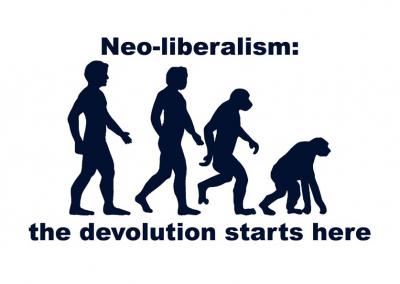
neo_liberalism_devolution_via_permanentculturenow.com_

The rage driving our politics stems from cruelty of capitalism. So why do we vote for those who worship the market?

By Anis Shivani

Source: AlterNet

Over the last fifteen years, editors often asked me not to mention the word “neoliberalism,” because I was told readers wouldn’t comprehend the “jargon.” This has begun to change recently, as the terminology has come into wider usage, though it remains shrouded in great mystery.

People throw the term around loosely, as they do with “fascism,” with the same confounding results. Imagine living under fascism or communism, or earlier, classical liberalism, and not being allowed to acknowledge that particular frame of reference to understand economic and social issues. Imagine living under Stalin and never using the communist framework but focusing only on personality clashes between his lieutenants, or likewise for Hitler or Mussolini or Mao or Franco and their ideological systems! But this curious silence, this looking away from ideology, is exactly what has been happening for a quarter century, since neoliberalism, already under way since the early 1970s, got turbocharged by the Democratic party under the Democratic Leadership Council (DLC) and Bill Clinton. We live under an ideology that has not been widely named or defined!

Absent the neoliberal framework, we simply cannot grasp what is good or bad for citizens under Cruz versus Trump, or Clinton versus Sanders, or Clinton versus Trump, away from the distraction of personalities. To what extent does each of them agree or disagree with neoliberalism? Are there important differences? How much is Sanders a deviation? Can we still rely on conventional distinctions like liberal versus conservative, or Democrat versus Republican, to understand what is going on? How do we grasp movements like the Tea Party, Occupy, and now the Trump and Sanders insurgencies?

Neoliberalism has been more successful than most past ideologies in redefining subjectivity, in making people alter their sense of themselves, their personhood, their identities, their hopes and expectations and dreams and idealizations. Classical liberalism was successful too, for two and a half centuries, in people’s self-definition, although communism and fascism succeeded less well in realizing the “new man.”

It cannot be emphasized enough that neoliberalism is not classical liberalism, or a return to a purer version of it, as is commonly misunderstood; it is a new thing, because the market, for one thing, is not at all free and untethered and dynamic in the sense that classical liberalism idealized it. Neoliberalism presumes a strong state, working only for the benefit of the wealthy, and as such it has little pretence to neutrality and universality, unlike the classical liberal state.

I would go so far as to say that neoliberalism is the final completion of capitalism’s long-nascent project, in that the desire to transform everything—every object, every living thing, every fact on the planet—in its image had not been realized to the same extent by any preceding ideology. Neoliberalism happens to be the ideology—unlike the three major forerunners in the last 250 years—that has the fortune of coinciding with technological change on a scale that makes its complete penetration into every realm of being a possibility for the first time in human history.

From the early 1930s, when the Great Depression threatened the classical liberal consensus (the idea that markets were self-regulating, and the state should play no more than a night-watchman role), until the early 1970s, when global instability including currency chaos unraveled it, the democratic world lived under the Keynesian paradigm: markets were understood to be inherently unstable, and the interventionist hand of government, in the form of countercyclical policy, was necessary to make capitalism work, otherwise the economy had a tendency to get out of whack and crash.

It’s an interesting question if it was the stagflation of the 1970s, following the unhitching of the United States from the gold standard and the arrival of the oil embargo, that brought on the neoliberal revolution, with Milton Friedman discrediting fiscal policy and advocating a by-the-numbers monetarist policy, or if it was neoliberalism itself, in the form of Friedmanite ideas that the Nixon administration was already pursuing, that made stagflation and the end of Keynesianism inevitable.

It should be said that neoliberalism thrives on prompting crisis after crisis, and has proven more adept than previous ideologies at exploiting these crises to its benefit, which then makes the situation worse, so that each succeeding crisis only erodes the power of the working class and makes the wealthy wealthier. There is a certain self-fulfilling aura to neoliberalism, couched in the jargon of economic orthodoxy, that has remained immune from political criticism, because of the dogma that was perpetuated—by Margaret Thatcher and her acolytes—that There Is No Alternative (TINA).

Neoliberalism is excused for the crises it repeatedly brings on—one can think of a regular cycle of debt and speculation-fueled emergencies in the last forty years, such as the developing country debt overhang of the 1970s, the savings and loan crisis of the 1980s, the Asian currency crisis of the 1990s, and the subprime mortgage crisis of the 2000s—better than any ideology I know of. This is partly because its very existence as ruling ideology is not even noted by the population at large, which continues to derive some residual benefits from the welfare state inaugurated by Keynesianism but has been led to believe by neoliberal ideologues to think of their reliance on government as worthy of provoking guilt, shame, and melancholy, rather than something to which they have legitimate claim.

It is not surprising to find neoliberal multiculturalists—comfortably established in the academy—likewise demonizing, or othering, not Muslims, Mexicans, or African Americans, but working-class whites (the quintessential Trump proletariat) who have a difficult time accepting the fluidity of self-definition that goes well with neoliberalism, something that we might call the market capitalization of the self.

George W. Bush’s useful function was to introduce necessary crisis into a system that had grown too stable for its own good; he injected desirable panic, which served as fuel to the fire of the neoliberal revolution. Trump is an apostate—at least until now—in desiring chaos on terms that do not sound neoliberal, which is unacceptable; hence Jeb Bush’s characterization of him as the “candidate of chaos.” Neoliberalism loves chaos, that has been its modus operandi since the early 1970s, but only the kind of chaos it can direct and control.

To go back to origins, the Great Depression only ended conclusively with the onset of the second world war, after which Keynesianism had the upper hand for thirty-five years. But just as the global institutions of Keynesianism, specifically the IMF and the World Bank, were being founded at the New Hampshire resort of Bretton Woods in 1944, the founders of the neoliberal revolution, namely Friedrich Hayek, Ludwig von Mises, Milton Friedman, and others were forming the Mount Pelerin Society (MPS) at the eponymous Swiss resort in 1947, creating the ideology which eventually defeated Keynesianism and gained the upper hand during the 1970s.

So what exactly is neoliberalism, and how is it different from classical liberalism, whose final manifestation came under Keynesianism?

Neoliberalism believes that markets are self-sufficient unto themselves, that they do not need regulation, and that they are the best guarantors of human welfare. Everything that promotes the market, i.e., privatization, deregulation, mobility of finance and capital, abandonment of government-provided social welfare, and the reconception of human beings as human capital, needs to be encouraged, while everything that supposedly diminishes the market, i.e., government services, regulation, restrictions on finance and capital, and conceptualization of human beings in transcendent terms, is to be discouraged.

When Hillary Clinton frequently retorts—in response to demands for reregulation of finance, for instance—that we have to abide by “the rule of law,” this reflects a particular understanding of the law, the law as embodying the sense of the market, the law after it has undergone a revolution of reinterpretation in purely economic terms. In this revolution of the law persons have no status compared to corporations, nation-states are on their way out, and everything in turn dissolves before the abstraction called the market.

One way to sum up neoliberalism is to say that everything—everything—is to be made over in the image of the market, including the state, civil society, and of course human beings. Democracy becomes reinterpreted as the market, and politics succumbs to neoliberal economic theory, so we are speaking of the end of democratic politics as we have known it for two and a half centuries. As the market becomes an abstraction, so does democracy, but the real playing field is somewhere else, in the realm of actual economic exchange—which isnot, however, the market. We may say that all exchange takes place on the neoliberal surface.

Neoliberalism is often described—and this creates a lot of confusion—as “market fundamentalism,” and while this may be true for neoliberal’s self-promotion and self-presentation, i.e., the market as the ultimate and only myth, as were the gods of the past, I would argue that in neoliberalism there is no such thing as the market as we have understood it from previous ideologies.

The neoliberal state—actually, to utter the word state seems insufficient here, I would claim that a new entity is being created, which is not the state as we have known it, but an existence that incorporates potentially all the states in the world and is something that exceeds their sum—is all-powerful, it seeks to leave no space for individual self-conception in the way that classical liberalism, and even communism and fascism to some degree, were willing to allow.

There are competing understandings of neoliberal globalization, when it comes to the question of whether the state is strong or weak compared to the primary agent of globalization, i.e., the corporation, but I am taking this logic further, I am suggesting that the issue is not how strong the state is in the service of neoliberalism, but whether there is anything left over beyond the new definition of the state. Another way to say it is that the state has become the market, the market has become the state, and therefore both have ceased to exist in the form we have classically understood them.

Of course the word hasn’t gotten around to the people yet, hence all the confusion about whether Hillary Clinton is more neoliberal than Barack Obama, or whether Donald Trump will be less neoliberal than Hillary Clinton. The project of neoliberalism—i.e., the redefinition of the state, the institutions of society, and the self—has come so far along that neoliberalism is almost beyond the need of individual entities to make or break its case. Its penetration has gone too deep, and none of the democratic figureheads that come forward can fundamentally question its efficacy.

I said almost. The reason why Bernie Sanders, self-declared democratic socialist, is so threatening to neoliberalism is that he has articulated a conception of the state, civil society, and the self that is not founded in the efficacy and rationality of the market. He does not believe—unlike Hillary Clinton—that the market can tackle climate change or income inequality or unfair health and education outcomes or racial injustice, all of which Clinton propagates. Clinton’s impending “victory” (whatever machinations were involved in engineering it) will only strengthen neoliberalism, as the force that couldn’t be defeated even when the movement was as large and transcendent as Sanders’s. Although Sanders doesn’t specify “neoliberalism” as the antagonist, his entire discourse presumes it.

Likewise, while Trump supporters want to take their rebellion in a fascist direction, their discomfort with the logic of the market is as pervasive as the Sanders camp, and is an advance, I believe, over the debt and unemployment melancholy of the Tea Party, the shame that was associated with that movement’s loss of identity as bourgeois capitalists in an age of neoliberal globalization. The Trump supporters, I believe, are no longer driven by shame, as was true of the Tea Party, and as has been true of the various dissenting movements within the Republican party, evangelical or otherwise, in the recent past. Rather, they have taken the shackles off and are ready for a no-holds barred “politically incorrect” fight with all others: they want to be “winners,” even at the cost of exterminating others, and that is not the neoliberal way, which doesn’t acknowledge that there can be winners and losers in the neoliberal hyperspace.

In the current election campaign, Hillary Clinton has been the most perfect embodiment of neoliberalism among all the candidates, she is almost its all-time ideal avatar, and I believe this explains, even if not articulated this way, the widespread discomfort among the populace toward her ascendancy. People can perceive that her ideology is founded on a conception of human beings striving relentlessly to become human capital (as her opening campaign commercialso overtly depicted), which means that those who fail to come within the purview of neoliberalism should be rigorously ostracized, punished, and excluded.

This is the dark side of neoliberalism’s ideological arm (a multiculturalism founded on human beings as capital), which is why this project has become increasingly associated with suppression of free speech and intolerance of those who refuse to go along with the kind of identity politics neoliberalism promotes.

And this explains why the 1990s saw the simultaneous and absolutely parallel rise, under the Clintons, of both neoliberal globalization and various regimes of neoliberal disciplining, such as the shaming and exclusion of former welfare recipients (every able-bodied person should be able to find work, therefore under TANF welfare was converted to a performance management system designed to enroll everyone in the workforce, even if it meant below-subsistence wages or the loss of parental responsibilities, all of it couched in the jargon of marketplace incentives).

The actual cost to the state of the AFDC program was minimal, but its symbolism was incalculable. The end of welfare went hand in hand with the disciplinary “crime bill” pushed by the Clintons, leading to an epidemic of mass incarceration. Neoliberalism, unlike classical liberalism, does not permit a fluidity of self-expression as an occasional participant in the market, and posits prison as the only available alternative for anyone not willing to conceive of themselves as being present fully and always in the market.

I believe that the generation of people—in their forties or older—supporting Hillary have already internalized neoliberal subjectivity, which they like to frame as realism or pragmatism, refusing for instance to accept that free college or health care are even theoretical possibilities. After all, they have maintained a measure of success in the past three or four decades after conceptualizing themselves as marketplace agents. Just as the Tea Party supporters found it intolerable that government should help irresponsible homeowners by bailing them out of unsustainable debt, the Clinton supporters hold essentially the same set of beliefs toward those who dare to think of themselves outside the discipline of the market.

I spoke of the myth of the market, as something that has no existence in reality, because none of the elements that would have to exist for a market to work are actually in place; this is even more true for neoliberalism than it was for the self-conscious annihilation of the market by communism, because at least in that system the market, surreptitiously, as in various Eastern European countries, kept making an appearance. But when the market takes neoliberal shape, i.e., the classical conceptions of the buyer and seller as free agents are gone, then radical inequality is the natural outcome. And inequality in the last four decades, as statistics for the U.S. and everywhere neoliberalism has made inroads prove beyond a doubt, has exploded, thereby invalidating neoliberalism’s greatest claim to legitimacy, that it brings about a general increase in welfare. So neoliberalism, to the extent that the inequality discourse has made itself manifest recently, must insist all the more vocally on forms of social recognition, what Clinton, for example, likes to call the “fall of barriers.”

Neoliberalism likes to focus on public debt—in the Clinton years debt reduction became a mania, though George W. Bush promptly spent all the accumulated surpluses on tax cuts for the wealthy and on wars of choice—rather than inequality, because the only way to address inequality is through a different understanding of public debt; inequality can only be addressed through higher taxation, which has by now been excluded from the realm of acceptable discourse—except when Sanders, Trump, or Jeremy Corbyn in England go off script.

So to recapitulate neoliberalism’s comprehensive success, let us note that we have gone from a liberal, Keynesian, welfare state to a neoliberal, market-compliant, disciplinary state.

Neoliberalism expects—and education at every level has been redesigned to promote this—that economic decision-making will be applied to all areas of life (parenthood, intimacy, sexuality, and identity in any of its forms), and that those who do not do so will be subject to discipline. Everyone must invest in their own future, and not pose a burden to the state or anyone else, otherwise they will be refused recognition as human beings.

This supposed economic “rationality” (though it is the greatest form of irrationality) applies to civil society as much as the state, so that none of the ideals of classical liberalism, or previous ideologies rooted in humanism, are valid any longer, the only value is the iteration of the market (as myth, not reality); in other words, neoliberalism, unlike the elevation of the individual in classical liberalism or the state in fascism or the collectivity in communism, has erected something, the market, that has no real existence, as the only god to serve! And it is just like a god, with an ethereal, unchallengeable, irrefutable, ubiquitous presence. Whatever in state policy does not serve market-conformity is to be banned and banished from memory (the secular scriptures are to be rewritten), which explains neoliberalism’s radical narrowing of public discourse, including the severance of identity politics from any class foundation.

Neoliberalism will continue to perpetuate reduced opportunity, because one of its characteristics—as in any system that wants to thrive on the world stage—is to constantly refine the field upon which the human subject can operate.

As such, those displaced workers who have suffered the most from the erosion of the old industries in the former manufacturing centers of the world are not even factors to contend with, they are invisible and cannot be part of the policy equation. To the extent that their actual presence is reckoned with, the economy can be said to have crashed; but the problem doesn’t arise because of the management of unemployment or underemployment statistics, unlike a housing crash which is palpable and cannot escape statistical definition.

The danger for neoliberalism—as is clear from the support of millions of displaced human beings for Trump—is that with each crisis neoliberalism sheds more workers, makes individuals and firms more “disciplined,” narrows the scope of opportunity even further. At times, the disciplining of the non-neoliberal other—as with the killing of Michael Brown or Eric Garner—explodes to surface consciousness in an unsavory way, so an expert manager like Clinton or Obama is required to tamp down the emotions of such unruly entities as Black Lives Matter which arise in response. If climate change, according to Clinton and her cohort, can and should have market solutions, then surely racial disparity, or police violence, should also have market solutions and no others; it is here that neoliberal multiculturalism, operating in the academy, is so insidious, because at the elite level it functions to validate market discourse, it does not step outside it.

The present breakdown of both major political parties can be explained by the frustration that has built up in the body politic over the past decade, because after the crash there was no sustained intellectual movement to question the myth of the market. The substitution of economic justice with identity politics is something Ralph Nader, Howard Dean, and now Bernie Sanders have contested in a humane manner, while the same process is at work, admittedly in an inhumane way, in the Trump phenomenon.

Thus, also, Hillary Clinton’s animus against free college education; that form of expansion of opportunity, which was a reality from the 1950s to the 1980s, cannot be allowed to return, human beings are supposed to invest in their own future earnings potential, they are not entitled to a transcendent experience without barriers manifesting in discipline and self-correction. Education, like everything else, including one’s own health, becomes an expensive consumer good, not a right, no longer an experience that might lead to a consciousness beyond the market but something that should be fully encapsulated by the market. If one is a capable market player, education as we have classically understood it becomes redundant.

Unlike the interregnum between 1945-1973, the rising tide—no matter the befuddlements Arthur Laffer and his fellow Reaganite ideologues proffered—does not lift all boats today, it is outside the logic of neoliberalism that it do so, so the idea of reforming neoliberalism, or what is often called “globalization with a human face,” is a rhetorical distraction. All of the policy innovations—interpreted as “socialism” by the Tea Partiers—offered by Barack Obama fall within the purview of neoliberalism, above all the Affordable Care Act, whose genesis was hatched in neoliberal think tanks decades ago.

It is important to note that neoliberal economic restructuring necessarily means social restructuring, i.e., a movement toward disciplinarity and away from liberalism; the disciplinarity can take a Bushian, Clintonian, or Trumpian form, but these are manifestations of the same tendency.

When wage growth is decoupled from economic growth (as it has been since Friedman and others inaugurated the revolution in the early 1970s), this means that the human subject is ripe for discipline. Furthermore, wage fairness cannot be rationally discussed (hence the obfuscation surrounding the $15 minimum wage orchestrated by Clinton and others) because the concept of the market has been disembedded from society; the market as abstraction, not a concrete reality, makes any notion of reform or restructuring impossible. Like the minimum wage, something like free child care also remains outside the bounds of discourse, because public policy cannot accommodate discussions that do not take the self-regulating market as unassailable myth.

What neoliberalism can accommodate is relentless tax cuts (Trump has already offered his huge tax cut plan, as Bush did as his first order of business), which only exacerbate the problem, leading to increasing concentrations of wealth. It has to be said, though, that Ted Cruz more comfortably fit the neoliberal paradigm, with his familiar calls for lower taxes along with reduced regulation and further limits on social welfare, whereas Trump shows, for now, some elements of apostasy. If neoliberalism were to get a Cruz, it would have no problem working with him, or rather, Cruz would have had no problem executing neoliberalism, beyond the surface dissimilarities from Hillary Clinton.

As Sanders has consistently noted, economic inequality leads to political inequality, which means that democracy, after a certain point, becomes only theoretical (viz. Citizens United and the electoral influence of such powerful entities as the Koch brothers). Both processes—economic inequality and political inequality—have accelerated after each downturn in the forty-five-year history of neoliberalism, therefore a downturn is always exciting, and even preordained, for a Bush, a Trump, or a Clinton. Again, economic inequality and political polarity (polarity is simply a manifestation of democracy having become dysfunctional) strongly correlate, and both have come to a head in this election.

Neoliberalism’s task, from this point on, is to mask and manage the increasing inequalities that are likely to befall humanity, especially as the planet reaches a crisis point in its health. In a way, George W. Bush threw a wrench—he was a perverted Keynesian in a way, believing in war to prime the pump, or inflating unsustainable bubbles, or spending exorbitantly on grandiose gestures—into the process of neoliberal globalization that was going very smoothly indeed under Bill Clinton and would likely have flourished under Al Gore as well. With Hillary Clinton, the movement will be toward further privatization of social welfare, “reforming” it along market principles, as has been true of every neoliberal avatar, whether it was Bill Clinton’s incentives to work in the performance management makeover of welfare, George Bush’s proposed private social security accounts, Mitt Romney’s proposed private health care accounts, or the school vouchers that tempt all of them from time to time.

What remains to be seen is the extent to which the millennial generation might be capable of thinking outside the neoliberal paradigm, i.e., they don’t just want more of what neoliberal promises to give them yet fails to deliver, but want things that neoliberalism does not or cannot promise. On this rests the near-term future of the neoliberal project.

Beyond Sanders himself, the key question is the ability of the millennial generation to conceive of themselves outside the neoliberal subjectivity they have been pushed to internalize. They have been encouraged to think of themselves as capital producers, turning their intellectuality into social media popularity for the benefit of capital, in the service of the same abstract market that has no place, no role, no definition beyond the fallen liberal calculus. Does the millennial generation believe, even about its most intimate core, that everything has been privatized?

I am not necessarily making a pessimistic prediction. I am merely outlining the strength of an opponent that has refused to be named for forty-five years, although it has been the ruling ideology that long! In defining neoliberalism, I have sought to distance myself from the distraction of personalities, and tried to expose the dark side of our politics which we can only see when we name and understand the ideology as such. We are up against a system that is so strong that it has survived, for the most part, the last crash, as citizens couldn’t get their heads around the idea of nationalizing banks or health care.

It is existentially imperative to ponder what happens beyond Sanders, because neoliberalism has its end-game in sight, letting inequality continue to escalate past the crash point (meaning the point where the economy works for most people), past any tolerable degradation of the planet (which is being reconceptualized in the shape of the market).

What, indeed, does happen beyond Sanders, because as we have seen Hillary Clinton is one of the founders of neoliberal globalization, one of its central historical figures (having accelerated the warehousing of the poor, the attack on trade unions, and the end of welfare and of regulatory prowess), while Trump is an authoritarian figure whose conceptions of the state and of human beings within the state are inconsistent with the surface frictionlessness neoliberalism desires? To go back to Hillary Clinton’s opening campaign commercial, to what extent will Americans continue to believe that the self must be entrepreneurially leveraged toward maximum market gains, molded into mobile human capital ever ready to serve the highest bidder?

As to whether a non-neoliberal globalization is possible and what that might look like on the international stage after a quarter-century of Clinton, Bush, and Obama—which is essentially the frustration Trump is tapping into—I’ll take that up in a follow-up essay, which will further clarify the differences between Sanders versus Clinton, and Trump versus Clinton.

I would suggest that it is not that globalization causes or has caused neoliberalism, but that neoliberalism has pushed a certain form of globalization that suits its interests. This is a crucial distinction, on which everything else hinges. The neoliberal market doesn’t actually exist; at the moment it is pure abstraction; what is actually filling up economic and political space can only be discussed when we step away from this abstraction, as Sanders has so ably done, and as the Occupy and Black Lives Matter movements tentatively set in motion.


 

Anis Shivani is the author of several books of fiction, poetry, and criticism, including, most recently, My Tranquil War and Other Poems. His novel Karachi Raj (HarperCollins/Fourth Estate) was released this summer. His next book is the poetry collection Whatever Speaks on Behalf of Hashish, out in October.

Hillary Clinton is the most qualified to head the Evil Empire

hillary-clinton-winking-AP-640x480

By Cindy Sheehan

Source: Intrepid Report

I’ve run for political office a few times myself, and even though I have always met constitutional qualifications, I always have been told that I was not “qualified.”

What seem to be the political qualifications to be the figurehead for this demented and bestial US Empire? That one is 35 and born in the US? That’s what the US constitution says, but what do others look for?

Perhaps, the voting public looks for, against all evidence and history, a person that is honest and truly cares about this nation and its people. A person that is wise and sober in his/her life and decision-making ability? One that would gladly give his/her life for peace and liberty?

As evidenced by this never-ending and insufferable election cycle, it seems like the voting electorate is now looking for a “political outsider;” which makes more sense with the Trumpites, than the Sandernistas: The first has never held political office and the second has been a politician for decades. However, in what really matters to the global capitalist/imperialist class, the person running for office that meets their qualifications almost perfectly to a “t” is former First Lady, US Senator and Secretary of State Hillary Clinton.

What are the real qualifications to the fill the position of POTUS?

It seems one must be an unrepentant criminal who is willing to murder civilians willy-nilly for profit and resource control. Mrs. Clinton is a grandmother who I presume loves her grandchild, but has demonstrated an eager willingness to murder the children of others.

For example, as US senator, Clinton was one of the most ardent cheerleaders for the Bush mob’s murderous attack on Iraq and as First Lady, she watched as her husband also murdered hundreds of thousands of Iraqis by bombs and sanctions. As secretary of state she was one of the Obama mob’s architects of the abominable destruction of Libya.

In 2005, after I went to Crawford, Texas, and camped there for one month at our peace encampment, Camp Casey, I had an extensive meeting with this right-wing cutthroat. “Ice Queen” doesn’t even begin to cover Clinton’s callousness and calculation. Like the war powers know, I also am convinced that she could easily transition into a commander in chief who would push that button.

Contrary to popular belief, US elections are never about the “lesser of two evils,” they always are about pure evil and which puppet of evil will ultimately infest the Oval Office.

Don’t fall for the “lesser-evil” trap. Evil can never be voted away, it must be exorcised with courage and good.

So, even without talking about her subservience to Monsanto and Wall Street, unfortunately for humanity, HRC is eminently qualified for the position of POTUS.

I don’t want that kind of qualified. It makes my stomach turn.


Anti-war activist Cindy Sheehan is executive producer/host at Cindy Sheehan’s Soapbox Radio Show.