The International Noise Conspiracy
Two for Tuesday
3

By Declan Hayes
Source: Strategic Culture Foundation
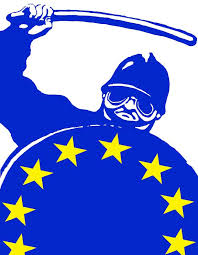
Though Musk is still playing at being NATO’s token non-conformist, the EU is essentially telling him and all of us that any dissent from its Russophobic, Slavophobic and Sinophobic narratives will be severely punished.
The European Union’s enforcers have told Twitter owner Elon Musk that the EU’s voluntary information code is not voluntary and that the EU will fine the pants off Twitter if Musk does not play by NATO’s self-serving rules. Though Musk is still playing at being NATO’s token non-conformist, the EU is essentially telling him and all of us that any dissent from its Russophobic, Slavophobic and Sinophobic narratives will be severely punished.
From the point of view of von der Leyen and NATO’s other EU puppets, that makes absolutely perfect sense. As legacy media’s active shelf life is fast expiring, that just leaves the EU with alternative media to kill off with massive fines in Twitter’s case or, more generally, by crowding out and muzzling any and all truth tellers.
Look at the treatment being meted out to Pink Floyd’s Roger Waters, a life-long anti-fascist, whose father was killed in action fighting the Nazis but which the usual suspects, led as always by the BBC and the Guardian, are trying to ban for supposedly being a Jew-hating Nazi simply because of his support for Palestinian rights, for Julian Assange and for being stupid enough to still be doing live concerts with those unreconstructed views, as he touches 80 years of age.
The EU’s code Waters and Musk are falling foul of “aims to prevent profiteering from disinformation and fake news, as well as increasing transparency and curbing the spread of bots and fake accounts”.
By disinformation, in addition to Waters, von der Leyen’s thugs mean the work of folk like our own excellent Stephen Karganovic, who is not only a quality thinker and writer, but is on every EU and NATO hit list imaginable because he speaks his truths to their power. And others like Fyodor Lukyanov and Timur Fomenko, who file excellent analytical copy for Russia Today which, with this site, is subject to a string of sanctions and name-calling that are as libellous and ignorant as those these EU and NATO morons throw at Waters or any other of their betters.
The objective in labelling SCF, Russia Today, Waters and even Masha and Mishka as dis-information is to control the common space and not to give the ideas of heretics like Jeremy Corbyn, Robert F Kennedy Junior or their type space to survive.
With fake news, the EU is primarily concerned with folk who expose their crimes, family folk like Roger Waters and Julian Assange, who has now done the equivalent of a life tariff for exposing the tiniest fracton of the war crimes the Yanks committed in Iraq, crimes which, remember, included the gang rape of little girls by these harbingers of US-style democracy.
And then there is Gonzalo Lira, who is in the worst of all places, in Ukraine, whose soldiers rape corpses, and whose politicians ban all opposition parties, all opposition media and all religions that do not worship their utterly corrupt system but yet, as the corpse rapists do God knows what to Gonzalo Lira in God knows where, Ukraine has seen its ranking in NATO’s Press Freedom and Transparency Indexes soar like an American bald eagle that is oblivious to the stench below. The Nazi rump Reich is, the EU’s disinformation experts proclaim, the land of the free and the land of the brave, even as it is hell on earth for Lira and millions of Zelensky’s other victims.
The torture of Assange and Lira has silenced countless others and thereby made way for NATO’s own quack journalists to fill the void with their own fake news, which was presented to us up till recently by sexual predators like Philip Schofield, ITV’s equivalent of the BBC’s Jimmy Savile.
Not to put too fine a point on it, but corrupt countries and institutions that elevate Jimmy Saville, Philip Schofield, Ghislaine Maxwell, Lord Boothby, Tom Driberg MP, Jeffrey Epstein, Sir Ted Heath, Cyril Smith, Karim Ahmad Khan, Imran Ahmad Khan and Prince Andrew to positions of power and authority are not in a position to lecture to anyone on transparency or to spin their fake news line on their own terrorist attack on Nordstream.
As regards bots and fake accounts, that smear should have died a death with the end of Russiagate, one of a number of massive CIA/EU efforts to disseminate fake news and opaqueness through their own bots and fake accounts.
But why, the Clinton, Biden, Obama and other organised crime families would ask, re-invent the wheel, when the old smears NATO’s media spin work as well as ever?
What we have with all these rafts of EU laws, fines, sanctions, bluster and bluff is a sort of NATO Cosplay, where von der Leyen and her fellow Cosplay conspirators get to moralise, whilst the Biden, Kerry and Pelosi families get to sprinkle Ukraine with enough bio labs to take out half of Europe’s population, and the New York Post, the only media outlet that reported on the crimes Hunter Biden’s laptop revealed, gets banned and harassed by the FBI goon squads.
Von der Leyen’s Digital Services Act will further criminalise offensive humour such as comparing French dictator Macron to Hitler (though Waters will remain fair game). Some 19 companies, including Alphabet’s Google Maps, Google Play, Google Search, Google Shopping, YouTube, Meta’s Facebook and Instagram, Amazon’s Marketplace, Apple’s App Store, Twitter, Microsoft’s two units LinkedIn and Bing, booking.com, Pinterest, Snap Inc’s Snapchat, TikTok, Wikipedia, Zalando, and Alibaba’s AliExpress will all have to obey von der Leyen’s diktats “to make the internet safer” by erasing so-called disinformation in whatever way von der Leyen and her fellow plagiarists decide to define it from one moment to the next.
Not that war is their only earner needing the censor’s protection. Over 3,400 peer-reviewed papers questioning NATO’s Covid narrative have also been sidelined and ignored. Fake news, Russian propaganda, dis-information or some such stuff. I am one of many who did not take the vaccine von der Leyen’s husband made a fortune pimping. And I am glad I didn’t fall for their dancing nurses and their relentless marketing, irrespective of whether they were peddling fake news with their fake vaccines or not. I have no idea whether those vaccines are effective or not. I am not qualified to opine.
But what I do know is this. There are large groups of American and European politicians, like American fugitive Lindsey Graham who have been promoted because, thick as bricks though they are, they are sufficiently spineless to pimp the wars, vaccines and other societal wrecking balls those who fund and control them are selling.
Speaking of war, NATO and KFOR mercenaries have just slaughtered a bunch of Serbs in Zvecan (northern Kosovo). Though I look forward with interest to getting a proper analysis of this latest NATO war crime from Fyodor Lukyanov, Timur Fomenko and our own excellent Stephen Karganovic, I do know that not only will their take be totally at odds with that of the EU’s semi-literate fact-checkers but that Russia Today and Karganovic will be much nearer to the truth than any of von der Leyen’s minions could ever be because those EU yellow packs are groomed to paint over and hide the crimes against Serbs and Palestinians this article and a thousand others on this site draw attention to.
To surmount the debt crisis, America needs to stop feeding the Military-Industrial Complex, the most powerful lobby in Washington.
By Jeffrey D. Sachs
Source: Information Clearing House
In the year 2000, the U.S. government debt was $3.5 trillion, equal to 35% of the Gross Domestic Product (GDP). By 2022, the debt was $24 trillion, equal to 95% of GDP. The U.S. debt is soaring, hence America’s current debt crisis. Yet both Republicans and Democrats are missing the solution: stopping America’s wars of choice and slashing military outlays.
Suppose the government’s debt had remained at a modest 35% of GDP, as in 2000. Today’s debt would be $9 billion, as opposed to $24 trillion. Why did the U.S. government incur the excess $15 trillion in debt?
The single biggest answer is the U.S. government’s addiction to war and military spending. According to the Watson Institute at Brown University, the cost of U.S. wars from fiscal year 2001 to fiscal year 2022 amounted to a whopping $8 trillion, more than half of the extra $15 trillion in debt. The other $7 trillion arose roughly equally from budget deficits caused by the 2008 financial crisis and the Covid-19 pandemic.
Facing down the military-industrial lobby is the vital first step to putting America’s fiscal house in order.
To surmount the debt crisis, America needs to stop feeding the Military-Industrial Complex (MIC), the most powerful lobby in Washington. As President Dwight D. Eisenhower famously warned on January 17, 1961, “In the councils of government, we must guard against the acquisition of unwarranted influence, whether sought or unsought, by the military-industrial complex. The potential for the disastrous rise of misplaced power exists and will persist.” Since 2000, the MIC led the U.S. into disastrous wars of choice in Afghanistan, Iraq, Syria, Libya, and now Ukraine.
The Military-Industrial Complex long ago adopted a winning political strategy by ensuring that the military budget reaches into every Congressional district. The Congressional Research Service recently reminded Congress that, “Defense spending touches every Member of Congress’s district through pay and benefits for military servicemembers and retirees, economic and environmental impact of installations, and procurement of weapons systems and parts from local industry, among other activities.” Only a brave member of Congress would vote against the military-industry lobby, yet bravery is certainly no hallmark of Congress.
America’s annual military spending is now around $900 billion, roughly 40% of the world’s total, and greater than the next 10 countries combined. U.S. military spending in 2022 was triple that of China. According to Congressional Budget Office, the military outlays for 2024-2033 will be a staggering $10.3 trillion on current baseline. A quarter or more of that could be avoided by ending America’s wars of choice, closing down many of America’s 800 or so military bases around the world, and negotiating new arms control agreements with China and Russia.
Yet instead of peace through diplomacy, and fiscal responsibility, the MIC regularly scares the American people with a comic-book style depictions of villains whom the U.S. must stop at all costs. The post-2000 list has included Afghanistan’s Taliban, Iraq’s Saddam Hussein, Syria’s Bashar al-Assad, Libya’s Moammar Qaddafi, Russia’s Vladimir Putin, and recently, China’s Xi Jinping. War, we are repeatedly told, is necessary for America’s survival.
A peace-oriented foreign policy would be opposed strenuously by the military-industrial lobby but not by the public. Significant public pluralities already want less, not more, U.S. involvement in other countries’ affairs, and less, not more, US troop deployments overseas. Regarding Ukraine, Americans overwhelmingly want a “minor role” (52%) rather than a “major role” (26%) in the conflict between Russia and Ukraine. This is why neither Biden nor any recent president has dared to ask Congress for any tax increase to pay for America’s wars. The public’s response would be a resounding “No!”
While America’s wars of choice have been awful for America, they have been far greater disasters for countries that America purports to be saving. As Henry Kissinger famously quipped, “To be an enemy of the United States can be dangerous, but to be a friend is fatal.” Afghanistan was America’s cause from 2001 to 2021, until the U.S. left it broken, bankrupt, and hungry. Ukraine is now in America’s embrace, with the same likely results: ongoing war, death, and destruction.
The military budget could be cut prudently and deeply if the U.S. replaced its wars of choice and arms races with real diplomacy and arms agreements. If presidents and members of congress had only heeded the warnings of top American diplomats such as William Burns, the U.S. Ambassador to Russia in 2008, and now CIA Director, the U.S. would have protected Ukraine’s security through diplomacy, agreeing with Russia that the U.S. would not expand NATO into Ukraine if Russia also kept its military out of Ukraine. Yet relentless NATO expansion is a favorite cause of the MIC; new NATO members are major customers of U.S. armaments.
The U.S. has also unilaterally abandoned key arms control agreements. In 2002, the U.S. unilaterally walked out of the Anti-Ballistic Missile Treaty. And rather than promote nuclear disarmament—as the U.S. and other nuclear powers are required to do under Article VI the Nuclear Non-Proliferation Treaty—the Military-Industrial Complex has sold Congress on plans to spend more than $600 billion by 2030 to “modernize” the U.S. nuclear arsenal.
Now the MIC is talking up the prospect of war with China over Taiwan. The drumbeats of war with China are stoking the military budget, yet war with China is easily avoidable if the U.S. adheres to the One-China policy that properly underpins U.S.-China relations. Such a war should be unthinkable. More than bankrupting the U.S., it could end the world.
Military spending is not the only budget challenge. Aging and rising healthcare costs add to the fiscal woes. According to the Congressional Budget Office, debt will reach 185 percent of GDP by 2052 if current policies remain unchanged. Healthcare costs should be capped while taxes on the rich should be raised. Yet facing down the military-industrial lobby is the vital first step to putting America’s fiscal house in order, needed to save the U.S., and possibly the world, from America’s perverse lobby-driven politics.
By Caitlin Johnstone
Source: CaitlinJohnstone.com
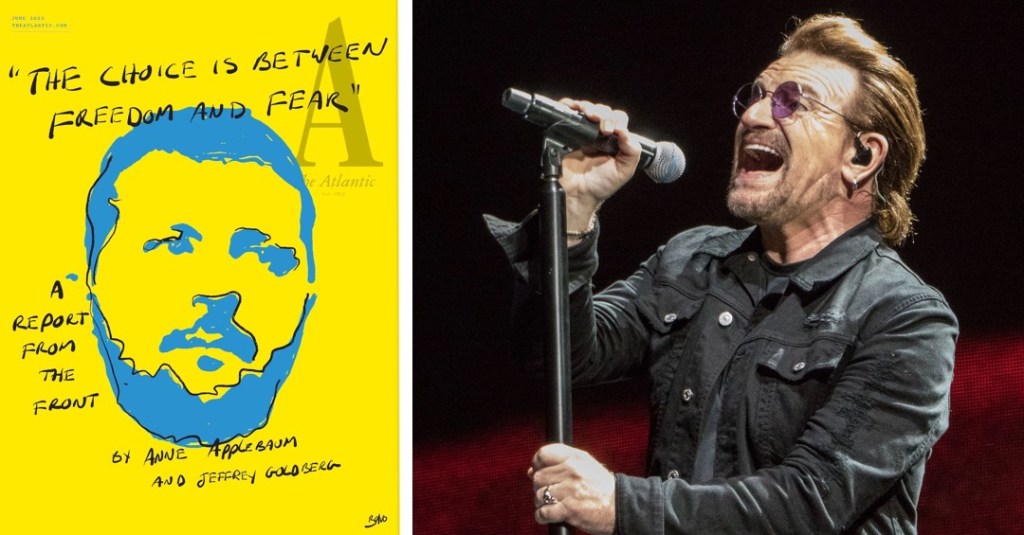
So U2 singer Bono is literally just doing illustrations for the imperialist propaganda rag The Atlantic now, because that’s the sort of thing that happens in a dystopian civilization during the death throes of a globe-spanning empire.
A Washington Post article titled “Bono likes to sketch Atlantic covers, so the magazine hired him” reports that “Bono is into Atlantic cover fanfic — so much so that he was invited to illustrate the magazine’s June cover featuring Ukrainian President Volodymyr Zelensky.”
Bono’s latest contribution to the mountain of cringe-inducing Zelensky moments we’ve been seeing for the past year provides a cover image for an article by lifelong war propagandists Anne Applebaum and Jeffrey Goldberg. The article endorses a Ukrainian offensive to recapture Crimea, which experts largely agree would be the move most likely to trigger a nuclear war in this conflict.
Here’s a paragraph from Applebaum and Goldberg’s article, just to give you a taste of the infantile “Good Guys vs Bad Guys” framing that western liberals are being fed by mass media war propagandists these days:
“Sometimes, the war is described as a battle between autocracy and democracy, or between dictatorship and freedom. In truth, the differences between the two opponents are not merely ideological, but also sociological. Ukraine’s struggle against Russia pits a heterarchy against a hierarchy. An open, networked, flexible society—one that is both stronger at the grassroots level and more deeply integrated with Washington, Brussels, and Silicon Valley than anyone realized—is fighting a very large, very corrupt, top-down state. On one side, farmers defend their land and 20‑something engineers build eyes in the sky, using tools that would be familiar to 20‑something engineers anywhere else. On the other side, commanders send waves of poorly armed conscripts to be slaughtered—just as Stalin once sent shtrafbats, penal battalions, against the Nazis—under the leadership of a dictator obsessed with ancient bones. ‘The choice,’ Zelensky told us, ‘is between freedom and fear.’”
Many westerners felt their first stirrings of youthful rebellious passions while listening to U2 songs like “Sunday Bloody Sunday” and “Pride (In the Name of Love)”, but nowadays Bono’s voice is heard saying that he has “grown very fond” of war criminal George W Bush, praising capitalism at the World Economic Forum, teaming up with warmonger Lindsey Graham to promote US empire narratives about Syria, and singing “Stand by Ukraine” in support of US empire narratives in a Kyiv subway. And just when it looks like he can’t become any more of a tool of the empire, he gets hired by one of the world’s worst militarist smut rags to draw a cover image of Zelensky.
Because that’s just how things go in a highly controlled society where mainstream culture is designed to serve the powerful. A society where the minds of the public are continually being shaped by mass-scale psychological manipulation to ensure that they keep thinking, speaking, working, consuming and voting in ways which serve the rich and powerful. Everything that gets elevated to the top of mainstream attention facilitates this agenda (or is at least harmless to it), and as soon as it becomes potentially threatening to this agenda it is either corrected or marginalized away from mainstream attention.
This dynamic can cause some truly jaw-dropping flotsam and jetsam to surface in the roilings of our cultural waters, like Simpsons characters waving Ukrainian flags, or an opera about a drone operator sponsored by General Dynamics.
Here’s Responsible Statecraft’s Connor Echols on that last one:
This fall, DC denizens will be treated to the world premiere of “Grounded,” an opera following an Air Force ace named Jess whose unexpected pregnancy forces her to leave behind her beloved F-16 and join the “chair force.”
Throughout the show, the “hot shot” pilot wrestles with the mental impact of firing rockets from a drone in Afghanistan from a trailer in Las Vegas. “As Jess tracks terrorists by day and rocks her daughter to sleep by night, the boundary between her worlds becomes dangerously permeable,” an ad tells us.
The production is brought to you by presenting sponsor General Dynamics, one of the world’s largest weapons companies (and, wouldn’t you know it, the maker of Jess’s favorite plane). Playwright George Brant wrote the libretto, which will be brought to life by mezzo-soprano Emily D’Angelo and Tony-winning composer Jeanine Tesori.
You’ll also see things like “humanitarian intervention” champion Samantha Power enthusiastically tweeting about the collaboration between the Sesame Street franchise and the CIA cutout USAID in Iraq:
You see things like this all the time under the shadow of the US empire, and individually they don’t look like much, but once you start noticing them you come to recognize them as symptoms of the profoundly diseased civilization that we are living in. One where our heart strings are pulled in the most obnoxious ways imaginable to get us to support capitalism, empire and oligarchy, where we are manipulated into espousing values systems which benefit powerful sociopaths under the cover of noble-sounding causes. Where we are trained like rats to support systems that are driving our species toward extinction because our rulers gave lip service to humanitarianism and waved a rainbow flag.
This is what dystopia looks like. Like a bunch of thought-controlled automatons mindlessly marching toward ecocide and omnicide to a beat played out by screens who tell them every day and in every way that there is no higher purpose than this. Like military industrial complex-funded feminist rock operas about drone operators and Cookie Monster helping Samantha Power psychologically colonize Iraqi children. Like Bono coming home from singing a heartfelt number about the assassination of Martin Luther King Jr to illustrate a cover for a war propaganda piece in The Atlantic.
It’s like they’re pouring concrete over our hearts. Sewing blindfolds over our souls. Numbing us, distracting us, sedating us, so that the local riff raff won’t interfere in the workings of the imperial machine. They’re killing off something beautiful and sacred in humanity, and they’re doing it to roll out some of the ugliest visions this planet has ever seen.

By Steve Harcourt
Source: NerdSpan
Although made in a ’90s ‘B-Movie’ style, Acción Mutante can be either viewed as a schlocky, gore laden, science fiction romp or a politically astute piece of social commentary in an innocuous wrapper. It could also, potentially, be both.
In a dystopian future where the world is ruled by the glamorous and ‘good looking’ people, the disfigured and disabled are marginalised and treated as second class citizens destined for a life of poverty. Fighting against this tyranny is a disparate band of characters, who call themselves mutants, using the name ‘Acción Mutante’ for their terrorist acts. For several years since the imprisonment of their leader ‘Ramon’ (Antonio Resines), the group, comprising of conjoined twins ‘Alex’ (Álex Angulo) & ‘Juan’ (Juan Viadas), ‘Quimicefa’ (Saturnino García), ‘Manitas’ (Karra Elejalde), ‘Chepa’ (Ion Gabella), and ‘M.A’ (Alfonso Martínez), have been ineptly continuing the fight, leading to many high profile blunders, especially when they try to kidnap someone. Upon his release, ‘Ramon’ immediately puts into motion a new plan to kidnap Patricia Orujo (Frédérique Feder), the daughter of the boss of the Orujo business empire (Fernando Guillén), and ransom her for 10,000,000 ‘ecus’ on a distant mining planet. This plan rapidly spirals out of control…
As a writer, producer and director, Álex de la Iglesia has become more well known for films such as The Oxford Murders, La Comunidad, and The Last Circus since Acción Mutante, his first directorial feature. This film was a brash introduction to what was he was later to create. With production being aided by Augustin and Pedro Almodóvar, and with several well known Spanish actors on board, this was by no means an effort made with little talent behind him and it shows what people saw in him, even then.
What he has made is, essentially, an obvious attack on the bourgeoisie and their ilk with commentary on the disabled and the way society treats them, all put together in a ‘Troma-esque’ black comedy. In the amount of gore, and especially the style of the gore, the Troma influence is apparent and it would sit comfortably alongside many Troma films. There is also an obvious influence in some scenes from Almodóvar, such as the party scene, where you may even notice Rossy De Palma, an Almodóvar regular. There are also some similarities to other European directors’ early work, such as Jean Pierre Jeunet & Marc Caro (Delicatessen), especially in terms of characters, which is not a bad thing.
These characters are a mixed bag, with some being broadly comedic and others being very one dimensional heroes or villains. What is clear is that a certain amount of hokey fun was had by the cast. They do a good job in hamming it up in the right manner for this kind of B-Movie with some good interplay, some clever idiosyncrasies, and some nice set pieces. Plot-wise, the pacing and structure are a little flawed. As the second half falls apart a bit, losing some of the good premise along the way, which is a shame. Much more could have been made of this premise and instead it treads a slightly simpler path with a cheaper, trashier angle. Having said that, it does still tend to work, but just not quite how you thought it was going to.
There are a couple of problematic areas, namely some excessive violence that is unnecessary and some misogynistic elements which are troubling. When the film originally came out on VHS, the BBFC (British Board of Film Classification) made some cuts, which have been put back in this DVD version, and we probably would have been better off without them as they do not enhance the plot or its coherence at all. I had previously only seen the VHS version and in no way was this better. As for the misogyny, it is pretty obvious that these elements are there, but I would be interested to hear what Álex de la Iglesia and producer Pedro Almodóvar have to say about it and whether they were making a particular point, as Almodóvar has a history of strong female characters and is often called a feminist.
Overall, I would say that if you’re a fan of the Troma-style of bonkers, splatter, comedy B-Movie, then you will find something to like here. This needs to be taken as a relatively stupid, schlocky comedy with some obvious social and political points to be made. However, I have read that there are some more specific points made for a Spanish audience that may not be immediately apparent for an international audience. As someone from the UK, I didn’t pick up on anything in particular, but that doesn’t mean it’s not there. Potentially, it could contain further depth. So, while it is problematic, it does show the signs of better work that was to come from Álex de la Iglesia, and can be enjoyed as an oddball thing of its own.
____________________
Watch Acción Mutante on Hoopla here: https://www.hoopladigital.com/title/15772689
By Pepe Escobar
Source: The Unz Review
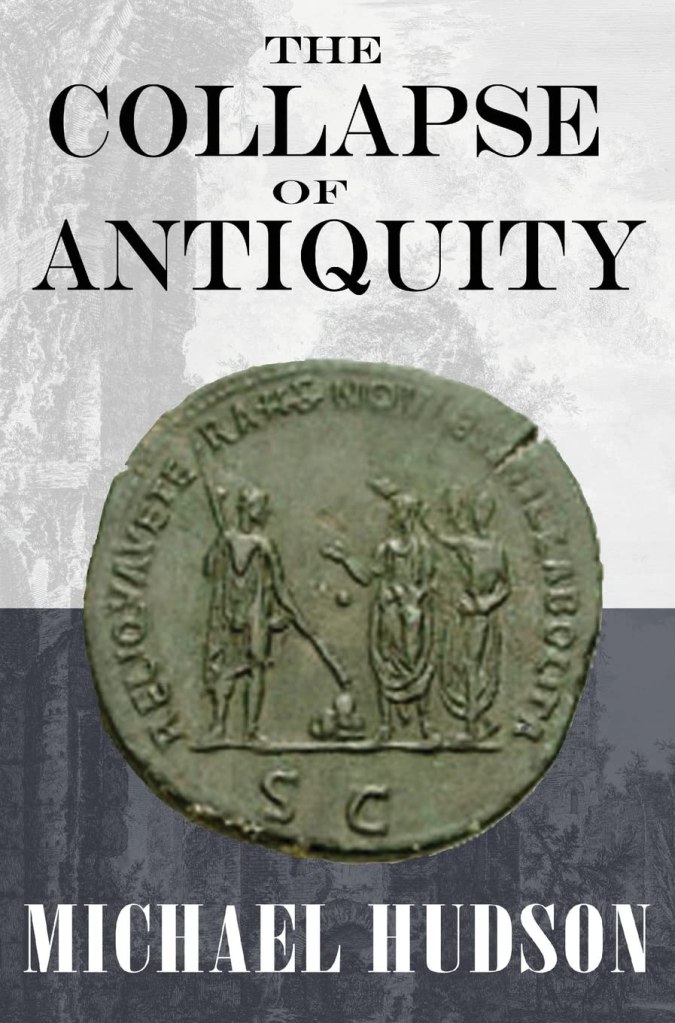
Prof. Michael Hudson’s new book, The Collapse of Antiquity: Greece and Rome as Civilization’s Oligarchic Turning Point is a seminal event in this Year of Living Dangerously when, to paraphrase Gramsci, the old geopolitical and geoeconomic order is dying and the new one is being born at breakneck speed.
Prof. Hudson’s main thesis is absolutely devastating: he sets out to prove that economic/financial practices in Ancient Greece and Rome – the pillars of Western Civilization – set the stage for what is happening today right in front of our eyes: an empire reduced to a rentier economy, collapsing from within.
And that brings us to the common denominator in every single Western financial system: it’s all about debt, inevitably growing by compound interest.
Ay, there’s the rub: before Greece and Rome, we had nearly 3,000 years of civilizations across West Asia doing exactly the opposite.
These kingdoms all knew about the importance of canceling debts. Otherwise their subjects would fall into bondage; lose their land to a bunch of foreclosing creditors; and these would usually try to overthrow the ruling power.
Aristotle succinctly framed it: “Under democracy, creditors begin to make loans and the debtors can’t pay and the creditors get more and more money, and they end up turning a democracy into an oligarchy, and then the oligarchy makes itself hereditary, and you have an aristocracy.”
Prof. Hudson sharply explains what happens when creditors take over and “reduce all the rest of the economy to bondage”: it’s what’s called today “austerity” or “debt deflation”.
So “what’s happening in the banking crisis today is that debts grow faster than the economy can pay. And so when the interest rates finally began to be raised by the Federal Reserve, this caused a crisis for the banks.”
Prof. Hudson also proposes an expanded formulation: “The emergence of financial and landholding oligarchies made debt peonage and bondage permanent, supported by a pro-creditor legal and social philosophy that distinguishes Western civilization from what went before. Today it would be called neoliberalism.”
Then he sets out to explain, in excruciating detail, how this state of affairs was solidified in Antiquity in the course of over 5 centuries. One can hear the contemporary echoes of “violent suppression of popular revolts” and “targeted assassination of leaders” seeking to cancel debts and “redistribute land to smallholders who have lost it to large landowners”.
The verdict is merciless: “What impoverished the population of the Roman Empire” bequeathed a “creditor-based body of legal principles to the modern world”.
Predatory oligarchies and “Oriental Despotism”
Prof Hudson develops a devastating critique of the “social darwinist philosophy of economic determinism”: a “self-congratulatory perspective” has led to “today’s institutions of individualism and security of credit and property contracts (favoring creditor claims over debtors, and landlord rights over those of tenants) being traced back to classical antiquity as “positive evolutionary developments, moving civilization away from ‘Oriental Despotism’”.
All that is a myth. Reality was a completely different story, with Rome’s extremely predatory oligarchies waging “five centuries of war to deprive populations of liberty, blocking popular opposition to harsh pro-creditor laws and the monopolization of the land into latifundia estates”.
So Rome in fact behaved very much like a “failed state”, with “generals, governors, tax collectors, moneylenders and carpet beggars” squeezing out silver and gold “in the form of military loot, tribute and usury from Asia Minor, Greece and Egypt.” And yet this Roman wasteland approach has been lavishly depicted in the modern West as bringing a French-style mission civilisatrice to the barbarians – while carrying the proverbial white man’s burden.
Prof. Hudson shows how Greek and Roman economies actually “ended in austerity and collapsed after having privatized credit and land in the hands of rentier oligarchies”. Does that ring a – contemporary – bell?
Arguably the central nexus of his argument is here:
“Rome’s law of contracts established the fundamental principle of Western legal philosophy giving creditor claims priority over the property of debtors – euphemized today as ‘security of property rights’. Public expenditure on social welfare was minimized – what today’s political ideology calls leaving matters to ‘the market’. It was a market that kept citizens of Rome and its Empire dependent for basic needs on wealthy patrons and moneylenders – and for bread and circuses, on the public dole and on games paid for by political candidates, who often themselves borrowed from wealthy oligarchs to finance their campaigns.”
Any similarity with the current system led by the Hegemon is not mere coincidence. Hudson: “These pro-rentier ideas, policies and principles are those that today’s Westernized world is following. That is what makes Roman history so relevant to today’s economies suffering similar economic and political strains.”
Prof. Hudson reminds us that Rome’s own historians – Livy, Sallust, Appian, Plutarch, Dionysius of Halicarnassus, among others – “emphasized the subjugation of citizens to debt bondage”. Even the Delphic Oracle in Greece, as well as poets and philosophers, warned against creditor greed. Socrates and the Stoics warned that “wealth addiction and its money-love was the major threat to social harmony and hence to society.”
And that brings us to how this criticism was completely expunged from Western historiography. “Very few classicists”, Hudson notes, follow Rome’s own historians describing how these debt struggles and land grabs were “mainly responsible for the Republic’s Decline and Fall.”
Hudson also reminds us that the barbarians were always at the gate of the Empire: Rome, in fact, was “weakened from within”, by “century after century of oligarchic excess.”
So this is the lesson we should all draw from Greece and Rome: creditor oligarchies “seek to monopolize income and land in predatory ways and bring prosperity and growth to a halt.” Plutarch was already into it: “The greed of creditors brings neither enjoyment nor profit to them, and ruins those whom they wrong. They do not till the fields which they take from their debtors, nor do they live in their houses after evicting them.”
Beware of pleonexia
It would be impossible to fully examine so many precious as jade offerings constantly enriching the main narrative. Here are just a few nuggets (And there will be more: Prof. Hudson told me, “I’m working on the sequel now, picking up with the Crusades.”)
Prof. Hudson reminds us how money matters, debt and interest came to the Aegean and Mediterranean from West Asia, by traders from Syria and the Levant, around 8th century B.C. But “with no tradition of debt cancellation and land redistribution to restrain personal wealth seeking, Greek and Italian chieftains, warlords and what some classicists have called mafiosi [ by the way, Northern European scholars, not Italians) imposed absentee land ownership over dependent labor.”
This economic polarization kept constantly worsening. Solon did cancel debts in Athens in the late 6th century – but there was no land redistribution. Athens’ monetary reserves came mainly from silver mines – which built the navy that defeated the Persians at Salamis. Pericles may have boosted democracy, but the eventful defeat facing Sparta in the Peloponnesian War (431-404 B.C.) opened the gates to a heavy debt-addicted oligarchy.
All of us who studied Plato and Aristotle in college may remember how they framed the whole problem in the context of pleonexia (“wealth addiction”) – which inevitably leads to predatory and “socially injurious” practices. In Plato’s Republic, Socrates proposes that only non-wealthy managers should be appointed to govern society – so they would not be hostages of hubris and greed.
The problem with Rome is that no written narratives survived. The standard stories were written only after the Republic had collapsed. The Second Punic War against Carthage (218-201 B.C.) is particularly intriguing, considering its contemporary Pentagon overtones: Prof. Hudson reminds us how military contractors engaged in large-scale fraud and fiercely blocked the Senate from prosecuting them.
Prof. Hudson shows how that “also became an occasion for endowing the wealthiest families with public land when the Rome state treated their ostensibly patriotic donations of jewelry and money to aid the war effort as retroactive public debts subject to repayment”.
After Rome defeated Carthage, the glitzy set wanted their money back. But the only asset left to the state was land in Campania, south of Rome. The wealthy families lobbied the Senate and gobbled up the whole lot.
With Caesar, that was the last chance for the working classes to get a fair deal. In the first half of the 1st century B.C. he did sponsor a bankruptcy law, writing down debts. But there was no widespread debt cancellation. Caesar being so moderate did not prevent the Senate oligarchs from whacking him, “fearing that he might use his popularity to ‘seek kingship’” and go for way more popular reforms.
After Octavian’s triumph and his designation by the Senate as Princeps and Augustus in 27 B.C., the Senate became just a ceremonial elite. Prof Hudson summarizes it in one sentence: “The Western Empire fell apart when there was no more land for the taking and no more monetary bullion to loot.” Once again, one should feel free to draw parallels with the current plight of the Hegemon.
Time to “uplift all labor”
In one of our immensely engaging email exchanges, Prof. Hudson remarked how he “immediately had a thought” on a parallel to 1848. I wrote in the Russian business paper Vedomosti: “After all, that turned out to be a limited bourgeois revolution. It was against the rentier landlord class and bankers – but was as yet a far cry from being pro-labor. The great revolutionary act of industrial capitalism was indeed to free economies from the feudal legacy of absentee landlordship and predatory banking — but it too fell back as the rentier classes made a comeback under finance capitalism.”
And that brings us to what he considers “the great test for today’s split”: “Whether it is merely for countries to free themselves from US/NATO control of their natural resources and infrastructure — which can be done by taxing natural-resource rent (thereby taxing away the capital flight by foreign investors who have privatized their natural resources). The great test will be whether countries in the new Global Majority will seek to uplift all labor, as China’s socialism is aiming to do.”
It’s no wonder “socialism with Chinese characteristics” spooks the Hegemon creditor oligarchy to the point they are even risking a Hot War. What’s certain is that the road to Sovereignty, across the Global South, will have to be revolutionary: “Independence from U.S. control is the Westphalian reforms of 1648 — the doctrine of non-interference in the affairs of other states. A rent tax is a key element of independence — the 1848 tax reforms. How soon will the modern 1917 take place?”
Let Plato and Aristotle weigh in: as soon as humanly possible.
By John & Nisha Whitehead
Source: The Rutherford Institute
“One of the creeping hands of totalitarianism running through the democracy is the Federal Bureau of Investigation… Because why does the FBI do all this? To scare the hell out of people… They work for the establishment and the corporations and the politicos to keep things as they are. And they want to frighten and chill the people who are trying to change things.”—Howard Zinn, historian
Power corrupts. We know this.
In fact, we know this from experience learned the hard way at the hands of our own government.
So why is anyone surprised to learn that the FBI, one of the most power-hungry and corrupt agencies within the police state’s vast complex of power-hungry and corrupt agencies, misused a massive government surveillance database more than 300,000 times in order to target American citizens?
This is how the government operates, after all.
First, they seek out extraordinary powers acquired in the wake of some national crisis—in this case, warrantless surveillance powers intended to help the government spy on foreign targets suspected of engaging in terrorism—and then they use those powers against the American people.
According to the Foreign Intelligence Surveillance Court, the FBI repeatedly misused Section 702 of the Foreign Intelligence Surveillance Act in order to spy on the communications of two vastly disparate groups of Americans: those involved in the George Floyd protests and those who may have taken part in the Jan. 6, 2021, protests at the Capitol.
This is par for the course for the FBI, whose modus operandi has historically been to “expose, disrupt, misdirect, discredit, or otherwise neutralize” perceived threats to the government’s power.
Indeed, the FBI has a long history of persecuting, prosecuting and generally harassing activists, politicians, and cultural figures.
Back in the 1950s and ‘60s, the FBI’s targets were civil rights activists, those suspected of having Communist ties, and anti-war activists. In more recent decades, the FBI has expanded its reach to target so-called domestic extremists, environmental activists, and those who oppose the police state.
In 2019, President Trump promised to give the FBI “whatever they need” to investigate and disrupt hate crimes and domestic terrorism, without any apparent thought for the Constitution’s prohibitions on such overreach.
That misguided pledge sheds a curious light on the FBI’s ongoing spree of SWAT team raids, surveillance, disinformation campaigns, fear-mongering, paranoia, and strong-arm tactics meted out to dissidents on both the right and the left.
Yet while these overreaching, heavy-handed lessons in how to rule by force have become standard operating procedure for a government that communicates with its citizenry primarily through the language of brutality, intimidation and fear, none of this is new.
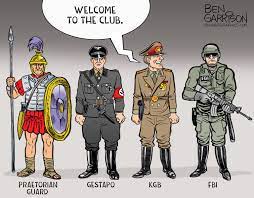
Indeed, the FBI’s love affair with totalitarianism can be traced back to the Nazi police state.
As historian Robert Gellately recounts, the Nazi police state was so admired for its efficiency and order by the world powers of the day that in the decades after World War II, the FBI, along with other government agencies, aggressively recruited at least a thousand Nazis, including some of Hitler’s highest henchmen.
Since then, U.S. government agencies—the FBI, CIA and the military—have fully embraced many of the Nazi’s well-honed policing tactics, and used them repeatedly against American citizens.
With every passing day, the United States government borrows yet another leaf from Nazi Germany’s playbook: Secret police. Secret courts. Secret government agencies. Surveillance. Censorship. Intimidation. Harassment. Torture. Brutality. Widespread corruption. Entrapment. Indoctrination. Indefinite detention.
These are not tactics used by constitutional republics, where the rule of law and the rights of the citizenry reign supreme. Rather, they are the hallmarks of authoritarian regimes, where secret police control the populace through intimidation, fear and official lawlessness on the part of government agents.
Consider the extent to which the FBI’s far-reaching powers to surveil, detain, interrogate, investigate, prosecute, punish, police and generally act as a law unto themselves resemble those of their Nazi cousins, the Gestapo.
Just like the Gestapo, the FBI has vast resources, vast investigatory powers, and vast discretion to determine who is an enemy of the state.
Much like the Gestapo spied on mail and phone calls, FBI agents have carte blanche access to the citizenry’s most personal information.
Much like the Gestapo’s sophisticated surveillance programs, the FBI’s spying capabilities can delve into Americans’ most intimate details (and allow local police to do so, as well).
Much like the Gestapo’s ability to profile based on race and religion, and its assumption of guilt by association, the FBI’s approach to pre-crime allows it to profile Americans based on a broad range of characteristics including race and religion.
Much like the Gestapo’s power to render anyone an enemy of the state, the FBI has the power to label anyone a domestic terrorist.
Much like the Gestapo infiltrated communities in order to spy on the German citizenry, the FBI routinely infiltrates political and religious groups, as well as businesses.
Just as the Gestapo united and militarized Germany’s police forces into a national police force, America’s police forces have largely been federalized and turned into a national police force.
Just as the Gestapo carried out entrapment operations, the FBI has become a master in the art of entrapment.
Just as the Gestapo’s secret files on political leaders were used to intimidate and coerce, the FBI’s attempts to target and spy on anyone suspected of “anti-government” sentiment have been similarly abused.
The Gestapo became the terror of the Third Reich by creating a sophisticated surveillance and law enforcement system that relied for its success on the cooperation of the military, the police, the intelligence community, neighborhood watchdogs, government workers for the post office and railroads, ordinary civil servants, and a nation of snitches inclined to report “rumors, deviant behavior, or even just loose talk.”
Likewise, as countless documents make clear, the FBI has had no qualms about using its extensive powers in order to blackmail politicians, spy on celebrities and high-ranking government officials, and intimidate and attempt to discredit dissidents of all stripes.
In fact, borrowing heavily from the Gestapo, between 1956 and 1971, the FBI conducted an intensive domestic intelligence program, termed COINTELPRO, intended to neutralize domestic political dissidents. As Congressman Steve Cohen explains, “COINTELPRO was set up to surveil and disrupt groups and movements that the FBI found threatening… many groups, including anti-war, student, and environmental activists, and the New Left were harassed, infiltrated, falsely accused of criminal activity .”
Sound familiar? The more things change, the more they stay the same.
Those targeted by the FBI under COINTELPRO for its intimidation, surveillance and smear campaigns included: Martin Luther King Jr., Malcom X, the Black Panther Party, Billie Holiday, Emma Goldman, Aretha Franklin, Charlie Chaplin, Ernest Hemingway, Felix Frankfurter, John Lennon, and hundreds more.
The Church Committee, the Senate task force charged with investigating COINTELPRO abuses in 1975, denounced the government’s abuses:
“Too many people have been spied upon by too many Government agencies and too much information has been collected. The Government has often undertaken the secret surveillance of citizens on the basis of their political beliefs, even when those beliefs posed no threat of violence or illegal acts on behalf of a hostile foreign power.”
The report continued:
“Groups and individuals have been harassed and disrupted because of their political views and their lifestyles. Investigations have been based upon vague standards whose breadth made excessive collection inevitable. Unsavory and vicious tactics have been employed—including anonymous attempts to break up marriages, disrupt meetings, ostracize persons from their professions, and provoke target groups into rivalries that might result in deaths. Intelligence agencies have served the political and personal objectives of presidents and other high officials.”
Whether 50 years ago or in the present day, the treatment being doled out by the government’s lethal enforcers has remained consistent, no matter the threat.
The FBI’s laundry list of crimes against the American people includes surveillance, disinformation, blackmail, entrapment, intimidation tactics, harassment and indoctrination, governmental overreach, abuse, misconduct, trespassing, enabling criminal activity, and damaging private property, and that’s just based on what we know.
Whether the FBI is planting undercover agents in churches, synagogues and mosques; issuing fake emergency letters to gain access to Americans’ phone records; using intimidation tactics to silence Americans who are critical of the government; recruiting high school students to spy on and report fellow students who show signs of being future terrorists; or persuading impressionable individuals to plot acts of terror and then entrapping them, the overall impression of the nation’s secret police force is that of a well-dressed thug, flexing its muscles and doing the boss’ dirty work of ensuring compliance, keeping tabs on potential dissidents, and punishing those who dare to challenge the status quo.
As I make clear in my book Battlefield America: The War on the American People and in its fictional counterpart The Erik Blair Diaries, it’s time to rein in the Federal Bureau of Intimidation’s war on political freedom.

By Colin Todhunter
Source: Off-Guardian
In 2014, the organisation GRAIN revealed that small farms produce most of the world’s food in its report Hungry for land: small farmers feed the world with less than a quarter of all farmland.
The report Small-scale Farmers and Peasants Still Feed the World (ETC Group, 2022) confirmed this.
Small farmers produce up to 80% of the food in the non-industrialised countries. However, they are currently squeezed onto less than a quarter of the world’s farmland. The period 1974-2014 saw 140 million hectares – more than all the farmland in China – being taken over for soybean, oil palm, rapeseed and sugar cane plantations.
GRAIN noted that the concentration of fertile agricultural land in fewer and fewer hands is directly related to the increasing number of people going hungry every day. While industrial farms have enormous power, influence and resources, GRAIN’s data showed that small farms almost everywhere outperform big farms in terms of productivity.
In the same year, policy think tank the Oakland Institute released a report stating that the first years of the 21 century will be remembered for a global land rush of nearly unprecedented scale. An estimated 500 million acres, an area eight times the size of Britain, were reported bought or leased across the developing world between 2000 and 2011, often at the expense of local food security and land rights.
Institutional investors, including hedge funds, private equity, pension funds and university endowments, were eager to capitalise on global farmland as a new and highly desirable asset class.
This trend was not confined to buying up agricultural land in low-income countries. Oakland Institute’s Anuradha Mittal argued that there was a new rush for US farmland. One industry leader estimated that $10 billion in institutional capital was looking for access to this land in the US.
Although investors believed that there is roughly $1.8 trillion worth of farmland across the US, of this between $300 billion and $500 billion (2014 figures) is considered to be of “institutional quality” – a combination of factors relating to size, water access, soil quality and location that determine the investment appeal of a property.
In 2014, Mittal said that if action is not taken, then a perfect storm of global and national trends could converge to permanently shift farm ownership from family businesses to institutional investors and other consolidated corporate operations.
Peasant/smallholder agriculture prioritises food production for local and national markets as well as for farmers’ own families, whereas corporations take over fertile land and prioritise commodities or export crops for profit and markets far away that tend to cater for the needs of more affluent sections of the global population.
In 2013, a UN report stated that farming in rich and poor nations alike should shift from monocultures towards greater varieties of crops, reduced use of fertilisers and other inputs, increased support for small-scale farmers and more locally focused production and consumption of food. The report stated that monoculture and industrial farming methods were not providing sufficient affordable food where it is needed.
In September 2020, however, GRAIN showed an acceleration of the trend that it had warned of six years earlier: institutional investments via private equity funds being used to lease or buy up farms on the cheap and aggregate them into industrial-scale concerns. One of the firms spearheading this is the investment asset management firm BlackRock, which exists to put its funds to work to make money for its clients.
BlackRock holds shares in a number of the world’s largest food companies, including Nestlé, Coca-Cola, PepsiCo, Walmart, Danone and Kraft Heinz and also has significant shares in most of the top publicly traded food and agriculture firms: those which focus on providing inputs (seeds, chemicals, fertilisers) and farm equipment as well as agricultural trading companies, such as Deere, Bunge, ADM and Tyson (based on BlackRock’s own data from 2018).
Together, the world’s top five asset managers – BlackRock, Vanguard, State Street, Fidelity and Capital Group – own around 10–30% of the shares of the top firms in the agrifood sector.
The article Who is Driving the Destructive Industrial Agriculture Model? (2022) by Frederic Mousseau of the Oakland Institute showed that BlackRock and Vanguard are by far the biggest shareholders in eight of the largest pesticides and fertiliser companies: Yara, CF Industries Holdings K+S Aktiengesellschaft, Nutrien, The Mosaic Company, Corteva and Bayer.
These companies’ profits were projected to double, from US$19 billion in 2021 to $38 billion in 2022, and will continue to grow as long as the industrial agriculture production model on which they rely keeps expanding. Other major shareholders include investment firms, banks and pension funds from Europe and North America.
Through their capital injections, BlackRock et al fuel and make huge profits from a globalised food system that has been responsible for eradicating indigenous systems of production, expropriating seeds, land and knowledge, impoverishing, displacing or proletarianizing farmers and destroying rural communities and cultures. This has resulted in poor-quality food and illness, human rights abuses and ecological destruction.
Post-1945, the Rockefeller Chase Manhattan bank with the World Bank helped roll out what has become the prevailing modern-day agrifood system under the guise of a supposedly ‘miraculous’ corporate-controlled, chemical-intensive Green Revolution (its much-heralded but seldom challenged ‘miracles’ of increased food production are nothing of the sort; for instance, see the What the Green Revolution Did for India and New Histories of the Green Revolution).
Ever since, the IMF, the World Bank and the WTO have helped consolidate an export-oriented industrial agriculture based on Green Revolution thinking and practices. A model that uses loan conditionalities to compel nations to ‘structurally adjust’ their economies and sacrifice food self-sufficiency.
Countries are placed on commodity crop production treadmills to earn foreign currency (US dollars) to buy oil and food on the global market (benefitting global commodity traders like Cargill, which helped write the WTO trade regime – the Agreement on Agriculture), entrenching the need to increase cash crop cultivation for exports.
Today, investment financing is helping to drive and further embed this system of corporate dependency worldwide. BlackRock is ideally positioned to create the political and legislative framework to maintain this system and increase the returns from its investments in the agrifood sector.
The firm has around $10 trillion in assets under its management and has, according to William Engdahl, positioned itself to effectively control the US Federal Reserve, many Wall Street mega-banks and the Biden administration: a number of former top people at BlackRock are in key government positions, shaping economic policy.
So, it is no surprise that we are seeing an intensification of the lop-sided battle being waged against local markets, local communities and indigenous systems of production for the benefit of global private equity and big agribusiness.
For example, while ordinary Ukrainians are currently defending their land, financial institutions are supporting the consolidation of farmland by rich individuals and Western financial interests. It is similar in India (see the article The Kisans Are Right: Their Land Is at Stake) where a land market is being prepared and global investors are no doubt poised to swoop.
In both countries, debt and loan conditionalities on the back of economic crises are helping to push such policies through. For instance, there has been a 30+ year plan to restructure India’s economy and agriculture. This stems from the country’s 1991 foreign exchange crisis, which was used to impose IMF-World Bank debt-related ‘structural adjustment’ conditionalities. The Mumbai-based Research Unit for Political Economy locates agricultural ‘reforms’ within a broader process of Western imperialism’s increasing capture of the Indian economy.
Yet ‘imperialism’ is a dirty word never to be used in ‘polite’ circles. Such a notion is to be brushed aside as ideological by the corporations that benefit from it. Instead, what we constantly hear from these conglomerates is that countries are choosing to embrace their entry and proprietary inputs into the domestic market as well as ‘neoliberal reforms’ because these are essential if we are to feed a growing global population. The reality is that these firms and their investors are attempting to deliver a knockout blow to smallholder farmers and local enterprises in places like India.
But the claim that these corporations, their inputs and their model of agriculture is vital for ensuring global food security is a proven falsehood. However, in an age of censorship and doublespeak, truth has become the lie and the lie is truth. Dispossession is growth, dependency is market integration, population displacement is land mobility, serving the needs of agrifood corporations is modern agriculture and the availability of adulterated, toxic food as part of a monoculture diet is feeding the world.
And when a ‘pandemic’ was announced and those who appeared to be dying in greater numbers were the elderly and people with obesity, diabetes and cardio-vascular disease, few were willing to point the finger at the food system and its powerful corporations, practices and products that are responsible for the increasing prevalence of these conditions (see campaigner Rosemary Mason’s numerous papers documenting this on Academia.edu). Because this is the real public health crisis that has been building for decades.
But who cares? BlackRock, Vanguard and other institutional investors? Highly debatable because if we turn to the pharmaceuticals industry, we see similar patterns of ownership involving the same players.
A December 2020 paper on ownership of the major pharmaceuticals companies, by researchers Albert Banal-Estanol, Melissa Newham and Jo Seldeslachts, found the following (reported on the website of TRT World, a Turkish news media outlet):
Public companies are increasingly owned by a handful of large institutional investors, so we expected to see many ownership links between companies — what was more surprising was the magnitude of common ownership… We frequently find that more than 50 per cent of a company is owned by ‘common’ shareholders who also own stakes in rival pharma companies.”
The three largest shareholders of Pfizer, J&J and Merck are Vanguard, SSGA and BlackRock.
In 2019, the Centre for Research on Multinational Corporations reported that payouts to shareholders had increased by almost 400 per cent — from $30 billion in 2000 to $146 billion in 2018. Shareholders made $1.54 trillion in profits over that 18-year period.
So, for institutional investors, the link between poor food and bad health is good for profit. While investing in the food system rakes in enormous returns, you can perhaps double your gains if you invest in pharma too.
These findings predate the 2021 documentary Monopoly: An Overview of the Great Reset, which also shows that the stock of the world’s largest corporations are owned by the same institutional investors. ‘Competing’ brands, like Coke and Pepsi, are not really competitors, since their stock is owned by the same investment companies, investment funds, insurance companies and banks.
Smaller investors are owned by larger investors. Those are owned by even bigger investors. The visible top of this pyramid shows only Vanguard and Black Rock.
A 2017 Bloomberg report states that both these companies in the year 2028 together will have investments amounting to $20 trillion.
While individual corporations – like Pfizer and Monsanto/Bayer, for instance – should be (and at times have been) held to account for some of their many wrongdoings, their actions are symptomatic of a system that increasingly leads back to the boardrooms of the likes of BlackRock and Vanguard.
Prof Fabio Vighi of Cardiff University says:
Today, capitalist power can be summed up with the names of the three biggest investment funds in the world: BlackRock, Vanguard and State Street Global Advisor. These giants, sitting at the centre of a huge galaxy of financial entities, manage a mass of value close to half the global GDP, and are major shareholders in around 90% of listed companies.”
These firms help shape and fuel the dynamics of the economic system and the globalised food regime, ably assisted by the World Bank, the IMF, the WTO and other supranational institutions. A system that leverages debt, uses coercion and employs militarism to secure continued expansion.
INDIAN COUNTRY NEWS
"It is the duty of every man, as far as his ability extends, to detect and expose delusion and error"..Thomas Paine
Human in Algorithms
From the Roof Top
I See This
blog of the post capitalist transition.. Read or download the novel here + latest relevant posts
अध्ययन-अनुसन्धानको सार
 After the Crash