Two for Tuesday
Reply

By Kurt Nimmo
Source: Kurt Nimmo on Geopolitics
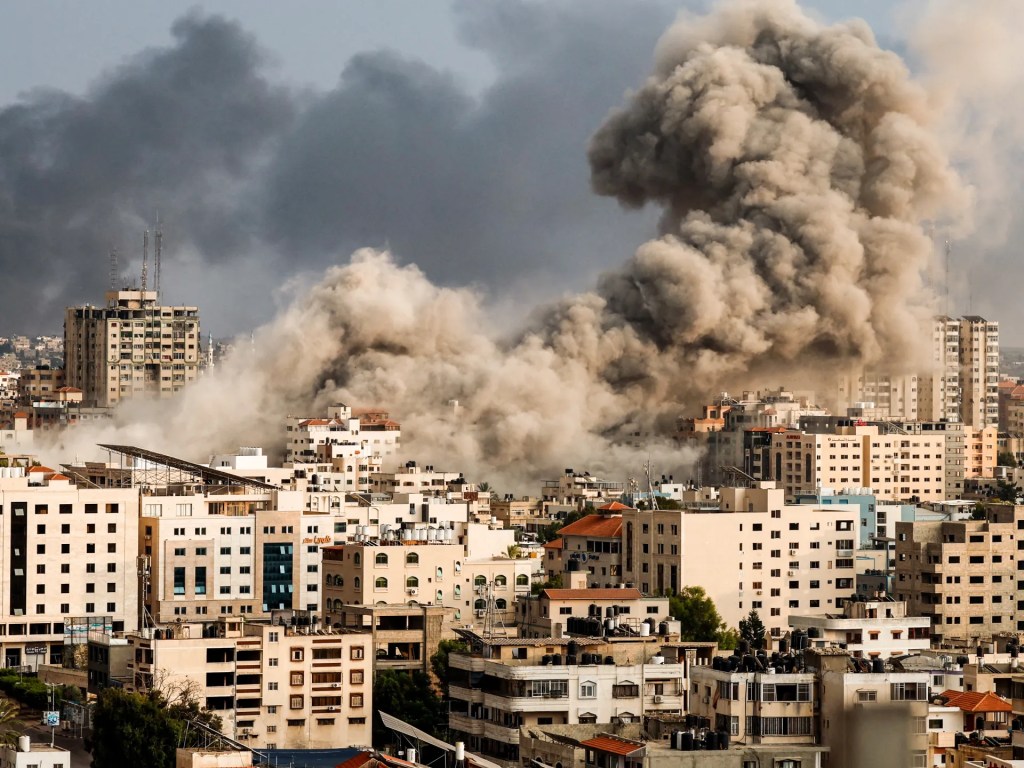
Now that the USG will help Israeli with its long-anticipated attack on Iran—the Secretary of War, Lloyd Austin, has ordered the USS Gerald R. Ford Carrier Strike Group to the Eastern Mediterranean—we can expect “Iraq has WMDs” style propaganda in surfeit.
For instance, the “influencer” Hananya Naftali. According to his website, “Hananya has been working for Prime Minister Netanyahu in his digital team for the past 5 years.” He also “served” in the IDF and “fought Hamas during the Gaza War in 2014.”
As an “influencer,” Mr. Naftali needs your attention, thus absurd hyperbole.
“More than 700 Israelis were murdered. So much blood of innocent civilians has been spilled. May God avenge their blood. #IsraelUnderAttack,” he tweeted.
The tweet included a graphic that declares, “More Jews were murdered on October 7th, 2023, than on any other single day since the Holocaust.”
Of course, there is no information beyond Israeli war propaganda to confirm or dispute this claim. It should be a given that a state preparing for war will manufacture outrageous propaganda to make its case, no matter how fallacious and untrue.
The settlements said to be targeted by Hamas include:
Kissufim. This is a kibbutz, part of the so-called Shalom bloc. It was established by a Zionist youth movement in 1951. It is a gateway to the Gush Katif collection of illegal Zionist settlements.
Nahal Oz. Originally a military base, this “settlement” was established by Israeli Nahal soldiers, as part of an effort to establish illegal Zionist settlements.
Re’im. This settlement was established in 1949 by the Israel Boy and Girl Scouts Federation, part of the Palmach (Pelugot Hamahatz), a terrorist organization aligned with the Irgun, the Lehi, and the Haganah, all perpetrators of Zionist violence and terror. Irgun was run by Revisionist Zionism founder Ze’ev Jabotinsky, an admirer of Mussolini and fascism.
Sderot. The Palestinian village of Najd was wiped off the map to make way for this city of Zionist colonialists. More than 30,000 Israelis live there.
In addition, several other kibbutzim and settlements established on ethnically cleansed Palestinian land were overtaken by Hamas.
In the tidal wave of pro-Israel news following the Hamas “invasion,” there is virtually no mention of the fact these settlements violate Article 49 of the Fourth Geneva Convention and a long list of United Nations resolutions.
Israel’s fanatical settlers are responsible for countless attacks against Palestinian civilians. The violence is especially acute in the West Bank.
In 2021, Michael Lynk, Special Rapporteur on the situation of human rights in the Palestinian Territory occupied since 1967, said that settler violence was “ideologically motivated and primarily designed to take over land but also to intimidate and terrorize Palestinians.”
In Jerusalem, under orders of an ultra-nationalistic Israeli government, numerous Palestinian homes have been demolished to make way for settlers. The Netanyahu regime declared illegal West Bank settlements are a “top priority.”
In other words, Hamas was “invading” illegal settlements where armed settlers live and enjoy impunity from prosecution for crimes of violence against Palestinians. This has been Israeli policy, under Labor and Likud regimes, for some time.
But if you watch or read war propaganda news, you are told Hamas are “animals” killing and terrorizing innocent Israeli citizens. The fact of the matter is, right or wrong (and violence against unarmed civilians is always wrong), Hamas was in effect attacking armed vigilantes condoned and supported by the Israeli government.
By Brian Berletic
Source: New Eastern Outlook
Long gone are Western headlines heralding Ukraine’s NATO-trained and armed forces and the prospects of them able to “sweep Putin’s conscripts aside,” as former British Army Colonel Hamish De Bretton-Gordon claimed in an article published as recently as June this year.
As Ukraine’s offensive forces broke across extensive Russian defenses all along the line of contact from Zaporozhye to Kharkov, the realization that Washington, London, and Brussels underestimated the Russian Federation economically, politically, diplomatically, and most importantly, militarily and industrially, began to set in.
Russian Military Production Grows, Western Stockpiles Dry Up
Today, different kinds of headlines now appear across the collective West’s media. The New York Times recently reported in an article titled, “Russia Overcomes Sanctions to Expand Missile Production, Officials Say,” that Russia ammunition production was at least seven times greater than the collective West.
The same article acknowledged that Russia had increased its tank production two-fold and was producing 2 million artillery rounds per year, a number that is larger than the combined planned expansion of shell production of the US and European Union some time between 2025 and 2027. Not only is Russia out-producing the West, it is producing weapons and ammunition at a fraction of the cost of Western arms and munitions.
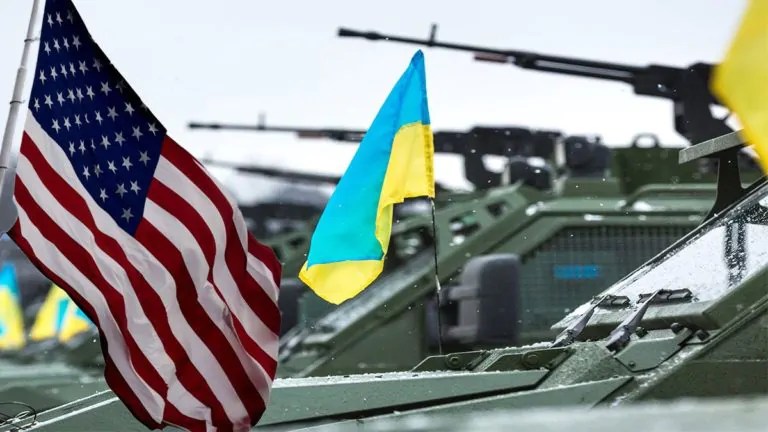
As Russian military industrial production expands, producing more tanks, artillery, cruise missiles, and ammunition for the ongoing special military operation in Ukraine, Ukrainian forces find their sources of arms and ammunition drying up.
The BBC would report in a recent article, “Poland no longer supplying weapons to Ukraine amid grain row,” that:
One of Ukraine’s staunchest allies, Poland, has said it is no longer supplying weapons to its neighbour, amid a diplomatic dispute over Kyiv’s grain exports.
Prime Minister Mateusz Morawiecki said Poland’s focus was instead on defending itself with more modern weapons.
While both Poland and the BBC attempt to frame the decision as motivated by growing tensions between Poland and Ukraine, the reality is Poland had a finite amount of expendable arms and ammunition it could send Ukraine, and it has expended those stocks. This leaves a much smaller number of more modern systems Poland has acquired for its own defense. Neither Poland nor its foreign arms suppliers produce weapons and ammunition in the quantities required to sustain Ukrainian forces on the battlefield, meaning that should Poland continue supplying Ukraine from this point forward, it will eventually find itself “demilitarized.”
Other nations are failing to deliver much anticipated weapon systems. This includes the ATACMS ballistic missile Ukraine has demanded from the United States for months now, and despite claims of its arrival being imminent, Reuters in a recent article has ruled them out once again ahead of the Pentagon’s next assistance package.
Germany’s air-launched cruise missile, the Taurus, has also failed to turn up in additional assistance packages. Bloomberg in its article, “Germany Plans Additional $428 Million in Military Aid to Ukraine,” noted that Berlin is still weighing “a multitude of political, legal, military and technical aspects,” before finally sending any.
It should be noted that neither missile, along with a wide array of other so-called “wonder weapons,” has any prospect of changing the outcome of the fighting in Ukraine. While the missiles, if delivered, will result in tactical victories for Kiev, they will have little to no impact on the fighting strategically.
What remains of Western military assistance to Ukraine is inadequate amounts of ammunition, older and/or increasingly inappropriate armored vehicles including relics of the Cold War like the Leopard 1 main battle tank, and “training” for Ukrainian soldiers conducted in compressed timelines producing entirely unprepared soldiers almost certain to perish within days of arriving at the battlefield.
The US-led proxy war against Russia in Ukraine is unsustainable, and it appears many in the halls of power across the collective West are coming to grips with that.
Delusion Persists
However, elsewhere in the Western media, a deep sense of delusion is still reflected in articles that, despite admitting Ukraine’s failures, believe a “rethink” of Ukraine’s military strategy could help win what is obviously transforming into a “long war.”
For example, The Economist in its article, “Ukraine faces a long war. A change, of course, is needed,” admits the long-anticipated offensive “is not working,” but goes on to demands more offensive and defensive capabilities for Ukraine, including additional air defense systems and “reliable supplies of artillery,” both of which objectively do not and will not exist in the necessary quantities Ukraine requires for years to come.
At one point in the article, The Economist insists on Europe “beefing up its defense industry,” apparently oblivious to the lead times involved in doing so being measured in years – years Ukraine does not have.
The collective West apparently realizes their plans are failing to end the war in their favor sooner rather than later, but appear unaware that the “long war” they now realize awaits them is beyond their capability to fight by proxy or otherwise. The proxy war, designed to “extend Russia,” is now making Russia stronger militarily and industrially. At the same time, the conflict and the sanctions the West imposed on Russia are serving as a catalyst for other nations to pivot away from the US-led unipolar world and instead invest in a multipolar alternative, fearing that eventually the West may target them in a similar manner.
It is clear that the harder the collective West attempts to place Ukraine in a stronger position at the negotiation table, the weaker Ukraine and its Western sponsors become. The longer this conflict continues, the worse it will be for Ukraine and its sponsors. For the collective West, winning their proxy war is impossible militarily and industrially, but accepting this reality appears equally impossible for the collective West’s leadership psychologically.
By Patrick Wood
Source: Technocracy News & Trends
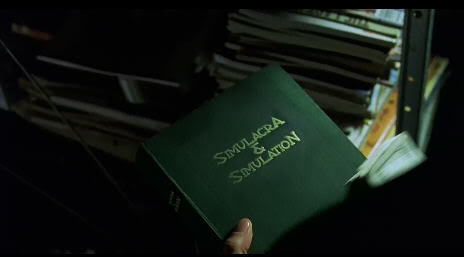
There’s a big word that you can add to your vocabulary: Simulacrum. It is a hard word to wrap your head around, but one you are not too likely to forget. Indeed, you should not forget it!
Collins defines it as: “1) an image; likeness; 2) a vague representation; semblance; 3) a mere pretense; sham.”
Cambridge Dictionary says: “something that looks like or represents something else”.
Purdue University put it this way: “Something that replaces reality with its representation.”
Jean Baudrillard wrote about this in a 1981 paper called “The Precession of Simulacra”, where he digs deeper, making a distinction between a simulation and a simulacrum.
Whereas representation attempts to absorb simulation by interpreting it as a false representation, simulation envelops the whole edifice of representation itself as a simulacrum. Such would be the successive phases of the image:
it is the reflection of a profound reality;
it masks and denatures a profound reality;
it masks the absence of a profound reality;
it has no relation to any reality whatsoever;
it is its own pure simulacrum.
So, the switch for reality is anti-reality: “The simulacrum is never what hides the truth – it is truth that hides the fact that there is none.”
This whole process does not happen in a vacuum because it involves human agency. Reality exists but human perception distorts it.
Just for review, reality slips into distortion, then into simulation, then finds its resting place in a state of simulacrum. Reality is subsumed by the simulacrum.
It is estimated that 90 percent of all online content will be generated by AI by 2025. This means news, social media posts, chats, pictures, videos, podcasts, websites, etc. A deluge of fake social media accounts will be run by AI. In short, everything.
Nina Schick, A.I. thought leader, wrote,
“What generative AI can do, essentially, is create new things that would have thus far been seen as unique to human intelligence or creativity, Generative AI can create across all media, so text, video, audio, pictures – every digital medium can be powered by generative AI. So, I think these valuations that you’re seeing for OpenAI are actually going to go up and you’re going to start to see even more generative AI companies which have universal applications across many industries in 2023.”
People will remember back to 2023 images and think that nothing has changed in 2025.
As described above, a simulacrum is anti-reality.
This is not a paradigm shift of reality. This is not a “new realty”. This is not reality, period. Unfortunately, billions of people risk being captured by it.
While everyone is looking at shiny new simulacra forming right before their eyes, reality is escaping out the back door.

By Brian Tallerico
Source: RogerEbert.com
More than most movies, it’s hard to know where to begin with an appreciation or critique of Panos Cosmatos’ “Mandy.” It’s a really difficult film to capture tonally and even narratively in a review, largely because it is such a stylish, visceral experience that it demands you give yourself over to it actively instead of passively analyzing it. On the one hand, it’s a thriller, of sorts, a vengeance piece about a man killing those who destroyed his life. But, man, does that not really capture the experience of this movie. Some have compared it to an ‘80s heavy metal album cover sprung to life, but that’s only part of “Mandy,” and doesn’t convey the emotional depth that saturates every frame. And then there’s the fact that “Mandy” is kind of two movies in one, a slow-burn journey into hell in the first hour and a blood-soaked climb out of it in the second. Did I mention the chainsaw fight yet?
Nicolas Cage stars in “Mandy” as Red Miller, a lumberjack who lives a quiet life in the woods with his girlfriend Mandy, played by Andrea Riseborough. One day, Mandy catches the eye of a cult leader named Jeremiah Sand (Linus Roache), who proceeds to conjure motorcycle-riding demons to steal the girl and make her one of their own. In the process, Red is tortured and nearly killed. The first half of “Mandy” is filled with long, color-saturated takes of impending doom. Even casual behavior like quiet scenes between Mandy and Red have a foreboding nature, and then the film peaks in the middle with a waking nightmare as Red sees something no one should ever see happen to the love of his life. Deeply traumatized, Red is destroyed, and there’s a sequence in which Cage drinks an entire bottle of booze (well he ingests the stuff that isn’t poured on his wounds) while in his underwear, howling like an injured animal. It’s going to be GIF-ed and mocked, but it’s actually a great bit of acting, conveying a man not just mourning or in grief but literally destroyed.
Like a character in a Queensrÿche concept album, Red emerges from this destruction with his plans for vengeance. With a title card that divides the film in half, “Mandy” then becomes the movie that most people will remember in that it’s about Red working his way through both the demons that Jeremiah conjured and, inevitably, the gang itself. The heavy metal comparison is apt not just because the genre often included figures like the nightmarish creations that Jeremiah brought to life but in the very structure of “Mandy,” which unfolds in a very untraditional manner in both halves. Scenes play out like songs on an album, episodically cast in extreme color palettes that amplify the trippy, surreal natures of the entire experience. “Mandy” is a fascinating genre exercise in that it is as untraditional a horror movie as you’ll see this year but also relies on so many classics of the form. It is, at its core, a downright biblical tale of evil and vengeance.
It’s also pretty bad-ass when it comes to stand-out moments, particularly an already-acclaimed fight with two men wielding chainsaws like they’re swords. It’s a perfect blend of the old and new in “Mandy” and a distillation of what the film does well in how it takes a familiar good vs. evil sequence and twists it to fit Cosmatos’ vision.
Having said that, there are times when I felt the length of said vision. “Mandy” runs over two hours, and a little of its style goes a long way. I think there’s a masterful version of this movie that runs notably shorter, but that doesn’t mean there’s not an unforgettable one the way it is right now.
One more thing before you go on this journey with Nicolas Cage: the incredible Johann Johannsson (“Sicario,” “Arrival“) does the best of his career in this, his final film composition. The score here is another character, a series of screeching, violent noises that add to the tone of the film in ways that can’t be overstated. The film simply doesn’t work without it. And, as much as I like other parts of the movie, Johannson’s work alone justifies a viewing. It reminds us how much we lost by his early passing.
Watch Mandy on Hoopla here: https://www.hoopladigital.com/title/12253438
By Kurt Nimmo
Source: Kurt Nimmo on Geopolitics
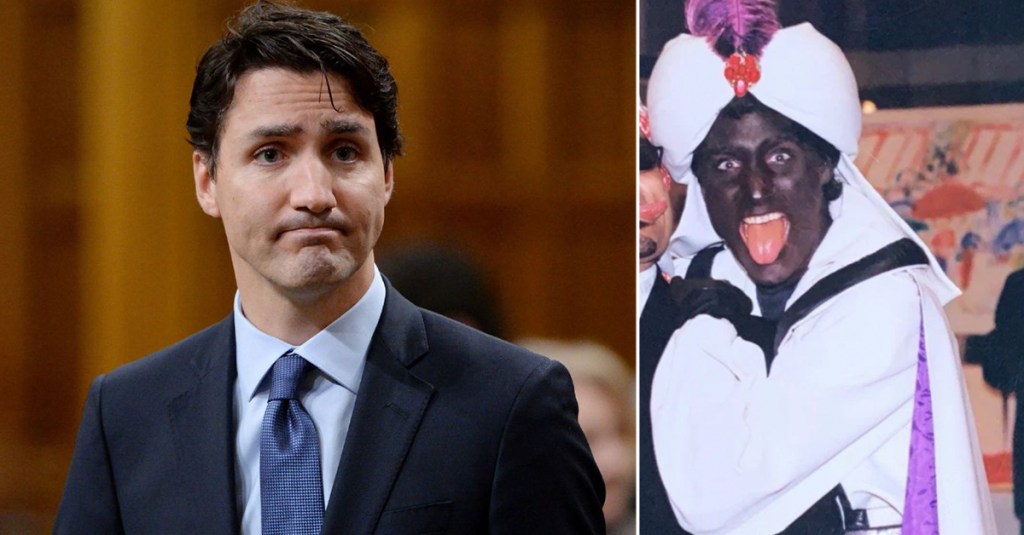
Poor Justin Trudeau. The Canadian PM has egg on his face after it was revealed his government gave former Waffen-SS Nazi Yaroslav Hunka a standing ovation in Canada’s House of Commons.
It looks like Canada’s “House of Commons” (where there are few real commoners) is all gaa-gaa over Ukrainian Nazis. Of course, this is a major faux pas, as slavering over unrepentant Nazis is, to say the least, in bad taste, especially for “woke” leaders such as Trudeau.
How is it possible Canada’s “leaders” are unaware the SS Galicia Division where Hunka “served” was involved in the 1943 mass murder of Poles, Jews, Roma, and communists? How is possible for a man involved in genocide (directed primarily against women and children) to receive a standing ovation?
It’s rather amusing, in a sardonic sort of way, to watch as the Canadian government melts down over this embarrassing incident.
It looks like House of Commons Speaker Anthony Rota will be thrown under the bus. He called Hunka a “hero” during the staged event that revealed the Canadian government’s apparent affinity for SS Waffen Nazis.
The pathetic face-saving blame game was dropped on Rota like 900 pounds of manure. There are demands he resign his post immediately. No doubt he will spend the rest of his now miserable life in shame.
Meanwhile, Trudeau declared his innocence. He insisted it was “extremely upsetting that this happened… This is something that is deeply embarrassing to the parliament of Canada and by extension to all Canadians.”
Justin’s father, Pierre Trudeau, the former Canadian PM (it’s a family affair), “was complicit in the granting of safe haven to thousands of known Nazis who had ‘killed Jews with their own hands,’” tweets Chay Bowes.
I know it’s popular now to consider just about everything posted on Elon Musk’s X-Twitter as a far-right conspiracy theory. However, Mr. Bowes includes a clip from a 1997 episode of Sixty Minutes. Needless to say, CBS ain’t what it used to be.
The Canadian Security Intelligence Service revealed in 2019 that a secret file on the scandalous dealings of the elder Trudeau was dispatched to the memory hole. His “fascination with communism, fascism, socialism and religion drove Trudeau to the far reaches of the political world,” writes Robert Morley for The Trumpet.
According to a Free Republic book review of the biography Young Trudeau: Son of Quebec, Father of Canada, 1919-1944, authored by Max and Monique Nemni, Trudeau was “not in the usual iconographic way… the sacrosanct icon of the progressive new Canada but as an anti-Semitic admirer of Hitler and Mussolini.”
Like father, like son?
It should also be noted that Canada’s Foreign Affairs Minister, Chrystia Freeland, who arranged a Canadian training mission with Ukraine’s “integral nationalists” in 2017, has a rather ugly skeleton in her closet. Freeland’s Ukrainian grandfather Michael Chomiak (Mykhailo Khomiak) was a Nazi collaborator. He edited Krakivs’ki Visti, a “vehemently antisemitic” newspaper.
Before the insanity of Ukraine, the corporate media on occasion told the truth about Nazis. Now, according to the state and its corporate media megaphone, the real Nazis are in America—no, not the Operation Paperclip imports by the CIA, but a tiny marginalized homegrown fringe of skinheads and other deluded racist miscreants.
Canada’s “conservatives” are exploiting this incident to the hilt. In this regard, they are little different than their American counterparts, the supposed “conservatives” that want endless war with Russia, Iran, North Korea, Syria, and China. These are the “conservatives” that want to kill Julian Assange and run a former Gitmo JAG officer as president, they are colleagues of neocon “conservatives” like the psychopaths Lindsey Graham and Nikki Haley.
Finally, to demonstrate the rank historical ignorance of Canada’s parliament, Hunka was described as fighting against the Soviets in World War 2.
I’m not sure what history books these ignoramuses are reading (if any at all). The Soviet Union, the UK, and the US were allies during the war.
I’ll bet Trudeau, Freeland, and at least a few MPs understand Ukraine’s Nazis were on the side of the real Nazis, not the Allies. However, it appears Canada, the US, and Germany required the ideology of authoritarian fascism in order to control their respective countries, and that’s why war criminal Nazis were shipped in under the wire.
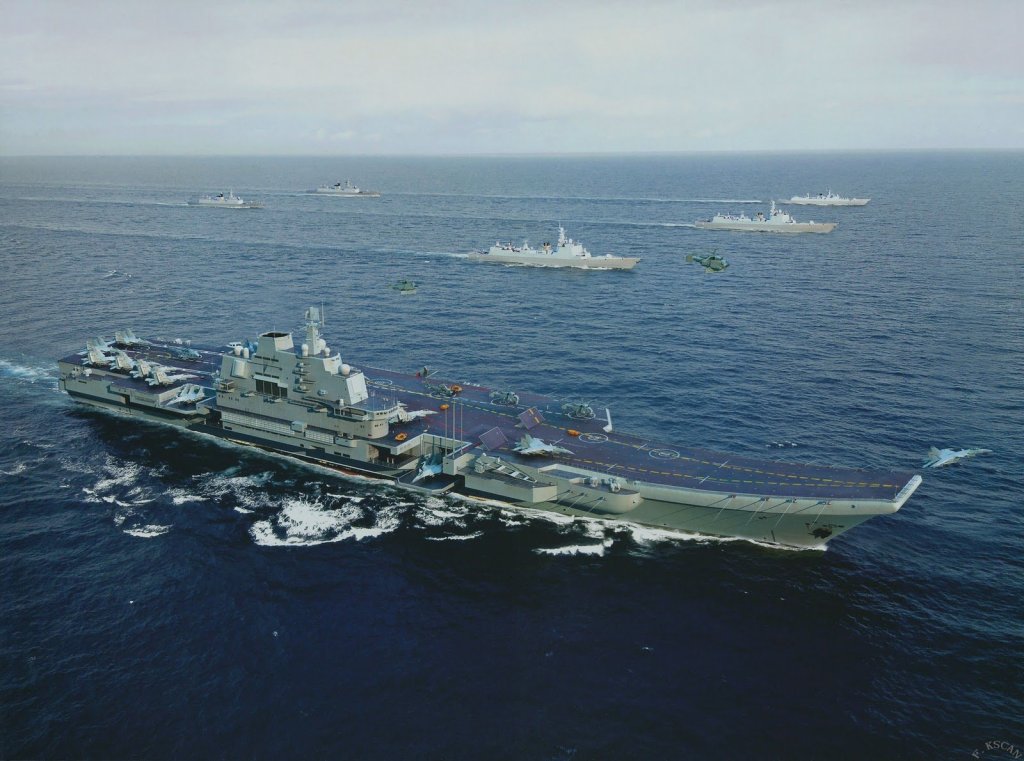
NATO’s efforts to destroy Russia’s Black Sea fleet is a practice run to destroy China’s, Declan Hayes writes.
By Declan Hayes
Source: Strategic Culture Foundation
NATO’s efforts to destroy Russia’s Black Sea fleet is a practice run to destroy China’s. Although some of the soldiers guiding those air and sea drones towards Crimea may be Ukrainians, most of them are undoubtedly British and American. As, of course, are the spy planes pinpointing their Russian targets.
Although Russia has adopted a softly softly approach to all this unprecedented aggression, our focus is on the longer game where NATO is trying to contain the Russian navy and coral the Russian army and air force. To NATO, Ukrainian sovereignty is of no account one way or the other. The main objective is to herd Russia’s Armed Forces into a strategic stockade from which they have no way to drive forward. That seems to be working a charm in this NATO naval guerilla campaign against Sevastopol where NATO has exploited the grain deal corridors in much the same way that the Israeli air force hides behind civilian planes to bomb civilian Syrian targets.
Having steadied their Russian front, NATO can then turn their attention to the Chinese front which they hope will play out in a similar fashion. Because the Chinese Army has no need to cross the Russian border, it is redundant to external calculations unless it once again crosses the Yalu River.
Should a token force of 100,000 crack CPLA advisors, with Pyongyang’s blessing, sweep southwards towards the 38th Parallel, that would considerably complicate matters for China’s American friends as more maritime waters than they could presently handle would then be in play. Given that North Korea has thrown its weight behind Russia, Pyongyang would undoubtedly welcome such military help as China could provide in upgrading their missile and related technologies.
As the war against China will undoubtedly be primarily a maritime war, the Korean peninsula may not be quite in the eye of the storm, which will zero in on breaking China’s main shipping routes. As things currently stand, North Korea is just a card China can keep in reserve until it is time to play it.
Josh Kozlov, the leader of the U.S. Army’s 350th Spectrum Warfare Wing, and the British Royal United Services Institute (RUSI) are amongst the NATO worthies who have opined on the crucial role advanced electronic warfare is playing in the Black Sea and will play in the South China Sea. Given that Hansard has British Defence Secretary Ben Wallace on record calling Ukraine a “battle lab”, a good try out for the best of British hardware and software, no doubt Wallace will enjoy a good stress test against Blighty’s North Korean and Chinese electronic warfare peers.
Unelected European Union dictator Ursula von der Leyen, meanwhile, is complaining that China produces cheap electric cars. Those Chinese cads! How dare they copy Japan’s economic growth tactics.
Japan, remember Japan, when the U.S. Occupation troops used to buy their imitation watches and battery radios as a joke during the Korean war. Seiko, Mitsubishi, Toshiba and Panasonic had the last laugh there.
As will the Chinese, unless von der Leyen’s American bosses implement a naval blockade on China and thereby cut China off from her shipping routes to protect obsolete European competitors and “the rules based order”.
Although the Yanks have proposed the alternative India-Middle East-Europe Economic Corridor (IMEC) with the backing of the United Arab Emirates, Saudi Arabia, Israel, and Jordan, the world and his mother know that is all hot air to pretend that NATO has a viable alternative to China’s various economic infrastructural initiatives and that all this shadow boxing is a repeat of the prelude to The Great War when the rise of the German Navy’s dreadnoughts and the proposed Berlin Baghdad railway were seen as fatal threats to the Royal Navy’s maritime dominance.
Saudi Arabia, the UAE and the CIA hub of Jordan, which are all signed up to Team BRIICS, can expect plenty of NATO threats to come their way if they do not play ball and abandon the Chinese and, in Saudi’s case, the Indians as well, who would also want to send cargo through Saudi waters as part of China’s BRI initiative.
And though therailroad infrastructure linking Greece with Central Europe is a part of the BRI and Pakistan’s Gwadar Port is part of the China-Pakistan Economic Corridor (CPEC), NATO would feel itself entitled to hijack them as part of their mercurial “rules-based order” just as, for the same Nordstream related reasons, the oil and gas pipes beneath the Black Sea are prime targets for NATO’s Ukrainian proxies.
This is no conjecture. Senator Tom Cotton’s report spells out in great detail that NATO need to decouple from China and the Cato Institute, the Bipartisan Policy Center and Australian nut job Dr Ross Babbage have all kindly informed us how this war with China will play out more or less as we previously outlined.
Writing for AsiaNikkei, Admiral James Stavridis, who was formerly the 16th Supreme Allied Commander of NATO, tells us that that, as in Ukraine, NATO’s key advantage is in its allies, in its Filipino, Taiwanese, Korean and Japanese cannon fodder, in other words, and Forbes tells us that the key to success would be, as we said, a naval blockade.
Assuming, of course, China was not bullied into making the same mistakes Admiral Yamamoto’s Imperial Japanese Navy were forced to make when they attacked Pearl Harbor and the American colony of the Philippines. All American bluster about their god-like omnipotence aside, the Chinese High Command has a full and comprehensive appreciation of the capabilities of America’s military industrial complex and how it has progressed since China defanged it during the Korean war.
But let’s also not forget the Indo China wars where the Viêt Minh had their HQ in a Hanoi ice cream bar and the Viêt Cong had their HQ in a Saigon noodle shop and where the great British travel writer Norman Lewis made some very pertinent comments about the Chinese, the Cambodians, the Laotians and particularly the Vietnamese when he documented his experiences in French Indo China at the start of the Second IndoChina war.
Advantage at Sea—Prevailing With Integrated All-Domain Naval Power spells out how the U.S. Navy, Marine Corps and Coast Guard will, like Britannia before Yamamoto showed up, rule the waves. Because NATO is making contingency plans to lace “the straits of Hormuz, Suez, Gibraltar, Malacca, Panama, and Dover” with mines to disrupt supply chains, so must China.
But, if we leave such primitively effective sabotage operations to one side, we can expect NATO to target the digital infrastructure which underwrites the movement of some six million containers transported in approximately 61,000 ships that comprise the world’s trade outside of oil, gas and raw materials. American puppet von der Leyen, as indicated above, has already hinted at that tactic which, given China’s disproportionate power over the infrastructure through which international trade flows, makes sense from the Pentagon’s viewpoint. As they have already run many such pilot programs in insurance and banking against Russia over Ukraine, such efforts must also be factored into China’s calculus which, given China’s geographic and economic size, will be monumentally global in nature.
But then, because all politics is local, China must entice rather than coerce North Korea and Vietnam into its orbit, leaving the Vietnamese in particular with as much ambiguity as those inscrutable masters of intrigue need to defend their own interests in the East (South China) Sea. And, after Vietnam comes the Philippines, which has suffered as much from the Americans as have the Vietnamese. As with Hanoi, so also must China quietly make major diplomatic and economic inroads with Manila, whilst going easy on the jingoism. More carrot, less stick, in other words.
As regards Taiwan, all major players know there is no Chinese hurry there and that it is America and America alone which is using Taiwan as a casus belli. Finally, as regards the long-suffering people of Okinawa and all of Japan Yamamoto, in case they have not heard, is dead, assassinated by the Yanks in 1943. Not only can Japan, with or without another Yamamoto, not prevail in another war but there is no need for Japan to engage in such adventurism as there are much easier ways to commit hara-kiri than picking an unwinnable war with China to the south and Russia to the north.
The Japanese, like the Chinese, should hone their diplomatic skills, perhaps with the help of their good friends in Hanoi and Bangkok and the good people of Taiwan, where Japan and the Japanese are both much admired.
The governments of China, Vietnam, Thailand, Korea, Japan, the Philippines and those close to them have much more important things to attend to than killing each other to enhance the bottom lines of Lockheed Martin, Northrop, and BAE Systems and ensure further kickbacks for the Capitol Hill war hawks those gangsters bribe. The way forward for all of them is to work together for mutual and mutually respectful economic development, to enhance their military capabilities as needed and to ignore, as much as they can, the tone deaf war drums the Yanks and their toadies are never done beating to death.
By Margaret Kimberley
Source: Black Agenda Report
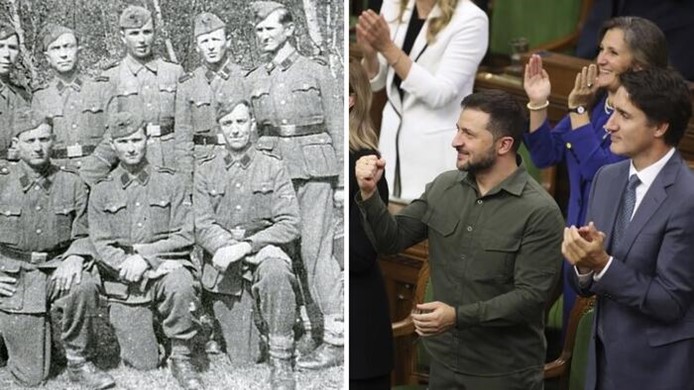
The Canadian government turned what should have been an ordinary photo opportunity with Ukraine’s president into a political debacle when a Ukrainian Nazi collaborator was honored in parliament. Now Canada’s history of admitting Ukrainian SS volunteers is facing new scrutiny as Russia gains the upper hand in the proxy war with the west.
There is something especially satisfying when one’s opponents help make a case for something they have denied. Recently the Canadian government did just that. Their effort to prop up the failing Ukraine proxy war instead exposed that country’s Nazi past and present.
Ukraine has been a divided nation ever since its founding as a state after World War I. Its population is divided by language with Ukrainian and Russian speakers, with some favoring its status as a Soviet republic while others were vehemently opposed. So strong was that faction that there were many Ukrainians who actively collaborated with German occupation forces during World War II.
That history is well documented and is only denied by rank political cynicism which seeks to justify a proxy war which is trending in Russia’s favor. Unfortunately the U.S. and its happy vassal allies, like Canada, are trying to keep up the charade as long as possible, no matter the cost to the people they claim to be helping.
Ukrainian president Volodomyr Zelensky’s recent visits to the U.S. and Canada were replete with calls to never give up and to defeat Vladimir Putin and to give Ukraine an endless supply of weapons and money. The Canadians were so eager to impress that they revealed a truth they had been denying.
It should have been enough to have Zelensky address their parliament, but they couldn’t leave well enough alone. They somehow felt compelled to add a special guest, 98-year old Yaroslav Hunka, who was introduced as “…a Ukrainian Canadian war veteran from the Second World War who fought for Ukrainian independence against the Russians…”
An important part of the war propaganda surrounding Ukraine has been to deny that people such as Hunka even exist or that they fought alongside the Germans we are otherwise told to revile. For Canada that also means denying that they brought those forces to emigrate after the war.
Instead of just introducing Zelensky and swearing to defend him no matter what, the Canadian parliament gave Hunka two standing ovations. It was later reported that Hunka served with the First Ukrainian Division, also known as the Waffen-SS Galicia Division, or the SS 14th Waffen Division, a voluntary unit that was under German command. We are told that these units embody the worst evils committed in modern history. Of course, Germany didn’t have a monopoly on evil or genocide but the narrative of a uniquely evil nation is deeply embedded in western consciousness and the fallout from the incident was both funny and sad.
After Hunka’s history was revealed the amateurish nature of Canadian and all western foreign policy couldn’t be hidden either. The Speaker of the parliament apologized profusely and then resigned. Prime Minister Justin Trudeau admitted to being embarrassed although he felt compelled to add nonsensical warnings against Russian propaganda when his government’s farce was one of its own doing.
Canada is happy to be a U.S. partner in crime. If they’re told to recognize a fake president of Venezuela they do it. If they’re told to arrest the Chief Financial Officer of Huawei and create an international incident they will do that too. If the U.S. decides on another occupation of Haiti then Canada is on board with that too.
As for honoring a Ukrainian who served the Nazis, they are more than willing because that is what they’ve been doing since 1945. There is a large Ukrainian population in Canada who were welcomed with open arms, just as Hunka was. The Canadian government admitted more than 2,000 members of the Galician Waffen SS. In fact, showing an SS tattoo was a means of entry to Canada as it was eager to enhance its anti-left bona fides. some of these men were recruited to work in mining and undermine left wing union activity. Canada’s Minister of Finance and Deputy Prime Minister, Chrystia Freeland, is the grand-daughter of Ukrainian collaborator and propagandist Michael Chomiak.
Of course Canada shares the US history of being a white supremacist colonial state. So much so that they sometimes slip up and ruin their fine tuned image as a nicer version of the U.S. and end up showing their true colors.
The entire incident is an indication that the war they pledge to win isn’t going their way. The U.S., Canada and the rest of the collective west are now caught in a trap of their own making. They have stuffed blue and yellow flags down our throats, taken billions of dollars and euros and pounds that their people need, censored countless individuals and platforms, and even blown up the Nordstream pipeline. But now the game is up and they don’t know how to face their defeat. Instead they found an old Nazi and gave him applause, a sure sign of panic.
But they have done something even worse. Some Ukrainians, like Zelensky’s grandfather, defended the USSR and fought with the Red Army. Any Ukrainian on the other side was a German collaborator. Canada forgot that millions of people haven’t been fooled by heavy handed propaganda that seeks to change historical memory. The Soviet Union played the biggest role in Germany’s defeat, a simple fact which is ignored or disappeared or in the case of the proxy war turned into a perverse retelling of history which requires a willingness to take part in a shameful lie.
The backpedaling and apologizing is undeniably enjoyable to watch. Yet Canada revealed another frightening truth. The collective west is desperate and may do more than sabotage a pipeline. Russia is in no mood to back down after having been lied to about the Minsk Accords and a tentative peace plan early in this conflict. A public relations debacle is not the worst thing they can do. Canada and the U.S. and their friends may convince themselves that escalation is their way out. Foreign policy amateurism may lead to something far worse for humanity.
INDIAN COUNTRY NEWS
"It is the duty of every man, as far as his ability extends, to detect and expose delusion and error"..Thomas Paine
Human in Algorithms
From the Roof Top
I See This
blog of the post capitalist transition.. Read or download the novel here + latest relevant posts
अध्ययन-अनुसन्धानको सार
 After the Crash