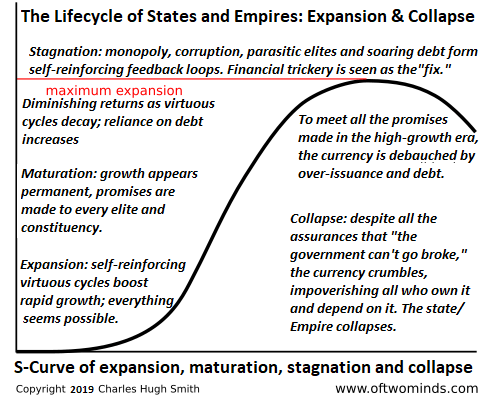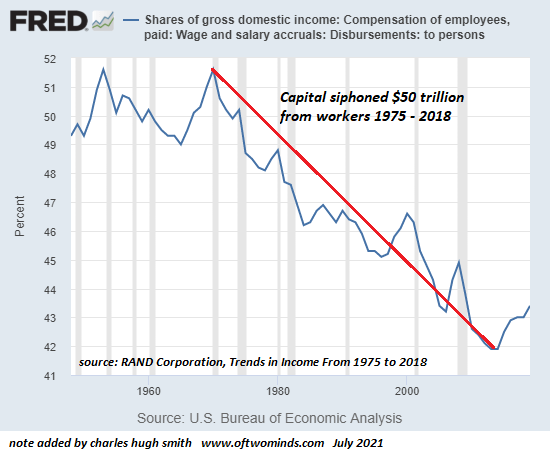

Saturday Matinee: The Wailing

Film Analysis: The Wailing (2016) by Na Hong-jin screening on Fantasia International Film Festival

By Panos Kotzathanasis

Source: Asian Movie Pulse

Na Hong-jin is one of those rare cases in S. Korean cinema, which, despite having enormous success with their films, are not exactly eager to follow up. In that fashion, he has shot just three films in eight years, with the previous one (The Yellow Sea) screening six years before. His absence was quite felt in the country’s cinema, but his return fully compensates. “The Wailing” is already an international success, amassing more the $51 million in international revenue, while it has also won five Blue Dragon Awards (Director, Supporting Actor, Popularity Award, Editing, and Music). Here are seven reasons for the film’s success.

In a seemingly peaceful village, a kind of epidemic suddenly breaks out, with people losing their minds and attacking their relatives and with their skin suffering from a hideous infection. Their attacks have resulted in violent deaths, and the local police seem unable to deal with the case, eventually concluding that poisonous mushrooms are causing this behavior. Among them is officer Jong-goo, who hears a rumor about a Japanese man living on the top of a nearby hill being the actual perpetrator, a suspicion that becomes stronger after a strange young woman, named Moo-myeong confirms the fact. Eventually, he tracks down the man’s house and comes across a series of truly horrific spectacles. Being kind of coward himself, he tries to avoid the situation as much as possible, but when his little daughter, Hyo-jin, comes down with similar symptoms, Jong-doo is willing to go to extremes to save her. Meanwhile, his mother-in-law invites Il- gwang, a shaman, to perform an exorcism on the girl while a deacon  named Yang Yi-sam, is also involved, as a translator of Japanese for the police. The truth about what is really going on, and who the actual evil characters are, changes all the time, until the end. In that fashion, Na Hong-jin manages to retain the agony for the whole duration of the movie, as the twists are continuous and quite shocking.

Underneath the elaborate script, Na Hong-jin has hidden a very sharp, sociopolitical allegory, which my friend and expert on Korean film allegory, Bastian Meiresonne has pointed out to me. Moo-myeong, the shaman woman, is a direct reference to South Korea’s current president, Park Geun-hye, who has an intense connection with shamanism (or Muism, as is the Korean version of it) through the Eternal Life Church and her advisor, Choi Soon-sil, the instigator of the latest scandal that has led to her impeachment trial. In that fashion, Moo-myeong (shaman / white woman) is manipulating people to accuse the foreigner (or the past of South Korea in another interpretation). Her accusations make the people of the town become more and more racist, and to eventually kill the foreigner. It is always a dream sequence or a story told that has the Japanese man doing magic, or he is nearby, but he never actually does anything. The only time that he performs shamanism is in order to counter the woman’s sorcery.

The sequence where Moo-myeong is throwing stones at Jong-goo symbolizes how racism gets to people. It takes quite awhile, and lots of small “stones”, and people in the beginning are negative, like Jong-goo, who tells the woman to leave. Eventually though, it gets to them, and when they understand what is happening, it is too late. This allegory becomes clear during the sequence where the Japanese man turns into a monster in front of the wannabe priest, Yang Yi-sam. He says to him: “You only see me as you want to see me – and if I would tell you how I really look like (normal guy), you wouldn’t believe me anyway.” In that fashion, racism makes targeted people seem like monsters. The wannabe priest is an allegory regarding South Korea’s very troubled religious history, with Protestants and Catholics doing a lot of wrong in the country.

At one point, people call upon Korea’s traditional past – the shaman – (Il-Gwang) to help them, whose first question is how much he will be paid. As soon as the ritual is over (where he actually did nothing), he puts on his brand sportswear, in a symbolism of how old Korea has been left behind for money and western “values”. The only one who seems to realize the truth is the little girl, Hyo-jin, who symbolizes the children in general. She continuously yells “STOP”, but her parents continue to do the wrong thing and trust the shaman – Park Geun-hye – as they succumb to racism. In that fashion, Na Hong-jin means that the children will turn against their parents for the consequences they will have to pay, due to their mistakes.

Na Hong-jin directs and pens an agonizing thriller, building the tension gradually as the story progresses, until the utterly shocking finale, one of the film’s greatest sequences. He incorporates a plethora of horror-favorite elements and notions, including zombies, vampires, demons, and exorcists, although the only one majorly implemented is the latter, with the rest existing, for the most part, to create an atmosphere of supernatural horror. In that fashion, he avoids the reef of hyperbole, maintaining a very serious approach throughout the film, despite some minor moments of unexpected humor. The pace is neither fast nor slow, but has the most fitting speed for the story, which artfully escalates as the time passes, until the impressive ending with the continuous plot twists. Apart from that, there is much cursing, violence, and a number of truly grotesque bloodbaths and spectacles in general, which supplement the general aesthetics of the film. Lastly, the allegories are another element that moves the film beyond the typical horror movie, adding another level and more substance.

The cast is another point of excellence, with Kwak Do-won giving a wonderful performance as Jong-goo, an easily intimidated police officer who transforms into a relentless hunter for the sake of his daughter. Kwak has been mostly cast in secondary roles during his career, and he proves in this film that he is made of protagonist material. Hwang Jung-min is great as usual as Il-gwang, in his path to become the next Song Kang-ho. The exorcism scene is the highlight of his impressive performance. The one who truly steals the show, however, is Jun Kunimura as the mysterious Japanese man, whose acting and physique make him the perfect choice for the particular role, as he constantly exhibits a subtle but obvious threat, despite the fact that he does not speak very much. Kim Hwan-hee is also great as little Hyo-jin, in a rather difficult role that demanded her transformation from a cute and smart little girl to a violent, constantly cursing, possessed individual. Lastly, the gorgeous Chun Woo-hee shines particularly in the end, with a truly eerie performance.

Technically the film is magnificent, with Hong Kyung-pyo’s cinematography wonderfully presenting the grotesque atmosphere in the rural surroundings of the film, while exhibiting images of bucolic beauty as much as of onerous terror, particularly inside the various houses in the area. Furthermore, the extensive shooting in natural light gives the film an eerie essence that so suits its general atmosphere. Kim Sun-min’s editing is also great, retaining the agony throughout the film, while the sequencing is a work of art, particularly during the exorcism scene and the ending. Jang Young-gyu magnificently supplements the general atmosphere of the film, especially during the agonizing scenes.

All of the film’s aspects find their apogee in the exorcism scene, the movie’s most impressive and meaningful sequence. In terms of acting, Hwang Jung-min has the central role, presenting an exorcist performing a complicated ritual, as he dances around, killing a cock and chanting the whole time. Kw ak Do-won wonderfully portrays his character’s agony, particularly due to the reactions of his daughter, as Kim Hwan-hee is truly terrifying screaming and kicking as if she is being killed. Jun Kunimura is also great, as he presents his character’s stress over countering the ritual. The cinematography of the scene is extraordinary, as the difference in the two exorcisms is presented by the opposite colors (white and black) of the cocks sacrificed and the setting where they take place: the first in full light, and the second one in the darkness. Since the two rituals occur simultaneously, the editing is also masterful, as the two scenes alternate magnificently. The music, mainly produced through hand drums, heightens the tension even more.

“The Wailing” features many grotesque scenes. Cannibalism, violent killings, people acting like zombies, the terribly depicted skin infection, the cock killing ritual, and the amounts of blood all point towards an extreme horror film. The same applies to Hyo-jin’s behavior, which is very hard to watch, particularly during the ritual scene. The sequences involving the dog and the interior of the Japanese man’s house also move in the same direction. However, Na Hong-jin manages to “hide” this grotesqueness, as the other more artful elements of the film are the ones that dominate in the end. The intricate script with the deep and meaningful allegory, the well-analyzed characters, the fitting pace, and the elaborate cinematography that presents images of extreme beauty, alongside those of extreme grotesqueness, succeed in making the film watchable by anybody. The sporadic humor also moves in this direction, and this along with the aforementioned elements make “The Wailing” a great combination of artistry, meaningfulness, and entertainment, which even applies to fans of the extreme.

“The Wailing” is a truly great spectacle, a must-see for every fan of S. Korean cinema and a great return for a great filmmaker.

Watch The Wailing on Hoopla here: https://www.hoopladigital.com/title/11707489

Overthrow the Government: All the Ways in Which Our Rights Have Been Usurped

By John & Nisha Whitehead

Source: The Rutherford Institute

“We the people are the rightful masters of both Congress and the courts, not to overthrow the Constitution but to overthrow the men who pervert the Constitution.” — Abraham Lincoln

It’s easy to become discouraged about the state of our nation.

We’re drowning under the weight of too much debt, too many wars, too much power in the hands of a centralized government, too many militarized police, too many laws, too many lobbyists, and generally too much bad news.

It’s harder to believe that change is possible, that the system can be reformed, that politicians can be principled, that courts can be just, that good can overcome evil, and that freedom will prevail.

So where does that leave us?

Benjamin Franklin provided the answer. As the delegates to the Constitutional Convention trudged out of Independence Hall on September 17, 1787, an anxious woman in the crowd waiting at the entrance inquired of Franklin, “Well, Doctor, what have we got, a republic or a monarchy?” “A republic,” Franklin replied, “if you can keep it.”

What Franklin meant, of course, is that when all is said and done, we get the government we deserve.

Those who gave us the Constitution and the Bill of Rights believed that the government exists at the behest of its citizens. It is there to protect, defend and even enhance our freedoms, not violate them.

Unfortunately, although the Bill of Rights was adopted as a means of protecting the people against government tyranny, in America today, the government does whatever it wants, freedom be damned.

“We the people” have been terrorized, traumatized, and tricked into a semi-permanent state of compliance by a government that cares nothing for our lives or our liberties.

The bogeyman’s names and faces have changed over time (terrorism, the war on drugs, illegal immigration, a viral pandemic, and more to come), but the end result remains the same: in the so-called name of national security, the Constitution has been steadily chipped away at, undermined, eroded, whittled down, and generally discarded with the support of Congress, the White House, and the courts.

A recitation of the Bill of Rights—set against a backdrop of government surveillance, militarized police, SWAT team raids, asset forfeiture, eminent domain, overcriminalization, armed surveillance drones, whole body scanners, stop and frisk searches, vaccine mandates, lockdowns, and the like (all sanctioned by Congress, the White House, and the courts)—would understandably sound more like a eulogy to freedoms lost than an affirmation of rights we truly possess.

What we are left with today is but a shadow of the robust document adopted more than two centuries ago. Sadly, most of the damage has been inflicted upon the Bill of Rights.

Here is what it means to live under the Constitution, twenty-plus years after 9/11 and with the nation just emerging from two years of COVID-19 lockdowns and mandates.

The First Amendment is supposed to protect the freedom to speak your mind, assemble and protest nonviolently without being bridled by the government. It also protects the freedom of the media, as well as the right to worship and pray without interference. In other words, Americans should not be silenced by the government. To the founders, all of America was a free speech zone.

Despite the clear protections found in the First Amendment, the freedoms described therein are under constant assault. Increasingly, Americans are being persecuted for exercising their First Amendment rights and speaking out against government corruption. Activists are being arrested and charged for daring to film police officers engaged in harassment or abusive practices. Journalists are being prosecuted for reporting on whistleblowers. States are passing legislation to muzzle reporting on cruel and abusive corporate practices. Religious ministries are being fined for attempting to feed and house the homeless. Protesters are being tear-gassed, beaten, arrested and forced into “free speech zones.” And under the guise of “government speech,” the courts have reasoned that the government can discriminate freely against any First Amendment activity that takes place within a so-called government forum.

The Second Amendment was intended to guarantee “the right of the people to keep and bear arms.” Essentially, this amendment was intended to give the citizenry the means to resist tyrannical government. Yet while gun ownership has been recognized by the U.S. Supreme Court as an individual citizen right, Americans remain powerless to defend themselves against red flag gun laws, militarized police, SWAT team raids, and government agencies armed to the teeth with military weapons better suited to the battlefield.

The Third Amendment reinforces the principle that civilian-elected officials are superior to the military by prohibiting the military from entering any citizen’s home without “the consent of the owner.” With the police increasingly training like the military, acting like the military, and posing as military forces—complete with heavily armed SWAT teams, military weapons, assault vehicles, etc.—it is clear that we now have what the founders feared most—a standing army on American soil.

The Fourth Amendment prohibits government agents from conducting surveillance on you or touching you or encroaching on your private property unless they have evidence that you’re up to something criminal. In other words, the Fourth Amendment ensures privacy and bodily integrity. Unfortunately, the Fourth Amendment has suffered the greatest damage in recent years and has been all but eviscerated by an unwarranted expansion of governmental police powers that include strip searches and even anal and vaginal searches of citizens, surveillance (corporate and otherwise), and intrusions justified in the name of fighting terrorism, as well as the outsourcing of otherwise illegal activities to private contractors.

The Fifth Amendment and the Sixth Amendment work in tandem. These amendments supposedly ensure that you are innocent until proven guilty, and government authorities cannot deprive you of your life, your liberty or your property without the right to an attorney and a fair trial before a civilian judge. However, in the new suspect society in which we live, where surveillance is the norm, these fundamental principles have been upended. Certainly, if the government can arbitrarily freeze, seize or lay claim to your property (money, land or possessions) under government asset forfeiture schemes, you have no true rights.

The Seventh Amendment guarantees citizens the right to a jury trial. Yet when the populace has no idea of what’s in the Constitution—civic education has virtually disappeared from most school curriculums—that inevitably translates to an ignorant jury incapable of distinguishing justice and the law from their own preconceived notions and fears. However, as a growing number of citizens are coming to realize, the power of the jury to nullify the government’s actions—and thereby help balance the scales of justice—is not to be underestimated. Jury nullification reminds the government that “we the people” retain the power to ultimately determine what laws are just.

The Eighth Amendment is similar to the Sixth in that it is supposed to protect the rights of the accused and forbid the use of cruel and unusual punishment. However, the Supreme Court’s determination that what constitutes “cruel and unusual” should be dependent on the “evolving standards of decency that mark the progress of a maturing society” leaves us with little protection in the face of a society lacking in morals altogether.

The Ninth Amendment provides that other rights not enumerated in the Constitution are nonetheless retained by the people. Popular sovereignty—the belief that the power to govern flows upward from the people rather than downward from the rulers—is clearly evident in this amendment. However, it has since been turned on its head by a centralized federal government that sees itself as supreme and which continues to pass more and more laws that restrict our freedoms under the pretext that it has an “important government interest” in doing so.

As for the Tenth Amendment’s reminder that the people and the states retain every authority that is not otherwise mentioned in the Constitution, that assurance of a system of government in which power is divided among local, state and national entities has long since been rendered moot by the centralized Washington, DC, power elite—the president, Congress and the courts.

Thus, if there is any sense to be made from this recitation of freedoms lost, it is simply this: our individual freedoms have been eviscerated so that the government’s powers could be expanded.

It was no idle happenstance that the Constitution opens with these three powerful words: “We the people.” As the Preamble proclaims:

We, the people of the United States, in order to form a more perfect Union, establish justice, insure domestic tranquility, provide for the common defense, promote the general welfare, and secure the blessings of liberty to ourselves and our posterity, do ordain and establish this CONSTITUTION for the United States of America.

In other words, it’s our job to make the government play by the rules of the Constitution.

We are supposed to be the masters and they—the government and its agents—are the servants.

We the American people—the citizenry—are supposed to be the arbiters and ultimate guardians of America’s welfare, defense, liberty, laws and prosperity.

Still, it’s hard to be a good citizen if you don’t know anything about your rights or how the government is supposed to operate.

As the National Review rightly asks, “How can Americans possibly make intelligent and informed political choices if they don’t understand the fundamental structure of their government? American citizens have the right to self-government, but it seems that we increasingly lack the capacity for it.”

Americans are constitutionally illiterate.

Most citizens have little, if any, knowledge about their basic rights. And our educational system does a poor job of teaching the basic freedoms guaranteed in the Constitution and the Bill of Rights. For instance, a survey by the Annenberg Public Policy Center found that a little more than one-third of respondents (36 percent) could name all three branches of the U.S. government, while another one-third (35 percent) could not name a single one.

A survey by the McCormick Tribune Freedom Museum found that only one out of a thousand adults could identify the five rights protected by the First Amendment. On the other hand, more than half (52%) of the respondents could name at least two of the characters in the animated Simpsons television family, and 20% could name all five. And although half could name none of the freedoms in the First Amendment, a majority (54%) could name at least one of the three judges on the TV program American Idol, 41% could name two and one-fourth could name all three.

It gets worse.

Many who responded to the survey had a strange conception of what was in the First Amendment. For example, a startling number of respondents believed that the “right to own a pet” and the “right to drive a car” were part of the First Amendment. Another 38% believed that “taking the Fifth” was part of the First Amendment.

Teachers and school administrators do not fare much better. A study conducted by the Center for Survey Research and Analysis found that one educator in five was unable to name any of the freedoms in the First Amendment.

Government leaders and politicians are also ill-informed. Although they take an oath to uphold, support and defend the Constitution against “enemies foreign and domestic,” their lack of education about our fundamental rights often causes them to be enemies of the Bill of Rights.

So what’s the solution?

Thomas Jefferson recognized that a citizenry educated on “their rights, interests, and duties”  is the only real assurance that freedom will survive.

As Jefferson wrote in 1820: “I know no safe depository of the ultimate powers of our society but the people themselves; and if we think them not enlightened enough to exercise their control with a wholesome discretion, the remedy is not to take it from them, but to inform their discretion by education. This is the true corrective of abuses of constitutional power.”

From the President on down, anyone taking public office should have a working knowledge of the Constitution and the Bill of Rights and should be held accountable for upholding their precepts. One way to ensure this would be to require government leaders to take a course on the Constitution and pass a thorough examination thereof before being allowed to take office.

Some critics are advocating that students pass the United States citizenship exam in order to graduate from high school. Others recommend that it must be a prerequisite for attending college. I’d go so far as to argue that students should have to pass the citizenship exam before graduating from grade school.

Here’s an idea to get educated and take a stand for freedom: anyone who signs up to become a member of The Rutherford Institute gets a wallet-sized Bill of Rights card and a Know Your Rights card. Use this card to teach your children the freedoms found in the Bill of Rights.

A healthy, representative government is hard work. It takes a citizenry that is informed about the issues, educated about how the government operates, and willing to do more than grouse and complain.

As I point out in my book Battlefield America: The War on the American People and in its fictional counterpart The Erik Blair Diaries, “we the people” have the power to make and break the government.

The powers-that-be want us to remain divided over politics, hostile to those with whom we disagree politically, and intolerant of anyone or anything whose solutions to what ails this country differ from our own. They also want us to believe that our job as citizens begins and ends on Election Day.

Yet there are 330 million of us in this country. Imagine what we could accomplish if we actually worked together, presented a united front, and spoke with one voice.

Tyranny wouldn’t stand a chance.

Billionaires, Bunkers and Brain Damage

“The rich are not like us”

By Mickey Z.

Source: Dissident Voice

Douglas Rushkoff has an article (based on his latest book) called “The super-rich ‘preppers’ planning to save themselves from the apocalypse,” in The Observer.

This excerpt gives you an idea of how the barbaric brain of a billionaire operates:

Finally, the CEO of a brokerage house explained that he had nearly completed building his own underground bunker system, and asked: “How do I maintain authority over my security force after the event?” The event. That was their euphemism for the environmental collapse, social unrest, nuclear explosion, solar storm, unstoppable virus, or malicious computer hack that takes everything down.

This single question occupied us for the rest of the hour. They knew armed guards would be required to protect their compounds from raiders as well as angry mobs. One had already secured a dozen Navy Seals to make their way to his compound if he gave them the right cue. But how would he pay the guards once even his crypto was worthless? What would stop the guards from eventually choosing their own leader?

The billionaires considered using special combination locks on the food supply that only they knew. Or making guards wear disciplinary collars of some kind in return for their survival. Or maybe building robots to serve as guards and workers – if that technology could be developed “in time.” It’s as if they want to build a car that goes fast enough to escape from its own exhaust

I tried to reason with them. I made pro-social arguments for partnership and solidarity as the best approaches to our collective, long-term challenges. The way to get your guards to exhibit loyalty in the future was to treat them like friends right now, I explained. Don’t just invest in ammo and electric fences, invest in people and relationships. They rolled their eyes at what must have sounded to them like hippy philosophy.

After reading that, you may be wondering if the rich are brain-damaged. To which I reply: Why weren’t you thinking that all along and yes, they are brain-damaged. Some studies to consider:

There’s plenty more where that came from but, of course, all such “research” must be viewed with healthy skepticism. Personally, since I’m justifiably wary of “studies,” I’ll just look around to see — with my own three eyes — how the wealthiest humans on the planet have behaved since, well… forever.

Or consider the words of the immortal Dorothy Parker: “If you want to know what God thinks of money, just look at the people he gave it to.”

Translation: The billionaires are not going to save you — or ever help you. They’re running scared to get their brain-damaged butts into bunkers.

So, connect with your peers. Connect across “party” lines and ideological hive minds. Toss away your purity litmus tests and find common ground.

What will save us is what always saves us: community, resilience, compassion, open-mindedness, innovation, and imagination.

The Gaslighting of the Masses

By CJ Hopkins

Source: Off-Guardian

For students of official propaganda, mind control, emotional coercion, and other insidious manipulation techniques, the rollout of the New Normal has been a bonanza. Never before have we been able to observe the application and effects of these powerful technologies in real-time on such a massive scale.

In a little over two and a half years, our collective “reality” has been radically revised. Our societies have been radically restructured. Millions (probably billions) of people have been systematically conditioned to believe a variety of patently ridiculous assertions, assertions based on absolutely nothing, repeatedly disproved by widely available evidence, but which have nevertheless attained the status of facts. An entire fictitious history has been written based on those baseless and ridiculous assertions. It will not be unwritten easily or quickly.

I am not going to waste your time debunking those assertions. They have been repeatedly, exhaustively debunked. You know what they are and you either believe them or you don’t. Either way, reviewing and debunking them again isn’t going to change a thing.

Instead, I want to focus on one particularly effective mind-control technology, one that has done a lot of heavy lifting throughout the implementation of the New Normal and is doing a lot of heavy-lifting currently. I want to do that because many people mistakenly believe that mind-control is either (a) a “conspiracy theory” or (b) something that can only be achieved with drugs, microwaves, surgery, torture, or some other invasive physical means. Of course, there is a vast and well-documented history of the use of such invasive physical technologies (see, e.g., the history of the CIA’s infamous MKULTRA program), but in many instances mind-control can be achieved through much less elaborate techniques.

One of the most basic and effective techniques that cults, totalitarian systems, and individuals with fascistic personalities use to disorient and control people’s minds is “gaslighting.” You’re probably familiar with the term. If not, here are a few definitions:

“the manipulation of another person into doubting their perceptions, experiences, or understanding of events.”American Psychological Association

“an insidious form of manipulation and psychological control. Victims of gaslighting are deliberately and systematically fed false information that leads them to question what they know to be true, often about themselves. They may end up doubting their memory, their perception, and even their sanity.”Psychology Today

“a form of psychological manipulation in which the abuser attempts to sow self-doubt and confusion in their victim’s mind. Typically, gaslighters are seeking to gain power and control over the other person, by distorting reality and forcing them to question their own judgment and intuition.”Newport Institute

The main goal of gaslighting is to confuse, coerce, and emotionally manipulate your victim into abandoning their own perception of reality and accepting whatever new “reality” you impose on them. Ultimately, you want to completely destroy their ability to trust their own perception, emotions, reasoning, and memory of historical events, and render them utterly dependent on you to tell them what is real and what “really” happened, and so on, and how they should be feeling about it.

Anyone who has ever experienced gaslighting in the context of an abusive relationship, or a cult, or a totalitarian system, or who has worked in a battered women’s shelter, can tell you how powerful and destructive it is. In the most extreme cases, the victims of gaslighting are entirely stripped of their sense of self and surrender their individual autonomy completely. Among the best-known and most dramatic examples are the Patty Hearst case, Jim Jones’ People’s Temple, the Manson family, and various other cults, but, the truth is, gaslighting happens every day, out of the spotlight of the media, in countless personal and professional relationships.

Since the Spring of 2020, we have been subjected to official gaslighting on an unprecedented scale. In a sense, the “Apocalyptic Pandemic” PSYOP has been one big extended gaslighting campaign (comprising countless individual instances of gaslighting) inflicted on the masses throughout the world. The events of this past week were just another example.

Basically, what happened was, a Pfizer executive confirmed to the European Parliament last Monday that Pfizer did not know whether its Covid “vaccine” prevented transmission of the virus before it was promoted as doing exactly that and forced on the masses in December of 2020. People saw the video of the executive admitting this, or heard about it, and got upset.

They tweeted and Facebooked and posted videos of Pfizer CEO Albert Bourla, Bill Gates, the Director of the CDC, official propagandists like Rachel Maddow, and various other “experts” and “authorities” blatantly lying to the public, promising people that getting “vaccinated” would “prevent transmission,” “protect other people from infection,” “stop the virus in its tracks,” and so on, which totally baseless assertions (i.e., lies) were the justification for the systematic segregation and persecution of “the Unvaccinated,” and the fomenting of mass fanatical hatred of anyone challenging the official “vaccine” narrative, and the official New Normal ideology, which hatred persists to this very day.

The New Normal propaganda apparatus (i.e., the corporate media, health “experts,” et al.) responded to the story predictably. They ignored it, hoping it would just go away. When it didn’t, they rolled out the “fact-checkers” (i.e., gaslighters).

The Associated PressReutersPolitiFact, and other official gaslighting outfits immediately published lengthy official “fact-checks” that would make a sophist blush. Read them and you will see what I mean. They are perfect examples of official gaslighting, crafted to distract you from the point and suck you into an argument over meaningless details and definitions. They sound exactly like Holocaust deniers pathetically asserting that there is no written proof that Hitler ordered the Final Solution … which, there isn’t, but it doesn’t fucking matter. Of course Hitler ordered the Final Solution, and of course they lied about the “vaccines.”

The Internet is swimming with evidence of their lies … tweets, videos, articles, and so on.

Which is what makes gaslighting so frustrating for people who believe they are engaged in an actual good-faith argument over facts and the truth. But that’s not how totalitarianism works. The New Normals, when they repeat whatever the authorities have instructed them to repeat today (e.g., “trust the Science,” “safe and effective,” “no one ever claimed they would prevent transmission”), could not care less whether it is actually true, or even if it makes the slightest sense.

These gaslighting “fact-checks” are not meant to convince them that anything is true or false. And they are certainly not meant to convince us. They are official scripts, talking points, and thought-terminating clichés for the New Normals to repeat, like cultists chanting mantras at you to shut off their minds and block out anything that contradicts or threatens the “reality” of the cult.

You can present them with the actual facts, and they will smile knowingly, and deny them to your face, and condescendingly mock you for not “seeing the truth.”

But here’s the tricky thing about gaslighting.

In order to effectively gaslight someone, you have be in a position of authority or wield some other form of power over them. They have to need something vital from you (i.e., sustenance, safety, financial security, community, career advancement, or just love). You can’t walk up to some random stranger on the street and start gaslighting them. They will laugh in your face.

The reason the New Normal authorities have been able to gaslight the masses so effectively is that most of the masses do need something from them … a job, food, shelter, money, security, status, their friends, a relationship, or whatever it is they’re not willing to risk by challenging those in power and their lies. Gaslighters, cultists, and power freaks, generally, know this. It is what they depend on, your unwillingness to live without whatever it is. They zero in on it and threaten you with the loss of it (sometimes consciously, sometimes just intuitively).

Gaslighting won’t work if you are willing to give up whatever the gaslighter is threatening to take from you (or stop giving you, as the case may be), but you have to be willing to actually lose it, because you will be punished for defending yourself, for not surrendering your autonomy and integrity, and conforming to the “reality” of the cult, or the abusive relationship, or the totalitarian system.

I have described the New Normal (i.e., our new “reality”) as pathologized-totalitarianism, and as a “a cult writ large, on a societal scale.” I used the “Covidian Cult” analogy because every totalitarian system essentially operates like a cult, the main difference being that, in totalitarian systems, the balance of power between the cult and the normal (i.e., dominant) society is completely inverted. The cult becomes the dominant (i.e., “normal”) society, and non-cult-members become its “deviants.”

We do not want to see ourselves as “deviants” (because we haven’t changed, the society has), and our instinct is to reject the label, but that is exactly what we are … deviants. People who deviate from the norm, a new norm, which we reject, and oppose, but which, despite that, is nonetheless the norm, and thus we are going to be regarded and dealt with like deviants.

I am such a deviant. I have a feeling you are too. Under the circumstances, it’s nothing to be ashamed of. On the contrary, we need to accept it, and embrace it. Above all, we need to get clear about it, about where we stand in this new “reality.”

We are heading toward New Normal Winter No. 3. They are already cranking up the official propaganda, jacking up the fabricated “cases,” talking about reintroducing mask-mandates, fomenting mass hatred of “the Unvaccinated,” and so on. People’s gas bills and doubling and tripling. The global-capitalist ruling classes are openly embracing neo-Nazis. There is talk of “limited” nuclear war. Fanaticism, fear, and hatred abound. The gaslighting of the masses is not abating. It is increasing. The suppression of dissent is intensifying. The demonization of non-conformity is intensifying. Lines are being drawn in the sand. You see it and feel it just like I do.

Get clear on what’s essential to you. Get clear about what you’re willing to lose. Stay deviant. Stay frosty. This isn’t over.

The Fourth Turn, Turn, Turn

By Charles Hugh Smith

Source: Of Two Minds

The cycles of The Fourth Turning, Fischer and Turchin are all in alignment at this point in history..

The 1997 book The Fourth Turning: An American Prophecy proposed a cyclical pattern of four 20-year generations which culminate in a national crisis every 80 years. The book identifies these dates as Fourth Turnings: 1781 (Revolutionary War), 1861 (Civil War) and 1941 (global war). add 80 years and voila, 2021.

I use the term Fourth Turning generically to describe an existential crisis that decisively changes the course of national identity and history.

In other words, we don’t have to accept the book’s theory of generational dynamics to accept an 80-year cycle. There are other causal dynamics in play that also tend to cycle: the credit (Kondratieff) cycle, for example.

While each of the previous existential crises were resolved positively, positive outcomes are not guaranteed: dissolution and collapse are also potential outcomes.

David Hackett Fischer’s book The Great Wave: Price Revolutions and the Rhythm of History proposes another cycle: humans expand their numbers and consumption until they’ve exploited and depleted all available resources.

As resources become scarce, societies and economies unravel as humans do not respond well to rising prices generated by scarcities.

The unraveling continues until consumption is realigned with the resources available. In the past this meant either a mass die-off that drastically reduced human numbers and consumption (for example, The Black Plague), a decline in fertility that slowly reduced population to fit resources, mass migration to locales with more resources or the discovery and exploitation of a new scalable energy source that enabled a new cycle of rising consumption.

The 14th century Black Death reduce Europe’s population by roughly 40%, enabling depleted forests to regrow and depleted agricultural land to restore fertility.

Once the human population regained its numbers and consumption in the 17th century, wood was once again under pressure as the key source of energy, shipbuilding, housing, etc.

The development of steam power and the technologies of mining enabled the exploitation of coal, which soon replaced wood as the primary energy source.

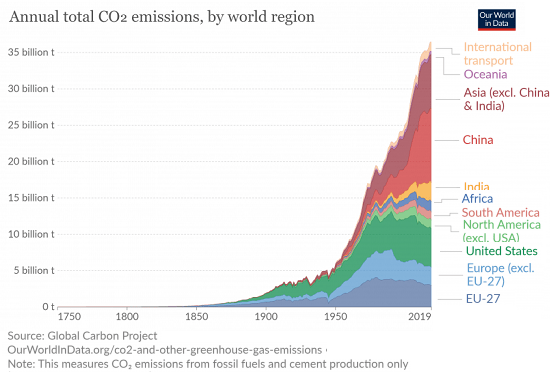
Oil and natural gas added to the energy humans could tap, followed (at a much more modest level) by nuclear power. Despite gargantuan investments, the recent push to develop solar and wind energy has yielded very modest results, as globally these sources provide about 5% of total energy consumption. (See chart below)

It’s self-evident that despite breezy claims of endless expansion of consumption, the global human population has now exceeded the resources available for practical extraction. Energy, fresh water, wild fisheries and fertile soils have all been exploited and the easy/cheap-to-extract resources have been depleted.

(The chart below of global CO2 emissions is a proxy for energy / resource consumption.)

So once again it’s crunch-time: either we proactively reduce consumption to align with available resources, or Nature will do it for us via scarcities.

Peter Turchin proposed another socio-economic cycle of 50 years in his book Ages of Discord: in the integrative stage, people find reasons to cooperate. In the disintegrative stage at the end of the cycle, people no longer find much common ground or reasons to cooperate. Political, social and financial extremes proliferate, culminating in a rolling crisis.

In Turchin’s analysis, the previous 50-year age of discord began around 1970, and the current era of discord began in 2020. Those who lived through the domestic terrorism, urban decay, stagflation and political/social/legal crises of the 1970s recall how inter-related crises dominated the decade.

In my analysis, the last period of discord in the 1970s was “saved” by the supergiant oil fields discovered in the 60s coming online in the late 1970s and early 1980s. That oil enabled a 40-year boom which is now ending, with no new scalable source of energy available to replace oil, much less enable an expansion of consumption.

In other words, the cycles of The Fourth Turning, Fischer and Turchin are all in alignment at this point in history. We have proliferating political, social and financial extremes and a forced transition to lower consumption to align with declining energy.

Turn, turn, turn. Right when we need to cooperate on transforming a high-consumption, bubble-dependent “waste is growth” Landfill Economy to declining consumption / Degrowth, we’re beset by discord and demographic pressures, as the promises made to the elderly back when it was expected that there would always be 5 workers per retiree cannot possibly be kept now that the worker-retiree ratio is 2-to-1 and there are no limits on healthcare spending for the elderly.

Humans are happy to expand their numbers and consumption and much less happy to consume less. They tend to start revolutions and wars in vain attempts to secure enough resources to maintain their profligate consumption and expansion.

Today’s extremes of wealth and income inequality are optimized to spark political discord and revolts. The wealthiest 20% will be able to pay higher prices, but the bottom 40% will not. The middle 40% will find their disposable income, i.e. their income left over after paying for essentials, will drop to near-zero.

When 80% of the populace are crunched financially, revolutions and the overthrow of governments follow.

As I’ve outlined in previous posts, global inequalities are widening as the Core exploits its built-in advantages at the expense of the vulnerable Periphery.

Core nations will be much better able to maintain their consumption at the expense of the Periphery nations, which will experience sharp declines in purchasing power and consumption.

Previous Fourth Turnings have been resolved one way or another within 5 to 7 years. If this Turning began in 2020, we can expect resolution by 2025 – 2027.

As I explained in my book Global Crisis, National Renewal, those nations that embrace Degrowth will manage the transition, while those that cling to the endless-expansion, bubble-dependent Waste Is Growth model will fail.

This is why I keep talking about making Plans A, B and C to preserve optionality and reduce financial commitments and consumption now rather than passively await crises over which we will have little direct control.

As I’ve endeavored to explain, those anticipating decades of time to adjust are overlooking the systemic fragilities of the current global financial/supply systems. Tightly bound systems of interconnected dependency chains have been optimized to work perfectly in an era of expansion. They’re not optimized to gradually adjust to contraction; they’re optimized to break and trigger domino-like breakdowns in interconnected chains.

We don’t control these macro-trends, we only control our response.

Brainwashed for War With Russia

By Ray McGovern

Source: AntiWar.com

Thanks to Establishment media, the sorcerer apprentices advising President Joe Biden – I refer to Secretary of State Antony Blinken, national security adviser Jacob Sullivan, and China specialist Kurt Campbell – will have no trouble rallying Americans for the widest war in 77 years, starting in Ukraine, and maybe spreading to China. And, shockingly, under false pretenses.

Most Americans are oblivious to the reality that Western media are owned and operated by the same corporations that make massive profits by helping to stoke small wars and then peddling the necessary weapons. Corporate leaders, and Ivy-mantled elites, educated to believe in U.S. “exceptionalism,” find the lucre and the luster too lucrative to be able to think straight. They deceive themselves into thinking that (a) the US cannot lose a war; (b) escalation can be calibrated and wider war can be limited to Europe; and (c) China can be expected to just sit on the sidelines. The attitude, consciously or unconsciously, “Not to worry. And, in any case, the lucre and luster are worth the risk.”

The media also know they can always trot out died-in-the-wool Russophobes to “explain,” for example, why the Russians are “almost genetically driven” to do evil (James Clapper, former National Intelligence Director and now hired savant on CNN); or Fiona Hill (former National Intelligence Officer for Russia), who insists “Putin wants to evict the United States from Europe … As he might put it: “Goodbye, America. Don’t let the door hit you on the way out.”

Absent a miraculous appearance of clearer heads with a less benighted attitude toward the core interests of Russia in Ukraine, and China in Taiwan, historians who survive to record the war now on our doorstep will describe it as the result of hubris and stupidity run amok. Objective historians may even note that one of their colleagues – Professor John Mearsheimer – got it right from the start, when he explained in the autumn 2014 issue of Foreign Affairs “Why the Ukraine Crisis is the West’s Fault.”

Historian Barbara Tuchman addressed the kind of situation the world faces in Ukraine in her book “The March of Folly: From Troy to Vietnam.” (Had she lived, she surely would have updated it to take Iraq, Afghanistan, Syria, and Ukraine into account). Tuchman wrote:

“Wooden-headedness…plays a remarkably large role in government. It consists in assessing a situation in terms of preconceived fixed notions while ignoring or rejecting any contrary signs. It is acting according to wish while not allowing oneself to be deflected by the facts.”

Six Years (and Counting) of Brainwashing

Thanks to US media, a very small percentage of Americans know that:

  • 14 years ago, then US Ambassador to Russia (current CIA Director) William Burns was warned by Russian Foreign Minister Sergei Lavrov that Russia might have to intervene in Ukraine, if it were made a member of NATO. The Subject Line of Burns’s Feb. 1, 2008 Embassy Moscow cable (#182) to Washington makes it clear that Amb. Burns did not mince Lavrov’s words; the subject line stated: “Nyet means nyet: Russia’s NATO enlargement redlines.”Thus, Washington policymakers were given forewarning, in very specific terms, of Russia’s redline regarding membership for Ukraine in NATO. Nevertheless, on April 3, 2008, a NATO summit in Bucharest asserted: “NATO welcomes Ukraine’s and Georgia’s Euro-Atlantic aspirations for membership in NATO. We agreed today that these countries will become members of NATO.”
  • 8 years ago, on Feb. 22, 2014, the US orchestrated a coup in Kiev – rightly labeled “the most blatant coup in history’, insofar as it had already been blown on YouTube 18 days prior. Kiev’s spanking new leaders, handpicked and identified by name by US Assistant Secretary of State Victoria Nuland in the YouTube-publicized conversation with the U.S. ambassador in Kiev, immediately called for Ukraine to join NATO.
  • 6 years ago, in June 2016, Russian President Vladimir Putin told Western reporters of his concern that so-called antiballistic missiles sites in Romania and Poland could be converted overnight to accommodate offensive strike missiles posing a threat to Russia’s own nuclear forces. (See this unique video, with English subtitles, from minute 37 to 49.) There is a direct analogy with the 1962 Cuban missile crisis when Moscow put offensive strike missiles in Cuba and President John Kennedy reacted strongly to the existential threat that posed to the US.
  • On December 21, 2021, President Putin told his most senior military leaders:“It is extremely alarming that elements of the US global defense system are being deployed near Russia. The Mk 41 launchers, which are located in Romania and are to be deployed in Poland, are adapted for launching the Tomahawk strike missiles. If this infrastructure continues to move forward, and if US and NATO missile systems are deployed in Ukraine, their flight time to Moscow will be only 7–10 minutes, or even five minutes for hypersonic systems. This is a huge challenge for us, for our security.” [Emphasis added.]
  • On December 30, 2021, Biden and Putin talked by phone at Putin’s urgent request. The Kremlin readout stated:
  • On February 12, 2022, Ushakov briefed the media on the telephone conversation between Putin and Biden earlier that day.
  • On February 24, 2022, Russia invaded Ukraine.

Unprovoked?

The US insists that Russia’s invasion was “unprovoked”. Establishment media dutifully regurgitate that line, while keeping Americans in the dark about such facts (not opinion) as are outlined (and sourced) above. Most Americans are just as taken in by the media as they were 20 years ago, when they were told there were weapons of mass destruction in Iraq. They simply took it on faith. Nor did the guilty media express remorse – or a modicum of embarrassment.

The late Fred Hiatt, who was op-ed editor at the Washington Post, is a case in point. In an interview with the Columbia Journalism Review [CJR, March/April 2004] he commented:

“If you look at the editorials we wrote running up [to the war], we state as flat fact that he [Saddam Hussein] has weapons of mass destruction.” “If that’s not true, it would have been better not to say it.”

(My journalism mentor, Robert Parry, had this to say about Hiatt’s remark. “Yes, that is a common principle of journalism, that if something isn’t real, we’re not supposed to confidently declare that it is.”)

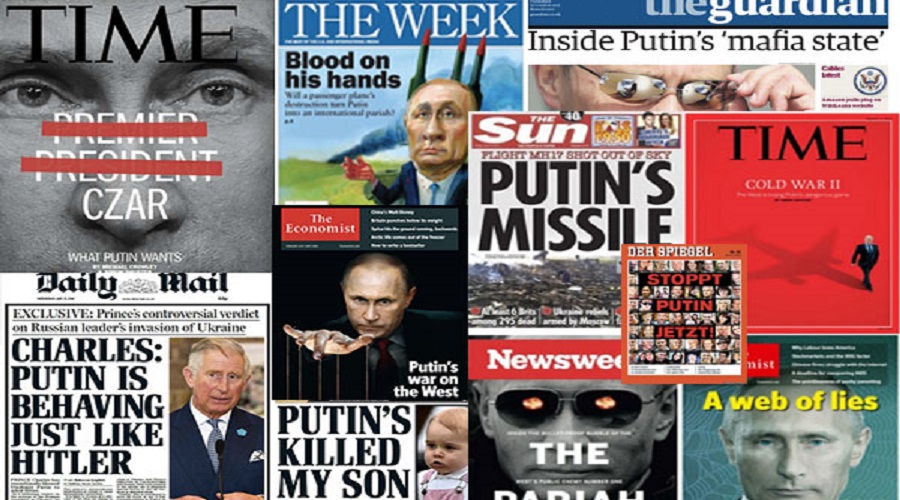
It’s worse now. Russia is not Iraq. And Putin has been so demonized over the past six years that people are inclined to believe the likes of James Clapper to the effect there’s something genetic that makes Russians evil. “Russia-gate” was a big con (and, now, demonstrably so), but Americans don’t know that either. The consequences of prolonged demonization are extremely dangerous – and will become even more so in the next several weeks as politicians vie to be the strongest in opposing and countering Russia’s “unprovoked” attack on Ukraine.

THE Problem

Humorist Will Rogers had it right:

“The problem ain’t what people know. It’s what people know that ain’t so; that’s the problem.”

Consider the Chickens

Intelligence, ethics, and the inner lives of animals

By Rafia Zakaria

Source: The Baffler

I OWE CHICKENS AN APOLOGY. Not only have I been eating them until very recently, but I have refused to even consider the possibility of a chicken having any kind of inner life. This estimation was not made from a lack of interaction. As children, my twin brother and I purchased baby chicks from a street vendor. We did this unfazed by the fact that quite often, the chickens would die. Once, when we were nine, we had two that lived, a hen and a rooster. No one told us that we should probably get more hens. Not having any other female companions, the rooster exerted his attentions on the one chicken. She would lay an egg or two every day, much to our delight, but soon sickened and died. Then there was only an incel rooster who roamed our compound and terrorized the women. After a few ugly incidents, he was “given away” to one of the women who worked at our house. We were never told what happened to him, and I didn’t care. There is nothing worse than an incel rooster patrolling your house all day long.

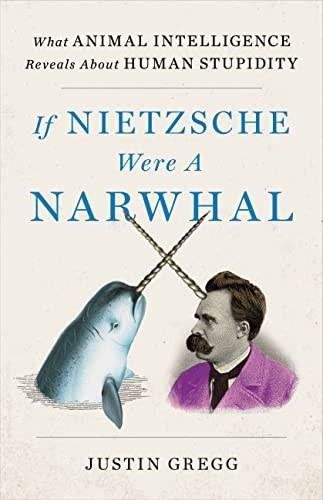
Now, so many years later, I’ve found my way to animal behaviorist Justin Gregg’s brilliant new book If Nietzsche Were a Narwhal: What Animal Intelligence Reveals About Human Stupidity. Gregg’s chicken coop is “a huge enclosed area” with high rafters, because as an animal scientist, he knows them to be jungle birds who need perches on which to sleep at night. But it is not only the magisterial heights of Gregg’s discussion of chickens that stayed with me. I was struck also by Gregg’s description of his chickens’ varied personalities, one anxious, another friendly, and so on; he tells us that these chickens do have inner lives and thus a consciousness of themselves as distinct from others. Instead of the feckless creatures I (and most people) assume them to be, chickens have just the sort of intelligence that is necessary for their own survival. They don’t think like humans, Gregg tells us, because they do not need to.

Intelligence, in Gregg’s explanation, does not exist in the way SATs or other IQ tests would have you believe. Those tests quantify a certain kind of ability to process information. People who do not do well on such tests may have other kinds of abilities that simply are not being measured. Intelligence is not one easily definable thing; engineers working on artificial intelligence cannot agree on a definition of it. But what humans have is a tendency to ask why things operate in a certain way. In Gregg’s terminology, humans are “why specialists,” a proclivity that in natural selection terms is no advantage and perhaps even a liability. A narwhal swimming around in the sea, for instance, would never have the kind of mental breakdown that the German philosopher pondering nihilism suffered toward the end of his life. Animal intelligence is practical and does not get caught up in abstract thought. By and large, animals make calculations based on what they can observe; ideas such as “causality,” which lie at the crux of human intelligence, are outside their capacity for thought.

Humans evolved to become why specialists. As Gregg tells it, 200,000 years ago, humans were hanging out with chimpanzees and exhibited no interest in the whys. They could make rudimentary tools and had some kind of assemblage of grunts that allowed for basic communication. He notes that roughly 40,000 years ago, cave paintings were created. Here were humans asking the whys; symbolic representation is an exclusively human thing.

Inability to be why specialists does not mean that animals are not capable of “metacognition,” the ability to be conscious of their own thinking or cognition. One of the most stunning examples in this book full of stunning examples is that of Natua, a dolphin at the Dolphin Research Center in Florida. An experiment was set up where Natua was exposed to two kinds of sounds, one a very high tone and one a very low tone. After hearing the sound, Natua had to choose between two paddles, one for the high and another for the low. If he chose correctly, he was given a fish for a reward. If he did not, he was sent for a long time-out, in that the experiment stopped. As the experiment progressed, the high tone sound came very close to the low sound such that they were nearly indistinguishable. At this point, Natua was unable to tell the difference; “he just started randomly pressing paddles,” Gregg writes. His behavior proved that some animals are capable of metacognition, the awareness that they do not know, or that their thinking about something is wrong.

It is no surprise that Gregg is pessimistic about how humans have used their abilities as why specialists, and he thinks that there is a chance that humans might not even survive over another century. The prospect of nuclear war and the climate crisis suggest, in Gregg’s view, that the end is possible. In the meantime, developing a consciousness of animals as beings who are capable of metacognition, of having individual personalities and so on, points to the need for a new ethics. This new set of basic premises would abandon the centering principle that the animal-human relationship must always be of one having dominion over the other.

But if you consider the continued resistance to the idea of animal rights, it is hard to be optimistic about the emergence of a new ethics of mutuality that eschews the dominion portion. Too many human rationalizations, attached to what we eat, what we wear, how we live, are predicated on the belief that we are the only feeling beings and that our actions upon animals are independent of consequences. If you know the fear of a chicken or a cow or a pig about to be slaughtered, you may look at your food in a different way. You might eschew fried chicken or beef or pork completely. If you understand that a horse being whipped is suffering terribly, is extremely scared and dissolute, you can also understand that there is a need for a radical expansion of mindfulness and a concomitant shrinking of power.

In the moral universe informed by Gregg’s argument, the survival of the human race is not an imperative for the planet because humans as a species have been far more disastrous for the world than others. “Prognostic myopia” keeps us horribly and condemnably in the moment, burning fossil fuels and trashing the oceans even though we know that it is terrible for the environment. This is a unique position among philosophers, a lot of whom have lately concerned themselves with questions of ethics and planetary survival. 

As a contrast to Gregg, the Oxford Associate Professor in Philosophy William MacAskill, in his What We Owe the Future, proposes “effective altruism” as a way to live ethically in times of climate crisis. If Gregg argues against human exceptionalism, MacAskill reduces humans to data points, where the survival of the most, and the most benefit to the planet, are guideposts to a present and future ethics. Using Gregg’s arguments, however, effective altruism is rendered meaningless. Even those who live sparingly on twenty-six thousand pounds a year, like MacAskill, are still a burdensome threat, unless we define their worth according to tiresome illusions of human exceptionalism.

If Nietzsche Were A Narwhal is the sort of critical look at human dominion that our world needs. A few years ago, Brown University environmental historian Bathsheba R. Demuth wrote Floating Coast: An Environmental History of the Bering Strait, a similarly groundbreaking look at the consequences of the extractive relationship humans have had with the environment. Just as Gregg reveals the risks of humans imagining their power over animals as shorn of consequences, Demuth reveals the consequences of human dominion over nature.

Thinkers and scientists like Gregg and Demuth are presenting readers with the urgent and pressing necessity for a new ethics. The unthinking, extractive, and dominant human treats animals as a lower form of existence, rather than a different form; we assess the environment based on what can be extracted from it. Like our means of communication, our means of travel, of treating disease, and so much else, our ethics need an urgent and pressing update that takes into consideration the understanding of animals. Factory farms, the constant consumption of animal products, and the greedy use of fossil fuels are the seeds of destruction.

I am not sure I could have offered the chicken and rooster of my childhood a deluxe chicken coop with high rafters, but an argument for better living conditions and the introduction of new companions for the rooster would have been easier if we had understood the first thing about the animals around us. I do not need to underscore the rapid pace at which our world is changing. If Nietzsche Were A Narwhal is a must-read because it explains how we can save the world only if we exist in symbiosis with the thinking, feeling creatures that have had the misfortune of sharing the planet with humans, who turn out not to be as intelligent as they believe themselves to be.