Is inflation “transitory” in your household budget? Really? Where?
The Federal Reserve has been bleating that inflation is “transitory”–but what about the real world that we live in, as opposed to the abstract funhouse of rigged statistics? Here’s a simple test to help you decide if inflation is “transitory” in the real world.
Let’s start with some simple stipulations: price is price, there are no tricks like hedonics or substitution. Nobody cares if the truck stereo is better than it was 40 years ago, the price of the truck is the price we pay today, and that’s all that matters.
(Funny, the funhouse statistical adjustments never consider that appliances that used to last 30 years now break down and are junked after 3 years–if we adjusted for that, the $500 washer would be tagged at $5,000 today because it has lost 90% of its durability over the past 30 years.)
Second, inflation must be weighted to “big ticket” nondiscretionary items. The funhouse statistical trickery counts a $10 drop in the price of a TV (which you buy every few years at best) as equal to a $100 rise in childcare, which you pay monthly. No, no, no: a 10% rise in rent, healthcare insurance and childcare is $400 a month or roughly $5,000 a year. A 10% decline in a TV you buy every three years is $50. Even a 50% drop in the price of a TV ($250) is $83 per year–absolutely trivial, absolutely meaningless compared to $5,000 in higher big-ticket expenses.
You can forego the new TV but not the rent, childcare or healthcare. That’s the difference between “big ticket” nondiscretionary and discretionary (meals out, 3rd TV, etc.).
Third, we jettison the painfully obvious manipulation of “owners equivalent rent” for housing costs. Housing costs are the prices we pay for rent, owning a home and paying property taxes, insurance and maintenance costs to own the home. (Have you priced having a new roof put on your house by a licensed, reputable contractor? No? Well, it’s become a lot more expensive than it was a few years ago. Where is that enormous price leap in “owners equivalent rent”? Just how stupid does the Fed reckon we are?)
OK, here’s the test: let’s say markets finally take a deflationary dive from overvalued heights. Housing, stocks and other risk assets fall 30%. Trillions of dollars in “wealth” (that didn’t exist prior to the Everything Bubble inflating) has vanished, generating a reverse wealth effect as all the owners of these assets feel poorer and less inclined to borrow and spend. This is classically considered highly deflationary: demand drops, prices drop.
The three billionaires who own more assets than the bottom 50% of Americans (165 million Americans) will be crying, but how does life change for the 165 million Americans who own a vanishingly thin slice of these assets? Does their rent drop? No, for the reasons I explained in The Fed Is Wrong: Inflation Is Sticky: the big corporate landlords have to keep rents high to placate their lenders. (And let’s not forget greed: the greedy never want to lower prices, preferring to cling to the Fed’s fantasy of “transitory” trouble.)
Now let’s ask about the higher-income 150 million Americans who own homes and pay property taxes, who pay healthcare insurance, college tuition and fees, childcare and elderly care. Even if there is a deflationary crash in stocks and housing, what are the odds the overall costs of owning and maintaining your home will drop significantly?
What are the odds that local government will let property taxes drop with valuations? Shall we be honest and say zero? If real estate valuations plummet, then property tax rates will rise to compensate. Or other “creative” fees will be imposed to make up the shortfall in tax revenues.
What about childcare? What are the odds that childcare costs will drop 30%? Shall we be honest and say zero? The costs paid by childcare providers only go up, and so those who don’t charge enough (marginal providers) will close down, generating a shortage of supply that elevates prices.
What about elderly care? Will assisted living facilities suddenly drop 30% just because asset bubbles pop? No. The costs of assisted living march higher regardless of what asset valuations and interest rates do.
What about healthcare? Will all those costs drop 30% because assets declined? No. Everyone exposed to real-world pricing of healthcare will be paying more.
But what about the roofing contractor? Won’t they charge 30% less? The biggest expenses for the contractor are workers compensation insurance, liability insurance, disability insurance, FICA (Social Security and Medicare) and healthcare insurance, and none of those will drop a single dollar even if stocks drop 30%.
Just as 85% of local government expenses are labor-related, most of the expenses of the roofing contractor are labor-related. The roofing materials dropping a few bucks might lower the cost by a few percentage points, but the material costs are based on the costs of the manufacturers, distributors, truckers, etc., and these are also based on labor-related expenses, taxes, insurance and healthcare–none of which will drop a dime, regardless of what asset prices do.
Economist Michael Spence elucidated the difference between tradable and untradable goods and services. If you want your washer repaired, that service in untradable, as shipping your broken washer to China for repair is not financially viable. As labor costs rise in China and other offshore economies, that raises costs even for tradable goods.
The majority of essential services are untradable and the costs are dependent on “big ticket” expenses which cannot go down without imploding the economy and government: taxes, insurance, healthcare, childcare, elderly care, etc. cannot drop 30% because they’re based on labor costs, highly profitable systemic friction (Big Pharma, the Higher Education Cartel, Big Ag, healthcare and other quasi-monopolies) and the need for ever-higher tax revenues to provide services which the public demands.
Let’s also ponder the consequences of the extreme concentration of wealth and income in the top 5% of U.S. households. The top 10% own roughly 85% of all wealth, and the top 1% own more than half the financial wealth.
Any significant drop in financial assets will have almost no effect on the bottom 90% because they don’t own enough of these assets to be consequential. So the deflationary effect of the reverse wealth effect will be concentrated in the discretionary spending of the top 10%: the luxury imported vehicles, the $100 per plate dinners (those $60 bottles of wine add up), the $500/day resort vacation, the $2,500/week AirBnB rental, etc.
The declines in the cost of these discretionary luxuries may well be noteworthy, but there are thresholds below which prices cannot drop. The high-end restaurant has equally high-end expenses, and so marginal providers will close, leaving only those few who can maintain profitability as demand for luxury dining craters.
The resort has high expenses as well, and once profitability has been lost, resorts will close just like other marginal providers. Supply shrinks along with demand, and the survivors keep prices high enough or they too will close.
So the essential “big ticket” costs will keep rising and the discretionary luxuries only the top 10% can afford will drop–but not by much as all those luxury providers have the same high fixed costs.
So to recap the test: what are the odds of these “big ticket” expenses dropping 30% if asset prices drop 30%?
Taxes: zero.
Healthcare: zero.
Childcare: zero.
Elderly care: zero.
Costs of doing business: zero.
As for housing: the mortgage doesn’t drop if the market value of the house drops 30%, and any declines in insurance will be modest. The costs of maintenance won’t drop much, either, and might actually increase as the supply of skilled workers declines. (Nothing is more expensive than the “cheap” repair that has to be redone correctly.)
Rents may drop in areas nobody wants to live anymore, but rents will rise in places people do want to live.
The larger point here is the long economic cycles have turned. The 40-year decline in interest rates has turned, whether we admit it or not. The 40-year decline in the prices of goods due to financialization (lower interest rates, higher speculative assets) and globalization has turned. The 40-year expansion of the workforce has turned. The 40-year decline of oil/fuel/resources prices has turned. The 40-year fantasy that we can depend on other nations for our essential resources and components is drawing to a close.
Untradable goods and services, cost thresholds, resource security, the end of financialization / globalization and declining interest rates matter. The fantasy that the top 10% can prop up the economy by borrowing and spending the phantom wealth of insanely overvalued asset bubbles is drawing to a close.
Is inflation “transitory” in your household budget? Really? Where?
Who could have predicted that so many years after Orwell typed the final words to his dystopian novel, “He loved Big Brother,” we would come to love Big Brother.
“To the future or to the past, to a time when thought is free, when men are different from one another and do not live alone— to a time when truth exists and what is done cannot be undone: From the age of uniformity, from the age of solitude, from the age of Big Brother, from the age of doublethink — greetings!”—George Orwell
1984 portrays a global society of total control in which people are not allowed to have thoughts that in any way disagree with the corporate state. There is no personal freedom, and advanced technology has become the driving force behind a surveillance-driven society. Snitches and cameras are everywhere. People are subject to the Thought Police, who deal with anyone guilty of thought crimes. The government, or “Party,” is headed by Big Brother who appears on posters everywhere with the words: “Big Brother is watching you.”
We have arrived, way ahead of schedule, into the dystopian future dreamed up by not only Orwell but also such fiction writers as Aldous Huxley, Margaret Atwood and Philip K. Dick.
“If liberty means anything at all, it means the right to tell people what they do not want to hear.”―George Orwell
Much like Orwell’s Big Brother in 1984, the government and its corporate spies now watch our every move. Much like Huxley’s A Brave New World, we are churning out a society of watchers who “have their liberties taken away from them, but … rather enjoy it, because they [are] distracted from any desire to rebel by propaganda or brainwashing.” Much like Atwood’s The Handmaid’s Tale, the populace is now taught to “know their place and their duties, to understand that they have no real rights but will be protected up to a point if they conform, and to think so poorly of themselves that they will accept their assigned fate and not rebel or run away.”
And in keeping with Philip K. Dick’s darkly prophetic vision of a dystopian police state—which became the basis for Steven Spielberg’s futuristic thriller Minority Report—we are now trapped in a world in which the government is all-seeing, all-knowing and all-powerful, and if you dare to step out of line, dark-clad police SWAT teams and pre-crime units will crack a few skulls to bring the populace under control.
What once seemed futuristic no longer occupies the realm of science fiction.
Incredibly, as the various nascent technologies employed and shared by the government and corporations alike—facial recognition, iris scanners, massive databases, behavior prediction software, and so on—are incorporated into a complex, interwoven cyber network aimed at tracking our movements, predicting our thoughts and controlling our behavior, the dystopian visions of past writers is fast becoming our reality.
“People sleep peaceably in their beds at night only because rough men stand ready to do violence on their behalf.”―George Orwell
The courts have shredded the Fourth Amendment’s protections against unreasonable searches and seizures. In fact, SWAT teams battering down doors without search warrants and FBI agents acting as a secret police that investigate dissenting citizens are common occurrences in contemporary America. And bodily privacy and integrity have been utterly eviscerated by a prevailing view that Americans have no rights over what happens to their bodies during an encounter with government officials, who are allowed to search, seize, strip, scan, spy on, probe, pat down, taser, and arrest any individual at any time and for the slightest provocation.
“The creatures outside looked from pig to man, and from man to pig, and from pig to man again; but already it was impossible to say which was which.”―George Orwell, Animal Farm
We are increasingly ruled by multi-corporations wedded to the police state.
What many fail to realize is that the government is not operating alone. It cannot. The government requires an accomplice. Thus, the increasingly complex security needs of the massive federal government, especially in the areas of defense, surveillance and data management, have been met within the corporate sector, which has shown itself to be a powerful ally that both depends on and feeds the growth of governmental overreach.
In fact, Big Tech wedded to Big Government has become Big Brother, and we are now ruled by the Corporate Elite whose tentacles have spread worldwide. The government now has at its disposal technological arsenals so sophisticated and invasive as to render any constitutional protections null and void. Spearheaded by the NSA, which has shown itself to care little to nothing for constitutional limits or privacy, the “security/industrial complex”—a marriage of government, military and corporate interests aimed at keeping Americans under constant surveillance—has come to dominate the government and our lives.
Money, power, control. There is no shortage of motives fueling the convergence of mega-corporations and government. But who is paying the price? The American people, of course.
Orwell understood what many Americans are still struggling to come to terms with: that there is no such thing as a government organized for the good of the people. Even the best intentions among those in government inevitably give way to the desire to maintain power and control over the citizenry at all costs.
“The further a society drifts from truth the more it will hate those who speak it.” ― George Orwell
Even our ability to speak and think freely is being regulated.
In totalitarian regimes—a.k.a. police states—where conformity and compliance are enforced at the end of a loaded gun, the government dictates what words can and cannot be used. In countries where the police state hides behind a benevolent mask and disguises itself as tolerance, the citizens censor themselves, policing their words and thoughts to conform to the dictates of the mass mind.
Dystopian literature shows what happens when the populace is transformed into mindless automatons.
In Ray Bradbury’s Fahrenheit 451, reading is banned and books are burned in order to suppress dissenting ideas, while televised entertainment is used to anesthetize the populace and render them easily pacified, distracted and controlled.
In Huxley’s Brave New World, serious literature, scientific thinking and experimentation are banned as subversive, while critical thinking is discouraged through the use of conditioning, social taboos and inferior education. Likewise, expressions of individuality, independence and morality are viewed as vulgar and abnormal.
In my debut novel The Erik Blair Diaries, the dystopian future that George Orwell predicted for 1984 has finally arrived, 100 years late and ten times as brutal. In this post-apocalyptic world where everyone marches to the beat of the same drummer and words like “freedom” are taboo, Erik Blair—Orwell’s descendant and unwitting heir to his legacy—isn’t volunteering to be anyone’s hero. Unfortunately, life doesn’t always go according to plan. To save all that he loves, Orwell will have to travel between his future self and the past.
And in Orwell’s 1984, Big Brother does away with all undesirable and unnecessary words and meanings, even going so far as to routinely rewrite history and punish “thoughtcrimes.” Orwell’s Big Brother relies on Newspeak to eliminate undesirable words, strip such words as remained of unorthodox meanings and make independent, non-government-approved thought altogether unnecessary.
Where we stand now is at the juncture of OldSpeak (where words have meanings, and ideas can be dangerous) and Newspeak (where only that which is “safe” and “accepted” by the majority is permitted). The power elite has made their intentions clear: they will pursue and prosecute any and all words, thoughts and expressions that challenge their authority.
This is the final link in the police state chain.
“Until they became conscious they will never rebel, and until after they have rebelled they cannot become conscious.”—George Orwell
Having been reduced to a cowering citizenry—mute in the face of elected officials who refuse to represent us, helpless in the face of police brutality, powerless in the face of militarized tactics and technology that treat us like enemy combatants on a battlefield, and naked in the face of government surveillance that sees and hears all—we have nowhere left to go.
We have, so to speak, gone from being a nation where privacy is king to one where nothing is safe from the prying eyes of government.
“Big Brother is Watching You.”―George Orwell
Wherever you go and whatever you do, you are now being watched, especially if you leave behind an electronic footprint. When you use your cell phone, you leave a record of when the call was placed, who you called, how long it lasted and even where you were at the time. When you use your ATM card, you leave a record of where and when you used the card. There is even a video camera at most locations equipped with facial recognition software. When you use a cell phone or drive a car enabled with GPS, you can be tracked by satellite. Such information is shared with government agents, including local police. And all of this once-private information about your consumer habits, your whereabouts and your activities is now being fed to the government.
The government has nearly inexhaustible resources when it comes to tracking our movements, from electronic wiretapping devices, traffic cameras and biometrics to radio-frequency identification cards, satellites and Internet surveillance.
In such a climate, everyone is a suspect. And you’re guilty until you can prove yourself innocent. To underscore this shift in how the government now views its citizens, the FBI uses its wide-ranging authority to investigate individuals or groups, regardless of whether they are suspected of criminal activity.
“Nothing was your own except the few cubic centimetres inside your skull.” ― George Orwell
Here’s what a lot of people fail to understand, however: it’s not just what you say or do that is being monitored, but how you think that is being tracked and targeted. We’ve already seen this play out on the state and federal level with hate crime legislation that cracks down on so-called “hateful” thoughts and expression, encourages self-censoring and reduces free debate on various subject matter.
Total Internet surveillance by the Corporate State, as omnipresent as God, is used by the government to predict and, more importantly, control the populace, and it’s not as far-fetched as you might think. For example, the NSA has been working on an artificial intelligence system designed to anticipate your every move. Aquaint (the acronym stands for Advanced QUestion Answering for INTelligence) has been designed to detect patterns and predict behavior.
No information is sacred or spared.
Everything from cell phone recordings and logs, to emails, to text messages, to personal information posted on social networking sites, to credit card statements, to library circulation records, to credit card histories, etc., is collected by the NSA and shared freely with its agents in crime: the CIA, FBI and DHS.
What we are witnessing, in the so-called name of security and efficiency, is the creation of a new class system comprised of the watched (average Americans such as you and me) and the watchers (government bureaucrats, technicians and private corporations).
Clearly, the age of privacy in America is at an end.
So where does that leave us?
We now find ourselves in the unenviable position of being monitored, managed and controlled by our technology, which answers not to us but to our government and corporate rulers. This is the fact-is-stranger-than-fiction lesson that is being pounded into us on a daily basis.
It won’t be long before we find ourselves looking back on the past with longing, back to an age where we could speak to whom we wanted, buy what we wanted, think what we wanted without those thoughts, words and activities being tracked, processed and stored by corporate giants such as Google, sold to government agencies such as the NSA and CIA, and used against us by militarized police with their army of futuristic technologies.
To be an individual today, to not conform, to have even a shred of privacy, and to live beyond the reach of the government’s roaming eyes and technological spies, one must not only be a rebel but rebel.
Even when you rebel and take your stand, there is rarely a happy ending awaiting you. You are rendered an outlaw. Just look at what happened to Julian Assange.
So how do you survive in the American surveillance state?
We’re running out of options.
Whether you’re dealing with fact or fiction, as I make clear in Battlefield America: The War on the American People and in my new novel The Erik Blair Diaries, we’ll soon have to choose between self-indulgence (the bread-and-circus distractions offered up by the news media, politicians, sports conglomerates, entertainment industry, etc.) and self-preservation in the form of renewed vigilance about threats to our freedoms and active engagement in self-governance.
Far from being a war against “white supremacy,” the Biden administration’s new “domestic terror” strategy clearly targets primarily those who oppose US government overreach and those who oppose capitalism and/or globalization.
In the latest sign that the US government’s War on Domestic Terror is growing in scope and scale, the White House on Tuesday revealed the nation’s first ever government-wide strategy for confronting domestic terrorism. While cloaked in language about stemming racially motivated violence, the strategy places those deemed “anti-government” or “anti-authority” on a par with racist extremists and charts out policies that could easily be abused to silence or even criminalize online criticism of the government.
Even more disturbing is the call to essentially fuse intelligence agencies, law enforcement, Silicon Valley, and “community” and “faith-based” organizations such as the Anti-Defamation League, as well as unspecified foreign governments, as partners in this “war,” which the strategy makes clear will rely heavily on a pre-crime orientation focused largely on what is said on social media and encrypted platforms. Though the strategy claims that the government will “shield free speech and civil liberties” in implementing this policy, its contents reveal that it is poised to gut both.
Indeed, while framed publicly as chiefly targeting “right-wing white supremacists,” the strategy itself makes it clear that the government does not plan to focus on the Right but instead will pursue “domestic terrorists” in “an ideologically neutral, threat-driven manner,” as the law “makes no distinction based on political view—left, right or center.” It also states that a key goal of this strategic framework is to ensure “that there is simply no governmental tolerance . . . of violence as an acceptable mode of seeking political or social change,” regardless of a perpetrator’s political affiliation.
Considering that the main cheerleaders for the War on Domestic Terror exist mainly in establishment left circles, such individuals should rethink their support for this new policy given that the above statements could easily come to encompass Black Lives Matter–related protests, such as those that transpired last summer, depending on which political party is in power.
Once the new infrastructure is in place, it will remain there and will be open to the same abuses perpetrated by both political parties in the US during the lengthy War on Terror following September 11, 2001. The history of this new “domestic terror” policy, including its origins in the Trump administration, makes this clear.
It’s Never Been Easier to Be a “Terrorist”
In introducing the strategy, the Biden administration cites “racially or ethnically motivated violent extremists” as a key reason for the new policy and a main justification for the War on Domestic Terror in general. This was most recently demonstrated Tuesday in Attorney General Merrick Garland’s statement announcing this new strategy. However, the document itself puts “anti-government” or “anti-authority” “extremists” in the same category as violent white supremacists in terms of being a threat to the homeland. The strategy’s characterization of such individuals is unsettling.
AG Merrick Garland: “In the FBI’s view, the top domestic violent extremist threat comes from racially or ethically motivated violent extremists specifically those who advocate for the superiority of the white race.” pic.twitter.com/4JtruuMSv2
For instance, those who “violently oppose” “all forms of capitalism” or “corporate globalization” are listed under this less-discussed category of “domestic terrorist.” This highlights how people on the left, many of whom have called for capitalism to be dismantled or replaced in the US in recent years, could easily be targeted in this new “war” that many self-proclaimed leftists are currently supporting. Similarly, “environmentally-motivated extremists,” a category in which groups such as Extinction Rebellion could easily fall, are also included.
In addition, the phrasing indicates that it could easily include as “terrorists” those who oppose the World Economic Forum’s vision for global “stakeholder capitalism,” as that form of “capitalism” involves corporations and their main “stakeholders” creating a new global economic and governance system. The WEF’s stakeholder capitalism thus involves both “capitalism” and “corporate globalization.”
The strategy also includes those who “take steps to violently resist government authority . . . based on perceived overreach.” This, of course, creates a dangerous situation in which the government could, purposely or otherwise, implement a policy that is an obvious overreach and/or blatantly unconstitutional and then label those who resist it “domestic terrorists” and deal with them as such—well before the overreach can be challenged in court.
Another telling addition to this group of potential “terrorists” is “any other individual or group who engages in violence—or incites imminent violence—in opposition to legislative, regulatory or other actions taken by the government.” Thus, if the government implements a policy that a large swath of the population finds abhorrent, such as launching a new, unpopular war abroad, those deemed to be “inciting” resistance to the action online could be considered domestic terrorists.
Such scenarios are not unrealistic, given the loose way in which the government and the media have defined things like “incitement” and even “violence” (e. g., “hate speech” is a form of violence) in the recent past. The situation is ripe for manipulation and abuse. To think the federal government (including the Biden administration and subsequent administrations) would not abuse such power reflects an ignorance of US political history, particularly when the main forces behind most terrorist incidents in the nation are actually US government institutions like the FBI (more FBI examples here, here, here, and here).
Furthermore, the original plans for the detention of American dissidents in the event of a national emergency, drawn up during the Reagan era as part of its “continuity of government” contingency, cited popular nonviolent opposition to US intervention in Latin America as a potential “emergency” that could trigger the activation of those plans. Many of those “continuity of government” protocols remain on the books today and can be triggered, depending on the whims of those in power. It is unlikely that this new domestic terror framework will be any different regarding nonviolent protest and demonstrations.
Yet another passage in this section of the strategy states that “domestic terrorists” can, “in some instances, connect and intersect with conspiracy theories and other forms of disinformation and misinformation.” It adds that the proliferation of such “dangerous” information “on Internet-based communications platforms such as social media, file-upload sites and end-to-end encrypted platforms, all of these elements can combine and amplify threats to public safety.”
Thus, the presence of “conspiracy theories” and information deemed by the government to be “misinformation” online is itself framed as threatening public safety, a claim made more than once in this policy document. Given that a major “pillar” of the strategy involves eliminating online material that promotes “domestic terrorist” ideologies, it seems inevitable that such efforts will also “connect and intersect” with the censorship of “conspiracy theories” and narratives that the establishment finds inconvenient or threatening for any reason.
Pillars of Tyranny
The strategy notes in several places that this new domestic-terror policy will involve a variety of public-private partnerships in order to “build a community to address domestic terrorism that extends not only across the Federal Government but also to critical partners.” It adds, “That includes state, local, tribal and territorial governments, as well as foreign allies and partners, civil society, the technology sector, academic, and more.”
The mention of foreign allies and partners is important as it suggests a multinational approach to what is supposedly a US “domestic” issue and is yet another step toward a transnational security-state apparatus. A similar multinational approach was used to devastating effect during the CIA-developed Operation Condor, which was used to target and “disappear” domestic dissidents in South America in the 1970s and 1980s. The foreign allies mentioned in the Biden administration’s strategy are left unspecified, but it seems likely that such allies would include the rest of the Five Eyes alliance (the UK, Australia, Canada, New Zealand) and Israel, all of which already have well-established information-sharing agreements with the US for signals intelligence.
The new domestic-terror strategy has four main “pillars,” which can be summarized as (1) understanding and sharing domestic terrorism-related information, including with foreign governments and private tech companies; (2) preventing domestic terrorism recruitment and mobilization to violence; (3) disrupting and deterring domestic terrorism activity; and (4) confronting long-term contributors to domestic terrorism.
The first pillar involves the mass accumulation of data through new information-sharing partnerships and the deepening of existing ones. Much of this information sharing will involve increased data mining and analysis of statements made openly on the internet, particularly on social media, something already done by US intelligence contractors such as Palantir. While the gathering of such information has been ongoing for years, this policy allows even more to be shared and legally used to make cases against individuals deemed to have made threats or expressed “dangerous” opinions online.
Included in the first pillar is the need to increase engagement with financial institutions concerning the financing of “domestic terrorists.” US banks, such as Bank of America, have already gone quite far in this regard, leading to accusations that it has begun acting like an intelligence agency. Such claims were made after it was revealed that the BofA had passed to the government the private banking information of over two hundred people that the bank deemed as pointing to involvement in the events of January 6, 2021. It seems likely, given this passage in the strategy, that such behavior by banks will soon become the norm, rather than an outlier, in the United States.
The second pillar is ostensibly focused on preventing the online recruitment of domestic terrorists and online content that leads to the “mobilization of violence.” The strategy notes that this pillar “means reducing both supply and demand of recruitment materials by limiting widespread availability online and bolstering resilience to it by those who nonetheless encounter it.“ The strategy states that such government efforts in the past have a “mixed record,” but it goes on to claim that trampling on civil liberties will be avoided because the government is “consulting extensively” with unspecified “stakeholders” nationwide.
Regarding recruitment, the strategy states that “these activities are increasingly happening on Internet-based communications platforms, including social media, online gaming platforms, file-upload sites and end-to-end encrypted platforms, even as those products and services frequently offer other important benefits.” It adds that “the widespread availability of domestic terrorist recruitment material online is a national security threat whose front lines are overwhelmingly private-sector online platforms.”
The US government plans to provide “information to assist online platforms with their own initiatives to enforce their own terms of service that prohibits the use of their platforms for domestic terrorist activities” as well as to “facilitate more robust efforts outside the government to counter terrorists’ abuse of Internet-based communications platforms.”
Given the wider definition of “domestic terrorist” that now includes those who oppose capitalism and corporate globalization as well as those who resist government overreach, online content discussing these and other “anti-government” and “anti-authority” ideas could soon be treated in the same way as online Al Qaeda or ISIS propaganda. Efforts, however, are unlikely to remain focused on these topics. As Unlimited Hangout reported last November, both UK intelligence and the US national-security state were developing plans to treat critical reporting on the COVID-19 vaccines as “extremist” propaganda.
Another key part of this pillar is the need to “increase digital literacy” among the American public, while censoring “harmful content” disseminated by “terrorists” as well as by “hostile foreign powers seeking to undermine American democracy.” The latter is a clear reference to the claim that critical reporting of US government policy, particularly its military and intelligence activities abroad, was the product of “Russian disinformation,” a now discredited claim that was used to heavily censor independent media. This new government strategy appears to promise more of this sort of thing.
It also notes that “digital literacy” education for a domestic audience is being developed by the Department of Homeland Security (DHS). Such a policy would have previously violated US law until the Obama administration worked with Congress to repeal the Smith-Mundt Act, thus lifting the ban on the government directing propaganda at domestic audiences.
The third pillar of the strategy seeks to increase the number of federal prosecutors investigating and trying domestic-terror cases. Their numbers are likely to jump as the definition of “domestic terrorist” is expanded. It also seeks to explore whether “legislative reforms could meaningfully and materially increase our ability to protect Americans from acts of domestic terrorism while simultaneously guarding against potential abuse of overreach.” In contrast to past public statements on police reform by those in the Biden administration, the strategy calls to “empower” state and local law enforcement to tackle domestic terrorism, including with increased access to “intelligence” on citizens deemed dangerous or subversive for any number of reasons.
To that effect, the strategy states the following (p. 24):
“The Department of Justice, Federal Bureau of Investigation, and Department of Homeland Security, with support from the National Counterterrorism Center [part of the intelligence community], are incorporating an increased focus on domestic terrorism into current intelligence products and leveraging current mechanisms of information and intelligence sharing to improve the sharing of domestic terrorism-related content and indicators with non-Federal partners. These agencies are also improving the usability of their existing information-sharing platforms, including through the development of mobile applications designed to provide a broader reach to non-Federal law enforcement partners, while simultaneously refining that support based on partner feedback.”
Such an intelligence tool could easily be, for example, Palantir, which is already used by the intelligence agencies, the DHS, and several US police departments for “predictive policing,” that is, pre-crime actions. Notably, Palantir has long included a “subversive” label for individuals included on government and law enforcement databases, a parallel with the controversial and highly secretive Main Core database of US dissidents.
DHS Secretary Alejandro Mayorkas made the “pre-crime” element of the new domestic terror strategy explicit on Tuesday when he said in a statement that DHS would continue “developing key partnerships with local stakeholders through the Center for Prevention Programs and Partnerships (CP3) to identify potential threats and prevent terrorism.” CP3, which replaced DHS’ Office for Targeted Violence and Terrorism Prevention this past May, officially “supports communities across the United States to prevent individuals from radicalizing to violence and intervene when individuals have already radicalized to violence.”
The fourth pillar of the strategy is by far the most opaque and cryptic, while also the most far-reaching. It aims to address the sources that cause “terrorists” to mobilize “towards violence.” This requires “tackling racism in America,” a lofty goal for an administration headed by the man who controversially eulogized Congress’ most ardent segregationist and who was a key architect of the 1994 crime bill. As well, it provides for “early intervention and appropriate care for those who pose a danger to themselves or others.”
In regard to the latter proposal, the Trump administration, in a bid to “stop mass shootings before they occur,” considered a proposal to create a “health DARPA” or “HARPA” that would monitor the online communications of everyday Americans for “neuropsychiatric” warning signs that someone might be “mobilizing towards violence.” While the Trump administration did not create HARPA or adopt this policy, the Biden administration has recently announced plans to do so.
Finally, the strategy indicates that this fourth pillar is part of a “broader priority”: “enhancing faith in government and addressing the extreme polarization, fueled by a crisis of disinformation and misinformation often channeled through social media platforms, which can tear Americans apart and lead some to violence.” In other words, fostering trust in government while simultaneously censoring “polarizing” voices who distrust or criticize the government is a key policy goal behind the Biden administration’s new domestic-terror strategy.
Calling Their Shots?
While this is a new strategy, its origins lie in the Trump administration. In October 2019, Trump’s attorney general William Barr formally announced in a memorandum that a new “national disruption and early engagement program” aimed at detecting those “mobilizing towards violence” before they commit any crime would launch in the coming months. That program, known as DEEP (Disruption and Early Engagement Program), is now active and has involved the Department of Justice, the FBI, and “private sector partners” since its creation.
Barr’s announcement of DEEP followed his unsettling “prediction” in July 2019 that “a major incident may occur at any time that will galvanize public opinion on these issues.” Not long after that speech, a spate of mass shootings occurred, including the El Paso Walmart shooting, which killed twenty-three and about which many questions remain unanswered regarding the FBI’s apparent foreknowledge of the event. After these events took place in 2019, Trump called for the creation of a government backdoor into encryption and the very pre-crime system that Barr announced shortly thereafter in October 2019. The Biden administration, in publishing this strategy, is merely finishing what Barr started.
Indeed, a “prediction” like Barr’s in 2019 was offered by the DHS’ Elizabeth Neumann during a Congressional hearing in late February 2020. That hearing was largely ignored by the media as it coincided with an international rise of concern regarding COVID-19. At the hearing, Neumann, who previously coordinated the development of the government’s post-9/11 terrorism information sharing strategies and policies and worked closely with the intelligence community, gave the following warning about an imminent “domestic terror” event in the United States:
“And every counterterrorism professional I speak to in the federal government and overseas feels like we are at the doorstep of another 9/11, maybe not something that catastrophic in terms of the visual or the numbers, but that we can see it building and we don’t quite know how to stop it.”
This “another 9/11” emerged on January 6, 2021, as the events of that day in the Capitol were quickly labeled as such by both the media and prominent politicians, while also inspiring calls from the White House and the Democrats for a “9/11-style commission” to investigate the incident. This event, of course, figures prominently in the justification for the new domestic-terror strategy, despite the considerable video and other evidence that shows that Capitol law enforcement, and potentially the FBI, were directly involved in facilitating the breach of the Capitol. In addition, when one considers that the QAnon movement, which had a clear role in the events of January 6, was itself likely a government-orchestratedpsyop, the government hand in creating this situation seems clear.
It goes without saying that the official reasons offered for these militaristic “domestic terror” policies, which the US has already implemented abroad—causing much more terror than it has prevented—does not justify the creation of a massive new national-security infrastructure that aims to criminalize and censor online speech. Yet the admission that this new strategy, as part of a broader effort to “enhance faith in government,” combines domestic propaganda campaigns with the censorship and pursuit of those who distrust government heralds the end of even the illusion of democracy in the United States.
My recent posts have focused on the systemic financial risks created by Federal Reserve policies that have elevated moral hazard (risks can be taken without consequence) and speculation to levels so extreme that they threaten the stability of the entire financial system.
These risks are well known, though largely ignored in the current speculative frenzy.
But there is another systemic risk which few if any see: the collapse of social cohesion.
President Carter was prescient in his understanding that a nation’s greatest strength is its social cohesion, a cohesion that America’s unprecedented wealth / income / power inequalities has undermined. Consider this excerpt from his 1981 Farewell Address:
“Our common vision of a free and just society is our greatest source of cohesion at home and strength abroad, greater even than the bounty of our material blessings.”
In other words, a nation’s strength flows not just from its material wealth but from its social cohesion–a term for something that is intangible but very real, something that doesn’t lend itself to quantification or tidy definitions.
Here is my definition: Social cohesion is the glue binding the social order; it is the willingness of the citizenry to sacrifice individual gains for the common good.
Social cohesion is the result of the citizenry sharing a common purpose and identity and working toward the common good even at personal cost. Social cohesion arises from a national identity based on shared values and sacrifices.
To maintain social cohesion, opportunities to better their circumstances must be open to all (the social contract of social mobility) and sacrifices must be shared by the entire citizenry. If the privileged elites evade their share of sacrifice, social cohesion is lost and the entire social order unravels.
The glue binding the privileged elites to shared sacrifice is civic virtue, a moral code that demands elites devote a greater share of their own resources to the public good in exchange for their political and financial power.
Though no one dares confess this publicly, America is now a moral cesspool. As a result, the moral legitimacy of the nation’s leadership has been lost. Every nook and cranny of institutionalized America is dominated by self-interest, and much of the economy is controlled by profiteering monopolies and cartels which wield far more political power than the citizenry.
Civic virtue has been lost. What remains is elite self-interest masquerading as civic virtue.
In his Farewell Address, President Carter explained that “The national interest is not always the sum of all our single or special interests. We are all Americans together, and we must not forget that the common good is our common interest and our individual responsibility.”
Social cohesion, civic virtue and moral legitimacy are the foundation of every society, but they are especially important in composite states.
America is a composite state, composed of individuals holding a wide range of regional, ethnic, religious and class-based identities. The national identity is only one ingredient in a bubbling stew of local, state and regional identities, ethnic, cultural and religious identities, educational/alumni, professional and tradecraft identities, and elusive but consequential class-based identities.
Composite states are intrinsically trickier to rule, as there is no ethnic or cultural identity that unifies the populace. Lacking a national identity that supersedes all other identities, composite states must tread carefully to avoid fracturing into competing regional, ethnic or cultural identities.
Composite states must establish a purpose-based identity that is understood to demand shared sacrifice, especially in crisis. In the U.S., the national purpose has been redefined by the needs of the era, but never straying too far from these core unifying goals: defending the civil liberties of the citizenry from state interference, defending the nation from external aggressors, and serving the common good by limiting the power of special interests and privileged elites.
We’ve failed to limit the power of privileged elites, failed to demand greater sacrifices of the wealthy in exchange for power, and so the moral legitimacy of the regime has been lost. And with the ascendance of self-interest and the elite’s abandonment of sacrifice, social cohesion has been lost.
This loss is reflected in the bitter partisanship, the increasingly Orwellian attempts to control the mainstream and social media narratives, the debauchery of “expertise” as dueling “experts” vie for control, the fraying of social discourse, the substitution of virtue-signaling for actual civic virtue, the institutionalization of white-collar crime (collusion, fraud, embezzlement, etc.), the increasing reliance on Bread and Circuses (stimulus, Universal Basic Income) as real opportunity dissipates, and the troubling rise in shootings, crime, random violence and plummeting marriage and birth rates.
The unraveling of social cohesion has consequences. Once social cohesion unravels, the nation unravels.
What’s the solution? At the national level, all that has been lost will have to be restored: civic virtue, moral legitimacy, the social contract of opportunity, shared sacrifice that falls most heavily on the wealthiest and most powerful, and a renewed national purpose centered on serving the common good.
Is such a restoration of moral legitimacy and shared purpose even possible? No one knows. If history is any guide, such a renewal is only possible after the empire of rampant self-interest implodes.
So what do we do in the meantime? Nurture our own social cohesion by living purposefully and sharing sacrifices and bounties with those we trust and admire–those in the lifeboat we chose to join.
Measured by the Christian calendar, the period of about 500 years from the fall of the Roman Empire until the end of the first millennium was a time characterized by economic, intellectual and cultural decline in the European Christian world. In retrospect, it is now referred to as ‘the Dark Age’, even as other cultures, including that of Islam but those in other parts of the world too, thrived during this period.
Since March 2020, a number of fine analysts have carefully documented the true nature of what is happening to our world under cover of what the World Health Organization has labeled the ‘Covid-19 pandemic’.
And among these fine analysts, who have investigated ‘The Great Reset’ promoted by the World Economic Forum as well as other initiatives such as those related to transhumanism, eugenics and Cyber Polygon, there is a strong consensus that does not coincide with propaganda released by elite agents in international organizations, national governments and the corporate media.
In essence, these critiques document extensive evidence of an elite coup that seeks to comprehensively restructure human society into a technocratic dystopia in which such previously fundamental concepts as human identity, human liberty, human rights (such as freedom of speech, assembly and movement), human privacy and human volition are not just notions of the past but are beyond the comprehension of the typical ‘transhuman’.
To reiterate, for the bulk of the human population left alive, concepts such as ‘free will’ and ‘freedom’ will no longer exist as ideas, let alone as aspirations or realities. You can access a number of these insightful critiques here: Resources.
So whether we label this world envisaged by the elite as a ‘brave new world’, ‘1984’, the second ‘Dark Age’, a ‘technocratic dystopia’ or, more simply, ‘slavery’ matters little because, whatever the label, what lies immediately ahead is a human future not worth living.
And so resistance is imperative. But unless this resistance is strategic it will not achieve the outcome we seek.
Why? Because this elite coup has been decades in the planning and so resistance that is not carefully designed and rigorously implemented will not succeed. The elite is too well organized for haphazard acts of resistance to have any impact. Hence, there is no point simply reiterating the need for resistance. Only a strategically-focused campaign of nonviolent resistance – such as that outlined below – has any serious prospect of succeeding.
So what does it mean to resist strategically?
Resisting strategically means that we understand the power structures and relationships in society and particularly the way in which the global elite has the power to control us. The elite has power to control us through a number of means. For example, it can control what most people fear, think and believe by ensuring that its international organizations, governments, medical establishments, pharmaceutical industry and corporate media (including corporate social media) present a particular ‘package’ of information which, in this case, focuses on the supposed danger of the SARS-Cov-2 ‘virus’ and the importance of going along with a wide range of measures (including lockdowns, business closures, social distancing, mask-wearing, contact tracing and injections) while also censoring media outlets and authors that publish the truth.
Beyond controlling the narrative, however, the global elite has many other means at its disposal to control us, many of which are being expanded with the progressive rollout of measures associated with implementation of the fourth industrial revolution (which is fundamentally what the World Economic Forum’s ‘Great Reset’ is about).
These additional means include the deployment of 5G which, apart from the horrific impact this will have on life generally as this electromagnetic radiation further contaminates the biosphere, will enable comprehensive surveillance, digital ID (possibly implanted in your brain: see ‘Beware the Transhumanists: How “Being Human” Is Being Re-Engineered by the Elite’s Coup’) linked to your bank account and health records, a social credit ID that will end up dictating every facet of your life, the digitization of money as well as robotization of the workforce and the military.
But, of course, there is more. Much more. In the words of Dr Joseph Mercola: ‘The Great Reset’ means the complete transformation of everything from ‘government, energy and finance to food, medicine, real estate, policing – even how we interact with our fellow human beings. The globalist technocracy is using the COVID-19 pandemic to bypass democratic accountability, override opposition, accelerate their agenda and to impose it on the public against our will.’ See ‘Who Pressed the Great Reset Button?’
So while these measures are being implemented and thus increasing the capacity of the global elite to control us, we do not have to cooperate. Moreover, we can resist it very effectively and encourage those we know who are also concerned about what is happening to resist effectively as well.
And, in the end, our success or failure will be determined by one simple factor: Are we able to mobilize enough people to act strategically as suggested below?
How Can We Resist Effectively?
Well, as mentioned above, effective resistance requires us to nonviolently noncooperate with those measures that give the global elite the power to control us. That is, we need to focus our resistance so that it undermines the power of the elite. Sound difficult? Believe it or not, it isn’t really.
Let me elaborate a little.
As I have explained on a number of occasions, for example, there is little point organizing a massive protest demonstration unless these mass mobilizations give people who attend (and/or those who hear about them) clear guidance on actions to take to effectively resist once they leave the demonstration. This is because demonstrations, no matter how large, have little impact in themselves (beyond building a sense of solidarity). For example, on 15 February 2003, the largest demonstration in human history – involving 30,000,000 people in 600 cities around the world protesting the impending US invasion of Iraq – took place. And what did it achieve? The ‘Global War on Terror’ goes on still with no evidence to suggest that resistance on that day or since has had the impact we might have hoped.
My point then is simple. We either resist The Great Reset in a way that undermines the power of the elite to conduct this coup or we enter a world in which those still living will wonder about the value of being alive.
Refuse Covid-19 tests and experimental injections: Choose Natural Health.
Don’t buy 5G upgrades: Resist the fourth industrial revolution.
Boycott Corporate & Government Media: Choose free and truthful media & social media.
Pay with Cash & Switch to Community Owned Banks.
Don’t Wear Masks or Social Distance.
Keep your small business open in lockdown. Buy from small businesses. Don’t use contact tracing QR codes.
Don’t pay Covid-19 related fines: Risk becoming a prisoner of conscience. Seek support.
You can download the posters/leaflets, each with an explanation and references, at the link above. Each leaflet explains why this particular action is important in undermining elite power so that those who receive it (whether by email, in their letterbox or as they attend or walk past a nonviolent action designed for the purpose) clearly understand the value of undertaking this action (every day, not just one day). If you are interested in organizing activities of this type locally, you can also download the ‘Campaign Overview’ at the link above which offers a simple explanation of how to get more people involved.
If you want more information (including a fuller analysis and other resources) and the complete list of the 29 strategic goals of the campaign, you can access everything at ‘We Are Human, We Are Free’.
Under cover of a non-existent ‘pandemic’, the global elite is now engaged in an elaborately planned endeavour to take complete control of human life and human society using measures clearly outlined in the literature related to ‘The Great Reset’, the fourth industrial revolution, transhumanism, eugenics and Cyber Polygon.
There is also considerable evidence that increasing numbers of people are weary of the elite-driven response over the past 18 months and that a proportion of these people are now openly sceptical about the official narrative.
But only the rarest person knows how to resist effectively.
And yet if we are to defeat this elite coup, we must mobilize millions of people to noncooperate with fundamental elements of it.
Otherwise the New Dark Age will not be an age from which transhumans will be emotionally and intellectually equipped to emerge, no matter how long they are given. Why? Because the transhumans the elite is intent on creating will not think or feel for themselves; they will have no Self-will to drive their behaviour. They will be programmed to be willing slaves for life.
The time during which human beings can still make choices is rapidly drawing to a close. We must use that time to choose resistance that makes a difference, and invite others to make that choice too.
Robert J. Burrowes has a lifetime commitment to understanding and ending human violence. He has done extensive research since 1966 in an effort to understand why human beings are violent and has been a nonviolent activist since 1981. He is the author of ‘Why Violence?’ His email address is flametree@riseup.net and his website is here.
“We abuse the land because we see it as a commodity belonging to is. When we see the land as a community to which we belong, we may begin to use it with love and respect.” ~Aldo Leopold
If, as Krishnamurti said, “It’s no measure of health to be well adjusted to a profoundly sick society,” then it stands to reason that remaining “well adjusted” has kept us in a perpetual state of ecocide.
Our society poisons the air it breathes, the water it drinks, and the food it eats. And then it has the audacity to poison the minds of its citizens by convincing them that this is somehow “progress”.
The problem is that we don’t have a healthy sense of community. What little sense of community we do have is wrapped up in the unhealthy society that we were born into. It’s caught up in the nine-to-five daily grind and the rat-in-a-cage drudgery of a fear-based lifestyle that’s codependent upon a corrupt state. And this is happening on a global scale. You would be hard-pressed to find a healthy society: that is, a society that does not poison its air, water, food, and minds.
It all comes down to perspective—or the lack thereof. We have been conditioned by a sick society to perceive the world as a commodity that belongs to us. In order to cure ourselves, in order to no longer be sick, we must find a way to flip our perspective into perceiving the world as a community to which we belong.
It will require unlearning what we have learned from the profoundly sick society. It will require unwashing the brainwash and reconditioning the cultural conditioning. It will require living a courage-based lifestyle despite the fear-based lifestyle that surrounds us. It will require becoming interdependent from, rather than codependent on, the profoundly sick society. It will require obtaining an eco-centric perspective while rejecting the egocentric perspective that got us into this mess.
This will be an arduously Herculean task. But no battle is more important for the continued survival of our species.
World as Commodity:
“Do not become one of those who only has the courage of other people’s convictions.” ~A. Bartlett Giamatti
What makes it so difficult to flip our perspective? It’s the fact that the sick society keeps us comfortable, safe, and secure while at the same time that it keeps us unhealthy and codependent. The other reason is that it is so much easier to use the world as a commodity.
And that’s the rub. Nobody wants to take responsibility. Nobody wants to be uncomfortable, unsafe, or insecure. Everybody wants to take the easy road. And so the profoundly sick society just keeps on getting sicker.
It’s all too easy to simply rely upon unsustainable corporations that pollute the air and poison the water. In order to keep up with the rat race and keep food on the table, we are forced to rely on corrupt corporations and bureaucratic governments that are dead set on using the world as a commodity while calling it progress. After all, even unhealthy food is better than no food at all. Right?
And even when we do try to become independent and grow our own food or catch our own rainwater, we have overreaching governments with the monopoly on violence coming down on us and slapping us with fines or threatening us with jail time.
The ‘world as commodity’ is an unhealthy snake eating its own tail. Even worse, it gives birth to citizens that are codependent sheep grazing on the unhealthy snake shit and somehow managing to convince themselves it’s food. “Hell! If it’s cheap and easy and keeps me comfortable and safe from government oppression, I might as well eat it. Ignorance is bliss, right?” Right.
And that’s the real kicker. Any awareness of living in a sick society is easily pushed to the side and repressed through the psychosocial convenience of cognitive dissonance. Which usually sounds a little something like this: “It’s uncomfortable for me to believe that I live in a profoundly sick society, even though the evidence is overwhelming. So, rather than think about it, I’ll simply ignore it. After all, there are bills to pay. My kids need to eat (probably McDonald’s or Roundup-laced vegetables). Who do you think I am? Captain Fantastic?”
Satire aside, comfort and convenience are the front lines in the battle against the world as a commodity. If we have any chance of winning this battle, every single one of us will have to win that war at the front line. Which will mean a lot of discomfort and inconvenience.
World as Community:
“We are what we repeatedly do. Excellence, then, is not an act, but a habit.” ~Aristotle
The solution to winning the war against perceiving the world as a commodity is flipping our perspective and perceiving it as a community. Unfortunately, this will require discomfort and inconvenience.
This will require peeling away layer upon layer of cultural conditioning. The first layer is fear of the unknown. It’s the fear of trying something new, of making a healthy lifestyle change. It’s the fear of being ostracized or left out. It’s the fear of some arbitrary authority coming in with some arbitrary power and fining us with some arbitrary law.
So, the first thing we’ll need is courage. But not just any kind of courage. We’ll need a particular flavor of courage that is willing to be “the bad guy,” the maverick, the martyr. It will require the kind of courage that can stand up to codependent peer pressure and take independent leaps of courage, despite goodie-two-shoe conformists and weak-kneed milquetoasts.
The kind of courage that will make the sick society hate you for being healthy; when, really, it just hates itself for remaining sick. It’s the kind of courage that eco-centrically crushes out into healthy interdependence with cosmos, despite the sick society that egocentrically flushes everything away in codependent excess and greed.
The second thing we’ll need is the ability to question the sick society to the nth degree. But not just any kind of questioning. No. We need a particular flavor of questioning that is ruthless, penetrating, interrogating—no-holds-barred.
The kind of questioning that puts unsustainable corporations on blast. The kind of questioning that’s civilly disobedient. The kind of questioning that tears apart the outdated, xenophobic reasoning of the sick society; that reveals the chain-of-command as nothing more than an up-jumped human centipede, blind and poisonous to reason. Indeed. The kind of questioning that has shock value; that won’t allow the sick society to fall back into pretending it’s asleep.
Most of all, it will require us all to practice self-interrogation, self-improvement, and self-overcoming—all of which are exceedingly uncomfortable and inconvenient. Oh well.
When it comes down to it, things will probably get worse before they get better. Transitioning from a sick society that treats the world as a commodity to a healthy society that treats the world as a community will not be an easy task. Things may even slip into anarchy (no masters, no rulers). But even uncomfortable anarchy is healthier than comfortable tyranny, or convenient sickness. Especially when the tyranny and the sickness are ecocidal. Without a healthy planet there can be no healthy people. It really is that critical. Indeed. We may need to sow a little strategic disorder to reap a higher order.
The world can be a community to which we belong, full of compassion, respect, love, and tolerance. But only if we let it. And not if we continue to treat the world like a commodity that belongs to us.
Our tolerance of a ‘profoundly sick society’ can only go so far. Lest we inadvertently end up on the side of the executioners, we must draw the line somewhere. It must be drawn at sickness, at excess, at violence, at greed, and at ecocide. And only free, healthy, courageous individuals will have the wherewithal to draw it.
As a young man, I felt that most people conceived of memory differently than I did, believing that failures of memory were errors of playback more than of recording. This idea, that memory works like a vinyl record in which everything we experience has its groove, supposes that it’s just a matter of knowing precisely where to put the needle down to replay the experience. In contrast, my younger self operated with the also erroneous belief that our memories are only hazy recordings of what we have somehow deemed worthy of recalling—that memory is like finding old semi-legible notes to ourselves written in an old notebook and trying to figure out what they mean.
It was with this theory of memory in mind that I had begun to consider Split, a movie that I thought I remembered renting from a video store up the street from my childhood home sometime around 1990. For over a decade, my occasional recollections of the film, often spaced years apart, might prompt a web search with no results, which would then introduce a sense of disorientation: I could not experience the instant gratification of finding some online mention that might confirm that what I remembered was real. Was Split (that was the name, right?) just an Easter Egg written into the script of my past—some sort of Berenstain (sic?) Bears thing? After all, and with all due respect to the films’ creators: if my adolescent mind was going to fabricate a memory, this is the sort of thing it would have come up with.
Originally released theatrically in 1989, and subsequently on VHS in 1991 by Futura Home Video, Split was reissued on DVD in 2018 by Verboden Video and is also available through Alamo Drafthouse’s streaming app, which is how I was able to confirm its existence and watch it again. Spoilers of the film follow, but only insofar as my synopsis is veridical to the plot—a nested disclaimer I wouldn’t need to make if the film were less fractured. Whether its cracked mirror nature is a deliberate mindfuck, the result of freshman filmmaking hamfistedness, or both, is not something I can tell you.
The film opens with Starker, our hero, wandering the streets of San Francisco. His ripped jeans show his bare rear end, and he’s wearing the sort of jagged and discolored false teeth that might have been advertised in old comic books alongside fake vomit and squirting flowers. He walks through a parking lot full of city buses, suddenly looking directly at the camera and yelling, “Stop following me. Leave me alone.” At first, we believe he is addressing us, the viewers, and breaking the fourth wall, but the camera cuts to two men dressed in a mid-‘80s Ivy League casual style—like they just walked out of a JC Penny catalog shoot. One sits at a computer; the other, older and mustachioed, is framed over his right shoulder. The younger man was surveilling Starker, and, as the dialogue reveals, the populace more broadly. He rewinds a recording of Starker’s camera-facing monologue and consults with the older agent, who says Starker is just crazy, but capitulates to the younger agent’s desire for further observation.
They run a face recognition program, presented as a musical montage, in which we see Starker’s head rendered as a 3D model as the camera hops around a black and white grid of similar hairless heads looking for a match. The sequence is still enthralling and somewhat hypnotic after 30 years. This isn’t a real 3D scan of a human head; rather it’s a painstakingly created proof of concept showing us what the technology that would soon become ubiquitous might look like. It dances. We hear pitch-shifted human voices of the sort we might associate with Laurie Anderson’s “O Superman,” and they create a synthetic and escalating harmonic pattern as the facial recognition nears completion.
This is the first of a few similarly rendered and soundtracked scenes that make Split worth more attention than it will ever receive. Analog processes are used to pre-mediate future digital operations, and there is a lo-fi poetry to them. These skies are the color of the ancestors of our flat-screen TVs, their saturations and frequency roll-off the stuff of a time when there really were dead channels, and tuned-in heads bobbed to the tangible yet barely audible click that the phone made just before it rang. Different media have different dispositions, and I explain these in the hope of being descriptive, while mindful of any argument about the veracity of concepts of authenticity.
Jittering a bit and mumbling, Starker heads into a diner and has a seat at a booth. He orders coffee from a waitress we’ll meet again later while speaking in a hybrid of fake European accents. Making a mess while examining a ketchup bottle, then pouring a packet of artificial sweetener onto the table and snorting it up his nose like cocaine, he talks to himself as the surrounding patrons begin to grow nervous. One of them gets up, takes him by the shoulder and leads him outside. At one point the camera lingers for a moment—letting us know that a brightly colored fabric pouch that Starker has left behind means something.
As the film progresses, we watch Starker give the agents surveilling him the slip. After being knocked out and having his jacket tagged with a tracking device, he discovers the device, removes his jacket, and changes clothes to elude his pursuers. To illustrate the process of his being tracked we are treated to a primitive color representation of a 3D vector map of the city. It’s like an isomorphic video game built of an extruded and pastel colored De Stijl painting that says, “Welcome to the control society. Now you’re playing with power.” The whole sequence provides a taste of the ‘90s to come, bringing to mind critiques of the automatic production of space and tactical media projects like the Institute for Applied Autonomy’s iSee and the performances of the Surveillance Camera Players.
Starker retrieves the brightly colored fabric pouch from the trash outside the diner. He dons a new—and more ridiculous—disguise: a stick-on mustache and goatee paired with wire-rimmed glasses, a brown turtleneck, and a beige corduroy sports coat. Setting the scene for an art gallery opening, a lovingly blocked shot of Starker creates the sort of recursion we would associate with a Magritte or Escher through a row of champagne flutes. The camera lingers over a series of paintings reminiscent of Basil Wolverton’s or Erol Otus’s more psychedelic work. Gallery patrons talk trash about the paintings and each other while Starker shoves food in his pockets—John Belushi in Animal House style—as a lovely minimal synth piece by Robert Shaw, the director’s brother and creator of the computer generated effects seen through the film, begins to warble and flutter.
Conversing with the fictional creator of these paintings (in reality those of writer/director Chris Shaw himself), a flat-topped New Waver wearing a mustard yellow dinner jacket over a t-shirt, our ludicrously costumed hero mentions preparing to “wake people up.” As they discuss the artwork hanging on the gallery walls, they stop to look at a storyboard—which we realize is the storyboard of the current scene. As the artist begins to realize the same truth, he becomes enraged. He screams, but none of the patrons seem to notice or care.
The film meanders for a while, if it was not already meandering. We see the junior and senior agents discuss an analysis that reveals no discernible patterns in Starker’s behavior, and they escalate their attempts to find him. Now at the artist’s apartment after the art opening, Starker is coaxed into revealing his plan: “All we have to do is change the program!” he says, later addressing the painter’s skepticism with, “I have the way. The way is here—in my package!” Removing the pouch from an inside coat pocket, Starker then opens it to reveal a white plastic disc approximately the size of his hand. The artist remarks that it resembles a urinal deodorizer.
Starker goes on a tear: “Science is a jealous god.” The mystical “separates us from robots.” “What I am holding is a mutant biological organism.” He almost immediately contradicts himself and says the substance is just a placebo because people require a scientific reason to believe in something and that that is necessary for “the dream” to have power. He explains that he is going to dose the city’s water supply with this substance and then it will spread around the world as people excrete it through their urine. Sort of an Amanita muscaria re-trip meets infrastructural schwerpunkt: The MacGuffin is Elan Vital as urinal cake.
A few meaning-laden but plot-insignificant scenes later, Starker heads back to the diner. After a scuffle in which he startles Susan (the waitress we saw earlier) and she kicks him to the ground, he pressures her to let him hide out at her place. Reasonably viewing him as a crazy and potentially dangerous creep, she declines his offer. But, after following her to her car, he convinces her to relent by claiming that he used to be a veterinarian and that he may be able to explain the lethargy of the cat in a carrier in her back seat. The absurdity of this caged animal suddenly appearing to move the plot along is rendered even more absurd when Susan later explains that she already understood that the cat was lethargic because she had had it sterilized earlier in the day. There is something so metaphorically overt about this detail that I can’t tell if it’s a bad joke or a catastrophic mistake. In any event, Starker seems no less concerned about going home with a woman that left a post-op feline in the back of a car all day than Susan is about bringing home a man who claimed he was being followed and sat in her place of business snorting Sweet and Low through a straw while ranting in a fake French accent.
I will omit a lot of interpersonal awkwardness, strange dialogue, and things that may be significant to alternate interpretations in revealing that Starker crashes at Susan’s place (Pop Tarts and chill). The time they spend together only serves to make her subsequent death at the hands of the Starker’s pursuers insufficiently tragic to motivate his subsequent attempt at revenge. Discovering her murder at the hands of the Izod-clad archons, Starker—now in drag and blackface—follows the agents back to their bosses’ HQ. They enter through a large circular metal door, and Starker, who they don’t realize is following behind, is unable to enter.
Their boss, perhaps too obviously referred to as the “Agency Director” in a film about agency panic, laments his “monstrous” newly installed cybernetic arm. In an abrupt spasm of the plot that seems to indicate that the Director’s body is deteriorating, a lab-coated flunky soothes him by explaining that he has created that ultimate mad-scientist expression of mind-body dualism: a machine that can transfer a mind into another body. The camera cuts to Starker, unseen on the Agency Director’s CCTV, who is loading a pistol. He tries to find a way to open the door while the minions inside hurry to find a body to receive the Agency Director’s mind. The agents open the door and grab Starker, having seemingly no idea that they have apprehended the very person they were relentlessly pursuing earlier. Starker drops his gun in the struggle, and they strap him to a chair and lower a brain transfer apparatus over his head.
“Let me out! It worked!” Starker says, but it’s not clear if the process was successful or if Starker is trying to convince the agents that it was. We’re left to wonder if this Camp Concentration-style mind transfer worked at all. It’s set up as a techgnostic climax that never happens, as if this cyberpunk yacht rock anthem makes it to the guitar solo just as the amp blows. The enraged Agency Director yells and tells his minions to get rid of “her.” They throw Starker out, not seeming to care that this random person just entered their secret bunker, and still not realizing that it was Starker himself.
The final quarter of the film involves agents pursuing Starker while the Agency Director’s body is gradually replaced with a mechanical one. The music is great here and evokes both a sort of period instrumental soft rock call-center hold music and early Chrome. Someone with disposable income should release a proper soundtrack.
Now looking like a lo-fi Robocop or a reject from a Shinya Tsukamoto film, the Agency Director’s cybernetic augmentations (or too on-the-nose self-amputations) have endowed him with new powers. He accesses satellites while issuing abrasively vocoded directives that also appear on a camera-facing screen, perhaps to ensure intelligibility to the audience. Starker’s location is revealed on a map as crescendoing lo-bit sound effects accompany synth pads and drums. “Eradicate!” The Agency Director yells in a Davros-like moment. The camera cuts to Starker hopping over fences and traversing a roadside embankment, while the Agency Director seems to glitch out as he installs one last bionic eye into his head.
Now fully metal-skinned and ambulatory, he walks over to a pool of water inside headquarters. Elsewhere in a meadow, Starker stumbles into a pool himself, grabbing the white disc he revealed earlier. Somehow, both pools have become a sort of fold in space—the Agency Director reaches through and grabs Starker. They struggle, each remaining primarily in their own physical location while their arms bend through each others’ space. Starker breaks free and releases the chemical in the white disc. White dust floats in the air.
The end credits roll (well, melt, actually) and no further explanation is given.
***
Ultimately, outside of the beauty of the graphics and soundtrack, the joy and frustration of Split is that we are confronted with something that we can’t quite classify. Foregrounds and backgrounds of plot and image oscillate and change places, but so do the cues we’d typically use to determine whether or not we approached the material as comic or tragic, accidental or deliberate, high brow or trash stratum.
Watching Split (had I really seen it before?) left me with the distinct feeling that I just missed five minutes of it without leaving my seat. Shaw never really makes it clear what we should focus on, and the director’s commentary on the DVD doesn’t provide much help. There Shaw describes the film as “a dream that doesn’t really explain itself.” He does, however, talk a bit about chaos—not just disorder, but the branch of mathematics we might associate with Lorenz, Mandelbrot, the butterfly effect, and fractals. While history might provide examples of minor perturbations in complex systems causing them to collapse or toggle into alternate states, it seems here that chaos is really just used as a sort of “magic” (in the same way that “science” is used in superhero comics) to attempt to explain how Starker has a capacity for action that exceeds that of the archons that surveil him.
Really thinking about agency as contingent and distributed means something quite different and perhaps far more unsettling. I’d like to tell you that Split reveals a negotiation between ideas of cowboy individualism on one end, and on the other an appreciation of the behavior of complex adaptive systems of which human “individuals” are both composed of and parts of. In reality, the film presents 20th century ideas of autonomy and individuality taken to such an extreme that they become a bit goofy. The film presents an inverse relationship between attachment and individuality. Take, for example, this dialogue between the two primary agents who discover and begin tracking Starker, in which the frustrated junior agent asks:
How can he make it? We all have something: our family, our friends, something, but he… he gets by on nothing. How can he be that free? No human needs, no weaknesses, no feelings, nothing.
As they discuss their pending report to the Agency Director, the senior agent explains that they will just have to tell it like it is:
No recurrent behavior, no attachments, no soft spots: superman.
So, the superman, the “free” man, is the man who cares about no one and has no routine. Attachment to others is presented in the same way that an ascetic might present an attachment to material things, but also as a commodity that the system of surveillance capitalism depicted in the film exploits. In the world of Split, one can either be “free” and thus detached from social forces one can’t actually detach from, or part of some sort of winkingly self-aware Matrix.
Many of the characters, including Susan, the painter, some street crazies, and the pursuing agents, seem to have some awareness that by participating in society they are being had. It’s as if they are wearing the glasses from They Live (1988) but realize that if they call attention to their alien overlords they will just be ignored anyway.
Shaw’s broader argument seems to be that as an “individual” who is truly “free,” Starker exists without a data-body; he’s an Übermensch who cannot be profiled or reduced to his so-called statistical self. As such, Starker stands outside of culture—the infrastructure of shared social and material substrates that both the one and the many call upon to act. But he still has the magic urinal cake, the fulcrum and lever by which he is super empowered.
Like a bad haircut, dosing the water supply with mutagenic hallucinogens seems cool in high school, when we are naive enough to dream that control is simply a matter of centralization and that shocking the dupes out of their somnambulism is something they will high five us for afterwards. But while portrayed as some sort of systems-disrupting black swan herald of a “new age,” maybe Starker—and the film itself—just represents a dance around the collapse of any sort of shared systems of meaning. After all, at the climactic moment when Starker releases the mutagen, the end credits roll. Were not shown what comes next—just the end of the now.



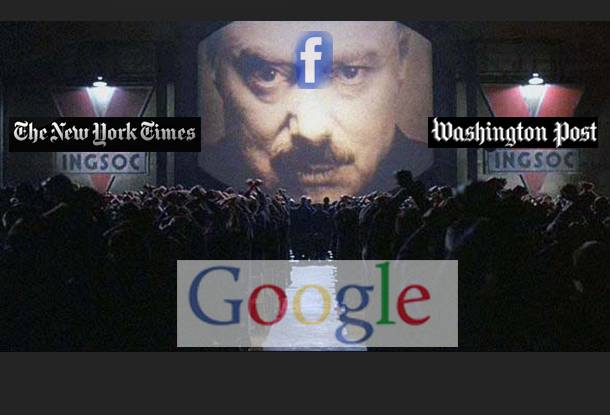
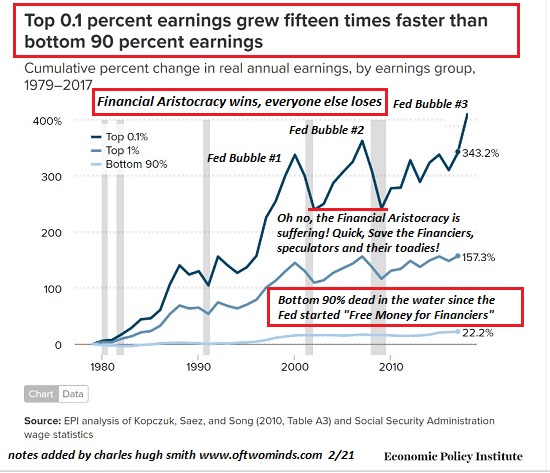
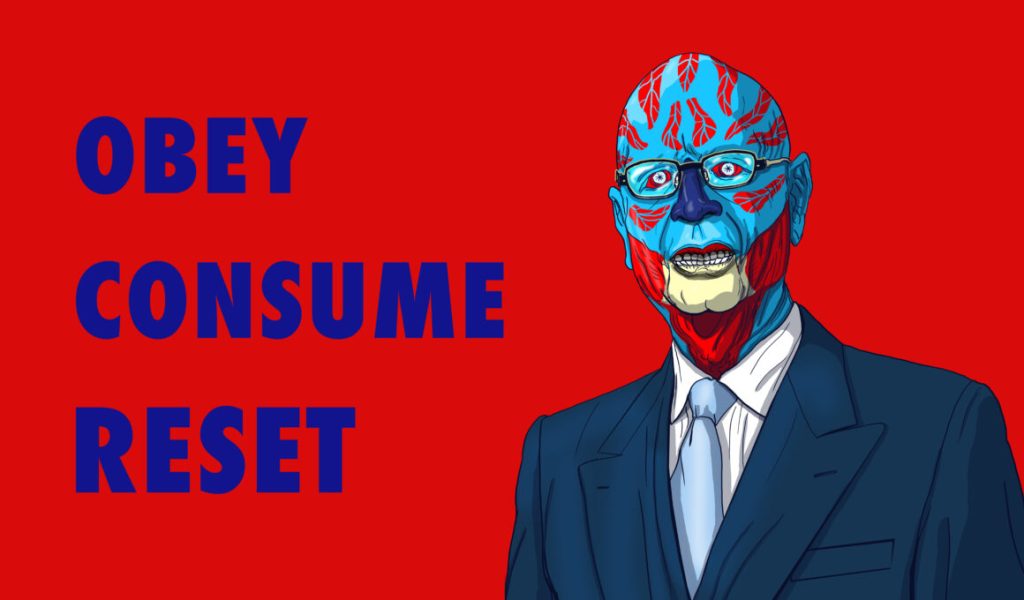

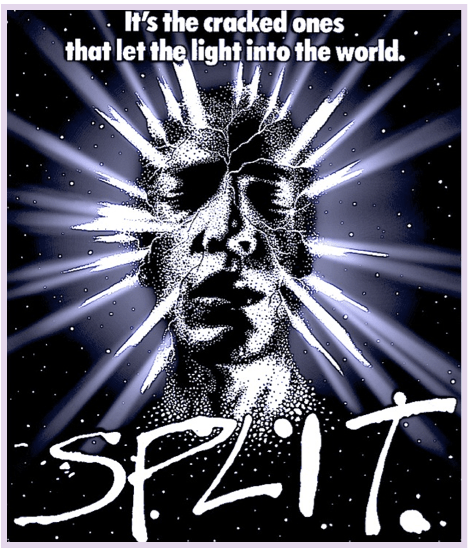

 After the Crash