Rather than decry austerity, which demands an open political discussion of trade-offs, we should decry inflation’s stealthy reduction of purchasing power.
Austerity–bad. Inflation–good. Oh wait–they’re the same thing: both are a reduction in purchasing power. The only difference is a reduction via austerity is upfront while inflation is a stealth reduction, obfuscated by “official” distortions and Federal Reserve mumbo-jumbo.
Consider $1,200 in wages, unemployment, stimulus, Social Security payment, etc. If this payment gets cut by 10%–$120–as a result of austerity, pay cut, reduction in hours worked, etc., recipients scream bloody murder.
But if inflation reduces the purchasing power of the $1,200 by 10%, nobody does anything but grumble that “prices keep rising while my income stays the same.” This is the classic boiled frog syndrome: inflation is like the heat being turned up so gradually that the poor frog doesn’t realize he’s about to expire.
Inflation is stealthy because the loss of purchasing power is difficult to monitor. Your $1,200 only buys what $1,080 bought in the recent past; 10% inflation reduced your income exactly the same as if austerity had subtracted the $120 upfront.
Governments and central banks love inflation because the theft goes unnoticed. The public tolerates inflation because it’s easy to passively accept this erosion in their standard of living and difficult to generate the political heat that an outright cut would spark.
Though it’s being openly engineered by the Federal Reserve, inflation appears to be a force nobody controls–unlike austerity which is so clearly a political decision. If Inflation robbed 10% of everyone’s income overnight, people might be roused from their passivity to protest.
But since the theft occurs slowly–what’s 1% a month?–and unevenly across a spectrum of goods and services, this theft doesn’t rouse the same political storm as upfront austerity.
Inflation is a form of sacrifice that few recognize as sacrifice. It seems like everyone’s income is eroded equally, but this isn’t true: the wealthy closest to the Fed’s money spigots are earning multiples of inflation from asset inflation, stock buybacks, etc. Inflation is a pinprick to the wealthy and a stilletto in the kidneys of the bottom 95%.
To the political Aristocracy, inflation is wonderful because they don’t need to ask anyone to sacrifice 10% of their income as they do with austerity; they just steal the 10% a dribble at a time and throw up their hands as if inflation is some mystery force completely beyond their control.
Ironically, austerity–an honest, upfront political decision and sacrifice–is decried, while the dishonest, stealth cut of inflation is passively accepted, even as the Federal Reserve has made a cloaked political decision to reduce the purchasing power of everyone’s income except for the New Nobility (the top 0.1%) that the Fed slavishly serves.
Rather than decry austerity, which demands an open political discussion of trade-offs, we should decry inflation’s stealthy reduction of purchasing power, a Fed policy that benefits the few at the expense of the many.
Here is the Chapwood Index of inflation, which carefully measures “apples to apples” costs of essential goods and services in each city:
As inflation erodes purchasing power, workers’ share of the economy has declined dramatically– a double-whammy of declining purchasing power and standard of living.
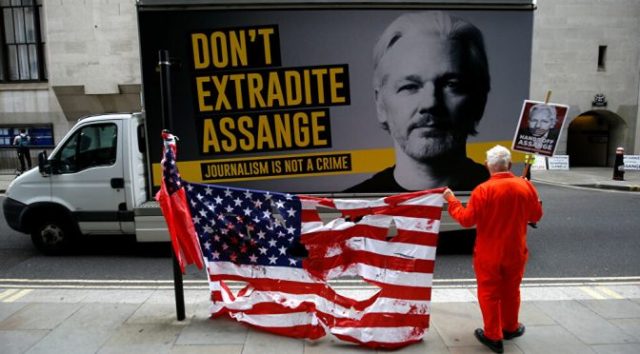
John Pilger has watched Julian Assange’s extradition trial from the public gallery at London’s Old Bailey. He spoke with Timothy Erik Ström of Arena, Australia:
Q: Having watched Julian Assange’s trial firsthand, can you describe the prevailing atmosphere in the court?
The prevailing atmosphere has been shocking. I say that without hesitation; I have sat in many courts and seldom known such a corruption of due process; this is due revenge. Putting aside the ritual associated with ‘British justice’, at times it has been evocative of a Stalinist show trial. One difference is that in the show trials, the defendant stood in the court proper. In the Assange trial, the defendant was caged behind thick glass, and had to crawl on his knees to a slit in the glass, overseen by his guard, to make contact with his lawyers. His message, whispered barely audibly through face masks, WAS then passed by post-it the length of the court to where his barristers were arguing the case against his extradition to an American hellhole.
Consider this daily routine of Julian Assange, an Australian on trial for truth-telling journalism. He was woken at five o’clock in his cell at Belmarsh prison in the bleak southern sprawl of London. The first time I saw Julian in Belmarsh, having passed through half an hour of ‘security’ checks, including a dog’s snout in my rear, I found a painfully thin figure sitting alone wearing a yellow armband. He had lost more than 10 kilos in a matter of months; his arms had no muscle. His first words were: ‘I think I am losing my mind’.
I tried to assure him he wasn’t. His resilience and courage are formidable, but there is a limit. That was more than a year ago. In the past three weeks, in the pre-dawn, he was strip-searched, shackled, and prepared for transport to the Central Criminal Court, the Old Bailey, in a truck that his partner, Stella Moris, described as an upended coffin. It had one small window; he had to stand precariously to look out. The truck and its guards were operated by Serco, one of many politically connected companies that run much of Boris Johnson’s Britain.
The journey to the Old Bailey took at least an hour and a half. That’s a minimum of three hours being jolted through snail-like traffic every day. He was led into his narrow cage at the back of the court, then look up, blinking, trying to make out faces in the public gallery through the reflection of the glass. He saw the courtly figure of his dad, John Shipton, and me, and our fists went up. Through the glass, he reached out to touch fingers with Stella, who is a lawyer and seated in the body of the court.
We were here for the ultimate of what the philosopher Guy Debord called The Society of the Spectacle: a man fighting for his life. Yet his crime is to have performed an epic public service: revealing that which we have a right to know: the lies of our governments and the crimes they commit in our name. His creation of WikiLeaks and its failsafe protection of sources revolutionised journalism, restoring it to the vision of its idealists. Edmund Burke’s notion of free journalism as a fourth estate is now a fifth estate that shines a light on those who diminish the very meaning of democracy with their criminal secrecy. That’s why his punishment is so extreme.
The sheer bias in the courts I have sat in this year and last year, with Julian in the dock, blight any notion of British justice. When thuggish police dragged him from his asylum in the Ecuadorean embassy—look closely at the photo and you’ll see he is clutching a Gore Vidal book; Assange has a political humour similar to Vidal’s—a judge gave him an outrageous 50-week sentence in a maximum-security prison for mere bail infringement.
For months, he was denied exercise and held in solitary confinement disguised as ‘heath care’. He once told me he strode the length of his cell, back and forth, back and forth, for his own half-marathon. In the next cell, the occupant screamed through the night. At first he was denied his reading glasses, left behind in the embassy brutality. He was denied the legal documents with which to prepare his case, and access to the prison library and the use of a basic laptop. Books sent to him by a friend, the journalist Charles Glass, himself a survivor of hostage-taking in Beirut, were returned. He could not call his American lawyers. He has been constantly medicated by the prison authorities. When I asked him what they were giving him, he couldn’t say. The governor of Belmarsh has been awarded the Order of the British Empire.
At the Old Bailey, one of the expert medical witnesses, Dr Kate Humphrey, a clinical neuropsychologist at Imperial College, London, described the damage: Julian’s intellect had gone from ‘in the superior, or more likely very superior range’ to ‘significantly below’ this optimal level, to the point where he was struggling to absorb information and ‘perform in the low average range’.
This is what the United Nations Special Rapporteur on Torture, Professor Nils Melzer, calls ‘psychological torture’, the result of a gang-like ‘mobbing’ by governments and their media shills. Some of the expert medical evidence is so shocking I have no intention of repeating it here. Suffice to say that Assange is diagnosed with autism and Asperger’s syndrome and, according to Professor Michael Kopelman, one of the world’s leading neuropsychiatrists, he suffers from ‘suicidal preoccupations’ and is likely to find a way to take his life if he is extradited to America.
James Lewis QC, America’s British prosecutor, spent the best part of his cross-examination of Professor Kopelman dismissing mental illness and its dangers as ‘malingering’. I have never heard in a modern setting such a primitive view of human frailty and vulnerability.
My own view is that if Assange is freed, he is likely to recover a substantial part of his life. He has a loving partner, devoted friends and allies and the innate strength of a principled political prisoner. He also has a wicked sense of humour.
But that is a long way off. The moments of collusion between the judge— a Gothic-looking magistrate called Vanessa Baraitser, about whom little is known—and the prosecution acting for the Trump regime have been brazen. Until the last few days, defence arguments have been routinely dismissed. The lead prosecutor, James Lewis QC, ex SAS and currently Chief Justice of the Falklands, by and large gets what he wants, notably up to four hours to denigrate expert witnesses, while the defence’s examination is guillotined at half an hour. I have no doubt, had there been a jury, his freedom would be assured.
The dissident artist Ai Weiwei came to join us one morning in the public gallery. He noted that in China the judge’s decision would already have been made. This caused some dark ironic amusement. My companion in the gallery, the astute diarist and former British ambassador Craig Murray wrote:
I fear that all over London a very hard rain is now falling on those who for a lifetime have worked within institutions of liberal democracy that at least broadly and usually used to operate within the governance of their own professed principles. It has been clear to me from Day 1 that I am watching a charade unfold. It is not in the least a shock to me that Baraitser does not think anything beyond the written opening arguments has any effect. I have again and again reported to you that, where rulings have to be made, she has brought them into court pre-written, before hearing the arguments before her.
I strongly expect the final decision was made in this case even before opening arguments were received.
The plan of the US Government throughout has been to limit the information available to the public and limit the effective access to a wider public of what information is available. Thus we have seen the extreme restrictions on both physical and video access. A complicit mainstream media has ensured those of us who know what is happening are very few in the wider population.
There are few records of the proceedings. They are: Craig Murray’s personal blog, Binoy Kampmark on CounterPunch, Joe Lauria’s live reporting on Consortium News and the World Socialist Website. American journalist Kevin Gosztola’s blog, Shadowproof, funded mostly by himself, has reported more of the trial than the major US press and TV, including CNN, combined.
In Australia, Assange’s homeland, the ‘coverage’ follows a familiar formula set overseas. The London correspondent of the Sydney Morning Herald, Latika Bourke, wrote this recently:
The court heard Assange became depressed during the seven years he spent in the Ecuadorian embassy where he sought political asylum to escape extradition to Sweden to answer rape and sexual assault charges.
There were no ‘rape and sexual assault charges’ in Sweden. Bourke’s lazy falsehood is not uncommon. If the Assange trial is the political trial of the century, as I believe it is, its outcome will not only seal the fate of a journalist for doing his job but intimidate the very principles of free journalism and free speech. The absence of serious mainstream reporting of the proceedings is, at the very least, self-destructive. Journalists should ask: who is next?
How shaming it all is. A decade ago, the Guardian exploited Assange’s work, claimed its profit and prizes as well as a lucrative Hollywood deal, then turned on him with venom. Throughout the Old Bailey trial, two names have been cited by the prosecution, the Guardian’s David Leigh, now retired as ‘investigations editor’ and Luke Harding, the Russiaphobe and author of a fictional Guardian ‘scoop’ that claimed Trump adviser Paul Manafort and a group of Russians visited Assange in the Ecuadorean embassy. This never happened, and the Guardian has yet to apologise. The Harding and Leigh book on Assange—written behind their subject’s back—disclosed a secret password to a WikiLeaks file that Assange had entrusted to Leigh during the Guardian’s ‘partnership’. Why the defence has not called this pair is difficult to understand.
Assange is quoted in their book declaring during a dinner at a London restaurant that he didn’t care if informants named in the leaks were harmed. Neither Harding nor Leigh was at the dinner. John Goetz, an investigations reporter with Der Spiegel, was at the dinner and testified that Assange said nothing of the kind. Incredibly, Judge Baraitser stopped Goetz actually saying this in court.
However, the defence has succeeded in demonstrating the extent to which Assange sought to protect and redact names in the files released by WikiLeaks and that no credible evidence existed of individuals harmed by the leaks. The great whistle-blower Daniel Ellsberg said that Assange had personally redacted 15,000 files. The renowned New Zealand investigative journalist Nicky Hager, who worked with Assange on the Afghanistan and Iraq war leaks, described how Assange took ‘extraordinary precautions in redacting names of informants’.
Q: What are the implications of this trial’s verdict for journalism more broadly—is it an omen of things to come?
The ‘Assange effect’ is already being felt across the world. If they displease the regime in Washington, investigative journalists are liable to prosecution under the 1917 US Espionage Act; the precedent is stark. It doesn’t matter where you are. For Washington, other people’s nationality and sovereignty rarely mattered; now it does not exist. Britain has effectively surrendered its jurisdiction to Trump’s corrupt Department of Justice. In Australia, a National Security Information Act promises Kafkaesque trials for transgressors. The Australian Broadcasting Corporation has been raided by police and journalists’ computers taken away. The government has given unprecedented powers to intelligence officials, making journalistic whistle-blowing almost impossible. Prime Minister Scott Morrison says Assange ‘must face the music’. The perfidious cruelty of his statement is reinforced by its banality.
‘Evil’, wrote Hannah Arendt, ‘comes from a failure to think. It defies thought for as soon as thought tries to engage itself with evil and examine the premises and principles from which it originates, it is frustrated because it finds nothing there. That is the banality of evil’.
Q: Having followed the story of WikiLeaks closely for a decade, how has this eyewitness experience shifted your understanding of what’s at stake with Assange’s trial?
I have long been a critic of journalism as an echo of unaccountable power and a champion of those who are beacons. So, for me, the arrival of WikiLeaks was exciting; I admired the way Assange regarded the public with respect, that he was prepared to share his work with the ‘mainstream’ but not join their collusive club. This, and naked jealousy, made him enemies among the overpaid and undertalented, insecure in their pretensions of independence and impartiality.
I admired the moral dimension to WikiLeaks. Assange was rarely asked about this, yet much of his remarkable energy comes from a powerful moral sense that governments and other vested interests should not operate behind walls of secrecy. He is a democrat. He explained this in one of our first interviews at my home in 2010.
What is at stake for the rest of us has long been at stake: freedom to call authority to account, freedom to challenge, to call out hypocrisy, to dissent. The difference today is that the world’s imperial power, the United States, has never been as unsure of its metastatic authority as it is today. Like a flailing rogue, it is spinning us towards a world war if we allow it. Little of this menace is reflected in the media.
WikiLeaks, on the other hand, has allowed us to glimpse a rampant imperial march through whole societies—think of the carnage in Iraq, Afghanistan, Libya, Syria, Yemen, to name a few, the dispossession of 37 million people and the deaths of 12 million men, women and children in the ‘war on terror’—most of it behind a façade of deception.
Julian Assange is a threat to these recurring horrors—that’s why he is being persecuted, why a court of law has become an instrument of oppression, why he ought to be our collective conscience: why we all should be the threat.
The judge’s decision will be known on the 4th of January.
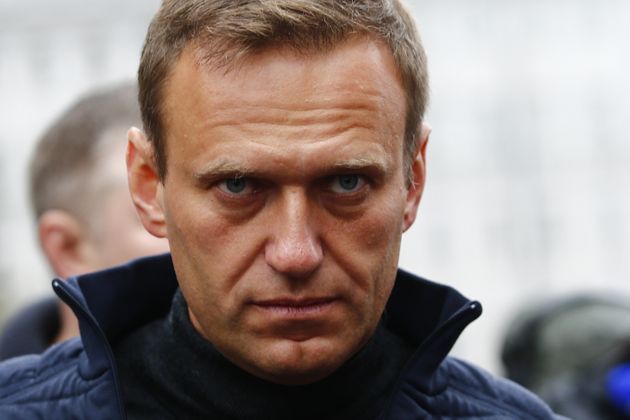
The poisoning of Alexei Navalny has created intensified support by pro-U.S., and especially pro-NATO, officials in the European Union, to block the nearly completed NordStream 2 natural-gas pipeline from Russia to Germany, and to import into the EU, instead, far costlier U.S. LNG, liquefied natural gas. A very real possibility thus now exists that the poisoning of Navalny will turn out to have been worth many billions of dollars to U.S. frackers, by causing the nearly-completed NordStream 2 to be turned to waste so that fracked U.S. LNG will sell in Europe. The present article will explore the relative likelihood that the poisoning of Navalny isn’t merely coincidentally perfectly timed in order to achieve that objective for the benefit of America’s gas-industry, but that it probably was actually planned and perpetrated in order to achieve this.
The idea that the Russian Government poisoned Alexei Navalny presumes such astounding stupidity on the part of Russia’s Government as to be exceedingly dubious, at best. Navalny, though he actually is favorably viewed by only around 2% of Russians (as indicated in polls there), is widely publicized in U.S.-and-allied media as having instead the highest support by the Russian people of anyone who might challenge Vladimir Putin for Russia’s leadership. It’s a lie, and always has been. Other politicians have far higher polled support in Russia. For example, whereas in the latest poll, published on September 5th, Navalny was one of four individuals who had 2%, Zhirinovsky had 5% and Zhirinovsky was the only person who had more than 2%, other than Putin, who had 56%. In the 2018 Presidential election, Zhirinovsky polled at 13.7%, Grudinin polled at 12.0%, and Putin polled at 72.6%. The actual election-outcome was Putin 76.69%, Grudinin 11.7%, and Zhirinovsky 5.65%. The idea that Putin would need to kill anyone in order to be leading Russia is so stupid and uninformed (and mis-informed) that it is beyond belief, though it is widely publicized in The West as being instead the reality. But what is true is that Navalny has been an immense propaganda-asset to the U.S. Government, and he now is especially so.
Even America’s CNN let slip, in a news-report on September 18th, regarding Navalny, that “his list of enemies is as long as it is powerful,” but they said nothing about whom those “enemies” might be. No one questions that Navalny claims to be an anti-corruption campaigner, and that this would generate enemies regardless of whether his accusations are truthful. The article on “Alexei Navalny” at Wikipedia, which is CIA-edited and written, and which blacklists (blocks from linking to) sites that aren’t CIA-approved, indicates that Navalny has accused numerous individuals of corruption, but not that any of those individuals is corrupt — and this is at a site (Wikipedia) which can reasonably be expected to link to documentation of any damning evidence that Navalny has come up with. But the article doesn’t link to any. The article does make clear that Navalny has been hoping to use these accusations in order to rise in Russian politics. It would be a dangerous way to rise in any nation’s politics, regardless of whether those accusations are true. The idea that Putin was behind this is insane. Is Putin so stupid as to poison the U.S. regime’s most-heavily propaganda-favored Russian precisely at the time when the EU is about to grant final approval to Russia’s vast (and virtually completed) NordStream 2 pipeline?
The US has long opposed Nord Stream 2 and in December imposed sanctions against companies involved in its construction. That move prompted Swiss pipe-layer Allseas to suspend its work with just 6 per cent left to install. A group of US senators from across the political divide are pushing to extend those sanctions.
Criticism of the project has grown in Europe too, with opponents saying it will increase Europe’s dependence on Russian energy exports at a time of rising tensions with Moscow. In her State of the Union address on Wednesday, European Commission president Ursula von der Leyen said: “To those that advocate closer ties with Russia, I say that the poisoning of Alexei Navalny with an advanced chemical agent is not a one-off. This pattern is not changing — and no pipeline will change that.
The U.S. regime’s agent, von der Leyen, is doing her utmost to serve U.S. LNG marketers. Many other U.S.-regime agents also are.
On September 17th, America’s neoconservative (or pro-U.S.-empire) Newsweek bannered “Opinion: Open Letter: For the Sake of Transatlantic Security, Stop Nord Stream 2,” with 114 signatories of NATO-related U.S. and European officials, and published their argument that, “Over the past decade, the Government of the Russian Federation has engaged in a litany of malign activities aimed at upending liberal democratic norms across Europe and North America. The shocking poisoning of Russian opposition leader Alexei Navalny by a variant of the weapons-grade nerve agent Novichok shows that Moscow has not been deterred by Western actions and statements and refuses to reverse its destabilizing political adventurism at home and abroad.”
How blatant and scummy can a marketing campaign get?
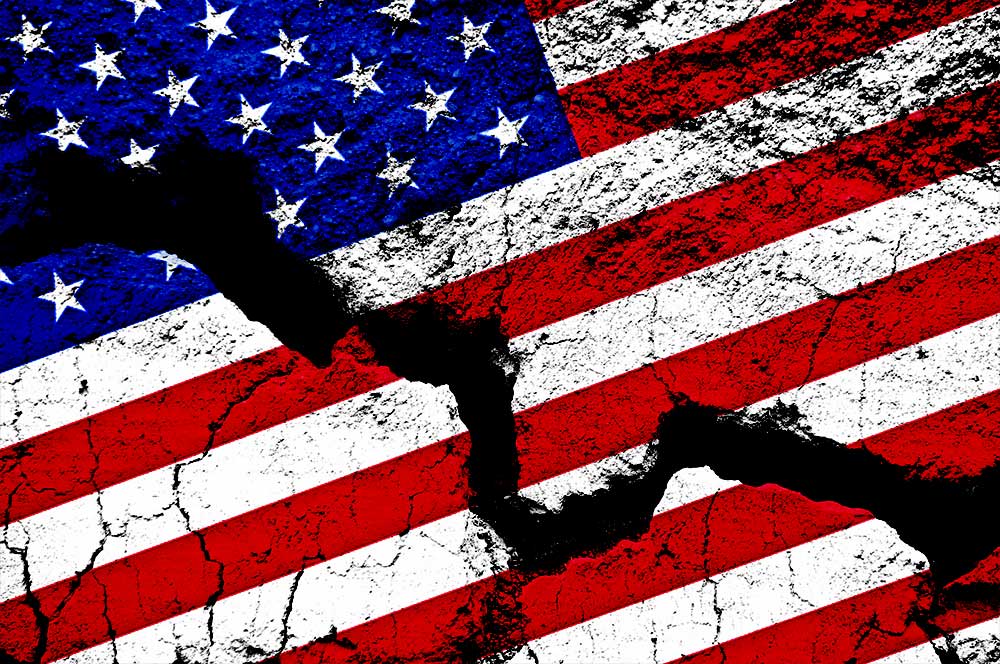
In this article, the author seeks to draw our attention to a fact that is difficult for Westerners to conceive of: the American people are experiencing a crisis of civilization. They are so deeply divided that the presidential election is not just about electing a leader, but about determining what the country (empire or nation?) should be. Neither side is capable of accepting to lose, so much so that each could resort to violence to impose its point of view.
As the U.S. presidential election approaches, the country is divided into two camps that suspect each other of preparing a coup d’état. On one side are the Democrats and the non-party Republicans, and on the other are the Jacksonians, who have become the majority in the Republican Party without sharing its ideology.
Remember, already in November 2016, a media manipulation company headed by the master of Agit-Prop, David Brock, raised more than 100 million dollars to destroy the image of the President-elect before he was elected [1]. Since then, before he could do anything about it, the international press has portrayed the U.S. president as incapable and an enemy of the people. Some newspapers have even called for his assassination. For almost four years, his own administration has constantly denounced him as a traitor paid by Russia and the international press has violently criticized him.
Currently, another group, the Transition Integrity Project (TIP), is planning scenarios to overthrow him in the 2020 election, whether he loses it or wins it. The case has become national in scope since TIP founder Professor Rosa Brooks leaked a lengthy article in the Washington Post to which she is a regular contributor [2].
The TIP organized four role-playing games last June. It simulated various results to anticipate the reactions of the two candidates. All the participants were Democrats and Republicans (ideologically speaking, not “Republicans” in the sense of party membership), none of them Jacksonian. Unsurprisingly, all of these personalities believe that “the Trump administration has consistently undermined basic standards of democracy and the rule of law. It has adopted many corrupt and authoritarian practices. They therefore concluded that President Trump would attempt a coup d’état and imagined that it was their duty to pre-emptively devise a “democratic” coup d’état [3].
It is a characteristic of contemporary political thought to stand up for democracy, but to reject decisions that run counter to the interests of the ruling class. Indeed, TIP members readily admit that the US electoral system they defend is profoundly “anti-democratic”. The constitution does not attribute the presidential election to citizens, but to an electoral college of 538 people appointed by the governors. The participation of citizens, which was not foreseen at independence, has gradually become the norm in practice, but only as a guide for governors. Thus, in 2000, when George W. Bush was elected, the Florida Supreme Court recalled that it did not have to know the wishes of the citizens of Florida, but only those of the 27 voters appointed by their Florida governor.
Contrary to popular belief, the U.S. Constitution does not recognize popular sovereignty, but only the sovereignty of governors. Moreover, the Electoral College designed by Thomas Jefferson has not functioned properly since 1992: the elected candidate no longer has the majority of the wishes of the citizens in the states that tilt the election [4].
The TIP has highlighted just about everything that could happen in the three months between the election and the nomination. It acknowledges that it will be very difficult to determine the results given the use of absentee voting in times of epidemic. The TIP deliberately did not explore the possibility that the Democratic Party would announce Joe Biden’s election despite an undercount and that House Speaker Nancy Pelosi would swear him in before Donald Trump could be declared the loser. In such a case, there would be two rival presidents, which would mark the beginning of a Second Civil War.
This eventuality encourages some to consider seceding, to unilaterally proclaim the independence of their state. This is particularly true on the West Coast. To prevent this process of disintegration, some advocate dividing California in order to give more members of the Electoral College to its population. However, this solution is already a stance in the national conflict because it favours popular representation at the expense of the power of the governors.
In addition, last March I mentioned the temptation of a putschist coup by some military personnel, [5] to which several high-ranking officers later referred [6].
These different points of view attest to the deep crisis that the United States is going through. The “American empire” should have disintegrated after the dissolution of the Soviet Union. This did not happen. It should have reinvented itself with financial globalization. It did not. Each time, a conflict (the ethnic division of Yugoslavia, the attacks of September 11) came to rekindle the dying. It will no longer be possible to postpone the deadlines for much longer [7].
“If I decide to break the chains of domestication, I can only do so because I feel the chains and suffer the effects of domestication on my own skin.” – Alfredo Bonanno
I
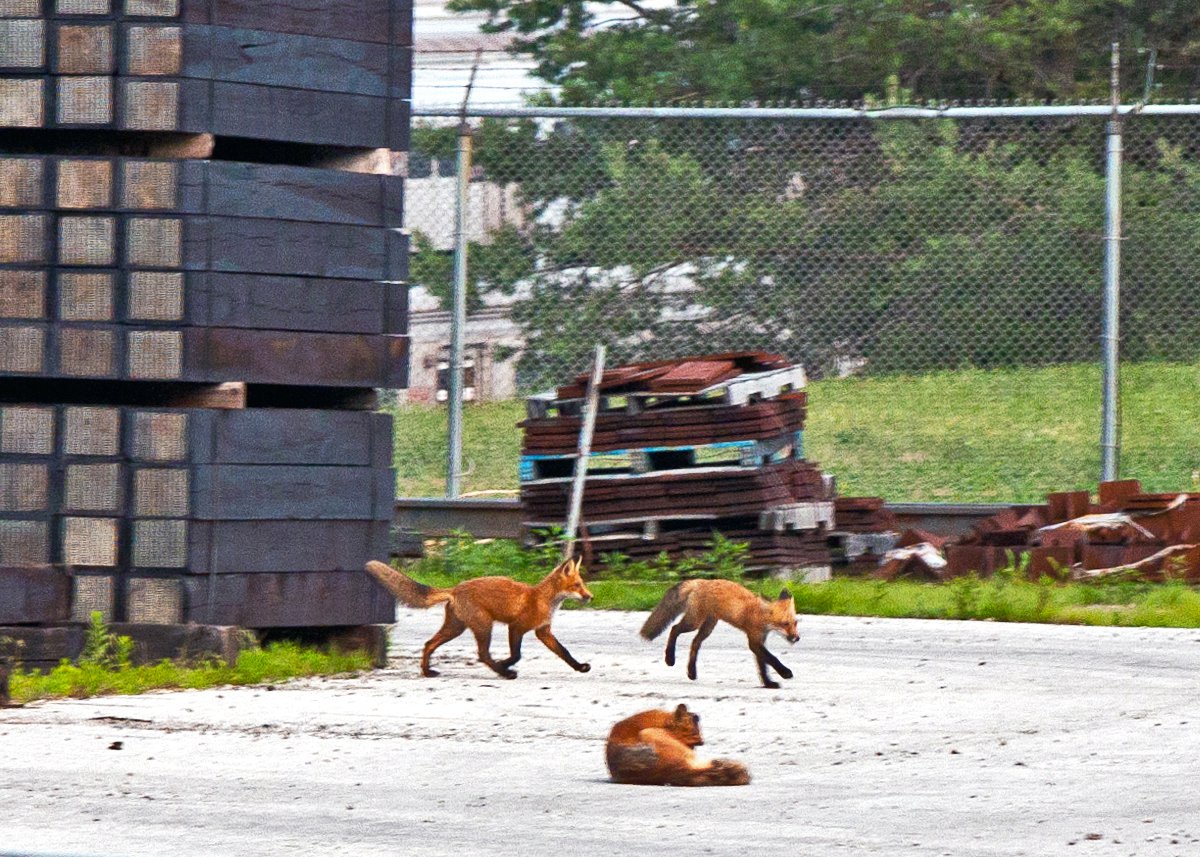
While out walking or cycling at night, foxes can always be seen roaming the housing estate. The glow of their eyes in darkness, appearing from dark alleyways suddenly visible under the street lights, they move around without a sound, hardly noticed. These lovely magnificent creatures are the embodiment of wildness. Leviathan towers all around but yet these wild beings live on freely from domestication. The foxes at times live off the scraps and waste that civilization throws away, but long after civilization crumbles these creatures will live on.
These wild beings will live on long after civilization kills itself because they are not dependent on civilization to provide the means of life. They remain wild and undomesticated, still equipped with the knowledge and skills to find food, build shelter, and survive independently for themselves.
The vast majority of humans on the other hand are totally domesticated and dependent on civilization and the vast majority would not be able to survive without shops and machines. Only a tiny percentage of humans that inhabit the earth still live wild, free, and living autonomously. The rest are imprisoned within the concrete and metal structures of techno-industrial society.
Domestication begins from birth, straight away an individual is given a birth certificate and social security number. These will be needed throughout life, to be recognised by whatever state an individual happens to be born into, to go to school, to work, to open a bank account and from there to get loans to buy shit, to get a passport, to register to vote, so the state knows who you are, what taxes you have paid or owe, your credit history: to be controlled and exploited. From birth, through childhood, into adulthood,an individual is moulded and taught how to behave, what is acceptable and what is not; through force and blackmail of collective and religious moralities created by the systems and institutions that make up civilization. The end result: a domesticated and a functional obedient citizen and wage slave.
Everything within the civilized culture is geared towards this. Education, children’s stories, TV shows, movies, books, games, and even songs are all exposure to the social norms and control of civilization. The soul purpose of the individual in civilization is to produce and reproduce the social structures, authoritarian institutions and daily subservience to civilized society. There is little room for escape from behind the computer screens and consumerism.
II
Tenalach
Irish – Used to describe a relationship one has with the land, air and water, a deep connection that one literally hears the Earth sing.
I’ve always felt an affinity and closeness with wild spaces. From childhood, playing in the fields and woodlands, fishing in the lake and swimming in the rivers that were close to the housing estate I grew up in. As a kid taking day trips to the Wicklow mountains seeing all the views, beauty of the trees and plants, rugged valleys, and at times what seems like inhospitable landscape of bog land and cliff drops.
Being in such spaces conjures up and stores feelings within me I wouldnt be able to adequately describe with words. Perhaps they could be described as something spiritual.
The landscape has been left scarred by civilization. Roads built long ago by the British colonists to flush out any hiding rebels, shells and ruins of buildings left over from the dawn of industrialism scattered across the landscape, electrical dams blocking up rivers, TV and radio transmitter masts, bog land robbed and left mutilated to feed industrial “progress”, forests cut down and replaced by animal agriculture and monocrop Sitka tree plantations poisoning the land, and the mass graves from pogroms and genocide of the religious and imperalist conquerers. There isn’t a place left on this island that civilization hasn’t left its mark.
******
In my early 20’s locked up in prison for taking part in the anti-imperialist struggle, I felt these feelings for the wild more intensely.
Not seeing any plants or trees, except the ones I could see from my cell window on the horizon. The urge to walk in grass and sand in my bare feet, wanting to roam in woodland to look up at the sky through the canopy.
For the years spent incarcerated I daydreamed about being in nature, being in the mountains, being by the sea.
After four years with eight months left I was granted temporary release for Christmas.
For the first time outside the concrete walls, iron bars and razor wire of prison there was only one thing I really wanted to do and that was to go to the ocean.
The beach was a short walk from where I was staying. To get there I’d first have to walk through a park. As I walked, even though it was winter there was still a lot of colour. A lot of the big tall trees in the park are evergreen trees so they still had their colour. Going through the park my head and eyes were darting around taking in the landscape, walking under the tall trees, their canopy blocking out the sky. It was an amazing feeling being hit in the face with so many different colours, different shades of green.
Sensory stimulation from the sounds of flowing water making its way down streams, birds chirping and singing, the wind blowing long grass and branches, colors of the landscape and the various shades of browns and greens of foliage was almost overwhelming to the senses.
When I reached the beach I walked for a little bit and then sat on a sand dune for about two hours looking out into the vast ocean of green, reflecting in my thoughts and finding some solace in my mind.
Are these feelings that rush around my mind and body urging me wildness, the inner primal anarchic instinct buried by years of domestication?
Or are they an individual desire and love within me for the wild?
TRUST MACHINE is the first blockchain-funded, blockchain-distributed, and blockchain-focused documentary. It explores the evolution of cryptocurrency, blockchain and decentralization, including the technology’s role in addressing important real-world problems, such as world hunger and income inequality.
In 2014, former Blackstone and Goldman Sachs investment banker Ryan Williams got together with his “college buddy,” Joshua Kushner – Jared’s brother – to form a real estate investment platform they called Cadre. Cadre sought to disrupt the real estate industry in the wake of the 2008 subprime mortgage crisis by tinderizing property deals through a tech platform that brought investors and sellers together. According to Williams, whose other investors include George Soros and Peter Theil, Cadre’s mission is “to level the playing field in an industry that is often tilted toward the biggest players” by taking an “offline” industry online and making it “transparent.”
A pre-Covid initiative to capitalize on its platform came in the form of the so-called “opportunity zones,” that Jared Kushner directly lobbied for inclusion in Trump’s 2017 Tax Cut and Jobs Act, billed as a funding mechanism to help poor and distressed communities, which turned into a multi-billion-dollar land heist by the wealthiest Americans, like the Kushner family. The pandemic lockdown protocols forced Cadre to downsize, laying off 25 percent of its workforce in March.
But now, the company is restarting its predatory engines as the home eviction wave forming on the horizon signals potential windfalls for companies like Cadre, that are in a position to profit. It is doing so by launching a pop-up banking operation called “Cadre Cash,” which will try to lure deposits from “investors” by offering a three percent annualized “reward” to finance a new round of land-grabs as millions of Americans teeter on the edge of homelessness and landlords look to unload un-rentable properties.
Another company, Civvl, is tackling a different side of the burgeoning housing crisis in America with its on-demand service model for eviction crews. Just like Uber, the Civvl app lets “frustrated property owners and banks secure foreclosed residential properties” by connecting haulers and the rentier class.
Civvl’s parent company, OnQall, specializes in mobile app platforms that monetize side-hustles like moving, cleaning and lawn care services. The eviction crew app has, predictably, drawn a storm of criticism since Motherboard‘s article on Civvl this past Monday.
“It’s fucked up that there will be struggling working-class people who will be drawn to gigs like furniture-hauling or process-serving,” exclaimed housing activist Helena Duncan, who also pointed out the clear dystopian contours evident in a scenario where working class people are paid to wage economic warfare on fellow working class people. Civvl puts up a disingenuous defense against the earned invectives, comparing itself to Monster.com. “They’re not evicting anyone,” a Civvl spokesperson told Motherboard, “they’re just the help.”
Both Cadre and Civvl are poised to make a killing as eviction moratoriums abate across the country and millions find themselves on one side or another of evictions – tenants forced onto the streets by small landlords who will have little choice but to sell in a depressed market. Only the CDC’s national eviction moratorium, issued three weeks ago, stands in the way of the avalanche of displacement and dispossession at our doorstep. But, even the risks of fines and jail time doesn’t seem to be discouraging companies like OnQall or landlords, in general.
Ridiculous loopholes
Cadre, in particular, is at the head of the pack of “disruptive” real estate tech platforms mostly due to the favor it enjoys in the halls of the Trump administration. “Jared was one of the key people early on. And his contributions were critical,” says Cadre CEO Ryan Williams of Jared Kushner, whose stake is worth over $50 Million, according to 2018 SEC filings.
Despite claims that Kushner sold a “substantial portion” of his shares in the company and that the president’s son-in-law has no role in the business endeavor, recent history surrounding the so-called “opportunity zones” of Trump’s Tax bill revealed Cadre’s and Kushner’s central role in a multi-billion dollar land heist by the wealthiest Americans, like the Kushner family.
Paying lip service to the same “diversity” principles Cadre’s African American founder asserts underlie his company’s vision, the more than 200 federally-designated “opportunity zones” for disadvantaged communities that resulted from the legislation, Cadre’s machine-learning and processed census data was simply serving to make a “ridiculous loophole” available to wealthy investors to buy up land at a serious discount.
The bulk of the opportunity zone funding, some of which was set up by William’s former employer and Cadre investor, Goldman Sachs, went to high-end real estate development projects in affluent areas, retail developments and luxury hotels, such as Richard Branson’s 225-room hotel in William’s home state of Louisiana, less than two miles away from one of the poorest parts of New Orleans. The project had been announced by Branson a year before the tax-cut legislation was signed into law, but nevertheless qualified to participate in the opportunity zone program.
Picking up the bodies
The housing catastrophe in the United States is barley gathering steam, and while many landlords and property owners still face legal challenges in cases where eviction moratoriums remain in place, the loose patchwork of laws governing property rights across the nation – not to mention foundational ideology – gives companies like Civvl and Cadre the chance to circumvent these and rely on naked power to drive people away from their homes or convince them to sell it to massive real estate concerns, like CBRE or Kushner’s rich buddies.
Civvl is confident that they can take advantage of people’s lack of knowledge about their rights to make money as the eviction middle man. Indeed, the company is betting that municipal and federal authorities will see things their way. “This is something that has to be done,” says a company spokesman. “Listen,” he continued, “if someone is killed on the street, someone needs to go pick their body up.”




 After the Crash