

By Robert J. Burrowes
It has been satisfying to note the significant response to two recent climate campaigns: the actions, including the recent Global Climate Strike, initiated by school students inspired by Greta Thunberg and the climate actions organized by Extinction Rebellion.
While delighted that these campaigns have finally managed to mobilize significant numbers of people around the existential threat the climate catastrophe poses to life on Earth, I would like to briefly raise some issues for consideration by each of those involved in the climate movement as well as those considering involvement.
I do this because history provides clearcut and compelling lessons on how to make such movements have the impact we need and, so far, the climate movement is not doing several vital things if we are to indeed be successful. And I would like to be successful.
So here are five key issues that I would address as soon as possible.
Let me briefly elaborate why I believe these issues are so important.
There is no point mobilizing action to halt ongoing destruction of the climate while paying insufficient attention to the vast range of other threats to key ecosystems that make life on Earth possible. I understand that most movements, whether concerned with peace, the environment or social justice, for example, tend to confine their concern to one issue. Unfortunately, however, we no longer have the luxury of doing that given the multifaceted existential threats to life on Earth.
The biosphere is under siege on many fronts with military violence, radioactive contamination (from nuclear weapons testing, nuclear waste from power plants including Fukushima and Chernobyl, depleted uranium weapons…), destruction of the rainforests and oceans, contamination and depletion of Earth’s fresh water supply, geoengineering, 5G and many other assaults inflicting ongoing and uncontained damage on Earth and its species. See, for example, ‘5G and the Wireless Revolution: When Progress Becomes a Death Sentence’.
This has critical implications for the strategic goals we set ourselves in our struggle to save not only the climate but the many vital ecosystems of Earth’s biosphere. In short, if we ‘save the climate’ but rainforests are destroyed or nuclear war takes place, then saving the climate will have been a pyrrhic victory.
Hence, it is a waste of time lobbying them to do such things as ‘declare a climate emergency’, ‘phase out all fossil fuel extraction and transform our economy to 100% renewable energy by 2030’, ‘recognize indigenous sovereignty’ and ‘implement a Green New Deal’.
The global elite, which is insane, is ‘running the show’, including the key political, economic, military and social structures and the bulk of the politicians we supposedly elect. This means that the global elite holds the levers of power over the world capitalist system, national military forces and the major international political and economic organizations such as the United Nations, the World Bank and the International Monetary Fund. For brief explanations of this, with references to many more elaborate accounts, see the section headed ‘How the World Works: A Brief History’ in ‘Why Activists Fail’, as well as ‘Exposing the Giants: The Global Power Elite’ and ‘The Global Elite is Insane Revisited’.
But separately from the role of the global elite in managing the major political, economic and social systems and structures in order to extract maximum corporate profit, individual behaviours, particularly the consumption patterns of people in industrialized countries, are also driving the destruction of Earth’s biosphere. Why? Because our parenting and teaching models are extraordinarily violent and leave the typical human living in an unconsciously terrified, self-hating and powerless state and addicted to using consumption as a key means to suppress awareness of how they feel. See ‘Love Denied: The Psychology of Materialism, Violence and War’ and ‘Do We Want School or Education?’ and, for more detail, ‘Why Violence?’ and ‘Fearless Psychology and Fearful Psychology: Principles and Practice’.
3 & 4. If we understand the above two points, we can reorient our efforts.
This means that instead of powerlessly lobbying politicians, we can change our strategic focus to maximize our strategic impact. So, on the one hand for example, we can tackle corporations profiting from the manufacture, sale and use of military weapons, the extraction and sale of fossil fuels or the manufacture and sale of the poison glyphosate (‘Roundup’), by designing and implementing thoughtful strategies of nonviolent action to end their manufacture and sale of these life-destroying products. For comprehensive guidance on campaigning strategically, see Nonviolent Campaign Strategy. For a list of the strategic goals necessary to effectively tackle the climate catastrophe or end war, for example, see ‘Strategic Aims’. And for a brief explanation of how to make a nonviolent action have maximum impact, see ‘Nonviolent Action: Why and How it Works’.
On the other hand, we can encourage responsible and systematic reductions of consumption in all key areas – water, household energy, transport fuels, metals, meat, paper and plastic – while dramatically expanding individual and community self-reliance in 16 areas in industrialized countries as outlined in ‘The Flame Tree Project to Save Life on Earth’. Or, more simply, we can encourage people to make the Earth Pledge (below).
Once enough people commit to one or the other of these two approaches (to substantially reduce consumption and increase local self-reliance), then three vital outcomes will be achieved:
I am well aware of the captivating power of turning up in a shared space with a vast bunch of other people with whom we agree. Unfortunately, while it might be a lot of fun, it is usually a waste of time strategically. Even the largest worldwide mobilization in human history (against the imminent US-led war on Iraq) on 15 February 2003, in which 30,000,000 people participated in more than 600 cities around the world, was ineffective. See ‘Why Activists Fail’.
Of course, if you still want a large public action, then you need to make sure the gathering has strategic focus. For example, instead of using it to powerlessly beg politicians to fix things for us, make it an occasion where participants can publicly commit to taking powerful action themselves by signing the Earth Pledge.
The Earth Pledge
Out of love for the Earth and all of its creatures, and my respect for their needs, from this day onwards I pledge that:
To reiterate: It is delusional to believe that we can sustain the existing levels of consumption and preserve Earth’s biosphere. Because, in the end, it is our over-consumption that is driving the destruction. As an aside, this is also why the various Green New Deal proposals being put forward are misconceived: each of the versions that I have checked is essentially a wish-list of desirable changes ‘demanded’ of governments while missing the fundamental point that if people still want to fly, drive, eat meat and fish, or food that is poisoned, use electronic devices…, they are paying the elite to maintain existing structures of violence and exploitation, to continue killing people (to steal their resources) and to destroy the biosphere. And this, of course, means that we are directly complicit in the violence, exploitation and destruction. After all, why should the elite listen to our demands for change when we spend our money supporting their existing profit-maximizing, people-killing and biosphere-destroying behaviours?
If this all seems too challenging, then I invite you to consider doing the emotional healing necessary so that you can act powerfully in response to this crisis. See ‘Putting Feelings First’. If you want to help children to do so, consider making ‘My Promise to Children’ which will require capacity in ‘Nisteling: The Art of Deep Listening’.
Given the ever-increasing body of evidence that suggests human extinction will occur by 2026, there is no point working to the elite-sponsored IPCC timeframe, designed to maximize corporate profits-as-usual for as long as possible. We do not have, for example, until 2030 to contain the temperature increase to 1.5 degrees celsius above the pre-industrial level or, say, mid-century to fully reign in carbon, methane and nitrous oxide emissions. We have nothing like this much time. Moreover, anyone paying attention to the state and ongoing destruction of the world’s rainforests and oceans, the ‘insect apocalypse’ and the accelerating rate of species extinctions (with one million species now under threat) should perceive this intuitively unless (unconsciously) terrified and hence delusional.
But for a fuller elaboration of the short timeframe we have left, if we take into account the synergistic psychological, sociological, political, economic, climate, ecological, military and nuclear considerations that each play a part in shaping this timeframe, see ‘Human Extinction by 2026? A Last Ditch Strategy to Fight for Human Survival’.
Conclusion
By now, of course, many people will be overwhelmed by what they have read above (if they got this far). So this is why those who feel able to grapple with the evidence presented are also the ones most likely to have the courage to join me in taking the action outlined and gently encouraging others in the movement to reconsider and reorient movement strategy too.
It also means that the climate movement and those with whom we must work, such as those in the labour, women’s, antiwar, indigenous rights and environment movements, have considerably more work to do if we are to achieve the outcomes we all want.
Unless enough of us are able to embrace the path outlined above, human extinction in the near term is inevitable because our efforts will be wasted on actions that cannot have the necessary impact given the full dimensions of the crisis.
Biodata: Robert J. Burrowes has a lifetime commitment to understanding and ending human violence. He has done extensive research since 1966 in an effort to understand why human beings are violent and has been a nonviolent activist since 1981. He is the author of ‘Why Violence?’ His email address is flametree@riseup.net and his website is here.

By Alison Rose Levy
Source: FAIR.org
As Sen. Bernie Sanders (CJR, 8/26/19) has recently noted, corporate ownership of media interferes with the core societal function of the press: reporting and investigating key issues at the intersection of public need and governance. And nowhere is that more critical than when it comes to climate. Due to their corporate conflicts of interest, trusted news authorities have diverted us from our primary responsibility—assuring a viable habitat for our children and grandchildren.
As a journalist who has worked both inside and outside of establishment media, I see influence as embedded in a corporate media culture rather than in isolated cases of CEO dictates. It happens in little ways, such as how an interviewer frames a question, and in big ways, like the decision to exclude a topic, a person or a group of people from the airwaves.
Like most US companies, news organizations are hierarchies, which people who have worked in corporate offices can readily understand. Given that “90% of the United States’ media is controlled by five media conglomerates,” the top executive at many news outfits is likely the CEO of a multinational corporation. The word comes down from the business execs to the company’s division chiefs, as seen in countless movies (like the 1976 classic Network). This was how it was when I worked on primetime national news at CBS in the 1990s.
On the inside, it wasn’t easy to see organizational bias, when job security and team work required overlooking it. The response to the heavily promoted primetime news pairing of two well-known anchors exemplified how news personnel learn to toe the line. The two anchors had zero chemistry, but no one mentioned it, as if an unwritten code had been instantly internalized. This dragged on for two years, pulling down the network’s ratings.
Higher-ups would never offer editorial staff direct input on content. That’s what the executive and middle management were for. Would these managers confide to their staff that the big guns gave them a certain direction? No. Whatever it was, they would present it as their own, and it would be adopted.
Within this culture, controlling the content goes on in whispers, frowns, headshakes and decisions made behind closed doors. If anyone strays into a verboten zone, as I did when I proposed a feature about Native Americans, those in the know privately communicate the ethos that is expected and allowed. “We never put American Indians on air because they talk too slow,” a producer explained.
Despite such experiences, when I left CBS, I respected the many producers with whom I’d worked, many of whom are still employed at the various networks. That work experience honed editorial judgment in ways impossible to measure, for which I am infinitely grateful. It also showed me that organizational agendas and values can trump claims to objectivity.
Yet over a decade later, working in progressive online media, I was still astonished that several major stories I covered, were anywhere from underplayed to entirely absent from establishment news.
When I began to cover fracking in New York state in 2009, at first both 60 Minutes (11/14/10) and the New York Times (11/27/09, 10/29/11) covered it as a Hatfield/McCoy feud between upstate rural neighbors, rather than as an invasive industrial activity with a host of health and environmental repercussions.
During the critical years of the major fracking buildout from 2005 to 2016, the New York Times gave a prominent environmental platform to self-declared “climate champion” Andrew Revkin, whose reporting FAIR (Extra!, 2/10) called “a source of some comfort—and crowing—for the climate change denial crowd.” His pro-industry stance on fracking and naysaying on methane impacts condoned an industrial expansion that has produced far-reaching environmental damage.
The Times’ Ian Urbina (6/25/11) did invaluable reporting on fracking’s faulty economic model. But in 2013, the paper of record closed its environmental desk, even as Inside Climate News (1/11/13) was reporting that “worldwide coverage of climate change continued a three-year slide.”
MSNBC show hosts like Rachel Maddow and Chris Hayes rarely covered fracking, instead letting gas and oil industry ads reassert claims of safety. Nonprofit environmental groups, leading activists, along with a growing body of independent journalists filled the media void, including my own reporting at Huffington Post, AlterNet and EcoWatch.
In 2014, I began to report on the Transpacific Partnership (TTP) and other concurrent global trade agreements, which are often characterized as core to President Barack Obama’s “legacy” (e.g., New York Times, 6/14/15; Washington Post, 6/24/15). The agreement’s full provisions were never revealed to the public prior to the June 2015 vote granting absolute trade authority to Obama—authority that would have passed to Trump if the agreement had been ratified in late 2016, as Obama hoped.
In conducting multiple interviews with trade analysts, as well as following the protests in Europe and the resulting leaks of the contents, I learned from trade analyst William Waren (Connect the Dots, 1/28/15) that even prior to the TPP’s passage and ratification, plans were underway for the buildout of fracking, gas and oil, and coal trade and global export freed by its anticipated passage.
Nothing within the unenforceable Paris Agreement would have prevented it. In fact, the Paris Agreement provisions were nonbinding, while the trade agreements that were being secretly negotiated concurrently, including the Trade in Services Agreement(TiSA), were designed to be binding, to “effectively trump whatever commitment is made in Paris,” Waren revealed on Connect the Dots (12/9/15).
Further, the TPP’s planned instatement of an international corporate tribunal with international legal authority over all nations would have mortally injured global democracies. In 2016, Mark Ruffalo summed up what was at stake in the fight: Expanding the Investor-State Dispute Settlement (ISDS) provisions in NAFTA via TPP
would block worldwide environmental and social progress while empowering corporations to undermine existing climate and environmental policies.
As we witness the Trump administration’s deconstruction of US environmental regulatory infrastructure—appointment by appointment, policy by policy—let’s appreciate that in defeating TPP and associated trade deals (thanks to the work of grassroots organizers and independent media), Americans dodged a bullet.
If the US had passed the TPP as planned during the 2016 lame duck session of Congress, both the US and all co-signers (a total of 12 countries) would have been contractually bound to a wholesale takedown of environmental regulations and economic barriers to fossil fuel development—as well as the loss of any right to challenge corporate rule or prevent health and environmental impacts. The climate impacts of the intended gas and oil buildout would likely have been devastating and decisive.
Nevertheless, the forward drive to pass the TPP occurred in a near void of corporate coverage. What had been negotiated behind closed doors with multinational corporations remained their business secrets. Prior to its authorization in June 2015, no mainstream outlet thoroughly investigated and disclosed the TPP’s provisions. Obama’s most memorable pro-TPP television appearance was singing about it with Jimmy Fallon. FAIR (6/11/16) called the enthused Vox coverage (6/10/16) of Obama’s performance
a borderline parody of everything wrong with corporate-owned “new media”: What we have here is a Comcast-funded website plugging a Comcast-owned TV show to promote a trade deal aggressively lobbied for by Comcast.
Both the New York Times and its liberal economist columnist, Paul Krugman, covered the TPP infrequently. Krugman (10/6/15) professed he was a “lukewarm opponent” of it, and minimized its importance. “We’re not talking about a world-shaking deal here,” he wrote (3/11/15) three months before the Senate granted Obama the authority to sign the final agreement without further consultation or deliberation.
Prior to the vote, a college friend of the MSNBC host Chris Hayes assured me that Hayes, a former environmental reporter for The Nation, would be deeply concerned about these trade deals. I was dubious, but she was insistent. With the contact she provided, I sent all of my TPP research and sources on to Hayes. I received no response.
Rather than cover the TPP, MSNBC went on to fire Ed Schultz, the sole show host who covered trade agreements. (Sadly, the 64-year-old Schultz died in 2018.) In surveying TPP coverage, Media Matters(2/4/15) found that Schultz was the exception in a near-total blackout by all three major networks. Week after week, Hayes and other MSNBC hosts devoted airtime to meticulously dissecting far more minor concerns.
As in any large organization, the firing and hiring of staff speaks volumes to surviving staff members about the owners’ priorities. The unseen casualties among reporters of integrity, and the disservice to journalism, cannot be overestimated. Those working in corporate media get the message without anyone having to tell them, and highly paid show hosts have the most to lose.
The press’ mission is to inform the citizenry and flag abuses to power, not promote special interests. When citizens blind themselves to a news organization’s corporate entanglements, and trust the outlet to be truthful anyway, it is, to put it mildly, extraordinarily naïve.
It’s not about whether or not the public has access to a private conversation or confidential memo sent to editorial with a corporate dictate. The evidence is what’s given airtime and what isn’t over many years.
Was it just happenstance that MSNBC, for example, failed to cover the TPP after firing Ed Schultz? Comcast, the owner of MSNBC, sat at the table behind closed doors during the five-year long negotiations of the TPP’s specific trade provisions.
Have MSNBC or any of its competitors uncovered Comcast’s agenda for the trade agreements? What if concerns over intellectual property rights, for example, made it a corporate mission to pass a deal that also happened to radically hasten the climate tipping point? Should any company have that much power?
No business, no matter how sizeable, should have the right to subvert the actions and political choices necessary to address climate, as well as the activated movement capable of assuring that at long last we do what needs to be done. The only sane response is to support the movement, and the independent media outlets that provide a platform for ideas, facts, studies, polls, policy initiatives and disclosures outside the corporate media frame—and to overhaul the media to address this unfair use of public airwaves for gain and compromise as the world burns.

By Caitlin Johnstone
Source: CaitlinJohnstone.com
It’s a trip how much mental energy people pour into arguments about world affairs while devoting almost none to the way their understanding and perception of those affairs is happening.
People will happily argue day in and day out about what political ideology is most correct or what should be done about a given problem, but it’s rare for them to turn around and examine the sources of information that they’ve used to form those opinions. The fact that most of the information being circulated about what’s going on in the world is owned by plutocrats who undeniably have a vested interest in maintaining the status quo rarely enters into mainstream awareness. Which is of course by design.
Even less common than people questioning the nature of the information they’ve received is for them to examine what happens to that information once it gets into their heads. Nearly everyone lives a life that is dominated by nonstop compulsive mental chatter which determines everything from one’s emotional state to how their interest and attention moves, thereby creating cognitive biases and perceptual filters which shape how all future information will be interpreted. For most of us, thought serves not as the useful tool we evolved it to be, but as the writer, director and star of the entire show. As Ecknath Easwaran once said, “we don’t think our thoughts, our thoughts think us.”
Rarer even than examining the nature of thought is examining the nature of consciousness itself. From cradle to grave none of us ever experience a single thing that is outside our own field of consciousness, but almost everyone goes that whole time without ever seriously looking into the nature of that field for themselves. Which is a shame, because a bit of rigorous investigation reveals that our entire conscious experience is happening in a very different way than the consensus worldview assumes.
Most of us labor under the assumption that we are a finite, physical body moving around in world from which we are separate, and against which we must protect and secure ourselves. Some dedicated self inquiry reveals that it’s far more accurate to say that what you are is not a body or a mind or a separate “me” at all, but rather a kind of strange, imperceptible subject to which the field of consciousness appears. In your actual experience without referring to mental narrative, you can discover a clear distinction between this ineffable subject and your field of consciousness, and see lucidly that if you’re going to identify as anything, it only makes sense to identify as that ineffable subject.
If you think it’s mind-blowing to launch an investigation into the source of the world’s problems and discover a covert alliance of plutocrats, intelligence agencies and domestic propagandists, wait until you launch an investigation into the source of your own suffering and discover that “you” don’t even exist at all. You chase the white rabbit down twisting funhouse-mirror rabbit holes, finally discover the secret chamber of your tormenter, spin his desk chair around to face you, and find not the rabbit, nor the devil, nor even yourself, but an empty chair.
That’s the real red pill, right there. That’s the ultimate conspiracy revealed. Not that there’s a secret cabal controlling world affairs to ensure world domination, but that there’s ultimately no one in the driver’s seat at all. Some clever primates with robust egoic structures have figured out how to manipulate things, but they themselves are just like the rest of us: empty processes playing themselves out for no one, just like a fire or a waterfall. We all conspired to tell a story about a bunch of separate selves who simply do not exist outside of the story.
And in this sense our impulse to expose the ultimate conspiracy to solve our world’s problems once and for all is a perfectly healthy one. Those efforts don’t have the end result that most of us are anticipating, but if enough people pursue those efforts to their end it will indeed solve all our problems. The ego is an illusion held in place by the mistaken belief that there exists some hard, tangible object that can be accurately labeled “me” or “mine”, and ego also happens to be the thing that the propagandists use to hold the status quo in place. Without the illusion that there exists a non-conceptual self who must be protected and secured from a separate world, the propagandists cannot propagandize, because their only tools are narrative, fear, and greed. Awakening from the illusion of ego makes people immune to illusory narratives, fear and greed, which means awakening on a large scale will make them impossible to propagandize, at which time we can use the power of our numbers to expunge the status quo.
But we’ve got to wake up first. We’ve got to stop overlooking the most important and fundamental aspects of our experience here. Self-inquiry is a powerful tool that can be used to investigate the nature of self and consciousness in a way that can lead relatively quickly to self-realization. Just do a search for the term and find your own approach to it if this is something which interests you.
Once you’ve resolved this fundamental matter, the illusion of ego is no longer there to disturb your natural state of equanimity and prevent you from using thought as the useful tool it’s meant to be. You can pick up stories, concepts and identities and use them to the extent that they are useful, and then put them down once they’re not. But please remember that the ultimate goal in discovering the ultimate conspiracy is not to just know it, but to solve the world’s problems. Don’t be content with self-knowledge, carry it out into the world and use your newfound inner peace and lucid relationship with concepts to help make this planet a better place to live on.
Happy rabbit holing.
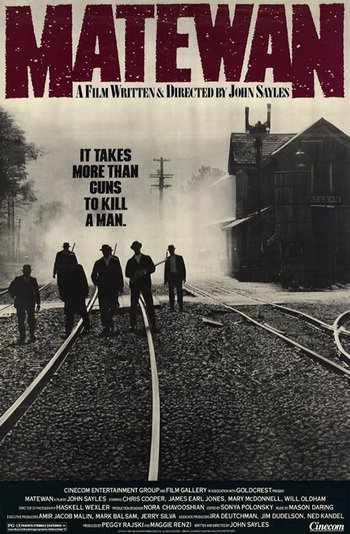
From Wikipedia:
Matewan (/ˈmeɪtwɒn/) is a 1987 American drama film written and directed by John Sayles [b. 9/28/50], and starring Chris Cooper (in his film debut), James Earl Jones, Mary McDonnell and Will Oldham, with David Strathairn, Kevin Tighe and Gordon Clapp in supporting roles.
The film dramatizes the events of the Battle of Matewan, a coal miners’ strike in 1920 in Matewan, a small town in the hills of West Virginia. The film was nominated for the Academy Award for Best Cinematography.

By Ray McGovern
Source: Consortium News
The Joe Biden-friendly Establishment media has mounted a full-court press to “prove” that Biden is, well, not a crook.
The stakes are extremely high, Biden is vulnerable, and media players are using to a faretheewell the old adage about the best defense being a good offense. The New York Times, The Washington Post, and The Wall Street Journal are desperately trying to steal the ball and get ahead in the publicity game. But time is about to run out, and pre-emptive propaganda is unlikely to snatch victory out of the jaws of defeat. IF the facts do come out and IF they are reported, Biden’s presidential hopes may suffer a mortal blow.
When the corruption in which the former Vice President and his son Hunter were involved in Ukraine becomes more widely known, the press wants to be in position to “show” that it’s all the fault of President Donald Trump and his lawyers for trying to derail Biden’s candidacy by exposing him. If past is precedent, the media will largely succeed. The question is whether enough people will, nevertheless, be able to see through this all-too-familiar charade.
In an interview with The National Interest, Joe Lauria put this episode in context:
“’It was in February [2014] when Yanukovych was overthrown, and just a few months later (in May), Joe Biden’s son and a close friend of John Kerry’s stepson, they both join the board of this Ukrainian gas company. And the name of that was Burisma Holdings,’” said Joe Lauria, editor of Consortium News and a former correspondent for the Wall Street Journal. “’So just after an American-backed coup, you have Joe Biden’s son Hunter Biden and this John Kerry family friend joining the board of probably the largest private gas producer in Ukraine. They installed the new government, and as the bounty of this coup, Joe Biden’s son personally profited. He would not have gotten that job if Yanukovych was still in power,’” Lauria told The National Interest.”
Will U.S. voters have any way of putting these dots together, and also in discerning, for example, how much truth there may be in charges that Vice President Biden pressed hard for the ouster of Ukraine’s Prosecutor General, Viktor Shokin, who was canned after investigating corruption at Burisma Holdings Ukrainian gas company of which Hunter Biden was a board member?
In this video Biden admits on the record to essentially using a billion dollar line of credit as a bribe to get the prosecutor fired.
If the truth does come out, no one will have to rely on remarks from the likes of Rudy Giuliani, one of Trump’s lawyers, who has called the episode “an astounding scandal of major proportions.” That may be hyperbole but, still, the damage to Biden could be fatal.
And so, damage control is in full swing today at the Times, the Post, the Journal and other “usual suspects,” with the Times winning the laurels with its Editorial Board, no less, weighing in with “What did Trump tell Ukraine’s president?” There have also been op-eds by Max Boot, Jennifer Rubin, Anne Applebaum, Greg Sargent and (my favorite), George T. Conway III and Neal Katyal at the Post, whose headline is: “Trump has done plenty to warrant impeachment. But the Ukraine allegations are over the top.”
That title is correct.

By Robert J. Burrowes
I have just read a superb book by Mark Isaacs, an Australian who has documented several years of effort by a group of incredibly committed young people in Afghanistan to build peace in that war-torn country the only way it can be built: by learning, living and sharing peace.
The book, titled The Kabul Peace House: How a Group of Young Afghans are Daring to Dream in a Land of War, records in considerable detail the struggle, both internal and external, to generate a peaceful future in Afghanistan. Some might consider this vision naive, others courageous, but few would doubt the simple reality: it is slow, daunting, incredibly difficult, often saddening, frightening, infuriating or painful, sometimes uplifting or hilarious and, just occasionally, utterly rewarding.
This is a human story written by a person who knows how to listen and to observe. And because the subject is about a group of ordinary Afghans and their mentor doing their best in the struggle to end one of the longest wars in human history, it is a story that is well worth reading.
This story is embedded in a combination of (brief) historical background on Afghanistan’s longstanding and central role in imperial geopolitics (including during ‘The Great Game’ of the 19th century) and more recent history on the progressive modernity of Afghanistan prior to the Soviet invasion in 1979 which was followed by an ongoing and multifaceted war in which the United States has played the most damaging role since its invasion of the country in 2001. But the background also includes a description of the ethnic diversity throughout the country, the role of religion and gender relations (and the challenges these social parameters present), as well as commentary on the social, economic and political regression as a result of the war’s many adverse impacts. So the book weaves a lot of strands into a compelling story of nonviolent resistance and regeneration against almost overwhelming odds.
However, that is not all. Given that all of the Afghans in this visionary community have each been traumatized by their unique experience of war, the book doesn’t shy away from describing the challenges this presents both to them personally and to the community, including its mentor and even some of the community’s many international visitors.
Most of the community members – whether Pashtun, Hazara, Uzbek, Turkmen, Tajik, Sayyid, Pashai… – have suffered serious loss during the war, especially those members who have had family and other relatives killed, or worse. Worse? you might ask. What is worse than death? Well, after reading this book, you will better understand that the context and the manner of death mean a great deal psychologically. None of the victims of this war died peacefully in their sleep after long and meaningful lives and this is just one part of the psychological trauma suffered by so many in this particular community but also in wider Afghan society.
So what does this community in Kabul do? Well, throughout its evolution and many manifestations, the community has done many things including run a variety of projects intended to foster understanding, cooperation and learning: nurture mutual respect among the diversity of people that constitute its membership, teach some of its members to read and write and facilitate learning opportunities in other contexts, teach the meaning and practice of nonviolence, give street kids the chance to learn skills that will make them employable, make duvets to give to people who go cold in Afghanistan’s freezing winters, teach and practice permaculture, organize protests against the war (including by flying kites instead of drones), and generally working to create a world that is green, equal and nonviolent.
If you think this sounds all good and straightforward, given slowly spreading acceptance of such ideas elsewhere (in some circles at least), then you might have underestimated their radical nature in a society in which ideas about nonviolence, equality and sustainability have, for the most part, not been previously encountered and have certainly not taken root. Isaacs records the observations of the group’s mentor on these subjects: ‘Over the years I have seen how the volunteers have changed within their personal lives, even if it means distancing themselves from the traditions of their own family…. But on a public level it’s much slower.’
This is understandable. As Isaacs notes, even in ordinary conversation and group discussions, ‘the weight of resistance, the taboos and the self-censorship’ made an impact on him. In a culture in which, in 2015, a woman in her twenties was stoned, her body run over by a car and then dumped in a river and set on fire because a mullah falsely accused her of burning the Quran, there is a long way to go.
One of the things that I found most compelling about the book is the occasional ‘biography’ of one of the community’s main characters. Given pseudonyms to avoid possible adverse repercussions, these stories provide real insight into the lives of certain community members and their struggle to leave home (in some cases), to join the community, to find their place within it and gain acceptance by the other members.
Some, like Hojar, are more outspoken and this, for a woman, is unusual in itself. Hojar is deeply aware of the gender inequality and violence against women in Afghanistan and will talk about it. This inspires other women, like Tara, who have not experienced this outspokenness before.
But Hojar’s life had started differently, in the mountains where, as a teenager, she was getting up at 3am to start baking bread for her four snoring brothers before milking the goats and sheep. ‘I am not a woman’, she thought, ‘I am a slave’. Fortunately and unusually, Hojar’s parents supported her desire to not marry at 13 or 15, but to continue her education and follow her dreams. It’s a long, painful, terrifying and fascinating journey but Hojar ended up in this novel community experiment in Kabul where her now college-educated talent was highly valued and put to wonderful use. She has my utmost admiration.
Unlike Hojar, other community members, like Horse, originally a shepherd in the mountains, are more circumspect on gender equality and other issues. But this doesn’t mean that Horse is not active, at times playing roles in the networking team, the accounts team and, particularly, as coordinator of the food cooperative which provided monthly gifts of food to the impoverished families of one hundred children who studied at the community’s street kids school. If you think raising donations to pay for this food was easy, particularly given the community decision to avoid the international aid sector to try to encourage Afghans to help their fellow Afghans, when more than half of the population lived below the poverty line and unemployment was at 40%, you will find it compelling to read how the teenaged Horse struggled with the monumental range of challenges he faced in that particular role. He has my admiration too.
Insaan, a doctor who mentors the community, provides a compelling story as well. Originally from another country, in 2002 a consultation with a patient at his successful medical practice inspired him to depart some time later. After spending more than two years in Pakistan, working with refugees from Afghanistan, he went to Afghanistan in 2004 to work for an international NGO in public health education in its central mountainous region.
His ongoing experience in this role, however, taught him that every problem the villagers faced had its origins in the war. And this underpinned his gradual transformation from health professional to peace activist. He discovered Thoreau, Gandhi and King, among others, and ‘became convinced of the power of love’. By 2008, Insaan had initiated his first multi-ethnic live-in community (although he did not live in it himself) in the mountains but in 2011, when his house was deliberately burned down, he departed for Kabul determined to restart the peace work he had begun in the mountains.
Starting with three young people who accompanied him from the mountains, the first manifestation of a live-in peace community in Kabul was soon underway. Endlessly paying attention, trying to provide guidance, reconcile those in conflict, and even withstanding threats of violence, Insaan’s love has undoubtedly been the glue that has held the growing and evolving community together. But not without cost. At times, Insaan has struggled, emotionally and otherwise, to survive in this perpetual war zone as the key figure holding this loving experiment together. He is a truly remarkable human being.
And it is because of the trauma that he and each of the other community members has suffered, that I hope that, in future, they can somehow dedicate time to their own personal, emotional healing. See ‘Putting Feelings First’ and ‘Nisteling: The Art of Deep Listening’. There is no better investment for any human being than to spend time consciously focusing on feeling the fear, pain, anger and sadness that we are taught and terrorized into suppressing during childhood (so that we become the obedient slaves that our society wants). Given the extraordinary violence that the people of Afghanistan have suffered and are still suffering, the value of making this investment would be even greater.
Anyway, if you want to read an account of the deeply personal human costs of war, and what one community is doing about it, read this book. It isn’t all pretty but, somehow, this remarkable community, through all of its manifestations over many years, its successes and failures, manages to inspire one with the sense that while those insane humans who spend their time planning, justifying, fighting and profiting from wars against people in other countries, those people on the receiving end of their violence are capable of visioning a better tomorrow and working to achieve it. No matter how difficult or how long it takes. Moreover, we can help too. See Nonviolent Campaign Strategy.
So allow yourself to be inspired by a group of young people, each of whom has lived their entire life in a country at war both with itself and with foreign countries, but has refused to submit to the predominant delusion that violence is the way out.
Biodata: Robert J. Burrowes has a lifetime commitment to understanding and ending human violence. He has done extensive research since 1966 in an effort to understand why human beings are violent and has been a nonviolent activist since 1981. He is the author of ‘Why Violence?’ His email address is flametree@riseup.net and his website is here.
By Michael Krieger
Source: Liberty Blitzkrieg
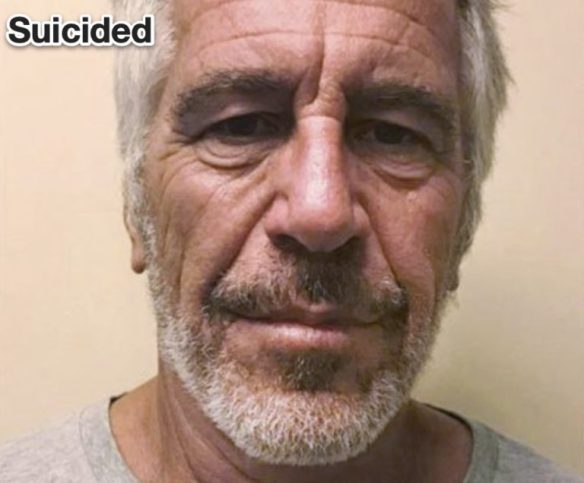
Is a murder committed more heinous than a suicide allowed? In its act, sure. In this context? NO.
An “unlucky accident” like this is the ONE THING that a non-corrupt State must prevent. It’s the non-corrupt State’s ONE JOB to keep Epstein alive for trial, and everyone knows that everyone knows this is their ONE JOB.
It is impossible to violate this common knowledge without premeditation and malice, without conspiracy and criminality aforethought. It is impossible to have an “unlucky accident” like this in a non-corrupt State.
– Ben Hunt, I’m a Superstitious Man
It’s entirely fitting that the death of Jeffrey Epstein is as disturbing, shady, bizarre and seemingly inexplicable as the rest of his life. It seems as if one could research this wretched man’s time on earth for years and still come up with more questions than answers. An unfortunate reality complicated by the fact we don’t have a mass media particularly interested in asking any of the big questions, such as:
It appears sexually abusing children and accumulating associated blackmail on the rich and powerful was a full-time job for Epstein, so who was actually bankrolling/overseeing this operation? Was it Wexner, somebody else, or was it an intelligence agency as Alex Acosta claims he was told? Seems kind of important to get to the bottom of this.
I could go on and on, but then this would become a book. Rather, the purpose of this post is to highlight the outlandishness surrounding many of the details (or lack thereof) surrounding Epstein’s death a week ago in a Department of Justice operated New York City prison.
Indeed, what you’d have to believe in order to think this was a simple suicide is the actual conspiracy theory.
Let’s begin with the initial attack, which happened three weeks before his death.
The Initial Attack
As everybody knows, on July 23, Jeffrey Epstein was found in a fetal position, semi-conscious, on the floor of his cell with neck injuries. His cellmate at the time was Nicholas Tartaglione, a former New York police officer who was arrested in December 2016 on charges of killing four men in a drug distribution conspiracy.
There was a giant haze surrounding this incident up until the moment of Epstein’s death, with everyone unsure whether he was attacked or if it was a suicide attempt. According to a report by NBC News, Tartaglione was subsequently cleared the day before Epstein was found dead. I suppose that means the initial attack was belatedly ruled a suicide attempt, but why did it take so long to figure that out? It took far less time to rule Epstein’s suspicious death a suicide.
Circumstances at the Prison Surrounding the Death
Either the stars all aligned perfectly for the most important prisoner in America to kill himself on that day, or he was somehow murdered to shield an extensive list of some of the most wealthy and powerful people on earth. Decide for yourself.
– One of Epstein’s Guards Was Not a Corrections Officer
The AP reported:
A person familiar with operations at the federal jail where Jeffrey Epstein killed himself says one of the two people guarding him the night he died wasn’t a correctional officer.
The person wasn’t authorized to disclose information about the investigation and spoke on condition of anonymity.
The person said Epstein hanged himself with a bedsheet, days after being taken off a suicide watch.
Federal prisons facing shortages of fully trained guards have resorted to having other types of support staff fill in for correctional officers, including clerical workers and teachers.
– Both of the Guards Fell Asleep at the Exact Same Time Giving Epstein a Chance to Die
Guards were supposed to have checked on Epstein every 30 minutes, but rather both of them fell asleep for 3 hours during the window of Epstein’s death.
Via Business Insider:
The two prison guards assigned to monitor Jeffrey Epstein in a high-security jail fell asleep for three hours, the night he died of an apparent suicide, The New York Times reported on Tuesday, citing unnamed officials…
According to reports, there were multiple breaches in protocol regarding the supervision of Epstein: prison guards were required to check on Epstein every 30 minutes, which they failed to do, officials told The Times, and Epstein was being housed alone after his cellmate was transferred and was not replaced.
– Epstein Guards Suspected of Falsifying Logs
AP reports:
A person familiar with the probe of Jeffrey Epstein’s death at a federal jail says guards are suspected of falsifying log entries to show they were checking on inmates in his unit every half hour, when they actually weren’t.
– Key People at the Prison Are Not Cooperating with the FBI
CNN reports
Even top officials in the department have been frustrated by their inability to get some answers from the prison, in part because initial answers turned out to be inaccurate in some cases…
The FBI probe is complicated by the fact that key people involved aren’t cooperating, people briefed on the matter say.
– Epstein Was Taken off Suicide Watch Less Than a Week After His Initial Suicide Attempt
New York Magazine reports:
Epstein was taken off of suicide watch on July 29 and returned to the MCC’s special housing unit after a psychiatric evaluation determined he was no longer at risk of harming himself. The Wall Street Journal reported that Epstein’s lawyers had requested he be removed from suicide watch.
– Epstein’s Cellmate Was Removed the Day Before Epstein Died
This makes no sense, unless you’re trying to create the perfect conditions for Epstein to die.
Via CNN:
In one instance over the weekend, officials believed the former Epstein cellmate had been released on bail. But it turns out he had been moved to another facility, one person briefed on the matter said. One of the first tasks for FBI agents this week was interviewing that former cellmate, who could provide information on Epstein’s behavior in the days before his suicide.
Who was Epstein’s cellmate before he died? After the first incident, it was revealed almost immediately who his cellmate was, but there’s been little to no details about the second cellmate. Who was he and what does he have to say?
– At Least Eight Jail Officials Knew Jeffrey Epstein Was Not to Be Left Alone in Cell
Just total insanity. The official narrative gets increasingly ridiculous by the day.
Via The Washington Post:
At least eight Bureau of Prisons staffers knew that strict instructions had been given not to leave multimillionaire sex offender Jeffrey Epstein alone in his cell, yet the order was apparently ignored in the 24 hours leading up to his death, according to people familiar with the matter.
The fact that so many prison officials were aware of the directive — not just low-level correctional officers, but supervisors and managers — has alarmed investigators assessing what so far appears to be a stunning failure to follow instructions, these people said. Like others, they spoke on the condition of anonymity to discuss ongoing investigations. They declined to identify the eight…
The Bureau of Prisons declined to comment.
“It’s perplexing,” said Robert Hood, a former warden at the federal Supermax prison in Florence, Colo. “If people were given instructions that Epstein should not be left alone, I don’t understand how they were not followed.”
It’s only perplexing if you go into it thinking it was a suicide.
Details Surrounding the Death Itself
– Epstein Hung Himself from a Bunkbed
Via The Washington Post:
Epstein, 66, was found in his cell at the Metropolitan Correctional Center in Manhattan on Saturday morning, and an official said he hanged himself with a bedsheet attached to the top of a bunk bed. Epstein was rushed to a nearby hospital, where he was pronounced dead.
The bunkbed was conveniently available due to the fact his cellmate was inexplicably moved a day before.
– Epstein Suffered Multiple Breaks in His Neck Bones, Which Is More Common in Homicides
Also via The Washington Post:
An autopsy found that financier Jeffrey Epstein suffered multiple breaks in his neck bones, according to two people familiar with the findings, deepening the mystery about the circumstances around his death.
Among the bones broken in Epstein’s neck was the hyoid bone, which in men is near the Adam’s apple. Such breaks can occur in those who hang themselves, particularly if they are older, according to forensics experts and studies on the subject. But they are more common in victims of homicide by strangulation, the experts said.
– Little to No Details About Prison Camera Footage
I assume some narrative will emerge here, but it’s already been too long for my comfort. We had all sorts of details emerge in the days following Epstein’s death, but almost nothing regarding the crucial hallway camera footage in the prison. This is something investigators would likely check immediately so why didn’t they, or if they did, why is it taking so long to inform the public?
Even Epstein’s lawyers seem confused as to whether the video footage exists.
Here is part of a statement from Epstein’s attorneys via NBC News:
“It is indisputable that the authorities violated their own protocols. The defense team fully intends to conduct its own independent and complete investigation into the circumstances and cause of Mr. Epstein’s death including if necessary legal action to view the pivotal videos — if they exist as they should — of the area proximate to Mr. Epstein’s cell during the time period leading to his death.”
Finally, it’s worth pointing out that the NYC Medical Examiners Office, which ruled Epstein’s death a suicide, has a pretty sordid history.
Check out the following from a 2014 New York Post article, Lost Bodies, Wasted Money: Inside NYC’s Medical Examiner’s Office
The city Medical Examiner’s Office is a mess — plagued with errors, including bodies being lost, mistakenly cremated or wrongly donated to science — while millions of taxpayer dollars have been spent on plans and equipment useful only in a mass disaster…
Meanwhile, insiders say ME chiefs, caught up in the glamor of disaster, neglect the agency’s primary mission.
“They can’t take care of day-to-day business. They play war games,” one said.
The ME’s Office, with 625 employees and a $63.6 million budget, has a history of criminality, waste and incompetence.
The ME’s former chief of management information systems, Natarajan “Raju” Venkataram, and his co-worker girlfriend, Rosa Abreu, were busted in 2005 for embezzling more than $9 million from a $11.4 million FEMA grant meant to track and identify remains of 9/11 victims.
And bosses take lavish taxpayer-funded trips to conferences and symposiums.
Frank DePaolo, assistant commissioner for emergency management, has traveled to Las Vegas, the Hague, Hong Kong and Israel. Chief of Staff Barbara Butcher has gone to Croatia and Thailand…
The number of investigators, who examine bodies at death scenes, was slashed from about 40 to 20, among other cuts, they said.
“We’re told to do more with less, but the work is suffering,” one said.
Here’s some more while we’re at it:

If after everything I’ve highlighted, you still believe this was a simple suicide that’s fine. Anything is possible, but it really doesn’t matter. Even if it was mere incompetence that allowed a suicide to occur, this still demonstrates without a shadow of a doubt that the federal government is incapable or unwilling to protect the public.
The Epstein case was and remains a matter of extreme public interest since this was a man who systematically sexually abused and trafficked children while closely associating with, and collecting blackmail on, a large slew of the most wealthy and powerful people on the planet. If the government can’t protect you from that, and it most certainly went out of its way to deny justice for this criminal over decades including within prison itself, then you can’t trust the government for anything. As such, whenever the feds claim they’re doing something extreme to protect you, whether it’s mass surveillance or encryption backdoors, you can be 100% sure it is a giant heap of stinking bullshit.
The narrative now being formed is that it was all just a lot of incompetence. That the guards were tired and overworked. We’re also being told that it’s normal for an inmate on suicide watch to come off after a few days, but Jeffrey Epstein was not a normal inmate. Epstein and the people around him belong to a class I refer to as super predators, which are the most dangerous predators in society because their elite connections allow them to get away with anything and everything.
It’s become completely clear that rather than stopping such people and their criminal rings, the U.S. government protects them and ensures no justice is ever served upon them, even up to their last breath.
Our government isn’t there to protect us, save us or dispense any justice. Instead, it seemingly exists to protect, serve and encourage the elite criminal rings operating around us in plain sight, whether it’s bank CEOs or pedophile sex traffickers with apparent intelligence links.
We are truly ruled by gangsters.
INDIAN COUNTRY NEWS
"It is the duty of every man, as far as his ability extends, to detect and expose delusion and error"..Thomas Paine
Human in Algorithms
From the Roof Top
I See This
blog of the post capitalist transition.. Read or download the novel here + latest relevant posts
अध्ययन-अनुसन्धानको सार
 After the Crash