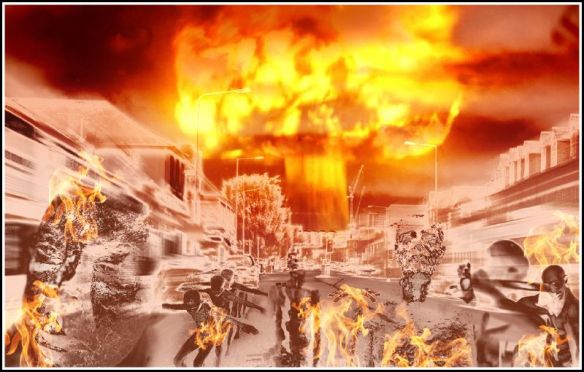

End-times for humanity


Humanity is more technologically powerful than ever before, and yet we feel ourselves to be increasingly fragile. Why?

By Claire Colebrook

Source: Aeon

The end of the world is a growth industry. You can almost feel Armageddon in the air: from survivalist and ‘prepper’ websites (survivopedia.com, doomandbloom.net, prepforshtf.com) to new academic disciplines (‘disaster studies’, ‘Anthropocene studies’, ‘extinction studies’), human vulnerability is in vogue.

The panic isn’t merely about civilisational threats, but existential ones. Beyond doomsday proclamations about mass extinction, climate change, viral pandemics, global systemic collapse and resource depletion, we seem to be seized by an anxiety about losing the qualities that make us human. Social media, we’re told, threatens our capacity for empathy and genuine connection. Then there’s the disaster porn and apocalyptic cinema, in which zombies, vampires, genetic mutants, artificial intelligence and alien invaders are oh-so-nearly human that they cast doubt on the value and essence of the category itself.

How did we arrive at this moment in history, in which humanity is more technologically powerful than ever before, and yet we feel ourselves to be increasingly fragile? The answer lies in the long history of how we’ve understood the quintessence of ‘the human’, and the way this category has fortified itself by feeding on the fantasy of its own collapse. Fears about the frailty of human wisdom go back at least as far as Ancient Greece and the fable of Plato’s cave, in which humans are held captive and can only glimpse the shadows of true forms flickering on the stone walls. We prisoners struggle to turn towards the light and see the source (or truth) of images, and we resist doing so. In another Platonic dialogue, the Phaedrus, Socrates worries that the very medium of knowledge – writing – might discourage us from memorising and thinking for ourselves. It’s as though the faculty of reason that defines us is also something we’re constantly in danger of losing, and even tend to avoid.

This paradoxical logic of loss – in which we value that which we’re at the greatest risk of forsaking – is at work in how we’re dealing with our current predicament. It’s only by confronting how close we are to destruction that we might finally do something; it’s only by embracing the vulnerability of humanity itself that we have any hope of establishing a just future. Or so say the sages of pop culture, political theory and contemporary philosophy. Ecological destruction is what will finally force us to act on the violence of capitalism, according to Naomi Klein in This Changes Everything: Capitalism vs the Climate (2014). The philosopher Martha Nussbaum has long argued that an attempt to secure humans from fragility and vulnerability explains the origins of political hierarchies from Plato to the present; it is only if we appreciate our own precarious bodily life, and the emotions and fears that attach to being human animals, that we can understand and overcome racism, sexism and other irrational hatreds. Disorder and potential destruction are actually opportunities to become more robust, argues Nassim Nicholas Taleb in Antifragile (2012) – and in Thank You for Being Late (2016), the New York Times’ columnist Thomas Friedman claims that the current, overwhelming ‘age of accelerations’ is an opportunity to take a pause. Meanwhile, Oxford University’s Future of Humanity Institute pursues research focused on avoiding existential catastrophes, at the same time as working on technological maturity and ‘superintelligence’.

It’s here that one can discern a tight knit between fragility and virility. ‘Humanity’ is a hardened concept, but a brittle one. History suggests that the more we define ‘the human’ as a subject of intellect, mastery and progress – the more ‘we’ insist on global unity under the umbrella of a supposedly universal kinship – the less possible it becomes to imagine any other mode of existence as human. The apocalypse is typically depicted as humanity reduced to mere life, fragile, exposed to all forms of exploitation and the arbitrary exercise of power. But these dystopian future scenarios are nothing worse than the conditions in which most humans live as their day-to-day reality. By ‘end of the world’, we usually mean the end of our world. What we don’t tend to ask is who gets included in the ‘we’, what it cost to attain our world, and whether we were entitled to such a world in the first place.

Stories about the end of time have a long history, from biblical eschatology to medieval plague narratives. But our fear of a peculiarly ‘human’ apocalypse really begins with the 18th-century Enlightenment. This was the intellectual birthplace of the modern notion of ‘humanity’, a community of fellow beings united by shared endowments of reason and rights. This humanist ideal continues to inform progressive activism and democratic discourse to this day. However, it’s worth taking a moment to go back to René Descartes’s earlier declaration of ‘I think, therefore I am’, and ask how it was possible for an isolated self to detach their person from the world, and devote writing, reading and persuasion to the task of defending an isolated and pure ego. Or fast-forward a few centuries to 1792, and consider how Mary Wollstonecraft had the time to read about the rights of man, and then demand the rights of woman.

The novelist Amitav Ghosh provides a compelling answer in his study of global warming, The Great Derangement (2017). Colonisation, empire and climate change are inextricably intertwined as practices, he says. The resources of what would become the Third World were crucial in creating the comfortable middle-class existences of the modern era, but those resources could not be made available to all: ‘the patterns of life that modernity engenders can only be practised by a small minority … Every family in the world cannot have two cars, a washing machine and a refrigerator – not because of technical or economic limitations but because humanity would asphyxiate in the process.’

Ghosh disputes one crucial aspect of the story of humanity: that it should involve increasing progress and inclusion until we all reap the benefits. But I’d add a further strand to this dissenting narrative: the Enlightenment conception of rights, freedom and the pursuit of happiness simply wouldn’t have been imaginable if the West had not enjoyed a leisured ease and technological sophistication that allowed for an increasingly liberal middle class. The affirmation of basic human freedoms could become widespread moral concerns only because modern humans were increasingly comfortable at a material level – in large part thanks to the economic benefits afforded by the conquest, colonisation and enslavement of others. So it wasn’t possible to be against slavery and servitude (in the literal and immediate sense) until large portions of the globe had been subjected to the industries of energy-extraction. The rights due to ‘us all’, then, relied on ignoring the fact that these favourable conditions had been purchased at the expense of the lives of other humans and non-humans. A truly universal entitlement to security, dignity and rights came about only because the beneficiaries of ‘humanity’ had secured their own comfort and status by rendering those they deemed less than human even more fragile.

What’s interesting about the emergence of this 18th-century humanism isn’t only that it required a prior history of the abjection it later rejected. It’s also that the idea of ‘humanity’ continued to have an ongoing relation to that same abjection. After living off the wealth extracted from the bodies and territories of ‘others’, Western thought began to extend the category of ‘humanity’ to capture more and more of these once-excluded individuals, via abolitionism, women’s suffrage and movements to expand the franchise. In a strange way these shifts resemble the pronouncements of today’s tech billionaires, who, having extracted unimaginable amounts of value from the mechanics of global capitalism, are now calling for Universal Basic Income to offset the impacts of automation and artificial intelligence. Mastery can afford to correct itself only from a position of leisured ease, after all.

But there’s a twist. While everyone’s ‘humanity’ had become inherent and unalienable, certain people still got to be more fully ‘realised’ as humans than others. As the circle of humanity grew to capture the vulnerable, the risk that ‘we’ would slip back into a semi-human or non-human state seemed more present than before – and so justified demands for an ever more elevated and robust conception of ‘the human’.

One can see this dynamic at work in the 18th-century discussions about slavery. By then the practice itself had become morally repugnant, not only because it dehumanised slaves, but because the very possibility of enslavement – of some humans not realising their potential as rational subjects – was considered pernicious for humanity as a whole. In A Vindication of the Rights of Woman (1792), for example, Wollstonecraft compared women to slaves, but insisted that slavery would allow no one to be a true master. ‘We’ are all rendered more brutal and base by enslaving others, she said. ‘[Women] may be convenient slaves,’ Wollstonecraft wrote, ‘but slavery will have its constant effect, degrading the master and the abject dependent.’

These statements assumed that an entitlement to freedom was the natural condition of the ‘human’, and that real slavery and servitude were no longer genuine threats to ‘us’. When Jean-Jacques Rousseau argued in The Social Contract (1762) that ‘man is born free, and everywhere he is in chains’, he was certainly not most concerned about those who were literally in chains; likewise William Blake’s notion of ‘mind-forg’d manacles’ implies that the true horror is not physical entrapment but a capacity to enslave oneself by failing to think. It’s thus at the very moment of abolition, when slavery is reduced to a mere symbol of fragility, that it becomes a condition that imperils the potency of humanity from within.

I’m certainly not suggesting that there is something natural or inevitable about slavery. What I’m arguing is that the very writers who argued against slavery, who argued that slavery was not fitting for humans in their very nature, nevertheless saw the unnatural and monstrous potential for slavery as far too proximate to humans in their proper state. Yet rather than adopt a benevolence towards the world in light of this vulnerability in oneself, the opposite has tended to be the case. It is because humans can fail to reach their rational potential and be ‘everywhere in chains’ that they must ever more vigilantly secure their future. ‘Humanity’ was to be cherished and protected precisely because it was so precariously elevated above mere life. The risk of debasement to ‘the human’ turned into a force that solidified and extended the category itself. And so slavery was not conceived as a historical condition for some humans, subjected by ruthless, inhuman and overpowering others; it was an ongoing insider threat, a spectre of fragility that has justified the drive for power.

How different are the stories we tell ourselves today? Movies are an interesting barometer of the cultural mood. In the 1970s, cinematic disaster tales routinely featured parochial horrors such as shipwrecks (The Poseidon Adventure, 1972), burning skyscrapers (The Towering Inferno, 1974), and man-eating sharks (Jaws, 1975). Now, they concern the whole of humanity. What threatens us today are not localised incidents, but humans. The wasteland of Interstellar (2014) is one of resource depletion following human over-consumption; the world reduced to enslaved existence in Elysium (2013) is a result of species-bifurcation, as some humans seize the only resources left, while those left on Earth enjoy a life of indentured labour. That the world will end (soon) seems to be so much a part of the cultural imagination that we entertain ourselves by imagining how, not whether, it will play out.

But if you look closely, you’ll see that most ‘end of the world’ narratives end up becoming ‘save the world’ narratives. Popular culture might heighten the scale and intensity of catastrophe, but it does so with the payoff of a more robust and final triumph. Interstellar pits the frontier spirit of space exploration over a miserly and merely survivalist bureaucracy, culminating with a retired astronaut risking it all to save the world. Even the desolate cinematic version (2009) of Cormac McCarthy’s novel The Road (2006) concludes with a young boy joining a family. The most reduced, enslaved, depleted and lifeless terrains are still opportunities for ‘humanity’ to confront the possibility of non-existence in order to achieve a more resilient future.

Such films hint at a desire for new ways of being. In Avatar (2009), a militaristic and plundering West invades the moon Pandora in order to mine ‘unobtanium’; they are ultimately thwarted by the indigenous Na’vi, whose attitude to nature is not one of acquisition but of symbiotic harmony. Native ecological wisdom and attunement is what ultimately leads to victory over the instrumental reason of the self-interested invaders. In Mad Max: Fury Road (2015), a resource-depleted future world is controlled by a rapacious, parasitic, and wasteful elite. But salvation comes from the revolutionary return of a group of ecologically attuned and other-directed women, all blessed with a mythic wisdom that enables ultimate triumph over the violent self-interest of the literally blood-sucking tyrant family. These stories rely on quasi-indigenous and feminist images of community to offer alternatives to Western hyper-extraction; both resolve their disaster narratives with the triumph of intuitive and holistic modes of existence over imperialism and militarism. They not only depict the post-post-apocalyptic future in joyous terms, but do so by appealing to a more benevolent and ecologically attuned humanity.

These films whisper: take a second glance at the present, and what looks like a desperate situation might actually be an occasion for enhancement. The very world that appears to be at the brink of destruction is really a world of opportunity. Once again, the self-declared universal humanity of the Enlightenment – that same humanity that enslaved and colonised on the grounds that ‘we’ would all benefit from the march of reason and progress – has started to appear as both fragile and capable of ethical redemption. It’s our own weakness, we seem to say, that endows humanity with a right to ultimate mastery.

What contemporary post-apocalyptic culture fears isn’t the end of ‘the world’ so much as the end of ‘a world’ – the rich, white, leisured, affluent one. Western lifestyles are reliant on what the French philosopher Bruno Latour has referred to as a ‘slowly built set of irreversibilities’, requiring the rest of the world to live in conditions that ‘humanity’ regards as unliveable. And nothing could be more precarious than a species that contracts itself to a small portion of the Earth, draws its resources from elsewhere, transfers its waste and violence, and then declares that its mode of existence is humanity as such.

To define humanity as such by this specific form of humanity is to see the end of that humanity as the end of the world. If everything that defines ‘us’ relies upon such a complex, exploitative and appropriative mode of existence, then of course any diminution of this hyper-humanity is deemed to be an apocalyptic event. ‘We’ have lost our world of security, we seem to be telling ourselves, and will soon be living like all those peoples on whom we have relied to bear the true cost of what it means for ‘us’ to be ‘human’.

The lesson that I take from this analysis is that the ethical direction of fragility must be reversed. The more invulnerable and resilient humanity insists on trying to become, the more vulnerable it must necessarily be. But rather than looking at the apocalypse as an inhuman horror show that might befall ‘us’, we should recognise that what presents itself as ‘humanity’ has always outsourced its fragility to others. ‘We’ have experienced an epoch of universal ‘human’ benevolence, a globe of justice and security as an aspiration for all, only by intensifying and generating utterly fragile modes of life for other humans. So the supposedly galvanising catastrophes that should prompt ‘us’ to secure our stability are not only things that many humans have already lived through, but perhaps shouldn’t be excluded from how we imagine our own future.

This is why contemporary disaster scenarios still depict a world and humans, but this world is not ‘the world’, and the humans who are left are not ‘humanity’. The ‘we’ of humanity, the ‘we’ that imagines itself to be blessed with favourable conditions that ought to extend to all, is actually the most fragile of historical events. If today ‘humanity’ has started to express a sense of unprecedented fragility, this is not because a life of precarious, exposed and vulnerable existence has suddenly and accidentally interrupted a history of stability. Rather, it reveals that the thing calling itself ‘humanity’ is better seen as a hiatus and an intensification of an essential and transcendental fragility.
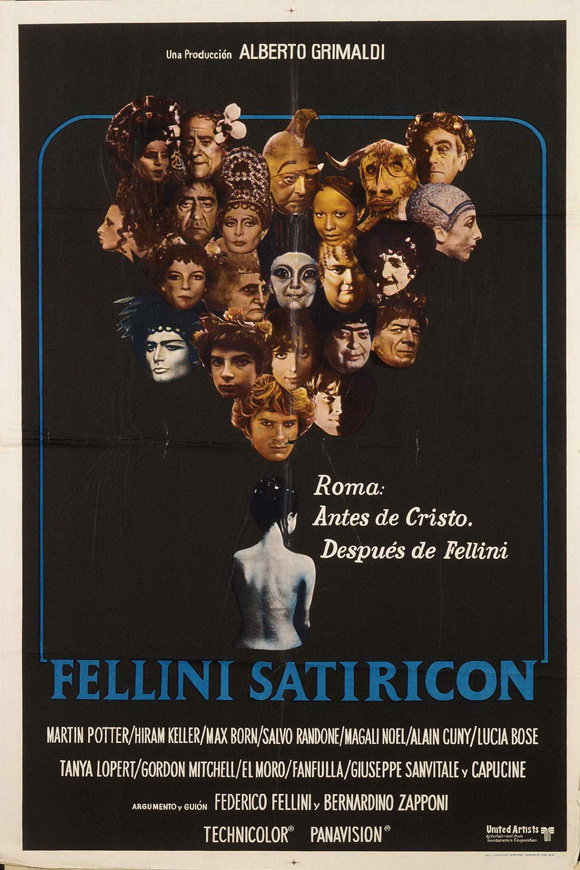
Saturday Matinee: Fellini Satyricon

“Fellini Satyricon” (1969) is a surreal fantasy written and directed by Federico Fellini and loosely based on Satyricon, written by Petronius during Nero’s reign over imperial Rome. The film’s episodic structure follows the scholar Encolpius and friend Ascyltus as they navigate a dreamlike and decadent Roman landscape.

An English subtitled version of the film can be found here.

3 Signs You Might Be a Pawn of the New World Order

By Sigmund Fraud

Source: Activist Post

The mother lode of all conspiracies is the New World Order. In essence, it is a high-level, multi-generational plan to render all sovereign national governments subservient to an unelected, supranational, authoritarian world government. In this scheme, the people of planet earth will be micromanaged with strict social, technological and financial controls. It is the total consolidation of global power into the hands of a ruthless, minority elite who aim to rape the planet and enslave the human race.

They can’t do it alone, though, they need your help. They need witting and unwitting minions to set the brush fires of revolutionary change in our towns and cities. They need pawns to agitate and disrupt the relative peace, and to upend the status quo with turmoil. They need senseless, animal-like violence, caught on camera and replayed ad infinitum on cable news and social media. They need terror, of both the foreign and domestic variety. They need fear in the streets, and fear in the minds of the proles.

Most of all, though, they need you to create chaos, so that they can bring order.

The powers that be, those demons of the deep state, those orchestrators of fear, famine, debt and war, cannot achieve their plan without leading the masses into confusion and disarray, for only then will the masses demand an end to their own freedoms and privacy. And sadly, it appears their army of minions is growing in strength and audacity.

In the aftermath of Charlottesville it is more clear than ever that there is no shortage of pawns for the New World Order. The armies of ignorance are gathering, and here are three signs you might be among them.

1. You’re Playing the Divide and Conquer Game

Left vs. Right. Black vs. White. Republican vs. Democrat. Citizen vs. Immigrant. Communist vs. Fascist. Have vs. Have Not. My Team vs. Your Team. Me vs. You.

There a thousand and one ways for a society to faction and split apart, but without community and unity we are lost, doomed and done. If you’re entrenched in one side of any dualistic paradigm, seeking to convert or to crush the other side, then you’re playing right into the hands of the NWO.

The tactic of top-down divide and conquer is the oldest play in the book of how to overthrow sovereign people. The rulers foment conflict amongst the people, then step out of the way and let them fight it out, so that they can step in later as the benevolent savior… big brother.

If you’re playing this game, then you’re doing their work for them.

2.) You’re a Vocal Supporter of the War Du Jour

Today the drums are beating for a nuclear assault against North Korea… and military intervention in Venezuela. Just recently we’ve been told we need to prepare for conflict with Russia, and that an invasion of Syria is in our best interests. Prior to that we destroyed Libya and Iraq, we occupied Afghanistan, and we’ve been using the war on drugs and the war on terror as casus belli for interference in dozens of countries around the world.

The imperial mindset is several generations deep in America, and the citizenry has all but fully abandoned the anti-war stance in favor of gung-ho, jingoistic cheerleading of any and all military escapades.

The New World Order is brute force, but in our hyper-connected world they need to create the appearance of public support in order to advance the military industrial colonization of the world. It cannot do this without the public support and advocacy of at least some segment of the proletariat.

If you’re always on board for the expansion of international conflict, taking cues from mainstream media in this regard, and demanding action against all of our perceived enemies, you are aiding and abetting the New World Order.

3.) You Direct Your Anger and Frustration Towards Anyone but Those at the Very Top of the Pyramid

Zero doubt there are a million problems plaguing our complex world today, and it can be comforting to blame someone whom you can look in the eye, someone who is unprotected by the wealth and security afforded by the oligarchy. Emotional reactions to the stresses in our modern world are to be expected, but without knowledge of the contemporary power structures pulling the big strings, those reactions can be sorely misdirected onto lesser players and other pawns.

The truth is out there. At the root, a geo-political financial elite is conquering the world through manipulation of currencies, the imposition of astronomically insurmountable levels of public and private debt, and full-spectrum military dominance of uncooperative nations. This program is far above and beyond the capacity of your fellow citizen.

If you’re convinced that taking your outrage to the streets in war against your fellow countrymen is going to solve the problems of the world, you’re helping to fulfill the goals of the New World Order.

Final Thoughts

Social unrest and civil war are the final stepping-stones to a brave new authoritarian future. In order to get there, the American people must exhibit a self-motivated and determined resolve for violence against each other.

The New World Order needs blue pill takers, those people who deliberately choose ignorance in exchange for spurious peace of mind. They need useful idiots to help distract the rest of the population from the crimes of the oligarchy. They need armies of volunteer foot soldiers and pawns who will create the conditions necessary for martial law and even broader restrictions of rights and freedoms.

For the New World Order to succeed, we must ultimately demand our own slavery.

On The Beach 2017

By John Pilger

Source: Axis of Logic

The US submarine captain says, “We’ve all got to die one day, some sooner and some later. The trouble always has been that you’re never ready, because you don’t know when it’s coming. Well, now we do know and there’s nothing to be done about it.”

He says he will be dead by September. It will take about a week to die, though no one can be sure. Animals live the longest.

The war was over in a month. The United States, Russia and China were the protagonists. It is not clear if it was started by accident or mistake. There was no victor. The northern hemisphere is contaminated and lifeless now.

A curtain of radioactivity is moving south towards Australia and New Zealand, southern Africa and South America. By September, the last cities, towns and villages will succumb. As in the north, most buildings will remain untouched, some illuminated by the last flickers of electric light.

This is the way the world ends
Not with a bang but a whimper

These lines from T.S. Eliot’s poem The Hollow Men appear at the beginning of Nevil Shute’s novel On the Beach, which left me close to tears. The endorsements on the cover said the same.

Published in 1957 at the height of the Cold War when too many writers were silent or cowed, it is a masterpiece. At first the language suggests a genteel relic; yet nothing I have read on nuclear war is as unyielding in its warning. No book is more urgent.

Some readers will remember the black and white Hollywood film starring Gregory Peck as the US Navy commander who takes his submarine to Australia to await the silent, formless spectre descending on the last of the living world.

I read On the Beach for the first time the other day, finishing it as the US Congress passed a law to wage economic war on Russia, the world’s second most lethal nuclear power. There was no justification for this insane vote, except the promise of plunder.

The “sanctions” are aimed at Europe, too, mainly Germany, which depends on Russian natural gas and on European companies that do legitimate business with Russia. In what passed for debate on Capitol Hill, the more garrulous senators left no doubt that the embargo was designed to force Europe to import expensive American gas.

Their main aim seems to be war – real war. No provocation as extreme can suggest anything else. They seem to crave it, even though Americans have little idea what war is. The Civil War of 1861-5 was the last on their mainland. War is what the United States does to others.

The only nation to have used nuclear weapons against human beings, they have since destroyed scores of governments, many of them democracies, and laid to waste whole societies – the million deaths in Iraq were a fraction of the carnage in Indo-China, which President Reagan called “a noble cause” and President Obama revised as the tragedy of an “exceptional people”. He was not referring to the Vietnamese.

Filming last year at the Lincoln Memorial in Washington, I overheard a National Parks Service guide lecturing a school party of young teenagers. “Listen up,” he said. “We lost 58,000 young soldiers in Vietnam, and they died defending your freedom.”

At a stroke, the truth was inverted. No freedom was defended. Freedom was destroyed. A peasant country was invaded and millions of its people were killed, maimed, dispossessed, poisoned; 60,000 of the invaders took their own lives. Listen up, indeed.

A lobotomy is performed on each generation. Facts are removed. History is excised and replaced by what Time magazine calls “an eternal present”. Harold Pinter described this as “manipulation of power worldwide, while masquerading as a force for universal good, a brilliant, even witty, highly successful act of hypnosis [which meant] that it never happened. Nothing ever happened. Even while it was happening it wasn’t happening. It didn’t matter. It was of no interest.”

Those who call themselves liberals or tendentiously “the left” are eager participants in this manipulation, and its brainwashing, which today revert to one name: Trump.

Trump is mad, a fascist, a dupe of Russia. He is also a gift for “liberal brains pickled in the formaldehyde of identity politics”, wrote Luciana Bohne memorably. The obsession with Trump the man — not Trump as a symptom and caricature of an enduring system – beckons great danger for all of us.

While they pursue their fossilised anti-Russia agendas, narcissistic media such as the Washington Post, the BBC and the Guardiansuppress the essence of the most important political story of our time as they warmonger on a scale I cannot remember in my lifetime.

On 3 August, in contrast to the acreage the Guardian has given to drivel that the Russians conspired with Trump (reminiscent of the far-right smearing of John Kennedy as a “Soviet agent”), the paper buried, on page 16, news that the President of the United States was forced to sign a Congressional bill declaring economic war on Russia.

Unlike every other Trump signing, this was conducted in virtual secrecy and attached with a caveat from Trump himself that it was “clearly unconstitutional”.

A coup against the man in the White House is under way. This is not because he is an odious human being, but because he has consistently made clear he does not want war with Russia.

This glimpse of sanity, or simple pragmatism, is anathema to the “national security” managers who guard a system based on war, surveillance, armaments, threats and extreme capitalism. Martin Luther King called them “the greatest purveyors of violence in the world today”.

They have encircled Russia and China with missiles and a nuclear arsenal. They have used neo-Nazis to install an unstable, aggressive regime on Russia’s “borderland” – the way through which Hitler invaded, causing the deaths of 27 million people.  Their goal is to dismember the modern Russian Federation.

In response, “partnership” is a word used incessantly by Vladimir Putin — anything, it seems, that might halt an evangelical drive to war in the United States. Incredulity in Russia may have now turned to fear and perhaps a certain resolution. The Russians almost certainly have war-gamed nuclear counter strikes. Air-raid drills are not uncommon. Their history tells them to get ready.

The threat is simultaneous. Russia is first, China is next. The US has just completed a huge military exercise with Australia known as Talisman Sabre. They rehearsed a blockade of the Malacca Straits and the South China Sea, through which pass China’s economic lifelines.

The admiral commanding the US Pacific fleet said that, “if required”, he would nuke China. That he would say such a thing publicly in the current perfidious atmosphere begins to make fact of Nevil Shute’s fiction.

None of this is considered news. No connection is made as the bloodfest of Passchendaele a century ago is remembered. Honest reporting is no longer welcome in much of the media. Windbags, known as pundits, dominate: editors are infotainment or party line managers. Where there was once sub-editing, there is the liberation of axe-grinding clichés. Those journalists who do not comply are defenestrated.

The urgency has plenty of precedents. In my film, The Coming War on China, John Bordne, a member of a US Air Force missile combat crew based in Okinawa, Japan, describes how in 1962 – during the Cuban missile crisis – he and his colleagues were “told to launch all the missiles” from their silos.

Nuclear armed, the missiles were aimed at both China and Russia. A junior officer questioned this, and the order was eventually rescinded – but only after they were issued with service revolvers and ordered to shoot at others in a missile crew if they did not “stand down”.

At the height of the Cold War, the anti-communist hysteria in the United States was such that US officials who were on official business in China were accused of treason and sacked. In 1957 – the year Shute wrote On the Beach – no official in the State Department could speak the language of the world’s most populous nation. Mandarin speakers were purged under strictures now echoed in the Congressional bill that has just passed, aimed at Russia.

The bill was bipartisan. There is no fundamental difference between Democrats and Republicans. The terms “left” and “right” are meaningless.  Most of America’s modern wars were started not by conservatives, but by liberal Democrats.

When Obama left office, he presided over a record seven wars, including America’s longest war and an unprecedented campaign of extrajudicial killings – murder – by drones.

In his last year, according to a Council on Foreign Relations study, Obama, the “reluctant liberal warrior”, dropped 26,171 bombs – three bombs every hour, 24 hours a day.  Having pledged to help “rid the world” of nuclear weapons, the Nobel Peace Laureate built more nuclear warheads than any president since the Cold War.

Trump is a wimp by comparison.  It was Obama – with his secretary of state Hillary Clinton at his side – who destroyed Libya as a modern state and launched the human stampede to Europe. At home, immigration groups knew him as the “deporter-in-chief”.

One of Obama’s last acts as president was to sign a bill that handed a record $618billion to the Pentagon, reflecting the soaring ascendancy of fascist militarism in the governance of the United States. Trump has endorsed this.

Buried in the detail was the establishment of a “Center for Information Analysis and Response”. This is a ministry of truth. It is tasked with providing an “official narrative of facts” that will prepare us for the real possibility of nuclear war – if we allow it.

You Cannot Trap the ‘Magic Rat’: Trump, Congress and Geopolitics

By Robert J. Burrowes

A wonderful thing about observing and analyzing the human mind is that there is a seemingly infinite variety of phenomena to observe and analyze. I sometimes wonder if it is even remotely possible to master this subject but, even if it is not, at least it provides an unending source of ‘entertainment’.

The phenomenon that I want to discuss in this article is what Anita McKone and I call the ‘magic rat’.

Before proceeding, let me emphasize that the ‘magic rat’ is an incredibly dangerous psychological disorder that afflicts most political and virtually all corporate leaders, notably including those in the United States, thus rendering them incapable of responding intelligently and appropriately to the ongoing crises in human affairs. And, tragically, it afflicts most other people too, which is one reason why it is difficult to muster a strategic response to these crises, even at grassroots level.

In describing this disorder, I also want to emphasize that it never occurs in isolation. Individuals afflicted by this disorder will invariably have a multiplicity of other disorders too, not necessarily labeled ‘disorders’ in the psychological literature.

So what is the ‘magic rat’, and why can’t it be trapped?

When a human being is terrified to consider a particular fact or set of facts, their mind has an enormous variety of unconscious mechanisms for preventing them from doing so. The most obvious version of this phenomenon which has been identified is known as ‘denial’. See ‘The Psychology of Denial’.

However, the ‘magic rat’ is a different phenomenon which most humans routinely use (unconsciously) to avoid having to respond to frightening circumstances. The nature of these frightening circumstances varies from one individual to the next although patterns can be readily observed in many contexts.

In 2003, Anita had a dream in which a rat was running around and I was chasing it and hitting it with an iron bar. However, each time that I appeared to land a blow on the rat, the rat simply disappeared and reappeared somewhere else. And so my chase resumed. I just couldn’t pin it down.

This psychological phenomenon is readily observed and many people will be able to recall this from their own experience. The ‘magic rat’ occurs when someone is given information that terrifies them. It is important to understand that their fear is unlikely to be readily displayed and it will often be concealed behind some behaviour, such as an apparently ‘rational’ argument or ‘off-hand’ comment in response, or perhaps even a joke.

The frightening information might be personal but it might just as readily be information of any other kind, such as in relation to something that happened historically or about the state of the world. What matters is that the person to whom the information is presented is (unconsciously) terrified by it and responds (again unconsciously) by employing the ‘magic rat’.

The ‘magic rat’ is simply the mechanism by which an unconscious and terrified mind instantly switches its attention from something frightening to something more pleasant to avoid having any time to consciously engage with the presented information. The switch happens instantaneously precisely because the person is so terrified by the information that their mind takes their attention away from it in a moment. If their mind did not do this, the person would be compelled to consider the information and to respond to it.

As Anita and I discussed this phenomenon recently, we could easily recall four different responses by the ‘magic rat’ that we have observed. In no particular order, the first response is for the terrified person’s unconscious mind to shut out the frightening information so effectively that it might well have never been uttered/written; they then proceed as if it had not been.

The second response is for the person frightened by the information to instantly switch the topic of discussion to something else that feels safe (so that they do not have to engage with the information). In some contexts, this might look like a ‘rational’ response but, in fact, closer examination will reveal that their response is irrelevant to the issue raised previously. This version is probably the most difficult to identify simply because most of us have learned to largely ignore what we probably (but incorrectly) perceive as ‘red herrings’.

The third response is to ‘throw out smoke bombs’, as Anita describes it, so that the whole issue is clouded by distractive ‘noise’ designed to distract the attention of the person/people presenting the information in the first place so that they are lured into discussing a less frightening subject. These ‘smoke bombs’ can take many forms, including introducing irrelevant information to confuse you or offering a sarcastic comment as the preliminary to any response (which, of course, will be wide of the subject).

The fourth response is to attack you verbally or physically, because your information is considered an attack on them against which they must immediately and aggressively defend themselves. This version of the problem is sometimes labeled ‘kill the messenger’.

There are no doubt other versions of the ‘magic rat’: what matters is that the person in question is so frightened that they find a way to avoid dealing with the issue that makes them scared.

The purpose of the ‘magic rat’ mechanism is to enable an individual to remain feeling safe in the delusion that they have created for themselves and it is vital that the truth does not penetrate this delusion.

Why would an individual want to (unconsciously) use a delusion to feel safe? For the simple reason that, as a child, the individual never felt safe but was also never given any time or the necessary conditions to both feel this fear while feeling safe, and to actually be safe for most of the time. So because evolution did not equip any individual to live in a permanent state of feeling terrified, the child has no ‘choice’ but to (unconsciously) generate a delusional sense of safety in the unsafe environment. Once the child has done this, however, the delusional state becomes ‘permanent’ and is ‘defended’, both consciously and unconsciously depending on the context, using mechanisms such as the ‘magic rat’ described above.

So is this problem very prevalent? Unfortunately, it is ‘everywhere’. For instance, if you take the information I have presented above and consider this the next time you listen to or read something from Donald Trump, you will have an excellent opportunity to observe and identify the ways in which his mind routinely uses ‘magic rats’ to avoid dealing with reality. See, for example, his decisions in relation to the environment and climate, summarised in ‘A Running List of How Trump Is Changing the Environment‘.

You might also ponder the extraordinary violence that this man suffered, as a child, at the hands of those adults who were supposed to love him. In addition, you might consider the phenomenal danger to humanity of having this individual in charge of the world’s largest nuclear arsenal and its primary human, environmental and climate destroyer: the US military.

But Trump is not the only person afflicted with this psychological disorder. Members of both houses of the United States Congress, with only a few exceptions, also routinely display this disorder although, it should be emphasized, it is often combined with other disorders as they terrifiedly submit to the directives of the insane neocon elite driving US foreign policy and its perpetual war against life.

For instance, it has just been graphically highlighted, yet again, by the recent (virtually unanimous) Congressional decision to impose sanctions on Russia, Iran and North Korea for reasons which are readily refuted by the verifiable evidence if you are not too terrified to consider it. See, for example, ‘Intel Vets Challenge “Russia Hack” Evidence‘, ‘The Mask Is Off: Trump Is Seeking War with Iran‘, ‘Trump Intel Chief: North Korea Learned From Libya War to “Never” Give Up Nukes’ and ‘With the European Union Livid, Congress Pushes Forward on Sanctions Against Russia, Iran and North Korea‘.

You will also have no trouble identifying this disorder in Israeli or Saudi Arabian leaders either. Again, however, they are far from alone.

Most importantly though, the ‘magic rat’ is almost invariably evident when adults are challenged to consider their phenomenal violence – ‘visible’, ‘invisible’ and ‘utterly invisible’ – against children, which leads to the terrified and dysfunctional outcomes described above (as well as all of the other terrified and dysfunctional outcomes). See ‘Why Violence?‘ and ‘Fearless Psychology and Fearful Psychology: Principles and Practice‘.

So if you don’t even want to know about this violence, the good news is that your ‘magic rat’, if you have one, will ensure that you never even consider looking at these documents (or don’t get past the first page). The problem, for humanity as a whole, is that if too many people are too terrified to even consider the truth, then we are in deep trouble from which I can see no exit. Because if we are to extricate ourselves from this mess, we must start with the truth, no matter how terrifying.

Is there anything you can do next time you see someone use their magic rat? Yes. You can reflect that they sound too terrified to consider the information in question. If you feel capable of doing this, bear in mind that you might then need to also listen to their terrified response, which might be aggressive as well. For a fuller answer to this question, see ‘Nisteling: The Art of Deep Listening‘.

Moreover, if you ever notice your own mind being taken away from information that frightens you, see if you can take your attention back to what you found frightening and feel your fear. The information, in itself, is not going to cause you any harm. It is, after all, simply the truth and you are infinitely more powerful to know the truth and hence be in a position to respond to it, even if it scares you initially.

So if you feel able to respond intelligently and powerfully to reality, which means that you can contemplate information that is terrifying to many, then you might consider participating in the fifteen-year strategy of ‘The Flame Tree Project to Save Life on Earth‘ and signing the online pledge of ‘The People’s Charter to Create a Nonviolent World‘. And if you want to develop an effective strategy to resist one or the other of the many threats to our survival, consider using the strategic framework explained in Nonviolent Campaign Strategy.

We cannot trap the ‘magic rat’ that afflicts so many individuals but we might be able to assist some of them to recover from this psychological disorder. We might also be able to mobilise those not afflicted (or not so badly afflicted) to respond powerfully to frightening information about the state of our world.

Sadly, however, many people will use their ‘magic rat’ until the day they die. The important point is that we do not let these people, like Donald Trump, decide the fate of humanity.


Biodata: Robert J. Burrowes has a lifetime commitment to understanding
and ending human violence. He has done extensive research since 1966 in
an effort to understand why human beings are violent and has been a
nonviolent activist since 1981. He is the author of ‘Why Violence?
His email address is flametree@riseup.net
and his website is at http://robertjburrowes.wordpress.com


Robert J. Burrowes
P.O. Box 68
Daylesford
Victoria 3460
Australia
Email: flametree@riseup.net

Websites:
Nonviolence Charter
Flame Tree Project to Save Life on Earth
‘Why Violence?’
Nonviolent Campaign Strategy
Nonviolent Defense/Liberation Strategy
Anita: Songs of Nonviolence
Robert Burrowes
Global Nonviolence Network

Google Censors Block Access to CounterPunch and Other Progressive Sites

By

Source: CounterPunch

The U.S. government, and the information technology companies which collaborate with it, is moving fully into the camp of governments which relentlessly utilize the internet to collect users online data, monitor their activities, and control what they can see and do.

First, there was – and is – the NSA, National Security Agency of the U.S., which collects the emails, phone records, social media data, and more from millions of U.S. citizens and the people of the world.  Software companies like Google cooperated silently by providing NSA access to its users until Edward Snowden made this odious system public.

Now Google, at the behest of its friends in Washington, is actively censoring – essentially blocking access to – any websites which seek to warn American workers of the ongoing effort to further attack their incomes, social services, and life conditions by the U.S. central government, and which seek to warn against the impending warfare between U.S.-led Nato and other forces against countries like Iran, Russia, and China, which have in no way threatened the U.S. state or its people

Under its new so-called anti-fake-news program, Google algorithms have in the past few months moved socialist, anti-war, and progressive websites from previously prominent positions in Google searches to positions up to 50 search result pages from the first page, essentially removing them from the search results any searcher will see. Counterpunch, World Socialsit Website, Democracy Now, American Civil liberties Union, Wikileaks are just a few of the websites which have experienced severe reductions in their returns from Google searches.  World Socialist Website, to cite just one example, has experienced a 67% drop in its returns from Google since the new policy was announced.

This conversion of Google into a Censorship engine is not a trivial development.   Google searches are currently a primary means by which workers and other members of the public seek information about their lives and their world.  Every effort must be made to combat this serious infringement on the basic rights of freedom of speech and freedom of press.

World Socialist Website, the hardest hit victim of this e-censorship, is attempting to mobilize public opinion, and other effected websites, in a broad campaign against Google censorship.   More information on the censorship, including detailed numbers can be found in articles here.

It is imperative that working class people struggle for truly democratic use of the internet, beginning with total freedom to view a wide range of topics, not just those which Google – and Washington – think Americans and the world should be able to see.

How mainstream U.S. ‘news’ media pump their government’s lies to deceive the public

By Eric Zuesse

Source: Intrepid Report

Now that finally the U.S. government has officially terminated its arming and training of the jihadist gangs that are fighting to overthrow and replace Syria’s government, the neoconservative mainstream U.S. ‘news’ media are disagreeing with each other over how to communicate this fact to the American people without contradicting, or otherwise violating, the false ‘history’ they’ve all been presenting and preserving, throughout the past five years, which has described the U.S. government as being opposed to the jihadists in Syria, instead of as the U.S. government’s arming and training jihadists to overthrow and replace Syria’s government. That’s a pretty blatant ‘historical’ lie, which they’ve all been maintaining, now, for five years; and, they’re at loggerheads over whether or how they’ll deal with it, now that the program (whose very existence they’ve helped the government to hide from the public) has been so publicly and suddenly ordered to end.

On July 19, a neoconservative Democratic Party newspaper, the Washington Post, headlined one of their many anti-Trump news-articles, “Trump ends covert CIA program to arm anti-Assad rebels in Syria, a move sought by Moscow.” Their angle on this (actually momentous and constructive) action by Trump to abandon ‘the rebels’ (almost all of whom are, in fact, jihadists), was that this Republican president had done that in order to please Russia’s President Vladimir Putin (who defends Syria’s government, which secular government is knee-jerk-vilified in this and all American newspapers), and the WP article quoted neoconservatives who criticized the move by Trump to end the program.

The August 7 issue of a neoconservative Republican Party magazine, The Weekly Standard, headlines “Trump Got This One Right: Shutting down the CIA’s ghost war in Syria,” and doesn’t attack the previous, Democratic, president for having initiated and run that “ghost war,” and doesn’t make clear what it was, or why it was being waged, but does say hostile things against the leaders both of Russia and of Syria, such as that “Putin . . . has the blood of many Syrian civilians on his hands,” and allegations also against the Syrian government, such as:

Russian and Syrian jets have indiscriminately and repeatedly bombed civilian targets. The Assad regime has used chemical weapons, which Trump himself objected to, bombing a Syrian airfield in response. The United States cannot endorse these war crimes by allying itself with the perpetrators of mass murder in Syria.

Besides the fact that at least some of those assertions are demonstrably false, the United States government has actually (and often) done such things as that propaganda-article alleges Russia and Syria to have done, but nothing is said in this far-right magazine about that; readers of The Weekly Standard don’t get to see even a mention of this reality. The publication fools its readers, instead of informs them.

What’s even more important to take note of here, however, is that the article does not so much as even just mention the key fact: that Russia’s forces were invited into Syria by Syria’s secular government, in order to defend it against the jihadist gangs America was assisting, and that America’s forces weren’t invited by Syria’s government, but are instead invaders there, trying to overthrow that government, and are not only trying to help to defeat the ISIS jihadists who have also invaded Syria in order to overthrow Syria’s secular government. The crucial fact, that the Obama administration was insistent that Russia in Syria not bomb Al Qaeda forces in Syria and that that insistence upon protecting Al Qaeda there was the key reason why Secretary of State John Kerry’s efforts to reach an agreement with Russia about Syria had failed (they were actually sabotaged by his own boss, President Obama), is ignored by The Weekly Standard. (Also ignored by this far-right magazine is that the U.S. government has the blood of at least as many “Syrian civilians on its hands” there, as does the Russian government or any other participant in the war. That magazine’s playing to this false ‘us’-against-‘them’ prejudice, insults the intelligence of its readers, but is done in order to divert their duped reader’s attention away from the reader’s real enemies, which include the owners of that magazine, who want to manipulate, instead of to inform, their readership, for the benefit of Republican aristocrats. Those aristocrats need these dupes to remain duped.)

This shows that even when Republican ‘news’ media defend a Republican president who is reversing an imperialistic policy of his Democratic predecessor, it’s done in such a way, so it’s designed to keep the American public still deceived about the actual ugly history, which indicts both of America’s political parties—indicts the U.S. government itself, at its highest levels, where both parties are united together, in order to conquer the entire planet (including Syria, including Russia), for the benefit of America’s aristocrats.

Instead of reporting this crucial truth, The Weekly Standard says:

Russia intervened in Syria in September 2015, and the timing was not accidental. Just months earlier, in March, the “Army of Conquest” took over the northwestern province of Idlib. This rebel coalition was no band of moderates. It was led by Nusra and included its closest Islamist and jihadist partners. The Army of Conquest was on the march, threatening the Assad family’s stronghold of Latakia on the coast.

The message the magazine is trying to convey to its conservative American readership, is that Russia there was defending “the Assad family,” and not defending Syria’s sovereignty over Syria’s own territory—not defending the independence of the Syrian government, from the demands of the U.S. aristocracy (which are mainly concerned with building oil and gas pipelines through Syria in order to replace Russia as the main energy-supplier to the world’s biggest energy-market, the EU, by the U.S. and its royal Arab allies as the main energy-suppliers there).

This is an imperialistic war, and the only way for the U.S. aristocracy to win it, is militarily (and/or via coups such as it did in Ukraine) to break apart Russia’s foreign alliances, in order to grab control of Russia’s assets (including that oil and gas)—but the U.S. oligarchs are also going after China’s assets, and Iran’s assets, and the assets of any well-armed government that’s not yet a vassal-nation to the U.S. aristocracy (vassals such as Europe, Japan, and all other U.S. allies).

America (with the assistance of the Sauds, and of the U.S. aristocracy’s other fundamentalist-Sunni business-partners in the Middle East) uses jihadists to serve as those “boots on the ground,” against secular governments such as Syria and Russia, because that’s a lot cheaper to do than to re-institute the U.S. military draft and to send tens of thousands of American soldiers out to overthrow, or at least to weaken, the ‘enemy’ government. It’s much cheaper “boots on the ground,” to grab new territory via these proxies, than via U.S. troops.

The supreme international issue in our time is sovereignty—the independence, or freedom, of nations. It’s international democracy, which is really at stake, in all of this. The alternative (which the U.S. government leads) is international fascism. It’s a vast program, not composed merely of invasions (the ‘Defense’ Department) and of coups (the State Department, etc.).

Now that (after 24 February 1990) the United States has been committed to world-conquest, there is, regarding international news-reporting in the United States, nothing that is fundamentally true that’s reported in the U.S. ‘news’ media, regarding international relations—it’s all based upon a shared lie by both wings of the U.S. aristocracy, Republican and Democratic, saying that the U.S. government supports freedom and democracy around the world, and that the nations which the U.S. government is trying to conquer, do not favor international freedom and democracy. The standard American account (that it supports, instead of opposes, democracy around the world) is the exact opposite of the truth.

For example: How much publicity did the U.S. ‘news’ media provide when twice in one day the secretary general of the United Nations said that the U.S. president’s insistence upon having a veto-power regarding who would, and who would not, be allowed to become Syria’s next president, was “totally unfair and unreasonable” and that instead “The future of Assad must be determined by the Syrian people.” No publicity for those statements. None at all. The fact (that the U.S. president refused to accept that “The future of Assad must be determined by the Syrian people”) was shocking. But it wasn’t reported to the American people. Americans never knew about it.

How much publicity did the U.S. ‘news’ media provide when the U.S. government was one of only three governments in the entire world to vote in the U.N. General Assembly against a resolution to condemn racism, fascism, and denial of the Holocaust? None. None at all. The fact was shocking. But it, too, wasn’t reported.

And: How many Americans know that on the night of 24 February 1990, the U.S. president secretly told the chancellor of West Germany that all of their statements to Soviet President (soon to become only Russia’s president) Mikhail Gorbachev that the U.S. and its alliances would end the Cold War on their side if the Soviet Union and its alliances did on theirs, had been mere lies and that the Cold War would henceforth continue to be waged on the Western side until Russia itself would be conquered?

How can a nation be a ‘democracy,’ while its government (and its ‘news’ media) hides the most important parts of history, and pumps instead lies, to its people, regarding international relations? Who is the actual sovereign in the United States—its public, or its aristocracy?

And how many U.S. news media will carry this article, which is submitted to all of them, to publish free-of-charge? For any of them that has a large audience, to publish it, could precipitate an unprecedented revolution within the U.S. aristocracy itself (a revolution against their lies), because it would, in effect, officially acknowledge that the existing ‘history’ is founded upon lies. But, if this fact is not publicly recognized in the U.S. now, then when will the truth about these matters be allowed to be published here? Or, will it ever? Or will it never.

The Washington Post’s article said that “a current official, who spoke on the condition of anonymity” said: “Putin won in Syria.” The anonymous source didn’t say: “The Syrian people won in Syria.”

Western-sponsored polls in Syria showed that 55% of Syrians wanted Assad to remain as president, and 82% of Syrians blamed America for the presence of jihadists in Syria trying to overthrow Assad.

Are the U.S. ‘news’ media hopeless—beyond salvaging? Is democracy in America beyond salvaging? Is 1984 here locked-in? What would that mean for the future of the world?

‘News’ media in the countries that are allied with the U.S. are just as trashy. For example, here’s an article from a brilliant blogger ripping to shreds an August 1 article from Britain’s Reuters ‘news’ agency, about the war in Yemen. That Reuters ‘news’-report could just as well have been published by the New York Times or Washington Post.

Maybe ‘news’ media now are that rotten all over the world. But any mainstream ‘news’ medium in the U.S., or its allied countries, has no realistic basis for criticizing ‘news’ media in other nations. Yet they do criticize the press in those nations, constantly. That’s just another lie, from ‘news’ media that might as well be pure lies.

The presumption when reading the ‘news’ should therefore be: What are they really trying to sell, and to whom? In a world dominated by lies, the thing that’s actually more important than anything else, is the motives. And nothing should then be believed on the basis of trust. In international relations, everything now is war, and the first victim of war is truth. And that is the reality today.