People Who Support Internet Censorship Are Infantile Narcissists

By Caitlin Johnstone

Source: CaitlinJohnstone.com

As of this writing, journalist Ford Fischer is still completely demonetized on YouTube as the result of a new set of rules that were put in place because of some doofy Twitter drama between some unfunny asshole named Steven Crowder and some infantile narcissist who thinks the world revolves around his opinions named Carlos Maza. It remains an unknown if Fischer will ever be restored to an important source of income around which he has built his livelihood.

Fischer often covers white supremacist rallies and counter-protests, and his channel was demonetized within minutes of YouTube’s new rules against hate speech going into effect because some of his content, as you’d expect, includes white supremacists saying and doing white supremacist things. Maza, a Vox reporter who launched a viral Twitter campaign to have Crowder removed from YouTube for making homophobic and bigoted comments about him on his channel, expressed concern over Fischer’s financial censorship.

“What’s happening to Ford is fucking awful,” Maza tweeted yesterday. “He’s a good journalist doing important work. I don’t understand how YouTube is still so bad at this. How can they not differentiate between white supremacist content and good faith reporting on white supremacy?”

https://twitter.com/gaywonk/status/1136425011970019329

I say that Maza is an infantile narcissist who thinks the world revolves around his opinions because it genuinely seems to have surprised him that good people would get harmed in the crossfire of his censorship campaign.

I mean, what did he think was going to happen? Did he think some soulless, multibillion-dollar Silicon Valley corporation was going to display company-wide wisdom and woke insightfulness while implementing his agenda to censor obnoxious voices? Did he imagine that YouTube executives were going to sit down with him over a cup of coffee and go down a list with him to get his personal opinion of who should and should not be censored?

Think about it. How narcissistic do you have to be to assume that a vast corporation is going to use your exact personal perceptual filters while determining who should and should not be censored for oafish behavior? How incapable of understanding the existence of other points of view must you be to believe it’s reasonable to expect that a giant, sweeping censorship campaign will exercise surgical precision which aligns perfectly with your own exact personal values system? How arrogant and self-centered must you be to demand pro-censorship reforms throughout an enormous Google-owned platform, then whine that they’re not implementing your censorship desires correctly?

This is the same staggering degree of cloistered, dim-eyed narcissism that leads people to support Julian Assange’s persecution on the grounds that he’s “not a journalist”. These egocentric dolts sincerely seem to believe that the US government is going to prosecute Assange for unauthorized publications about US war crimes, then when it comes time to imprison the next Assange the US Attorney General is going to show up on their doorstep to ask them for their opinion as to whether the next target is or is not a real journalist. Obviously the power-serving agenda that you are helping to manufacture consent for is not going to be guided by your personal set of opinions, you fucking moron.

The fact that other people aren’t going to see and interpret information the same way as you do is something Carlos Maza and the thousands of people who’ve supported his pro-censorship campaign should have learned as small children. Understanding that the world doesn’t revolve around you and your wants and desires is a basic stage in childhood development. People who believe Silicon Valley tech giants can implement censorship in a way that is wise and beneficent are still basically toddlers in this respect. One wonders if they still interrupt their mother’s important conversations with demands for attention and apple juice.

Ford Fischer was not the first good guy to get caught in the crossfire of internet censorship, and he will not be the last. In addition to the way unexpected interpretations of what constitutes hate speech can lead to important voices losing their platforms or being unable to make a living doing what they do, the new rules appear to contain a troubling new escalation that could see skeptics of legitimate military false flags completely censored.

“Finally, we will remove content denying that well-documented violent events, like the Holocaust or the shooting at Sandy Hook Elementary, took place,” reads a single sentence in the official YouTube blog about its new rules.

The sentence appears almost as an aside, without any elaboration or further information added, and at first glance it reads innocuously enough. No Holocaust deniers or Sandy Hook false flag videos? Okay, got it. I personally am not a denier of either of those events, so this couldn’t possibly affect me personally, right?

Wrong. YouTube does not say that it will just be censoring Holocaust deniers and Sandy Hook shooting deniers, it says it will “remove content denying that well-documented violent events, like the Holocaust or the shooting at Sandy Hook Elementary, took place.”

So what does this mean? Where exactly is the line drawn? If you are not an infantilized narcissist, you will not assume that YouTube intends to implement this guideline in the same way you would. It is very possible that it will include skeptics of violent events which the entire political/media class agrees were perpetrated by enemies of the US-centralized power alliance, which just so happen to manufacture support for increased aggressions against those nations.

Would the new rules end up forbidding, for example, this excellent YouTube video animation explaining how a leaked OPCW report disputes the official narrative about an alleged chemical attack in Douma, Syria last year? If you are not making the assumption that YouTube will be implementing its censorship using your own personal values system, there is no reason to assume it wouldn’t. After all, the official narrative that dozens of civilians were killed by the Assad government dropping chlorine cylinders through rooftops is the mainstream consensus narrative maintained by all respected US officials and “authoritative” news outlets.

This is a perfect example of a very real possibility that could be a disastrous consequence of increased internet censorship. It is a known fact that the US government has an extensive history of using false flags to manufacture consent for war, from the USS Liberty to the Gulf of Tonkin to the false Nayirah testimony about removing babies from incubators to the WMD narrative in Iraq. These new rules could easily serve as a narrative control device preventing critical discussions about suspicious acts of violence which have already happened, and which happen in the future.

Consider the fact that Google, which owns YouTube, has had ties to the CIA and the NSA from its very inception, is known to have a cozy relationship with the NSA, and has served US intelligence community narrative control agendas by tweaking its algorithms to deliberately hide dissenting alternative media outlets. Consider this, then ask yourself this question: do you trust this company to make wise and beneficent distinctions when it comes to censoring public conversations?

In a corporatist system of government which draws no meaningful distinction between corporate power and state power, corporate censorship is state censorship. Only someone who believes that giant Silicon Valley corporations would implement censorship according to their own personal values system could ever support giving these oligarchic establishments that kind of power. And if you believe that, it’s because you never really grew up.

The US military’s vision for state censorship

By Andre Damon

Source: WSWS.org

In March, the United States Special Operations Command, the section of the Defense Department supervising the US Special Forces, held a conference on the theme of “Sovereignty in the Information Age.” The conference brought together Special Forces officers with domestic police forces, including officials from the New York Police Department, and representatives from technology companies such as Microsoft.

This meeting of top military, police and corporate representatives went unreported and unpublicized at the time. However, the Atlantic Council recently published a 21-page document summarizing the orientation of the proceedings. It is authored by John T. Watts, a former Australian Army officer and consultant to the US Department of Defense and Department of Homeland Security.

The Atlantic Council, a think tank with close ties to the highest levels of the state, has been a key partner in the social media companies’ censorship of left-wing views. Most notably, Facebook acted on a tip from the Atlantic Council when it shut down the official event page for an anti-fascist demonstration in Washington on the anniversary of last year’s neo-Nazi riot in Charlottesville.

Confident that none of the thousands of journalists in Washington will question, or even report, what he writes, Watts lays out, from the standpoint of the repressive apparatus of the state and the financial oligarchy it defends, why censorship is necessary.

The central theme of the report is “sovereignty,” or the state’s ability to impose its will upon the population. This “sovereignty,” Watts writes, faces “greater challenges now than it ever has in the past,” due to the confluence between growing political opposition to the state and the internet’s ability to quickly spread political dissent.

Watts cites the precedent of the invention of the printing press, which helped overthrow the feudal world order. In the Atlantic Council’s estimation, however, this was an overwhelmingly negative development, ushering in “decades, and arguably centuries, of conflict and disruption” and undermining the “sovereignty” of absolutist states. The “invention of the internet is similarly creating conflict and disruption,” Watts writes.

“Trust in Western society,” he warns, “is experiencing a crisis. The 2018 Edelman Trust Barometer has tracked this erosion, showing a 30 percent drop in trust in government over the last year in the United States.”

Watts notes that this collapse in support for the government cannot be explained merely by the rise of social media. This process began in the early 2000s, “at the dawn of the social media age but before it had become mainstream.” Left out are the major reasons for the collapse of popular support for government institutions: the stolen election of 2000, the Bush administration’s lies about weapons of mass destruction, unending war and the impact of the 2008 financial crisis.

However, while it is “hard to argue that the current loss of trust results solely from the emergence of social media,” Watts writes, there “can be little doubt that it acted as a critical amplifier of broader trends.”

He continues: “Technology has democratized the ability for sub-state groups and individuals to broadcast a narrative with limited resources and virtually unlimited scope.” By contrast, “In the past, the general public had limited sources of information, which were managed by professional gatekeepers.”

In other words, the rise of uncensored social media allowed small groups with ideas that correspond to those of the broader population to challenge the political narrative of vested interests on an equal footing, without the “professional gatekeepers” of the mainstream print and broadcast media, which publicizes only a pro-government narrative.

When “radical and extremist views” and “incorrect ideas” are “broadcast over social media, they can even influence the views of people who would not otherwise be sympathetic to that perspective,” Watts warns. “When forwarded by a close friend or relation, false information carries additional legitimacy; once accepted by an individual, this false information can be difficult to correct.”

People must be isolated, in other words, from the “incorrect” ideas of their friends and family, because such ideas are “difficult to correct” by the state once disseminated.

But how is this to be done? The growth of oppositional sentiment cannot be combatted with “facts” or the “truth,” because “facts themselves are not sufficient to combat disinformation.” The “truth” is “too complex, less interesting, and less meaningful to individuals.”

Nor can the growth of political opposition, for the time being, simply be solved by “eliminating” (i.e., killing or jailing) political dissidents, because this only lends legitimacy to the ideas of the victims. “Eliminating those individuals and organizations will not be sufficient to combat the narrative and may in fact help amplify it.” He adds, “This is also the case for censorship as those behind the narrative can use the attempt to repress the message as proof of its truth, importance, or authenticity.”

Enter the social media companies. The best mechanism for suppressing oppositional viewpoints and promoting pro-government narratives is the private sector, in particular “technology giants, including Facebook, Google, YouTube, and Twitter,” which can “determine what people see and do not see.”

Watts adds, “Fortunately, shifts in the policies of social media platforms such as Facebook have had significant impact on the type and quality of the content that is broadcast.”

The private sector, therefore, must do the dirty work of the government, because government propaganda is viewed with suspicion by the population. “Business and the private sector may not naturally understand the role they play in combating disinformation, but theirs is one of the most important…. In the West at least, they have been thrust into a central role due to the general public’s increased trust in them as institutions.”

But this is only the beginning. Online newspapers should “consider disabling commentary systems—the function of allowing the general public to leave comments beneath a particular media item,” while social media companies should “use a grading system akin to that used to rate the cleanliness of restaurants” to rate their users’ political statements.

Strong-arm tactics still have a role, of course. Citing the example of WikiLeaks editor Julian Assange, Watts declares that “governments need to create consequences” for spreading “disinformation” similar to those meted out for “state espionage” – which can carry the death penalty.

What Watts outlines in his document is a vision of a totalitarian social order, where the government, the media, and technology companies are united in suppressing oppositional viewpoints.

The most striking element of the document, however, is that it is not describing the future, but contemporary reality. Everything is in the present tense. The machinery of mass censorship has already been built.

The Atlantic Council report, based on high-level discussions within the military and state, is a confirmation of everything the World Socialist Web Site has said about the purpose of changes in the algorithms of internet and social media companies over the past year-and-a-half.

On August 25, 2017, the WSWS published an open letter to Google alleging that the company is “manipulating its Internet searches to restrict public awareness of and access to socialist, anti-war and left-wing websites.” It added, “Censorship on this scale is political blacklisting.”

Over the subsequent year, key details of the open letter have been indisputably confirmed. At congressional hearings and in other public statements, leading US technology companies have explained that they reduced the propagation of political views and statements targeted by US intelligence agencies, and did so in secret because they feared a public outcry. At the same time, they have explained the technical means by which they promoted pro-government, pro-war news outlets, such as the New York Times and Washington Post.

But the Atlantic Council document presents the most clear, direct and unvarnished explanation of the regime of state censorship.

The struggle against censorship is the spearhead of the defense of all democratic rights. The most urgent task is to unify the working class, which is engaged in a wave of social struggles all over the world, behind the struggle against censorship as a component of the fight for socialism.


Empire of Lies: Are ‘We the People’ Useful Idiots in the Digital Age?

By John W. Whitehead

Source: The Rutherford Institute

“Back in the heyday of the old Soviet Union, a phrase evolved to describe gullible western intellectuals who came to visit Russia and failed to notice the human and other costs of building a communist utopia. The phrase was “useful idiots” and it applied to a good many people who should have known better. I now propose a new, analogous term more appropriate for the age in which we live: useful hypocrites. That’s you and me, folks, and it’s how the masters of the digital universe see us. And they have pretty good reasons for seeing us that way. They hear us whingeing about privacy, security, surveillance, etc., but notice that despite our complaints and suspicions, we appear to do nothing about it. In other words, we say one thing and do another, which is as good a working definition of hypocrisy as one could hope for.”—John Naughton, The Guardian

“Who needs direct repression,” asked philosopher Slavoj Zizek, “when one can convince the chicken to walk freely into the slaughterhouse?”

In an Orwellian age where war equals peace, surveillance equals safety, and tolerance equals intolerance of uncomfortable truths and politically incorrect ideas, “we the people” have gotten very good at walking freely into the slaughterhouse, all the while convincing ourselves that the prison walls enclosing us within the American police state are there for our protection.

Call it doublespeak, call it hypocrisy, call it delusion, call it whatever you like, but the fact remains that while we claim to value freedom, privacy, individuality, equality, diversity, accountability, and government transparency, our actions and those of our government rulers contradict these much-vaunted principles at every turn.

For instance, we claim to disdain the jaded mindset of the Washington elite, and yet we continue to re-elect politicians who lie, cheat and steal.

We claim to disapprove of the endless wars that drain our resources and spread thin our military, and yet we repeatedly buy into the idea that patriotism equals supporting the military.

We claim to chafe at taxpayer-funded pork barrel legislation for roads to nowhere, documentaries on food fights, and studies of mountain lions running on treadmills, and yet we pay our taxes meekly and without raising a fuss of any kind.

We claim to object to the militarization of our local police forces and their increasingly battlefield mindset, and yet we do little more than shrug our shoulders over SWAT team raids and police shootings of unarmed citizens.

And then there’s our supposed love-hate affair with technology, which sees us bristling at the government’s efforts to monitor our internet activities, listen in on our phone calls, read our emails, track our every movement, and punish us for what we say on social media, and yet we keep using these very same technologies all the while doing nothing about the government’s encroachments on our rights.

This contradiction is backed up by a Pew Research Center study, which finds that “Americans say they are deeply concerned about privacy on the web and their cellphones. They say they do not trust Internet companies or the government to protect it. Yet they keep using the services and handing over their personal information.”

Let me get this straight: the government continues to betray our trust, invade our privacy, and abuse our rights, and we keep going back for more?

Sure we do.

After all, the alternative—taking a stand, raising a ruckus, demanding change, refusing to cooperate, engaging in civil disobedience—is not only a lot of work but can be downright dangerous.

What we fail to realize, however, is that by tacitly allowing these violations to continue, we not only empower the tyrant but we feed the monster.

In this way, what starts off as small, occasional encroachments on our rights, justified in the name of greater safety, becomes routine, wide-ranging abuses so entrenched as to make reform all but impossible.

We saw this happen with the police and their build-up of military arsenal, ostensibly to fight the war on drugs. The result: a transformation of America’s law enforcement agencies into extensions of the military, populated with battle-hardened soldiers who view “we the people” as enemy combatants.

The same thing happened with the government’s so-called efforts to get tough on crime by passing endless laws outlawing all manner of activities. The result: an explosion of laws criminalizing everything from parenting decisions and fishing to gardening and living off the grid.

And then there were the private prisons, marketed as a way to lower the government’s cost of locking up criminals. Only it turns out that private prisons actually cost the taxpayer more money and place profit incentives on jailing more Americans, resulting in the largest prison population in the world.

Are you starting to notice a pattern yet?

The government lures us in with a scheme to make our lives better, our families safer, and our communities more secure, and then once we buy into it, they slam the trap closed.

It doesn’t matter whether you’re talking about red light cameras, DNA databases, surveillance cameras, or zero tolerance policies: they all result in “we the people” being turned into Enemy Number One.

In this way, the government campaign to spy on our phone calls, letters and emails was sold to the American people as a necessary tool in the war on terror.

Instead of targeting terrorists, however, the government has turned us into potential terrorists, so that if we dare say the wrong thing in a phone call, letter, email or on the internet, especially social media, we end up investigated, charged and possibly jailed.

If you happen to be one of the 1.31 billion individuals who use Facebook or one of the 255 million who tweet their personal and political views on Twitter, you might want to pay close attention.

This criminalization of free speech, which is exactly what the government’s prosecution of those who say the “wrong” thing using an electronic medium amounts to, was at the heart of Elonis v. United States, a case that wrestled with where the government can draw the line when it comes to expressive speech that is protected and permissible versus speech that could be interpreted as connoting a criminal intent.

The case arose after Anthony Elonis, an aspiring rap artist, used personal material from his life as source material and inspiration for rap lyrics which he then shared on Facebook.

For instance, shortly after Elonis’ wife left him and he was fired from his job, his lyrics included references to killing his ex-wife, shooting a classroom of kindergarten children, and blowing up an FBI agent who had opened an investigation into his postings.

Despite the fact that Elonis routinely accompanied his Facebook posts with disclaimers that his lyrics were fictitious, and that he was using such writings as an outlet for his frustrations, he was charged with making unlawful threats (although it was never proven that he intended to threaten anyone) and sentenced to 44 months in jail.

Elonis is not the only Facebook user to be targeted for prosecution based on the content of his posts.

In a similar case that made its way through the courts only to be rebuffed by the Supreme Court, Brandon Raub, a decorated Marine, was arrested by a swarm of FBI, Secret Service agents and local police and forcibly detained in a psychiatric ward because of controversial song lyrics and political views posted on his Facebook page. He was eventually released after a circuit court judge dismissed the charges against him as unfounded.

Rapper Jamal Knox and Rashee Beasley were sentenced to jail terms of up to six years for a YouTube video calling on listeners to “kill these cops ‘cause they don’t do us no good.” Although the rapper contended that he had no intention of bringing harm to the police, he was convicted of making terroristic threats and intimidation of witnesses.

And then there was Franklin Delano Jeffries II, an Iraq war veteran, who, in the midst of a contentious custody battle for his daughter,shared a music video on YouTube and Facebook in which he sings about the judge in his case, “Take my child and I’ll take your life.” Despite his insistence that the lyrics were just a way for him to vent his frustrations with the legal battle, Jeffries was convicted of communicating threats and sentenced to 18 months in jail.

The common thread running through all of these cases is the use of social media to voice frustration, grievances, and anger, sometimes using language that is overtly violent.

The question the U.S. Supreme Court was asked to decide in Elonis is whether this activity, in the absence of any overt intention of committing a crime, rises to the level of a “true threat” or whether it is, as I would contend, protected First Amendment activity. (The Supreme Court has defined a “true threat” as “statements where the speaker means to communicate a serious expression of an intent to commit an act of unlawful violence to a particular individual or group of individuals.”)

In an 8-1 decision that concerned itself more with “criminal-law principles concerning intent rather than the First Amendment’s protection of free speech,” the Court ruled that prosecutors had not proven that Elonis intended to harm anyone beyond the words he used and context.

That was three years ago.

Despite the Supreme Court’s ruling in Elonis, Corporate America has now taken the lead in policing expressive activity online, with social media giants such as Facebook, Twitter and YouTube using their formidable dominance in the field to censor, penalize and regulate speech and behavior online by suspending and/or banning users whose content violated the companies’ so-called community standards for obscenity, violence, hate speech, discrimination, etc.

Make no mistake: this is fascism.

This is fascism with a smile.

As Bertram Gross, former presidential advisor, noted in his chilling book Friendly Fascism: The New Face of Power in America, “Anyone looking for black shirts, mass parties, or men on horseback will miss the telltale clues of creeping fascism. . . . In America, it would be super modern and multi-ethnic—as American as Madison Avenue, executive luncheons, credit cards, and apple pie. It would be fascism with a smile. As a warning against its cosmetic façade, subtle manipulation, and velvet gloves, I call it friendly fascism. What scares me most is its subtle appeal.”

The subtle appeal of this particular brand of fascism is its self-righteous claim to fighting the evils of our day (intolerance, hatred, violence) using the weapons of Corporate America.

Be warned, however: it is only a matter of time before these weapons are used more broadly, taking aim at anything that stands in its quest for greater profit, control and power.

This is what fascism looks like in a modern context, with corporations flexing their muscles to censor and silence expressive activity under the pretext that it is taking place within a private environment subject to corporate rules as opposed to activity that takes place within a public or government forum that might be subject to the First Amendment’s protection of “controversial” and/or politically incorrect speech.

Alex Jones was just the beginning.

Jones, the majordomo of conspiracy theorists who spawned an empire built on alternative news, was banned from Facebook for posting content that violates the social media site’s “Community Standards,”which prohibit posts that can be construed as bullying or hateful.

According to The Washington PostTwitter suspended over 70 million accounts over the course of two months to “reduce the flow of misinformation on the platform.” Among those temporarily suspended was Daniel McAdams, Executive Director of the Ron Paul Institute.

Rightly contending that tech companies are just extensions of the government, former Texas congressman Ron Paul believes that social media networks under the control of Google, Apple, Twitter and Facebook are working with the U.S. government to silence dissent. “You get accused of treasonous activity and treasonous speech because in an empire of lies the truth is treason,” Paul declared. “Challenging the status quo is what they can’t stand and it unnerves them, so they have to silence people.”

Curiously enough, you know who has yet to be suspended? President Trump.

Twitter’s rationale for not suspending world leaders such as Trump, whom critics claim routinely violate the social media giant’s rules, is because “Blocking a world leader from Twitter or removing their controversial Tweets, would hide important information people should be able to see and debate. It would also not silence that leader, but it would certainly hamper necessary discussion around their words and actions.”

Frankly, all individuals, whether or not they are world leaders, should be entitled to have their thoughts and ideas aired openly, pitted against those who might disagree with them, and debated widely, especially in a forum like the internet.

Why does this matter?

The internet and social media have taken the place of the historic public square, which has slowly been crowded out by shopping malls and parking lots.

As such, these cyber “public squares” may be the only forum left for citizens to freely speak their minds and exercise their First Amendment rights, especially in the wake of legislation that limits access to our elected representatives.

Unfortunately, the internet has become a tool for the government—and its corporate partners—to monitor, control and punish the populace for behavior and speech that may be controversial but are far from criminal.

Indeed, the government, a master in the art of violence, intrusion, surveillance and criminalizing harmless activities, has repeatedly attempted to clamp down on First Amendment activity on the web and in social media under the various guises of fighting terrorism, discouraging cyberbullying, and combatting violence.

Police and prosecutors have also targeted “anonymous” postings and messages on forums and websites, arguing that such anonymity encourages everything from cyber-bullying to terrorism, and have attempted to prosecute those who use anonymity for commercial or personal purposes.

We would do well to tread cautiously in how much authority we give the Corporate Police State to criminalize free speech activities and chill what has become a vital free speech forum.

Not only are social media and the Internet critical forums for individuals to freely share information and express their ideas, but they also serve as release valves to those who may be angry, seething, alienated or otherwise discontented.

Without an outlet for their pent-up anger and frustration, these thoughts and emotions fester in secret, which is where most violent acts are born.

In the same way, free speech in the public square—whether it’s the internet, the plaza in front of the U.S. Supreme Court or a college campus—brings people together to express their grievances and challenge oppressive government regimes.

Without it, democracy becomes stagnant and atrophied.

Likewise, as I make clear in my book Battlefield America: The War on the American People, if free speech is not vigilantly protected, democracy is more likely to drift toward fear, repression, and violence. In such a scenario, we will find ourselves threatened with an even more pernicious injury than violence itself: the loss of liberty.

More speech, not less, is the remedy.

Censorship in America: The New Normal

By Stephen Lendman

Source: StephenLendman.org

Dark forces in America threaten speech, media, and academic freedoms.

Social media, Google, and other tech giants are complicit in a campaign to suppress content conflicting with the official narrative.

What’s increasingly going on is the hallmark of totalitarian rule – controlling the message, eliminating what conflicts with it, notably on major geopolitical issues.

Losing the right of free expression endangers all others. When truth-telling and dissent are considered threats to national security, free and open societies no longer exist – the slippery slope where America and other Western societies are heading.

The following headlines should scare everyone:

NYT: “Facebook Says It Removed Pages Related to ‘Inauthentic Behavior’ ”

Washington Post: “Sprawling Iranian influence operation globalizes tech’s war on disinformation”

Wall Street Journal: “Facebook Pulls Accounts Peddling Misinformation From Iran, Russia”

CNN: “Facebook takes down 652 pages after finding disinformation campaigns run from Iran and Russia”

The UK owned and controlled BBC: “Facebook and Twitter remove accounts linked to Russia and Iran campaigns”

Other Western major media had similar headlined reports. On Tuesday, Facebook CEO Mark Zuckerberg said hundreds of pages on its platform were removed for exhibiting signs of “ties to state-owned media” – including “activities the US government (said are) linked to Russian military intelligence” and Iran.

Facebook deleted accounts based on information supplied by the CIA, US State and Treasury Departments, acting as an agent for the imperial state.

The same goes for Twitter, Google, YouTube, Microsoft, and other tech giants – in cahoots with Washington against the most fundamental of fundamental freedoms.

Facebook removed 652 pages. Twitter suspended 284 accounts for engaging in what it called “coordinated manipulation” – code language for truth-telling dark forces in Washington want suppressed.

Google removed Google Plus and YouTube content – based on information supplied by the CIA-funded FireEye cybersecurity firm, Langley calling the company a “critical addition to our strategic investment portfolio for security technologies.”

According to Facebook, pages allegedly connected to Russia, Iran, and other US sanctioned countries are targeted for removal, claiming some seek to influence US midterm elections – providing no evidence proving any of the targeted pages were involved in illegal or improper activities.

FB allied with the Atlantic Council (AC) – a neocon infested enemy of world peace and stability think tank, promoting NATO’s killing machine, America’s military, industrial, security, major media complex, and Ziofascist Israel.

FB partnered with AC’s imperial geopolitical agenda to censor material falsely called “foreign interference” – AC’s Digital Forensic Research Lab involved in so-called “fact-checking,” code language for flagrant censorship.

The CIA-linked FireEye said so-called “inauthentic behavior” targeted for removal includes “anti-Saudi, anti-Israeli, and pro-Palestinian themes, as well as support for specific US policies favorable to Iran, such as the US-Iran nuclear deal (JCPOA).”

In cahoots with dark forces in Washington, Microsoft’s so-called Digital Crimes Unit shut down 84 websites it claimed were associated with Russian hackers – no evidence cited proving it.

Its Microsoft AccountGuard initiative offers free cybersecurity protection to US political candidates and campaign offices at the federal, state and local levels.

No evidence suggests any threats to America’s political process exists – just invented ones to bash Russia.

The new normal in America and other Western societies considers anything conflicting with the official narrative on vital issues “inauthentic behavior.”

Are these nations heading toward eliminating the right of free expression altogether- falsely claiming it’s to protect national security?

It appears to be what’s going on in the West – the possible elimination of free and open societies already gravely threatened.

First Amendment Under Attack: What You Need to Know about Big Tech’s Assault on Alex Jones

By Sander Hicks

Candidate for US Congress

Special Report for the New York Megaphone.

Around August 6, 2018 independent journalist Alex Jones was kicked off Facebook, YouTube, Google, Spotify and Apple, in a coordinated, late-night purge, due to Jones’ criticisms and “threats” against Special Counsel Robert Mueller. Jones has also taken unpopular, iconclastic positions on Jeffrey Epstein, 9/11, Sandy Hook, and President Trump, so mainstream public opinion was swift to condemn him. Even the ACLU has been silent on this case, refusing to consider a defense of the First Amendment. No one seems willing to consider the controversial content of Jones’ complaint against Mueller.

It’s true that Jones is beyond politically incorrect. This article is not a defense of his anti-Muslim, anti-gay, or anti-transgender statements. Those things should be roundly condemned. And CNN’s Olivery Darcy hands in a pretty good summary of those here.

The problem however, is that Jones sometimes gets things right. These things are never acknowledged by the CNN reporters, or the decision-makers who pulled the plug on him. Alex Jones has a valid claim: that Special Counsel Mueller is a do-nothing who is criminally negligent. Jones’ accusations deserve First Amendment protection, because while they may be unpopular now, they could lead to an indictment someday against Mueller. This whole situation shows clear media bias in favor of the powerful, against outsiders who know too much and speak facts too loud.

Robert Mueller is a textbook example of a “Deep State” operative, with a track record of multiple cover-ups. And even if you hate Alex Jones’ politics, they need to be separated from this question: how can we save our country, when we silence and censor a maverick journalist who points out the hypocrisy of Special Counsel Robert Mueller?

Robert Mueller presided as head of FBI for 12 years, where he stoically observed the carnage of 9/11 and the Anthrax attacks, neither of which Mueller managed to explain, or seriously investigate. In fact, he helped to cover up these two great crimes, and helped turn them into a justification for the Iraq War.

Time Magazine Person of the Year, the FBI’s own Coleen Rowley, named Mueller as an agent of the 9/11 “cover-up.” On May 21, 2002 she said that Mueller “and others at the highest levels of FBI management” were guilty of a “delicate and subtle shading/skewing of the facts” when it came to 9/11. When Senator Bob Graham wanted to subpoena the FBI about why an FBI informant lived in San Diego with two of the key 9/11 hijackers, the FBI agent fled the Senate office, rather than accept the subpoena. 9/11 widow and key member of the “Jersey Girls” Kristen Breitweiser said, “Mueller and other FBI officials had purposely tried to keep any incriminating information specifically surrounding the Saudis out of the Inquiry’s investigative hands.”

Speaking of the Saudis, earlier in his career, Mueller hid the crimes of their Bank of Credit and Commerce International (BCCI). He stymied the US Senate investigation into this criminal, sleazy, narcotics and prostitution bank. Both Senator John Kerry and NY Attorney General Robert Morgenthau had their investigations into BCCI blocked, by Mueller, when he was head of the Criminal Division of the US DOJ. Morgenthau told the Wall Street Journal, regarding Mueller, “documents were withheld, and attempts were made to block other federal agencies from cooperating.” BCCI was controlled by the richest Saudis, and CIA/Deep State operatives, and operated to benefit Bush and Bin Laden Families, Wall Street Democrats, and the Iran/Contra cabal. Mueller helped protect them, while over 16 independent investigators and journalists were murdered.

This same Mueller is called a “demon” by Alex Jones. Perhaps the term “demon” sounds too Biblical for a cynical New York attitude. But this reporter recalls what attorney Bill Veale once said, in court, as he sued Bush, Cheney and Rumsfeld for 9/11. “Evil exists. And it’s attracted to power.”

According to recently released FBI documents, available online, Billionaire pedophile Jeffrey Epstein benefited greatly from Mueller’s FBI. Epstein ran a “sex slave island” on his own land in the Caribbean, and flew powerful celebrities and Democrats there on a private plane dubbed the “Lolita Express.” Just like BCCI, Epstein’s operation involved the rich and powerful, it included Bill Clinton, and numerous under-age girls for sale. Could it get any worse? Sure it can. This FBI document seems to indicate that Epstein was also some kind of FBI informant. Mueller’s FBI only gave him a slap on the wrist. And Epstein’s immunity from prosecution is what enraged Alex Jones.

A moral response would be to investigate Jones’ claims, not kill the messenger. Jones can seem histrionic at times, yes, but his sense of mission inflames him. Alex Jones, discussing Epstein, child-sex, and Mueller, called Mueller a “a demon I will take down, or I’ll die trying…we’re going to walk out in the square, politically, at high noon….” Jones said this as he mimed a gunfight with a pistol in his hand. Sure, the cowboy routine is a bit much, but remember, Jones did qualify the shoot-out vision as something that he was imagining could happen “politically.”

BIG MEDIA MYTH: Censorship is Necessary because There Is No Alternative.

For a look at the kind of censorship that Jones got in response, take a look at this article by

VOX’s Zack Beauchamp. It’s over the top. When Twitter was the only major online platform not to censor Alex Jones, Beauchamp attacked Twitter. His approach is similar to CNN’s Oliver Darcy who reports that he persistently pestered Twitter and showed them reasons to remove Alex Jones. Twitter declined to do so.

Beauchamp doesn’t even think to look at the content of Jones’ claims, about Epstein or Mueller. His arch tone is arrogant, nasty, biased, and smug. And he gets his facts wrong, to boot.

“Conspiracy theories, once they spread, create hermetically sealed communities that are impervious to correction,” he claims. It’s a false claim, and it’s not a justification for censorship. When you take on something as enormous as BCCI, or the 9/11 cover-up, you kind of have to be humble, and be open to correction. It takes years to get a sense of the big picture. Even the brash Alex Jones has amended his earlier claims about Sandy Hook.

Beauchamp is wrong, because even though some truthers are a passionate lot, the ones in it for the long haul do change. Look at how alternative historians of the 9/11 event have evolved. Using collaborative tools like conferences, internet and social media, the 9/11 truth movement has developed, and improved over 17 years. It has grown from marginal conspiracy theorists, into a serious intellectual force with organized opposition. Over 3,000 licensed architects and engineers reject the theory that two planes could have brought down three steel skyscrapers. And in 2018, the Lawyers Committee for 9/11 Inquiry filed a petition for a Special Grand Jury, regarding the buildings’ collapses. The movement effectively helped to create the term “Deep State” which is now used in mainstream media to describe a level of federal government corruption which is alarming, almost beyond reform, and out of control. A recent ABC poll showed that half of the USA believes there is a “Deep State” and of that half, 58% call it a “serious problem.”

The same Senator Bob Graham who attempted to subpoena Mueller’s FBI was on 60 Minutes a couple years ago, advocating for the release of the 28 Pages (documents Bush censored from Congress’s 9/11 report). Once these were released by Congress, the world changed. Despite Obama’s veto, Congress passed legislation that acted on what we all saw in the 28 Pages (those of us who read them, despite Big Media falsely claiming there was nothing there.) The 28 Pages make it plain: the US Deep State, Prince Bandar, and Saudis clearly were backing the key 9/11 hijackers. This is the story of the century. The Zack Beauchamps of the world don’t dare to comment. They avert their eyes. But Alex Jones has done 17 years of investigating, interviews, and commentary. His work has millions of followers. Our “free” society is grossly guilty of hypocrisy and censorship. We can’t even find a way to talk to each other. Censorship only makes everyone angrier.

Zack Beauchamp wants Alex Jones’ media platforms to be strangled and asphyxiated:  “Jones was spreading dangerous lies, and….journalists simply couldn’t debunk them. The only way to stop these ideas was to deprive them of oxygen, to prevent people from being exposed to them in the first place.”

No, Zack. The media should not get to decide what people can “be exposed to.” The spirit of First Amendment says that they should be allowed to a diversity of information, and that the powers that be should not restrain freedom of the press. And no, don’t tell me that Facebook is not subject to the First Amendment. Recent case law says that even privately owned corporations can create spaces that can be termed a “public forum” that are thus subject to First Amendment protection.

At the end of the day, Authoritarian denunciations from government or media beg the question: What are you afraid of? Why can’t these topics be discussed? And who are you working for?

Beauchamp in his Vox article often quotes Harvard professors Cass Sunstein and Adrian Vermeule, regarding their article about the 9/11 truth movement. But a deeper look at that article shows that there’s a sinister violation of Constitutional Rights there. Those authors urge that, “government operatives, whether anonymous or otherwise, should infiltrate and disrupt” the 9/11 truth movement. They wrote, “Government agents (and their allies) might enter chat rooms, online social networks, or even real-space groups and attempt to undermine percolating conspiracy theories by raising doubts about their factual premises, causal logic or implications for political action.”

As author Kevin Ryan wrote on his blog, “In retrospect, it is comforting to know that so much effort at disruption was needed to prevent 9/11 questions from taking over the national discussion. It means that many people were informed to some degree and that citizen groups working for the truth were seen as a threat to a corrupt system.”


IN SUM

The election of President Trump showed a desperate decision to break with status quo corruption and career politicians like Hillary Clinton. The people just don’t trust the system.  With the murder of Seth Rich, the uninvestigated pedophilic crimes exposed by the DNC emails, the major revelations about the 9/11 cover-up going unprosecuted, it’s no surprise the that corporate media has such low approval ratings in public opinion polls.

But the bottom line is that, with Alex Jones, cooler heads will prevail. The truth about Epstein and 9/11 will eventually win out. That’s what the soul of the First Amendment says. If you allow for a diversity of opinion, eventually the truth will prevail.

A group of over 70 attorneys has taken action recently, based on the 17 years of independent research into 9/11. The Lawyers Committee for 9/11 Inquiry in April filed a petition for a Special Grand Jury into the collapse of the World Trade Towers, in US Federal Court. Of course, US Attorney Geoffrey Berman ignored the petition, and ignored his legal duty to convene a Grand Jury, despite the 57 categories of evidence. So, on the 10th of September this year, the Lawyers will escalate and file a Mandamus suit.

Alex Jones’ work on 9/11 Truth, is probably the most important of all his work on controversial topics. In some ways, the national 9/11 Truth movement has received a great gift here. Nothing unites a movement like the feeling of being attacked, especially on the verge of the 17th Anniversary of 9/11, in an eventful year for work against the Deep State. The censorship of Alex Jones shows that our work is relevant, and that the struggle is escalating. We have hard facts. If they can’t debate us, they will try to silence us. It won’t work. The First Amendment is on our side.


ABOUT THE AUTHOR:

Sander Hicks is an independent progressive candidate for US Congress, in NYC’s 12th Congressional District. He has been a guest on Alex Jones’ show, and has debated CNN’s Oliver Darcy on the Comedy Central video podcast. He is author of two books about the War on Terror. Please learn more about his campaign, and consider a donation, at www.hicksforcongress.com

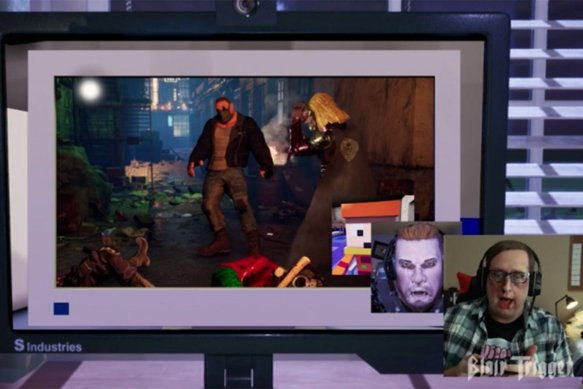
Saturday Matinee: Final Deployment 4: Queen Battle Walkthrough

Too Many Cooks Creator Takes on Videogame YouTubers in New Adult Swim Short

By Garrett Martin

Source: Paste Magazine

We should probably be past the point where YouTube videogame walkthroughs and Twitch streams seem weird or confusing. People have been making—and watching—them in ever increasing numbers for years now. Yeah, I don’t get why people would rather watch hours of some stranger playing a videogame instead of, I don’t know, Netflixing Frasier, or something, but it’s clearly a thing that happens and is popular and resonates with millions of people.

It might seem like a strange niche to those who aren’t into ‘em, but streaming is already a form of mainstream entertainment with a massive fan base who will grow up with no outdated distinction between YouTube and “real” TV. Random overacting yahoos with webcams are already bigger stars to “the kids” than television legend Ted Danson. It’s a small thing to fret about within the larger societal collapse that we’re currently living through, but c’mon, using a computer to watch other people play games on their computer is definitely some kind of low stakes dystopian sci-fi nonsense.

That’s what Casper Kelly, the creator of Too Many Cooks, and co-creator Nick Gibbons latch onto in their new Adult Swim short Final Deployment 4: Queen Battle Walkthrough, which premiered very early this morning on the TV station. Framed as a YouTube Let’s Play, it slowly reveals its true nature, reaching a prolonged absurd height about two-thirds of the way through that does for videogame streaming what Too Many Cooks did for TV opening credit sequences. One could argue it would be stronger without the longform walkthrough parody that opens the video—YouTubers are so formulaic and obnoxious that making fun of them is just too easy, like mocking Morning Zoo-style FM radio hosts—but the fake in-game footage of life after the war for its Marcus Fenix stand-in is hilarious in its depressing banality, and it’s also important to establish this world before folding everything up and twisting it around like a Möbius strip.

Final Deployment 4: Queen Battle Walkthrough isn’t available on YouTube, ironically, but you can find it online at Adult Swim’s site.

Social Media Behemoths Sweep Alternative News into the Memory Hole

By Kurt Nimmo

Source: Another Day in the Empire

The squabbling between self-identified progressives and conservatives continues as social media transforms itself into a news, information, and opinion gatekeeper.

All information that contradicts the establishment narrative will either be downgraded into obscurity or excluded outright on social media.

Take for instance ThinkProgress, the Soros-financed news website, a project of the Center for American Progress Action Fund welded to the infrastructure of the Democrat party. On May 2, it complained that a bias study at Facebook will be run by conservatives, that is to say establishment Republicans, notably former Arizona Congress critter Jon Kyl.

ThinkProgress believes there is no such thing as bias aimed at conservatives—it’s the liberals who are routinely downgraded at Facebook while so-called conservatives are free to post what progressives characterize as an evil and poisonous ideology.

According to Libby Watson at Splinter News, conservatives are involved in “grift,” flimflamming poor Mark Zuckerberg with untrue claims of bias against the likes of Breitbart News.

It’s all part of a never ending and hugely counterproductive “culture war” that has raged between the ostensible right and left going on thirty years now. Ms. Watson manages to squeeze identity politics into her screed.

“The conservative movement has done a remarkable job over the last half century to bellow and bully its way into having its most ridiculous and reality-divorced concerns taken seriously,” she writes. “It lies about and distorts everything: about tax cuts, about Benghazi and her emails, about immigration, about healthcare, about Diamond and Silk. The further Facebook descends down the path of letting that screaming white face of faux outrage dictate how they run their platform, the harder it’s going to be for them to get away from them.”

The progressive news website Common Dreams complains it has weathered “significant drops in traffic since Google and Facebook began changing algorithms and talking openly about their new attempts to control the kind of news content users see. According to internal data and Google Analytics, traffic to Common Dreams from Google searches fell by 34 percent after the powerful search giant unveiled its new search protocol in April 2017.”

Meanwhile, on the other side of the yawning divide, Brent Bozell, founder of the Media Research Center, rallied around 60 conservatives and fired off an open letter to the social media giants demanding transparency, clarity on the definition of hate speech, equality for conservatives, and respect for the First Amendment.

“Social media censorship and online restriction of conservatives and their organizations have reached a crisis level,” the open letter states. “Facebook CEO Mark Zuckerberg’s hearings on Capitol Hill only served to draw attention to how widespread this problem has become. Conservative leaders now have banded together to call for equal treatment on tech and social media.”

Both liberals and conservatives are missing the point.

Facebook and Google will continue and enlarge the effort to gatekeep information that does not jive with the establishment narrative, be it from the right or left.

The internet and web upended the establishment’s carefully constructed propaganda machine—the CIA’s “Mighty Wurlitzer” under its Operation Mockingbird beginning in the early 1950s—deeply embedded within corporate media.

Beginning with Friendster, MySpace, and like projects in the early 2000s and eventually morphing into the corporate behemoths Facebook, YouTube, and Twitter, social media platforms have extended the reach of alternative media, much to the displeasure of the establishment. Its preferred propaganda conduits have withered and this has seriously hampered its ability to control the narrative.

Both the right and left need to nurture their own social media platforms and drive traffic there.

Of course, this will not be as effective as plugging into the massive matrix of social connectivity provided by the corporate tech giants, but the alternative is to be marginalized and eventually swept into the memory hole as the context of “extremism” narrows and constricts expression, excluding all but the most token disagreement with the establishment narrative.

However, I’m not sure we’re up to it.

The elite has done a remarkable job of using the time tested divide and conquer concept, endlessly pitting the so-called right against the amorphously defined left and vice versa. Liberals and conservatives continue to fight over frivolous ideological points as the funny money asset-driven economy prepares to implode and the mission of infinity war expands to the point where it endangers life on planet Earth.

Corporate giant Unilever demands crackdown on oppositional Internet content

By Will Morrow

Source: WSWS.org

The drive to censor the Internet took another step this week with a public statement by Keith Weed, the chief marketing officer for the London-based multinational Unilever, threatening to withdraw advertising from social media platforms if they fail to suppress “toxic content.”

Weed reportedly told an annual leadership meeting of the Interactive Advertising Bureau in Palm Desert, California that the company “will not invest in platforms or environments” that “create divisions in society, and promote anger or hate.” He added, “We will prioritize investing only in responsible platforms that are committed to creating a positive impact in society.”

Excerpts of Weed’s remarks—the most explicit of their kind from a major corporate executive—were leaked to several media outlets, including the Wall Street Journal and the Guardian. They were immediately featured on NBC News and other major American news outlets on Sunday. The Journal’s report was accompanied by an interview with Weed.

The coordinated release was designed to escalate the propaganda offensive by the Democratic Party and US intelligence agencies, together with the corporate media, for Internet censorship. The fraudulent premise for this assault on freedom of speech, both in the US and across Europe, is the claim that political opposition and social tensions are the product not of poverty, inequality and policies of austerity and militarism, but of “fake news” spread by Russia through social media.

Weed’s statements preceded yesterday’s US Senate Select Committee on Intelligence hearing, which witnessed a series of hysterical denunciations of Russia by politicians and intelligence agents. The Democratic vice-chairman of the committee, Mark Warner of Virginia, declared that Russia “utilized our social media platforms to push and spread misinformation at an unprecedented scale.”

Facebook responded to Weed’s threats by declaring, “[W]e fully support Unilever’s commitments and are working closely with them.” The Journal stated that Unilever “has already held discussions” with Facebook, Google, Twitter, Snap and Amazon “to share ideas about what each can do to improve.”

Weed absurdly framed his demand for censorship, made on behalf of a multibillion-dollar global corporation, as the expression of popular anger over the supposed spread of “fake news.” He referred to research showing a decline in trust in social media and a “perceived lack of focus” in the form of “illegal, unethical and extremist behavior and material on” social media platforms. Speaking to the Wall Street Journal, he claimed to be articulating the concerns of consumers over “fake news” and “Russians influencing the US election.”

In reality, the intervention by Unilever—a consumer products behemoth with a market capitalization of $157 billion and annual revenues of $65 billion, more than the gross domestic product of many countries—only highlights the economic and political forces driving the censorship campaign: an alliance of the military/intelligence apparatus, giant technology firms and the corporate-financial oligarchy.

Unilever’s annual marketing outlays of nearly $9 billion place it in the top five companies in that category globally. It owns dozens of brands used by some 2.5 billion people around the world, including Dove soap, Rexona deodorant and food products Cornetto, Magnum and Lipton. Weed’s statements amount to a declaration that Unilever will use this economic power to filter what the world’s population can and cannot read online.

This is in line with a long and reactionary tradition. Large advertisers played a significant role in enforcing the McCarthyite witch hunt of socialist and left-wing figures in the US during the late 1940s and 1950s. General Motors, DuPont, Reynolds Tobacco and other major companies were backers of the notorious anticommunist periodical Counterattack, which published names of suspected communist sympathizers and forced the removal of targeted performers and critical content from programs they sponsored.

In one of many such cases, the blacklisted Jean Muir was dropped from the television show “The Aldrich Family” after General Foods, the program’s sponsor, told NBC it would not sponsor programs featuring “controversial persons.”

In another development, Susan Wojcicki, the CEO of YouTube (owned by Google’s parent company, Alphabet), told a Code Media conference in Los Angeles that Facebook “should get back to baby pictures and sharing.” The statement is a reference to Facebook’s announcement last month that it is deprioritizing news content on its News Feed in favor of “personal moments.” The change is one of a number of recent measures to prevent Facebook users from accessing news and analysis outside of officially sanctioned corporate outlets.

UK Home Secretary Amber Rudd on Tuesday released a government-developed application that uses machine-learning algorithms to automatically detect ISIS-related content in videos so that it can be censored.

The BBC wrote that the tool was seen by the government as a way to demonstrate that its “demand for a clampdown on extremist activity was not unreasonable.” Rudd stated, “The technology is there. There are tools out there that can do exactly what we’re asking for,” i.e., identifying and censoring video content. The new application will be provided free of charge to smaller video hosting companies, and the government will consider making its use legally mandatory.

The Washington Post, which along with the New York Times has been at the forefront of the censorship campaign, linked the UK government’s announcement to the intervention of Unilever, writing that it came “amid mounting pressure on social media companies to do more to remove extremist content from their platforms.”